Seizure &      Epilepsy
Definitions
SeizureA sudden surge of electrical activity in brain that usually affects how a person feels or acts for a short time.Some seizures can hardly be noticed, while others are totally disabling.
EpilepsyA condition that affects central nervous system (CNS)had at least 2 seizures not caused by some known medical condition like alcohol withdrawal or extremely low blood sugar.not indicate anything about the cause of the seizures, what type they are, or how severe they are.
Momentary loss of consciousness Fit Faint Fake
Transient loss of consciousnessHistory and PhysicalWitness accountDéjà vuJamais vuAphasiaOlfactory auraEpigastric sensationTongue bitingPost event deliriumFocal neurodeficitLight-headednessSweatingProlonged standingPrecipitants     eg.micturitionChest painPalpitationSlow heart rateLow blood pressureAphasiaDeliriumHead turnAutomatismPosturingConvulsionPostictal deliriumMyoclonus or convulsionafter pallor,sweating and collapsePallorSweatingSlow pulseLow BPConvulsive syncopeSeizureSyncopeSyncopeSeizure
Nonepileptic causes for spellsPhysiologicTremorVasovagal syncopeCardiac arrhythmiasMigraineMedication adverse effectsTransient ischemic attacksAutonomic dysfunction
Nonepileptic causes for spellsPsychologicAnxietyPanic attacksMood disorderPersonality disorderPsychosisSomatiform illnessPsychogenic seizures
Phase of seizuresPreictal phase or aura or warningIctal phase : simple or complex partial or generalized tonic-clonic seizurePostictal phaseor recovery period : last from seconds to minutes to hours
Precipitants of seizure Sleep and lack of sleep Drugs and alcohol Intercurrent illness : infection,     electrolyte imbalance Menstruation Stress and worry Other precipitants-reflex epilepsy
Classification of seizurePartial (focal, localized) seizuresGeneralized seizures (convulsive or non-convulsive)Unclassified epileptic seizures
Partial (focal, localized)seizuresSimple partial seizures (preserved consciousness) Complex partial seizures (impaired consciousness) Partial seizures evolving to secondarily 	 generalized seizures
Simple partial seizures      (preserved consciousness)With - motor signs	        - somatosensory or special                 sensory  systems	        - autonomic symptoms or signs            - psychic symptoms
Complex partial seizures (impaired consciousness)     - Simple partial onset followed by impairment of  conscious     - With impairment of consciousness at onset
Partial seizures evolving to secondarily generalized seizures      - Simple partial seizures evolving to generalized seizures      - Complex partial seizures evolving to generalized seizures      - Simple partial seizures evolving to complex partial seizures evolving to generalized seizures
Generalized seizures (convulsive       or nonconvulsive)- Absence seizures		Typical absences		Atypical absences- Myoclonic seizures- Clonic seizures- Tonic seizures			- Tonic-clonic seizures			- Atonic seizures (astatic seizures)
Unclassified epileptic seizures    - Neonatal seizures    - Recurrent status epilepticus    - Rare or ‘isolated’ seizures
Epileptic seizureAll clinical andlaboratory dataneuroimagingSeizuredescription and EEGEtiologySeizuretype (s)
SeizureIdiopathic Generalized epilepsy likelyFeatures of focal epilepsyEpilepsy or PNESProvoked seizuresTreat cause +/- AEDEEGEEGMRI/CT brainVideo EEGPNES=psychogenic non-epileptic seizuresAED=antiepileptic drug
Laboratory  investigationCBC	FBS, BUN, CreatinineElectrolyte , Liver function test , Ca+2   Mg+2Electro-encephalography (EEG)Video EEGNeuroimaging : CT Scan, MRI, MR Spect, PETSpecial investigation : ammonia, lactate,              pyruvate etc.
Electroencephalogram
What value is the EEG?Add weight to the clinical diagnosis
 Aid classification of epilepsy
 Detection of the structural brain lesion.EEG30 minute interictal EEG –useful when clinical suspicion of epilepsyTiming is importantWithin 24 hr of generalized convulsion: 50% have abnormal EEG First 48 hr: 21-34% have epileptiform activitySleep EEG or sleep-deprived EEG might increase diagnostic yield
Normal EEG
Primary generalized epilepsy—ictal EEG
Primary generalized epilepsy- interictal EEG
Burst of generalized spike and wave discharges—typical absence seizure
EEG monitoring
Video MonitoringHelpful in determining nature of seizure disorder (epilepsy, convulsive syncope, or psychogenic seizures)
Indication for neuroimaging in patients with seizuresPartial seizure Late onset unprovoked seizure (age > 25) Unexplained neurological signs Focal slow waves EEG poor control or new symptoms / signs
NeuroimagingIn the absence of trauma: CT and MRI brain for patients presenting with suspected first unprovoked seizure or with a focal neurological deficit.MRI is preferable for looking for neuronal migrational disorders, major malformations, vascular anomalies, tumors
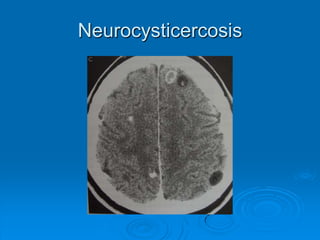
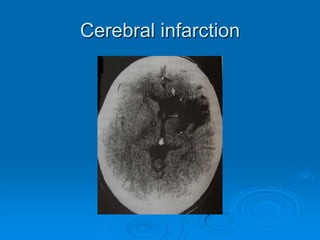
The causes of epilepsyGenetic factorCongenital abnormalitiesTrauma and the effect of craniotomyCNS infectionCerebrovascular diseaseCerebral tumorsAlzheimer’s disease and other degenerative disease Others
Neurocysticercosis
Cerebral infarction
Intracerebral hemorrhage
Brain tumor or metastasis
Lt mesial temporal sclerosis
Cortical dysplasia
52 year old woman with intractable seizurePET scan
PET using F-18 FDG-- Decreased FDG uptake in both temporal lobes, right worse then left but otherwise relatively symmetric
What to do?Generalized seizureLoosening the patient’s clothingLower the patient gently to the floor, turn them onto their side and cushion headNothing is put into the mouthRemove any items that could cause injury
What to do? ---Generalized seizureWhen the seizure is over, allow the patient to rest or sleepIf they are able to return to their feet, help them homeObtain medical help if they continue to experience breathing problems once the seizure is over, or if the seizure lasts a long time(over 10 mins), or when another attack quickly follows the first
What to do?Partial seizuresStay with the patients throughout the seizureProtect them from any dangerous objectTaking care not to restrain them in anyway
First aids
Treatment
จะต้องให้ยากันชักหรือไม่?รักษาไม่รักษาผลข้างเคียงของยาโอกาสจะชักซ้ำ
Choose a  drug : considering the following factorsThe seizure type and prognosis  Age  The possibility of pregnancy  Toxicity   Drug interaction  Price
RISK OF RECURRENT SEIZUREThe recurrence risk follow a first unprovoked seizure 27%-52%50% recurrence occur within 6 months over 80% within 2 years of initial seizurestwice as likely to have another seizure if you have a known brain injury or brain abnormality.
RISK OF RECURRENT SEIZURE(cont)If you do have two seizures, there's about 80% chance that you'll have more.
Factors predictive of a high rate of seizure recurrence after the  first unprovoked seizureAbnormal neurologic status by NE or imaging
 EEG abnormalities (especially epileptiform)
 Partial seizuresCounseling before treatment1. Aims of treatment2. Prognosis and duration of the     expected treatment3. Importance of compliance4. Side effects
Starting antiepileptic treatmentProspective risks               Usual clinical	          Factors that may modify      of epilepsy 	        practice	          usual practice			    Single seizure                  No treatment	   Progressive cerebral disorder    (clinically Dx)		   Clearly epileptic EEG     2 or more seizure          Monotherapy	   Seizures widely separated    (clinically Dx)			  in time (> 1 year)		   Identified precipitating,			  factors (eg, drugs,        			                                       alcohol,reflex stimuli)				   Probability of poor compliance 			  (eg, personality disorder)		  Attitude of patients/parents
  MoreAntiepileptic drugs20PregabalinLevetiracetamOxcarbazepineTiagabineFosphenytoin15TopiramateGabapentinFelbamateLamotrigineZonisamide10VigabatrinSodium ValproateCarbamazepineBenzodiazepinesEthosuximide5PhenytoinPrimidonePhenobarbitalBromide0184018601880190019201940196019802000Calendar yearAntiepileptic Drug Development
First-line choice of AEDs according to seizure type
Advantages of MonotherapyBetter seizure controlReduced side effectsAbsence of drug interactionsReduced teratogenic effectsBetter complianceReduced cost of medicationImproved quality of life
Expected outcomes of AED therapyWell controlled 65%Unsatisfactorilycontrolled 35%MonotherapyWell controlled 10%Unsatisfactorilycontrolled 25%Add-on therapyUnsatisfactorilycontrolled 20%Well controlled 5%Multiple drug therapy
Managing newly diagnosed epilepsyNewly diagnosed epilepsy47%Seizure freeFirst drug13%Seizure freeSecond drugRefractorySurgical assessmentRational duotherapy
Adverse effect of AEDDose related
 Idiosyncratic / allergic
 Chronic toxicity
 TeratogenicityOlder AEDs
AED interactionsCBZ : autoinduction,   VPA,   PHT, -PBPHT :   CBZ,  VPA,  PB PB :      CBZ,  VPA,  PHTVPA :    CBZ,  PB,    PHT
 AEDsDrug interaction with AED and other drugs: via effect on hepatic CYP450 enzyme systemPB, primidone, PHT, CBZ induce CYP enz. :       Accelerate breakdown of many prescribed lipid-soluble drugs metabolized by the same system: OCP, cytotoxic, antiarrythmic, warfarinVPA is a weak CYP enz. Inhibitor:        Slow clearance of other AEDs such as PHT, LTG.  Newer AEDs :  less likely to interfere with hepatic metabolism.GBP, LEV,PGB,VGB do not undergo hepatic metabolism
Newer AEDsAdjunctive treatment of refractory epilepsySome of these AEDs: LTG, GBP, OXC, TPM have also demonstrated efficacy as monotherapy
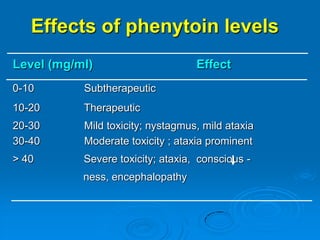
Effects of phenytoin levelsLevel (mg/ml)		Effect0-10                 Subtherapeutic10-20               Therapeutic20-30               Mild toxicity; nystagmus, mild ataxia30-40               Moderate toxicity ; ataxia prominent> 40                 Severe toxicity; ataxia,  conscious -                        ness, encephalopathy
Potential Causes of Treatment Resistant EpilepsyDiagnostic errors:Non-epileptic events   Wrong diagnosis of seizure types/ epileptic syndrome   Missing of underlying causes/lesionsPatient’s errors:Non-compliance   Inappropriate life style, inappropriate metabolism
Potential Causes of Treatment Resistant EpilepsyTreatment errors:Wrong choice of drugs Less optimal doses of drugs  Inadequate dosing schedulesAntiepileptic drug toxicity Disease itself:Treatment resistant epilepsymetabolic disorder
Stopping antiepileptic treatmentAbsolute requirement2-3 years free of all seizures Patient’s informed agreement
Factors in favourChildhood epilepsy
 Primary generalized epilepsy
 Absence of cerebral disorder
 Short duration of epilepsy
 Normal EEG
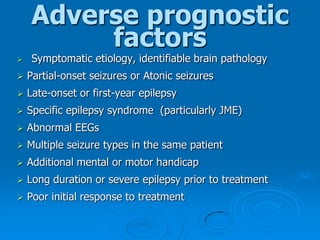
 Non-driverAdverse prognostic factorsSymptomatic etiology, identifiable brain pathology Partial-onset seizures or Atonic seizures Late-onset or first-year epilepsy  Specific epilepsy syndrome  (particularly JME)  Abnormal EEGs Multiple seizure types in the same patient Additional mental or motor handicap Long duration or severe epilepsy prior to treatment   Poor initial response to treatment
Features common to the surgically privileged seizure disordersPresence of a well-circumscribed structural lesion on the MRI (lesional epilepsy)Presence of well-localized interictal epileptiform discharged on the EEGClinical features of habitual seizures indicating focal onsetAbsence of discordance between above featureFocus localized by above features is surgically accessible and involves little or no eloquent cortexAbsence of other potentially epileptogenic abnormalities
Status epilepticusA condition in which epileptic activity persists for 30 minutes or more
Common etiologies for status epilepticus in children and adolescentsIdiopathicAcute symptomaticElectrolyte disturbanceEncephalitisHead traumaRemote symptomaticPast strokeCNS infectionCerebral palsyProgressive encephalopathyTuberous sclerosisOther neurodegenerationFebrile
Status epilepticus management
Epilepsy and pregnancy Seizure control Obstetric complication Neonatal outcome
Neonatal outcomeRisk of seizure    (3 times > normal population)developmental outcomecongenital anomalies 4-8%     (2-3 times > normal population)
The most common malformationCongenital heart diseaseorofacial cleftneural tube defectintestinal atresiaurogenital defectsNeural tube defect

Epilepsy

  • 1.
    Seizure & Epilepsy
  • 2.
  • 3.
    SeizureA sudden surgeof electrical activity in brain that usually affects how a person feels or acts for a short time.Some seizures can hardly be noticed, while others are totally disabling.
  • 4.
    EpilepsyA condition thataffects central nervous system (CNS)had at least 2 seizures not caused by some known medical condition like alcohol withdrawal or extremely low blood sugar.not indicate anything about the cause of the seizures, what type they are, or how severe they are.
  • 5.
    Momentary loss ofconsciousness Fit Faint Fake
  • 6.
    Transient loss ofconsciousnessHistory and PhysicalWitness accountDéjà vuJamais vuAphasiaOlfactory auraEpigastric sensationTongue bitingPost event deliriumFocal neurodeficitLight-headednessSweatingProlonged standingPrecipitants eg.micturitionChest painPalpitationSlow heart rateLow blood pressureAphasiaDeliriumHead turnAutomatismPosturingConvulsionPostictal deliriumMyoclonus or convulsionafter pallor,sweating and collapsePallorSweatingSlow pulseLow BPConvulsive syncopeSeizureSyncopeSyncopeSeizure
  • 9.
    Nonepileptic causes forspellsPhysiologicTremorVasovagal syncopeCardiac arrhythmiasMigraineMedication adverse effectsTransient ischemic attacksAutonomic dysfunction
  • 10.
    Nonepileptic causes forspellsPsychologicAnxietyPanic attacksMood disorderPersonality disorderPsychosisSomatiform illnessPsychogenic seizures
  • 11.
    Phase of seizuresPreictalphase or aura or warningIctal phase : simple or complex partial or generalized tonic-clonic seizurePostictal phaseor recovery period : last from seconds to minutes to hours
  • 12.
    Precipitants of seizureSleep and lack of sleep Drugs and alcohol Intercurrent illness : infection, electrolyte imbalance Menstruation Stress and worry Other precipitants-reflex epilepsy
  • 13.
    Classification of seizurePartial(focal, localized) seizuresGeneralized seizures (convulsive or non-convulsive)Unclassified epileptic seizures
  • 14.
    Partial (focal, localized)seizuresSimplepartial seizures (preserved consciousness) Complex partial seizures (impaired consciousness) Partial seizures evolving to secondarily generalized seizures
  • 15.
    Simple partial seizures (preserved consciousness)With - motor signs - somatosensory or special sensory systems - autonomic symptoms or signs - psychic symptoms
  • 16.
    Complex partial seizures(impaired consciousness) - Simple partial onset followed by impairment of conscious - With impairment of consciousness at onset
  • 17.
    Partial seizures evolvingto secondarily generalized seizures - Simple partial seizures evolving to generalized seizures - Complex partial seizures evolving to generalized seizures - Simple partial seizures evolving to complex partial seizures evolving to generalized seizures
  • 18.
    Generalized seizures (convulsive or nonconvulsive)- Absence seizures Typical absences Atypical absences- Myoclonic seizures- Clonic seizures- Tonic seizures - Tonic-clonic seizures - Atonic seizures (astatic seizures)
  • 19.
    Unclassified epileptic seizures - Neonatal seizures - Recurrent status epilepticus - Rare or ‘isolated’ seizures
  • 20.
    Epileptic seizureAll clinicalandlaboratory dataneuroimagingSeizuredescription and EEGEtiologySeizuretype (s)
  • 21.
    SeizureIdiopathic Generalized epilepsylikelyFeatures of focal epilepsyEpilepsy or PNESProvoked seizuresTreat cause +/- AEDEEGEEGMRI/CT brainVideo EEGPNES=psychogenic non-epileptic seizuresAED=antiepileptic drug
  • 22.
    Laboratory investigationCBC FBS,BUN, CreatinineElectrolyte , Liver function test , Ca+2 Mg+2Electro-encephalography (EEG)Video EEGNeuroimaging : CT Scan, MRI, MR Spect, PETSpecial investigation : ammonia, lactate, pyruvate etc.
  • 23.
  • 24.
    What value isthe EEG?Add weight to the clinical diagnosis
  • 25.
  • 26.
    Detection ofthe structural brain lesion.EEG30 minute interictal EEG –useful when clinical suspicion of epilepsyTiming is importantWithin 24 hr of generalized convulsion: 50% have abnormal EEG First 48 hr: 21-34% have epileptiform activitySleep EEG or sleep-deprived EEG might increase diagnostic yield
  • 27.
  • 28.
  • 29.
  • 30.
    Burst of generalizedspike and wave discharges—typical absence seizure
  • 31.
  • 32.
    Video MonitoringHelpful indetermining nature of seizure disorder (epilepsy, convulsive syncope, or psychogenic seizures)
  • 33.
    Indication for neuroimagingin patients with seizuresPartial seizure Late onset unprovoked seizure (age > 25) Unexplained neurological signs Focal slow waves EEG poor control or new symptoms / signs
  • 34.
    NeuroimagingIn the absenceof trauma: CT and MRI brain for patients presenting with suspected first unprovoked seizure or with a focal neurological deficit.MRI is preferable for looking for neuronal migrational disorders, major malformations, vascular anomalies, tumors
  • 35.
    The causes ofepilepsyGenetic factorCongenital abnormalitiesTrauma and the effect of craniotomyCNS infectionCerebrovascular diseaseCerebral tumorsAlzheimer’s disease and other degenerative disease Others
  • 36.
  • 37.
  • 38.
  • 39.
    Brain tumor ormetastasis
  • 40.
  • 41.
  • 42.
    52 year oldwoman with intractable seizurePET scan
  • 43.
    PET using F-18FDG-- Decreased FDG uptake in both temporal lobes, right worse then left but otherwise relatively symmetric
  • 44.
    What to do?GeneralizedseizureLoosening the patient’s clothingLower the patient gently to the floor, turn them onto their side and cushion headNothing is put into the mouthRemove any items that could cause injury
  • 45.
    What to do?---Generalized seizureWhen the seizure is over, allow the patient to rest or sleepIf they are able to return to their feet, help them homeObtain medical help if they continue to experience breathing problems once the seizure is over, or if the seizure lasts a long time(over 10 mins), or when another attack quickly follows the first
  • 46.
    What to do?PartialseizuresStay with the patients throughout the seizureProtect them from any dangerous objectTaking care not to restrain them in anyway
  • 47.
  • 48.
  • 49.
  • 50.
    Choose a drug : considering the following factorsThe seizure type and prognosis Age The possibility of pregnancy Toxicity Drug interaction Price
  • 51.
    RISK OF RECURRENTSEIZUREThe recurrence risk follow a first unprovoked seizure 27%-52%50% recurrence occur within 6 months over 80% within 2 years of initial seizurestwice as likely to have another seizure if you have a known brain injury or brain abnormality.
  • 52.
    RISK OF RECURRENTSEIZURE(cont)If you do have two seizures, there's about 80% chance that you'll have more.
  • 53.
    Factors predictive ofa high rate of seizure recurrence after the first unprovoked seizureAbnormal neurologic status by NE or imaging
  • 54.
    EEG abnormalities(especially epileptiform)
  • 55.
    Partial seizuresCounselingbefore treatment1. Aims of treatment2. Prognosis and duration of the expected treatment3. Importance of compliance4. Side effects
  • 56.
    Starting antiepileptic treatmentProspectiverisks Usual clinical Factors that may modify of epilepsy practice usual practice Single seizure No treatment Progressive cerebral disorder (clinically Dx) Clearly epileptic EEG 2 or more seizure Monotherapy Seizures widely separated (clinically Dx) in time (> 1 year) Identified precipitating, factors (eg, drugs, alcohol,reflex stimuli) Probability of poor compliance (eg, personality disorder) Attitude of patients/parents
  • 57.
    MoreAntiepilepticdrugs20PregabalinLevetiracetamOxcarbazepineTiagabineFosphenytoin15TopiramateGabapentinFelbamateLamotrigineZonisamide10VigabatrinSodium ValproateCarbamazepineBenzodiazepinesEthosuximide5PhenytoinPrimidonePhenobarbitalBromide0184018601880190019201940196019802000Calendar yearAntiepileptic Drug Development
  • 58.
    First-line choice ofAEDs according to seizure type
  • 59.
    Advantages of MonotherapyBetterseizure controlReduced side effectsAbsence of drug interactionsReduced teratogenic effectsBetter complianceReduced cost of medicationImproved quality of life
  • 60.
    Expected outcomes ofAED therapyWell controlled 65%Unsatisfactorilycontrolled 35%MonotherapyWell controlled 10%Unsatisfactorilycontrolled 25%Add-on therapyUnsatisfactorilycontrolled 20%Well controlled 5%Multiple drug therapy
  • 61.
    Managing newly diagnosedepilepsyNewly diagnosed epilepsy47%Seizure freeFirst drug13%Seizure freeSecond drugRefractorySurgical assessmentRational duotherapy
  • 62.
    Adverse effect ofAEDDose related
  • 63.
  • 64.
  • 65.
  • 66.
    AED interactionsCBZ :autoinduction, VPA, PHT, -PBPHT : CBZ, VPA, PB PB : CBZ, VPA, PHTVPA : CBZ, PB, PHT
  • 67.
    AEDsDrug interactionwith AED and other drugs: via effect on hepatic CYP450 enzyme systemPB, primidone, PHT, CBZ induce CYP enz. : Accelerate breakdown of many prescribed lipid-soluble drugs metabolized by the same system: OCP, cytotoxic, antiarrythmic, warfarinVPA is a weak CYP enz. Inhibitor: Slow clearance of other AEDs such as PHT, LTG. Newer AEDs : less likely to interfere with hepatic metabolism.GBP, LEV,PGB,VGB do not undergo hepatic metabolism
  • 68.
    Newer AEDsAdjunctive treatmentof refractory epilepsySome of these AEDs: LTG, GBP, OXC, TPM have also demonstrated efficacy as monotherapy
  • 69.
    Effects of phenytoinlevelsLevel (mg/ml) Effect0-10 Subtherapeutic10-20 Therapeutic20-30 Mild toxicity; nystagmus, mild ataxia30-40 Moderate toxicity ; ataxia prominent> 40 Severe toxicity; ataxia, conscious - ness, encephalopathy
  • 70.
    Potential Causes ofTreatment Resistant EpilepsyDiagnostic errors:Non-epileptic events   Wrong diagnosis of seizure types/ epileptic syndrome   Missing of underlying causes/lesionsPatient’s errors:Non-compliance   Inappropriate life style, inappropriate metabolism
  • 71.
    Potential Causes ofTreatment Resistant EpilepsyTreatment errors:Wrong choice of drugs Less optimal doses of drugs  Inadequate dosing schedulesAntiepileptic drug toxicity Disease itself:Treatment resistant epilepsymetabolic disorder
  • 72.
    Stopping antiepileptic treatmentAbsoluterequirement2-3 years free of all seizures Patient’s informed agreement
  • 73.
  • 74.
  • 75.
    Absence ofcerebral disorder
  • 76.
    Short durationof epilepsy
  • 77.
  • 78.
    Non-driverAdverse prognosticfactorsSymptomatic etiology, identifiable brain pathology Partial-onset seizures or Atonic seizures Late-onset or first-year epilepsy Specific epilepsy syndrome (particularly JME) Abnormal EEGs Multiple seizure types in the same patient Additional mental or motor handicap Long duration or severe epilepsy prior to treatment Poor initial response to treatment
  • 79.
    Features common tothe surgically privileged seizure disordersPresence of a well-circumscribed structural lesion on the MRI (lesional epilepsy)Presence of well-localized interictal epileptiform discharged on the EEGClinical features of habitual seizures indicating focal onsetAbsence of discordance between above featureFocus localized by above features is surgically accessible and involves little or no eloquent cortexAbsence of other potentially epileptogenic abnormalities
  • 80.
    Status epilepticusA conditionin which epileptic activity persists for 30 minutes or more
  • 81.
    Common etiologies forstatus epilepticus in children and adolescentsIdiopathicAcute symptomaticElectrolyte disturbanceEncephalitisHead traumaRemote symptomaticPast strokeCNS infectionCerebral palsyProgressive encephalopathyTuberous sclerosisOther neurodegenerationFebrile
  • 82.
  • 85.
    Epilepsy and pregnancySeizure control Obstetric complication Neonatal outcome
  • 86.
    Neonatal outcomeRisk ofseizure (3 times > normal population)developmental outcomecongenital anomalies 4-8% (2-3 times > normal population)
  • 87.
    The most commonmalformationCongenital heart diseaseorofacial cleftneural tube defectintestinal atresiaurogenital defectsNeural tube defect