Approach and Management Outline
of Epilepsy
Presented by
Dr. Ashish Chowdhury
MD, Phase- B Resident
Department of Neurology, BSMMU
Core components
 Approach
 History
 Physical examination
 Investigations
 Management outline
 Non pharmacological
 Pharmacological
 Surgical
 Others
History
History regarding seizure
 Whether the episode in question is a seizure
 History is the key
 From a witness
 Type and duration of bodily movements
 When and where
 Level of alertness and responsiveness during and immediately after the
episode
 Skin color and breathing
 Tongue biting and Incontinence
 Postictal period
 If a witness is not available, then a telephone call to observers may give
more information than does sophisticated laboratory testing
History
History regarding seizure
 From patient
 Recollection of event of the immediately preceding episode
 Previous H/O seizure
History
History regarding seizure types
 Generalized or focal
 If generalized
 Convulsive or Non convulsive
 If focal
 Consciousness impaired or not
History
History regarding subjective psychic state
 Aura – stereotypic perceptual disturbances experienced by patient
preceding seizure
 Illusions
 Hallucinations
 Visual, Auditory, Olfactory, Somatosensory, Gustatory, Vertiginous,
Visceral-autonomic
 Depersonalization states
 Affective experiences
 Each of these subjective psychic states may constitute the entire
seizure or some combination may occur and immediately precedes
a period of altered awareness
History
History regarding Autmatism
 More or less coordinated motor activity
 Occurring when cognition is impaired
 For which the subject is usually (not always) amnesic afterward
 may consist of an inappropriate continuation of preictal motor activity
 Signifies focal temporal lobe or limbic seizure
 lip-smacking, chewing or swallowing movements
 salivation, fumbling of the hands or shuffling of the feet
 Patients may walk around in a daze or act inappropriately
(undressing in public, speaking incoherently, etc.)
History
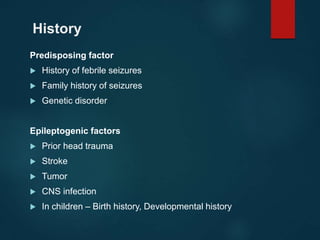
Predisposing factor
 History of febrile seizures
 Family history of seizures
 Genetic disorder
Epileptogenic factors
 Prior head trauma
 Stroke
 Tumor
 CNS infection
 In children – Birth history, Developmental history
History
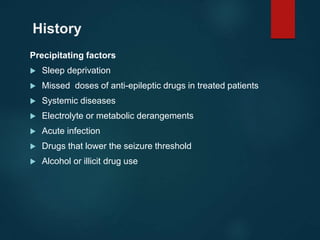
Precipitating factors
 Sleep deprivation
 Missed doses of anti-epileptic drugs in treated patients
 Systemic diseases
 Electrolyte or metabolic derangements
 Acute infection
 Drugs that lower the seizure threshold
 Alcohol or illicit drug use
Drugs causing or lowering threshold of seizure
Physical examination
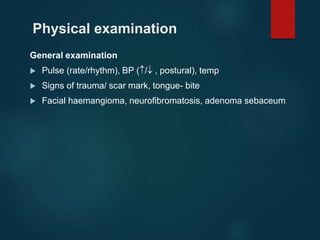
General examination
 Pulse (rate/rhythm), BP (/ , postural), temp
 Signs of trauma/ scar mark, tongue- bite
 Facial haemangioma, neurofibromatosis, adenoma sebaceum
Physical examination
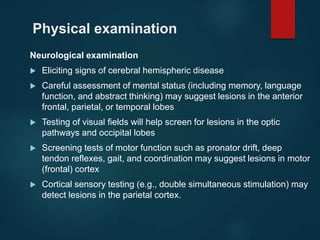
Neurological examination
 Eliciting signs of cerebral hemispheric disease
 Careful assessment of mental status (including memory, language
function, and abstract thinking) may suggest lesions in the anterior
frontal, parietal, or temporal lobes
 Testing of visual fields will help screen for lesions in the optic
pathways and occipital lobes
 Screening tests of motor function such as pronator drift, deep
tendon reflexes, gait, and coordination may suggest lesions in motor
(frontal) cortex
 Cortical sensory testing (e.g., double simultaneous stimulation) may
detect lesions in the parietal cortex.
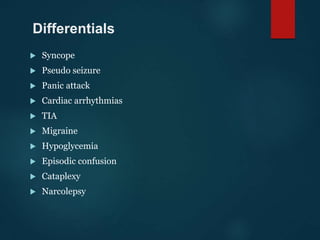
Differentials
 Syncope
 Pseudo seizure
 Panic attack
 Cardiac arrhythmias
 TIA
 Migraine
 Hypoglycemia
 Episodic confusion
 Cataplexy
 Narcolepsy
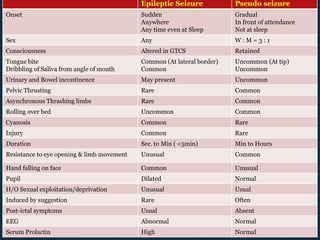
Differentials
Epileptic Seizure Pseudo seizure
Onset Sudden
Anywhere
Any time even at Sleep
Gradual
In front of attendance
Not at sleep
Sex Any W : M = 3 : 1
Consciousness Altered in GTCS Retained
Tongue bite
Dribbling of Saliva from angle of mouth
Common (At lateral border)
Common
Uncommon (At tip)
Uncommon
Urinary and Bowel incontinence May present Uncommon
Pelvic Thrusting Rare Common
Asynchronous Thrashing limbs Rare Common
Rolling over bed Uncommon Common
Cyanosis Common Rare
Injury Common Rare
Duration Sec. to Min ( <5min) Min to Hours
Resistance to eye opening & limb movement Unusual Common
Hand falling on face Common Unusual
Pupil Dilated Normal
H/O Sexual exploitation/deprivation Unusual Usual
Induced by suggestion Rare Often
Post-ictal symptoms Usual Absent
EEG Abnormal Normal
Serum Prolactin High Normal
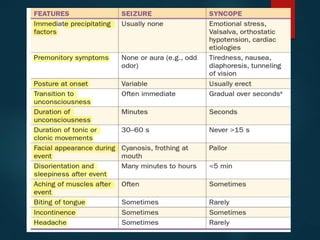
Differentials
Differentials
Cardiac arrhythmias
 Complete heart block (adams- strokes syndrome ), prolonged arrest
or critical reduction in heart rate may lead to loss of consciousness-
tonic/clonic jerks, cyanosis
# Do ECG urgently, if necessary 24 hours ECG monitoring.
Severe hypoglycemia
 Intermittent behavior change or GTCS may occur along with
palpitation & sweating (↑catecholamine) estimate blood Sugar
urgently.
Differentials
Migraine
 Classical migraine with visual or somatosensory aura &
basilar migraine
 Occipital lobe seizures may be followed by a migraine-like
headache .
 The aura in migraine typically lasts 5 to 60 minutes , epileptic
auras are usually less than 30 seconds
 Visual aura in migraine is most commonly a fortification
spectrum or scintillating scotoma, whereas colored circles are
the most common aura in occipital lobe seizures
 Basilar migraine starts with brainstem manifestations
Management
 Patient education
 Treatment of underlying conditions
 Avoidance of precipitating factors
 Antiepileptic medications or surgery
 Addressing a variety of psychological and social issues
Education of Patient & relatives
 Common disorder
 Causes and nature of disease
 1st aid management of seizure
 Patient can perform normal work & Social life
 Avoid Activities / Places increase risk of seizure
 Occupation
 Medications
 Compliance
 Regular Follow up
Management
Treatment of underlying conditions
 Correction of abnormal serum electrolytes or glucose
 Avoidance of drugs causing seizure
 Treatment of structural CNS lesion such as a brain tumor, vascular
malformation, or brain abscess
Management
Avoidance of precipitating factors
 Optimize sleep quality
 Modification of drinking habit
 Avoidance of stimuli for ‘Reflex epilepsy’
 Stress relaxation – Physical exercise, meditation, counselling
Management
Pharmacological therapy
 When to Initiate Antiepileptic Drug Therapy
 Selection of Antiepileptic Drugs
 Initiation and monitoring of drug therapy
 When to discontinue therapy
Management
Pharmacological therapy
When to Initiate Antiepileptic Drug Therapy
 Antiepileptic drug therapy should be started in any patient with
recurrent seizures of unknown etiology or a known cause that
cannot be reversed
 Single seizure with
 Structural CNS lesion – Tumour, trauma, infection
 Abnormal neurologic examination
 Seizures presenting as status epilepticus
 Postictal Todd’s paralysis
 Strong family history of seizures
 Abnormal EEG
Management
Pharmacological therapy
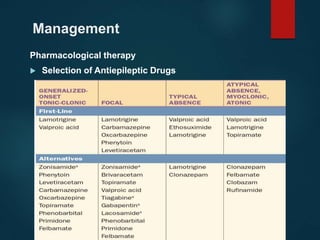
 Selection of Antiepileptic Drugs
 Seizure type
 Epilepsy syndrome
 Efficacy
 Cost
 Pharmacokinetic profile
 Adverse effects
 Patient’s related medical condition
Antiepileptic drugs
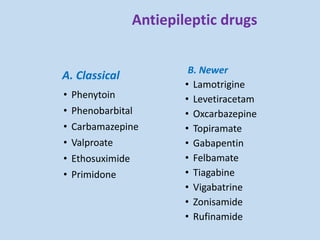
A. Classical
• Phenytoin
• Phenobarbital
• Carbamazepine
• Valproate
• Ethosuximide
• Primidone
B. Newer
• Lamotrigine
• Levetiracetam
• Oxcarbazepine
• Topiramate
• Gabapentin
• Felbamate
• Tiagabine
• Vigabatrine
• Zonisamide
• Rufinamide
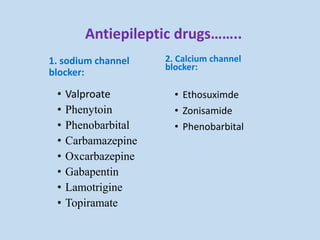
Antiepileptic drugs……..
1. sodium channel
blocker:
• Valproate
• Phenytoin
• Phenobarbital
• Carbamazepine
• Oxcarbazepine
• Gabapentin
• Lamotrigine
• Topiramate
2. Calcium channel
blocker:
• Ethosuximde
• Zonisamide
• Phenobarbital
Antiepileptic drugs…….
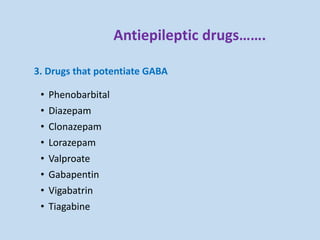
3. Drugs that potentiate GABA
• Phenobarbital
• Diazepam
• Clonazepam
• Lorazepam
• Valproate
• Gabapentin
• Vigabatrin
• Tiagabine
Common strategies of action of AEDs
• Modification of ion conductancs
• Increase inhibitory (GABA nergic)transmission
• Decrease excitatory( glutamtergic) activity
• Inhibit repetitive excitatory neuronal firing
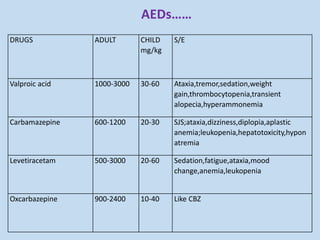
AEDs……
DRUGS ADULT CHILD
mg/kg
S/E
Valproic acid 1000-3000 30-60 Ataxia,tremor,sedation,weight
gain,thrombocytopenia,transient
alopecia,hyperammonemia
Carbamazepine 600-1200 20-30 SJS;ataxia,dizziness,diplopia,aplastic
anemia;leukopenia,hepatotoxicity,hypon
atremia
Levetiracetam 500-3000 20-60 Sedation,fatigue,ataxia,mood
change,anemia,leukopenia
Oxcarbazepine 900-2400 10-40 Like CBZ
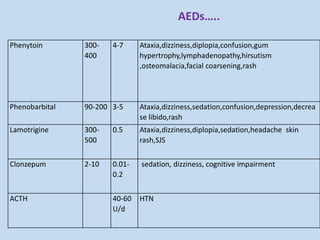
AEDs…..
Phenytoin 300-
400
4-7 Ataxia,dizziness,diplopia,confusion,gum
hypertrophy,lymphadenopathy,hirsutism
,osteomalacia,facial coarsening,rash
Phenobarbital 90-200 3-5 Ataxia,dizziness,sedation,confusion,depression,decrea
se libido,rash
Lamotrigine 300-
500
0.5 Ataxia,dizziness,diplopia,sedation,headache skin
rash,SJS
Clonzepum 2-10 0.01-
0.2
sedation, dizziness, cognitive impairment
ACTH 40-60
U/d
HTN
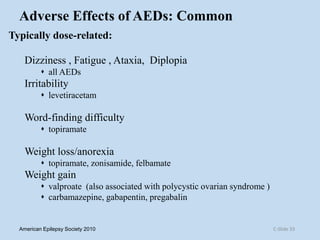
Adverse Effects of AEDs: Common
Typically dose-related:
Dizziness , Fatigue , Ataxia, Diplopia
 all AEDs
Irritability
 levetiracetam
Word-finding difficulty
 topiramate
Weight loss/anorexia
 topiramate, zonisamide, felbamate
Weight gain
 valproate (also associated with polycystic ovarian syndrome )
 carbamazepine, gabapentin, pregabalin
C-Slide 33American Epilepsy Society 2010
Adverse Effects of AEDs: Serious
Typically Idiosyncratic:
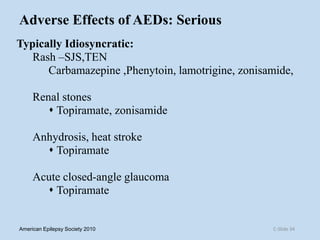
Rash –SJS,TEN
Carbamazepine ,Phenytoin, lamotrigine, zonisamide,
Renal stones
 Topiramate, zonisamide
Anhydrosis, heat stroke
 Topiramate
Acute closed-angle glaucoma
 Topiramate
C-Slide 34American Epilepsy Society 2010
Adverse Effects of AEDs: Serious
Typically Idiosyncratic:
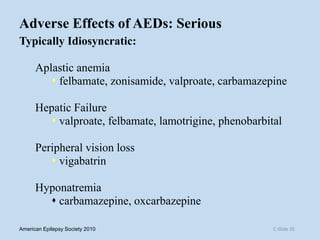
Aplastic anemia
 felbamate, zonisamide, valproate, carbamazepine
Hepatic Failure
 valproate, felbamate, lamotrigine, phenobarbital
Peripheral vision loss
 vigabatrin
Hyponatremia
 carbamazepine, oxcarbazepine
C-Slide 35American Epilepsy Society 2010
Antiepileptic Drug Interactions
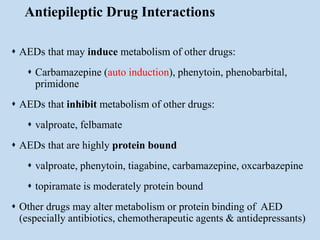
 AEDs that may induce metabolism of other drugs:
 Carbamazepine (auto induction), phenytoin, phenobarbital,
primidone
 AEDs that inhibit metabolism of other drugs:
 valproate, felbamate
 AEDs that are highly protein bound:
 valproate, phenytoin, tiagabine, carbamazepine, oxcarbazepine
 topiramate is moderately protein bound
 Other drugs may alter metabolism or protein binding of AED
(especially antibiotics, chemotherapeutic agents & antidepressants)
Management
Pharmacological therapy
 Selection of Antiepileptic Drugs
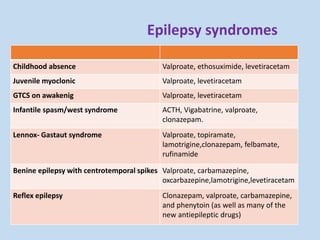
Epilepsy syndromes
Childhood absence Valproate, ethosuximide, levetiracetam
Juvenile myoclonic Valproate, levetiracetam
GTCS on awakenig Valproate, levetiracetam
Infantile spasm/west syndrome ACTH, Vigabatrine, valproate,
clonazepam.
Lennox- Gastaut syndrome Valproate, topiramate,
lamotrigine,clonazepam, felbamate,
rufinamide
Benine epilepsy with centrotemporal spikes Valproate, carbamazepine,
oxcarbazepine,lamotrigine,levetiracetam
Reflex epilepsy Clonazepam, valproate, carbamazepine,
and phenytoin (as well as many of the
new antiepileptic drugs)
Management
Pharmacological therapy
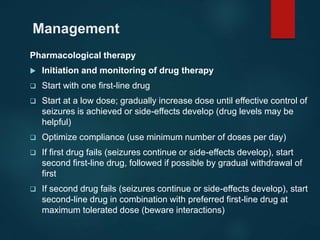
 Initiation and monitoring of drug therapy
 Start with one first-line drug
 Start at a low dose; gradually increase dose until effective control of
seizures is achieved or side-effects develop (drug levels may be
helpful)
 Optimize compliance (use minimum number of doses per day)
 If first drug fails (seizures continue or side-effects develop), start
second first-line drug, followed if possible by gradual withdrawal of
first
 If second drug fails (seizures continue or side-effects develop), start
second-line drug in combination with preferred first-line drug at
maximum tolerated dose (beware interactions)
Management
Pharmacological therapy
 Initiation and monitoring of drug therapy
 If this combination fails (seizures continue or side-effects develop),
replace second-line drug with alternative second-line drug
 If this combination fails, check compliance and reconsider diagnosis
(Are events seizures? Occult lesion? Treatment
compliance/alcohol/drugs confounding response?)
 Consider alternative, non-drug treatments (e.g. epilepsy surgery,
vagal nerve stimulation)
 Use minimum number of drugs in combination at any one time
Management
Pharmacological therapy
Initiation and monitoring of drug therapy
 Monitoring of side effect profile
 Therapeutic level
Management
Pharmacological therapy
 When to discontinue therapy
 About 50–60% of patients who have their seizures completely
controlled with antiepileptic drugs can eventually discontinue
therapy
 Patients with following profile have greatest chance of remaining
seizure free after drug withdrawal
 Complete medical control of seizures for 1–5 years
 Single seizure type, with generalized seizures having a better prognosis than
focal seizures
 Normal neurologic examination, including intelligence
 No family history of epilepsy
 Normal EEG.
Management
Pharmacological therapy
When to discontinue therapy
 It seems reasonable to attempt withdrawal of therapy after 2 years in
a patient who meets all of the criteria
 Patient should be educated about risk of recurrence and potential
benefit
 It is preferable to reduce the dose of the drug gradually over 2–3
months
Management
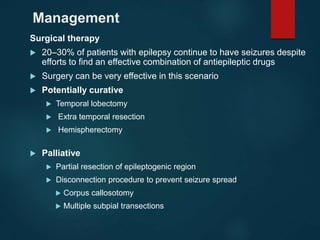
Surgical therapy
 20–30% of patients with epilepsy continue to have seizures despite
efforts to find an effective combination of antiepileptic drugs
 Surgery can be very effective in this scenario
 Potentially curative
 Temporal lobectomy
 Extra temporal resection
 Hemispherectomy
 Palliative
 Partial resection of epileptogenic region
 Disconnection procedure to prevent seizure spread
 Corpus callosotomy
 Multiple subpial transections
Management
Surgical therapy
 Complications of surgery are <5%
 70% of patients treated with temporal lobectomy will become seizure
free, and another 15–25% will have at least a 90% reduction in
seizure frequency
Management
Other therapy
 Vagus nerve stimulation
 Ketogenic diet
 Alternative diet
Management
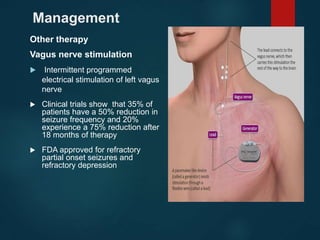
Other therapy
Vagus nerve stimulation
 Intermittent programmed
electrical stimulation of left vagus
nerve
 Clinical trials show that 35% of
patients have a 50% reduction in
seizure frequency and 20%
experience a 75% reduction after
18 months of therapy
 FDA approved for refractory
partial onset seizures and
refractory depression
Management
Other therapy
 Ketogenic diet
 Main experience with children, with multiple seizure types
 Low carbohydrate, adequate protein, high fat
 50% with a >50% seizure reduction, 30% with >90% reduction
 Side effects include kidney stones, weight loss, acidosis,
dyslipidemia
Management
Other therapy
Alternative diet
 Modified Atkins diet
• 10 g/day carbohydrates to start, fats encouraged
• No protein, calorie, fluid restriction
 Low-glycemic index treatment
• 40-60 g/day low-glycemic carbohydrates
• Portions generally controlled
Upcoming modalities
 Stereotactic radiosurgery
 Laser thermoablation
 Deep brain stimulation (DBS)
• Status epilepticus refers to continuous seizures or
repetitive, discrete seizures with impaired
consciousness in the interictal period.
• The duration of seizure activity 15–30 min
Harrison’s Neurology in Clinical Medicine,2nd ed.
Classification of SE
The Treiman classification is as follows:
• Generalized convulsive status epilepticus
• Subtle status epilepticus
• Nonconvulsive status epilepticus (eg, absence,
complex partial)
• Simple partial status epilepticus
Management of convulsive status
epilepticus
Initial
• Ensure airway is patent;
give oxygen to prevent
cerebral hypoxia
• Check pulse, blood
pressure and respiratory
rate
• Secure intravenous
access
• Send blood for:
Glucose,
urea
electrolytes,
calcium
magnesium,
liver function
anti-epileptic drug levels
Full blood count and
clotting screen
Storing a sample for future
analysis (e.g. drug misuse)
• If seizures continue for > 5 mins:
give diazepam 10 mg IV (or rectally) or
lorazepam 4 mg IV;
repeat once only after 15 mins
• • Correct any metabolic trigger, e.g. hypoglycaemia
Davidson’s Principle and Practice of Medicine;23rd ed.
Cont.
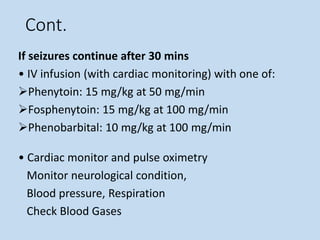
If seizures continue after 30 mins
• IV infusion (with cardiac monitoring) with one of:
Phenytoin: 15 mg/kg at 50 mg/min
Fosphenytoin: 15 mg/kg at 100 mg/min
Phenobarbital: 10 mg/kg at 100 mg/min
• Cardiac monitor and pulse oximetry
Monitor neurological condition,
Blood pressure, Respiration
Check Blood Gases
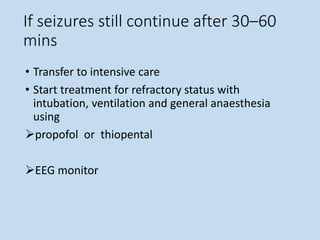
If seizures still continue after 30–60
mins
• Transfer to intensive care
• Start treatment for refractory status with
intubation, ventilation and general anaesthesia
using
propofol or thiopental
EEG monitor
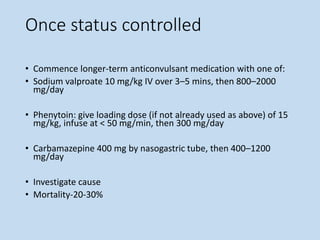
Once status controlled
• Commence longer-term anticonvulsant medication with one of:
• Sodium valproate 10 mg/kg IV over 3–5 mins, then 800–2000
mg/day
• Phenytoin: give loading dose (if not already used as above) of 15
mg/kg, infuse at < 50 mg/min, then 300 mg/day
• Carbamazepine 400 mg by nasogastric tube, then 400–1200
mg/day
• Investigate cause
• Mortality-20-30%
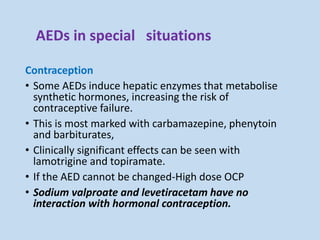
AEDs in special situations
Contraception
• Some AEDs induce hepatic enzymes that metabolise
synthetic hormones, increasing the risk of
contraceptive failure.
• This is most marked with carbamazepine, phenytoin
and barbiturates,
• Clinically significant effects can be seen with
lamotrigine and topiramate.
• If the AED cannot be changed-High dose OCP
• Sodium valproate and levetiracetam have no
interaction with hormonal contraception.
Epilepsy & pregnancy
1.Preconception counselling: regarding
• seizure frequency, risk of fetal malformations,low IQ of baby
• Seizure requency during pregnancy will remain unchanged in
~50% of women, increase in 30%, and decrease in 20%.
• The overall incidence of fetal abnormalities in children born to
mothers with epilepsy is 5–6%, compared to 2–3% in healthy
women
• Control seizure with drugs with lowest incidence of fetal
malformation like CBZ, Lamotrigine.
• The risk with Sodium valproate is higher. For some women,
however, the type and frequency of their seizures may allow or
them to safely wean o antiepileptic drugs prior to conception
• Start folic acid 5mg/d for 2 months before conception
Condt…
2. During pregnancy:
• It is currently recommended that pregnant women be
maintained on effective drug therapy.
• When possible, it seems prudent to have the patient on
monotherapy at the lowest effective dose, especially during
the 1st trimester.
• Continue folic acid
• Regular follow up :seizure control, serum antiepileptic drug
level, screening for fetal anomalies
• Give oral vit-k 20 mg daily to mother during the last month
of Pg. At least last 2 wks or I/V vit-k 4 hr before birth.
Contd….
3. After birth: Give vit-k injection 1mg I/M to infant
4. Breast feeding:
• safe for the baby during breast-feeding in that only
small amounts are excreted in lactated milk.
• For example, carbamazepine in human milk is found to
be 40 percent of the mother 's serum concentration
which results in a neonatal blood level that is below the
conventionally detectable amount. Phenytoin is
excreted at15 percent of maternal serum
concentration, and valproate, being highly protein
bound, is virtually absent in breast milk. No adverse
effects have been attributed to these small amounts
of drug.(Adams 343)
Depression in Epilepsy
Antiepileptic drugs such as phenobarbital, vigabatrin, topiramate,
tiagabine, levetiracetam,and clobazam can induce depressive
symptoms in patients with epilepsy
Carbamazepine, valproate, lamotrigine and pregabalin drugs are
associated with mood stabilizing properties, so discontinuation may
precipitate depression
Suicide rate 5 times higher than that of general population
SSRIs and SNRIs may reduce seizures and depressive symptoms
Drug of choice-escitalopram and citalopram followed by sertraline.
63
American Epilepsy Society 2010
Post-stroke seizures
• Stroke is the most common cause of seizures and epilepsy in
population studies of adults over the age of 35years.
• Seizures occurred within 24 hours of the stroke in 43 percent of
patients
• Late-onset seizures
• Stroke severity and cortical location associated with seizures
• Low frequency of recurrent seizures after stroke, and an absence
of absolute predictors of poststroke epilepsy, the decision of when
to treat patients for a poststroke seizure is difficult.
• Most physicians empirically treat patients
• Drugs of choice- Carbamazepine, Phenytoin, New AEDs
In case of ICH & SAH
For ICH, seizure activity can cause further neuronal injury
& coma
For cerebellar Hmg & subcortical Hmg- No AED
For other cases phenytoin for 1 month can be given
If seizure occurs 2 wks after the event then long time
prophyaxis
Long time prophylaxis of AED is not recommended for
SAH without seizure but should be if risk factors
Sudden Unexplained Death in
Epilepsy: SUDEP
Definition:
“sudden, unexpected, witnessed or unwitnessed, nontraumatic
and non-drowning death in a patient with epilepsy where the
postmortem examination does not reveal a toxicologic or
anatomic cause of death, with or without evidence of a seizure
and excluding documented status epilepticus.”
C-Slide 66American Epilepsy Society 2010
Sudden Unexplained Death in Epilepsy:
SUDEP
• Respiratory dysfunction may be an important
contributing factor in SUDEP.
• Suggests that positioning or stimulation of respiration
may be important in the prevention of SUDEP.
C-Slide 67American Epilepsy Society 2010
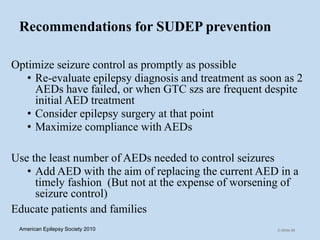
Recommendations for SUDEP prevention
Optimize seizure control as promptly as possible
• Re-evaluate epilepsy diagnosis and treatment as soon as 2
AEDs have failed, or when GTC szs are frequent despite
initial AED treatment
• Consider epilepsy surgery at that point
• Maximize compliance with AEDs
Use the least number of AEDs needed to control seizures
• Add AED with the aim of replacing the current AED in a
timely fashion (But not at the expense of worsening of
seizure control)
Educate patients and families
C-Slide 68American Epilepsy Society 2010
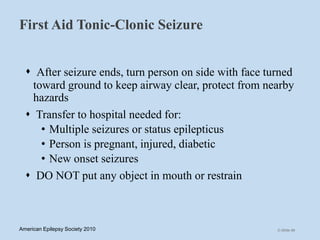
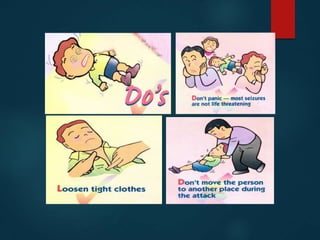
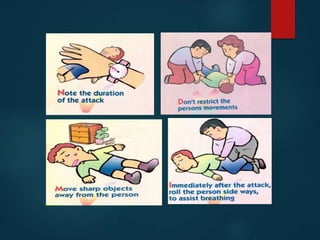
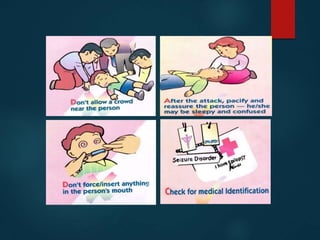
First Aid Tonic-Clonic Seizure
 After seizure ends, turn person on side with face turned
toward ground to keep airway clear, protect from nearby
hazards
 Transfer to hospital needed for:
• Multiple seizures or status epilepticus
• Person is pregnant, injured, diabetic
• New onset seizures
 DO NOT put any object in mouth or restrain
C-Slide 69American Epilepsy Society 2010
Prognosis:
Epilepsy: outcome after 20 years
 50% are seizure-free, without drugs, for the previous 5 yrs
 20% are seizure-free for the previous 5 yrs but continue to
take medication
 30% continue to have seizures inspite of anti-epileptic
therapy
C-Slide
73
Epilepsy management

Epilepsy management

  • 1.
    Approach and ManagementOutline of Epilepsy Presented by Dr. Ashish Chowdhury MD, Phase- B Resident Department of Neurology, BSMMU
  • 2.
    Core components  Approach History  Physical examination  Investigations  Management outline  Non pharmacological  Pharmacological  Surgical  Others
  • 3.
    History History regarding seizure Whether the episode in question is a seizure  History is the key  From a witness  Type and duration of bodily movements  When and where  Level of alertness and responsiveness during and immediately after the episode  Skin color and breathing  Tongue biting and Incontinence  Postictal period  If a witness is not available, then a telephone call to observers may give more information than does sophisticated laboratory testing
  • 4.
    History History regarding seizure From patient  Recollection of event of the immediately preceding episode  Previous H/O seizure
  • 5.
    History History regarding seizuretypes  Generalized or focal  If generalized  Convulsive or Non convulsive  If focal  Consciousness impaired or not
  • 6.
    History History regarding subjectivepsychic state  Aura – stereotypic perceptual disturbances experienced by patient preceding seizure  Illusions  Hallucinations  Visual, Auditory, Olfactory, Somatosensory, Gustatory, Vertiginous, Visceral-autonomic  Depersonalization states  Affective experiences  Each of these subjective psychic states may constitute the entire seizure or some combination may occur and immediately precedes a period of altered awareness
  • 7.
    History History regarding Autmatism More or less coordinated motor activity  Occurring when cognition is impaired  For which the subject is usually (not always) amnesic afterward  may consist of an inappropriate continuation of preictal motor activity  Signifies focal temporal lobe or limbic seizure  lip-smacking, chewing or swallowing movements  salivation, fumbling of the hands or shuffling of the feet  Patients may walk around in a daze or act inappropriately (undressing in public, speaking incoherently, etc.)
  • 8.
    History Predisposing factor  Historyof febrile seizures  Family history of seizures  Genetic disorder Epileptogenic factors  Prior head trauma  Stroke  Tumor  CNS infection  In children – Birth history, Developmental history
  • 9.
    History Precipitating factors  Sleepdeprivation  Missed doses of anti-epileptic drugs in treated patients  Systemic diseases  Electrolyte or metabolic derangements  Acute infection  Drugs that lower the seizure threshold  Alcohol or illicit drug use
  • 10.
    Drugs causing orlowering threshold of seizure
  • 11.
    Physical examination General examination Pulse (rate/rhythm), BP (/ , postural), temp  Signs of trauma/ scar mark, tongue- bite  Facial haemangioma, neurofibromatosis, adenoma sebaceum
  • 12.
    Physical examination Neurological examination Eliciting signs of cerebral hemispheric disease  Careful assessment of mental status (including memory, language function, and abstract thinking) may suggest lesions in the anterior frontal, parietal, or temporal lobes  Testing of visual fields will help screen for lesions in the optic pathways and occipital lobes  Screening tests of motor function such as pronator drift, deep tendon reflexes, gait, and coordination may suggest lesions in motor (frontal) cortex  Cortical sensory testing (e.g., double simultaneous stimulation) may detect lesions in the parietal cortex.
  • 13.
    Differentials  Syncope  Pseudoseizure  Panic attack  Cardiac arrhythmias  TIA  Migraine  Hypoglycemia  Episodic confusion  Cataplexy  Narcolepsy
  • 14.
    Differentials Epileptic Seizure Pseudoseizure Onset Sudden Anywhere Any time even at Sleep Gradual In front of attendance Not at sleep Sex Any W : M = 3 : 1 Consciousness Altered in GTCS Retained Tongue bite Dribbling of Saliva from angle of mouth Common (At lateral border) Common Uncommon (At tip) Uncommon Urinary and Bowel incontinence May present Uncommon Pelvic Thrusting Rare Common Asynchronous Thrashing limbs Rare Common Rolling over bed Uncommon Common Cyanosis Common Rare Injury Common Rare Duration Sec. to Min ( <5min) Min to Hours Resistance to eye opening & limb movement Unusual Common Hand falling on face Common Unusual Pupil Dilated Normal H/O Sexual exploitation/deprivation Unusual Usual Induced by suggestion Rare Often Post-ictal symptoms Usual Absent EEG Abnormal Normal Serum Prolactin High Normal
  • 15.
  • 16.
    Differentials Cardiac arrhythmias  Completeheart block (adams- strokes syndrome ), prolonged arrest or critical reduction in heart rate may lead to loss of consciousness- tonic/clonic jerks, cyanosis # Do ECG urgently, if necessary 24 hours ECG monitoring. Severe hypoglycemia  Intermittent behavior change or GTCS may occur along with palpitation & sweating (↑catecholamine) estimate blood Sugar urgently.
  • 17.
    Differentials Migraine  Classical migrainewith visual or somatosensory aura & basilar migraine  Occipital lobe seizures may be followed by a migraine-like headache .  The aura in migraine typically lasts 5 to 60 minutes , epileptic auras are usually less than 30 seconds  Visual aura in migraine is most commonly a fortification spectrum or scintillating scotoma, whereas colored circles are the most common aura in occipital lobe seizures  Basilar migraine starts with brainstem manifestations
  • 18.
    Management  Patient education Treatment of underlying conditions  Avoidance of precipitating factors  Antiepileptic medications or surgery  Addressing a variety of psychological and social issues
  • 20.
    Education of Patient& relatives  Common disorder  Causes and nature of disease  1st aid management of seizure  Patient can perform normal work & Social life  Avoid Activities / Places increase risk of seizure  Occupation  Medications  Compliance  Regular Follow up
  • 21.
    Management Treatment of underlyingconditions  Correction of abnormal serum electrolytes or glucose  Avoidance of drugs causing seizure  Treatment of structural CNS lesion such as a brain tumor, vascular malformation, or brain abscess
  • 22.
    Management Avoidance of precipitatingfactors  Optimize sleep quality  Modification of drinking habit  Avoidance of stimuli for ‘Reflex epilepsy’  Stress relaxation – Physical exercise, meditation, counselling
  • 23.
    Management Pharmacological therapy  Whento Initiate Antiepileptic Drug Therapy  Selection of Antiepileptic Drugs  Initiation and monitoring of drug therapy  When to discontinue therapy
  • 24.
    Management Pharmacological therapy When toInitiate Antiepileptic Drug Therapy  Antiepileptic drug therapy should be started in any patient with recurrent seizures of unknown etiology or a known cause that cannot be reversed  Single seizure with  Structural CNS lesion – Tumour, trauma, infection  Abnormal neurologic examination  Seizures presenting as status epilepticus  Postictal Todd’s paralysis  Strong family history of seizures  Abnormal EEG
  • 25.
    Management Pharmacological therapy  Selectionof Antiepileptic Drugs  Seizure type  Epilepsy syndrome  Efficacy  Cost  Pharmacokinetic profile  Adverse effects  Patient’s related medical condition
  • 26.
    Antiepileptic drugs A. Classical •Phenytoin • Phenobarbital • Carbamazepine • Valproate • Ethosuximide • Primidone B. Newer • Lamotrigine • Levetiracetam • Oxcarbazepine • Topiramate • Gabapentin • Felbamate • Tiagabine • Vigabatrine • Zonisamide • Rufinamide
  • 27.
    Antiepileptic drugs…….. 1. sodiumchannel blocker: • Valproate • Phenytoin • Phenobarbital • Carbamazepine • Oxcarbazepine • Gabapentin • Lamotrigine • Topiramate 2. Calcium channel blocker: • Ethosuximde • Zonisamide • Phenobarbital
  • 28.
    Antiepileptic drugs……. 3. Drugsthat potentiate GABA • Phenobarbital • Diazepam • Clonazepam • Lorazepam • Valproate • Gabapentin • Vigabatrin • Tiagabine
  • 29.
    Common strategies ofaction of AEDs • Modification of ion conductancs • Increase inhibitory (GABA nergic)transmission • Decrease excitatory( glutamtergic) activity • Inhibit repetitive excitatory neuronal firing
  • 30.
    AEDs…… DRUGS ADULT CHILD mg/kg S/E Valproicacid 1000-3000 30-60 Ataxia,tremor,sedation,weight gain,thrombocytopenia,transient alopecia,hyperammonemia Carbamazepine 600-1200 20-30 SJS;ataxia,dizziness,diplopia,aplastic anemia;leukopenia,hepatotoxicity,hypon atremia Levetiracetam 500-3000 20-60 Sedation,fatigue,ataxia,mood change,anemia,leukopenia Oxcarbazepine 900-2400 10-40 Like CBZ
  • 31.
    AEDs….. Phenytoin 300- 400 4-7 Ataxia,dizziness,diplopia,confusion,gum hypertrophy,lymphadenopathy,hirsutism ,osteomalacia,facialcoarsening,rash Phenobarbital 90-200 3-5 Ataxia,dizziness,sedation,confusion,depression,decrea se libido,rash Lamotrigine 300- 500 0.5 Ataxia,dizziness,diplopia,sedation,headache skin rash,SJS Clonzepum 2-10 0.01- 0.2 sedation, dizziness, cognitive impairment ACTH 40-60 U/d HTN
  • 33.
    Adverse Effects ofAEDs: Common Typically dose-related: Dizziness , Fatigue , Ataxia, Diplopia  all AEDs Irritability  levetiracetam Word-finding difficulty  topiramate Weight loss/anorexia  topiramate, zonisamide, felbamate Weight gain  valproate (also associated with polycystic ovarian syndrome )  carbamazepine, gabapentin, pregabalin C-Slide 33American Epilepsy Society 2010
  • 34.
    Adverse Effects ofAEDs: Serious Typically Idiosyncratic: Rash –SJS,TEN Carbamazepine ,Phenytoin, lamotrigine, zonisamide, Renal stones  Topiramate, zonisamide Anhydrosis, heat stroke  Topiramate Acute closed-angle glaucoma  Topiramate C-Slide 34American Epilepsy Society 2010
  • 35.
    Adverse Effects ofAEDs: Serious Typically Idiosyncratic: Aplastic anemia  felbamate, zonisamide, valproate, carbamazepine Hepatic Failure  valproate, felbamate, lamotrigine, phenobarbital Peripheral vision loss  vigabatrin Hyponatremia  carbamazepine, oxcarbazepine C-Slide 35American Epilepsy Society 2010
  • 36.
    Antiepileptic Drug Interactions AEDs that may induce metabolism of other drugs:  Carbamazepine (auto induction), phenytoin, phenobarbital, primidone  AEDs that inhibit metabolism of other drugs:  valproate, felbamate  AEDs that are highly protein bound:  valproate, phenytoin, tiagabine, carbamazepine, oxcarbazepine  topiramate is moderately protein bound  Other drugs may alter metabolism or protein binding of AED (especially antibiotics, chemotherapeutic agents & antidepressants)
  • 37.
  • 38.
    Epilepsy syndromes Childhood absenceValproate, ethosuximide, levetiracetam Juvenile myoclonic Valproate, levetiracetam GTCS on awakenig Valproate, levetiracetam Infantile spasm/west syndrome ACTH, Vigabatrine, valproate, clonazepam. Lennox- Gastaut syndrome Valproate, topiramate, lamotrigine,clonazepam, felbamate, rufinamide Benine epilepsy with centrotemporal spikes Valproate, carbamazepine, oxcarbazepine,lamotrigine,levetiracetam Reflex epilepsy Clonazepam, valproate, carbamazepine, and phenytoin (as well as many of the new antiepileptic drugs)
  • 39.
    Management Pharmacological therapy  Initiationand monitoring of drug therapy  Start with one first-line drug  Start at a low dose; gradually increase dose until effective control of seizures is achieved or side-effects develop (drug levels may be helpful)  Optimize compliance (use minimum number of doses per day)  If first drug fails (seizures continue or side-effects develop), start second first-line drug, followed if possible by gradual withdrawal of first  If second drug fails (seizures continue or side-effects develop), start second-line drug in combination with preferred first-line drug at maximum tolerated dose (beware interactions)
  • 40.
    Management Pharmacological therapy  Initiationand monitoring of drug therapy  If this combination fails (seizures continue or side-effects develop), replace second-line drug with alternative second-line drug  If this combination fails, check compliance and reconsider diagnosis (Are events seizures? Occult lesion? Treatment compliance/alcohol/drugs confounding response?)  Consider alternative, non-drug treatments (e.g. epilepsy surgery, vagal nerve stimulation)  Use minimum number of drugs in combination at any one time
  • 41.
    Management Pharmacological therapy Initiation andmonitoring of drug therapy  Monitoring of side effect profile  Therapeutic level
  • 42.
    Management Pharmacological therapy  Whento discontinue therapy  About 50–60% of patients who have their seizures completely controlled with antiepileptic drugs can eventually discontinue therapy  Patients with following profile have greatest chance of remaining seizure free after drug withdrawal  Complete medical control of seizures for 1–5 years  Single seizure type, with generalized seizures having a better prognosis than focal seizures  Normal neurologic examination, including intelligence  No family history of epilepsy  Normal EEG.
  • 43.
    Management Pharmacological therapy When todiscontinue therapy  It seems reasonable to attempt withdrawal of therapy after 2 years in a patient who meets all of the criteria  Patient should be educated about risk of recurrence and potential benefit  It is preferable to reduce the dose of the drug gradually over 2–3 months
  • 44.
    Management Surgical therapy  20–30%of patients with epilepsy continue to have seizures despite efforts to find an effective combination of antiepileptic drugs  Surgery can be very effective in this scenario  Potentially curative  Temporal lobectomy  Extra temporal resection  Hemispherectomy  Palliative  Partial resection of epileptogenic region  Disconnection procedure to prevent seizure spread  Corpus callosotomy  Multiple subpial transections
  • 45.
    Management Surgical therapy  Complicationsof surgery are <5%  70% of patients treated with temporal lobectomy will become seizure free, and another 15–25% will have at least a 90% reduction in seizure frequency
  • 46.
    Management Other therapy  Vagusnerve stimulation  Ketogenic diet  Alternative diet
  • 47.
    Management Other therapy Vagus nervestimulation  Intermittent programmed electrical stimulation of left vagus nerve  Clinical trials show that 35% of patients have a 50% reduction in seizure frequency and 20% experience a 75% reduction after 18 months of therapy  FDA approved for refractory partial onset seizures and refractory depression
  • 48.
    Management Other therapy  Ketogenicdiet  Main experience with children, with multiple seizure types  Low carbohydrate, adequate protein, high fat  50% with a >50% seizure reduction, 30% with >90% reduction  Side effects include kidney stones, weight loss, acidosis, dyslipidemia
  • 49.
    Management Other therapy Alternative diet Modified Atkins diet • 10 g/day carbohydrates to start, fats encouraged • No protein, calorie, fluid restriction  Low-glycemic index treatment • 40-60 g/day low-glycemic carbohydrates • Portions generally controlled
  • 50.
    Upcoming modalities  Stereotacticradiosurgery  Laser thermoablation  Deep brain stimulation (DBS)
  • 51.
    • Status epilepticusrefers to continuous seizures or repetitive, discrete seizures with impaired consciousness in the interictal period. • The duration of seizure activity 15–30 min Harrison’s Neurology in Clinical Medicine,2nd ed.
  • 52.
    Classification of SE TheTreiman classification is as follows: • Generalized convulsive status epilepticus • Subtle status epilepticus • Nonconvulsive status epilepticus (eg, absence, complex partial) • Simple partial status epilepticus
  • 53.
    Management of convulsivestatus epilepticus
  • 54.
    Initial • Ensure airwayis patent; give oxygen to prevent cerebral hypoxia • Check pulse, blood pressure and respiratory rate • Secure intravenous access • Send blood for: Glucose, urea electrolytes, calcium magnesium, liver function anti-epileptic drug levels Full blood count and clotting screen Storing a sample for future analysis (e.g. drug misuse)
  • 55.
    • If seizurescontinue for > 5 mins: give diazepam 10 mg IV (or rectally) or lorazepam 4 mg IV; repeat once only after 15 mins • • Correct any metabolic trigger, e.g. hypoglycaemia Davidson’s Principle and Practice of Medicine;23rd ed.
  • 56.
    Cont. If seizures continueafter 30 mins • IV infusion (with cardiac monitoring) with one of: Phenytoin: 15 mg/kg at 50 mg/min Fosphenytoin: 15 mg/kg at 100 mg/min Phenobarbital: 10 mg/kg at 100 mg/min • Cardiac monitor and pulse oximetry Monitor neurological condition, Blood pressure, Respiration Check Blood Gases
  • 57.
    If seizures stillcontinue after 30–60 mins • Transfer to intensive care • Start treatment for refractory status with intubation, ventilation and general anaesthesia using propofol or thiopental EEG monitor
  • 58.
    Once status controlled •Commence longer-term anticonvulsant medication with one of: • Sodium valproate 10 mg/kg IV over 3–5 mins, then 800–2000 mg/day • Phenytoin: give loading dose (if not already used as above) of 15 mg/kg, infuse at < 50 mg/min, then 300 mg/day • Carbamazepine 400 mg by nasogastric tube, then 400–1200 mg/day • Investigate cause • Mortality-20-30%
  • 59.
    AEDs in specialsituations Contraception • Some AEDs induce hepatic enzymes that metabolise synthetic hormones, increasing the risk of contraceptive failure. • This is most marked with carbamazepine, phenytoin and barbiturates, • Clinically significant effects can be seen with lamotrigine and topiramate. • If the AED cannot be changed-High dose OCP • Sodium valproate and levetiracetam have no interaction with hormonal contraception.
  • 60.
    Epilepsy & pregnancy 1.Preconceptioncounselling: regarding • seizure frequency, risk of fetal malformations,low IQ of baby • Seizure requency during pregnancy will remain unchanged in ~50% of women, increase in 30%, and decrease in 20%. • The overall incidence of fetal abnormalities in children born to mothers with epilepsy is 5–6%, compared to 2–3% in healthy women • Control seizure with drugs with lowest incidence of fetal malformation like CBZ, Lamotrigine. • The risk with Sodium valproate is higher. For some women, however, the type and frequency of their seizures may allow or them to safely wean o antiepileptic drugs prior to conception • Start folic acid 5mg/d for 2 months before conception
  • 61.
    Condt… 2. During pregnancy: •It is currently recommended that pregnant women be maintained on effective drug therapy. • When possible, it seems prudent to have the patient on monotherapy at the lowest effective dose, especially during the 1st trimester. • Continue folic acid • Regular follow up :seizure control, serum antiepileptic drug level, screening for fetal anomalies • Give oral vit-k 20 mg daily to mother during the last month of Pg. At least last 2 wks or I/V vit-k 4 hr before birth.
  • 62.
    Contd…. 3. After birth:Give vit-k injection 1mg I/M to infant 4. Breast feeding: • safe for the baby during breast-feeding in that only small amounts are excreted in lactated milk. • For example, carbamazepine in human milk is found to be 40 percent of the mother 's serum concentration which results in a neonatal blood level that is below the conventionally detectable amount. Phenytoin is excreted at15 percent of maternal serum concentration, and valproate, being highly protein bound, is virtually absent in breast milk. No adverse effects have been attributed to these small amounts of drug.(Adams 343)
  • 63.
    Depression in Epilepsy Antiepilepticdrugs such as phenobarbital, vigabatrin, topiramate, tiagabine, levetiracetam,and clobazam can induce depressive symptoms in patients with epilepsy Carbamazepine, valproate, lamotrigine and pregabalin drugs are associated with mood stabilizing properties, so discontinuation may precipitate depression Suicide rate 5 times higher than that of general population SSRIs and SNRIs may reduce seizures and depressive symptoms Drug of choice-escitalopram and citalopram followed by sertraline. 63 American Epilepsy Society 2010
  • 64.
    Post-stroke seizures • Strokeis the most common cause of seizures and epilepsy in population studies of adults over the age of 35years. • Seizures occurred within 24 hours of the stroke in 43 percent of patients • Late-onset seizures • Stroke severity and cortical location associated with seizures • Low frequency of recurrent seizures after stroke, and an absence of absolute predictors of poststroke epilepsy, the decision of when to treat patients for a poststroke seizure is difficult. • Most physicians empirically treat patients • Drugs of choice- Carbamazepine, Phenytoin, New AEDs
  • 65.
    In case ofICH & SAH For ICH, seizure activity can cause further neuronal injury & coma For cerebellar Hmg & subcortical Hmg- No AED For other cases phenytoin for 1 month can be given If seizure occurs 2 wks after the event then long time prophyaxis Long time prophylaxis of AED is not recommended for SAH without seizure but should be if risk factors
  • 66.
    Sudden Unexplained Deathin Epilepsy: SUDEP Definition: “sudden, unexpected, witnessed or unwitnessed, nontraumatic and non-drowning death in a patient with epilepsy where the postmortem examination does not reveal a toxicologic or anatomic cause of death, with or without evidence of a seizure and excluding documented status epilepticus.” C-Slide 66American Epilepsy Society 2010
  • 67.
    Sudden Unexplained Deathin Epilepsy: SUDEP • Respiratory dysfunction may be an important contributing factor in SUDEP. • Suggests that positioning or stimulation of respiration may be important in the prevention of SUDEP. C-Slide 67American Epilepsy Society 2010
  • 68.
    Recommendations for SUDEPprevention Optimize seizure control as promptly as possible • Re-evaluate epilepsy diagnosis and treatment as soon as 2 AEDs have failed, or when GTC szs are frequent despite initial AED treatment • Consider epilepsy surgery at that point • Maximize compliance with AEDs Use the least number of AEDs needed to control seizures • Add AED with the aim of replacing the current AED in a timely fashion (But not at the expense of worsening of seizure control) Educate patients and families C-Slide 68American Epilepsy Society 2010
  • 69.
    First Aid Tonic-ClonicSeizure  After seizure ends, turn person on side with face turned toward ground to keep airway clear, protect from nearby hazards  Transfer to hospital needed for: • Multiple seizures or status epilepticus • Person is pregnant, injured, diabetic • New onset seizures  DO NOT put any object in mouth or restrain C-Slide 69American Epilepsy Society 2010
  • 73.
    Prognosis: Epilepsy: outcome after20 years  50% are seizure-free, without drugs, for the previous 5 yrs  20% are seizure-free for the previous 5 yrs but continue to take medication  30% continue to have seizures inspite of anti-epileptic therapy C-Slide 73

Editor's Notes

  • #37 Antiepileptic drugs (AEDs) that are highly bound to serum proteins (e.g., phenytoin, valproate, and tiagabine) may be displaced from binding sites by other highly protein bound drugs (e.g., aspirin, warfarin, phenothiazines). In these cases, the serum concentration may not accurately reflect the unbound proportion of drug. Unbound (free) serum concentrations can be helpful in patients taking these drugs with other highly protein bound drugs, or in patients with significant renal disease or hypoalbuminemia. Most AEDs are metabolized by hepatic enzymes, and may either induce or inhibit hepatic metabolism of other drugs. The exceptions are gabapentin and levetiracetam which have no measurable hepatic metabolism. Induction of hepatic enzymes by AEDs such as carbamazepine, phenytoin and phenobarbital may cause increased metabolism and decreased serum concentrations of many other drugs, such as steroid hormones (i.e., oral contraceptives) or warfarin. Felbamate and valproate are metabolic inhibitors and can increase serum concentrations of other hepatically metabolized drugs. Conversely, other drugs (e.g., erythromycin or fluoxetine, potent inhibitors) may inhibit the metabolism of AEDs. It is sometimes difficult to predict what type of interaction will occur when two AEDs or an AED and another drug are used together.
  • #65 Seizures occurred within 24 hours of the stroke in 43 percent of patients. related to local ion shifts and release of high levels of excitotoxic neurotransmitters in the area of ischemic injury. In contrast, an underlying permanent lesion that leads to persistent changes in neuronal excitability appears to be responsible for late-onset seizures after stroke