Epilepsy & its
Management
YOUR SITE HERE
LOGO
1. Epilepsy
2. Epidemiology
3. Aetiology
4. Classification
Outline
5. 5. Pathophysiology
6. Signs and symptoms
7. Management
YOUR SITE HERE
LOGO
Epilepsy
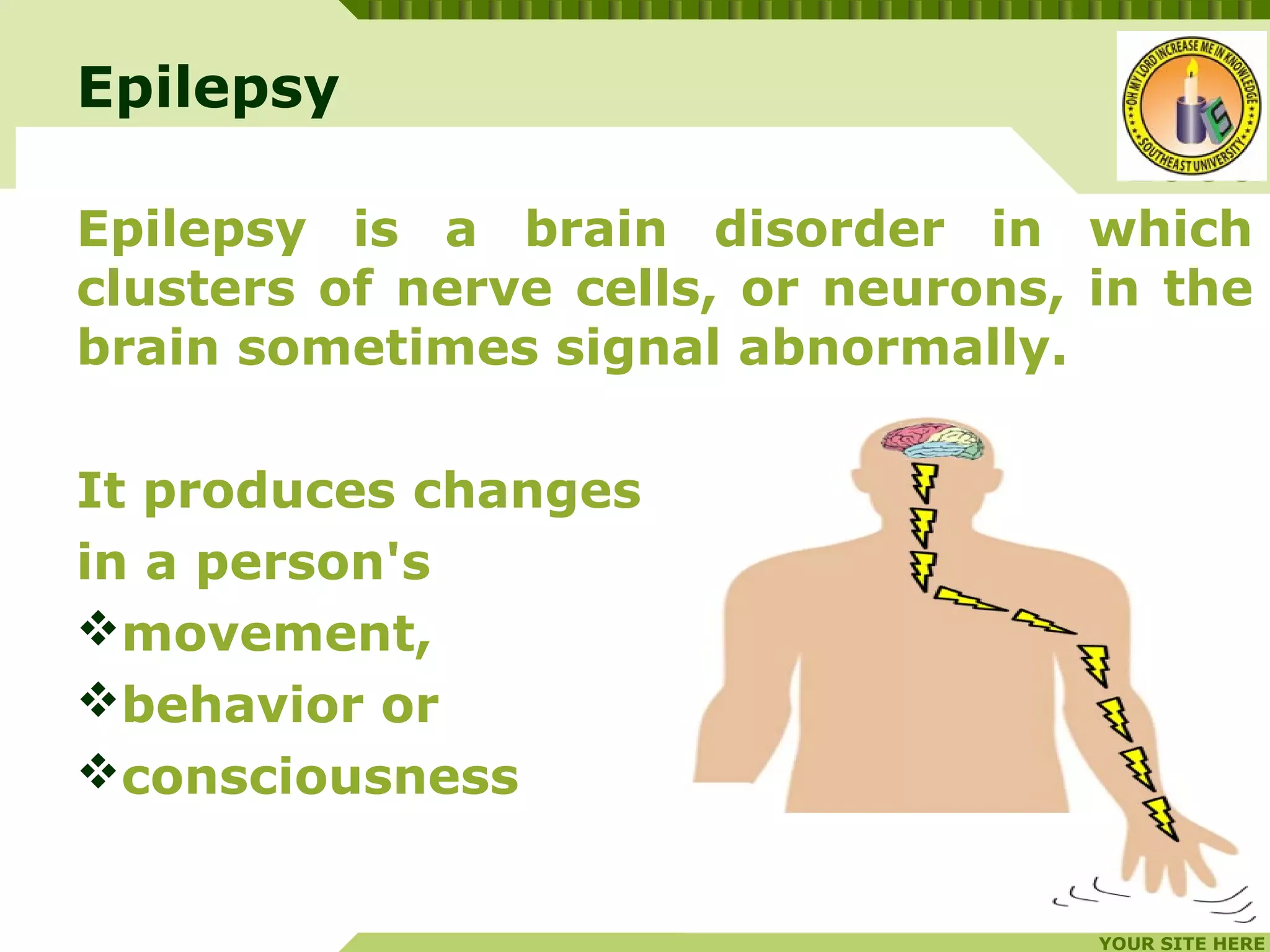
Epilepsy is a brain disorder in which
clusters of nerve cells, or neurons, in the
brain sometimes signal abnormally.
It produces changes
in a person's
movement,
behavior or
consciousness
YOUR SITE HERE
LOGO
Epidemiology
About 1% of people worldwide
(65 million) have epilepsy, and nearly
80% of cases occur in developing
countries.
More than 2 million people in the
United States -- about 1 in 100 -- have
experienced an unprovoked seizure or
been diagnosed with epilepsy.
YOUR SITE HERE
LOGO
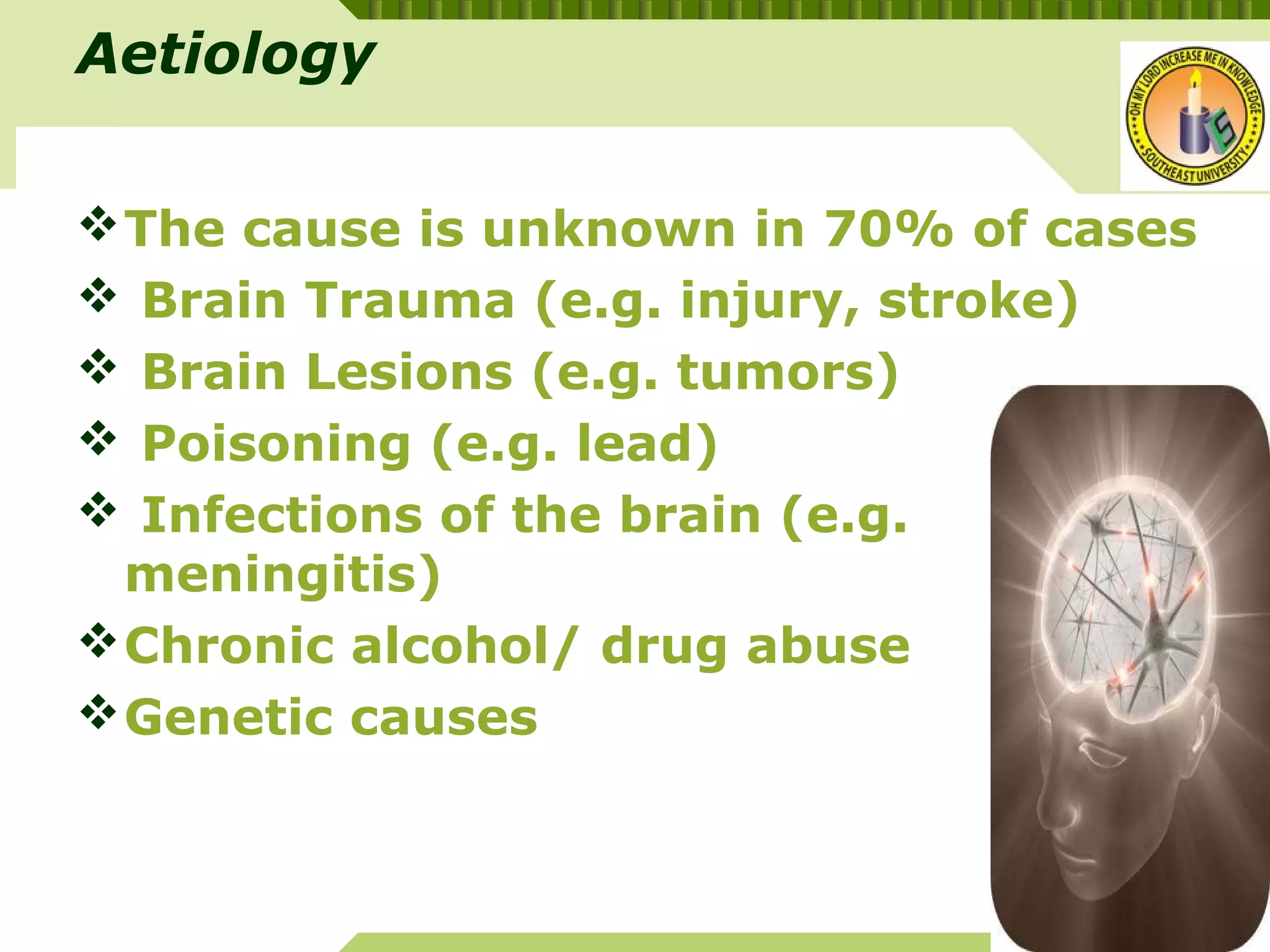
Aetiology
The cause is unknown in 70% of cases
 Brain Trauma (e.g. injury, stroke)
 Brain Lesions (e.g. tumors)
 Poisoning (e.g. lead)
 Infections of the brain (e.g.
meningitis)
Chronic alcohol/ drug abuse
Genetic causes
YOUR SITE HERE
LOGO
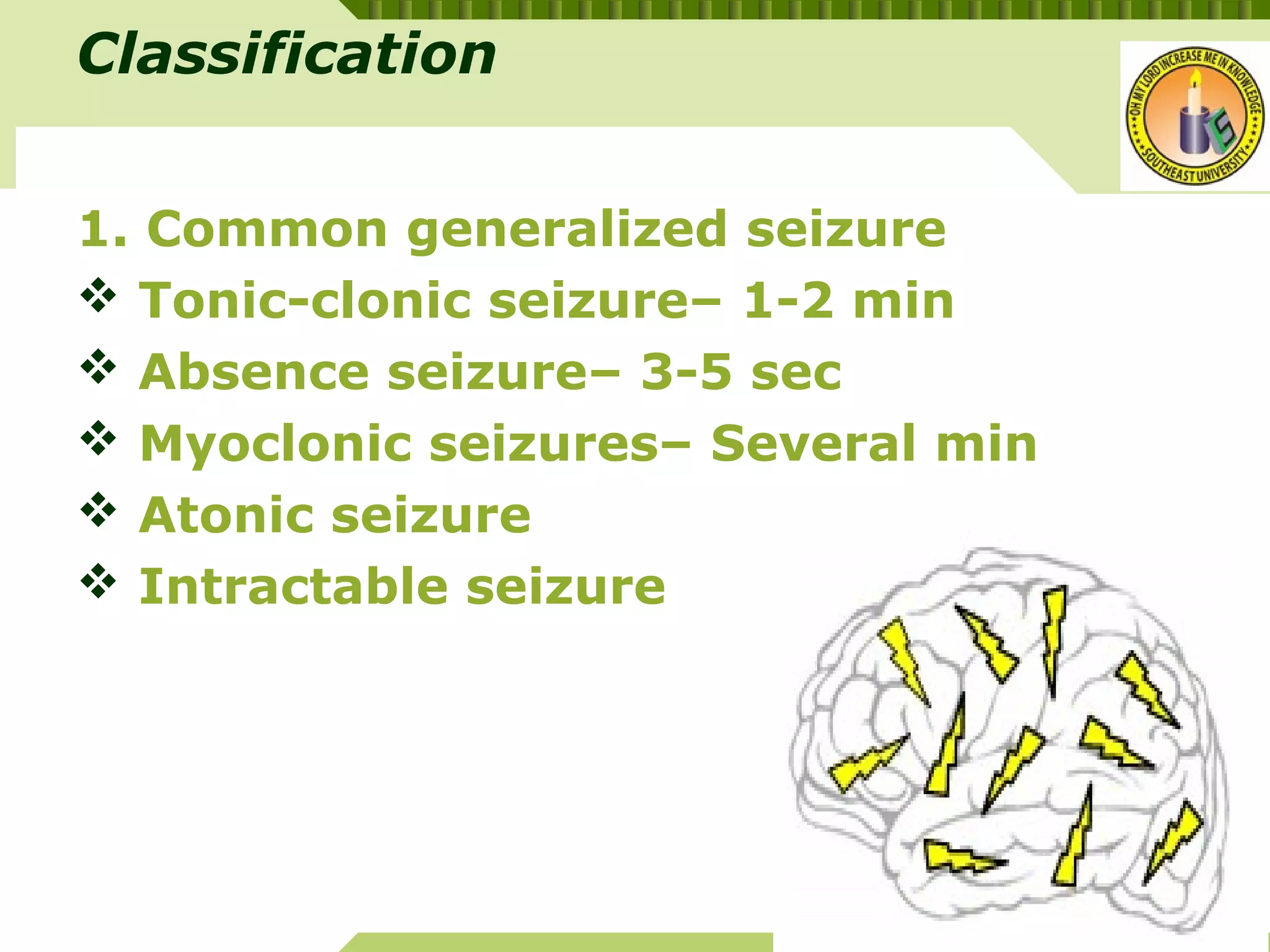
Classification
1. Common generalized seizure
 Tonic-clonic seizure– 1-2 min
 Absence seizure– 3-5 sec
 Myoclonic seizures– Several min
 Atonic seizure
 Intractable seizure
YOUR SITE HERE
LOGO
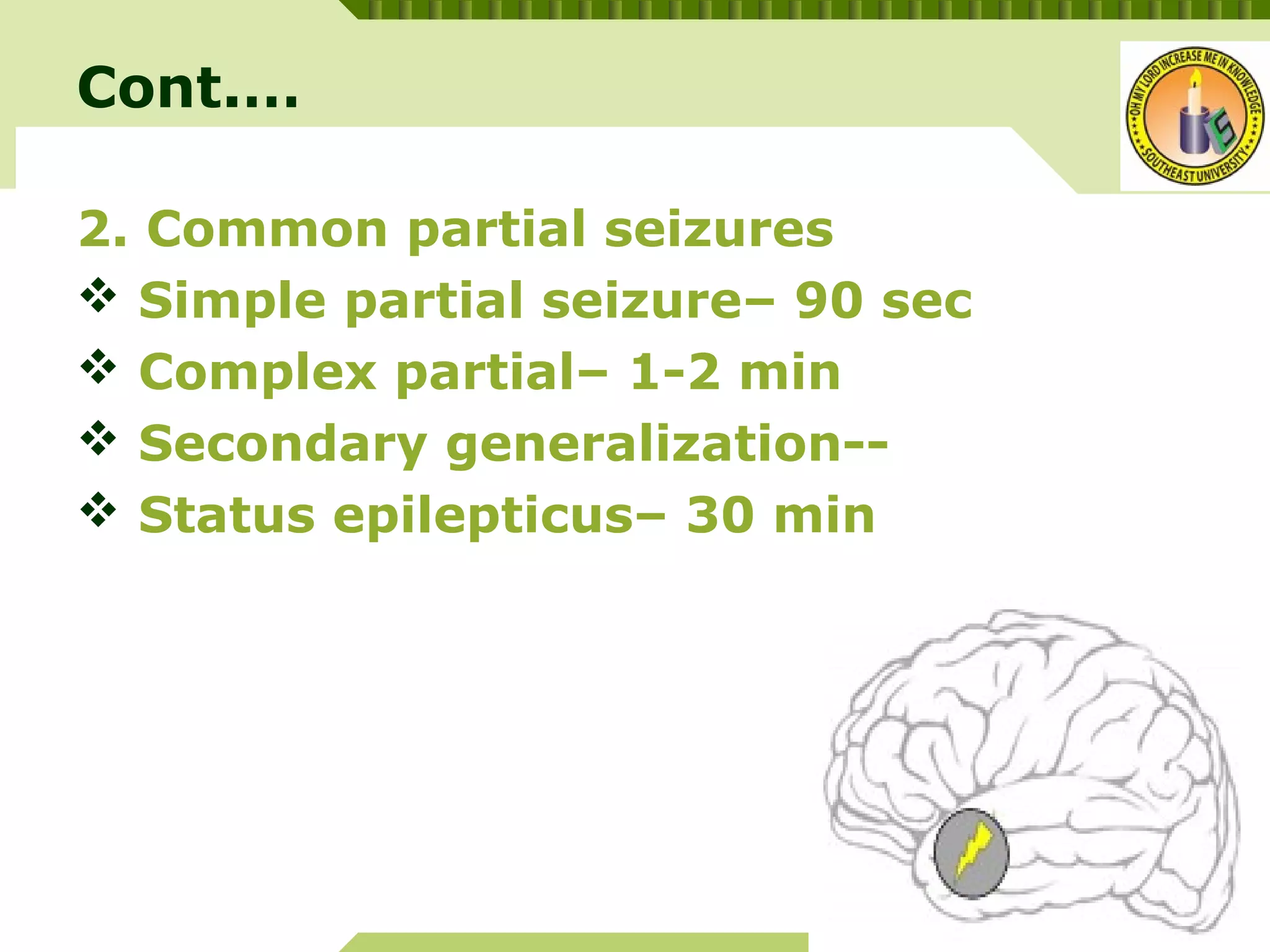
Cont.…
2. Common partial seizures
 Simple partial seizure– 90 sec
 Complex partial– 1-2 min
 Secondary generalization--
 Status epilepticus– 30 min
YOUR SITE HERE
LOGO
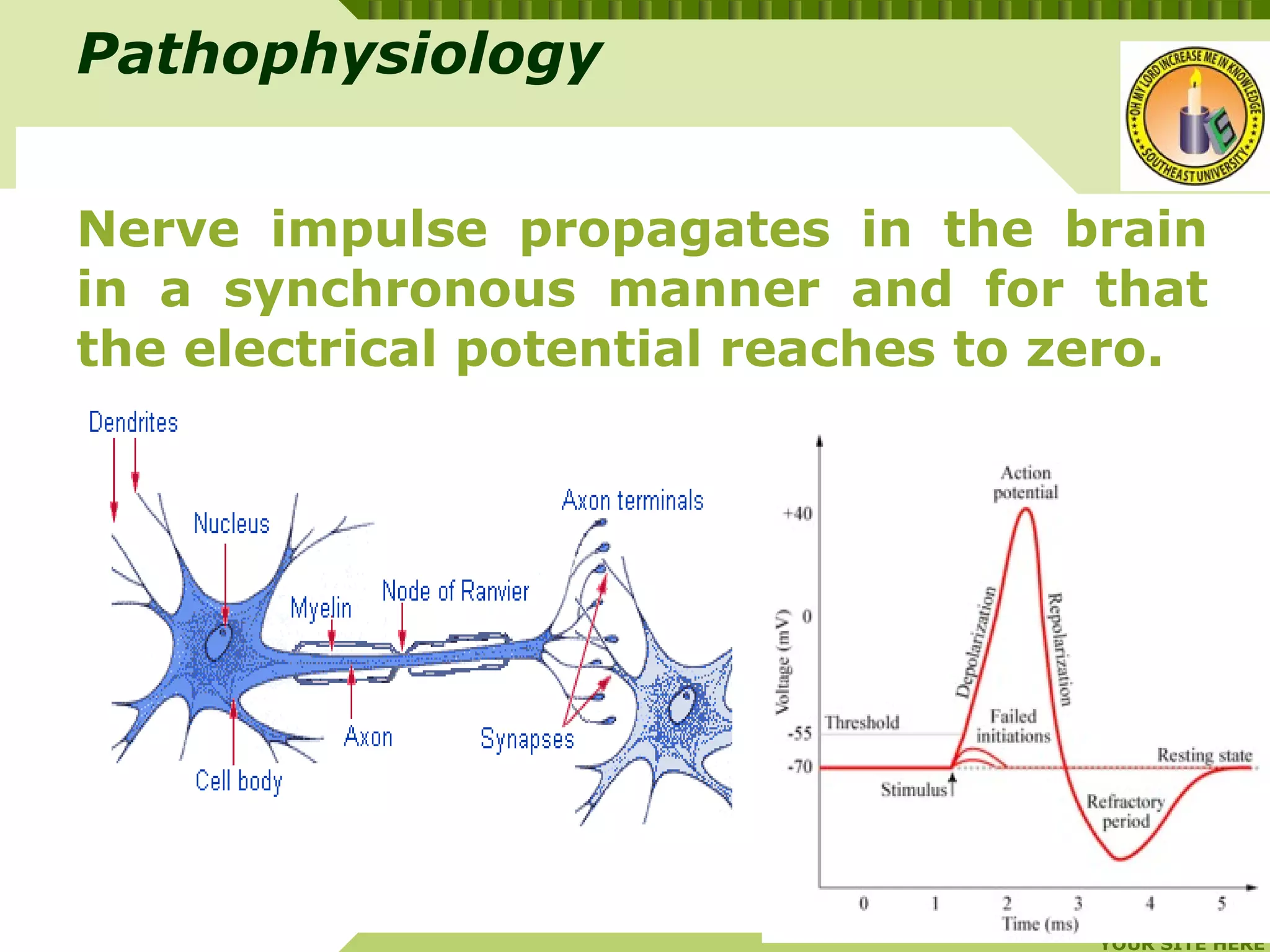
Nerve impulse propagates in the brain
in a synchronous manner and for that
the electrical potential reaches to zero.
Pathophysiology
YOUR SITE HERE
LOGO
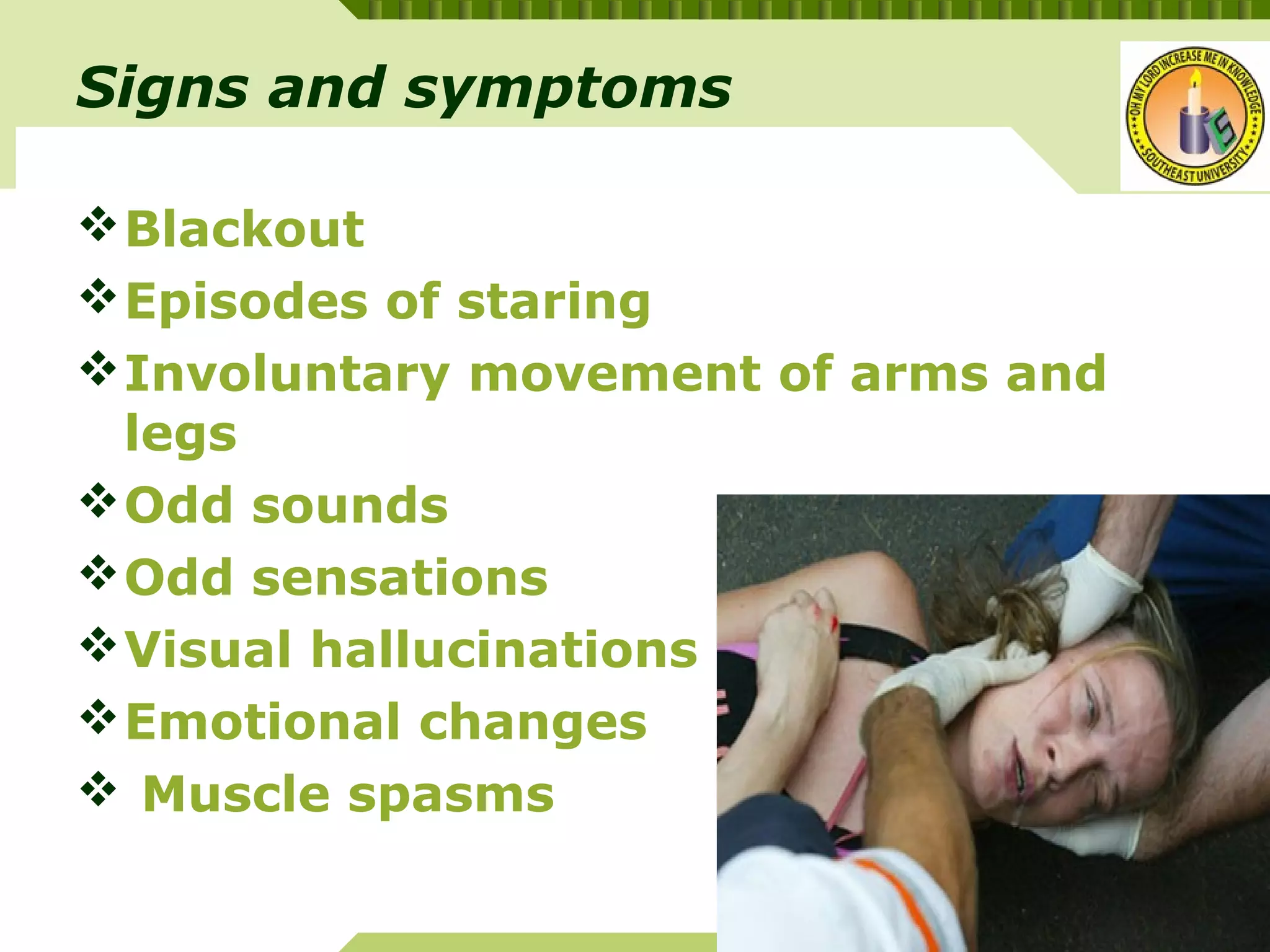
Blackout
Episodes of staring
Involuntary movement of arms and
legs
Odd sounds
Odd sensations
Visual hallucinations
Emotional changes
 Muscle spasms
Signs and symptoms
YOUR SITE HERE
LOGO
1. Medications
Hydantoins: phenytoin
Barbiturates: phenobarbitone
Iminostilbene: carbamazepine
Succinimide: ethosuximide
GABA transaminase inhibitiors:
valproic acid
Benzodiazepines: diazepam
GABA analouges: vigabatrin
Management
YOUR SITE HERE
LOGO
Mechanism of action
 Na+ , Ca++
Adverse effects
 Epigastric pain
 Ataxia
 Anorexia
Dose
20mg/kg
Phenytion
YOUR SITE HERE
LOGO
Mechanism of action:
Na+
Adverse effects :
Vertigo
Blurring of vision
Dizziness
Dose :
200-400 mg
Carbamazepine
YOUR SITE HERE
LOGO
Mechanism of action :
Ca++
Adverse effects:
Lethargy,
Euphoria,
Leukopenia,
Urticaria
Ethosuximide
YOUR SITE HERE
LOGO
Valproic acid
Mechanism of action :
 GABA, Na+ , Ca++
Adverse effects:
Tremors
Rashes
Alopecia
YOUR SITE HERE
LOGO
Diazepam & Vigabatrine
Diazepam is a drug of choice in
status epilepticus and febrile
convulsions
Vigabatrine is an GABA analouge
which acts by irreversibily inhibiting
the enzyme GABA transminase
thereby raising brain GABA levels
YOUR SITE HERE
LOGO
2. Surgery
The goal of surgery is total control of
seizures and this may be achieved in
60–70% of cases.
3. Other
A ketogenic diet
Sensitive to light, wearing dark
glasses may be useful
Seizure response dogs
Cont.…
YOUR SITE HERE
LOGO
 Brunton, Laurence L. et al., eds. Goodman and Gilman’s The Pharmacological
Basis of Therapeutics. 12th
ed. New York: Mc Graw Hill, 2011. Print.
 Katzung, Bertram G. et al., Basic and Clinical Pharmacology. 12th
ed. New York:
Mc Graw Hill, 2012. Print.
 Clark, Michelle A. et al., Lippincott’s Illustrated Reviews Pharmacology. 5th
ed.
New York: Lippincott Williams & Wilkins, 2012. Print.
 Rang, H P. et al., Rang and Dales Pharmacology. 7th
ed. New York: Churchill
Livingstone Elsevier, 2012. Print.
 Brody,Theodore M. et al., Human Pharmacology: Molecular to Clinical. 2th
ed.
United Stated of America: Mosby, 1994. Print.
 Golan, David E. et al., eds. Principles of Pharmacology: The Pathophysiologic
Basis of Drug Therapy. 1th
ed. New York: Lippincott Williams & Wilkins, 2005.
Print.
 Goth, Andres. et al., eds. Medical Pharmacology: Principles and Concept. 11th
ed. United Stated of America: Mosby, 1984. Print.
 Jacob, Leonard S. NMS Pharmacology. 4th
ed. London: Williams & Wilkins,
1996. Print.
 Berry, Tricia M. Clinical Pharmacology Made Incredibly Easy. 3th
ed. New York:
Lippincott Williams & Wilkins, 2009. Print.
 Craig, Charles R. et al., Modern Pharmacology with Clinical Applications. 6th
ed.
New York: Lippincott Williams & Wilkins, 2009. Print.
References
YOUR SITE HERE
LOGO
Any ?

Epilepsy & its management

  • 1.
  • 2.
    YOUR SITE HERE LOGO 1.Epilepsy 2. Epidemiology 3. Aetiology 4. Classification Outline 5. 5. Pathophysiology 6. Signs and symptoms 7. Management
  • 3.
    YOUR SITE HERE LOGO Epilepsy Epilepsyis a brain disorder in which clusters of nerve cells, or neurons, in the brain sometimes signal abnormally. It produces changes in a person's movement, behavior or consciousness
  • 4.
    YOUR SITE HERE LOGO Epidemiology About1% of people worldwide (65 million) have epilepsy, and nearly 80% of cases occur in developing countries. More than 2 million people in the United States -- about 1 in 100 -- have experienced an unprovoked seizure or been diagnosed with epilepsy.
  • 5.
    YOUR SITE HERE LOGO Aetiology Thecause is unknown in 70% of cases  Brain Trauma (e.g. injury, stroke)  Brain Lesions (e.g. tumors)  Poisoning (e.g. lead)  Infections of the brain (e.g. meningitis) Chronic alcohol/ drug abuse Genetic causes
  • 6.
    YOUR SITE HERE LOGO Classification 1.Common generalized seizure  Tonic-clonic seizure– 1-2 min  Absence seizure– 3-5 sec  Myoclonic seizures– Several min  Atonic seizure  Intractable seizure
  • 7.
    YOUR SITE HERE LOGO Cont.… 2.Common partial seizures  Simple partial seizure– 90 sec  Complex partial– 1-2 min  Secondary generalization--  Status epilepticus– 30 min
  • 8.
    YOUR SITE HERE LOGO Nerveimpulse propagates in the brain in a synchronous manner and for that the electrical potential reaches to zero. Pathophysiology
  • 9.
    YOUR SITE HERE LOGO Blackout Episodesof staring Involuntary movement of arms and legs Odd sounds Odd sensations Visual hallucinations Emotional changes  Muscle spasms Signs and symptoms
  • 10.
    YOUR SITE HERE LOGO 1.Medications Hydantoins: phenytoin Barbiturates: phenobarbitone Iminostilbene: carbamazepine Succinimide: ethosuximide GABA transaminase inhibitiors: valproic acid Benzodiazepines: diazepam GABA analouges: vigabatrin Management
  • 11.
    YOUR SITE HERE LOGO Mechanismof action  Na+ , Ca++ Adverse effects  Epigastric pain  Ataxia  Anorexia Dose 20mg/kg Phenytion
  • 12.
    YOUR SITE HERE LOGO Mechanismof action: Na+ Adverse effects : Vertigo Blurring of vision Dizziness Dose : 200-400 mg Carbamazepine
  • 13.
    YOUR SITE HERE LOGO Mechanismof action : Ca++ Adverse effects: Lethargy, Euphoria, Leukopenia, Urticaria Ethosuximide
  • 14.
    YOUR SITE HERE LOGO Valproicacid Mechanism of action :  GABA, Na+ , Ca++ Adverse effects: Tremors Rashes Alopecia
  • 15.
    YOUR SITE HERE LOGO Diazepam& Vigabatrine Diazepam is a drug of choice in status epilepticus and febrile convulsions Vigabatrine is an GABA analouge which acts by irreversibily inhibiting the enzyme GABA transminase thereby raising brain GABA levels
  • 16.
    YOUR SITE HERE LOGO 2.Surgery The goal of surgery is total control of seizures and this may be achieved in 60–70% of cases. 3. Other A ketogenic diet Sensitive to light, wearing dark glasses may be useful Seizure response dogs Cont.…
  • 17.
    YOUR SITE HERE LOGO Brunton, Laurence L. et al., eds. Goodman and Gilman’s The Pharmacological Basis of Therapeutics. 12th ed. New York: Mc Graw Hill, 2011. Print.  Katzung, Bertram G. et al., Basic and Clinical Pharmacology. 12th ed. New York: Mc Graw Hill, 2012. Print.  Clark, Michelle A. et al., Lippincott’s Illustrated Reviews Pharmacology. 5th ed. New York: Lippincott Williams & Wilkins, 2012. Print.  Rang, H P. et al., Rang and Dales Pharmacology. 7th ed. New York: Churchill Livingstone Elsevier, 2012. Print.  Brody,Theodore M. et al., Human Pharmacology: Molecular to Clinical. 2th ed. United Stated of America: Mosby, 1994. Print.  Golan, David E. et al., eds. Principles of Pharmacology: The Pathophysiologic Basis of Drug Therapy. 1th ed. New York: Lippincott Williams & Wilkins, 2005. Print.  Goth, Andres. et al., eds. Medical Pharmacology: Principles and Concept. 11th ed. United Stated of America: Mosby, 1984. Print.  Jacob, Leonard S. NMS Pharmacology. 4th ed. London: Williams & Wilkins, 1996. Print.  Berry, Tricia M. Clinical Pharmacology Made Incredibly Easy. 3th ed. New York: Lippincott Williams & Wilkins, 2009. Print.  Craig, Charles R. et al., Modern Pharmacology with Clinical Applications. 6th ed. New York: Lippincott Williams & Wilkins, 2009. Print. References
  • 18.