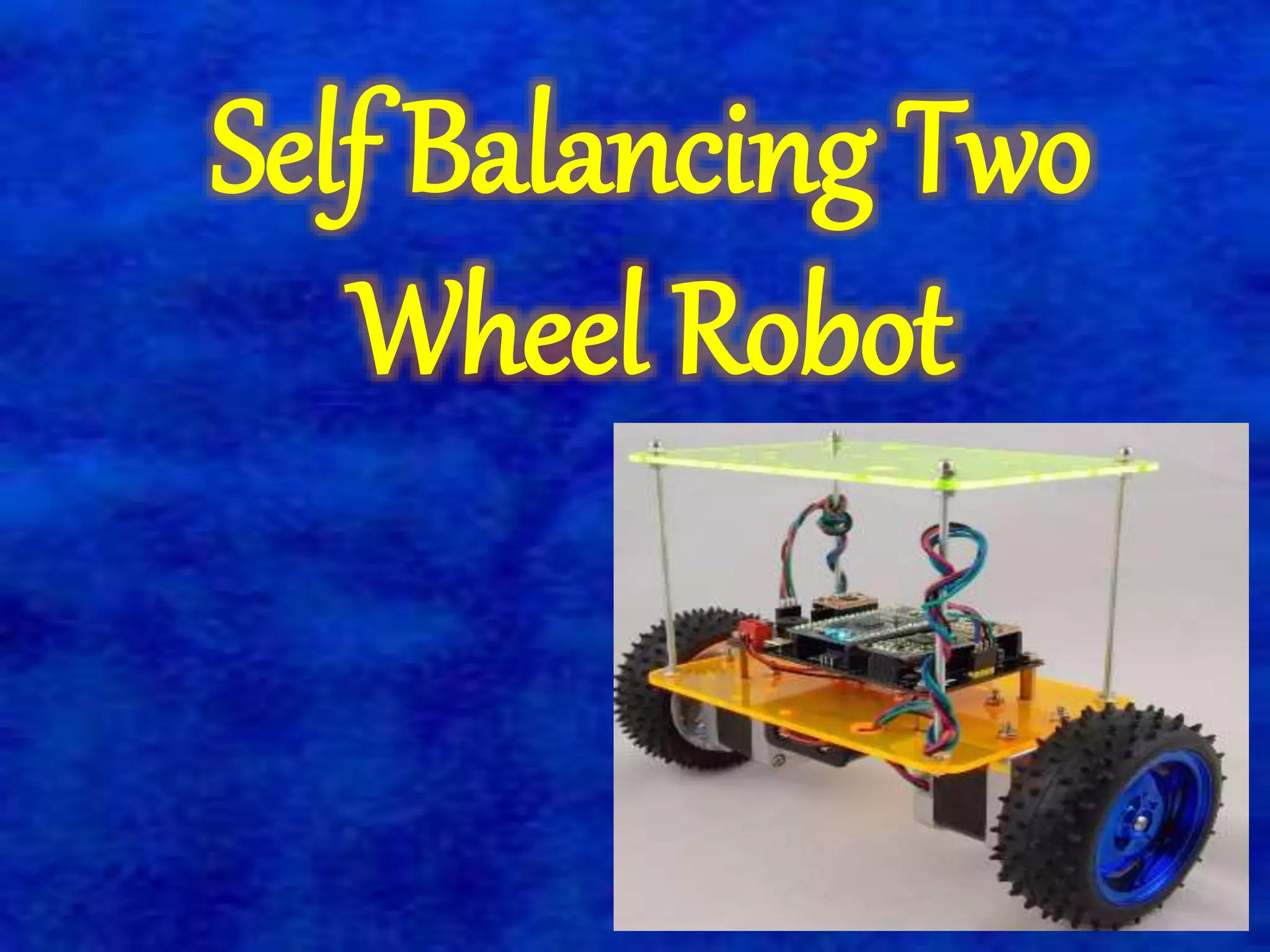
Self Balancing Two 
Wheel Robot
Basic Aim 
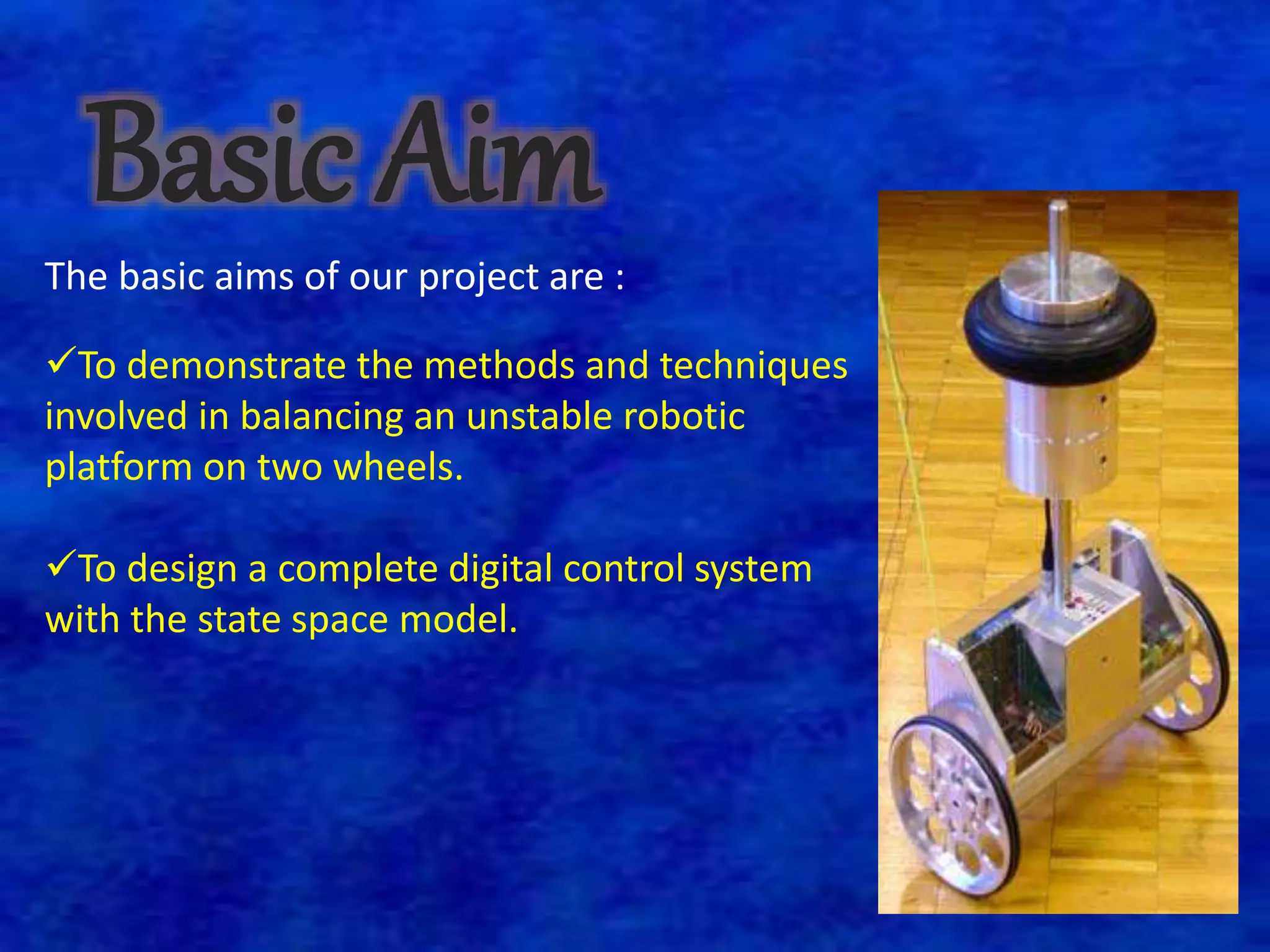
The basic aims of our project are : 
To demonstrate the methods and techniques 
involved in balancing an unstable robotic 
platform on two wheels. 
To design a complete digital control system 
with the state space model.
Abstract 
The purpose of our project is to balance a robot 
automatically using motors, sensors and a microprocessor. 
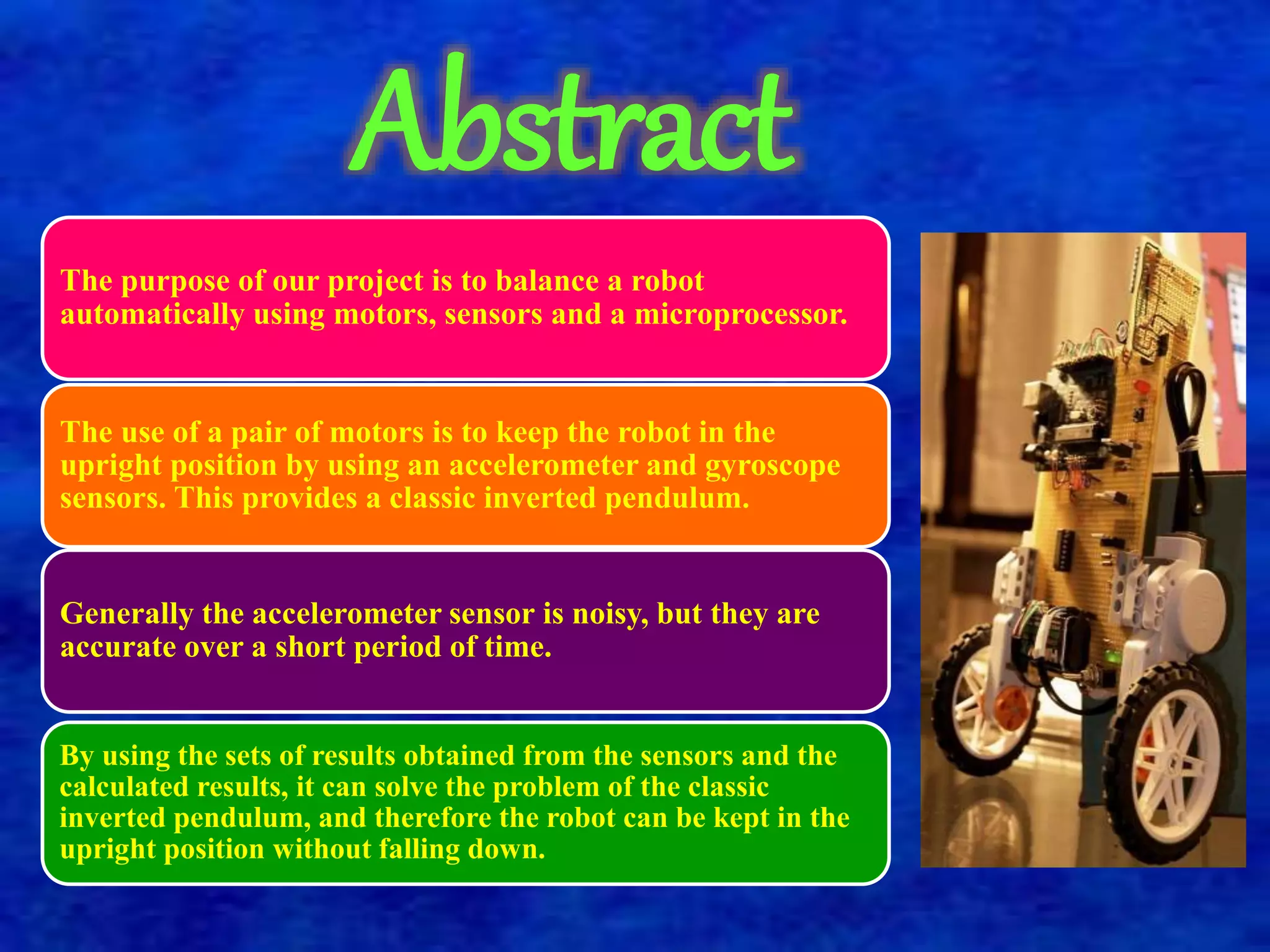
The use of a pair of motors is to keep the robot in the 
upright position by using an accelerometer and gyroscope 
sensors. This provides a classic inverted pendulum. 
Generally the accelerometer sensor is noisy, but they are 
accurate over a short period of time. 
By using the sets of results obtained from the sensors and the 
calculated results, it can solve the problem of the classic 
inverted pendulum, and therefore the robot can be kept in the 
upright position without falling down.
Difference between balanced and unbalanced drives
Applications 
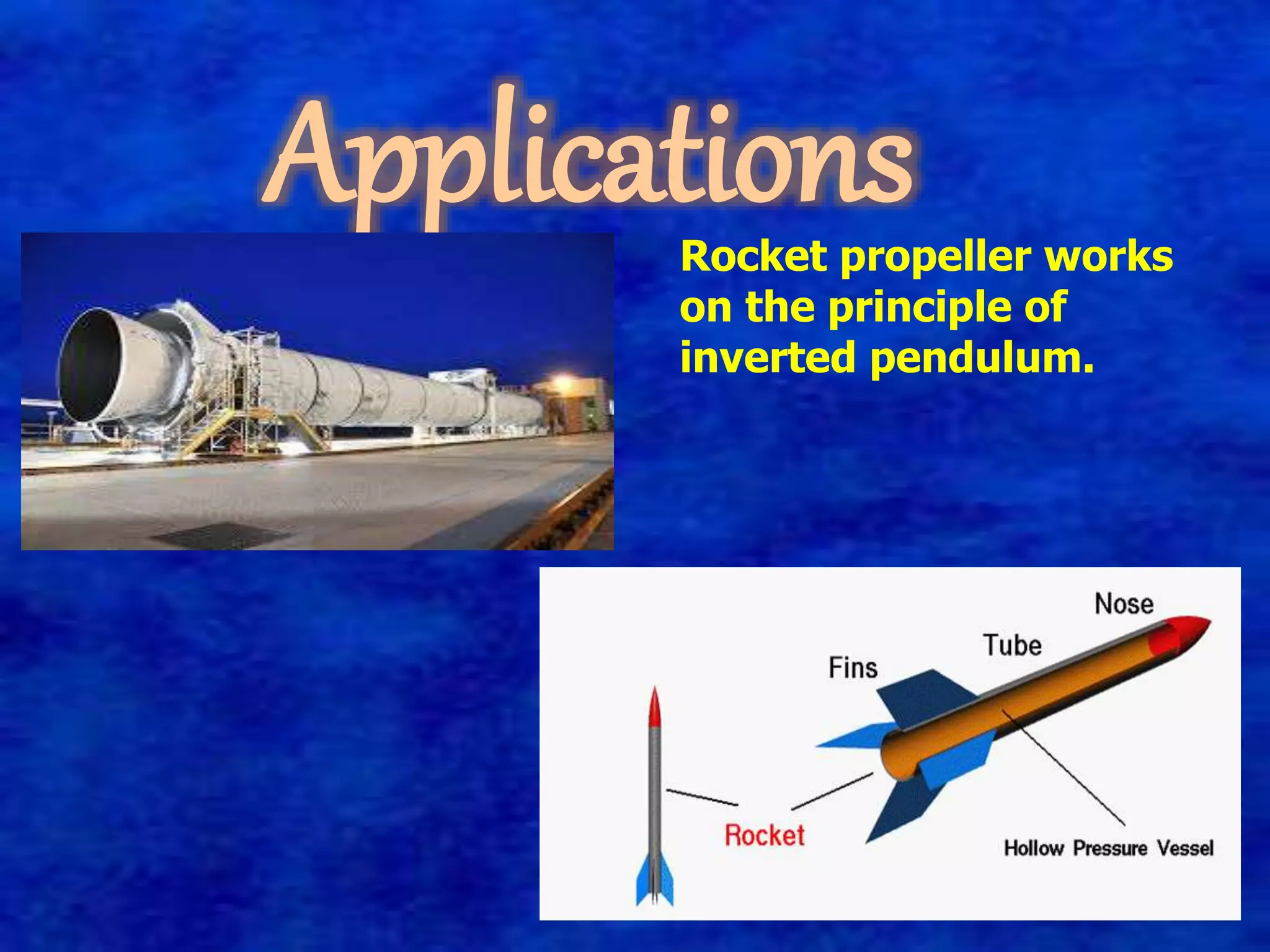
Rocket propeller works 
on the principle of 
inverted pendulum.
Applications 
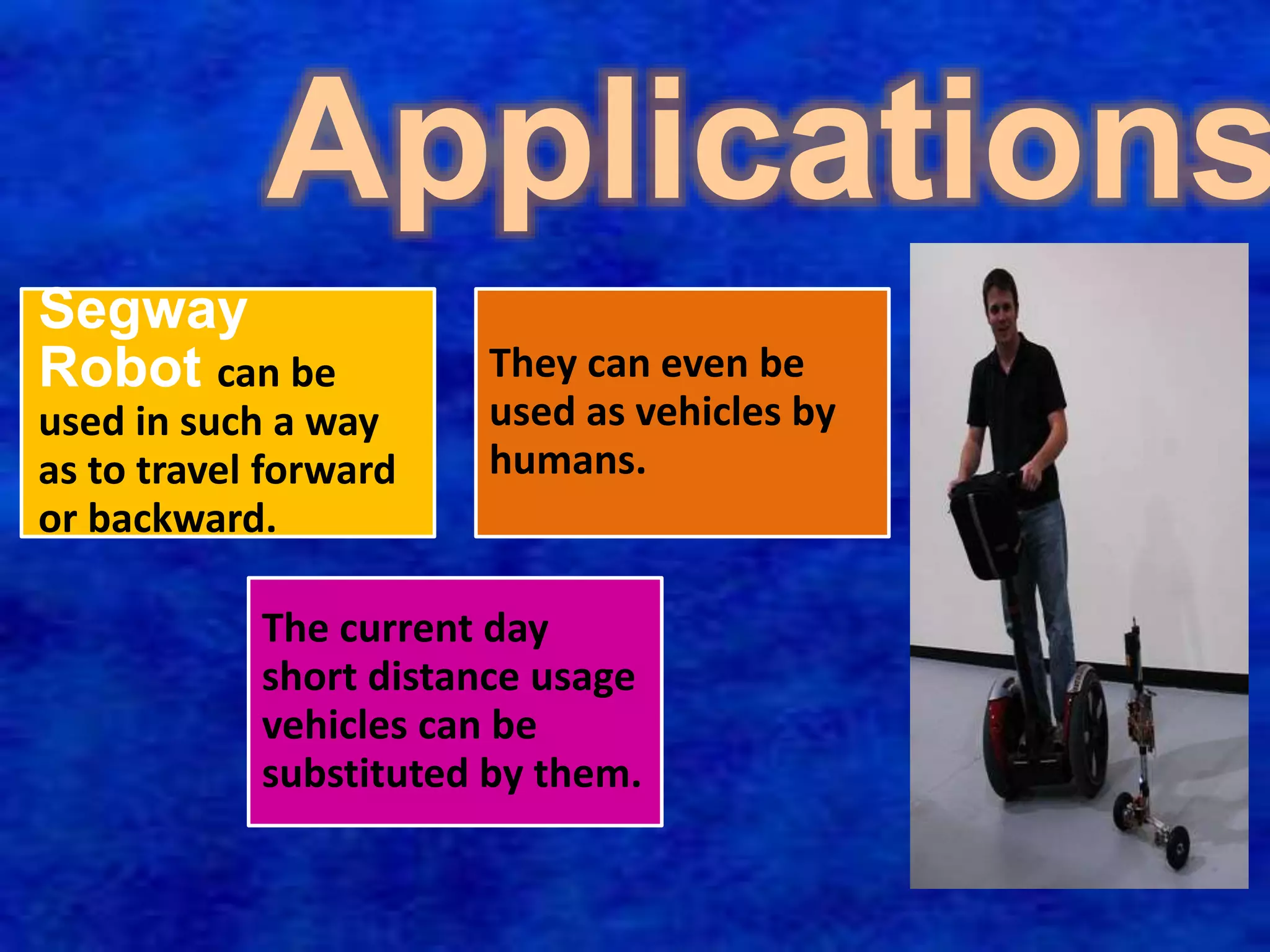
Segway 
Robot can be 
used in such a way 
as to travel forward 
or backward. 
They can even be 
used as vehicles by 
humans. 
The current day 
short distance usage 
vehicles can be 
substituted by them.
System Architecture 
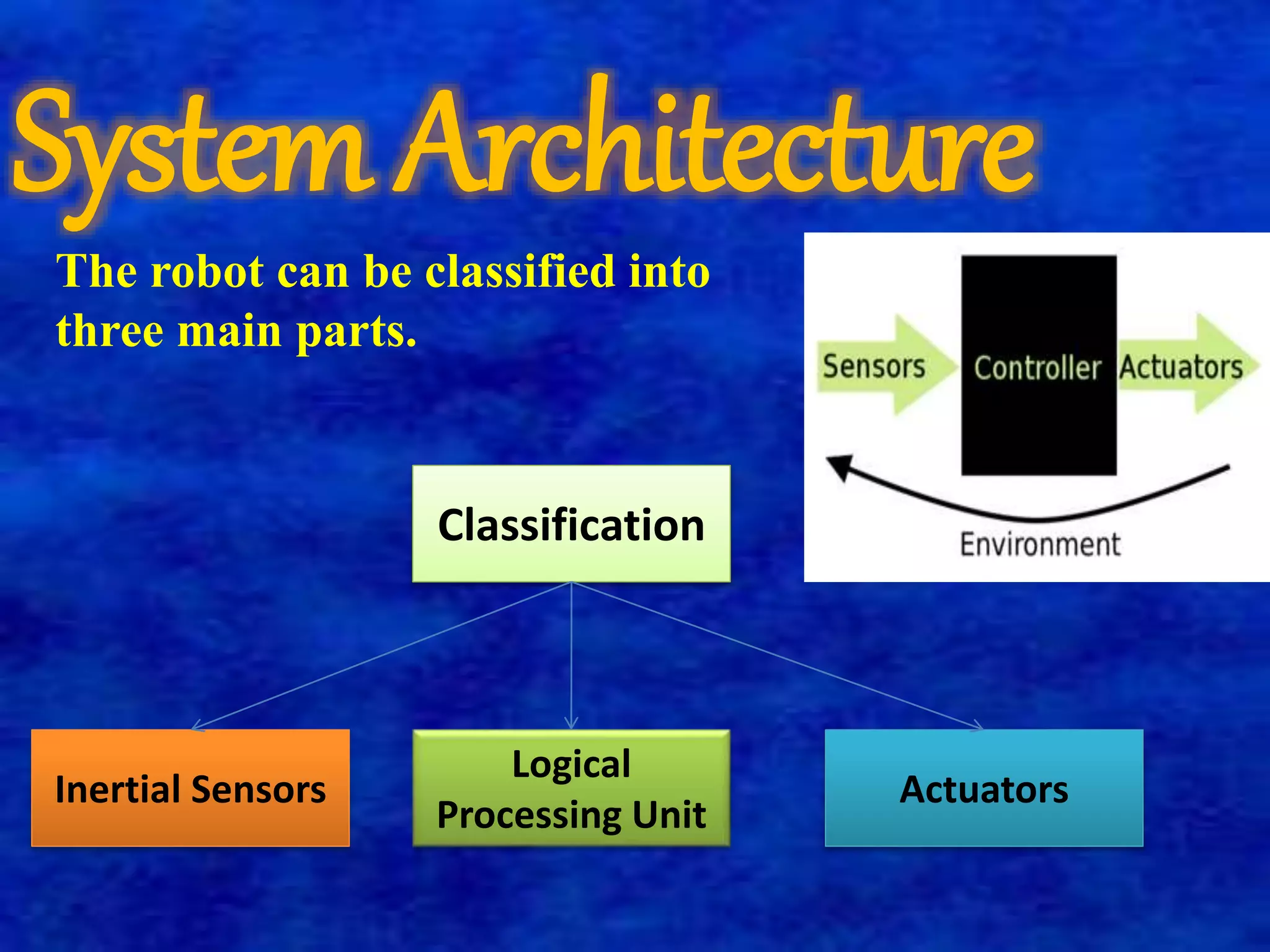
The robot can be classified into 
three main parts. 
Classification 
Inertial Sensors 
Logical 
Processing Unit 
Actuators
Inertial Sensor Unit 
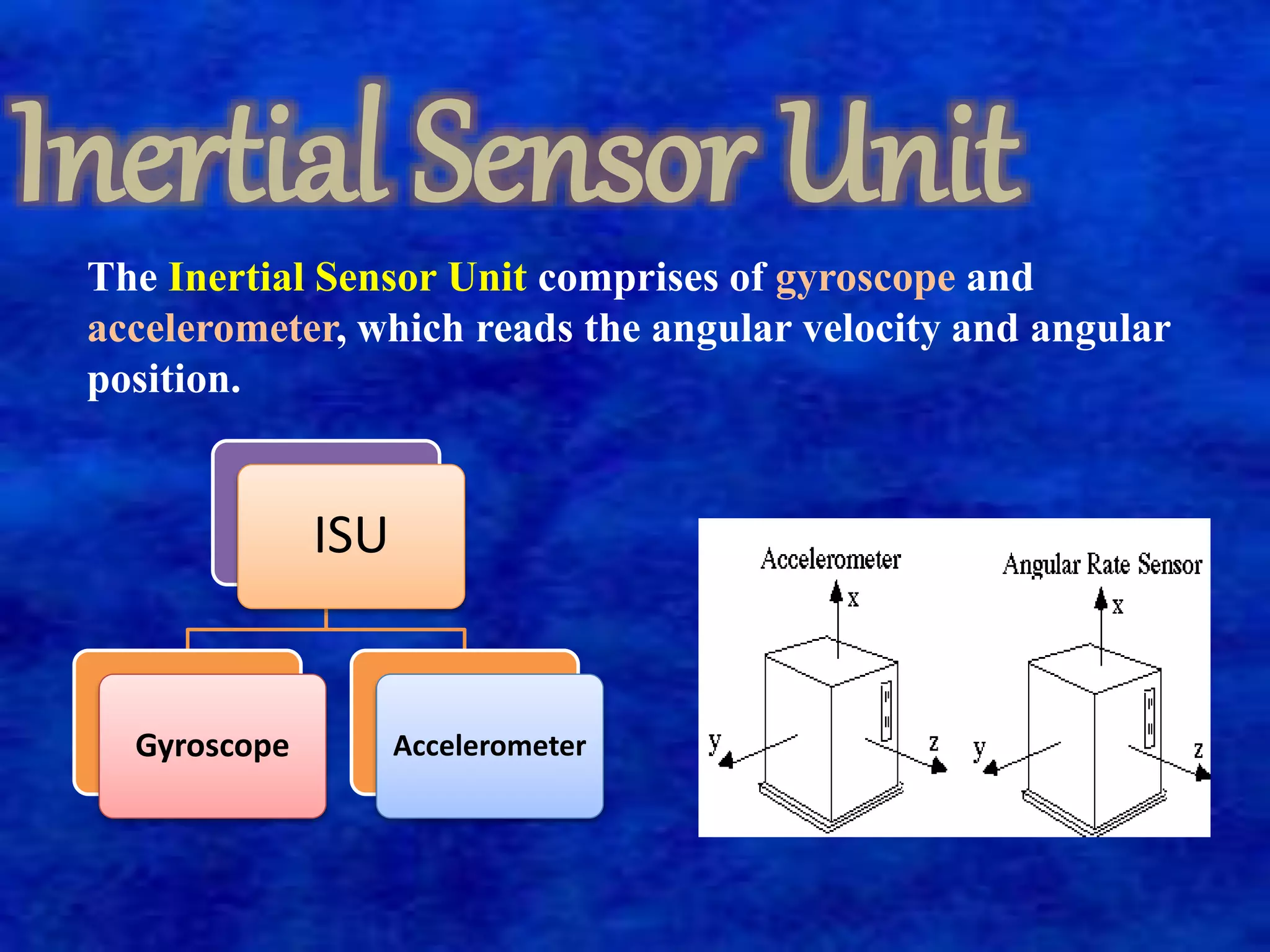
The Inertial Sensor Unit comprises of gyroscope and 
accelerometer, which reads the angular velocity and angular 
position. 
ISU 
Gyroscope Accelerometer
Actuator Unit 
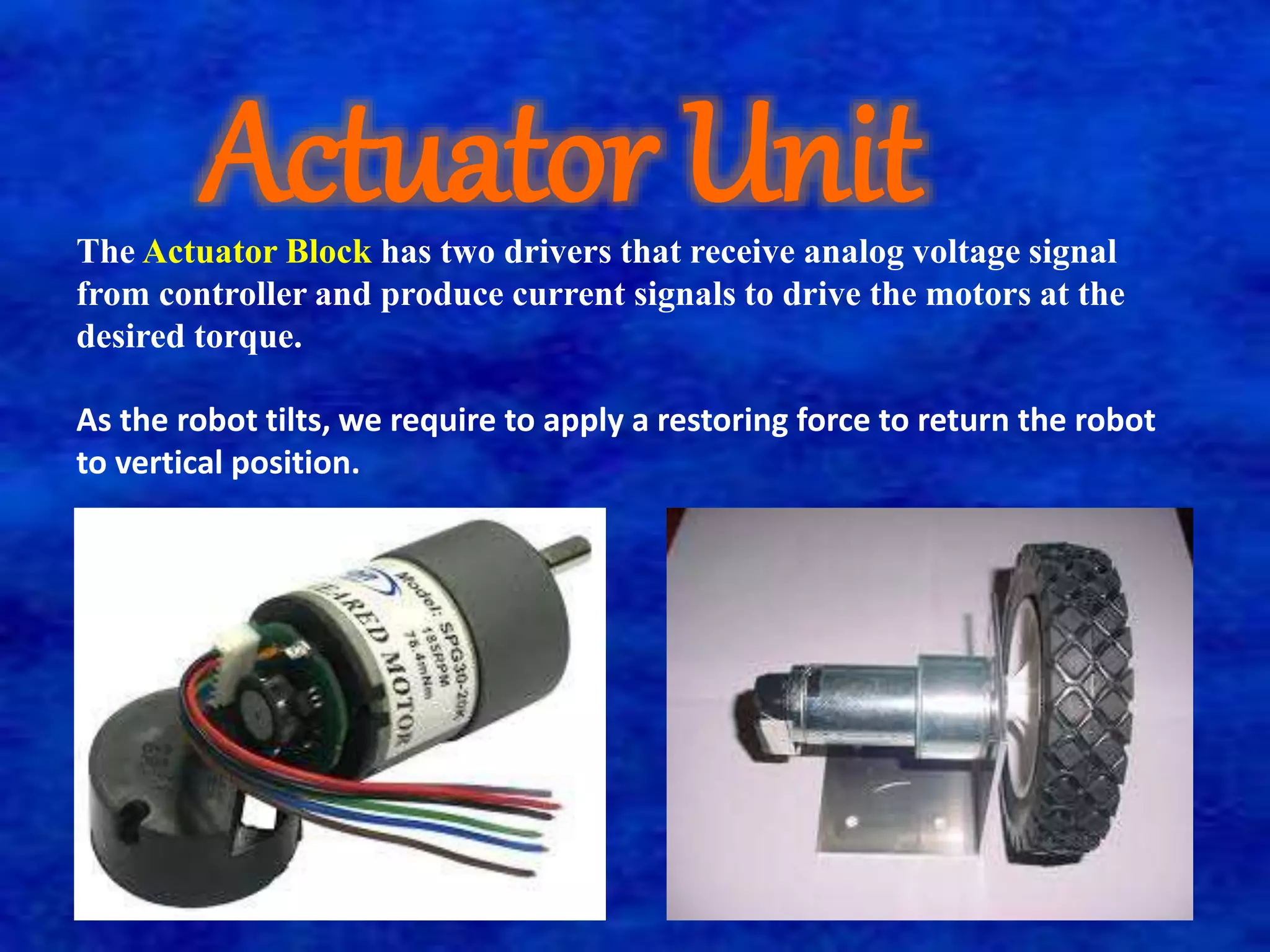
The Actuator Block has two drivers that receive analog voltage signal 
from controller and produce current signals to drive the motors at the 
desired torque. 
As the robot tilts, we require to apply a restoring force to return the robot 
to vertical position.
Logical Processing Unit 
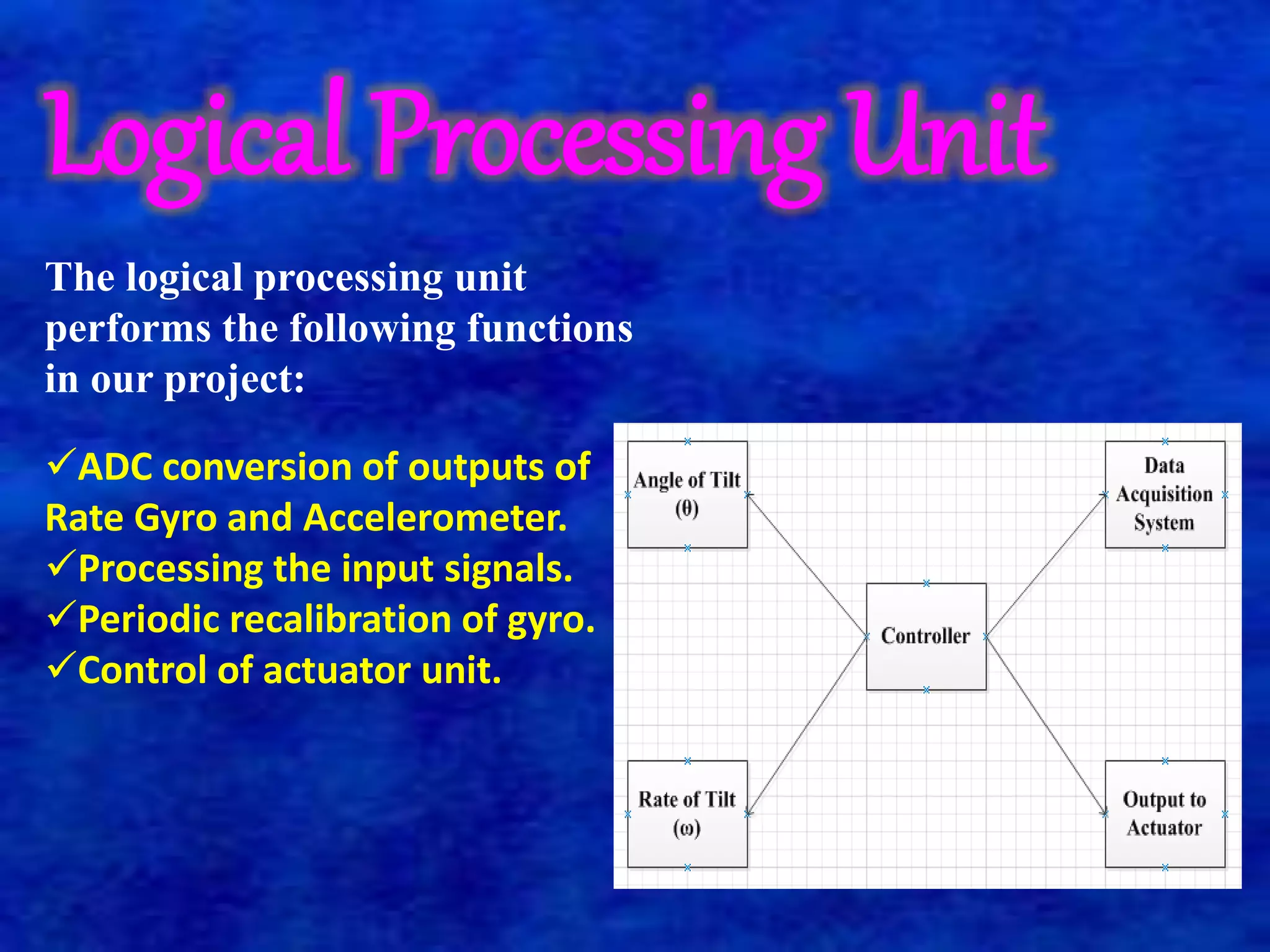
The logical processing unit 
performs the following functions 
in our project: 
ADC conversion of outputs of 
Rate Gyro and Accelerometer. 
Processing the input signals. 
Periodic recalibration of gyro. 
Control of actuator unit.
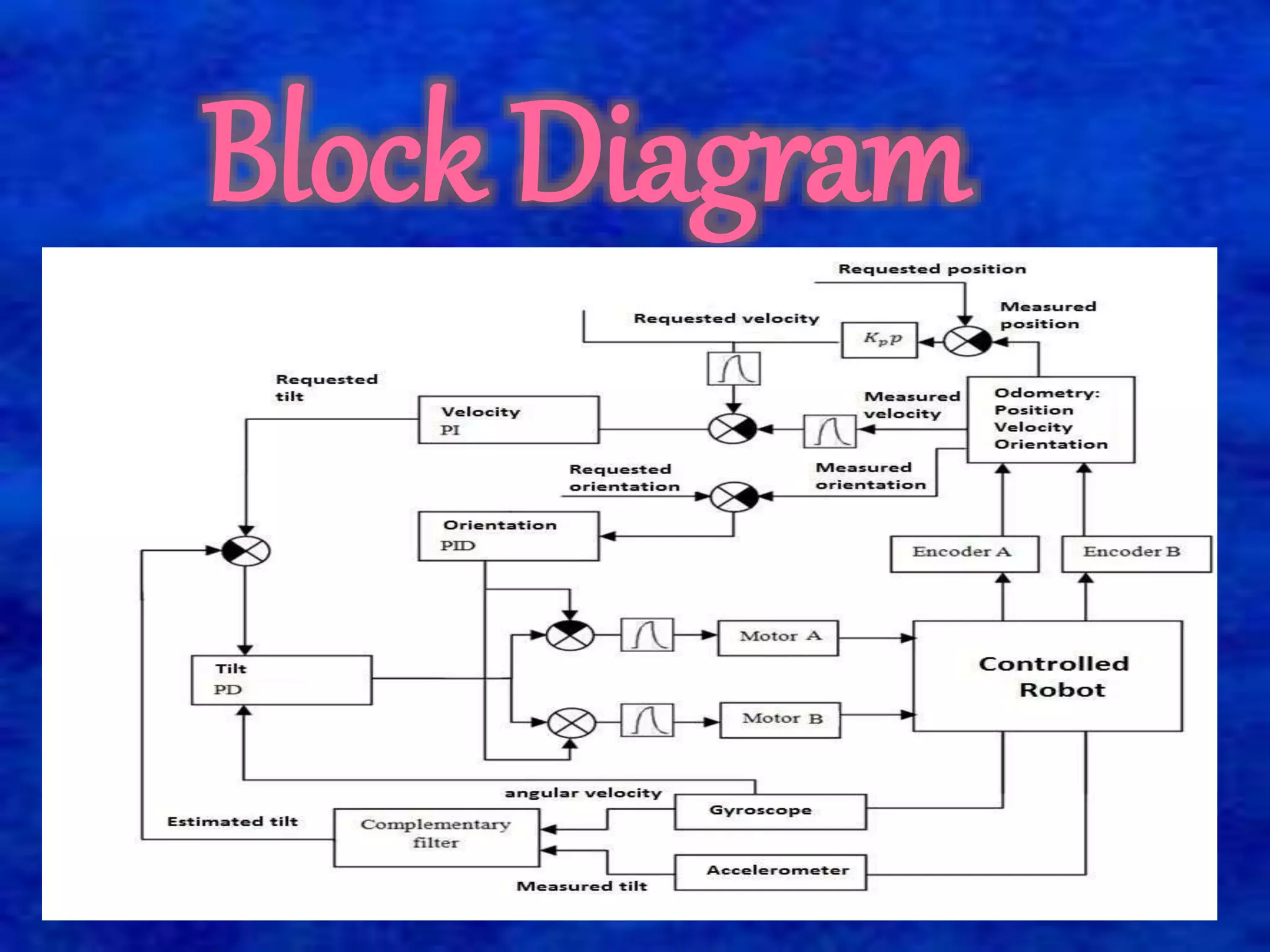
Block Diagram
.
 Two wheel self balancing robot

Two wheel self balancing robot

  • 1.
    Self Balancing Two Wheel Robot
  • 2.
    Basic Aim Thebasic aims of our project are : To demonstrate the methods and techniques involved in balancing an unstable robotic platform on two wheels. To design a complete digital control system with the state space model.
  • 3.
    Abstract The purposeof our project is to balance a robot automatically using motors, sensors and a microprocessor. The use of a pair of motors is to keep the robot in the upright position by using an accelerometer and gyroscope sensors. This provides a classic inverted pendulum. Generally the accelerometer sensor is noisy, but they are accurate over a short period of time. By using the sets of results obtained from the sensors and the calculated results, it can solve the problem of the classic inverted pendulum, and therefore the robot can be kept in the upright position without falling down.
  • 4.
    Difference between balancedand unbalanced drives
  • 5.
    Applications Rocket propellerworks on the principle of inverted pendulum.
  • 6.
    Applications Segway Robotcan be used in such a way as to travel forward or backward. They can even be used as vehicles by humans. The current day short distance usage vehicles can be substituted by them.
  • 7.
    System Architecture Therobot can be classified into three main parts. Classification Inertial Sensors Logical Processing Unit Actuators
  • 8.
    Inertial Sensor Unit The Inertial Sensor Unit comprises of gyroscope and accelerometer, which reads the angular velocity and angular position. ISU Gyroscope Accelerometer
  • 9.
    Actuator Unit TheActuator Block has two drivers that receive analog voltage signal from controller and produce current signals to drive the motors at the desired torque. As the robot tilts, we require to apply a restoring force to return the robot to vertical position.
  • 10.
    Logical Processing Unit The logical processing unit performs the following functions in our project: ADC conversion of outputs of Rate Gyro and Accelerometer. Processing the input signals. Periodic recalibration of gyro. Control of actuator unit.
  • 11.
  • 12.