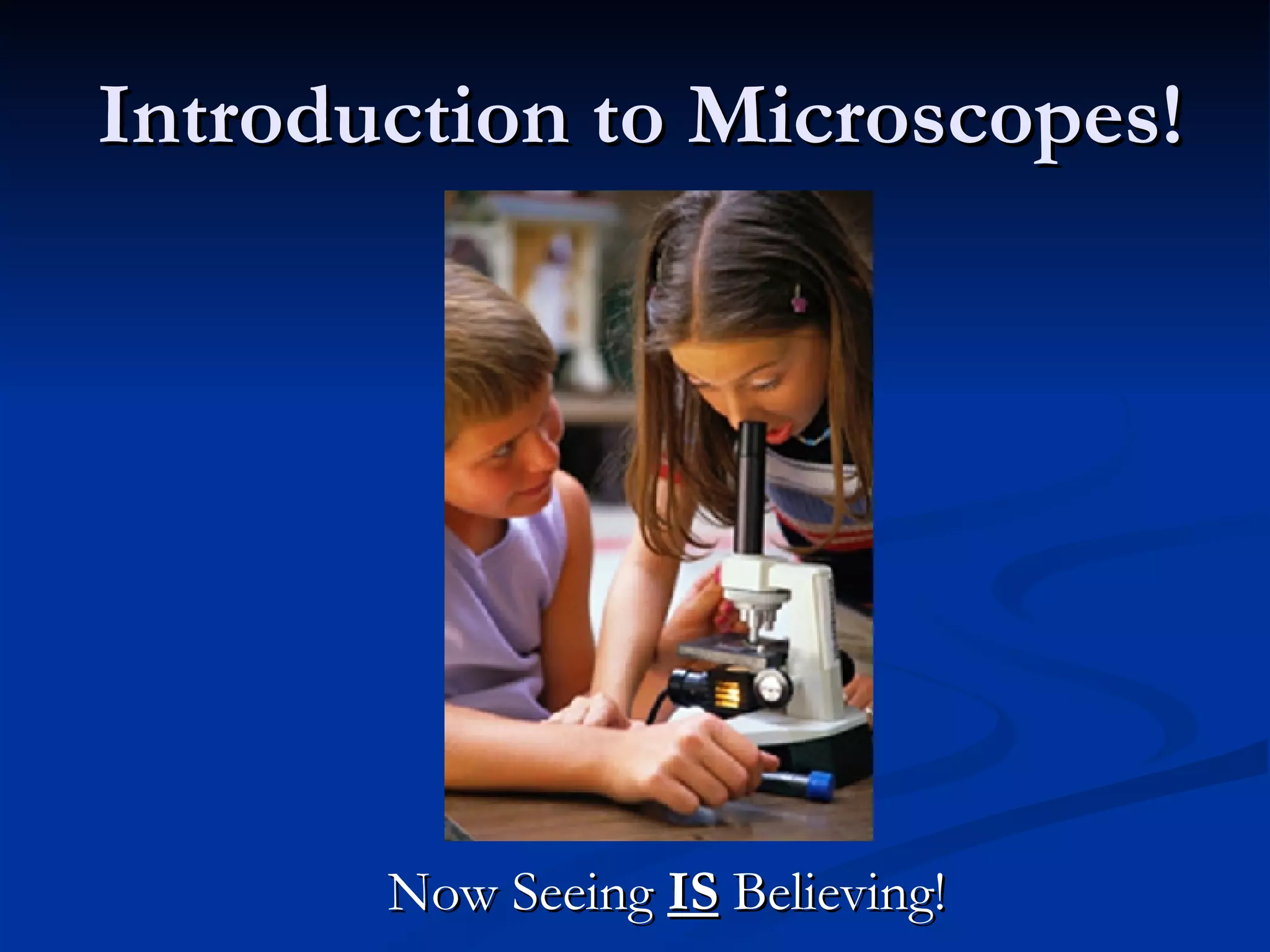
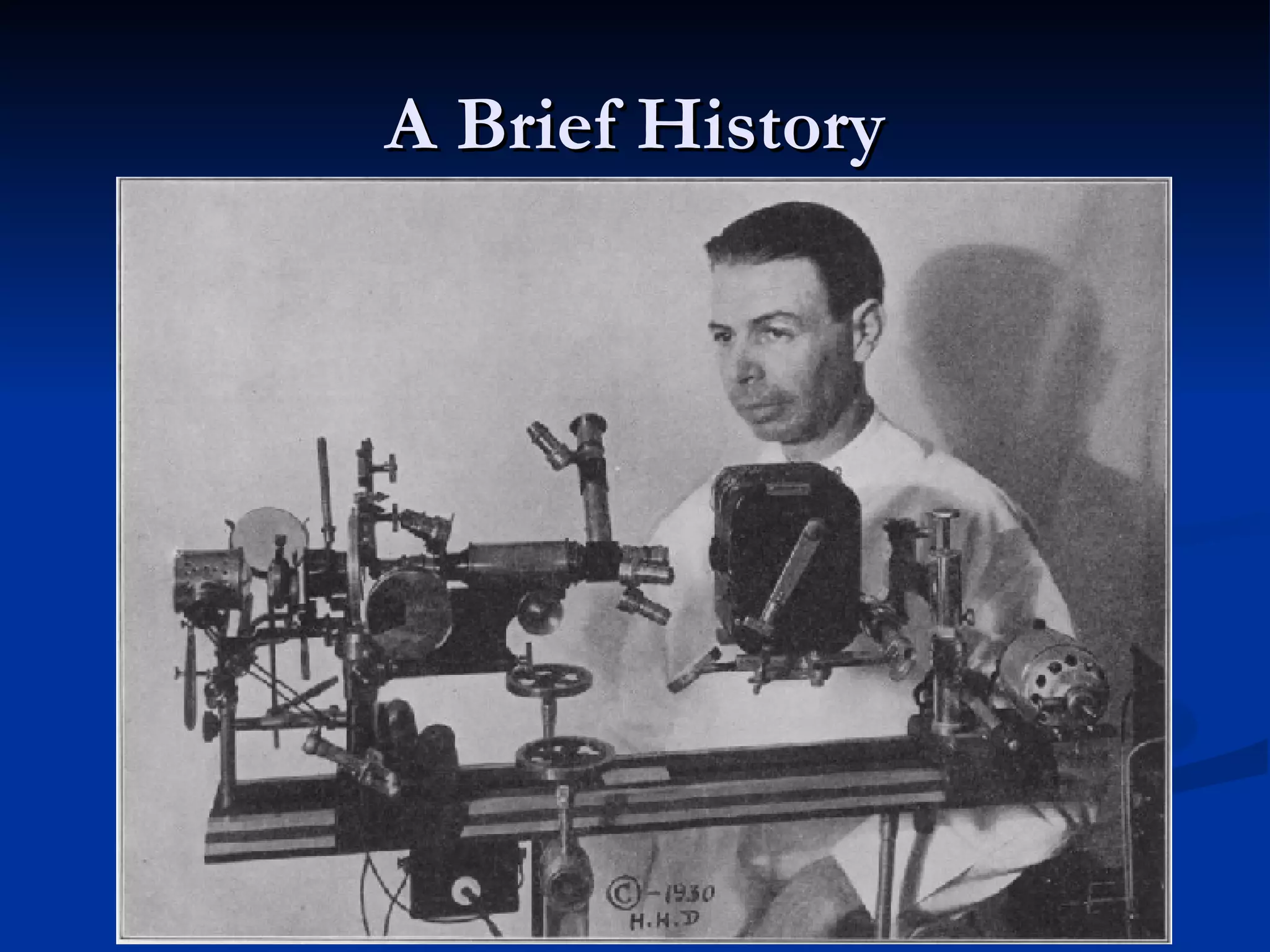
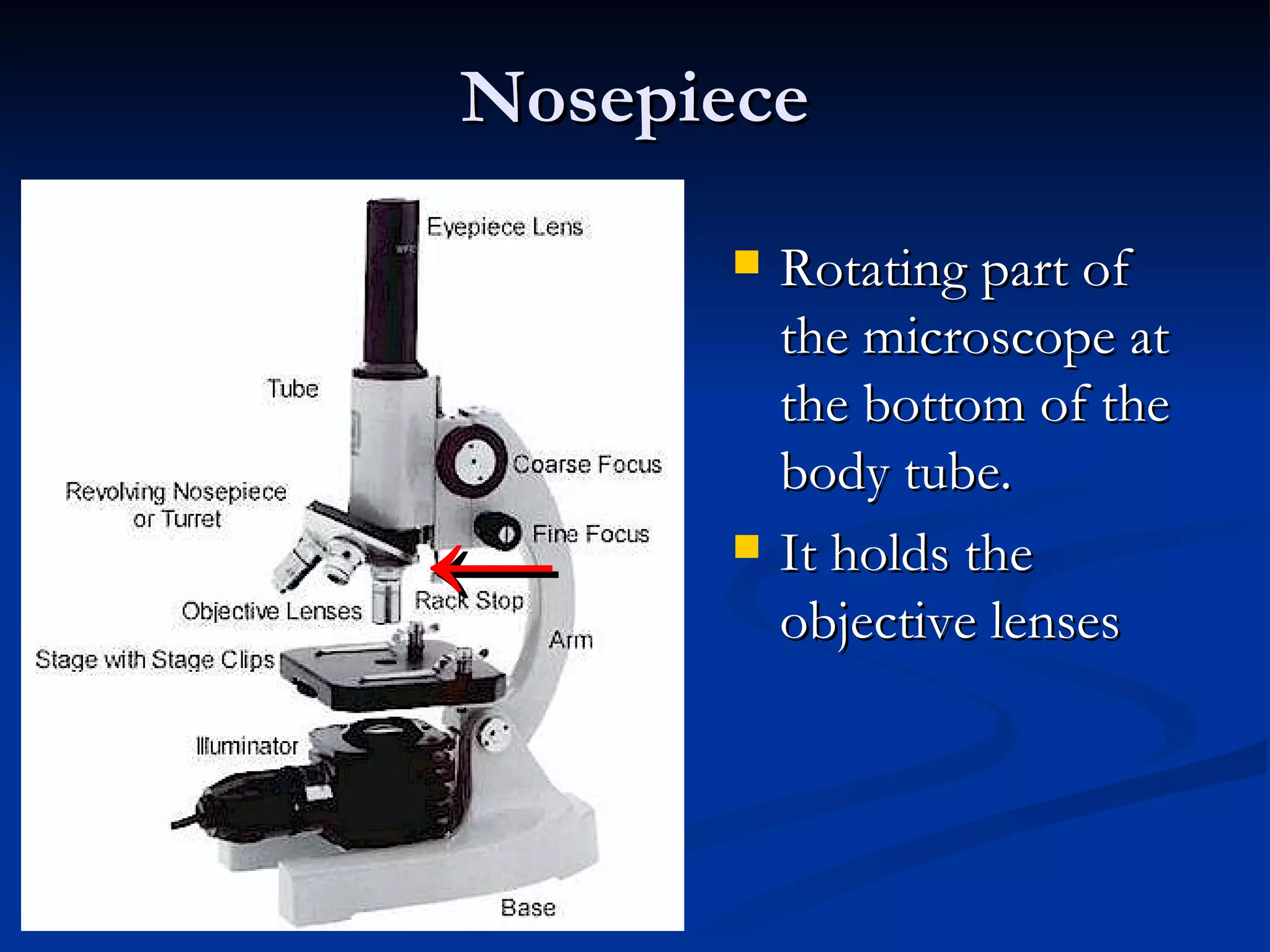
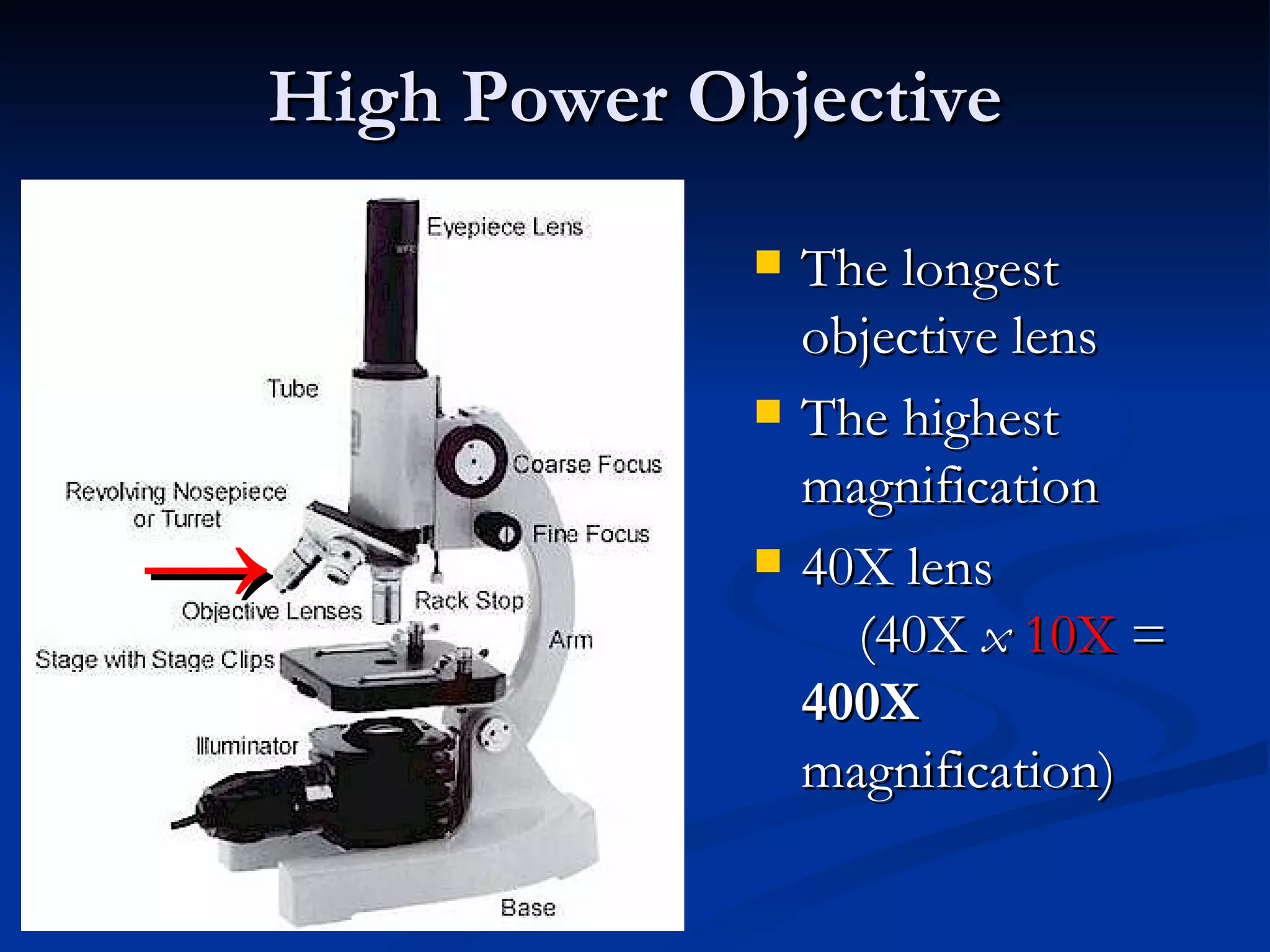
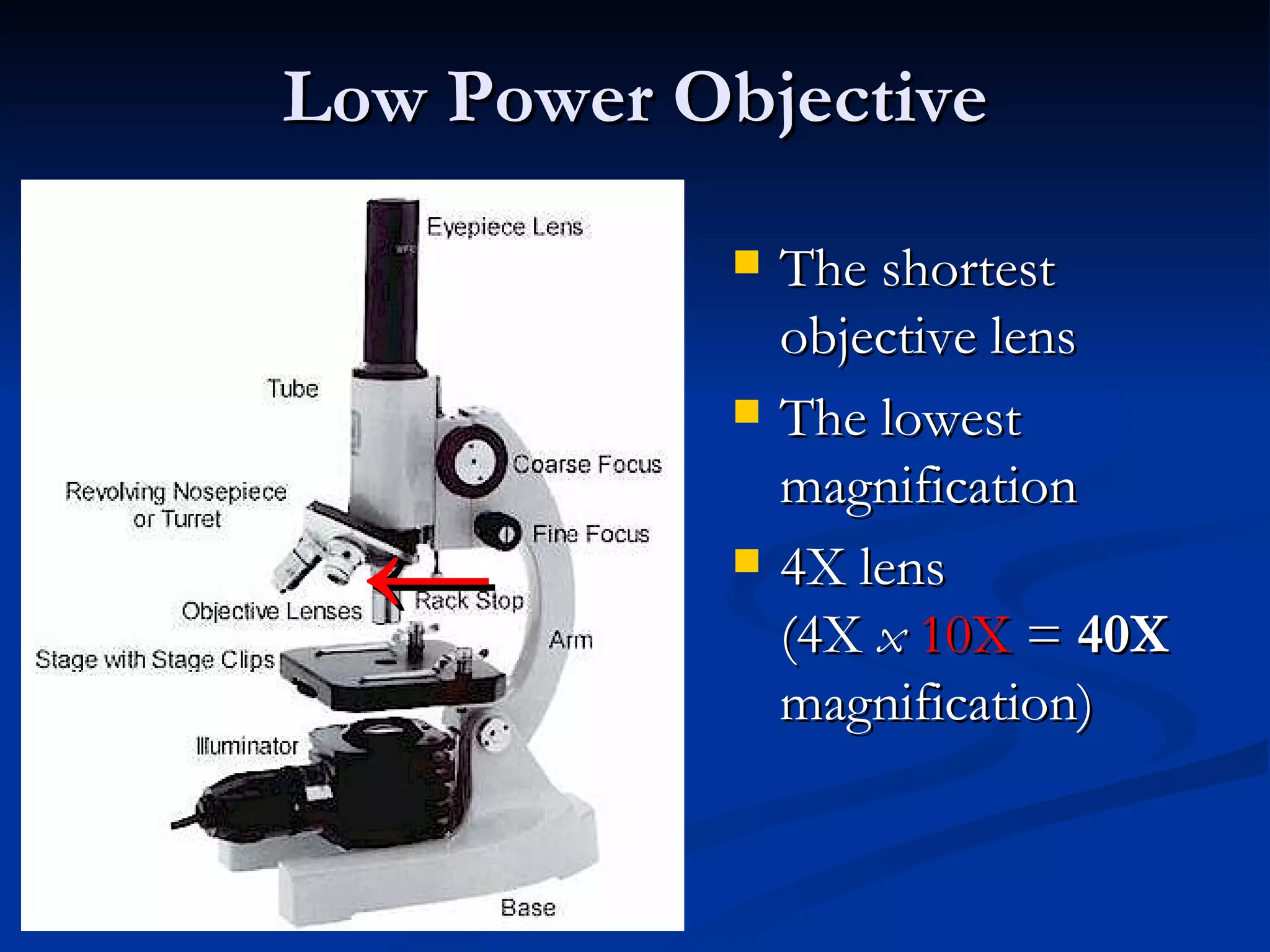
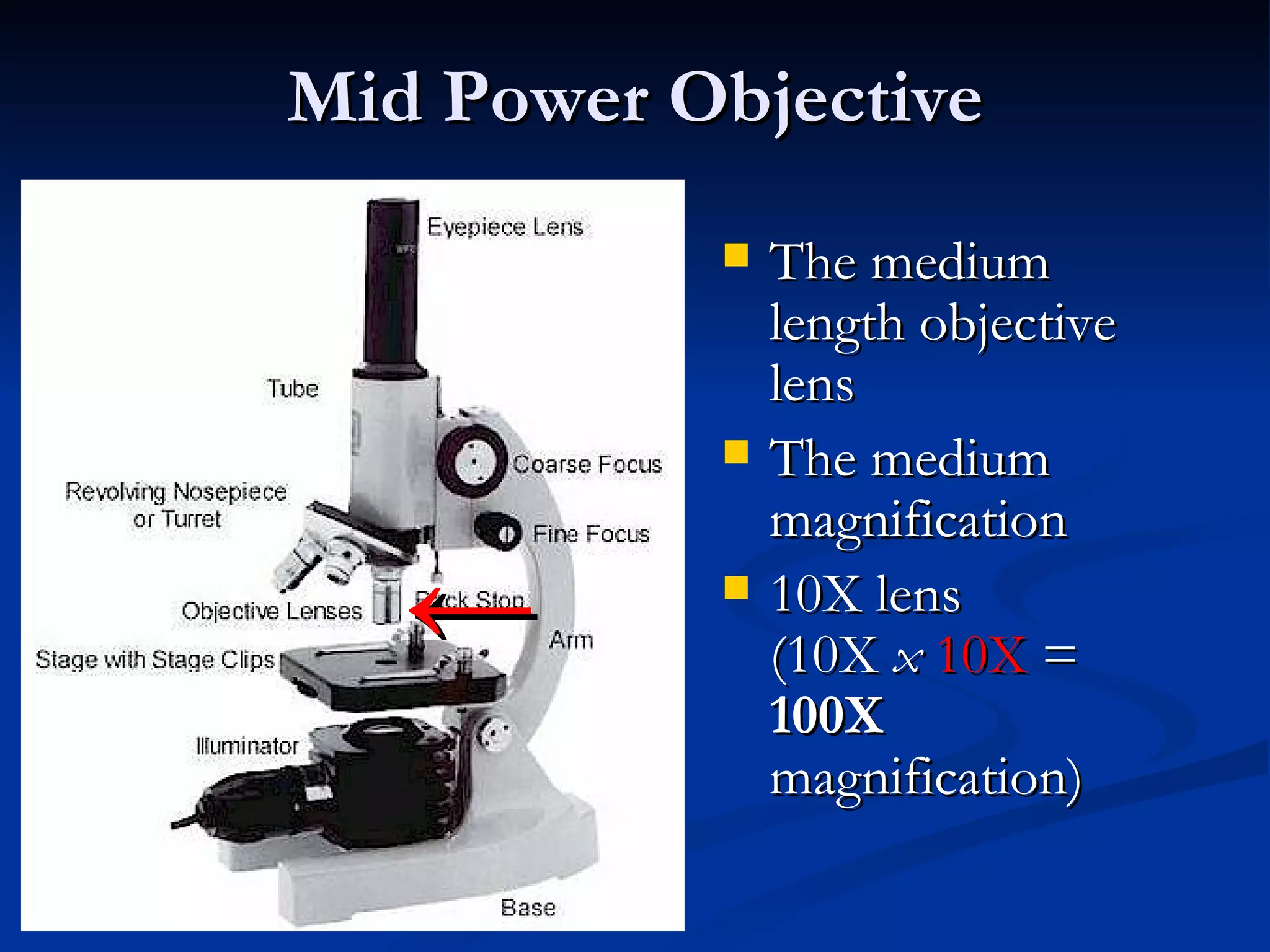
The document provides an introduction and brief history of microscopes from simple glass magnifiers in the 1600s to modern compound microscopes. It describes some of the key developments including the first compound microscope in the 1600s, improvements in the 1700s and 1800s using brass and iron, and modern features. It then explains how microscopes work similarly to telescopes but with smaller objective lenses due to examining tiny close specimens. It identifies the main parts of a compound microscope and their functions.
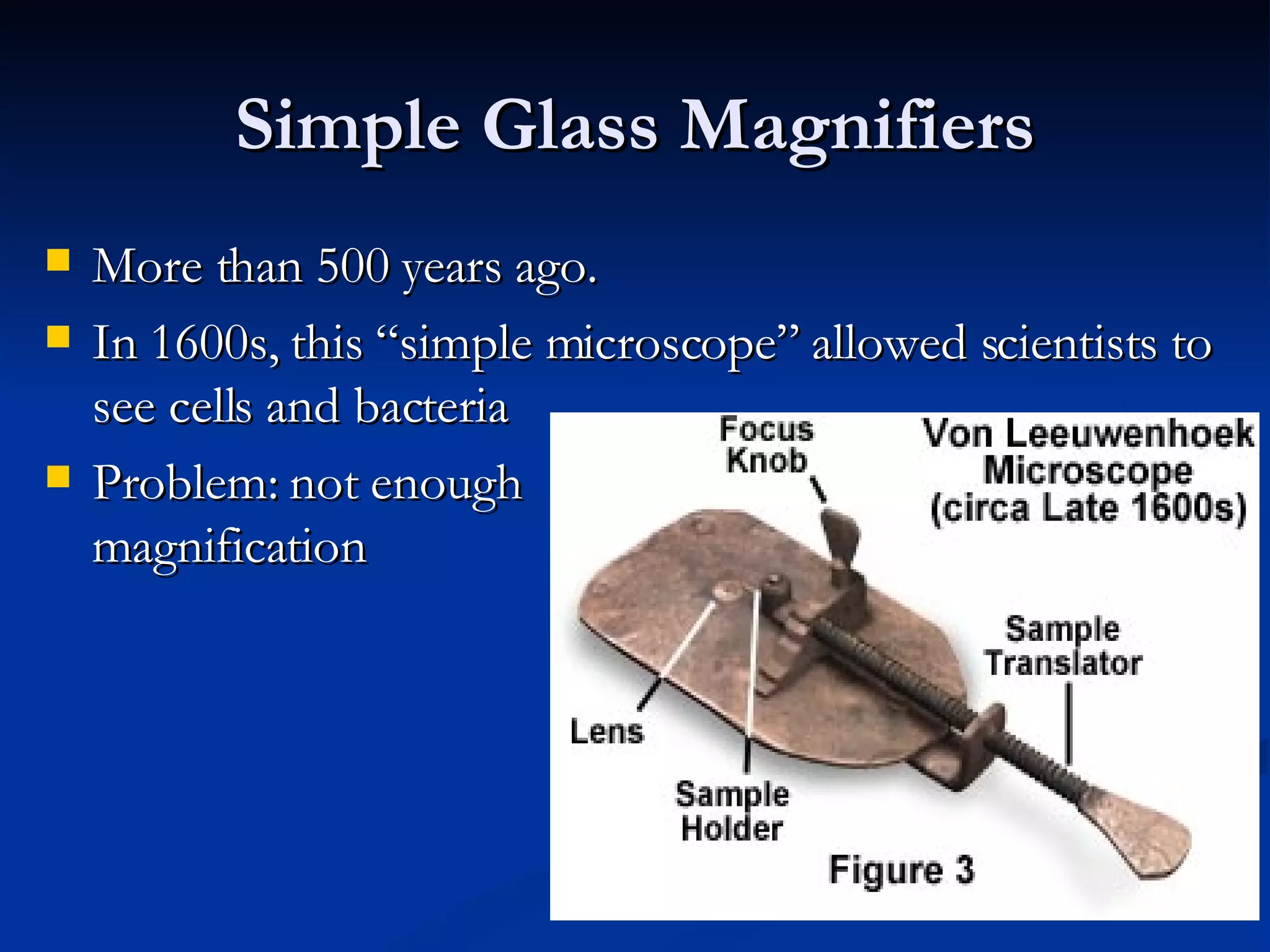
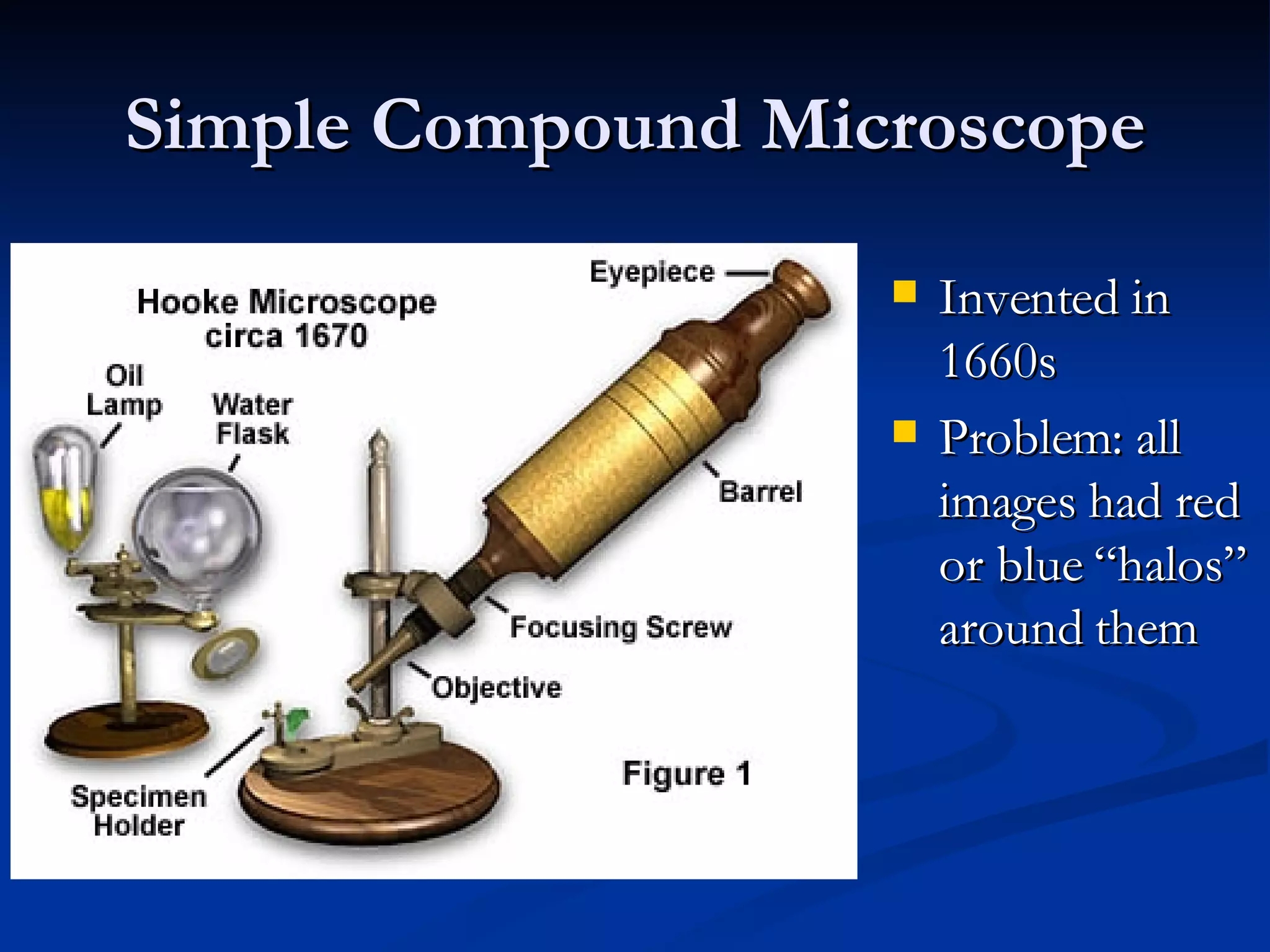
Simple Glass MagnifiersMore than 500 years ago. In 1600s, this “simple microscope” allowed scientists to see cells and bacteria Problem: not enough magnification
4.
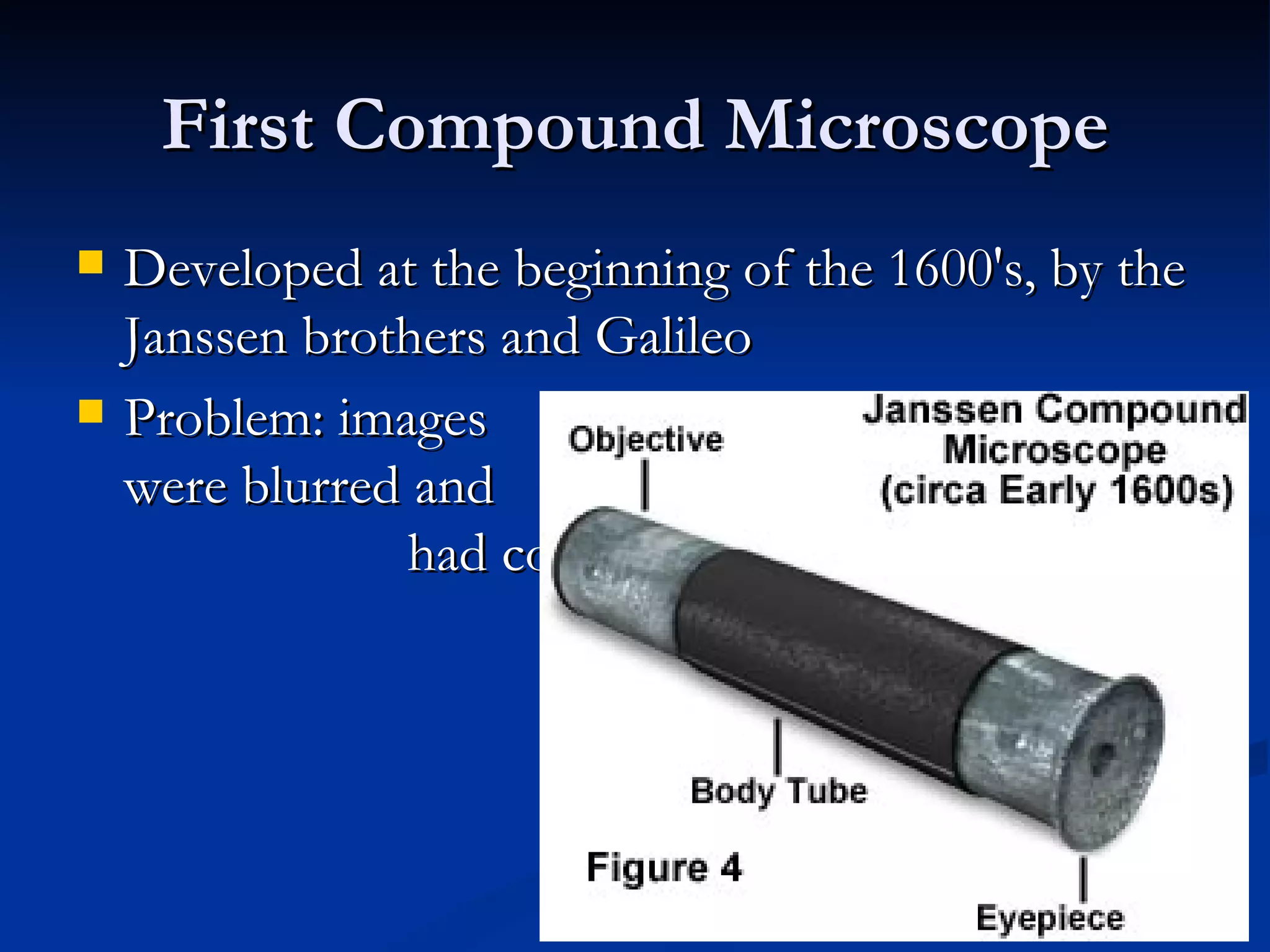
First Compound MicroscopeDeveloped at the beginning of the 1600's, by the Janssen brothers and Galileo Problem: images were blurred and had colored halos
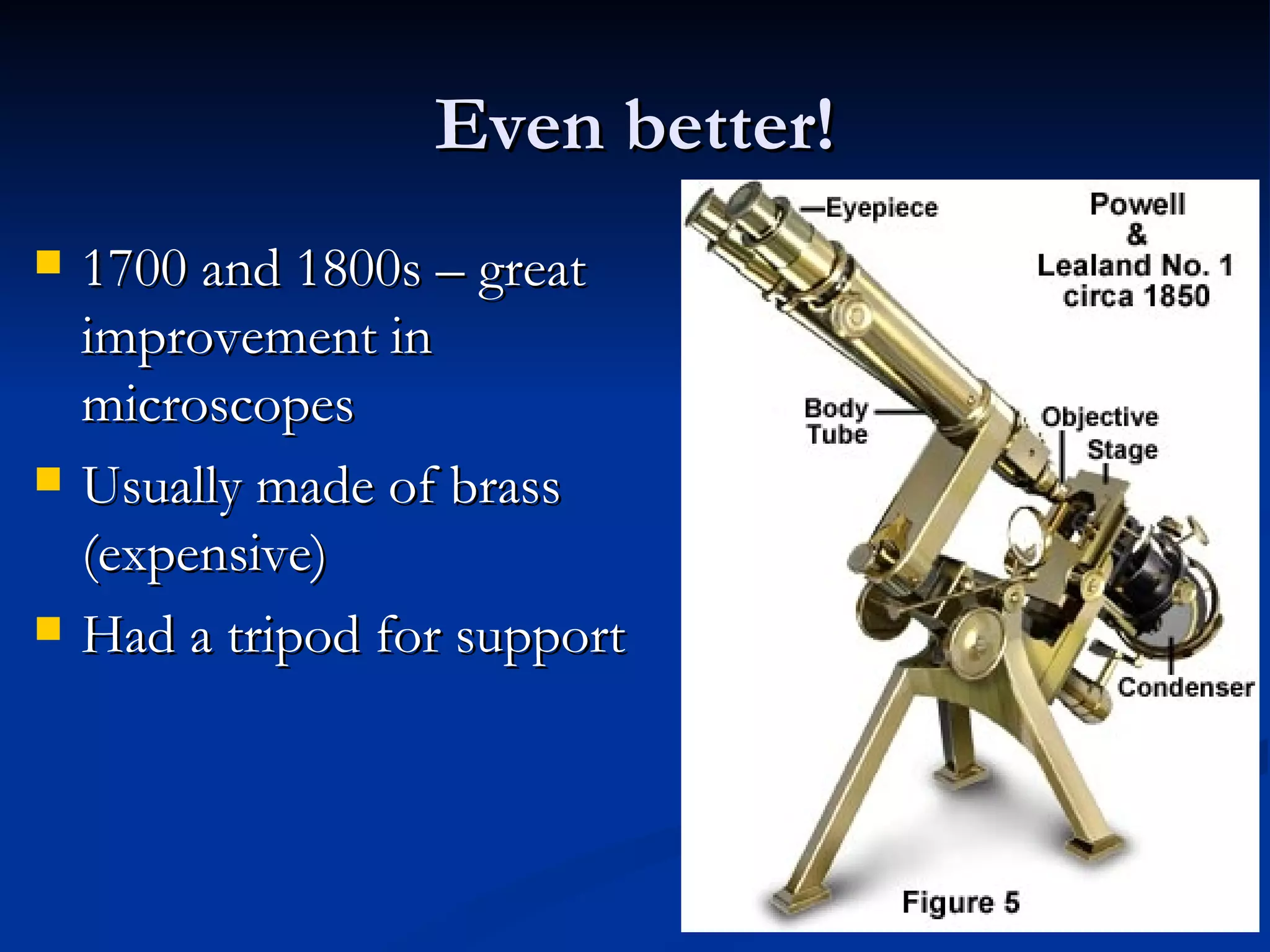
Even better! 1700and 1800s – great improvement in microscopes Usually made of brass (expensive) Had a tripod for support
7.
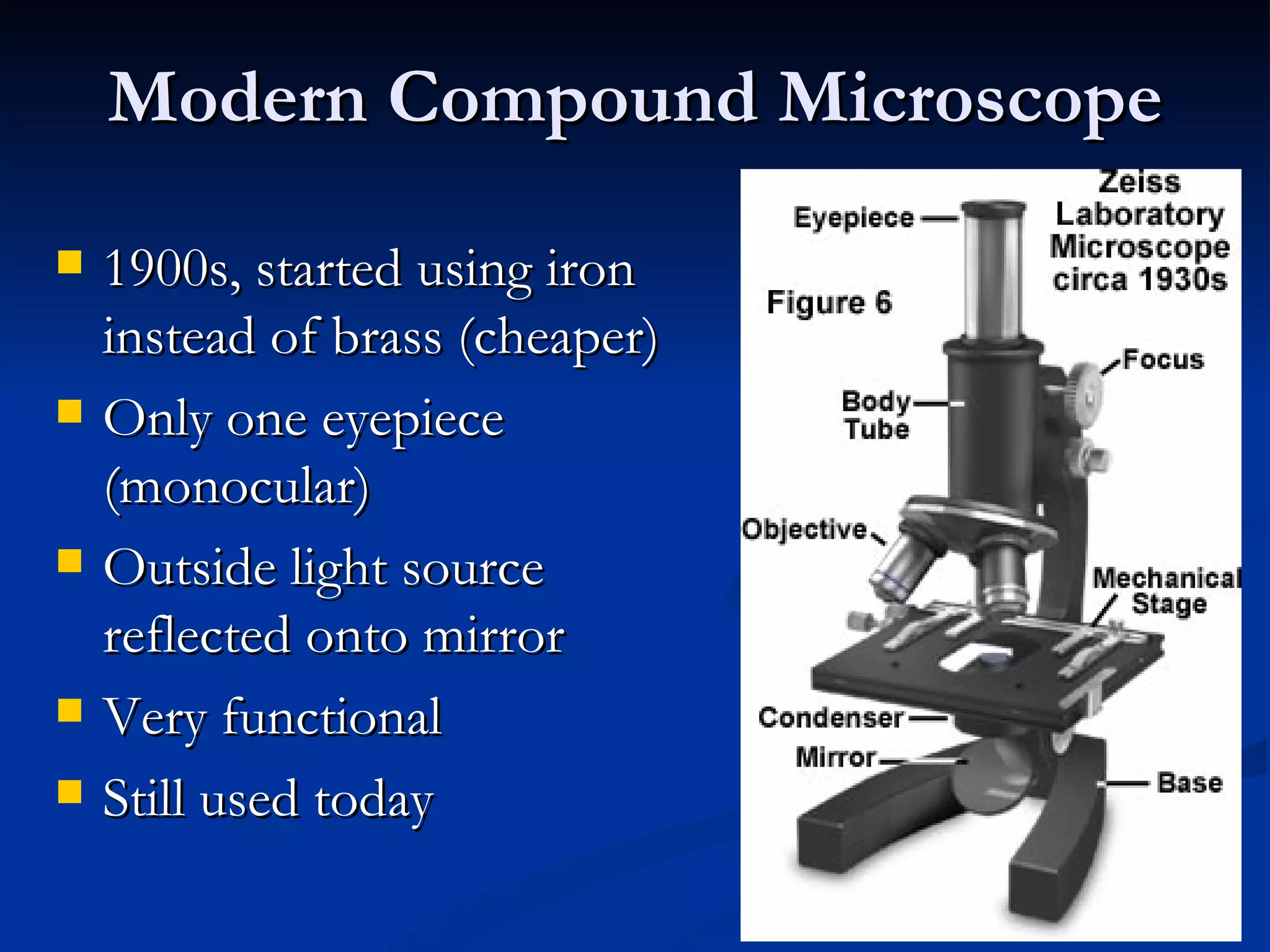
Modern Compound Microscope1900s, started using iron instead of brass (cheaper) Only one eyepiece (monocular) Outside light source reflected onto mirror Very functional Still used today
8.
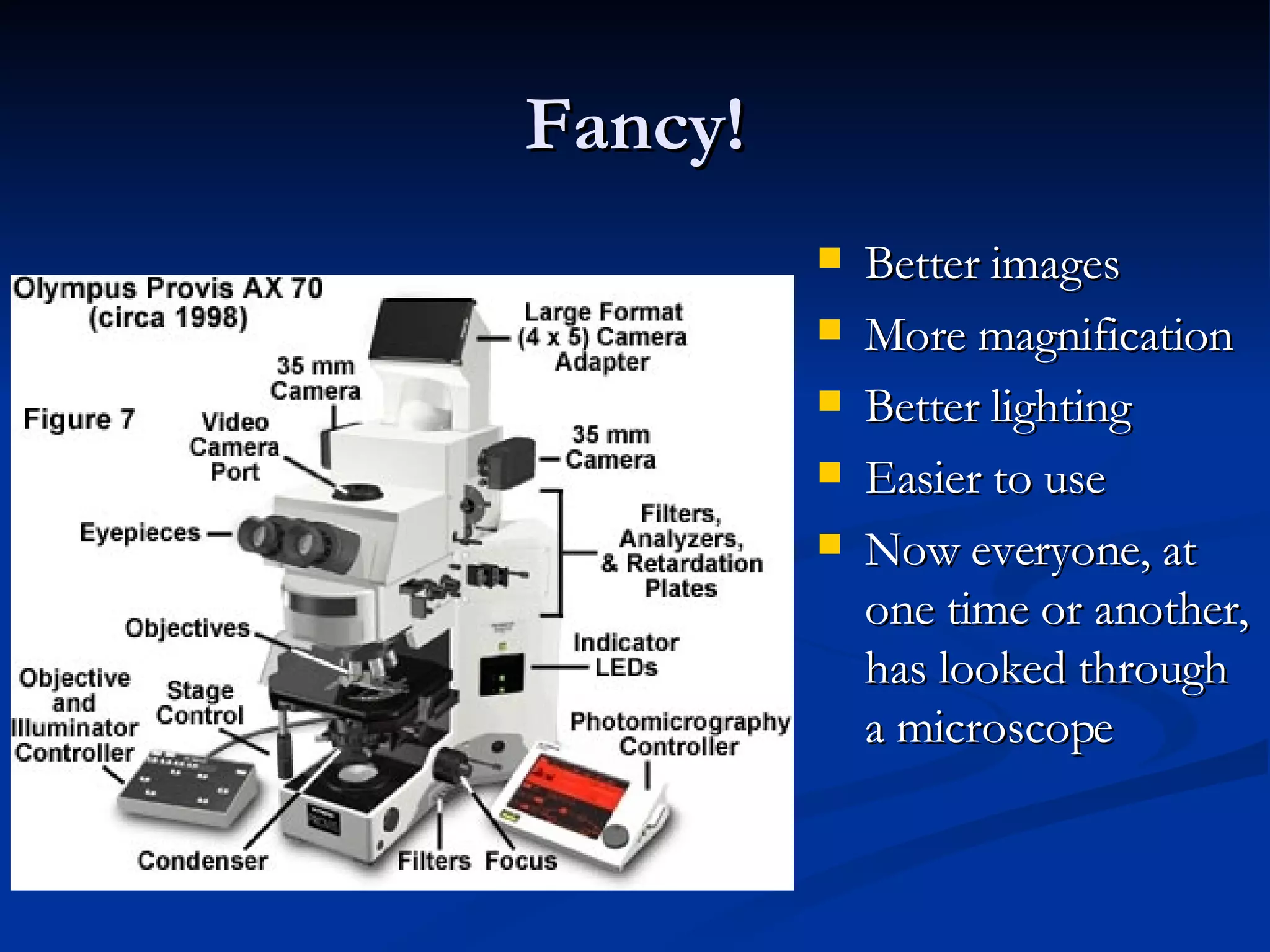
Fancy! Better imagesMore magnification Better lighting Easier to use Now everyone, at one time or another, has looked through a microscope
9.
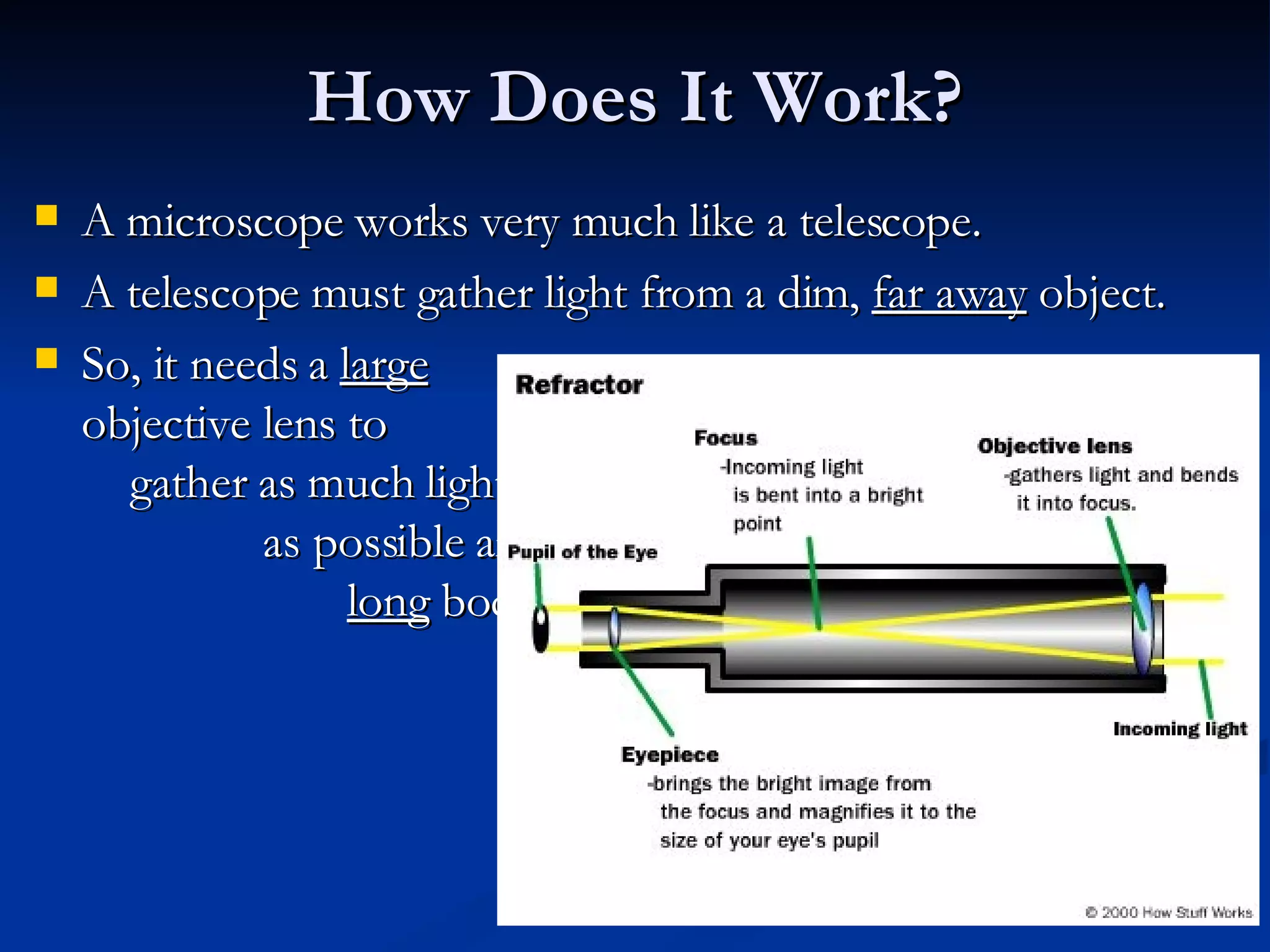
How Does ItWork? A microscope works very much like a telescope. A telescope must gather light from a dim, far away object. So, it needs a large objective lens to gather as much light as possible and a long body to bring the image into focus.
10.
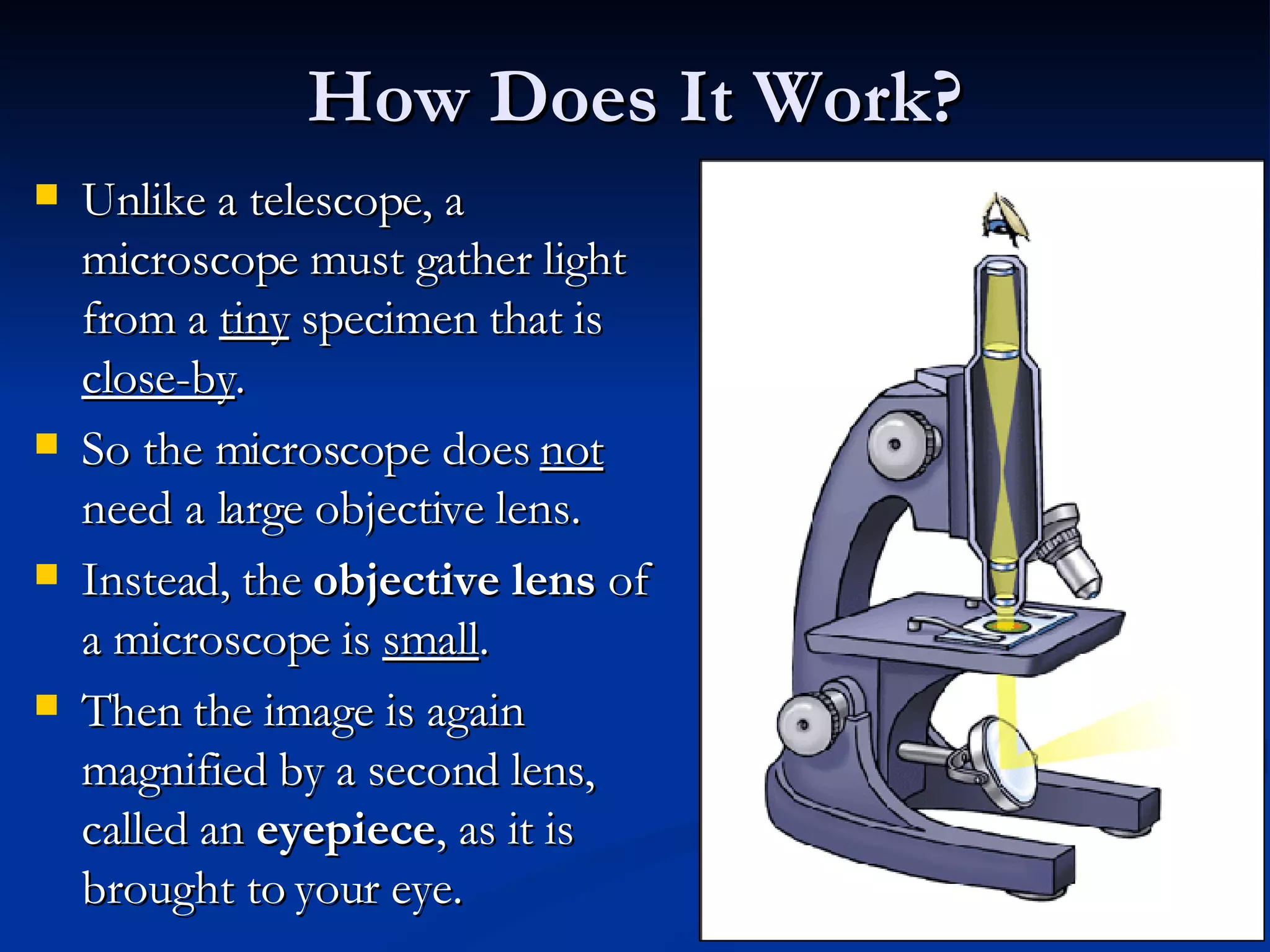
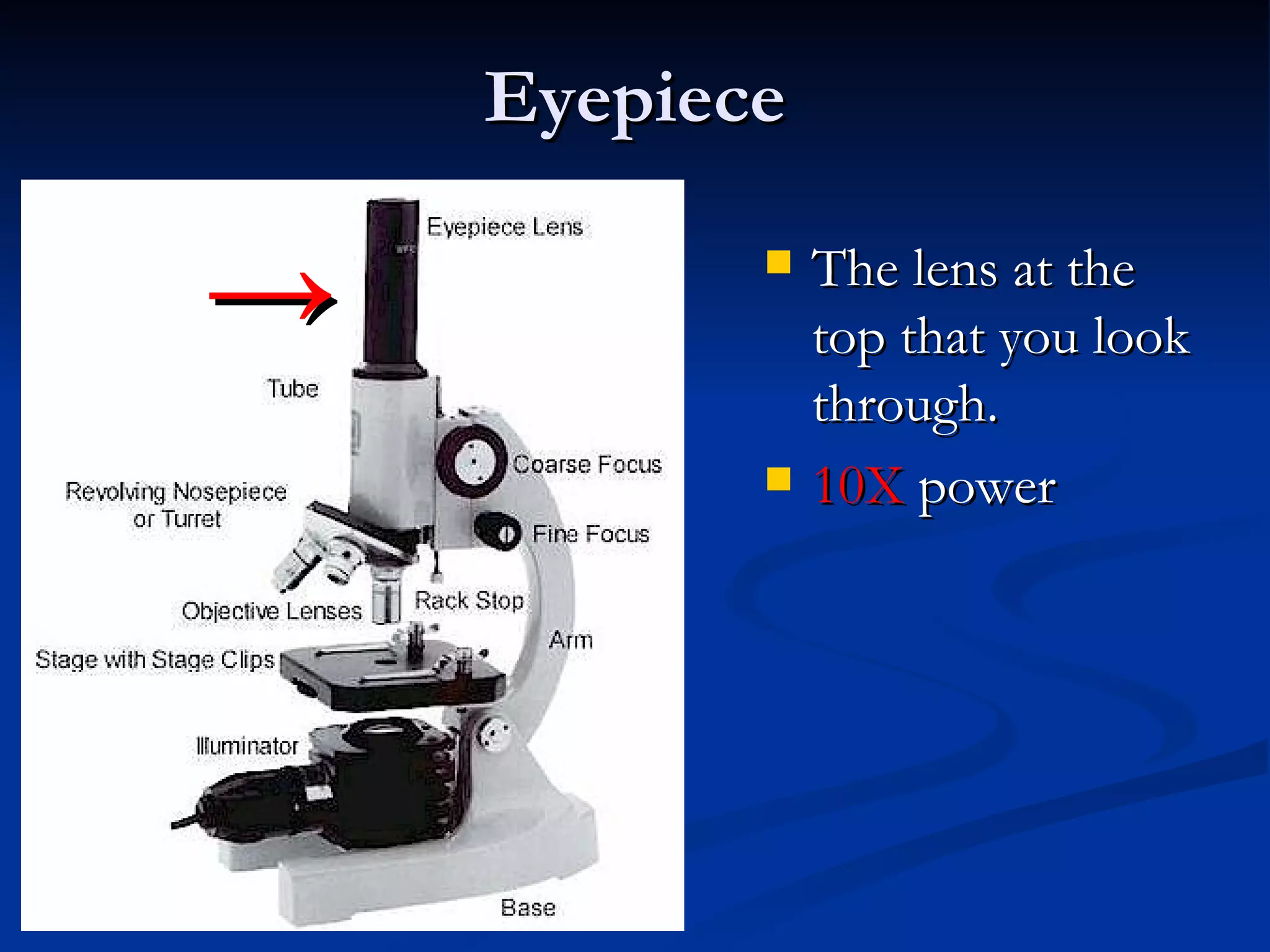
How Does ItWork? Unlike a telescope, a microscope must gather light from a tiny specimen that is close-by . So the microscope does not need a large objective lens. Instead, the objective lens of a microscope is small . Then the image is again magnified by a second lens, called an eyepiece , as it is brought to your eye.
11.
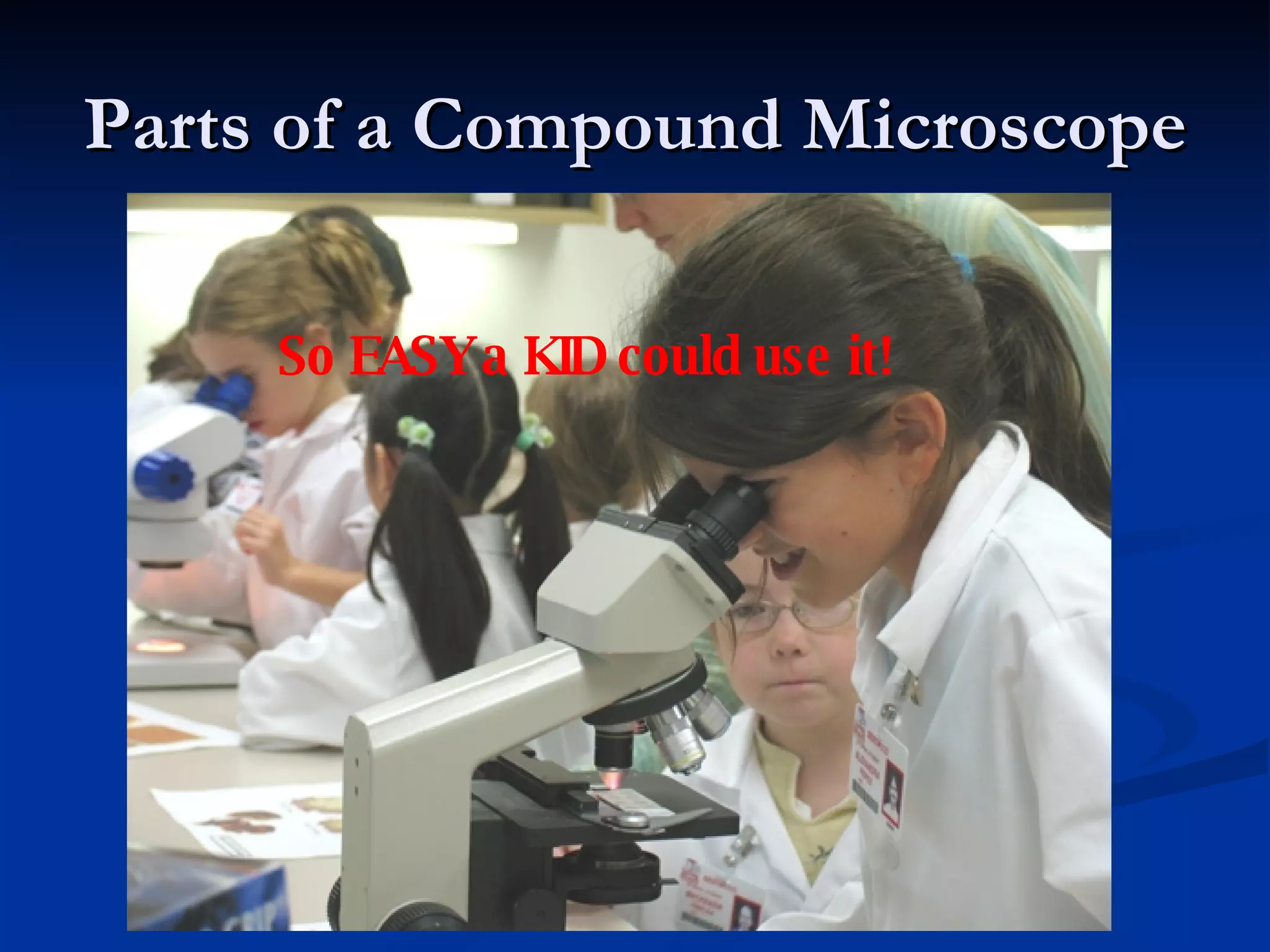
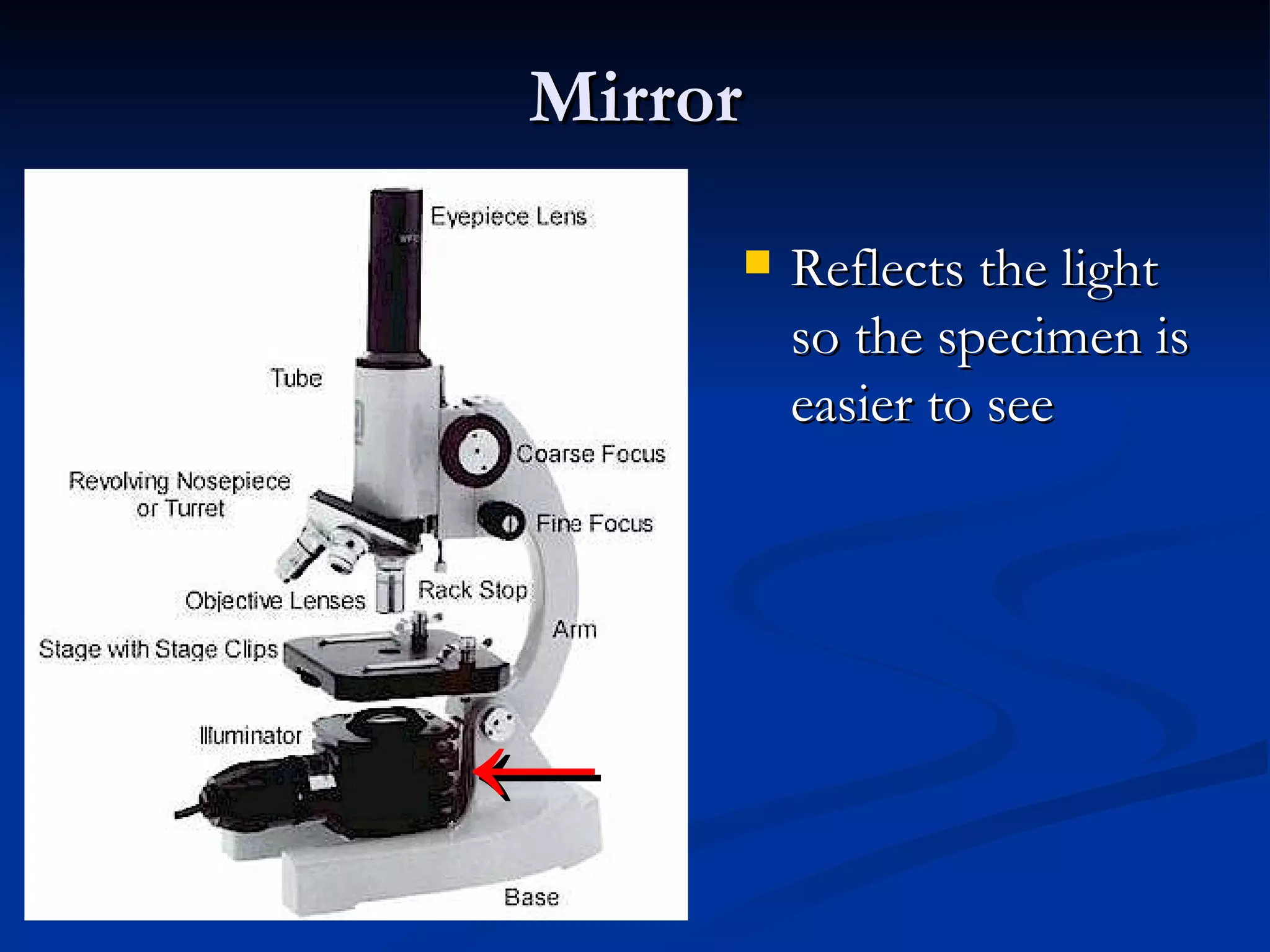
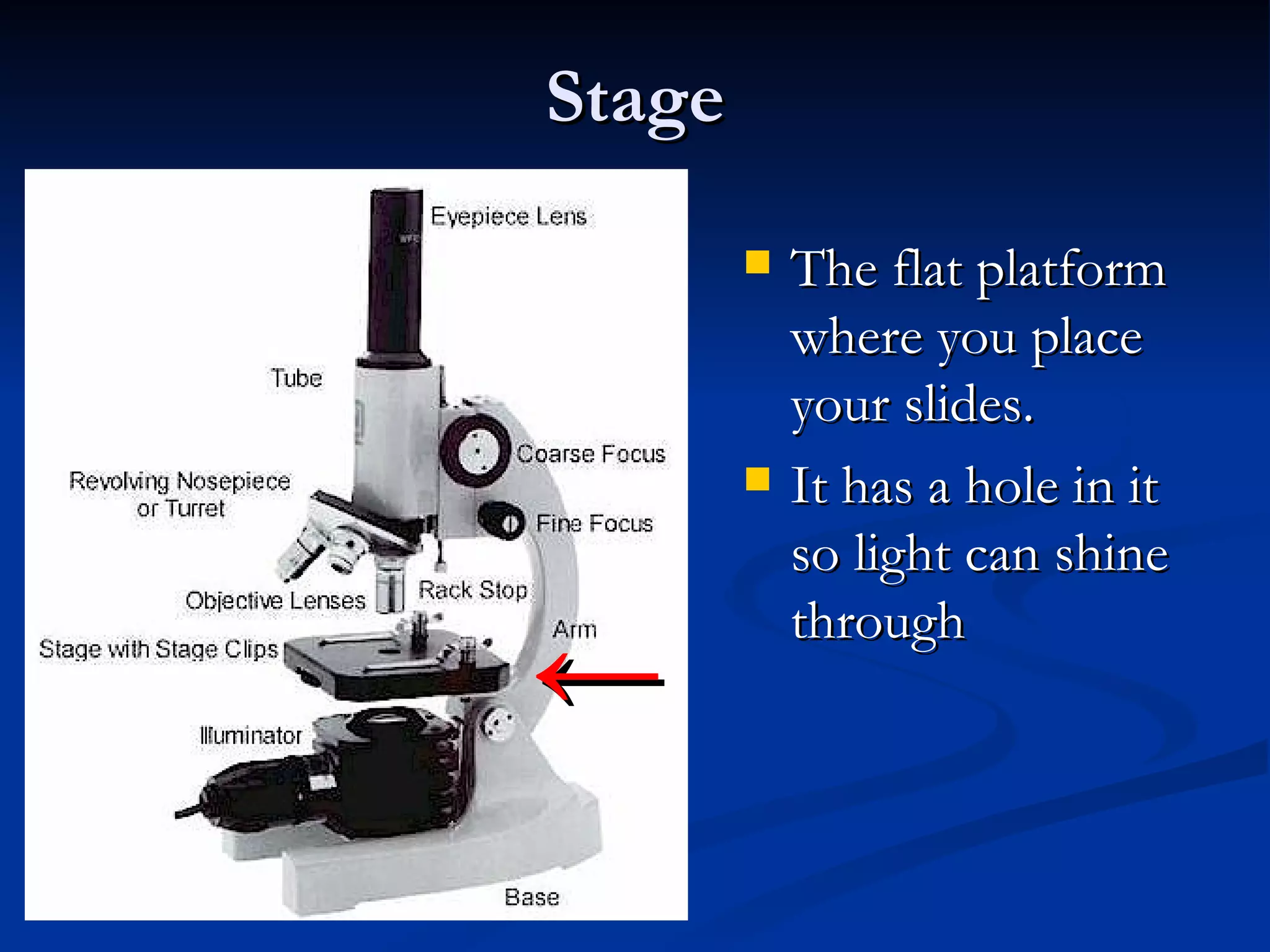
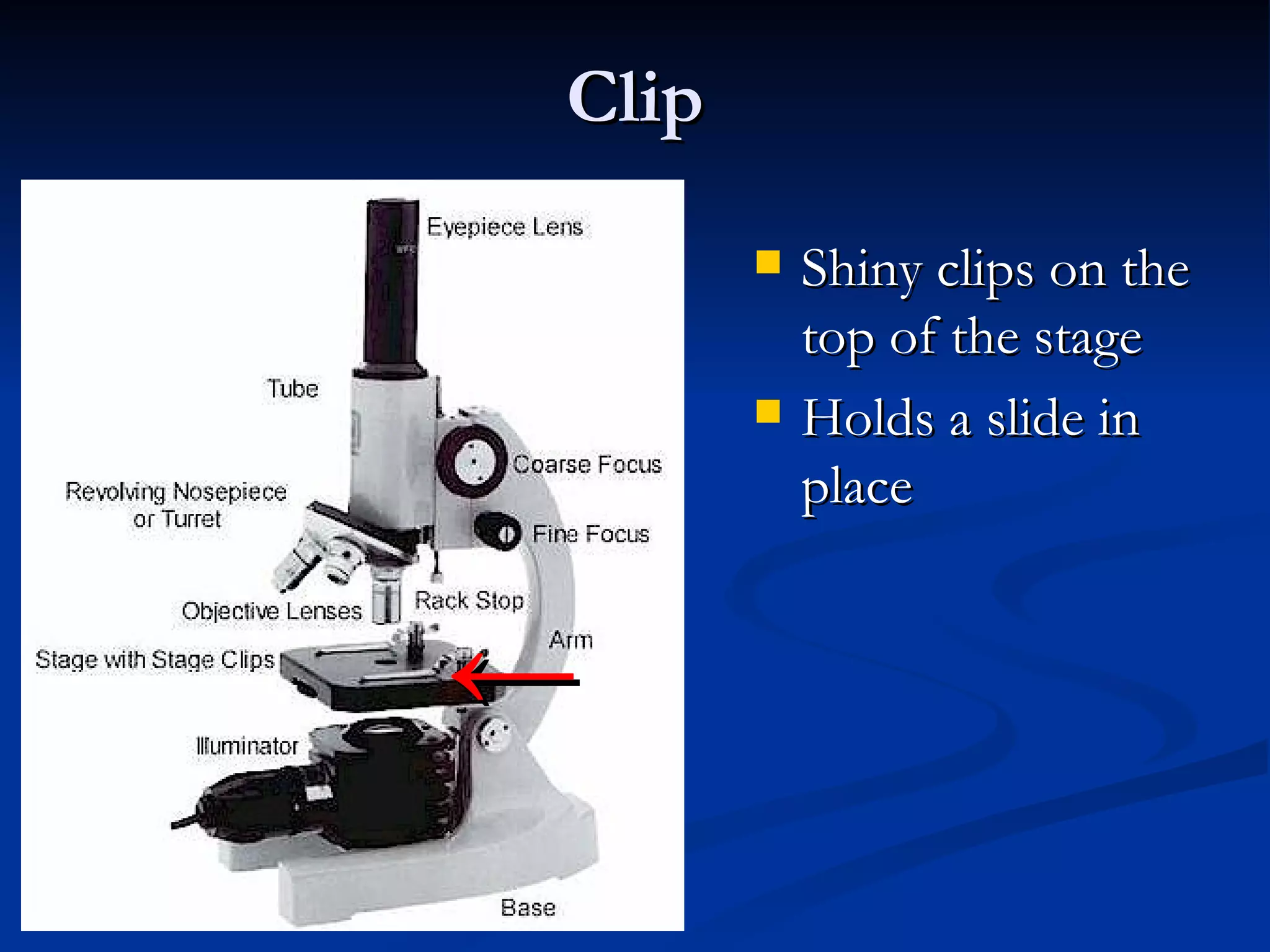
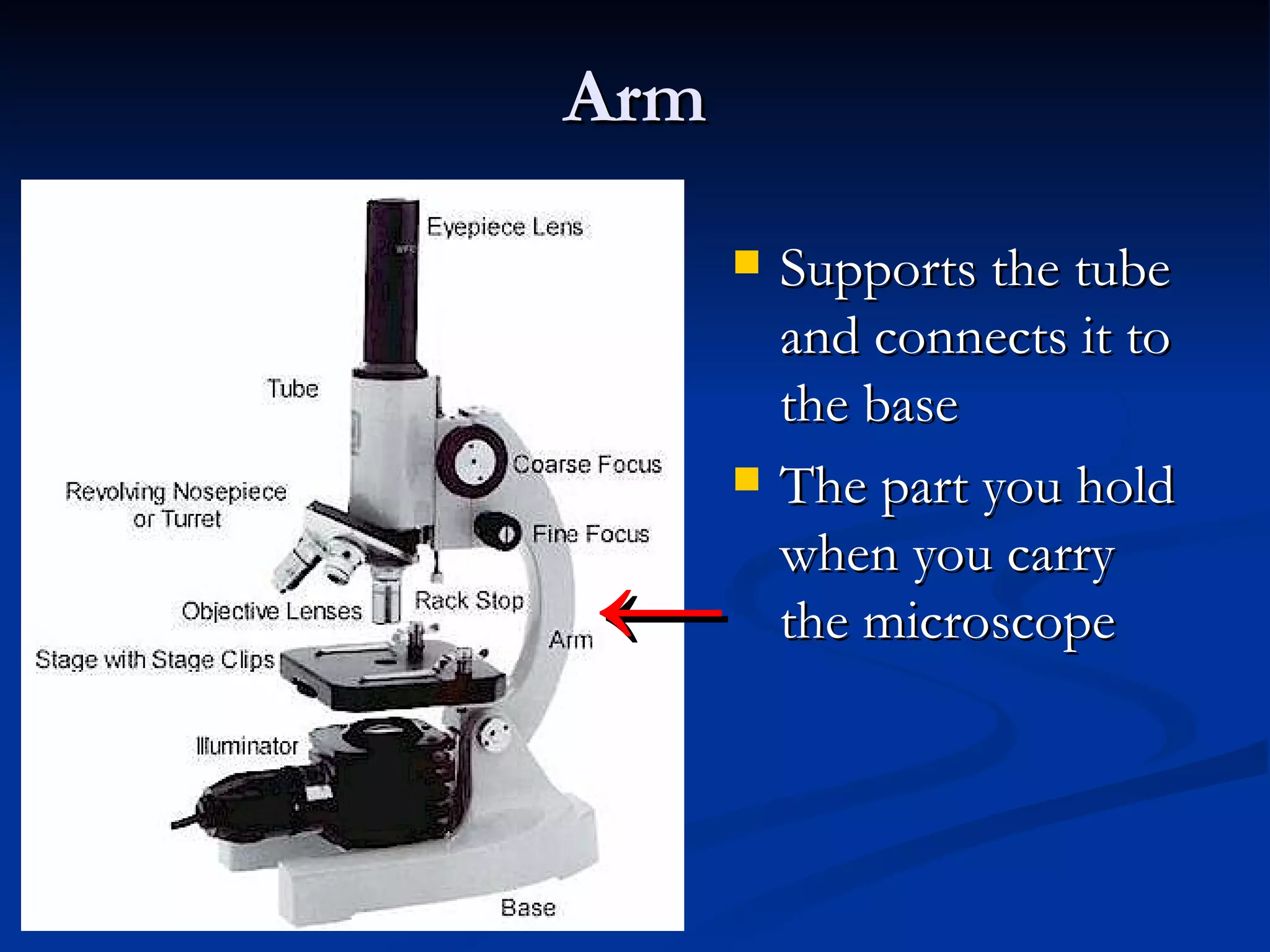
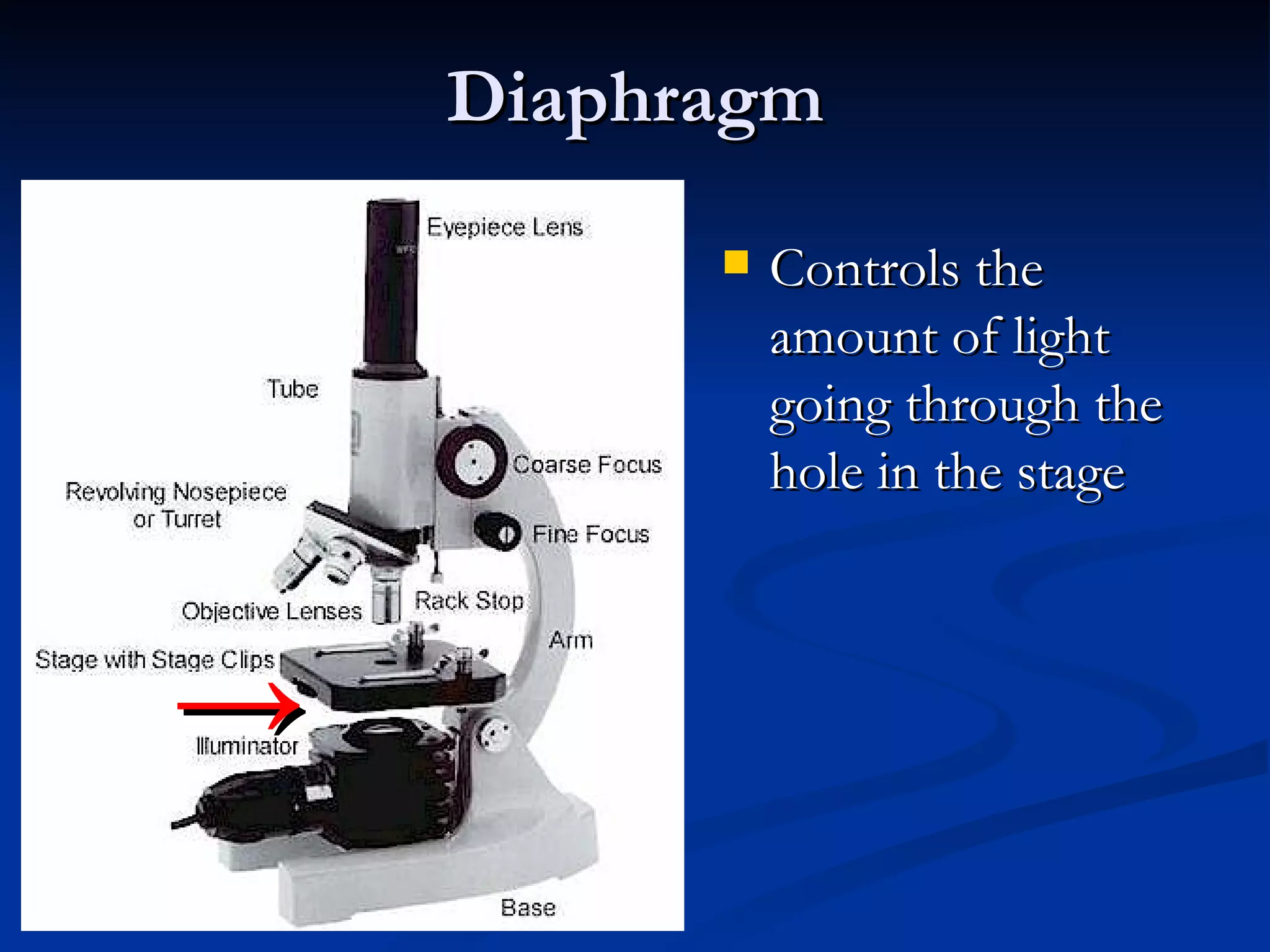
Parts of aCompound Microscope So EASY a KID could use it!
12.
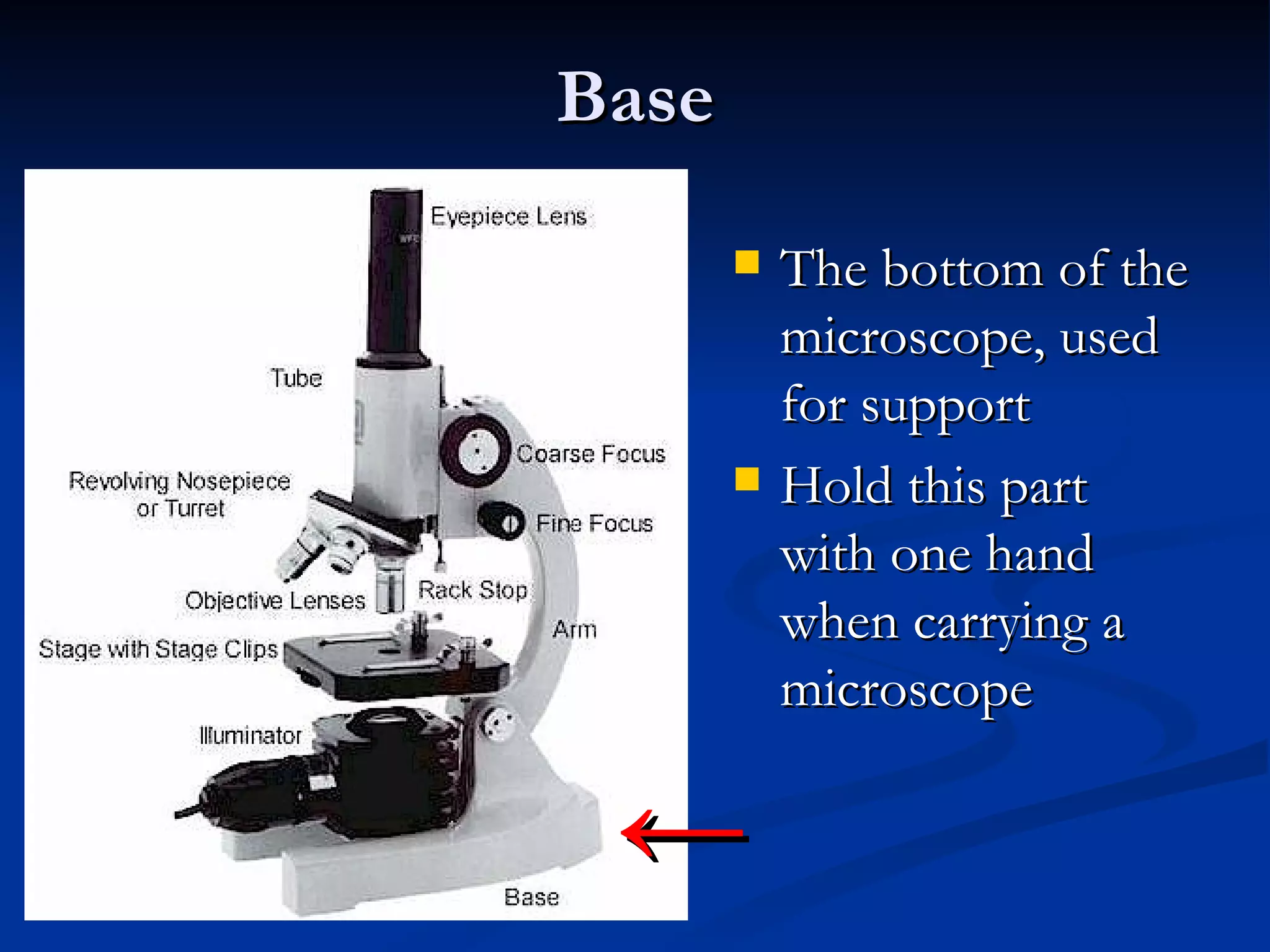
Base The bottomof the microscope, used for support Hold this part with one hand when carrying a microscope ←
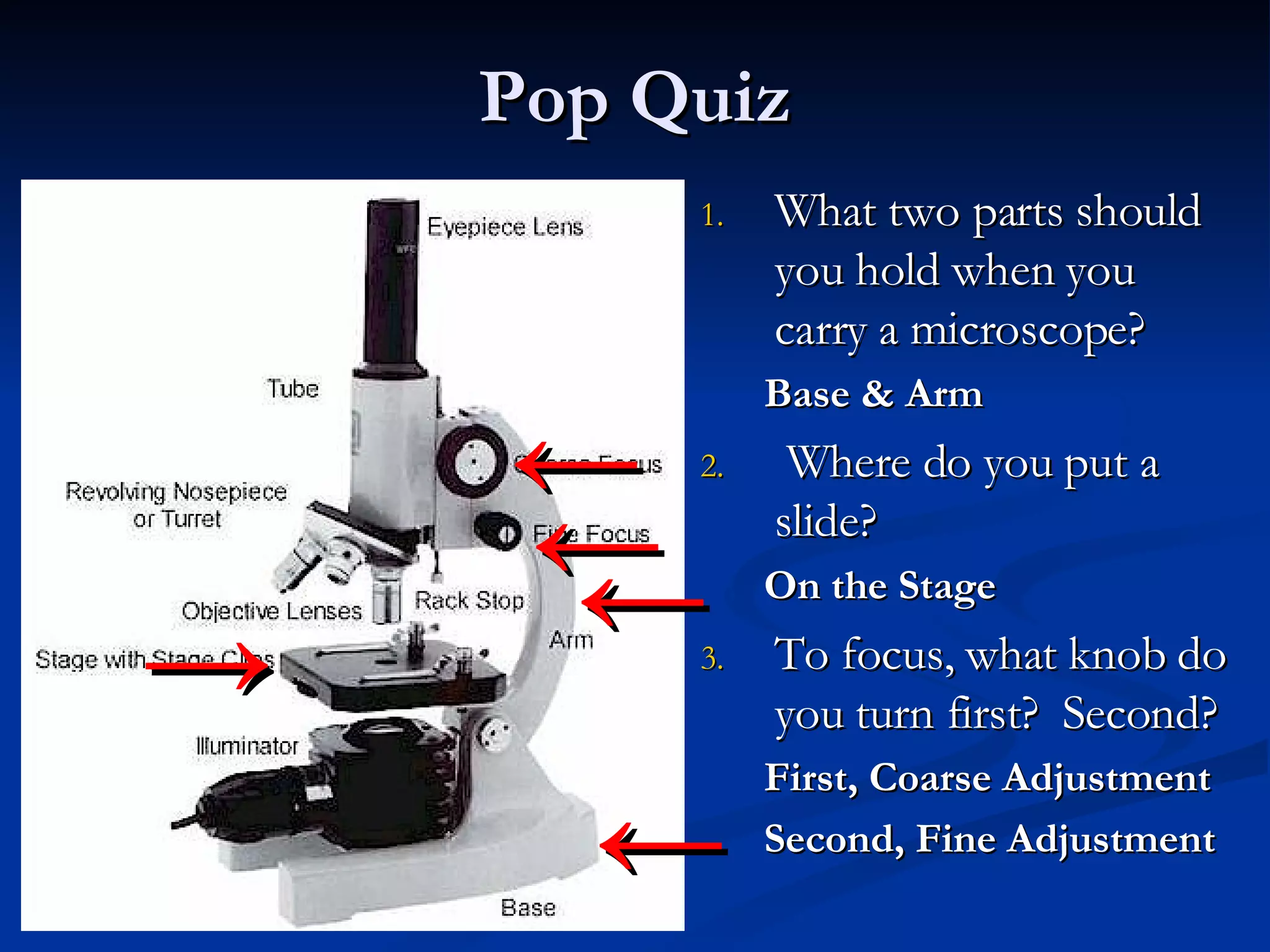
Pop Quiz Whattwo parts should you hold when you carry a microscope? Base & Arm Where do you put a slide? On the Stage To focus, what knob do you turn first? Second? First, Coarse Adjustment Second, Fine Adjustment ← ← -> ← ←
27.
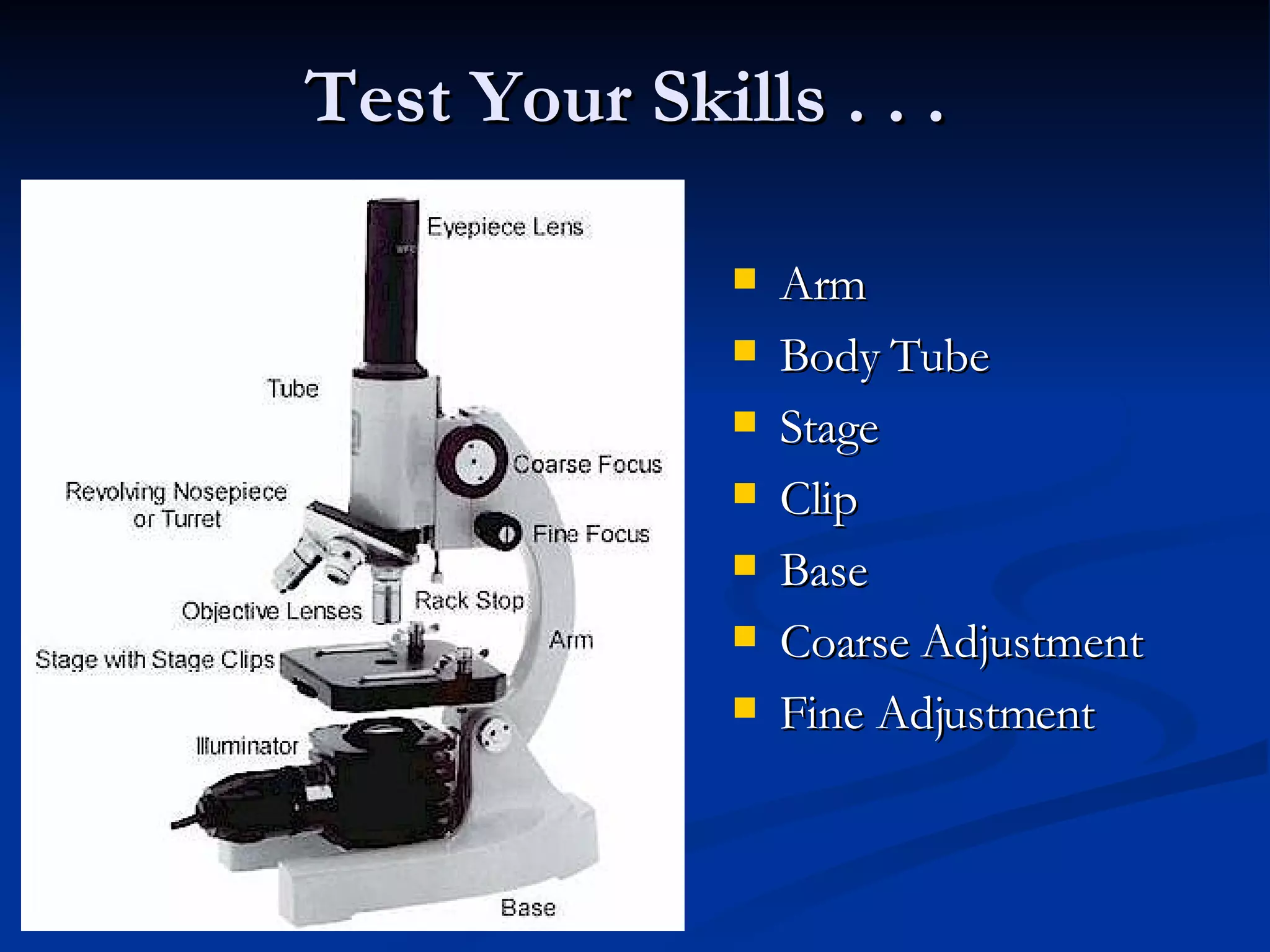
Test Your Skills. . . Arm Body Tube Stage Clip Base Coarse Adjustment Fine Adjustment
28.
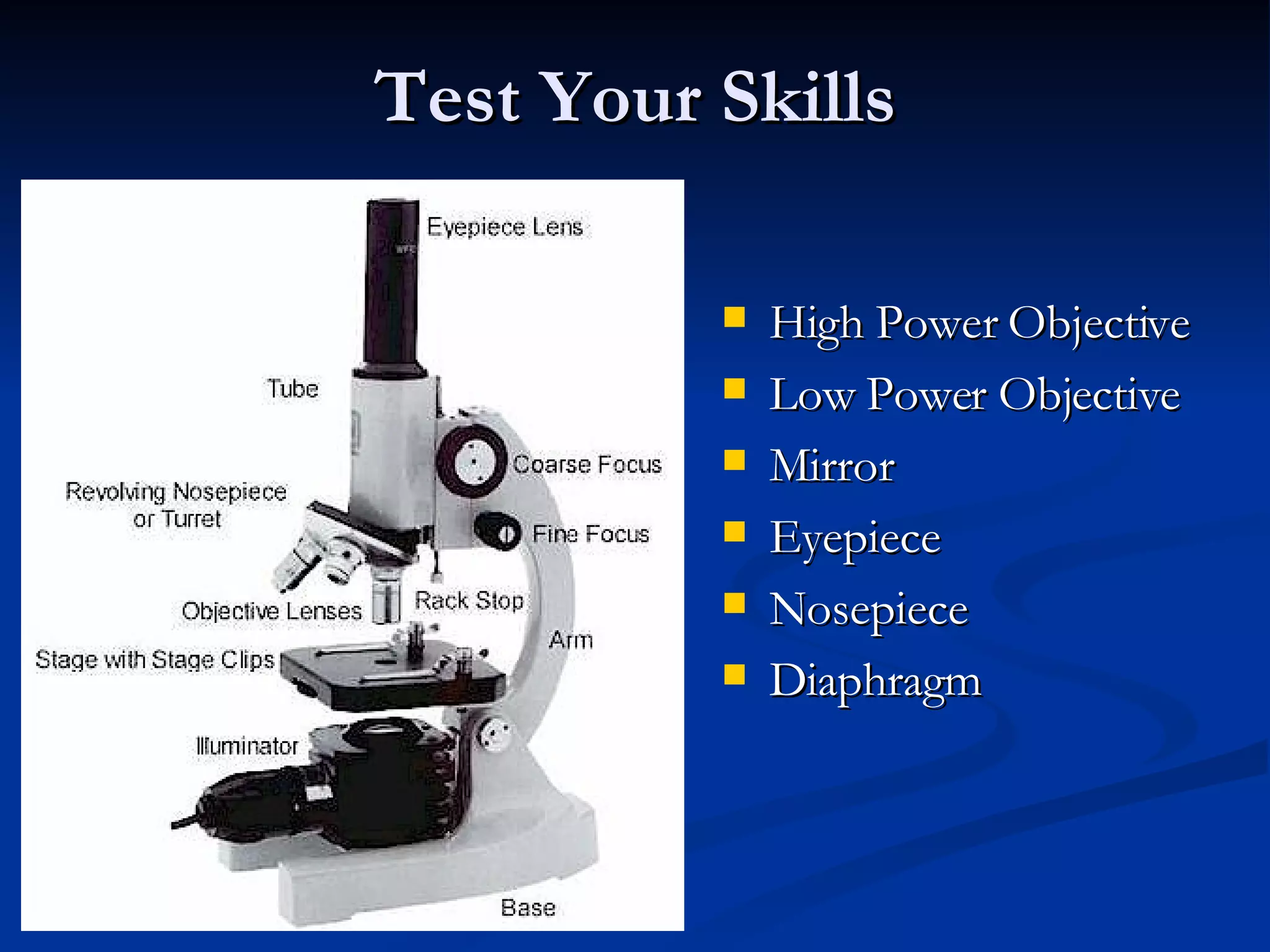
Test Your SkillsHigh Power Objective Low Power Objective Mirror Eyepiece Nosepiece Diaphragm