Research
Camera Angles
& Shots
Kiran Raza
There Are 3 Main Shots That
Describe How Near Or How Far The
   Camera Is From The Subject:

Long Shot
    Medium Shot
 Close Up Shot
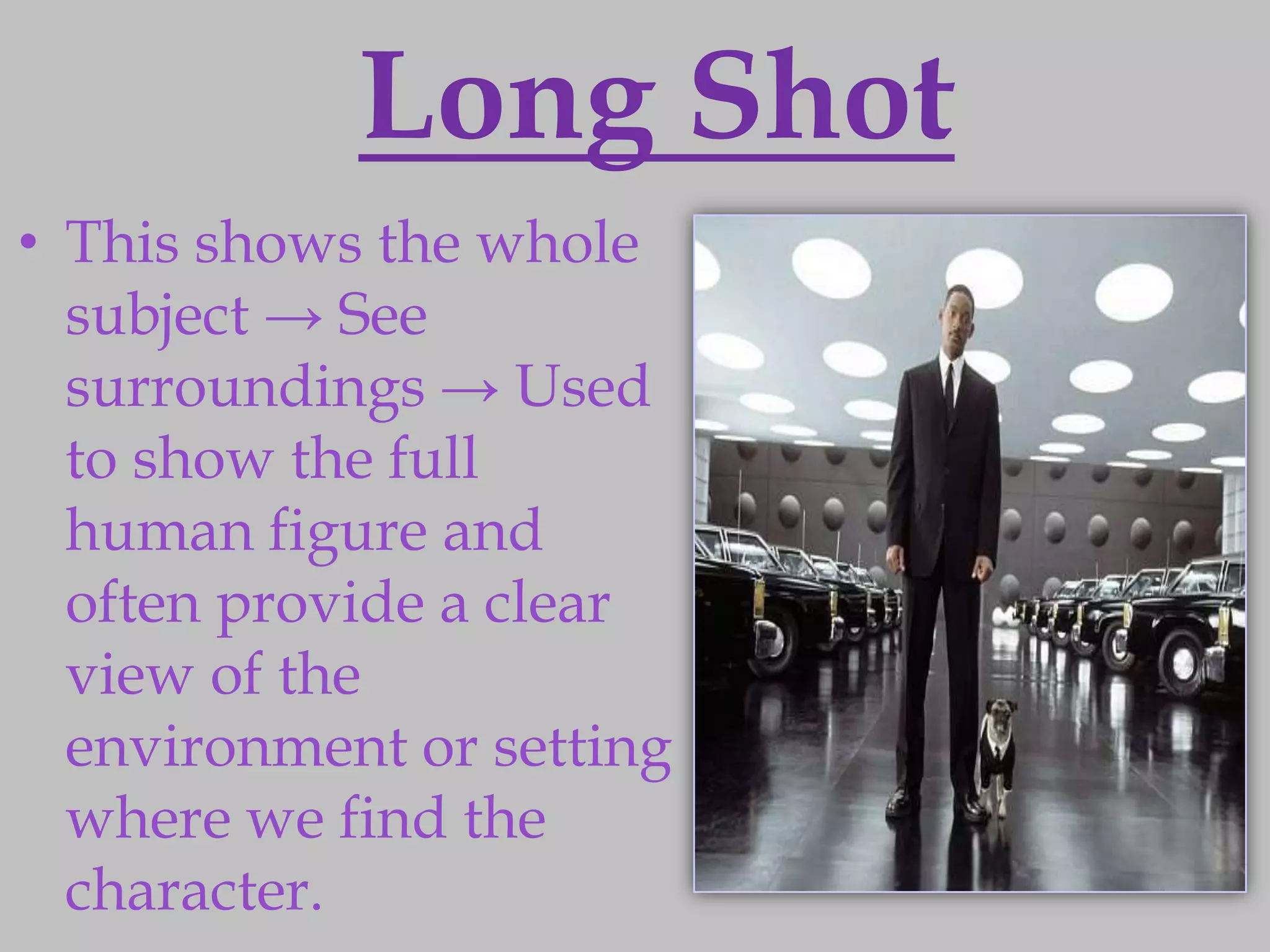
Long Shot
• This shows the whole
  subject → See
  surroundings → Used
  to show the full
  human figure and
  often provide a clear
  view of the
  environment or setting
  where we find the
  character.
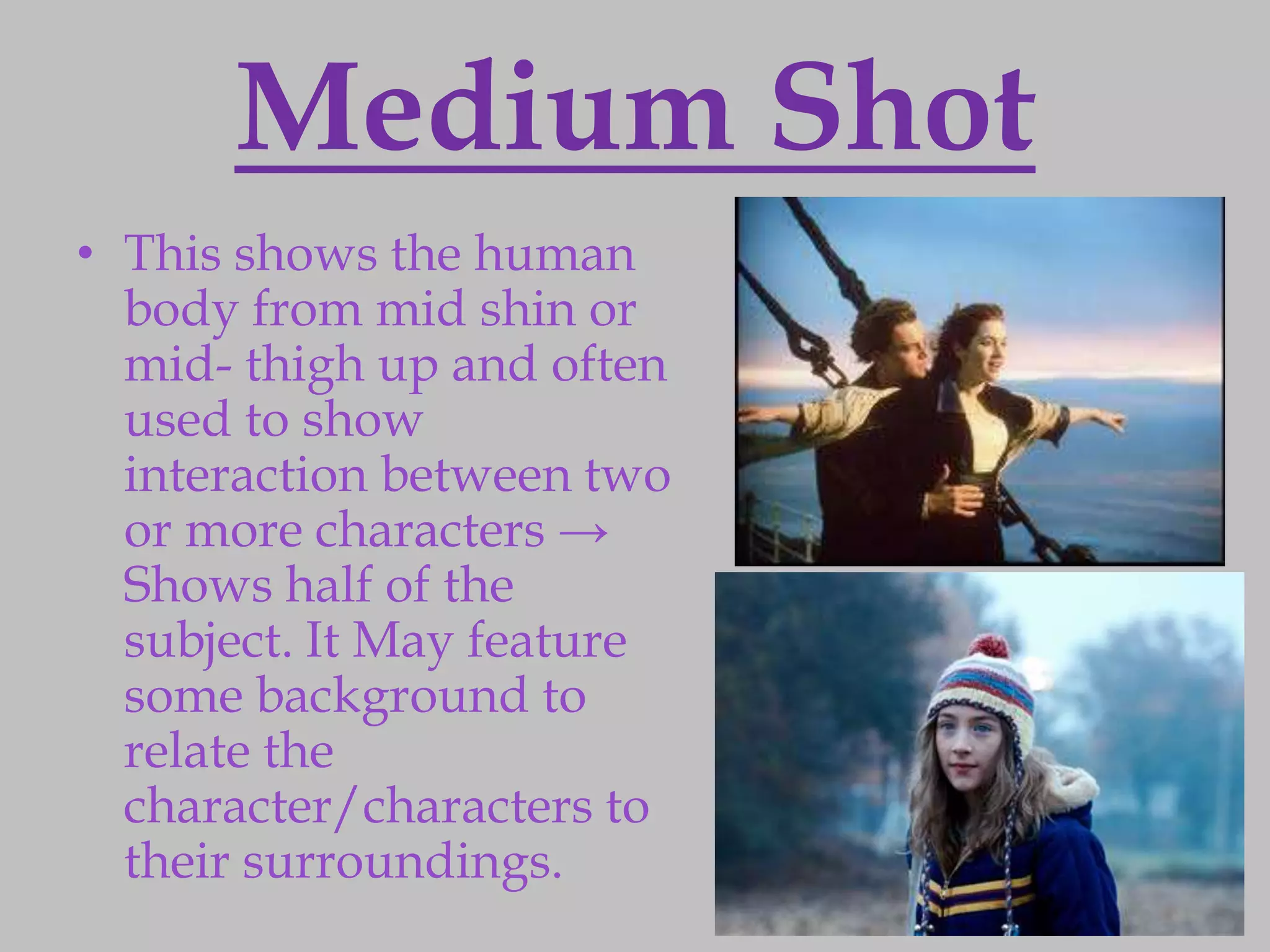
Medium Shot
• This shows the human
  body from mid shin or
  mid- thigh up and often
  used to show
  interaction between two
  or more characters →
  Shows half of the
  subject. It May feature
  some background to
  relate the
  character/characters to
  their surroundings.
Close Up Shot
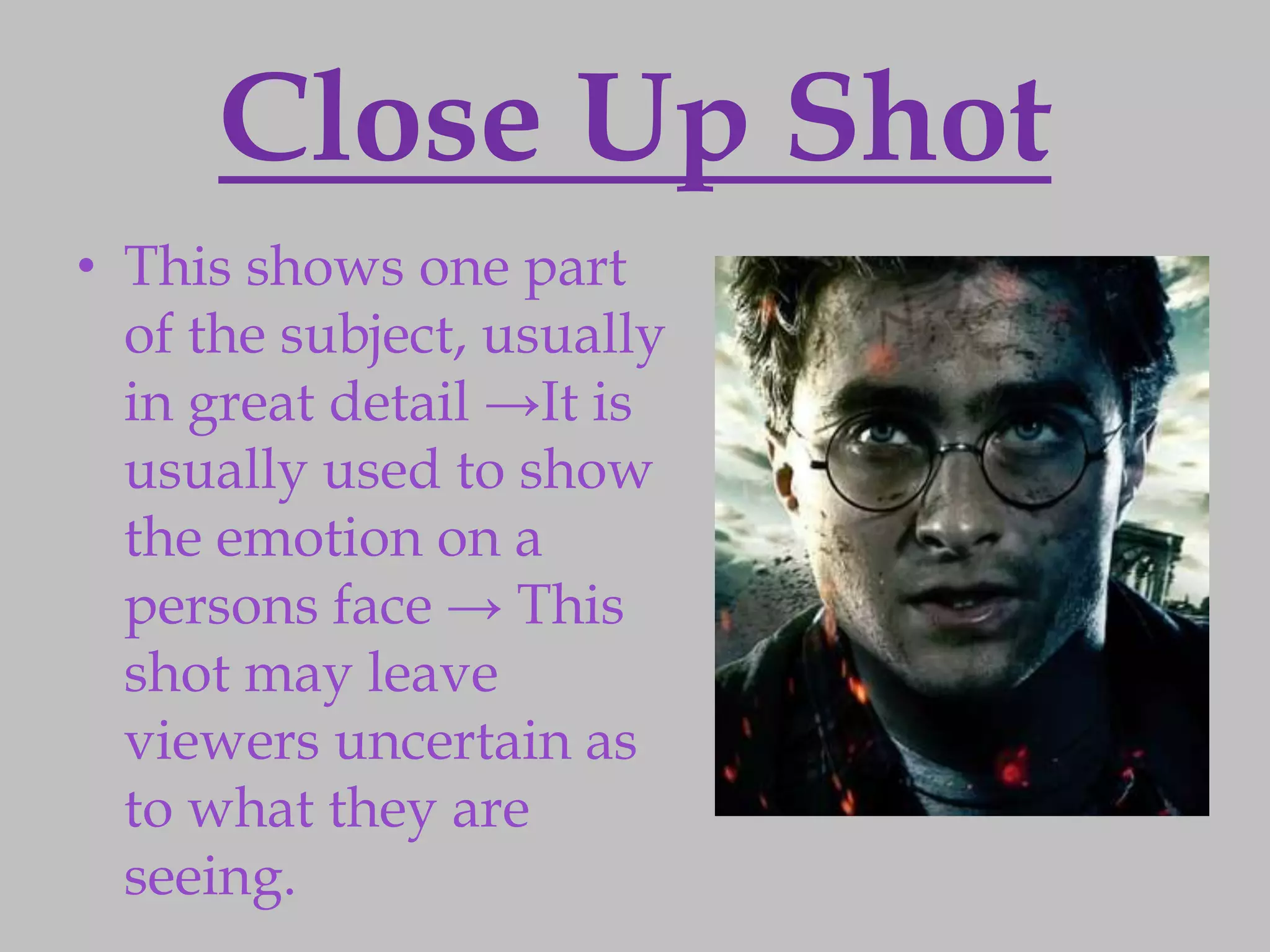
• This shows one part
  of the subject, usually
  in great detail →It is
  usually used to show
  the emotion on a
  persons face → This
  shot may leave
  viewers uncertain as
  to what they are
  seeing.
Other Camera Shots
     Include:
Extreme Close Up
  Extreme Long Shot
 Full Shot
Extreme Close Up
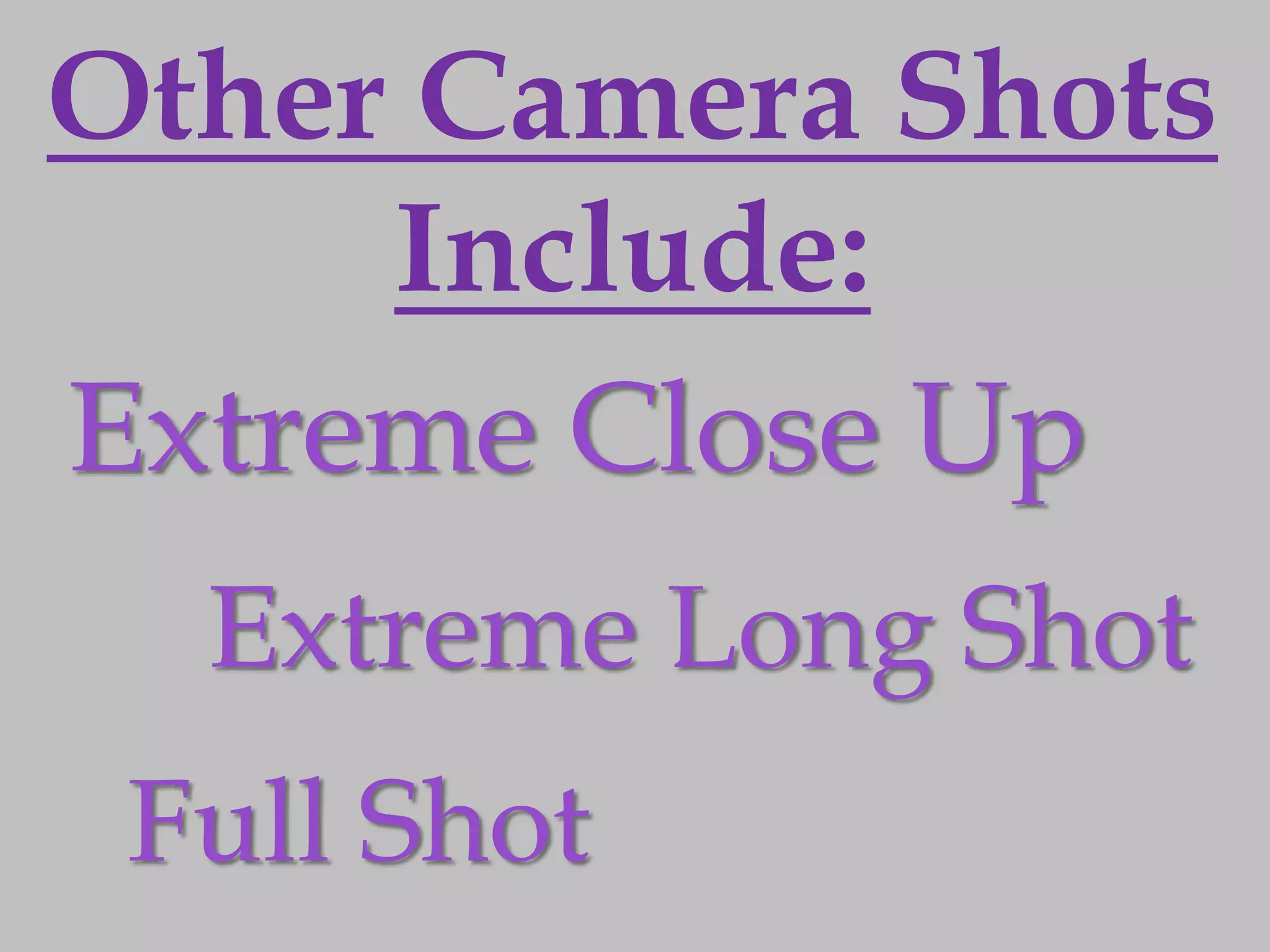
• This shows only a detail of
  the subject, such as
  someone's eyes, or the paws
  of a dog walking down a
  path, of a hand on a
  doorbell or a tree branch→
  We can understand how a
  character feels; even get into
  the head of that character →
  It is used a lot in thrillers →
  It helps to clarify action.
Extreme Long Shot
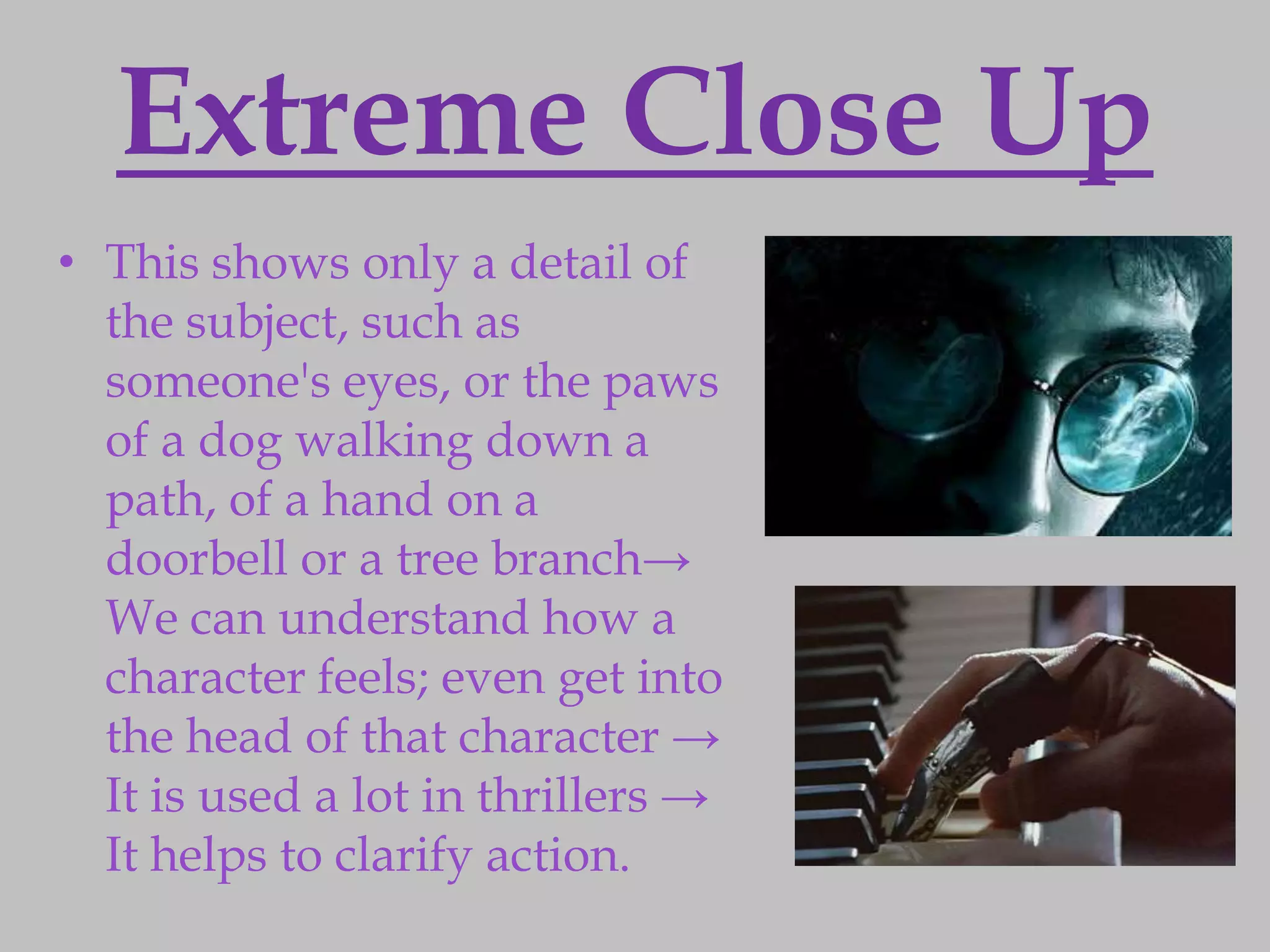
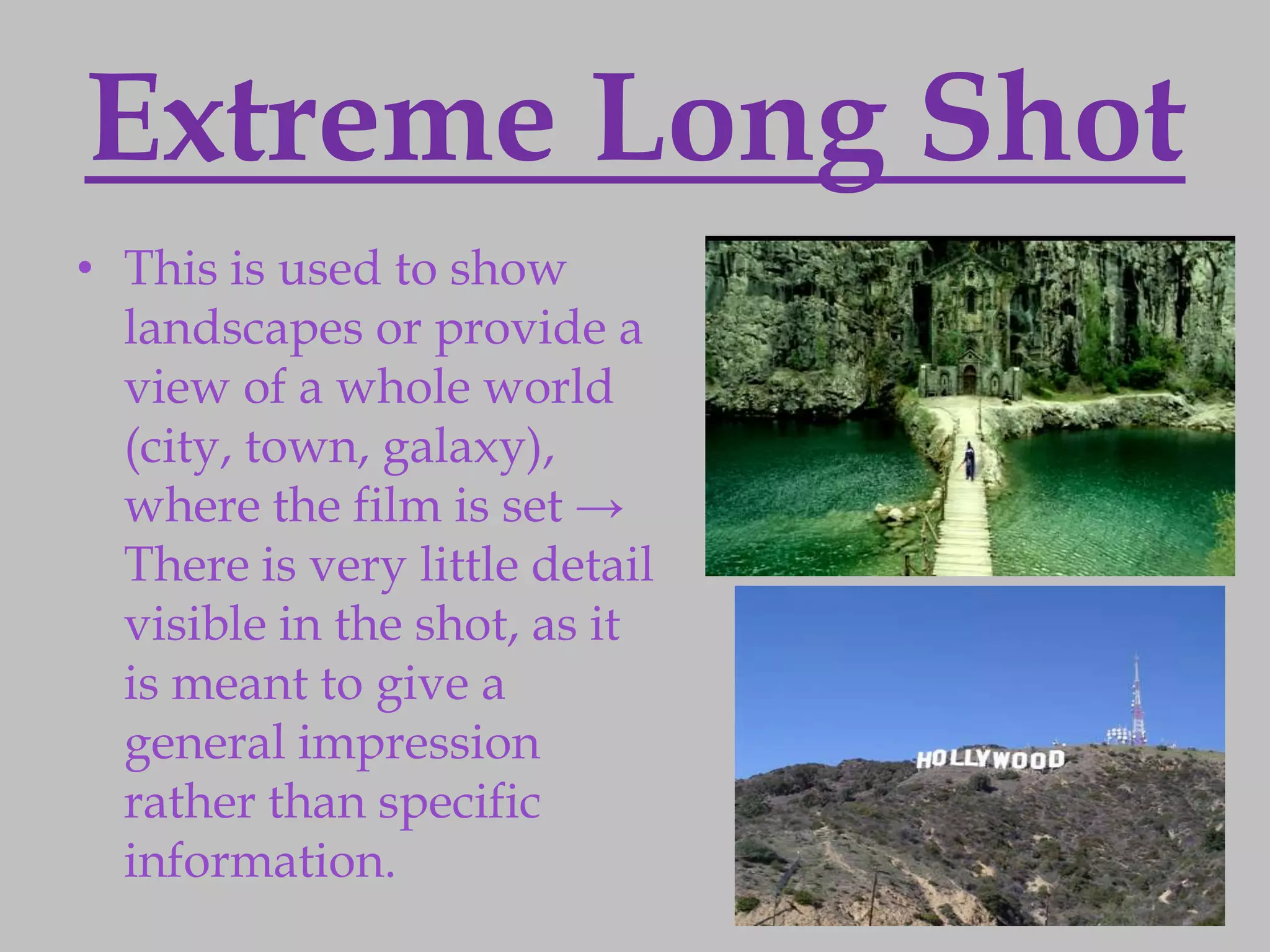
• This is used to show
  landscapes or provide a
  view of a whole world
  (city, town, galaxy),
  where the film is set →
  There is very little detail
  visible in the shot, as it
  is meant to give a
  general impression
  rather than specific
  information.
Full Shot
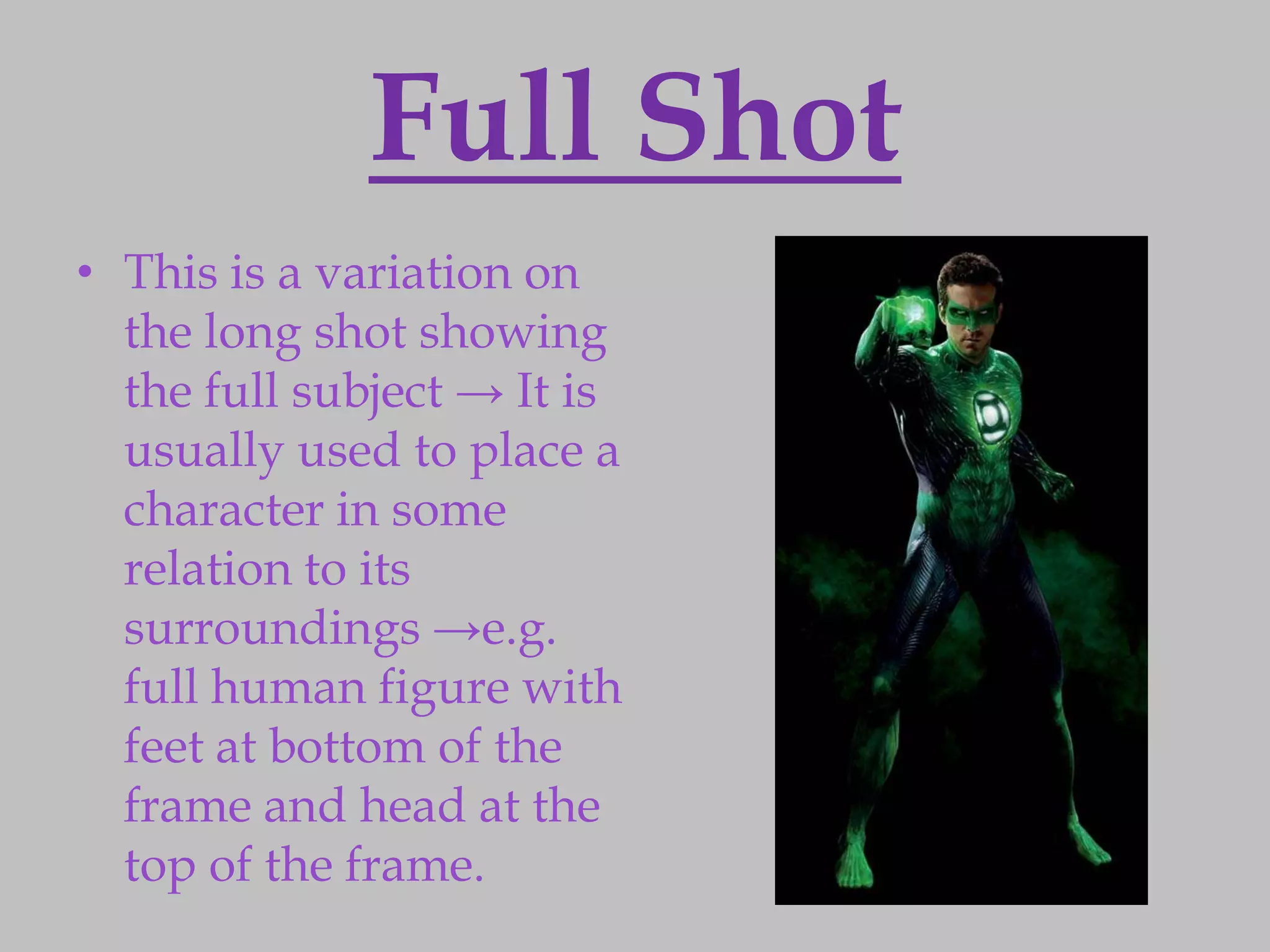
• This is a variation on
  the long shot showing
  the full subject → It is
  usually used to place a
  character in some
  relation to its
  surroundings →e.g.
  full human figure with
  feet at bottom of the
  frame and head at the
  top of the frame.
How might these
shots be used in a
     movie?
Establishing shot
  Reaction Shot
Establishing Shot
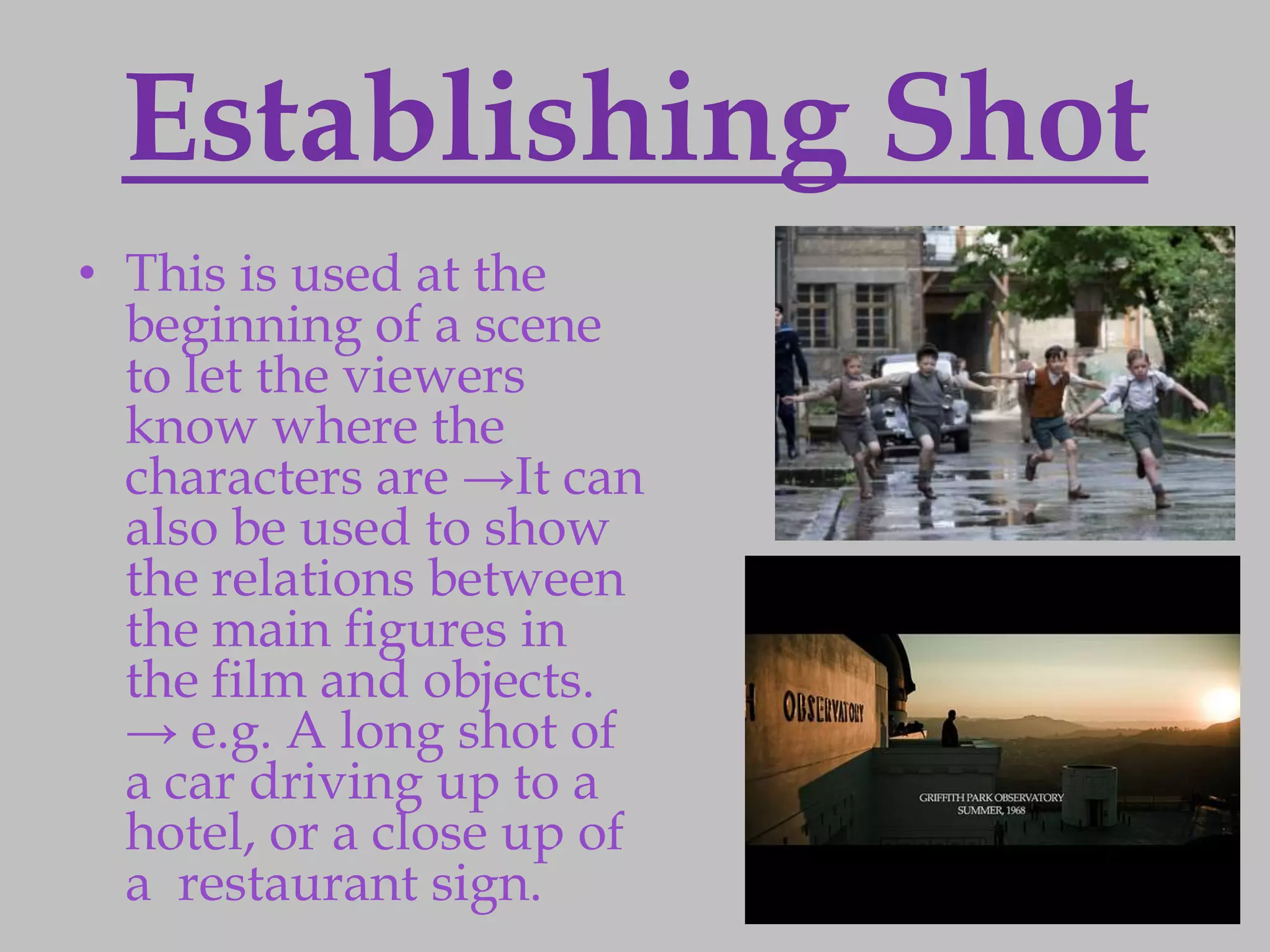
• This is used at the
  beginning of a scene
  to let the viewers
  know where the
  characters are →It can
  also be used to show
  the relations between
  the main figures in
  the film and objects.
  → e.g. A long shot of
  a car driving up to a
  hotel, or a close up of
  a restaurant sign.
Reaction Shot
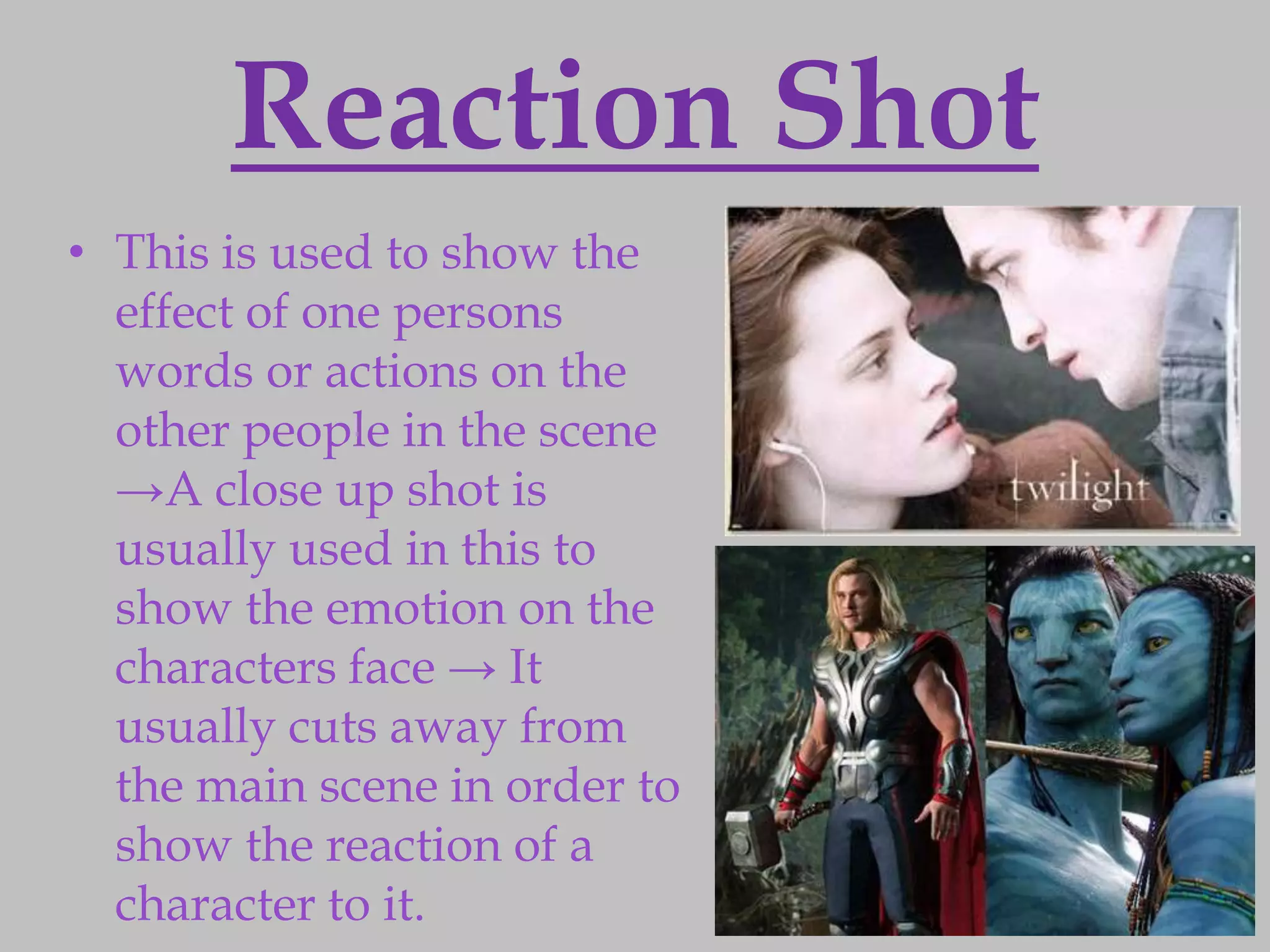
• This is used to show the
  effect of one persons
  words or actions on the
  other people in the scene
  →A close up shot is
  usually used in this to
  show the emotion on the
  characters face → It
  usually cuts away from
  the main scene in order to
  show the reaction of a
  character to it.
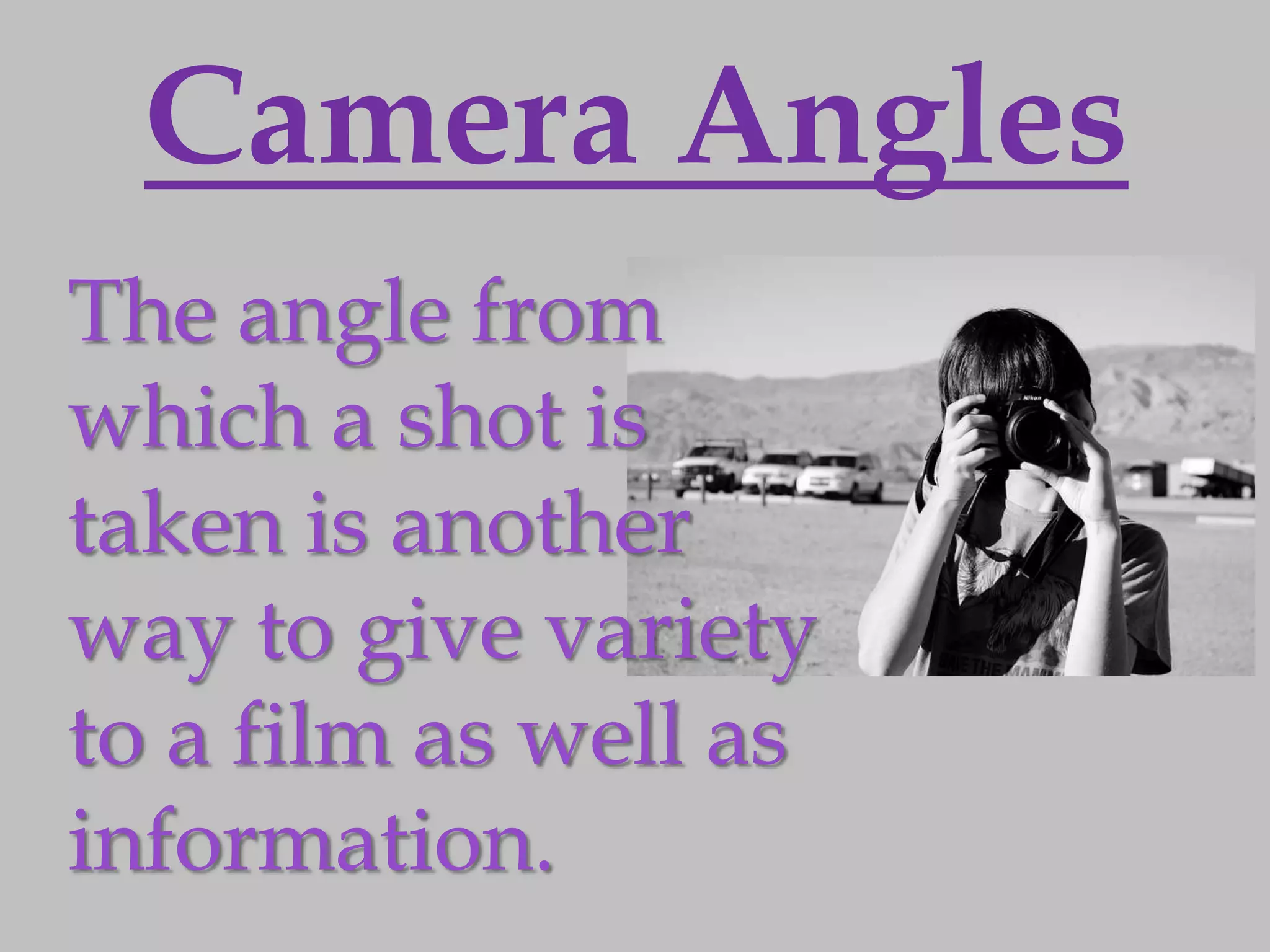
Camera Angles
The angle from
which a shot is
taken is another
way to give variety
to a film as well as
information.
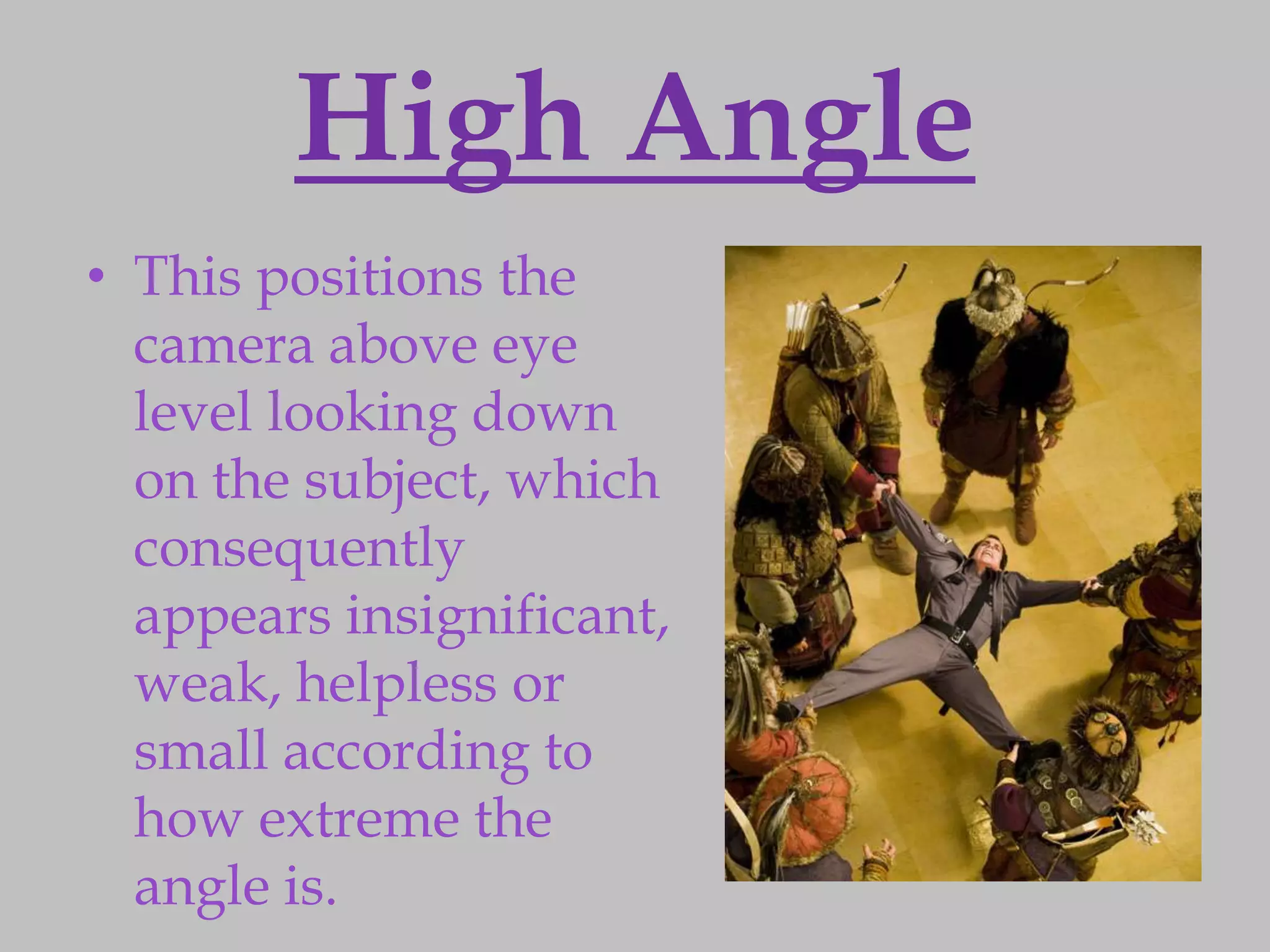
High Angle
• This positions the
  camera above eye
  level looking down
  on the subject, which
  consequently
  appears insignificant,
  weak, helpless or
  small according to
  how extreme the
  angle is.
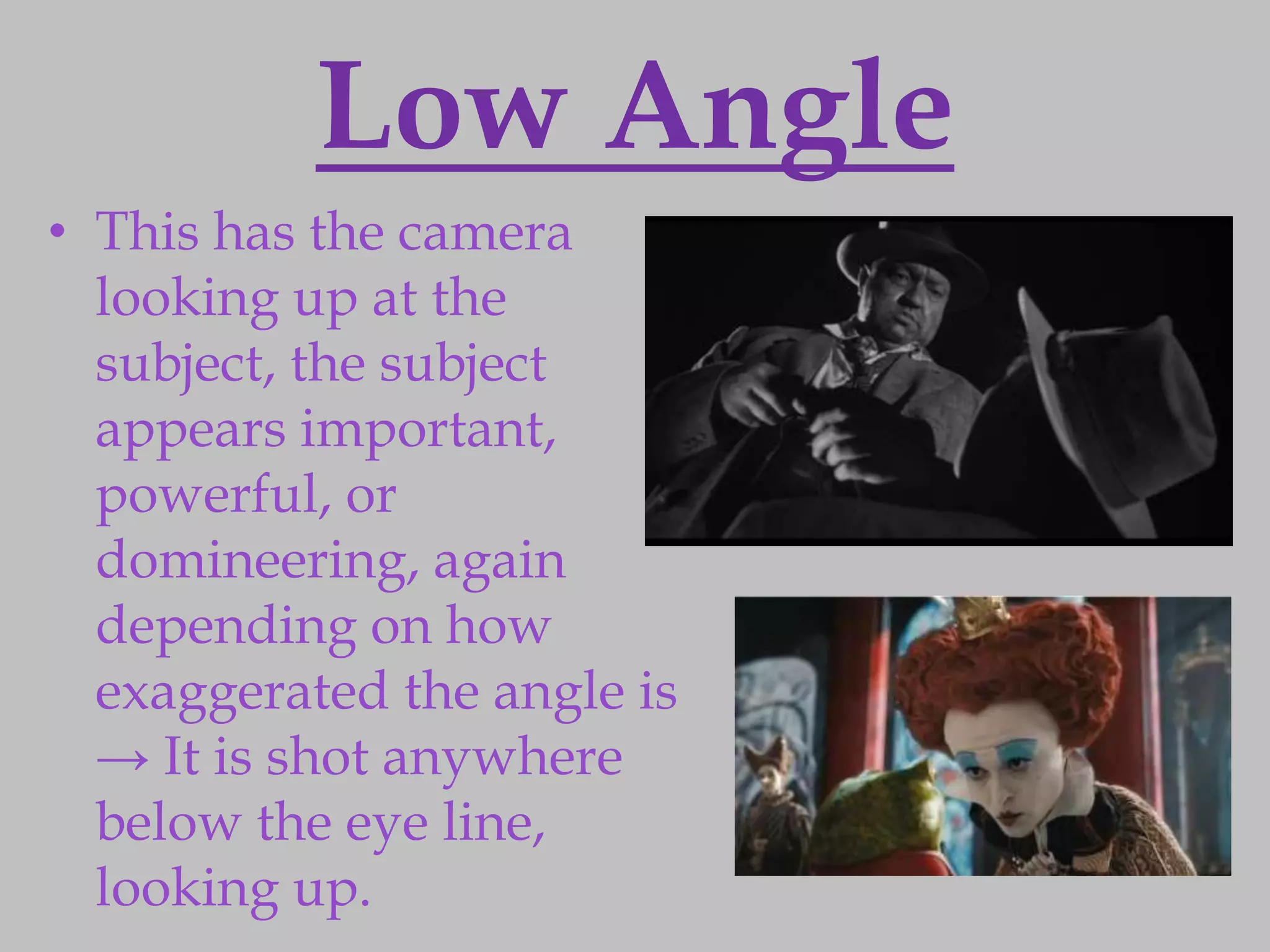
Low Angle
• This has the camera
  looking up at the
  subject, the subject
  appears important,
  powerful, or
  domineering, again
  depending on how
  exaggerated the angle is
  → It is shot anywhere
  below the eye line,
  looking up.
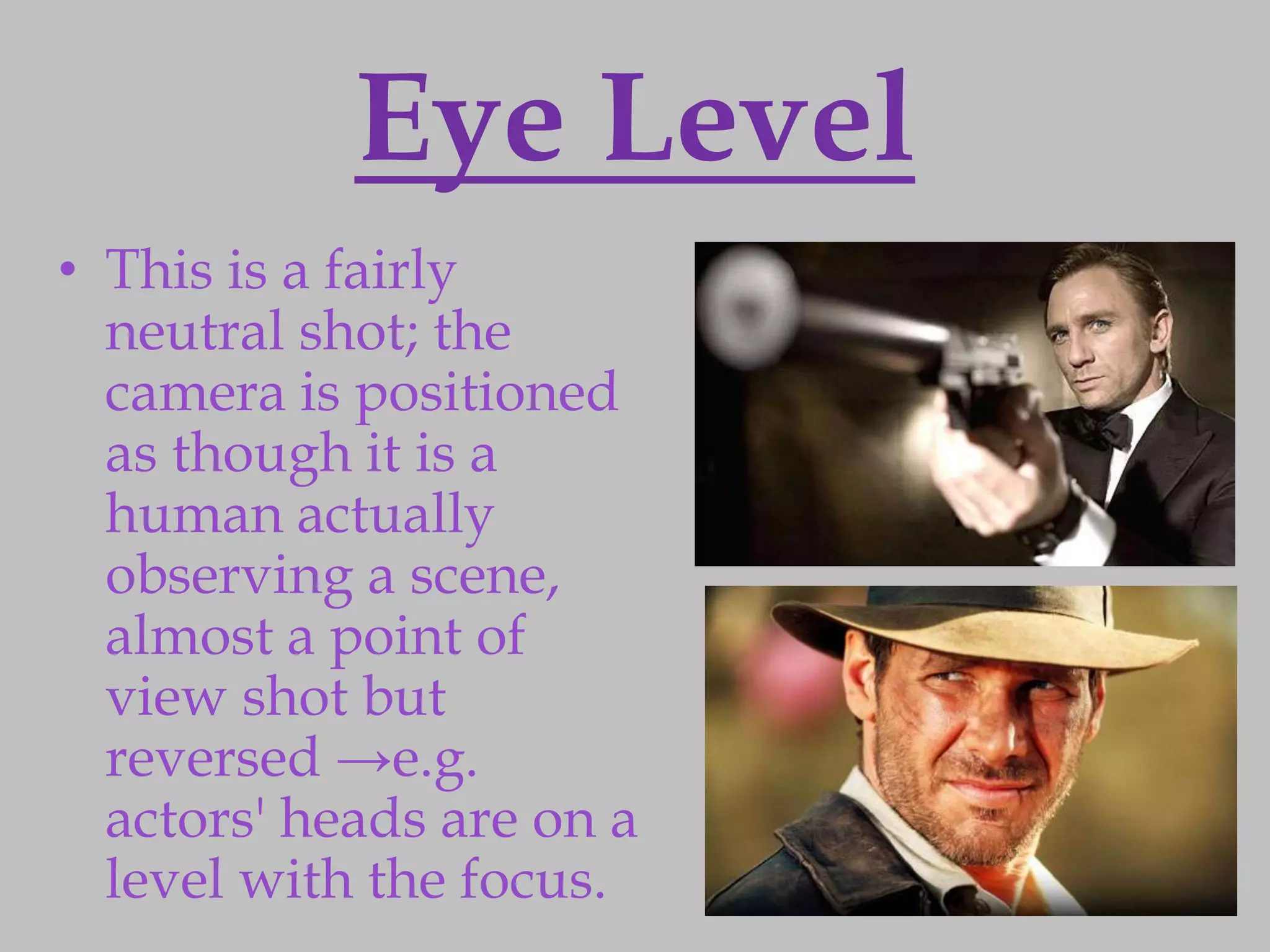
Eye Level
• This is a fairly
  neutral shot; the
  camera is positioned
  as though it is a
  human actually
  observing a scene,
  almost a point of
  view shot but
  reversed →e.g.
  actors' heads are on a
  level with the focus.
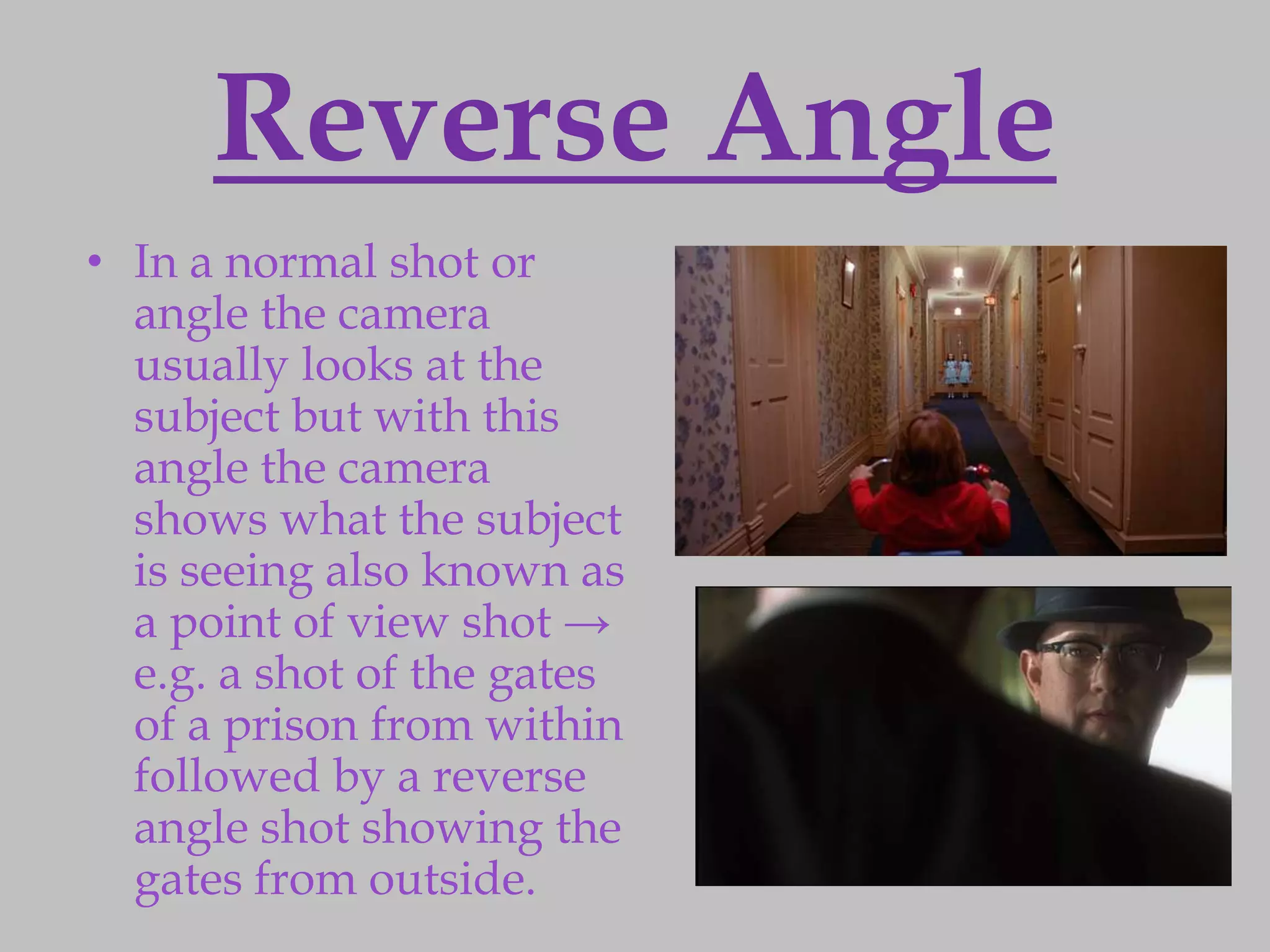
Reverse Angle
• In a normal shot or
  angle the camera
  usually looks at the
  subject but with this
  angle the camera
  shows what the subject
  is seeing also known as
  a point of view shot →
  e.g. a shot of the gates
  of a prison from within
  followed by a reverse
  angle shot showing the
  gates from outside.
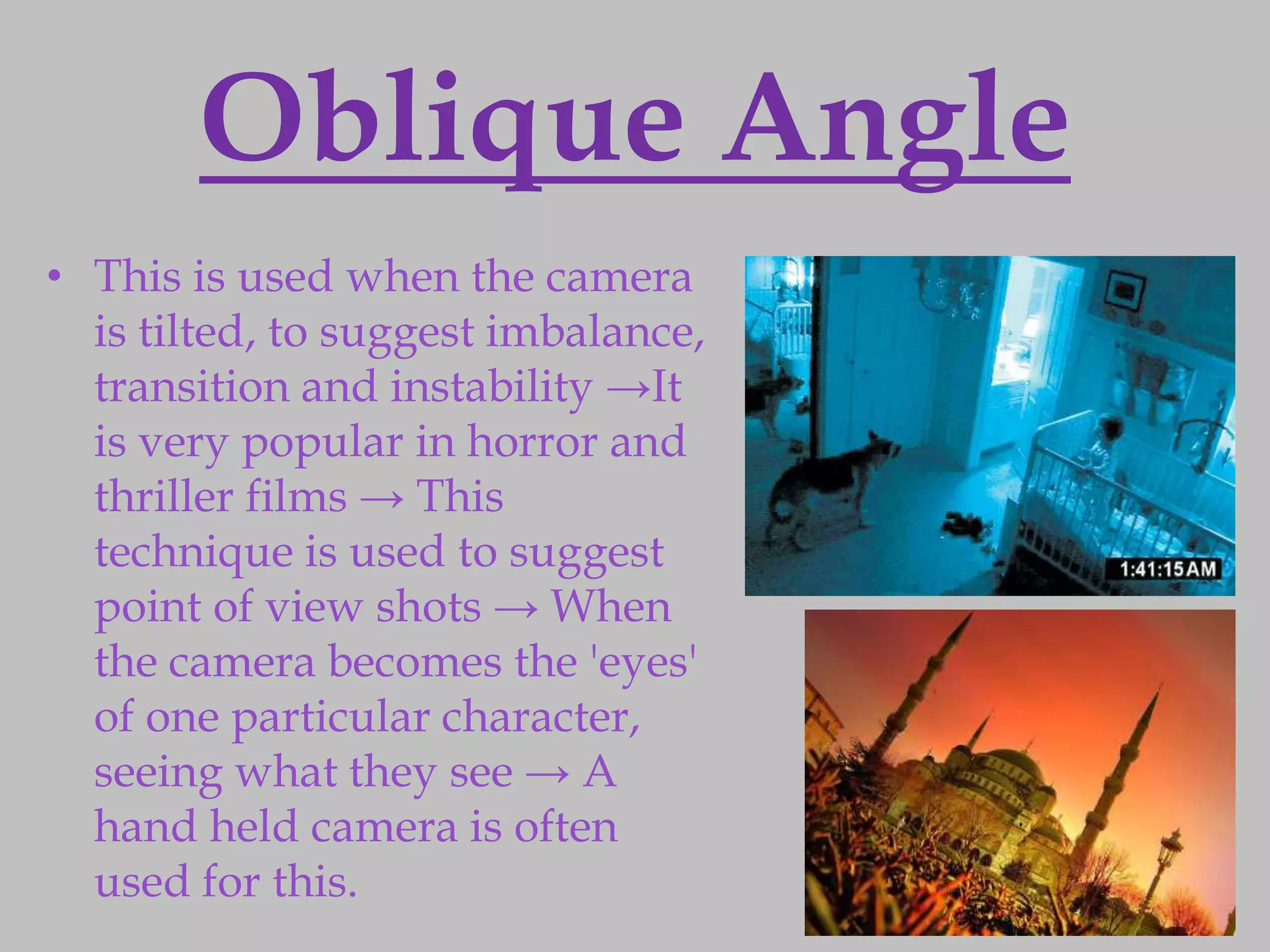
Oblique Angle
• This is used when the camera
  is tilted, to suggest imbalance,
  transition and instability →It
  is very popular in horror and
  thriller films → This
  technique is used to suggest
  point of view shots → When
  the camera becomes the 'eyes'
  of one particular character,
  seeing what they see → A
  hand held camera is often
  used for this.

Camera angles & shots

  • 1.
  • 2.
    There Are 3Main Shots That Describe How Near Or How Far The Camera Is From The Subject: Long Shot Medium Shot Close Up Shot
  • 3.
    Long Shot • Thisshows the whole subject → See surroundings → Used to show the full human figure and often provide a clear view of the environment or setting where we find the character.
  • 4.
    Medium Shot • Thisshows the human body from mid shin or mid- thigh up and often used to show interaction between two or more characters → Shows half of the subject. It May feature some background to relate the character/characters to their surroundings.
  • 5.
    Close Up Shot •This shows one part of the subject, usually in great detail →It is usually used to show the emotion on a persons face → This shot may leave viewers uncertain as to what they are seeing.
  • 6.
    Other Camera Shots Include: Extreme Close Up Extreme Long Shot Full Shot
  • 7.
    Extreme Close Up •This shows only a detail of the subject, such as someone's eyes, or the paws of a dog walking down a path, of a hand on a doorbell or a tree branch→ We can understand how a character feels; even get into the head of that character → It is used a lot in thrillers → It helps to clarify action.
  • 8.
    Extreme Long Shot •This is used to show landscapes or provide a view of a whole world (city, town, galaxy), where the film is set → There is very little detail visible in the shot, as it is meant to give a general impression rather than specific information.
  • 9.
    Full Shot • Thisis a variation on the long shot showing the full subject → It is usually used to place a character in some relation to its surroundings →e.g. full human figure with feet at bottom of the frame and head at the top of the frame.
  • 10.
    How might these shotsbe used in a movie? Establishing shot Reaction Shot
  • 11.
    Establishing Shot • Thisis used at the beginning of a scene to let the viewers know where the characters are →It can also be used to show the relations between the main figures in the film and objects. → e.g. A long shot of a car driving up to a hotel, or a close up of a restaurant sign.
  • 12.
    Reaction Shot • Thisis used to show the effect of one persons words or actions on the other people in the scene →A close up shot is usually used in this to show the emotion on the characters face → It usually cuts away from the main scene in order to show the reaction of a character to it.
  • 13.
    Camera Angles The anglefrom which a shot is taken is another way to give variety to a film as well as information.
  • 14.
    High Angle • Thispositions the camera above eye level looking down on the subject, which consequently appears insignificant, weak, helpless or small according to how extreme the angle is.
  • 15.
    Low Angle • Thishas the camera looking up at the subject, the subject appears important, powerful, or domineering, again depending on how exaggerated the angle is → It is shot anywhere below the eye line, looking up.
  • 16.
    Eye Level • Thisis a fairly neutral shot; the camera is positioned as though it is a human actually observing a scene, almost a point of view shot but reversed →e.g. actors' heads are on a level with the focus.
  • 17.
    Reverse Angle • Ina normal shot or angle the camera usually looks at the subject but with this angle the camera shows what the subject is seeing also known as a point of view shot → e.g. a shot of the gates of a prison from within followed by a reverse angle shot showing the gates from outside.
  • 18.
    Oblique Angle • Thisis used when the camera is tilted, to suggest imbalance, transition and instability →It is very popular in horror and thriller films → This technique is used to suggest point of view shots → When the camera becomes the 'eyes' of one particular character, seeing what they see → A hand held camera is often used for this.