Camera
Movements
Kiran Raza
Another way to give films variety is for
 the camera to move…..Here are some
         camera movements

Panning     Dollying
        Tracking
Tilting
             Zooming
Elevating    In/Out.
Panning
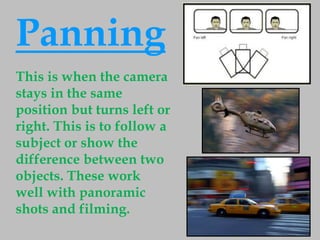
This is when the camera
stays in the same
position but turns left or
right. This is to follow a
subject or show the
difference between two
objects. These work
well with panoramic
shots and filming.
Tracking
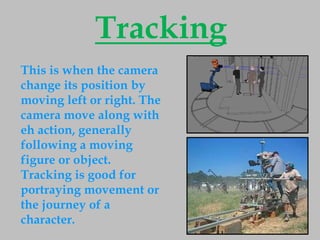
This is when the camera
change its position by
moving left or right. The
camera move along with
eh action, generally
following a moving
figure or object.
Tracking is good for
portraying movement or
the journey of a
character.
Dollying
This is when the camera
changes its position by
moving it forwards or
backwards, the camera
is set on tracks or
wheels. This is to follow
an object smoothly to
get a unique perspective
in some movies
directors combine the
dolly and zoom effect
for a real sense of doom.
The shots convey a real
sense of tension feeling
of vertigo
Tilting
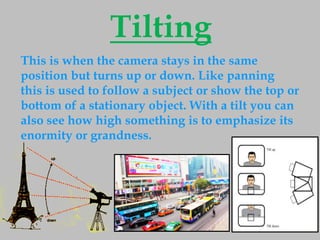
This is when the camera stays in the same
position but turns up or down. Like panning
this is used to follow a subject or show the top or
bottom of a stationary object. With a tilt you can
also see how high something is to emphasize its
enormity or grandness.
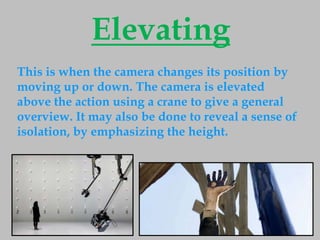
Elevating
This is when the camera changes its position by
moving up or down. The camera is elevated
above the action using a crane to give a general
overview. It may also be done to reveal a sense of
isolation, by emphasizing the height.
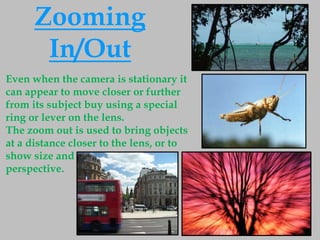
Zooming
       In/Out
Even when the camera is stationary it
can appear to move closer or further
from its subject buy using a special
ring or lever on the lens.
The zoom out is used to bring objects
at a distance closer to the lens, or to
show size and
perspective.

Camera movements

  • 1.
  • 2.
    Another way togive films variety is for the camera to move…..Here are some camera movements Panning Dollying Tracking Tilting Zooming Elevating In/Out.
  • 3.
    Panning This is whenthe camera stays in the same position but turns left or right. This is to follow a subject or show the difference between two objects. These work well with panoramic shots and filming.
  • 4.
    Tracking This is whenthe camera change its position by moving left or right. The camera move along with eh action, generally following a moving figure or object. Tracking is good for portraying movement or the journey of a character.
  • 5.
    Dollying This is whenthe camera changes its position by moving it forwards or backwards, the camera is set on tracks or wheels. This is to follow an object smoothly to get a unique perspective in some movies directors combine the dolly and zoom effect for a real sense of doom. The shots convey a real sense of tension feeling of vertigo
  • 6.
    Tilting This is whenthe camera stays in the same position but turns up or down. Like panning this is used to follow a subject or show the top or bottom of a stationary object. With a tilt you can also see how high something is to emphasize its enormity or grandness.
  • 7.
    Elevating This is whenthe camera changes its position by moving up or down. The camera is elevated above the action using a crane to give a general overview. It may also be done to reveal a sense of isolation, by emphasizing the height.
  • 8.
    Zooming In/Out Even when the camera is stationary it can appear to move closer or further from its subject buy using a special ring or lever on the lens. The zoom out is used to bring objects at a distance closer to the lens, or to show size and perspective.