Camera Shots and Angles 
By Ben Harris
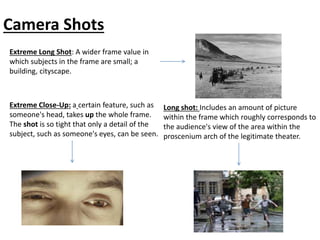
Extreme Long Shot: A wider frame value in 
which subjects in the frame are small; a 
building, cityscape. 
Extreme Close-Up: a certain feature, such as 
someone's head, takes up the whole frame. 
The shot is so tight that only a detail of the 
subject, such as someone's eyes, can be seen. 
Long shot: Includes an amount of picture 
within the frame which roughly corresponds to 
the audience's view of the area within the 
proscenium arch of the legitimate theater. 
Camera Shots
Medium Long Shot: Frames the whole subject 
from the knees up. An intermediate shot 
between the long shot and the medium shot. 
Shows the subject in relation to the 
surroundings. 
Medium full shot: A shot which 
cuts off at the knees and just 
above the head 
Medium Shot: a camera shot in which the 
subject is in the middle distance, permitting 
some of the background to be seen. 
Medium close shot: Falls just above 
the waist and just above the head 
Full shot: A type of long shot which includes 
the human body in full, with the head near the 
top of the frame and the feet near the bottom 
Close-up, Close shot: A detailed view of a 
person or object, usually without much context 
provided.
Big Close Up: This is full head height and the 
head takes up the entire screen. It contains 
little or no background. This shows the detail 
of the character’s face. 
Head Close Up: Bottom of frame cuts of 
the neck and the top cuts off just above 
the head. Not a common shot, 
sometimes used in horror
High angle shot: A shot in which the subject is 
photographed from above. Shows the subject 
as having a lack of power. 
Low angle shot: A shot in which the subject is 
photographed from below. Shows the subject 
as being powerful. 
Canted angle: a type of camera shot where 
the camera is set at an angle on its roll axis 
so that the shot is composed with vertical 
lines at an angle to the side of the frame, it 
is often used to represent someone being 
drunk or in distress. 
Camera Angles
Bird's eye view: A shot in which the camera 
photographs a scene from directly overhead. 
A worm's-eye view: is a view of an object from 
below, as though the observer were a worm; 
the opposite of a bird's-eye view. A worm's eye 
view is used commonly for third perspective, 
with one vanishing point on top, one on the 
left, and one on the right. 
Point of view: This shot shows a view from the 
subject's perspective. It is usually edited in 
such a way that it is obvious whose POV it is

Camera 1

  • 1.
    Camera Shots andAngles By Ben Harris
  • 2.
    Extreme Long Shot:A wider frame value in which subjects in the frame are small; a building, cityscape. Extreme Close-Up: a certain feature, such as someone's head, takes up the whole frame. The shot is so tight that only a detail of the subject, such as someone's eyes, can be seen. Long shot: Includes an amount of picture within the frame which roughly corresponds to the audience's view of the area within the proscenium arch of the legitimate theater. Camera Shots
  • 3.
    Medium Long Shot:Frames the whole subject from the knees up. An intermediate shot between the long shot and the medium shot. Shows the subject in relation to the surroundings. Medium full shot: A shot which cuts off at the knees and just above the head Medium Shot: a camera shot in which the subject is in the middle distance, permitting some of the background to be seen. Medium close shot: Falls just above the waist and just above the head Full shot: A type of long shot which includes the human body in full, with the head near the top of the frame and the feet near the bottom Close-up, Close shot: A detailed view of a person or object, usually without much context provided.
  • 4.
    Big Close Up:This is full head height and the head takes up the entire screen. It contains little or no background. This shows the detail of the character’s face. Head Close Up: Bottom of frame cuts of the neck and the top cuts off just above the head. Not a common shot, sometimes used in horror
  • 5.
    High angle shot:A shot in which the subject is photographed from above. Shows the subject as having a lack of power. Low angle shot: A shot in which the subject is photographed from below. Shows the subject as being powerful. Canted angle: a type of camera shot where the camera is set at an angle on its roll axis so that the shot is composed with vertical lines at an angle to the side of the frame, it is often used to represent someone being drunk or in distress. Camera Angles
  • 6.
    Bird's eye view:A shot in which the camera photographs a scene from directly overhead. A worm's-eye view: is a view of an object from below, as though the observer were a worm; the opposite of a bird's-eye view. A worm's eye view is used commonly for third perspective, with one vanishing point on top, one on the left, and one on the right. Point of view: This shot shows a view from the subject's perspective. It is usually edited in such a way that it is obvious whose POV it is