Venous Access devices
Indications & considerations
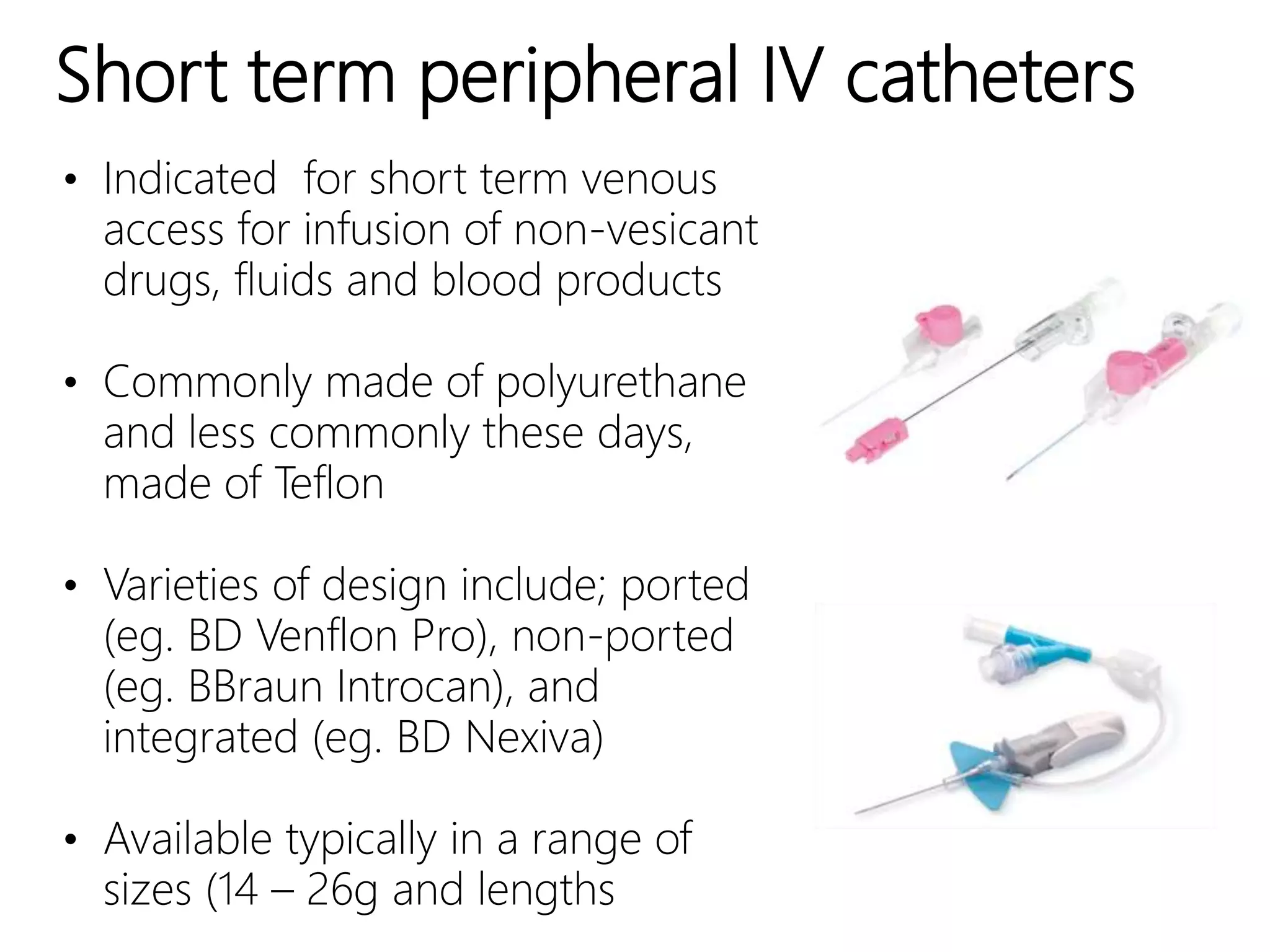
Short term peripheral IV catheters
• Indicated for short term venous
access for infusion of non-vesicant
drugs, fluids and blood products
• Commonly made of polyurethane
and less commonly these days,
made of Teflon
• Varieties of design include; ported
(eg. BD Venflon Pro), non-ported
(eg. BBraun Introcan), and
integrated (eg. BD Nexiva)
• Available typically in a range of
sizes (14 – 26g and lengths
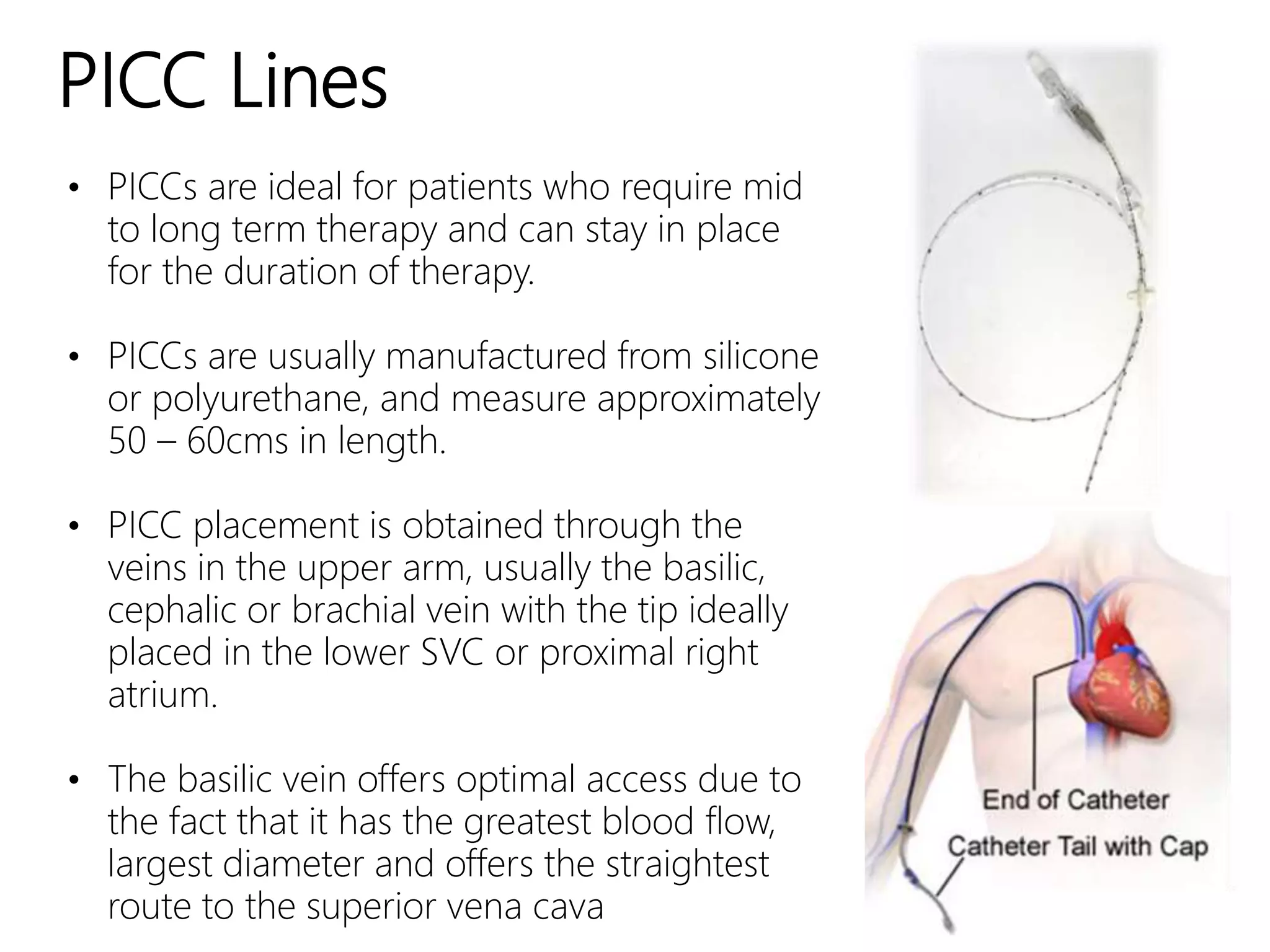
PICC Lines
• PICCs are ideal for patients who require mid
to long term therapy and can stay in place
for the duration of therapy.
• PICCs are usually manufactured from silicone
or polyurethane, and measure approximately
50 – 60cms in length.
• PICC placement is obtained through the
veins in the upper arm, usually the basilic,
cephalic or brachial vein with the tip ideally
placed in the lower SVC or proximal right
atrium.
• The basilic vein offers optimal access due to
the fact that it has the greatest blood flow,
largest diameter and offers the straightest
route to the superior vena cava
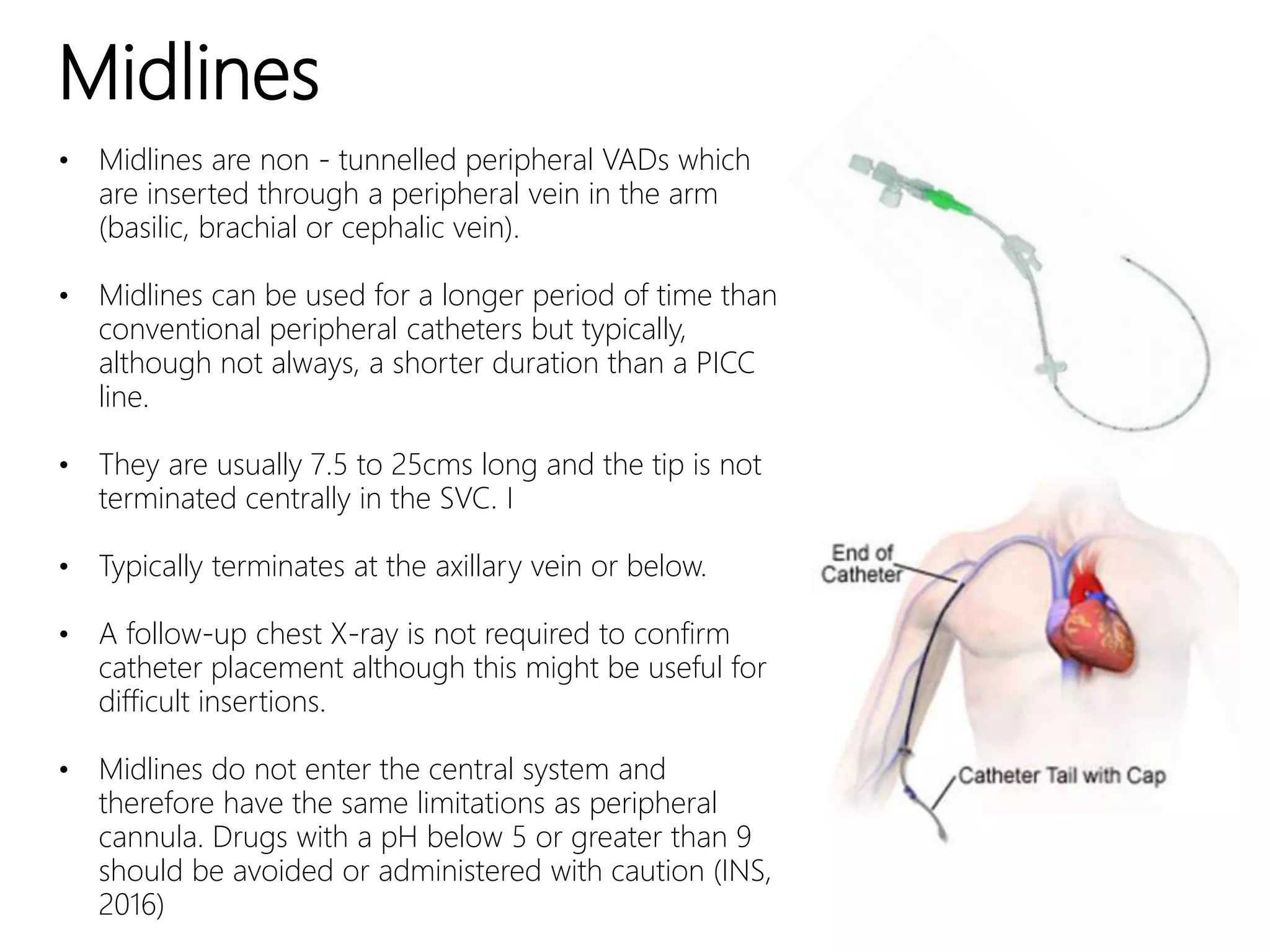
Midlines
• Midlines are non - tunnelled peripheral VADs which
are inserted through a peripheral vein in the arm
(basilic, brachial or cephalic vein).
• Midlines can be used for a longer period of time than
conventional peripheral catheters but typically,
although not always, a shorter duration than a PICC
line.
• They are usually 7.5 to 25cms long and the tip is not
terminated centrally in the SVC. I
• Typically terminates at the axillary vein or below.
• A follow-up chest X-ray is not required to confirm
catheter placement although this might be useful for
difficult insertions.
• Midlines do not enter the central system and
therefore have the same limitations as peripheral
cannula. Drugs with a pH below 5 or greater than 9
should be avoided or administered with caution (INS,
2016)
Non-tunnelled Central Venous Catheters
• Commonly used for short term access in
critical care areas and emergency
departments for infusion of vesicant
medications, rapid infusion of bloods and
intravenous fluids
• Also indicated for patients requiring
intermittent or continuous CVP
monitoring
• Usually inserted into the internal jugular or
subclavian vein, with the catheter tip
resting in the superior vena cava just
above the right atrium.
• Available in a range of sizes, lengths and
lumen configurations
Implantable Ports
(Portacath)
• Typically indicated for use in patients requiring
IV therapy over an extended period of time
• Often preferred by patients concerned about
body image and lifestyle implications of long
term therapy
• A thin, soft, hollow tube made of plastic
put into a vein in the chest or arm with an
opening (the Port) just under the skin.
• The port is a disc about 2.5–4cm (1–1.5in) in
diameter.
• The tube is usually put in (tunnelled) under the
skin of the chest or in the arm.
• The tip of the catheter sits in the SVC
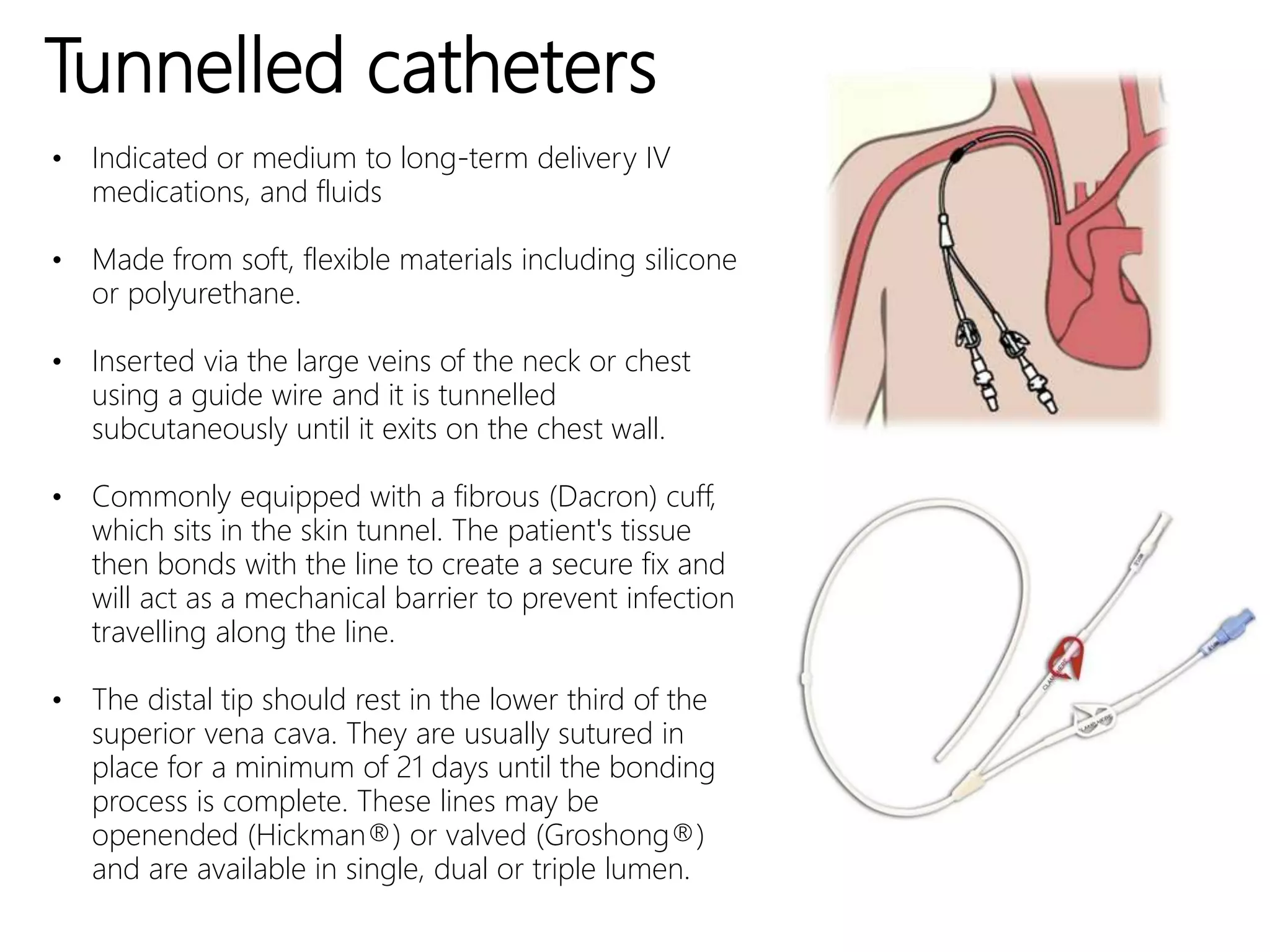
Tunnelled catheters
• Indicated or medium to long-term delivery IV
medications, and fluids
• Made from soft, flexible materials including silicone
or polyurethane.
• Inserted via the large veins of the neck or chest
using a guide wire and it is tunnelled
subcutaneously until it exits on the chest wall.
• Commonly equipped with a fibrous (Dacron) cuff,
which sits in the skin tunnel. The patient's tissue
then bonds with the line to create a secure fix and
will act as a mechanical barrier to prevent infection
travelling along the line.
• The distal tip should rest in the lower third of the
superior vena cava. They are usually sutured in
place for a minimum of 21 days until the bonding
process is complete. These lines may be
openended (Hickman®) or valved (Groshong®)
and are available in single, dual or triple lumen.
Extended dwell peripheral IV catheters
• A relatively new innovation in
intravenous access
• Indicated for patients that have
limited venous access and where vein
preservation is a primary
consideration
• Typically these devices are short
midlines (4-8cm) that are placed as
an alternative to multiple PIVCs in
patients requiring intravenous
medications or fluids for more than a
week
• Commonly sited either above the ACF
or in the forearm, with or without the
use of ultrasound
Discussion….

Vascular access devices

  • 1.
  • 2.
    Short term peripheralIV catheters • Indicated for short term venous access for infusion of non-vesicant drugs, fluids and blood products • Commonly made of polyurethane and less commonly these days, made of Teflon • Varieties of design include; ported (eg. BD Venflon Pro), non-ported (eg. BBraun Introcan), and integrated (eg. BD Nexiva) • Available typically in a range of sizes (14 – 26g and lengths
  • 3.
    PICC Lines • PICCsare ideal for patients who require mid to long term therapy and can stay in place for the duration of therapy. • PICCs are usually manufactured from silicone or polyurethane, and measure approximately 50 – 60cms in length. • PICC placement is obtained through the veins in the upper arm, usually the basilic, cephalic or brachial vein with the tip ideally placed in the lower SVC or proximal right atrium. • The basilic vein offers optimal access due to the fact that it has the greatest blood flow, largest diameter and offers the straightest route to the superior vena cava
  • 4.
    Midlines • Midlines arenon - tunnelled peripheral VADs which are inserted through a peripheral vein in the arm (basilic, brachial or cephalic vein). • Midlines can be used for a longer period of time than conventional peripheral catheters but typically, although not always, a shorter duration than a PICC line. • They are usually 7.5 to 25cms long and the tip is not terminated centrally in the SVC. I • Typically terminates at the axillary vein or below. • A follow-up chest X-ray is not required to confirm catheter placement although this might be useful for difficult insertions. • Midlines do not enter the central system and therefore have the same limitations as peripheral cannula. Drugs with a pH below 5 or greater than 9 should be avoided or administered with caution (INS, 2016)
  • 5.
    Non-tunnelled Central VenousCatheters • Commonly used for short term access in critical care areas and emergency departments for infusion of vesicant medications, rapid infusion of bloods and intravenous fluids • Also indicated for patients requiring intermittent or continuous CVP monitoring • Usually inserted into the internal jugular or subclavian vein, with the catheter tip resting in the superior vena cava just above the right atrium. • Available in a range of sizes, lengths and lumen configurations
  • 6.
    Implantable Ports (Portacath) • Typicallyindicated for use in patients requiring IV therapy over an extended period of time • Often preferred by patients concerned about body image and lifestyle implications of long term therapy • A thin, soft, hollow tube made of plastic put into a vein in the chest or arm with an opening (the Port) just under the skin. • The port is a disc about 2.5–4cm (1–1.5in) in diameter. • The tube is usually put in (tunnelled) under the skin of the chest or in the arm. • The tip of the catheter sits in the SVC
  • 7.
    Tunnelled catheters • Indicatedor medium to long-term delivery IV medications, and fluids • Made from soft, flexible materials including silicone or polyurethane. • Inserted via the large veins of the neck or chest using a guide wire and it is tunnelled subcutaneously until it exits on the chest wall. • Commonly equipped with a fibrous (Dacron) cuff, which sits in the skin tunnel. The patient's tissue then bonds with the line to create a secure fix and will act as a mechanical barrier to prevent infection travelling along the line. • The distal tip should rest in the lower third of the superior vena cava. They are usually sutured in place for a minimum of 21 days until the bonding process is complete. These lines may be openended (Hickman®) or valved (Groshong®) and are available in single, dual or triple lumen.
  • 8.
    Extended dwell peripheralIV catheters • A relatively new innovation in intravenous access • Indicated for patients that have limited venous access and where vein preservation is a primary consideration • Typically these devices are short midlines (4-8cm) that are placed as an alternative to multiple PIVCs in patients requiring intravenous medications or fluids for more than a week • Commonly sited either above the ACF or in the forearm, with or without the use of ultrasound
  • 9.