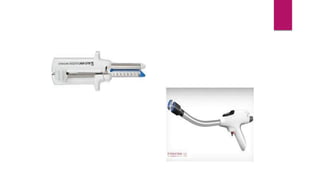
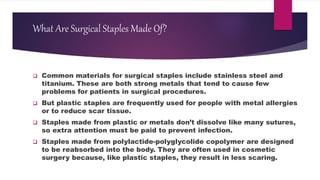
SURGICAL STAPLERS
- RIYA SANJAY BAGHELE
NAGPUR
INTRODUCTION
 Surgical staplers and staples are medical devices that may be
used in place of sutures.
 They can close large wounds or incisions more quickly and be
less painful than stitches for patients.
 They are often used in minimally invasive surgery.
 They can also be used to close wounds in areas where skin is
tight against bone, in operations to remove organs or to
reconnect parts of internal organs.
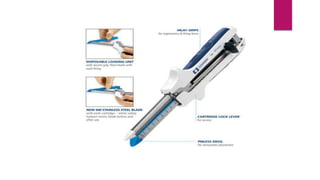
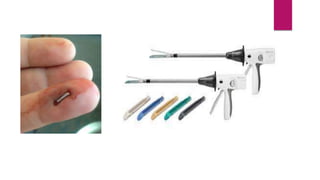
 Surgical staplers are generally made of plastic and loaded with a
disposable cartridge of surgical staples.
 The staplers come in both reusable and disposable models. They
resemble construction or industrial staplers and are designed to
insert and close several staples at once.
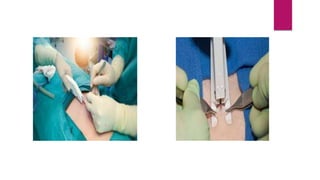
 THE DEVICES MAY BE USED INTERNALLY TO SEAL TISSUE
DURING SURGERY. THEY ARE USEFUL IN MINIMALLY INVASIVE
SURGERY BECAUSE THEY REQUIRE ONLY A NARROW OPENING
AND CAN QUICKLY CUT AND SEAL TISSUE AND BLOOD VESSELS.
 SKIN STAPLERS ARE USED EXTERNALLY TO CLOSE SKIN UNDER
HIGH TENSION, SUCH AS ON THE SKULL OR THE TRUNK OF THE
BODY.
 SURGICAL STAPLES OFFER SEVERAL ADVANTAGES OVER
SUTURES.
 THEY CAN BE INSERTED QUICKLY.
 THEY’RE STRONG.
 THEY ARE EASILY REMOVED WITH A SURGICAL STAPLE
REMOVER.
 THEY REDUCE THE AMOUNT OF TIME A PATIENT IS IN SURGERY
AND UNDER ANESTHESIA.
When Are Surgical Staplers Used?
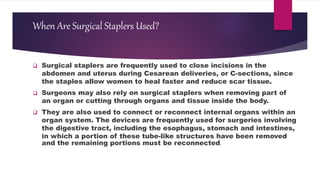
 Surgical staplers are frequently used to close incisions in the
abdomen and uterus during Cesarean deliveries, or C-sections, since
the staples allow women to heal faster and reduce scar tissue.
 Surgeons may also rely on surgical staplers when removing part of
an organ or cutting through organs and tissue inside the body.
 They are also used to connect or reconnect internal organs within an
organ system. The devices are frequently used for surgeries involving
the digestive tract, including the esophagus, stomach and intestines,
in which a portion of these tube-like structures have been removed
and the remaining portions must be reconnected.
CARING FOR SURGICAL STAPLES
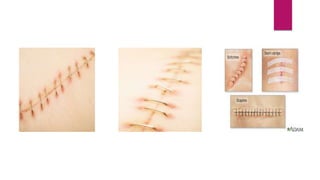
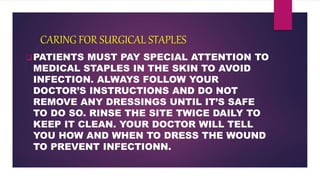
PATIENTS MUST PAY SPECIAL ATTENTION TO
MEDICAL STAPLES IN THE SKIN TO AVOID
INFECTION. ALWAYS FOLLOW YOUR
DOCTOR’S INSTRUCTIONS AND DO NOT
REMOVE ANY DRESSINGS UNTIL IT’S SAFE
TO DO SO. RINSE THE SITE TWICE DAILY TO
KEEP IT CLEAN. YOUR DOCTOR WILL TELL
YOU HOW AND WHEN TO DRESS THE WOUND
TO PREVENT INFECTIONN.
When to Call Your Doctor About Surgical Staple
Complications
 Bleeding enough to soak through the bandage
 Brown, green or yellow foul-smelling pus around the
incision
 Change in color of the skin around the incision
 Difficulty moving in the area around the incision
 Dryness, darkened skin or other changes around the site
 Fever of 100 degrees or higher for more than 4 hours
 New, severe pain
 Cold, pale or tingling skin near the incision site
 Swelling or redness around the incision
Removing Surgical Staples
 SURGICAL STAPLES USUALLY REMAIN IN PLACE FOR ONE TO TWO
WEEKS, DEPENDING ON THE TYPE OF SURGERY AND THE
PLACEMENT OF THE STAPLES.
 IN SOME CASES, INTERNAL STAPLES MAY NOT BE REMOVED. THEY
ARE EITHER ABSORBED OR BECOME PERMANENT ADDITIONS TO
HOLD INTERNAL TISSUE TOGETHER.
 REMOVING SURGICAL STAPLES FROM THE SKIN IS GENERALLY NOT
PAINFUL. BUT THEY SHOULD BE REMOVED ONLY BY A DOCTOR.
NEVER ATTEMPT TO REMOVE SURGICAL STAPLES ON YOUR OWN.
 REMOVAL REQUIRES A STERILE SETTING AND A SPECIALIZED
SURGICAL STAPLE REMOVER OR EXTRACTOR. THE DEVICE SPREADS
ONE STAPLE AT A TIME, ALLOWING THE DOCTOR TO GENTLY WORK
IT OUT OF THE SKIN.
 USUALLY, A DOCTOR WILL REMOVE EVERY OTHER STAPLE, AND A
SECOND APPOINTMENT IS SCHEDULED TO REMOVE THE REST IF THE
WOUND HAS NOT COMPLETELY HEALED.
How Surgical Staplers Work
 Surgical staplers work by compressing tissue, connecting two pieces of
tissue with staggered rows of B- shaped surgical staples and, in some
models, cutting away excess tissue to create a clean closure of the
surgical wound.
 There are various designs for different types of surgeries, with most
categorized as either linear or circular.
 LINEAR STAPLERS
 When using linear staplers, the surgeon uses the handles at one
end to close the “jaws” of the stapler at the other end over the
tissue.
 When the surgeon fires the stapler, a row of staples binds the
tissue together and a blade cuts the tissue between the staples.
The process seals the open wound to prevent bleeding.
 LINEAR STAPLERS ARE USED TO CONNECT TISSUE DURING MINIMALLY
INVASIVE SURGERIES OR TO REMOVE AN ORGAN. CIRCULAR STAPLERS
ARE OFTEN USED FOR SURGERIES INVOLVING THE DIGESTIVE TRACT
FROM THE THROAT TO THE COLON.
CIRCULAR STAPLERS
 CIRCULAR STAPLERS FIRE TWO STAGGERED ROWS OF STAPLES
FROM A CIRCULAR CARTRIDGE. THIS CIRCULAR LAYOUT
ALLOWS THE STAPLER TO CONNECT TWO SECTIONS OF THE
INTESTINE, OR ANOTHER TUBE-LIKE STRUCTURE, AFTER A
PORTION HAS BEEN REMOVED.
 THE STAPLES CAUSE TISSUE TO PINCH UP AS RINGS OR
DONUTS BETWEEN THE STAPLES. A BUILT-IN BLADE THEN
SLICES OFF THE OVERLAYING TISSUE, SEALING THE NEW
CONNECTION.
 SURGEONS WATCH THE CLOSED WOUND FOR ABOUT 30
SECONDS TO MAKE SURE THE TISSUE HAS BEEN SQUEEZED
TOGETHER PROPERLY AND CONFIRM THAT THERE IS NO
BLEEDING.
What Are Surgical Staples Made Of?
 Common materials for surgical staples include stainless steel and
titanium. These are both strong metals that tend to cause few
problems for patients in surgical procedures.
 But plastic staples are frequently used for people with metal allergies
or to reduce scar tissue.
 Staples made from plastic or metals don’t dissolve like many sutures,
so extra attention must be paid to prevent infection.
 Staples made from polylactide-polyglycolide copolymer are designed
to be reabsorbed into the body. They are often used in cosmetic
surgery because, like plastic staples, they result in less scaring.
Surgical staplers

Surgical staplers

  • 1.
    SURGICAL STAPLERS - RIYASANJAY BAGHELE NAGPUR
  • 2.
    INTRODUCTION  Surgical staplersand staples are medical devices that may be used in place of sutures.  They can close large wounds or incisions more quickly and be less painful than stitches for patients.  They are often used in minimally invasive surgery.  They can also be used to close wounds in areas where skin is tight against bone, in operations to remove organs or to reconnect parts of internal organs.  Surgical staplers are generally made of plastic and loaded with a disposable cartridge of surgical staples.  The staplers come in both reusable and disposable models. They resemble construction or industrial staplers and are designed to insert and close several staples at once.
  • 4.
     THE DEVICESMAY BE USED INTERNALLY TO SEAL TISSUE DURING SURGERY. THEY ARE USEFUL IN MINIMALLY INVASIVE SURGERY BECAUSE THEY REQUIRE ONLY A NARROW OPENING AND CAN QUICKLY CUT AND SEAL TISSUE AND BLOOD VESSELS.  SKIN STAPLERS ARE USED EXTERNALLY TO CLOSE SKIN UNDER HIGH TENSION, SUCH AS ON THE SKULL OR THE TRUNK OF THE BODY.  SURGICAL STAPLES OFFER SEVERAL ADVANTAGES OVER SUTURES.  THEY CAN BE INSERTED QUICKLY.  THEY’RE STRONG.  THEY ARE EASILY REMOVED WITH A SURGICAL STAPLE REMOVER.  THEY REDUCE THE AMOUNT OF TIME A PATIENT IS IN SURGERY AND UNDER ANESTHESIA.
  • 6.
    When Are SurgicalStaplers Used?  Surgical staplers are frequently used to close incisions in the abdomen and uterus during Cesarean deliveries, or C-sections, since the staples allow women to heal faster and reduce scar tissue.  Surgeons may also rely on surgical staplers when removing part of an organ or cutting through organs and tissue inside the body.  They are also used to connect or reconnect internal organs within an organ system. The devices are frequently used for surgeries involving the digestive tract, including the esophagus, stomach and intestines, in which a portion of these tube-like structures have been removed and the remaining portions must be reconnected.
  • 8.
    CARING FOR SURGICALSTAPLES PATIENTS MUST PAY SPECIAL ATTENTION TO MEDICAL STAPLES IN THE SKIN TO AVOID INFECTION. ALWAYS FOLLOW YOUR DOCTOR’S INSTRUCTIONS AND DO NOT REMOVE ANY DRESSINGS UNTIL IT’S SAFE TO DO SO. RINSE THE SITE TWICE DAILY TO KEEP IT CLEAN. YOUR DOCTOR WILL TELL YOU HOW AND WHEN TO DRESS THE WOUND TO PREVENT INFECTIONN.
  • 10.
    When to CallYour Doctor About Surgical Staple Complications  Bleeding enough to soak through the bandage  Brown, green or yellow foul-smelling pus around the incision  Change in color of the skin around the incision  Difficulty moving in the area around the incision  Dryness, darkened skin or other changes around the site  Fever of 100 degrees or higher for more than 4 hours  New, severe pain  Cold, pale or tingling skin near the incision site  Swelling or redness around the incision
  • 11.
    Removing Surgical Staples SURGICAL STAPLES USUALLY REMAIN IN PLACE FOR ONE TO TWO WEEKS, DEPENDING ON THE TYPE OF SURGERY AND THE PLACEMENT OF THE STAPLES.  IN SOME CASES, INTERNAL STAPLES MAY NOT BE REMOVED. THEY ARE EITHER ABSORBED OR BECOME PERMANENT ADDITIONS TO HOLD INTERNAL TISSUE TOGETHER.  REMOVING SURGICAL STAPLES FROM THE SKIN IS GENERALLY NOT PAINFUL. BUT THEY SHOULD BE REMOVED ONLY BY A DOCTOR. NEVER ATTEMPT TO REMOVE SURGICAL STAPLES ON YOUR OWN.  REMOVAL REQUIRES A STERILE SETTING AND A SPECIALIZED SURGICAL STAPLE REMOVER OR EXTRACTOR. THE DEVICE SPREADS ONE STAPLE AT A TIME, ALLOWING THE DOCTOR TO GENTLY WORK IT OUT OF THE SKIN.  USUALLY, A DOCTOR WILL REMOVE EVERY OTHER STAPLE, AND A SECOND APPOINTMENT IS SCHEDULED TO REMOVE THE REST IF THE WOUND HAS NOT COMPLETELY HEALED.
  • 12.
    How Surgical StaplersWork  Surgical staplers work by compressing tissue, connecting two pieces of tissue with staggered rows of B- shaped surgical staples and, in some models, cutting away excess tissue to create a clean closure of the surgical wound.  There are various designs for different types of surgeries, with most categorized as either linear or circular.  LINEAR STAPLERS  When using linear staplers, the surgeon uses the handles at one end to close the “jaws” of the stapler at the other end over the tissue.  When the surgeon fires the stapler, a row of staples binds the tissue together and a blade cuts the tissue between the staples. The process seals the open wound to prevent bleeding.
  • 13.
     LINEAR STAPLERSARE USED TO CONNECT TISSUE DURING MINIMALLY INVASIVE SURGERIES OR TO REMOVE AN ORGAN. CIRCULAR STAPLERS ARE OFTEN USED FOR SURGERIES INVOLVING THE DIGESTIVE TRACT FROM THE THROAT TO THE COLON. CIRCULAR STAPLERS  CIRCULAR STAPLERS FIRE TWO STAGGERED ROWS OF STAPLES FROM A CIRCULAR CARTRIDGE. THIS CIRCULAR LAYOUT ALLOWS THE STAPLER TO CONNECT TWO SECTIONS OF THE INTESTINE, OR ANOTHER TUBE-LIKE STRUCTURE, AFTER A PORTION HAS BEEN REMOVED.  THE STAPLES CAUSE TISSUE TO PINCH UP AS RINGS OR DONUTS BETWEEN THE STAPLES. A BUILT-IN BLADE THEN SLICES OFF THE OVERLAYING TISSUE, SEALING THE NEW CONNECTION.  SURGEONS WATCH THE CLOSED WOUND FOR ABOUT 30 SECONDS TO MAKE SURE THE TISSUE HAS BEEN SQUEEZED TOGETHER PROPERLY AND CONFIRM THAT THERE IS NO BLEEDING.
  • 15.
    What Are SurgicalStaples Made Of?  Common materials for surgical staples include stainless steel and titanium. These are both strong metals that tend to cause few problems for patients in surgical procedures.  But plastic staples are frequently used for people with metal allergies or to reduce scar tissue.  Staples made from plastic or metals don’t dissolve like many sutures, so extra attention must be paid to prevent infection.  Staples made from polylactide-polyglycolide copolymer are designed to be reabsorbed into the body. They are often used in cosmetic surgery because, like plastic staples, they result in less scaring.