Henning Steinfeld, FAO 
Meeting/Workshop title • place and date 
1 
LIVESTOCK AND 
THE ENVIRONMENT 
Drivers, Impacts, Responses 
Livestock-based options for sustainable food and nutritional security, 
economic well-being and healthy lives 
ILRI@40 Conference 
Addis Ababa, Ethiopia, 6–7 November 2014
Meeting/Workshop title • place and date 
2 
What are the GLOBAL DRIVERS influencing livestock production?
Meeting/Workshop title • place and date 
3 
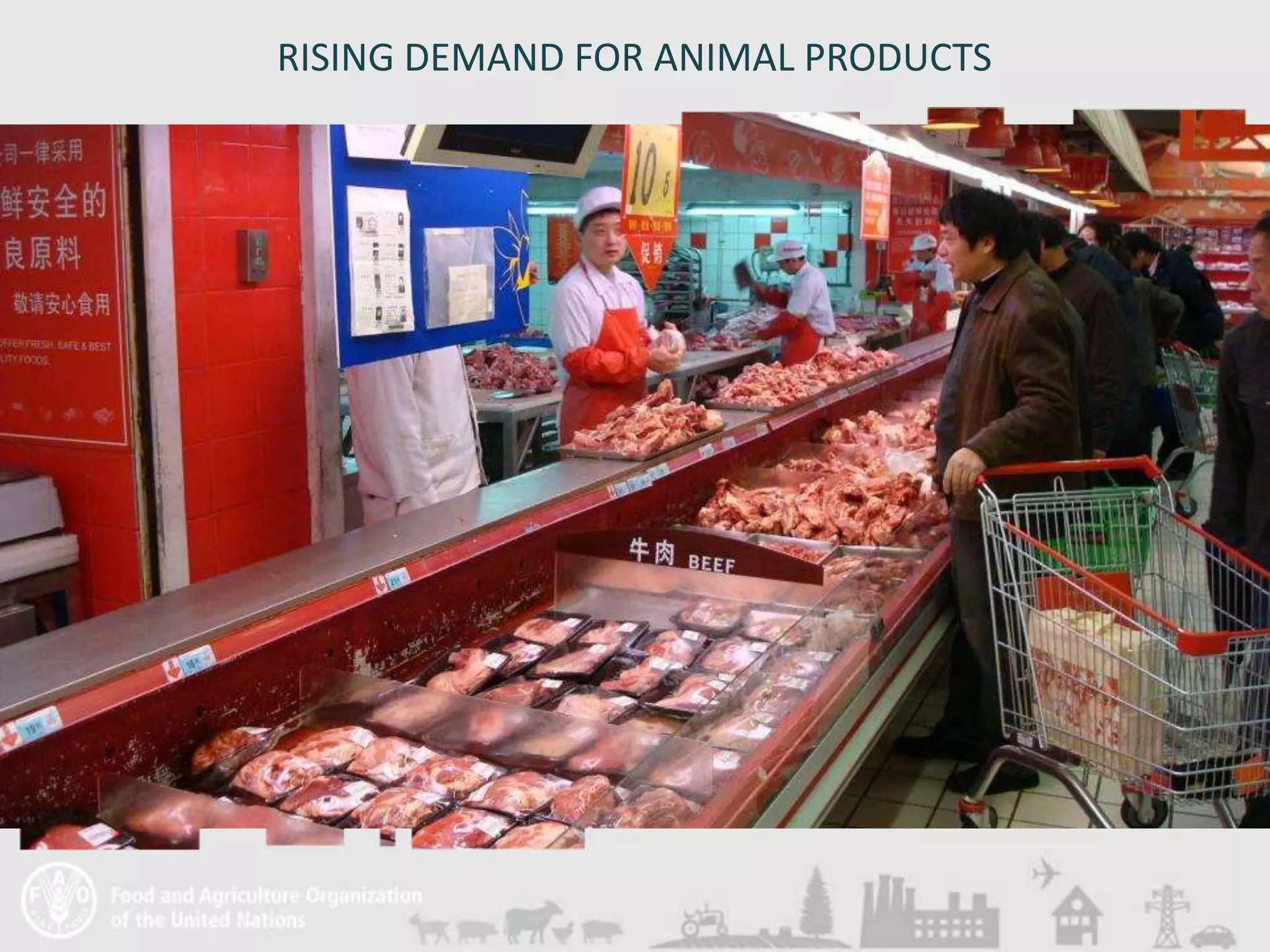
RISING DEMAND FOR ANIMAL PRODUCTS
Meeting/Workshop title • place and date 
4 
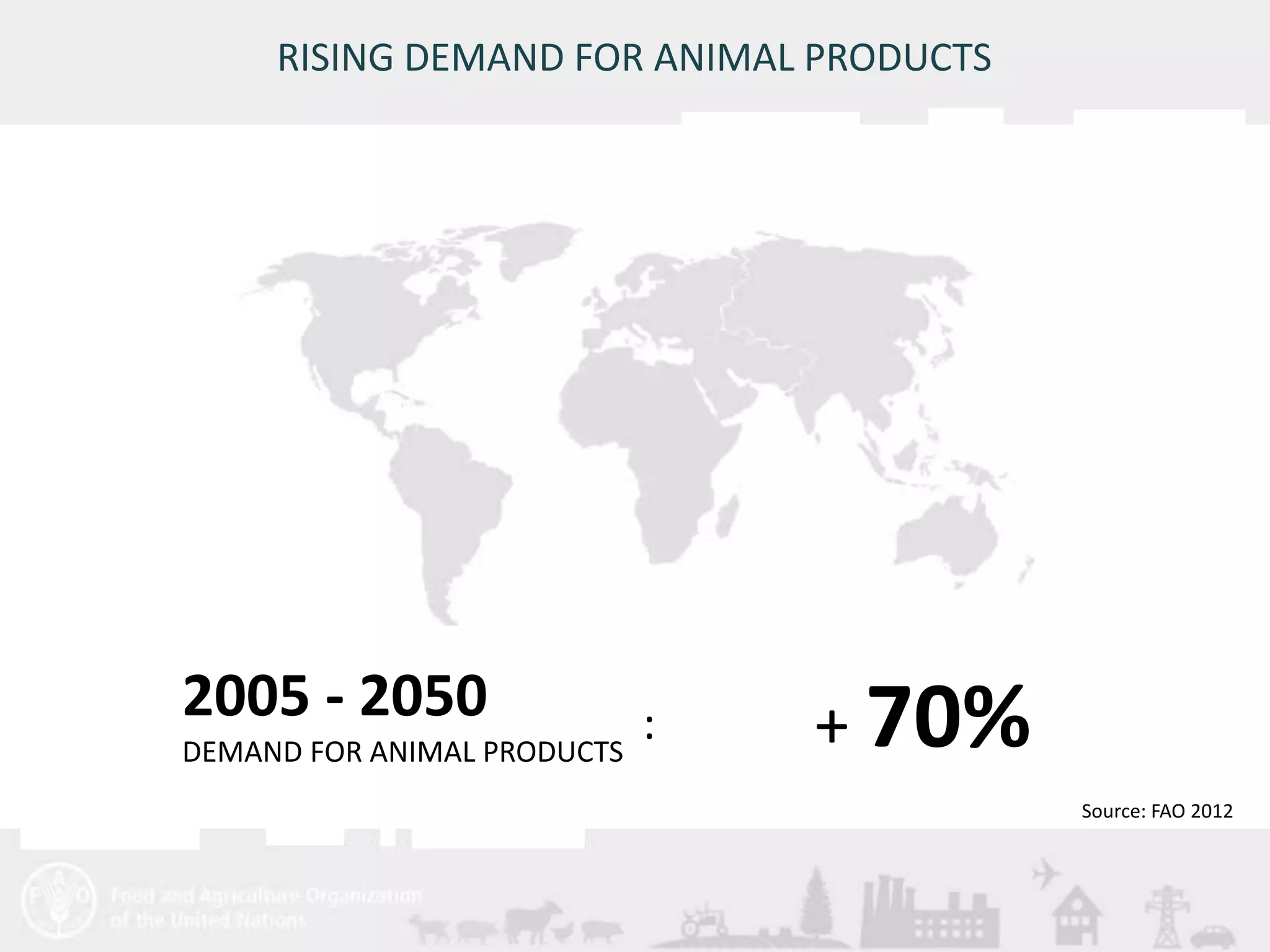
2005 - 2050 : 
+ 70% 
DEMAND FOR ANIMAL PRODUCTS 
Source: FAO 2012 
RISING DEMAND FOR ANIMAL PRODUCTS
Meeting/Workshop title • place and date 
5 
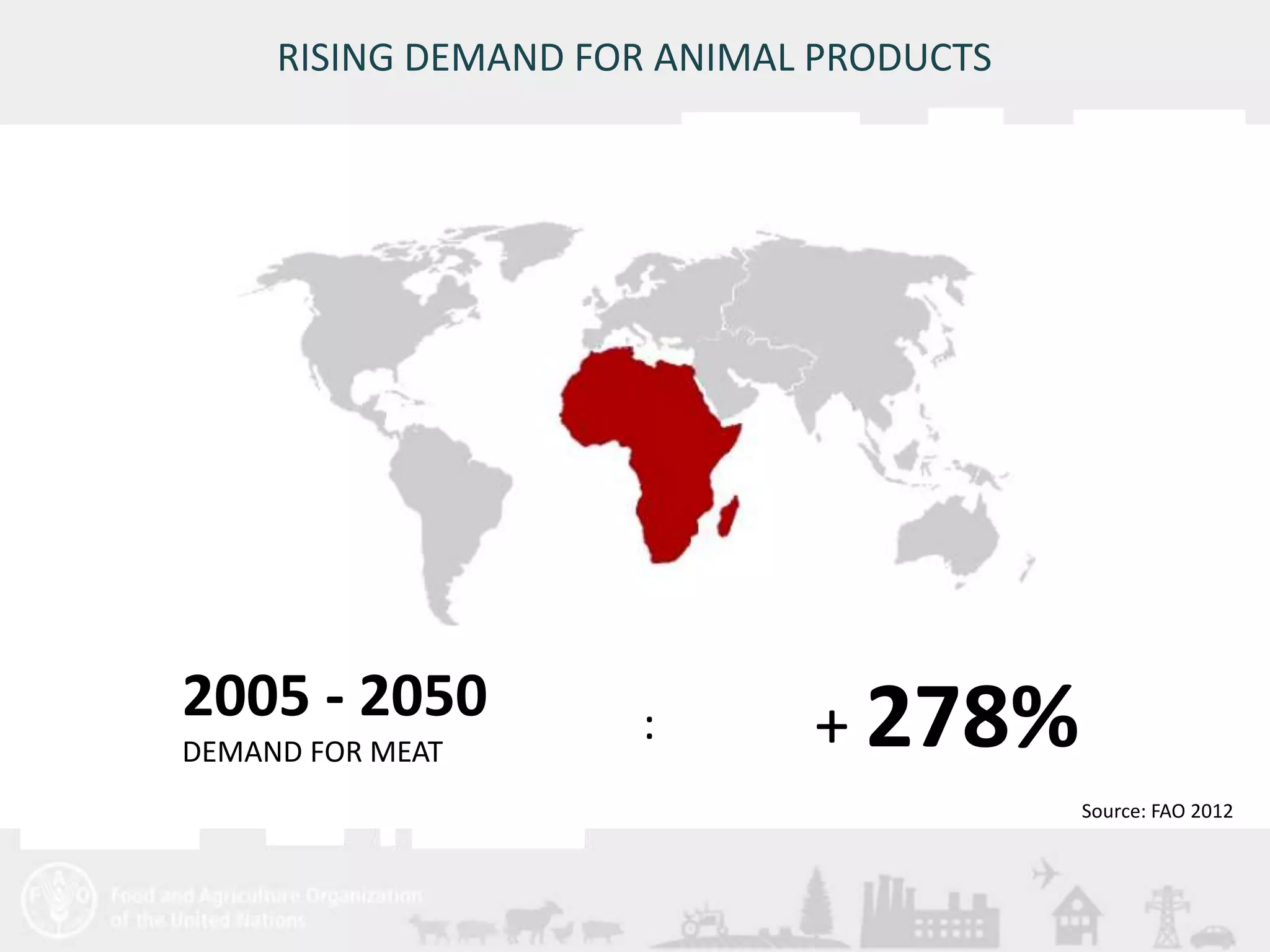
2005 - 2050 
DEMAND FOR MEAT : + 278% 
Source: FAO 2012 
RISING DEMAND FOR ANIMAL PRODUCTS
Meeting/Workshop title • place and date 
6 
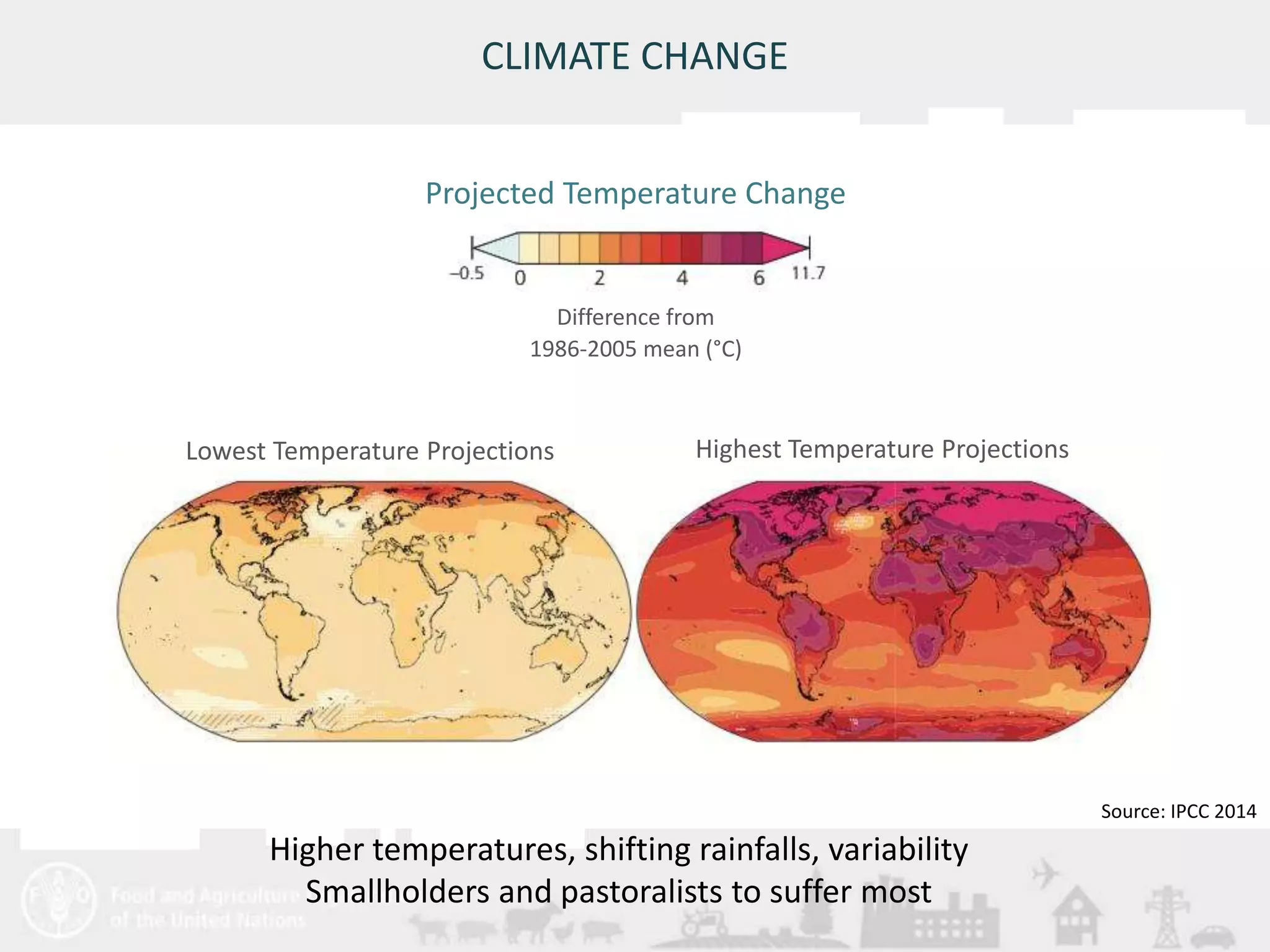
Source: IPCC 2014 
CLIMATE CHANGE 
Projected Temperature Change 
Difference from 
1986-2005 mean (°C) 
Lowest Temperature Projections Highest Temperature Projections 
Higher temperatures, shifting rainfalls, variability 
Smallholders and pastoralists to suffer most
Meeting/Workshop title • place and date 
7 
RESOURCE SCARCITY 
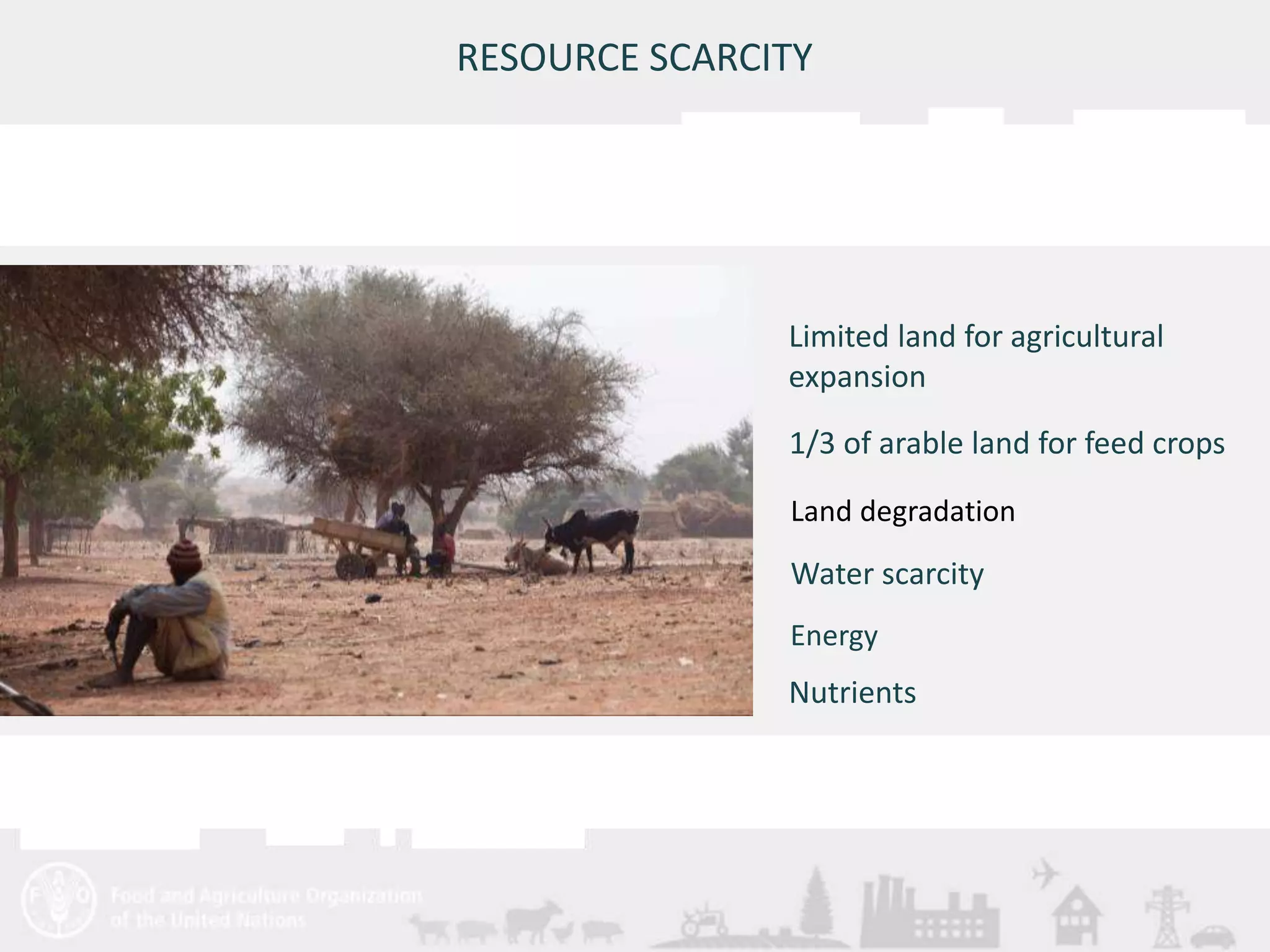
Limited land for agricultural 
expansion 
1/3 of arable land for feed crops 
Land degradation 
Water scarcity 
Energy 
Nutrients
Second grade crops 
unfit for human 
consumption 
Meeting/Workshop title • place and date 
8 
RESOURCE SCARCITY 
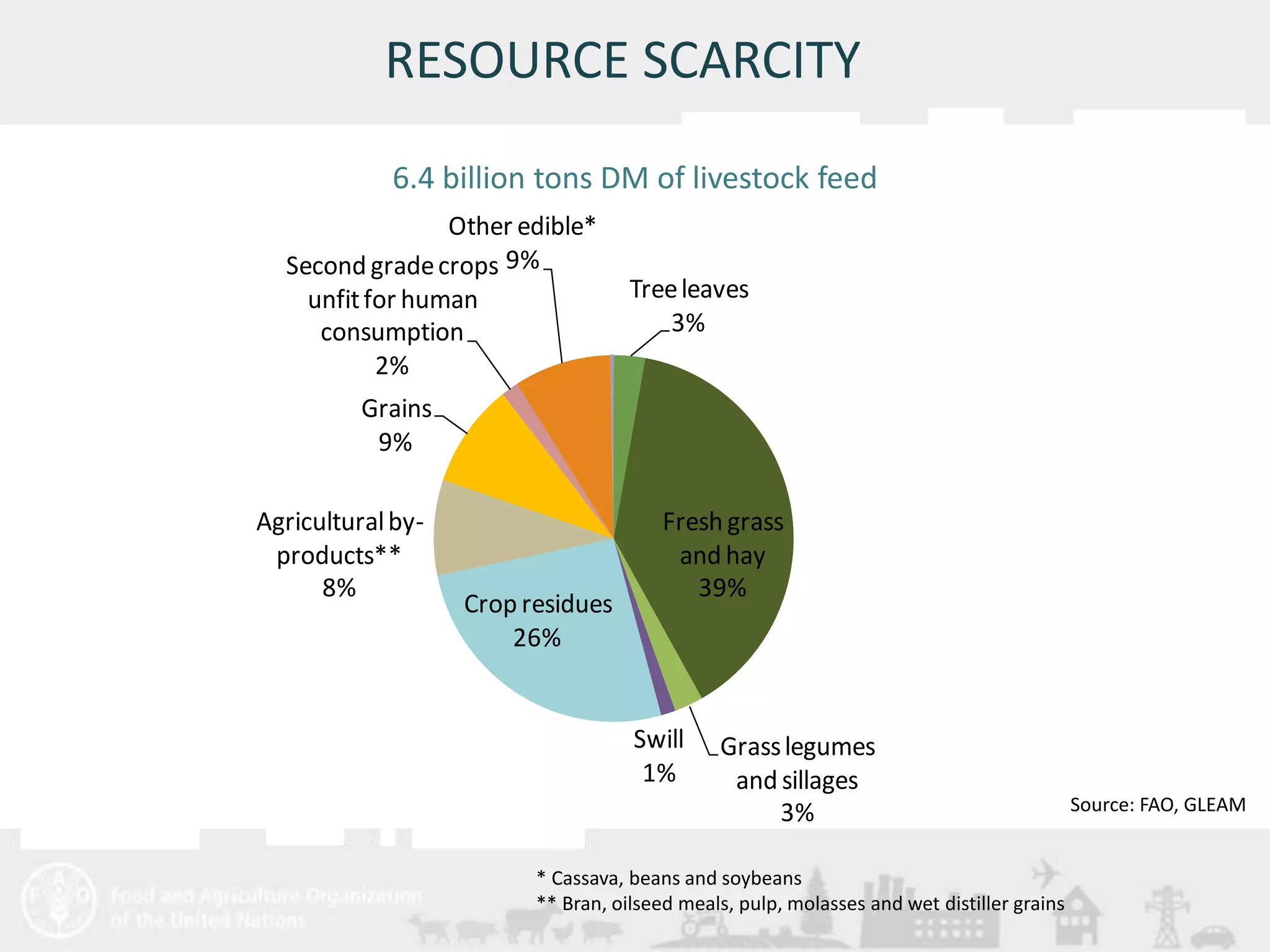
6.4 billion tons DM of livestock feed 
* Cassava, beans and soybeans 
** Bran, oilseed meals, pulp, molasses and wet distiller grains 
Source: FAO, GLEAM 
Tree leaves 
3% 
Fresh grass 
and hay 
39% 
Grass legumes 
and sillages 
3% 
Swill 
1% 
Crop residues 
26% 
2% 
Agricultural by-products** 
8% 
Grains 
9% 
Other edible* 
9%
Meeting/Workshop title • place and date 
9 
What are the IMPACTS ?
DIFFERENT SYSTEMS AND DIFFERENT PURPOSES 
Meeting/Workshop title • place and date 
10 
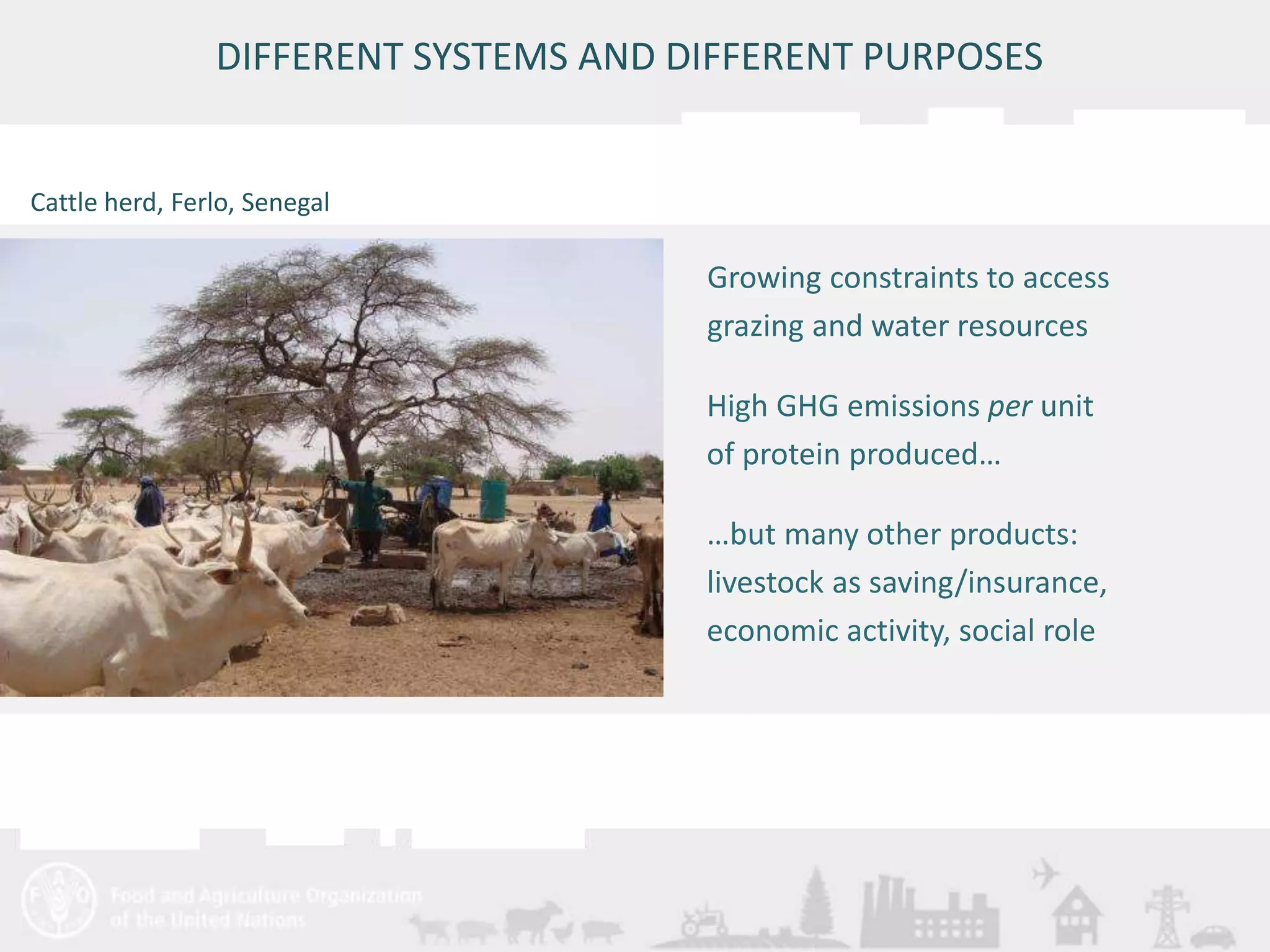
Growing constraints to access 
grazing and water resources 
High GHG emissions per unit 
of protein produced… 
…but many other products: 
livestock as saving/insurance, 
economic activity, social role 
Cattle herd, Ferlo, Senegal
DIFFERENT SYSTEMS AND DIFFERENT PURPOSES 
Meeting/Workshop title • place and date 
11 
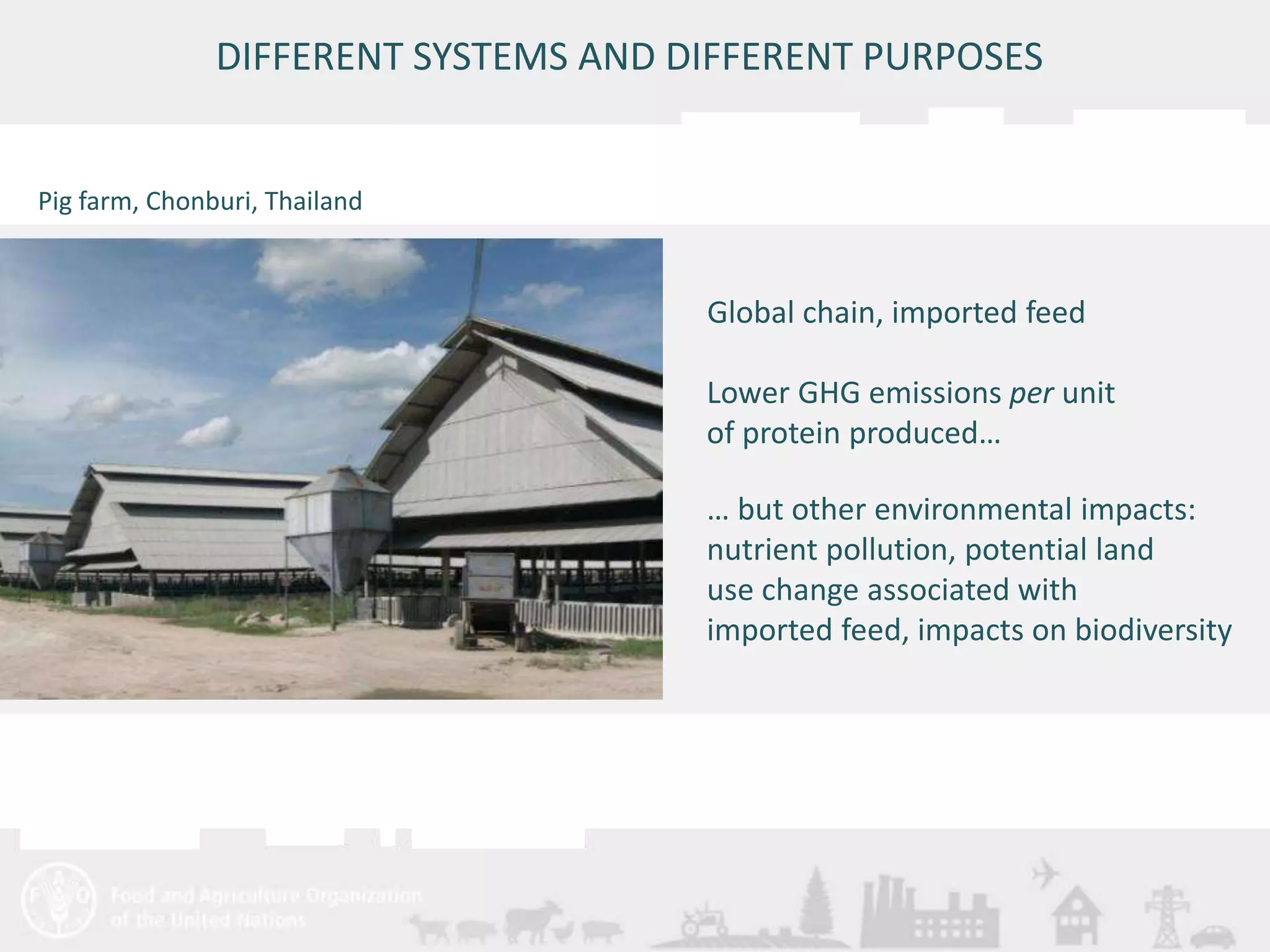
Global chain, imported feed 
Lower GHG emissions per unit 
of protein produced… 
… but other environmental impacts: 
nutrient pollution, potential land 
use change associated with 
imported feed, impacts on biodiversity 
Pig farm, Chonburi, Thailand
DIFFERENT SYSTEMS AND DIFFERENT PURPOSES 
Meeting/Workshop title • place and date 
12 
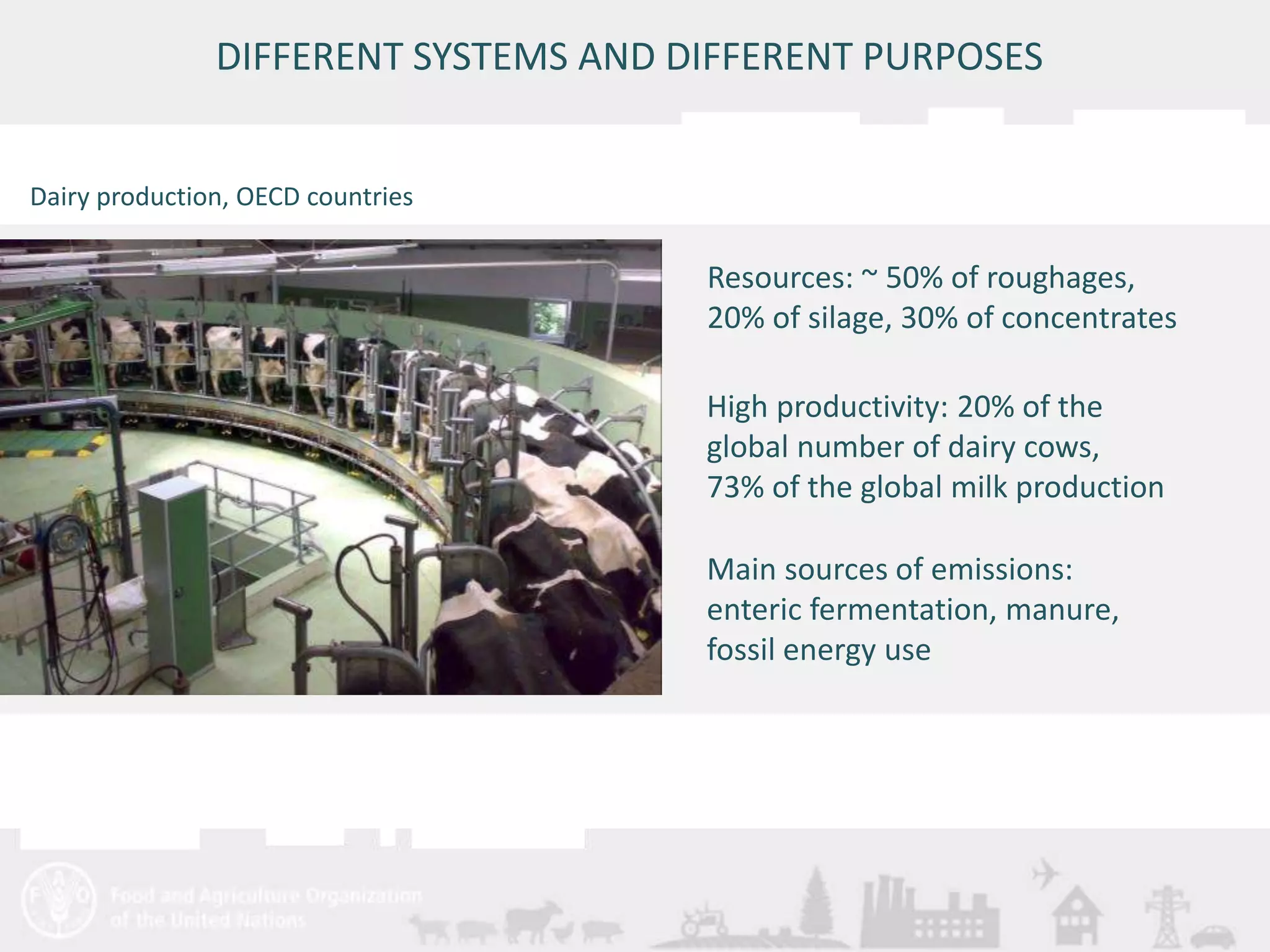
Resources: ~ 50% of roughages, 
20% of silage, 30% of concentrates 
High productivity: 20% of the 
global number of dairy cows, 
73% of the global milk production 
Main sources of emissions: 
enteric fermentation, manure, 
fossil energy use 
Dairy production, OECD countries
DIFFERENT SYSTEMS AND DIFFERENT PURPOSES 
Meeting/Workshop title • place and date 
13 
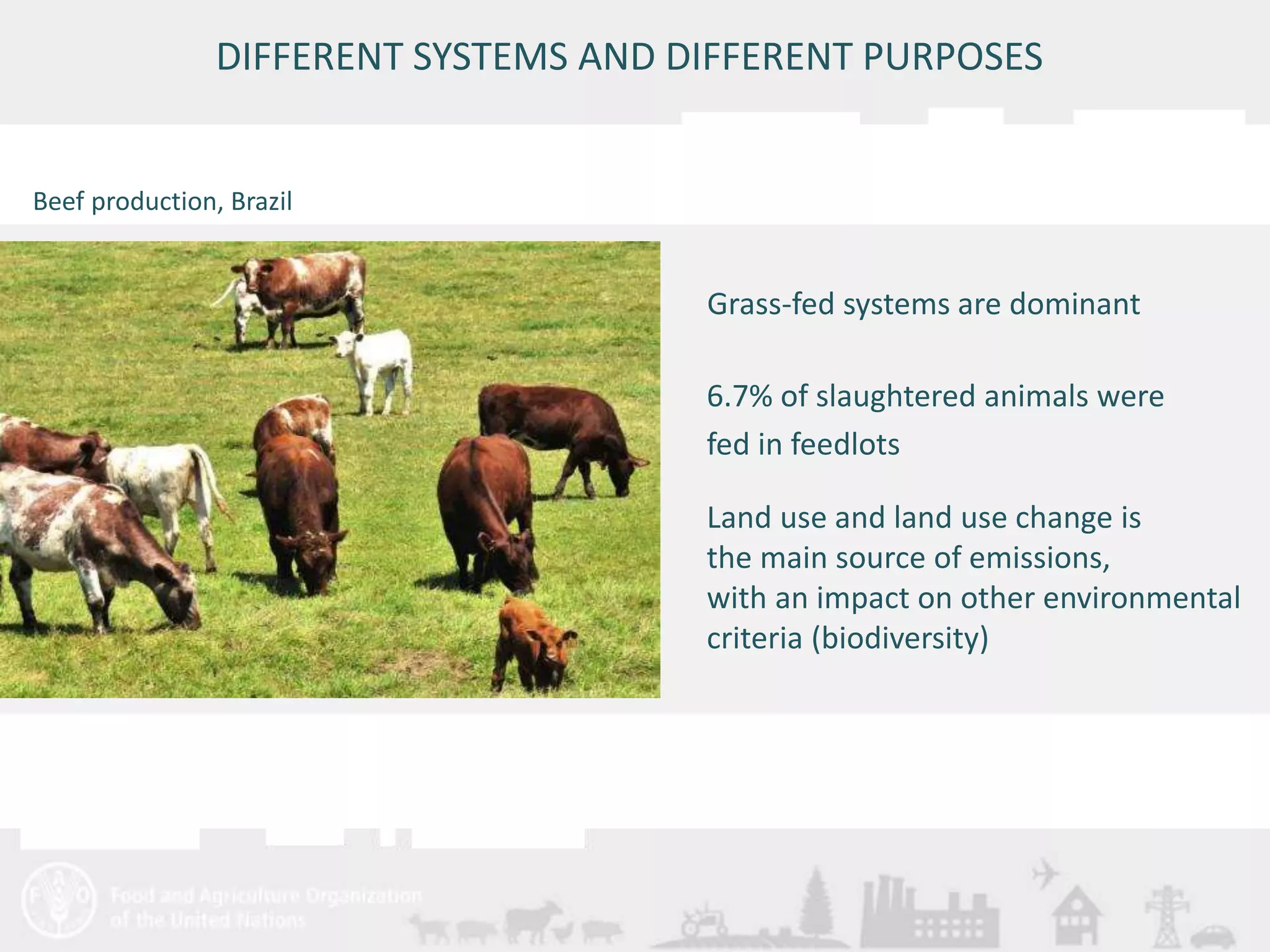
Grass-fed systems are dominant 
6.7% of slaughtered animals were 
fed in feedlots 
Land use and land use change is 
the main source of emissions, 
with an impact on other environmental 
criteria (biodiversity) 
Beef production, Brazil
CONTRIBUTION TO CLIMATE CHANGE 
AGRICULTURE: 20 to 30 % of anthropogenic climate gases; 
MOST IMPORTANT 
SOURCES: 
Meeting/Workshop title • place and date 
14 
2/3 from livestock (7.1 GT CO2eq) 
Overriding role of ruminants 
• Enteric methane 
• Feed production 
• Animal waste 
• Land use 
Strong relationship between productivity and emission intensity
Meeting/Workshop title • place and date 
15 
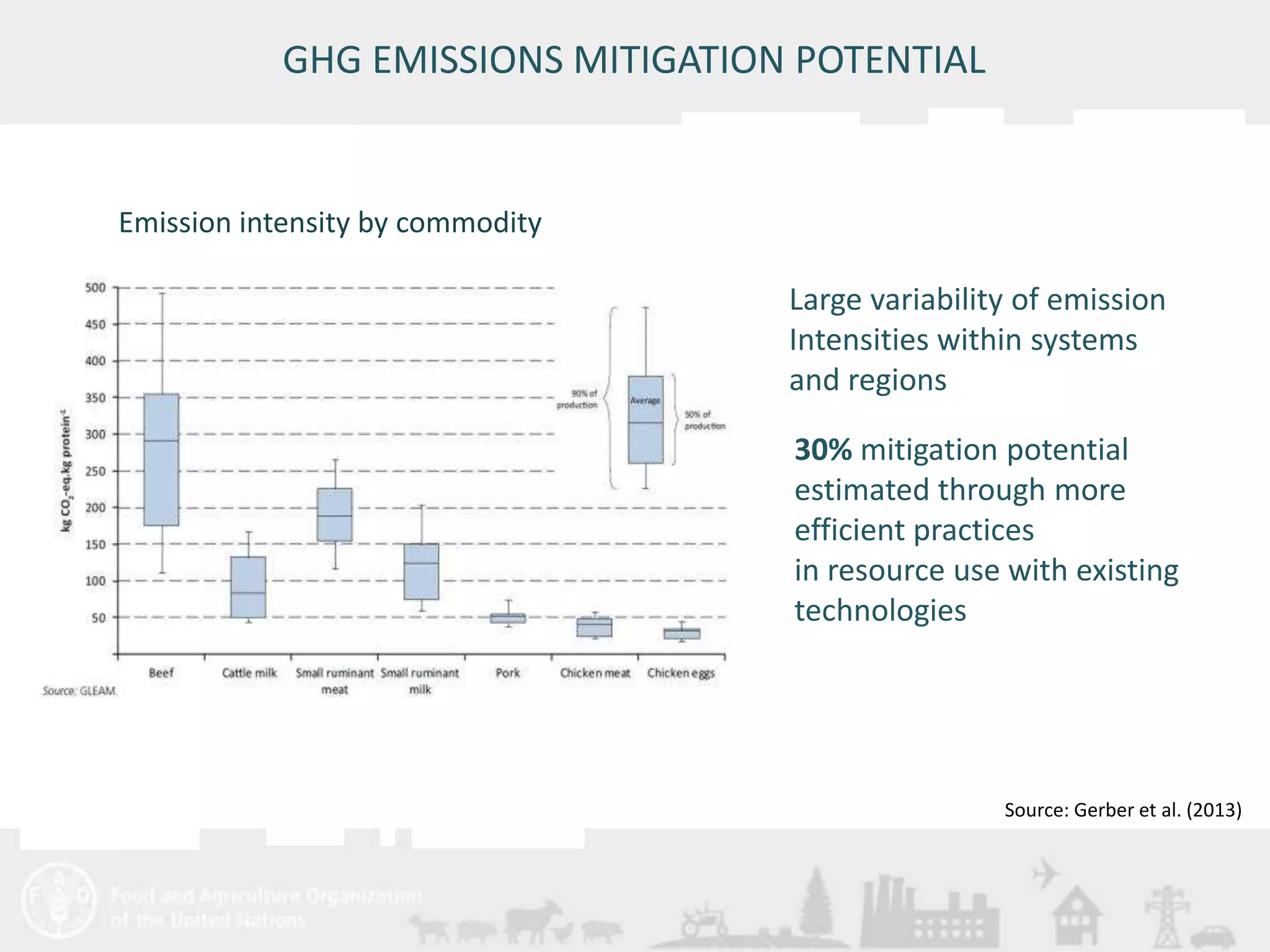
GHG EMISSIONS MITIGATION POTENTIAL 
Large variability of emission 
Intensities within systems 
and regions 
30% mitigation potential 
estimated through more 
efficient practices 
in resource use with existing 
technologies 
Source: Gerber et al. (2013) 
Emission intensity by commodity
Meeting/Workshop title • place and date 
16 
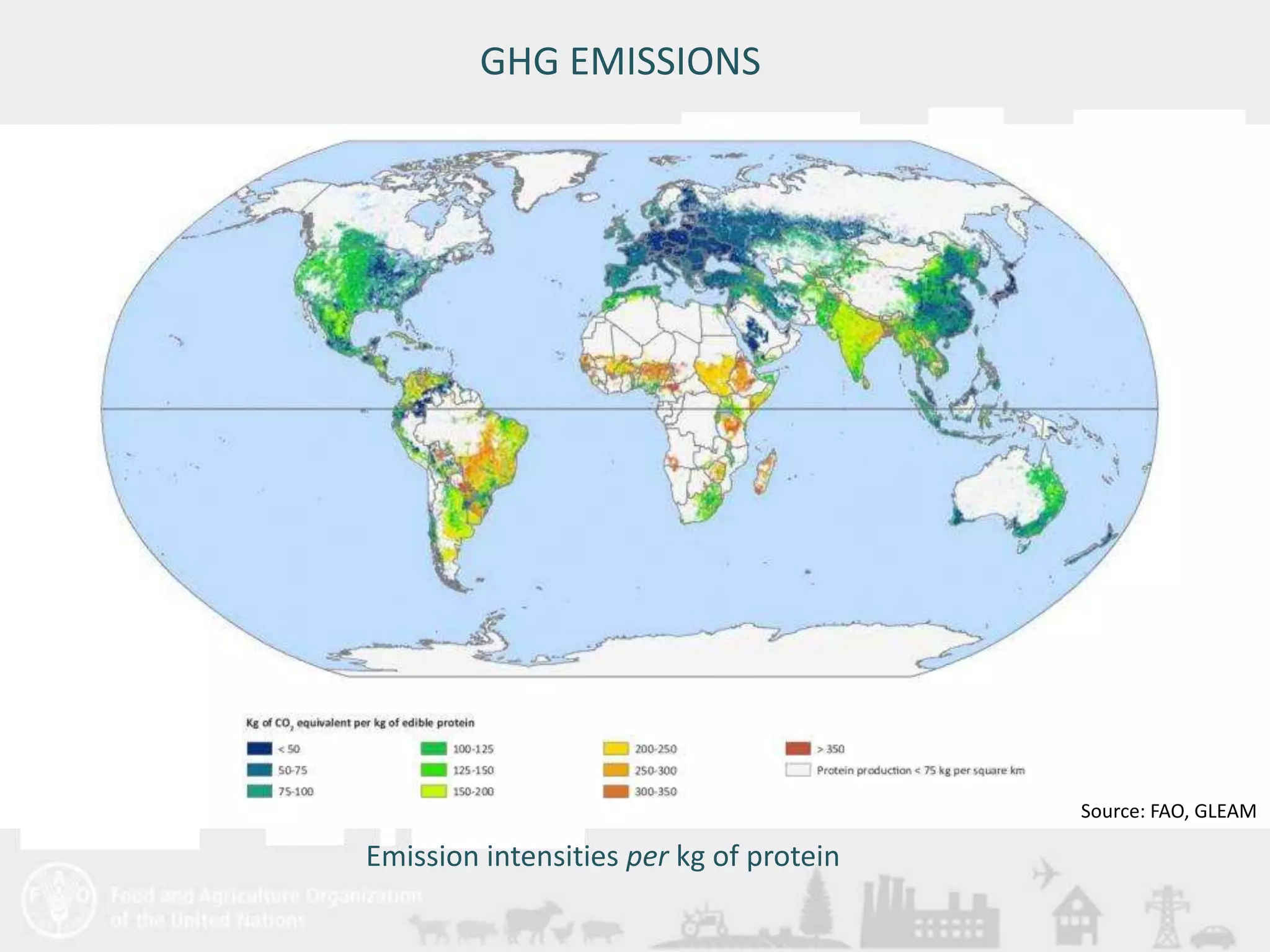
GHG EMISSIONS 
Emission intensities per kg of protein 
Source: FAO, GLEAM
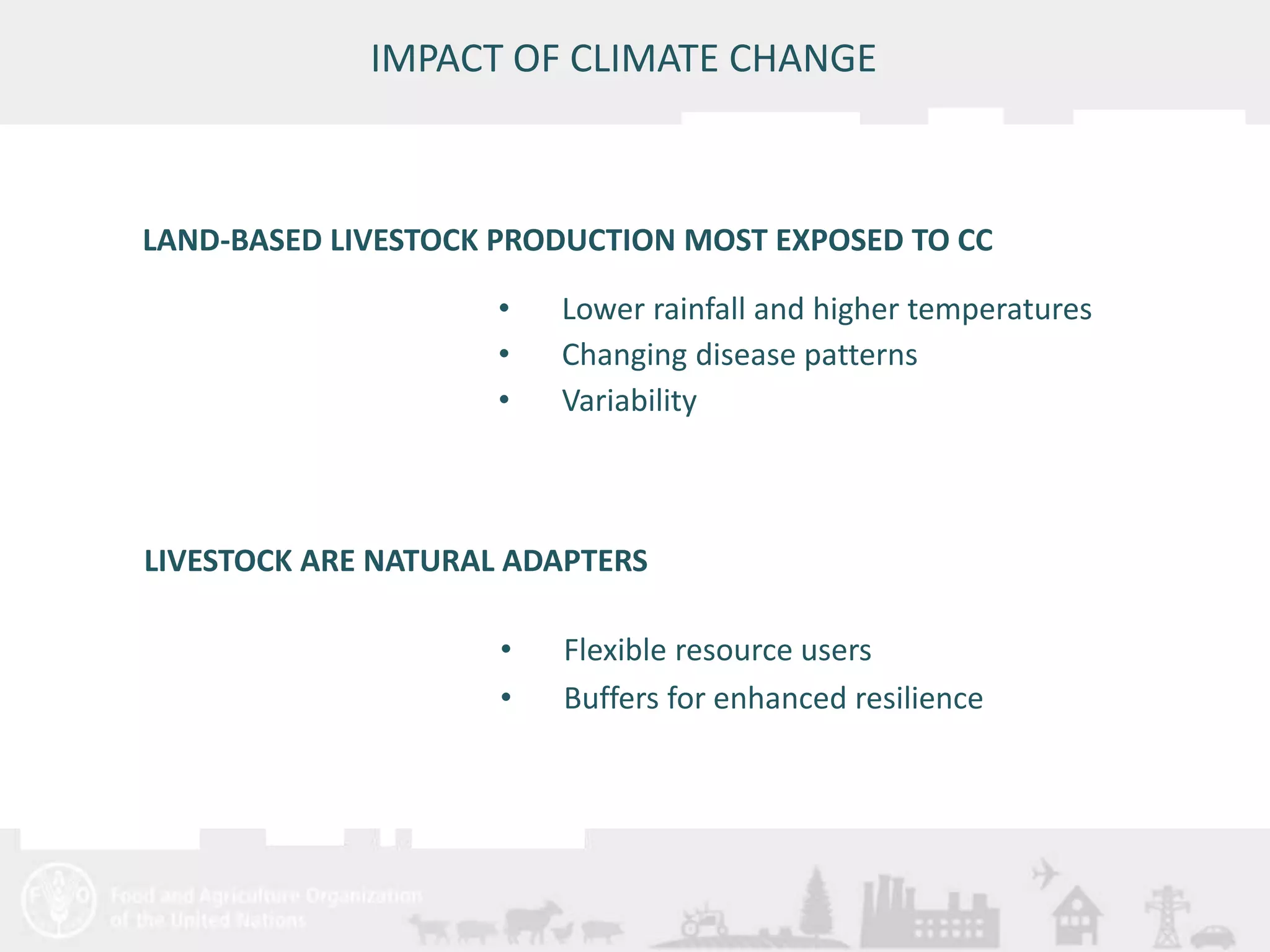
LAND-BASED LIVESTOCK PRODUCTION MOST EXPOSED TO CC 
LIVESTOCK ARE NATURAL ADAPTERS 
Meeting/Workshop title • place and date 
17 
IMPACT OF CLIMATE CHANGE 
• Lower rainfall and higher temperatures 
• Changing disease patterns 
• Variability 
• Flexible resource users 
• Buffers for enhanced resilience
Meeting/Workshop title • place and date 
18 
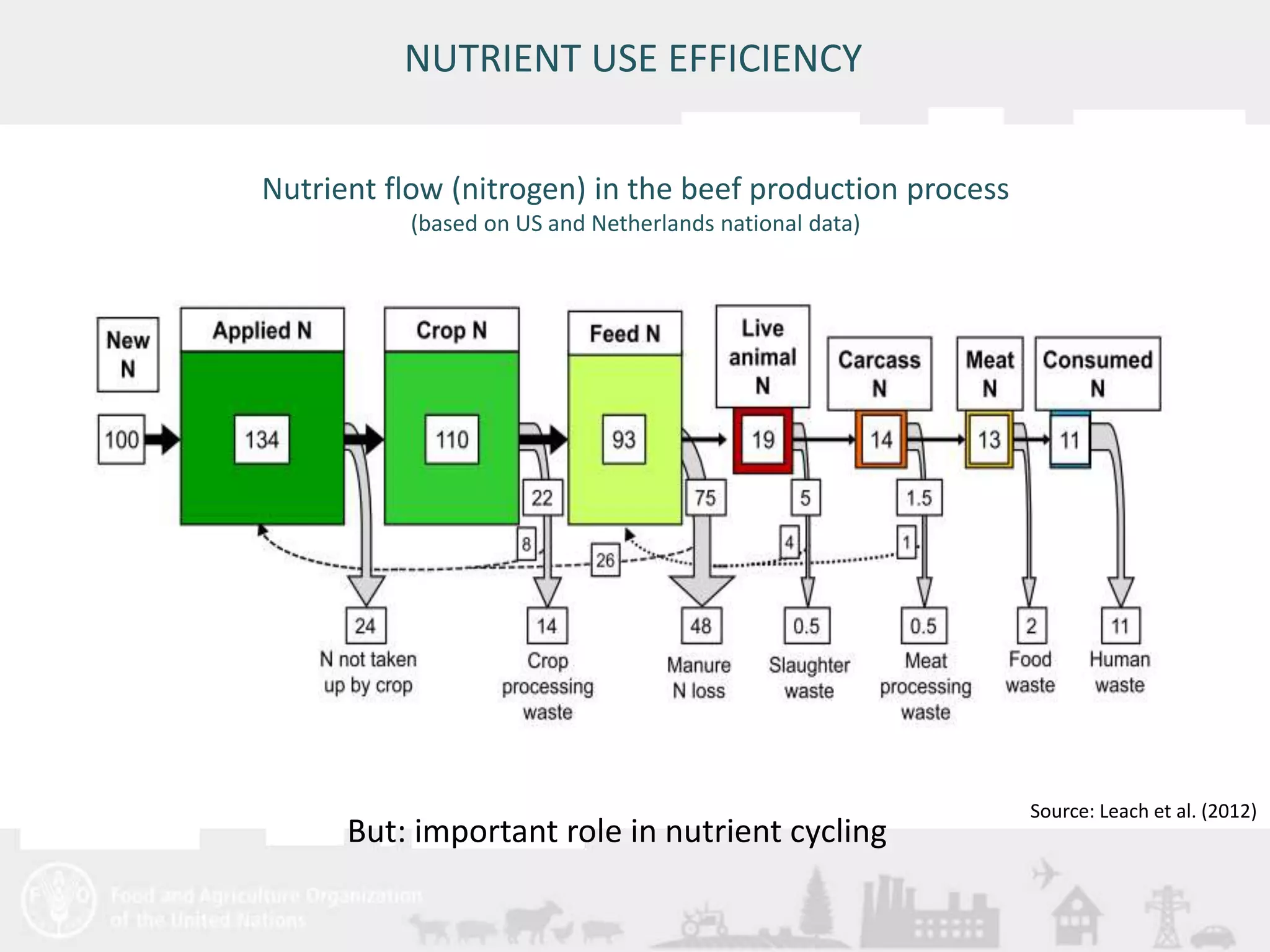
NUTRIENT USE EFFICIENCY 
Nutrient flow (nitrogen) in the beef production process 
(based on US and Netherlands national data) 
Source: Leach et al. (2012) 
But: important role in nutrient cycling
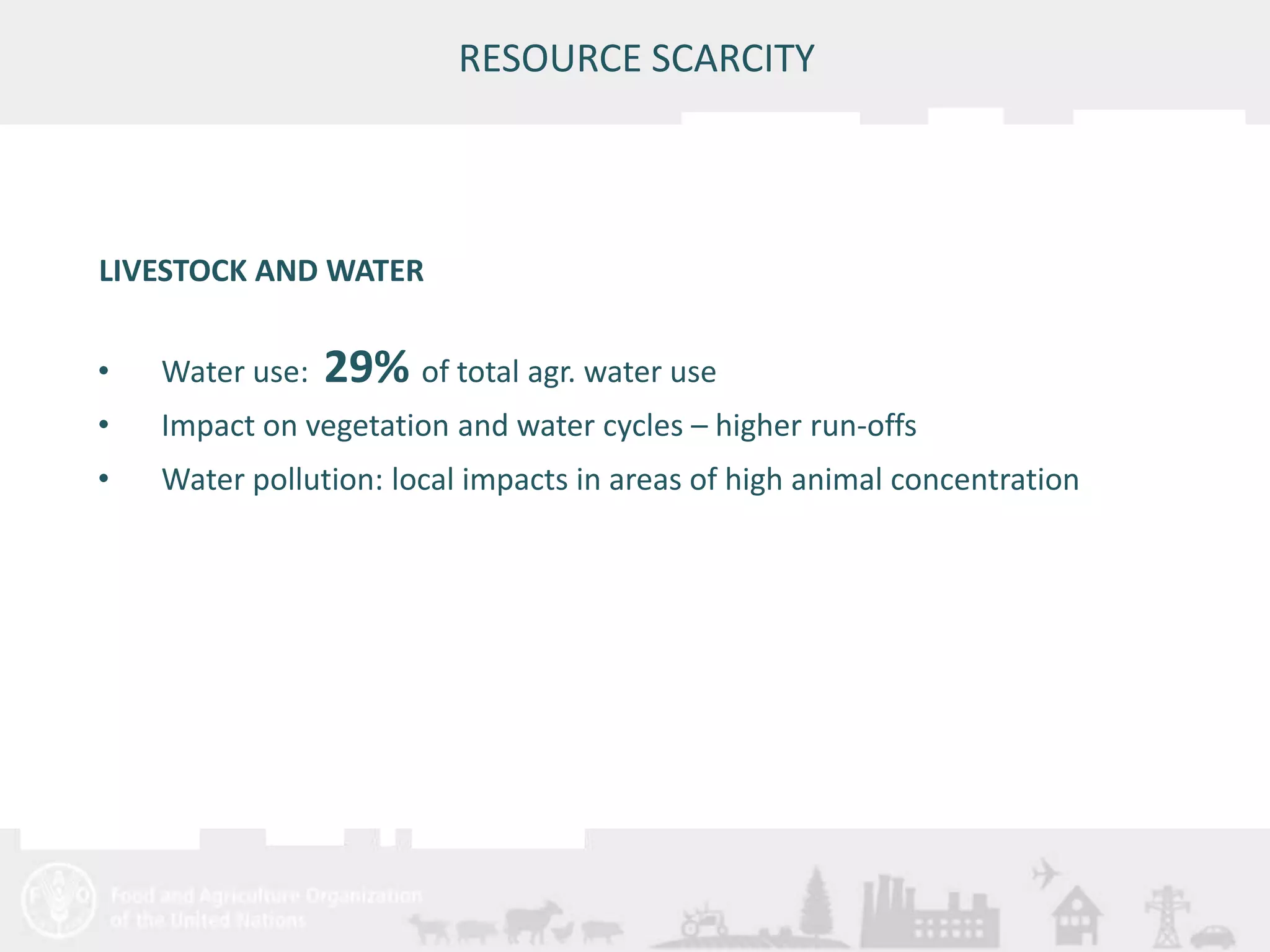
LIVESTOCK AND WATER 
Meeting/Workshop title • place and date 
19 
RESOURCE SCARCITY 
• Water use: 29% of total agr. water use 
• Impact on vegetation and water cycles – higher run-offs 
• Water pollution: local impacts in areas of high animal concentration
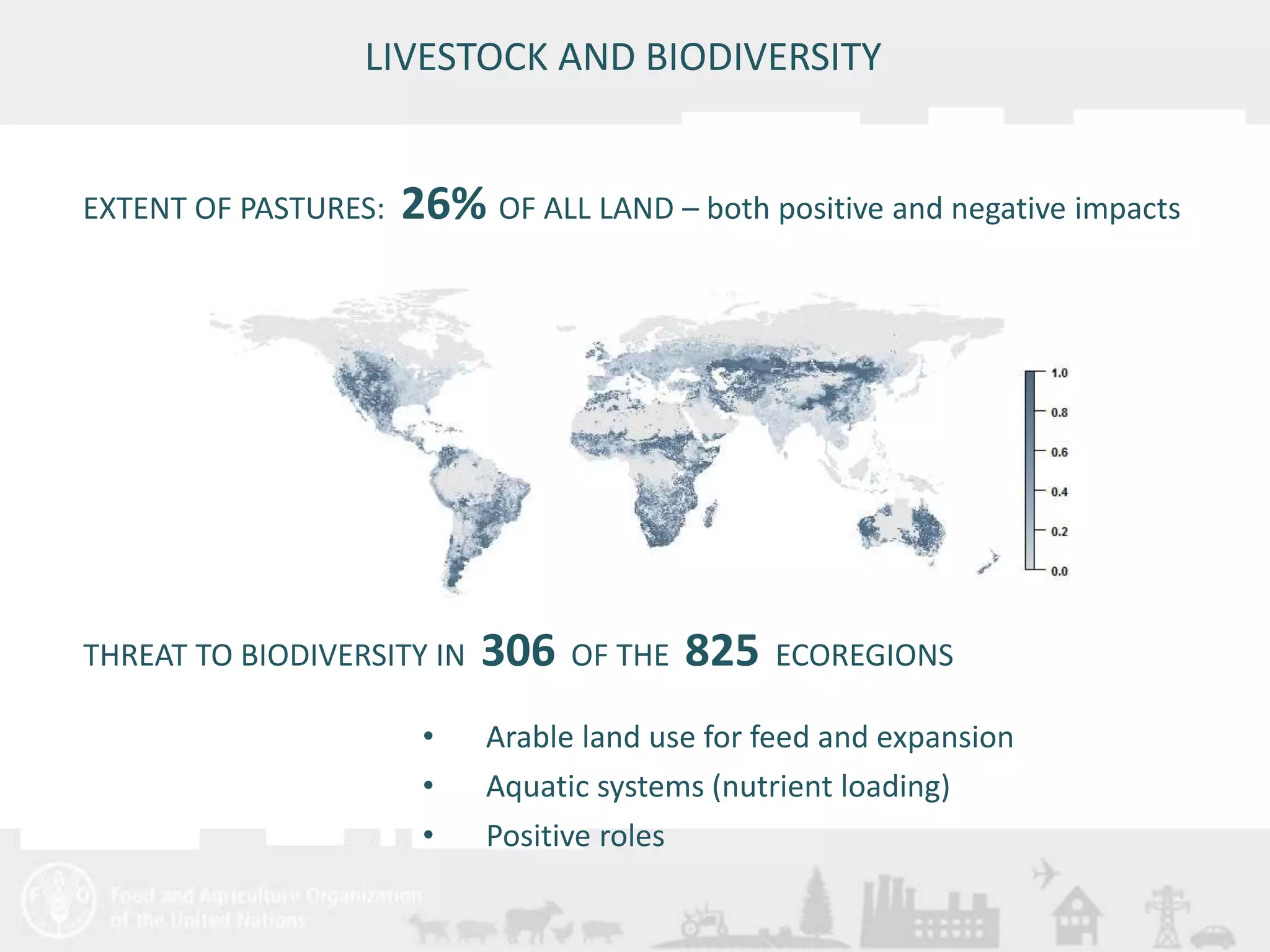
THREAT TO BIODIVERSITY IN 306 OF THE 825 ECOREGIONS 
Meeting/Workshop title • place and date 
20 
LIVESTOCK AND BIODIVERSITY 
EXTENT OF PASTURES: 26% OF ALL LAND – both positive and negative impacts 
• Arable land use for feed and expansion 
• Aquatic systems (nutrient loading) 
• Positive roles
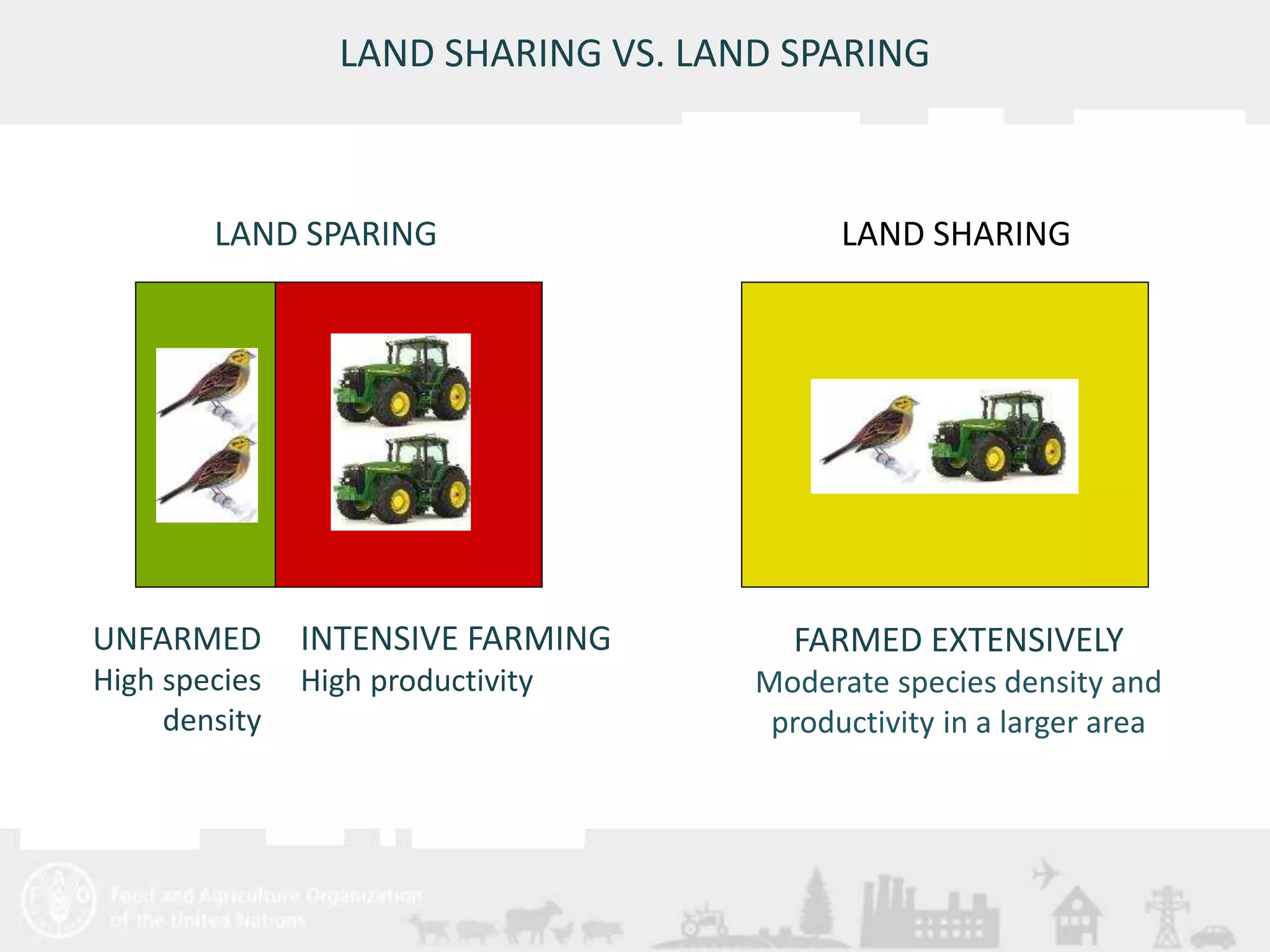
LAND SPARING 
Meeting/Workshop title • place and date 
21 
LAND SHARING VS. LAND SPARING 
INTENSIVE FARMING 
High productivity 
UNFARMED 
High species 
density 
LAND SHARING 
FARMED EXTENSIVELY 
Moderate species density and 
productivity in a larger area
Meeting/Workshop title • place and date 
22 
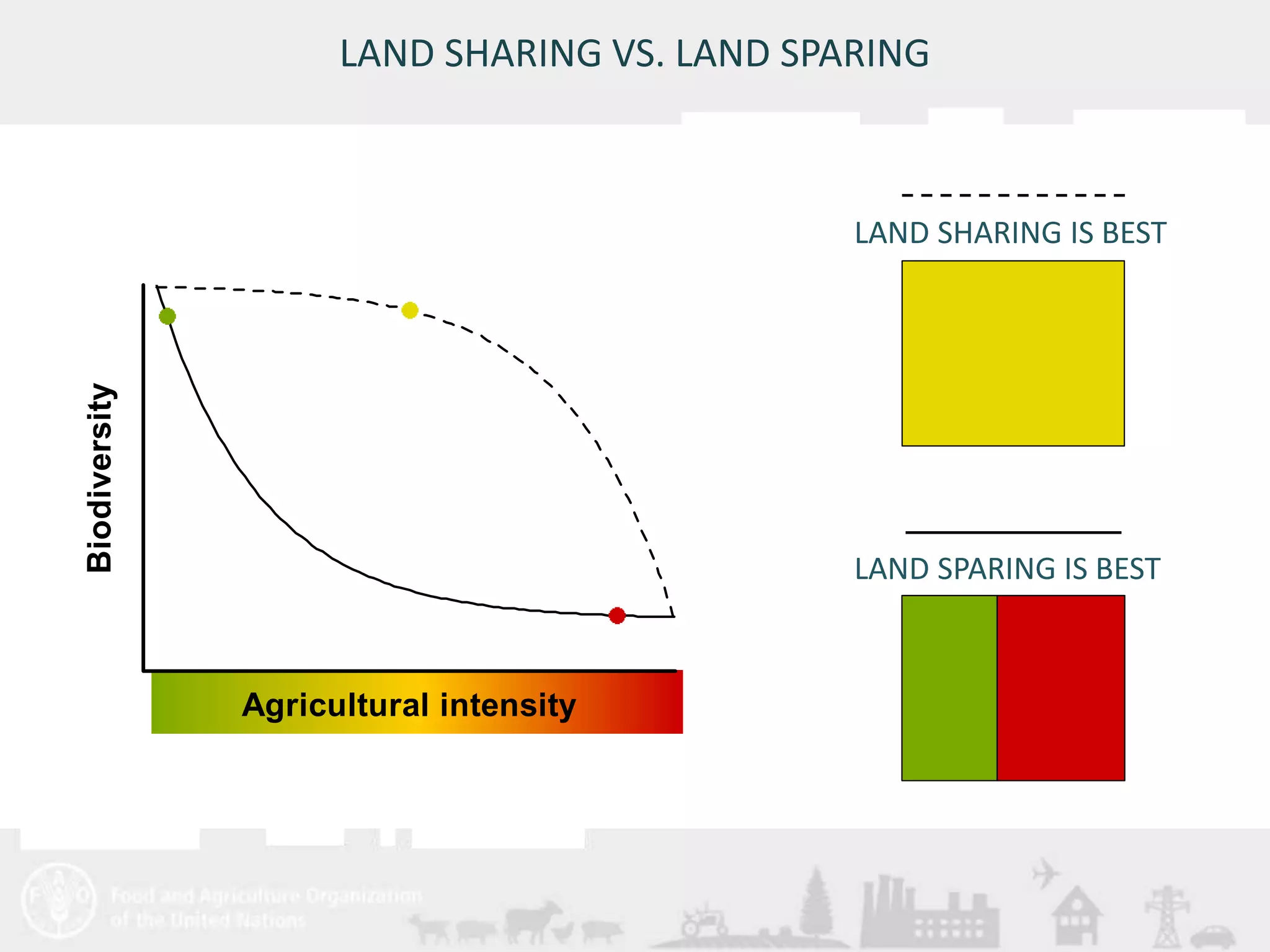
LAND SHARING VS. LAND SPARING 
Agricultural intensity 
Biodiversity 
LAND SHARING IS BEST 
LAND SPARING IS BEST
Meeting/Workshop title • place and date 
23 
What are the RESPONSE OPTIONS ?
Meeting/Workshop title • place and date 
RESPONSES 
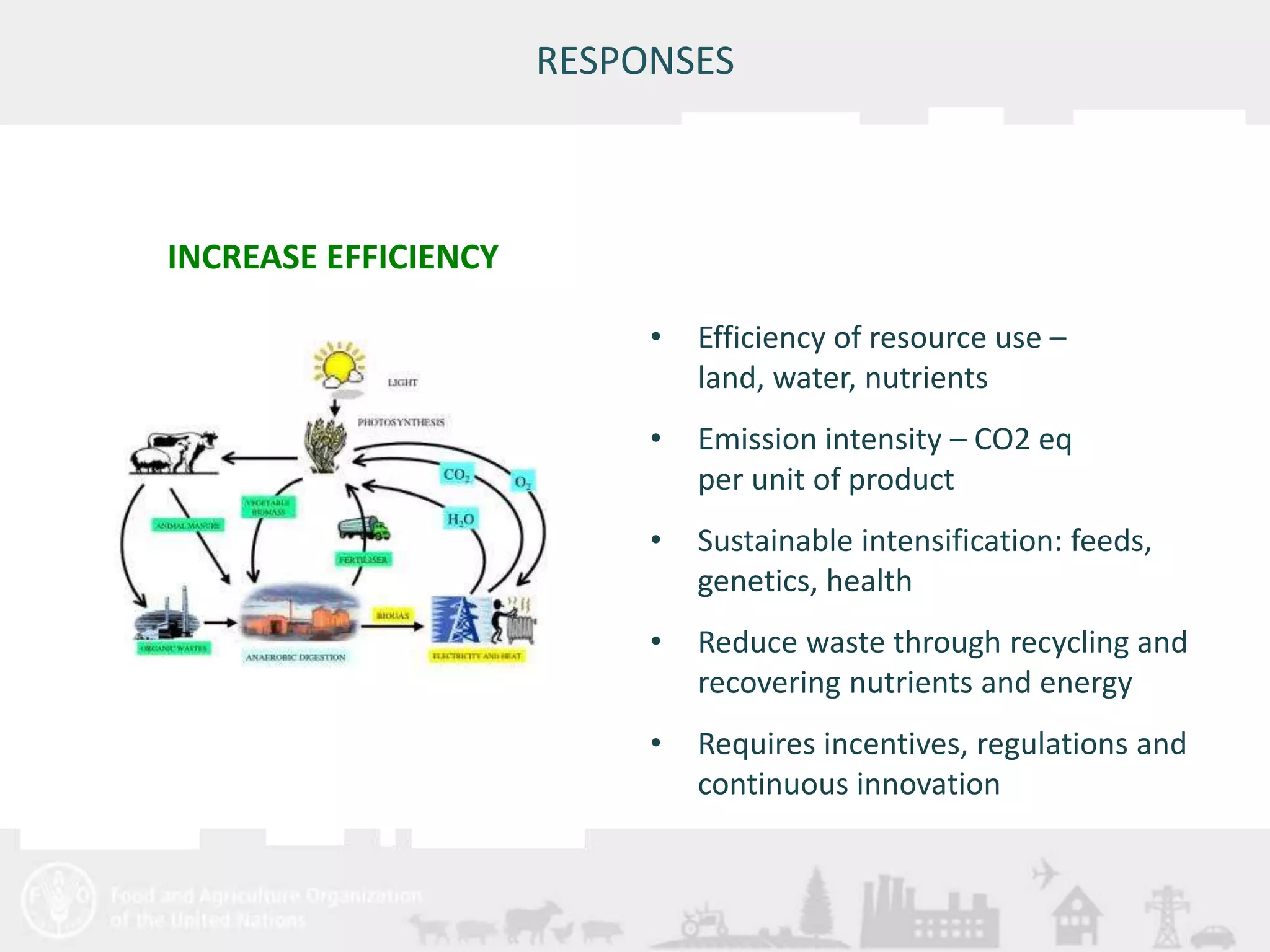
• Efficiency of resource use – 
land, water, nutrients 
• Emission intensity – CO2 eq 
per unit of product 
• Sustainable intensification: feeds, 
genetics, health 
• Reduce waste through recycling and 
recovering nutrients and energy 
• Requires incentives, regulations and 
continuous innovation 
INCREASE EFFICIENCY
ENHANCE LIVELIHOODS AND HUMAN WELL-BEING 
Meeting/Workshop title • place and date 
25 
RESPONSES 
• protect assets, enhance multiple functions of livestock in smallholder 
and pastoral systems 
• Integrated landscape management 
(optimize contributions rather than maximizing output) 
for food, biodiversity, water, cultural values 
• Address overconsumption – healthy diets 
• Reduce food-feed competition
• Limit livestock’s expansion into valuable eco-systems 
• Integrated land use management (in particular in fragile eco-systems) 
• Protect water resources 
• Requires incentives and regulations 
Meeting/Workshop title • place and date 
RESPONSES 
PROTECT RESOURCES
• Of global commons (e.g. climate) 
• Of local commons (e.g. communal grazing, water) 
• Incentive schemes (payment for environmental services, carbon markets) 
Meeting/Workshop title • place and date 
RESPONSES 
INCREASE RESILIENCE 
• Livestock as a tool of adaptation 
• improve coping capacity with shocks 
IMPROVE GOVERNANCE
Meeting/Workshop title • place and date 
SUMMARY 
o Large environmental impact, negative and positive 
o Context of growing demand, climate change and growing 
scarcities 
o Diversity of systems, issues and responses 
o Large potential to respond; social and economic co-benefits 
o Requires pro-active policies, incentives and innovation
Meeting/Workshop title • place and date 
Thank you 
henning.steinfeld@fao.org 
www.livestockdialogue.org 
Sustainable livestock. For people, for the planet

Livestock and the environment: Drivers, impacts, responses

  • 1.
    Henning Steinfeld, FAO Meeting/Workshop title • place and date 1 LIVESTOCK AND THE ENVIRONMENT Drivers, Impacts, Responses Livestock-based options for sustainable food and nutritional security, economic well-being and healthy lives ILRI@40 Conference Addis Ababa, Ethiopia, 6–7 November 2014
  • 2.
    Meeting/Workshop title •place and date 2 What are the GLOBAL DRIVERS influencing livestock production?
  • 3.
    Meeting/Workshop title •place and date 3 RISING DEMAND FOR ANIMAL PRODUCTS
  • 4.
    Meeting/Workshop title •place and date 4 2005 - 2050 : + 70% DEMAND FOR ANIMAL PRODUCTS Source: FAO 2012 RISING DEMAND FOR ANIMAL PRODUCTS
  • 5.
    Meeting/Workshop title •place and date 5 2005 - 2050 DEMAND FOR MEAT : + 278% Source: FAO 2012 RISING DEMAND FOR ANIMAL PRODUCTS
  • 6.
    Meeting/Workshop title •place and date 6 Source: IPCC 2014 CLIMATE CHANGE Projected Temperature Change Difference from 1986-2005 mean (°C) Lowest Temperature Projections Highest Temperature Projections Higher temperatures, shifting rainfalls, variability Smallholders and pastoralists to suffer most
  • 7.
    Meeting/Workshop title •place and date 7 RESOURCE SCARCITY Limited land for agricultural expansion 1/3 of arable land for feed crops Land degradation Water scarcity Energy Nutrients
  • 8.
    Second grade crops unfit for human consumption Meeting/Workshop title • place and date 8 RESOURCE SCARCITY 6.4 billion tons DM of livestock feed * Cassava, beans and soybeans ** Bran, oilseed meals, pulp, molasses and wet distiller grains Source: FAO, GLEAM Tree leaves 3% Fresh grass and hay 39% Grass legumes and sillages 3% Swill 1% Crop residues 26% 2% Agricultural by-products** 8% Grains 9% Other edible* 9%
  • 9.
    Meeting/Workshop title •place and date 9 What are the IMPACTS ?
  • 10.
    DIFFERENT SYSTEMS ANDDIFFERENT PURPOSES Meeting/Workshop title • place and date 10 Growing constraints to access grazing and water resources High GHG emissions per unit of protein produced… …but many other products: livestock as saving/insurance, economic activity, social role Cattle herd, Ferlo, Senegal
  • 11.
    DIFFERENT SYSTEMS ANDDIFFERENT PURPOSES Meeting/Workshop title • place and date 11 Global chain, imported feed Lower GHG emissions per unit of protein produced… … but other environmental impacts: nutrient pollution, potential land use change associated with imported feed, impacts on biodiversity Pig farm, Chonburi, Thailand
  • 12.
    DIFFERENT SYSTEMS ANDDIFFERENT PURPOSES Meeting/Workshop title • place and date 12 Resources: ~ 50% of roughages, 20% of silage, 30% of concentrates High productivity: 20% of the global number of dairy cows, 73% of the global milk production Main sources of emissions: enteric fermentation, manure, fossil energy use Dairy production, OECD countries
  • 13.
    DIFFERENT SYSTEMS ANDDIFFERENT PURPOSES Meeting/Workshop title • place and date 13 Grass-fed systems are dominant 6.7% of slaughtered animals were fed in feedlots Land use and land use change is the main source of emissions, with an impact on other environmental criteria (biodiversity) Beef production, Brazil
  • 14.
    CONTRIBUTION TO CLIMATECHANGE AGRICULTURE: 20 to 30 % of anthropogenic climate gases; MOST IMPORTANT SOURCES: Meeting/Workshop title • place and date 14 2/3 from livestock (7.1 GT CO2eq) Overriding role of ruminants • Enteric methane • Feed production • Animal waste • Land use Strong relationship between productivity and emission intensity
  • 15.
    Meeting/Workshop title •place and date 15 GHG EMISSIONS MITIGATION POTENTIAL Large variability of emission Intensities within systems and regions 30% mitigation potential estimated through more efficient practices in resource use with existing technologies Source: Gerber et al. (2013) Emission intensity by commodity
  • 16.
    Meeting/Workshop title •place and date 16 GHG EMISSIONS Emission intensities per kg of protein Source: FAO, GLEAM
  • 17.
    LAND-BASED LIVESTOCK PRODUCTIONMOST EXPOSED TO CC LIVESTOCK ARE NATURAL ADAPTERS Meeting/Workshop title • place and date 17 IMPACT OF CLIMATE CHANGE • Lower rainfall and higher temperatures • Changing disease patterns • Variability • Flexible resource users • Buffers for enhanced resilience
  • 18.
    Meeting/Workshop title •place and date 18 NUTRIENT USE EFFICIENCY Nutrient flow (nitrogen) in the beef production process (based on US and Netherlands national data) Source: Leach et al. (2012) But: important role in nutrient cycling
  • 19.
    LIVESTOCK AND WATER Meeting/Workshop title • place and date 19 RESOURCE SCARCITY • Water use: 29% of total agr. water use • Impact on vegetation and water cycles – higher run-offs • Water pollution: local impacts in areas of high animal concentration
  • 20.
    THREAT TO BIODIVERSITYIN 306 OF THE 825 ECOREGIONS Meeting/Workshop title • place and date 20 LIVESTOCK AND BIODIVERSITY EXTENT OF PASTURES: 26% OF ALL LAND – both positive and negative impacts • Arable land use for feed and expansion • Aquatic systems (nutrient loading) • Positive roles
  • 21.
    LAND SPARING Meeting/Workshoptitle • place and date 21 LAND SHARING VS. LAND SPARING INTENSIVE FARMING High productivity UNFARMED High species density LAND SHARING FARMED EXTENSIVELY Moderate species density and productivity in a larger area
  • 22.
    Meeting/Workshop title •place and date 22 LAND SHARING VS. LAND SPARING Agricultural intensity Biodiversity LAND SHARING IS BEST LAND SPARING IS BEST
  • 23.
    Meeting/Workshop title •place and date 23 What are the RESPONSE OPTIONS ?
  • 24.
    Meeting/Workshop title •place and date RESPONSES • Efficiency of resource use – land, water, nutrients • Emission intensity – CO2 eq per unit of product • Sustainable intensification: feeds, genetics, health • Reduce waste through recycling and recovering nutrients and energy • Requires incentives, regulations and continuous innovation INCREASE EFFICIENCY
  • 25.
    ENHANCE LIVELIHOODS ANDHUMAN WELL-BEING Meeting/Workshop title • place and date 25 RESPONSES • protect assets, enhance multiple functions of livestock in smallholder and pastoral systems • Integrated landscape management (optimize contributions rather than maximizing output) for food, biodiversity, water, cultural values • Address overconsumption – healthy diets • Reduce food-feed competition
  • 26.
    • Limit livestock’sexpansion into valuable eco-systems • Integrated land use management (in particular in fragile eco-systems) • Protect water resources • Requires incentives and regulations Meeting/Workshop title • place and date RESPONSES PROTECT RESOURCES
  • 27.
    • Of globalcommons (e.g. climate) • Of local commons (e.g. communal grazing, water) • Incentive schemes (payment for environmental services, carbon markets) Meeting/Workshop title • place and date RESPONSES INCREASE RESILIENCE • Livestock as a tool of adaptation • improve coping capacity with shocks IMPROVE GOVERNANCE
  • 28.
    Meeting/Workshop title •place and date SUMMARY o Large environmental impact, negative and positive o Context of growing demand, climate change and growing scarcities o Diversity of systems, issues and responses o Large potential to respond; social and economic co-benefits o Requires pro-active policies, incentives and innovation
  • 29.
    Meeting/Workshop title •place and date Thank you henning.steinfeld@fao.org www.livestockdialogue.org Sustainable livestock. For people, for the planet

Editor's Notes

  • #22 The next slide may be sufficient
  • #23 Solid curve: it is when the intensity starts increasing that the effects on biodiversity are the most detrimental => it is better to leave some area unfarmed, with high biodiversity level, while the rest is farmed with high intensity to compensate for the loss of productive area and reach the same level => “land sparing” Dashed curve: there is a moderate level of intensity (in yellowish green) where performances are satisfying for both productivity and biodiversity => it is better to farm the whole region at this intensity level => “land sharing”