Partner Logo
Partner
Logo
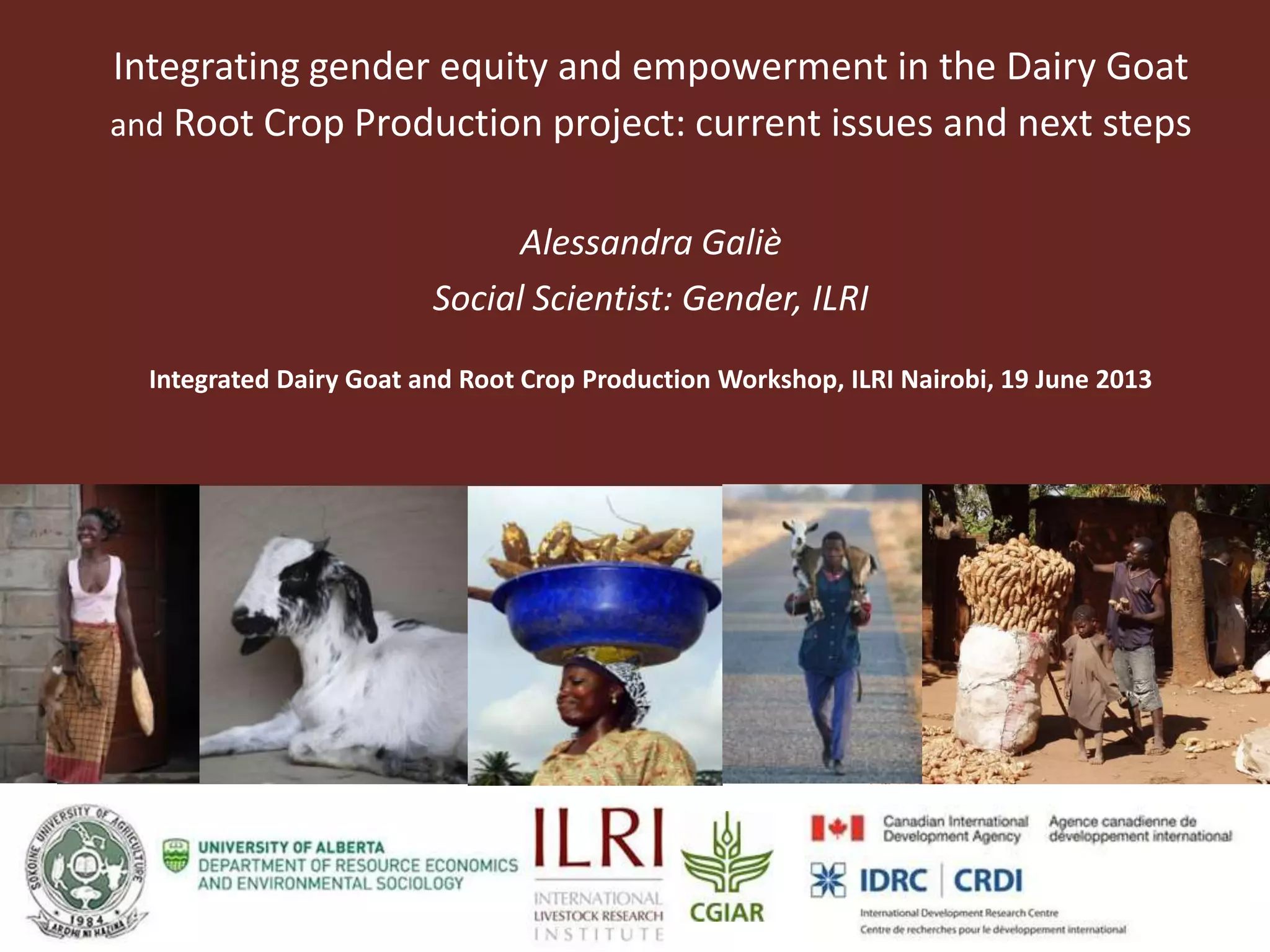
Integrating gender equity and empowerment in the Dairy Goat
and Root Crop Production project: current issues and next steps
Alessandra Galiè
Social Scientist: Gender, ILRI
Integrated Dairy Goat and Root Crop Production Workshop, ILRI Nairobi, 19 June 2013
Overview of presentation
• Why empowerment and gender equity in AR4D
• Status of empowerment and gender equity in
the project
• Next steps: integrating an empowerment
framework and pathway in the project
Gender equity and empowerment
definitions
Empowerment is considered to be:
• Change in power relations
• Domination by individuals over chance and circumstances
• Capability to negotiate, influence, hold institutions accountable
• A means to self-determination
Gender equity denotes the equivalence in life outcomes for women
and men, recognising their different needs and interests, and
requiring a redistribution of power and resources.
Sources: Kabeer 2010; Sen 1990
Why empowerment in agricultural
research for development (AR4D)
Empowerment is considered a means for farmers to:
• Better participate in research
• Voice their needs and benefit from AR4D
• Safeguards their interests and livelihoods
• Achieve gender equity
Sources: Almekinders 2006; De Schutter 2009; Song 2010
Empowerment integration in projects
Empowerment is frequently integrated as:
• A vague concept
• An activity
• An outcome of participatory approaches
• An outcome of accessing financial resources
• Any impact on the life of vulnerable groups
Gender equity and empowerment in
the Dairy Goat and Root Crop project
Project objectives:
– To analyse impacts (productivity, environmental, gender and
empowerment, food security and nutrition) of integrating
improved goat breeds with sweet-potatoes and cassava into an
agro-pastoral farming system (p. 13)
Project outcomes:
– Increased ability of women to independently participate in various
stages of the value chains;
– More equitable social relationships between men and women
involved in the goat and root crop value chains (p. 27)
Gender strategy and activities
Strategy: gender analysis to assess current situation; integration
of gender in all project activities, M&E and Impacts; gender
research to inform other interventions
Activities:
• Capacity building of staff in gender analysis
• Community trainings on gender awareness-raising
• Inclusion of women in breeding, market, animal health
activities
• Provision of assets to women (joint ownership)
• Support women’s special interest groups
• Strategies to involve very poor households and youth
• Gender analysis to enhance gender-equity
• Integration of gender into project components
Findings and recommendations of the
Mid-term evaluation
Findings
• Gender equity as a key emergent property of system
• Focus on transforming people’s normative frameworks
• Farmers limited involvement in the intervention
Recommendations
• Research into development pathways
• Gender empowerment framework
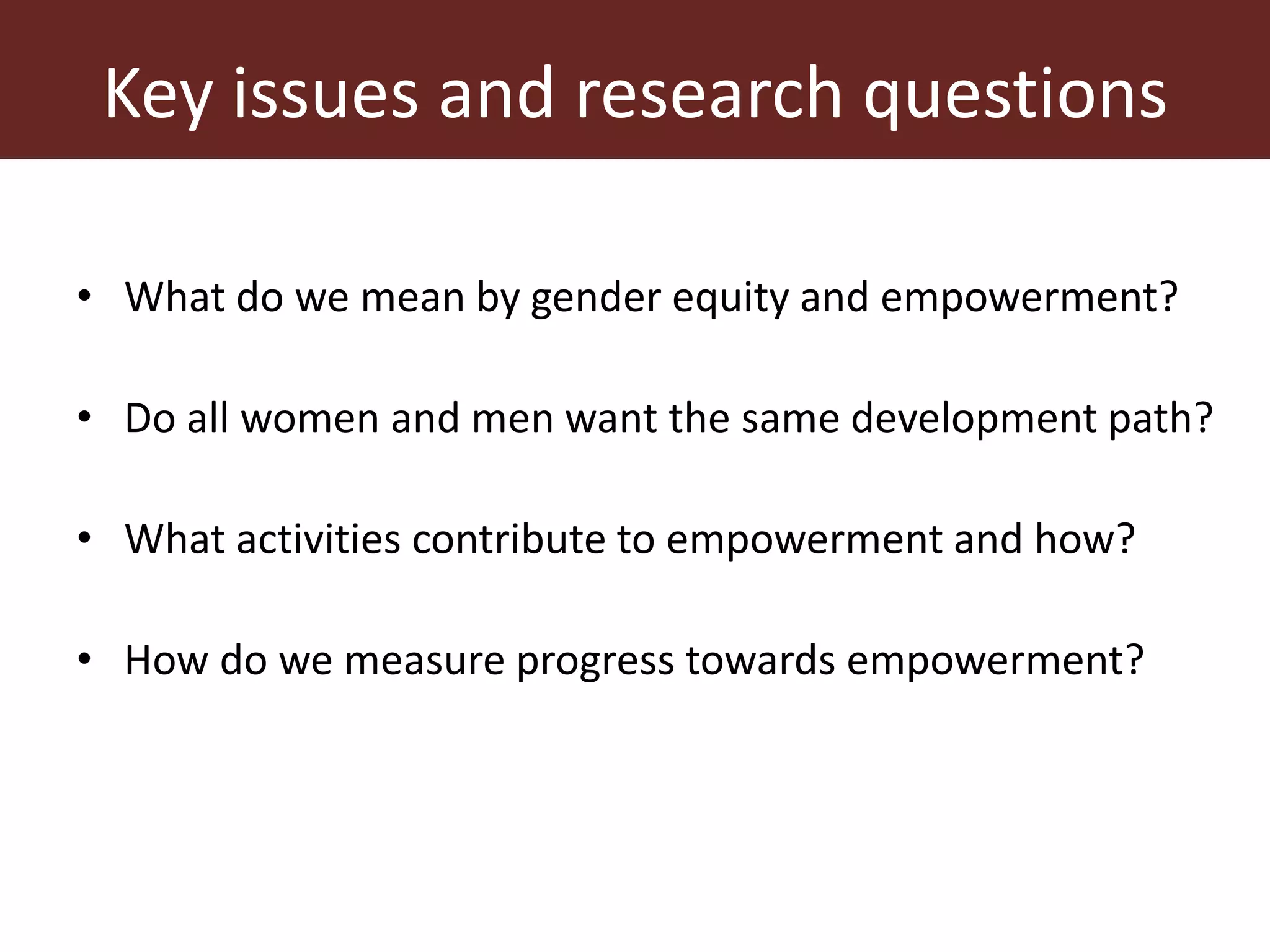
Key issues and research questions
• What do we mean by gender equity and empowerment?
• Do all women and men want the same development path?
• What activities contribute to empowerment and how?
• How do we measure progress towards empowerment?
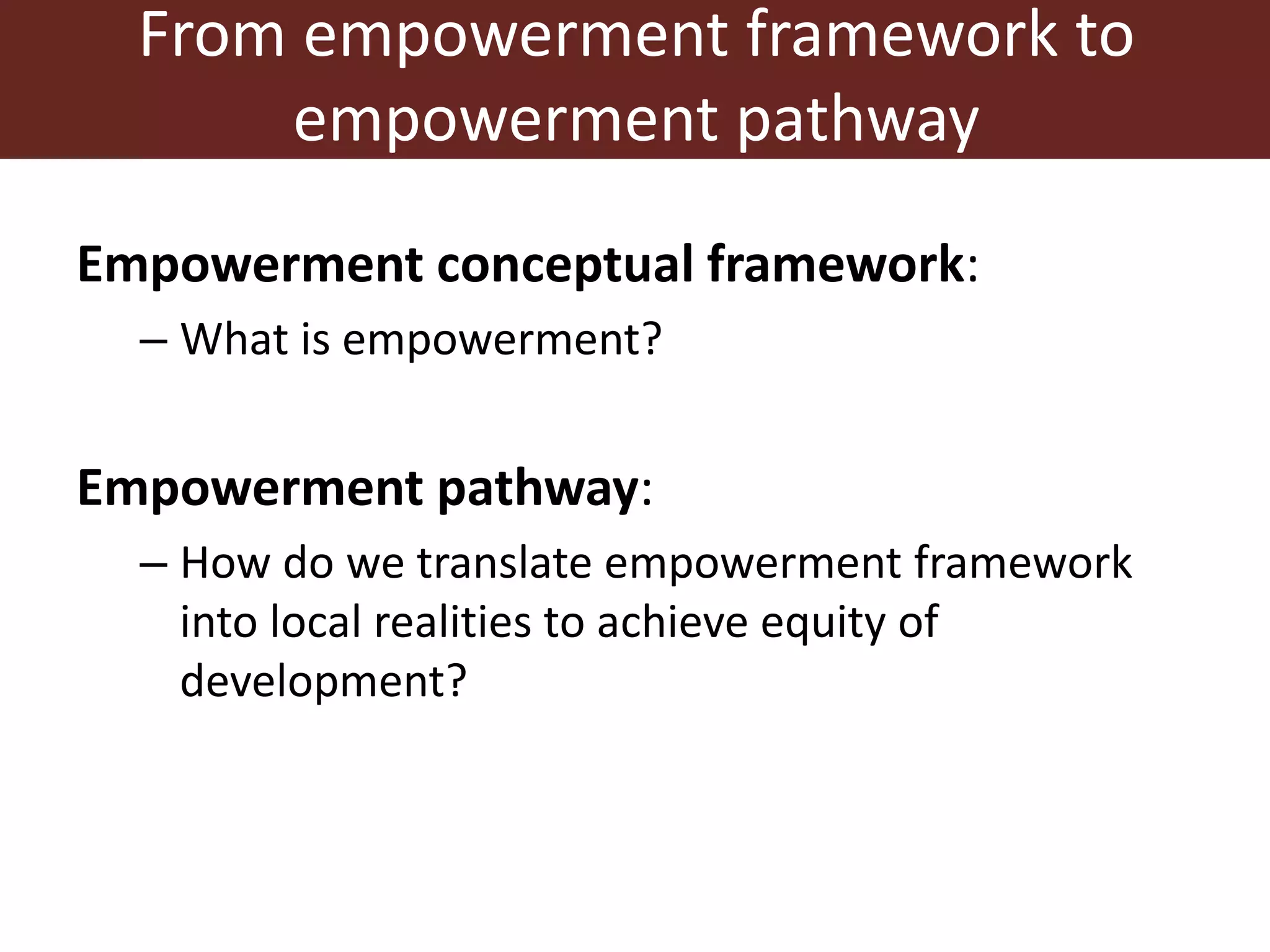
From empowerment framework to
empowerment pathway
Empowerment conceptual framework:
– What is empowerment?
Empowerment pathway:
– How do we translate empowerment framework
into local realities to achieve equity of
development?
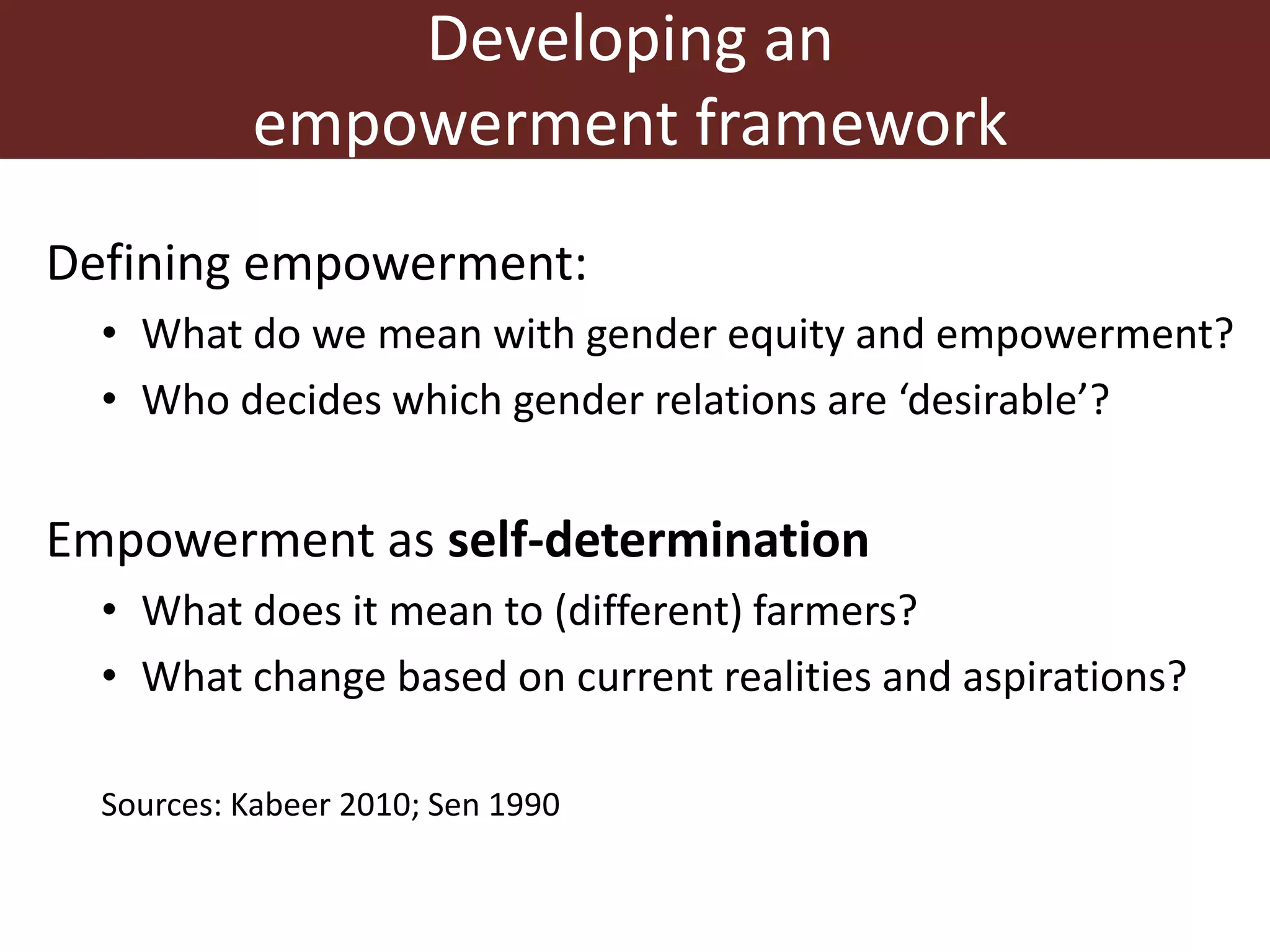
Developing an
empowerment framework
Defining empowerment:
• What do we mean with gender equity and empowerment?
• Who decides which gender relations are ‘desirable’?
Empowerment as self-determination
• What does it mean to (different) farmers?
• What change based on current realities and aspirations?
Sources: Kabeer 2010; Sen 1990
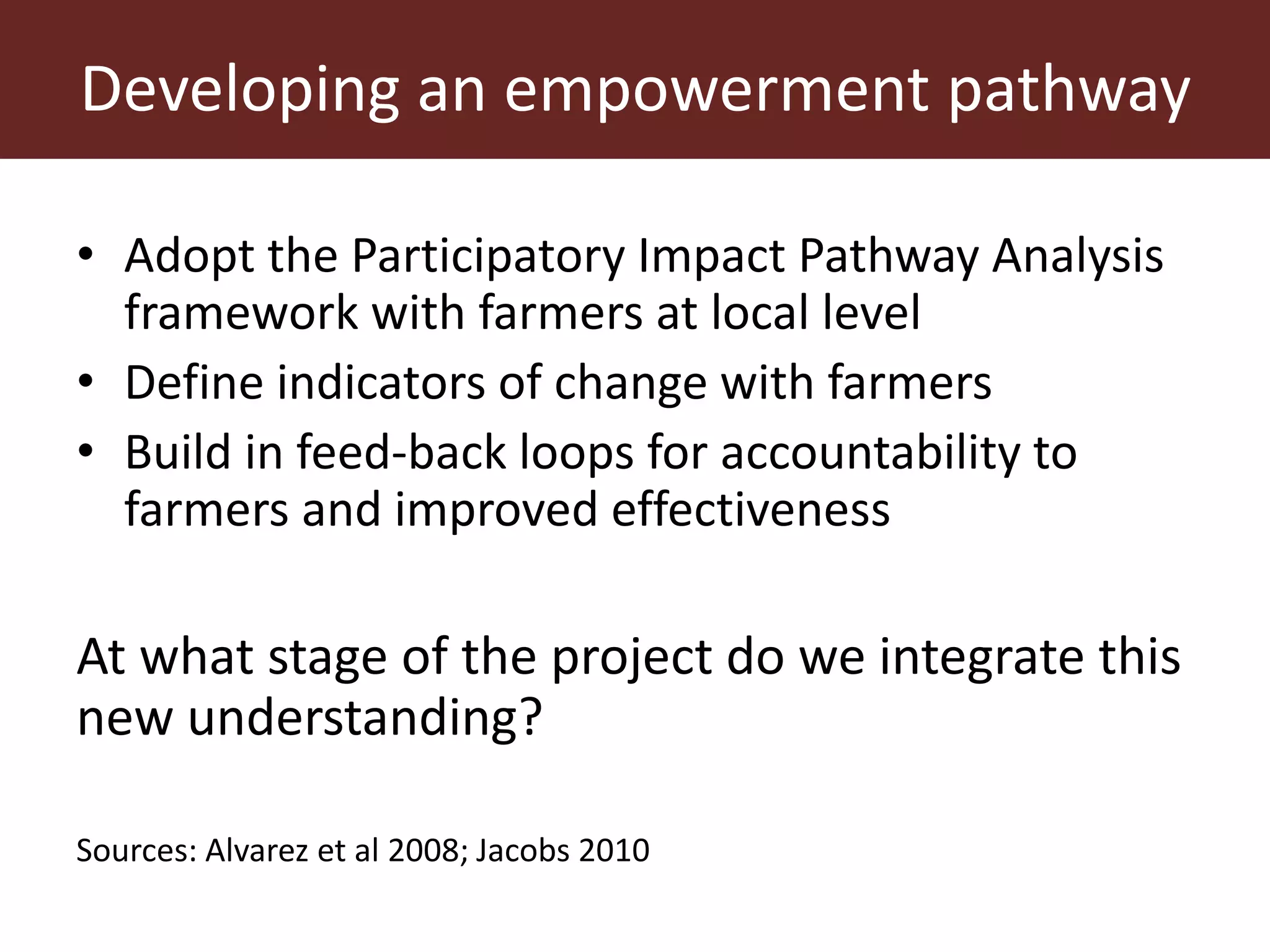
Developing an empowerment pathway
• Adopt the Participatory Impact Pathway Analysis
framework with farmers at local level
• Define indicators of change with farmers
• Build in feed-back loops for accountability to
farmers and improved effectiveness
At what stage of the project do we integrate this
new understanding?
Sources: Alvarez et al 2008; Jacobs 2010
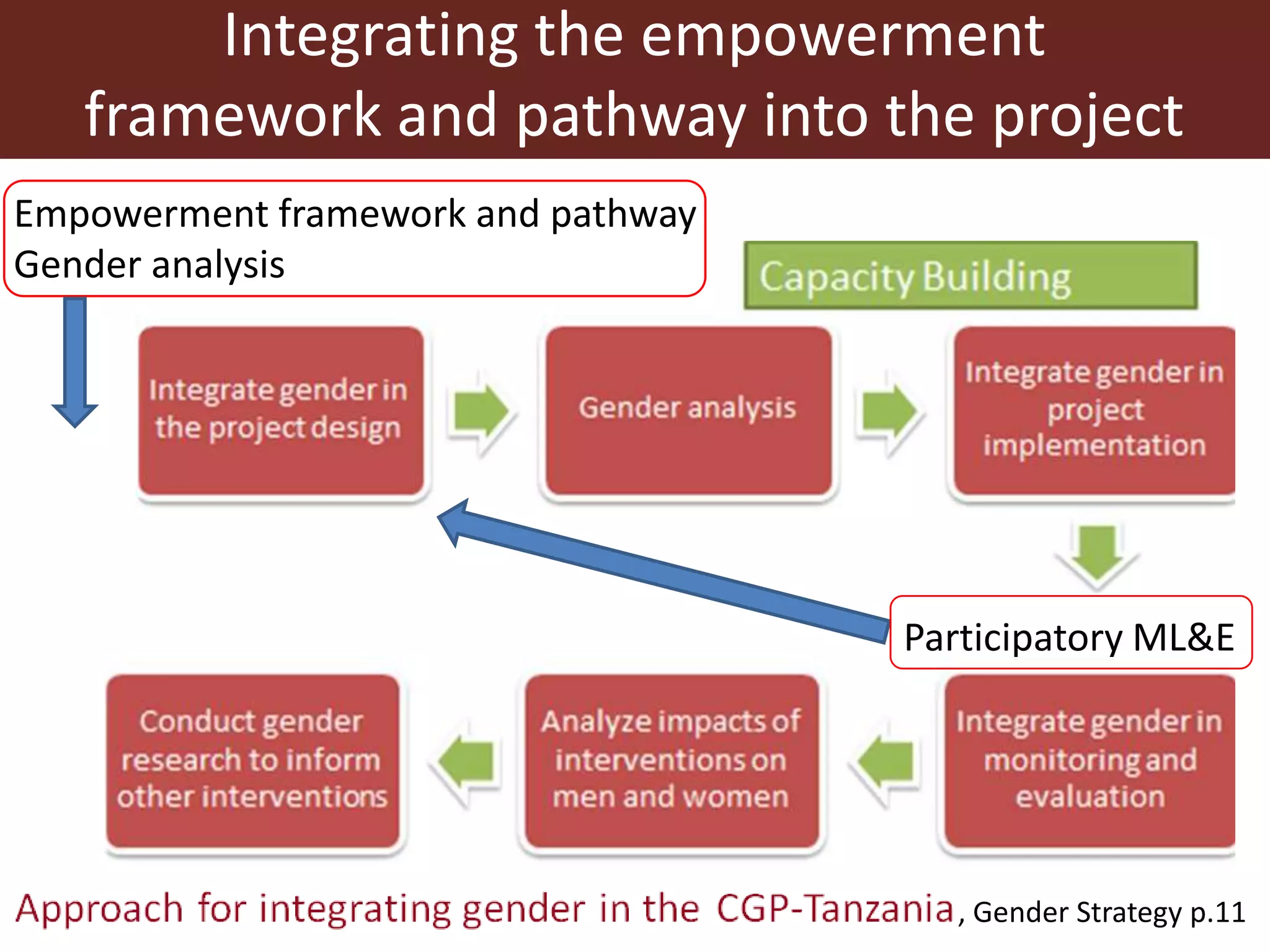
Empowerment framework and pathway
Gender analysis
Participatory ML&E
, Gender Strategy p.11
Integrating the empowerment
framework and pathway into the project
Further questions
• Can gender analysis alone contribute to achieving
empowerment and gender equity?
• Who decides what are desirable gender relations?
• How do we accommodate alternative development paths?
• Where is empowerment in the research-to-development
continuum?
• Is a non-participatory project intrinsically disempowering?
• What about aspirations that ‘do not fit’ with our mandate?
Sources: Hellin et al 2007
Bibliography
• Almekinders, C. and J. Hardon, eds. 2006 Bringing Farmers Back into Breeding:
Experiences with Participatory Plant Breeding (Wageningen: Agromisa Foundation).
• Alvarez, B. et al. 2008. Participatory Impact Pathways Analysis: A practical method for
project planning and evaluation, ILAC Brief No. 17. The ILAC Initiative, Bioversity.
• De Schutter, O. 2009, “Seed Policies and the Right to Food: Enhancing Agrobiodiversity
and Encouraging Innovation,” UN General Assembly, vol. 42473.
• Hellin, J. et al. 2007. Increasing the Impacts of Participatory Research. Experimental
Agriculture, 44(01), pp. 81–95.
• Jacobs, A. 2010: Creating the missing feed-back loop, IDS Bulletin 41, 6.
• Kabeer, N. 2010. Women’s Empowerment, Development Interventions and the
Management of Information Flows, IDS Bulletin 41, 6.
• Sen, A. 1990. Development as Capability Expansion, in Human Development and the
International Development Strategy for the 1990s, ed. K. Griffi n and J. Knight (London:
MacMillan)
• Song, Y. and R., Vernooy 2010. Seeds of Empowerment: Action Research in the Context
of the Feminization of Agriculture in Southwest China, Gender Technology and
Development 14, 1: 25– 44.

Integrating gender equity and empowerment in the Dairy Goat and Root Crop Production project: Current issues and next steps

  • 1.
    Partner Logo Partner Logo Integrating genderequity and empowerment in the Dairy Goat and Root Crop Production project: current issues and next steps Alessandra Galiè Social Scientist: Gender, ILRI Integrated Dairy Goat and Root Crop Production Workshop, ILRI Nairobi, 19 June 2013
  • 2.
    Overview of presentation •Why empowerment and gender equity in AR4D • Status of empowerment and gender equity in the project • Next steps: integrating an empowerment framework and pathway in the project
  • 3.
    Gender equity andempowerment definitions Empowerment is considered to be: • Change in power relations • Domination by individuals over chance and circumstances • Capability to negotiate, influence, hold institutions accountable • A means to self-determination Gender equity denotes the equivalence in life outcomes for women and men, recognising their different needs and interests, and requiring a redistribution of power and resources. Sources: Kabeer 2010; Sen 1990
  • 4.
    Why empowerment inagricultural research for development (AR4D) Empowerment is considered a means for farmers to: • Better participate in research • Voice their needs and benefit from AR4D • Safeguards their interests and livelihoods • Achieve gender equity Sources: Almekinders 2006; De Schutter 2009; Song 2010
  • 5.
    Empowerment integration inprojects Empowerment is frequently integrated as: • A vague concept • An activity • An outcome of participatory approaches • An outcome of accessing financial resources • Any impact on the life of vulnerable groups
  • 6.
    Gender equity andempowerment in the Dairy Goat and Root Crop project Project objectives: – To analyse impacts (productivity, environmental, gender and empowerment, food security and nutrition) of integrating improved goat breeds with sweet-potatoes and cassava into an agro-pastoral farming system (p. 13) Project outcomes: – Increased ability of women to independently participate in various stages of the value chains; – More equitable social relationships between men and women involved in the goat and root crop value chains (p. 27)
  • 7.
    Gender strategy andactivities Strategy: gender analysis to assess current situation; integration of gender in all project activities, M&E and Impacts; gender research to inform other interventions Activities: • Capacity building of staff in gender analysis • Community trainings on gender awareness-raising • Inclusion of women in breeding, market, animal health activities • Provision of assets to women (joint ownership) • Support women’s special interest groups • Strategies to involve very poor households and youth • Gender analysis to enhance gender-equity • Integration of gender into project components
  • 8.
    Findings and recommendationsof the Mid-term evaluation Findings • Gender equity as a key emergent property of system • Focus on transforming people’s normative frameworks • Farmers limited involvement in the intervention Recommendations • Research into development pathways • Gender empowerment framework
  • 9.
    Key issues andresearch questions • What do we mean by gender equity and empowerment? • Do all women and men want the same development path? • What activities contribute to empowerment and how? • How do we measure progress towards empowerment?
  • 10.
    From empowerment frameworkto empowerment pathway Empowerment conceptual framework: – What is empowerment? Empowerment pathway: – How do we translate empowerment framework into local realities to achieve equity of development?
  • 11.
    Developing an empowerment framework Definingempowerment: • What do we mean with gender equity and empowerment? • Who decides which gender relations are ‘desirable’? Empowerment as self-determination • What does it mean to (different) farmers? • What change based on current realities and aspirations? Sources: Kabeer 2010; Sen 1990
  • 12.
    Developing an empowermentpathway • Adopt the Participatory Impact Pathway Analysis framework with farmers at local level • Define indicators of change with farmers • Build in feed-back loops for accountability to farmers and improved effectiveness At what stage of the project do we integrate this new understanding? Sources: Alvarez et al 2008; Jacobs 2010
  • 13.
    Empowerment framework andpathway Gender analysis Participatory ML&E , Gender Strategy p.11 Integrating the empowerment framework and pathway into the project
  • 14.
    Further questions • Cangender analysis alone contribute to achieving empowerment and gender equity? • Who decides what are desirable gender relations? • How do we accommodate alternative development paths? • Where is empowerment in the research-to-development continuum? • Is a non-participatory project intrinsically disempowering? • What about aspirations that ‘do not fit’ with our mandate? Sources: Hellin et al 2007
  • 15.
    Bibliography • Almekinders, C.and J. Hardon, eds. 2006 Bringing Farmers Back into Breeding: Experiences with Participatory Plant Breeding (Wageningen: Agromisa Foundation). • Alvarez, B. et al. 2008. Participatory Impact Pathways Analysis: A practical method for project planning and evaluation, ILAC Brief No. 17. The ILAC Initiative, Bioversity. • De Schutter, O. 2009, “Seed Policies and the Right to Food: Enhancing Agrobiodiversity and Encouraging Innovation,” UN General Assembly, vol. 42473. • Hellin, J. et al. 2007. Increasing the Impacts of Participatory Research. Experimental Agriculture, 44(01), pp. 81–95. • Jacobs, A. 2010: Creating the missing feed-back loop, IDS Bulletin 41, 6. • Kabeer, N. 2010. Women’s Empowerment, Development Interventions and the Management of Information Flows, IDS Bulletin 41, 6. • Sen, A. 1990. Development as Capability Expansion, in Human Development and the International Development Strategy for the 1990s, ed. K. Griffi n and J. Knight (London: MacMillan) • Song, Y. and R., Vernooy 2010. Seeds of Empowerment: Action Research in the Context of the Feminization of Agriculture in Southwest China, Gender Technology and Development 14, 1: 25– 44.

Editor's Notes

  • #2 There MUST be a CGIAR logo or a CRP logo. You can copy and paste the logo you need from the final slide of this presentation. Then you can delete that final slide To replace a photo above, copy and paste this link in your browser: http://www.flickr.com/photos/ilri/sets/72157632057087650/detail/ Find a photo you like and the right size, copy and paste it in the block above.