
Eastern Visayas


Thursday, May 24, 2012

Philippines


GENDER-SENSITIVITY TRAINING

A SAMPLE TRAINING DESIGN & MODULE *


Below is an example of a training design and module for a 1-day Gender Sensitivity Training (GST). This
may be modified by the facilitator depending on the level and experience of the participants, their
nature of work, the office, etc. Ideally, a GST should have no more than 25 participants and
homogeneous. For example, have field workers on one batch , Chiefs of Units in another batch.


RATIONALE


It is recognized that true and meaningful development will not be attained unless gender concerns are
integrated into all levels of development processes. In this regard, the national government has
mandated all government agencies and instrumentality to integrate gender and development concerns
into their plans, programs, projects and office activities. This mandate is spelled out in RA 7192 or
Women in Development and Nation Building Act and Sec. 27 of RA 8174 (1996 GAA) which requires all
government agencies to set aside at least 5% of their budgets for gender-related activities.


In order that TELOF can respond to the above mandate, it is necessary that its employees become aware
of gender concerns affecting the office, its clients and even those affecting themselves and their
families. This gender sensitivity training is therefore the first step towards making TELOF an active
partner in the promotion of gender and development in the region.
OBJECTIVES


At the end of the one-day training, the participants shall have raised their level of awareness on GAD
issues and concerns. Specifically, they shall be able to:


1. Discuss the importance of GAD

2. Differentiate sex and gender

3. Identify gender roles in the family, household and society

4. Discuss the situation of women and men in the region;

5. Discuss the role of the state in responding to gender needs and the salient features of RA 7192

6. Formulate an Agency Action Plan on Gender and Development


PARTICIPANTS: Forty (40) TELOF Employees.


DATE: November 6, 1996, 8:00 a.m. to 5:00 p.m.


VENUE: TELOF Region VIII


MECHANICS:


Games/role play

Film showing

Lecture

Workshop
BUDGET:


2 Snacks @ P25 x 50 pax

Honoraria of resource persons

Supplies & materials


MATERIALS NEEDED:


Training kits

Attendance sheet

microphones

VHS/Tape (Impossible Dream)

OHP

Transparencies, OHP markers

Manila paper, pens, masking tape, (for the games)

bulletin board/w-board, chalk

Colored pre-cut cartolina (4"x8") - different colors

Certificates


PROGRAM


MORNING SESSION


8:00 - 8:30 Registration
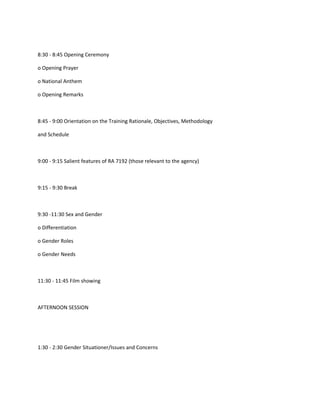
8:30 - 8:45 Opening Ceremony

o Opening Prayer

o National Anthem

o Opening Remarks


8:45 - 9:00 Orientation on the Training Rationale, Objectives, Methodology

and Schedule


9:00 - 9:15 Salient features of RA 7192 (those relevant to the agency)


9:15 - 9:30 Break


9:30 -11:30 Sex and Gender

o Differentiation

o Gender Roles

o Gender Needs


11:30 - 11:45 Film showing


AFTERNOON SESSION


1:30 - 2:30 Gender Situationer/Issues and Concerns
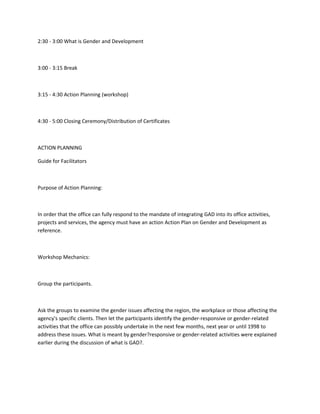
2:30 - 3:00 What is Gender and Development


3:00 - 3:15 Break


3:15 - 4:30 Action Planning (workshop)


4:30 - 5:00 Closing Ceremony/Distribution of Certificates


ACTION PLANNING

Guide for Facilitators


Purpose of Action Planning:


In order that the office can fully respond to the mandate of integrating GAD into its office activities,
projects and services, the agency must have an action Action Plan on Gender and Development as
reference.


Workshop Mechanics:


Group the participants.


Ask the groups to examine the gender issues affecting the region, the workplace or those affecting the
agency's specific clients. Then let the participants identify the gender-responsive or gender-related
activities that the office can possibly undertake in the next few months, next year or until 1998 to
address these issues. What is meant by gender?responsive or gender-related activities were explained
earlier during the discussion of what is GAD?.
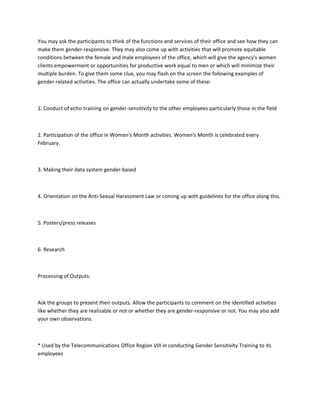
You may ask the participants to think of the functions and services of their office and see how they can
make them gender-responsive. They may also come up with activities that will promote equitable
conditions between the female and male employees of the office, which will give the agency's women
clients empowerment or opportunities for productive work equal to men or which will minimize their
multiple burden. To give them some clue, you may flash on the screen the following examples of
gender-related activities. The office can actually undertake some of these:


1. Conduct of echo-training on gender-sensitivity to the other employees particularly those in the field


2. Participation of the office in Women's Month activities. Women's Month is celebrated every
February.


3. Making their data system gender-based


4. Orientation on the Anti-Sexual Harassment Law or coming up with guidelines for the office along this.


5. Posters/press releases


6. Research


Processing of Outputs:


Ask the groups to present their outputs. Allow the participants to comment on the identified activities
like whether they are realizable or not or whether they are gender-responsive or not. You may also add
your own observations.


* Used by the Telecommunications Office Region VIII in conducting Gender Sensitivity Training to its
employees
Gad module

Gad module

  • 1.
    Eastern Visayas Thursday, May24, 2012 Philippines GENDER-SENSITIVITY TRAINING A SAMPLE TRAINING DESIGN & MODULE * Below is an example of a training design and module for a 1-day Gender Sensitivity Training (GST). This may be modified by the facilitator depending on the level and experience of the participants, their nature of work, the office, etc. Ideally, a GST should have no more than 25 participants and homogeneous. For example, have field workers on one batch , Chiefs of Units in another batch. RATIONALE It is recognized that true and meaningful development will not be attained unless gender concerns are integrated into all levels of development processes. In this regard, the national government has mandated all government agencies and instrumentality to integrate gender and development concerns into their plans, programs, projects and office activities. This mandate is spelled out in RA 7192 or Women in Development and Nation Building Act and Sec. 27 of RA 8174 (1996 GAA) which requires all government agencies to set aside at least 5% of their budgets for gender-related activities. In order that TELOF can respond to the above mandate, it is necessary that its employees become aware of gender concerns affecting the office, its clients and even those affecting themselves and their families. This gender sensitivity training is therefore the first step towards making TELOF an active partner in the promotion of gender and development in the region.
  • 2.
    OBJECTIVES At the endof the one-day training, the participants shall have raised their level of awareness on GAD issues and concerns. Specifically, they shall be able to: 1. Discuss the importance of GAD 2. Differentiate sex and gender 3. Identify gender roles in the family, household and society 4. Discuss the situation of women and men in the region; 5. Discuss the role of the state in responding to gender needs and the salient features of RA 7192 6. Formulate an Agency Action Plan on Gender and Development PARTICIPANTS: Forty (40) TELOF Employees. DATE: November 6, 1996, 8:00 a.m. to 5:00 p.m. VENUE: TELOF Region VIII MECHANICS: Games/role play Film showing Lecture Workshop
  • 3.
    BUDGET: 2 Snacks @P25 x 50 pax Honoraria of resource persons Supplies & materials MATERIALS NEEDED: Training kits Attendance sheet microphones VHS/Tape (Impossible Dream) OHP Transparencies, OHP markers Manila paper, pens, masking tape, (for the games) bulletin board/w-board, chalk Colored pre-cut cartolina (4"x8") - different colors Certificates PROGRAM MORNING SESSION 8:00 - 8:30 Registration
  • 4.
    8:30 - 8:45Opening Ceremony o Opening Prayer o National Anthem o Opening Remarks 8:45 - 9:00 Orientation on the Training Rationale, Objectives, Methodology and Schedule 9:00 - 9:15 Salient features of RA 7192 (those relevant to the agency) 9:15 - 9:30 Break 9:30 -11:30 Sex and Gender o Differentiation o Gender Roles o Gender Needs 11:30 - 11:45 Film showing AFTERNOON SESSION 1:30 - 2:30 Gender Situationer/Issues and Concerns
  • 5.
    2:30 - 3:00What is Gender and Development 3:00 - 3:15 Break 3:15 - 4:30 Action Planning (workshop) 4:30 - 5:00 Closing Ceremony/Distribution of Certificates ACTION PLANNING Guide for Facilitators Purpose of Action Planning: In order that the office can fully respond to the mandate of integrating GAD into its office activities, projects and services, the agency must have an action Action Plan on Gender and Development as reference. Workshop Mechanics: Group the participants. Ask the groups to examine the gender issues affecting the region, the workplace or those affecting the agency's specific clients. Then let the participants identify the gender-responsive or gender-related activities that the office can possibly undertake in the next few months, next year or until 1998 to address these issues. What is meant by gender?responsive or gender-related activities were explained earlier during the discussion of what is GAD?.
  • 6.
    You may askthe participants to think of the functions and services of their office and see how they can make them gender-responsive. They may also come up with activities that will promote equitable conditions between the female and male employees of the office, which will give the agency's women clients empowerment or opportunities for productive work equal to men or which will minimize their multiple burden. To give them some clue, you may flash on the screen the following examples of gender-related activities. The office can actually undertake some of these: 1. Conduct of echo-training on gender-sensitivity to the other employees particularly those in the field 2. Participation of the office in Women's Month activities. Women's Month is celebrated every February. 3. Making their data system gender-based 4. Orientation on the Anti-Sexual Harassment Law or coming up with guidelines for the office along this. 5. Posters/press releases 6. Research Processing of Outputs: Ask the groups to present their outputs. Allow the participants to comment on the identified activities like whether they are realizable or not or whether they are gender-responsive or not. You may also add your own observations. * Used by the Telecommunications Office Region VIII in conducting Gender Sensitivity Training to its employees