Applying a systems
framework to research on
 African farming systems
                                     John Lynam

         CGIAR Research Program on Dryland Systems
  Regional Inception Workshop East and Southern Africa
                                Nairobi, 5-7 June 2012
Expanding Global Agendas
  and Increasing Demands on
    Agricultural Research
 Global food security under increasing
  land and water constraints
 Provision of ecosystem services and
  eco-efficiency of farming systems
 Adaptation and mitigation to climate
  change
 Agroecological intensification of
  smallholder agriculture and poverty
Changing Research Methods
      and Technology Design
 Production systems research
 Integrating ecological science
 Place-based research methods
 Research consortia
 Scaling up integrated into research
  design
 Flexible institutional arrangements
Design Issues in Production System
      CGIAR Research Programs
 Target Area Selection
 Research Site Selection
  -Target area characterization
  -Research hypotheses
  -Methodology for research site selection
  -Baseline and monitoring of system change
 Methods for Research on Farming Systems
Developing the Science of
     System Intensification
Data and Analytics for:
 Characterization and targeting
 Extrapolation
 Baseline and monitoring
 Causal relationships
  -System change
  -Comparative frameworks
Design Characteristics for Analyzing
     African Farming Systems
  Heterogeneity: system boundaries and
   classification strata
   -Spatial Characterization
   -Within site household stratification
  System Change and Dynamics: drivers
   and intensification pathways
  Embeddedness: landscape,
   market/sub-sector, agricultural sector
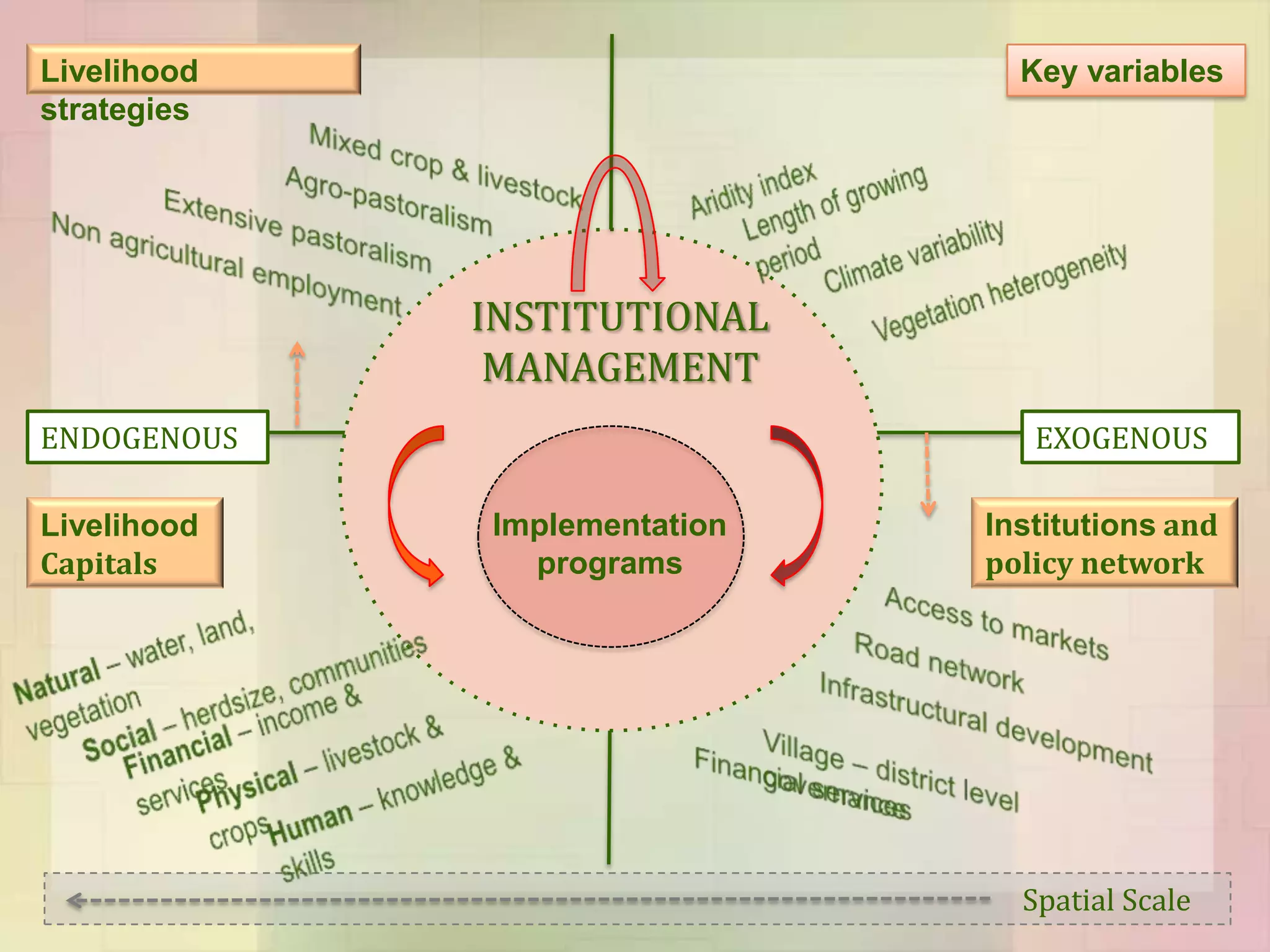
Livelihood                      Key variables
strategies


             INSTITUTIONAL
              MANAGEMENT
ENDOGENOUS                       EXOGENOUS

Livelihood   Implementation   Institutions and
Capitals       programs       policy network


                                Spatial Scale
Structure of Farm/Household
            System
 Asset base: five capitals
 Production activities
 Household objectives:
  -Subsistence/food security
  -Risk management
  -Income

Within site variability: typologies
System Boundaries and
    Classification Frameworks
Hierarchical Classification
 Land use: Cultivated land within
  managed natural ecosystems
 First order spatial classification
  -Agroecology: eg semi-arid, highlands
  -Crop-livestock interaction: eg pastoral
 Staple food crop: spatially contiguous?
 Sub-system speciation
System Speciation
East African Highland Banana Systems
Utilization
 Matoke: Uganda
 Beer bananas: Rwanda and Burundi
 Enset: Ethiopia
Crop Management
 Commercial: southwest Uganda
 Soil fertility constrained: Bukoba
System Variation and System
         Performance
System Performance
  -Productivity, profitability, income
  -Vulnerability, food security
  -Resource efficiency, resilience
System Variation
  -Spatial/causal comparative frameworks
  -Within-site socio-economic variation
Drivers of System Change
 Rural population growth
  -Declining farm size
  -Increasing inequity in farm distribution
  -Pressure on common resources and
  natural capital
 Improvements in Market Access
  -Transaction costs and input/output
  -Staple terms of trade
 Changes in agroecology from climate
  change or biotic pandemics
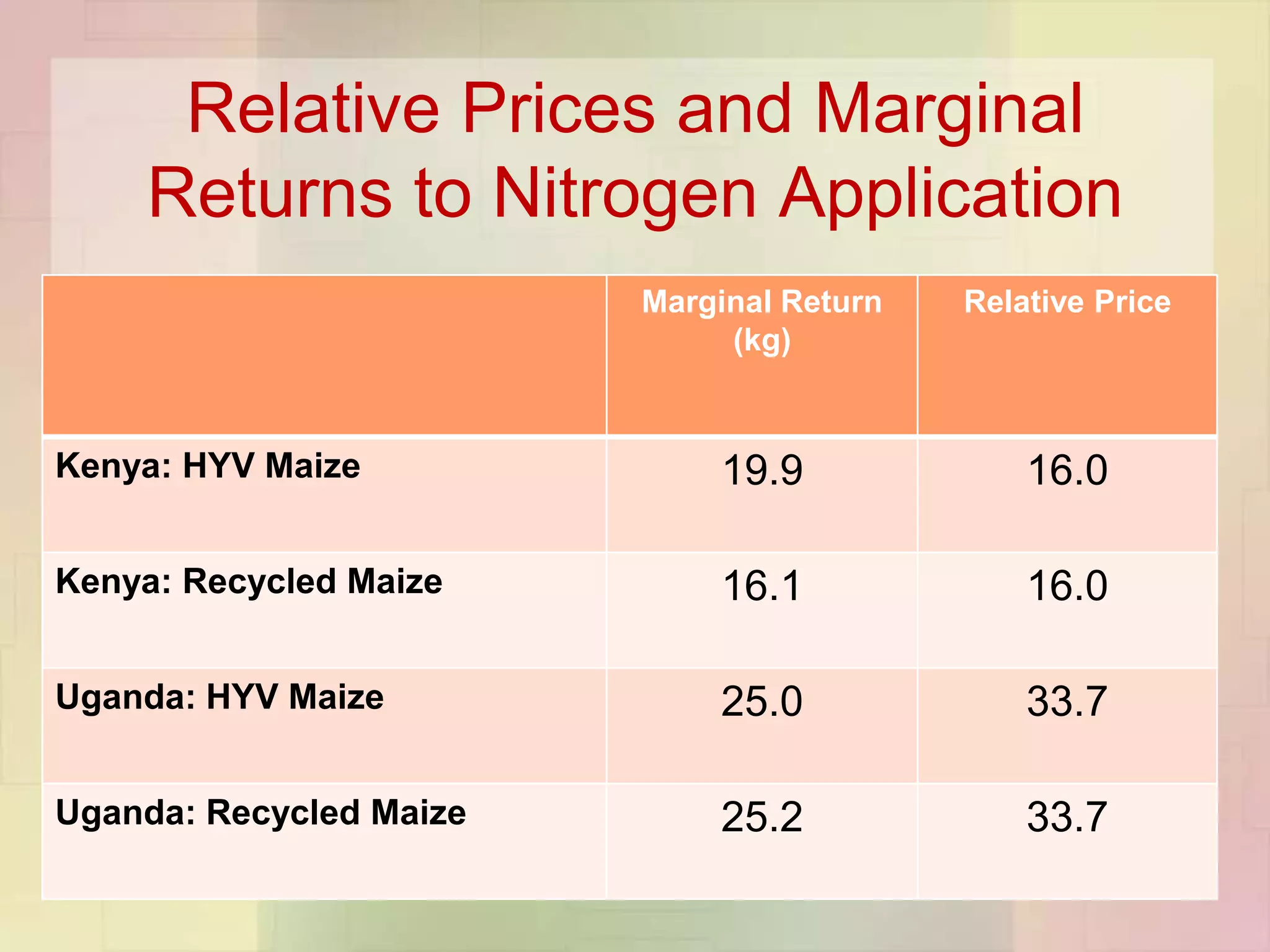
Relative Prices and Marginal
    Returns to Nitrogen Application
                         Marginal Return   Relative Price
                              (kg)


Kenya: HYV Maize             19.9              16.0

Kenya: Recycled Maize        16.1              16.0

Uganda: HYV Maize            25.0              33.7

Uganda: Recycled Maize       25.2              33.7
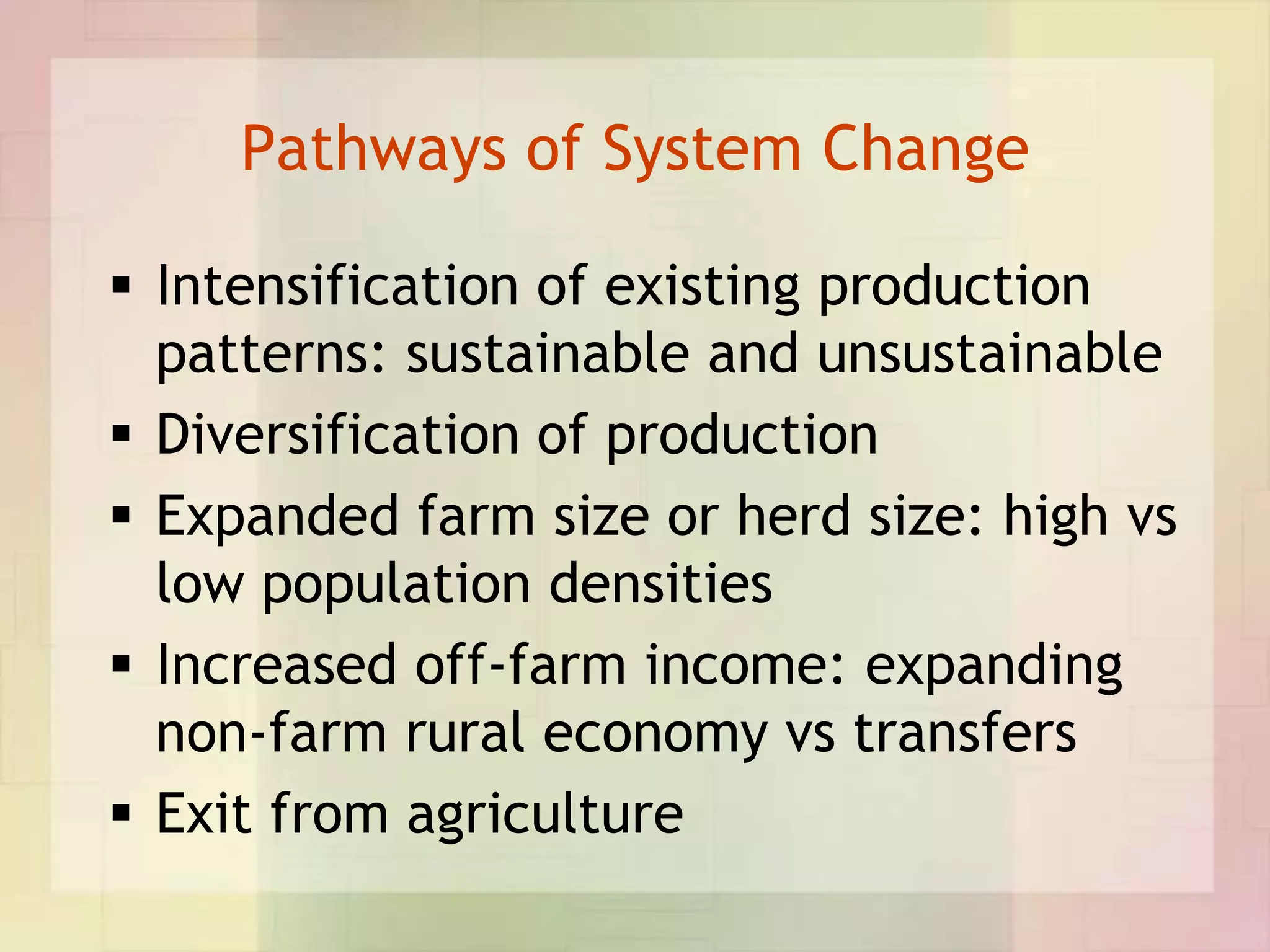
Pathways of System Change

 Intensification of existing production
  patterns: sustainable and unsustainable
 Diversification of production
 Expanded farm size or herd size: high vs
  low population densities
 Increased off-farm income: expanding
  non-farm rural economy vs transfers
 Exit from agriculture
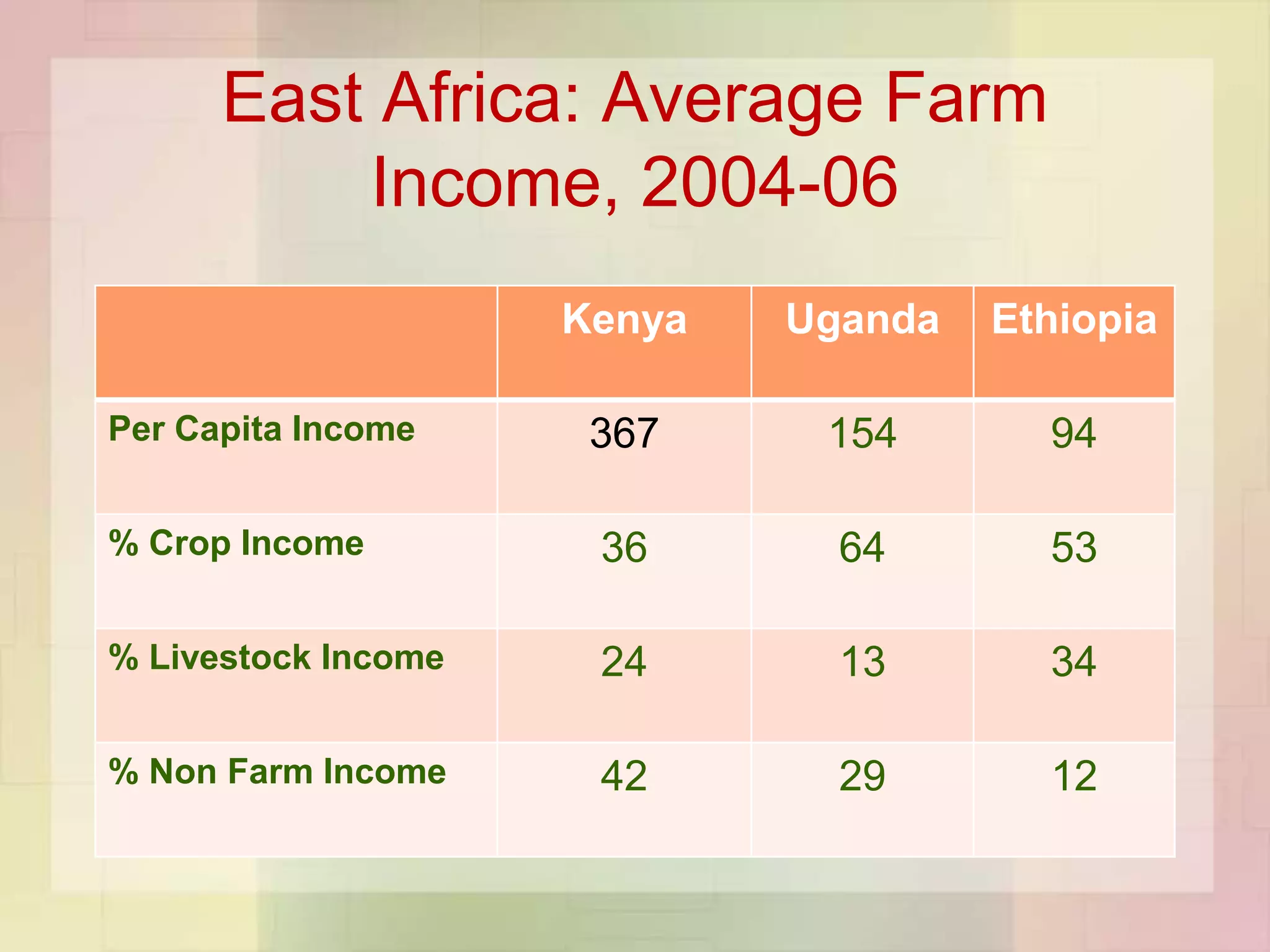
East Africa: Average Farm
          Income, 2004-06
                     Kenya   Uganda   Ethiopia

Per Capita Income     367     154       94

% Crop Income         36       64       53

% Livestock Income    24       13       34

% Non Farm Income     42       29       12
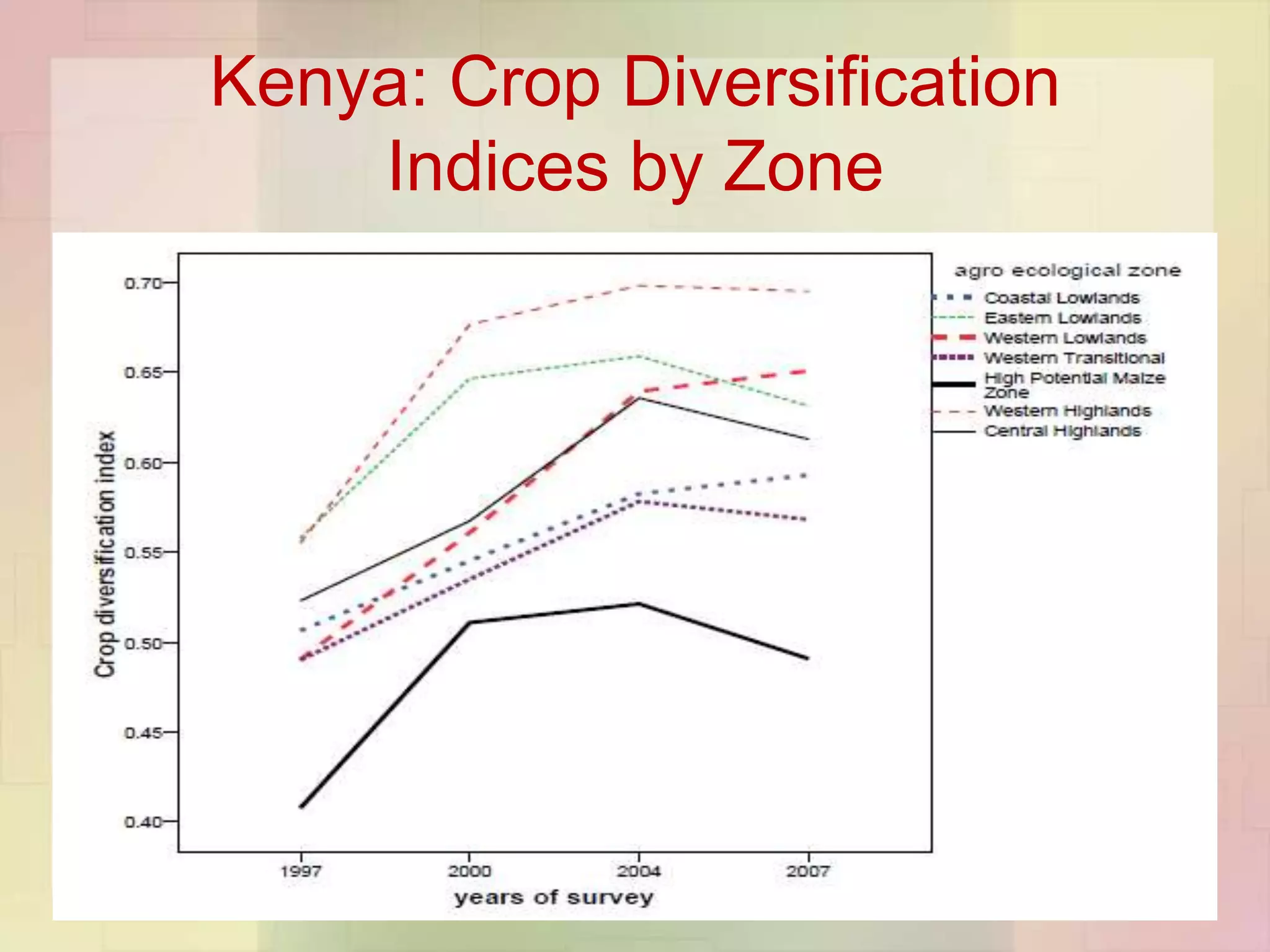
Kenya: Crop Diversification
    Indices by Zone
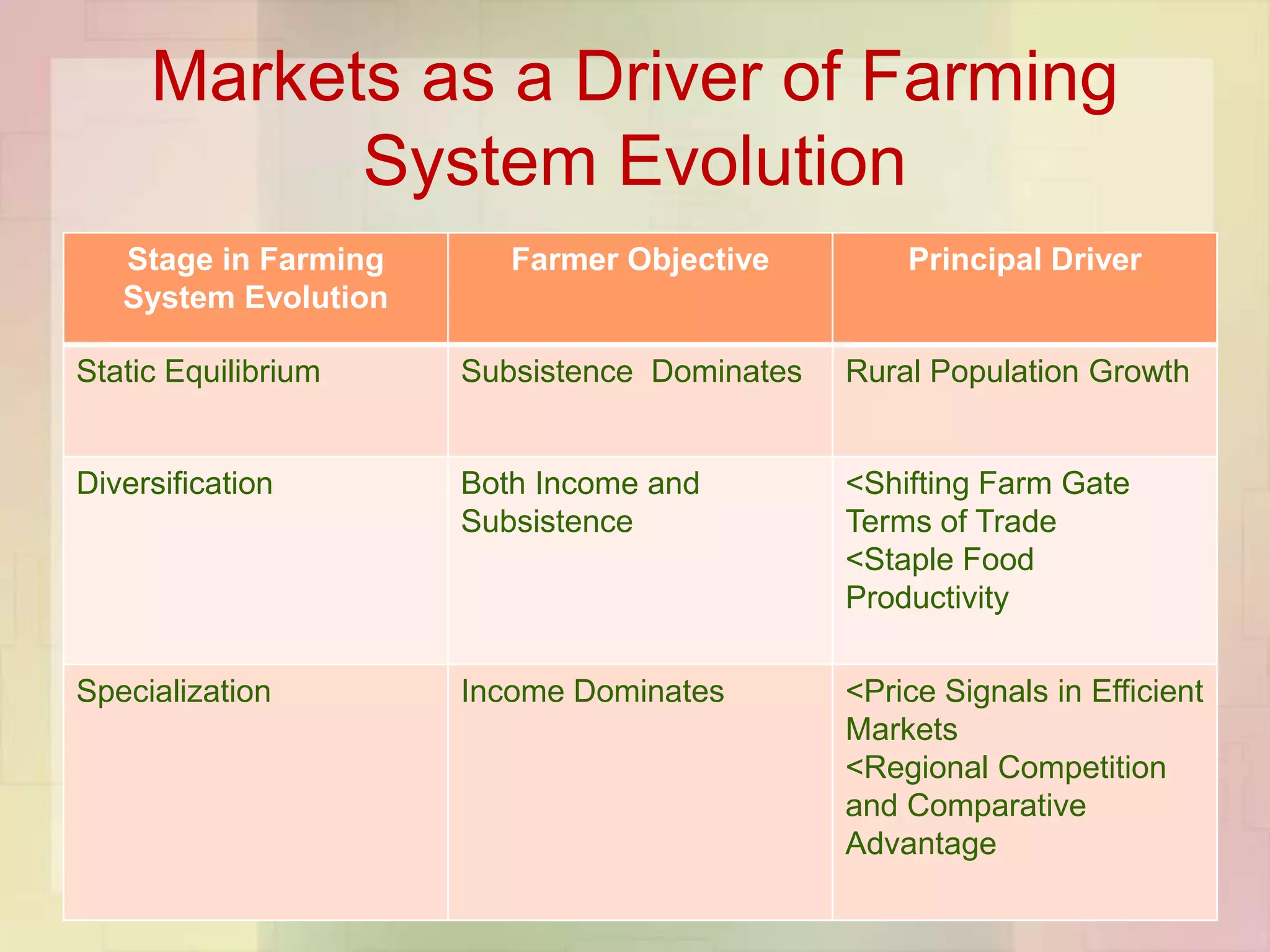
Markets as a Driver of Farming
           System Evolution
   Stage in Farming      Farmer Objective         Principal Driver
   System Evolution

Static Equilibrium    Subsistence Dominates   Rural Population Growth


Diversification       Both Income and         <Shifting Farm Gate
                      Subsistence             Terms of Trade
                                              <Staple Food
                                              Productivity

Specialization        Income Dominates        <Price Signals in Efficient
                                              Markets
                                              <Regional Competition
                                              and Comparative
                                              Advantage

Applying a systems framework to research on African farming systems

  • 1.
    Applying a systems frameworkto research on African farming systems John Lynam CGIAR Research Program on Dryland Systems Regional Inception Workshop East and Southern Africa Nairobi, 5-7 June 2012
  • 2.
    Expanding Global Agendas and Increasing Demands on Agricultural Research  Global food security under increasing land and water constraints  Provision of ecosystem services and eco-efficiency of farming systems  Adaptation and mitigation to climate change  Agroecological intensification of smallholder agriculture and poverty
  • 3.
    Changing Research Methods and Technology Design  Production systems research  Integrating ecological science  Place-based research methods  Research consortia  Scaling up integrated into research design  Flexible institutional arrangements
  • 4.
    Design Issues inProduction System CGIAR Research Programs  Target Area Selection  Research Site Selection -Target area characterization -Research hypotheses -Methodology for research site selection -Baseline and monitoring of system change  Methods for Research on Farming Systems
  • 5.
    Developing the Scienceof System Intensification Data and Analytics for:  Characterization and targeting  Extrapolation  Baseline and monitoring  Causal relationships -System change -Comparative frameworks
  • 6.
    Design Characteristics forAnalyzing African Farming Systems  Heterogeneity: system boundaries and classification strata -Spatial Characterization -Within site household stratification  System Change and Dynamics: drivers and intensification pathways  Embeddedness: landscape, market/sub-sector, agricultural sector
  • 7.
    Livelihood Key variables strategies INSTITUTIONAL MANAGEMENT ENDOGENOUS EXOGENOUS Livelihood Implementation Institutions and Capitals programs policy network Spatial Scale
  • 8.
    Structure of Farm/Household System  Asset base: five capitals  Production activities  Household objectives: -Subsistence/food security -Risk management -Income Within site variability: typologies
  • 9.
    System Boundaries and Classification Frameworks Hierarchical Classification  Land use: Cultivated land within managed natural ecosystems  First order spatial classification -Agroecology: eg semi-arid, highlands -Crop-livestock interaction: eg pastoral  Staple food crop: spatially contiguous?  Sub-system speciation
  • 10.
    System Speciation East AfricanHighland Banana Systems Utilization  Matoke: Uganda  Beer bananas: Rwanda and Burundi  Enset: Ethiopia Crop Management  Commercial: southwest Uganda  Soil fertility constrained: Bukoba
  • 11.
    System Variation andSystem Performance System Performance -Productivity, profitability, income -Vulnerability, food security -Resource efficiency, resilience System Variation -Spatial/causal comparative frameworks -Within-site socio-economic variation
  • 12.
    Drivers of SystemChange  Rural population growth -Declining farm size -Increasing inequity in farm distribution -Pressure on common resources and natural capital  Improvements in Market Access -Transaction costs and input/output -Staple terms of trade  Changes in agroecology from climate change or biotic pandemics
  • 13.
    Relative Prices andMarginal Returns to Nitrogen Application Marginal Return Relative Price (kg) Kenya: HYV Maize 19.9 16.0 Kenya: Recycled Maize 16.1 16.0 Uganda: HYV Maize 25.0 33.7 Uganda: Recycled Maize 25.2 33.7
  • 14.
    Pathways of SystemChange  Intensification of existing production patterns: sustainable and unsustainable  Diversification of production  Expanded farm size or herd size: high vs low population densities  Increased off-farm income: expanding non-farm rural economy vs transfers  Exit from agriculture
  • 15.
    East Africa: AverageFarm Income, 2004-06 Kenya Uganda Ethiopia Per Capita Income 367 154 94 % Crop Income 36 64 53 % Livestock Income 24 13 34 % Non Farm Income 42 29 12
  • 16.
  • 17.
    Markets as aDriver of Farming System Evolution Stage in Farming Farmer Objective Principal Driver System Evolution Static Equilibrium Subsistence Dominates Rural Population Growth Diversification Both Income and <Shifting Farm Gate Subsistence Terms of Trade <Staple Food Productivity Specialization Income Dominates <Price Signals in Efficient Markets <Regional Competition and Comparative Advantage

Editor's Notes

  • #5 CIAT and IITA were conceived of as undertaking research on farming systems of the lowland, humid tropics.FSR moved downstream as a linkage mechanism to extension, creating adaptive research.Questions about the role of the researcher led to farmer participatory research.
  • #7 Sustainability split research into two very different modalities rather than integrating.
  • #13 Green Revolution was the first and maybe the last example of the impacts of widely scalable technologies.FSR was a response to the lack of adoption of GR technologies in rainfed agriculture, still with a commodity focus.The sustainability agenda added NRM and expansion of the CGIAR.Climate change (system resilience) and ecosystem services has added AEI.
  • #15 How to assemble these outputs into a dissemination framework.