Industrial Marketing
Channel –
Walk Behind Rice
Planter
Group B7
Our Sector–Farm Equipments

 Agriculture is the major occupation in Indian economy and
contributes to 13.7% in India’s GDP (2012-13)
 India has experienced normal monsoons this fiscal year
 Besides this there has been increased growth in agricredit in the
Union Budget, interest subvention, rural development focus by the
government and various other farmer friendly schemes(support
prices for crops, commodity price increase etc)
 Additionally, growing shortage of farm hands and smaller land
holdings are forcing many farmers to mechanize their farms
thereby increasing demand
 All these have contributed to an increased demand for the farm
equipments in the country
 Indian farm equipment market also contributes to around 10% to
global equipment market priced around $7.2 Billion
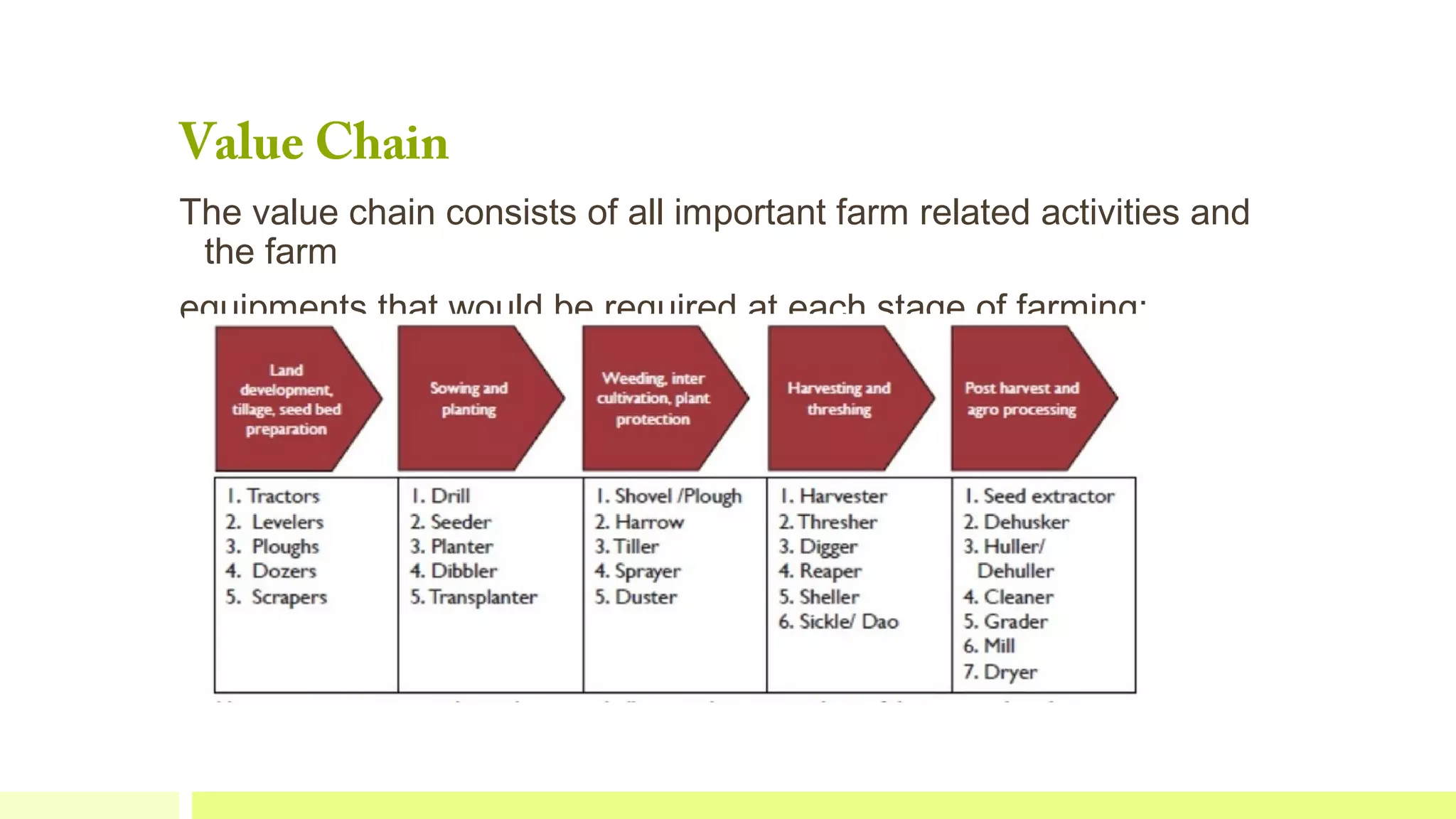
Value Chain

The value chain consists of all important farm related activities and
the farm
equipments that would be required at each stage of farming:
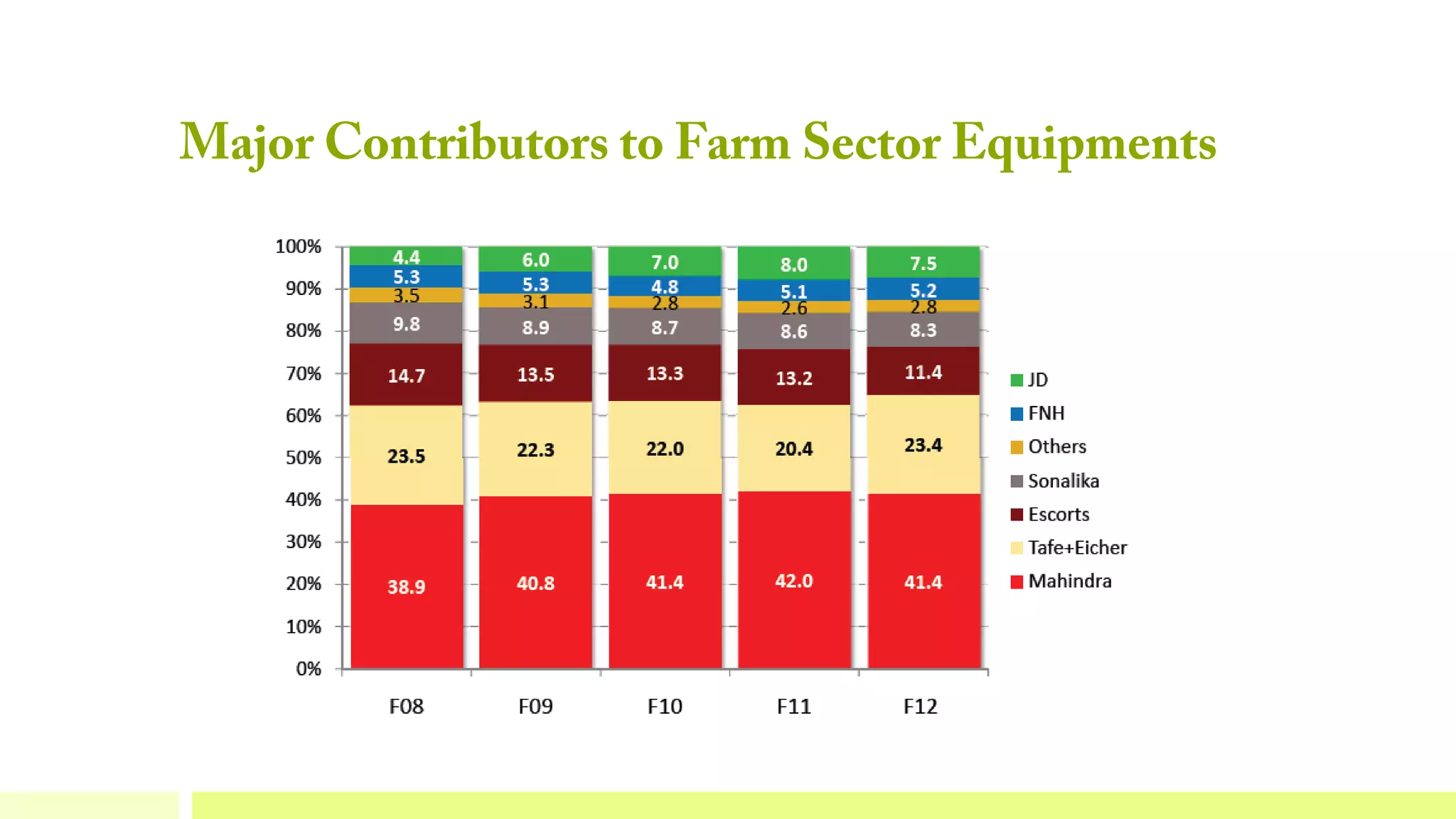
Major Contributors to Farm Sector Equipments
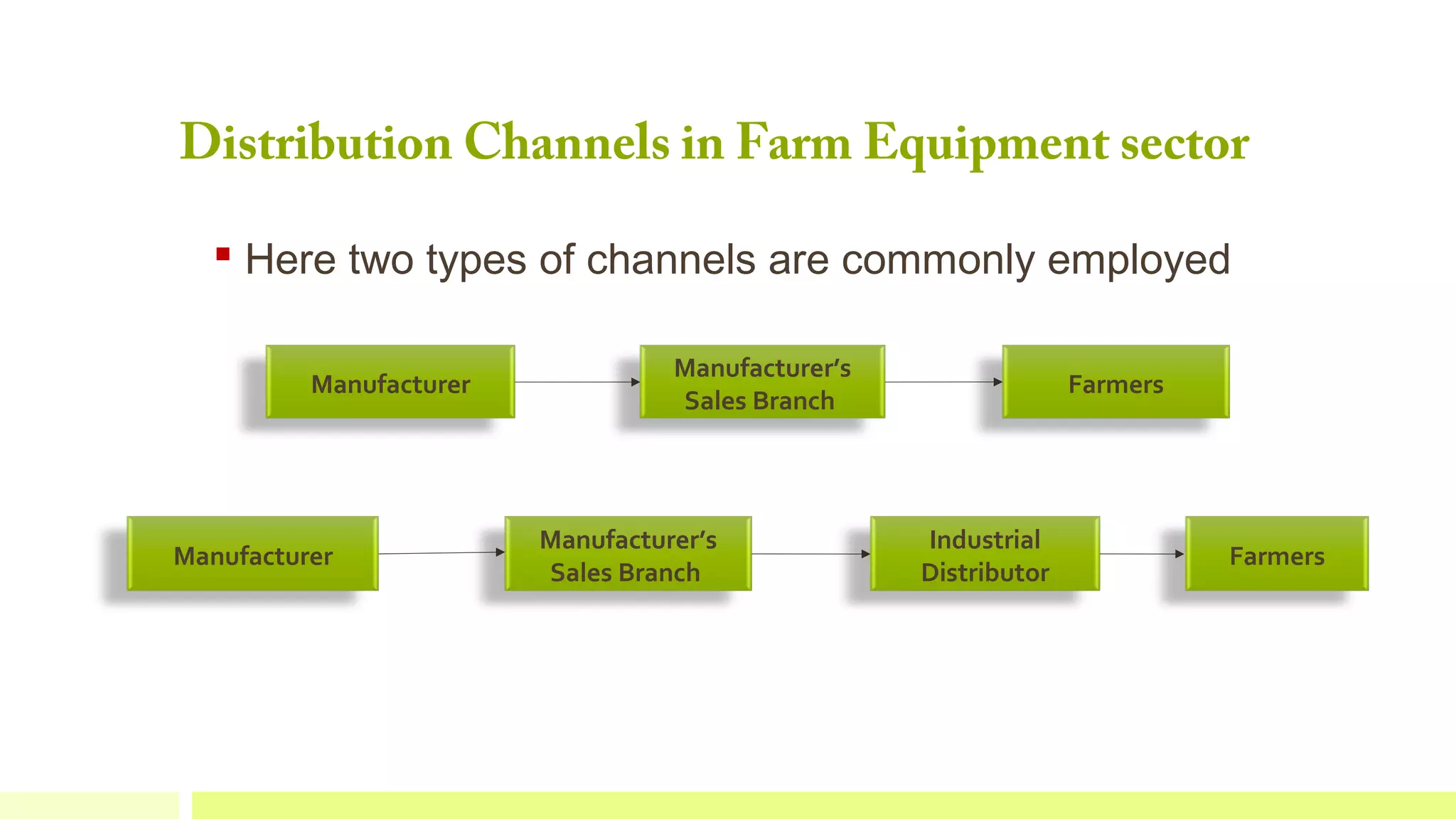
Distribution Channels in Farm Equipment sector
 Here two types of channels are commonly employed
Manufacturer

Manufacturer

Manufacturer’s
Sales Branch

Manufacturer’s
Sales Branch

Farmers

Industrial
Distributor

Farmers
Choice of Distribution Channels:

 In the past only direct distribution channel was used due to the
existence of oligopolistic market structure. However this scenario
has changed with increased competition
 The sales potential, market potentials and type of equipment
influences the manufacturers choice of the type of distribution
channel as well as the number of intermediaries used
 Now companies no longer rely on a single marketing channel they
add many new channels to existing ones in order to cut costs and
increase market coverage. This results in creation of a hybrid
marketing system
 We use the hybrid grid to map the elements of a hybrid marketing
system
6
Hybrid Marketing Grid

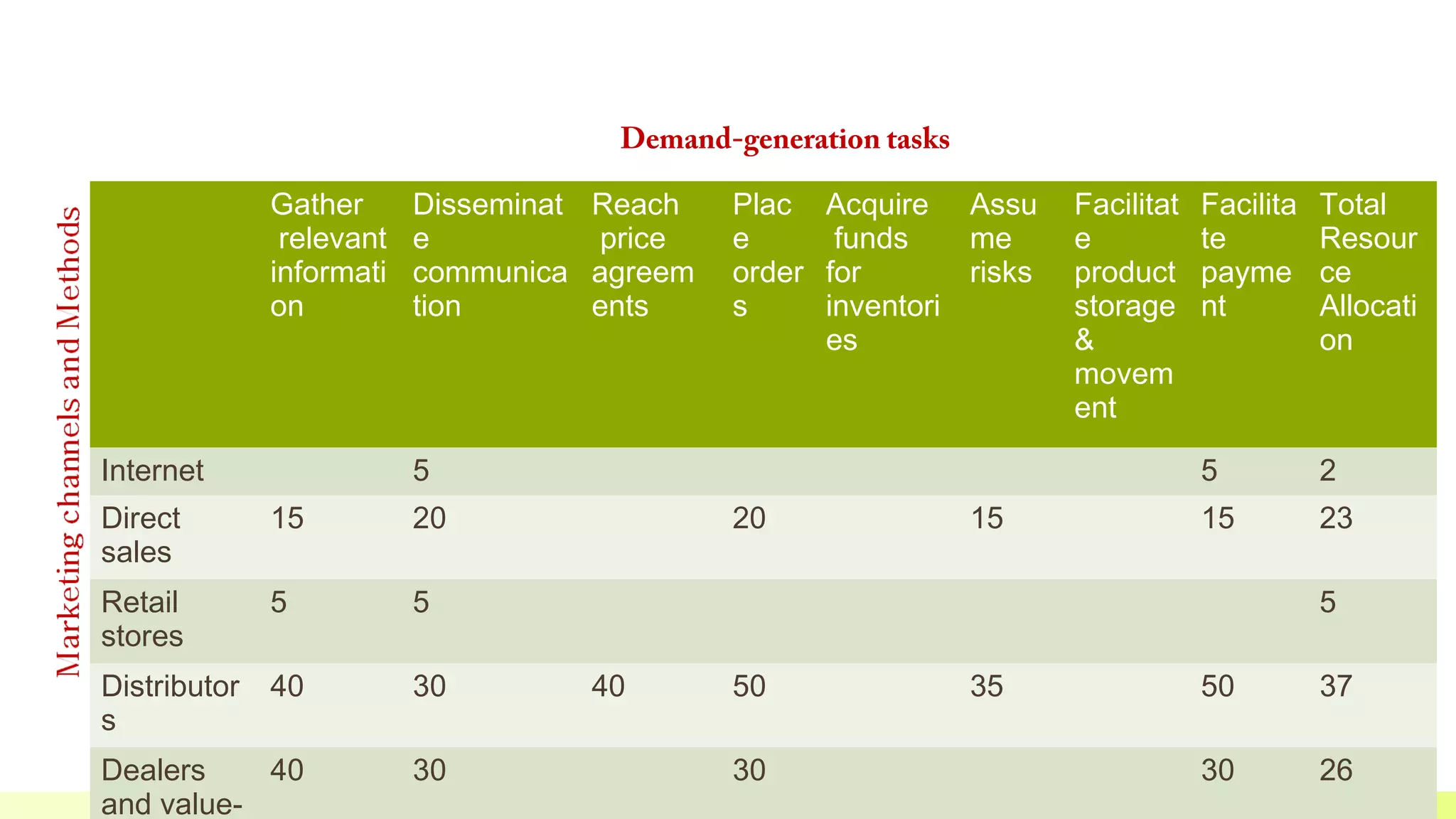
 It’s a grid of demand generation tasks mapped against the
marketing channels and methods.
 In order to properly manage these hybrid systems we need to
realise that tasks and not various marketing channels are the
building blocks of marketing systems.
 Since the farm equipment category is exhaustive, we chose a
walk behind rice planter to do hybrid mapping
 India is one of the world's largest producers of white rice and
brown rice, accounting for 20% of all world rice production
 However mostly traditional methods are still in use for harvesting
rice
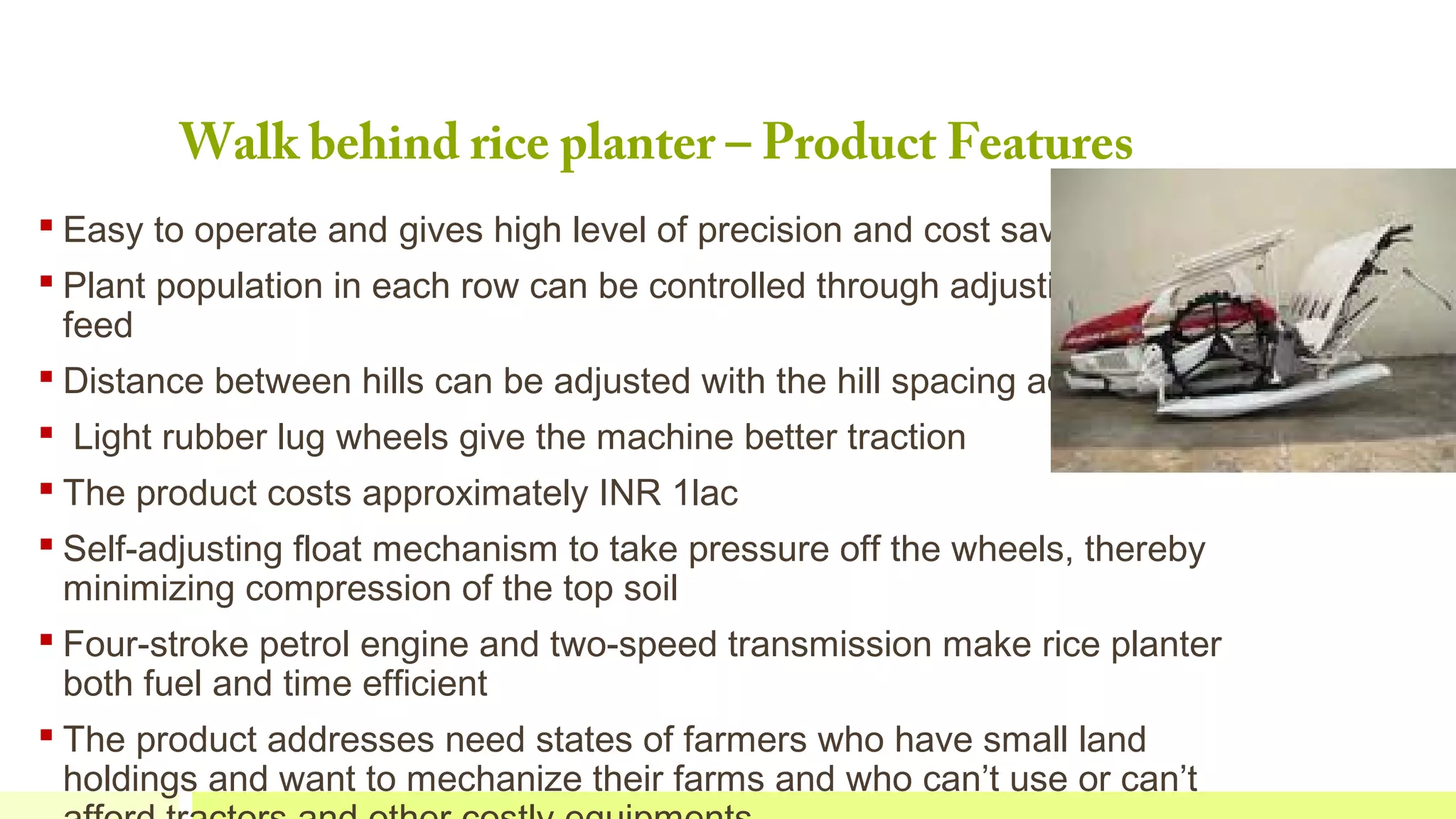
Walk behind rice planter – Product Features
 Easy to operate and gives high level of precision and cost savings
 Plant population in each row can be controlled through adjusting the seed
feed
 Distance between hills can be adjusted with the hill spacing adjustment
  Light rubber lug wheels give the machine better traction
 The product costs approximately INR 1lac
 Self-adjusting float mechanism to take pressure off the wheels, thereby
minimizing compression of the top soil
 Four-stroke petrol engine and two-speed transmission make rice planter
both fuel and time efficient
 The product addresses need states of farmers who have small land
holdings and want to mechanize their farms and who can’t use or can’t
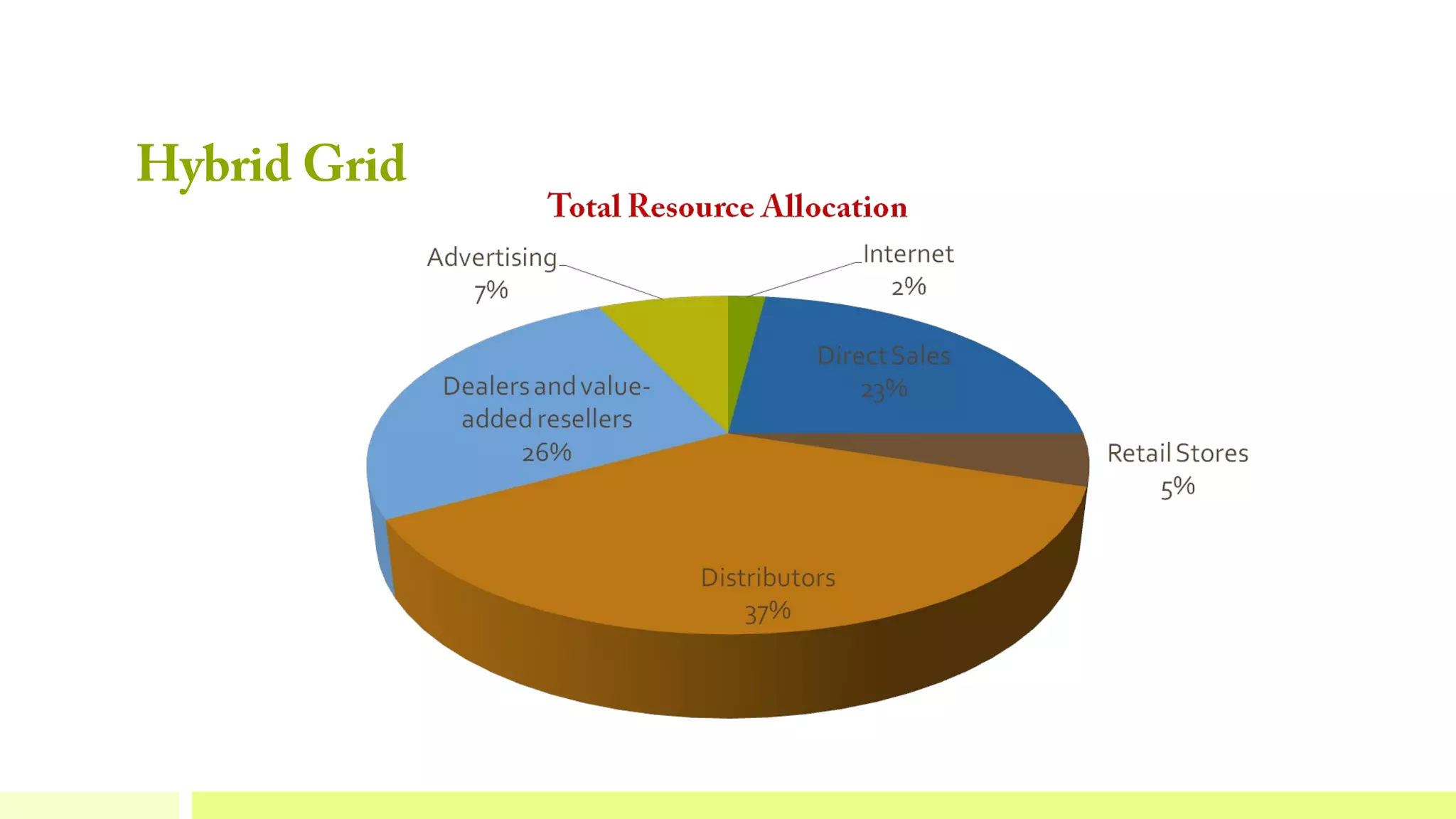
Hybrid Grid
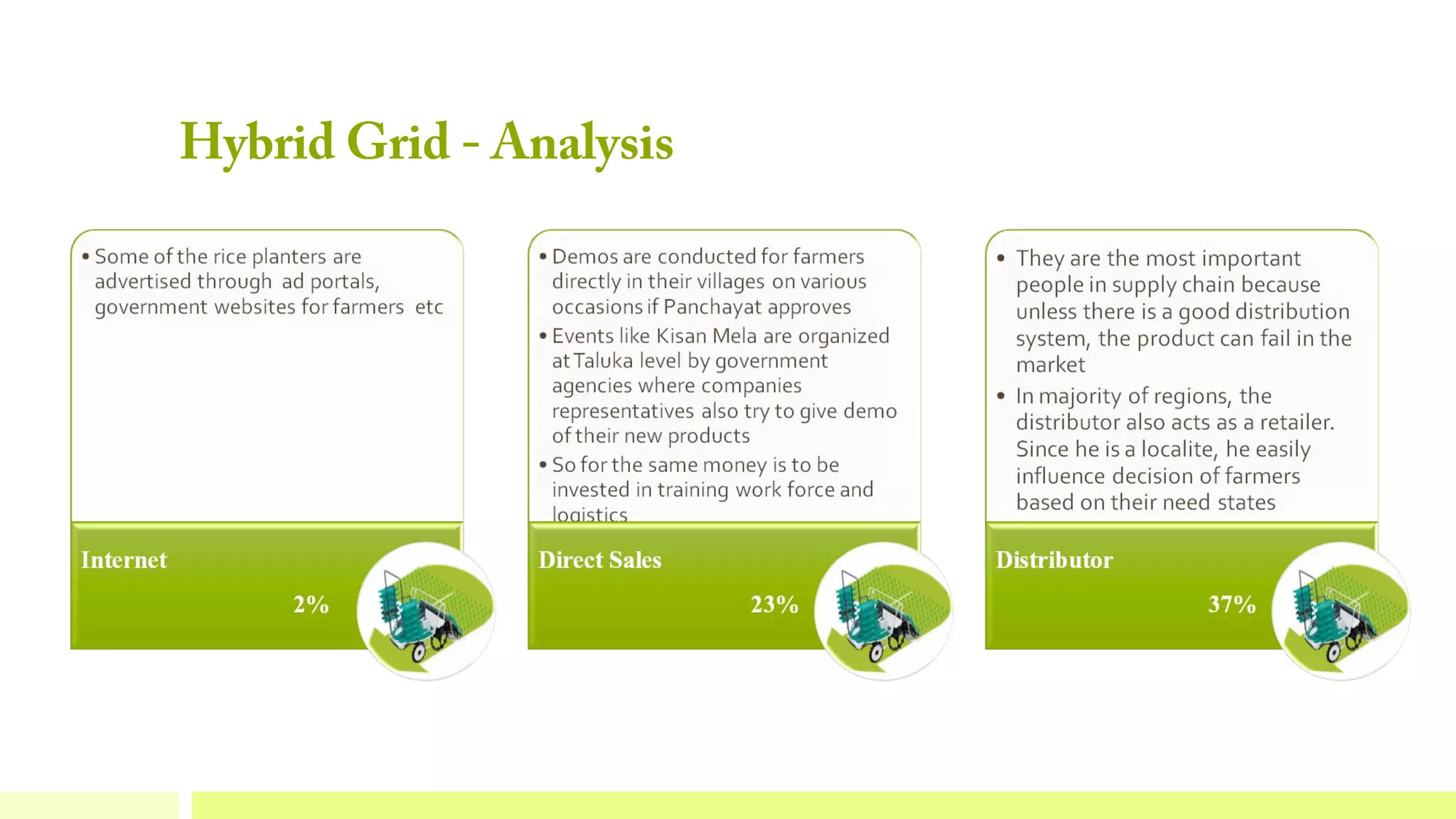
Hybrid Grid - Analysis

11

July 22, 2012

Footer text here
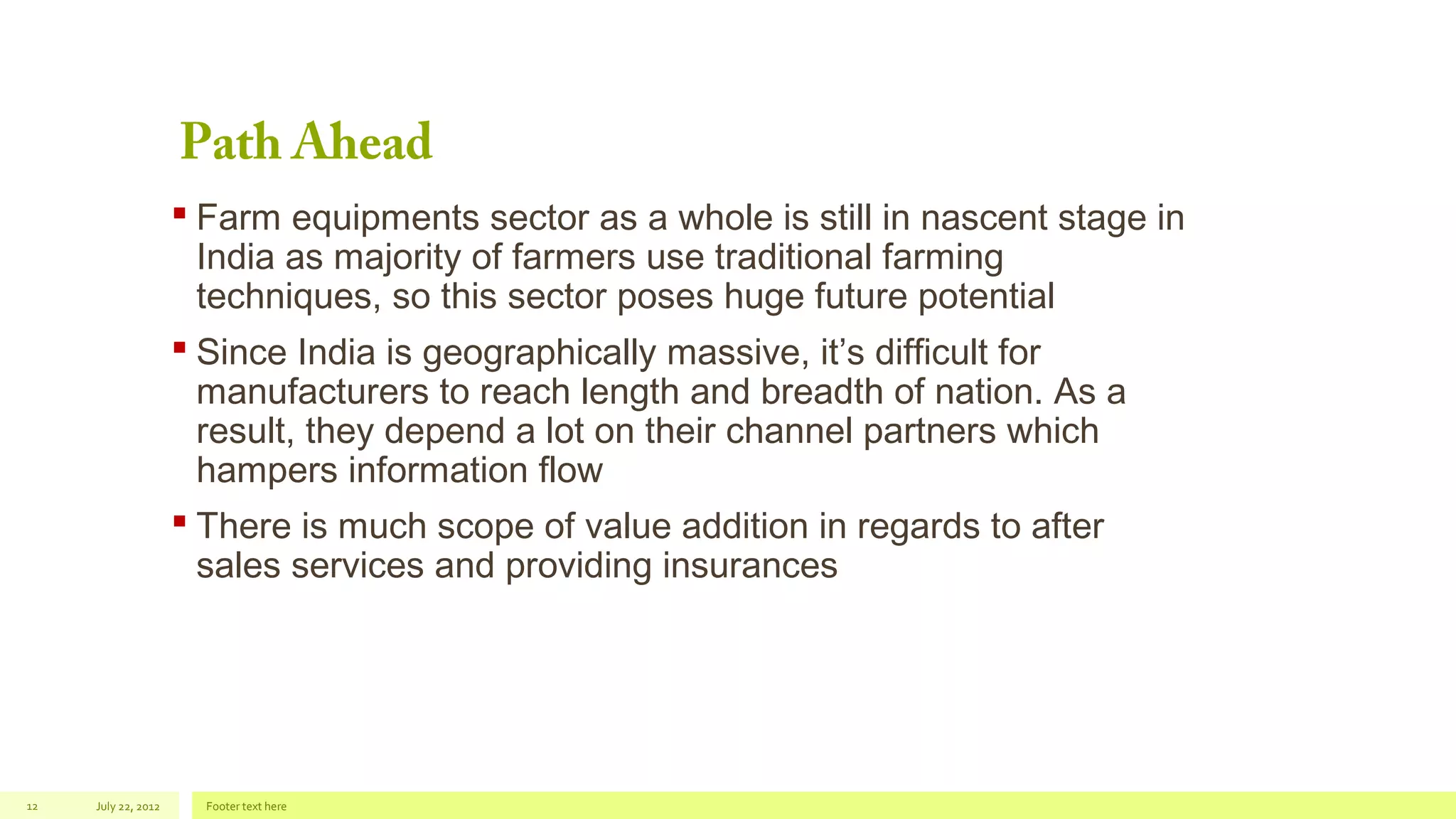
Path Ahead

 Farm equipments sector as a whole is still in nascent stage in
India as majority of farmers use traditional farming
techniques, so this sector poses huge future potential
 Since India is geographically massive, it’s difficult for
manufacturers to reach length and breadth of nation. As a
result, they depend a lot on their channel partners which
hampers information flow
 There is much scope of value addition in regards to after
sales services and providing insurances

12

July 22, 2012

Footer text here
13

July 22, 2012

Footer text here
Demand-generation tasks
Gather
relevant
informati
on

Internet

Disseminat Reach
e
price
communica agreem
tion
ents

Plac Acquire Assu
e
funds
me
order for
risks
s
inventori
es

Direct
sales

15

20

Retail
stores

5
40

30

Dealers
40
and value-

30

15

Total
Resour
ce
Allocati
on

2

15

23

5

Distributor
s

20

Facilita
te
payme
nt

5

5

Facilitat
e
product
storage
&
movem
ent

5
40

50
30

35

50

37

30

26

hybrid matrix

  • 1.
    Industrial Marketing Channel – WalkBehind Rice Planter Group B7
  • 2.
    Our Sector–Farm Equipments Agriculture is the major occupation in Indian economy and contributes to 13.7% in India’s GDP (2012-13)  India has experienced normal monsoons this fiscal year  Besides this there has been increased growth in agricredit in the Union Budget, interest subvention, rural development focus by the government and various other farmer friendly schemes(support prices for crops, commodity price increase etc)  Additionally, growing shortage of farm hands and smaller land holdings are forcing many farmers to mechanize their farms thereby increasing demand  All these have contributed to an increased demand for the farm equipments in the country  Indian farm equipment market also contributes to around 10% to global equipment market priced around $7.2 Billion
  • 3.
    Value Chain The valuechain consists of all important farm related activities and the farm equipments that would be required at each stage of farming:
  • 4.
    Major Contributors toFarm Sector Equipments
  • 5.
    Distribution Channels inFarm Equipment sector  Here two types of channels are commonly employed Manufacturer Manufacturer Manufacturer’s Sales Branch Manufacturer’s Sales Branch Farmers Industrial Distributor Farmers
  • 6.
    Choice of DistributionChannels:  In the past only direct distribution channel was used due to the existence of oligopolistic market structure. However this scenario has changed with increased competition  The sales potential, market potentials and type of equipment influences the manufacturers choice of the type of distribution channel as well as the number of intermediaries used  Now companies no longer rely on a single marketing channel they add many new channels to existing ones in order to cut costs and increase market coverage. This results in creation of a hybrid marketing system  We use the hybrid grid to map the elements of a hybrid marketing system 6
  • 7.
    Hybrid Marketing Grid It’s a grid of demand generation tasks mapped against the marketing channels and methods.  In order to properly manage these hybrid systems we need to realise that tasks and not various marketing channels are the building blocks of marketing systems.  Since the farm equipment category is exhaustive, we chose a walk behind rice planter to do hybrid mapping  India is one of the world's largest producers of white rice and brown rice, accounting for 20% of all world rice production  However mostly traditional methods are still in use for harvesting rice
  • 8.
    Walk behind riceplanter – Product Features  Easy to operate and gives high level of precision and cost savings  Plant population in each row can be controlled through adjusting the seed feed  Distance between hills can be adjusted with the hill spacing adjustment   Light rubber lug wheels give the machine better traction  The product costs approximately INR 1lac  Self-adjusting float mechanism to take pressure off the wheels, thereby minimizing compression of the top soil  Four-stroke petrol engine and two-speed transmission make rice planter both fuel and time efficient  The product addresses need states of farmers who have small land holdings and want to mechanize their farms and who can’t use or can’t
  • 9.
  • 10.
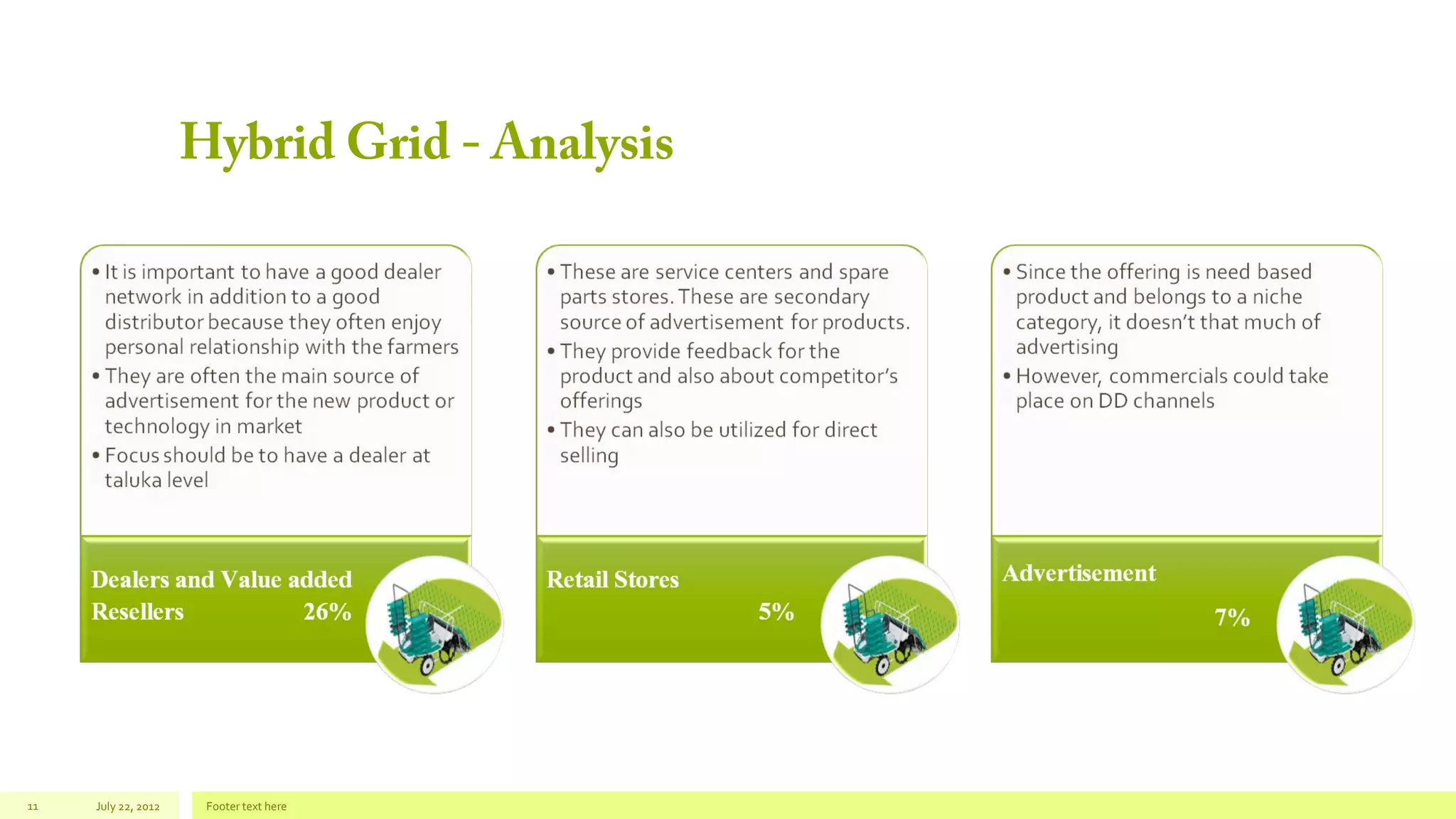
    Hybrid Grid -Analysis
  • 11.
    Hybrid Grid -Analysis 11 July 22, 2012 Footer text here
  • 12.
    Path Ahead  Farmequipments sector as a whole is still in nascent stage in India as majority of farmers use traditional farming techniques, so this sector poses huge future potential  Since India is geographically massive, it’s difficult for manufacturers to reach length and breadth of nation. As a result, they depend a lot on their channel partners which hampers information flow  There is much scope of value addition in regards to after sales services and providing insurances 12 July 22, 2012 Footer text here
  • 13.
  • 14.
    Demand-generation tasks Gather relevant informati on Internet Disseminat Reach e price communicaagreem tion ents Plac Acquire Assu e funds me order for risks s inventori es Direct sales 15 20 Retail stores 5 40 30 Dealers 40 and value- 30 15 Total Resour ce Allocati on 2 15 23 5 Distributor s 20 Facilita te payme nt 5 5 Facilitat e product storage & movem ent 5 40 50 30 35 50 37 30 26

Editor's Notes

  • #3 The Department has undertaken various schemes for development of agriculture and horticulture in this State. Motivating farmers for commercial cultivation in their land by giving them the technical and financial support to undertake organized cultivation of crops. Gradually switching over from the traditional style of cultivation to mechanized and scientific cultivation system It also arranges the supply of high yielding varieties of seeds, seedlings, planting materials and plant protection chemicals to farmers. The department also formulates policies and programs relating to provision of credit to farmers. Agricultural Research, Education and Extension are three important functions of the department.