Prepared by:
DFUNZONE
www.dfunzone.net
Points to Discuss
What is LTE ?
LTE key features
Evolution of LTE-Advanced
Comparison Technologies
LTE-A Benefits
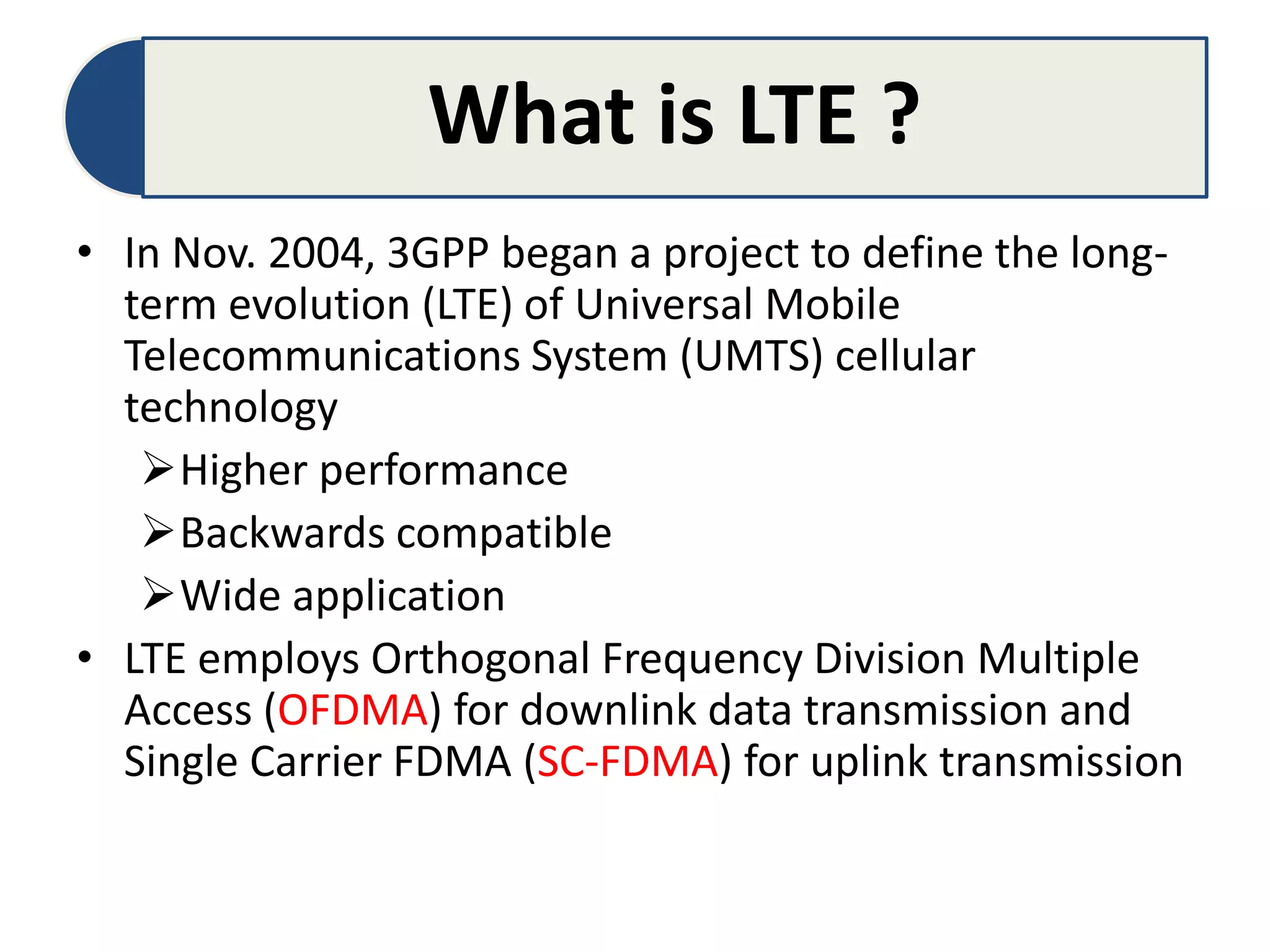
What is LTE ?
• In Nov. 2004, 3GPP began a project to define the long-
term evolution (LTE) of Universal Mobile
Telecommunications System (UMTS) cellular
technology
Higher performance
Backwards compatible
Wide application
• LTE employs Orthogonal Frequency Division Multiple
Access (OFDMA) for downlink data transmission and
Single Carrier FDMA (SC-FDMA) for uplink transmission
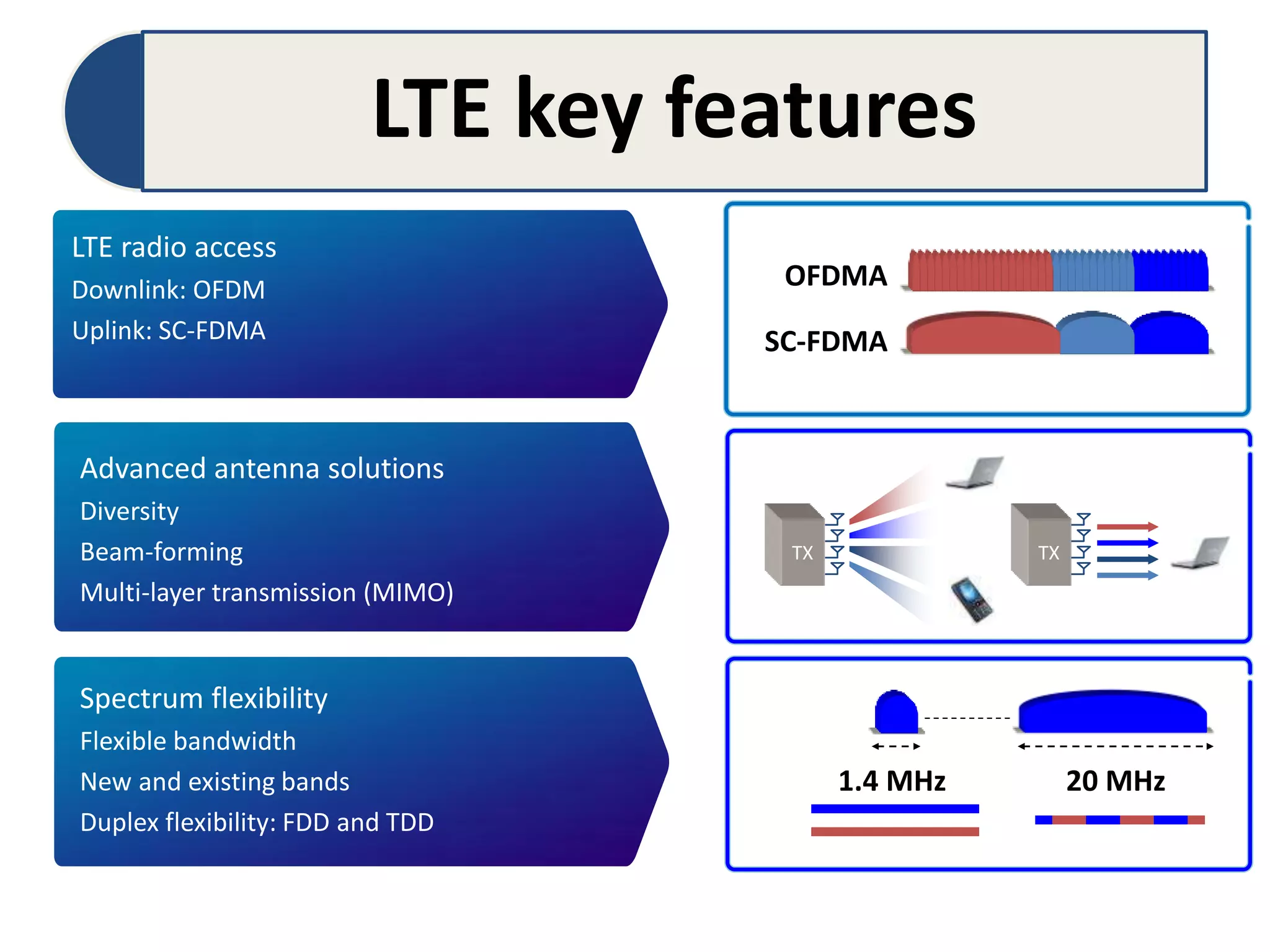
LTE key features
TX TX
Advanced antenna solutions
Diversity
Beam-forming
Multi-layer transmission (MIMO)
20 MHz1.4 MHz
Spectrum flexibility
Flexible bandwidth
New and existing bands
Duplex flexibility: FDD and TDD
SC-FDMA
OFDMA
LTE radio access
Downlink: OFDM
Uplink: SC-FDMA
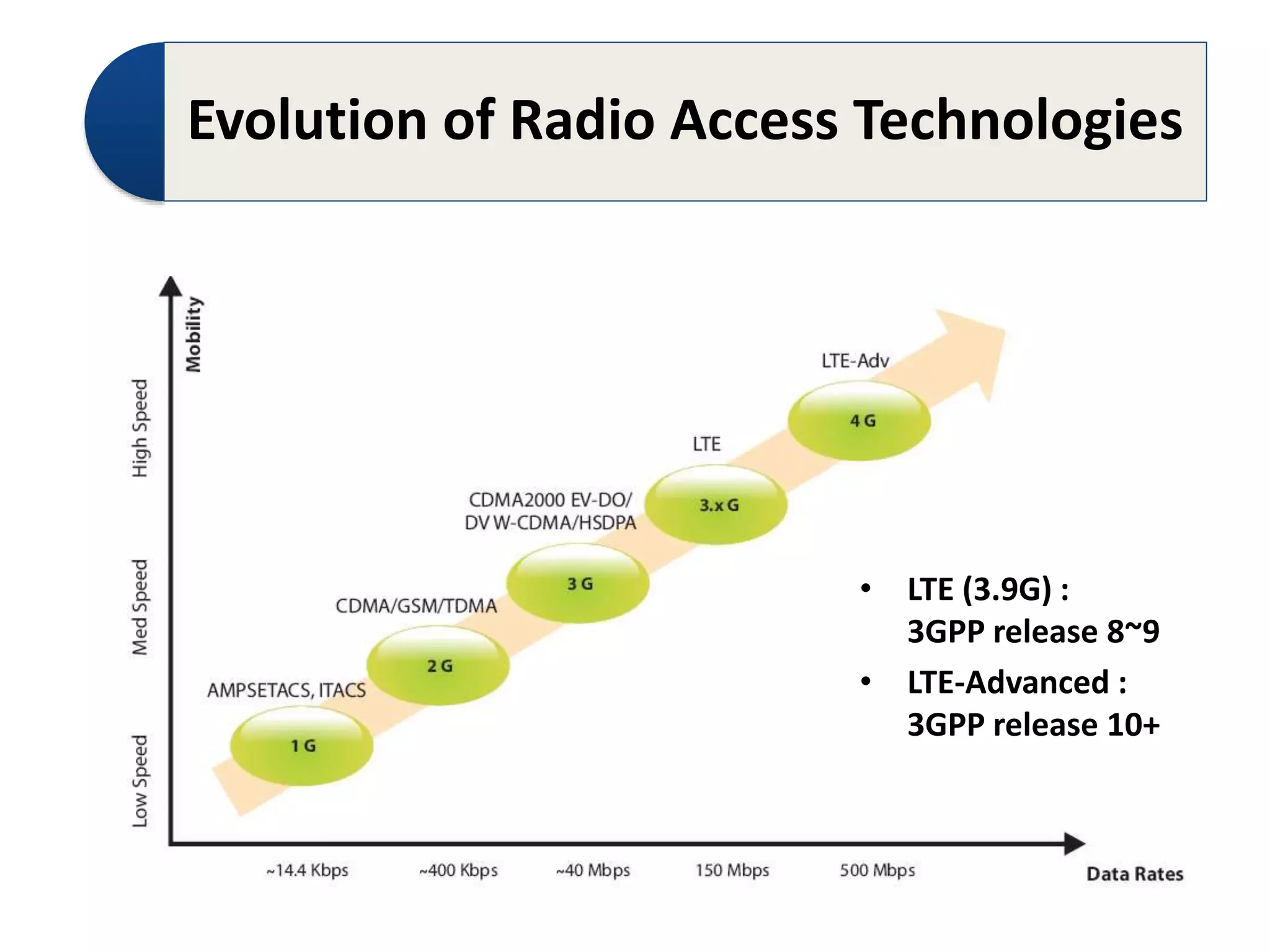
Evolution of Radio Access Technologies
• LTE (3.9G) :
3GPP release 8~9
• LTE-Advanced :
3GPP release 10+
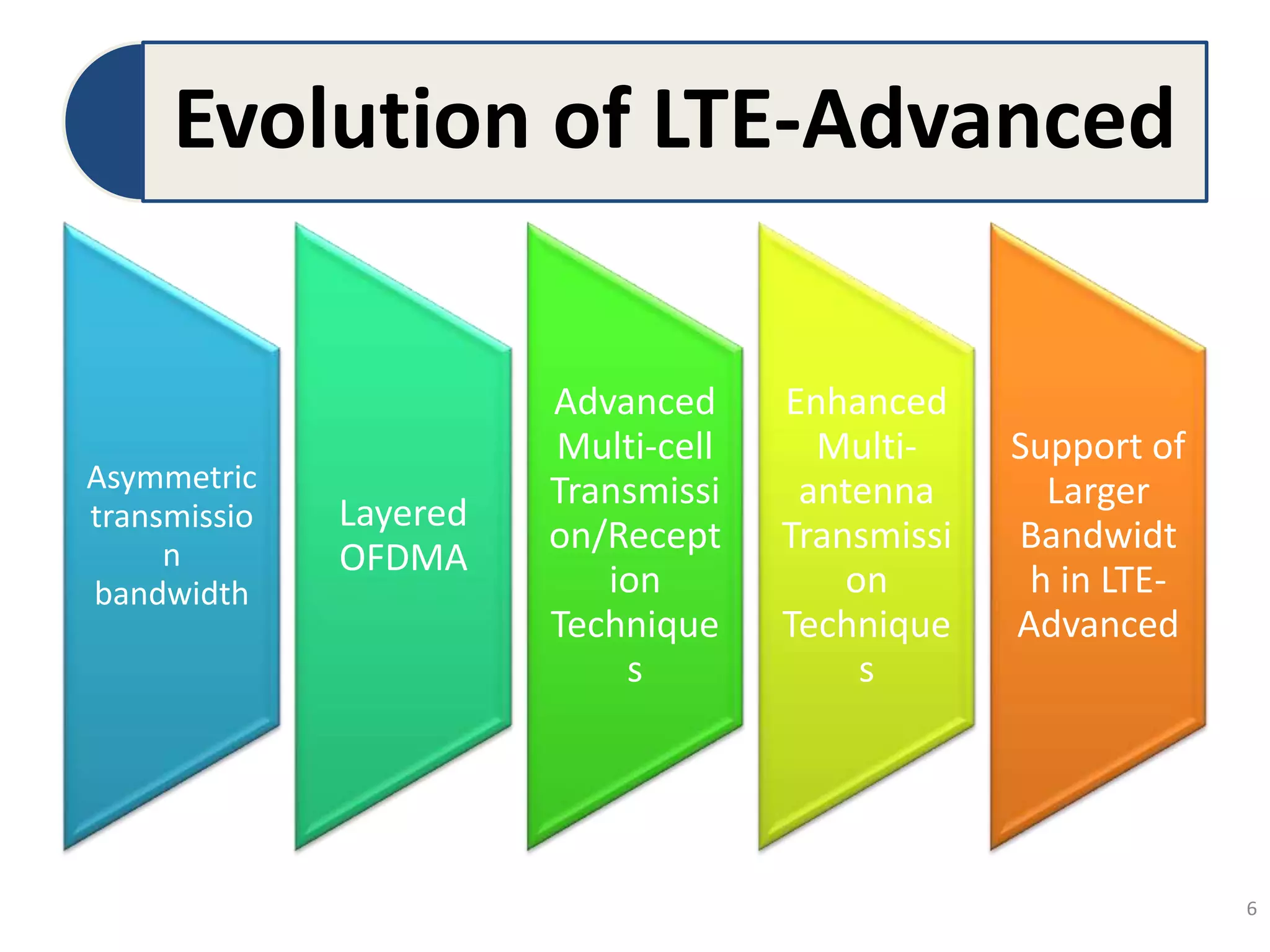
Evolution of LTE-Advanced
Asymmetric
transmissio
n
bandwidth
Layered
OFDMA
Advanced
Multi-cell
Transmissi
on/Recept
ion
Technique
s
Enhanced
Multi-
antenna
Transmissi
on
Technique
s
Support of
Larger
Bandwidt
h in LTE-
Advanced
6
Asymmetric transmission bandwidth
• Symmetric transmission
– voice transmission : UE to UE
• Asymmetric transmission
– streaming video : the server to the UE (the downlink)
7
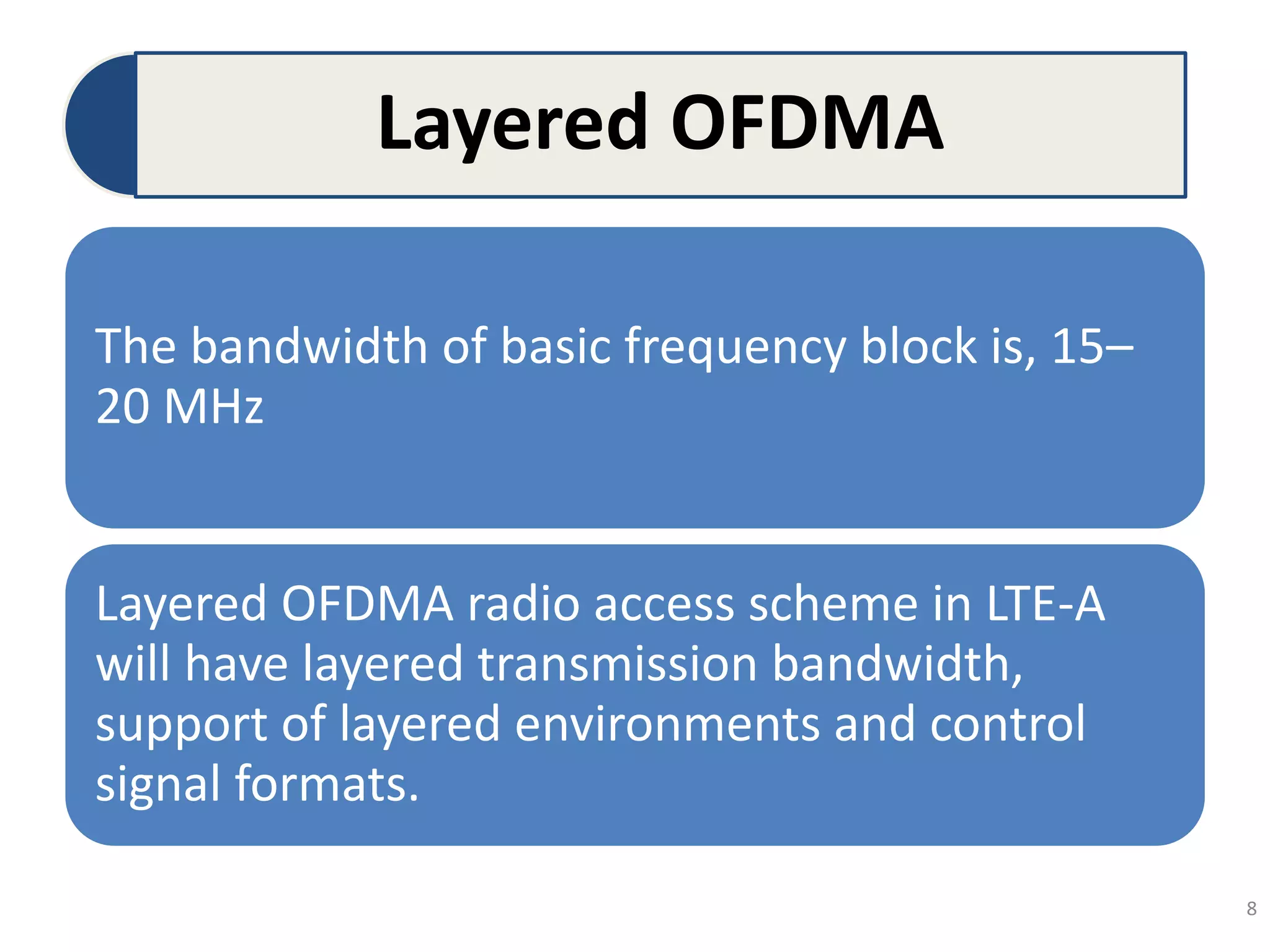
Layered OFDMA
The bandwidth of basic frequency block is, 15–
20 MHz
Layered OFDMA radio access scheme in LTE-A
will have layered transmission bandwidth,
support of layered environments and control
signal formats.
8
Advanced Multi-cell
Transmission/Reception Techniques
In LTE-A, the advanced multi-cell
transmission/reception processes helps
in increasing frequency efficiency and
cell edge user throughput
• Estimation unit
• Calculation unit
• Determination unit
• Feedback unit
9
Enhanced Multi-antenna Transmission Techniques
• In LTE-A, the MIMO scheme has to be further improved in
the area of spectrum efficiency, average cell through put
and cell edge performances
• In LTE-A the antenna configurations of 8x8 in DL and 4x4 in
UL are planned
10
Enhanced Techniques to Extend Coverage
Area
• Remote Radio Requirements (RREs) using optical
fiber should be used in LTE-A as effective
technique to extend cell coverage
11
Support of Larger Bandwidth in LTE-Advanced
• Peak data rates up to 1Gbps are expected from
bandwidths of 100MHz. OFDM adds additional sub-
carrier to increase bandwidth
12
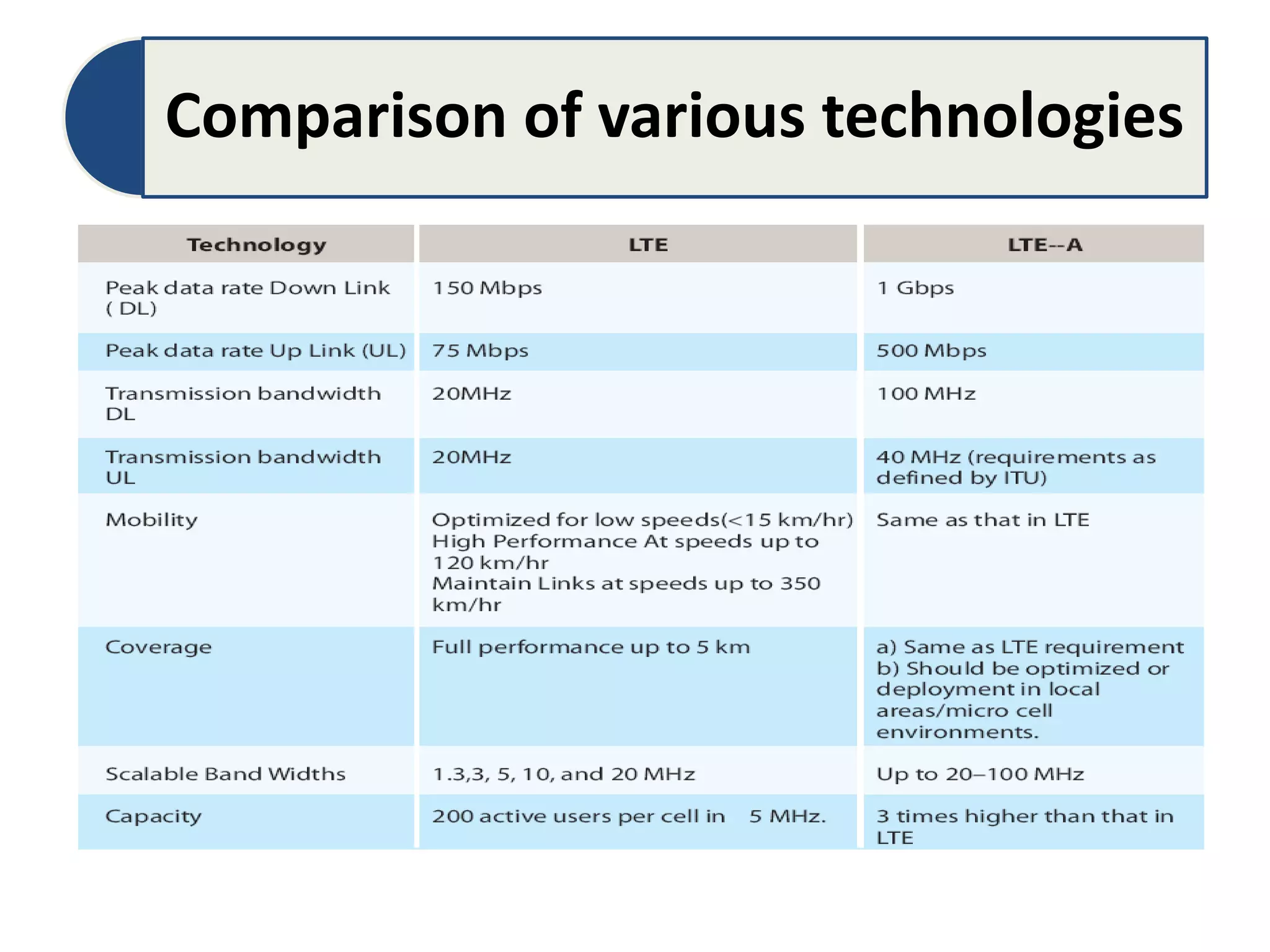
Comparison of various technologies
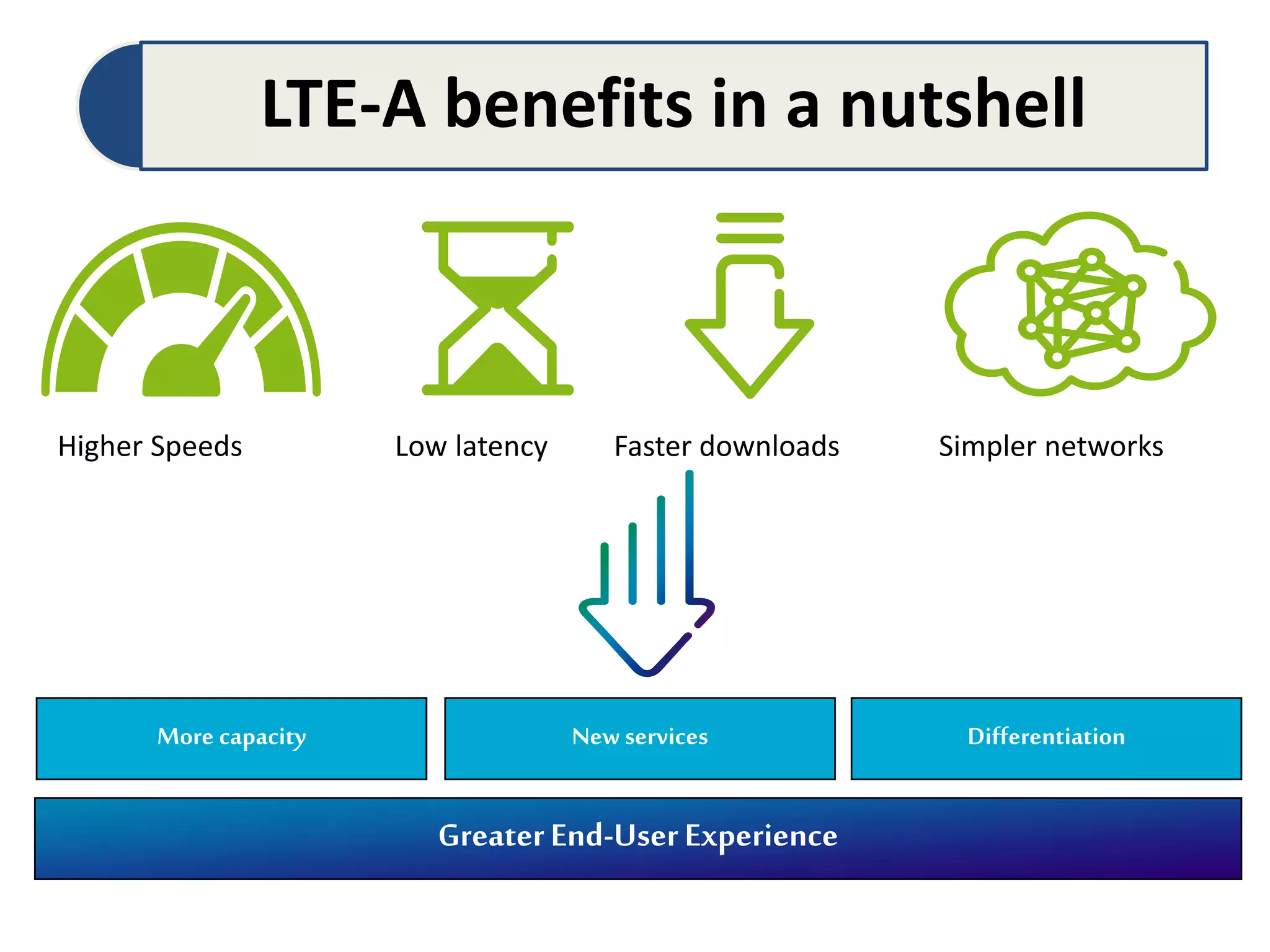
LTE-A benefits in a nutshell
Higher Speeds Low latency Faster downloads Simpler networks
GreaterEnd-UserExperience
More capacity New services Differentiation
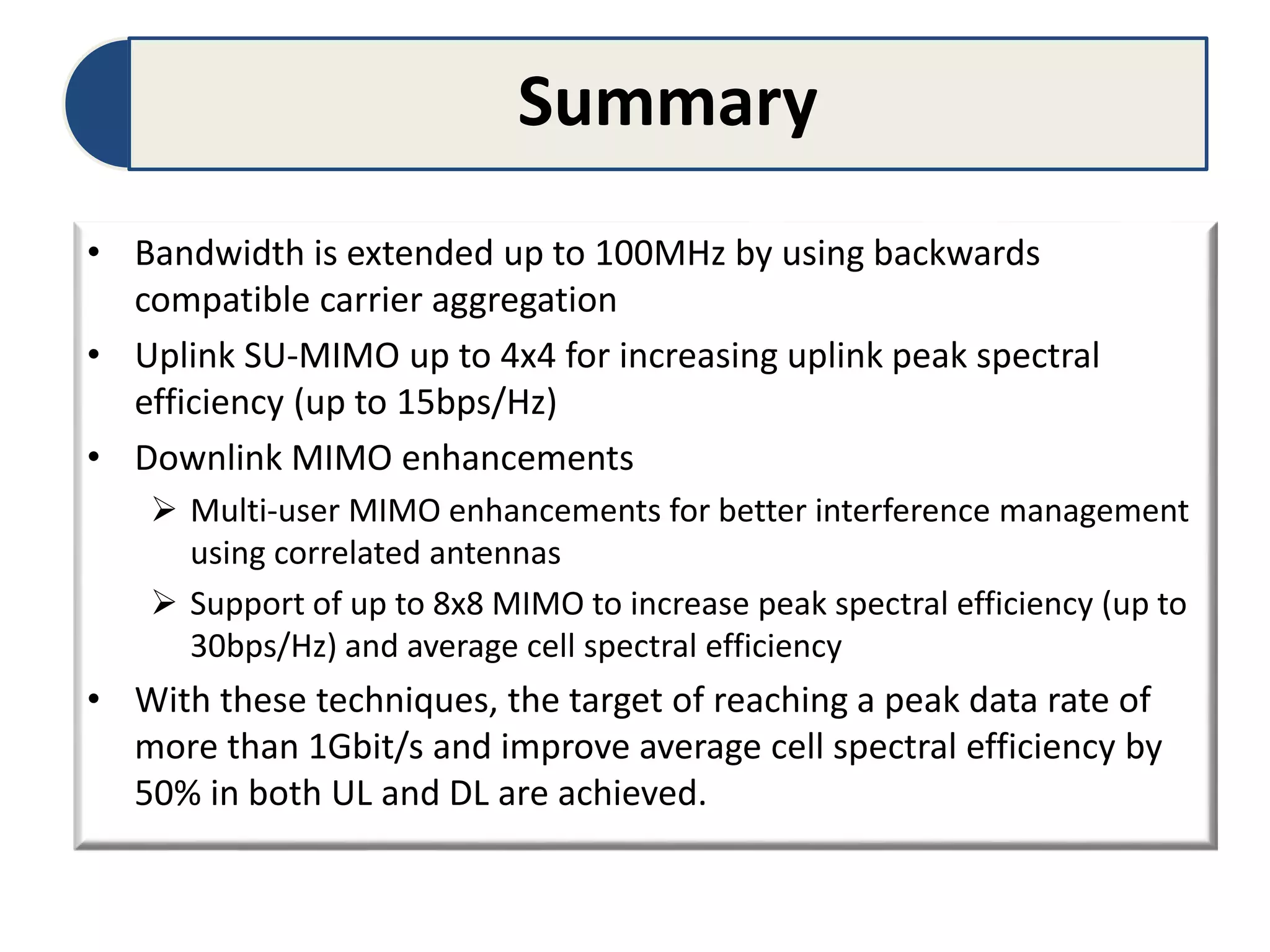
Summary
• Bandwidth is extended up to 100MHz by using backwards
compatible carrier aggregation
• Uplink SU-MIMO up to 4x4 for increasing uplink peak spectral
efficiency (up to 15bps/Hz)
• Downlink MIMO enhancements
 Multi-user MIMO enhancements for better interference management
using correlated antennas
 Support of up to 8x8 MIMO to increase peak spectral efficiency (up to
30bps/Hz) and average cell spectral efficiency
• With these techniques, the target of reaching a peak data rate of
more than 1Gbit/s and improve average cell spectral efficiency by
50% in both UL and DL are achieved.
LTE Advanced

LTE Advanced

  • 1.
  • 2.
    Points to Discuss Whatis LTE ? LTE key features Evolution of LTE-Advanced Comparison Technologies LTE-A Benefits
  • 3.
    What is LTE? • In Nov. 2004, 3GPP began a project to define the long- term evolution (LTE) of Universal Mobile Telecommunications System (UMTS) cellular technology Higher performance Backwards compatible Wide application • LTE employs Orthogonal Frequency Division Multiple Access (OFDMA) for downlink data transmission and Single Carrier FDMA (SC-FDMA) for uplink transmission
  • 4.
    LTE key features TXTX Advanced antenna solutions Diversity Beam-forming Multi-layer transmission (MIMO) 20 MHz1.4 MHz Spectrum flexibility Flexible bandwidth New and existing bands Duplex flexibility: FDD and TDD SC-FDMA OFDMA LTE radio access Downlink: OFDM Uplink: SC-FDMA
  • 5.
    Evolution of RadioAccess Technologies • LTE (3.9G) : 3GPP release 8~9 • LTE-Advanced : 3GPP release 10+
  • 6.
  • 7.
    Asymmetric transmission bandwidth •Symmetric transmission – voice transmission : UE to UE • Asymmetric transmission – streaming video : the server to the UE (the downlink) 7
  • 8.
    Layered OFDMA The bandwidthof basic frequency block is, 15– 20 MHz Layered OFDMA radio access scheme in LTE-A will have layered transmission bandwidth, support of layered environments and control signal formats. 8
  • 9.
    Advanced Multi-cell Transmission/Reception Techniques InLTE-A, the advanced multi-cell transmission/reception processes helps in increasing frequency efficiency and cell edge user throughput • Estimation unit • Calculation unit • Determination unit • Feedback unit 9
  • 10.
    Enhanced Multi-antenna TransmissionTechniques • In LTE-A, the MIMO scheme has to be further improved in the area of spectrum efficiency, average cell through put and cell edge performances • In LTE-A the antenna configurations of 8x8 in DL and 4x4 in UL are planned 10
  • 11.
    Enhanced Techniques toExtend Coverage Area • Remote Radio Requirements (RREs) using optical fiber should be used in LTE-A as effective technique to extend cell coverage 11
  • 12.
    Support of LargerBandwidth in LTE-Advanced • Peak data rates up to 1Gbps are expected from bandwidths of 100MHz. OFDM adds additional sub- carrier to increase bandwidth 12
  • 13.
  • 14.
    LTE-A benefits ina nutshell Higher Speeds Low latency Faster downloads Simpler networks GreaterEnd-UserExperience More capacity New services Differentiation
  • 15.
    Summary • Bandwidth isextended up to 100MHz by using backwards compatible carrier aggregation • Uplink SU-MIMO up to 4x4 for increasing uplink peak spectral efficiency (up to 15bps/Hz) • Downlink MIMO enhancements  Multi-user MIMO enhancements for better interference management using correlated antennas  Support of up to 8x8 MIMO to increase peak spectral efficiency (up to 30bps/Hz) and average cell spectral efficiency • With these techniques, the target of reaching a peak data rate of more than 1Gbit/s and improve average cell spectral efficiency by 50% in both UL and DL are achieved.