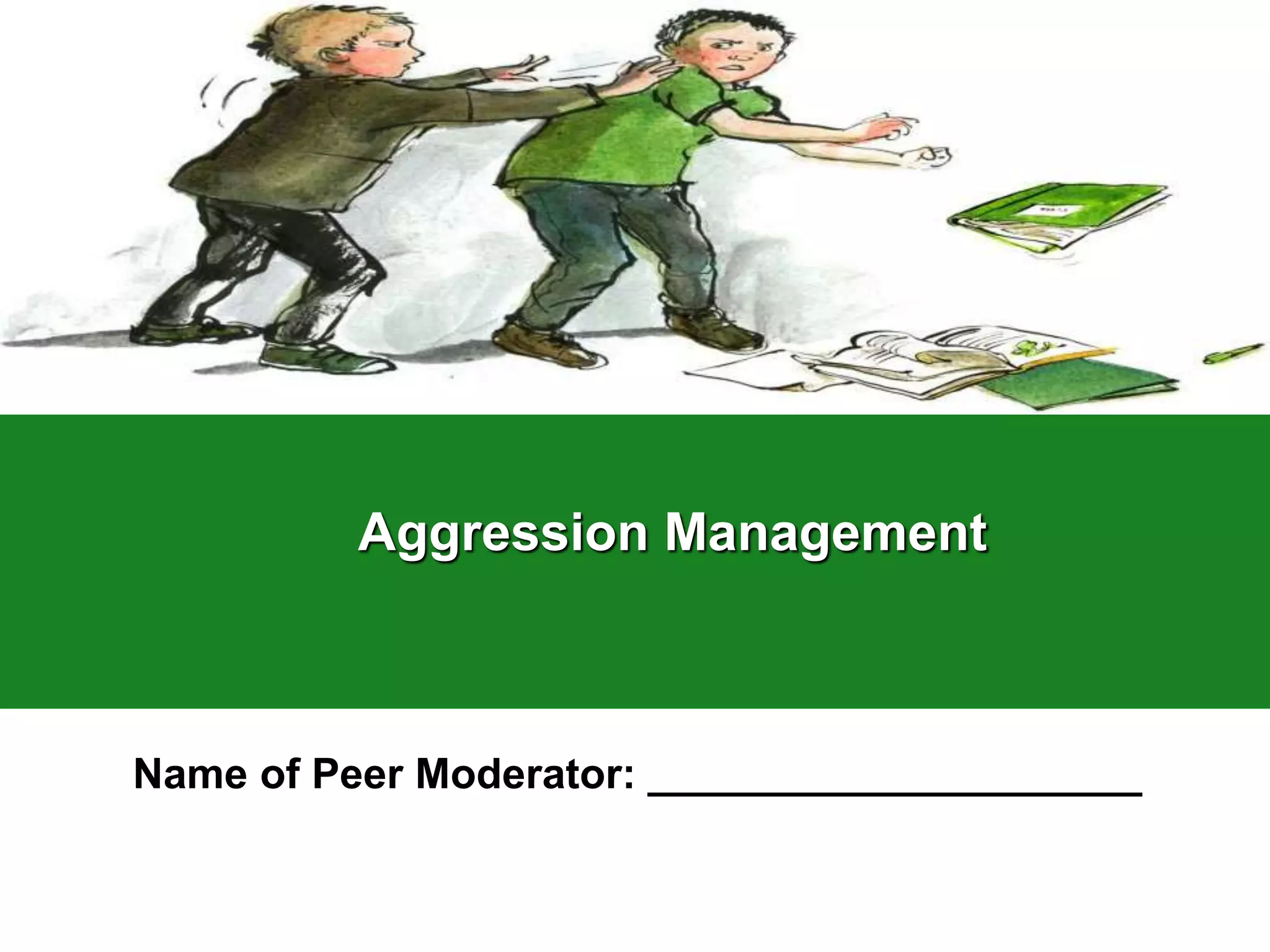
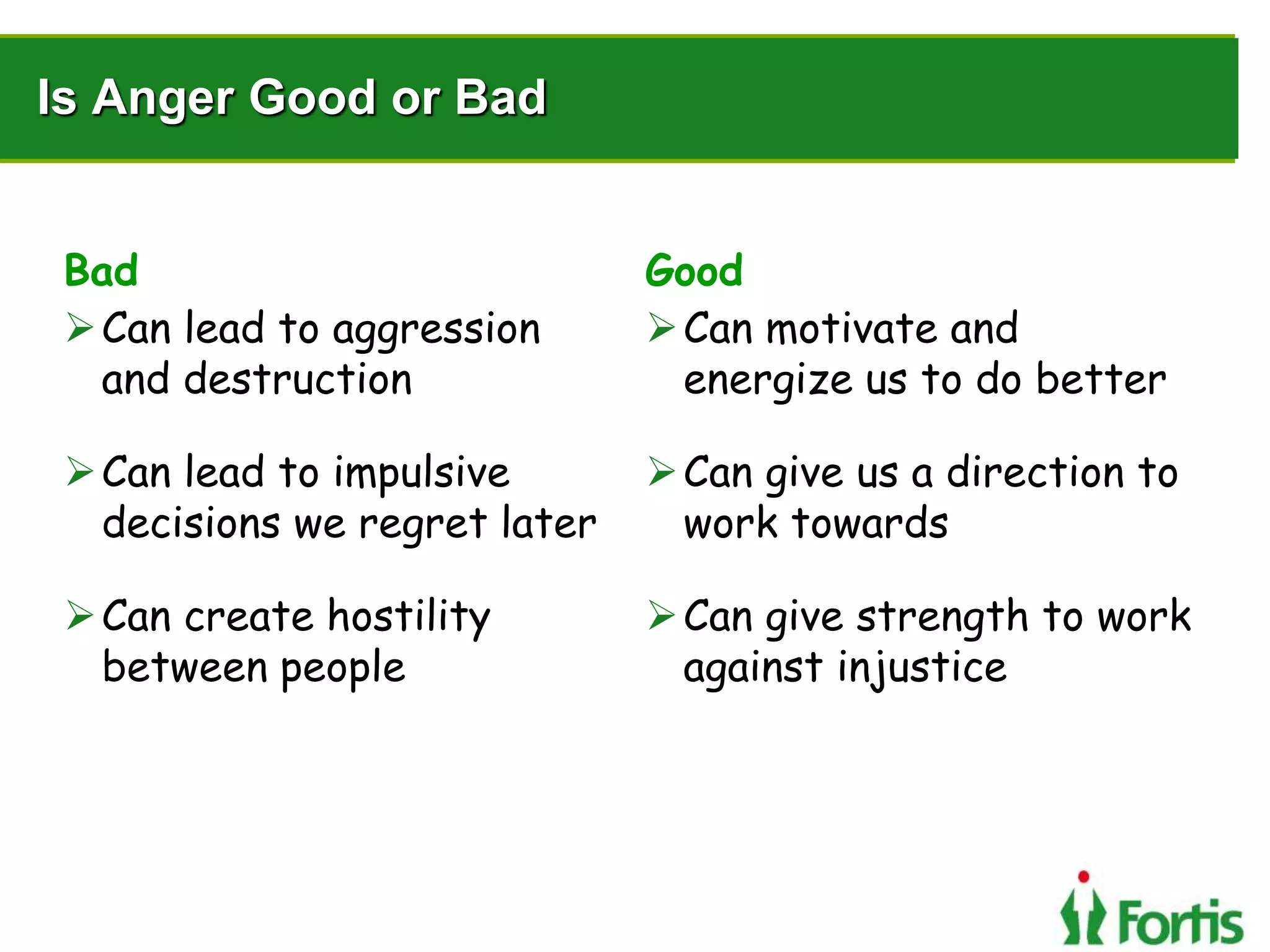
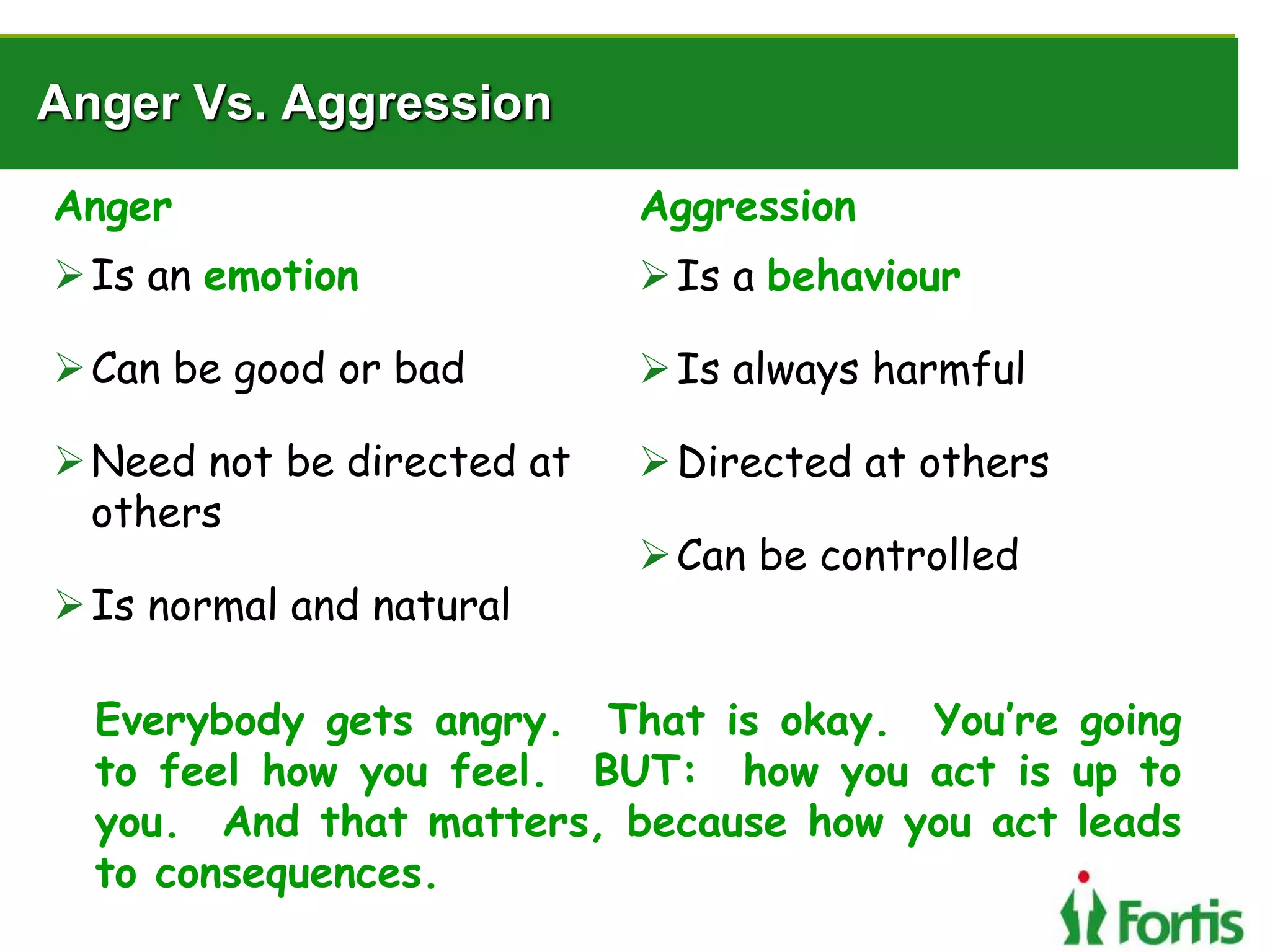
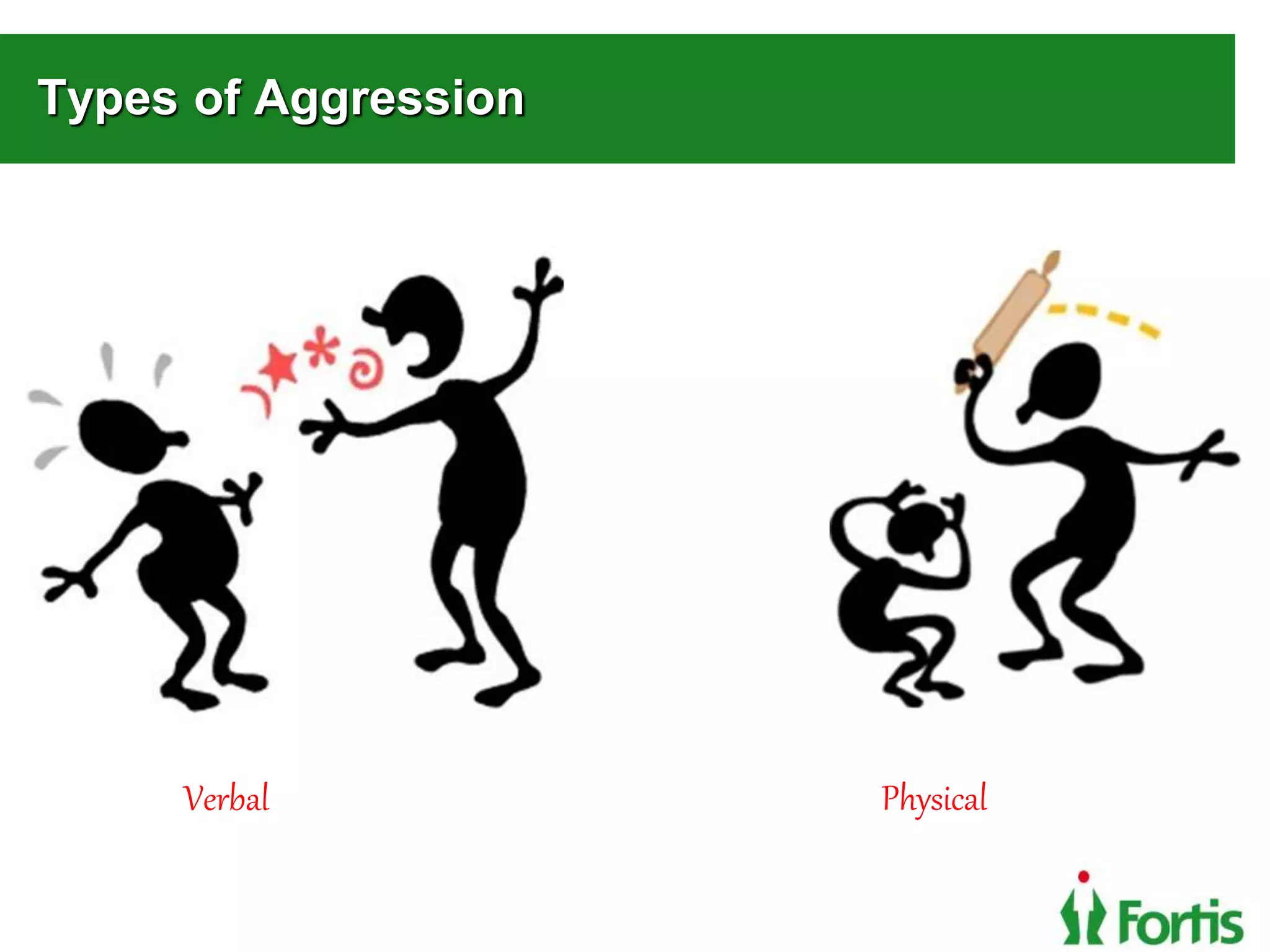
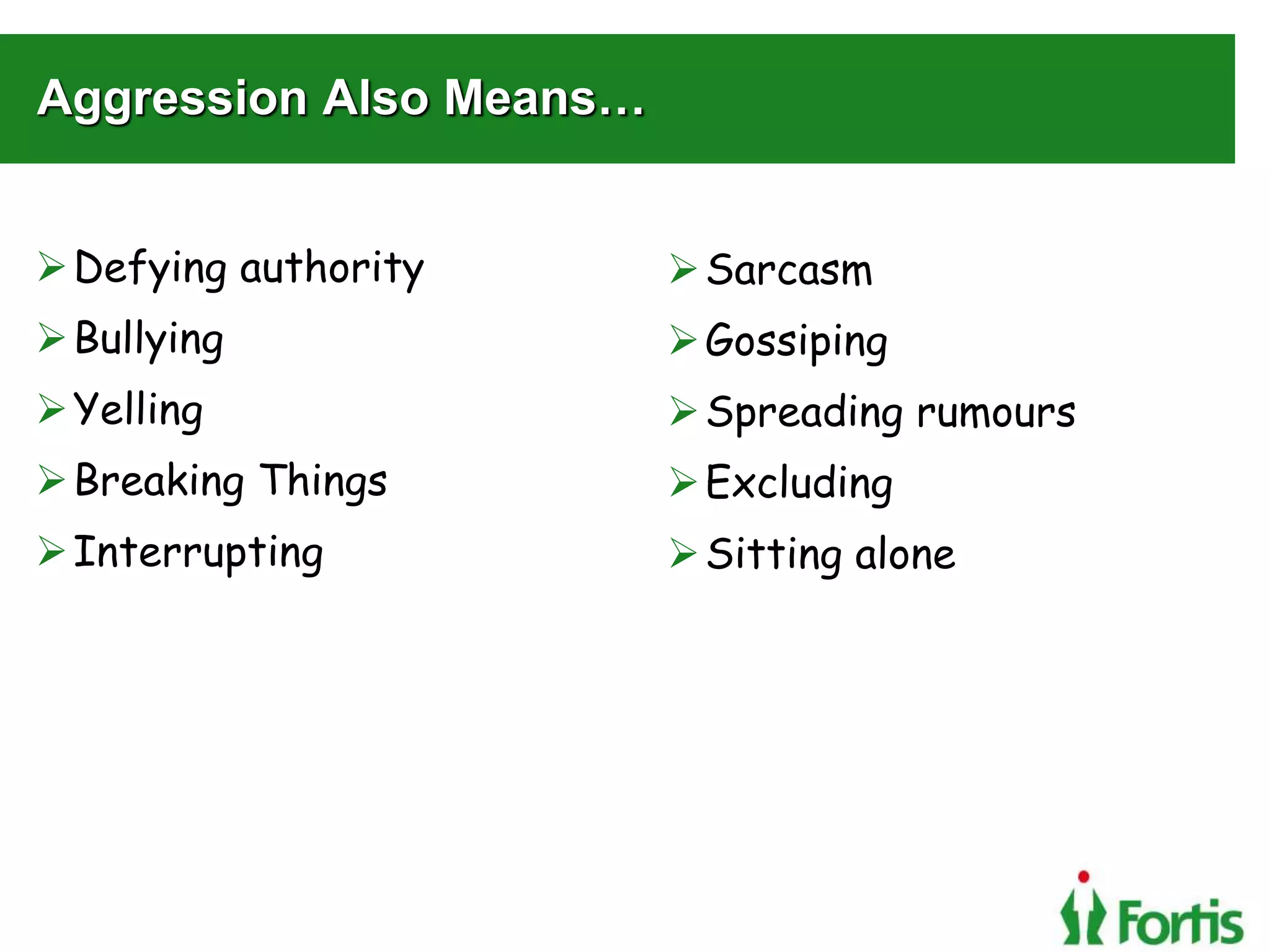
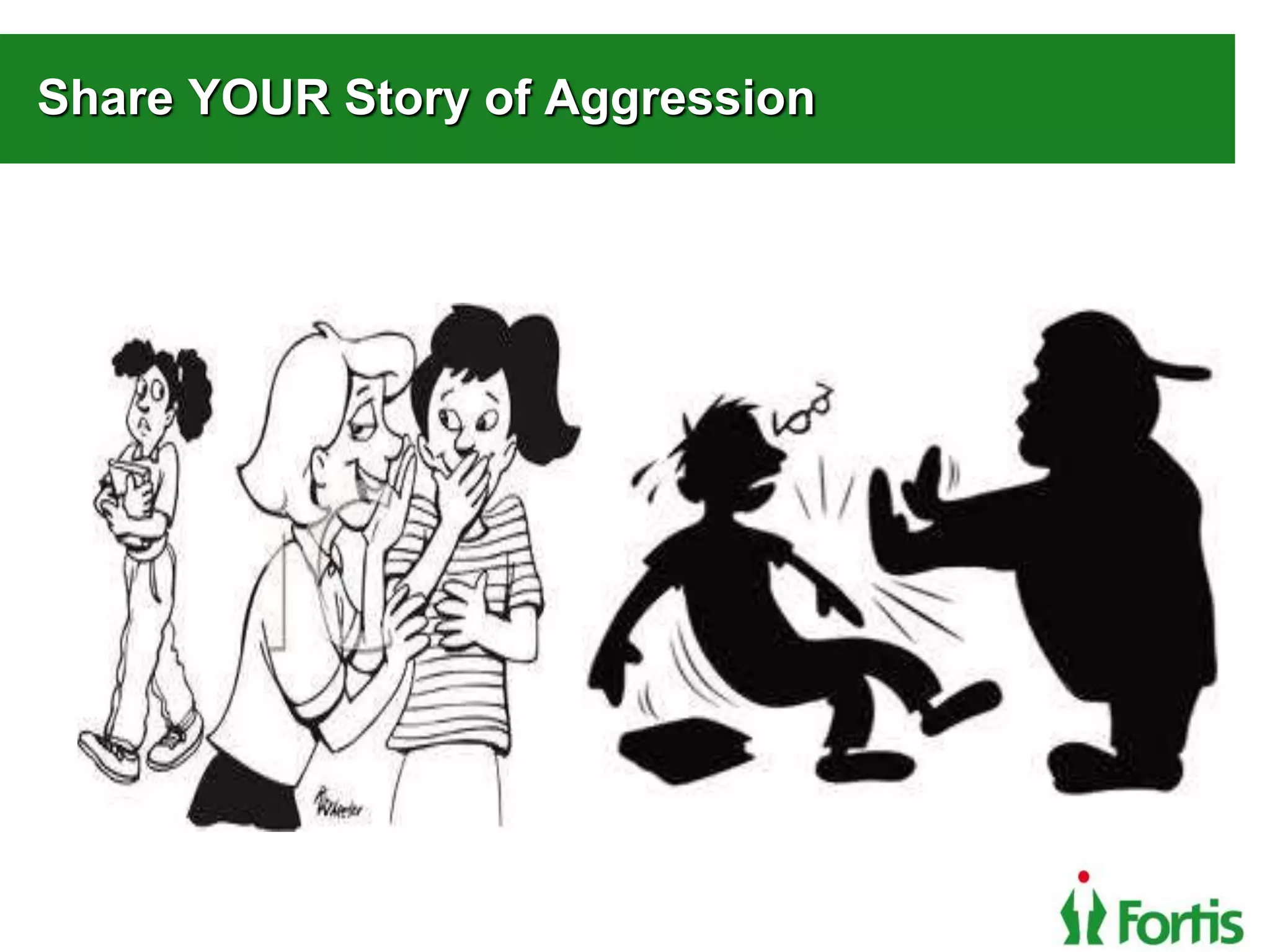
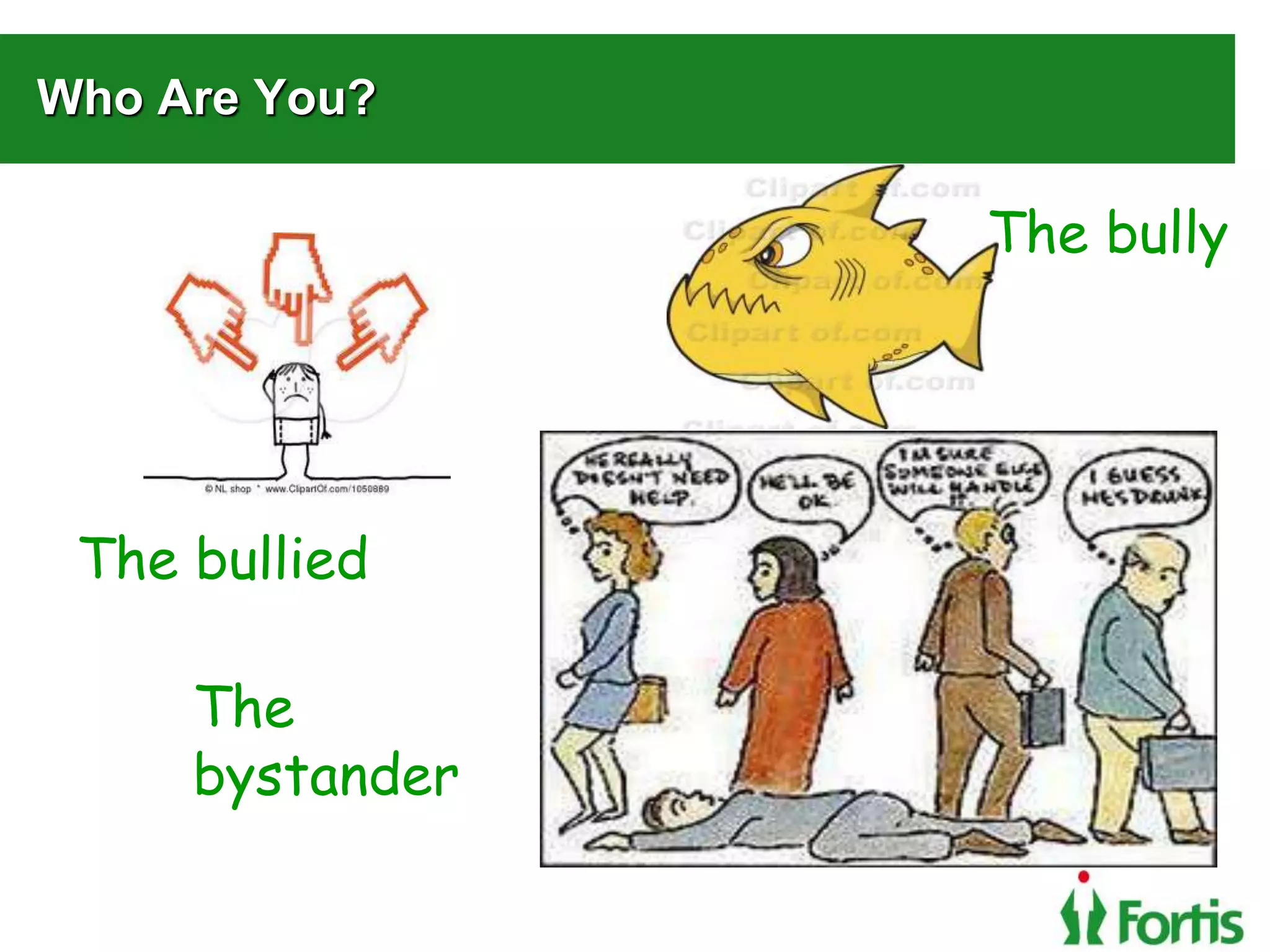
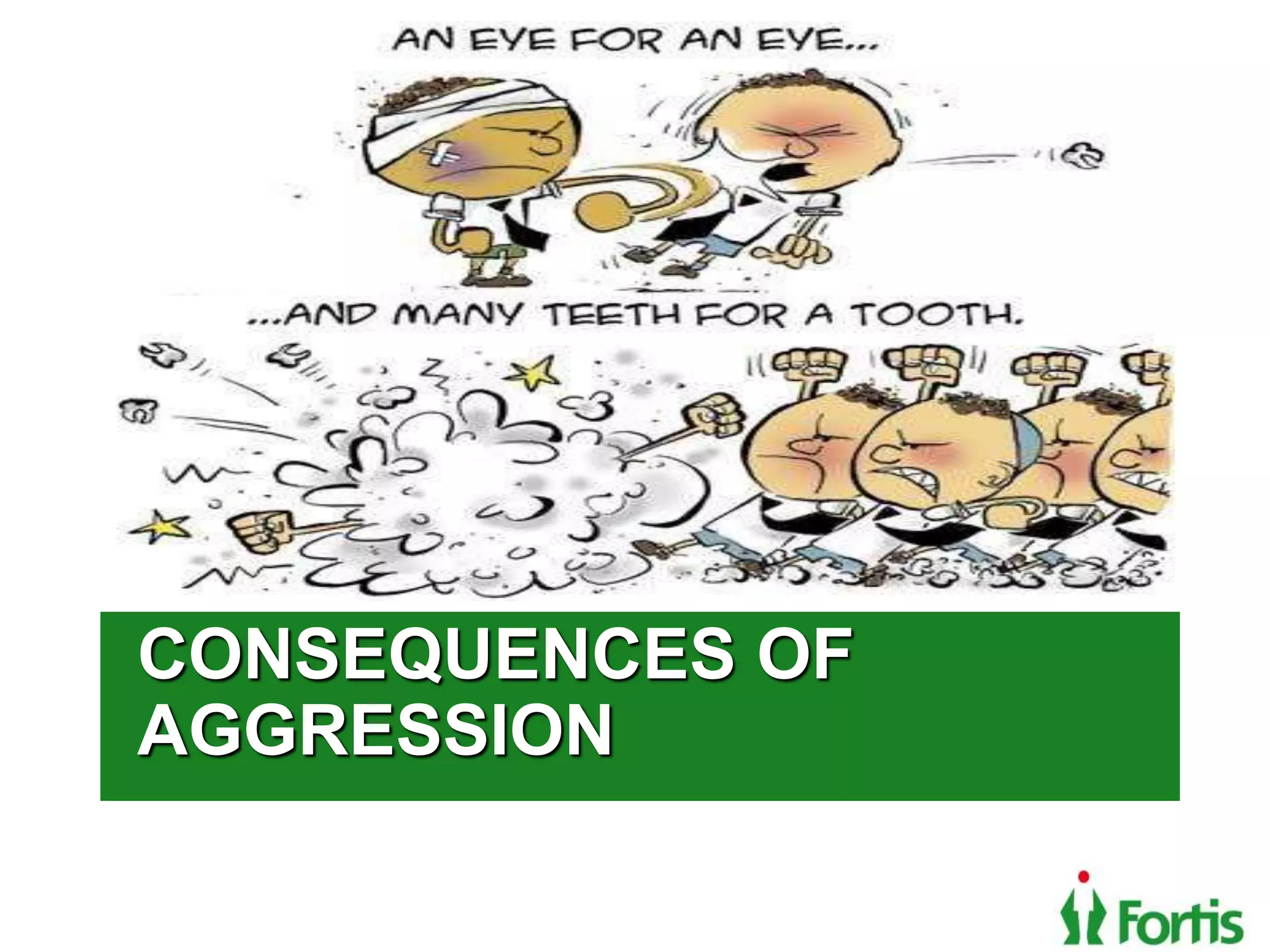
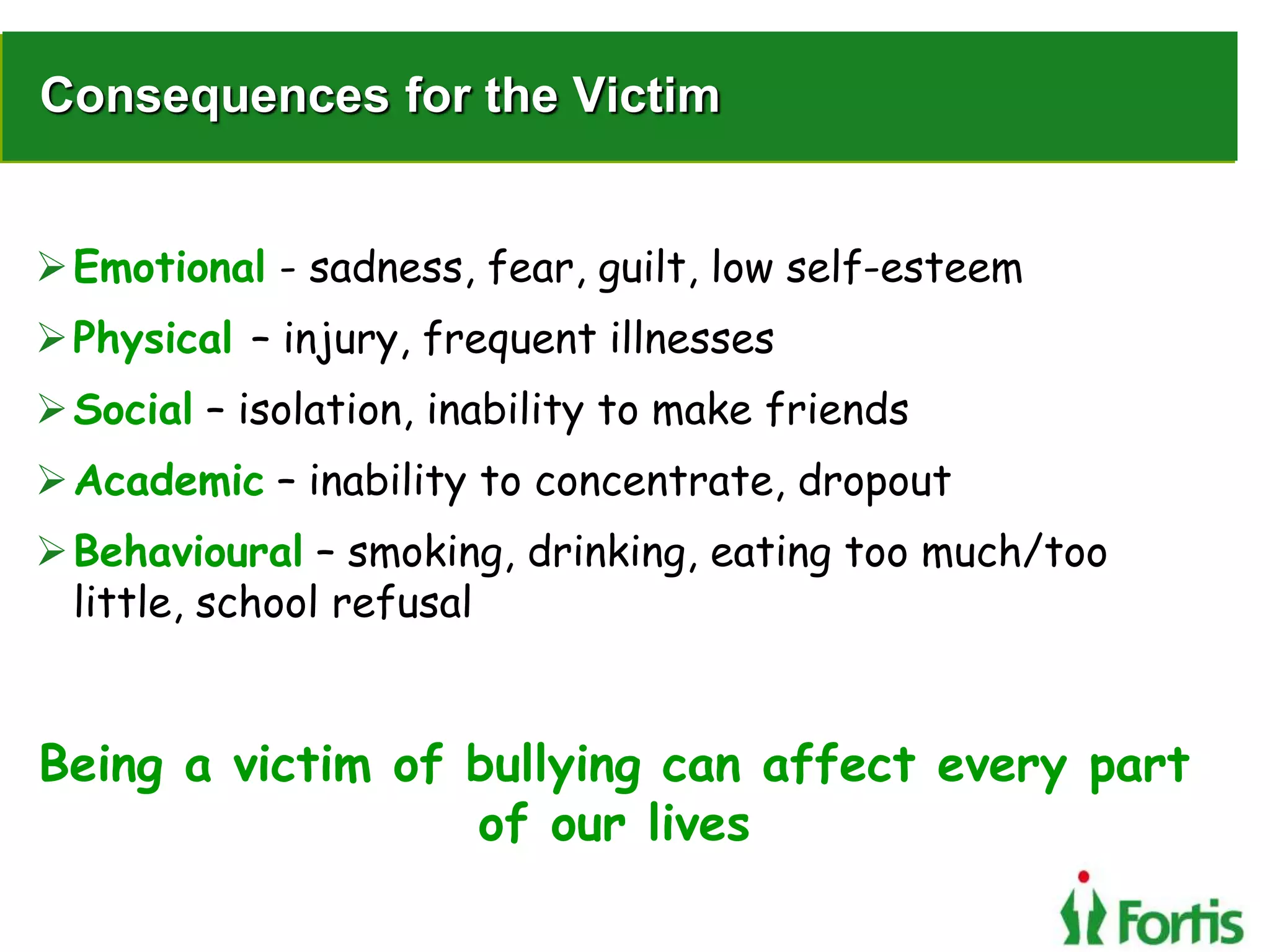
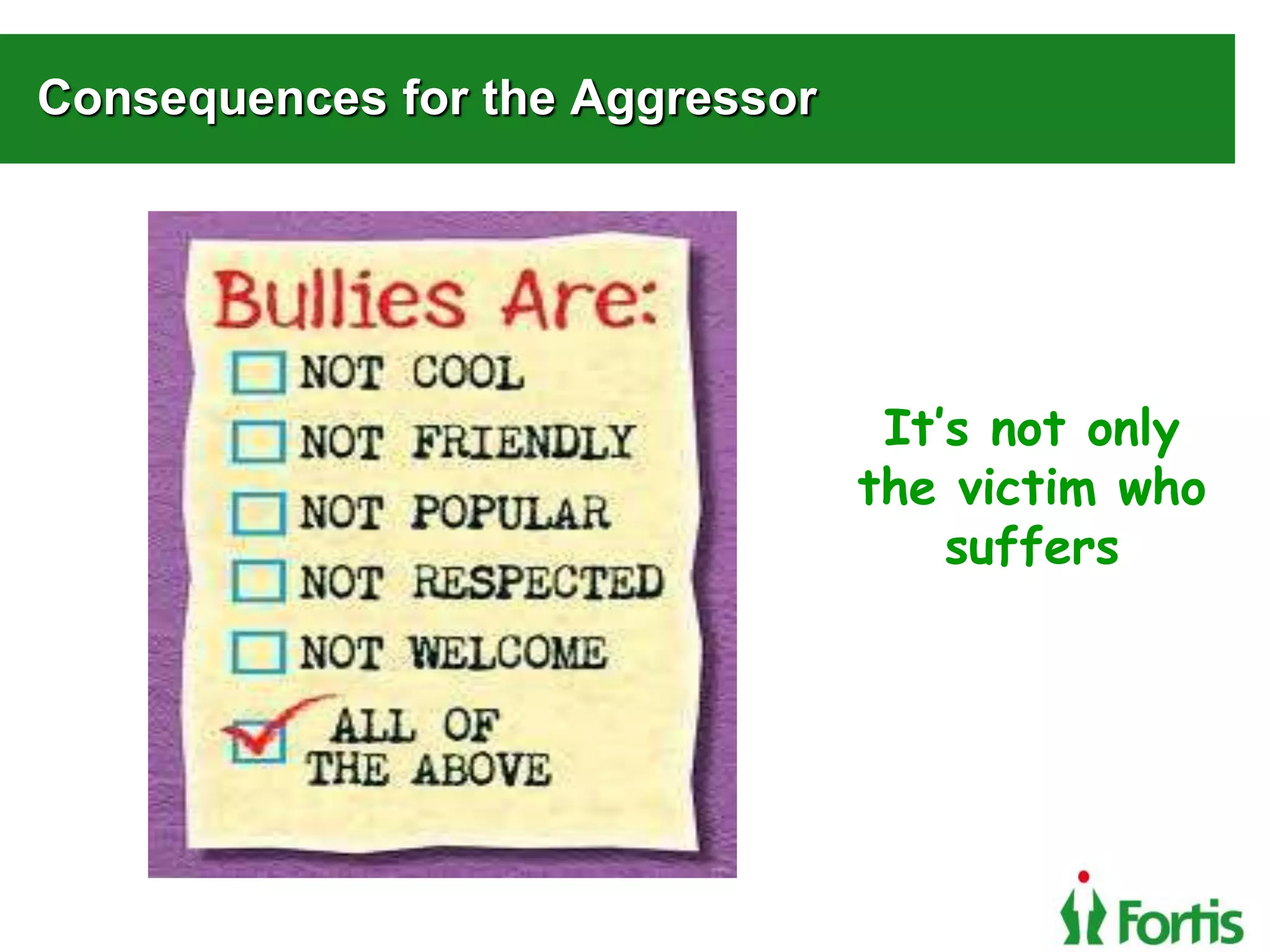
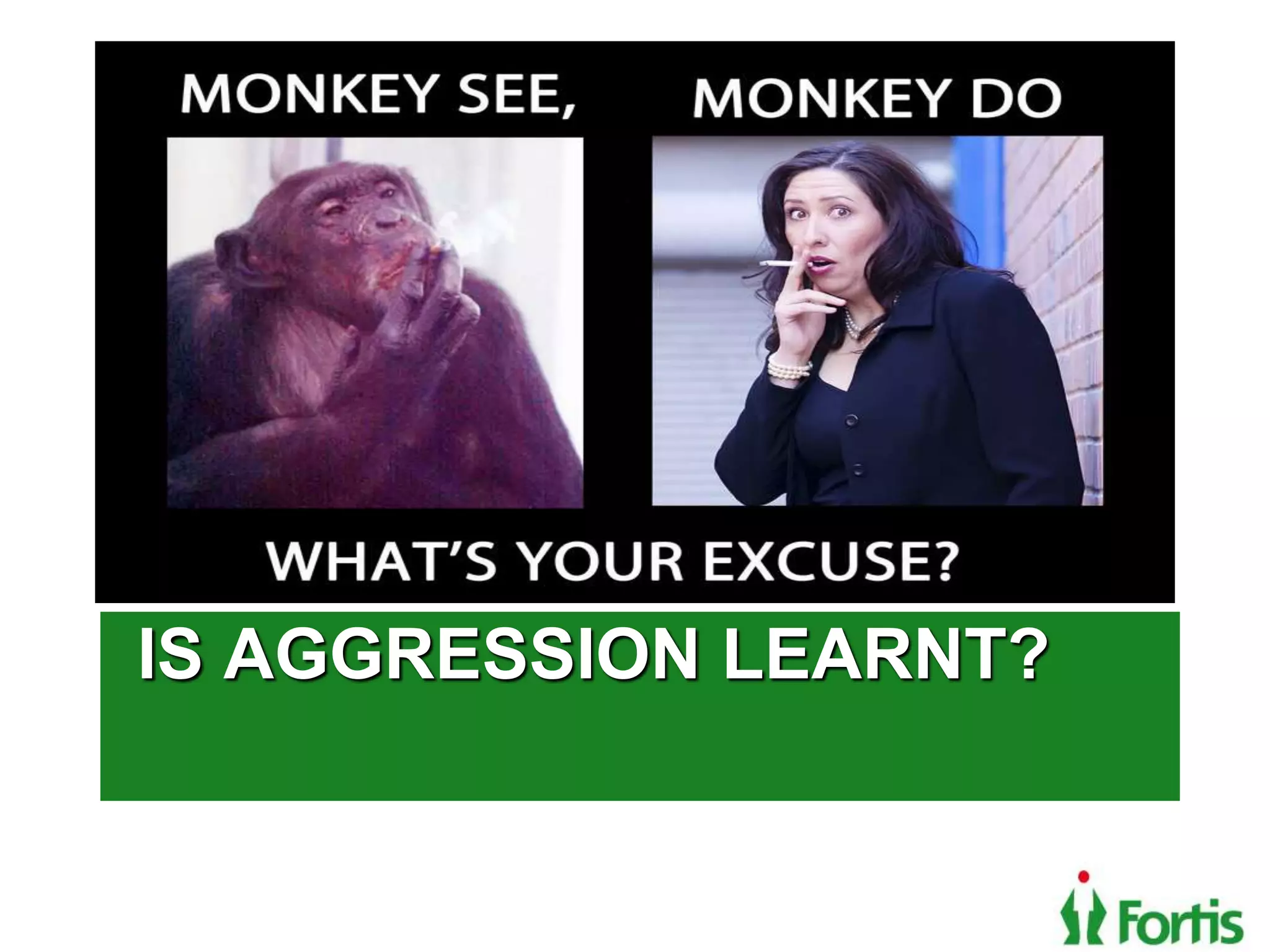
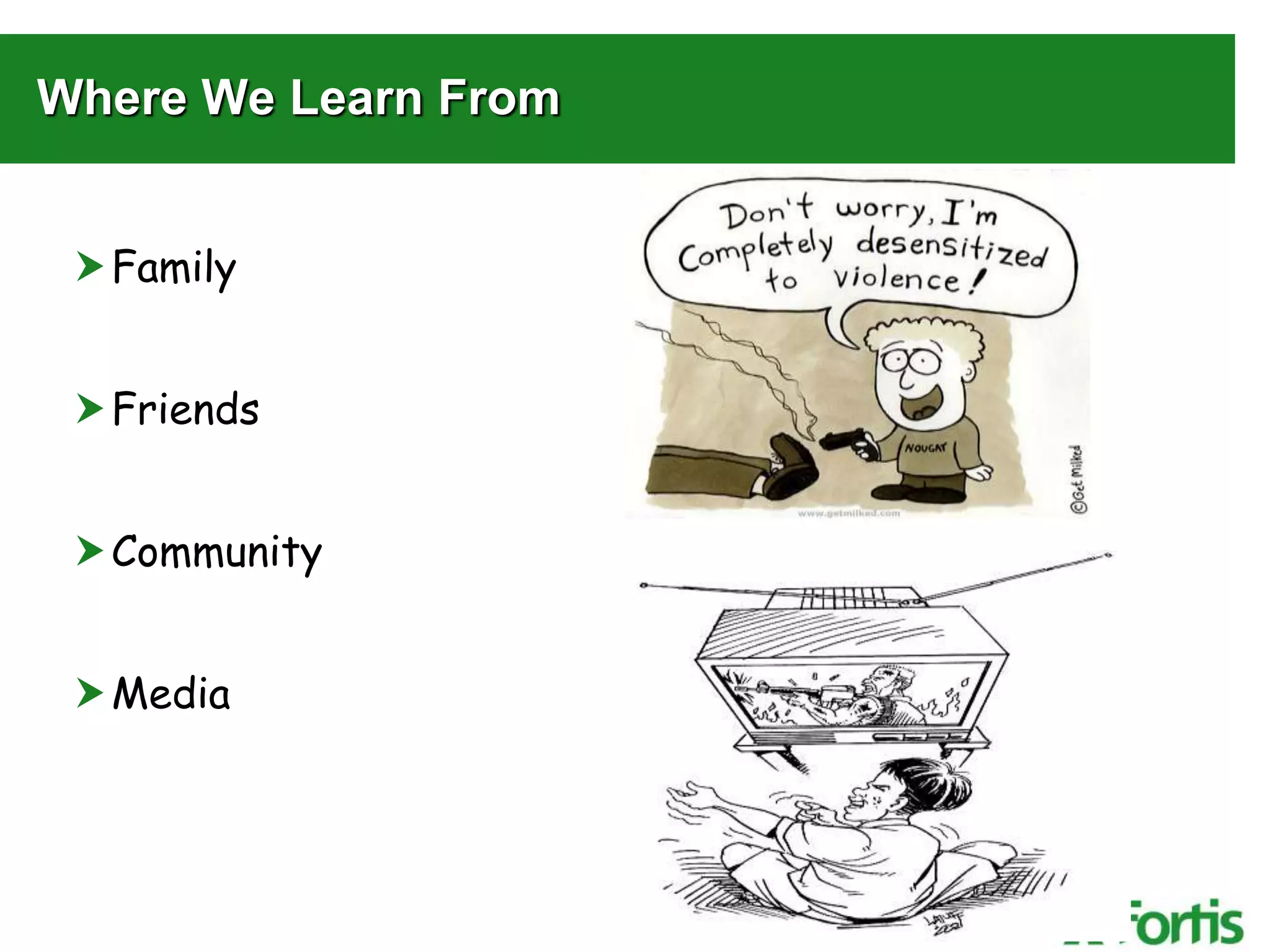
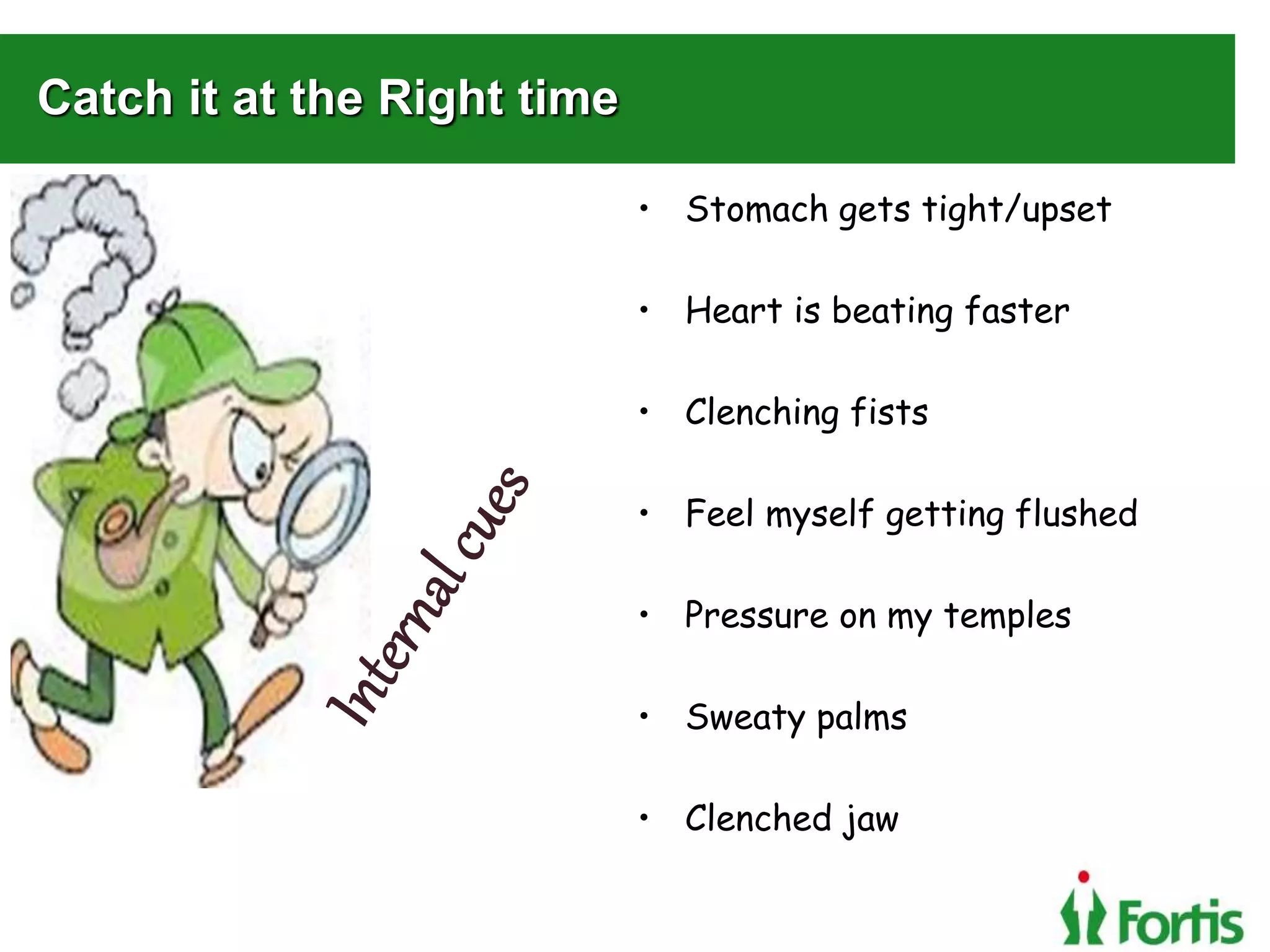
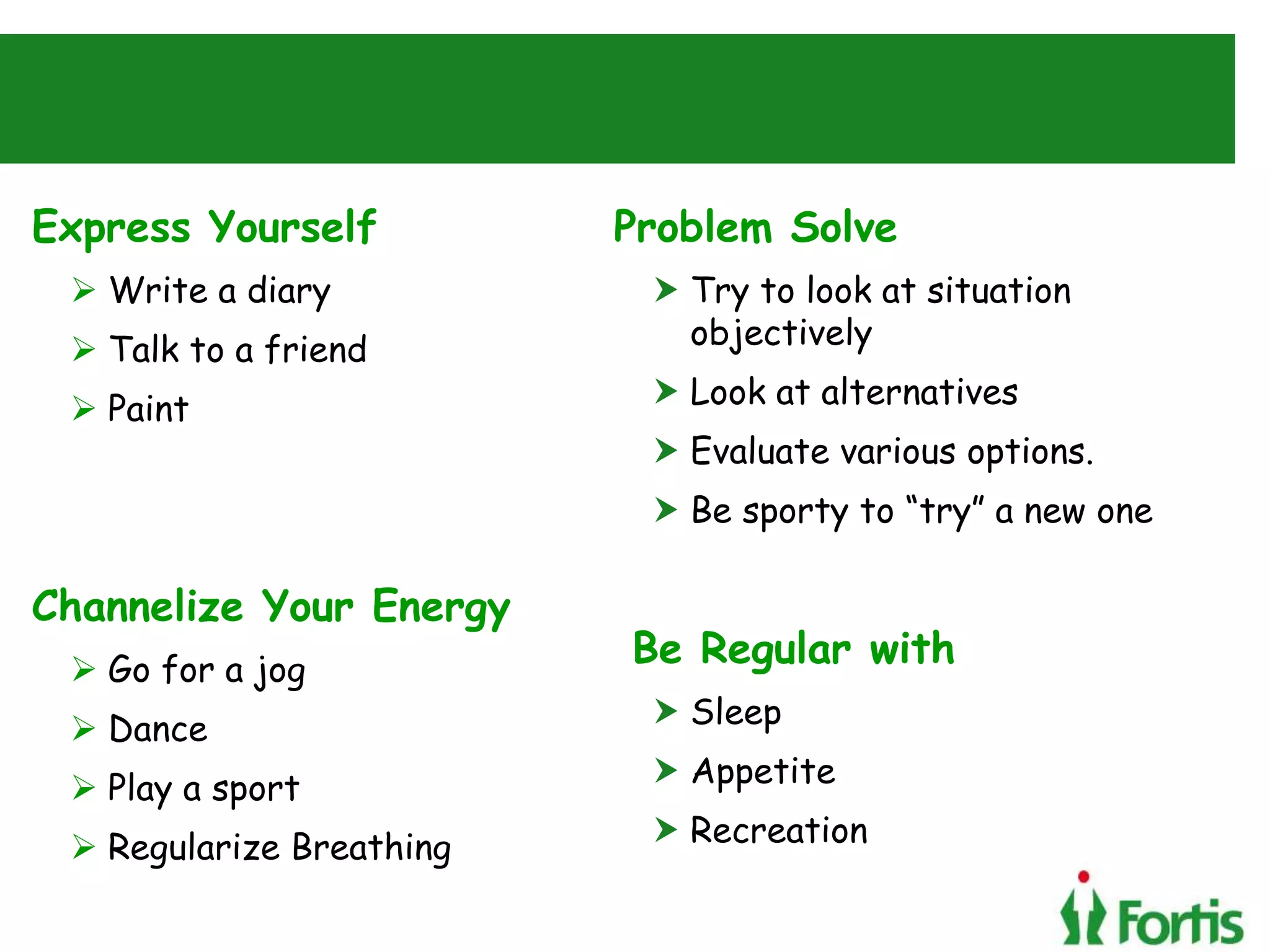
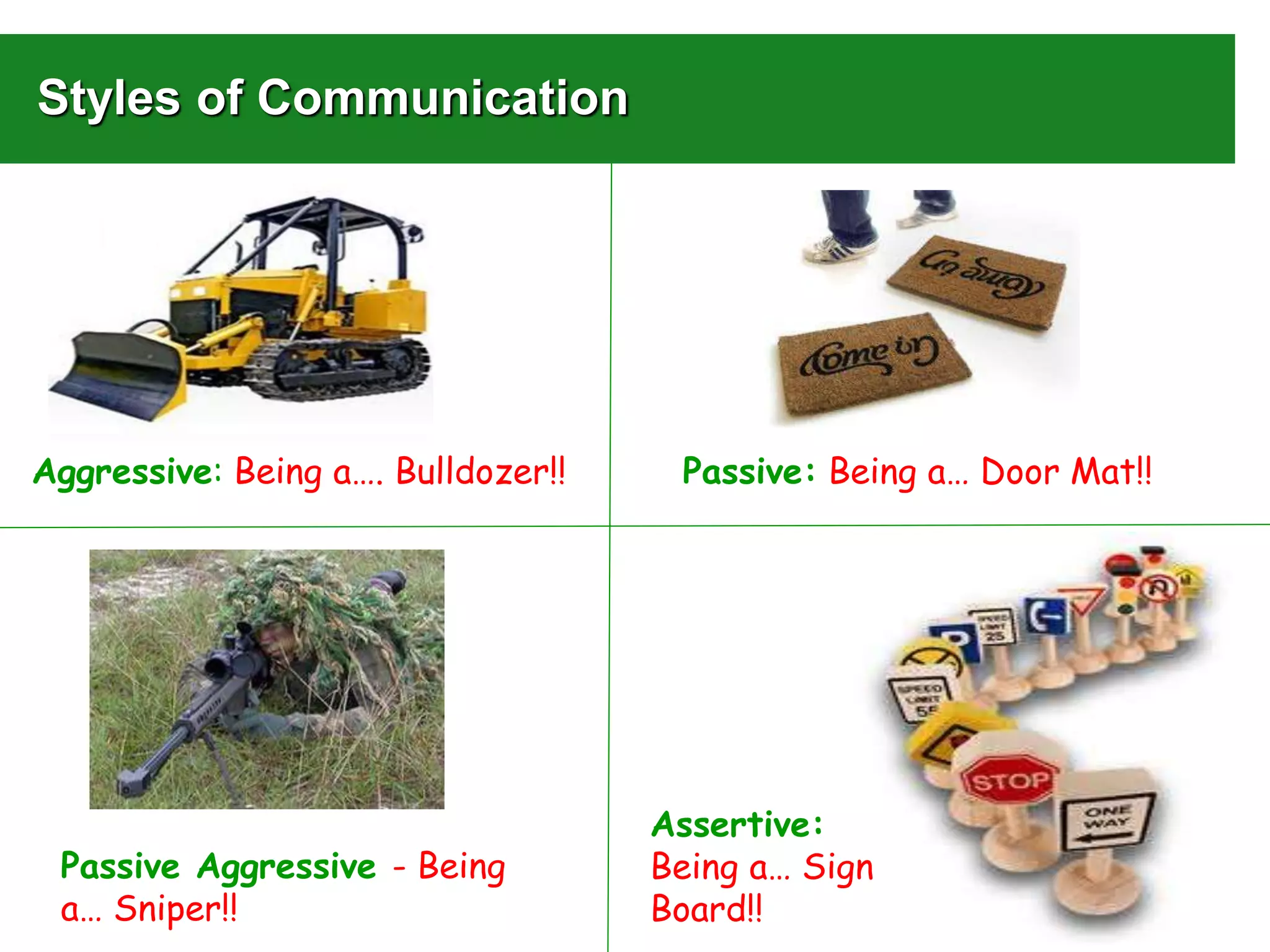
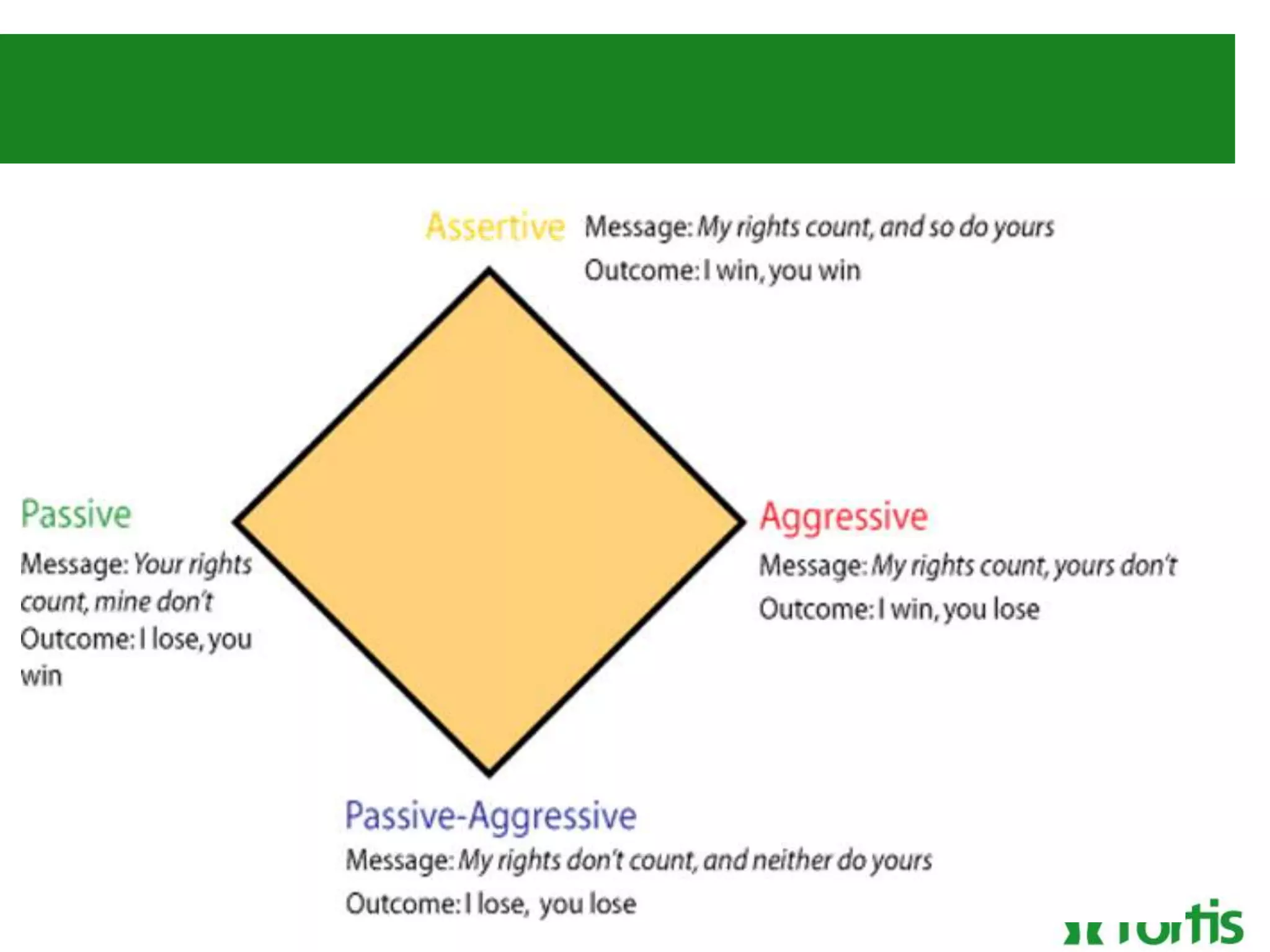
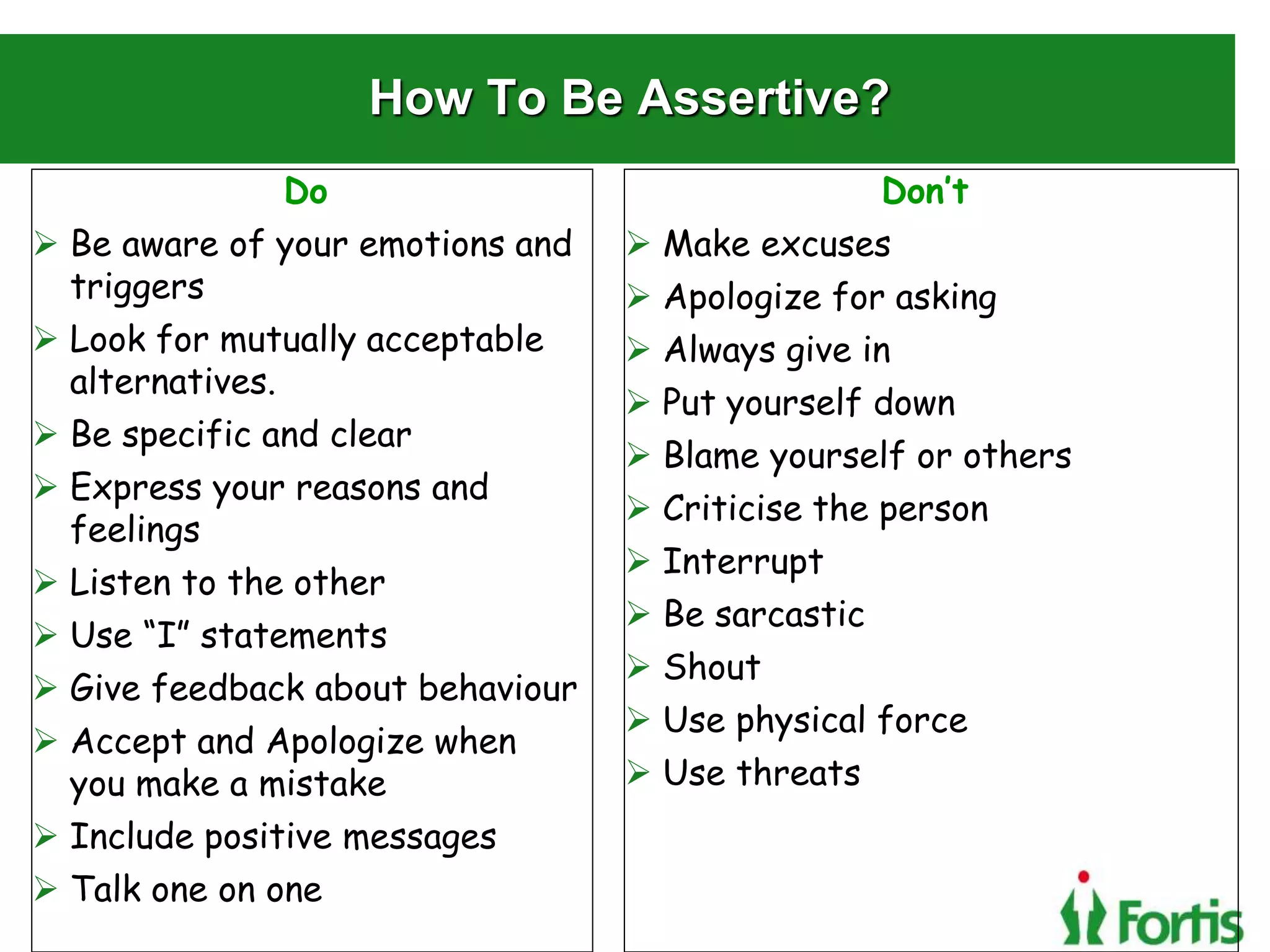
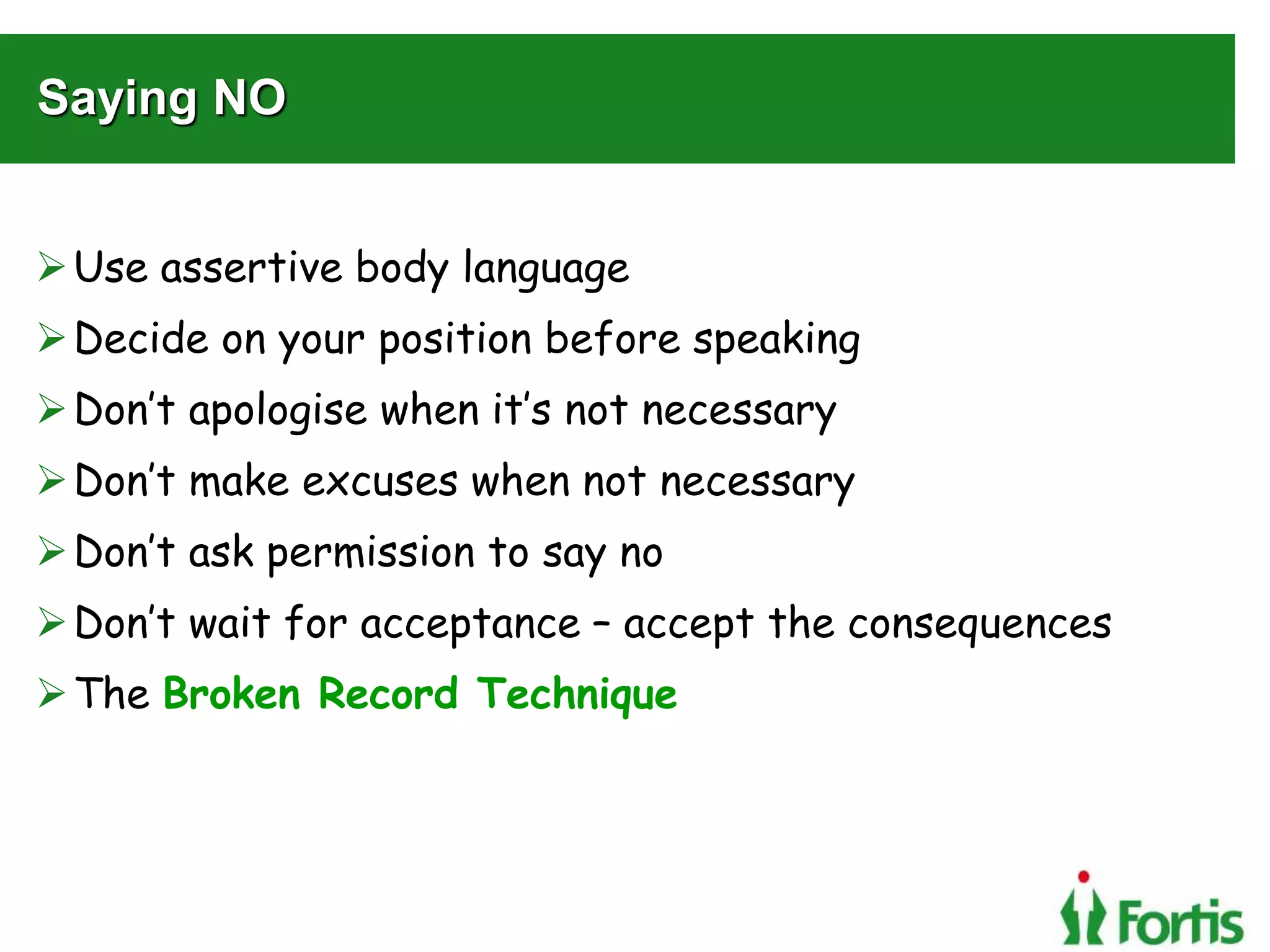
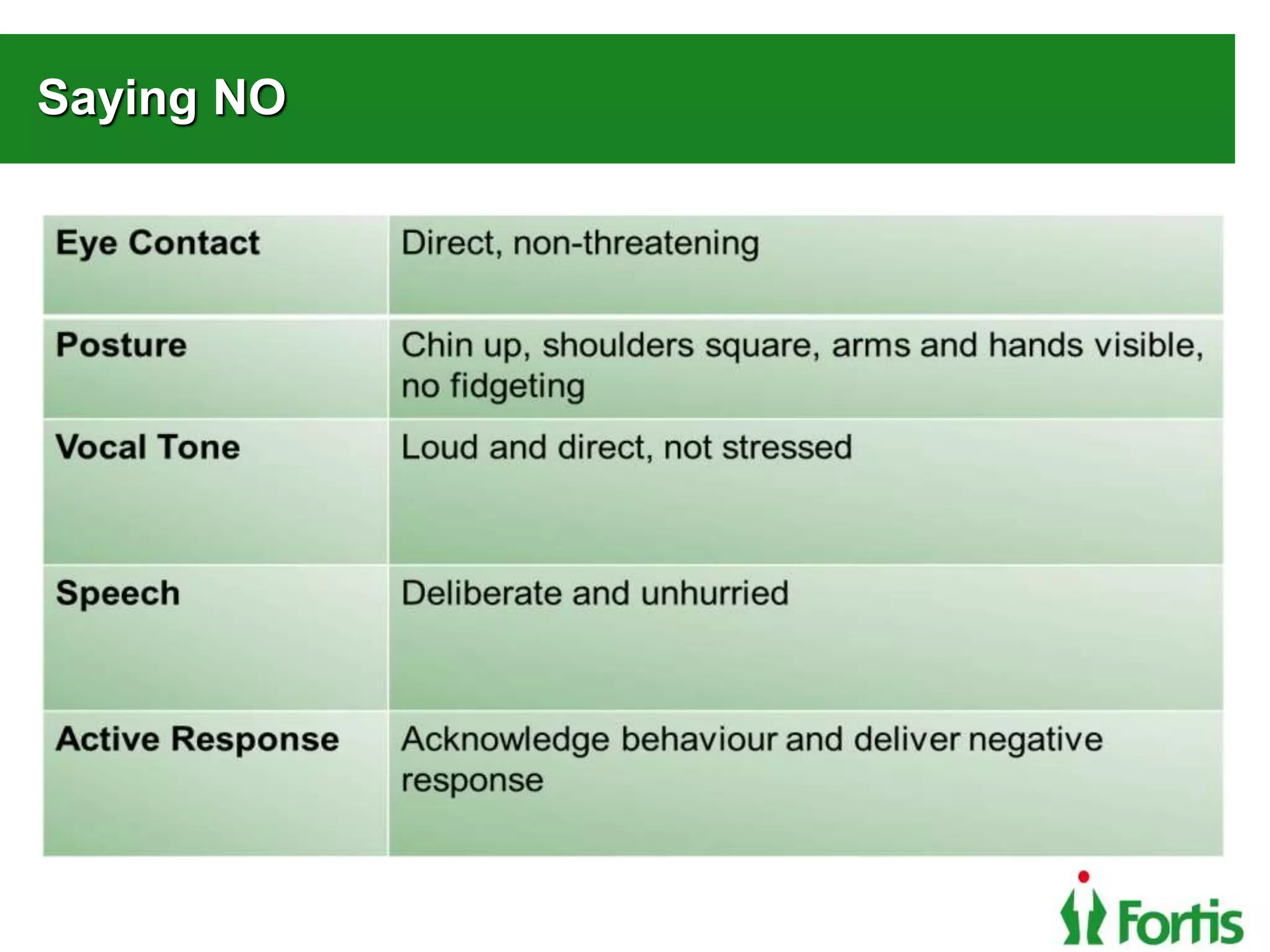
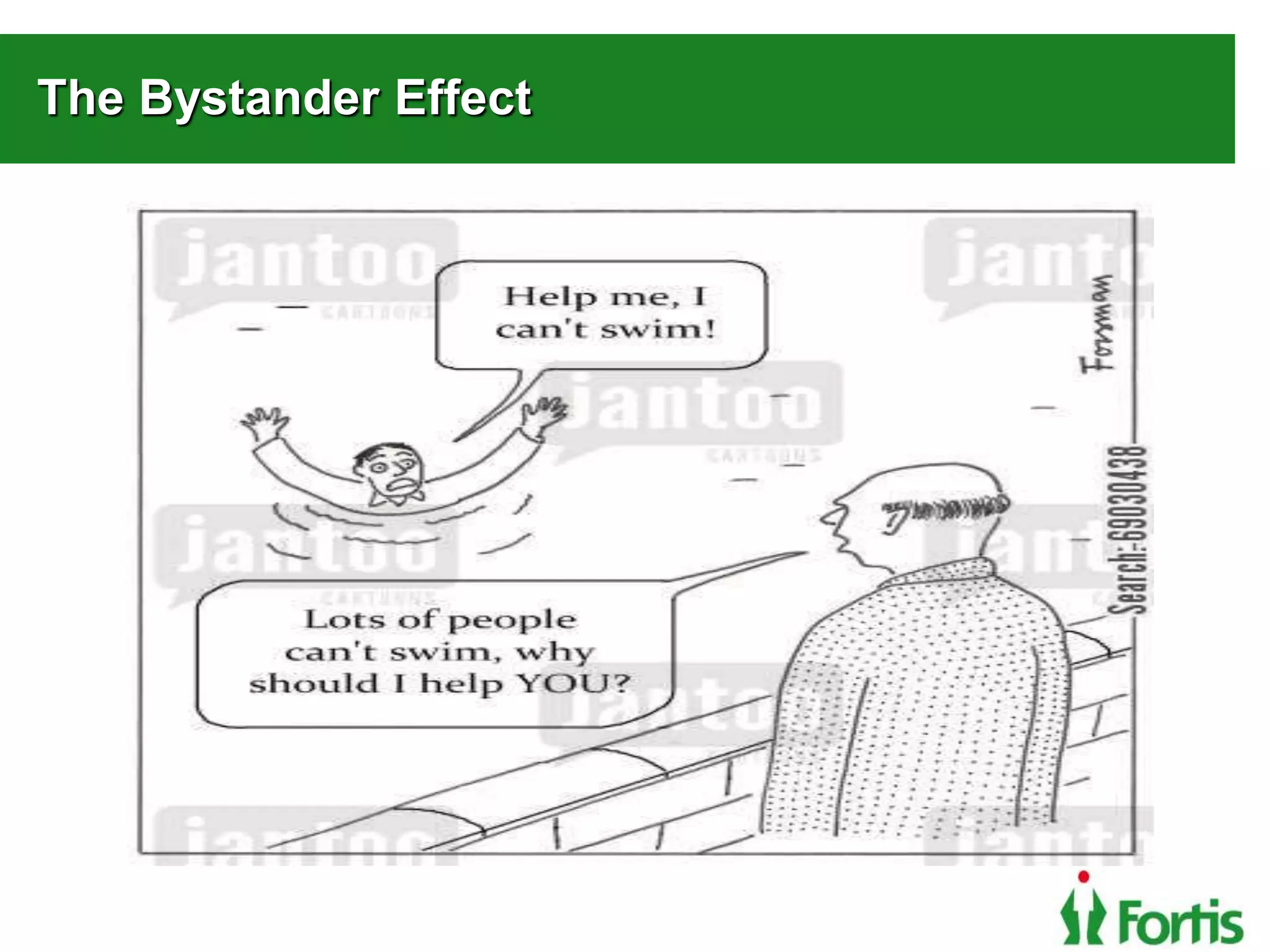
This document discusses managing aggression and anger. It begins by exploring whether anger is good or bad, distinguishing between anger as an emotion and aggression as a behavior. It then discusses types of aggression, where aggression is learned from, and consequences of aggression for victims and aggressors. The document provides steps to manage anger and aggression, including identifying triggers, channeling anger through various outlets, building empathy, and becoming assertive. Communication styles are contrasted and assertive communication is encouraged. The bystander effect is also addressed.