Parametric vs Non-Parametric
By: Aniruddha Deshmukh – M. Sc. Statistics, MCM
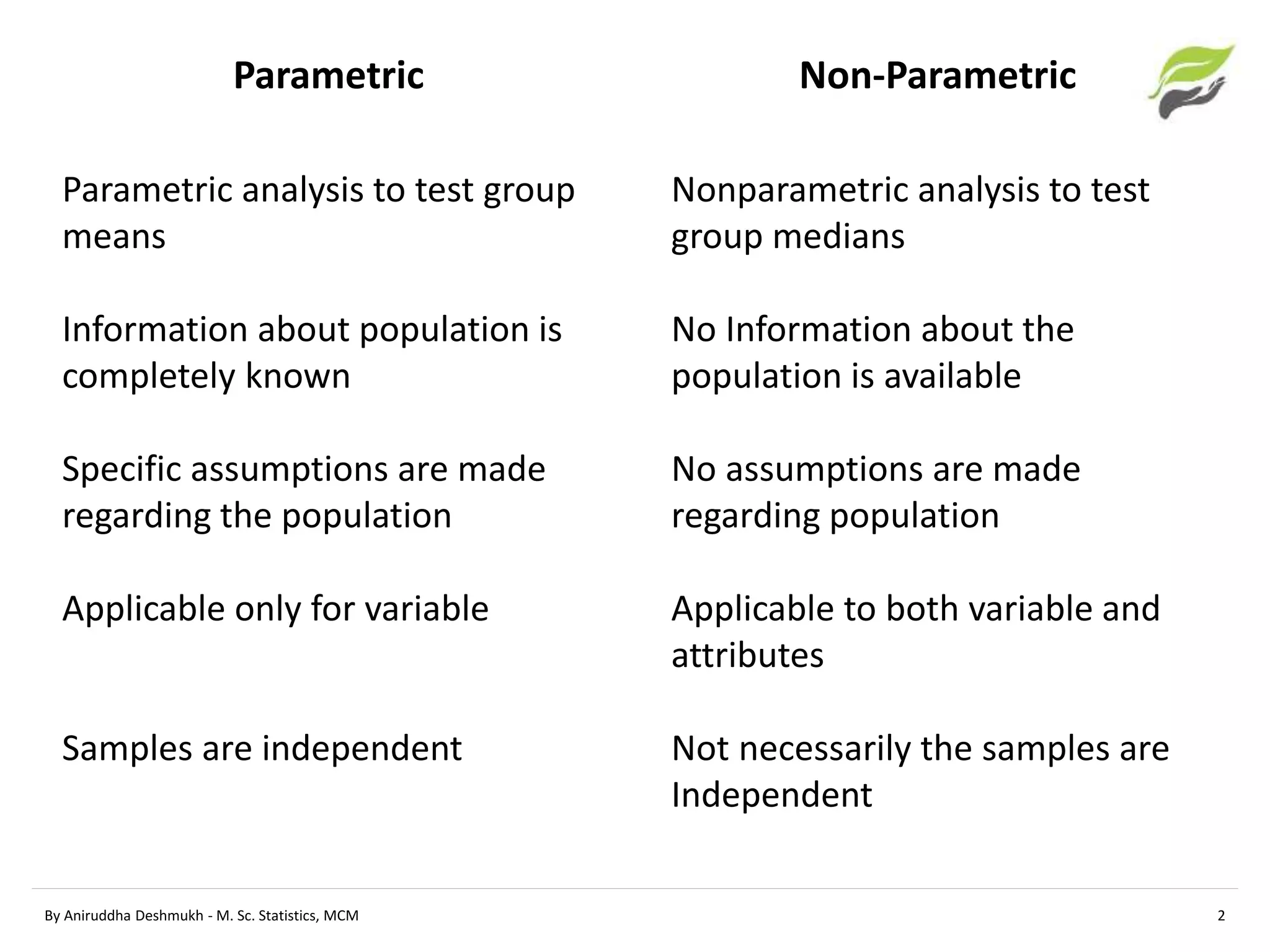
Parametric
Parametric analysis to test group
means
Information about population is
completely known
Specific assumptions are made
regarding the population
Applicable only for variable
Samples are independent
Non-Parametric
Nonparametric analysis to test
group medians
No Information about the
population is available
No assumptions are made
regarding population
Applicable to both variable and
attributes
Not necessarily the samples are
Independent
By Aniruddha Deshmukh - M. Sc. Statistics, MCM 2
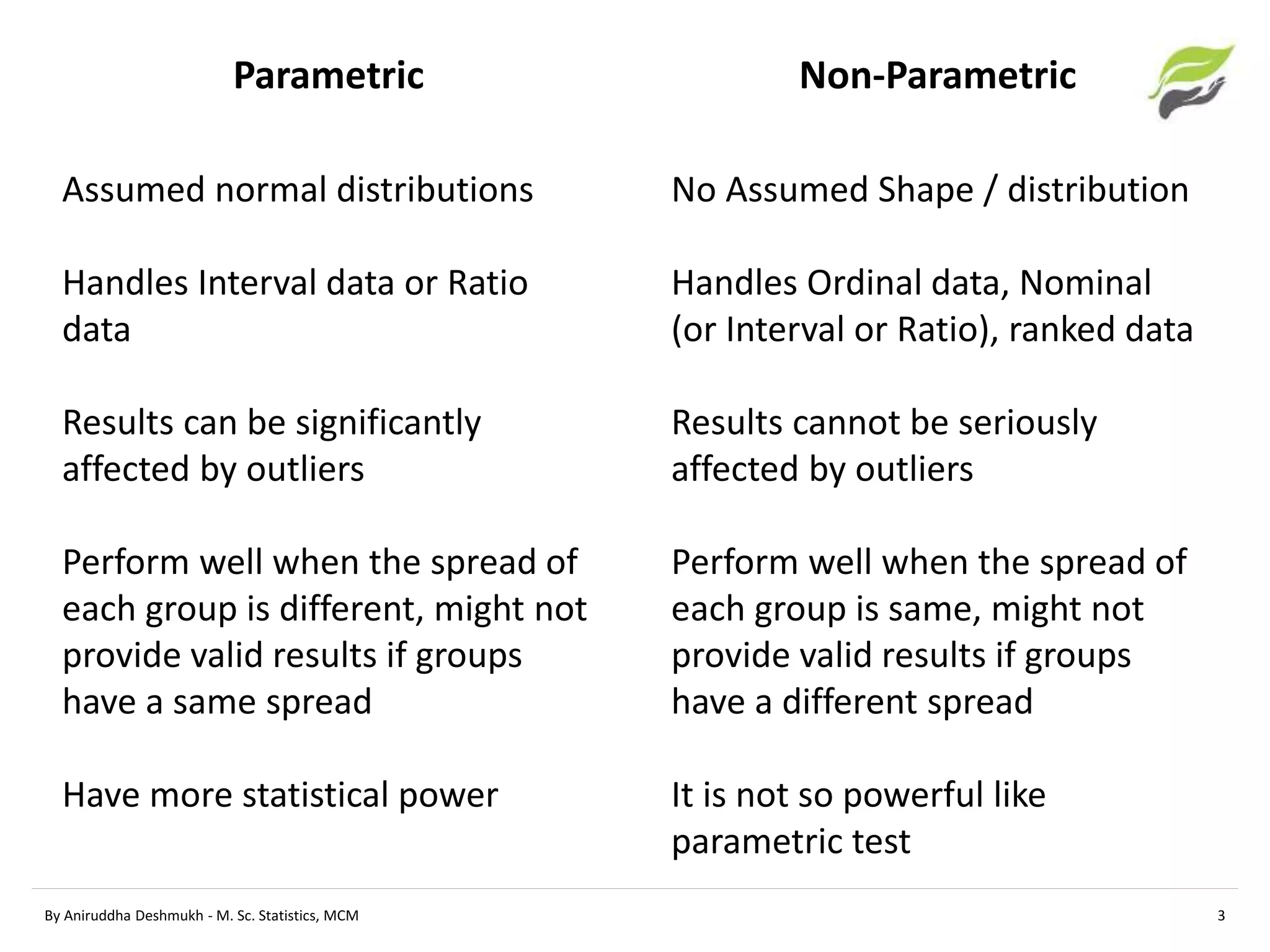
Parametric
Assumed normal distributions
Handles Interval data or Ratio
data
Results can be significantly
affected by outliers
Perform well when the spread of
each group is different, might not
provide valid results if groups
have a same spread
Have more statistical power
Non-Parametric
No Assumed Shape / distribution
Handles Ordinal data, Nominal
(or Interval or Ratio), ranked data
Results cannot be seriously
affected by outliers
Perform well when the spread of
each group is same, might not
provide valid results if groups
have a different spread
It is not so powerful like
parametric test
By Aniruddha Deshmukh - M. Sc. Statistics, MCM 3
Parametric test for
Means
1-sample t-test
2-sample t-test
One-Way ANOVA
Factorial DOE with one factor and
one blocking variable
Non-Parametric test for
Medians
1-sample Sign, 1-sample
Wilcoxon
Mann-Whitney test
Kruskal-Wallis, Mood’s median
test
Friedman test
By Aniruddha Deshmukh - M. Sc. Statistics, MCM 4
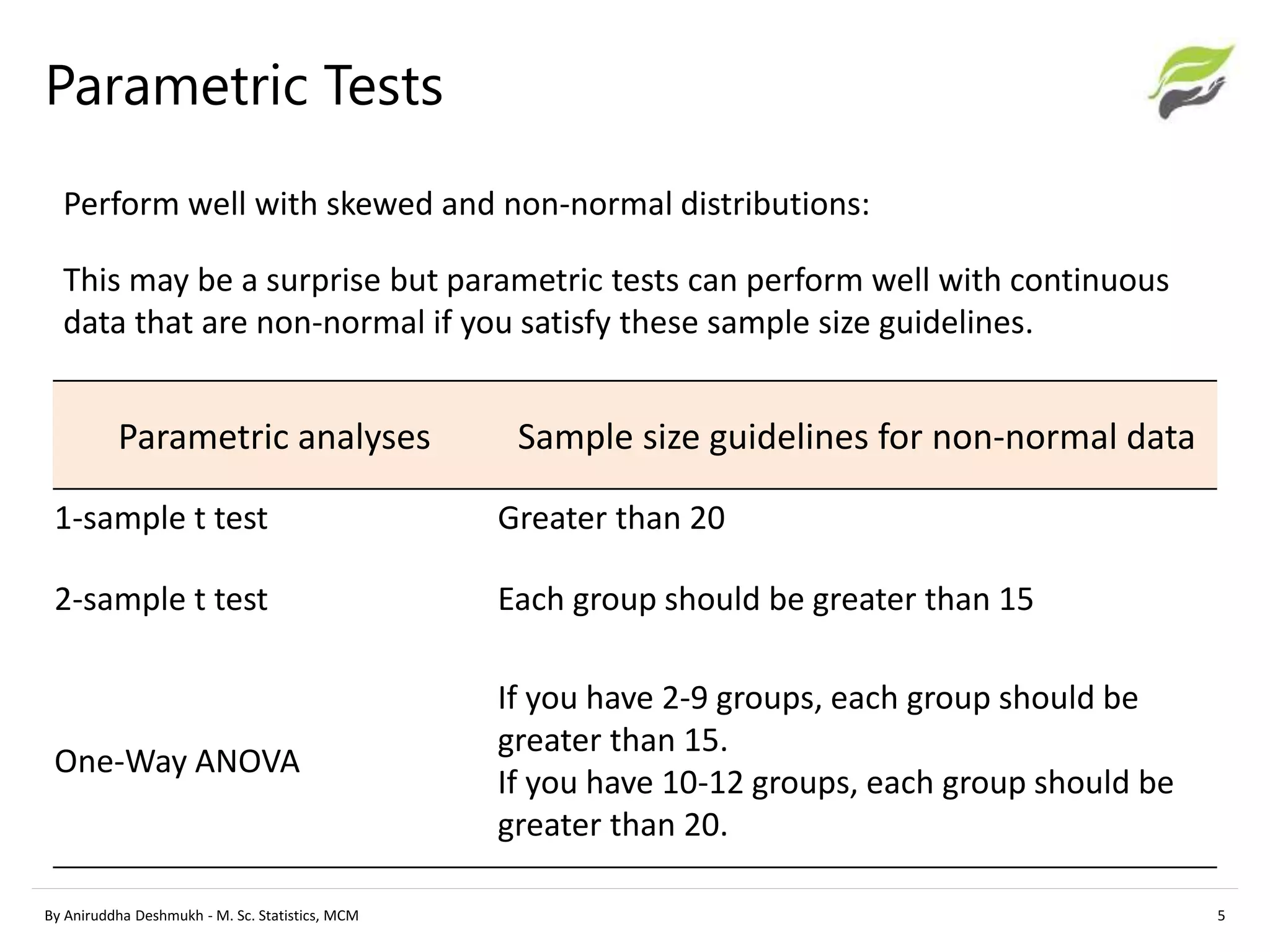
Parametric Tests
Perform well with skewed and non-normal distributions:
This may be a surprise but parametric tests can perform well with continuous
data that are non-normal if you satisfy these sample size guidelines.
By Aniruddha Deshmukh - M. Sc. Statistics, MCM 5
Parametric analyses Sample size guidelines for non-normal data
1-sample t test Greater than 20
2-sample t test Each group should be greater than 15
One-Way ANOVA
If you have 2-9 groups, each group should be
greater than 15.
If you have 10-12 groups, each group should be
greater than 20.
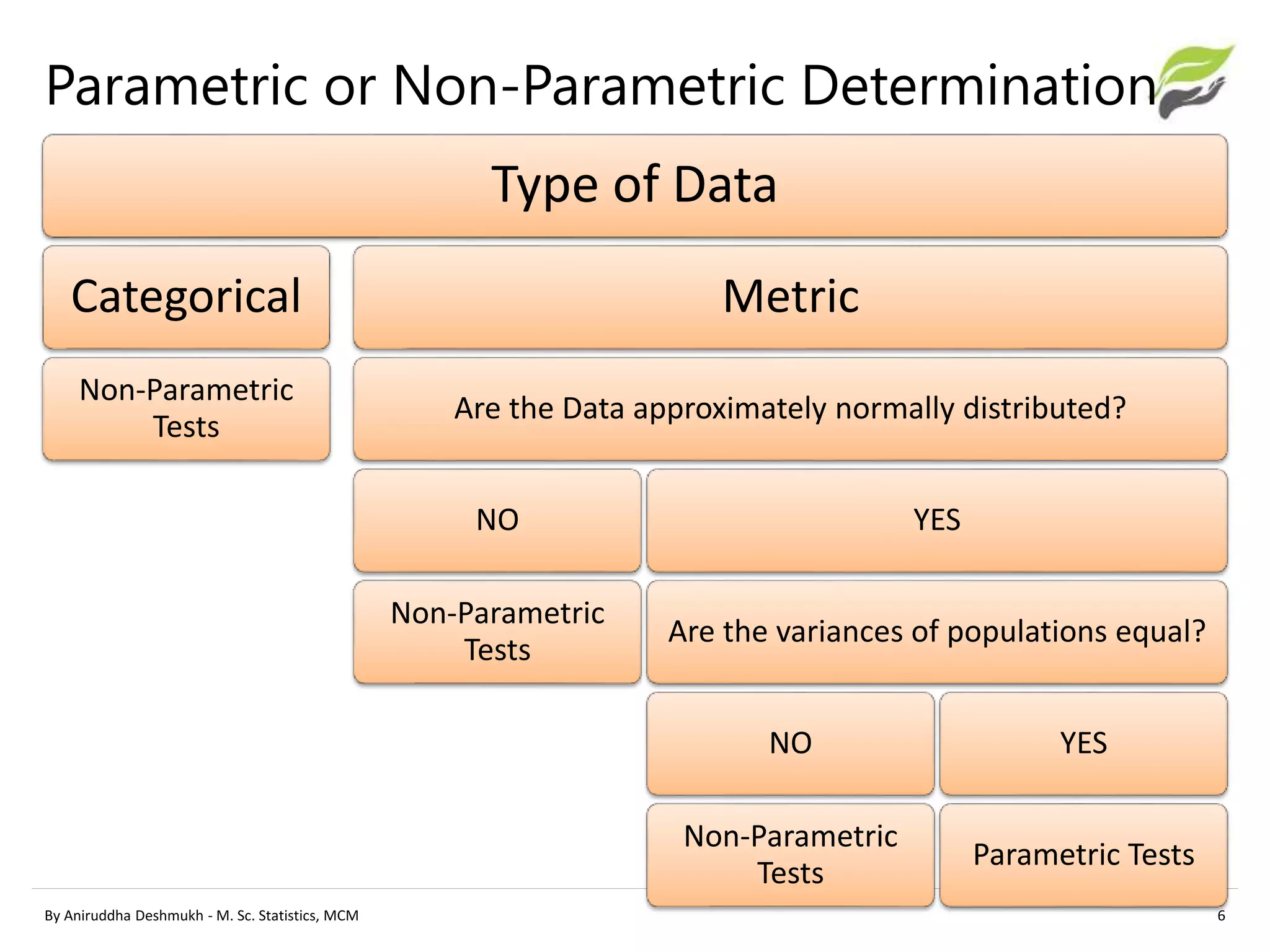
Parametric or Non-Parametric Determination
By Aniruddha Deshmukh - M. Sc. Statistics, MCM 6
Type of Data
Categorical
Non-Parametric
Tests
Metric
Are the Data approximately normally distributed?
NO
Non-Parametric
Tests
YES
Are the variances of populations equal?
NO
Non-Parametric
Tests
YES
Parametric Tests
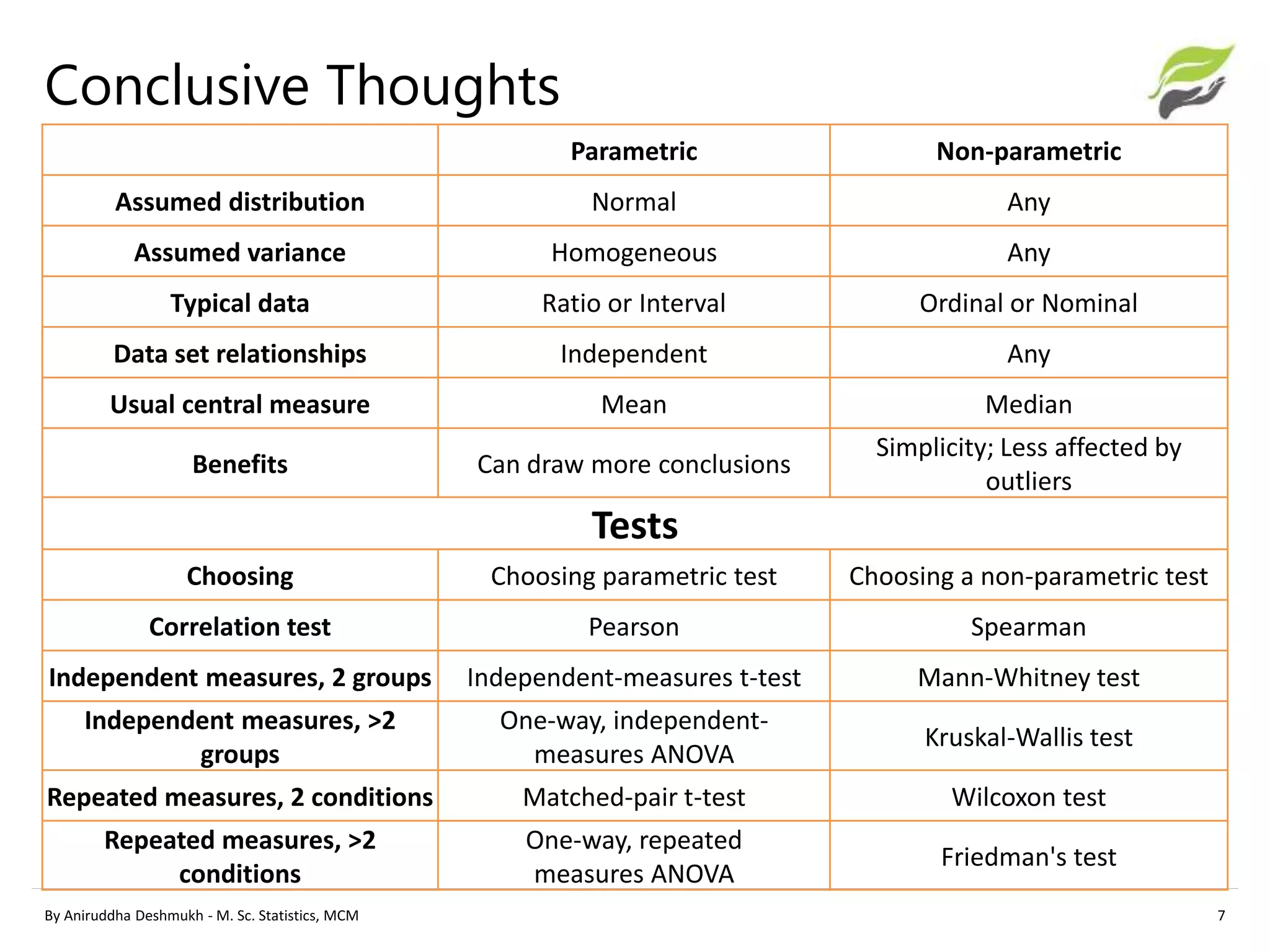
Conclusive Thoughts
By Aniruddha Deshmukh - M. Sc. Statistics, MCM 7
Parametric Non-parametric
Assumed distribution Normal Any
Assumed variance Homogeneous Any
Typical data Ratio or Interval Ordinal or Nominal
Data set relationships Independent Any
Usual central measure Mean Median
Benefits Can draw more conclusions
Simplicity; Less affected by
outliers
Tests
Choosing Choosing parametric test Choosing a non-parametric test
Correlation test Pearson Spearman
Independent measures, 2 groups Independent-measures t-test Mann-Whitney test
Independent measures, >2
groups
One-way, independent-
measures ANOVA
Kruskal-Wallis test
Repeated measures, 2 conditions Matched-pair t-test Wilcoxon test
Repeated measures, >2
conditions
One-way, repeated
measures ANOVA
Friedman's test
Aniruddha Deshmukh – M. Sc. Statistics, MCM
email: annied23@gmail.com
For more information please contact:

Parametric vs Non-Parametric

  • 1.
    Parametric vs Non-Parametric By:Aniruddha Deshmukh – M. Sc. Statistics, MCM
  • 2.
    Parametric Parametric analysis totest group means Information about population is completely known Specific assumptions are made regarding the population Applicable only for variable Samples are independent Non-Parametric Nonparametric analysis to test group medians No Information about the population is available No assumptions are made regarding population Applicable to both variable and attributes Not necessarily the samples are Independent By Aniruddha Deshmukh - M. Sc. Statistics, MCM 2
  • 3.
    Parametric Assumed normal distributions HandlesInterval data or Ratio data Results can be significantly affected by outliers Perform well when the spread of each group is different, might not provide valid results if groups have a same spread Have more statistical power Non-Parametric No Assumed Shape / distribution Handles Ordinal data, Nominal (or Interval or Ratio), ranked data Results cannot be seriously affected by outliers Perform well when the spread of each group is same, might not provide valid results if groups have a different spread It is not so powerful like parametric test By Aniruddha Deshmukh - M. Sc. Statistics, MCM 3
  • 4.
    Parametric test for Means 1-samplet-test 2-sample t-test One-Way ANOVA Factorial DOE with one factor and one blocking variable Non-Parametric test for Medians 1-sample Sign, 1-sample Wilcoxon Mann-Whitney test Kruskal-Wallis, Mood’s median test Friedman test By Aniruddha Deshmukh - M. Sc. Statistics, MCM 4
  • 5.
    Parametric Tests Perform wellwith skewed and non-normal distributions: This may be a surprise but parametric tests can perform well with continuous data that are non-normal if you satisfy these sample size guidelines. By Aniruddha Deshmukh - M. Sc. Statistics, MCM 5 Parametric analyses Sample size guidelines for non-normal data 1-sample t test Greater than 20 2-sample t test Each group should be greater than 15 One-Way ANOVA If you have 2-9 groups, each group should be greater than 15. If you have 10-12 groups, each group should be greater than 20.
  • 6.
    Parametric or Non-ParametricDetermination By Aniruddha Deshmukh - M. Sc. Statistics, MCM 6 Type of Data Categorical Non-Parametric Tests Metric Are the Data approximately normally distributed? NO Non-Parametric Tests YES Are the variances of populations equal? NO Non-Parametric Tests YES Parametric Tests
  • 7.
    Conclusive Thoughts By AniruddhaDeshmukh - M. Sc. Statistics, MCM 7 Parametric Non-parametric Assumed distribution Normal Any Assumed variance Homogeneous Any Typical data Ratio or Interval Ordinal or Nominal Data set relationships Independent Any Usual central measure Mean Median Benefits Can draw more conclusions Simplicity; Less affected by outliers Tests Choosing Choosing parametric test Choosing a non-parametric test Correlation test Pearson Spearman Independent measures, 2 groups Independent-measures t-test Mann-Whitney test Independent measures, >2 groups One-way, independent- measures ANOVA Kruskal-Wallis test Repeated measures, 2 conditions Matched-pair t-test Wilcoxon test Repeated measures, >2 conditions One-way, repeated measures ANOVA Friedman's test
  • 8.
    Aniruddha Deshmukh –M. Sc. Statistics, MCM email: annied23@gmail.com For more information please contact: