Downloaded 596 times


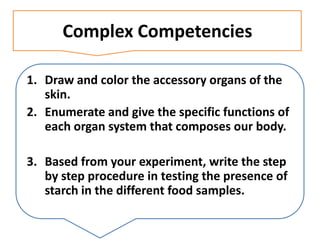



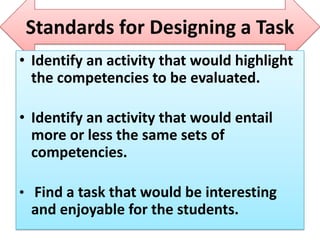
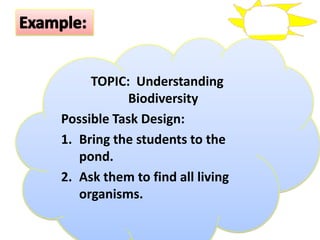
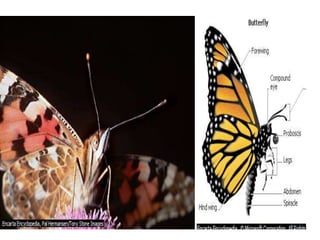




This document discusses learning competencies and designing tasks for process-oriented performance based assessments. It provides examples of simple and complex competencies for assessing students' understanding of biological systems. The key points are: 1) Learning competencies focus on directly observable student behaviors and "best practices" for particular tasks. 2) Effective task design identifies activities that highlight and entail the competencies being evaluated in an interesting way for students. 3) Examples provide learning tasks on diseases of the integumentary system and anatomy of butterflies to assess student understanding.


