FISH GLOW GREEN AFTER
 GENETIC ENGINEERING
(An Update on Genetic Engineering)
     Ronnie Z. Valenciano Jr. BSE 4B
What problem does it addresses?
 It’s the endocrine disruptors. These are
  substances that are found in:

a. industrial products
b. female contraceptives

 The chemicals mimic the actions of sexual
   hormones, resulting in various reproductive
   problems in both people and animals.
What does it do?

 Fluorescence helps track what pollutants
  do to the body.

 A genetically engineered fish that glows
  green from the inside out is helping
  illuminate what pollutants do inside the
  body.
What does previous research
 tells about this chemical?
 This chemicals cause:
a. Fish to change gender
b. In people, this have been associated with
   lower sperm counts and breast and
   testicular cancers

This is spearheaded by Charles Tyler at the
   U.K.'s University of Exeter.
How it is done?

 Put genetic elements within the zebrafish
  [embryos].
 Exposed the zebrafish to varying levels of
  chemicals known to affect the hormone
  estrogen.
 Then used a microscope to see which of the
  small fish's organs glowed—and thus
  responded—to the chemicals.
What are the findings?
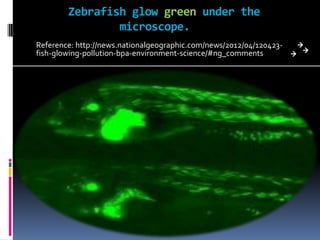
 The heart glows particularly in response to
  bisphenol A.
 The chemicals light up other parts of the
  fish's anatomy, including its eyes and
  skeletal muscles.
 Its often been assumed that these chemicals
  impact the liver or testes or ovaries, but in
  these fish they’ve identified them in many
  different tissues, including parts of the brain.
Limitation of fluorescent technology

 The fluorescent technology is limited
 to fish younger than six days old,
 because their skin has yet to develop
 pigmentation that would interfere
 with observing the fluorescence.
What’s the next development?

 The next phase is breeding these fish
 with a strain that lacks pigment in the
 skin, which would allow the team to
 observe the fluorescent reactions in
 adult fish as well.
Zebrafish glow green under the
                microscope.
Reference: http://news.nationalgeographic.com/news/2012/04/120423-
fish-glowing-pollution-bpa-environment-science/#ng_comments

Fish glow green after genetic engineering

  • 1.
    FISH GLOW GREENAFTER GENETIC ENGINEERING (An Update on Genetic Engineering) Ronnie Z. Valenciano Jr. BSE 4B
  • 2.
    What problem doesit addresses?  It’s the endocrine disruptors. These are substances that are found in: a. industrial products b. female contraceptives  The chemicals mimic the actions of sexual hormones, resulting in various reproductive problems in both people and animals.
  • 3.
    What does itdo?  Fluorescence helps track what pollutants do to the body.  A genetically engineered fish that glows green from the inside out is helping illuminate what pollutants do inside the body.
  • 4.
    What does previousresearch tells about this chemical?  This chemicals cause: a. Fish to change gender b. In people, this have been associated with lower sperm counts and breast and testicular cancers This is spearheaded by Charles Tyler at the U.K.'s University of Exeter.
  • 5.
    How it isdone?  Put genetic elements within the zebrafish [embryos].  Exposed the zebrafish to varying levels of chemicals known to affect the hormone estrogen.  Then used a microscope to see which of the small fish's organs glowed—and thus responded—to the chemicals.
  • 6.
    What are thefindings?  The heart glows particularly in response to bisphenol A.  The chemicals light up other parts of the fish's anatomy, including its eyes and skeletal muscles.  Its often been assumed that these chemicals impact the liver or testes or ovaries, but in these fish they’ve identified them in many different tissues, including parts of the brain.
  • 7.
    Limitation of fluorescenttechnology  The fluorescent technology is limited to fish younger than six days old, because their skin has yet to develop pigmentation that would interfere with observing the fluorescence.
  • 8.
    What’s the nextdevelopment?  The next phase is breeding these fish with a strain that lacks pigment in the skin, which would allow the team to observe the fluorescent reactions in adult fish as well.
  • 9.
    Zebrafish glow greenunder the microscope. Reference: http://news.nationalgeographic.com/news/2012/04/120423- fish-glowing-pollution-bpa-environment-science/#ng_comments