Hemostasis In Traumatic Hemorrhagic
Shock
The Use Of TXA
Michael M. Neeki, DO,MS, FACEP
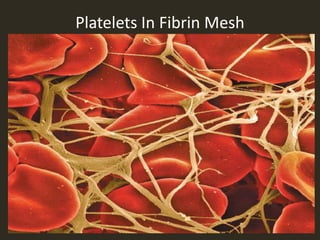
Platelets In Fibrin Mesh
Goal
• Describe the three mechanisms involved in
hemostasis
• Explain how the extrinsic and intrinsic
coagulation pathways lead to the common
pathway, and the coagulation factors
involved in each
• Discuss Products involved in treating
Hemorrhagic shock
• Tranexamic Acid (TXA), Evidence-based
medicine
Three step to achieve Hemostasis
• Vascular Spasm
• Formation of the Platelet Plug
• Coagulation
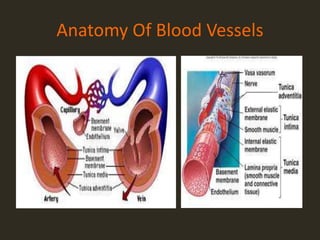
Anatomy Of Blood Vessels
Vascular Spasm
• The smooth muscle in the walls of the vessel
contracts dramatically. Has both circular layers;
larger vessels also have longitudinal layers.
• The circular layers tend to constrict the flow of
blood, whereas the longitudinal layers, when
present, draw the vessel back into the
surrounding tissue.
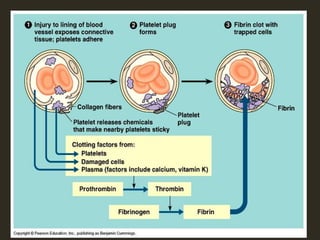
Formation of the Platelet Plug
• The platelets begin to clump together, become
spiked and sticky, and bind to the exposed
collagen and endothelial lining.
• This process is assisted by a glycoprotein in the
blood plasma called von Willebrand factor,
which helps stabilize the growing platelet plug.
As platelets collect, they simultaneously release
chemicals from their granules into the plasma
that further contribute to hemostasis.
Coagulation
• The process is sometimes characterized as a
cascade, because one event prompts the next as
in a multi-level waterfall.
• The result is the production of a gelatinous but
robust clot made up of a mesh of Fibrin—an
insoluble filamentous protein derived from
fibrinogen, the plasma protein introduced
earlier—in which platelets and blood cells
are trapped.
Clotting Factors Involved in Coagulation
In the coagulation cascade, chemicals called
clotting factors prompt reactions that activate still
more coagulation factors. The process is complex,
but is initiated along two basic pathways:
• The extrinsic pathway, which normally is
triggered by trauma.
• The intrinsic pathway, which begins in the
bloodstream and is triggered by internal damage
to the wall of the vessel.
• Both of these merge into a third pathway,
referred to as the common pathway
Clotting Factors Involved in Coagulation
• All three pathways are dependent upon the 12
known clotting factors, including Ca2+ and
vitamin K .
• Clotting factors are secreted primarily by
the liver and the platelets. The liver
requires the vitamin K to produce many of
them. Vitamin K (along with biotin and folate).
• The calcium ion, considered factor IV . The 12
clotting factors are numbered I through XIII
according to the order of their discovery.
Hemostasis
Step 3. Coagulation Phase
Transfusion Products
• Primary resuscitation approach to minimize
trauma-induced coagulopathy. Plasma, red
blood cell and platelet ratios of 1:1:1.
(6 RBC: 6 FFP: 6 platelet)
• activated prothrombin complex concentrate*
-Use to reverse Rivaroxaban and Dabigatran
- promising effect in hypothermia and acidosis
- better in combination with TXA
• Activated factor VII (rFVIIa; NovoSeven)
Transfusion Products
• Vitamin K (Increases Factors II, VII, IX, X, Protein
C and S)
• Fresh-frozen plasma (indicated when there is
multi-factor deficiencies associated with severe
bleeding and/or DIC)
• Cryoprecipitate (may be indicated if the plasma
fibrinogen is less than 1 g/l)
TXA
Antifibrinolytics
• These agents enhance hemostasis when
fibrinolysis contributes to bleeding
• Lysine analogs
* EACA (e-AminoCaproic acid
* TXA ( Tranexamic acid
* Aprotinin ( No marking since 2007)
Mechanism of Action
• A synthetic derivative of lysine
that inhibits fibrinolysis by blocking the
lysine binding sites on plasminogen
• Inhibits both Plasminogen activation and
Plasmin activity thus preventing clot
breakdown.
• 10x more potent than Aminocaproic acid in
vitro.
TXA
TXA
• Is useful in a wide range of hemorrhagic
conditions.
• In large, randomized controlled trials,
significantly reduced perioperative blood loss
compared with placebo in a variety of surgical
procedures, including cardiac surgery with or
without cardiopulmonary bypass, total hip and
knee replacement and prostatectomy,
gynecological procedures.
FIBRINOLYSIS
Intact fibrin clot Fibrin clot exposed to plasmin
Pharmacokinetics
• Absorption –
– Onset of action: 5-15 minutes
– Duration: 3 hours
• Distribution –
– Protein binding ~ 3%; primarily to Plasminogen
• Metabolism
–Only a small fraction of the drug is metabolized
(less than 5%).
– T1/2: 2-11 hours
• Excretion –
– Urine (>95% as unchanged drug)
Protein binding
• The plasma protein binding of tranexamic acid is
about 3% at therapeutic plasma levels and seems
to be fully accounted for by its binding to
plasminogen (does not bind serum albumin).
• Pass the Blood Brain Barrier
• In patients with hereditary angioedema,
inhibition of the formation and activity of plasmin
by tranexamic acid may prevent attacks of
angioedema by decreasing plasmin-induced
activation of the first complement protein (C1).
Dosing/Storage
• TXA (Cyklokapron) – 1gm in 100cc/NSS given over
10 minutes (loading dose)
– Followed by 1gm in 100cc/NSS over 8 hrs
• Can be mixed with just about any available solution
• Not to be administered in the same line as blood or
blood products or in a line used for rFVIIa or
Penicillin
• Should be stored between 15-30C or 56-86F
Side Effects
• Acute gastrointestinal disturbances (nausea,
vomiting and diarrhea; generally dose-related).
• Visual disturbances (blurry vision and changes in
color perception, especially with prolonged
use).
• Thromboembolic events (deep venous
thrombosis, pulmonary embolism).
• Dizziness, fatigue, headache, and
hypersensitivity reaction.
Contraindications
• Acquired defective color vision
• SAH
• Active intravascular clotting
• Hypersensitivity to TXA
Jehovahs Witnesses – approved
• Desmopressin (DDAVP)
• e-aminocaproic acid (Amicar)
• Tranexamic acid (Cyklokapron)
• Vasopressin (Pitressin)
• Aprotinin (Trasylol)
• Vincristine (Oncovin)
• Conjugated estrogens
• Vitamin K (Phylonadione)
• Recombinant Factor VIIa (NiaStase)
• Recombinant Factor IX (BeneFIX)
Evidence-Based Medicine
CRASH-2 (Clinical Randomization of an
Antifibrinolytic in Significant Hemorrhage)
• Randomized prospective
• 274 hospitals in 40 countries
• Evaluated 20,211 trauma patients randomized and
treated within 8 hours of injury with either 2 grams of
tranexamic acid (1 gram load, then 1 gram over 8 hours)
or placebo.
• The primary outcome was in-hospital mortality within 4
weeks of injury; vascular occlusive events,
• Transfusions or surgical interventions were secondary
outcomes.
CRASH 2
• Reduction in all-cause mortality;
14.5% in the TXA (1463/10,060)
16% in the placebo (1613/10,067),P=0.0035
• Bleeding-related mortality reduced;
4.9% in TXA vs. 5.7% in Placebo
without an increase in fatal vascular occlusive events.
• All cause mortality decreased;
10% (RR0.91,95% CI 0.85-0.97)
• Risk of death from bleeding decreased;
15% (RR 0.85, 95% CI 0.76-0.96).
Military Application of TXA in Trauma Emergency Resuscitation Study
MATTERs
• Retrospective, observational trial
• Compared TXA administration with non-TXA
in combat casualties receiving at least 1u PRBC.
• A subset of patients receiving a massive transfusion was
also analyzed
• 896 consecutive patients with combat casualties
of which 293 received TXA
• TXA group had lower unadjusted mortality;
(17.4% vs. 23.9%; P=0.3)
• Benefit greater in patients receiving Massive Transfusion
(14.4% vs. 28.1%; P=.04);
• TXA independently associated with higher survival rate
(OR=7.7228; CI 3.016-17.322).
Meta Analysis
• BMJ May 2012 (K Ker et al.)
• 129 Trials; 10488 patients;
reduced the probability of receiving a blood
transfusion by a third
(risk ratio 0.62, 95% CI 0.59 to 0.65; P<0.001)
• Fewer deaths in TXA group
(0.61, 0.38 to 0.98; P=0.04)
– Statistical concerns about this group
TXA
• Significantly reduced all-cause mortality and
death due to bleeding in trauma patients with
significant bleeding, particularly when
administered early after injury. ( Less
than 3 hours)
ARMC TXA Study
• Prospective Cohort
• Total of 400 patient ( 200 in each group)
• Multi-agency with ICEMA and Regional
cooperation
• Following the CRASH-2 protocol to replicate the
study in our region with
• Pre-hospital/paramedic importance in
cooperation with Air-Medical Component
• Outcome ( Mortality, Blood Loss, Use of blood
product)
Purpose
• To determine if pre-hospital administration of
TXA in trauma patients with signs of hemorrhagic
shock provides for a statistically significant
decrease in mortality, total blood product usage
and total estimated blood loss, without a
significant increase in thromboembolic
complications
Outcome Measurements
• Survival at 24 hours, 48 hours, and 28 days
• Cause of death (hemorrhage, other causes)
• Mechanism of injury (blunt, penetrating, combination of blunt and penetration, amputation)
• Area of injury
– Head, chest, abdomen, extremity, multiple areas
• Blood product Used:
– Packed red blood cells, fresh frozen plasma, platelets, cryoprecipitate.
• Estimated blood loss
– Pre-hospital and hospital estimate, operating room estimate, and chest tube output
• Number of transfused unit(s) of blood products (< 2 units, 2-4 units, >4 units i.e.
massive transfusion.
• Time to emergency care: Time from EMS encounter to emergency department (ED), time
spent in emergency department, time from ED arrival to operating room.
• Hospital length of stay, Intensive care unit length of stay, discharge disposition, Ventilator
days
• Adverse side effects; thromboembolic, seizures, Deep venous thrombosis prophylaxis
timing
Antifibrinolytic therapy
• causes a greater reduction in hemorrhagic shock,
• Improve mortality and morbidity
• Decrease the use blood product and clotting
factors
• Cost-effective
• Safe to administer early on in the hemorrhagic
shocks
• Still some basic science questions outstanding and in
the process of being answered.
• BOTTOM LINE – severe trauma - GIVE
“Medicine is a science of uncertainty
and an art of probability”
Sir William Osler

Hemostasis in txa

  • 1.
    Hemostasis In TraumaticHemorrhagic Shock The Use Of TXA Michael M. Neeki, DO,MS, FACEP
  • 2.
  • 3.
    Goal • Describe thethree mechanisms involved in hemostasis • Explain how the extrinsic and intrinsic coagulation pathways lead to the common pathway, and the coagulation factors involved in each • Discuss Products involved in treating Hemorrhagic shock • Tranexamic Acid (TXA), Evidence-based medicine
  • 4.
    Three step toachieve Hemostasis • Vascular Spasm • Formation of the Platelet Plug • Coagulation
  • 5.
  • 6.
    Vascular Spasm • Thesmooth muscle in the walls of the vessel contracts dramatically. Has both circular layers; larger vessels also have longitudinal layers. • The circular layers tend to constrict the flow of blood, whereas the longitudinal layers, when present, draw the vessel back into the surrounding tissue.
  • 7.
    Formation of thePlatelet Plug • The platelets begin to clump together, become spiked and sticky, and bind to the exposed collagen and endothelial lining. • This process is assisted by a glycoprotein in the blood plasma called von Willebrand factor, which helps stabilize the growing platelet plug. As platelets collect, they simultaneously release chemicals from their granules into the plasma that further contribute to hemostasis.
  • 10.
    Coagulation • The processis sometimes characterized as a cascade, because one event prompts the next as in a multi-level waterfall. • The result is the production of a gelatinous but robust clot made up of a mesh of Fibrin—an insoluble filamentous protein derived from fibrinogen, the plasma protein introduced earlier—in which platelets and blood cells are trapped.
  • 11.
    Clotting Factors Involvedin Coagulation In the coagulation cascade, chemicals called clotting factors prompt reactions that activate still more coagulation factors. The process is complex, but is initiated along two basic pathways: • The extrinsic pathway, which normally is triggered by trauma. • The intrinsic pathway, which begins in the bloodstream and is triggered by internal damage to the wall of the vessel. • Both of these merge into a third pathway, referred to as the common pathway
  • 12.
    Clotting Factors Involvedin Coagulation • All three pathways are dependent upon the 12 known clotting factors, including Ca2+ and vitamin K . • Clotting factors are secreted primarily by the liver and the platelets. The liver requires the vitamin K to produce many of them. Vitamin K (along with biotin and folate). • The calcium ion, considered factor IV . The 12 clotting factors are numbered I through XIII according to the order of their discovery.
  • 13.
  • 14.
  • 16.
    Transfusion Products • Primaryresuscitation approach to minimize trauma-induced coagulopathy. Plasma, red blood cell and platelet ratios of 1:1:1. (6 RBC: 6 FFP: 6 platelet) • activated prothrombin complex concentrate* -Use to reverse Rivaroxaban and Dabigatran - promising effect in hypothermia and acidosis - better in combination with TXA • Activated factor VII (rFVIIa; NovoSeven)
  • 17.
    Transfusion Products • VitaminK (Increases Factors II, VII, IX, X, Protein C and S) • Fresh-frozen plasma (indicated when there is multi-factor deficiencies associated with severe bleeding and/or DIC) • Cryoprecipitate (may be indicated if the plasma fibrinogen is less than 1 g/l)
  • 19.
  • 20.
    Antifibrinolytics • These agentsenhance hemostasis when fibrinolysis contributes to bleeding • Lysine analogs * EACA (e-AminoCaproic acid * TXA ( Tranexamic acid * Aprotinin ( No marking since 2007)
  • 21.
    Mechanism of Action •A synthetic derivative of lysine that inhibits fibrinolysis by blocking the lysine binding sites on plasminogen • Inhibits both Plasminogen activation and Plasmin activity thus preventing clot breakdown. • 10x more potent than Aminocaproic acid in vitro.
  • 22.
  • 23.
    TXA • Is usefulin a wide range of hemorrhagic conditions. • In large, randomized controlled trials, significantly reduced perioperative blood loss compared with placebo in a variety of surgical procedures, including cardiac surgery with or without cardiopulmonary bypass, total hip and knee replacement and prostatectomy, gynecological procedures.
  • 24.
    FIBRINOLYSIS Intact fibrin clotFibrin clot exposed to plasmin
  • 25.
    Pharmacokinetics • Absorption – –Onset of action: 5-15 minutes – Duration: 3 hours • Distribution – – Protein binding ~ 3%; primarily to Plasminogen • Metabolism –Only a small fraction of the drug is metabolized (less than 5%). – T1/2: 2-11 hours • Excretion – – Urine (>95% as unchanged drug)
  • 26.
    Protein binding • Theplasma protein binding of tranexamic acid is about 3% at therapeutic plasma levels and seems to be fully accounted for by its binding to plasminogen (does not bind serum albumin). • Pass the Blood Brain Barrier • In patients with hereditary angioedema, inhibition of the formation and activity of plasmin by tranexamic acid may prevent attacks of angioedema by decreasing plasmin-induced activation of the first complement protein (C1).
  • 27.
    Dosing/Storage • TXA (Cyklokapron)– 1gm in 100cc/NSS given over 10 minutes (loading dose) – Followed by 1gm in 100cc/NSS over 8 hrs • Can be mixed with just about any available solution • Not to be administered in the same line as blood or blood products or in a line used for rFVIIa or Penicillin • Should be stored between 15-30C or 56-86F
  • 28.
    Side Effects • Acutegastrointestinal disturbances (nausea, vomiting and diarrhea; generally dose-related). • Visual disturbances (blurry vision and changes in color perception, especially with prolonged use). • Thromboembolic events (deep venous thrombosis, pulmonary embolism). • Dizziness, fatigue, headache, and hypersensitivity reaction.
  • 29.
    Contraindications • Acquired defectivecolor vision • SAH • Active intravascular clotting • Hypersensitivity to TXA
  • 30.
    Jehovahs Witnesses –approved • Desmopressin (DDAVP) • e-aminocaproic acid (Amicar) • Tranexamic acid (Cyklokapron) • Vasopressin (Pitressin) • Aprotinin (Trasylol) • Vincristine (Oncovin) • Conjugated estrogens • Vitamin K (Phylonadione) • Recombinant Factor VIIa (NiaStase) • Recombinant Factor IX (BeneFIX)
  • 31.
  • 32.
    CRASH-2 (Clinical Randomizationof an Antifibrinolytic in Significant Hemorrhage) • Randomized prospective • 274 hospitals in 40 countries • Evaluated 20,211 trauma patients randomized and treated within 8 hours of injury with either 2 grams of tranexamic acid (1 gram load, then 1 gram over 8 hours) or placebo. • The primary outcome was in-hospital mortality within 4 weeks of injury; vascular occlusive events, • Transfusions or surgical interventions were secondary outcomes.
  • 33.
    CRASH 2 • Reductionin all-cause mortality; 14.5% in the TXA (1463/10,060) 16% in the placebo (1613/10,067),P=0.0035 • Bleeding-related mortality reduced; 4.9% in TXA vs. 5.7% in Placebo without an increase in fatal vascular occlusive events. • All cause mortality decreased; 10% (RR0.91,95% CI 0.85-0.97) • Risk of death from bleeding decreased; 15% (RR 0.85, 95% CI 0.76-0.96).
  • 34.
    Military Application ofTXA in Trauma Emergency Resuscitation Study MATTERs • Retrospective, observational trial • Compared TXA administration with non-TXA in combat casualties receiving at least 1u PRBC. • A subset of patients receiving a massive transfusion was also analyzed • 896 consecutive patients with combat casualties of which 293 received TXA • TXA group had lower unadjusted mortality; (17.4% vs. 23.9%; P=0.3) • Benefit greater in patients receiving Massive Transfusion (14.4% vs. 28.1%; P=.04); • TXA independently associated with higher survival rate (OR=7.7228; CI 3.016-17.322).
  • 35.
    Meta Analysis • BMJMay 2012 (K Ker et al.) • 129 Trials; 10488 patients; reduced the probability of receiving a blood transfusion by a third (risk ratio 0.62, 95% CI 0.59 to 0.65; P<0.001) • Fewer deaths in TXA group (0.61, 0.38 to 0.98; P=0.04) – Statistical concerns about this group
  • 36.
    TXA • Significantly reducedall-cause mortality and death due to bleeding in trauma patients with significant bleeding, particularly when administered early after injury. ( Less than 3 hours)
  • 37.
    ARMC TXA Study •Prospective Cohort • Total of 400 patient ( 200 in each group) • Multi-agency with ICEMA and Regional cooperation • Following the CRASH-2 protocol to replicate the study in our region with • Pre-hospital/paramedic importance in cooperation with Air-Medical Component • Outcome ( Mortality, Blood Loss, Use of blood product)
  • 38.
    Purpose • To determineif pre-hospital administration of TXA in trauma patients with signs of hemorrhagic shock provides for a statistically significant decrease in mortality, total blood product usage and total estimated blood loss, without a significant increase in thromboembolic complications
  • 39.
    Outcome Measurements • Survivalat 24 hours, 48 hours, and 28 days • Cause of death (hemorrhage, other causes) • Mechanism of injury (blunt, penetrating, combination of blunt and penetration, amputation) • Area of injury – Head, chest, abdomen, extremity, multiple areas • Blood product Used: – Packed red blood cells, fresh frozen plasma, platelets, cryoprecipitate. • Estimated blood loss – Pre-hospital and hospital estimate, operating room estimate, and chest tube output • Number of transfused unit(s) of blood products (< 2 units, 2-4 units, >4 units i.e. massive transfusion. • Time to emergency care: Time from EMS encounter to emergency department (ED), time spent in emergency department, time from ED arrival to operating room. • Hospital length of stay, Intensive care unit length of stay, discharge disposition, Ventilator days • Adverse side effects; thromboembolic, seizures, Deep venous thrombosis prophylaxis timing
  • 40.
    Antifibrinolytic therapy • causesa greater reduction in hemorrhagic shock, • Improve mortality and morbidity • Decrease the use blood product and clotting factors • Cost-effective • Safe to administer early on in the hemorrhagic shocks • Still some basic science questions outstanding and in the process of being answered. • BOTTOM LINE – severe trauma - GIVE
  • 41.
    “Medicine is ascience of uncertainty and an art of probability” Sir William Osler