TXA in Trauma
Stephen Bernard
ASM MB BS MD FACEM FCICM FCCM
Myles PS, et al. Tranexamic Acid in Patients Undergoing
Coronary-Artery Surgery. N Engl J Med 2017; 376:136-148
• 4631 patients undergoing coronary artery surgery
• 100mg/kg IV during first 30 minutes, dose decreased to
50mg/kg after 1526 patients had been enrolled
• The POM was a composite of death and thrombotic
complications (nonfatal MI, stroke, PE, renal failure, or
bowel infarction) within 30 days after surgery.
• The POM occurred in 16.7% in the TXA group and 18.1%
in the placebo group (p=0.22)
• Major haemorrhage or cardiac tamponade leading to
reoperation occurred in 1.4% of the patients in the TXA
group vs 2.8% of the patients in the placebo group
(P=0.001)
• Seizures occurred in 0.7% (TXA) vs 0.1% placebo
(p=0.002)
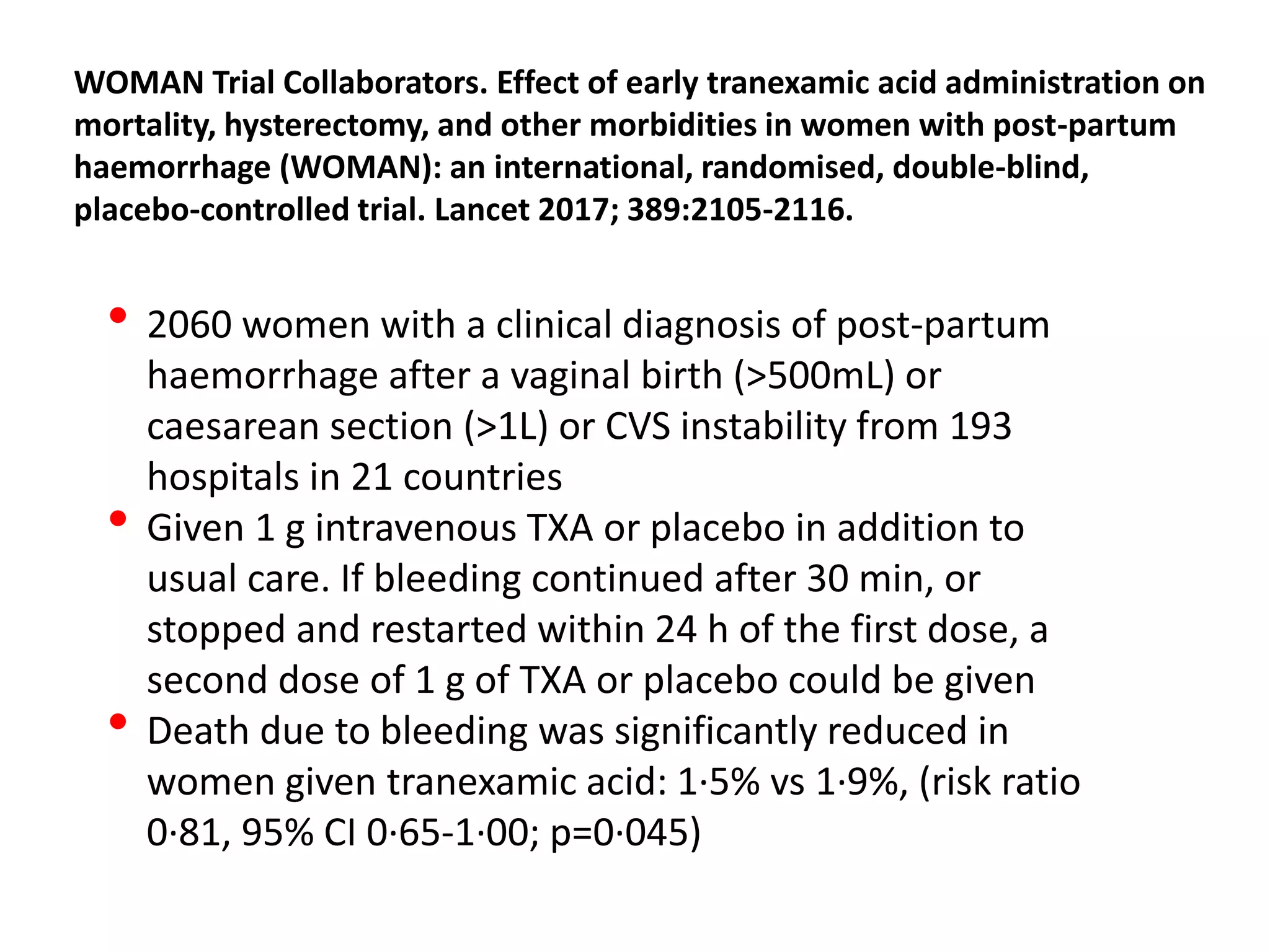
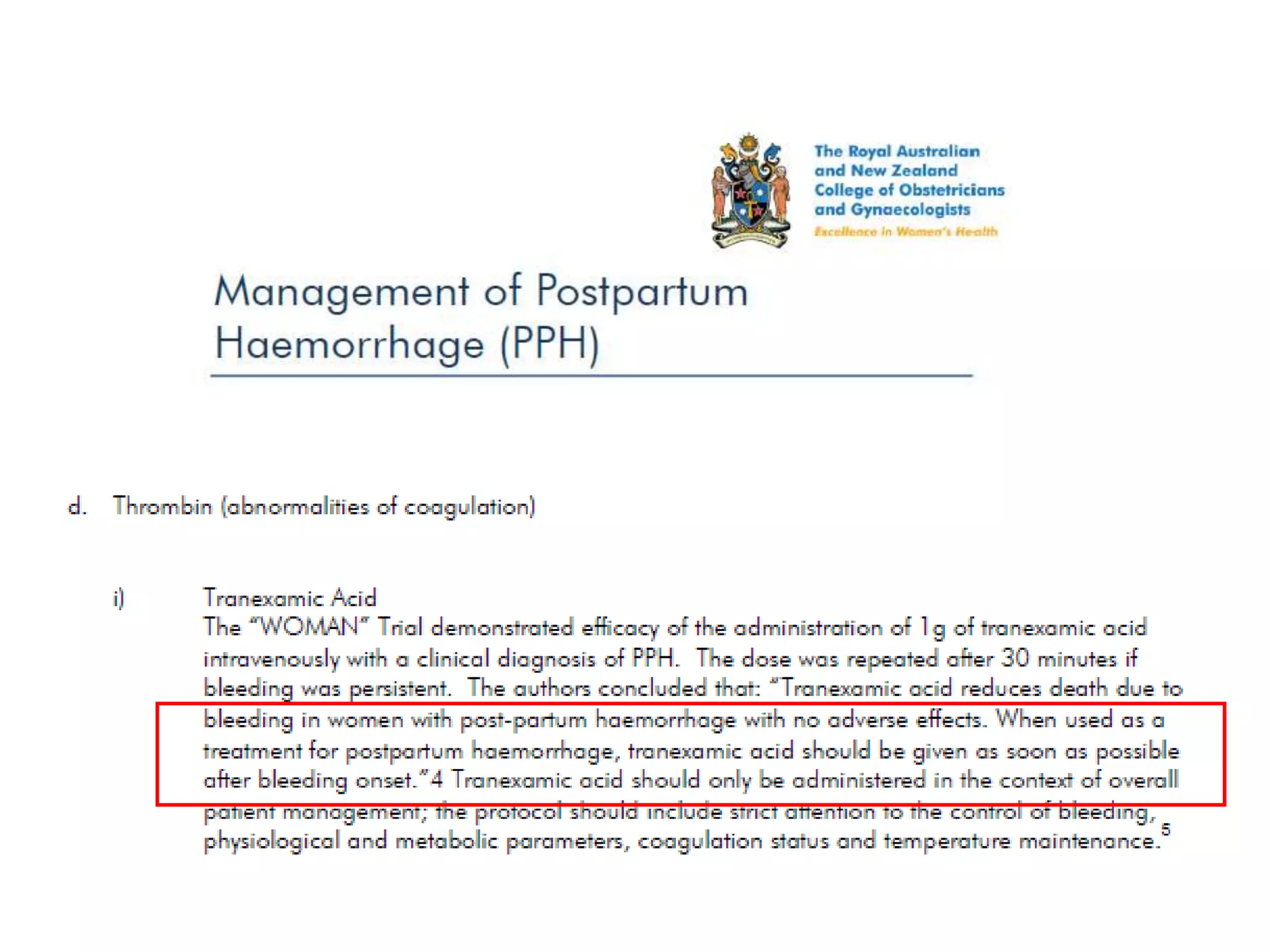
WOMAN Trial Collaborators. Effect of early tranexamic acid administration on
mortality, hysterectomy, and other morbidities in women with post-partum
haemorrhage (WOMAN): an international, randomised, double-blind,
placebo-controlled trial. Lancet 2017; 389:2105-2116.
• 2060 women with a clinical diagnosis of post-partum
haemorrhage after a vaginal birth (>500mL) or
caesarean section (>1L) or CVS instability from 193
hospitals in 21 countries
• Given 1 g intravenous TXA or placebo in addition to
usual care. If bleeding continued after 30 min, or
stopped and restarted within 24 h of the first dose, a
second dose of 1 g of TXA or placebo could be given
• Death due to bleeding was significantly reduced in
women given tranexamic acid: 1·5% vs 1·9%, (risk ratio
0·81, 95% CI 0·65-1·00; p=0·045)
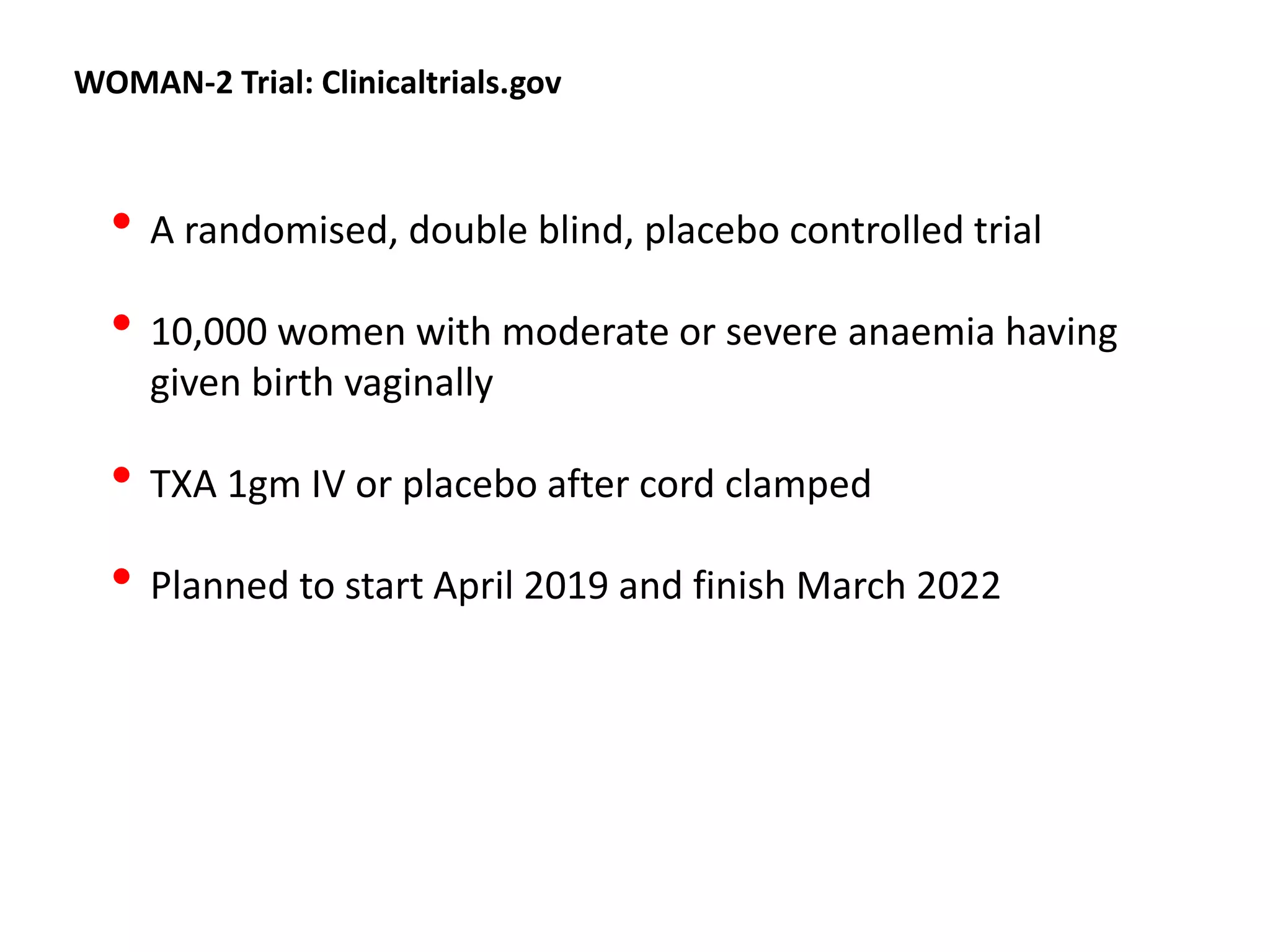
WOMAN-2 Trial: Clinicaltrials.gov
• A randomised, double blind, placebo controlled trial
• 10,000 women with moderate or severe anaemia having
given birth vaginally
• TXA 1gm IV or placebo after cord clamped
• Planned to start April 2019 and finish March 2022
Sprigg N, et al. Tranexamic acid for hyperacute primary IntraCerebral
Haemorrhage (TICH-2): an international randomised, placebo-controlled,
phase 3 superiority trial. Lancet 2018; 391:2107-2115
• 2325 patients with ICH at 124 hospitals in 12 countries.
• Participants were randomly assigned (1:1) to receive 1 g
intravenous TXA bolus followed by an 8 h infusion of 1 g TXA
or a matching placebo, within 8 h of symptom onset.
• POM= functional status at day 90, did not differ significantly
between the groups
• Mortality at 90 days 22% vs 21% (p=0.37)
Sprigg N, et al. Tranexamic acid for hyperacute primary IntraCerebral
Haemorrhage (TICH-2): an international randomised, placebo-controlled,
phase 3 superiority trial. Lancet 2018; 391:2107-2115
• 2325 patients with ICH at 124 hospitals in 12 countries.
• Participants were randomly assigned (1:1) to receive 1 g
intravenous TXA bolus followed by an 8 h infusion of 1 g TXA
or a matching placebo, within 8 h of symptom onset.
• POM= functional status at day 90, did not differ significantly
between the groups
• Mortality at 90 days 22% vs 21% (p=0.37)
• “Larger randomised trials are needed to confirm or refute a
clinically significant treatment effect.”
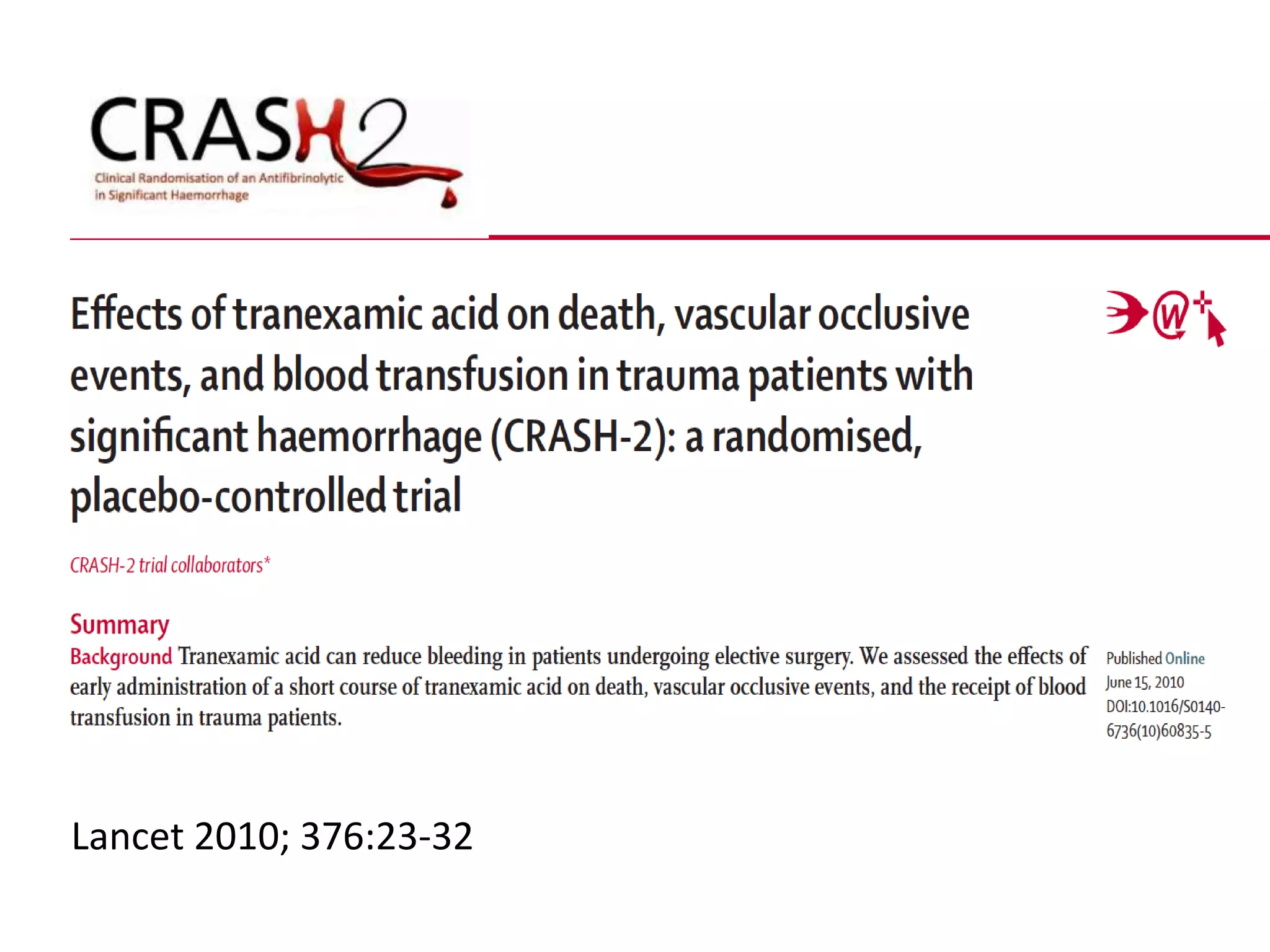
Lancet 2010; 376:23-32
• 20,211 trauma patients within 8 hours of injury and SBP<90
or HR>110 or “at risk of significant haemorrhage” in ED
given loading dose 1g TXA IV over 10 mins then IV infusion
1g over 8 hours in
• 274 hospitals in 40 countries
• POM was death in hospital within 4 weeks
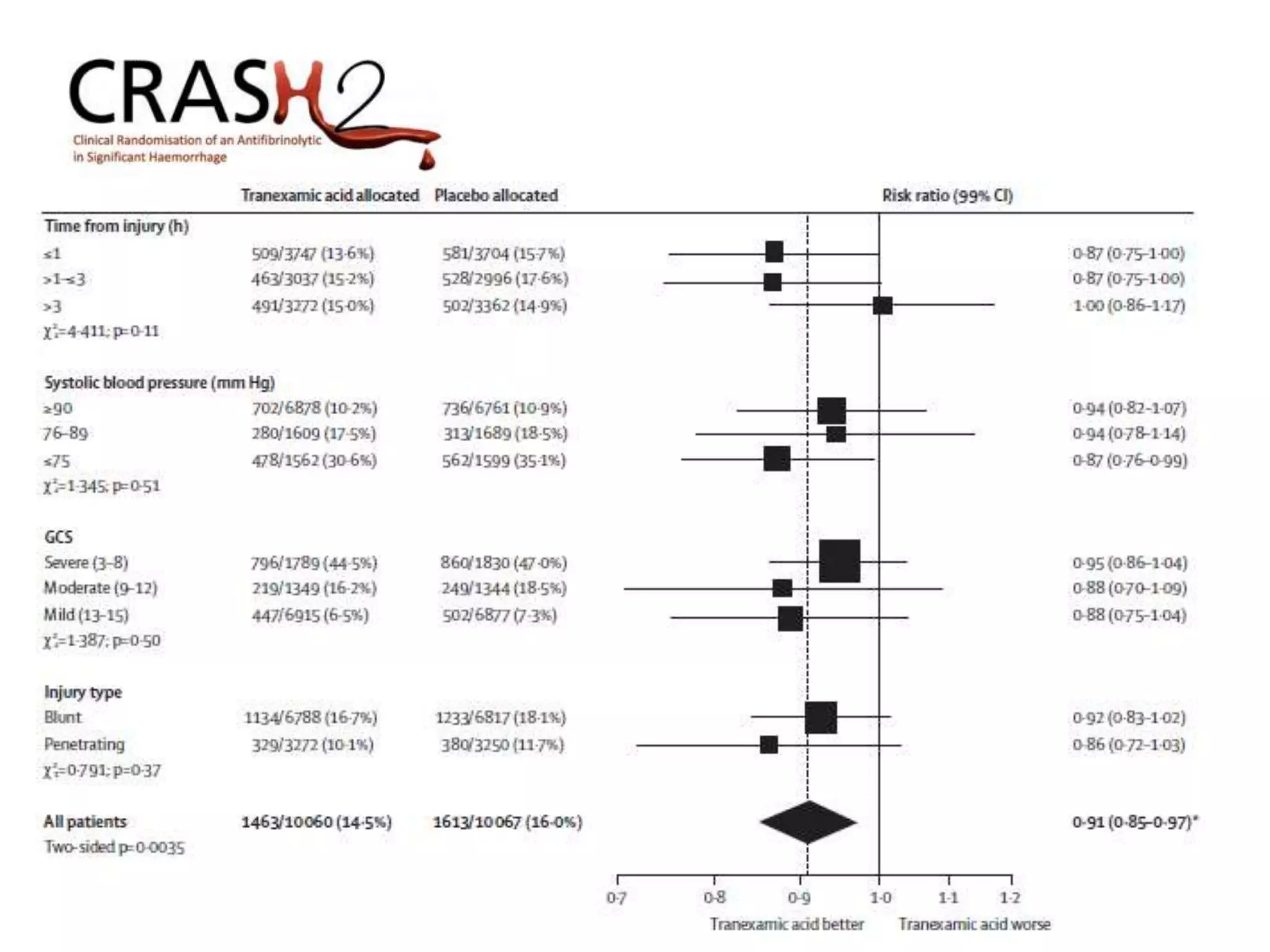
• TXA significantly reduced all-cause mortality (14.5% TXA vs
16.0% placebo: p=0.0035)
• TXA reduced risk of death due to bleeding (4.9% TXA vs
5.7% placebo: p=0.0077)
BUT
• 98% of patients in CRASH-2 were treated in
“developing” countries (India 4768, Columbia 2940,
Egypt 2234, Georgia 1783, Ecuador 1198, Indonesia 706,
Cuba 575, Malaysia 216) compared with UK 135,
Australia 17, Canada 2
• Inclusion was SBP<90 or HR>110 or “at risk of significant
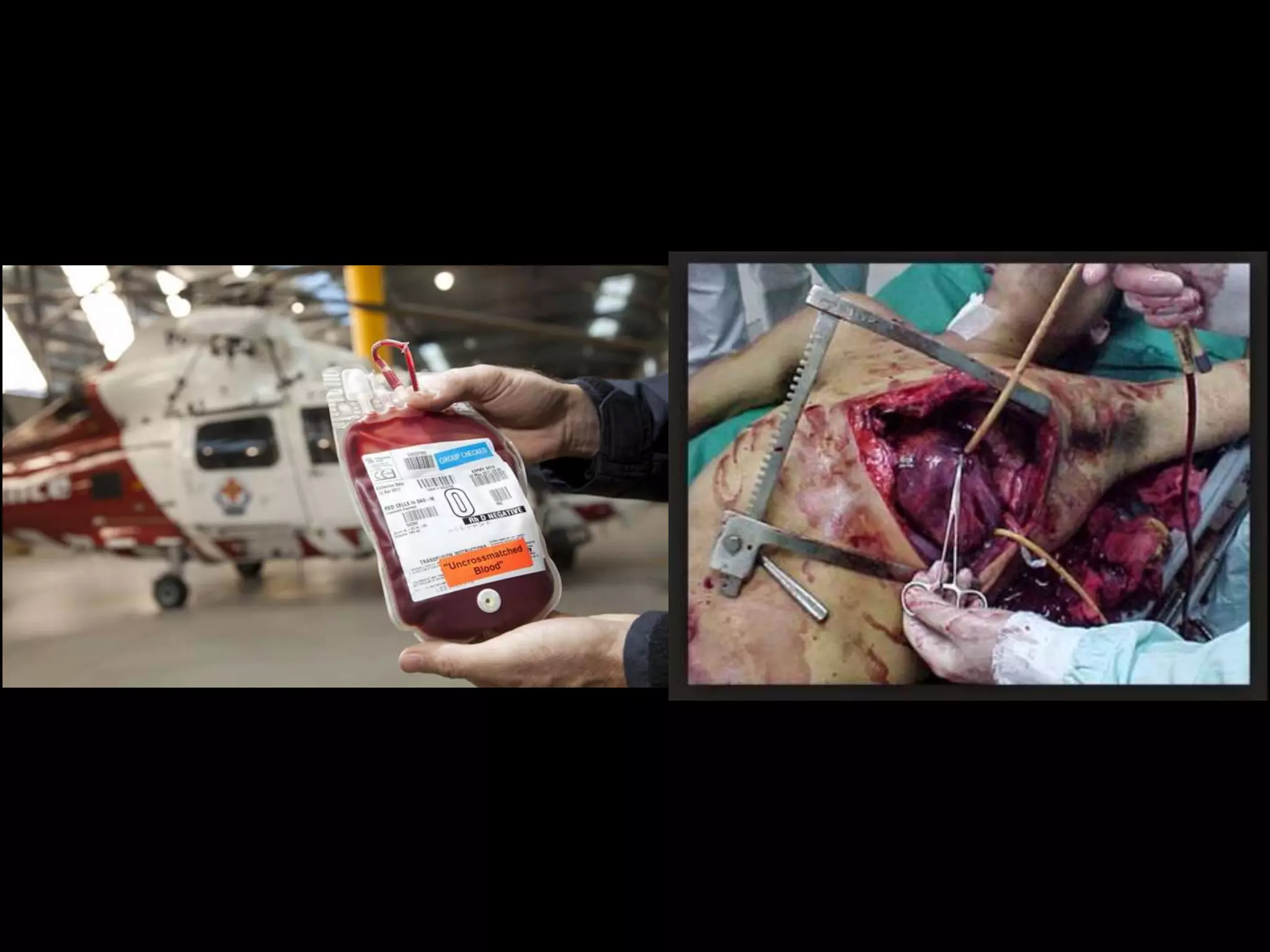
haemorrhage” and only 50% received a blood
transfusion with median 3 units
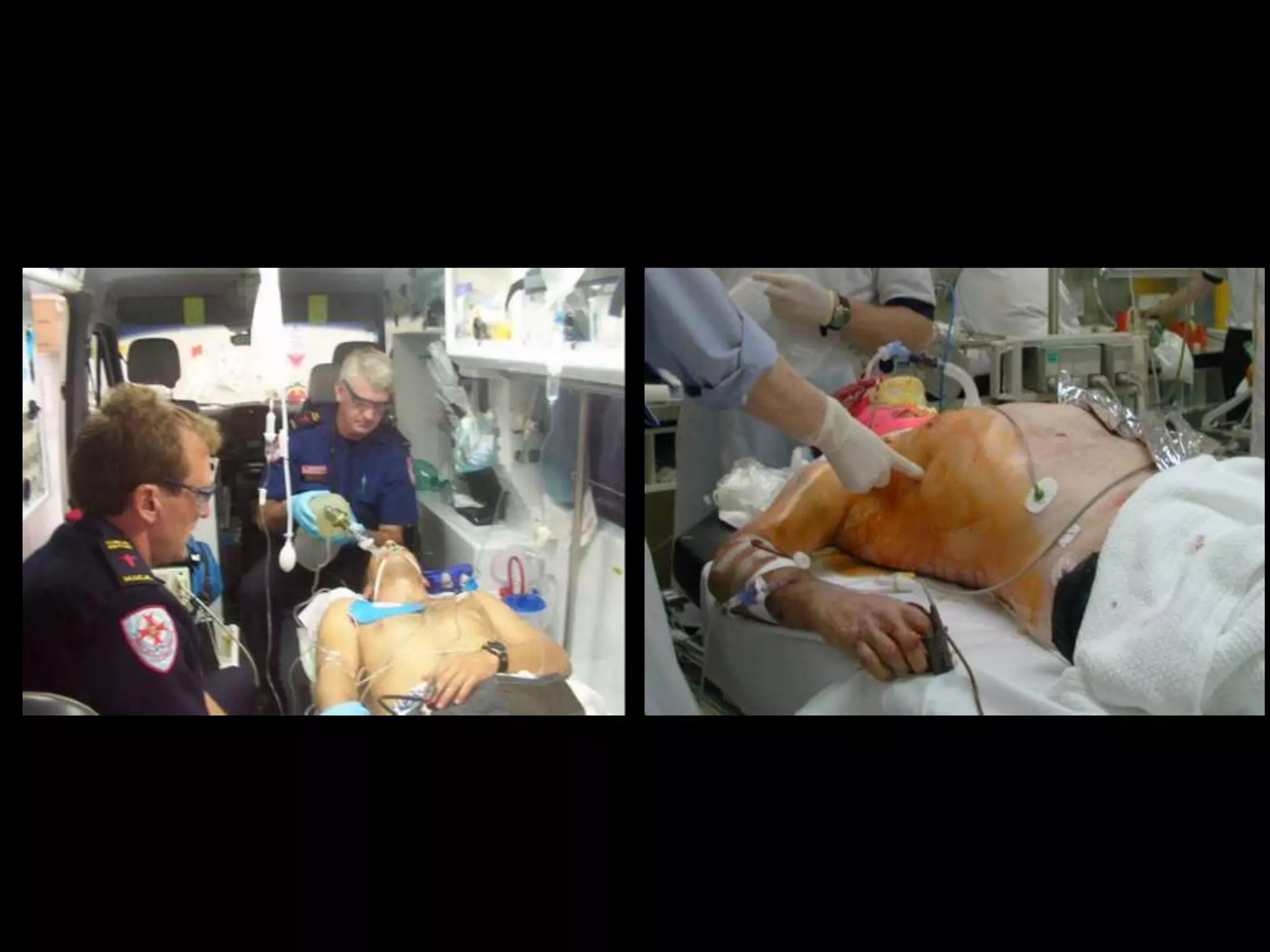
• Prehospital TXA and likely bleeding would be better ?
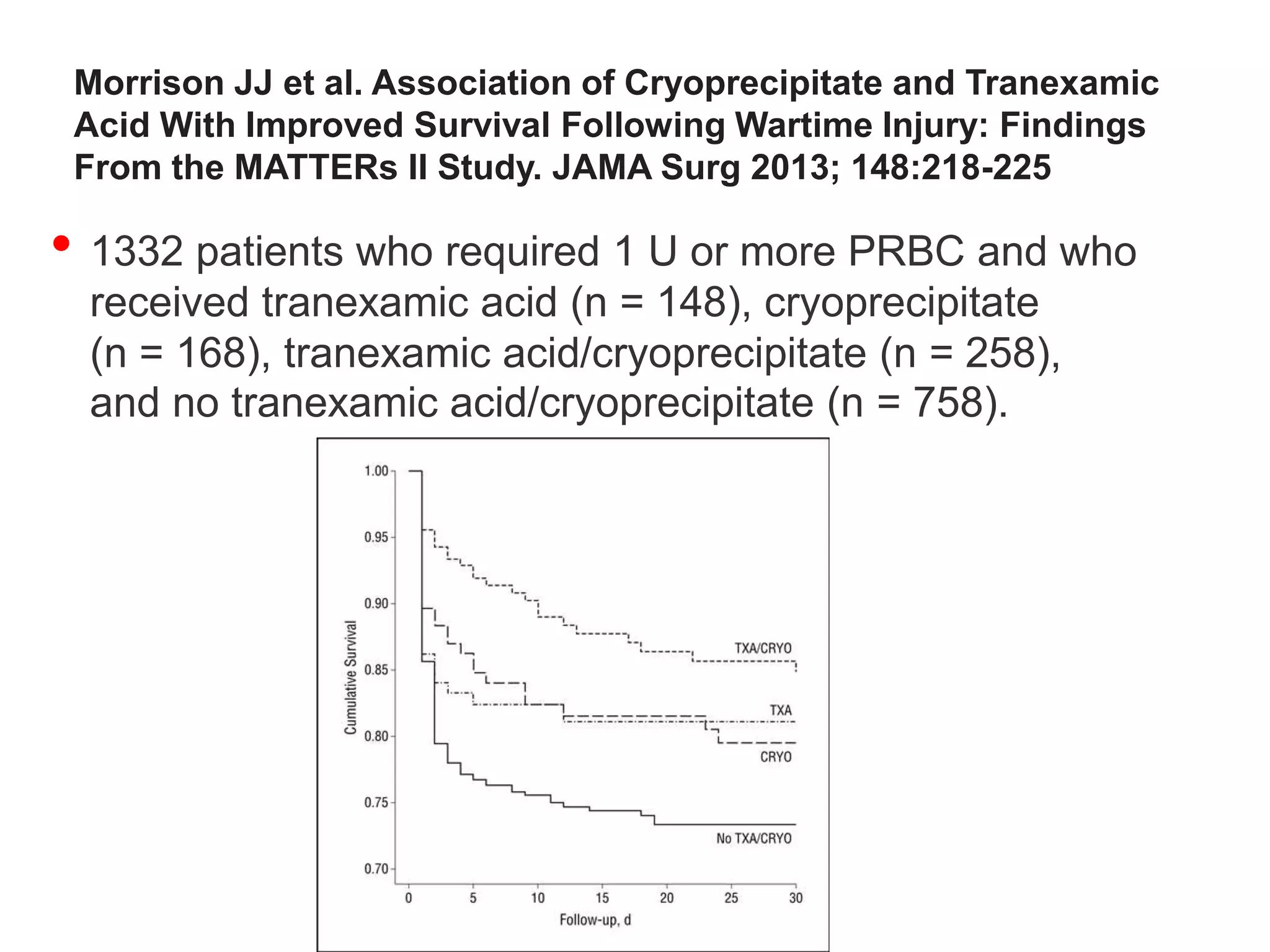
Morrison JJ et al. Association of Cryoprecipitate and Tranexamic
Acid With Improved Survival Following Wartime Injury: Findings
From the MATTERs II Study. JAMA Surg 2013; 148:218-225
• 1332 patients who required 1 U or more PRBC and who
received tranexamic acid (n = 148), cryoprecipitate
(n = 168), tranexamic acid/cryoprecipitate (n = 258),
and no tranexamic acid/cryoprecipitate (n = 758).
Boudreau RM, et al: Prehospital Tranexamic Acid Administration
During Aeromedical Transport After Injury. J Surg Res 2019;
233:132-138
• 116 patients (62 prehospital versus 54 ED) observational .
• Prehospital TXA patients were more likely to have sustained
blunt injury (76% prehospital versus 46% ED, P = 0.002).
• There were no differences between groups in injury severity
score or initial vital signs. There were no differences in
complication rates or mortality.
• Patients receiving TXA had higher rates of venous
thromboembolic events (8.1% in prehospital and 18.5% given
TXA in ED) than the overall trauma population (2.1%,
P < 0.001)
• CRASH-3 RCT of TXA in TBI
 12,735 patients
 Sites in Europe, Asia, South America
 GCS < 12 or traumatic ICH
 In ED: Ig TXA bolus and 1gm over 8 hours
 Recruiting closed January 31st 2019
 Results late 2019
Clinicaltrials.gov: 31 Phase 3 studies of TXA – actively
recruiting:
• PATCH
• Non-trauma
 Bariatric surgery
 AAA rupture
 Chronic subdural
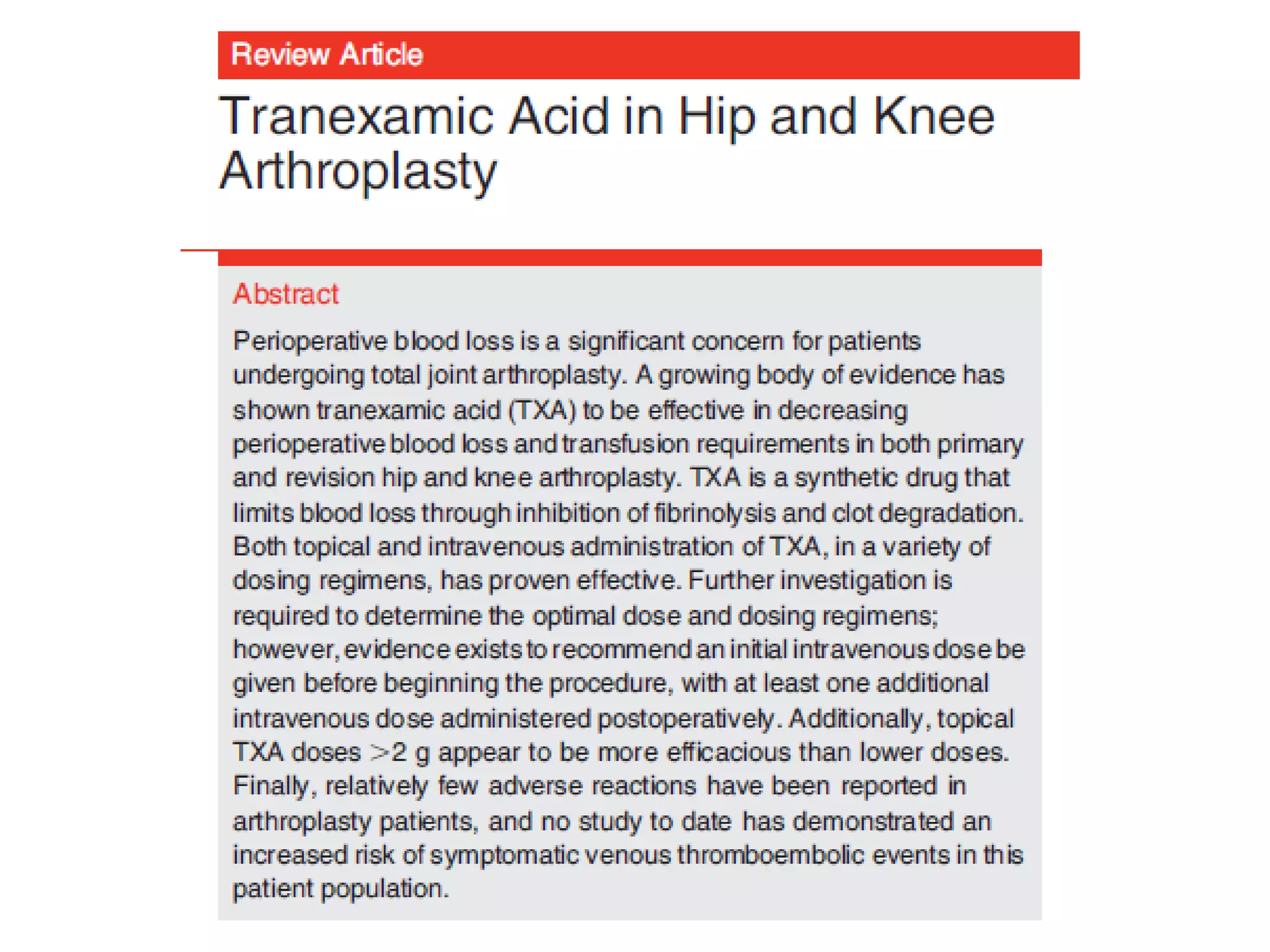
 Orthopedic surgery
 Liver surgery
 Face surgery
 Spine surgery
Pre-hospital Anti-fibrinolytics for Traumatic
Coagulopathy and Haemorrhage (PATCH) Study
Lead Investigators: Russell Gruen, Stephen Bernard, Colin McArthur,
Michael Reade, Dev Mitra, Dashiell Gantner, Brian Burns, Stephen
Rashford, Tony Smith, Stefan Mazur
Coordinating Centre: ANZICS-RC, Monash University
Melbourne, Australia
Website: www.patchtrauma.org
Email: info@patchtrauma.org
• 1186 patients >18 years with suspected traumatic
bleeding pre-hospital within 3 hours of injury using
COAST score >2
• Double blind RCT
• Allocated to TXA 1gm IV bolus or placebo and then in
ED, commence matching TXA 1gm or placebo in 1L
normal saline over 8 hours
• POM is good functional recovery (GOSe 5-8) at 6 months
• Secondary outcome measures are PE, DVT , blood
products, surgery, mortality at discharge
• Funded by NHMRC ($2M), ICF (TXA levels), NZ MRC
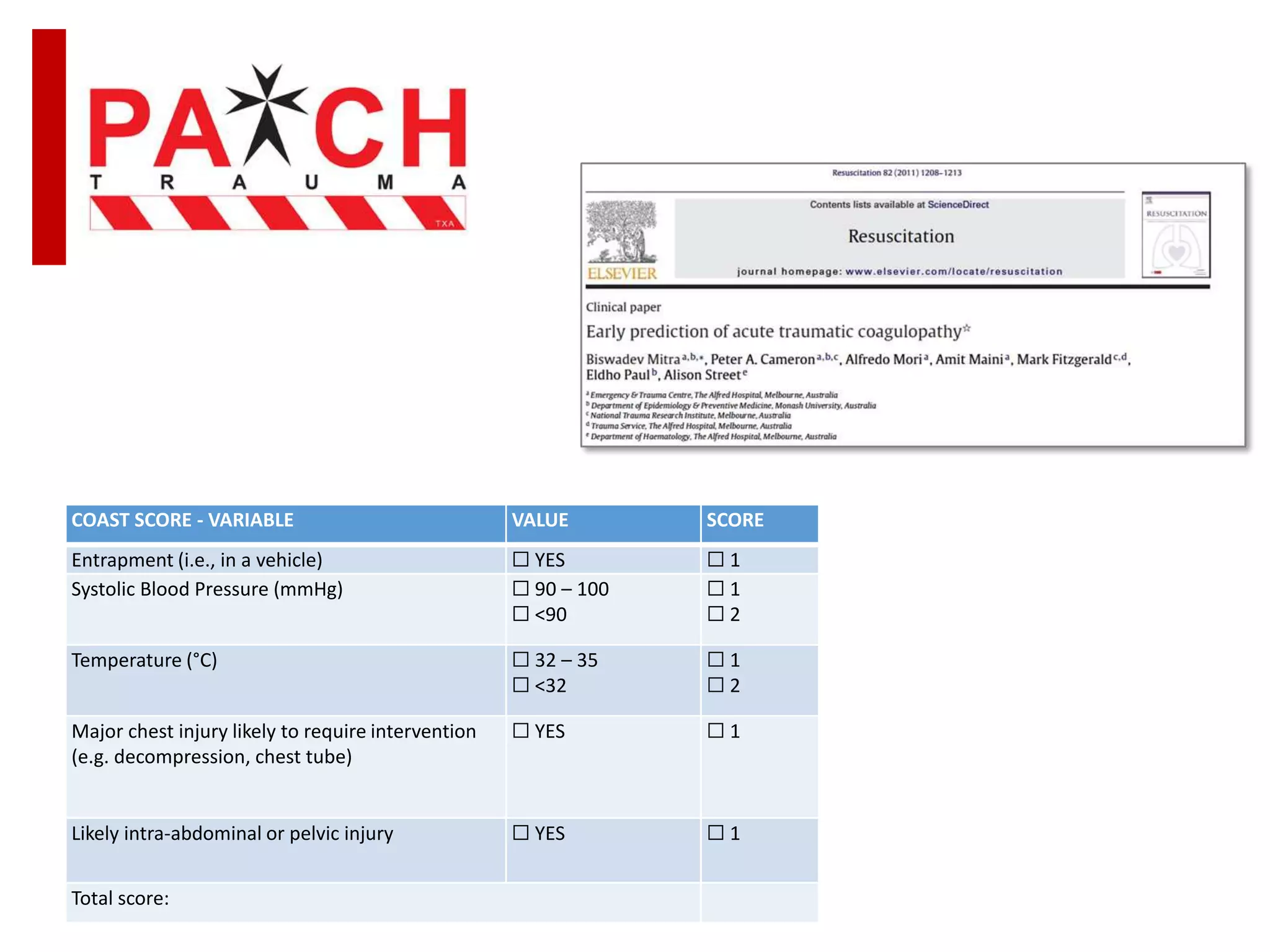
COAST SCORE - VARIABLE VALUE SCORE
Entrapment (i.e., in a vehicle) ☐ YES ☐ 1
Systolic Blood Pressure (mmHg) ☐ 90 – 100
☐ <90
☐ 1
☐ 2
Temperature (°C) ☐ 32 – 35
☐ <32
☐ 1
☐ 2
Major chest injury likely to require intervention
(e.g. decompression, chest tube)
☐ YES ☐ 1
Likely intra-abdominal or pelvic injury ☐ YES ☐ 1
Total score:
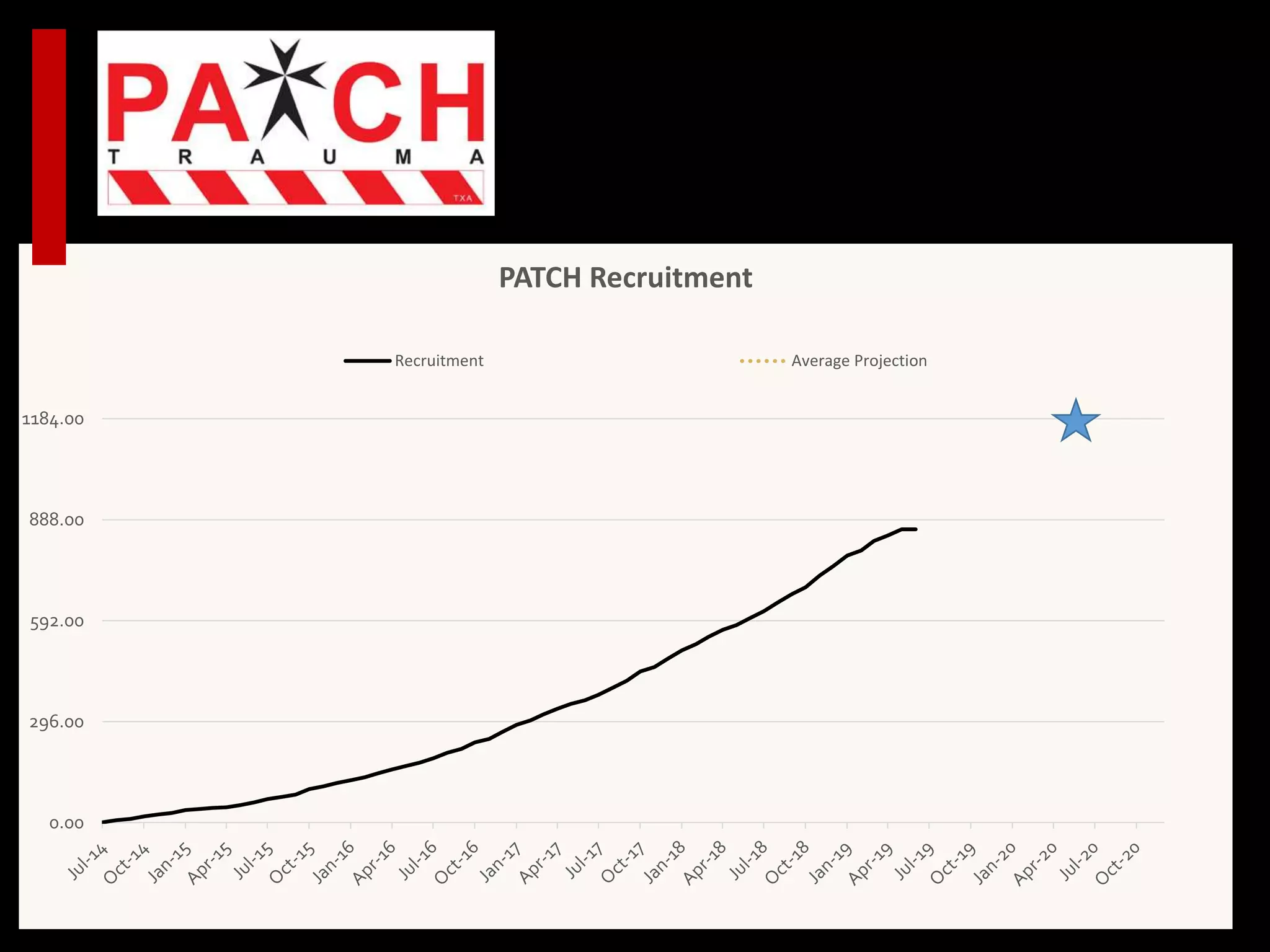
0.00
296.00
592.00
888.00
1184.00
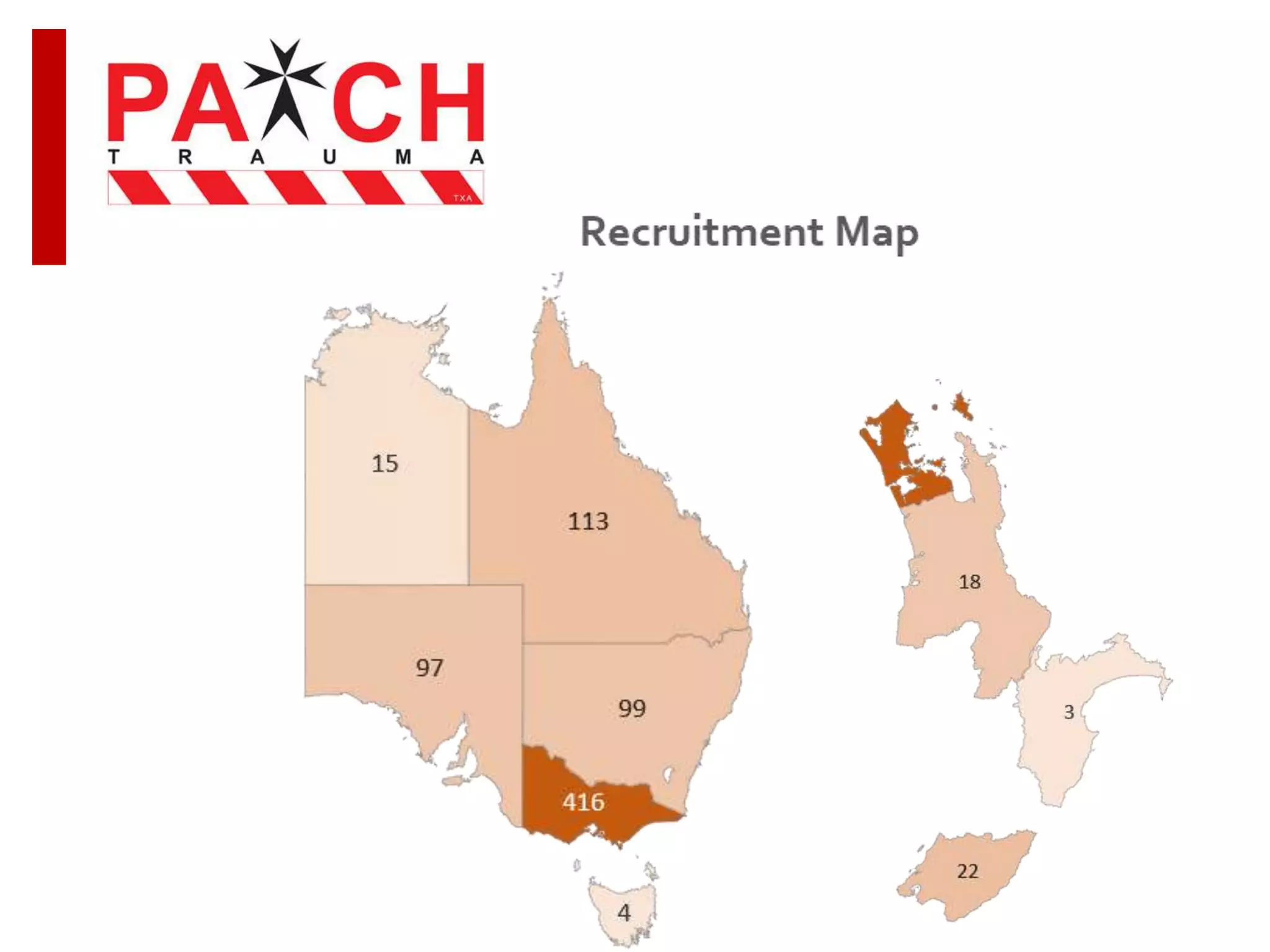
PATCH Recruitment
Recruitment Average Projection
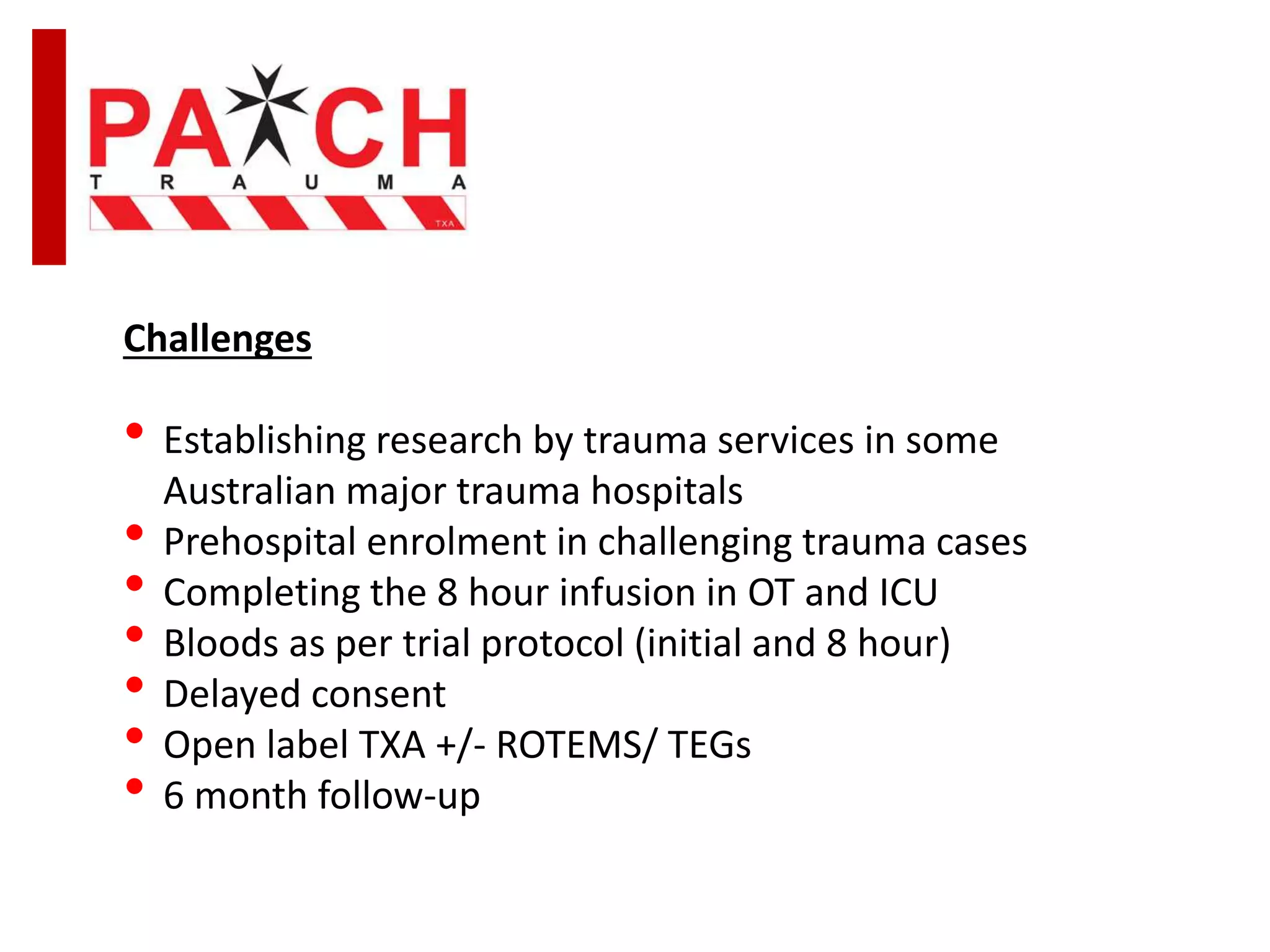
Challenges
• Establishing research by trauma services in some
Australian major trauma hospitals
• Prehospital enrolment in challenging trauma cases
• Completing the 8 hour infusion in OT and ICU
• Bloods as per trial protocol (initial and 8 hour)
• Delayed consent
• Open label TXA +/- ROTEMS/ TEGs
• 6 month follow-up
SUMMARY- SHOULD I GIVE TXA?
YES!
• CAGS
• PPH
• Joint replacement
• Trauma in a remote setting
MAYBE?
• Major Trauma Service with massive transfusion protocol
• Cardiac Valve surgery
NO!
• Spontaneous Intracranial bleed
Thank you!
s.bernard@alfred.org.au
@AmbVicMedic

Tranexamic Acid

  • 1.
    TXA in Trauma StephenBernard ASM MB BS MD FACEM FCICM FCCM
  • 4.
    Myles PS, etal. Tranexamic Acid in Patients Undergoing Coronary-Artery Surgery. N Engl J Med 2017; 376:136-148 • 4631 patients undergoing coronary artery surgery • 100mg/kg IV during first 30 minutes, dose decreased to 50mg/kg after 1526 patients had been enrolled • The POM was a composite of death and thrombotic complications (nonfatal MI, stroke, PE, renal failure, or bowel infarction) within 30 days after surgery. • The POM occurred in 16.7% in the TXA group and 18.1% in the placebo group (p=0.22) • Major haemorrhage or cardiac tamponade leading to reoperation occurred in 1.4% of the patients in the TXA group vs 2.8% of the patients in the placebo group (P=0.001) • Seizures occurred in 0.7% (TXA) vs 0.1% placebo (p=0.002)
  • 5.
    WOMAN Trial Collaborators.Effect of early tranexamic acid administration on mortality, hysterectomy, and other morbidities in women with post-partum haemorrhage (WOMAN): an international, randomised, double-blind, placebo-controlled trial. Lancet 2017; 389:2105-2116. • 2060 women with a clinical diagnosis of post-partum haemorrhage after a vaginal birth (>500mL) or caesarean section (>1L) or CVS instability from 193 hospitals in 21 countries • Given 1 g intravenous TXA or placebo in addition to usual care. If bleeding continued after 30 min, or stopped and restarted within 24 h of the first dose, a second dose of 1 g of TXA or placebo could be given • Death due to bleeding was significantly reduced in women given tranexamic acid: 1·5% vs 1·9%, (risk ratio 0·81, 95% CI 0·65-1·00; p=0·045)
  • 7.
    WOMAN-2 Trial: Clinicaltrials.gov •A randomised, double blind, placebo controlled trial • 10,000 women with moderate or severe anaemia having given birth vaginally • TXA 1gm IV or placebo after cord clamped • Planned to start April 2019 and finish March 2022
  • 9.
    Sprigg N, etal. Tranexamic acid for hyperacute primary IntraCerebral Haemorrhage (TICH-2): an international randomised, placebo-controlled, phase 3 superiority trial. Lancet 2018; 391:2107-2115 • 2325 patients with ICH at 124 hospitals in 12 countries. • Participants were randomly assigned (1:1) to receive 1 g intravenous TXA bolus followed by an 8 h infusion of 1 g TXA or a matching placebo, within 8 h of symptom onset. • POM= functional status at day 90, did not differ significantly between the groups • Mortality at 90 days 22% vs 21% (p=0.37)
  • 10.
    Sprigg N, etal. Tranexamic acid for hyperacute primary IntraCerebral Haemorrhage (TICH-2): an international randomised, placebo-controlled, phase 3 superiority trial. Lancet 2018; 391:2107-2115 • 2325 patients with ICH at 124 hospitals in 12 countries. • Participants were randomly assigned (1:1) to receive 1 g intravenous TXA bolus followed by an 8 h infusion of 1 g TXA or a matching placebo, within 8 h of symptom onset. • POM= functional status at day 90, did not differ significantly between the groups • Mortality at 90 days 22% vs 21% (p=0.37) • “Larger randomised trials are needed to confirm or refute a clinically significant treatment effect.”
  • 12.
  • 13.
    • 20,211 traumapatients within 8 hours of injury and SBP<90 or HR>110 or “at risk of significant haemorrhage” in ED given loading dose 1g TXA IV over 10 mins then IV infusion 1g over 8 hours in • 274 hospitals in 40 countries • POM was death in hospital within 4 weeks • TXA significantly reduced all-cause mortality (14.5% TXA vs 16.0% placebo: p=0.0035) • TXA reduced risk of death due to bleeding (4.9% TXA vs 5.7% placebo: p=0.0077)
  • 16.
    BUT • 98% ofpatients in CRASH-2 were treated in “developing” countries (India 4768, Columbia 2940, Egypt 2234, Georgia 1783, Ecuador 1198, Indonesia 706, Cuba 575, Malaysia 216) compared with UK 135, Australia 17, Canada 2 • Inclusion was SBP<90 or HR>110 or “at risk of significant haemorrhage” and only 50% received a blood transfusion with median 3 units • Prehospital TXA and likely bleeding would be better ?
  • 17.
    Morrison JJ etal. Association of Cryoprecipitate and Tranexamic Acid With Improved Survival Following Wartime Injury: Findings From the MATTERs II Study. JAMA Surg 2013; 148:218-225 • 1332 patients who required 1 U or more PRBC and who received tranexamic acid (n = 148), cryoprecipitate (n = 168), tranexamic acid/cryoprecipitate (n = 258), and no tranexamic acid/cryoprecipitate (n = 758).
  • 18.
    Boudreau RM, etal: Prehospital Tranexamic Acid Administration During Aeromedical Transport After Injury. J Surg Res 2019; 233:132-138 • 116 patients (62 prehospital versus 54 ED) observational . • Prehospital TXA patients were more likely to have sustained blunt injury (76% prehospital versus 46% ED, P = 0.002). • There were no differences between groups in injury severity score or initial vital signs. There were no differences in complication rates or mortality. • Patients receiving TXA had higher rates of venous thromboembolic events (8.1% in prehospital and 18.5% given TXA in ED) than the overall trauma population (2.1%, P < 0.001)
  • 19.
    • CRASH-3 RCTof TXA in TBI  12,735 patients  Sites in Europe, Asia, South America  GCS < 12 or traumatic ICH  In ED: Ig TXA bolus and 1gm over 8 hours  Recruiting closed January 31st 2019  Results late 2019
  • 20.
    Clinicaltrials.gov: 31 Phase3 studies of TXA – actively recruiting: • PATCH • Non-trauma  Bariatric surgery  AAA rupture  Chronic subdural  Orthopedic surgery  Liver surgery  Face surgery  Spine surgery
  • 21.
    Pre-hospital Anti-fibrinolytics forTraumatic Coagulopathy and Haemorrhage (PATCH) Study Lead Investigators: Russell Gruen, Stephen Bernard, Colin McArthur, Michael Reade, Dev Mitra, Dashiell Gantner, Brian Burns, Stephen Rashford, Tony Smith, Stefan Mazur Coordinating Centre: ANZICS-RC, Monash University Melbourne, Australia Website: www.patchtrauma.org Email: info@patchtrauma.org
  • 22.
    • 1186 patients>18 years with suspected traumatic bleeding pre-hospital within 3 hours of injury using COAST score >2 • Double blind RCT • Allocated to TXA 1gm IV bolus or placebo and then in ED, commence matching TXA 1gm or placebo in 1L normal saline over 8 hours • POM is good functional recovery (GOSe 5-8) at 6 months • Secondary outcome measures are PE, DVT , blood products, surgery, mortality at discharge • Funded by NHMRC ($2M), ICF (TXA levels), NZ MRC
  • 23.
    COAST SCORE -VARIABLE VALUE SCORE Entrapment (i.e., in a vehicle) ☐ YES ☐ 1 Systolic Blood Pressure (mmHg) ☐ 90 – 100 ☐ <90 ☐ 1 ☐ 2 Temperature (°C) ☐ 32 – 35 ☐ <32 ☐ 1 ☐ 2 Major chest injury likely to require intervention (e.g. decompression, chest tube) ☐ YES ☐ 1 Likely intra-abdominal or pelvic injury ☐ YES ☐ 1 Total score:
  • 24.
  • 26.
    Challenges • Establishing researchby trauma services in some Australian major trauma hospitals • Prehospital enrolment in challenging trauma cases • Completing the 8 hour infusion in OT and ICU • Bloods as per trial protocol (initial and 8 hour) • Delayed consent • Open label TXA +/- ROTEMS/ TEGs • 6 month follow-up
  • 27.
    SUMMARY- SHOULD IGIVE TXA? YES! • CAGS • PPH • Joint replacement • Trauma in a remote setting MAYBE? • Major Trauma Service with massive transfusion protocol • Cardiac Valve surgery NO! • Spontaneous Intracranial bleed
  • 28.

Editor's Notes

  • #5 Acute Traumatic Coagulopathy (ATC) and haemorrhage are not the same thing. Only about one quarter of patients who receive massive transfusions also have ATC Many patients who have ATC do not need blood transfusion Patients with ATC have higher mortality rates, whether or not they have significant bleeding. Given the advanced pre-hospital care available to trauma patients in countries like Australia and NZD, we want to see whether the patients at highest risk of death who are most likely to benefit from TXA actually DO benefit. Trauma patients with ATC are the ones most likely to benefit from TXA in our setting.
  • #6 Acute Traumatic Coagulopathy (ATC) and haemorrhage are not the same thing. Only about one quarter of patients who receive massive transfusions also have ATC Many patients who have ATC do not need blood transfusion Patients with ATC have higher mortality rates, whether or not they have significant bleeding. Given the advanced pre-hospital care available to trauma patients in countries like Australia and NZD, we want to see whether the patients at highest risk of death who are most likely to benefit from TXA actually DO benefit. Trauma patients with ATC are the ones most likely to benefit from TXA in our setting.
  • #7 Acute Traumatic Coagulopathy (ATC) and haemorrhage are not the same thing. Only about one quarter of patients who receive massive transfusions also have ATC Many patients who have ATC do not need blood transfusion Patients with ATC have higher mortality rates, whether or not they have significant bleeding. Given the advanced pre-hospital care available to trauma patients in countries like Australia and NZD, we want to see whether the patients at highest risk of death who are most likely to benefit from TXA actually DO benefit. Trauma patients with ATC are the ones most likely to benefit from TXA in our setting.
  • #8 Acute Traumatic Coagulopathy (ATC) and haemorrhage are not the same thing. Only about one quarter of patients who receive massive transfusions also have ATC Many patients who have ATC do not need blood transfusion Patients with ATC have higher mortality rates, whether or not they have significant bleeding. Given the advanced pre-hospital care available to trauma patients in countries like Australia and NZD, we want to see whether the patients at highest risk of death who are most likely to benefit from TXA actually DO benefit. Trauma patients with ATC are the ones most likely to benefit from TXA in our setting.
  • #10 Acute Traumatic Coagulopathy (ATC) and haemorrhage are not the same thing. Only about one quarter of patients who receive massive transfusions also have ATC Many patients who have ATC do not need blood transfusion Patients with ATC have higher mortality rates, whether or not they have significant bleeding. Given the advanced pre-hospital care available to trauma patients in countries like Australia and NZD, we want to see whether the patients at highest risk of death who are most likely to benefit from TXA actually DO benefit. Trauma patients with ATC are the ones most likely to benefit from TXA in our setting.
  • #11 Acute Traumatic Coagulopathy (ATC) and haemorrhage are not the same thing. Only about one quarter of patients who receive massive transfusions also have ATC Many patients who have ATC do not need blood transfusion Patients with ATC have higher mortality rates, whether or not they have significant bleeding. Given the advanced pre-hospital care available to trauma patients in countries like Australia and NZD, we want to see whether the patients at highest risk of death who are most likely to benefit from TXA actually DO benefit. Trauma patients with ATC are the ones most likely to benefit from TXA in our setting.
  • #13 Large international study conducted to see whether TXA could benefit trauma patients.
  • #18 Acute Traumatic Coagulopathy (ATC) and haemorrhage are not the same thing. Only about one quarter of patients who receive massive transfusions also have ATC Many patients who have ATC do not need blood transfusion Patients with ATC have higher mortality rates, whether or not they have significant bleeding. Given the advanced pre-hospital care available to trauma patients in countries like Australia and NZD, we want to see whether the patients at highest risk of death who are most likely to benefit from TXA actually DO benefit. Trauma patients with ATC are the ones most likely to benefit from TXA in our setting.
  • #19 Acute Traumatic Coagulopathy (ATC) and haemorrhage are not the same thing. Only about one quarter of patients who receive massive transfusions also have ATC Many patients who have ATC do not need blood transfusion Patients with ATC have higher mortality rates, whether or not they have significant bleeding. Given the advanced pre-hospital care available to trauma patients in countries like Australia and NZD, we want to see whether the patients at highest risk of death who are most likely to benefit from TXA actually DO benefit. Trauma patients with ATC are the ones most likely to benefit from TXA in our setting.
  • #22 Collaboration between ambulance services, and emergency, trauma and critical care services
  • #23 Collaboration between ambulance services, and emergency, trauma and critical care services
  • #24 Collaboration between ambulance services, and emergency, trauma and critical care services
  • #27 Collaboration between ambulance services, and emergency, trauma and critical care services