Management of
Bleeding in Trauma
Supervised by: Dr. Abdel-Karim Saleh Al-Abbadi
Done by: Dr. Faisal Rawagah
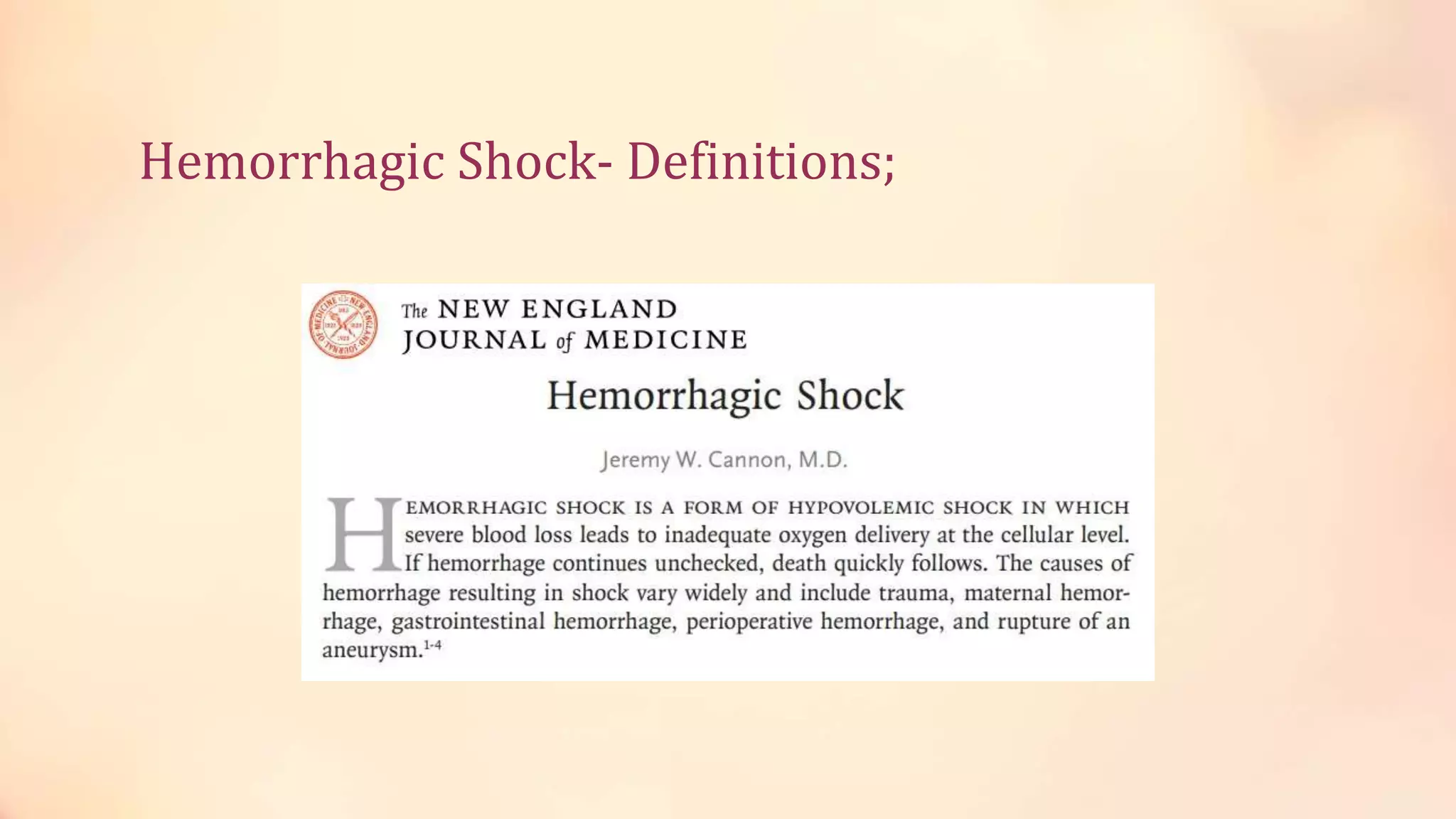
Hemorrhagic Shock- Definitions;
1Initial resuscitation and prevention of further
bleeding
• The time elapsed between injury and bleeding control be minimised.
-Spahn DR, Bouillon B, Cerny V, Duranteau J, Filipescu D, Hunt BJ, Komadina R, Maegele M, Nardi G, Riddez L, Samama CM, Vincent JL, Rossaint R. The European guideline on management of major bleeding and coagulopathy following trauma: fifth edition. Crit
Care. 2019 Mar 27;23(1):98. doi: 10.1186/s13054-019-2347-3. PMID: 30917843; PMCID: PMC6436241.
-Schwartz’s Principles of Surgery Eleventh Edition: chapter 5 Shock, page 131- 156
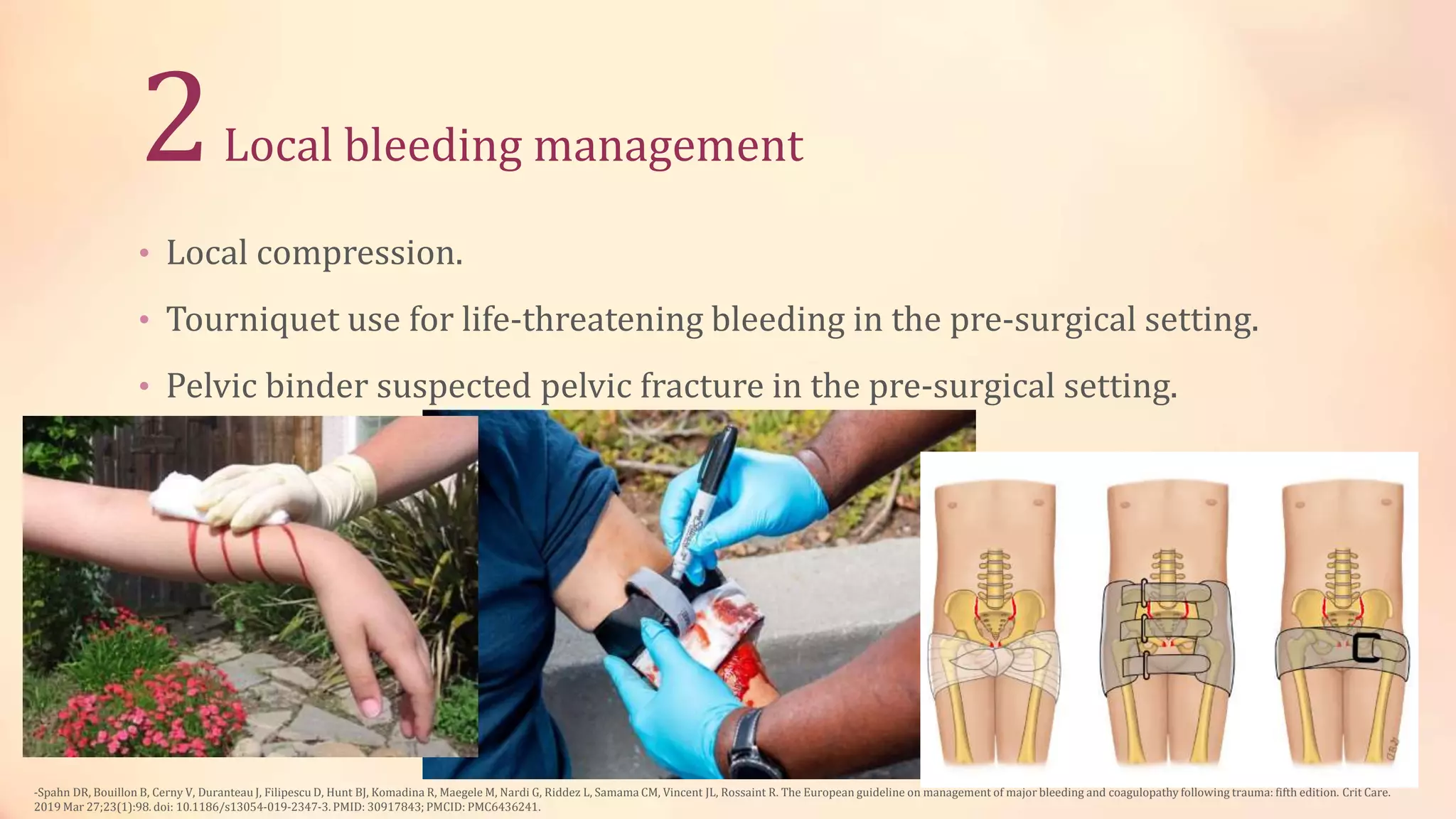
2Local bleeding management
• Local compression.
• Tourniquet use for life-threatening bleeding in the pre-surgical setting.
• Pelvic binder suspected pelvic fracture in the pre-surgical setting.
-Spahn DR, Bouillon B, Cerny V, Duranteau J, Filipescu D, Hunt BJ, Komadina R, Maegele M, Nardi G, Riddez L, Samama CM, Vincent JL, Rossaint R. The European guideline on management of major bleeding and coagulopathy following trauma: fifth edition. Crit Care.
2019 Mar 27;23(1):98. doi: 10.1186/s13054-019-2347-3. PMID: 30917843; PMCID: PMC6436241.
• Topical Hemostatic Agents
• Passive or Active
• Absorbable Agents
• Gelatin foams
• Oxidized cellulose (Surgicel)
• Microfibrillar collagens
• Biologic Agents
• Thrombin, fibrin sealants
• Platelet sealants
• Synthetic Agents
Schwartz’s Principles of Surgery Eleventh Edition: chapter 4 Hemostasis, Surgical Bleeding, and Transfusion , page 103- 130
3Ventilation
• Avoidance of hypoxaemia.
• Normoventilation of trauma patients.
• Hyperventilation in the presence of signs of imminent cerebral herniation.
4Diagnosis and monitoring of bleeding
• Shock index (SI) = Heart Rate/Systolic BP
• Increased risk for transfusion
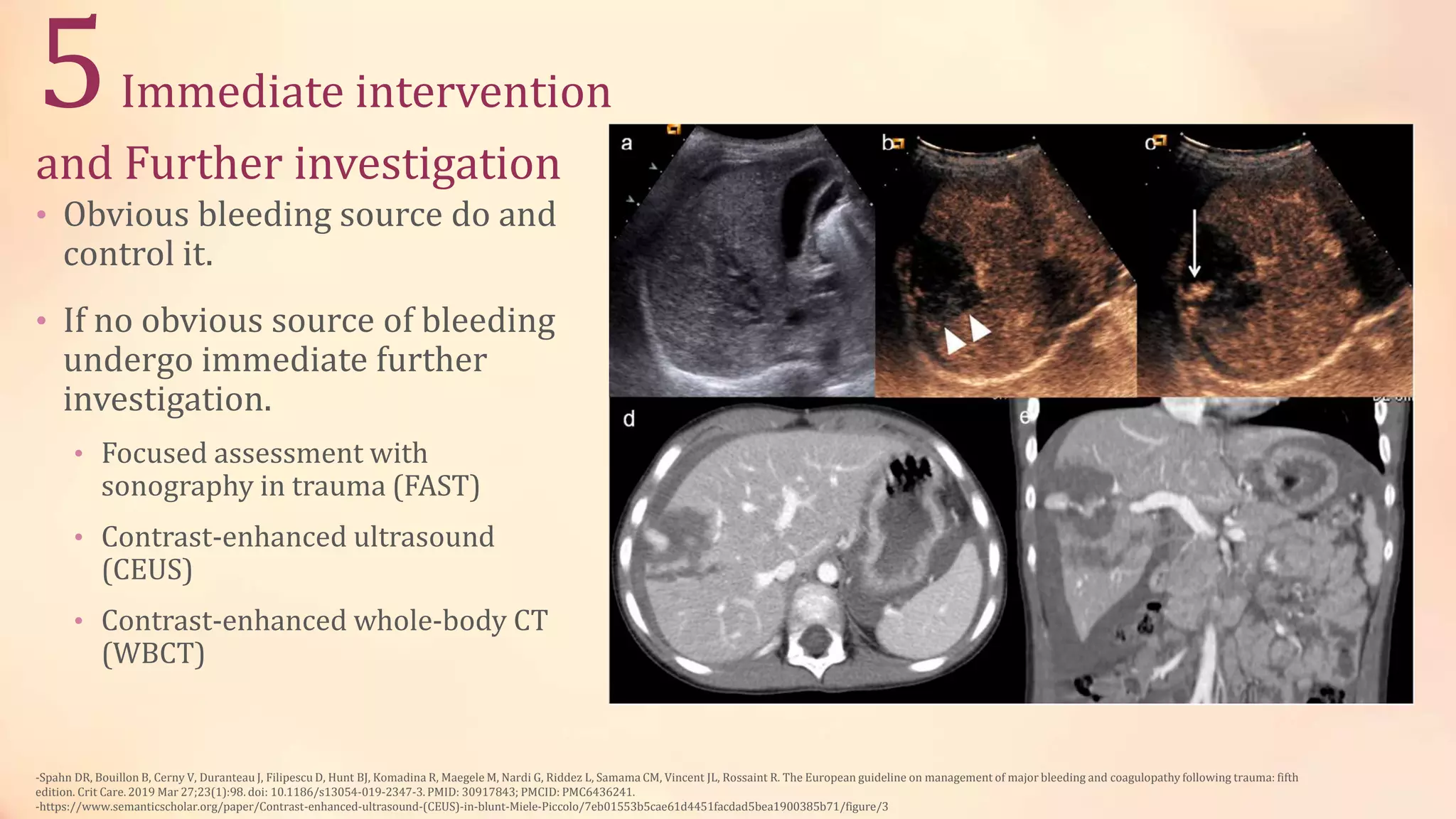
5Immediate intervention
and Further investigation
• Obvious bleeding source do and
control it.
• If no obvious source of bleeding
undergo immediate further
investigation.
• Focused assessment with
sonography in trauma (FAST)
• Contrast-enhanced ultrasound
(CEUS)
• Contrast-enhanced whole-body CT
(WBCT)
-Spahn DR, Bouillon B, Cerny V, Duranteau J, Filipescu D, Hunt BJ, Komadina R, Maegele M, Nardi G, Riddez L, Samama CM, Vincent JL, Rossaint R. The European guideline on management of major bleeding and coagulopathy following trauma: fifth
edition. Crit Care. 2019 Mar 27;23(1):98. doi: 10.1186/s13054-019-2347-3. PMID: 30917843; PMCID: PMC6436241.
-https://www.semanticscholar.org/paper/Contrast-enhanced-ultrasound-(CEUS)-in-blunt-Miele-Piccolo/7eb01553b5cae61d4451facdad5bea1900385b71/figure/3
• Repeated Hb measurements as a laboratory marker for bleeding.
• ABGs -Serum lactate and/ or base deficit.
• Coagulation monitoring.
• Pt Ptt INR
• Platelet counts
• Clauss fibrinogen level
• Viscoelastic method (VEM)
Tissue oxygenation, volume, fluids
and temperature
Tissue oxygenation
6Volume replacement
• Restricted volume replacement strategy (1–1.5 L crystalloid)
• Permissive hypotension target systolic blood pressure of 80–90mmHg,
(mean BP 50–60mmHg) until Bleeding control.
• If GCS ≤ 8, keep mean BP ≥ 80 mmHg.
• Isotonic crystalloid solutions be initiated in the hypotensive bleeding
trauma patient.
• Balanced electrolyte solutions VS the avoidance of saline solutions.
• Hypotonic solutions such as Ringer’s lactate be avoided in patients with severe head
trauma.
-Spahn DR, Bouillon B, Cerny V, Duranteau J, Filipescu D, Hunt BJ, Komadina R, Maegele M, Nardi G, Riddez L, Samama CM, Vincent JL, Rossaint R. The European guideline on management of major bleeding and coagulopathy following trauma: fifth
edition. Crit Care. 2019 Mar 27;23(1):98. doi: 10.1186/s13054-019-2347-3. PMID: 30917843; PMCID: PMC6436241
-Advanced Trauma Life Support Student Course Manual 10th edition
7Massive Transfusion (MT)
• Defined as requiring the administration
of ≥3 units of red blood cells within any
hour of admission
• Adult Massive Transfusion Guideline:
• The blood bank should strive to deliver
plasma, platelets, and RBCs in a 1:1:1 ratio
• The blood bank will have 6 RBCs, 6 FFP, and a
6-pack of platelets.
• The MT will continue until stopped by the
attending physician.
• TASH Score
Schwartz’s Principles of Surgery Eleventh Edition: chapter 5 Shock, page 131- 156
• Hb target 70 to 90 g/L
• Reduce heat loss and warm the hypothermic patient
• Use warm (37°C to 40°C) IV solutions
Rapid control of bleeding
Resuscitative endovascular balloon occlusion of
the aorta (REBOA)
-Resuscitative endovascular balloon occlusion of the aorta: current evidence Open Access Emerg Med. 2019; 11: 29–38. Published online 2019 Jan 14. doi: 10.2147/OAEM.S166087
-Sridhar, Srikanth MD*; Gumbert, Sam D. MD*; Stephens, Christopher MD*; Moore, Laura J. MD†; Pivalizza, Evan G. MBChB, FFASA* Resuscitative Endovascular Balloon Occlusion of the Aorta: Principles, Initial Clinical Experience, and Considerations for the
Anesthesiologist, Anesthesia & Analgesia: September 2017 - Volume 125 - Issue 3 - p 884-890 doi: 10.1213/ANE.0000000000002150
8
9Damage-control surgery
Jeremy M. Hsu and Tam N. Pham Damage control in the injured patient Int J Crit Illn Inj Sci. 2011 Jan-Jun; 1(1): 66–72. doi: 10.4103/2229-5151.79285
10Initial management of
bleeding and coagulopathy
Thromboelastogram
• R-time (5-10 min)
• Coltting Factars / Anticoagulants
• K(Kinetics) (1-3min)
• Fibrinogen
• α-Angle (50°-70°)
• Rate of Clot formation
• MA (Max. Amplitude)(55-73 mm)
• Platelets / Fibrin / Factar II,III
• Ly30 (0-8%)
• Fibrinolysis
Tranexamic Acid (TXA)
• TXA within 3 h after injury (best within 1 h)
• Trauma patient who is bleeding or at risk of significant haemorrhage
• Loading dose of 1 g infused over 10 min, followed by an i.v. infusion of 1 g over 8 h
Goal-directed therapy
• Fresh frozen plasma-based management
• Guided by standard laboratory coagulation screening parameters (PT and/or APTT >
1.5 times normal and/or viscoelastic evidence of a coagulation factor deficiency)
Coagulation factor concentrate-based
management
• Hypofibrinogenaemia (fibrinogen level ≤ 1.5 g/L)
• 15–20 single-donor units of cryoprecipitate
• 3–4 g fibrinogen concentrate
• Fibrinogen levels are normal
• PCC is administered (20-40 U/Kg)
Platelets
• Platelet count above - 50 × 10⁹/L.
• patients with ongoing bleeding and/or TBI - 100 × 10⁹/L
• Calcium:
• Ionized calcium levels be monitored
• Keep in the normal range (4.1-4.9 mg/dL)
• activated coagulation factor VII
• not recommend as first-line treatment
-Casu S Simplified treatment algorithm for the management of trauma-induced hemorrhage without viscoelastic testing Trauma Surgery & Acute Care Open 2021;6:e000779. doi: 10.1136/tsaco-2021-000779
11Reversal of antithrombotic agents
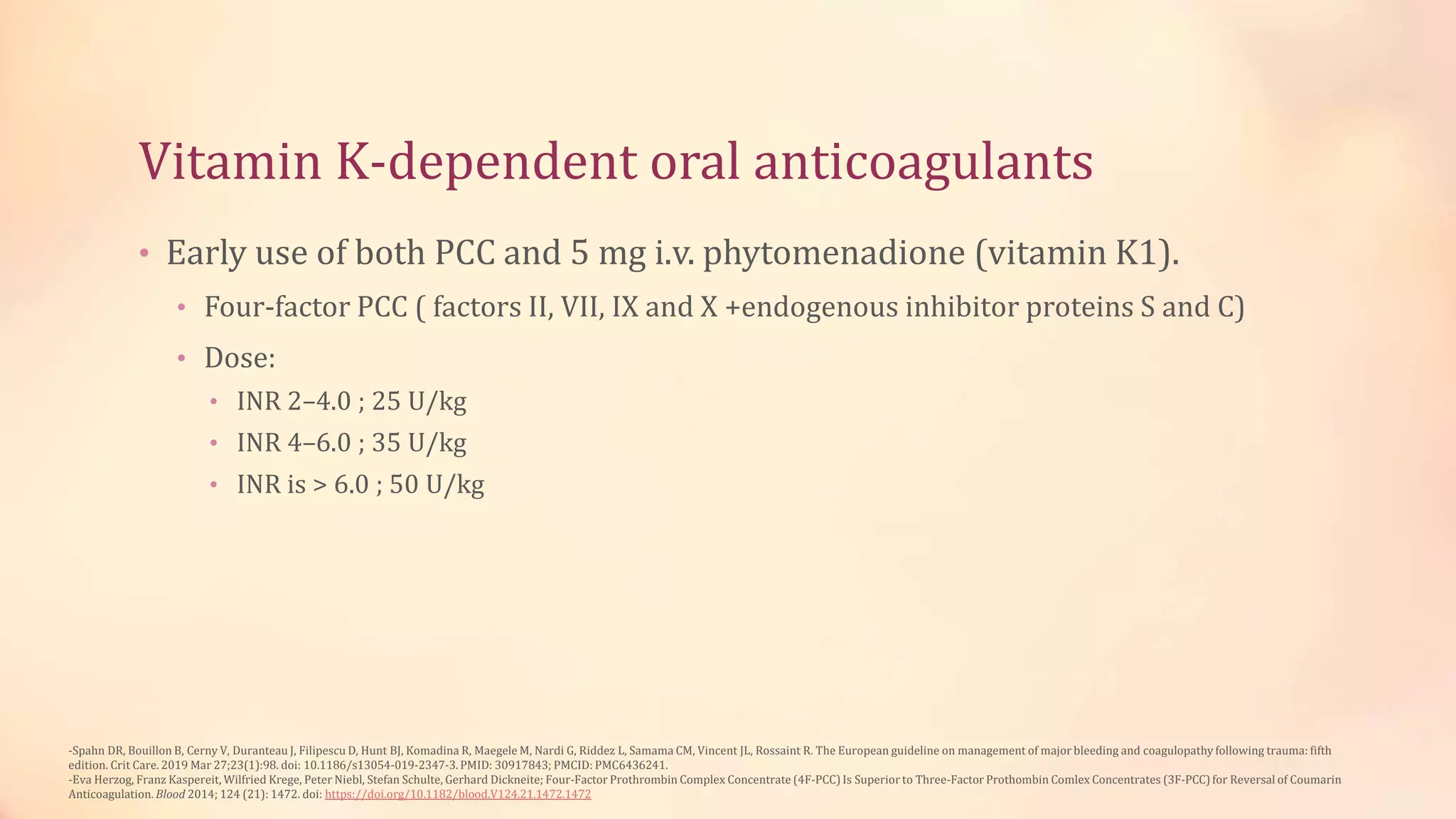
Vitamin K-dependent oral anticoagulants
• Early use of both PCC and 5 mg i.v. phytomenadione (vitamin K1).
• Four-factor PCC ( factors II, VII, IX and X +endogenous inhibitor proteins S and C)
• Dose:
• INR 2–4.0 ; 25 U/kg
• INR 4–6.0 ; 35 U/kg
• INR is > 6.0 ; 50 U/kg
-Spahn DR, Bouillon B, Cerny V, Duranteau J, Filipescu D, Hunt BJ, Komadina R, Maegele M, Nardi G, Riddez L, Samama CM, Vincent JL, Rossaint R. The European guideline on management of major bleeding and coagulopathy following trauma: fifth
edition. Crit Care. 2019 Mar 27;23(1):98. doi: 10.1186/s13054-019-2347-3. PMID: 30917843; PMCID: PMC6436241.
-Eva Herzog, Franz Kaspereit, Wilfried Krege, Peter Niebl, Stefan Schulte, Gerhard Dickneite; Four-Factor Prothrombin Complex Concentrate (4F-PCC) Is Superior to Three-Factor Prothombin Comlex Concentrates (3F-PCC) for Reversal of Coumarin
Anticoagulation. Blood 2014; 124 (21): 1472. doi: https://doi.org/10.1182/blood.V124.21.1472.1472
Direct oral anticoagulants—factor Xa inhibitors
• apixaban, edoxaban or rivaroxaban (measurement plasma levels)
• If bleeding is life-threatening, TXA 15 mg/kg (or 1 g) intravenously + PCC (25–50
U/kg.
Direct oral anticoagulants—direct thrombin
inhibitors
• Dabigatran plasma levels
• Standard thrombin time
• If bleeding is life-threatening idarucizumab (5 g intravenously) + TXA 15
mg/kg (or 1 g) intravenously
Antiplatelet agents
• Platelets
• Desmopressin (0.3 μg/kg)
References
• Hemorrhagic Shock Jeremy W. Cannon, M.D. January 25, 2018 N Engl J Med 2018; 378:370-379 DOI: 10.1056/NEJMra1705649
• Spahn DR, Bouillon B, Cerny V, Duranteau J, Filipescu D, Hunt BJ, Komadina R, Maegele M, Nardi G, Riddez L, Samama CM, Vincent JL, Rossaint R. The European guideline on
management of major bleeding and coagulopathy following trauma: fifth edition. Crit Care. 2019 Mar 27;23(1):98. doi: 10.1186/s13054-019-2347-3. PMID: 30917843; PMCID:
PMC6436241.
• Schwartz’s Principles of Surgery Eleventh Edition: chapter 5 Shock, page 131- 156
• Schwartz’s Principles of Surgery Eleventh Edition: chapter 4 Hemostasis, Surgical Bleeding, and Transfusion , page 103- 130
• Resuscitative endovascular balloon occlusion of the aorta: current evidence Open Access Emerg Med. 2019; 11: 29–38. Published online 2019 Jan 14. doi: 10.2147/OAEM.S166087
• Sridhar, Srikanth MD*; Gumbert, Sam D. MD*; Stephens, Christopher MD*; Moore, Laura J. MD†; Pivalizza, Evan G. MBChB, FFASA* Resuscitative Endovascular Balloon Occlusion of
the Aorta: Principles, Initial Clinical Experience, and Considerations for the Anesthesiologist, Anesthesia & Analgesia: September 2017 - Volume 125 - Issue 3 - p 884-890 doi:
10.1213/ANE.0000000000002150
• Jeremy M. Hsu and Tam N. Pham Damage control in the injured patient Int J Crit Illn Inj Sci. 2011 Jan-Jun; 1(1): 66–72. doi: 10.4103/2229-5151.79285
• https://www.semanticscholar.org/paper/Contrast-enhanced-ultrasound-(CEUS)-in-blunt-Miele-Piccolo/7eb01553b5cae61d4451facdad5bea1900385b71/figure/3
• Advanced Trauma Life Support Student Course Manual 10th edition
• Casu S Simplified treatment algorithm for the management of trauma-induced hemorrhage without viscoelastic testing Trauma Surgery & Acute Care
Open 2021;6:e000779. doi: 10.1136/tsaco-2021-000779
• Eva Herzog, Franz Kaspereit, Wilfried Krege, Peter Niebl, Stefan Schulte, Gerhard Dickneite; Four-Factor Prothrombin Complex Concentrate (4F-PCC) Is Superior to Three-Factor
Prothombin Comlex Concentrates (3F-PCC) for Reversal of Coumarin Anticoagulation. Blood 2014; 124 (21): 1472. doi: https://doi.org/10.1182/blood.V124.21.1472.1472
Thank you
Supervised by: Dr. Abdel-Karim Saleh Al-Abbadi
Anesthesia and Critical Care Consultants
Done by: Dr. Faisal Rawagah
Critical Care Fellow
Jordan University Hospital 03.03.2022

Management of bleeding in trauma

  • 1.
    Management of Bleeding inTrauma Supervised by: Dr. Abdel-Karim Saleh Al-Abbadi Done by: Dr. Faisal Rawagah
  • 2.
  • 3.
    1Initial resuscitation andprevention of further bleeding • The time elapsed between injury and bleeding control be minimised. -Spahn DR, Bouillon B, Cerny V, Duranteau J, Filipescu D, Hunt BJ, Komadina R, Maegele M, Nardi G, Riddez L, Samama CM, Vincent JL, Rossaint R. The European guideline on management of major bleeding and coagulopathy following trauma: fifth edition. Crit Care. 2019 Mar 27;23(1):98. doi: 10.1186/s13054-019-2347-3. PMID: 30917843; PMCID: PMC6436241. -Schwartz’s Principles of Surgery Eleventh Edition: chapter 5 Shock, page 131- 156
  • 4.
    2Local bleeding management •Local compression. • Tourniquet use for life-threatening bleeding in the pre-surgical setting. • Pelvic binder suspected pelvic fracture in the pre-surgical setting. -Spahn DR, Bouillon B, Cerny V, Duranteau J, Filipescu D, Hunt BJ, Komadina R, Maegele M, Nardi G, Riddez L, Samama CM, Vincent JL, Rossaint R. The European guideline on management of major bleeding and coagulopathy following trauma: fifth edition. Crit Care. 2019 Mar 27;23(1):98. doi: 10.1186/s13054-019-2347-3. PMID: 30917843; PMCID: PMC6436241.
  • 5.
    • Topical HemostaticAgents • Passive or Active • Absorbable Agents • Gelatin foams • Oxidized cellulose (Surgicel) • Microfibrillar collagens • Biologic Agents • Thrombin, fibrin sealants • Platelet sealants • Synthetic Agents Schwartz’s Principles of Surgery Eleventh Edition: chapter 4 Hemostasis, Surgical Bleeding, and Transfusion , page 103- 130
  • 6.
    3Ventilation • Avoidance ofhypoxaemia. • Normoventilation of trauma patients. • Hyperventilation in the presence of signs of imminent cerebral herniation.
  • 7.
    4Diagnosis and monitoringof bleeding • Shock index (SI) = Heart Rate/Systolic BP • Increased risk for transfusion
  • 8.
    5Immediate intervention and Furtherinvestigation • Obvious bleeding source do and control it. • If no obvious source of bleeding undergo immediate further investigation. • Focused assessment with sonography in trauma (FAST) • Contrast-enhanced ultrasound (CEUS) • Contrast-enhanced whole-body CT (WBCT) -Spahn DR, Bouillon B, Cerny V, Duranteau J, Filipescu D, Hunt BJ, Komadina R, Maegele M, Nardi G, Riddez L, Samama CM, Vincent JL, Rossaint R. The European guideline on management of major bleeding and coagulopathy following trauma: fifth edition. Crit Care. 2019 Mar 27;23(1):98. doi: 10.1186/s13054-019-2347-3. PMID: 30917843; PMCID: PMC6436241. -https://www.semanticscholar.org/paper/Contrast-enhanced-ultrasound-(CEUS)-in-blunt-Miele-Piccolo/7eb01553b5cae61d4451facdad5bea1900385b71/figure/3
  • 9.
    • Repeated Hbmeasurements as a laboratory marker for bleeding. • ABGs -Serum lactate and/ or base deficit. • Coagulation monitoring. • Pt Ptt INR • Platelet counts • Clauss fibrinogen level • Viscoelastic method (VEM)
  • 10.
    Tissue oxygenation, volume,fluids and temperature Tissue oxygenation
  • 11.
    6Volume replacement • Restrictedvolume replacement strategy (1–1.5 L crystalloid) • Permissive hypotension target systolic blood pressure of 80–90mmHg, (mean BP 50–60mmHg) until Bleeding control. • If GCS ≤ 8, keep mean BP ≥ 80 mmHg. • Isotonic crystalloid solutions be initiated in the hypotensive bleeding trauma patient. • Balanced electrolyte solutions VS the avoidance of saline solutions. • Hypotonic solutions such as Ringer’s lactate be avoided in patients with severe head trauma. -Spahn DR, Bouillon B, Cerny V, Duranteau J, Filipescu D, Hunt BJ, Komadina R, Maegele M, Nardi G, Riddez L, Samama CM, Vincent JL, Rossaint R. The European guideline on management of major bleeding and coagulopathy following trauma: fifth edition. Crit Care. 2019 Mar 27;23(1):98. doi: 10.1186/s13054-019-2347-3. PMID: 30917843; PMCID: PMC6436241 -Advanced Trauma Life Support Student Course Manual 10th edition
  • 13.
    7Massive Transfusion (MT) •Defined as requiring the administration of ≥3 units of red blood cells within any hour of admission • Adult Massive Transfusion Guideline: • The blood bank should strive to deliver plasma, platelets, and RBCs in a 1:1:1 ratio • The blood bank will have 6 RBCs, 6 FFP, and a 6-pack of platelets. • The MT will continue until stopped by the attending physician. • TASH Score Schwartz’s Principles of Surgery Eleventh Edition: chapter 5 Shock, page 131- 156
  • 14.
    • Hb target70 to 90 g/L • Reduce heat loss and warm the hypothermic patient • Use warm (37°C to 40°C) IV solutions
  • 15.
  • 16.
    Resuscitative endovascular balloonocclusion of the aorta (REBOA) -Resuscitative endovascular balloon occlusion of the aorta: current evidence Open Access Emerg Med. 2019; 11: 29–38. Published online 2019 Jan 14. doi: 10.2147/OAEM.S166087 -Sridhar, Srikanth MD*; Gumbert, Sam D. MD*; Stephens, Christopher MD*; Moore, Laura J. MD†; Pivalizza, Evan G. MBChB, FFASA* Resuscitative Endovascular Balloon Occlusion of the Aorta: Principles, Initial Clinical Experience, and Considerations for the Anesthesiologist, Anesthesia & Analgesia: September 2017 - Volume 125 - Issue 3 - p 884-890 doi: 10.1213/ANE.0000000000002150 8
  • 17.
    9Damage-control surgery Jeremy M.Hsu and Tam N. Pham Damage control in the injured patient Int J Crit Illn Inj Sci. 2011 Jan-Jun; 1(1): 66–72. doi: 10.4103/2229-5151.79285
  • 18.
  • 19.
    Thromboelastogram • R-time (5-10min) • Coltting Factars / Anticoagulants • K(Kinetics) (1-3min) • Fibrinogen • α-Angle (50°-70°) • Rate of Clot formation • MA (Max. Amplitude)(55-73 mm) • Platelets / Fibrin / Factar II,III • Ly30 (0-8%) • Fibrinolysis
  • 20.
    Tranexamic Acid (TXA) •TXA within 3 h after injury (best within 1 h) • Trauma patient who is bleeding or at risk of significant haemorrhage • Loading dose of 1 g infused over 10 min, followed by an i.v. infusion of 1 g over 8 h
  • 21.
    Goal-directed therapy • Freshfrozen plasma-based management • Guided by standard laboratory coagulation screening parameters (PT and/or APTT > 1.5 times normal and/or viscoelastic evidence of a coagulation factor deficiency)
  • 22.
    Coagulation factor concentrate-based management •Hypofibrinogenaemia (fibrinogen level ≤ 1.5 g/L) • 15–20 single-donor units of cryoprecipitate • 3–4 g fibrinogen concentrate • Fibrinogen levels are normal • PCC is administered (20-40 U/Kg)
  • 23.
    Platelets • Platelet countabove - 50 × 10⁹/L. • patients with ongoing bleeding and/or TBI - 100 × 10⁹/L • Calcium: • Ionized calcium levels be monitored • Keep in the normal range (4.1-4.9 mg/dL) • activated coagulation factor VII • not recommend as first-line treatment
  • 24.
    -Casu S Simplifiedtreatment algorithm for the management of trauma-induced hemorrhage without viscoelastic testing Trauma Surgery & Acute Care Open 2021;6:e000779. doi: 10.1136/tsaco-2021-000779
  • 25.
  • 26.
    Vitamin K-dependent oralanticoagulants • Early use of both PCC and 5 mg i.v. phytomenadione (vitamin K1). • Four-factor PCC ( factors II, VII, IX and X +endogenous inhibitor proteins S and C) • Dose: • INR 2–4.0 ; 25 U/kg • INR 4–6.0 ; 35 U/kg • INR is > 6.0 ; 50 U/kg -Spahn DR, Bouillon B, Cerny V, Duranteau J, Filipescu D, Hunt BJ, Komadina R, Maegele M, Nardi G, Riddez L, Samama CM, Vincent JL, Rossaint R. The European guideline on management of major bleeding and coagulopathy following trauma: fifth edition. Crit Care. 2019 Mar 27;23(1):98. doi: 10.1186/s13054-019-2347-3. PMID: 30917843; PMCID: PMC6436241. -Eva Herzog, Franz Kaspereit, Wilfried Krege, Peter Niebl, Stefan Schulte, Gerhard Dickneite; Four-Factor Prothrombin Complex Concentrate (4F-PCC) Is Superior to Three-Factor Prothombin Comlex Concentrates (3F-PCC) for Reversal of Coumarin Anticoagulation. Blood 2014; 124 (21): 1472. doi: https://doi.org/10.1182/blood.V124.21.1472.1472
  • 27.
    Direct oral anticoagulants—factorXa inhibitors • apixaban, edoxaban or rivaroxaban (measurement plasma levels) • If bleeding is life-threatening, TXA 15 mg/kg (or 1 g) intravenously + PCC (25–50 U/kg.
  • 28.
    Direct oral anticoagulants—directthrombin inhibitors • Dabigatran plasma levels • Standard thrombin time • If bleeding is life-threatening idarucizumab (5 g intravenously) + TXA 15 mg/kg (or 1 g) intravenously
  • 29.
    Antiplatelet agents • Platelets •Desmopressin (0.3 μg/kg)
  • 30.
    References • Hemorrhagic ShockJeremy W. Cannon, M.D. January 25, 2018 N Engl J Med 2018; 378:370-379 DOI: 10.1056/NEJMra1705649 • Spahn DR, Bouillon B, Cerny V, Duranteau J, Filipescu D, Hunt BJ, Komadina R, Maegele M, Nardi G, Riddez L, Samama CM, Vincent JL, Rossaint R. The European guideline on management of major bleeding and coagulopathy following trauma: fifth edition. Crit Care. 2019 Mar 27;23(1):98. doi: 10.1186/s13054-019-2347-3. PMID: 30917843; PMCID: PMC6436241. • Schwartz’s Principles of Surgery Eleventh Edition: chapter 5 Shock, page 131- 156 • Schwartz’s Principles of Surgery Eleventh Edition: chapter 4 Hemostasis, Surgical Bleeding, and Transfusion , page 103- 130 • Resuscitative endovascular balloon occlusion of the aorta: current evidence Open Access Emerg Med. 2019; 11: 29–38. Published online 2019 Jan 14. doi: 10.2147/OAEM.S166087 • Sridhar, Srikanth MD*; Gumbert, Sam D. MD*; Stephens, Christopher MD*; Moore, Laura J. MD†; Pivalizza, Evan G. MBChB, FFASA* Resuscitative Endovascular Balloon Occlusion of the Aorta: Principles, Initial Clinical Experience, and Considerations for the Anesthesiologist, Anesthesia & Analgesia: September 2017 - Volume 125 - Issue 3 - p 884-890 doi: 10.1213/ANE.0000000000002150 • Jeremy M. Hsu and Tam N. Pham Damage control in the injured patient Int J Crit Illn Inj Sci. 2011 Jan-Jun; 1(1): 66–72. doi: 10.4103/2229-5151.79285 • https://www.semanticscholar.org/paper/Contrast-enhanced-ultrasound-(CEUS)-in-blunt-Miele-Piccolo/7eb01553b5cae61d4451facdad5bea1900385b71/figure/3 • Advanced Trauma Life Support Student Course Manual 10th edition • Casu S Simplified treatment algorithm for the management of trauma-induced hemorrhage without viscoelastic testing Trauma Surgery & Acute Care Open 2021;6:e000779. doi: 10.1136/tsaco-2021-000779 • Eva Herzog, Franz Kaspereit, Wilfried Krege, Peter Niebl, Stefan Schulte, Gerhard Dickneite; Four-Factor Prothrombin Complex Concentrate (4F-PCC) Is Superior to Three-Factor Prothombin Comlex Concentrates (3F-PCC) for Reversal of Coumarin Anticoagulation. Blood 2014; 124 (21): 1472. doi: https://doi.org/10.1182/blood.V124.21.1472.1472
  • 31.
    Thank you Supervised by:Dr. Abdel-Karim Saleh Al-Abbadi Anesthesia and Critical Care Consultants Done by: Dr. Faisal Rawagah Critical Care Fellow Jordan University Hospital 03.03.2022