BIM through the project timeline
Dr Stephen Hamil
Director of Design and Innovation
Overview
Level-2 BIM
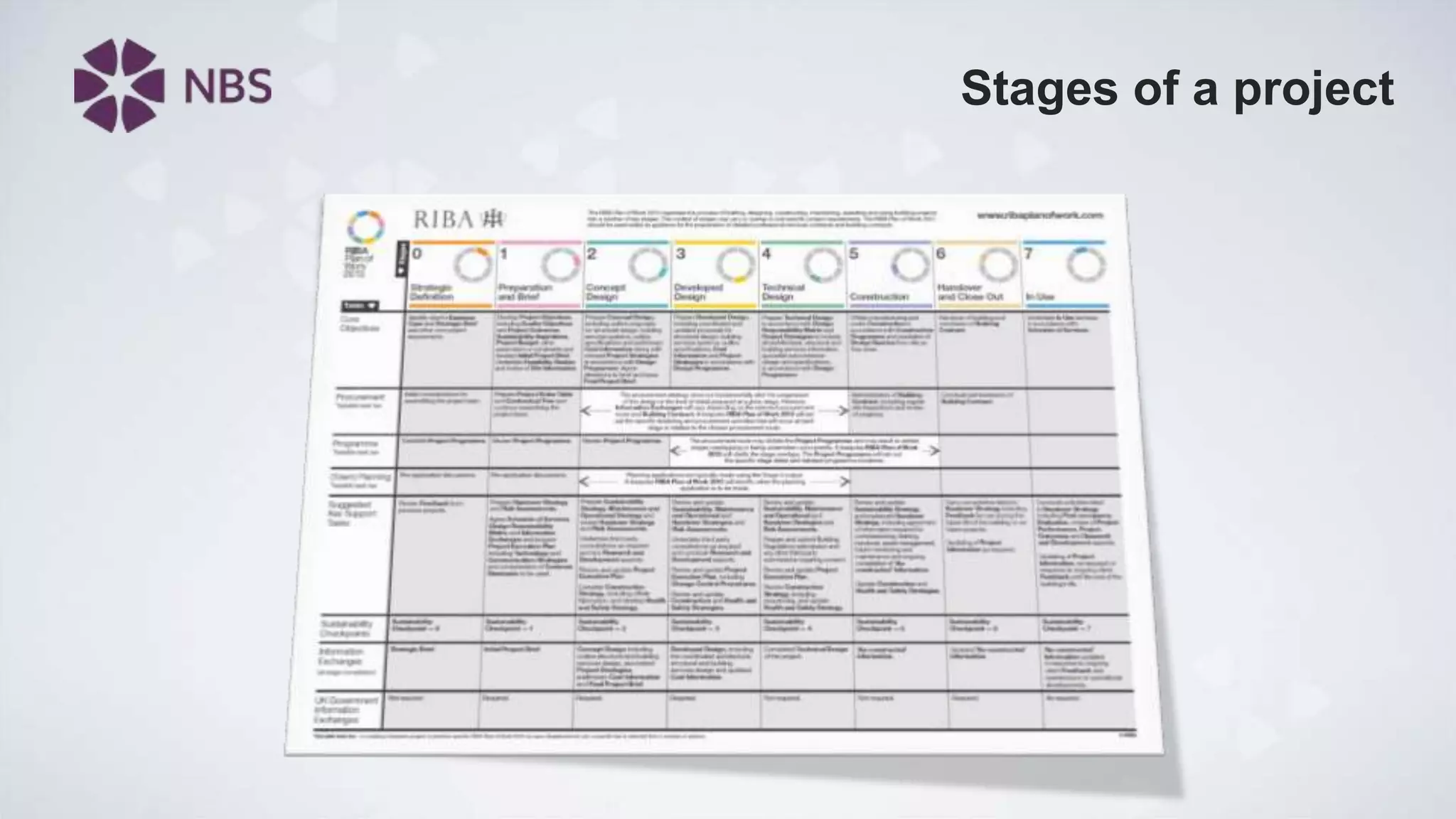
Digital plans of work
Practical tools within this process
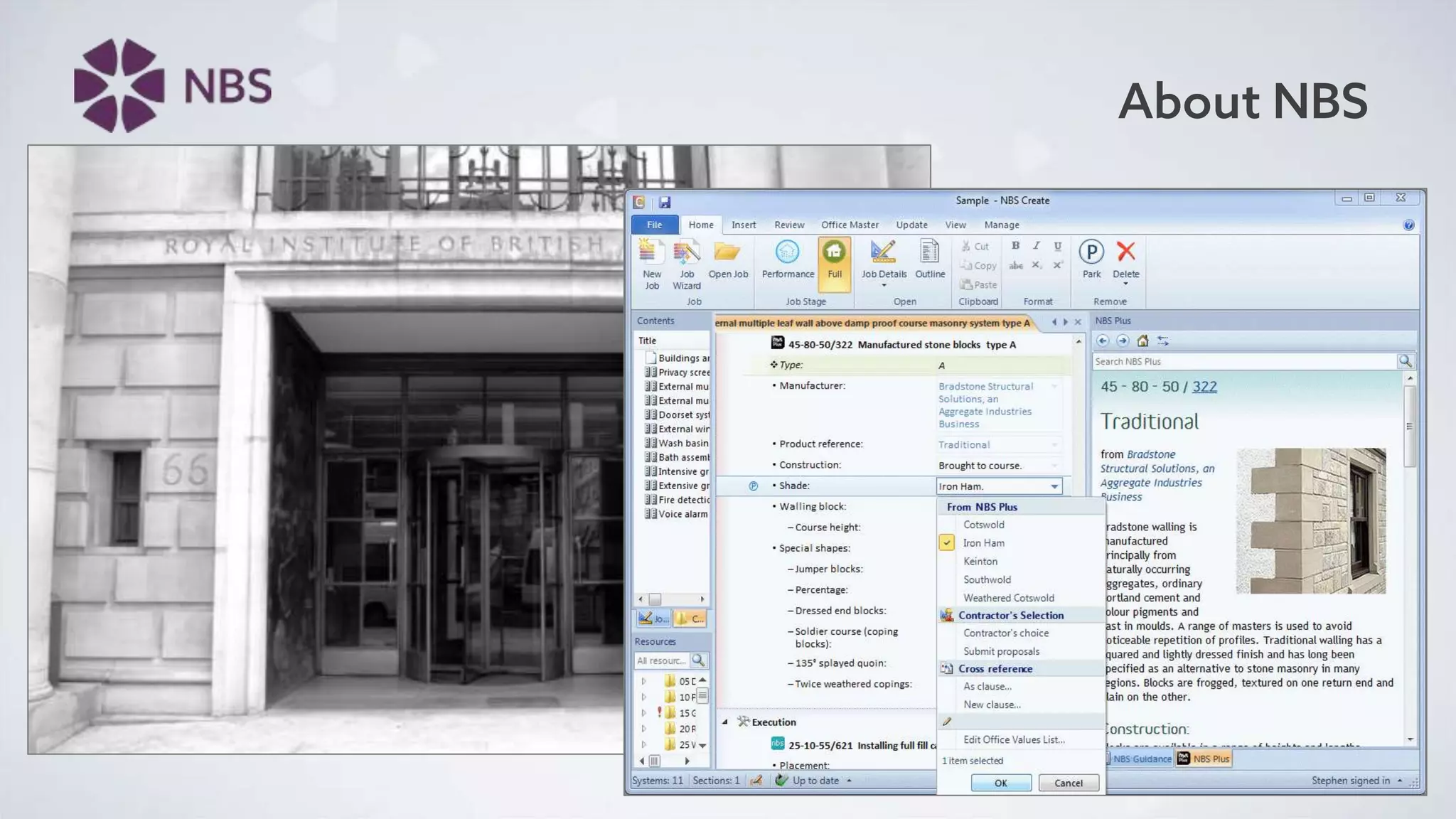
About NBS
About me
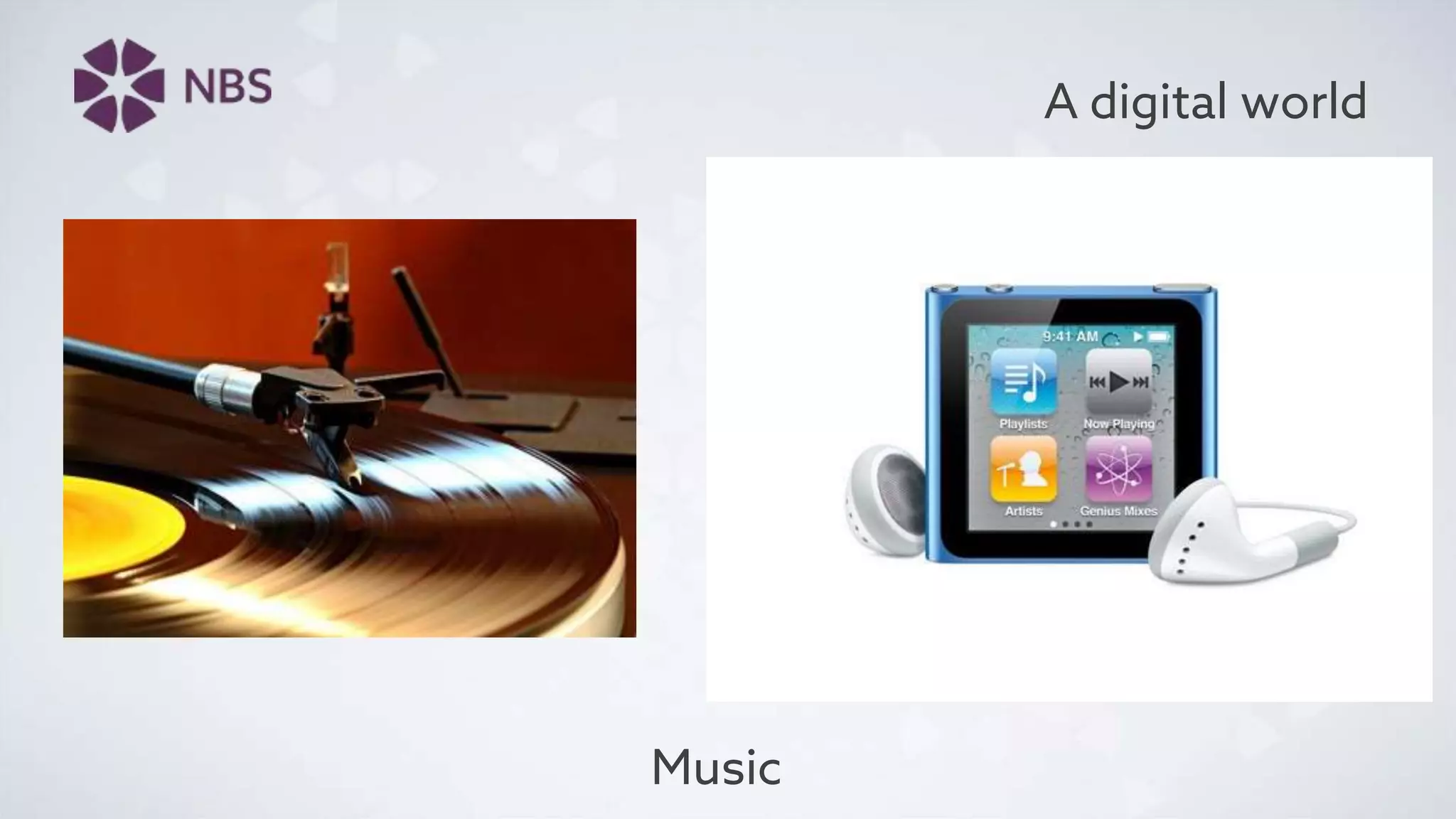
A digital world
Music
A digital world
Books
A digital world
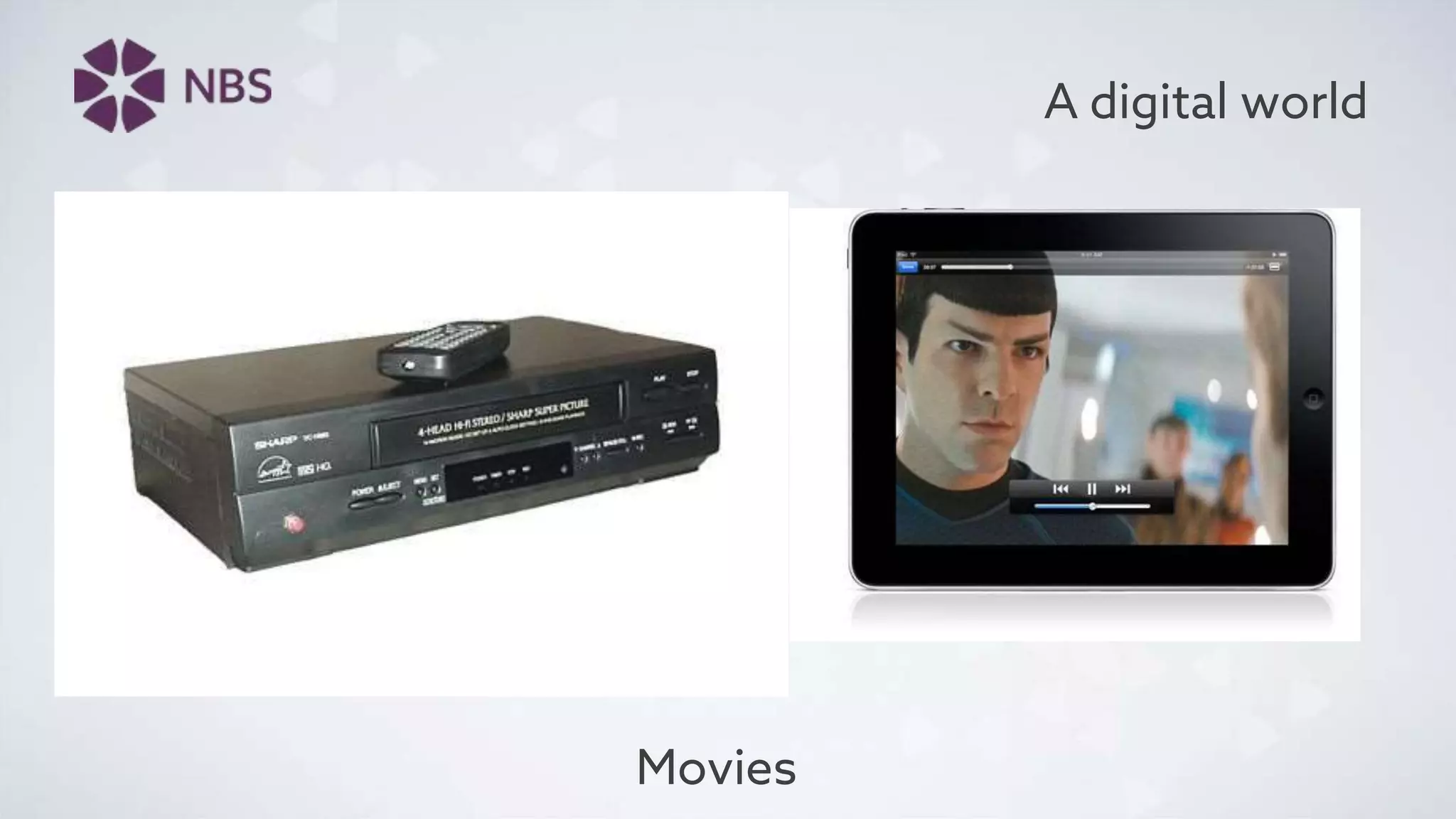
Movies
A digital world
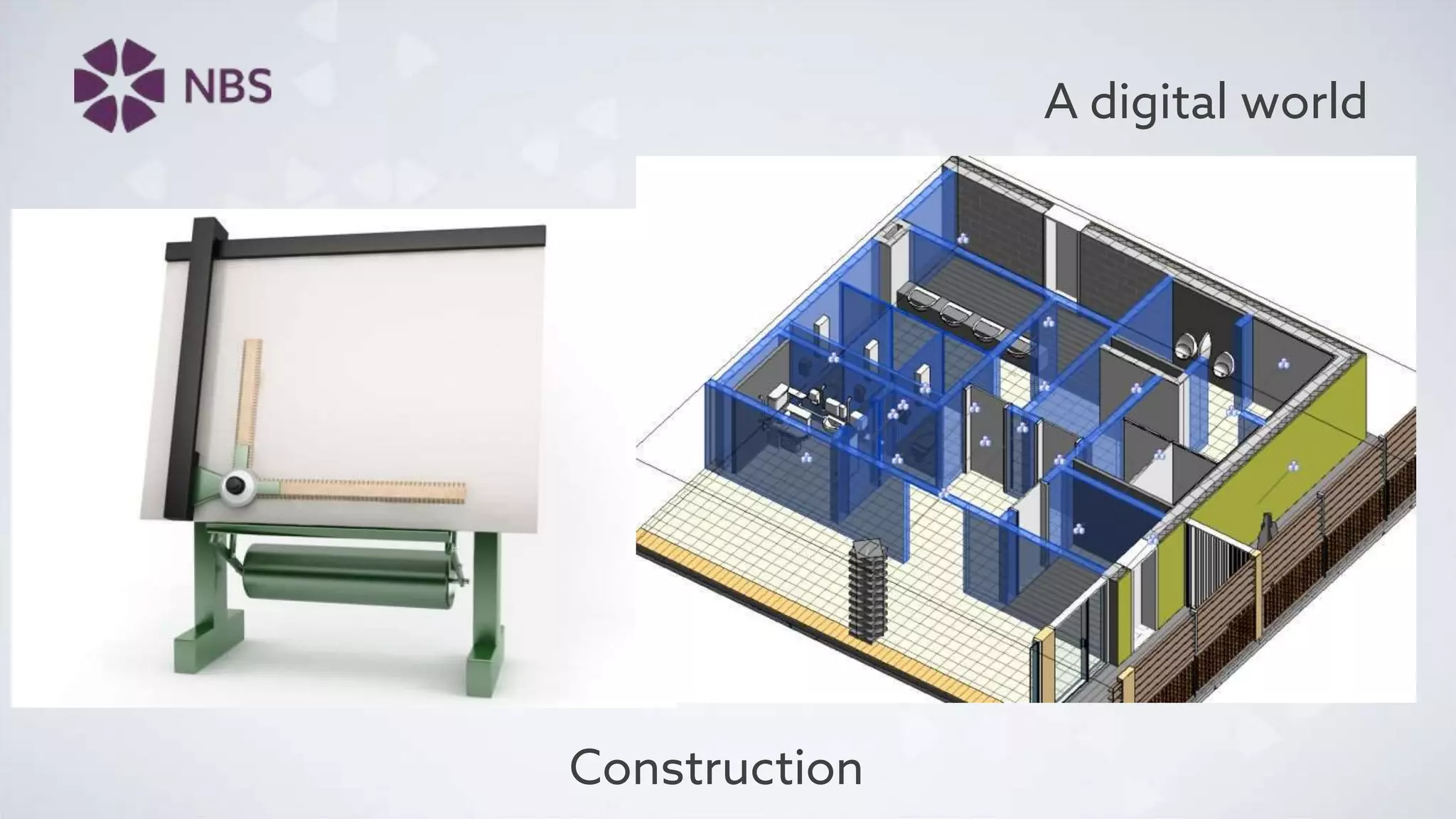
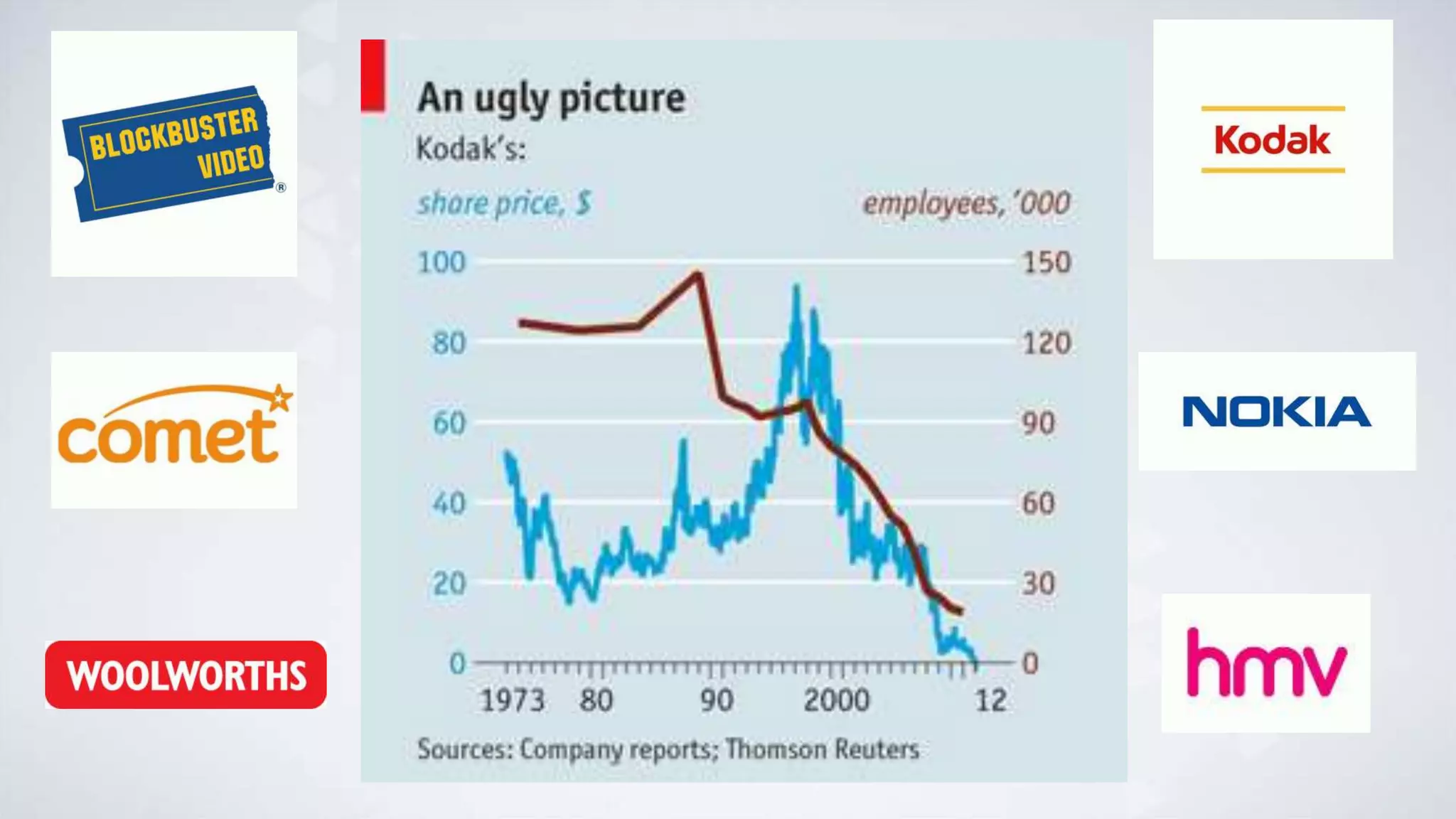
Construction
A digital world
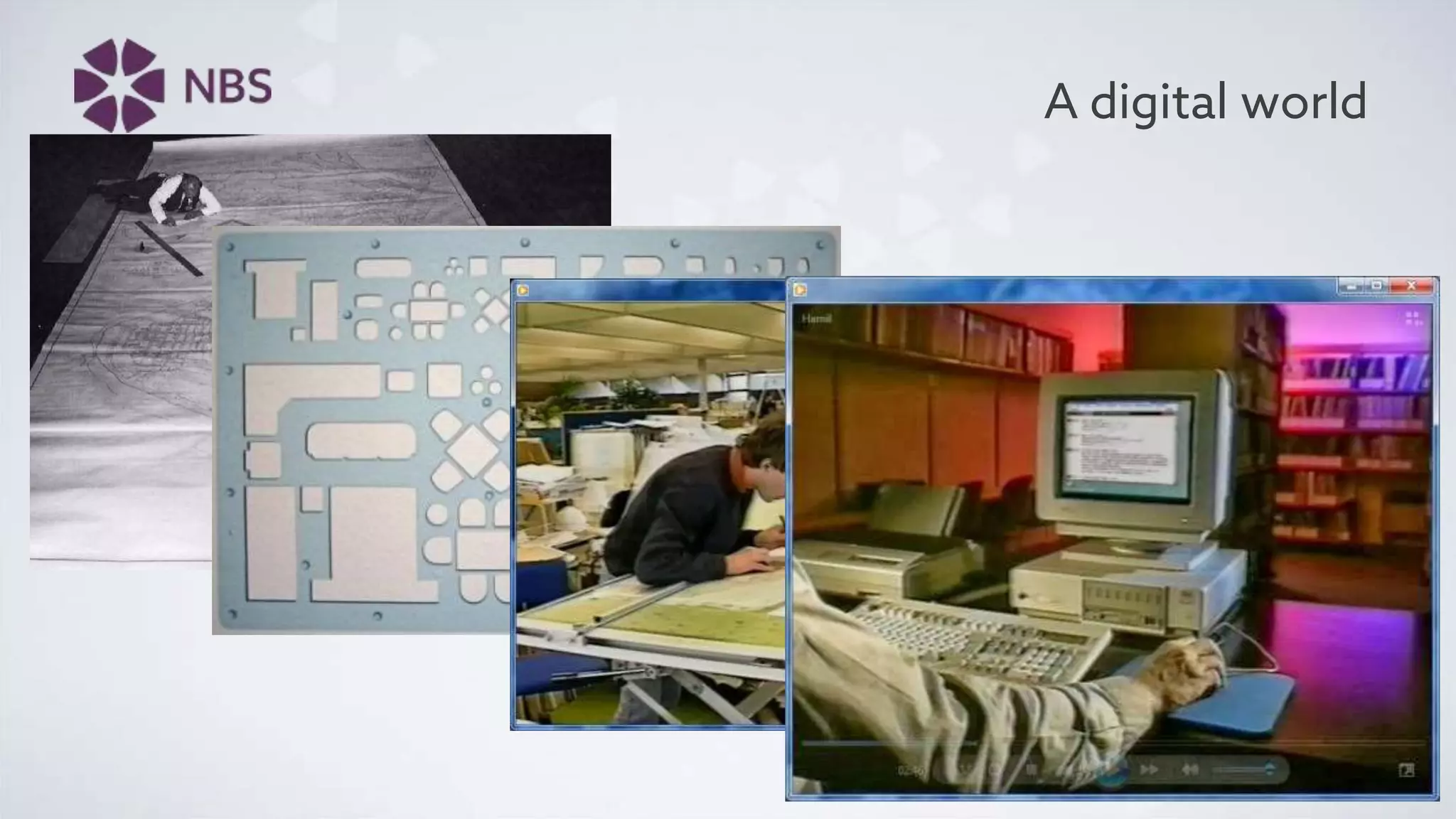
A digital world
Level-2 BIM
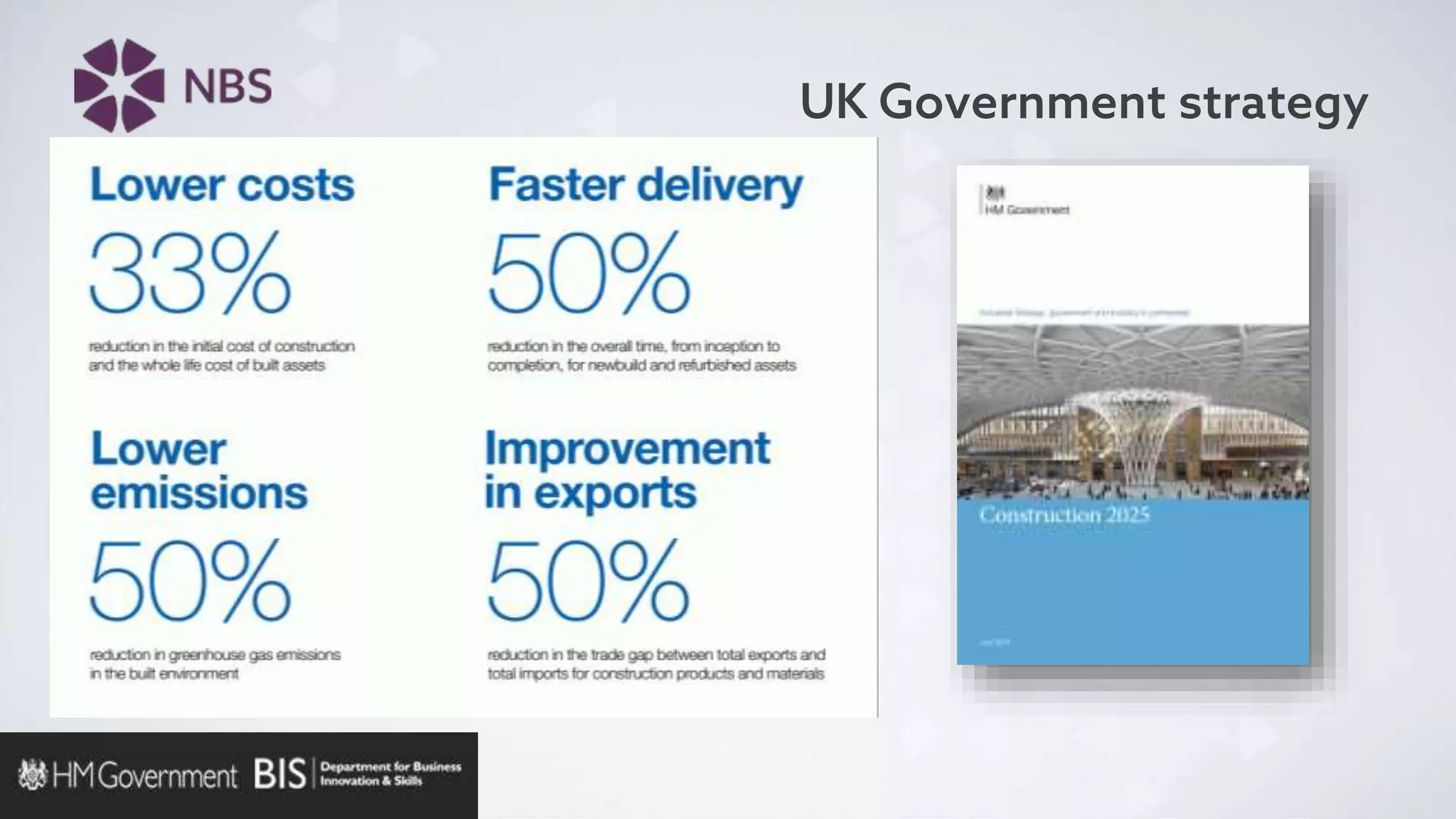
UK Government strategy
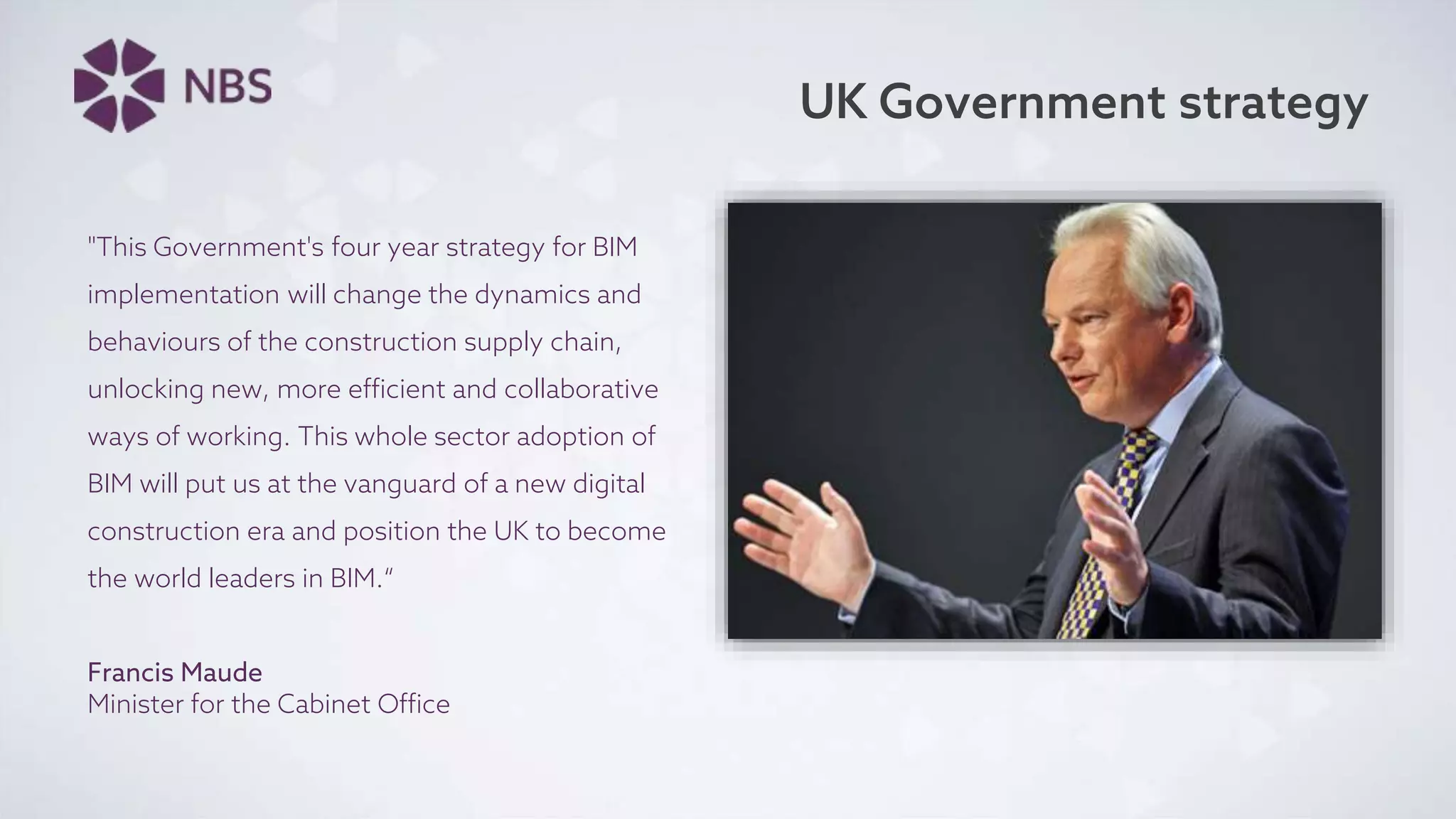
"This Government's four year strategy for BIM
implementation will change the dynamics and
behaviours of the construction supply chain,
unlocking new, more efficient and collaborative
ways of working. This whole sector adoption of
BIM will put us at the vanguard of a new digital
construction era and position the UK to become
the world leaders in BIM.“
Francis Maude
Minister for the Cabinet Office
UK Government strategy
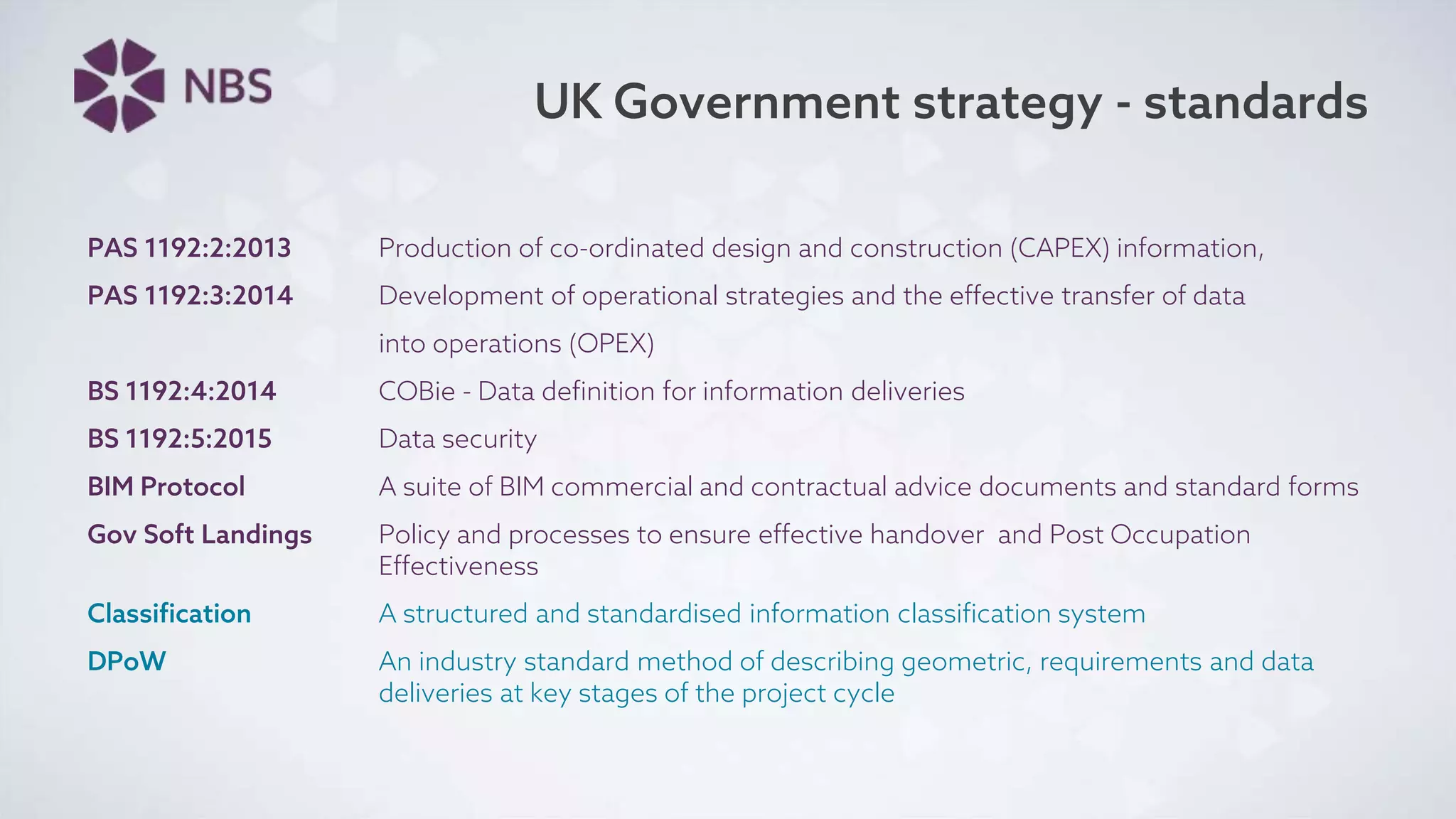
UK Government strategy - standards
PAS 1192:2:2013 Production of co-ordinated design and construction (CAPEX) information,
PAS 1192:3:2014 Development of operational strategies and the effective transfer of data
into operations (OPEX)
BS 1192:4:2014 COBie - Data definition for information deliveries
BS 1192:5:2015 Data security
BIM Protocol A suite of BIM commercial and contractual advice documents and standard forms
Gov Soft Landings Policy and processes to ensure effective handover and Post Occupation
Effectiveness
Classification A structured and standardised information classification system
DPoW An industry standard method of describing geometric, requirements and data
deliveries at key stages of the project cycle
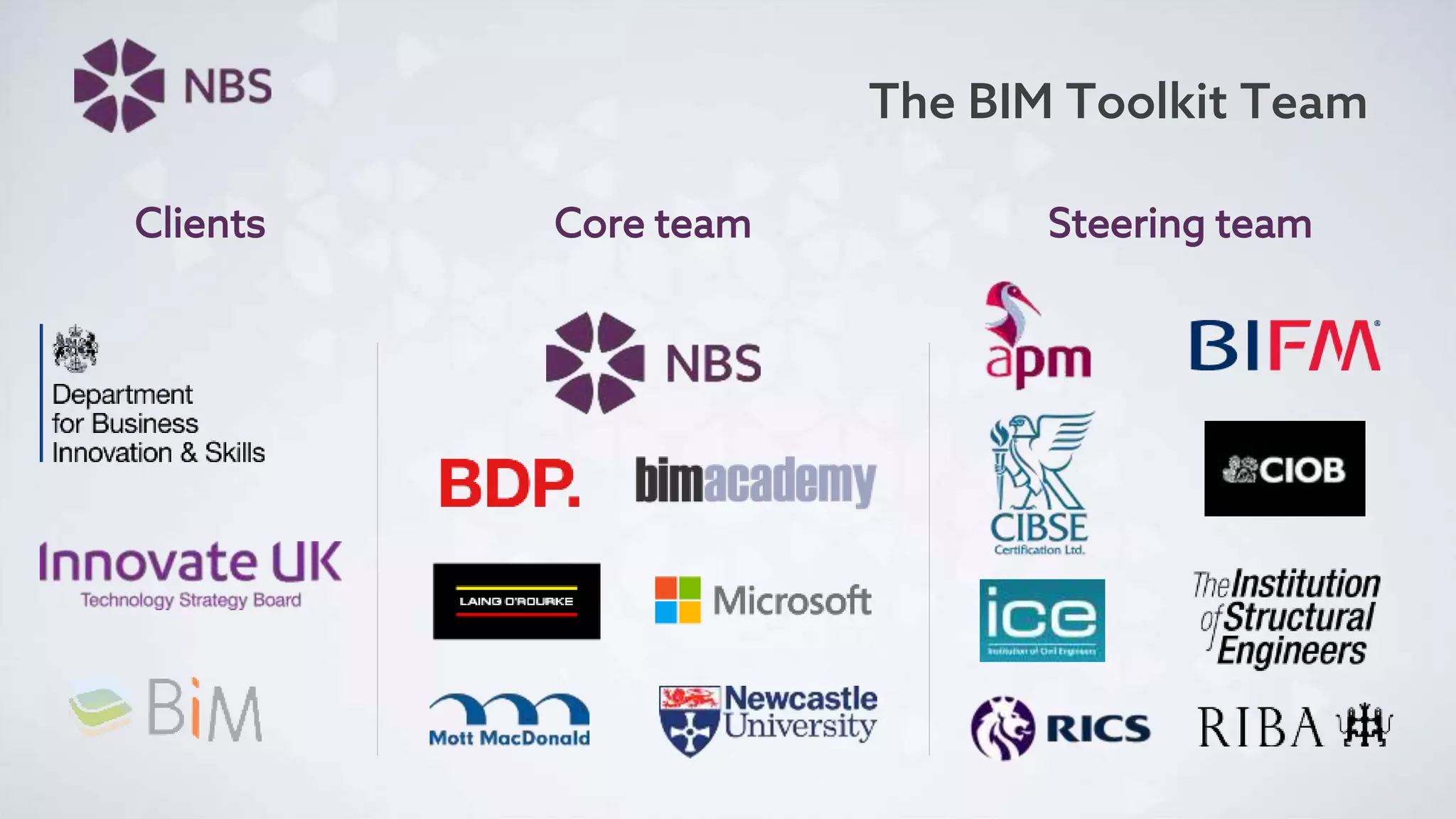
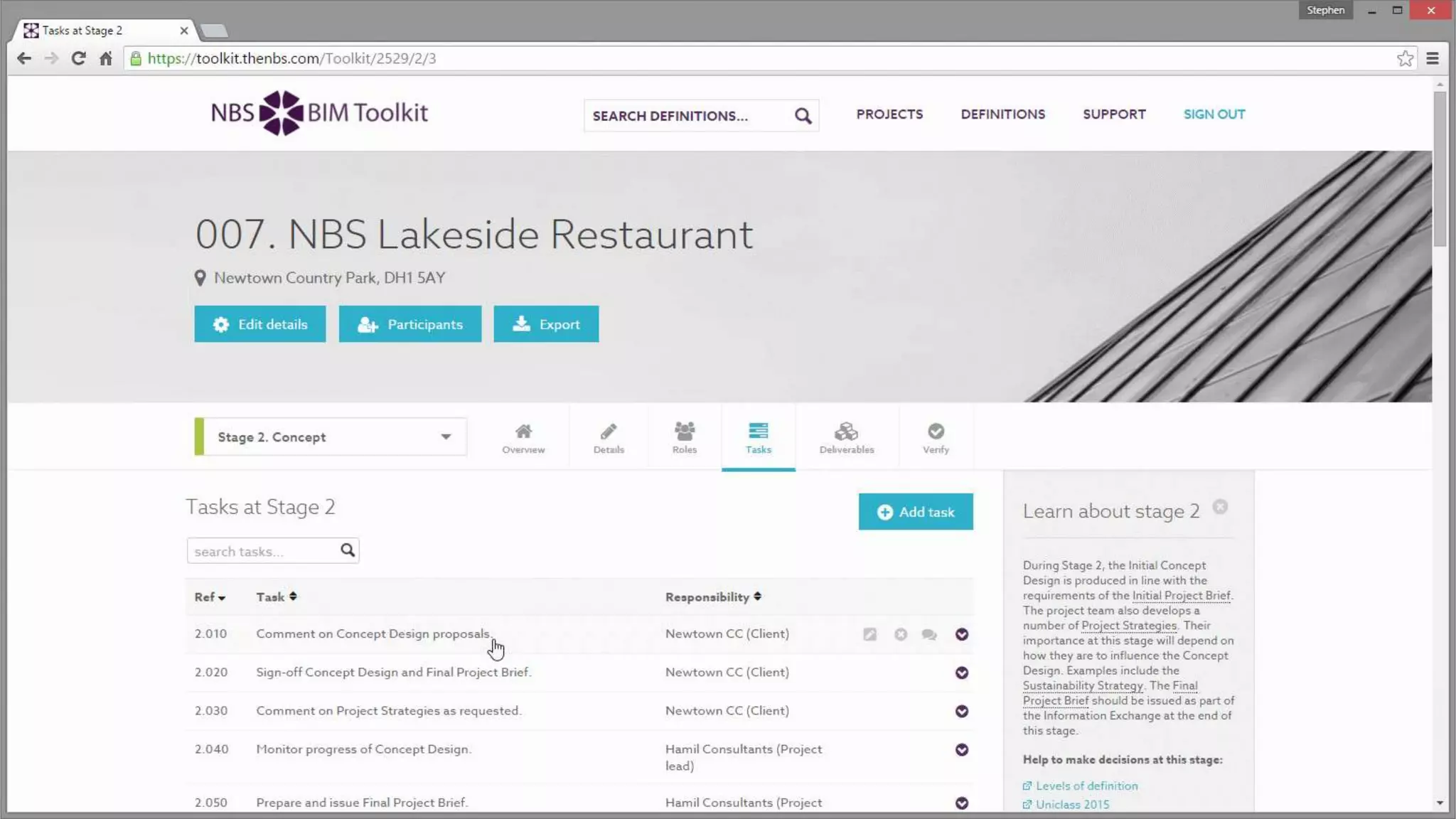
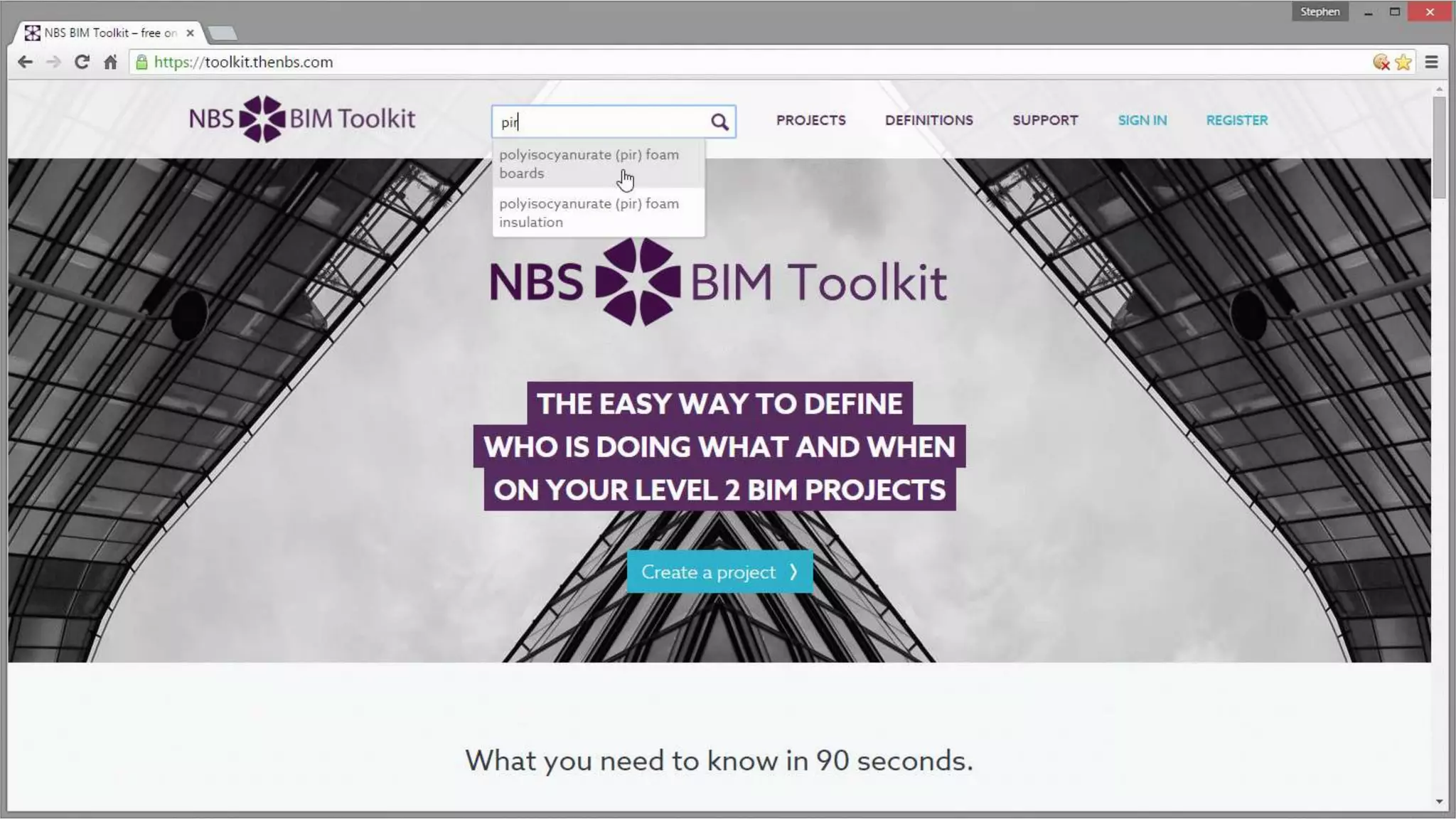
The BIM Toolkit Team
Steering teamCore teamClients
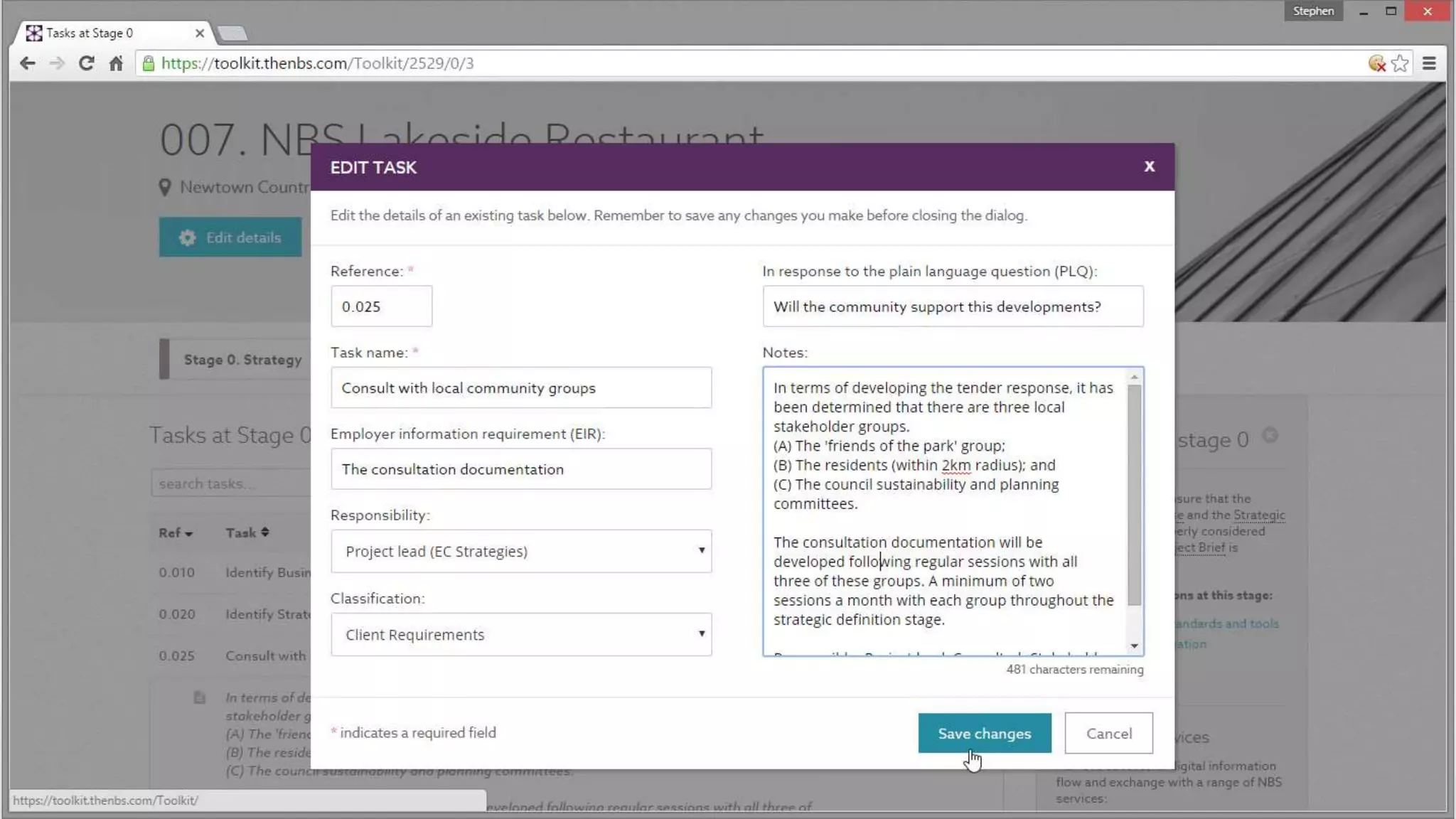
Digital Plans of Work
Stages of a project
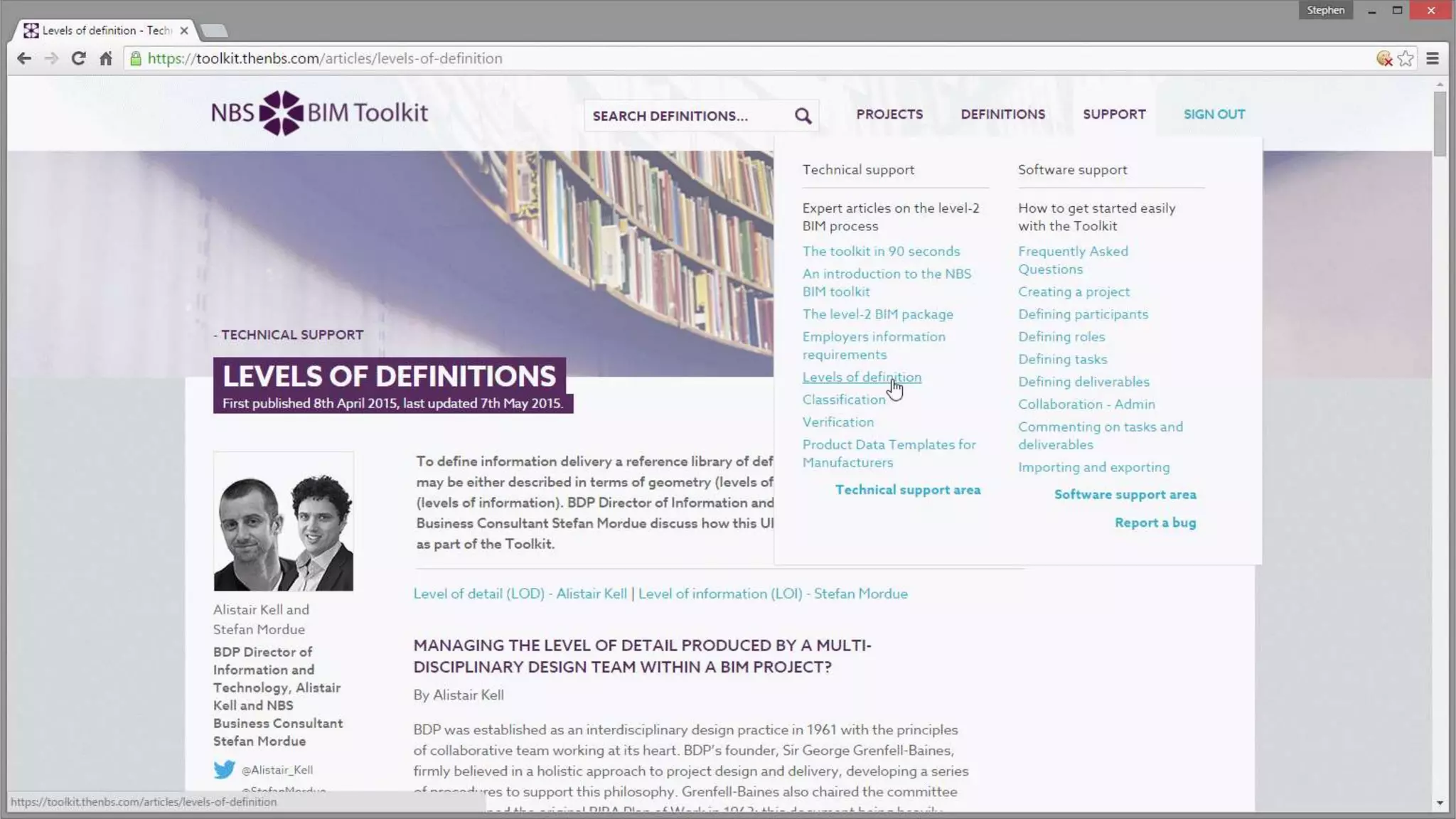
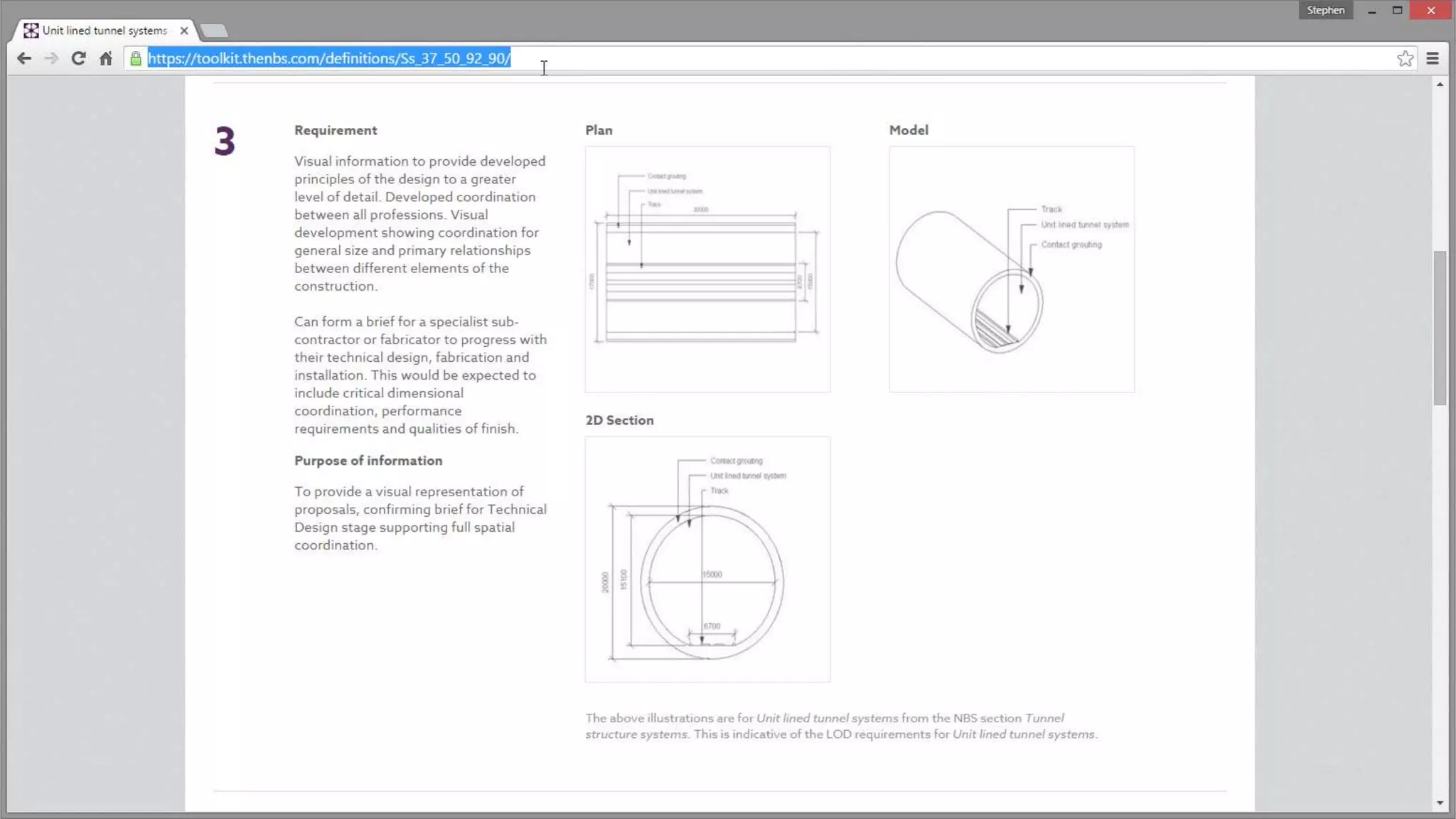
Level of detail (LOD)
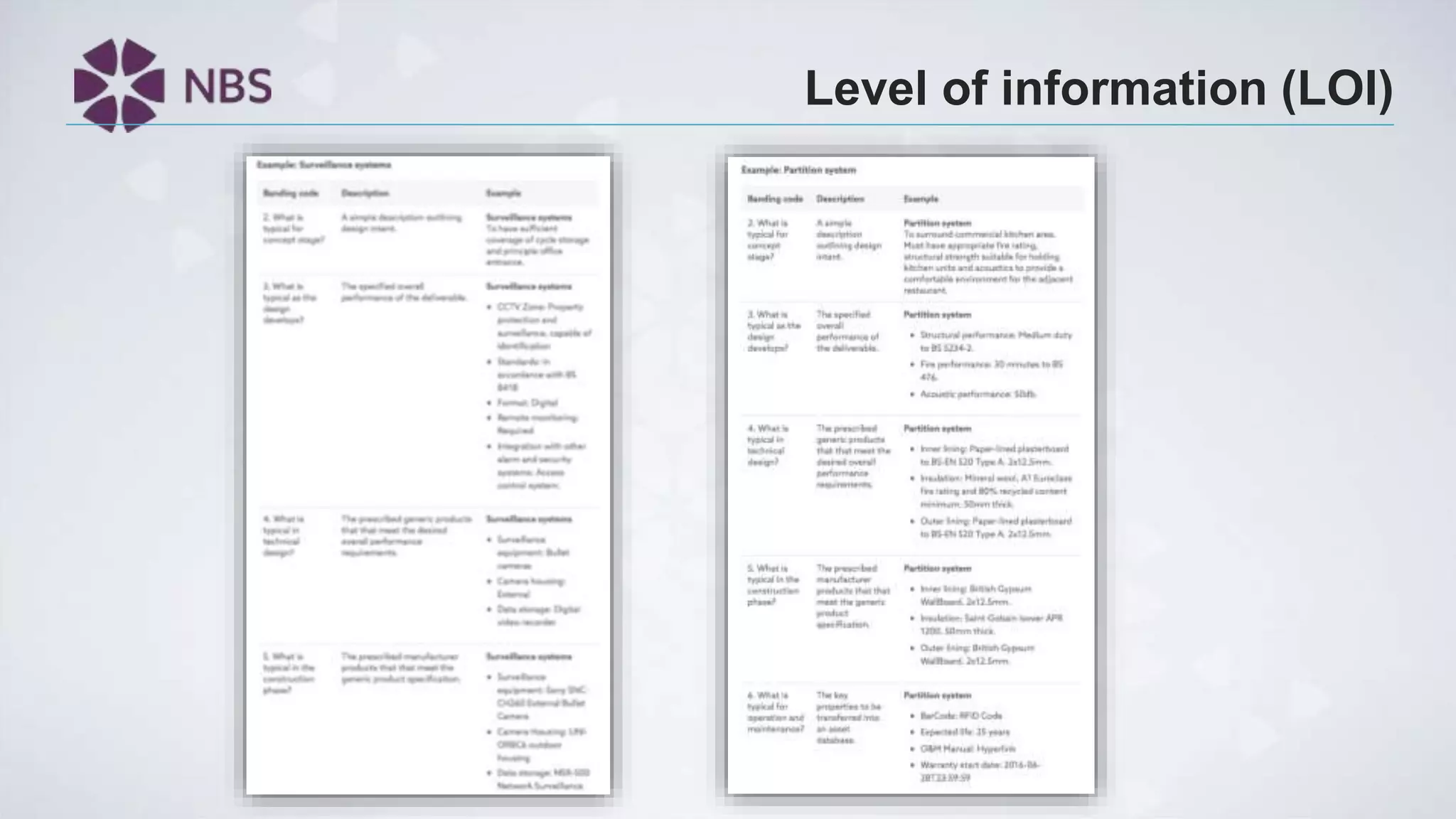
Level of information (LOI)
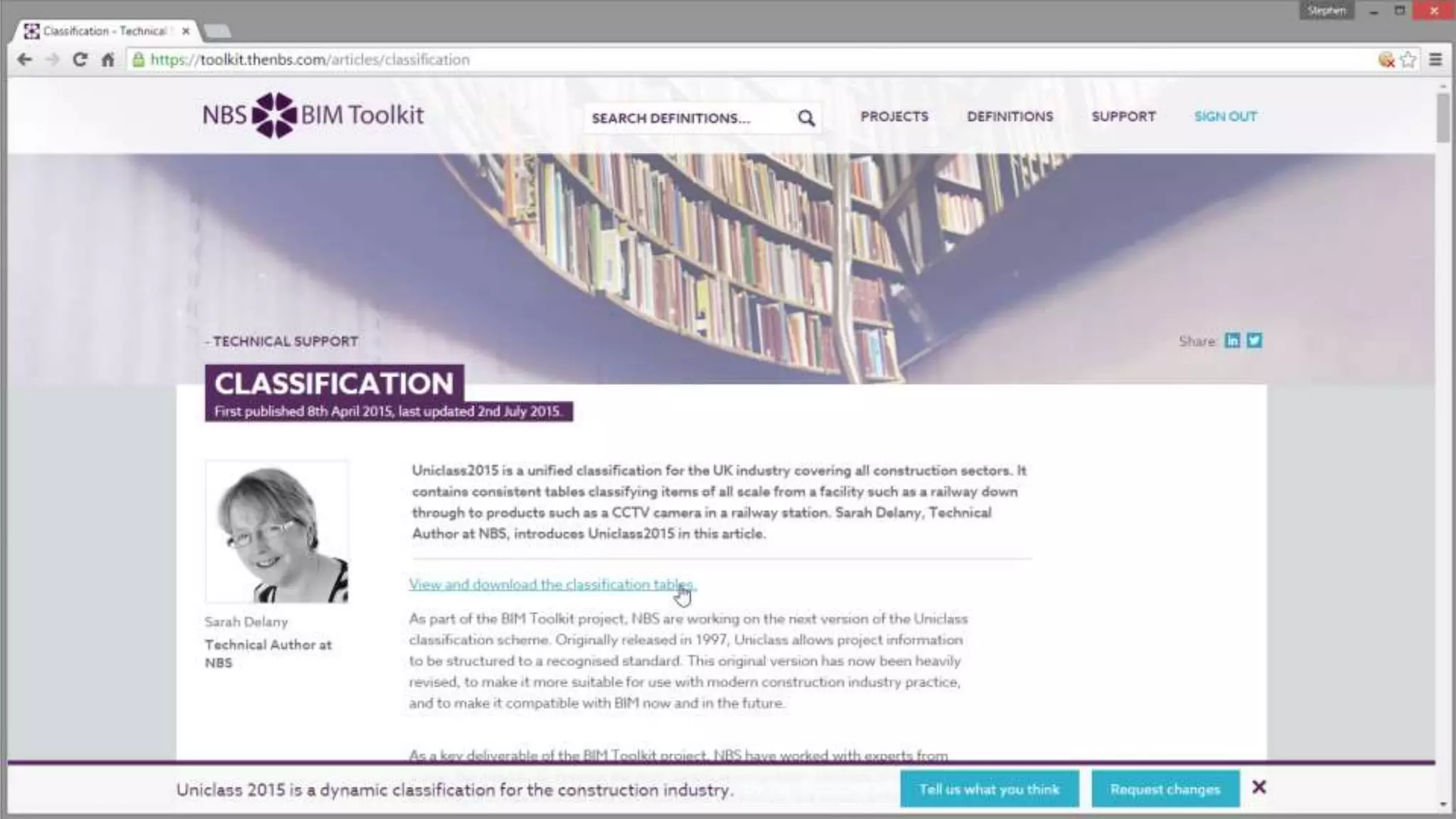
Classification
Complexes, entities, spaces,
locations and activities
10
Preparation
and repair
20
Administrative,
commercial and
protective
services
25
Cultural,
educational,
scientific and
information
30
Industrial
32
Water and
land
management
35
Medical, health,
welfare and
sanitary
40
Recreational
42
Sport and
activity
45
Residential
50
Waste
disposal
55
Piped supply
60
Heating,
cooling and
refrigeration
65
Ventilation
and air
conditioning
70
Electrical
power
generation
and
distribution
75
Communications,
security, safety
and protection
80
Transport
85
Operation
and
maintenance
90
Circulation
and storage
Larger scale items – arranged broadly by industry sector and function
Elements, functions
and systems
15
Preparatory
20
Structural
25
Wall and
barrier
30
Roof, floor and
paving
32
Damp-
proofing,
waterproofing
and plaster
finishing
35
Stair and ramp
37
Tunnel,
shaft, vessel
and tower
40
Signage,
fittings,
furnishings
and
equipment
45
Flora and
fauna
50
Waste
disposal
55
Piped supply
60
Heating,
cooling and
refrigeration
65
Ventilation
and air
conditioning
70
Electrical
power and
lighting
75
Communications,
security, safety
and protection
80
Transport
85
Process
engineering
90
Soft facility
management
Smaller scale items – arranged broadly by fabric and function
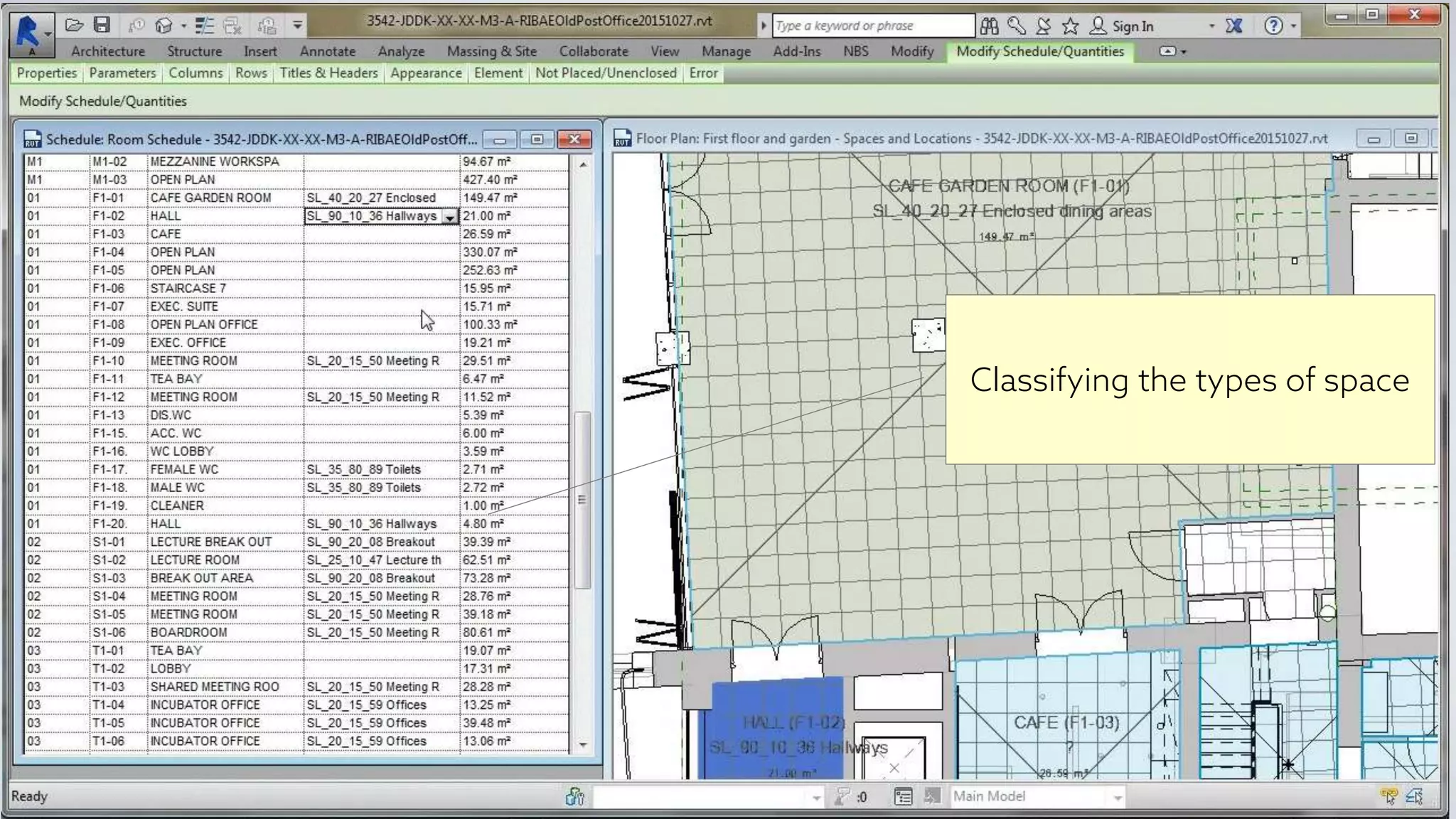
Classifying the types of space
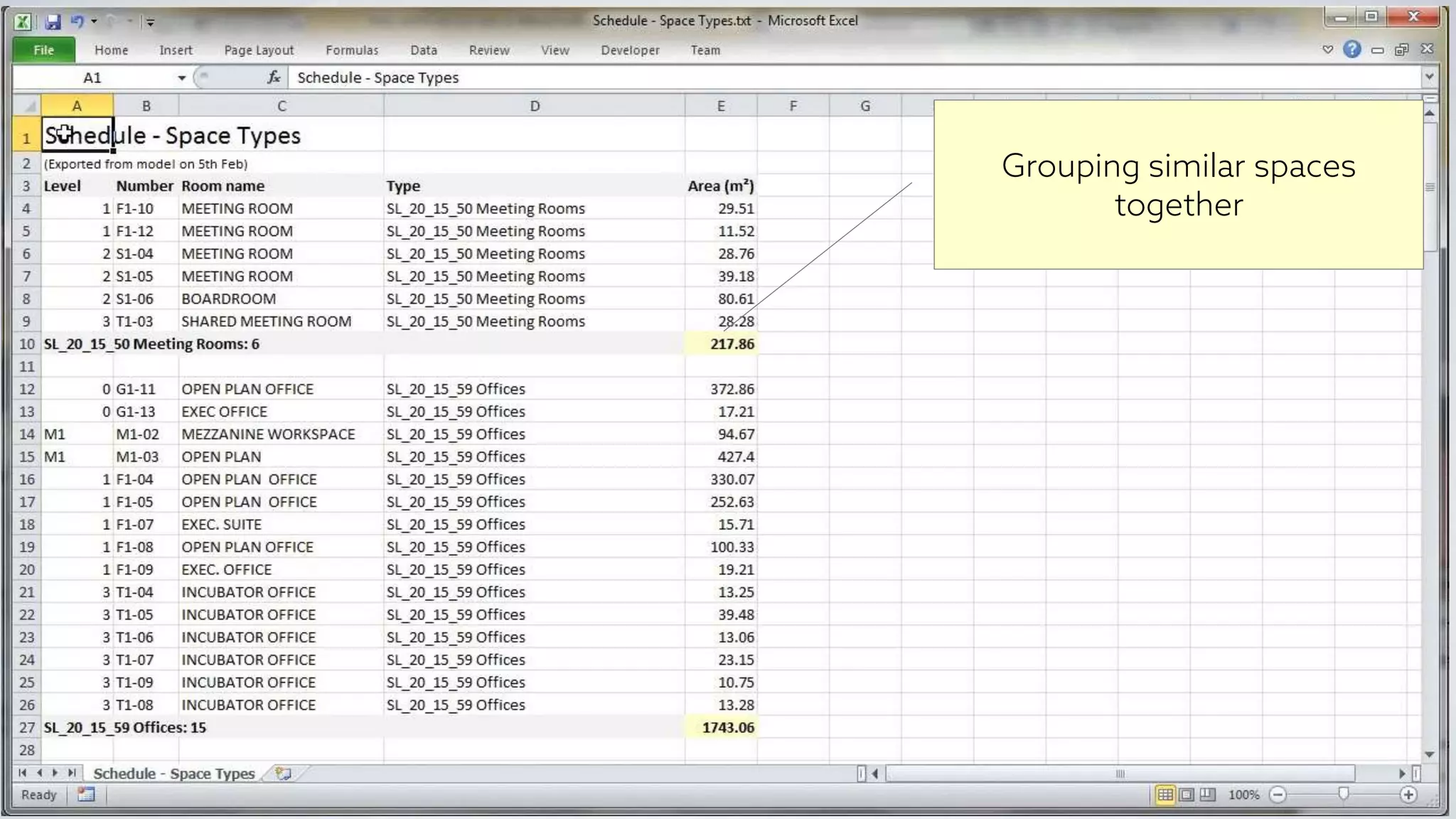
Grouping similar spaces
together
Practical tools within this process
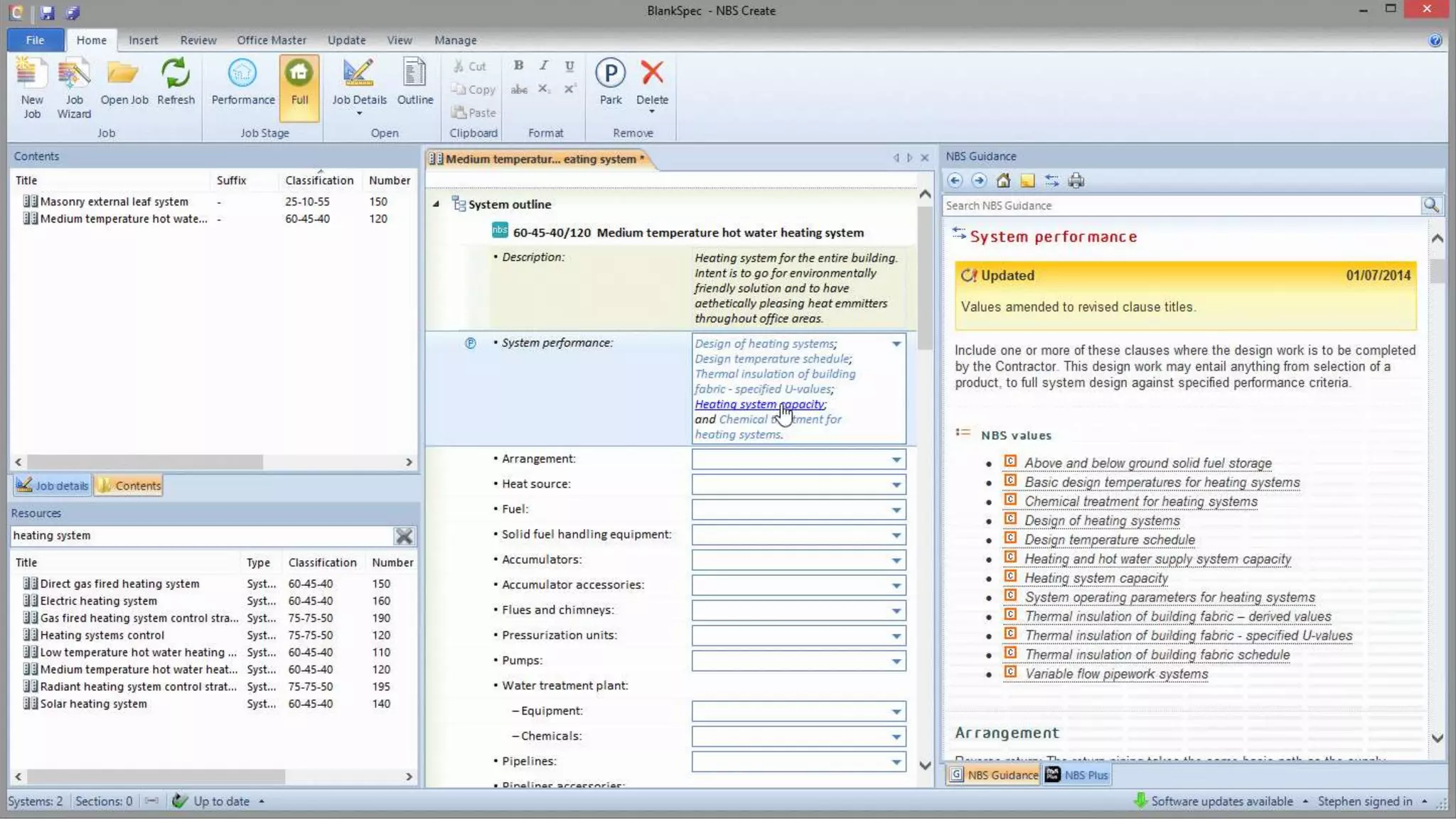
A. Specification
Building specification
templates with associated
guidance
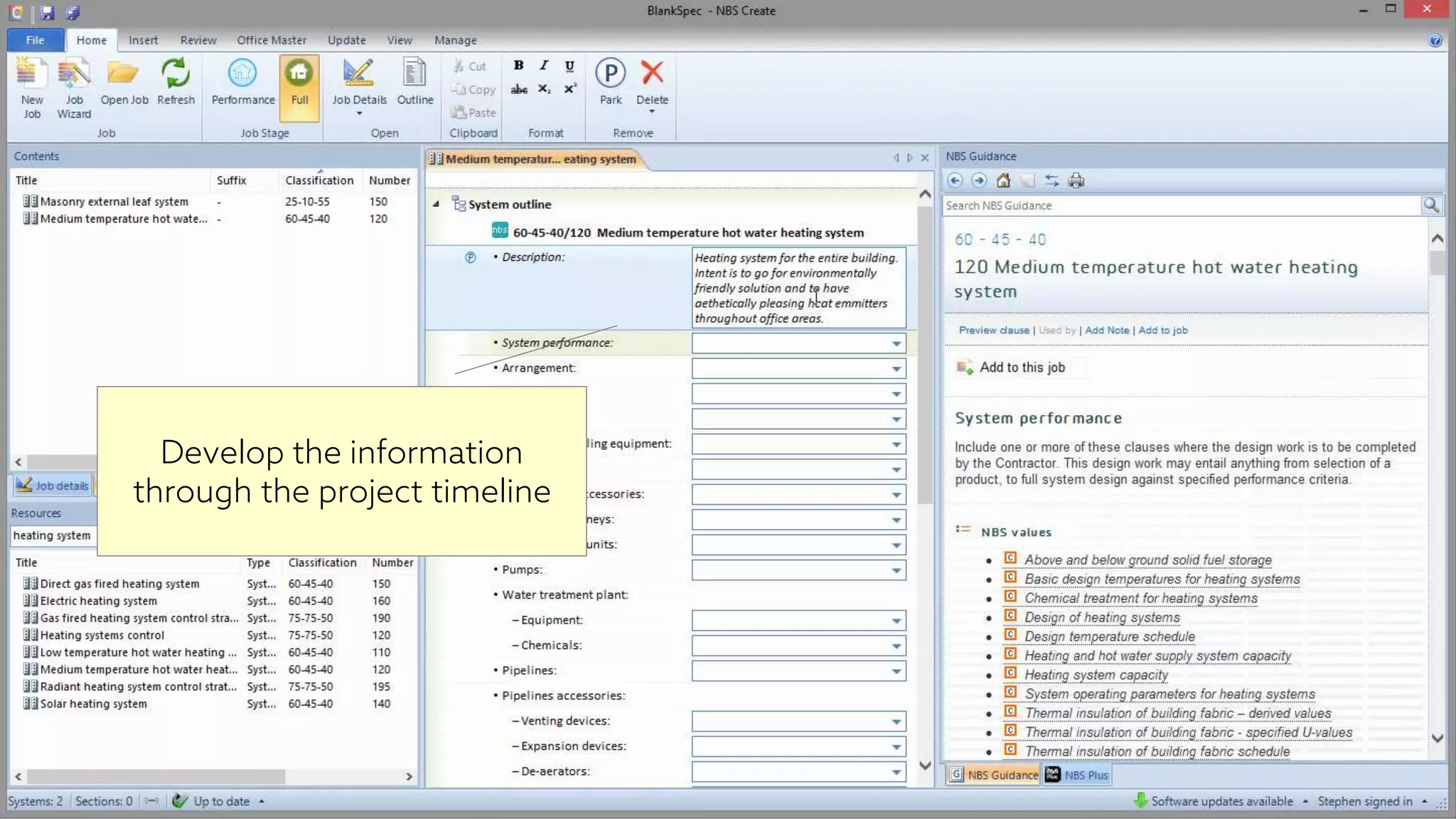
Develop the information
through the project timeline
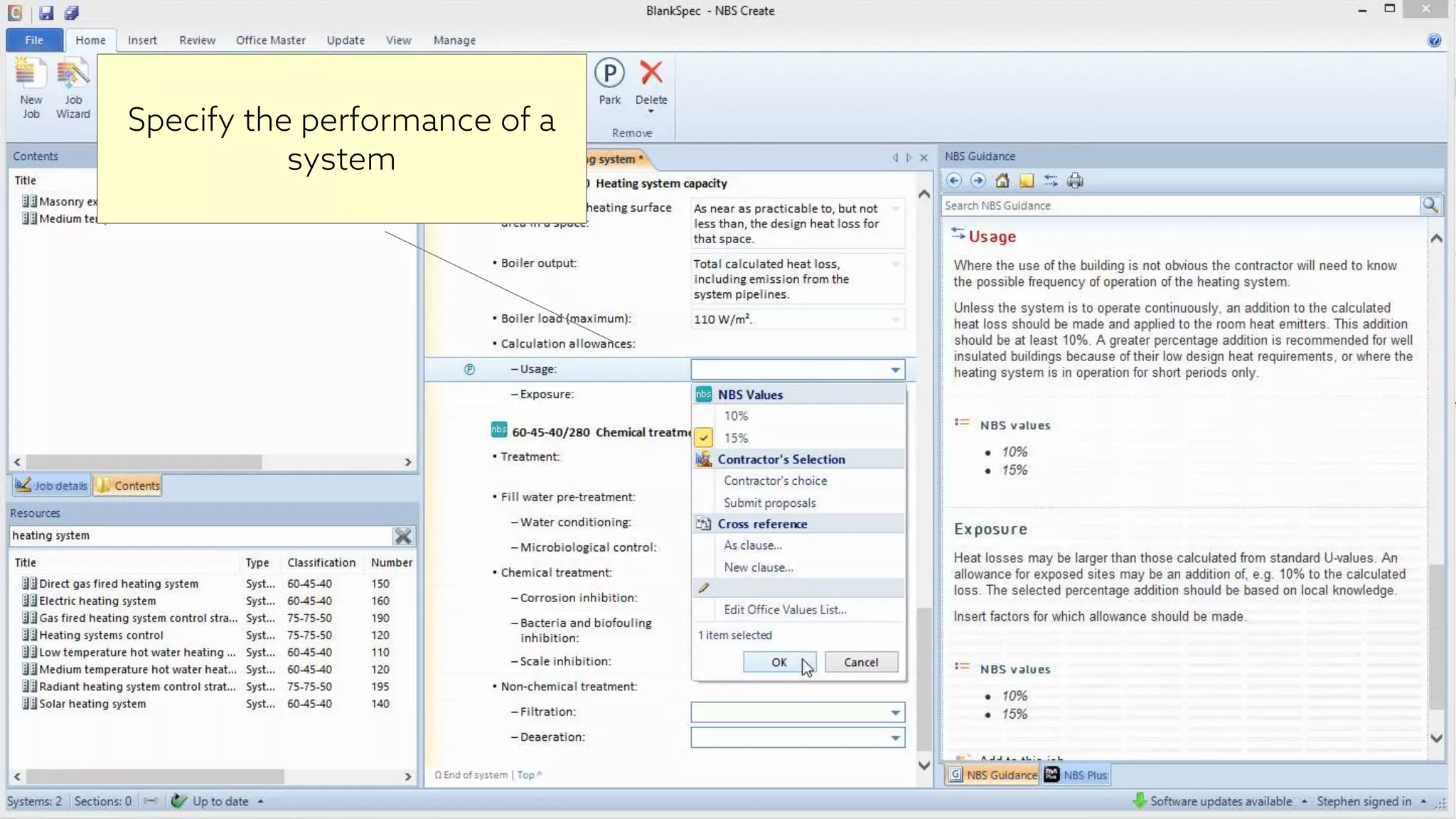
Specify the performance of a
system
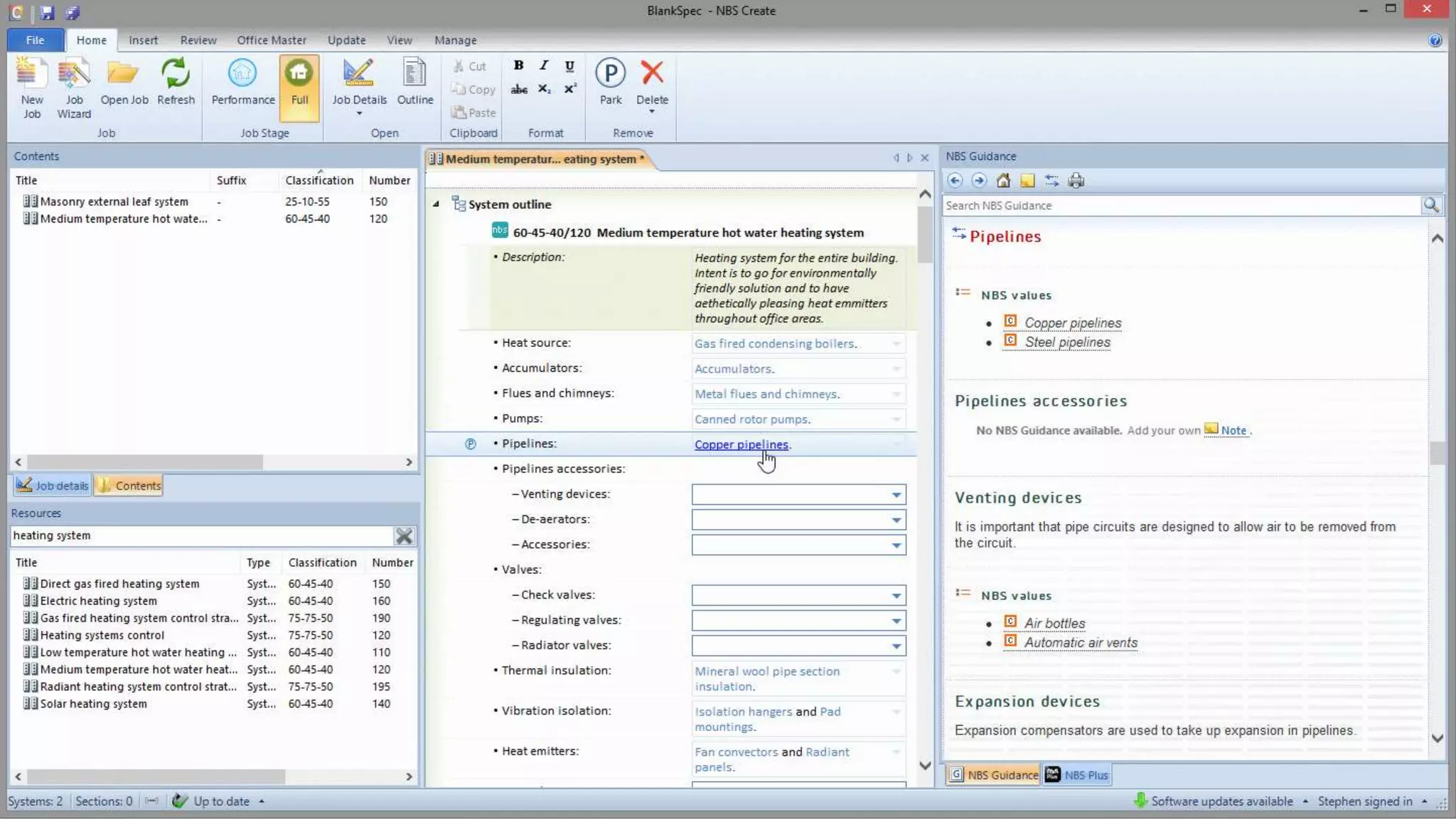
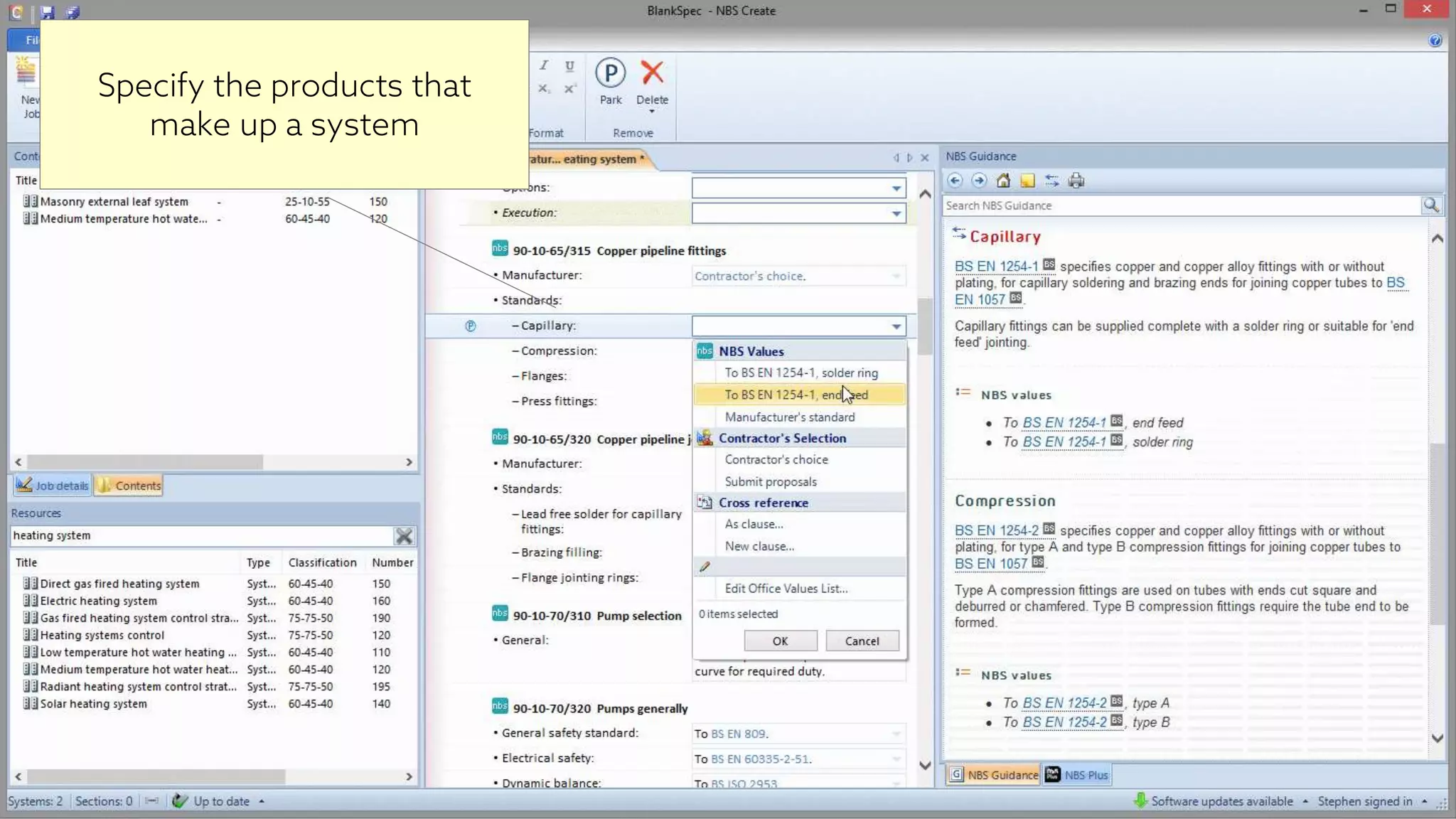
Specify the products that
make up a system
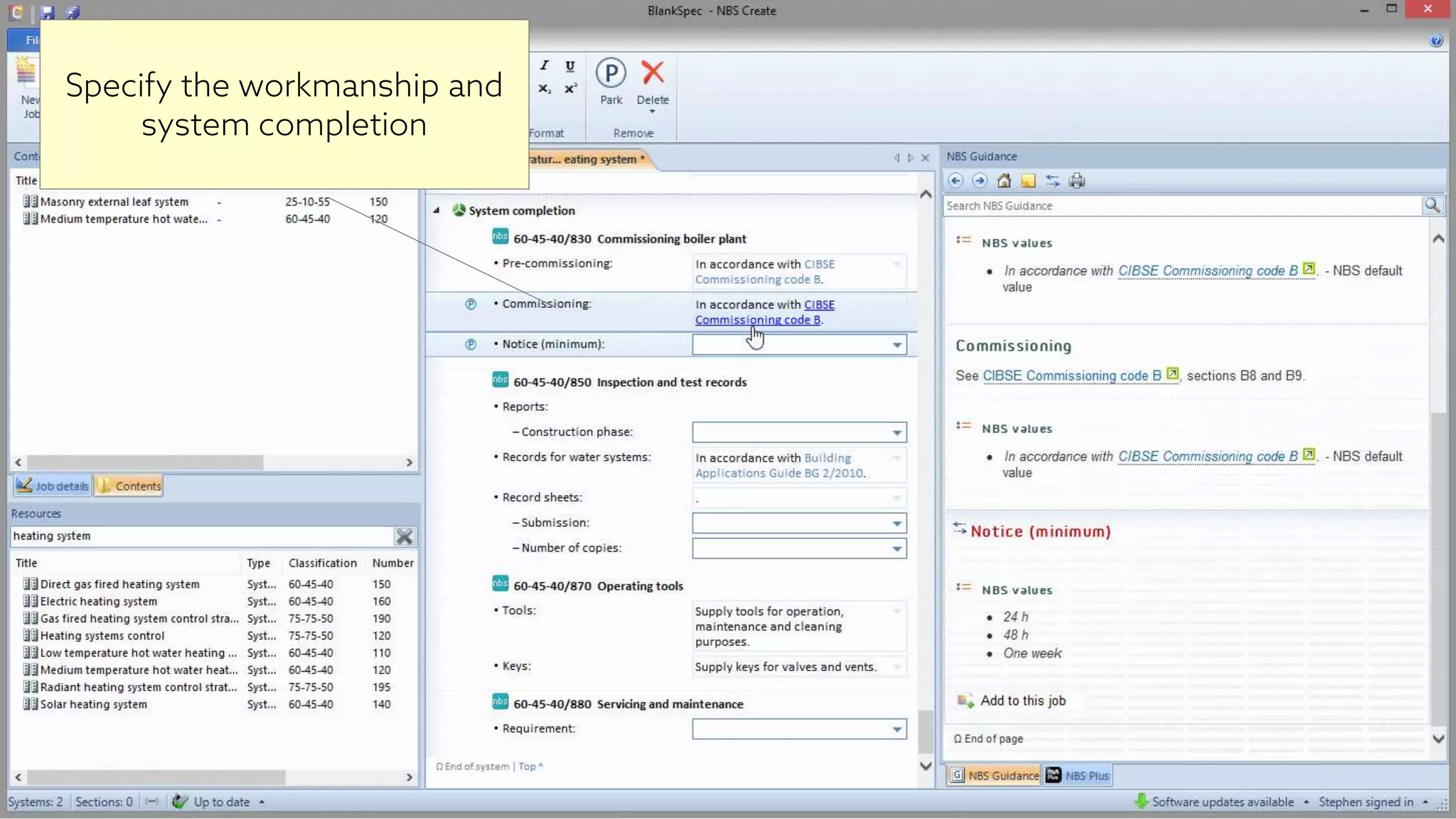
Specify the workmanship and
system completion
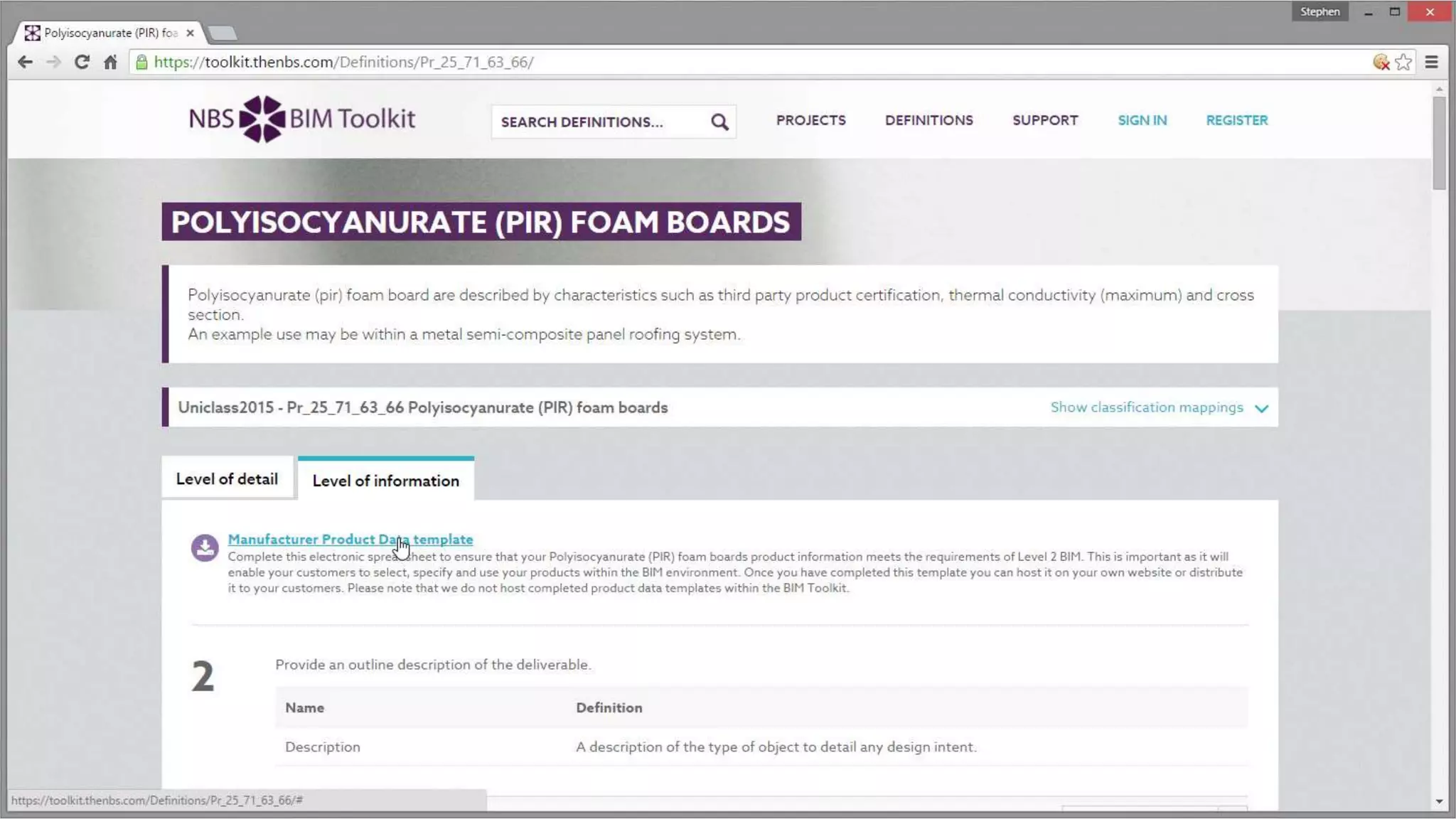
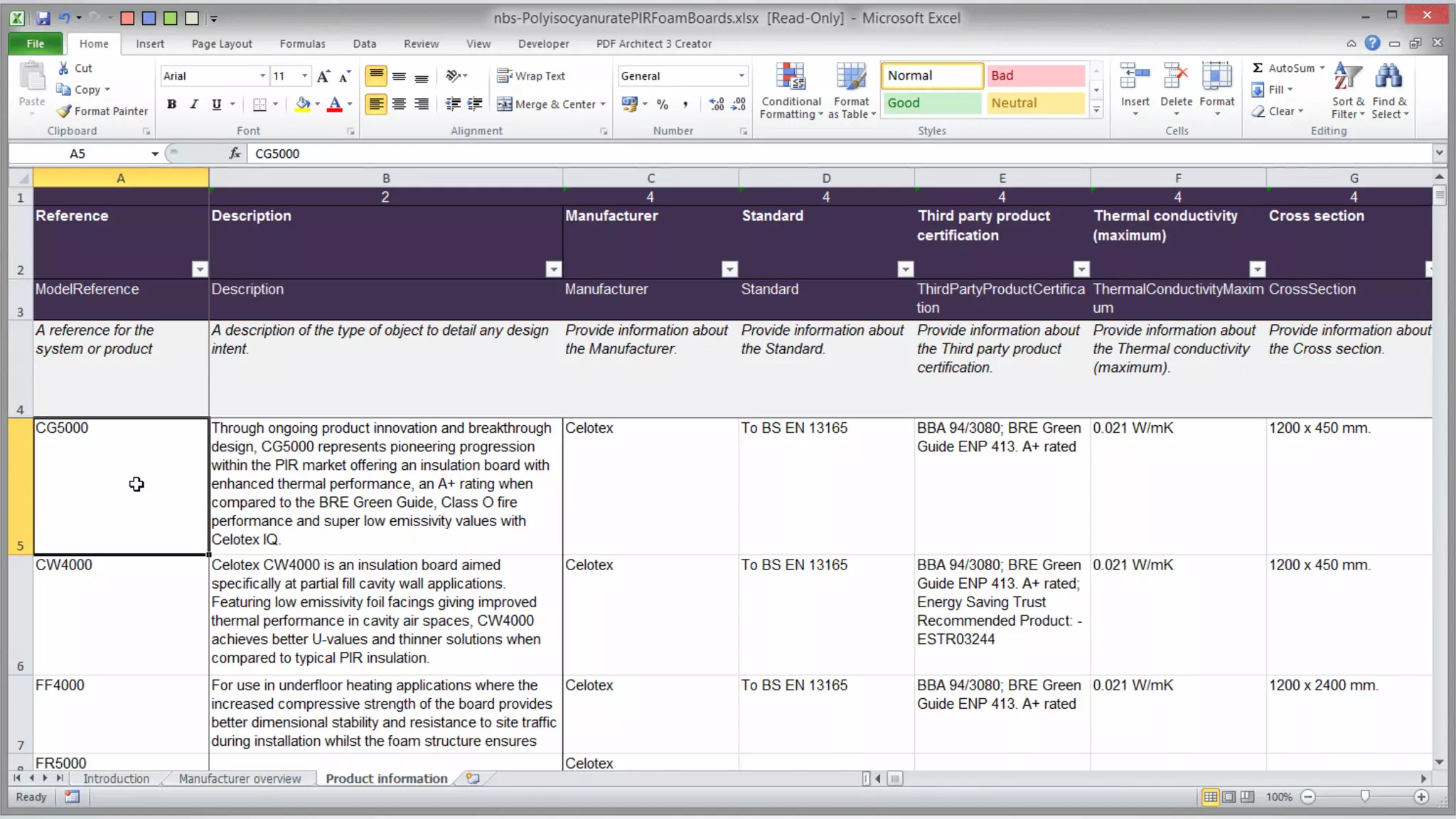
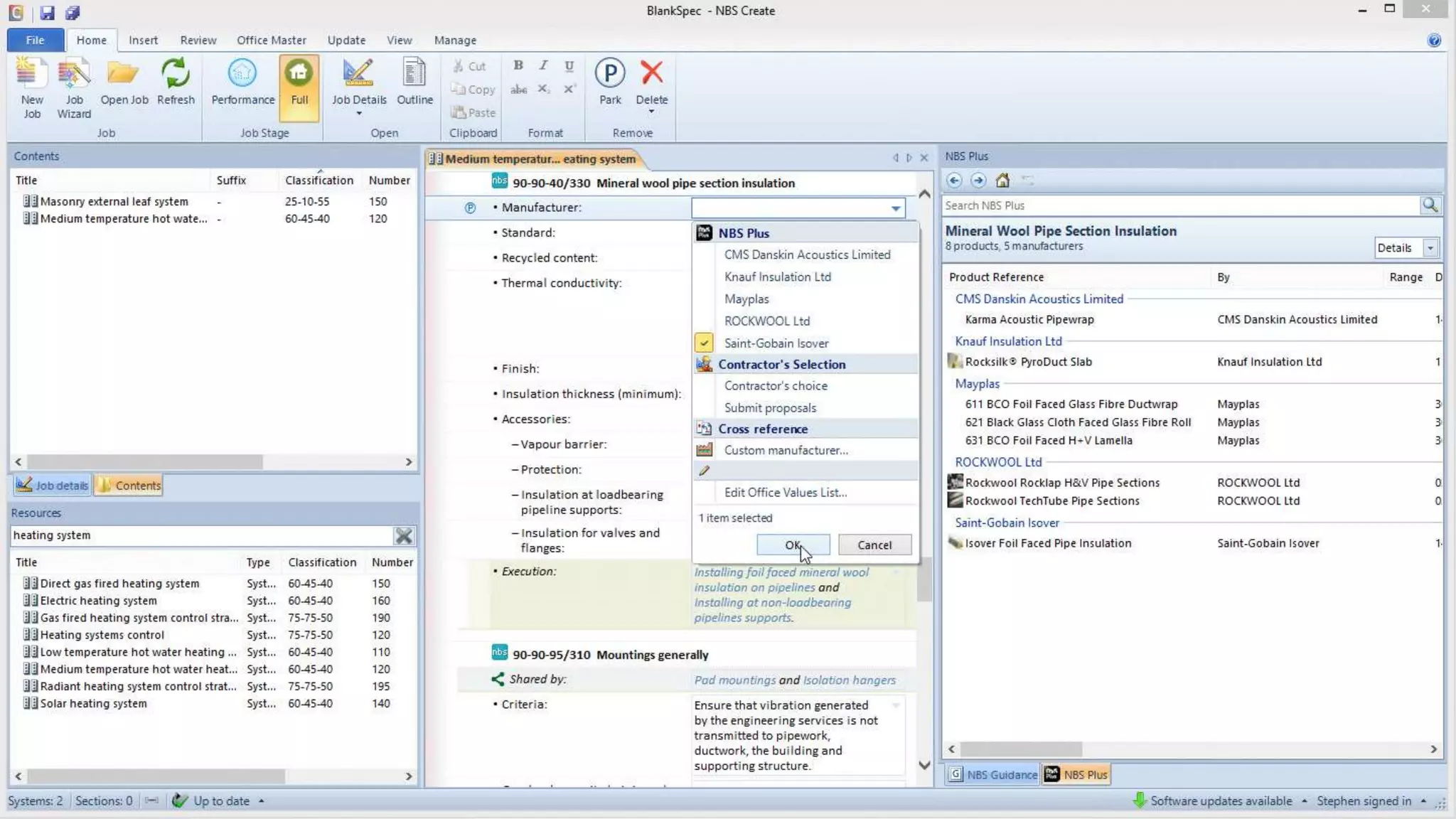
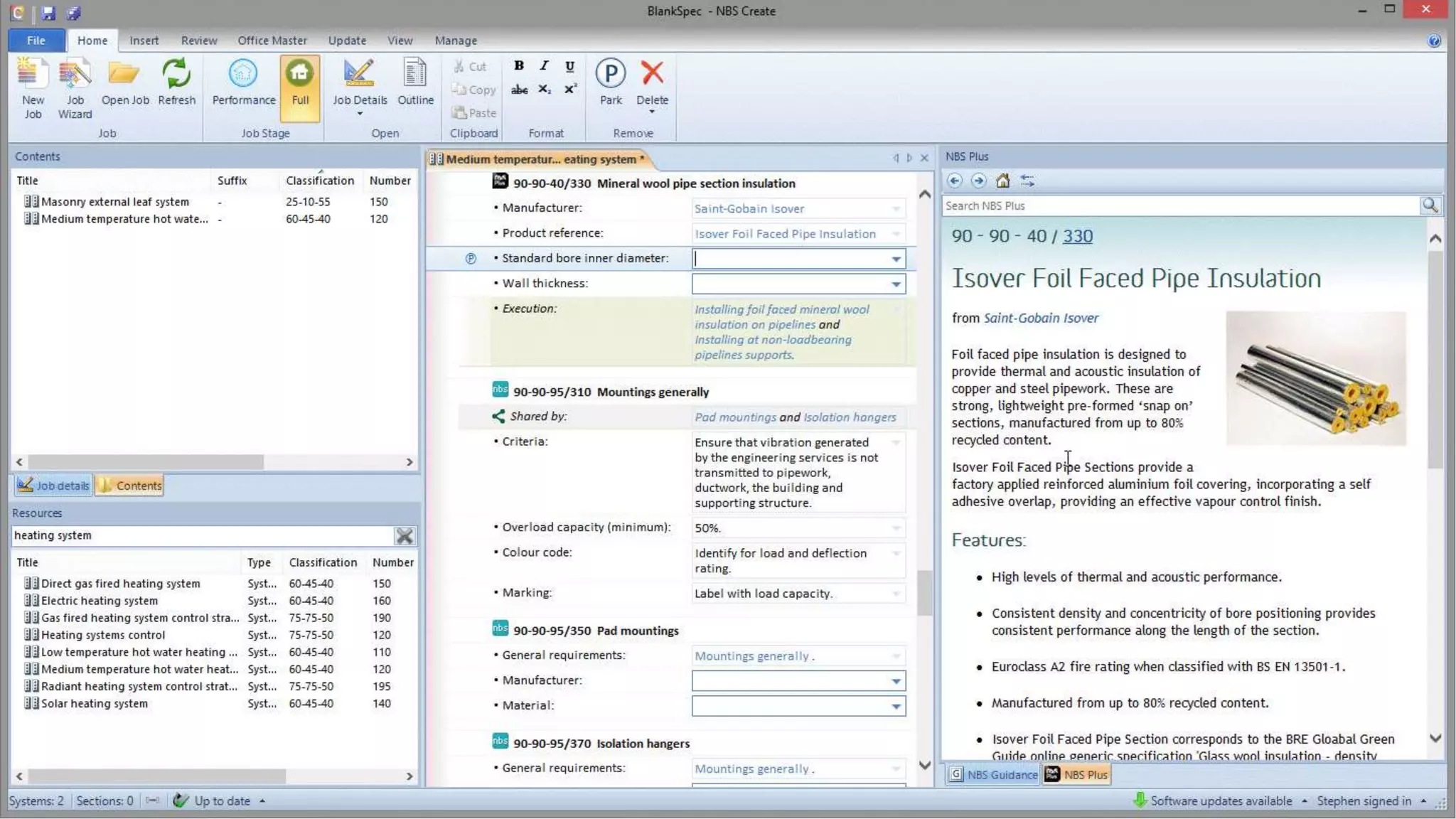
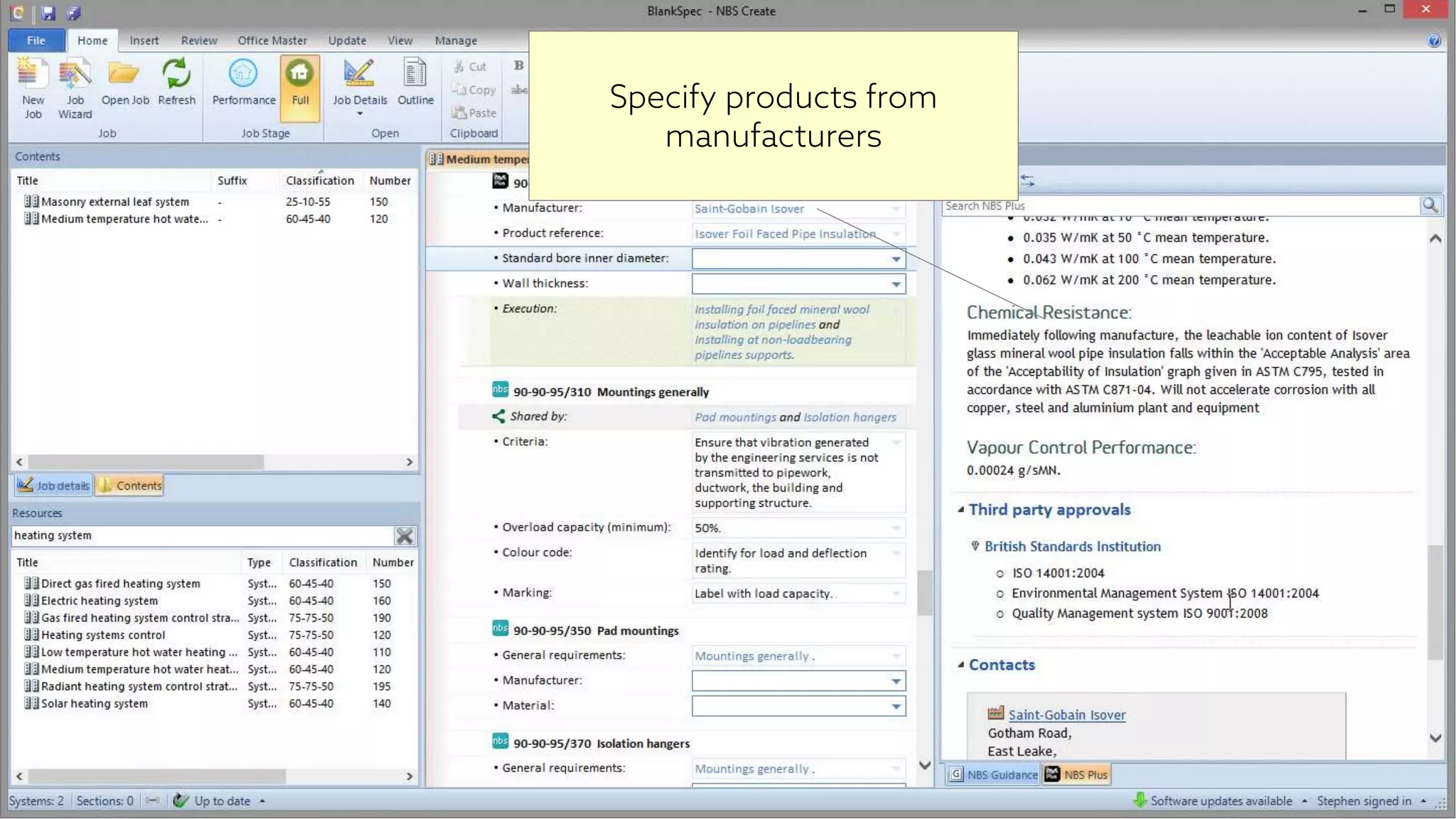
Specify products from
manufacturers
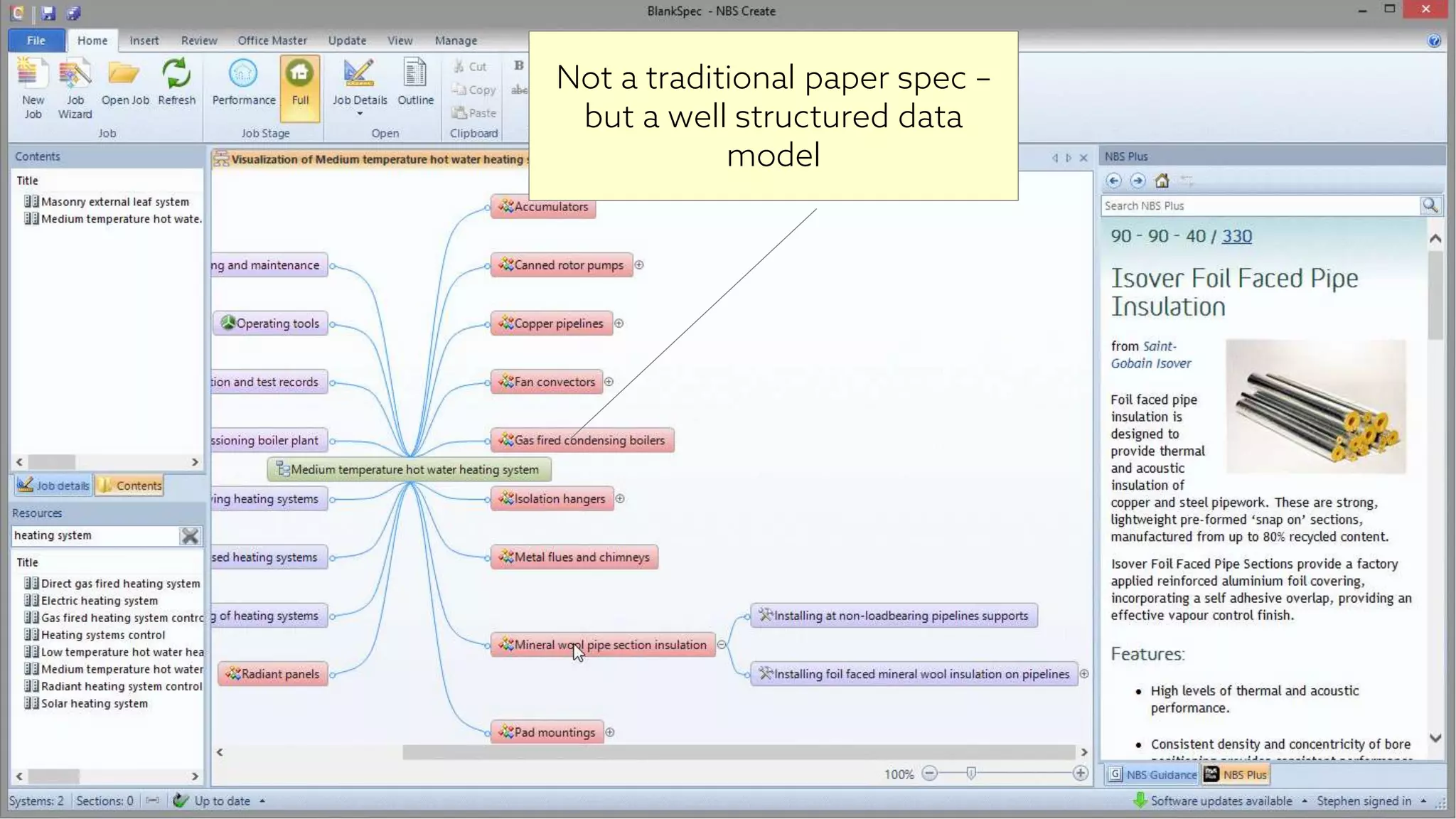
Not a traditional paper spec –
but a well structured data
model
Practical tools within this process
B. Design
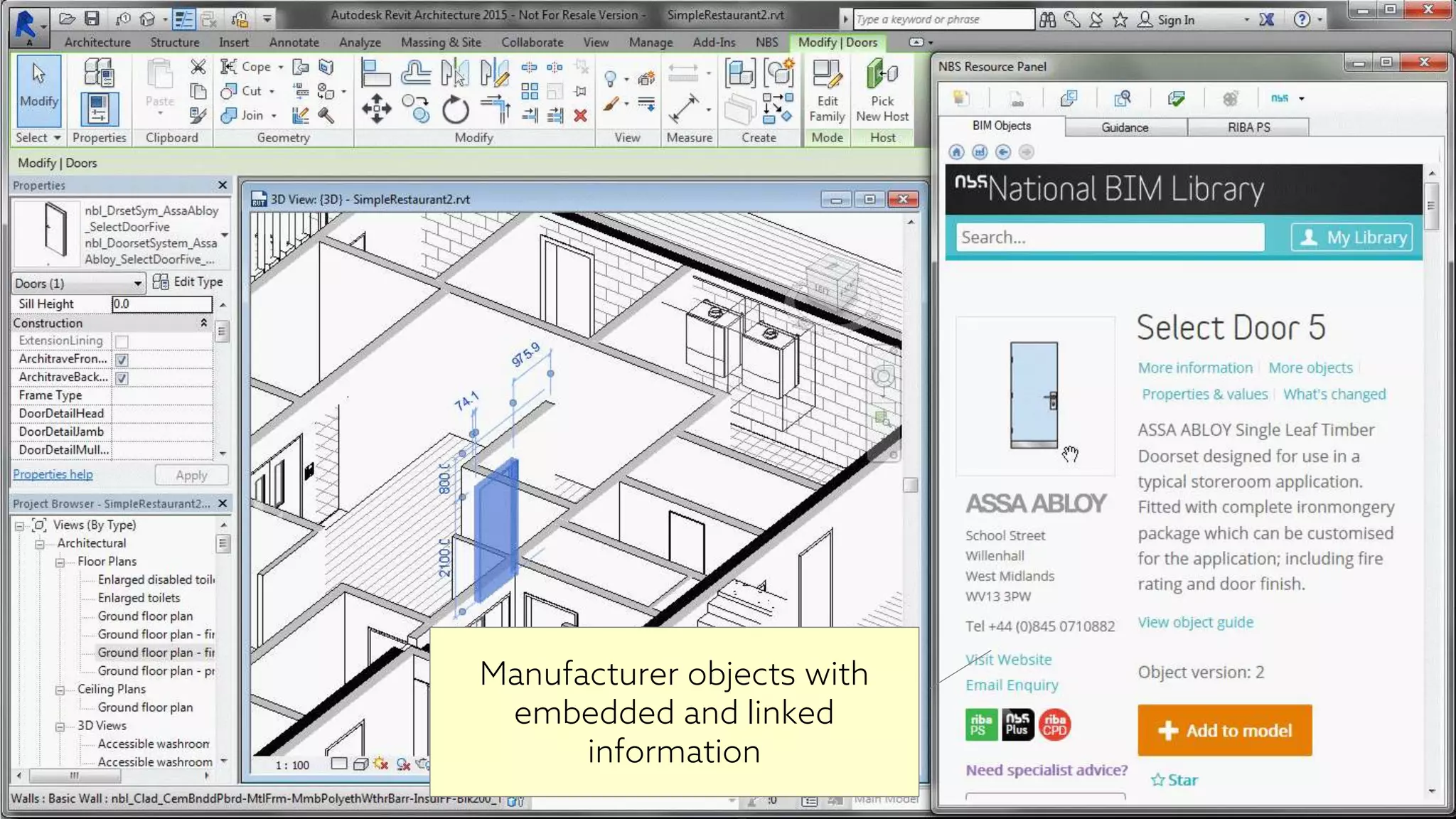
Concept generic objects for
early stage design
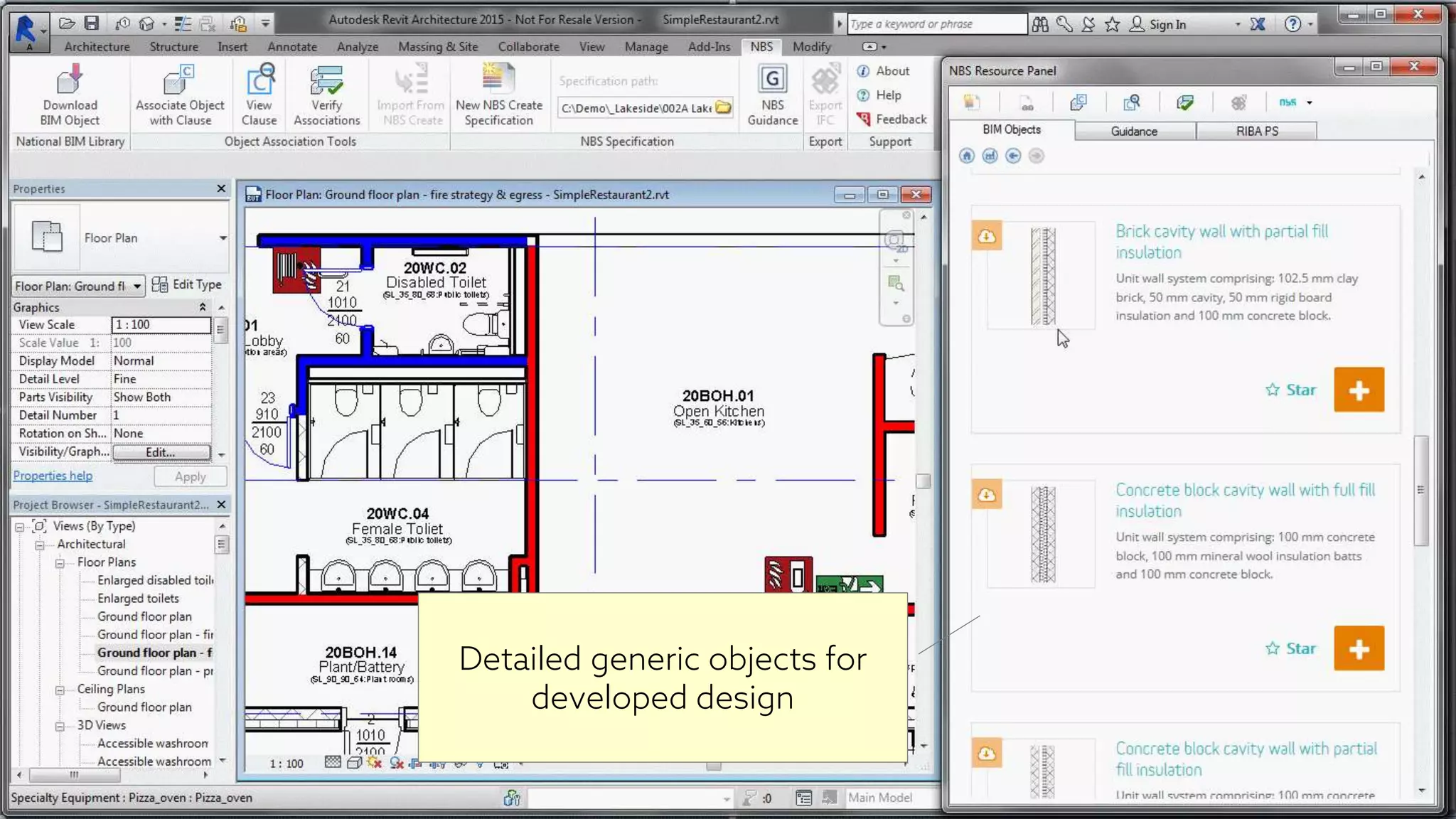
Detailed generic objects for
developed design
Manufacturer objects with
embedded and linked
information
Practical tools within this process
C. Coordination
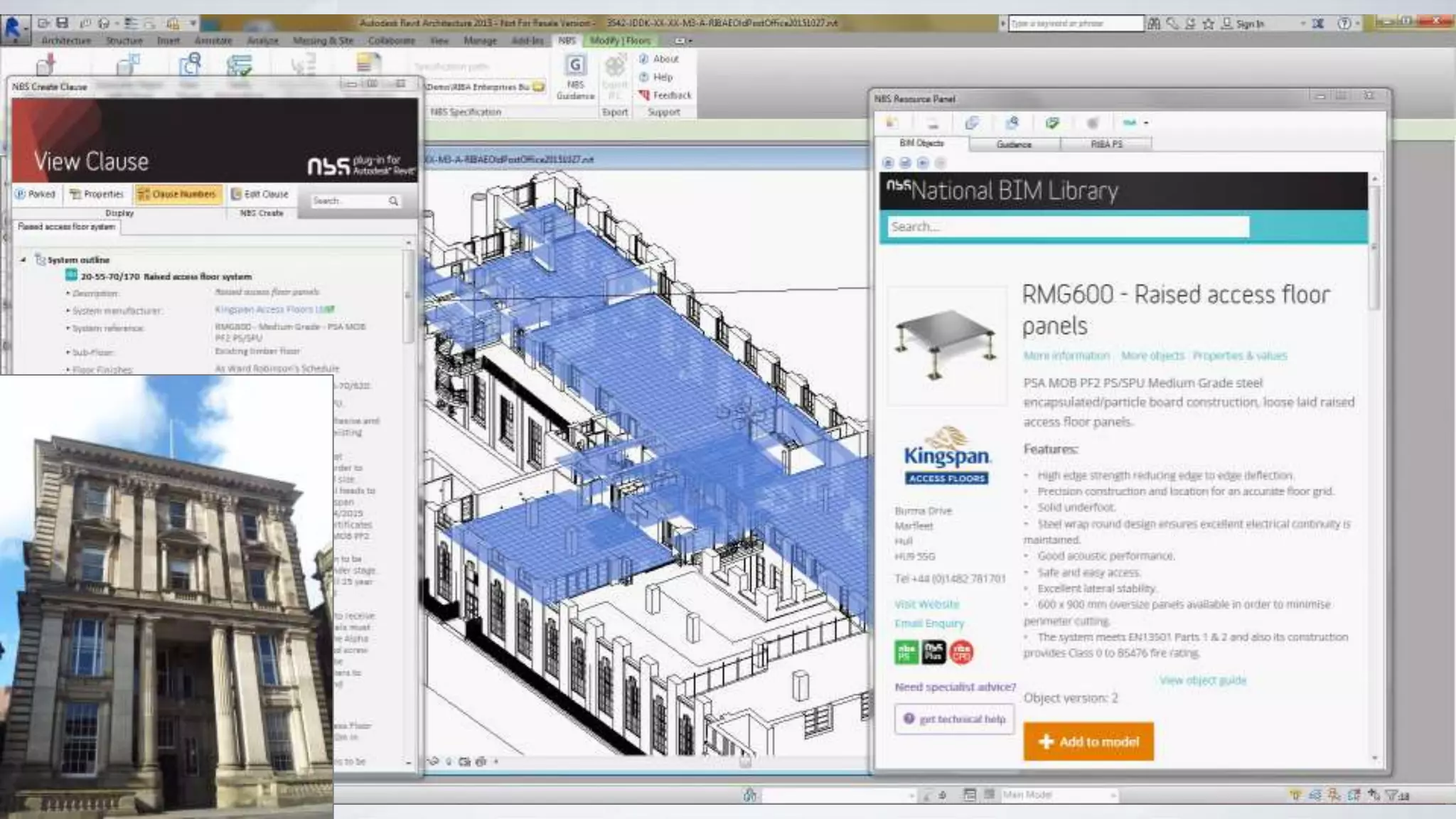
Linked to NBS project
specifications
Report on broken or missing
linkages
Summary
Summary
Level-2 BIM will be mandated in 2016
Information is required throughout a BIM project
Consider the practical tools within this process
www.theNBS.com/BIM
@theNBS
@StephenHamilNBS

BIM Through The Project Timeline | Ecobuild 2016

Editor's Notes

  • #35 Key points on classification The UK needs a unified classification system that is built-for-BIM and based on the ISO 12006-2 international framework and covering infrastructure as well as buildings. The Uniclass 2015 tables consistently cover classes of items from facilities (holiday village) to entities (restaurant) to activities (dining) to elements (internal walls) and spaces (washroom) to systems (ceiling) to products (ceiling tile). The BIM Toolkit allows users to explore the Uniclass 2015 content by browsing, filtering, searching or downloading it. Further information: Expert article on classification from Sarah Delany at NBS: https://toolkit.thenbs.com/articles/classification