The NBS BIM Toolkit
The NBS BIM Toolkit
Introduction
1. Dave Philp, BIM Task Group - The Level-2 BIM journey
2. Stephen Hamil, NBS - Digital plan of work
3. Steve Lockley, BIM Academy - Verification
1. The Level-2 BIM journey
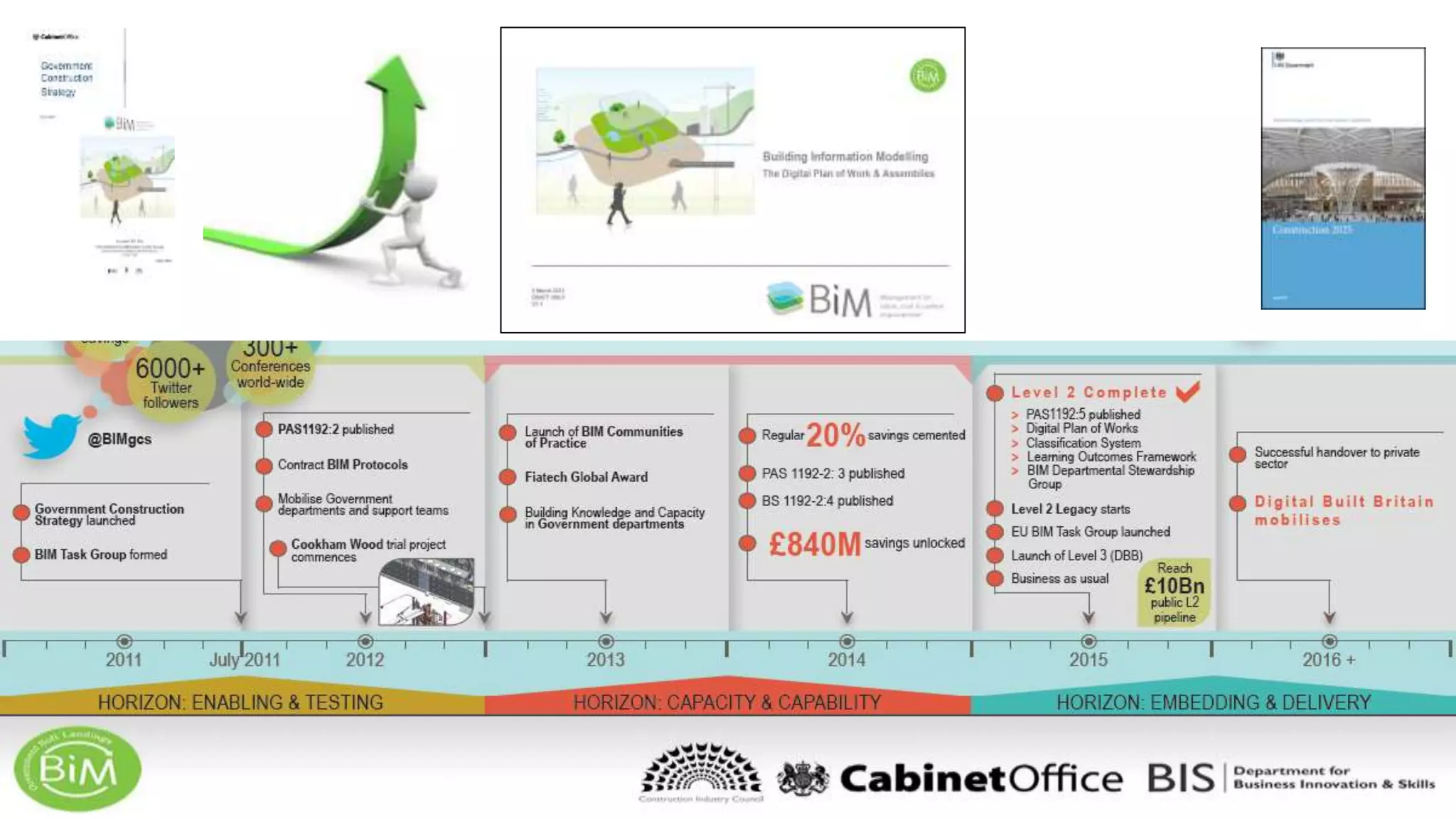
2011
2015
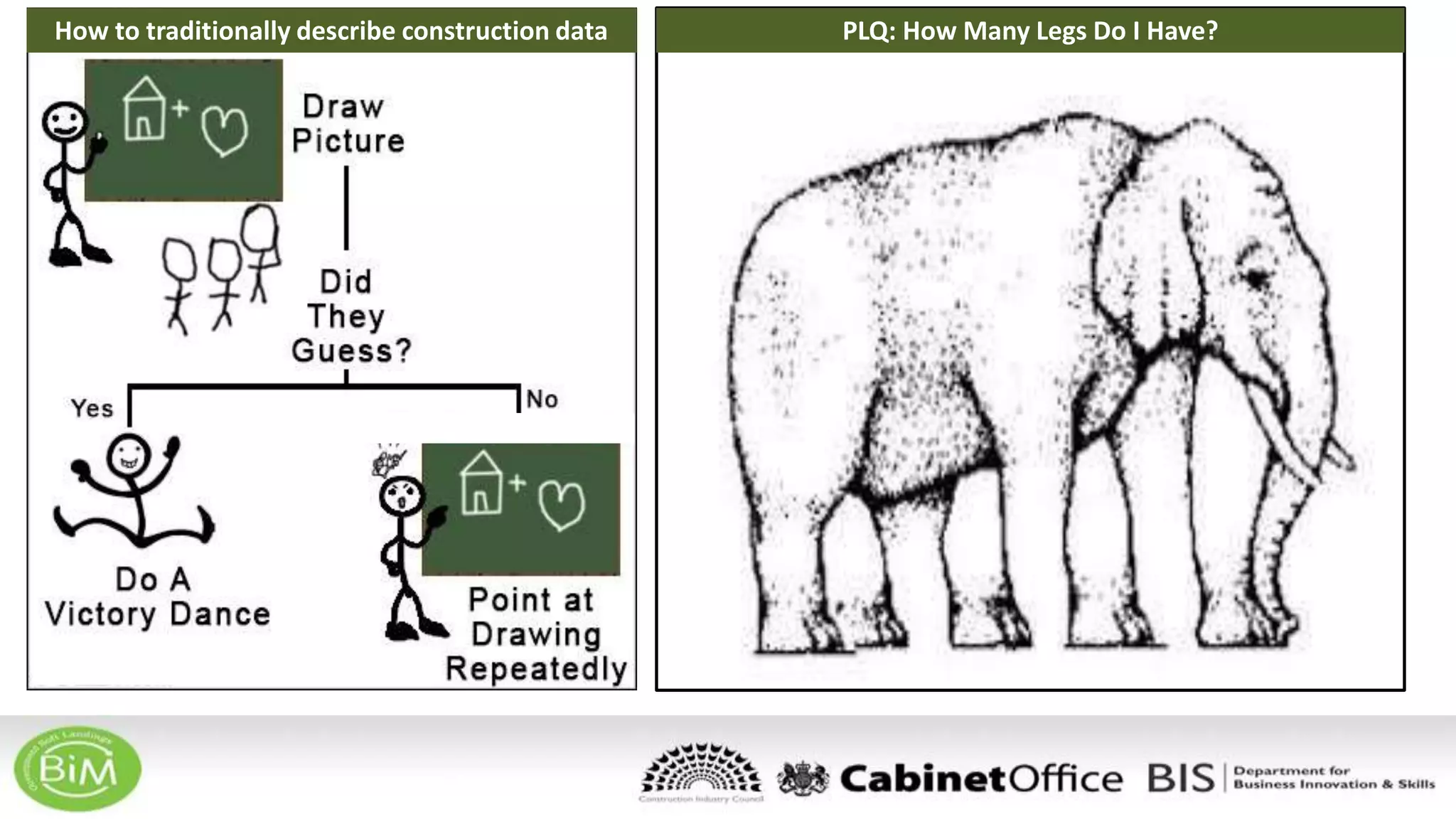
How to traditionally describe construction data PLQ: How Many Legs Do I Have?
LOD
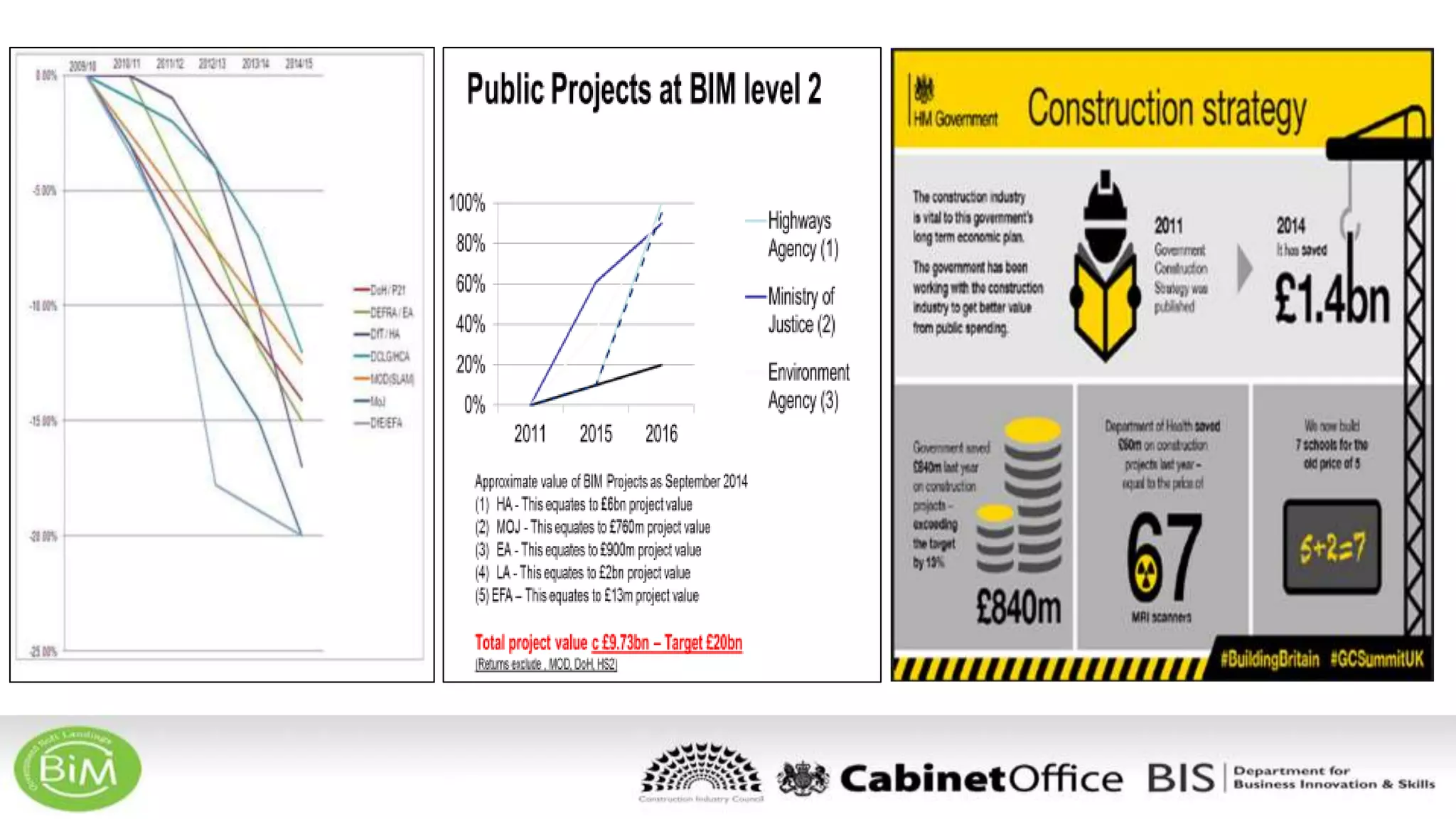
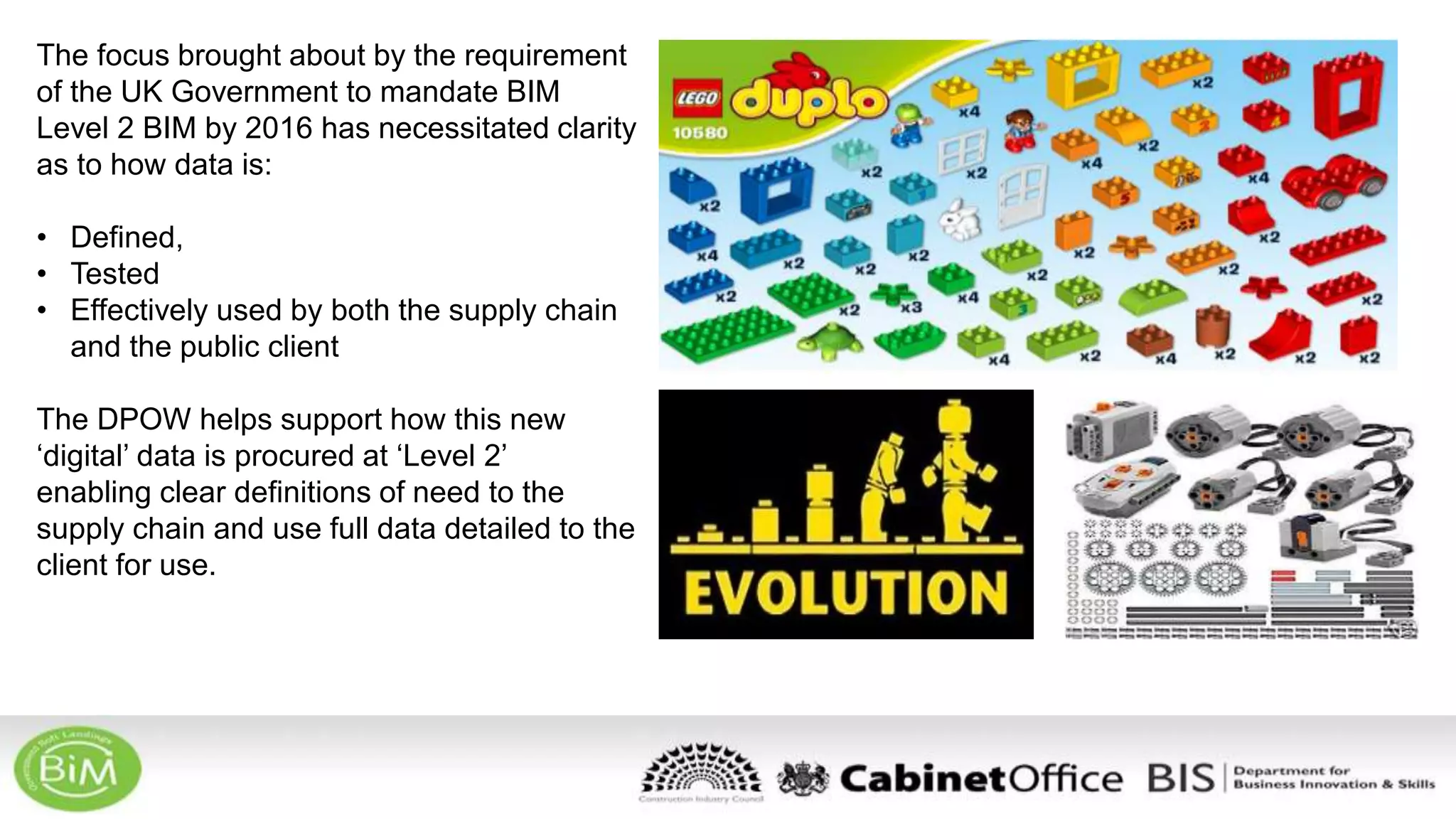
The focus brought about by the requirement
of the UK Government to mandate BIM
Level 2 BIM by 2016 has necessitated clarity
as to how data is:
• Defined,
• Tested
• Effectively used by both the supply chain
and the public client
The DPOW helps support how this new
‘digital’ data is procured at ‘Level 2’
enabling clear definitions of need to the
supply chain and use full data detailed to the
client for use.
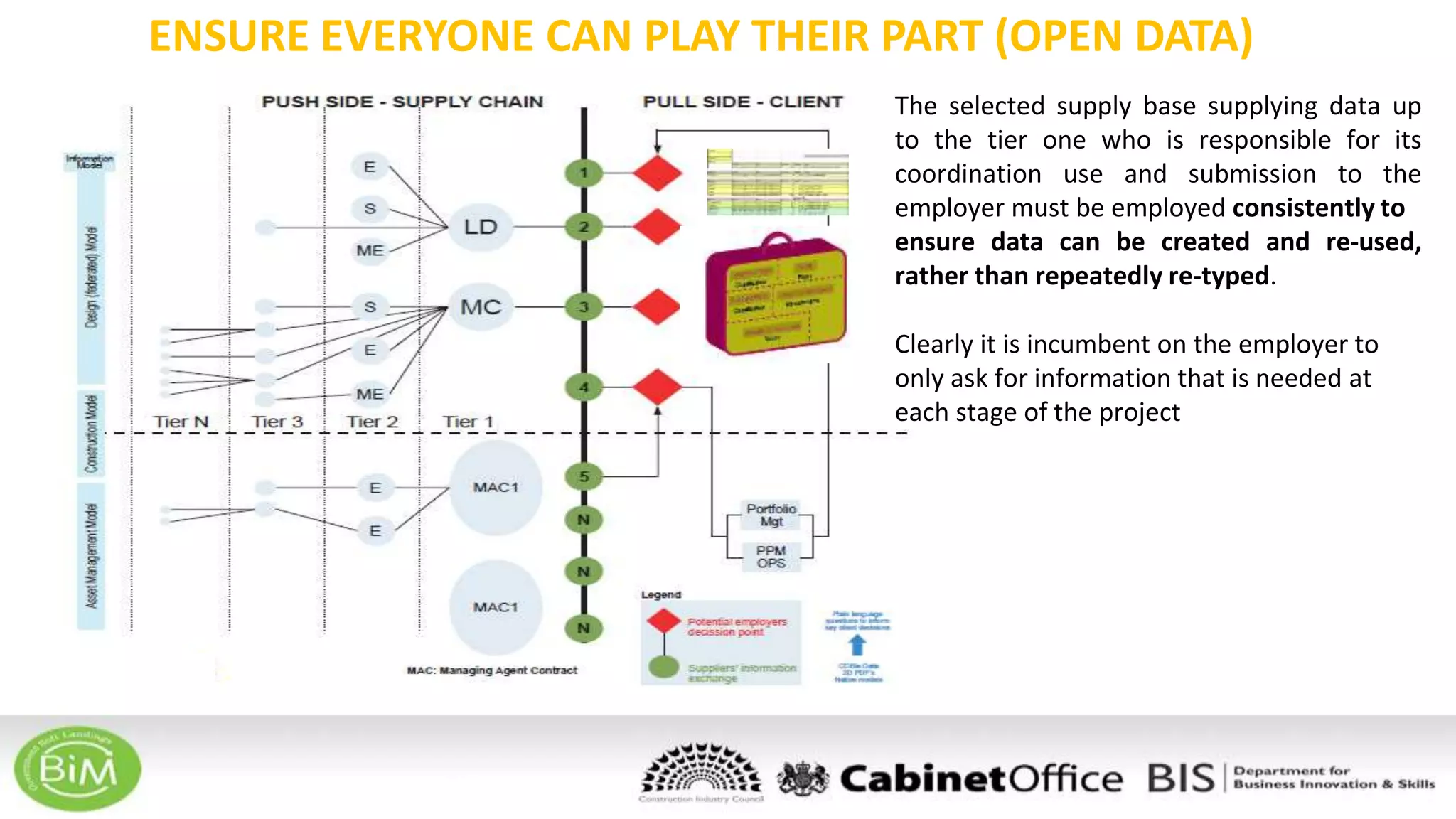
ENSURE EVERYONE CAN PLAY THEIR PART (OPEN DATA)
The selected supply base supplying data up
to the tier one who is responsible for its
coordination use and submission to the
employer must be employed consistently to
ensure data can be created and re-used,
rather than repeatedly re-typed.
Clearly it is incumbent on the employer to
only ask for information that is needed at
each stage of the project
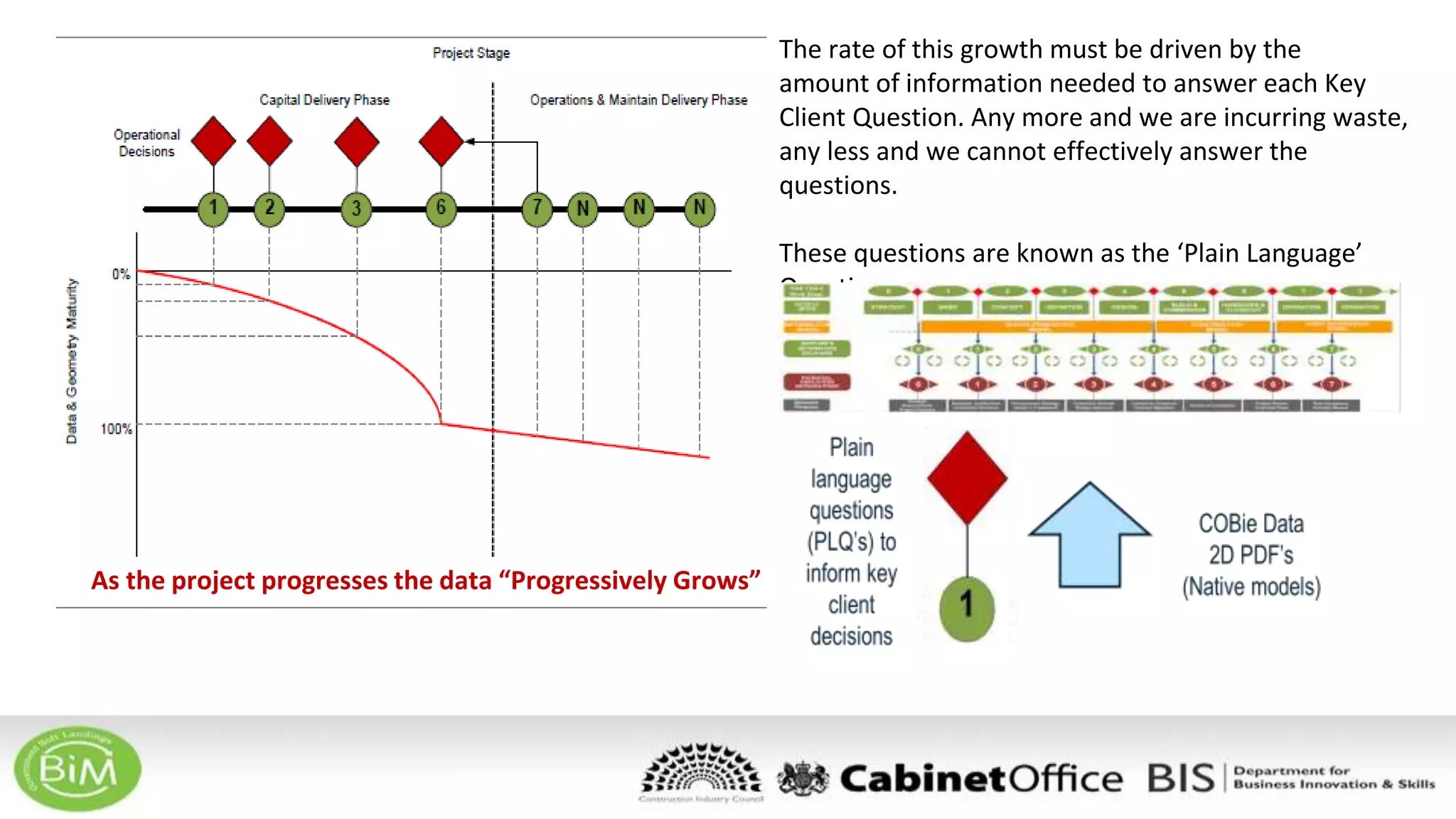
The rate of this growth must be driven by the
amount of information needed to answer each Key
Client Question. Any more and we are incurring waste,
any less and we cannot effectively answer the
questions.
These questions are known as the ‘Plain Language’
Questions.
As the project progresses the data “Progressively Grows”
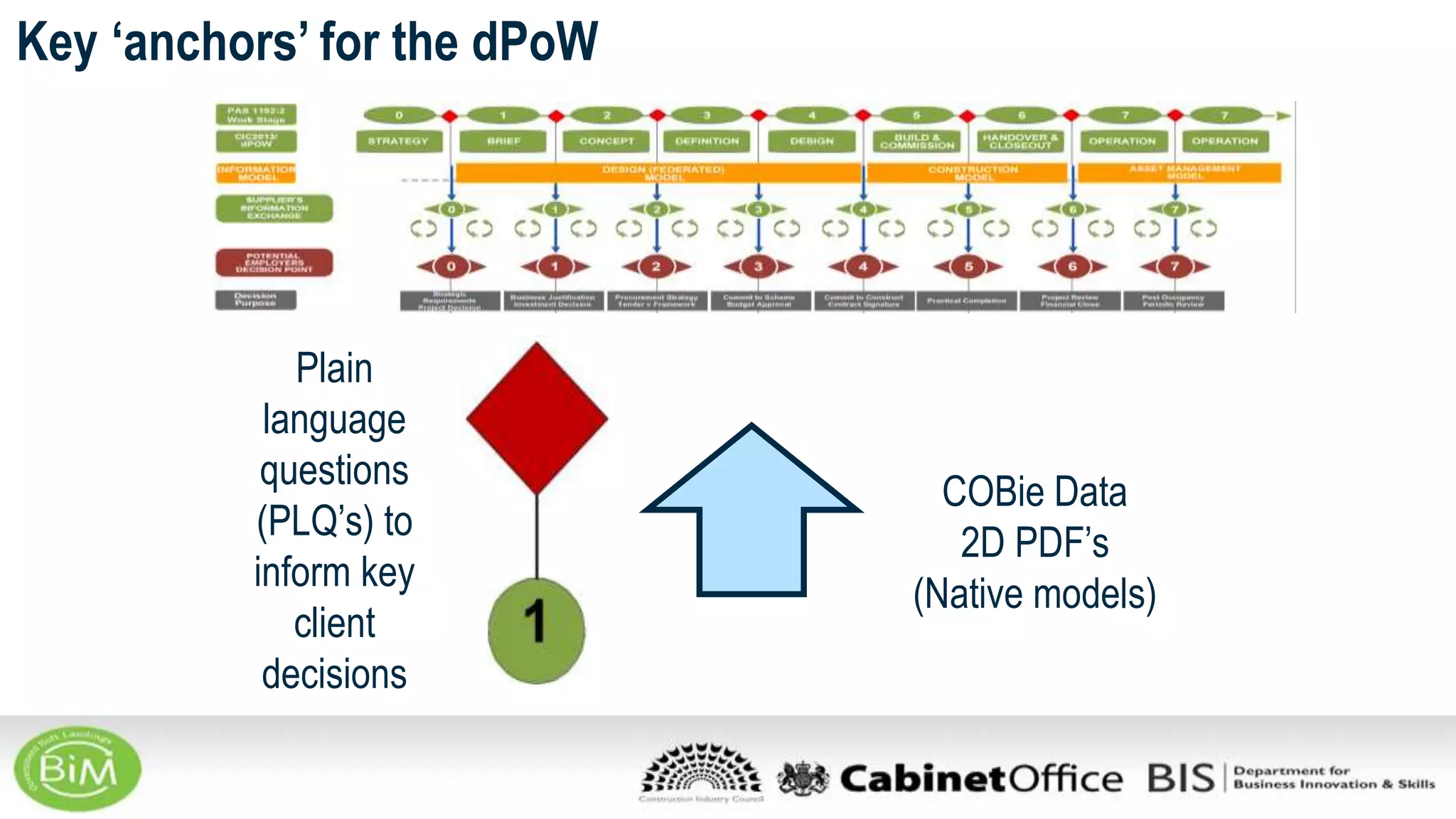
Key ‘anchors’ for the dPoW
Plain language questions
(PLQ’s) to inform key
client decisions
COBie Data
2D PDF’s
(Native models)
Plain
language
questions
(PLQ’s) to
inform key
client
decisions
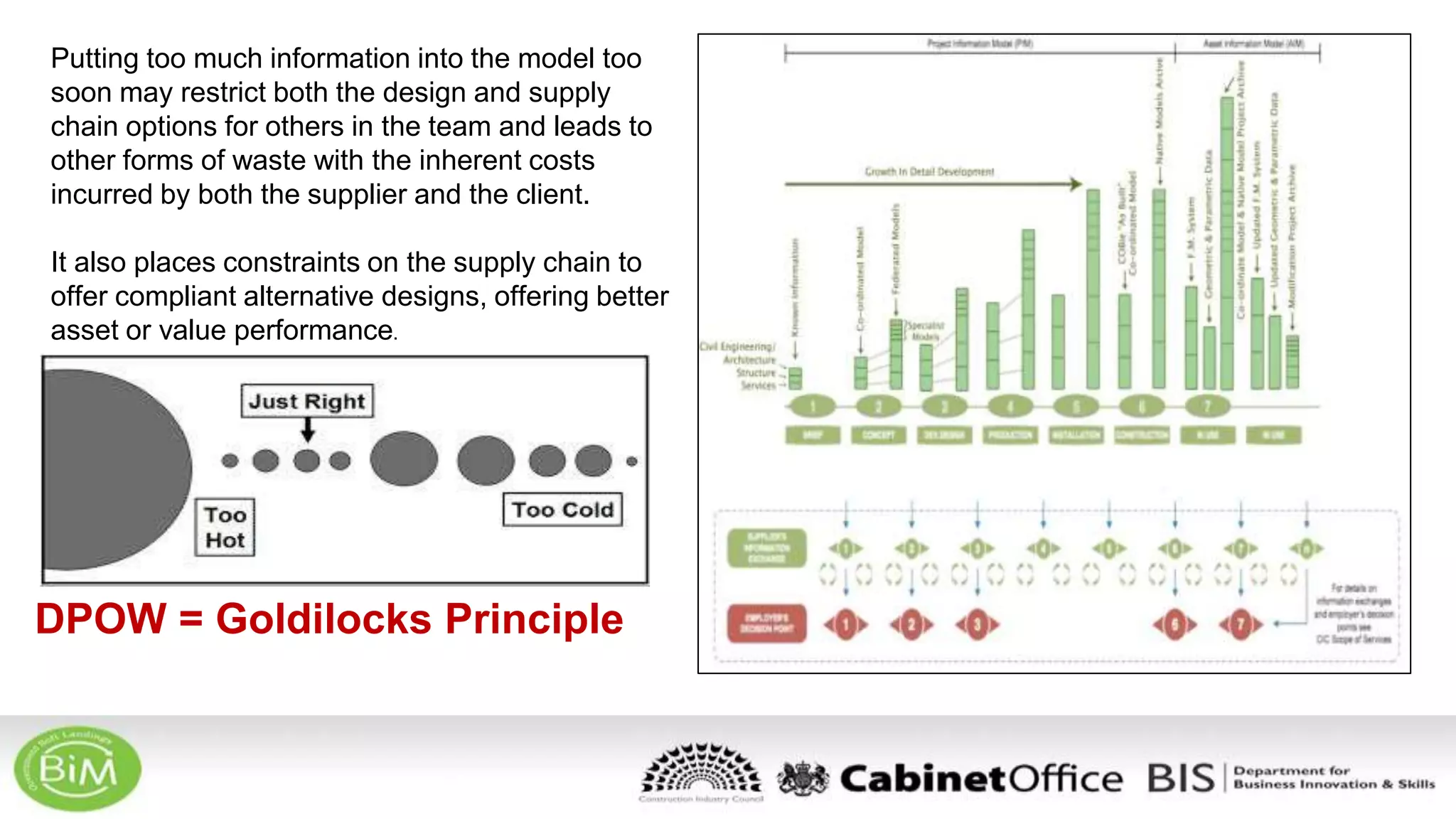
Putting too much information into the model too
soon may restrict both the design and supply
chain options for others in the team and leads to
other forms of waste with the inherent costs
incurred by both the supplier and the client.
It also places constraints on the supply chain to
offer compliant alternative designs, offering better
asset or value performance.
DPOW = Goldilocks Principle
2. Digital plan of work
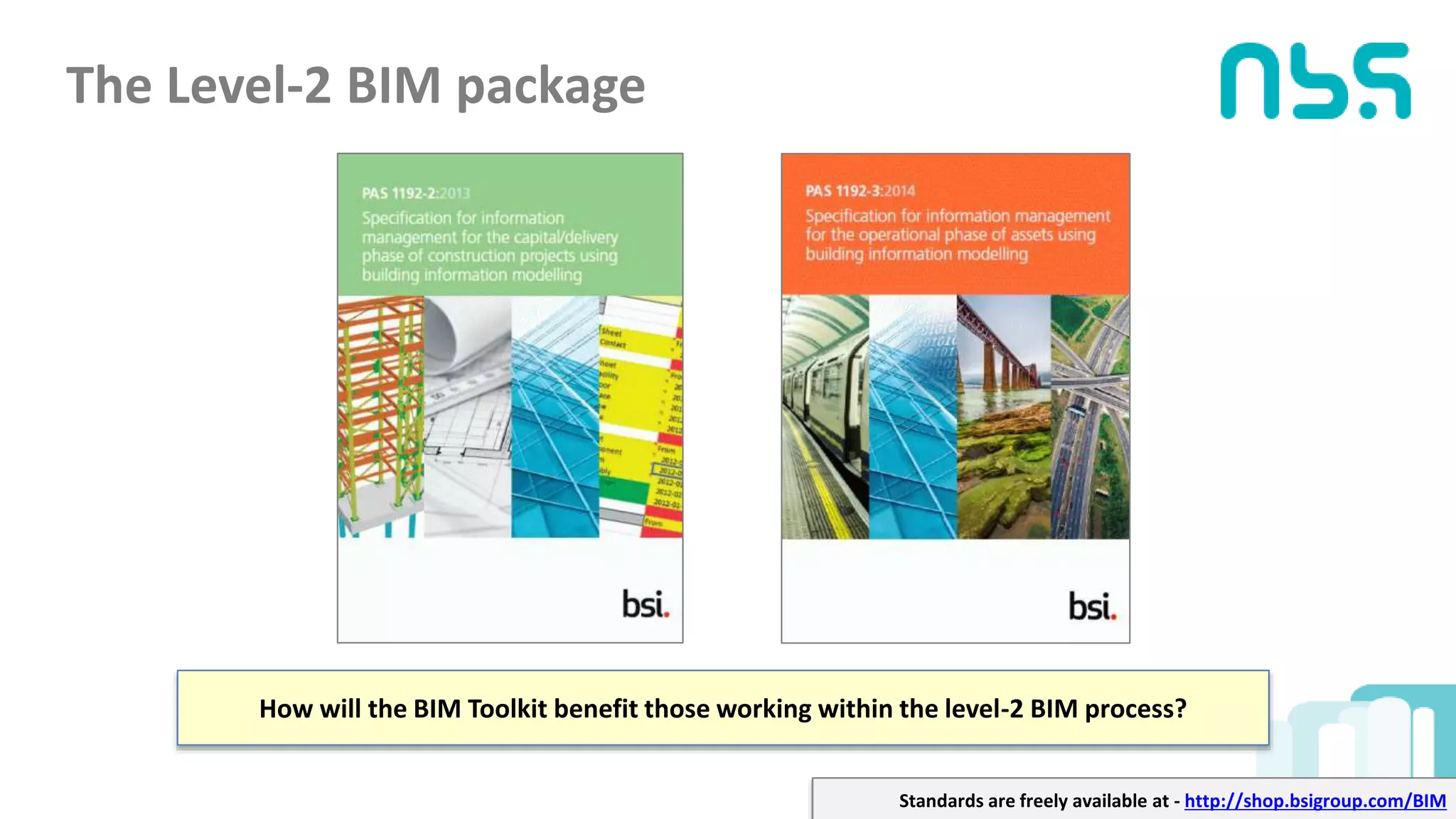
The Level-2 BIM package
How will the BIM Toolkit benefit those working within the level-2 BIM process?
Standards are freely available at - http://shop.bsigroup.com/BIM
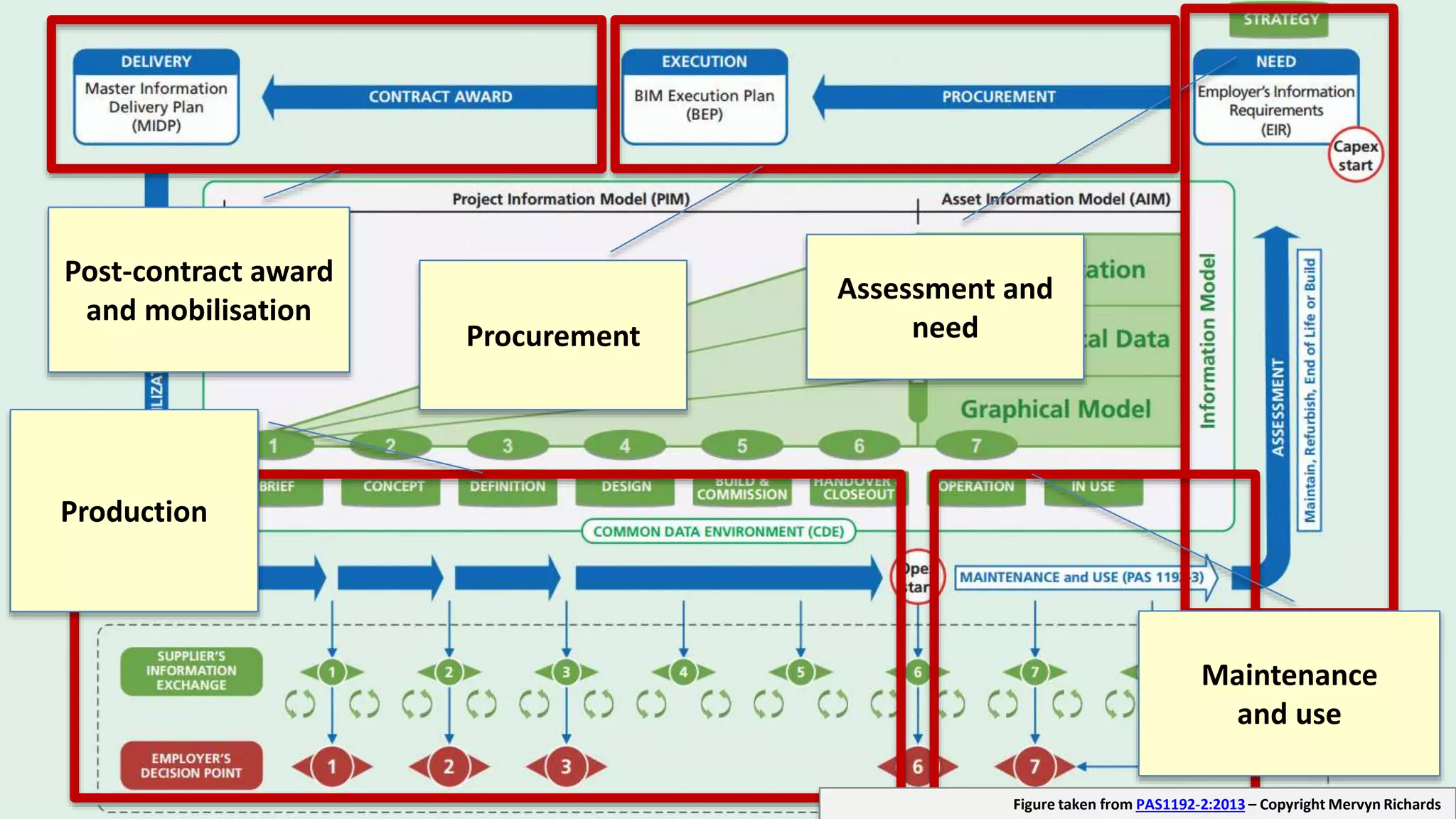
Assessment and
needProcurement
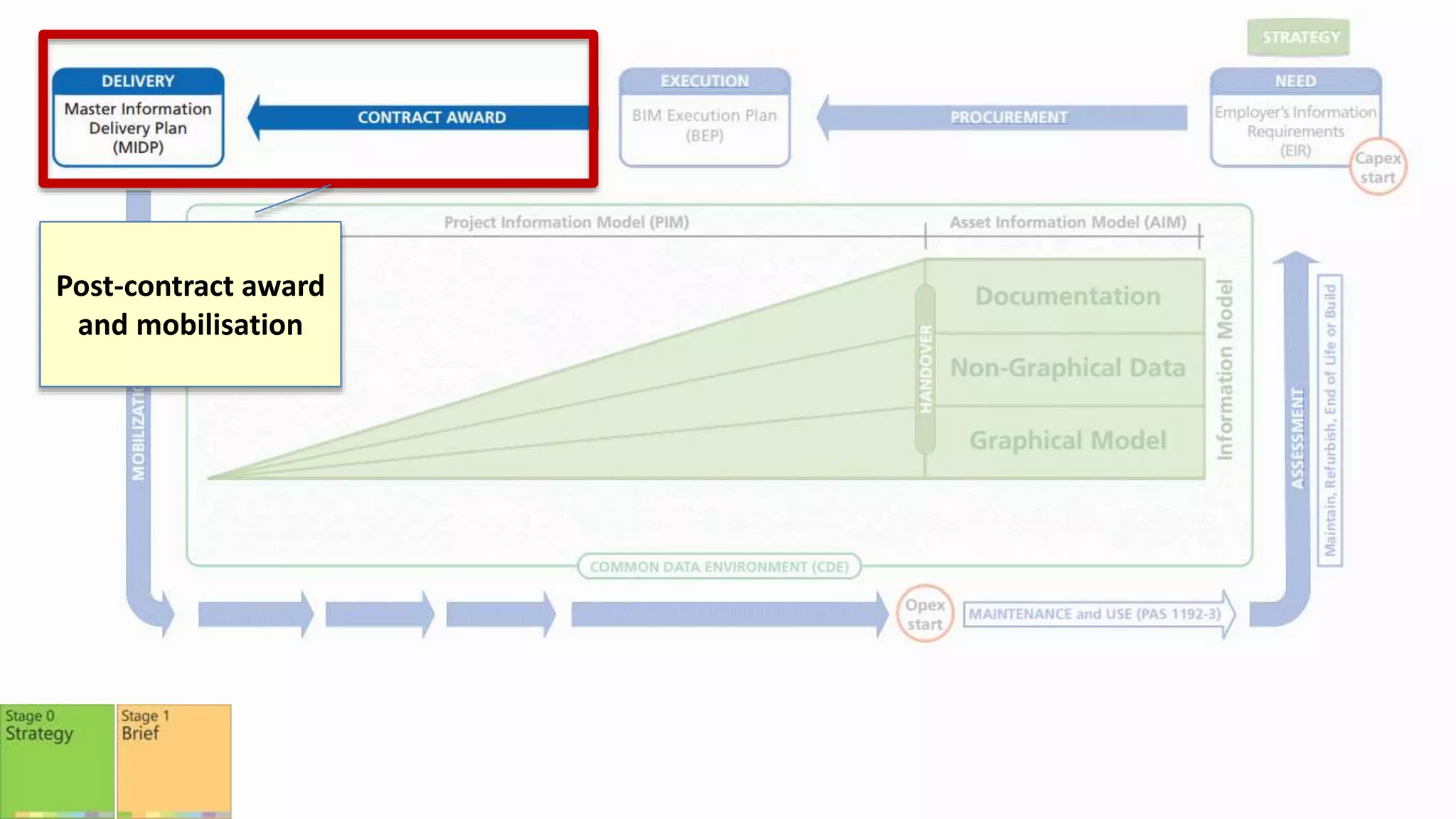
Post-contract award
and mobilisation
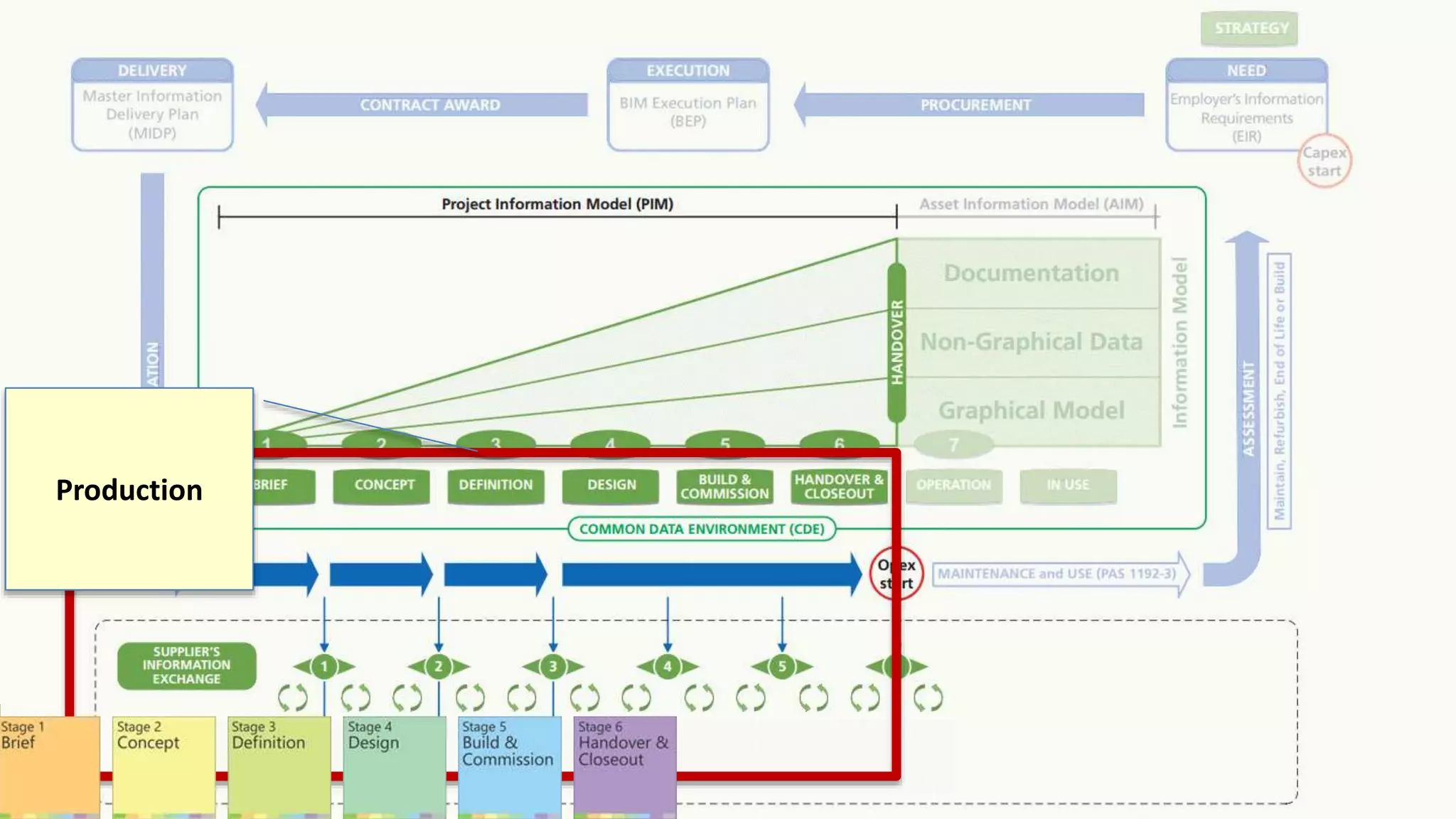
Production
Maintenance
and use
Figure taken from PAS1192-2:2013 – Copyright Mervyn Richards
Assessment and need
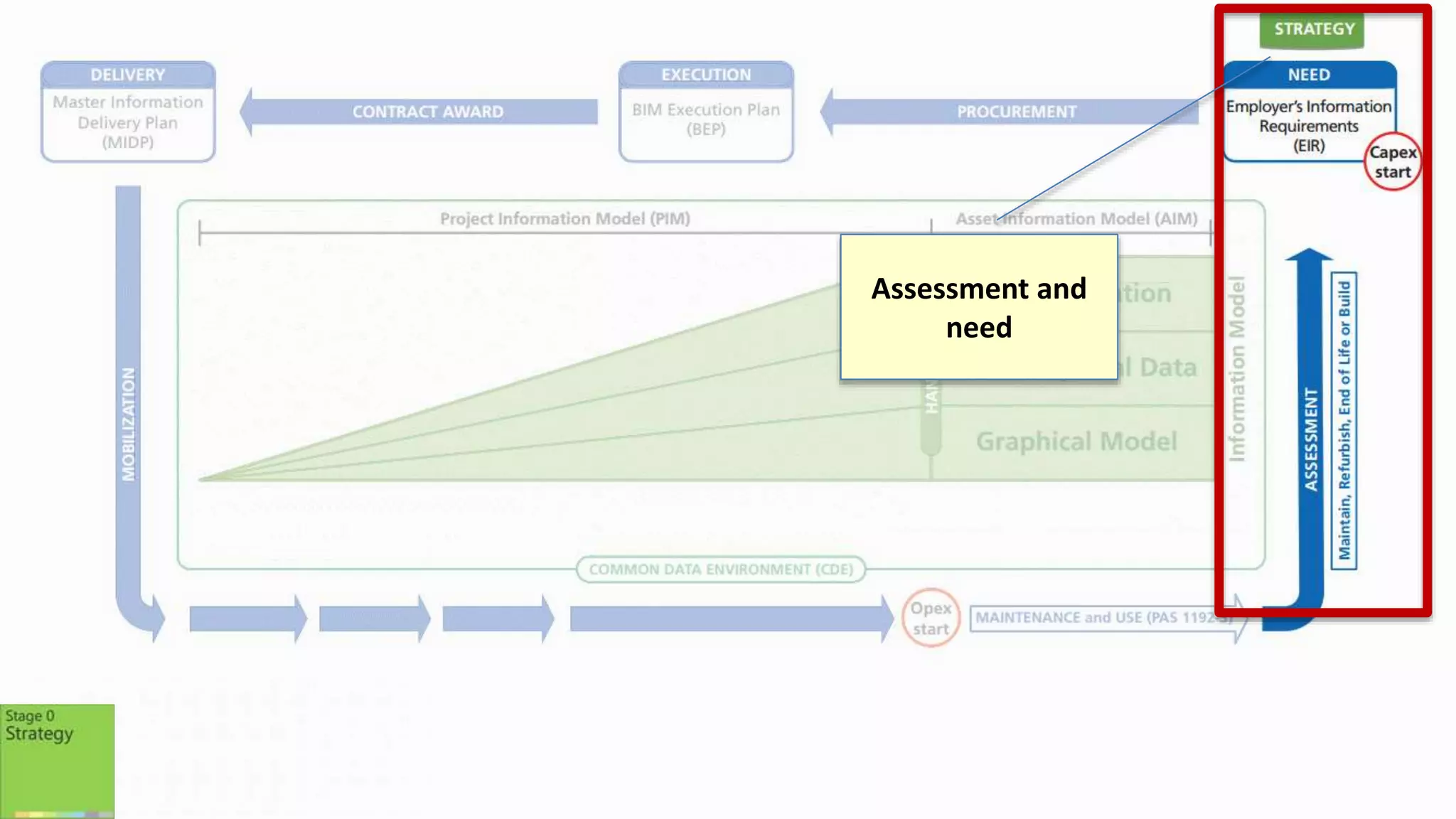
Assessment and
need
Assessment and need
Overview
• Client determines their plain language questions
(determines the need)
• Client produces their employer’s information requirements
(Required information to meet the needs as defined in PLQs)
• Information requirements aligned to the project stages
• This is part of the tender documentation
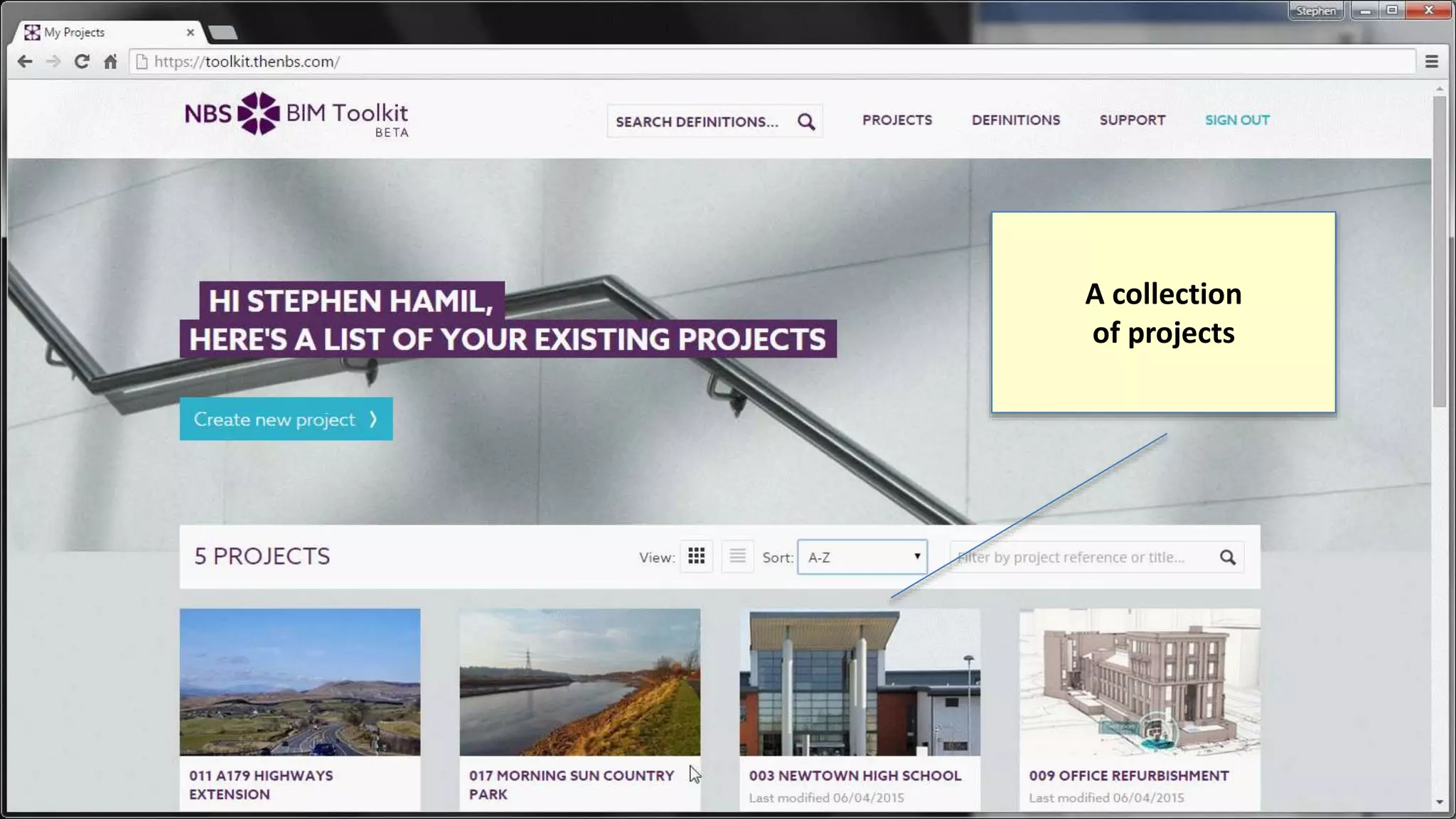
A collection
of projects
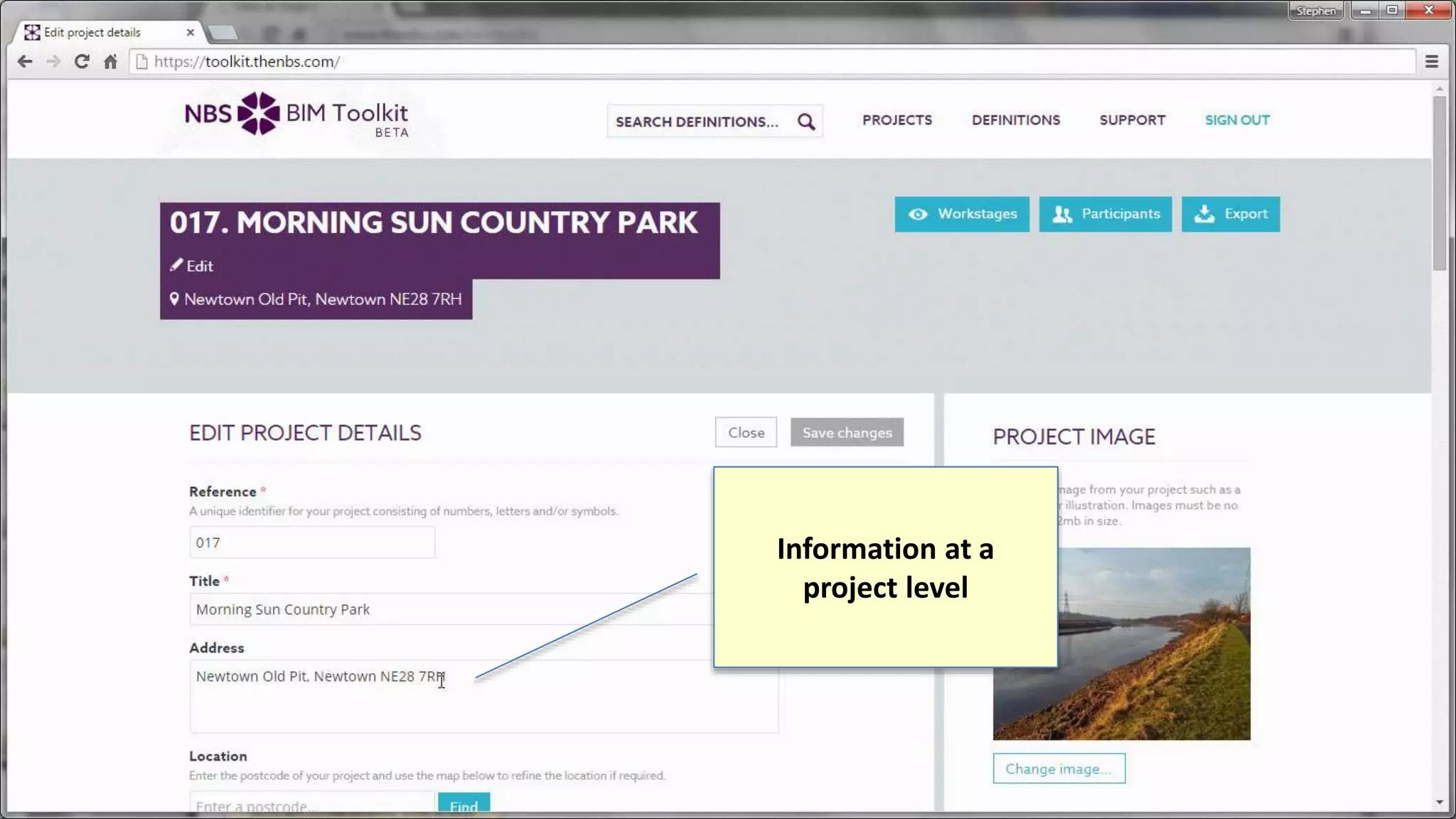
Information at a
project level
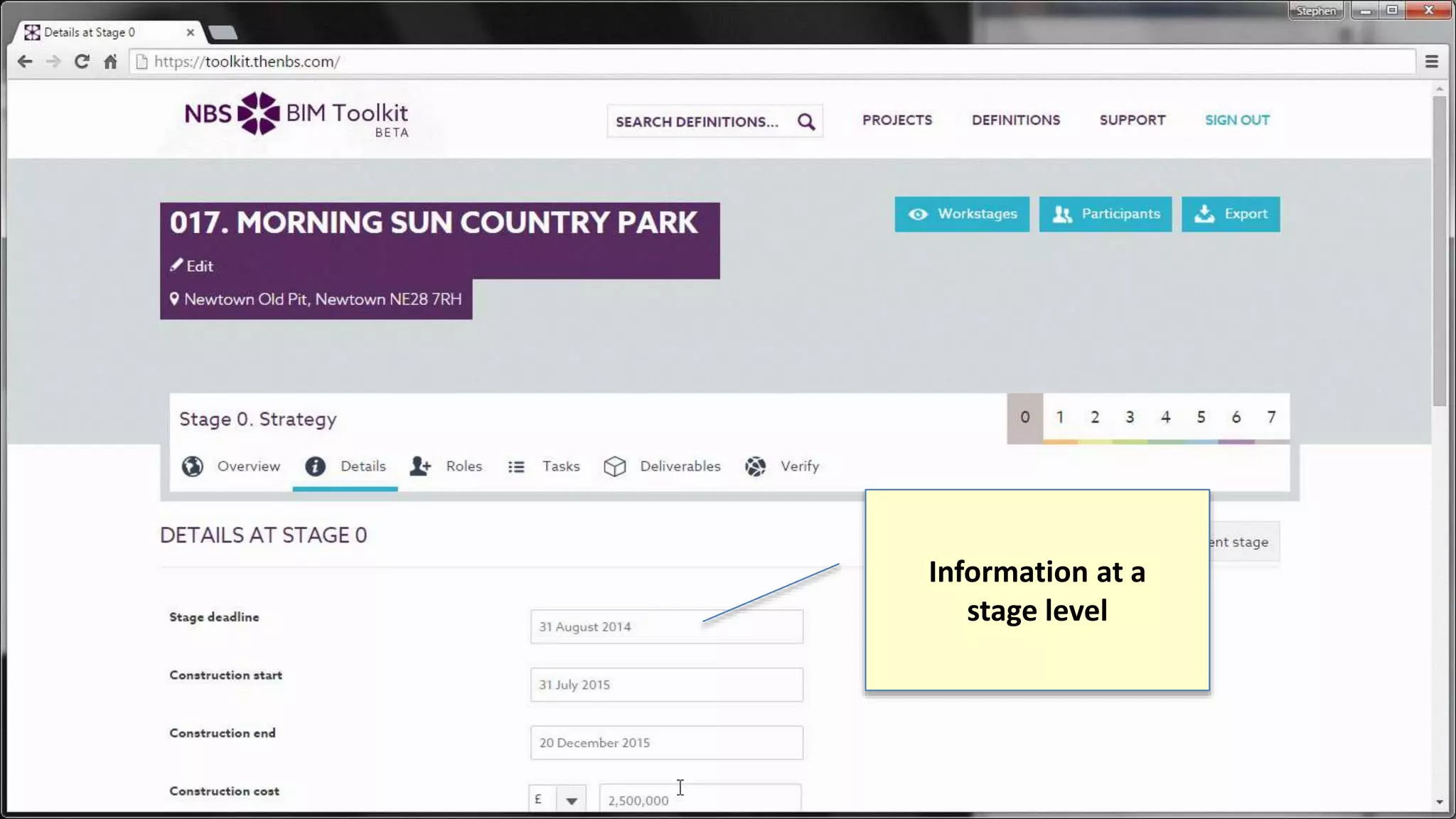
Information at a
stage level
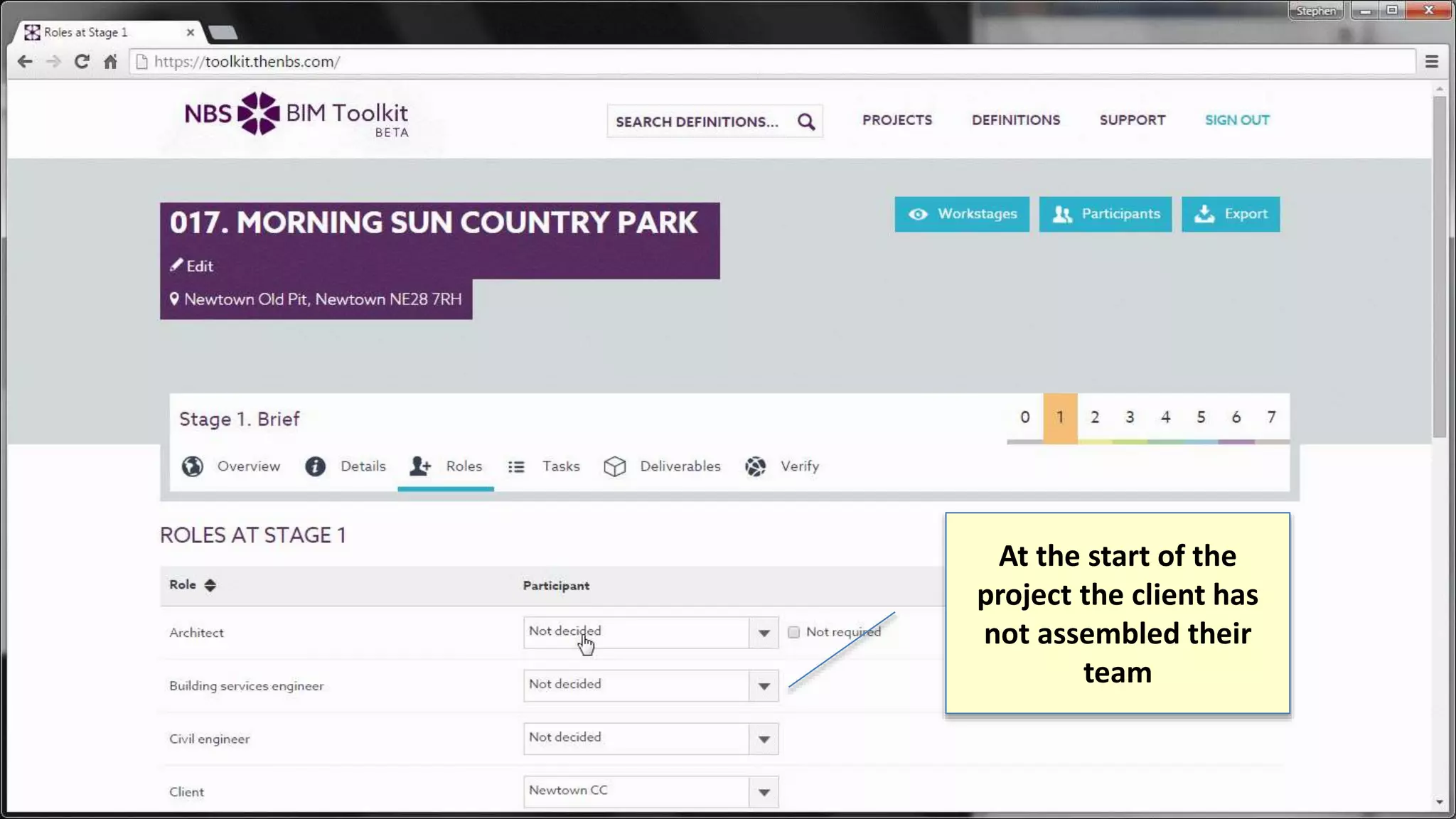
At the start of the
project the client has
not assembled their
team
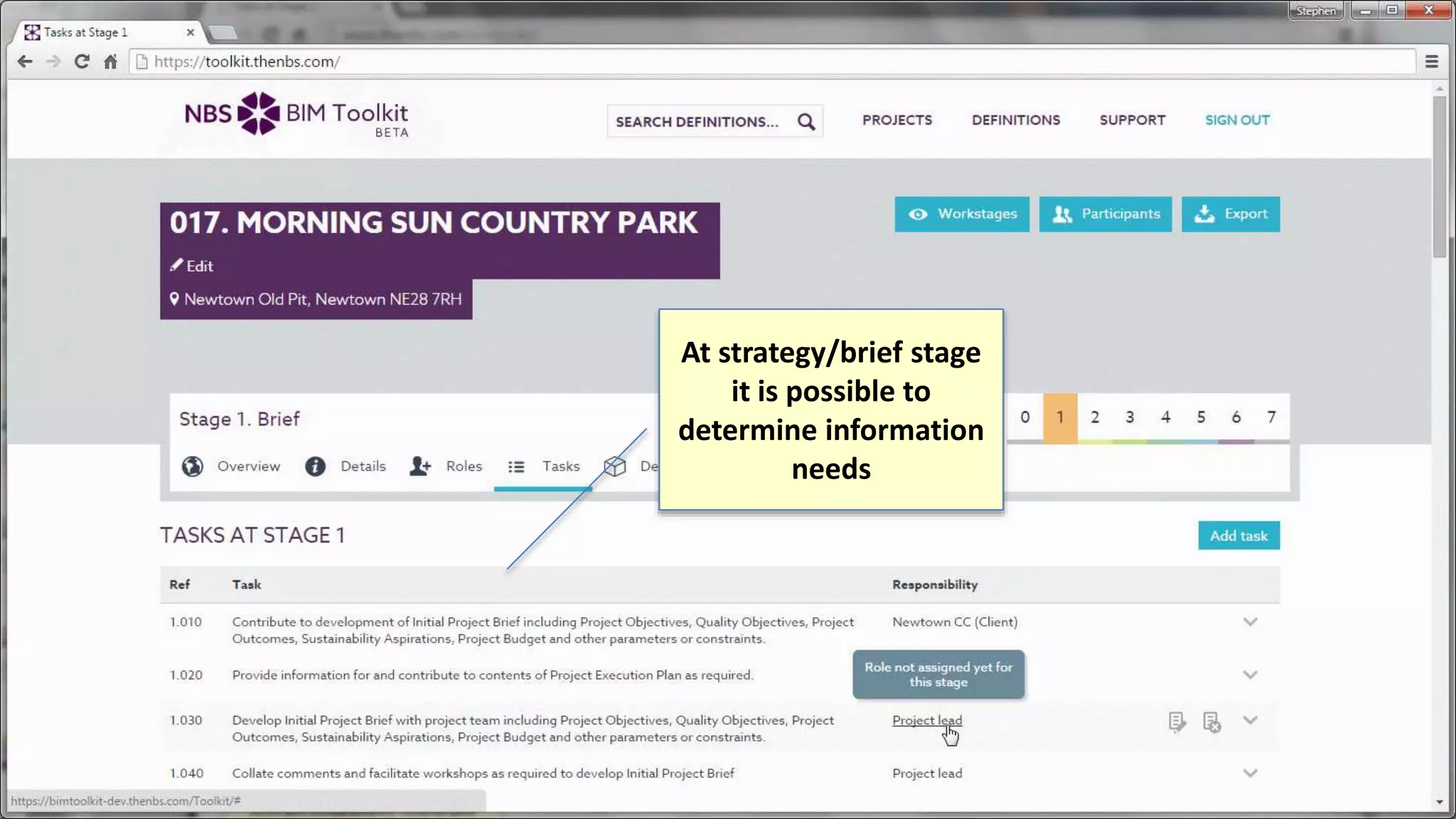
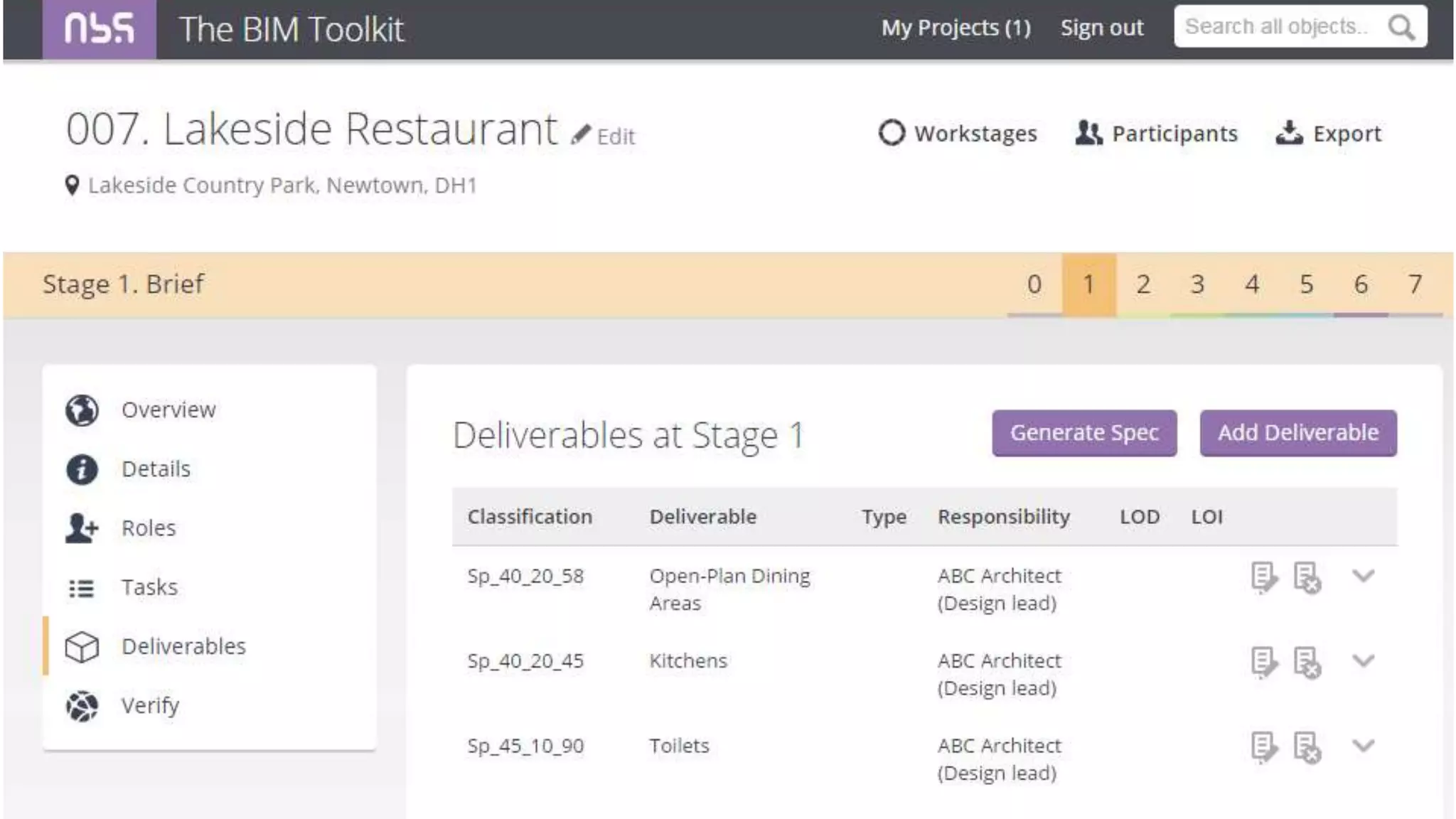
At strategy/brief stage
it is possible to
determine information
needs
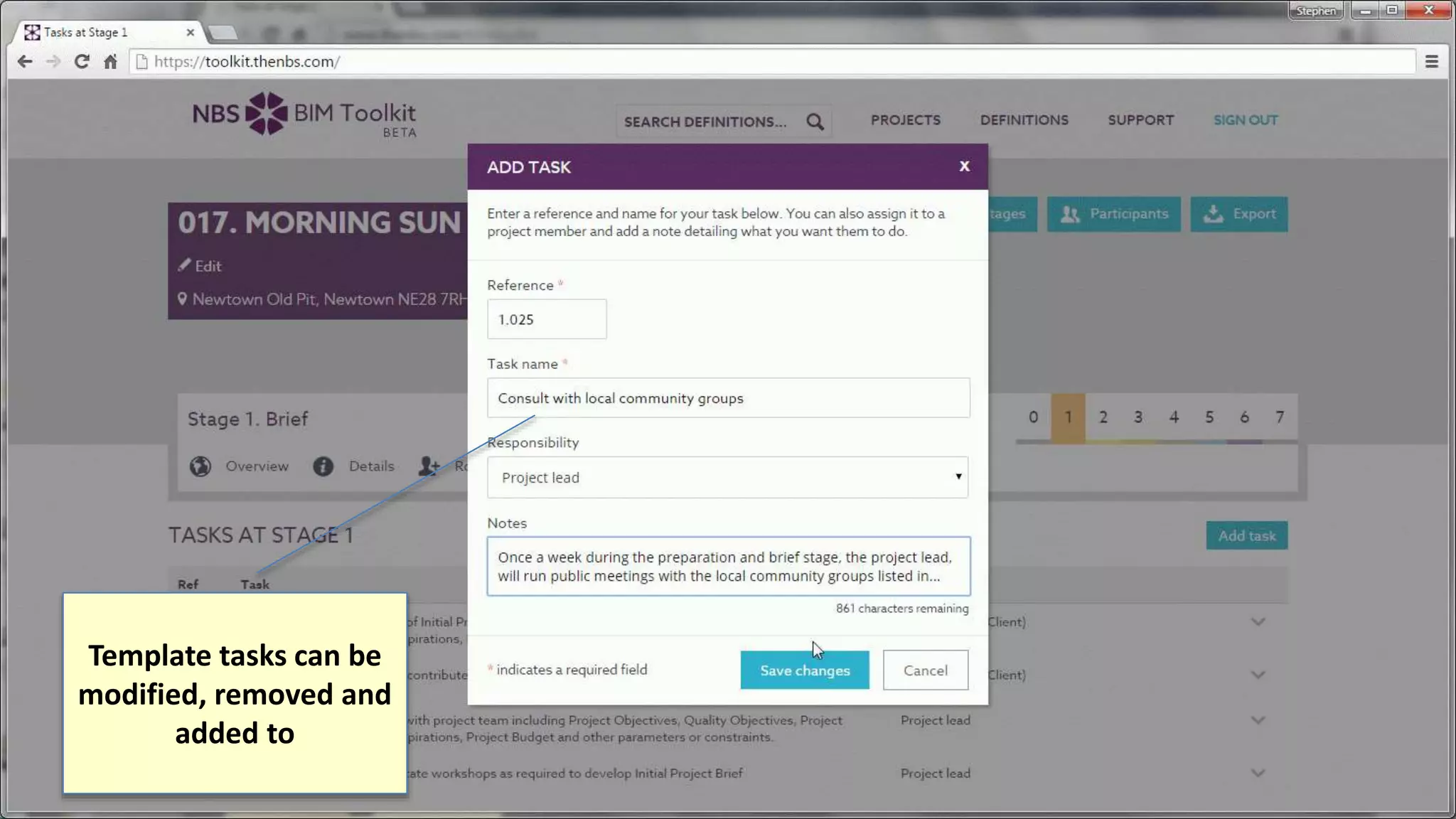
Template tasks can be
modified, removed and
added to
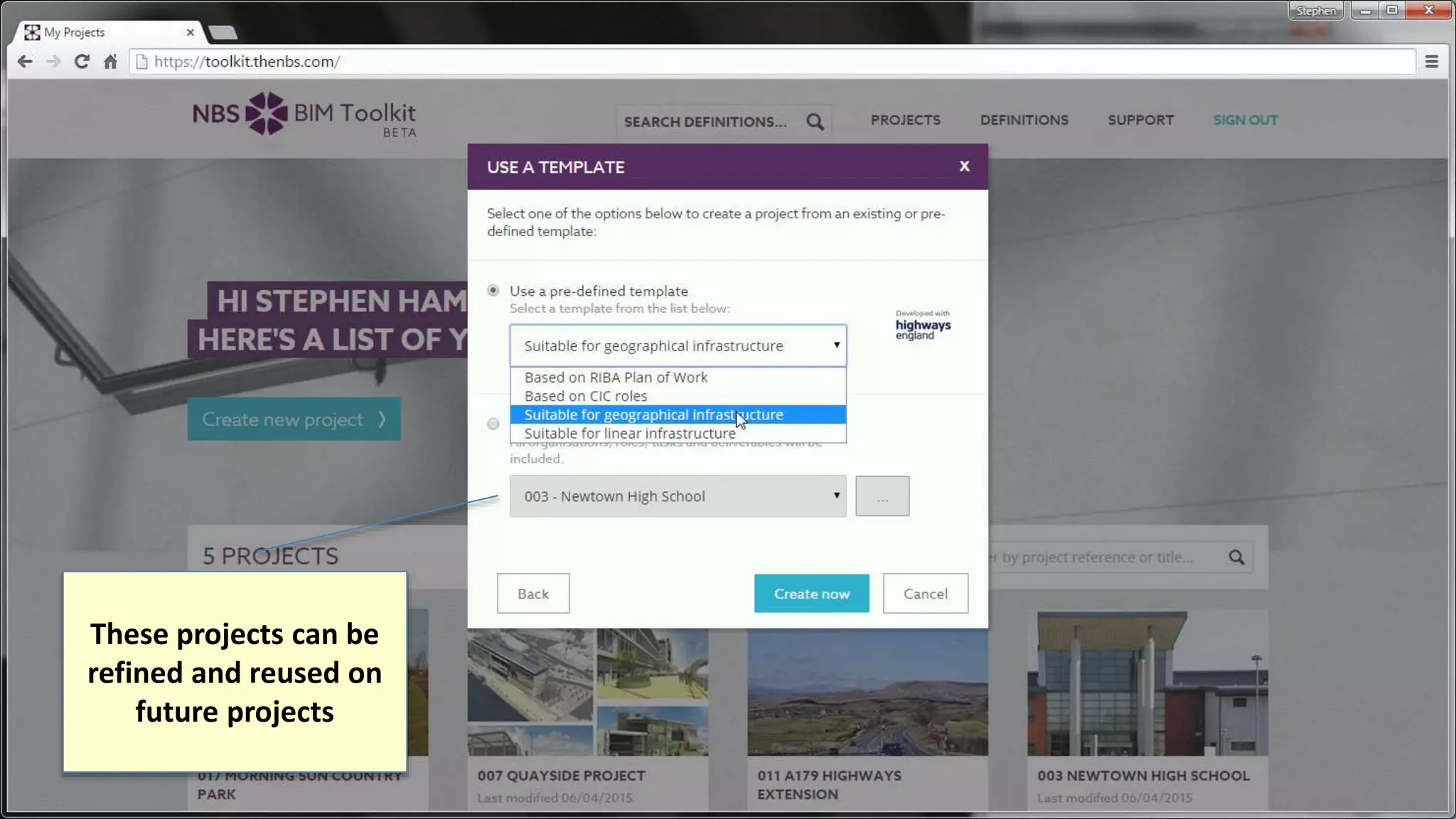
These projects can be
refined and reused on
future projects
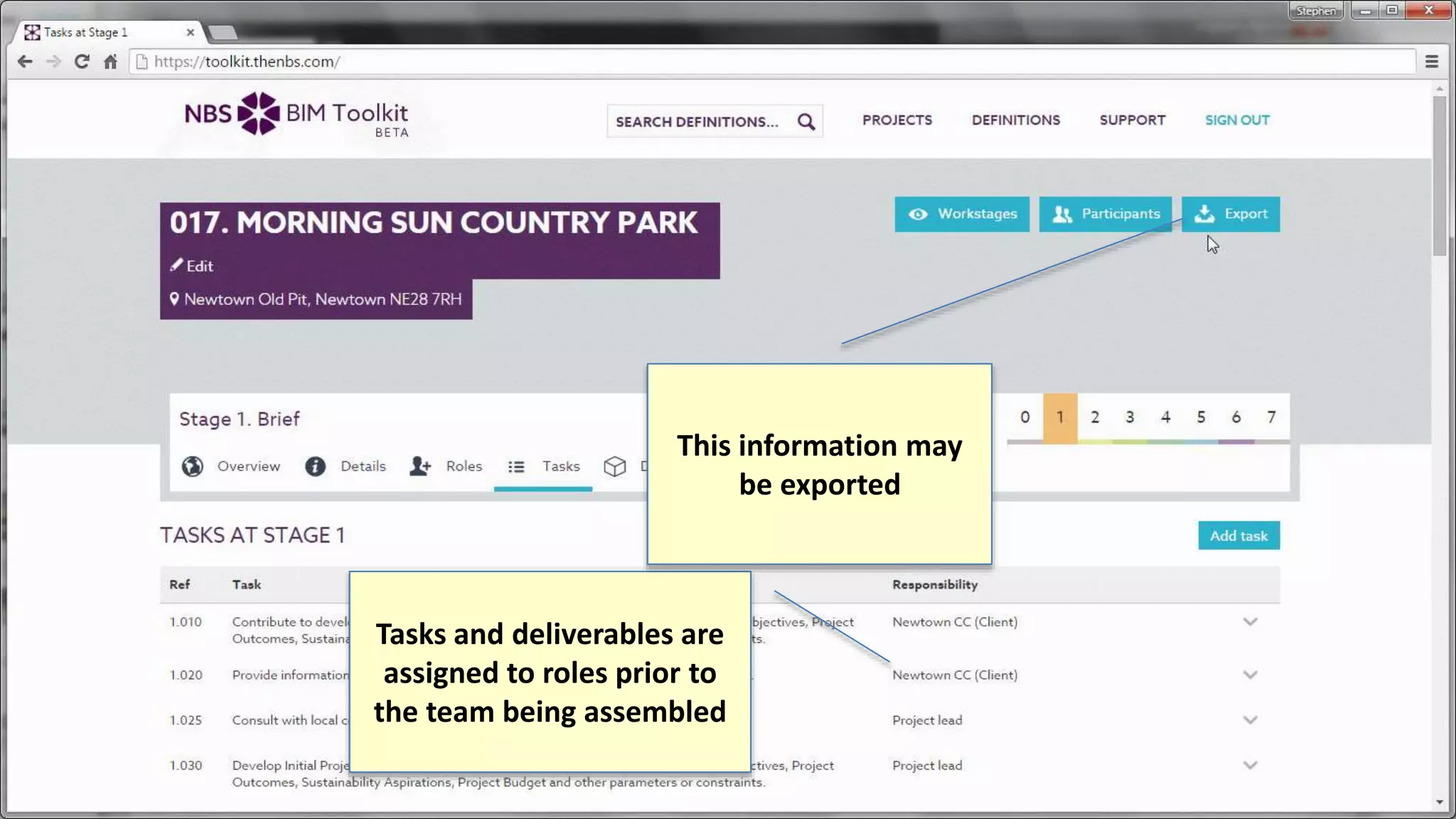
Tasks and deliverables are
assigned to roles prior to
the team being assembled
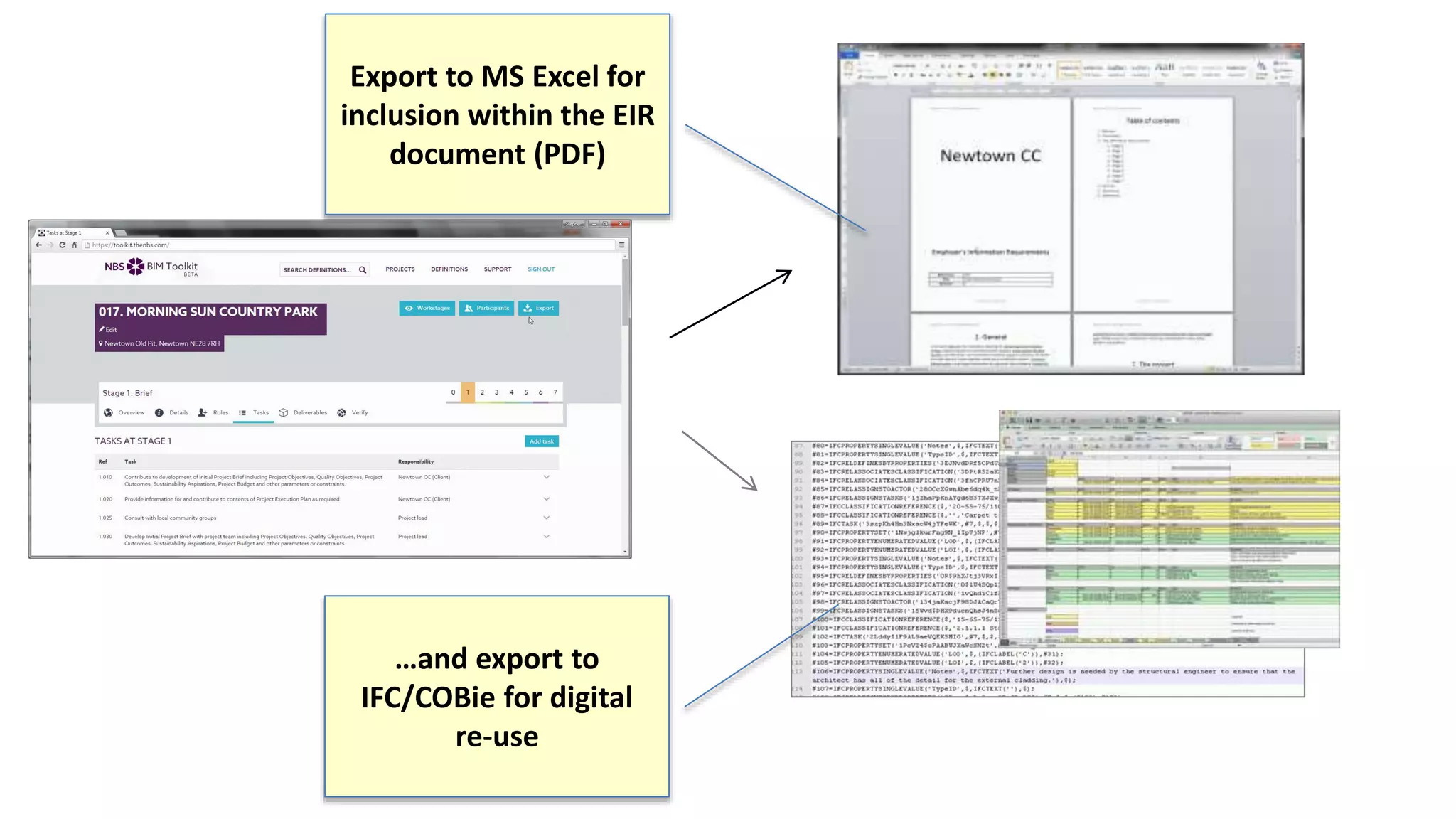
This information may
be exported
Export to MS Excel for
inclusion within the EIR
document (PDF)
…and export to
IFC/COBie for digital
re-use
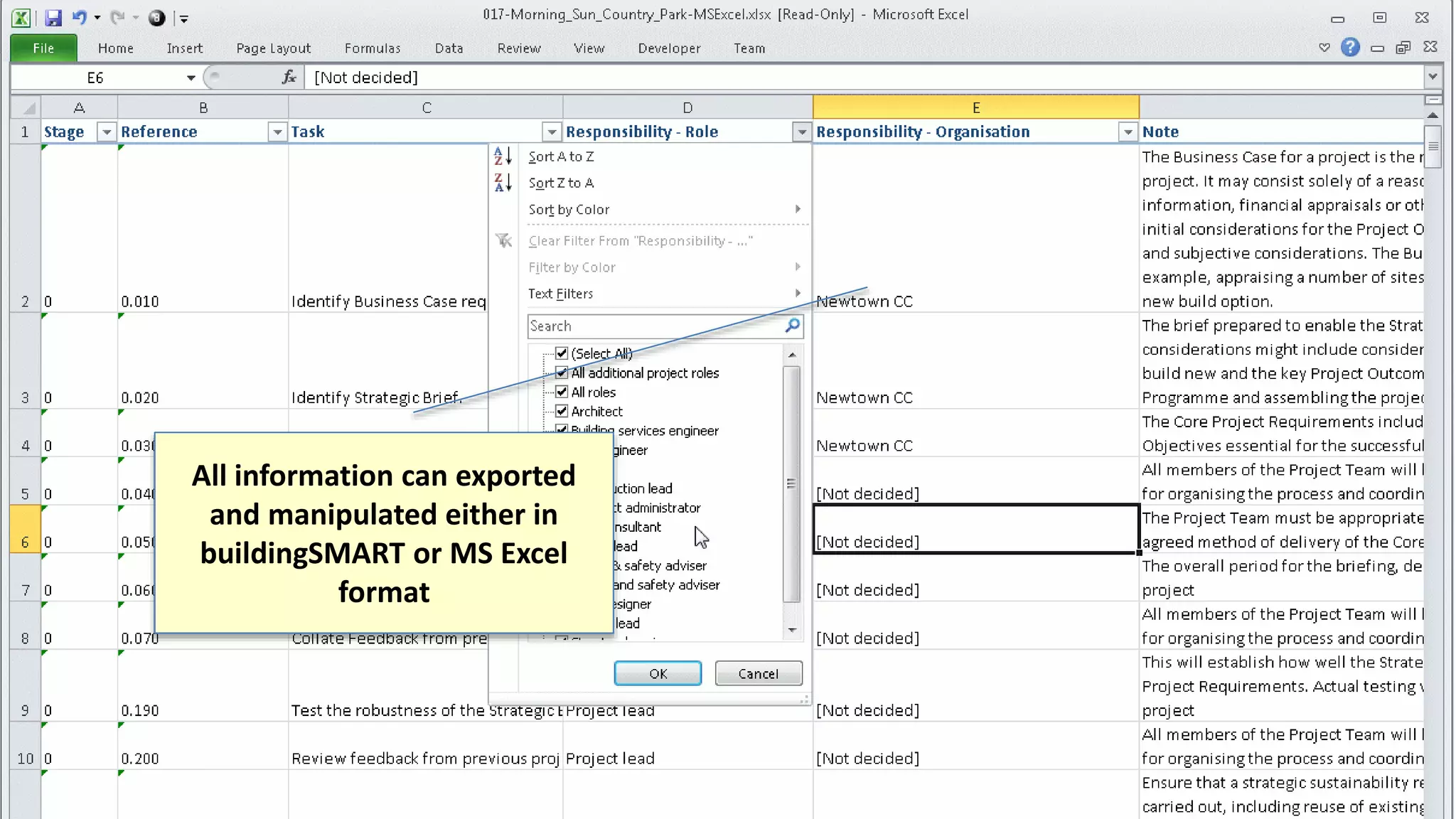
All information can exported
and manipulated either in
buildingSMART or MS Excel
format
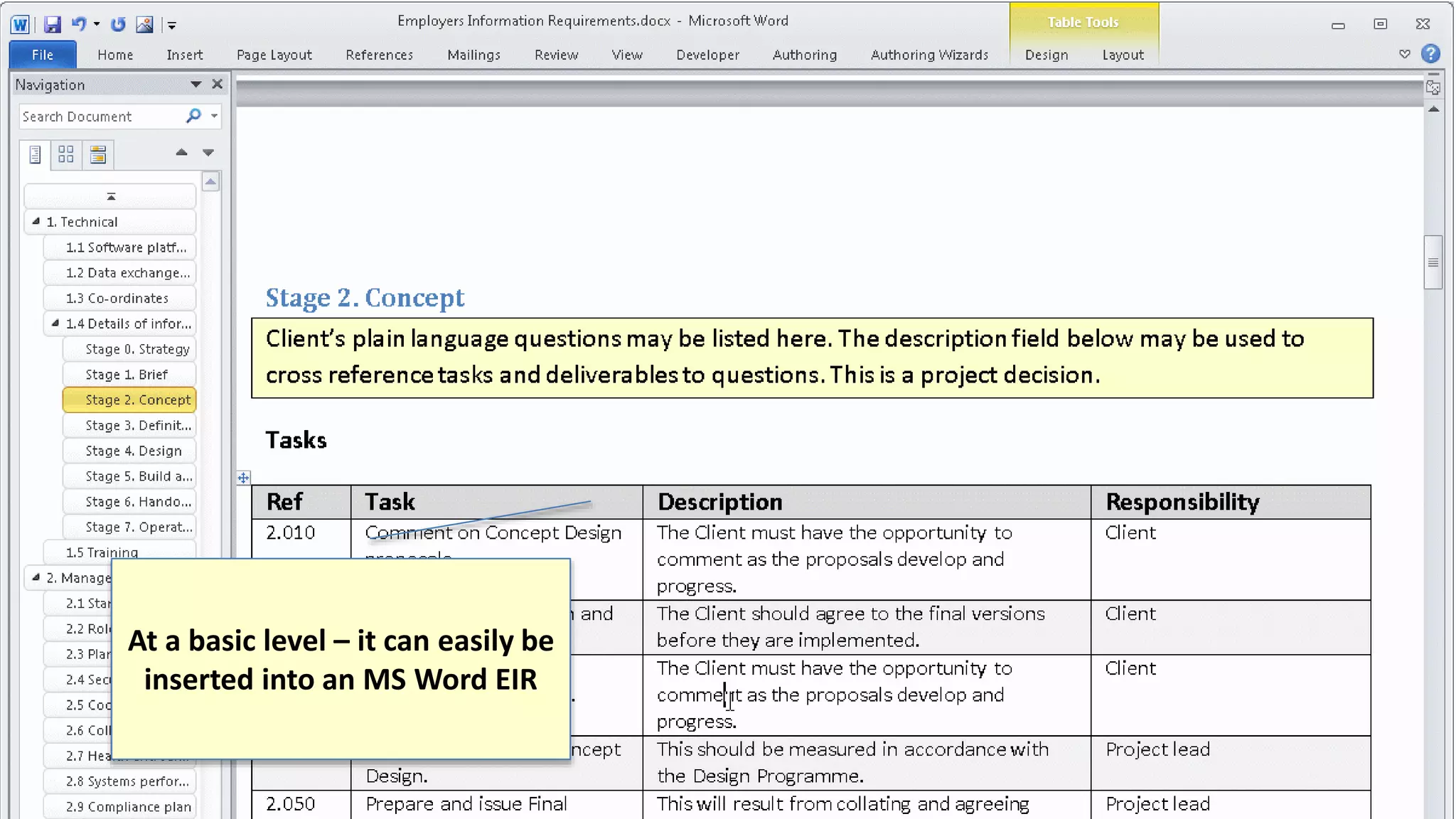
At a basic level – it can easily be
inserted into an MS Word EIR
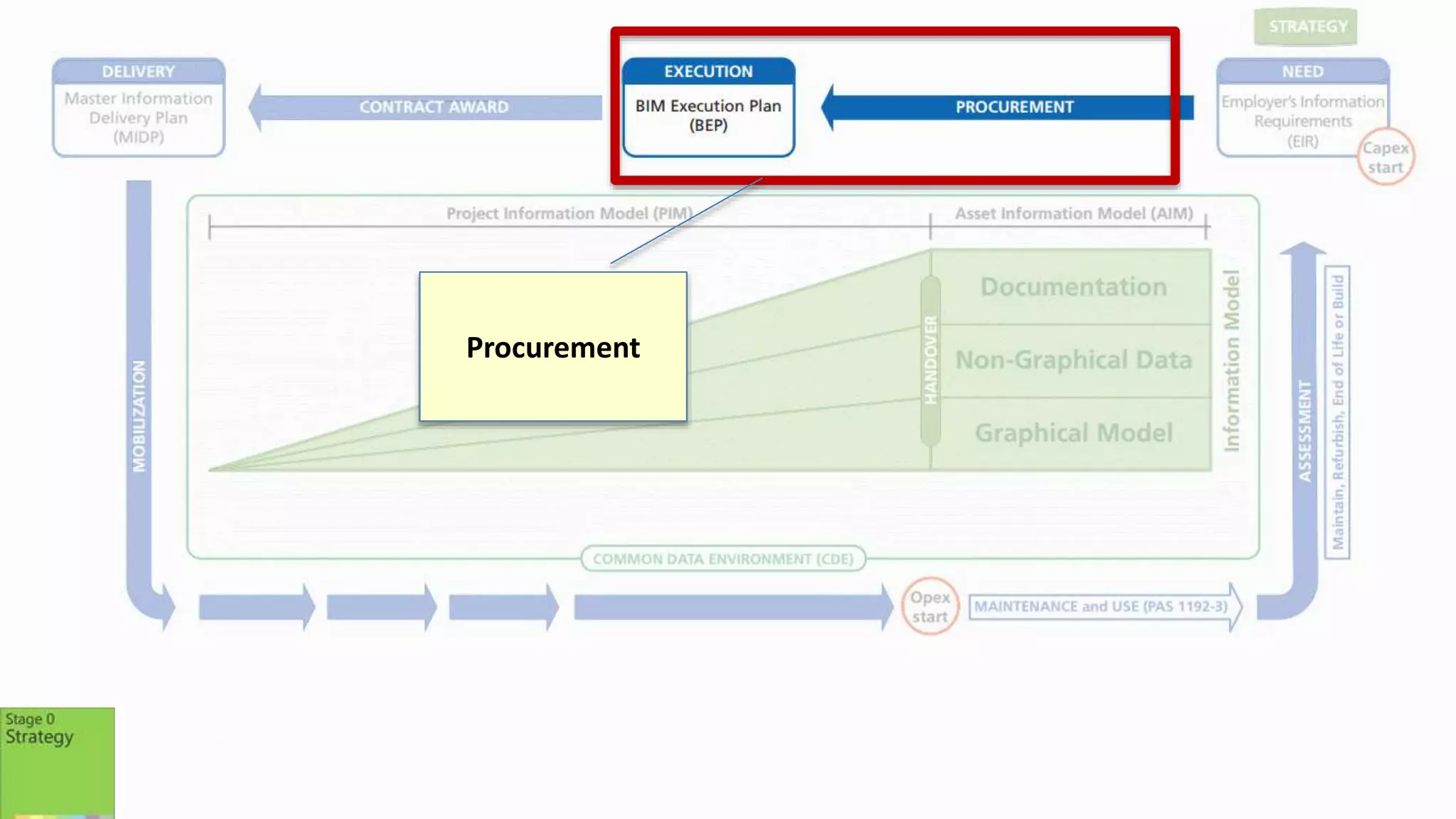
Procurement
Procurement
Procurement
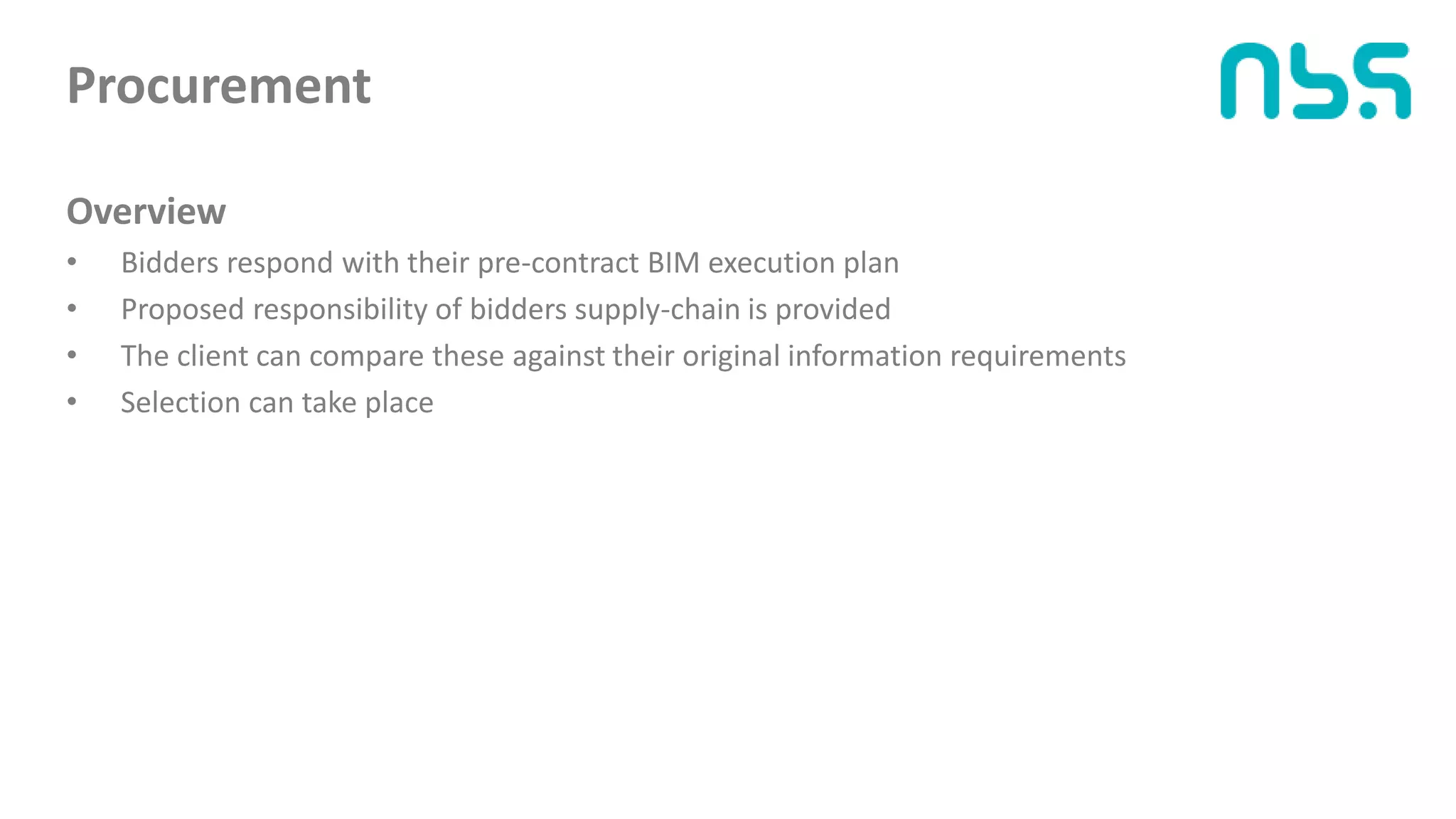
Overview
• Bidders respond with their pre-contract BIM execution plan
• Proposed responsibility of bidders supply-chain is provided
• The client can compare these against their original information requirements
• Selection can take place
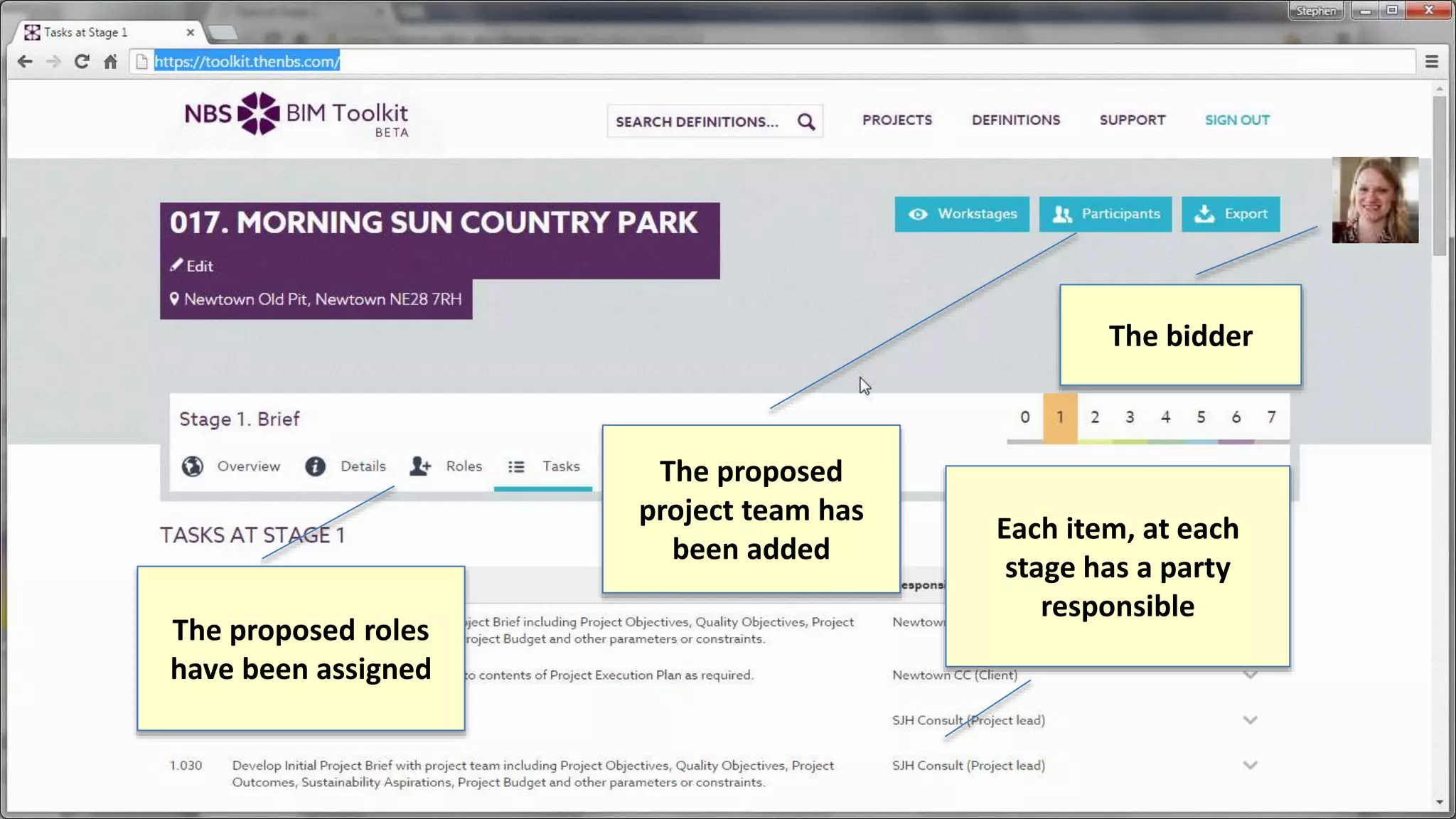
The proposed roles
have been assigned
The proposed
project team has
been added
Each item, at each
stage has a party
responsible
The bidder
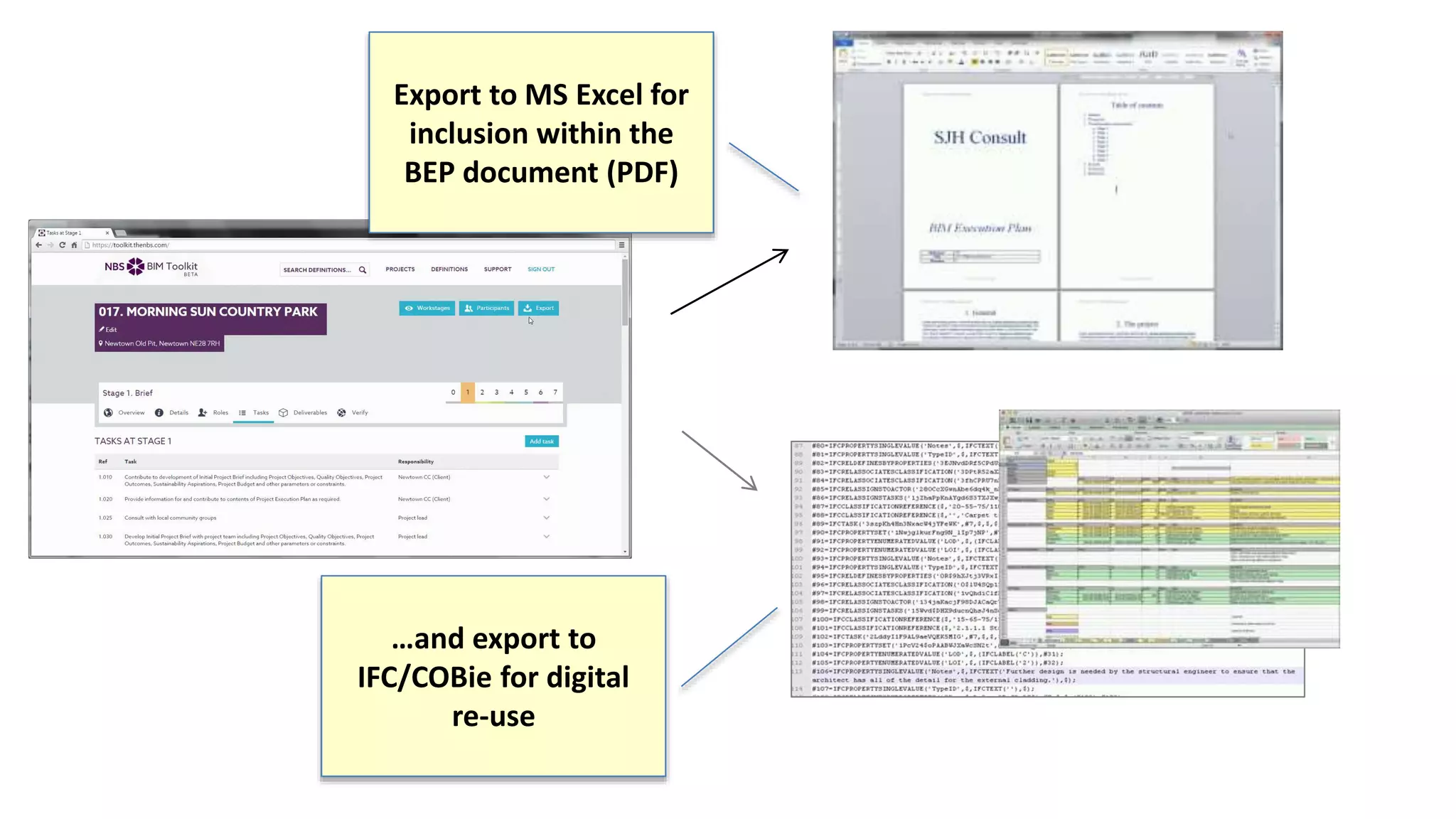
Export to MS Excel for
inclusion within the
BEP document (PDF)
…and export to
IFC/COBie for digital
re-use
Pre-contract award and mobilisation
Post-contract award
and mobilisation
Production
Production
Production
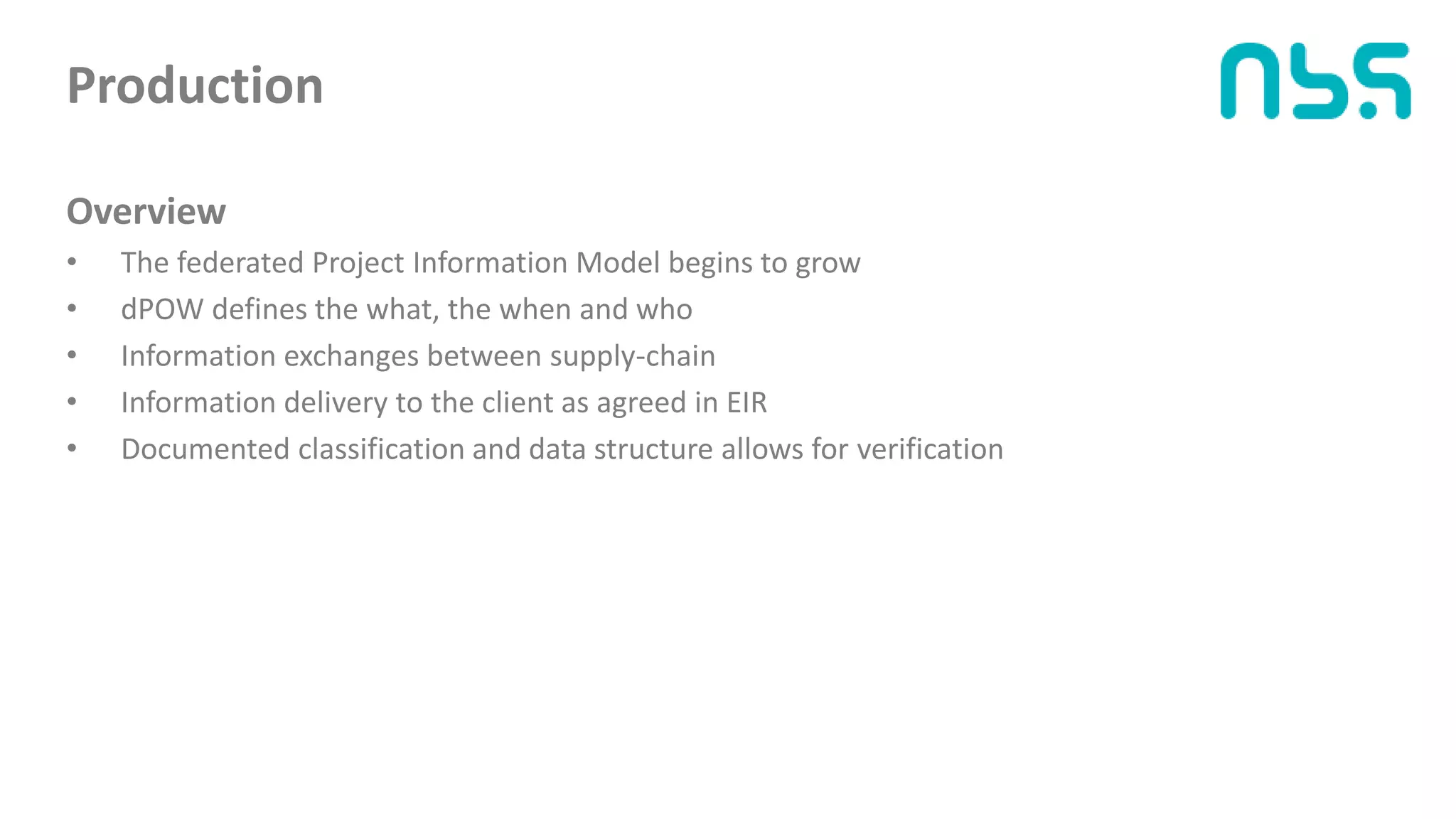
Overview
• The federated Project Information Model begins to grow
• dPOW defines the what, the when and who
• Information exchanges between supply-chain
• Information delivery to the client as agreed in EIR
• Documented classification and data structure allows for verification
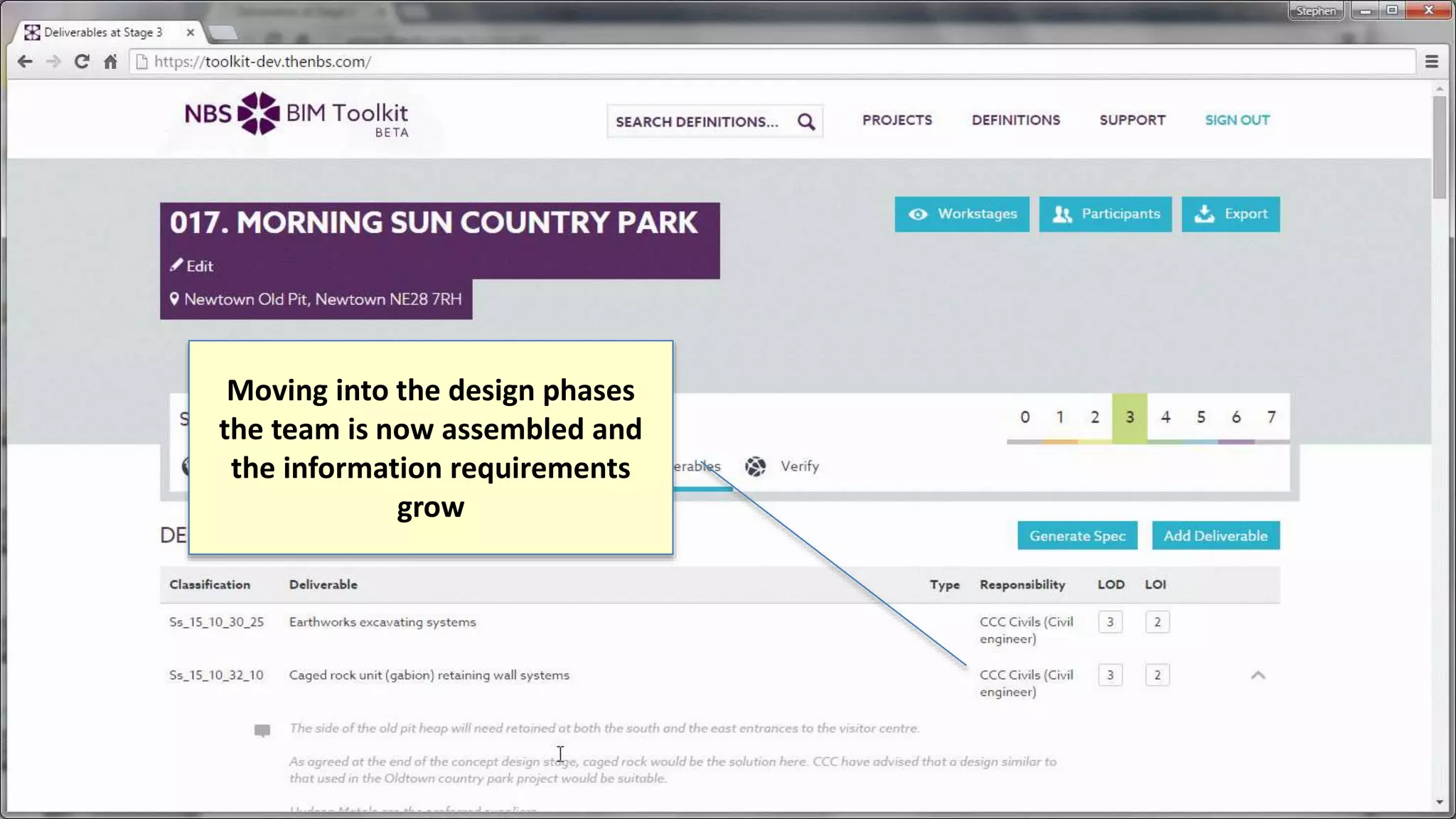
Moving into the design phases
the team is now assembled and
the information requirements
grow
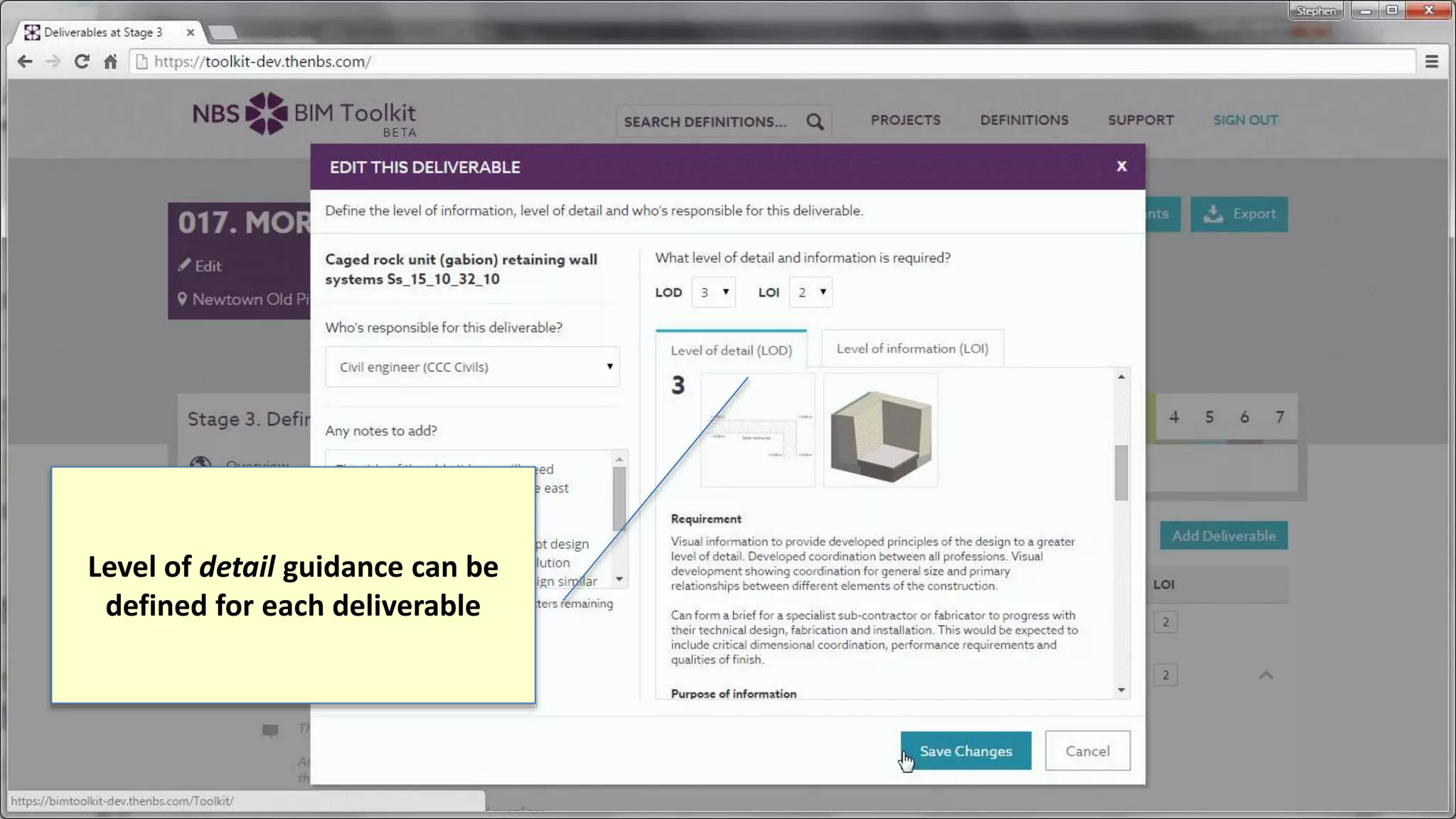
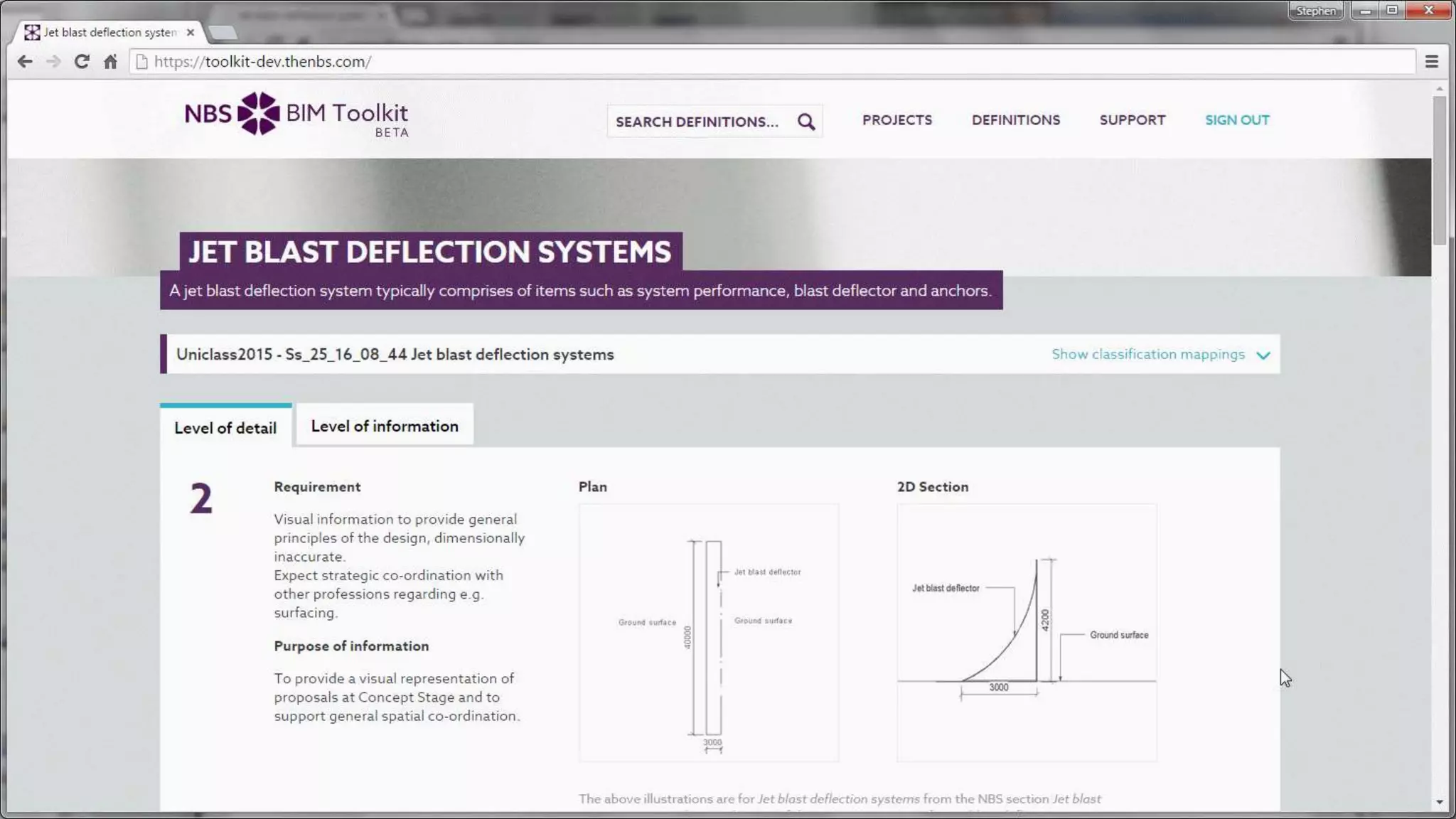
Level of detail guidance can be
defined for each deliverable
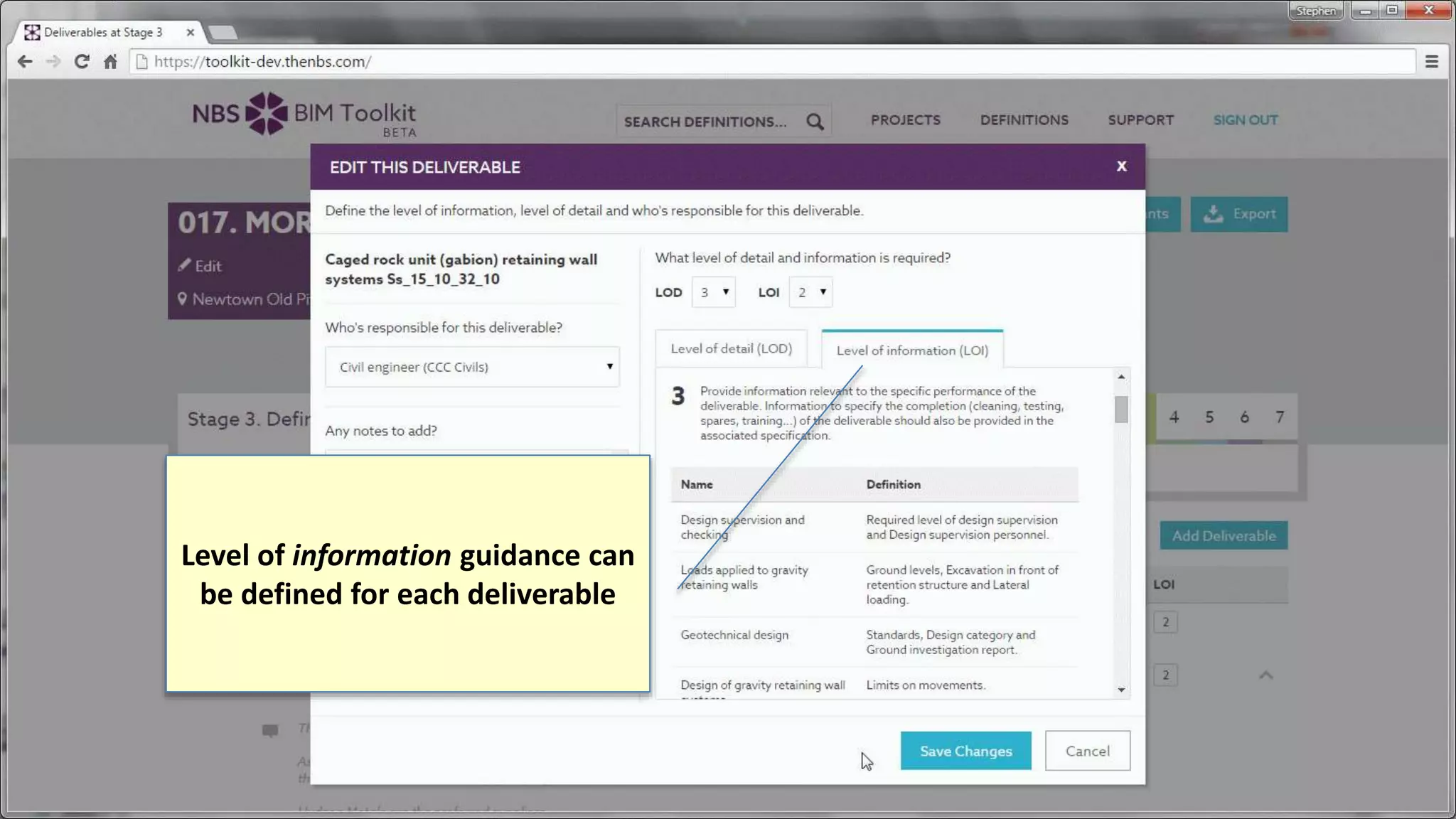
Level of information guidance can
be defined for each deliverable
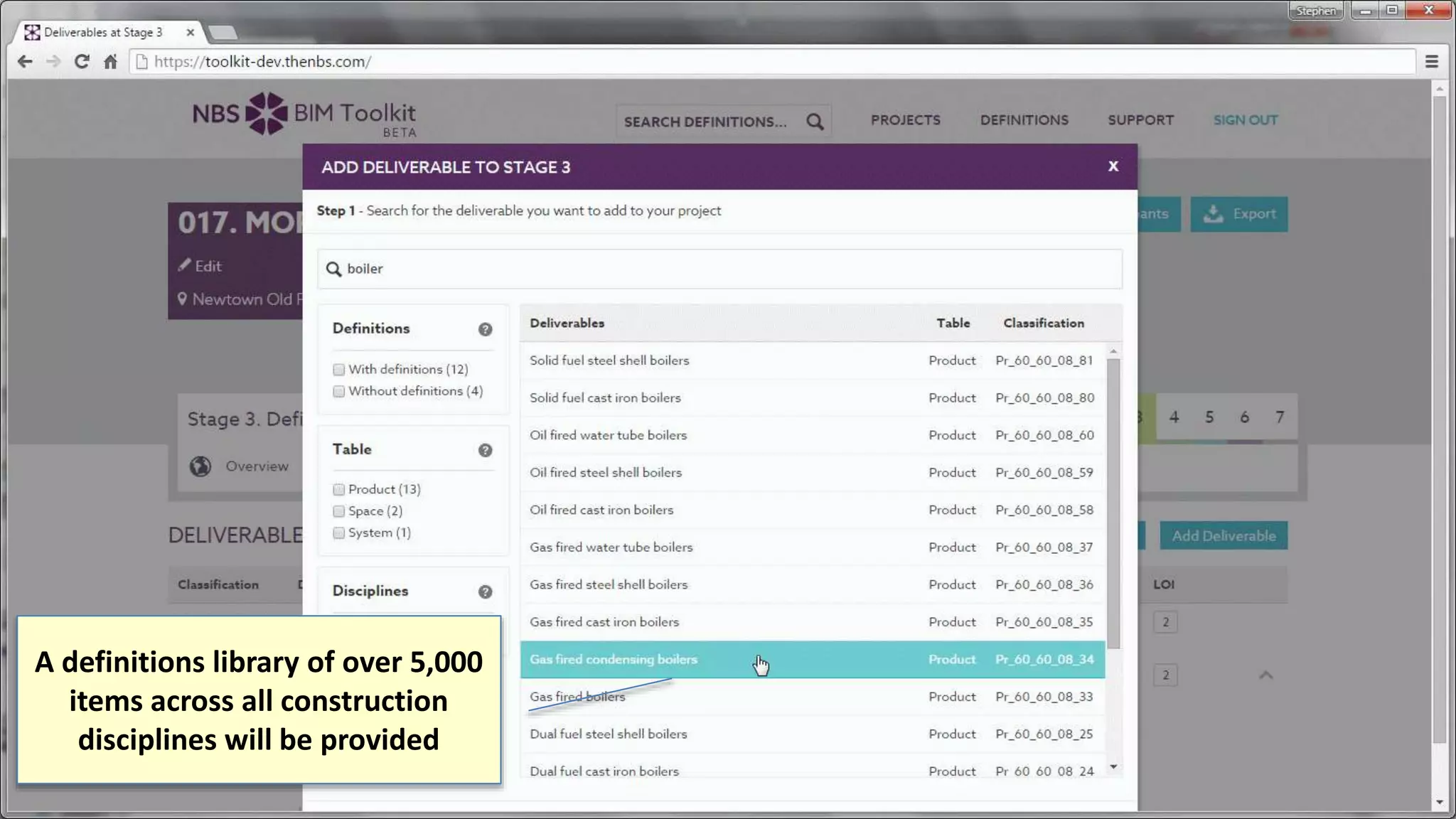
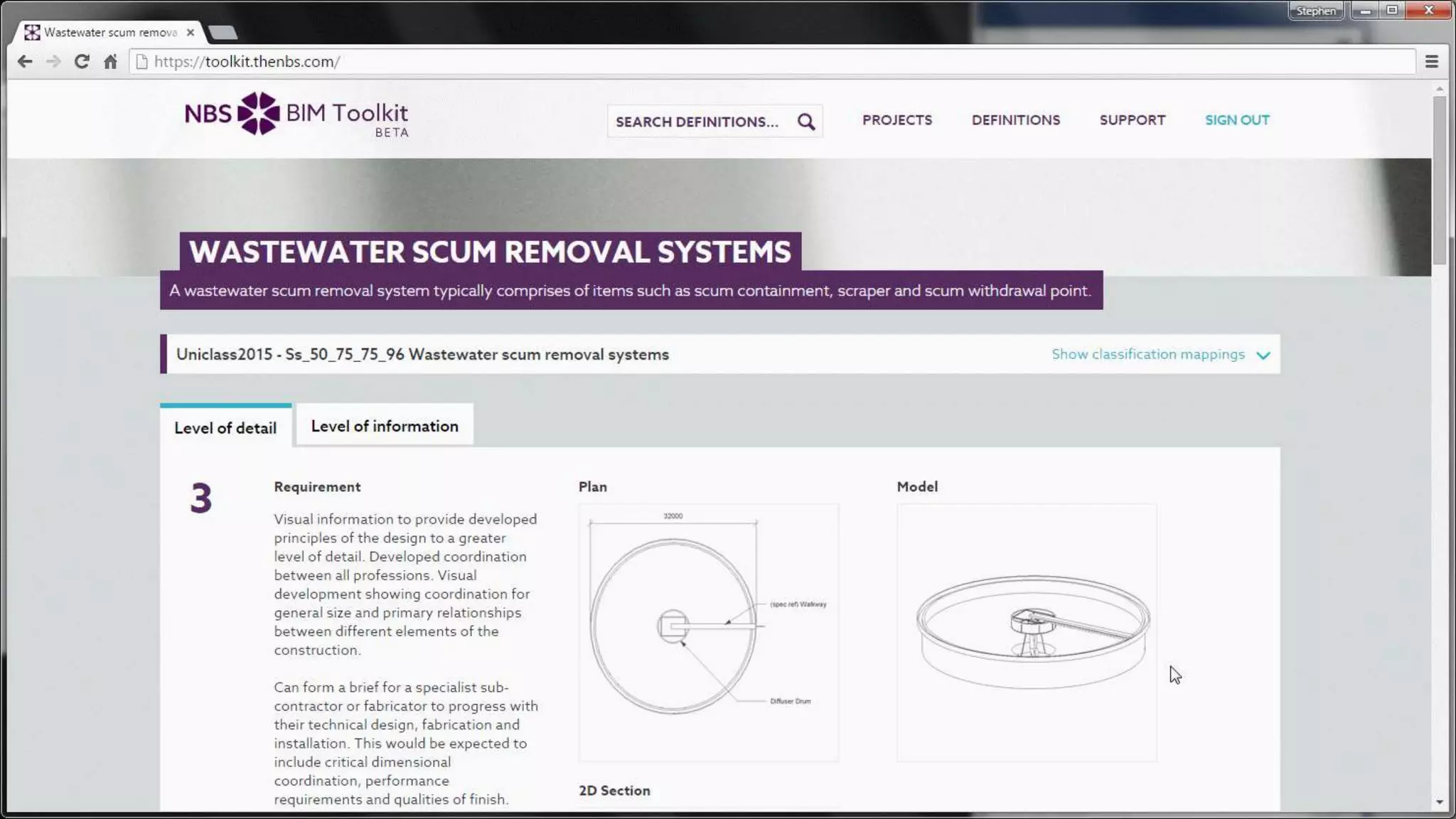
A definitions library of over 5,000
items across all construction
disciplines will be provided
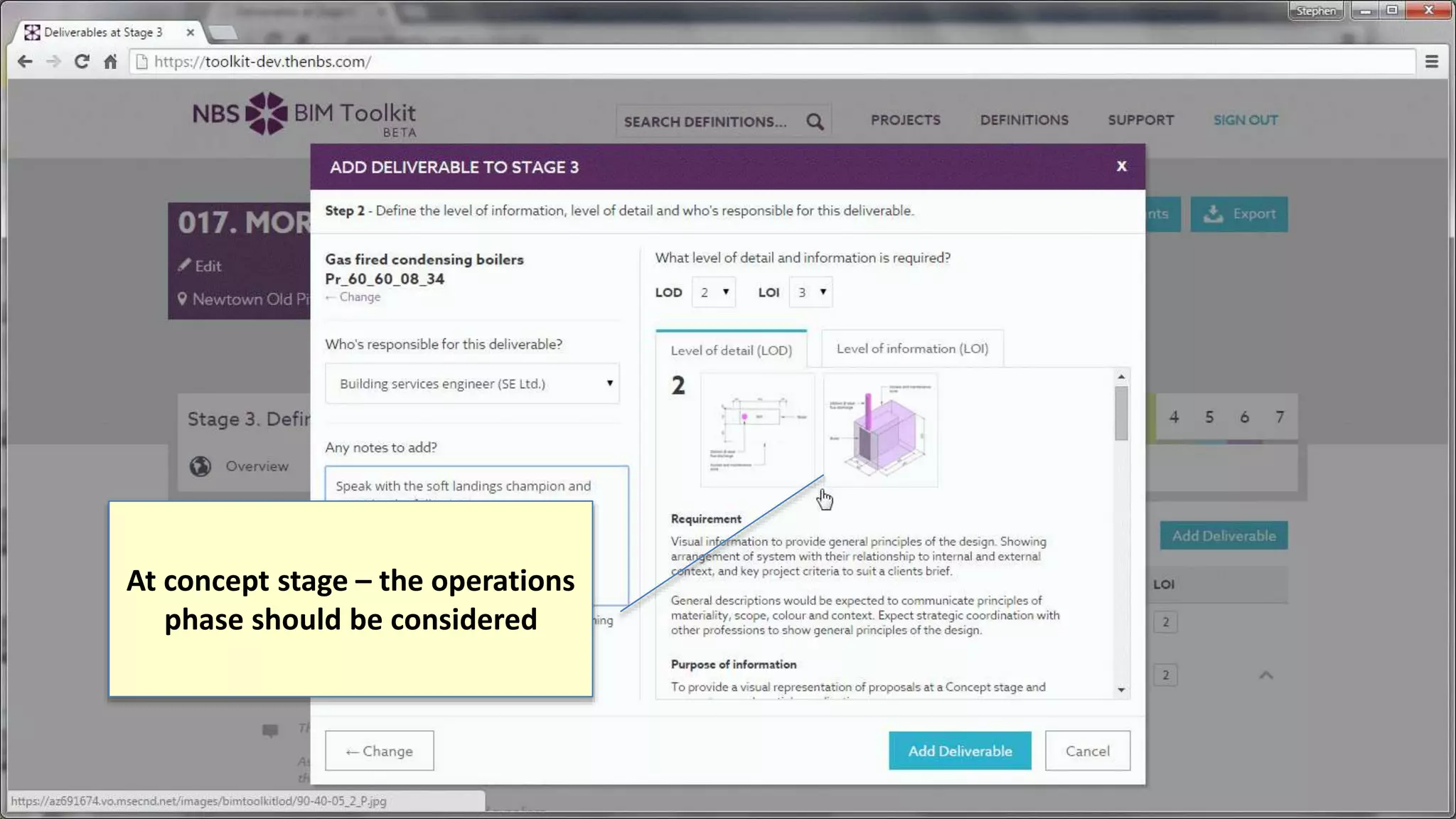
At concept stage – the operations
phase should be considered
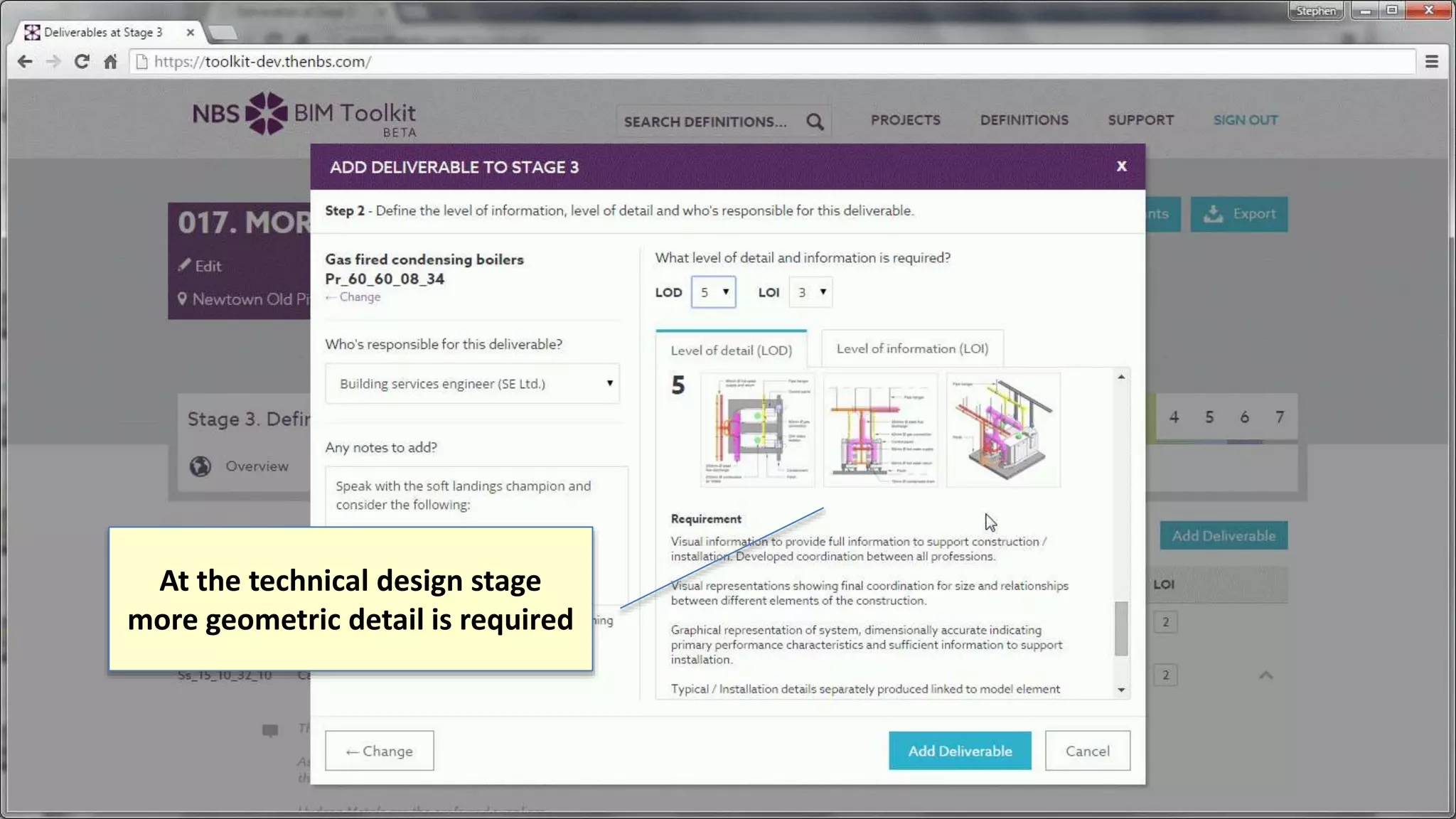
At the technical design stage
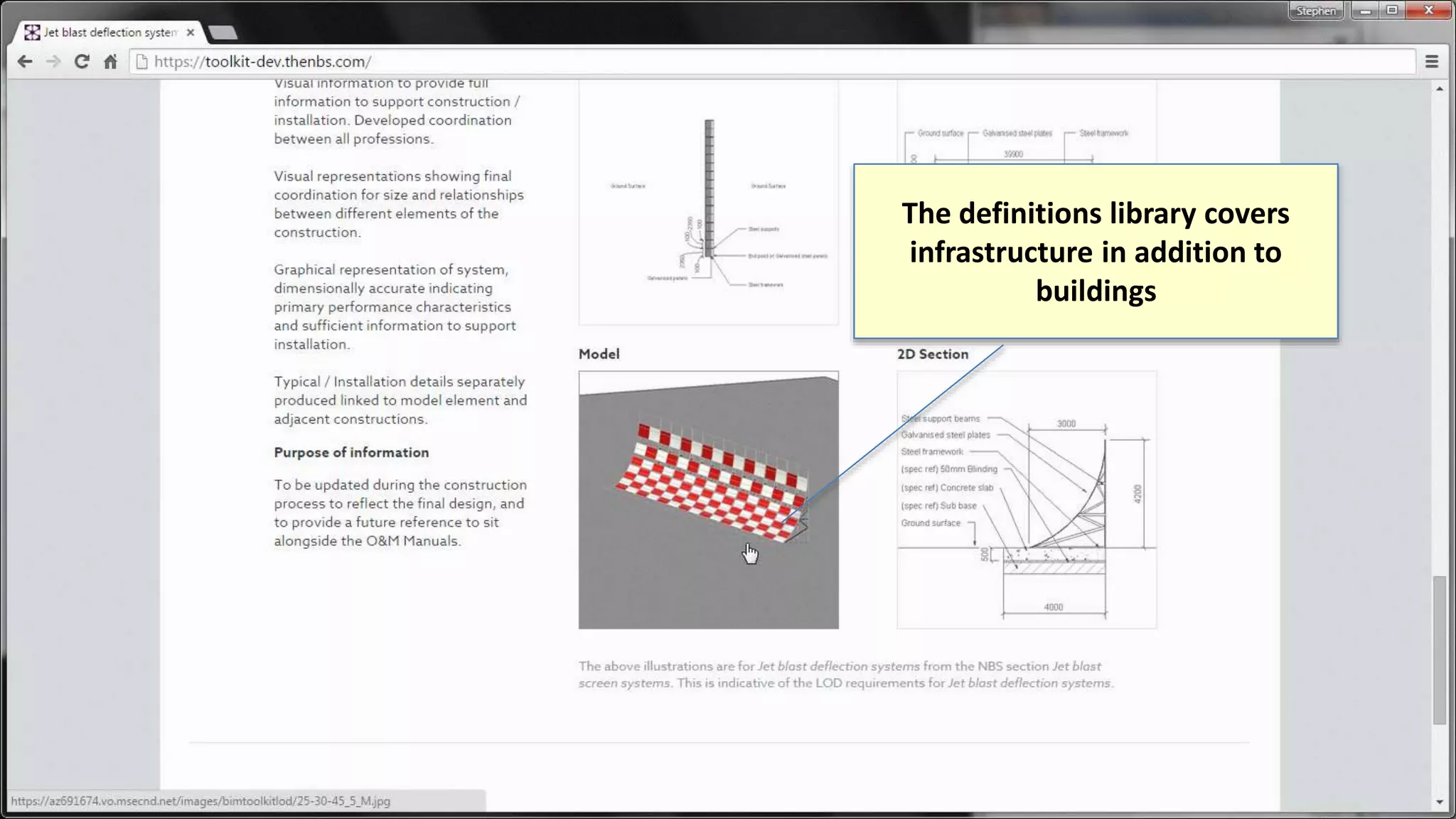
more geometric detail is required
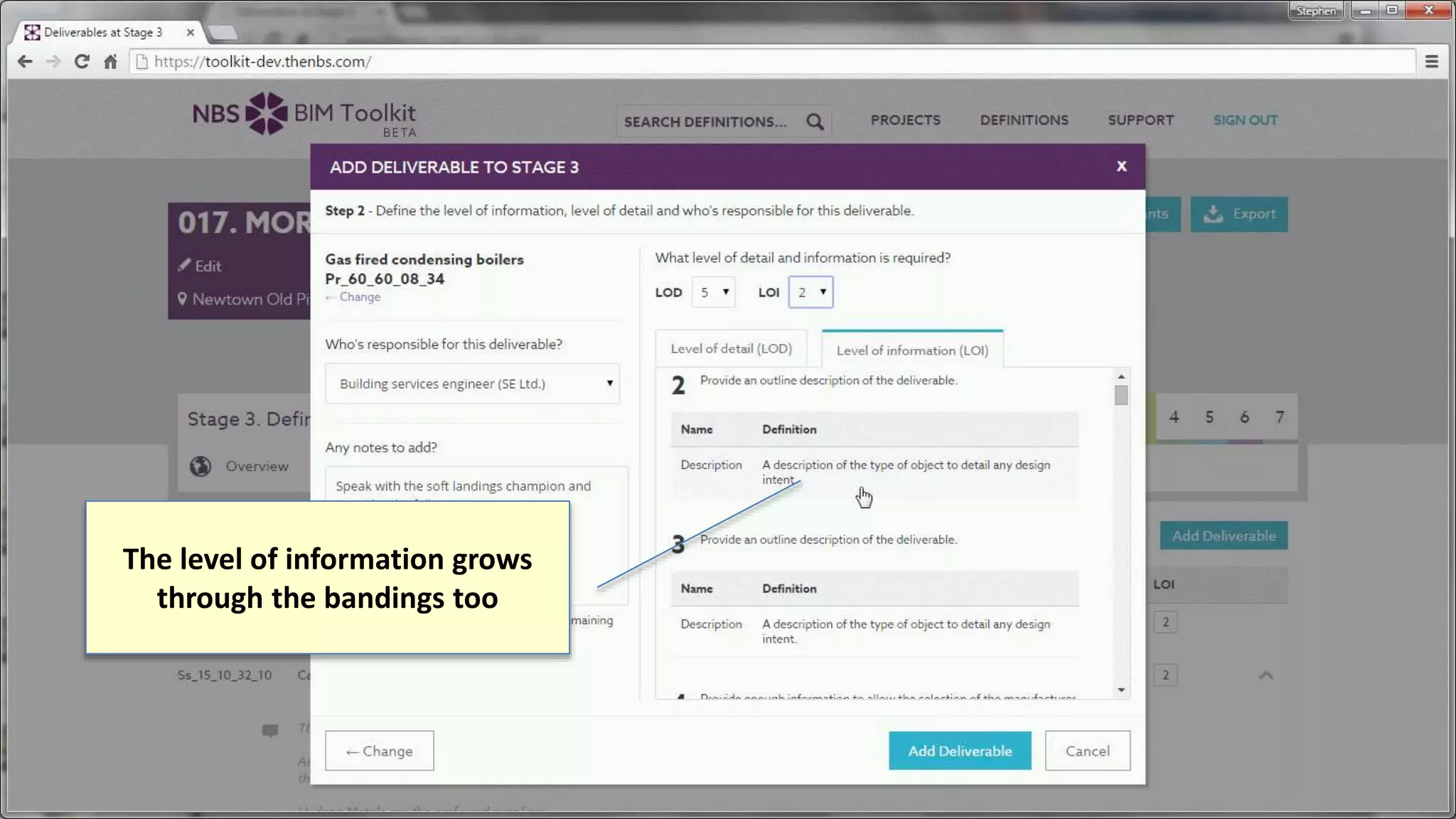
The level of information grows
through the bandings too
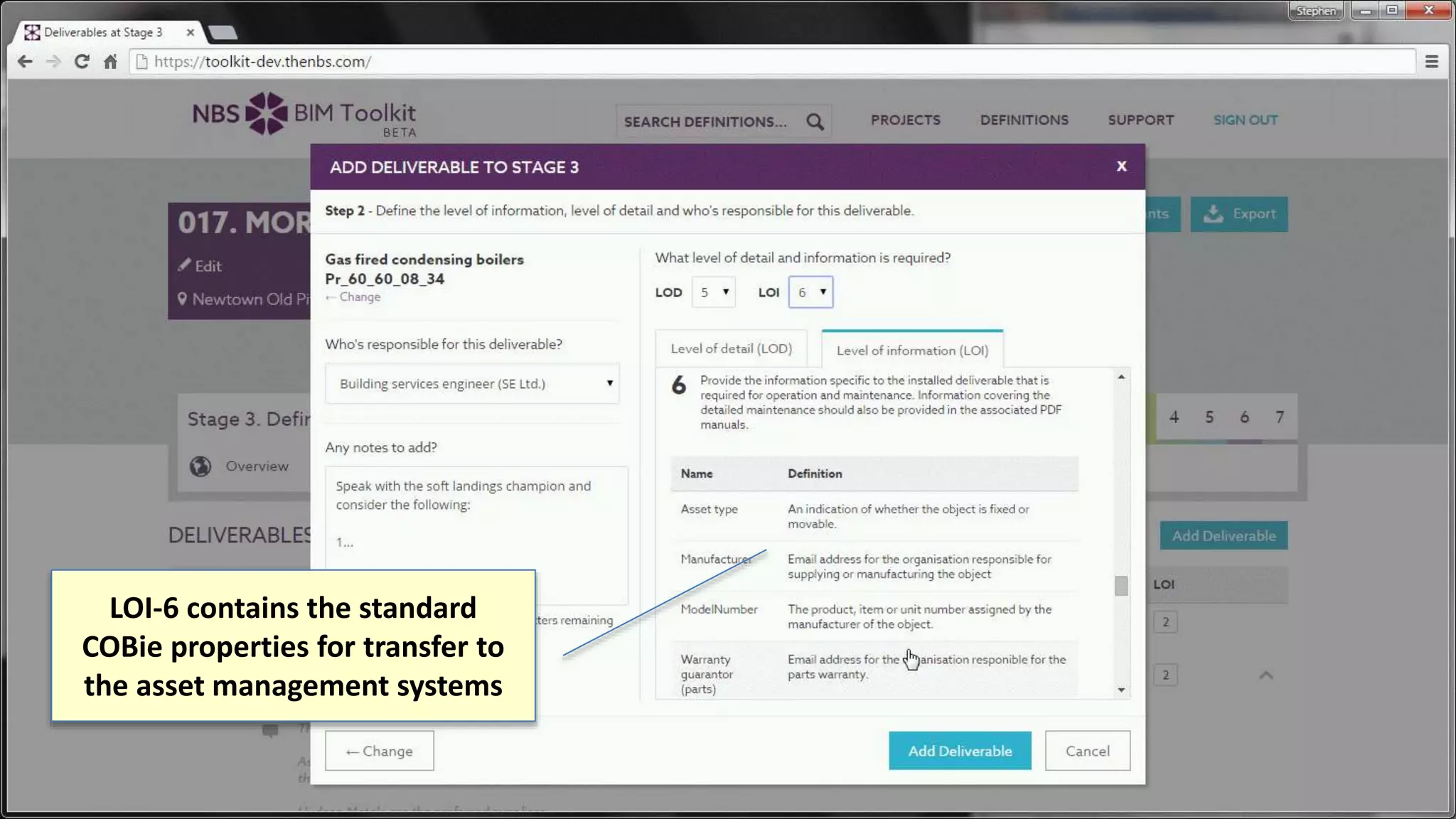
LOI-6 contains the standard
COBie properties for transfer to
the asset management systems
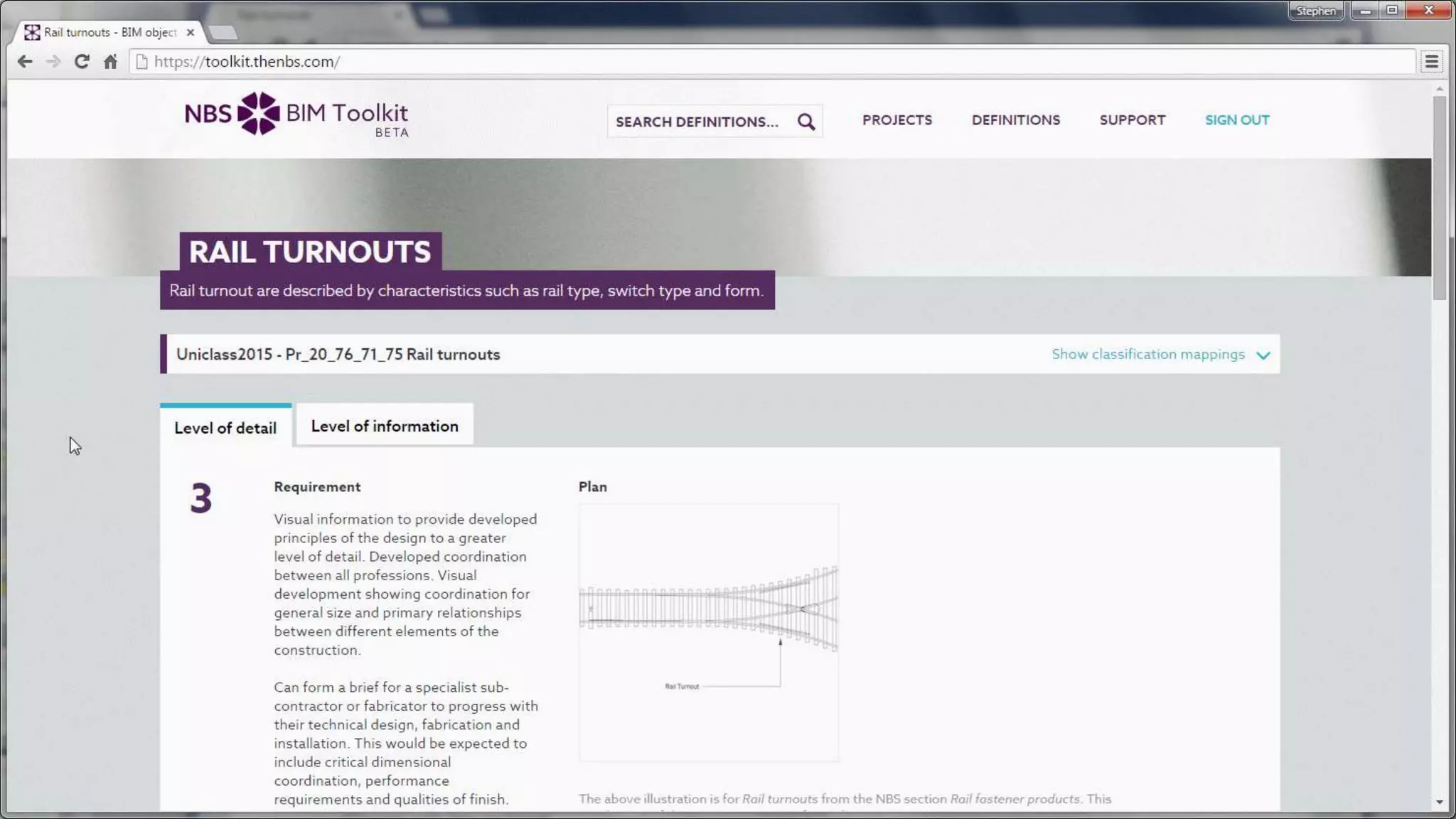
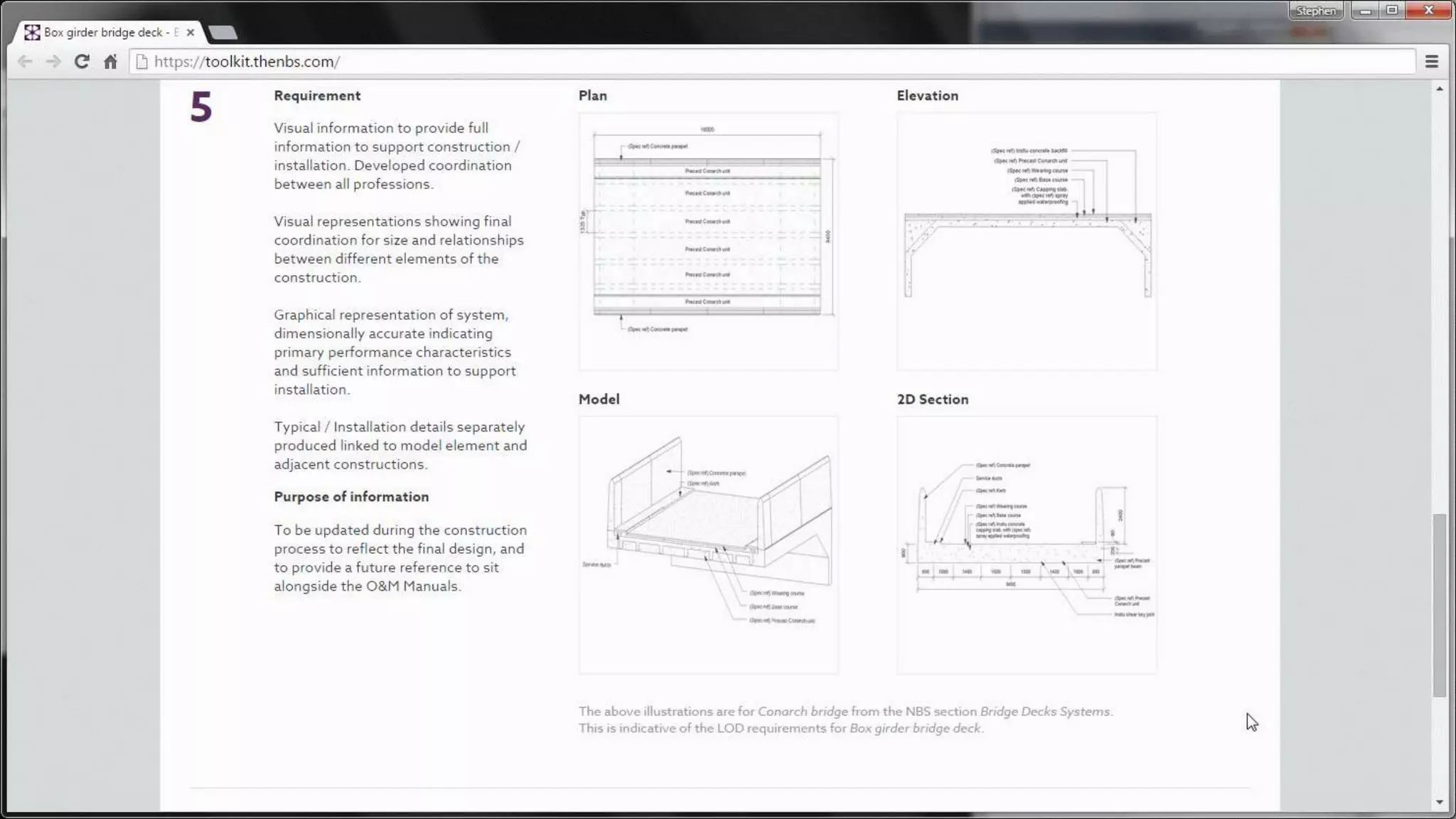
The definitions library covers
infrastructure in addition to
buildings
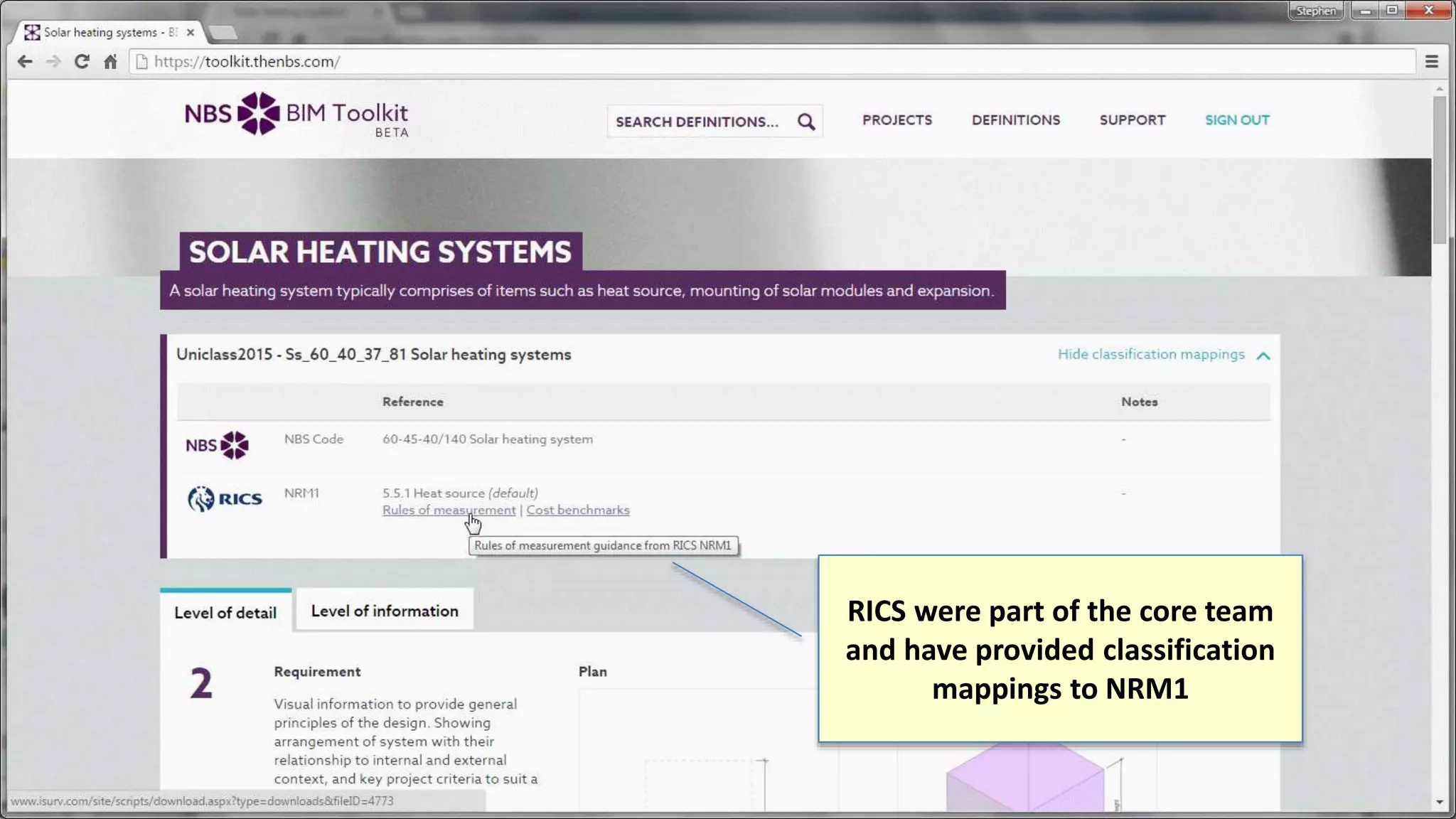
RICS were part of the core team
and have provided classification
mappings to NRM1
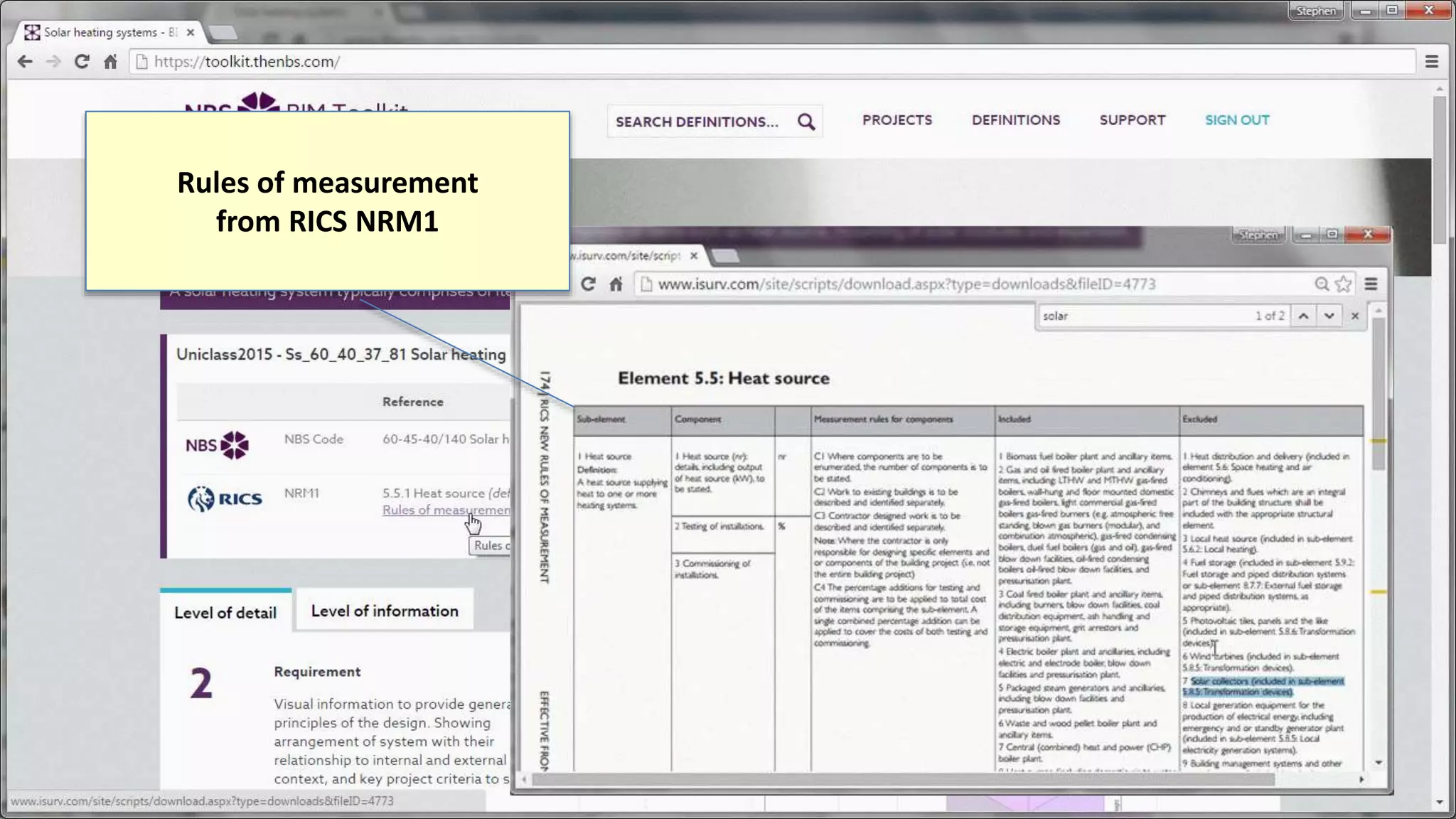
Rules of measurement
from RICS NRM1
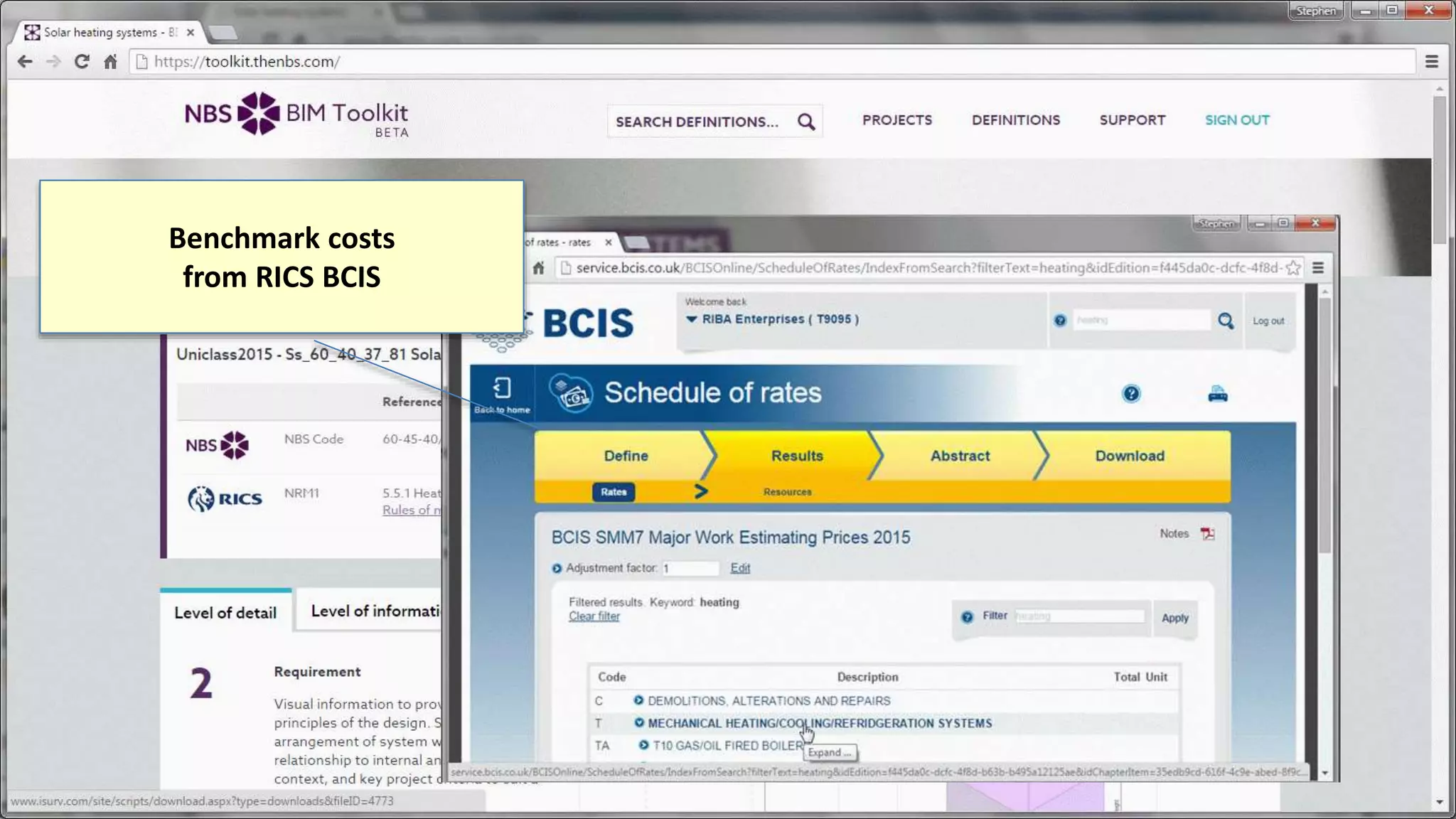
Benchmark costs
from RICS BCIS
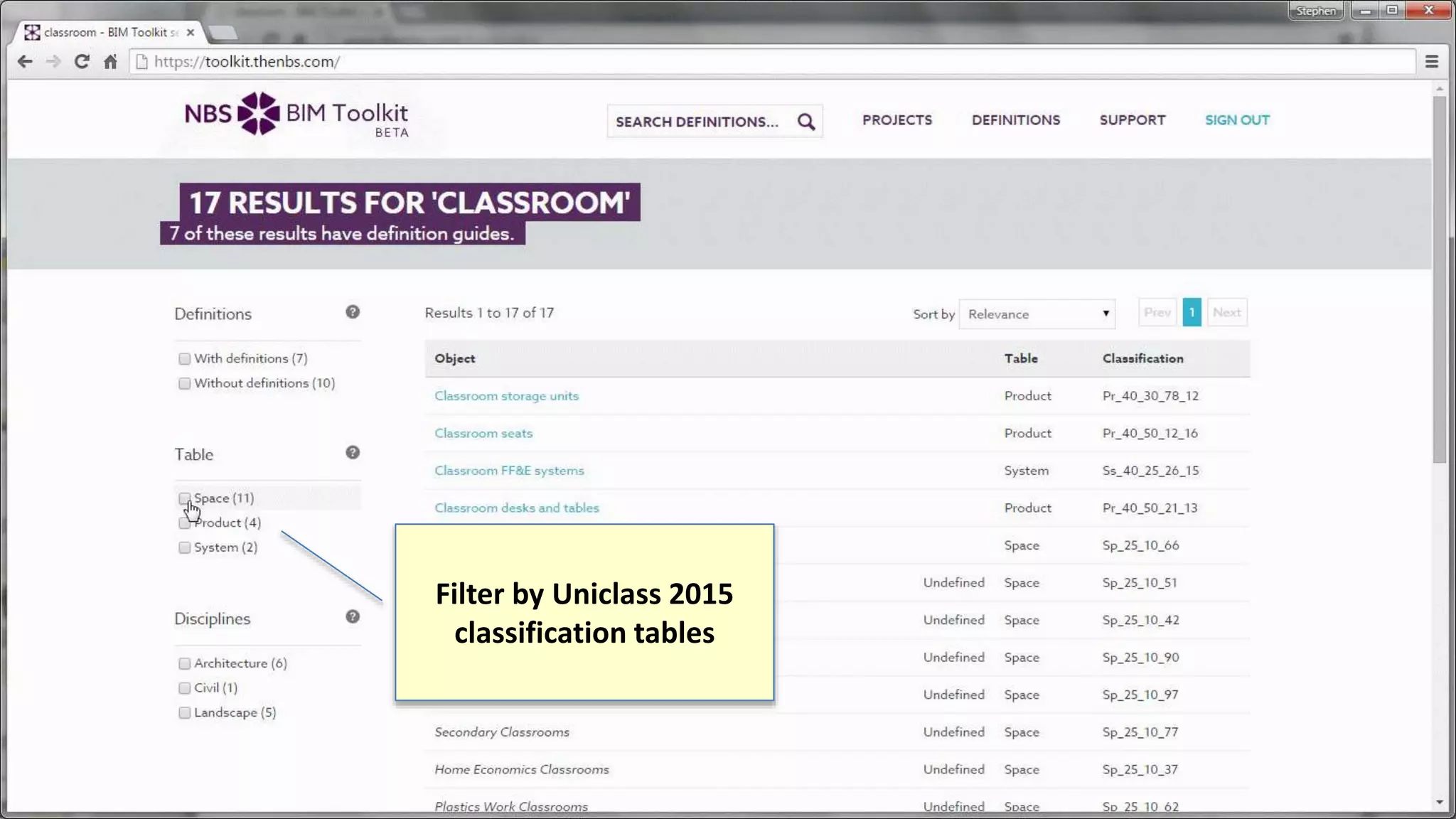
Filter by Uniclass 2015
classification tables
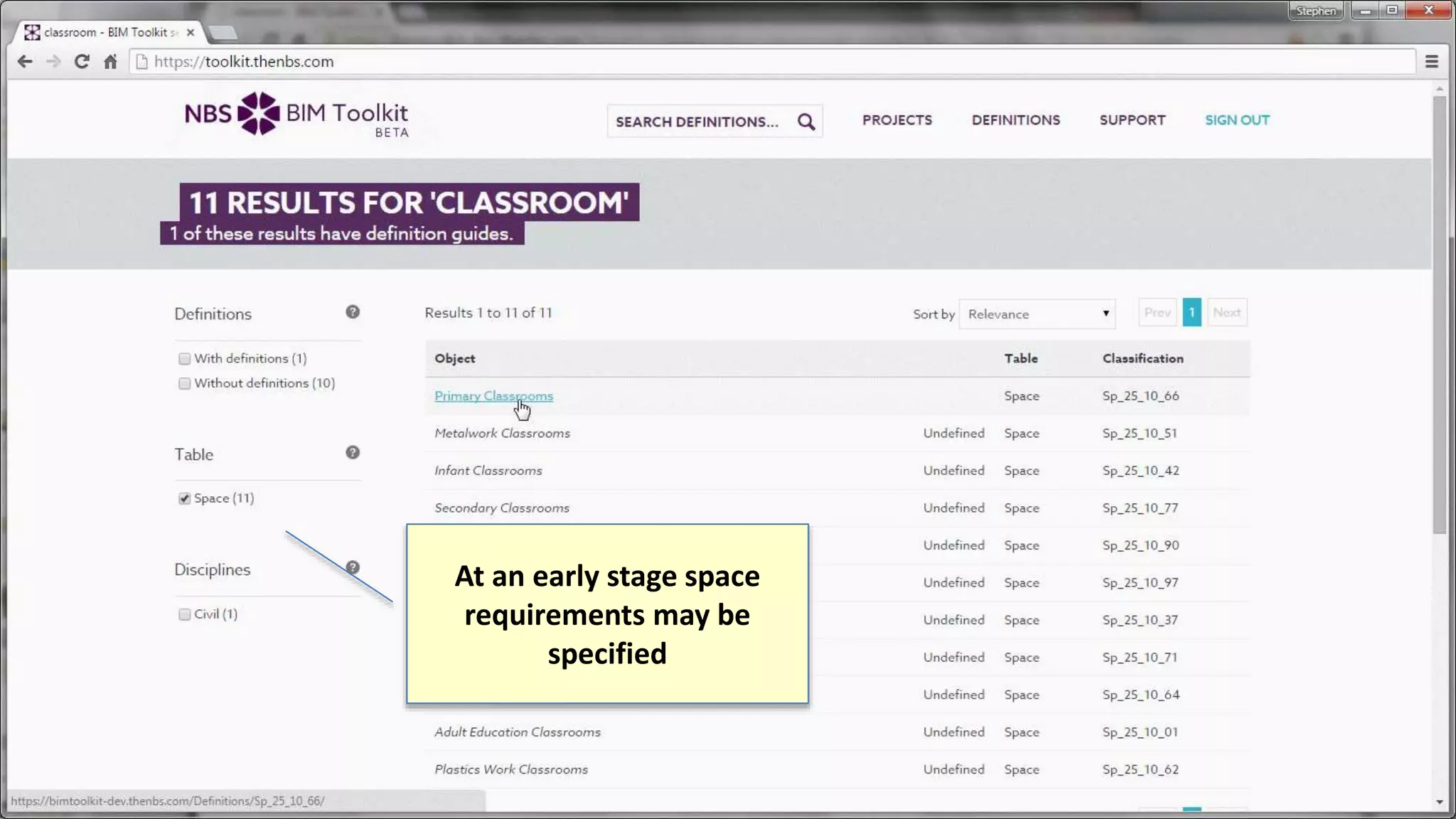
At an early stage space
requirements may be
specified
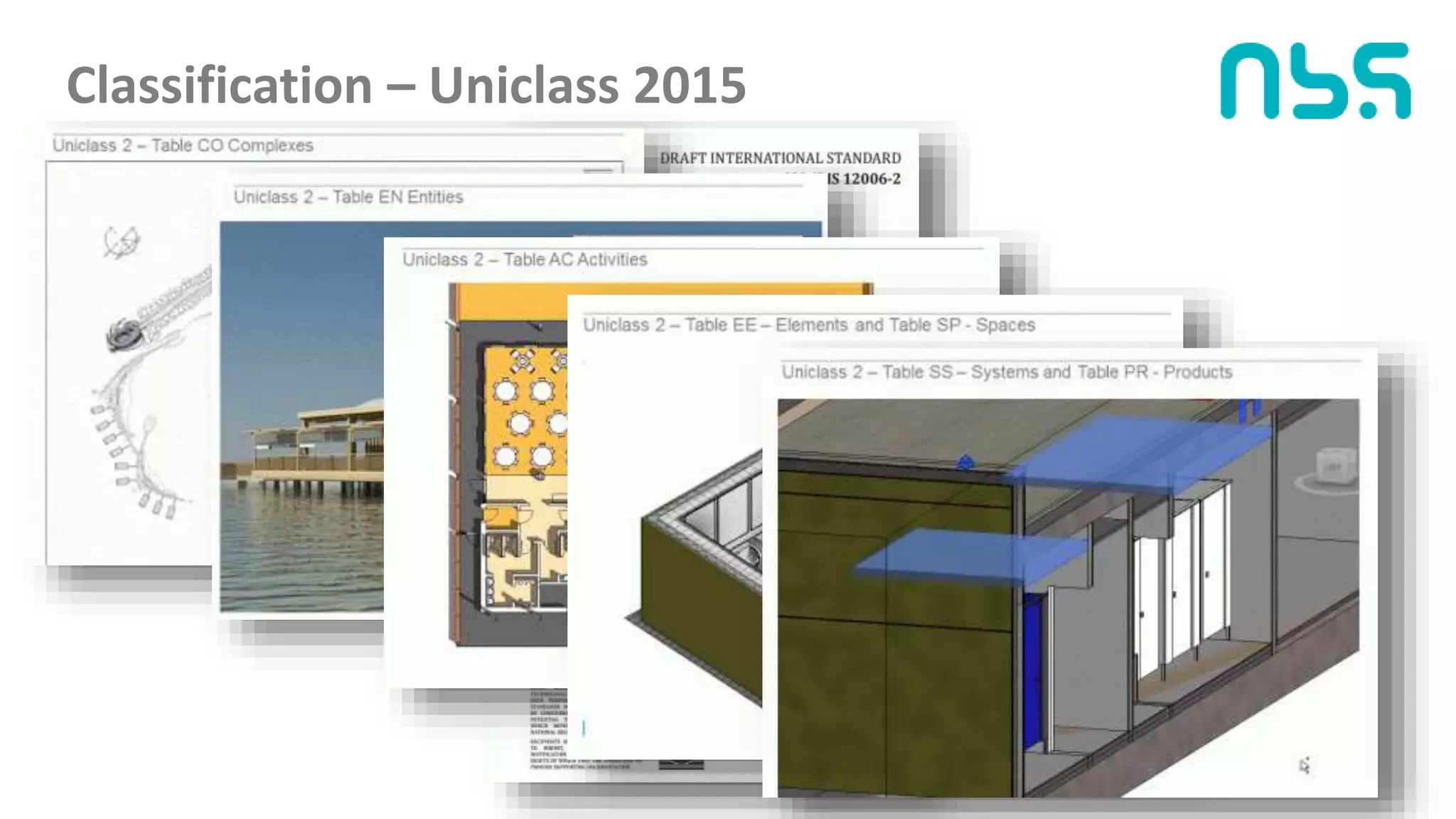
Classification – Uniclass 2015
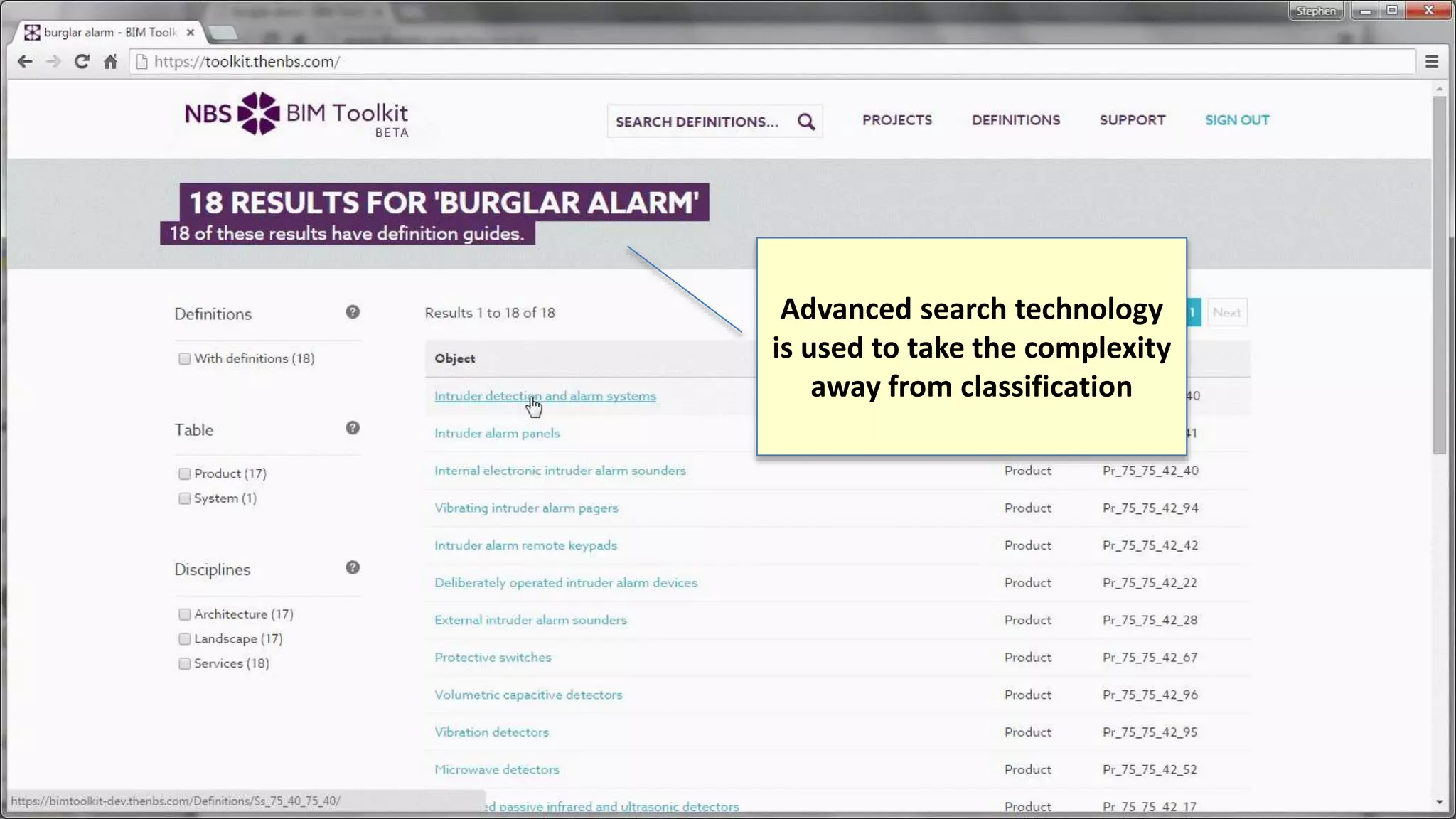
Advanced search technology
is used to take the complexity
away from classification
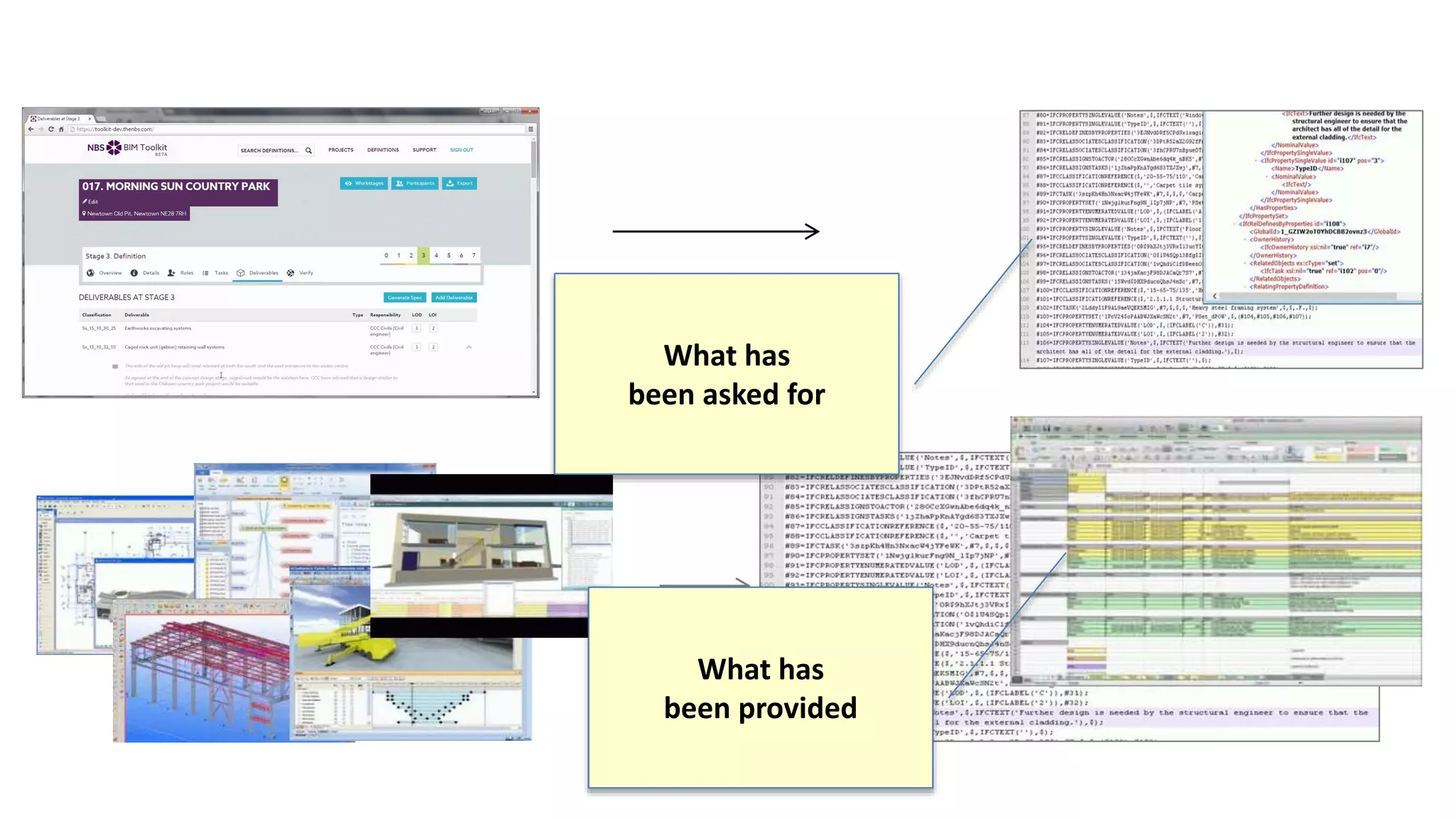
What has
been asked for
What has
been provided
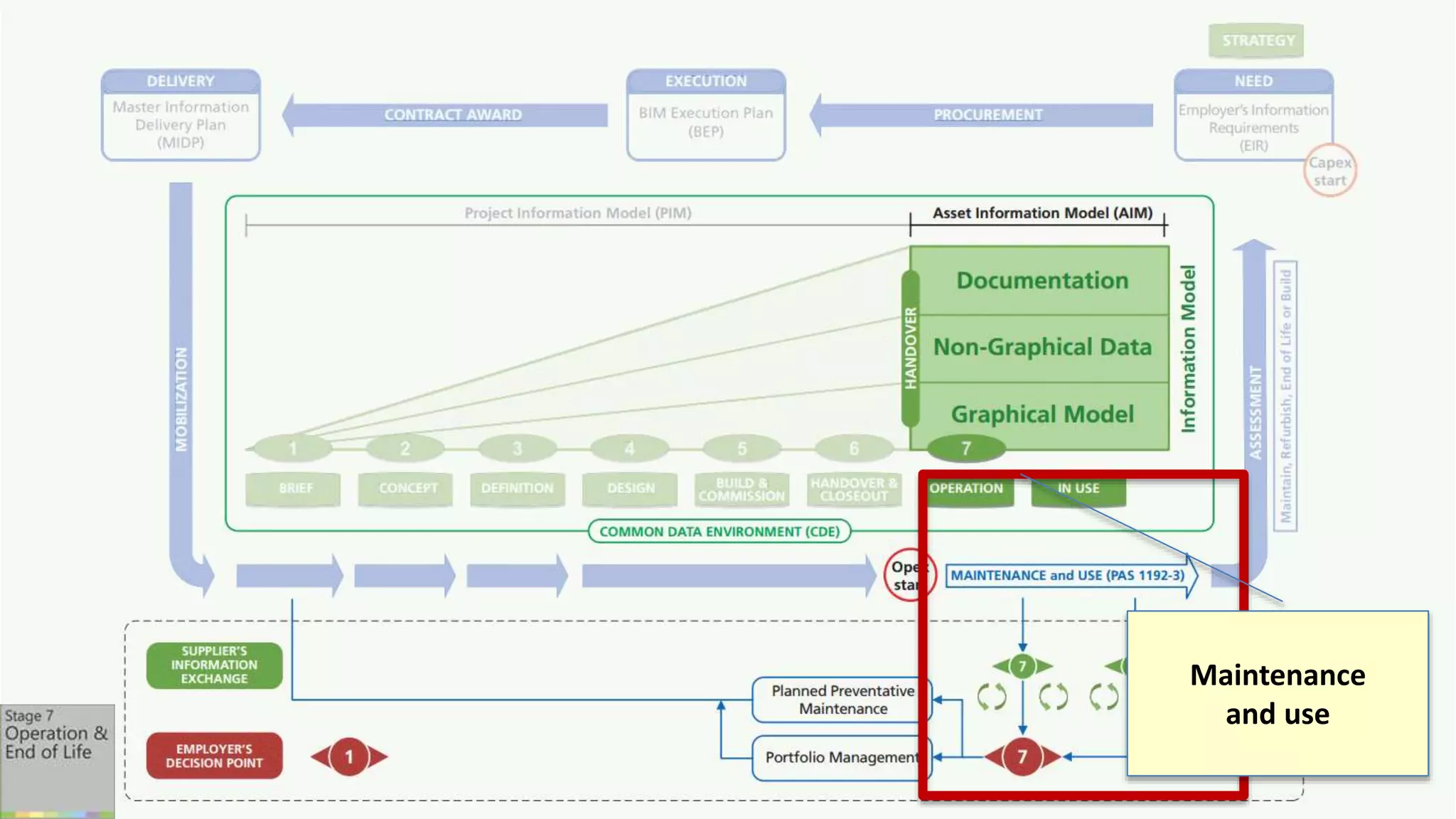
Maintenance and in use
Maintenance
and use
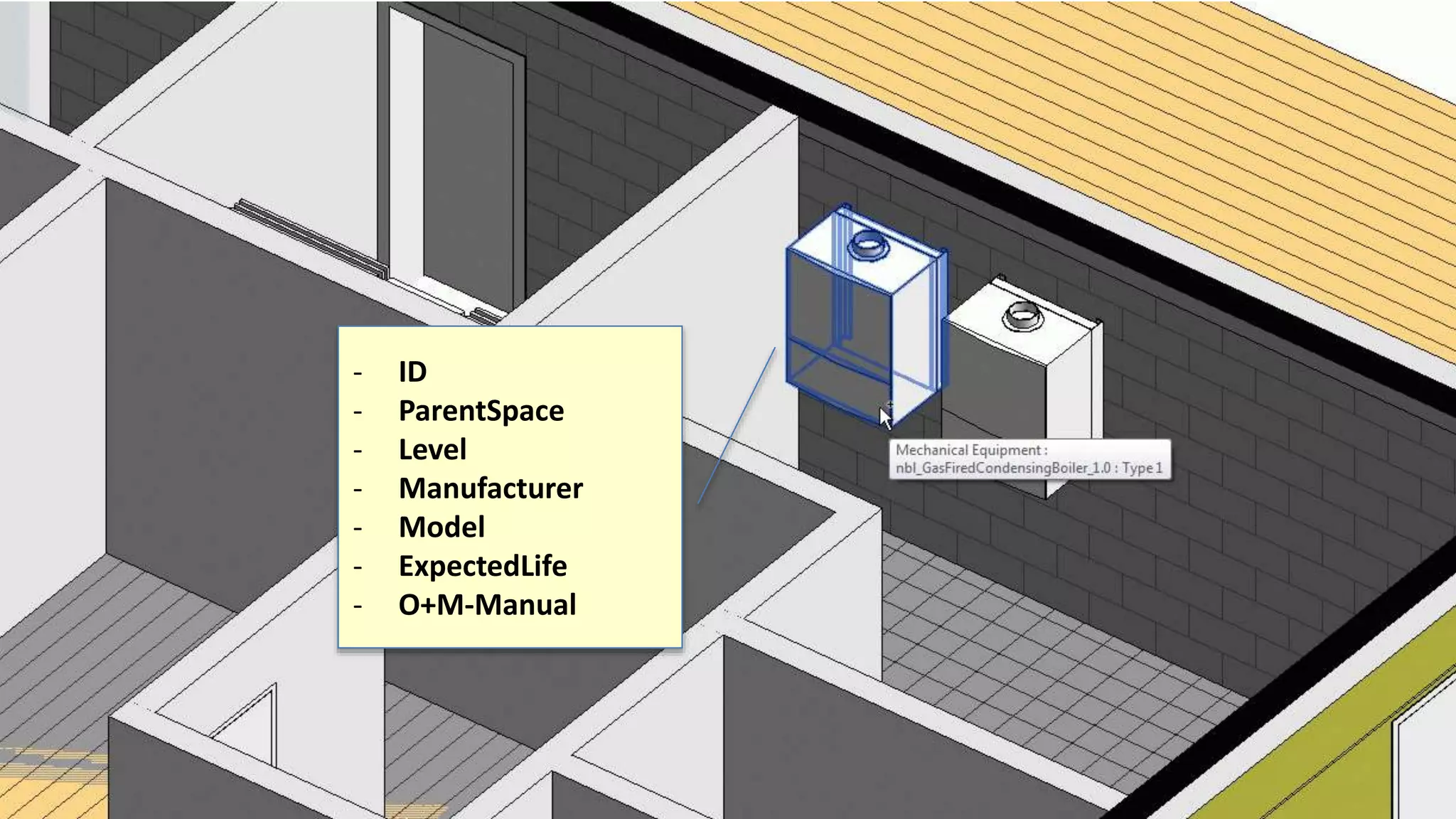
- ID
- ParentSpace
- Level
- Manufacturer
- Model
- ExpectedLife
- O+M-Manual
Verification & Validation of BIM
Submissions
Prof. Steve Lockley
Overview & Background
R&D funded by Innovate UK
Built on the xBIM platform
Open source toolkit for open BIM
Led by BIM Academy at Northumbria
Developed by the XbimTeam
Collaborative BIM development
Built on BuildingSmart data model – IFC
Community based, royalty free.
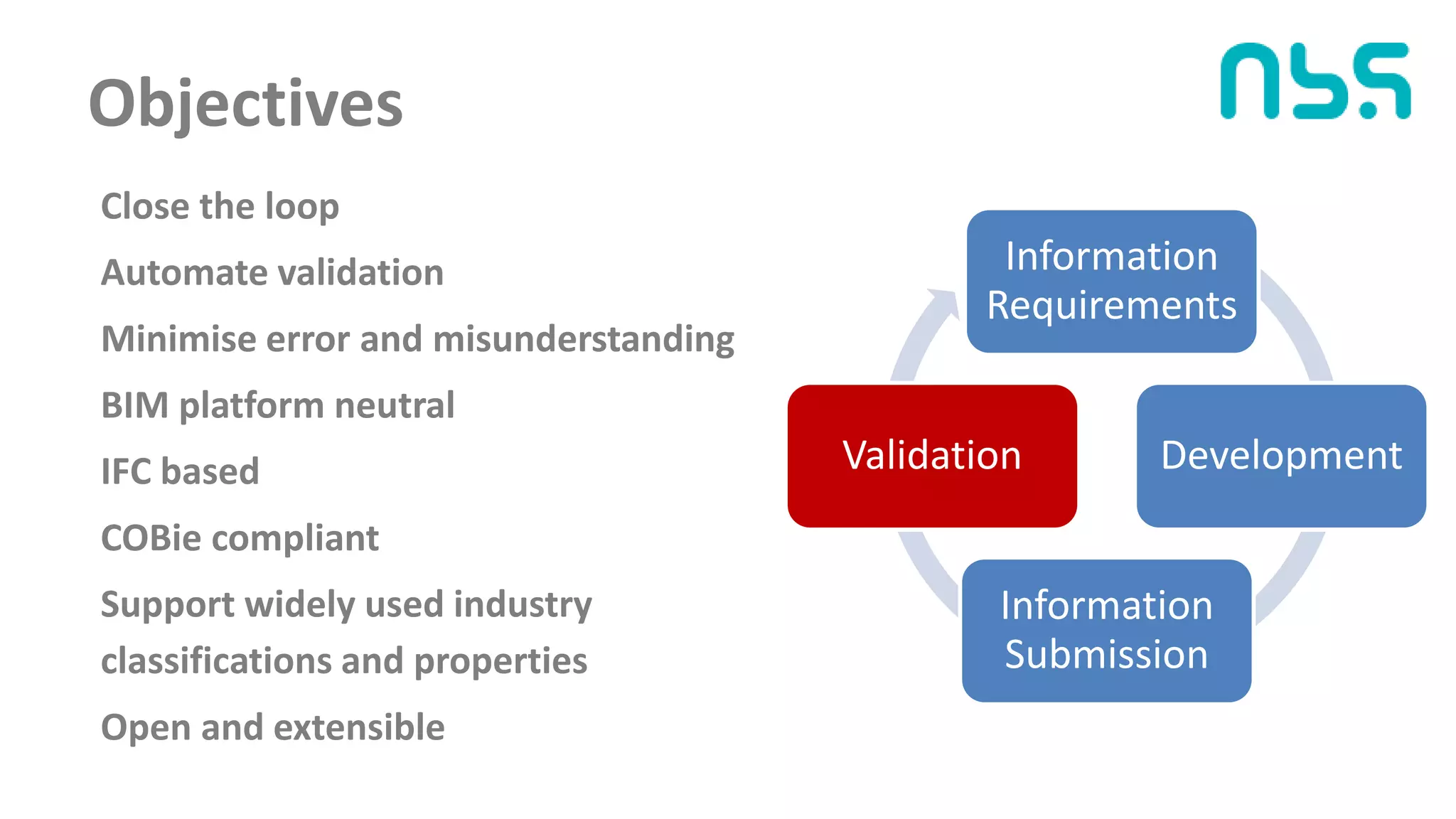
Objectives
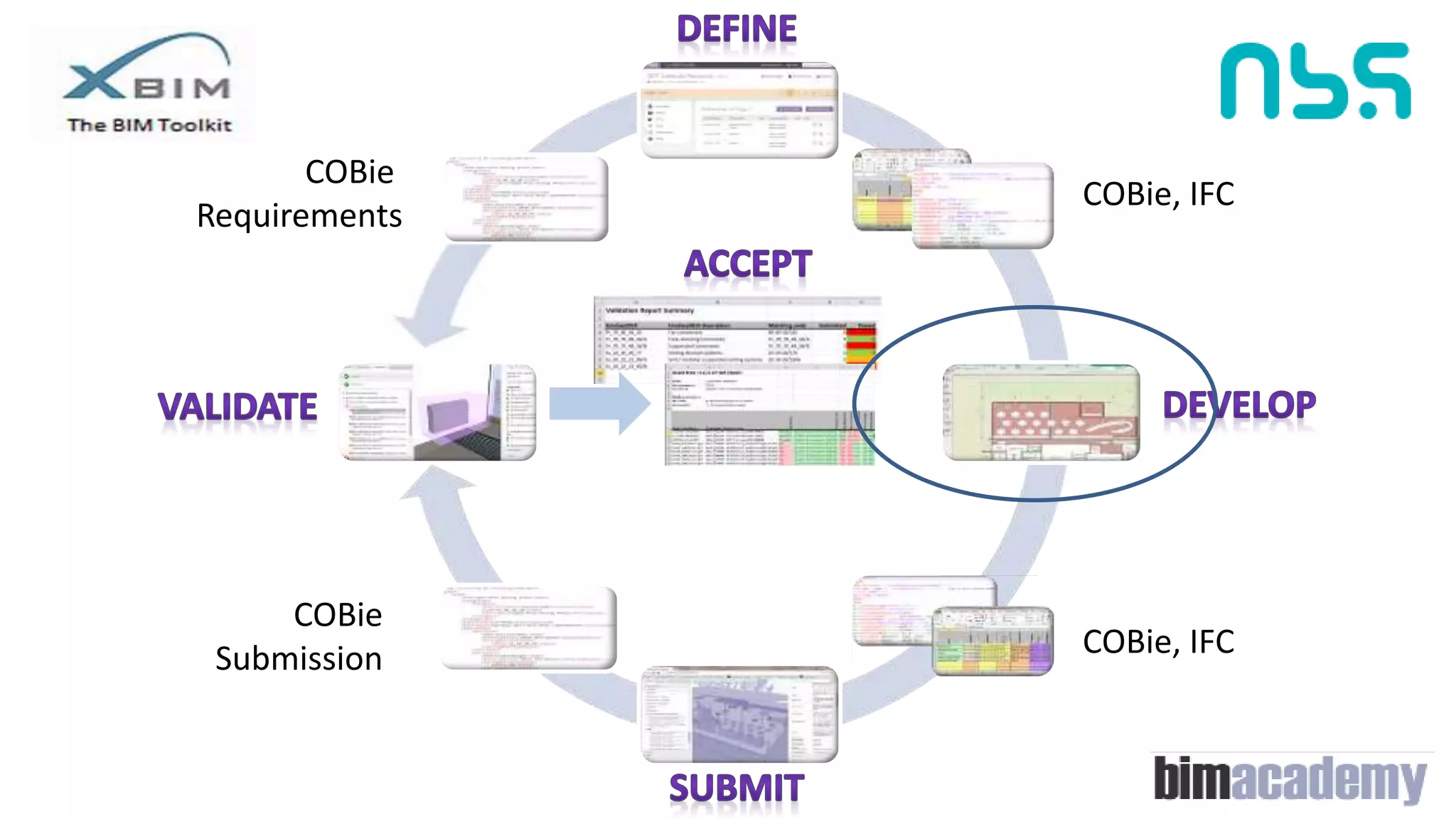
Information
Requirements
Development
Information
Submission
Validation
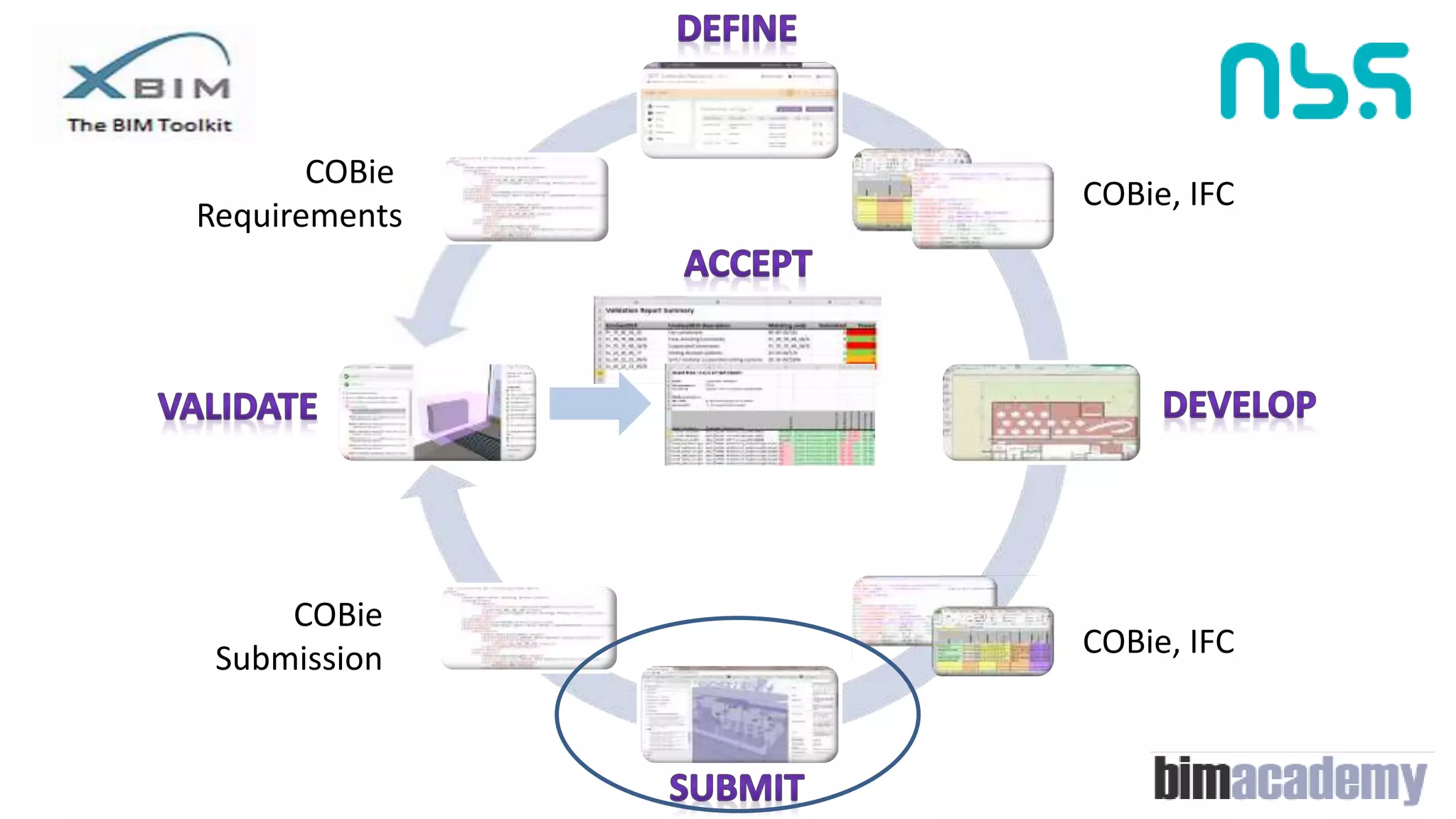
Close the loop
Automate validation
Minimise error and misunderstanding
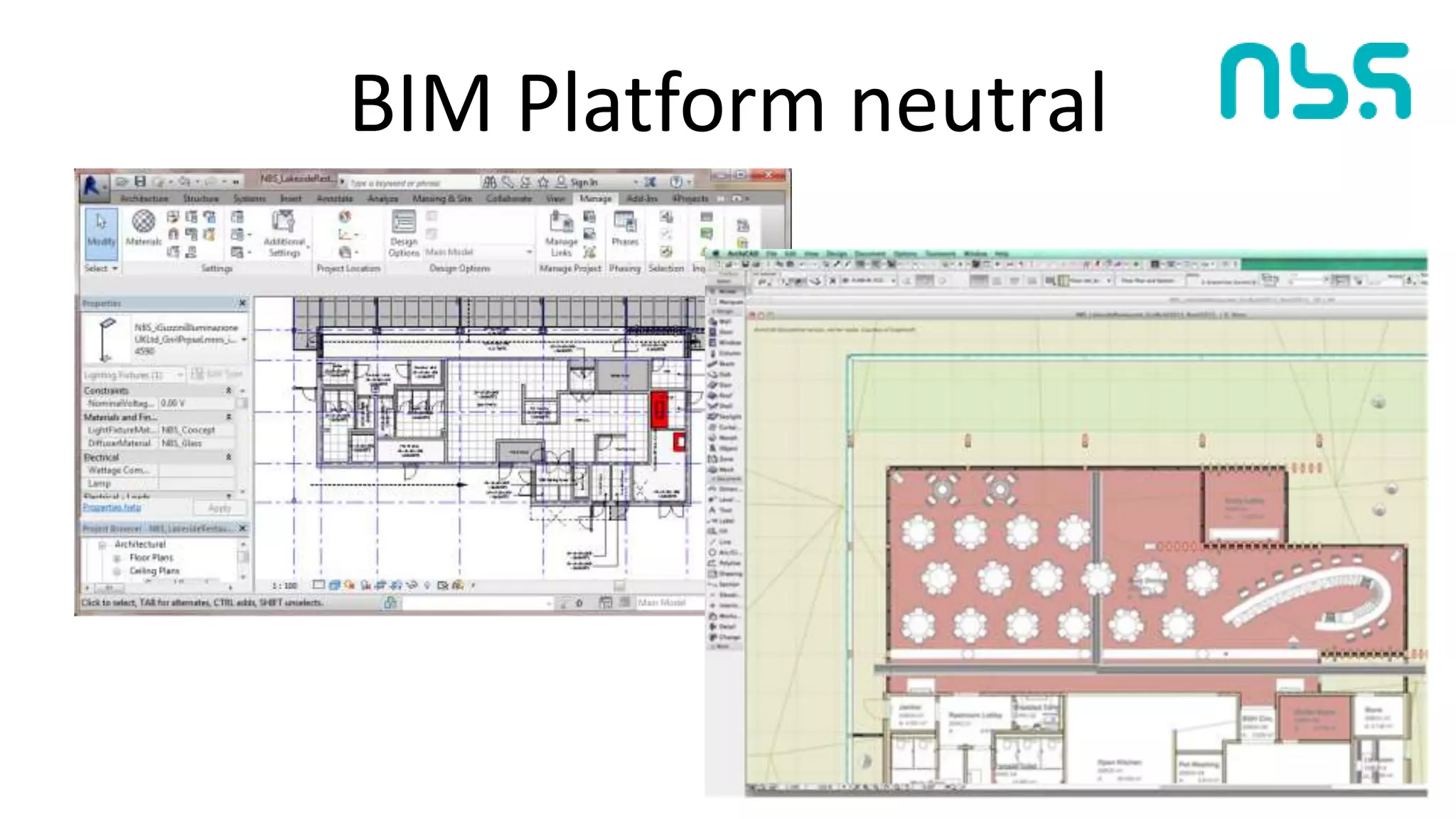
BIM platform neutral
IFC based
COBie compliant
Support widely used industry
classifications and properties
Open and extensible
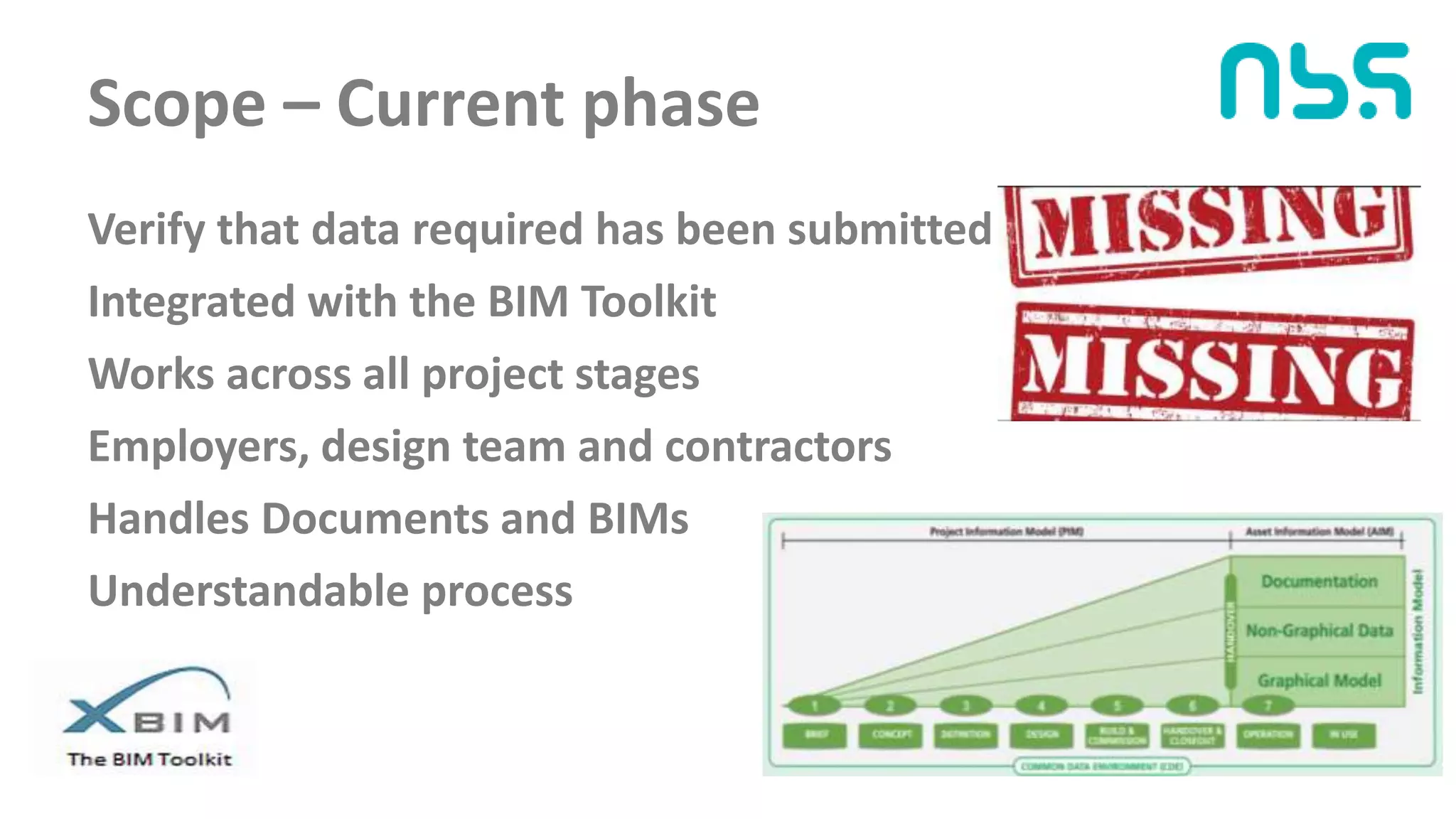
Scope – Current phase
Verify that data required has been submitted
Integrated with the BIM Toolkit
Works across all project stages
Employers, design team and contractors
Handles Documents and BIMs
Understandable process
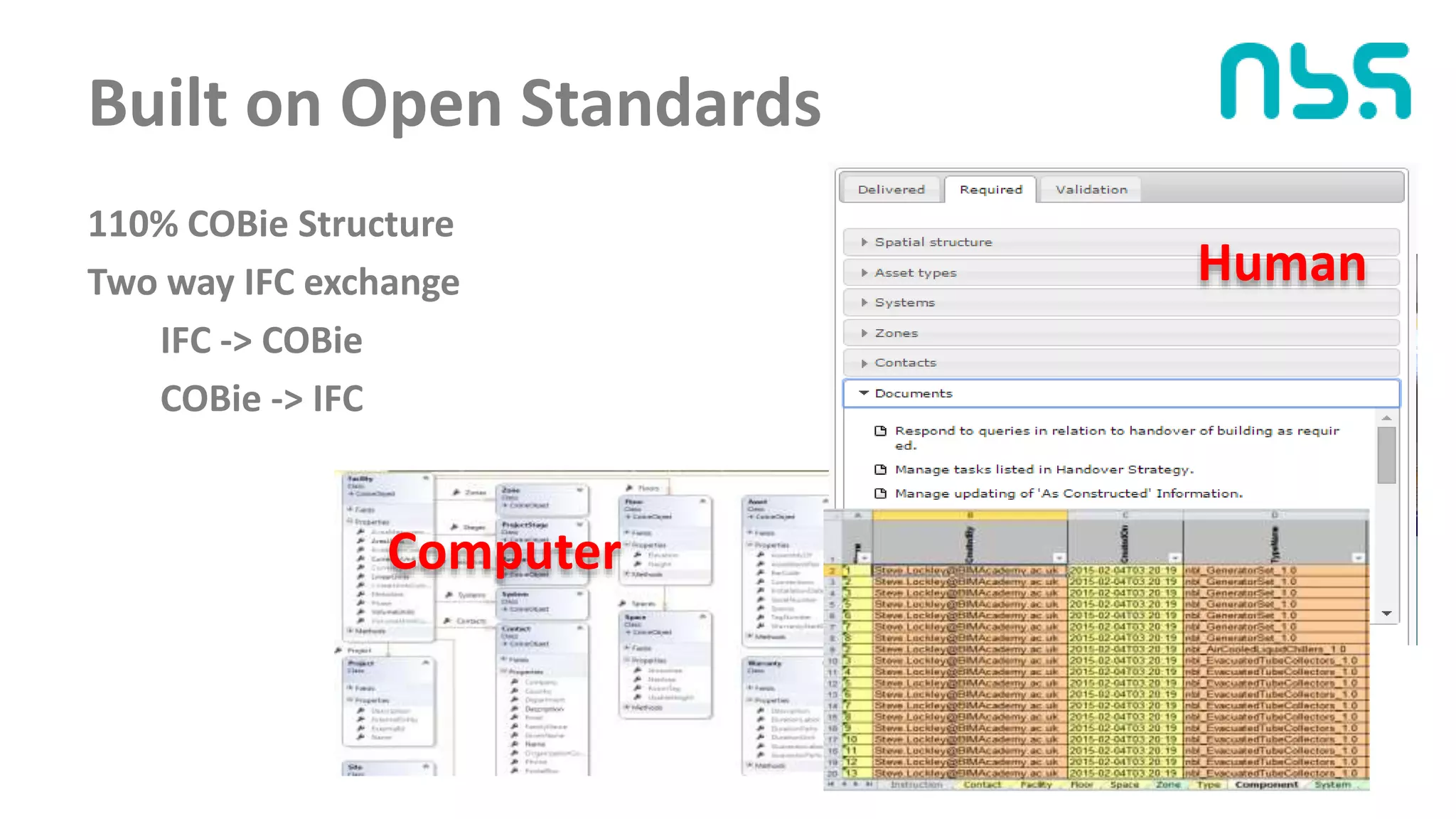
Built on Open Standards
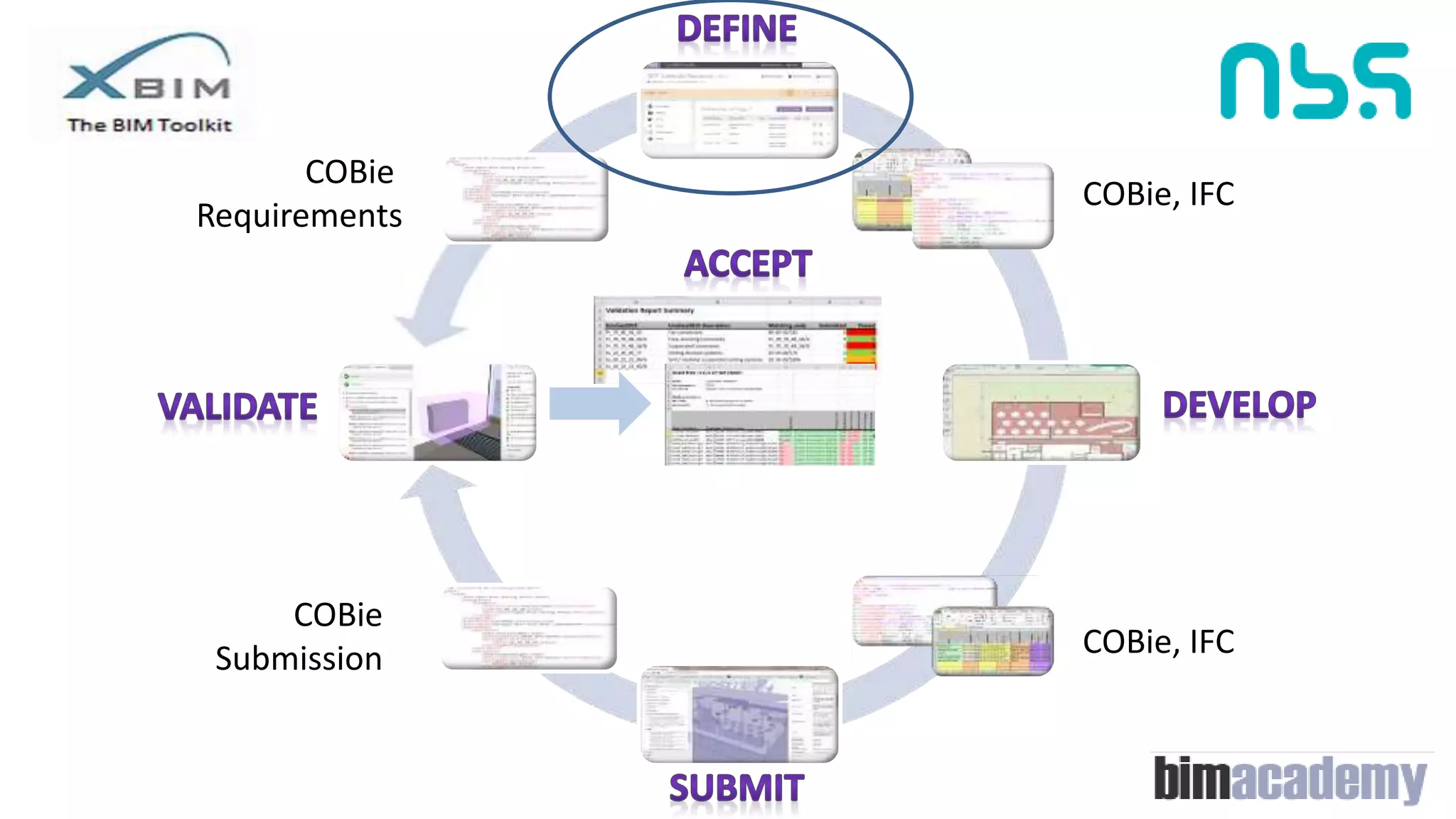
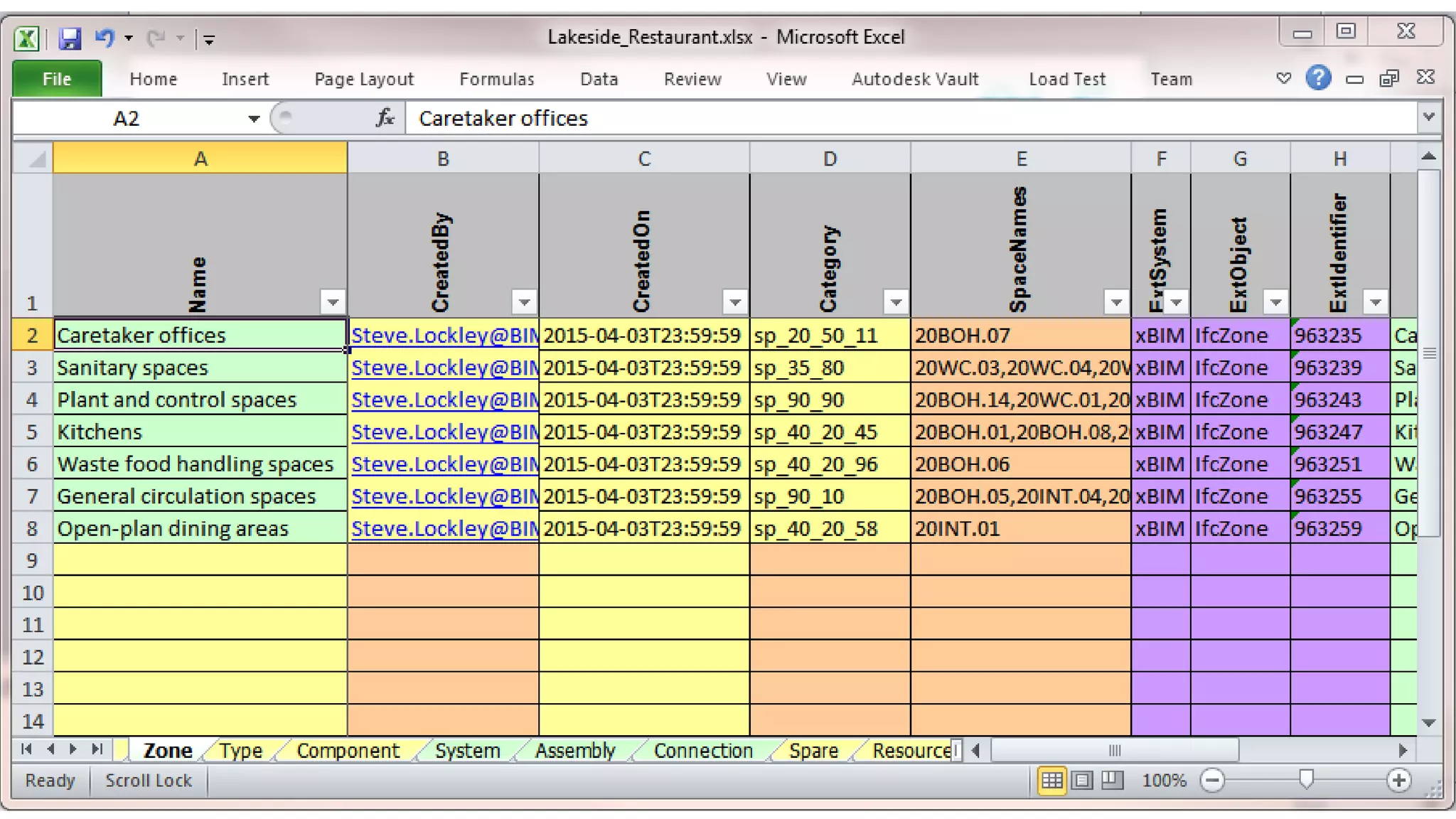
110% COBie Structure
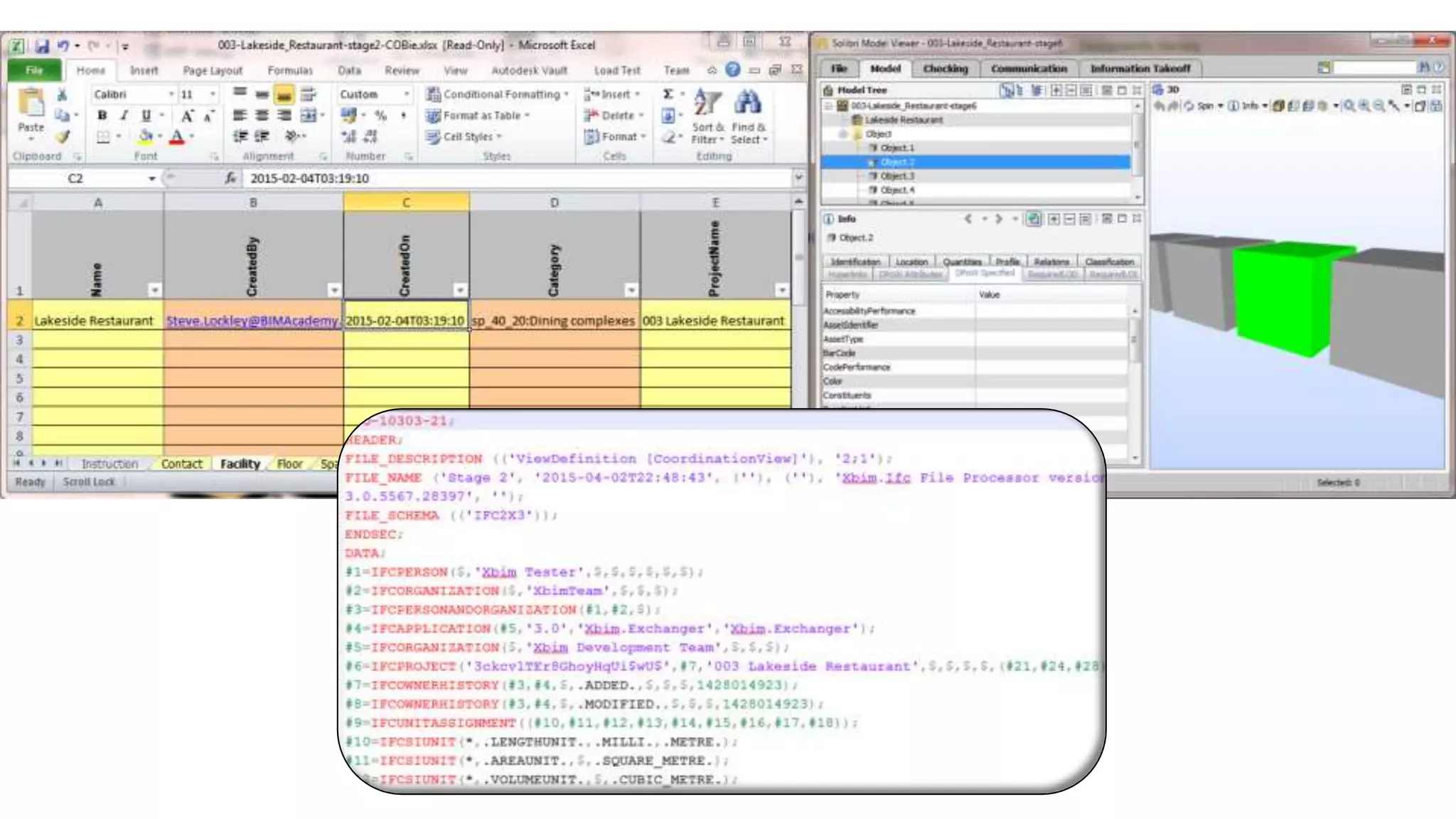
Two way IFC exchange
IFC -> COBie
COBie -> IFC
Computer
Human
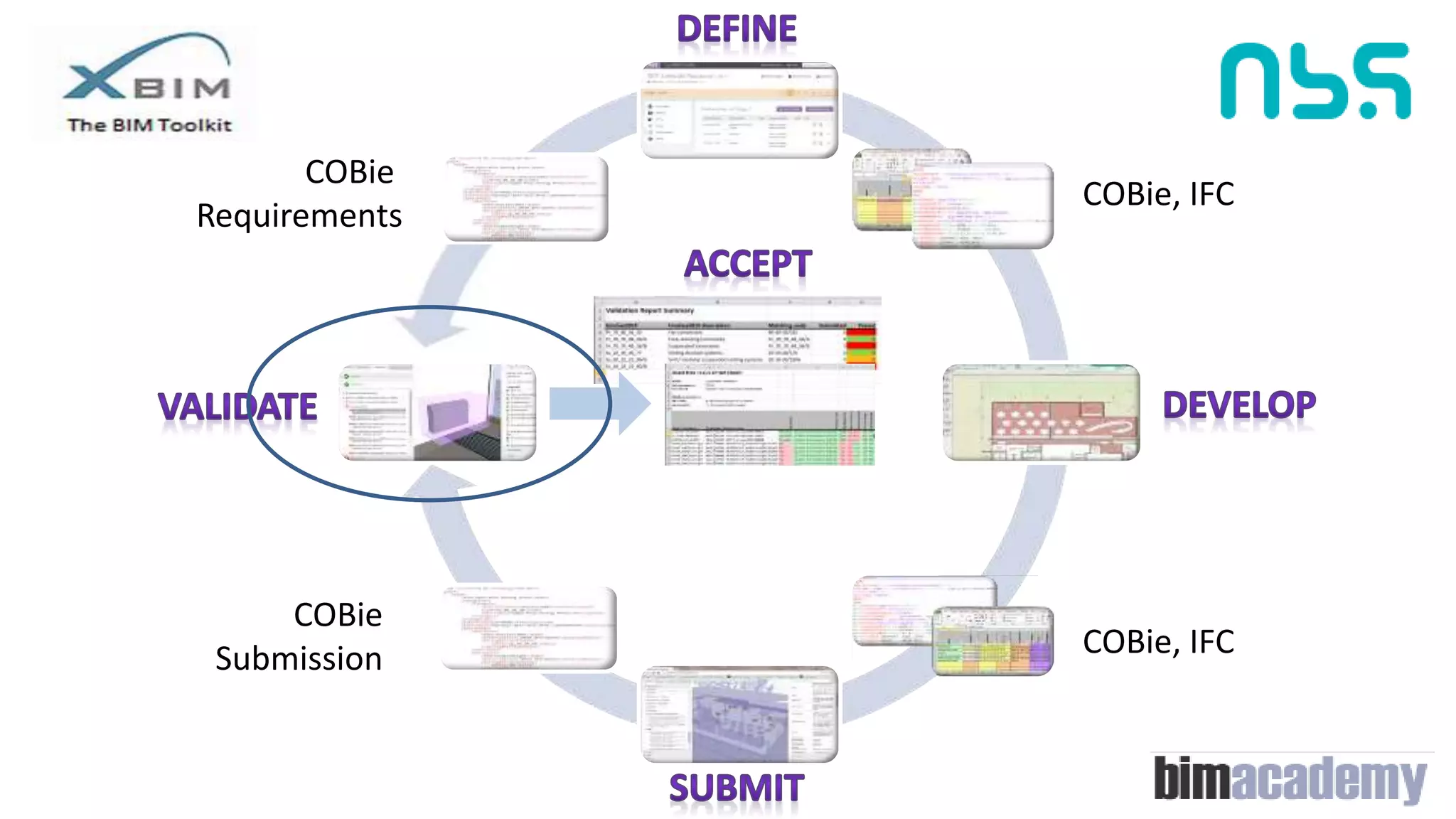
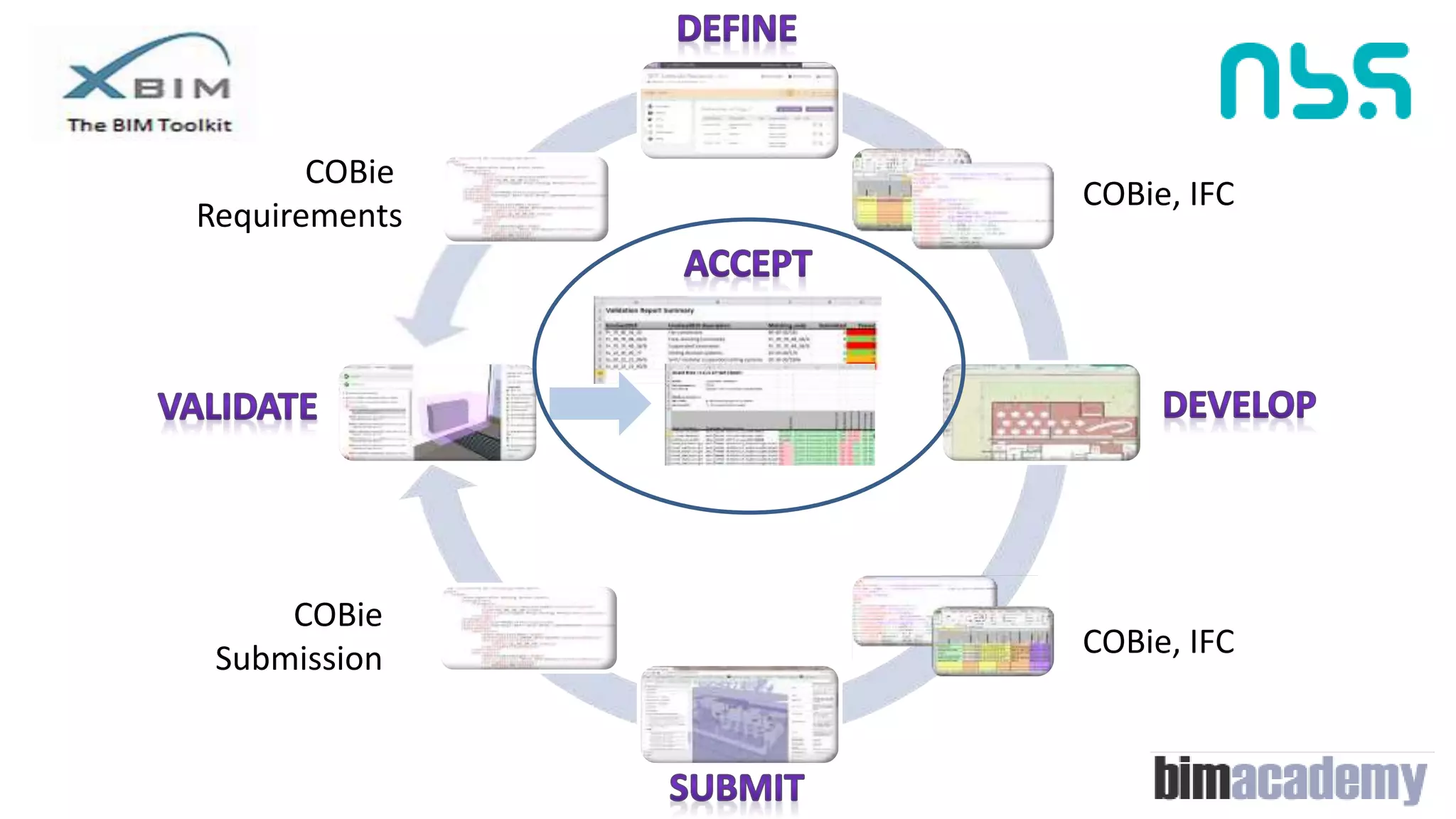
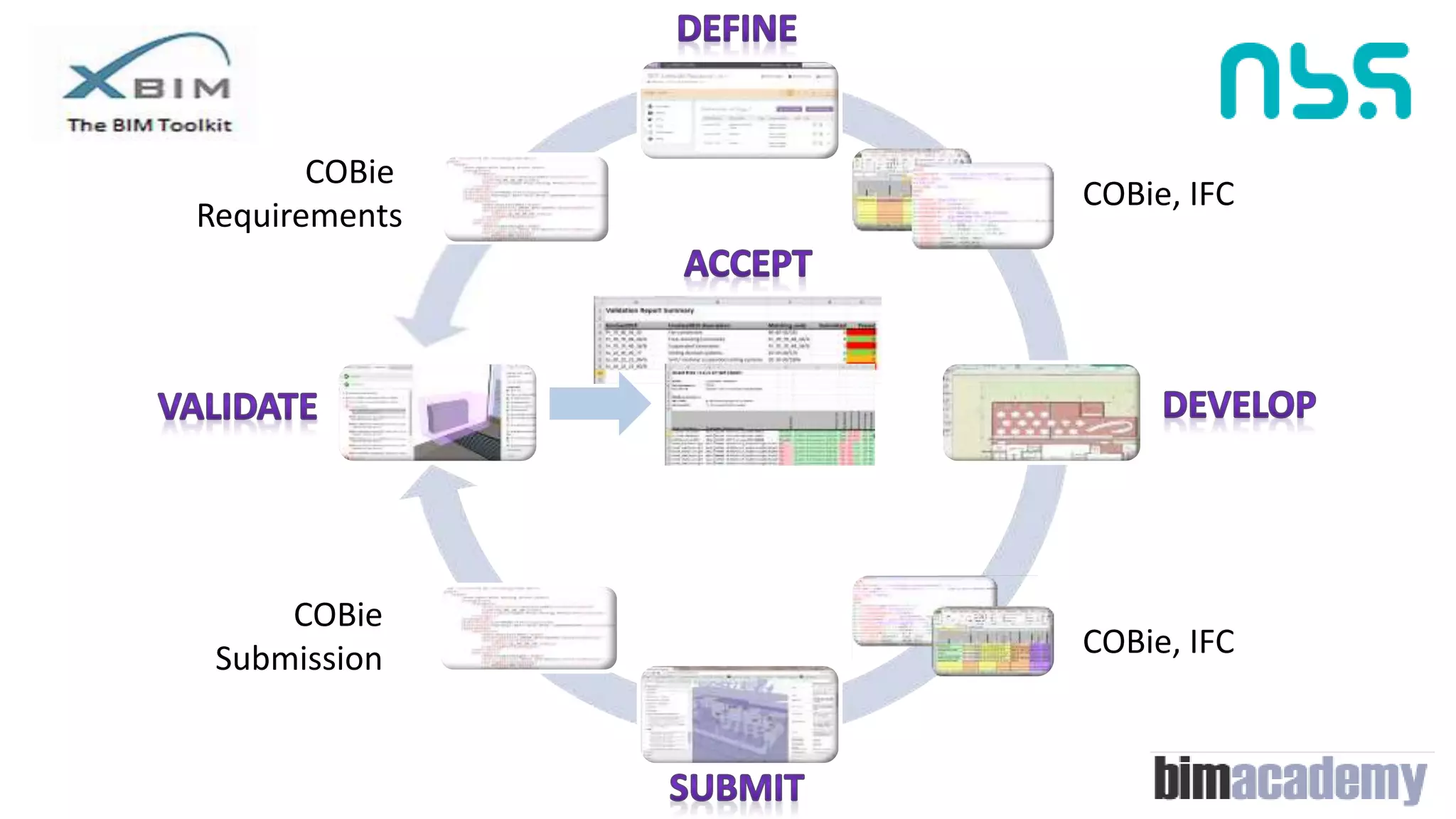
COBie, IFC
COBie
Submission COBie, IFC
COBie
Requirements
COBie, IFC
COBie
Submission COBie, IFC
COBie
Requirements
COBie, IFC
COBie
Submission COBie, IFC
COBie
Requirements
BIM Platform neutral
COBie, IFC
COBie
Submission COBie, IFC
COBie
Requirements
COBie, IFC
COBie
Submission COBie, IFC
COBie
Requirements
COBie, IFC
COBie
Submission COBie, IFC
COBie
Requirements
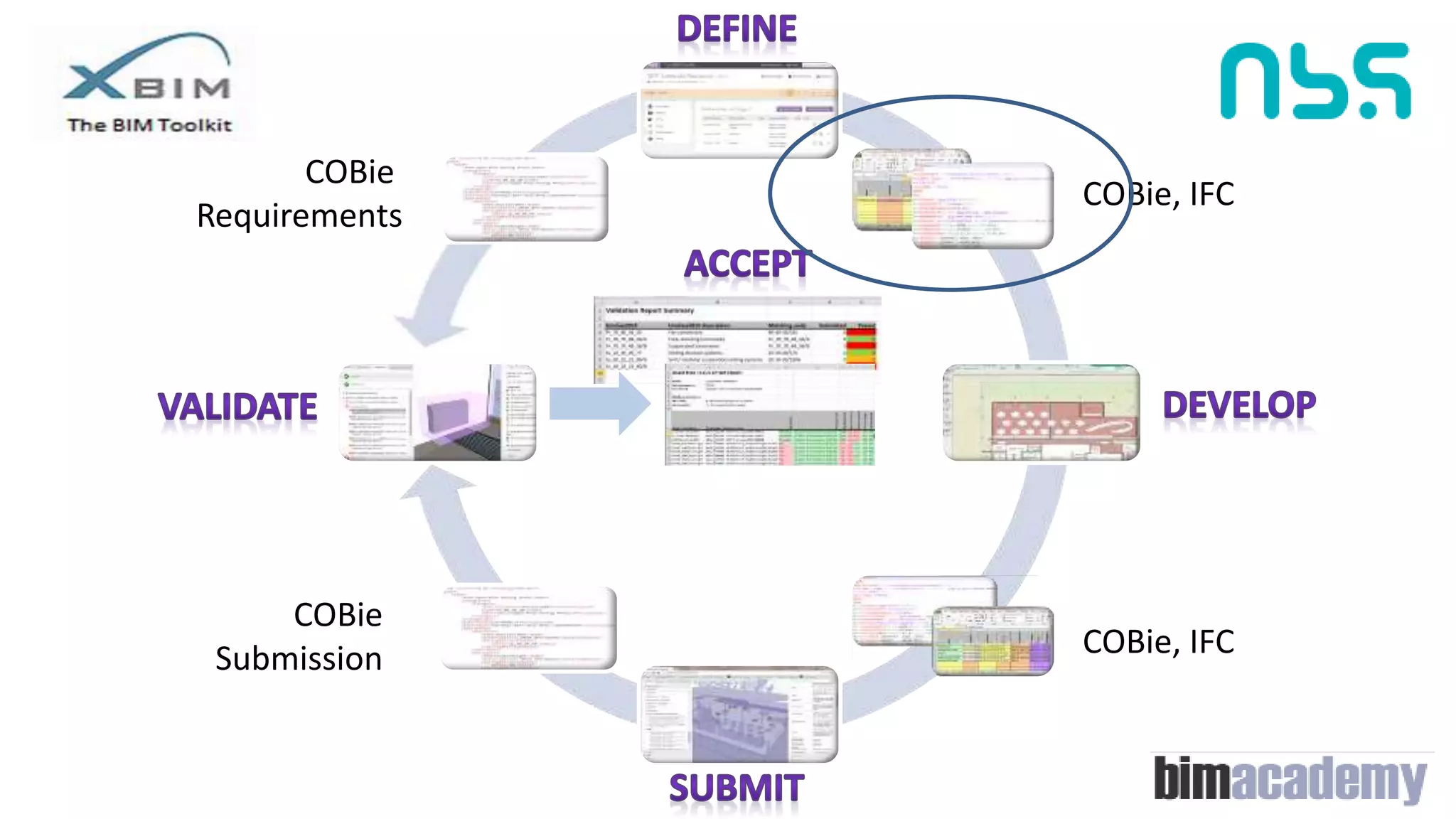
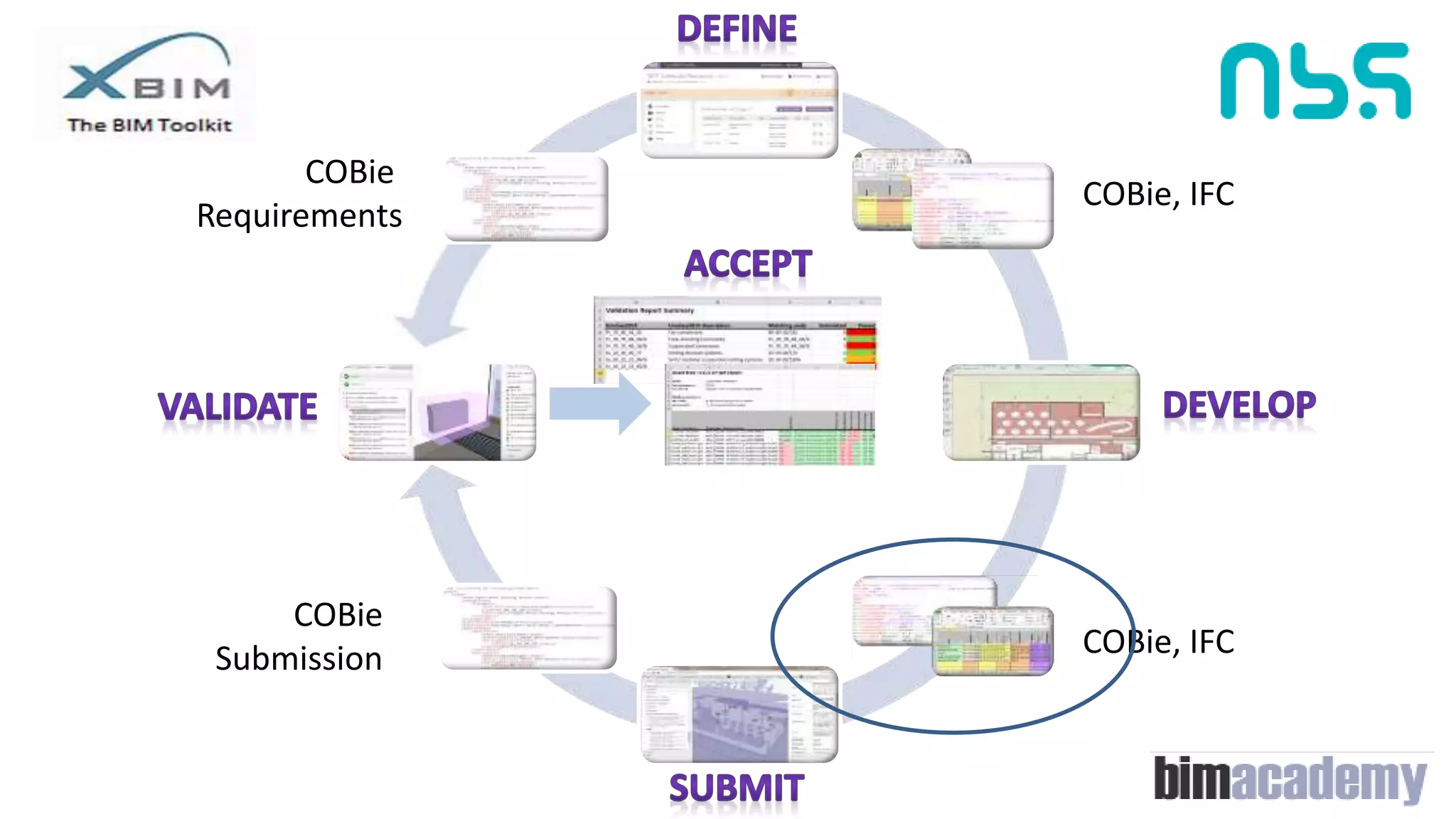
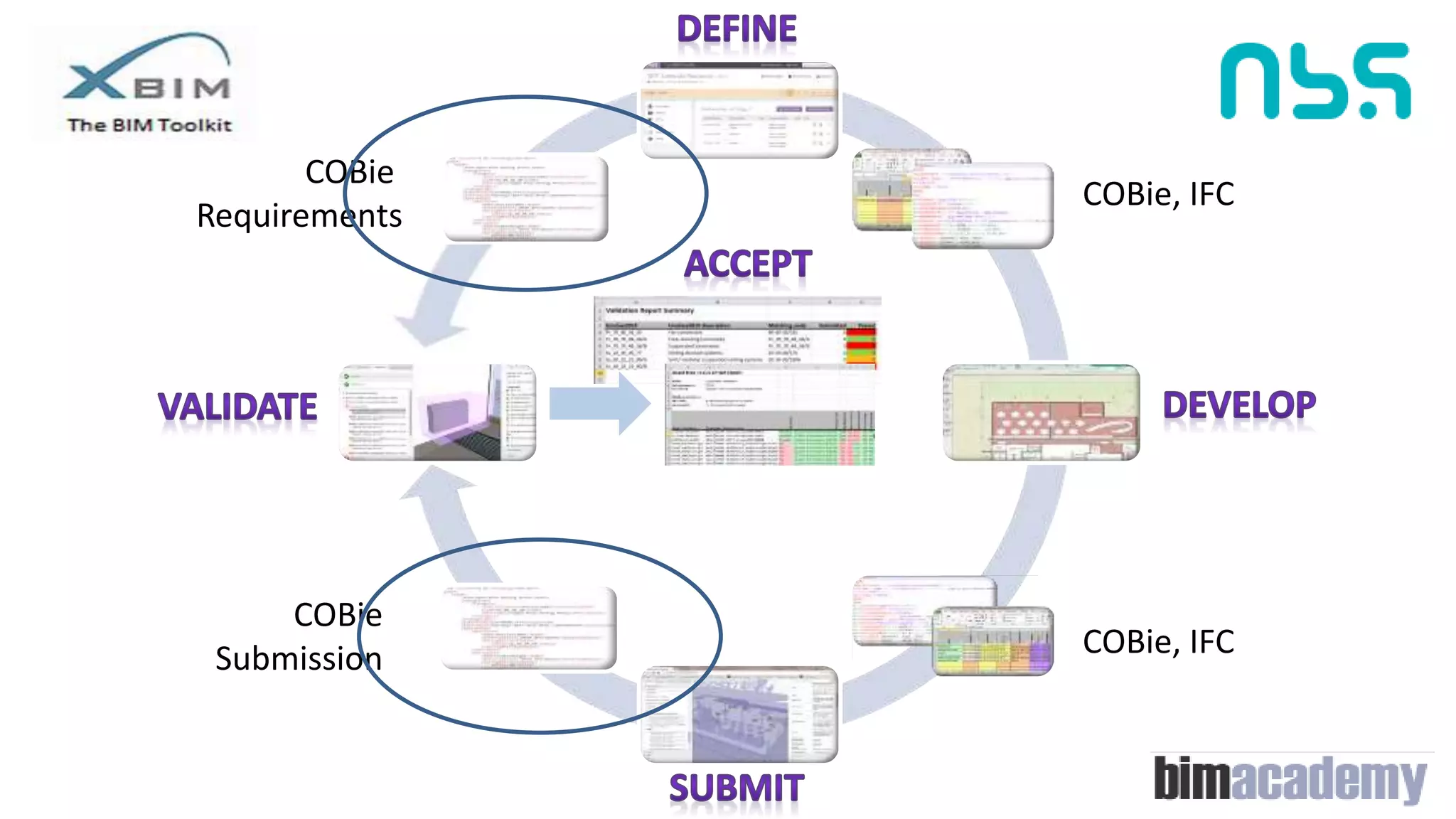
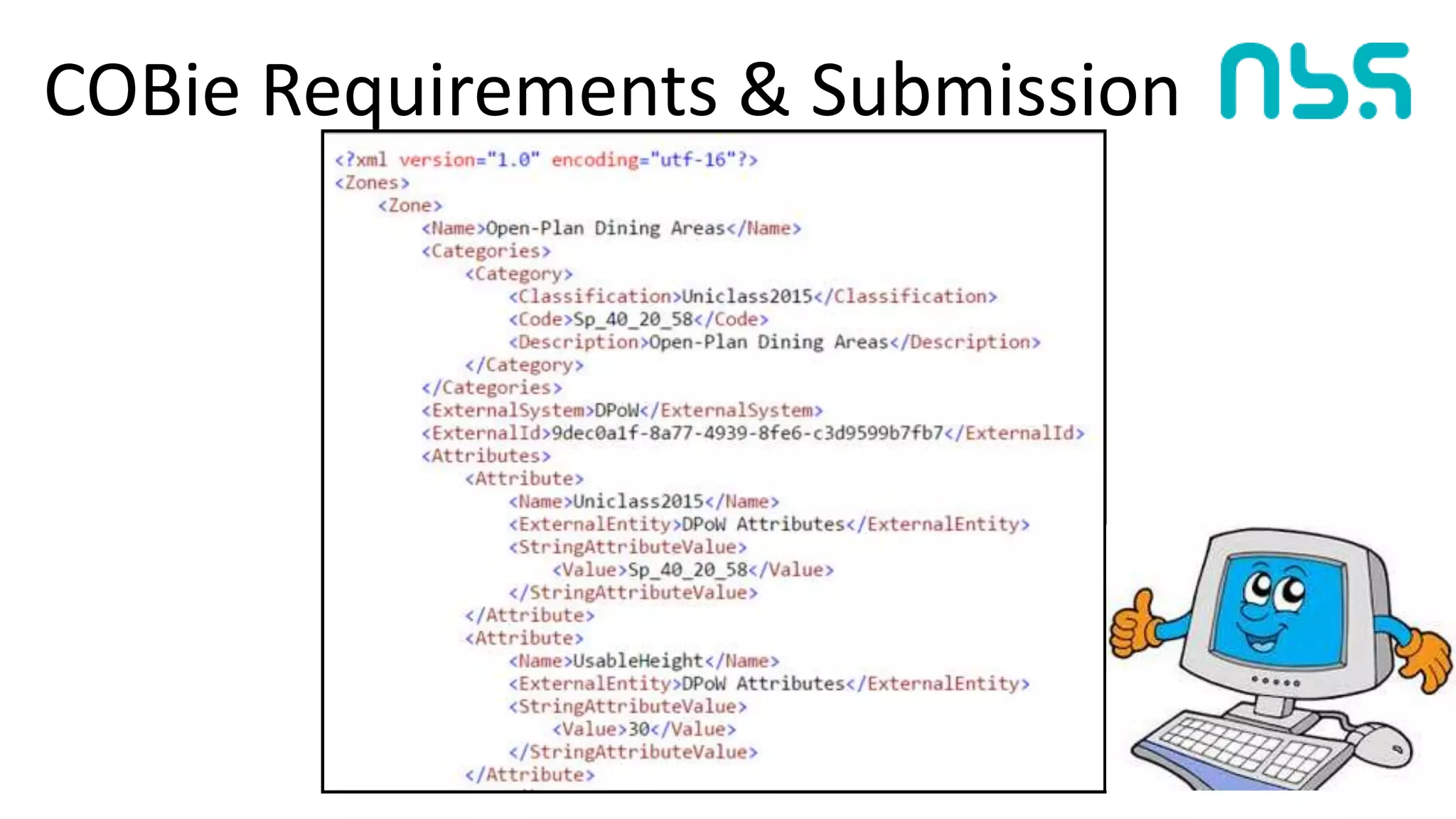
COBie Requirements & Submission
COBie, IFC
COBie
Submission COBie, IFC
COBie
Requirements
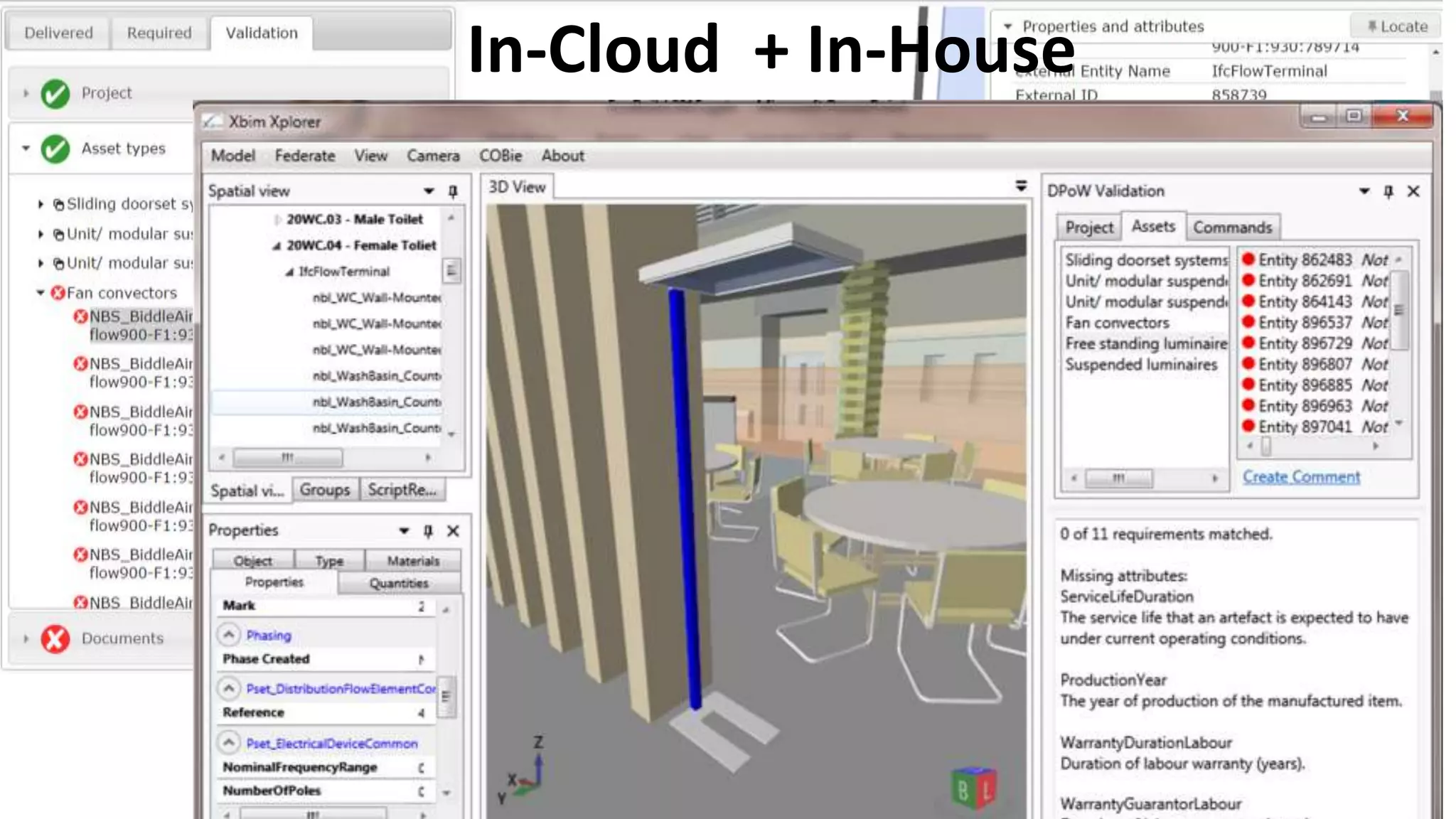
In-Cloud + In-House
COBie, IFC
COBie
Submission COBie, IFC
COBie
Requirements
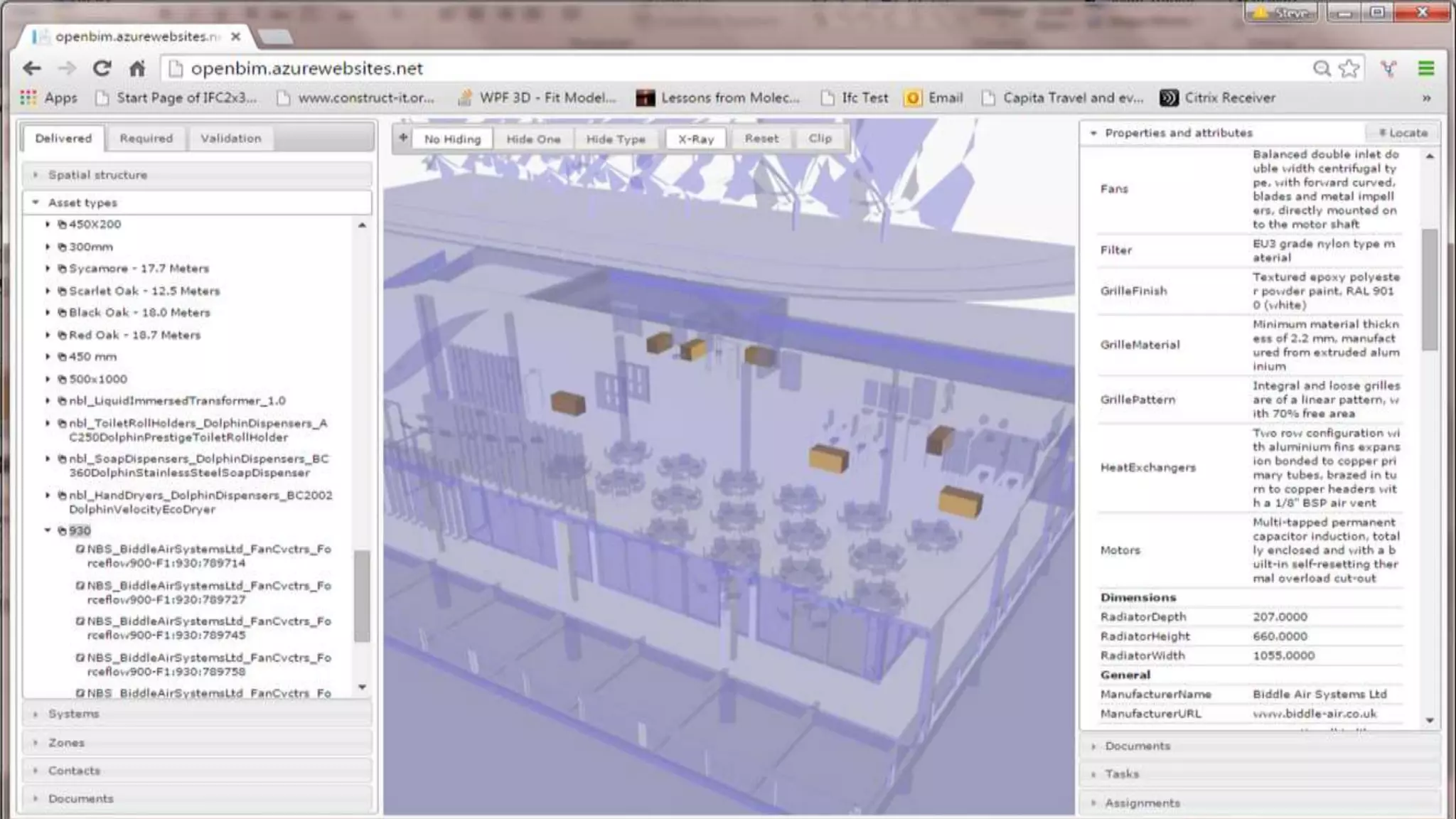
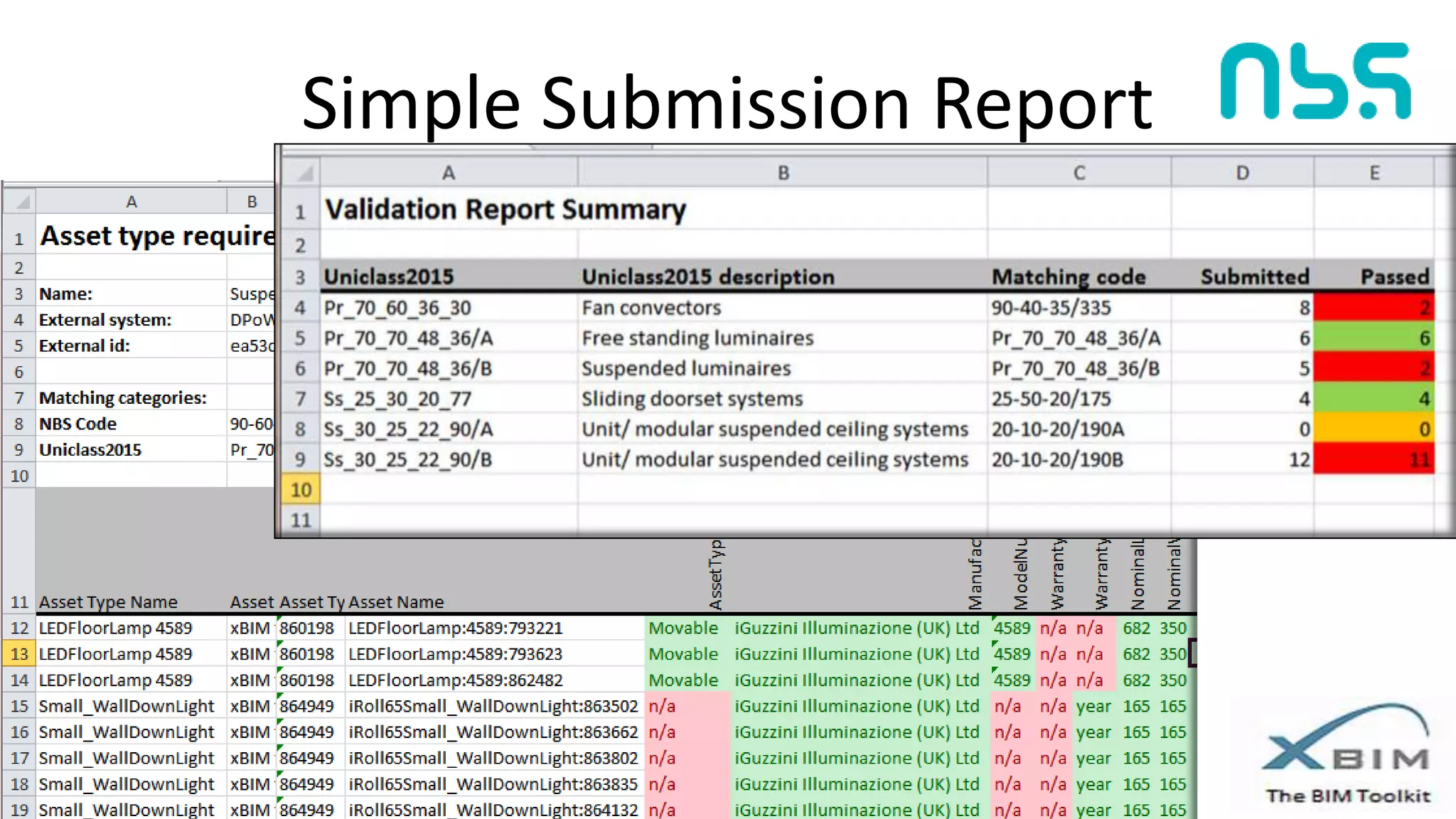
Simple Submission Report
COBie, IFC
COBie
Submission COBie, IFC
COBie
Requirements
Community support needed
xBIM is an Open Platform
• Royalty free, open source
Several key organisations actively engaged
• 4Projects, NBS, AEC3, Metz Architects, eDocuments, B&ES
Designed and built on, and for, IFC
• No Compatibility or portability issues
Construction & IT industry engagement welcomed
Steve.Lockley@BIMAcademy.ac.uk
www.OpenBIM.org
www.github.com/xBimTeam
Summary
The NBS BIM Toolkit
Summary
1. A clear central strategy for information procurement
2. A free-to-use digital plan of work tool for UK Level-2 BIM
3. Verification of information using well-structured open data
The NBS BIM Toolkit
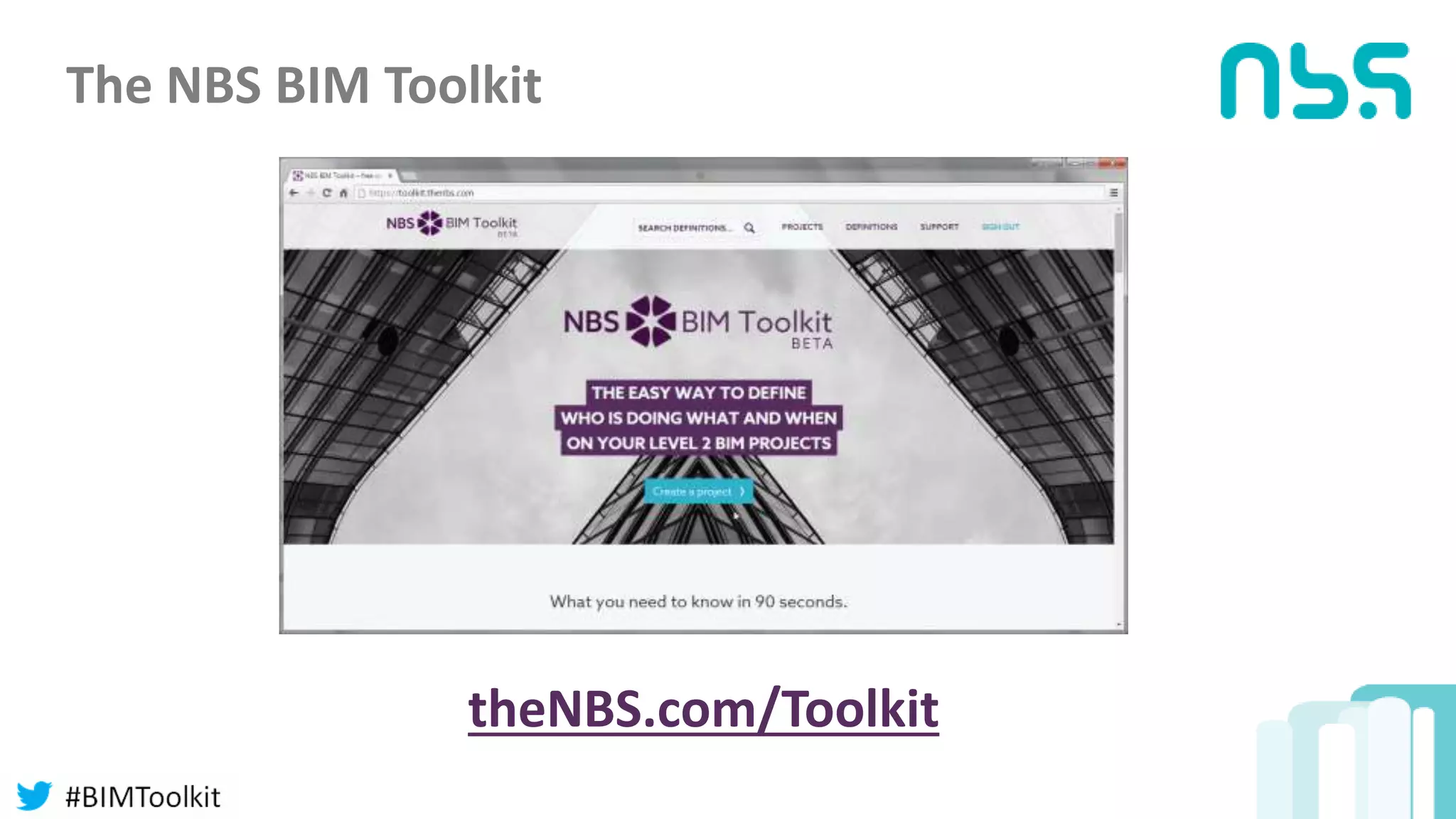
theNBS.com/Toolkit

The NBS BIM Toolkit and Digital Plan of Work

Editor's Notes

  • #88 7.       Stress that it is a beta currently – feedback and others joining the xBIM community (already with names such as AEC3, 4projects, NBS as members)