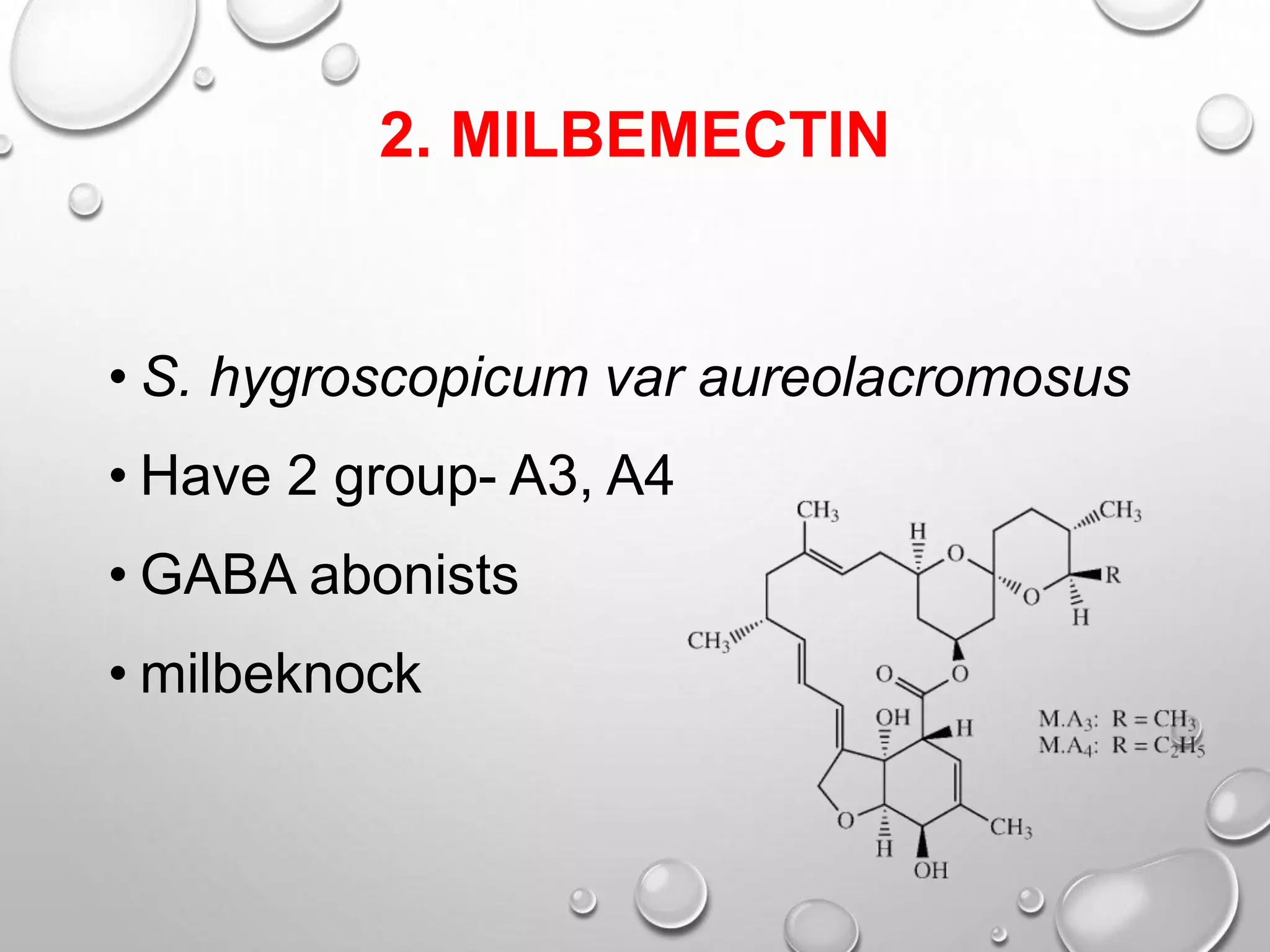
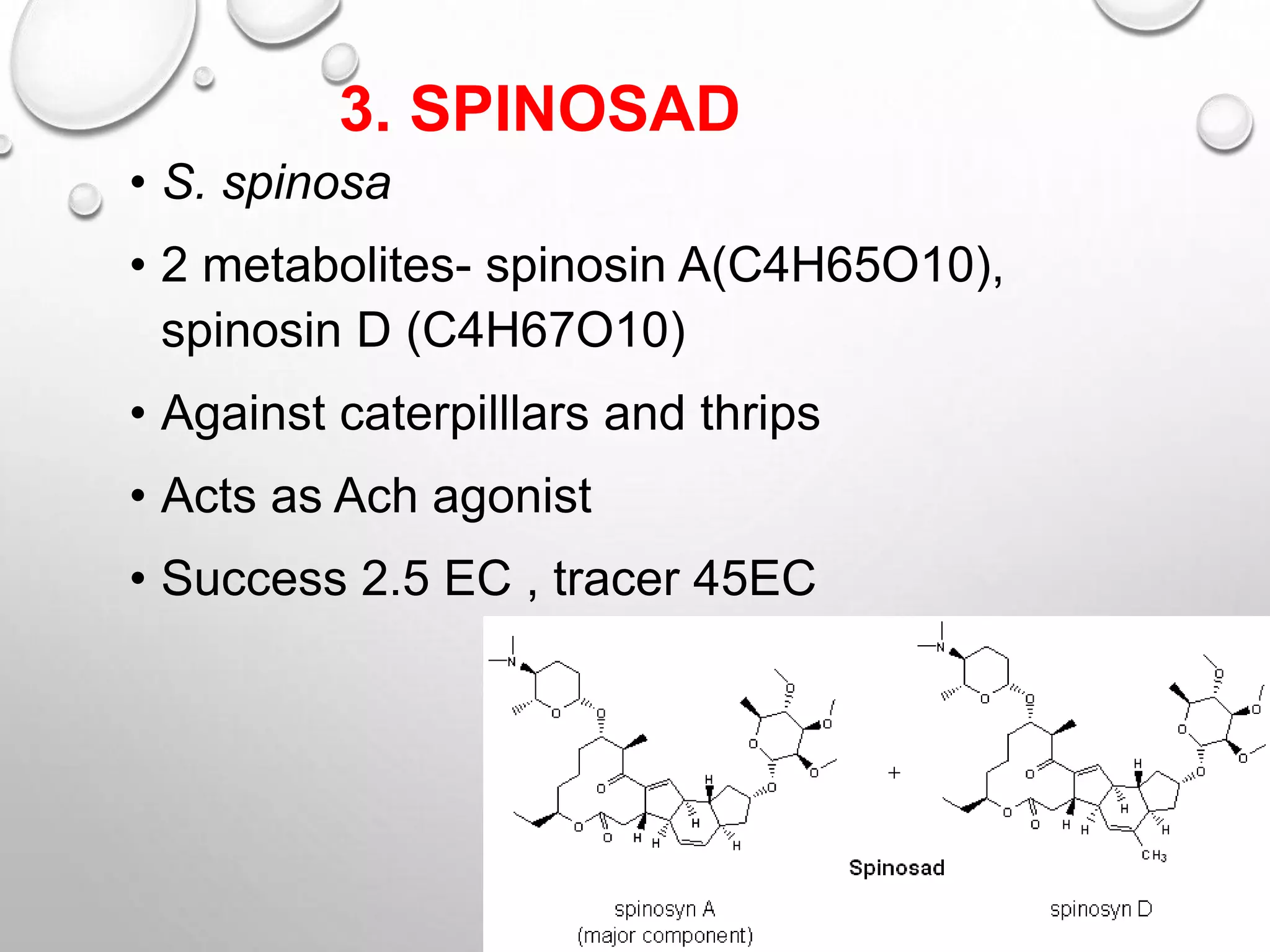
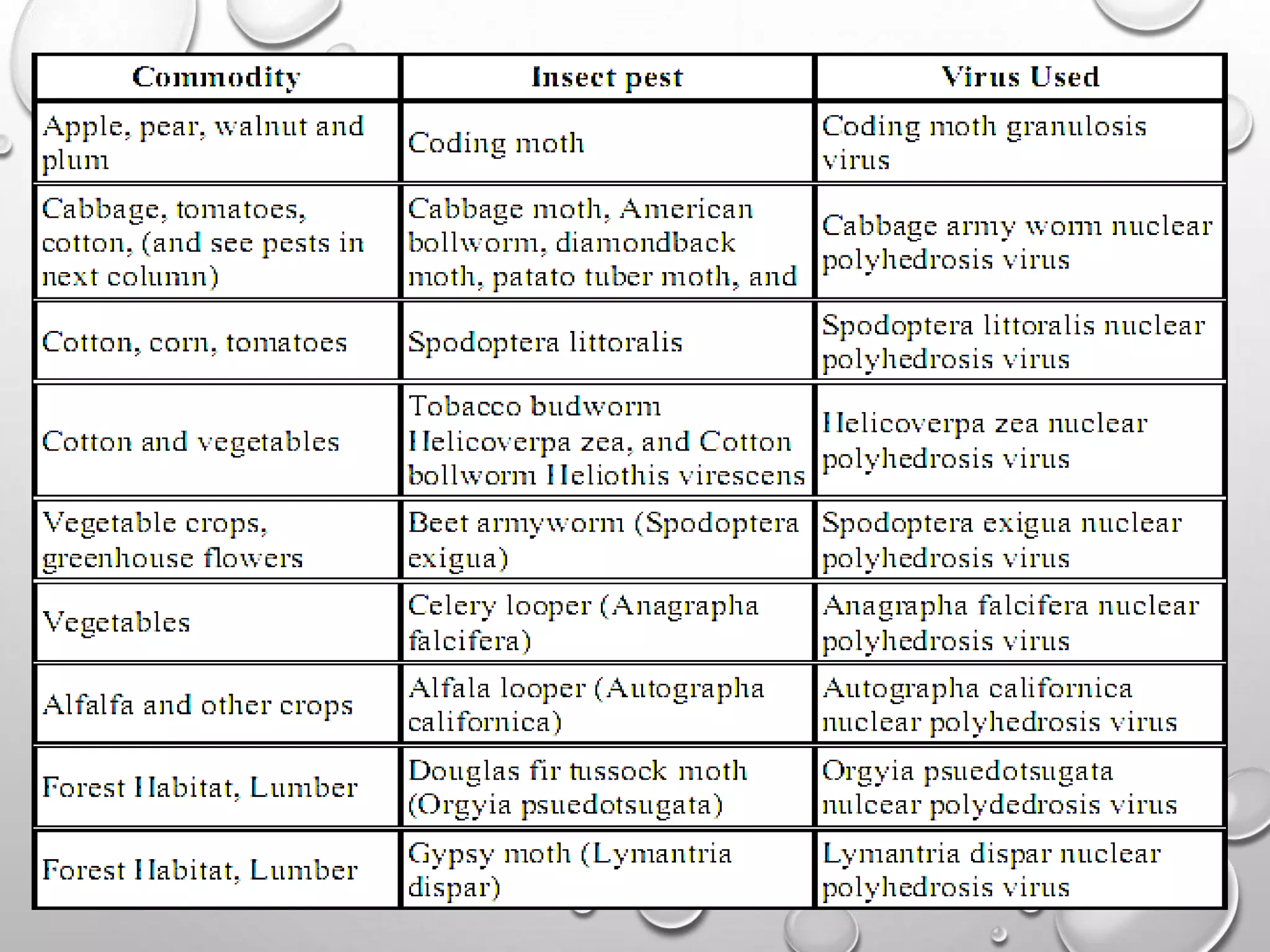
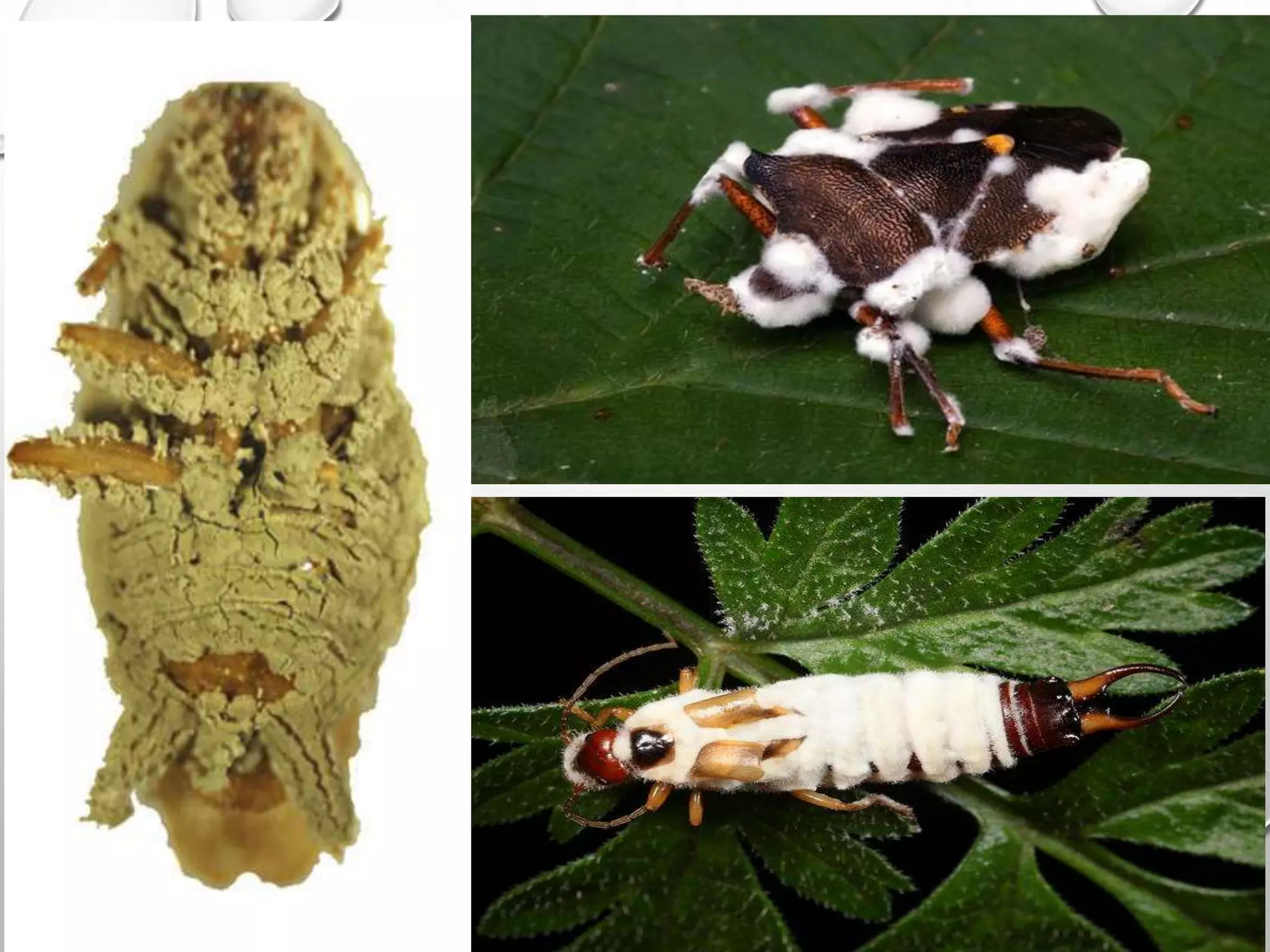
Microbial insecticides offer an alternative to synthetic chemical insecticides for pest control. They include bacteria like Bacillus thuringiensis (Bt), fungi, viruses, protozoa, nematodes, and actinomycetes. Bt is the most widely used and produces crystal proteins that are toxic once ingested by the target insect. Other common microbial insecticides include Beauveria bassiana, Metarhizium anisopliae, nuclear polyhedrosis viruses, and the actinomycete insecticides avermectins, milbemycins, and spinosad. Microbial insecticides have advantages like being non-toxic to humans and wildlife but also have disadvantages like being pest-