INTRODUCTION
• Pest is competitor of humanity – broadest sense
• Major pest control method is chemical, but the xenobiotics adverse effect on non-
target organisms, and also it leas to new bio type pest resistant against
pesticide.
• IPM (integrated pest management or integrated pest control) : is broad based
approach practices for economic control of pest.
INTEGRATED PEST MANAGEMENT
(IPM)
IPM aims to suppress pest population below the economic injury level (EIL).
UN’s food & agriculture organization
IPM as “the careful consideration of all available pest control techniques &
subsequent integration of appropriate measure that discourage the developmental
pest populations & keep pesticide & other interventions to levels that are
economically justified & reduce or minimize risks to human health & environment”.
PEST CONTROL
• Any factors that is capable of making life hard for pest that will kill, repel or
interfere with its feeding, mating, reproduction or dispersal can be taken as a
method of pest control in its broadest application.
• Natural control
1.Climatic factors
2.Topographic factors
3.Natural enemies
• Applied or artificial control
MICROBIAL CONTROL
• Microbial insecticides:
Single cell organisms, such as bacteria, fungi, Protozoa and viruses have
been mass produced & formulated for use in a manner similar to insecticides.
Product containing these organisms are regulated by the environmental
protection agency (EPA) & use is governed by the Federal insecticide, fungicide &
Rodenticide Act (FIFRA).
BIOLOGICAL CONTROL THROUGH
INSECT DISEASES
• There are two aspects to the economic problems caused by insects or pests
1. loss of productions that results from damage to crops and to the
health of humans and domestic animals
2.cost of attempts to prevents or control such production losses
Employment of microorganisms capable causing diseases in another means of
fighting crop pests.
CHARACTERS OF MICROBIAL
PESTICIDES
• Should be virulent & cause disease to pest at recommended concentration
• Should not be sensitive to moderate environmental variations
• Should rapidly establish disease in pest
• Specific to pest population so as not to cause harm in non –target population.
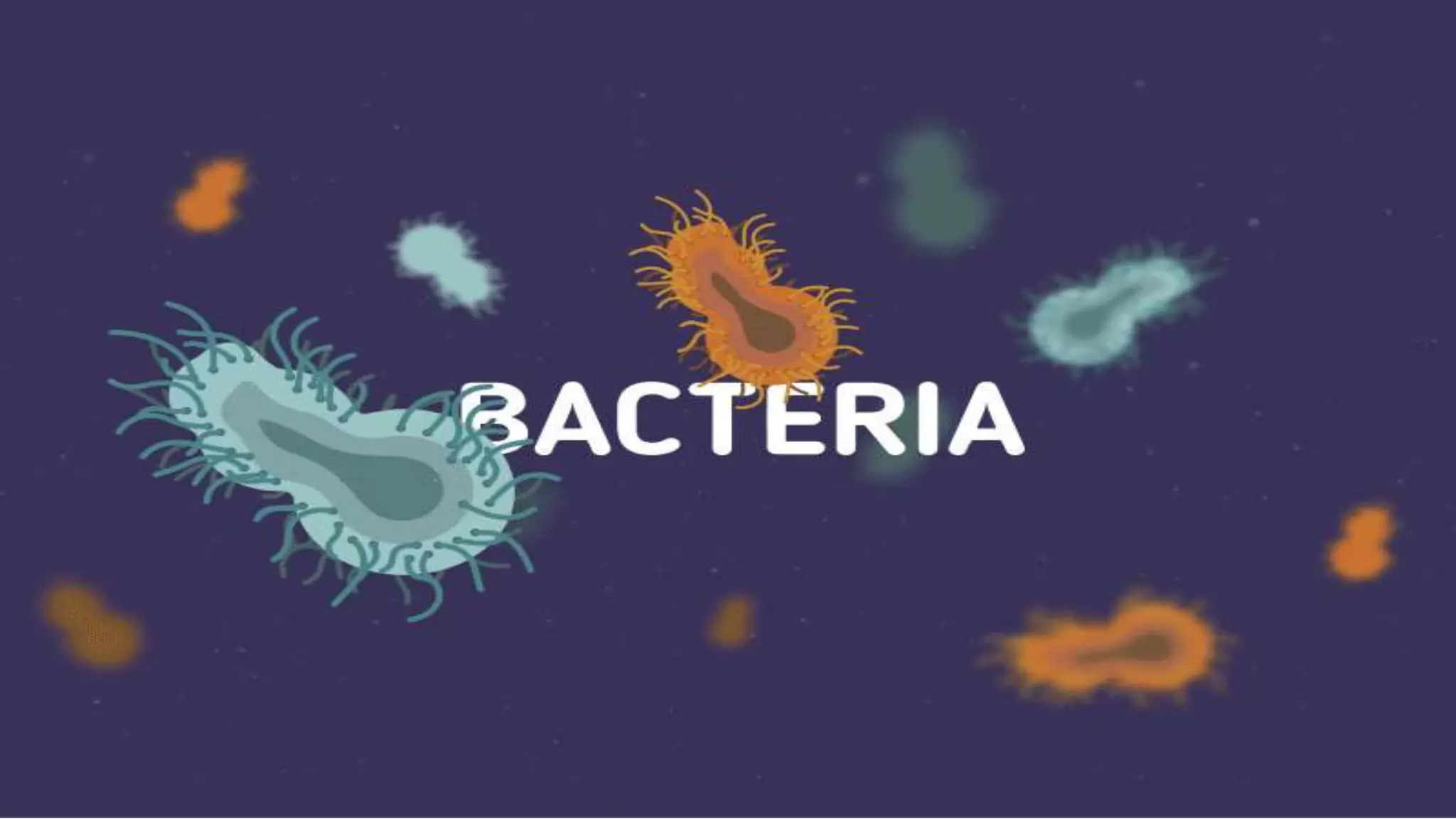
BACTERIA
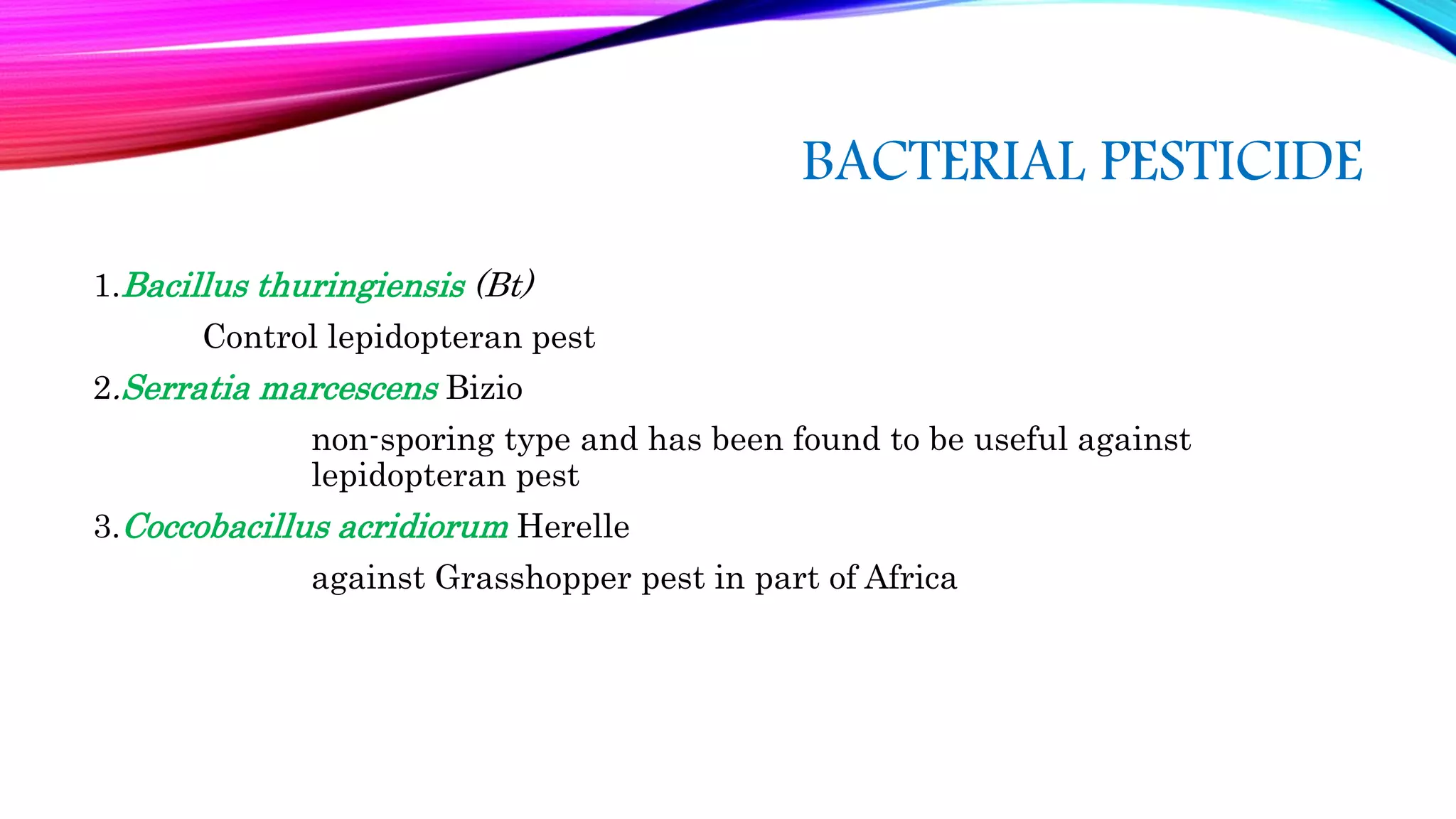
BACTERIAL PESTICIDE
1.Bacillus thuringiensis (Bt)
Control lepidopteran pest
2.Serratia marcescens Bizio
non-sporing type and has been found to be useful against
lepidopteran pest
3.Coccobacillus acridiorum Herelle
against Grasshopper pest in part of Africa
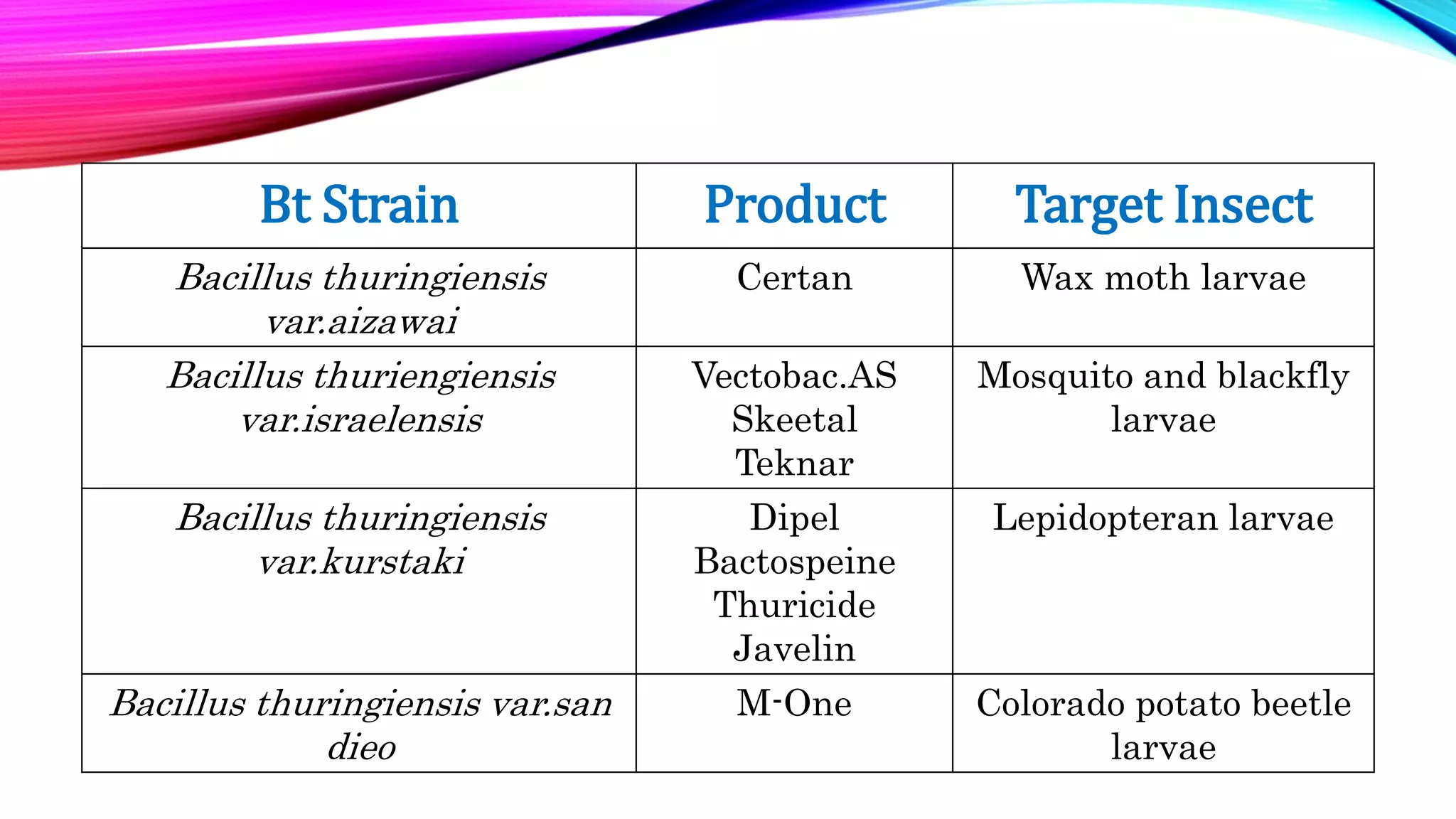
Bt Strain Product Target Insect
Bacillus thuringiensis
var.aizawai
Certan Wax moth larvae
Bacillus thuriengiensis
var.israelensis
Vectobac.AS
Skeetal
Teknar
Mosquito and blackfly
larvae
Bacillus thuringiensis
var.kurstaki
Dipel
Bactospeine
Thuricide
Javelin
Lepidopteran larvae
Bacillus thuringiensis var.san
dieo
M-One Colorado potato beetle
larvae
1 B.popilliae & B.lentimorbus
# Used to control coleoptera pest
# Commercial products of these species are DOOM and Milky spores
2 Agrobacterium radiobacter
# Used to control crown gall disease caused by A.tumefaciens
# A.radiobacter produces antimetabolite Agrocin which is toxic to
A.tumefaciens
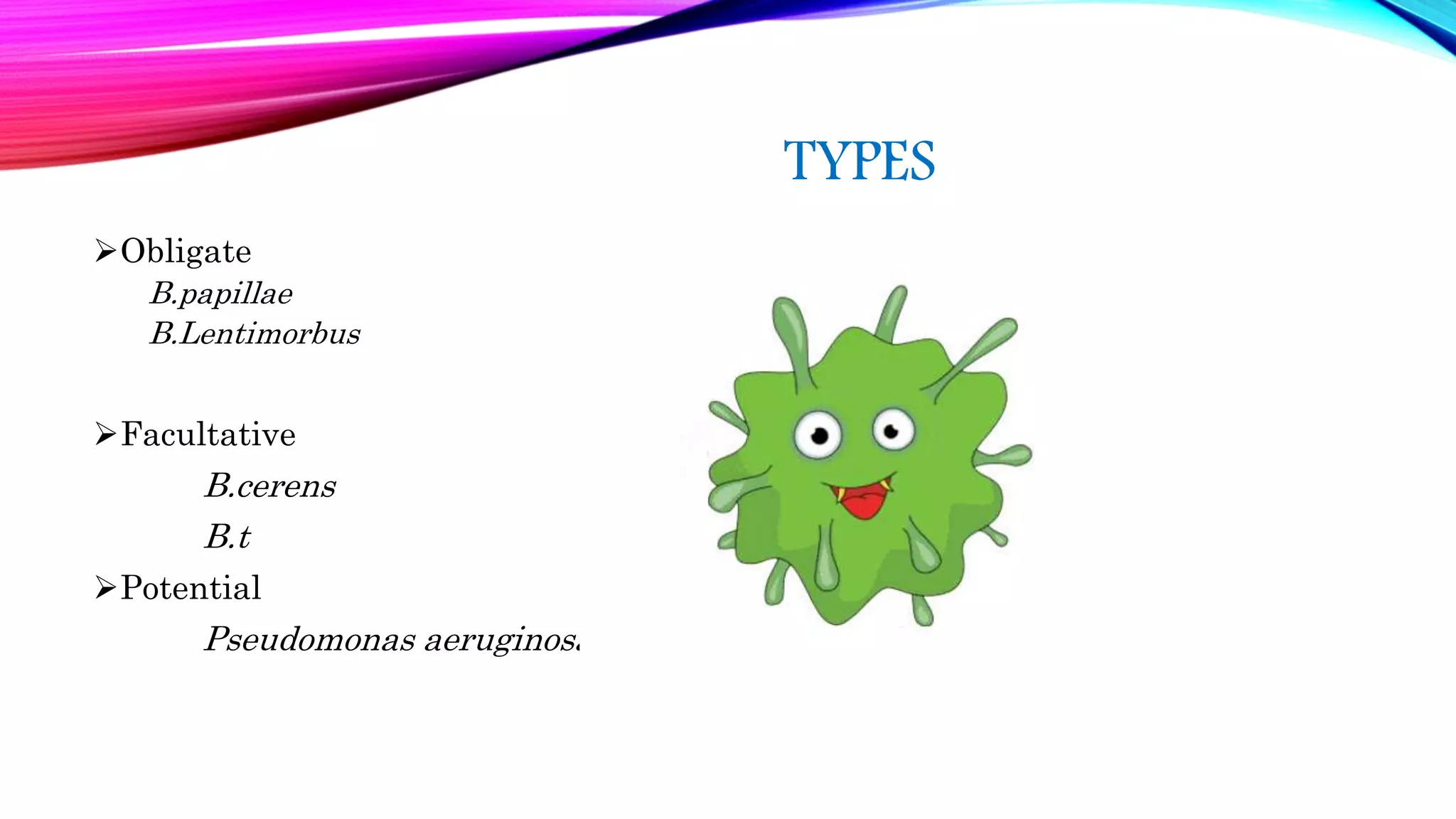
TYPES
Obligate
B.papillae
B.Lentimorbus
Facultative
B.cerens
B.t
Potential
Pseudomonas aeruginosa
HISTORY OF Bt
• Discovered in Japan in1901 by Ishiwata
• Officially described by Berliner in1915,isolated from meditrranean flour moth in
province of Thuringia in1911
• US production of a subspecies thuringiensis in late 1950’s
• Discovery of highly active subspecies kurstaki HD-1 by Dulmage 1960’s
• Commercial production 1970’s
• Discovery of mosquito,black fly active subspecies israelensis by Goldberg and
Margalit 1980s
• Discovery of beetle-active subspecies morrisoni by Krieg 1980
Bacillus thuringiensis Berlin
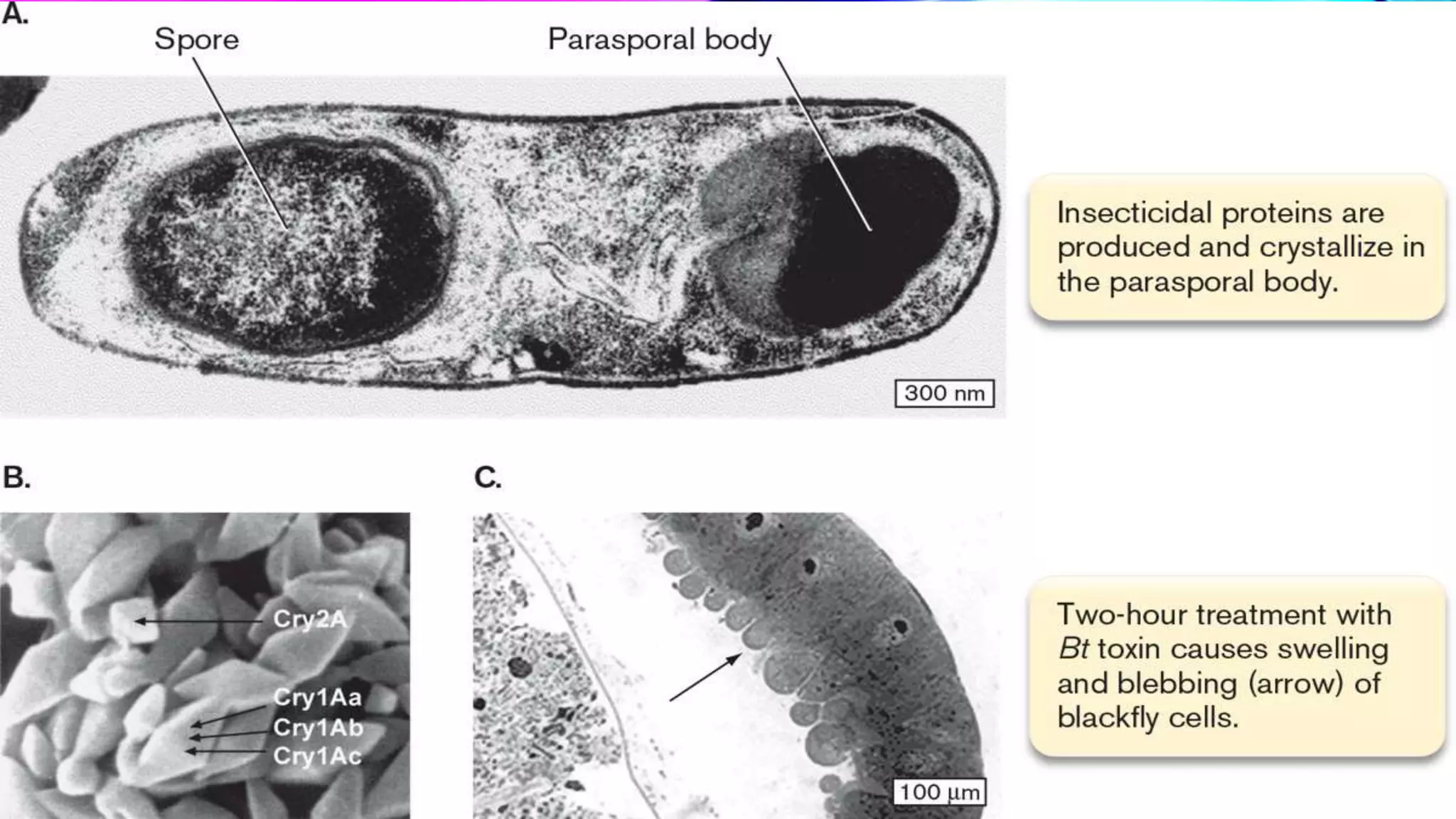
• Gram-positive , aerobic
• Parasporal body (Known as the crystal) that is proteinaceous and
posseses insecticidal properties
• The parasporal body comprises of crystals and tightly packed with
proteins called protocins or endotoxins
VARIOUS STRAINS OF B.thuringiensis
Strain/ Subsp Protein size Target insects Cry # Shape
Berliner 130-140 kDa Lepidoptera Cry1 Bipyramidal
Kurstaki
KTP,HD1
130-140 kDa Lepidoptera Cry 1 Bipyramidal
Entomocidus 6.01 130-140 kDa Lepidoptera Cry1 Bipyramidal
Aizawai 7.29 130-140 kDa Lepidoptera Cry 1 Bipyramidal
Aizawai IC1 135 kDa Lepidoptera,Diptera Cry2 Cuboidal
Kurstaki HD-1 71 kDa Lepidoptera,Diptera Cry2` cuboidal
Tenebrionis (sd) 66-73 kDa Coleoptera Cry3 Flat/irregular
Morrisoni PG14 125-145 kDa Diptera Cry4 Bipyramidal
Israelensis 68 kDa Diptera cry 4 Bipyramidal
MODE OF ACTION
• Three stages
1.Stage 1
Ingestion
2.Stage 2
Dissolution of protein crystals
3.Stage 3
Activation of protein
Binding to specific receptors of intestinal peritrophic membrane
Vacuolation of the cytoplasm cell disruption
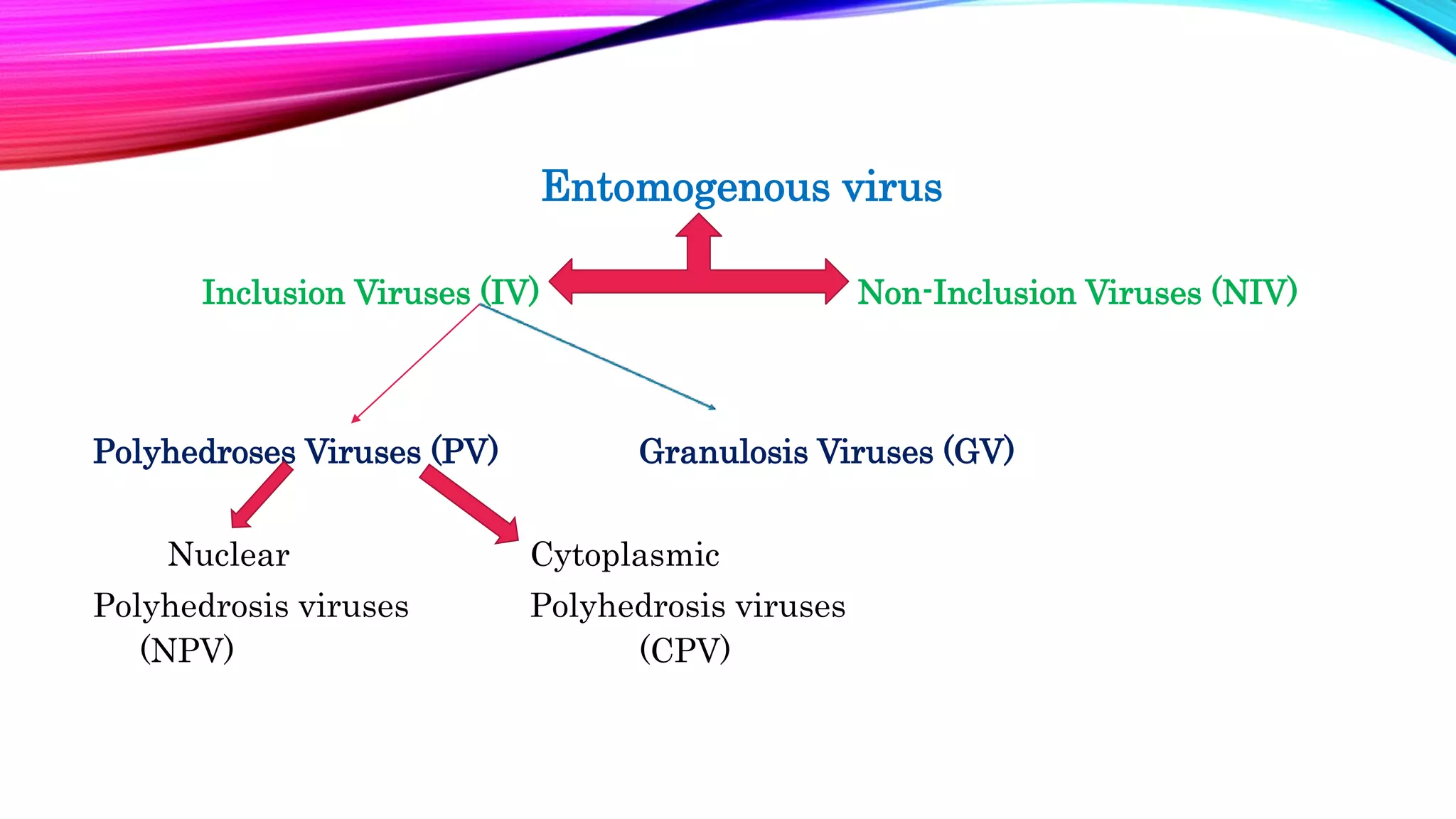
Entomogenous virus
Inclusion Viruses (IV) Non-Inclusion Viruses (NIV)
Polyhedroses Viruses (PV) Granulosis Viruses (GV)
Nuclear Cytoplasmic
Polyhedrosis viruses Polyhedrosis viruses
(NPV) (CPV)
• 3 are safe
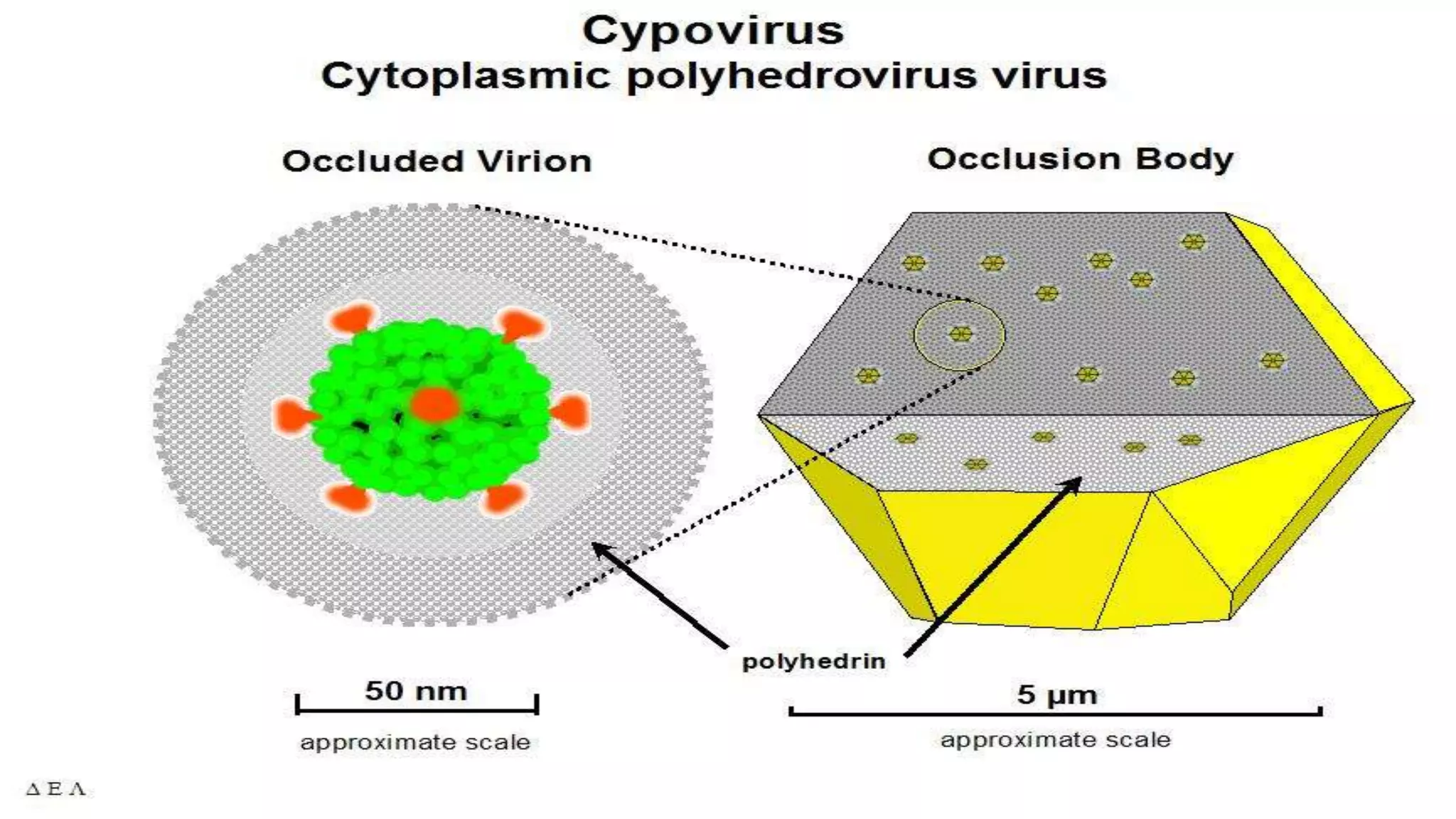
• Nuclear Polyhedrosis Virus (NPV)
• Cytoplasmic polyhedrosis virus (CPV)
• Granulosis virus (GV)
NPVs and GVs are widely used
Many highly specific entomopathogenic viruses are known, which generally
infect the insect in larval stage and act through ingestion.
Their action is not immediate, so the infected insects are still able to feed for some
time, causing further damage.
The most commonly used virus is the granulosis virus, active on Cydia pomonella
or the codling moth.
More than 400 insect species, mostly in the Lepidoptera and Hymenoptera have
been reported as host to Baculoviruses.
Introduction of NPV in European spruce sawfly population, reduced the sawfly
population and saved ‘Spruce forest’
Most studied viruses are of ‘Baculoviridae family’
BACULOVIRUSES
• Rod shaped DNA viruses
• Include NPV and GV
• Pathogenic for Lepidoptera (83%),Hymenoptera (10%) and Diptera (4%)
• Infection is by ingestion of food
MODE OF ACTION
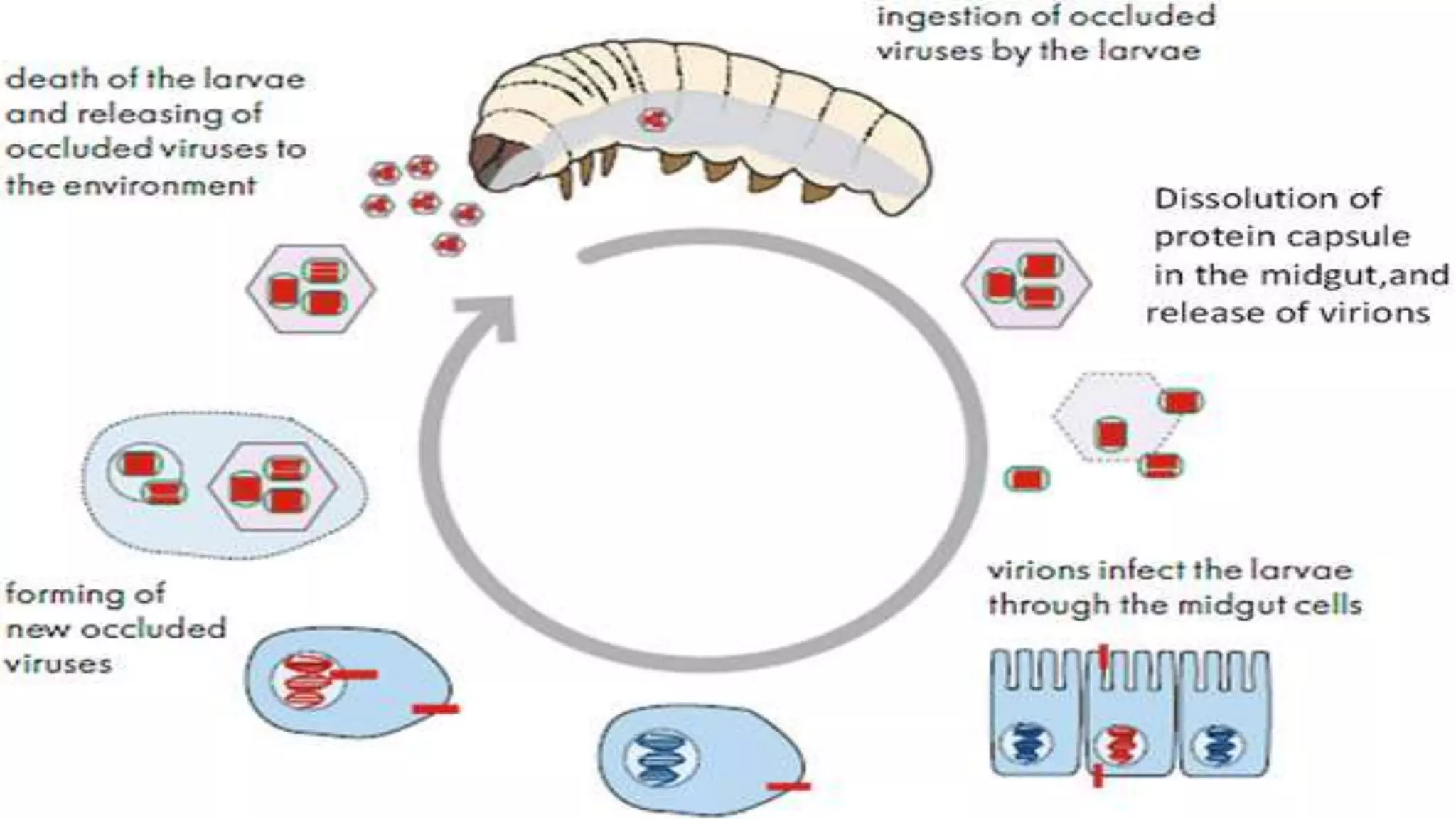
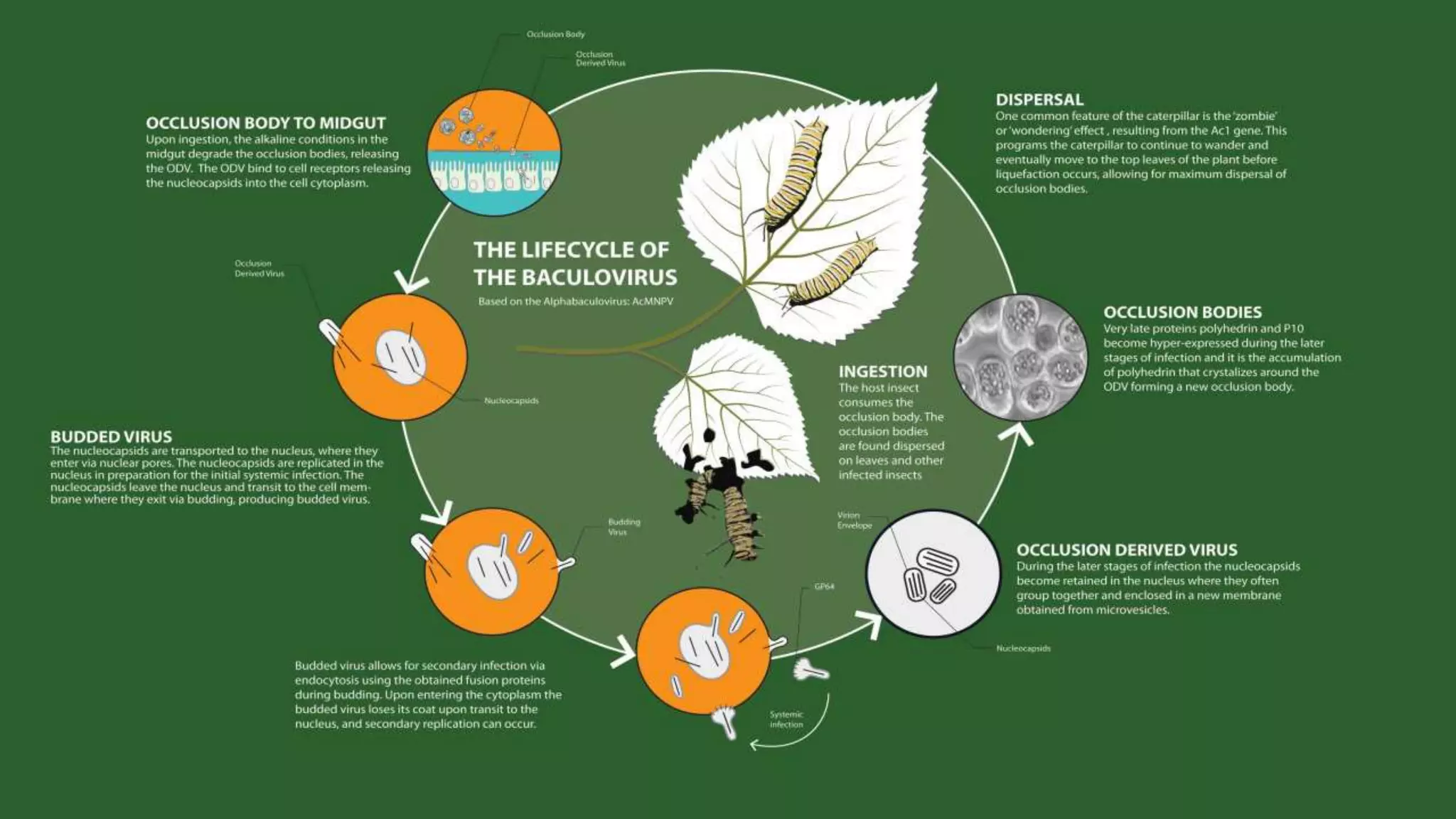
• Infection occurs when susceptible host eats polyhedral or granules which are
dissolved in the basic digestive gut juices.
• The virions are released when the protein matrices dissolve.
• The virus enter the nuclei of midgut cells and infect tissues and organs in the
insect.
GRANULOSIS VIRUS
• Develop either in the nucleus/cytoplasm/tracheal matrix/epithelial cells of host
• Virion are occluded singly in small inclusion bodies called Capsules
• Rod shaped virion ds DNA
• Oval occlusion bodies about 200 × 400 nm
• They enter through ingestion
• Fat body major organ invaded
• Diseased larvae is less active, flaccid, fragile ,wilted prone to rupture in later
stages, death in 6-20 days.
• Granulosis virus 3 major genetic types
1.Type 1 --- infects midgut cell and fat body cells
2.Type 2 --- parallels NPV infection
3.Type 3 --- infects only midgut tissues.
POLYHEDROSIS VIRUS
• They are known to infect 500 species of insects and are best known from the
Lepidoptera
• The virus particles of NPVs can be enveloped singly or in groups and are
occluded in protein bodies, polyhedral
• In India a number of companies, agricultural universities produce NPVs of
H.armigera, S.litura and supply commercially to farmers to control pests.
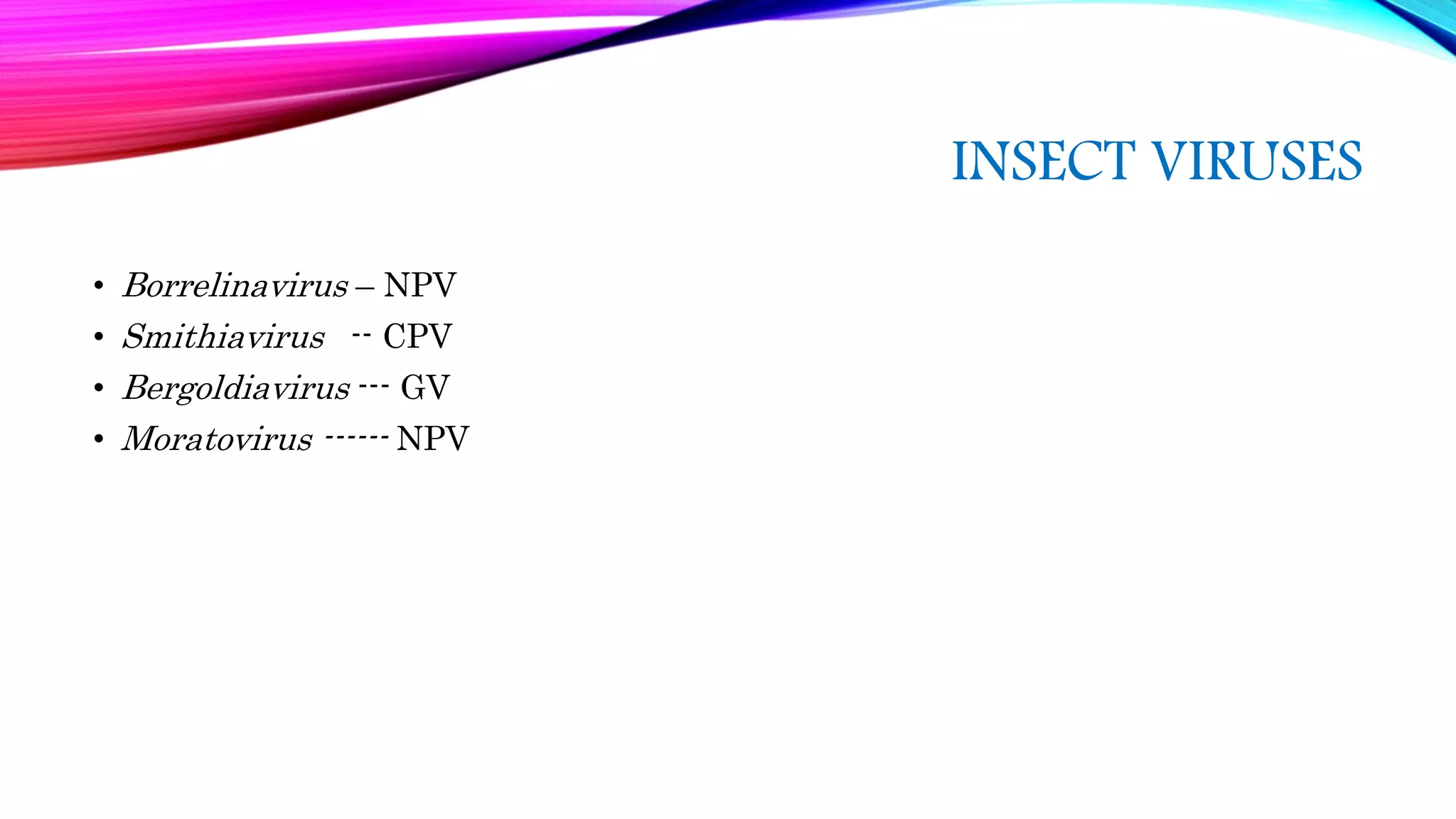
INSECT VIRUSES
• Borrelinavirus – NPV
• Smithiavirus -- CPV
• Bergoldiavirus --- GV
• Moratovirus ------ NPV
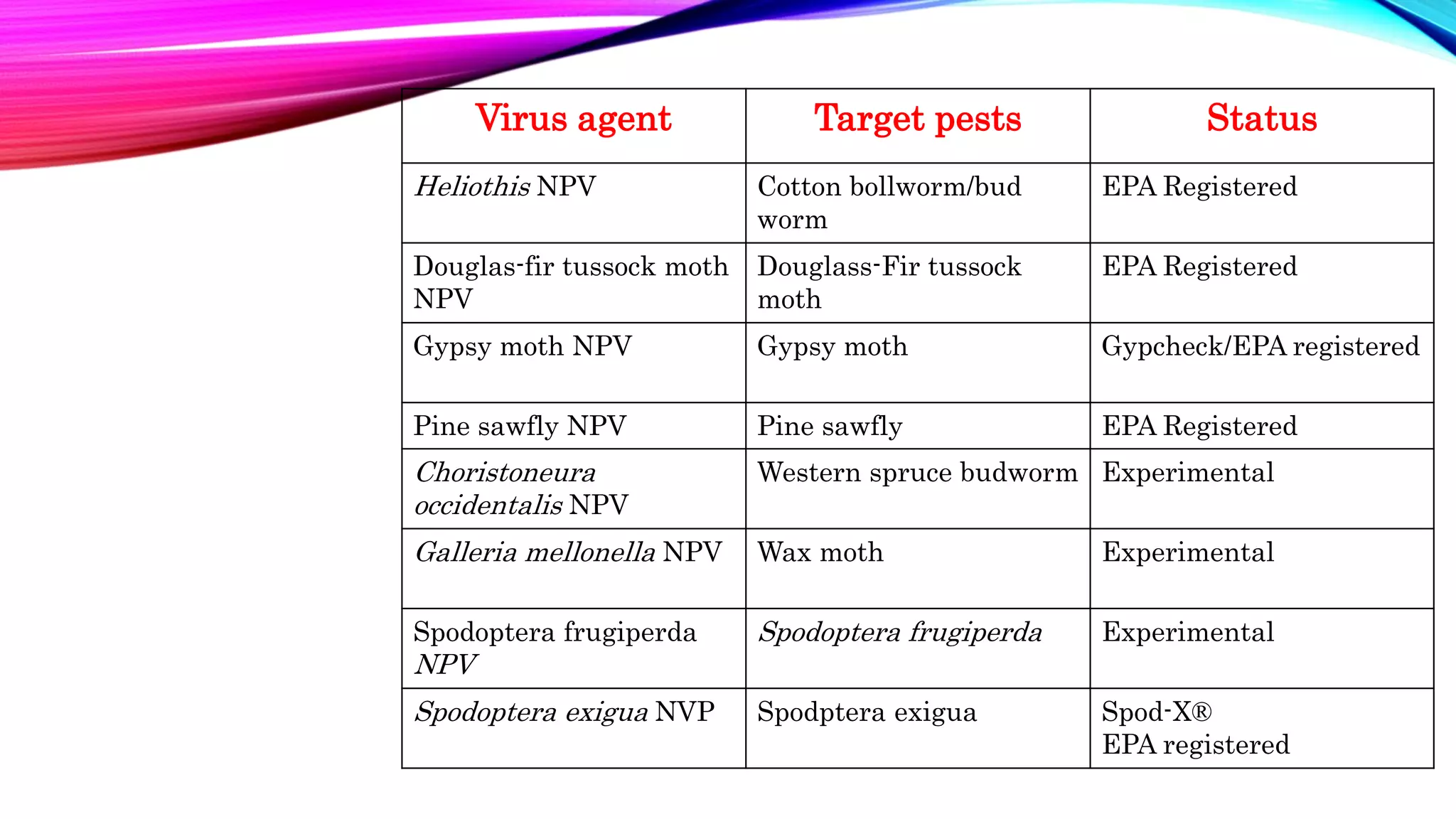
Virus agent Target pests Status
Heliothis NPV Cotton bollworm/bud
worm
EPA Registered
Douglas-fir tussock moth
NPV
Douglass-Fir tussock
moth
EPA Registered
Gypsy moth NPV Gypsy moth Gypcheck/EPA registered
Pine sawfly NPV Pine sawfly EPA Registered
Choristoneura
occidentalis NPV
Western spruce budworm Experimental
Galleria mellonella NPV Wax moth Experimental
Spodoptera frugiperda
NPV
Spodoptera frugiperda Experimental
Spodoptera exigua NVP Spodptera exigua Spod-X®
EPA registered
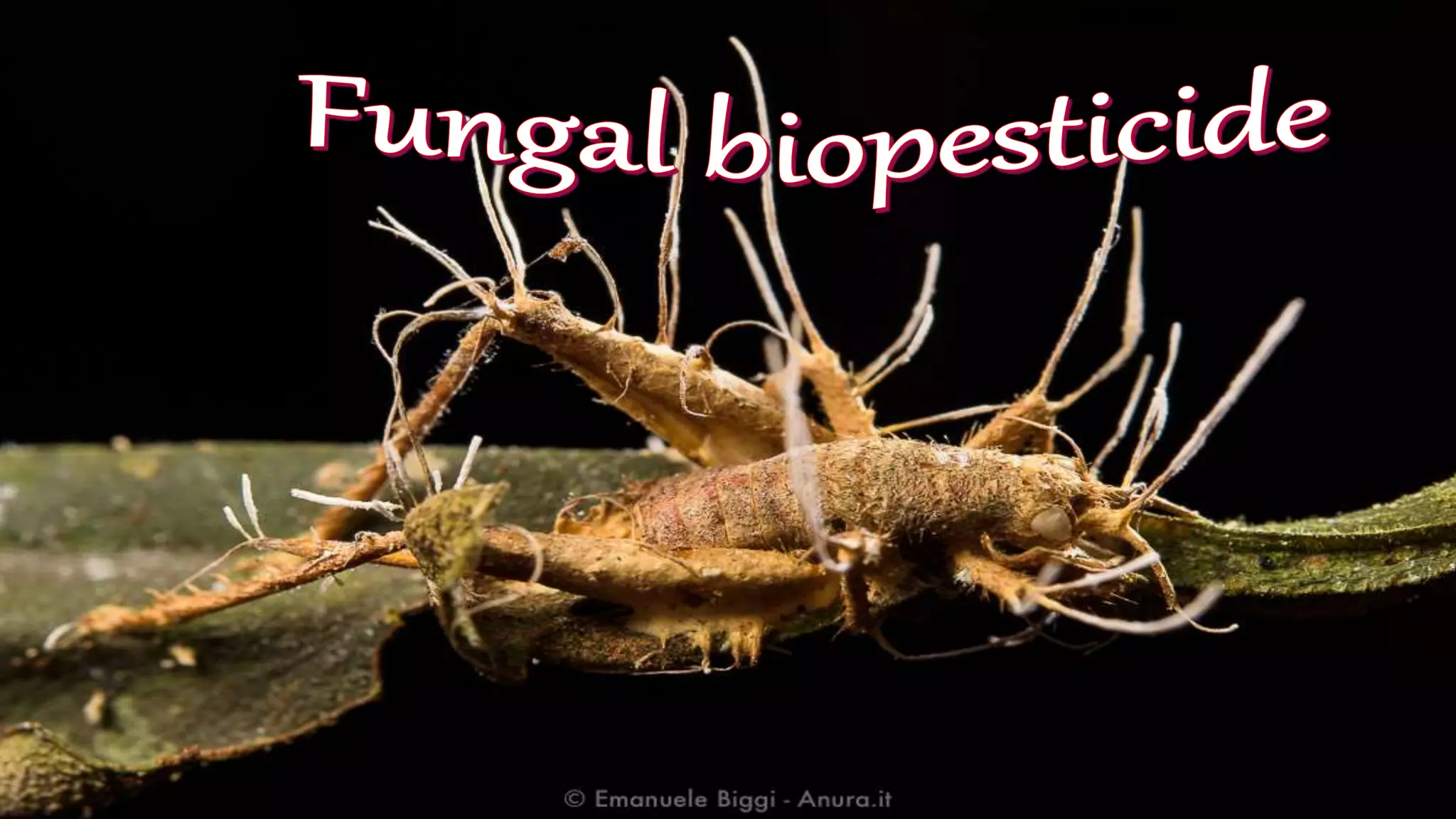
INTRODUCTION
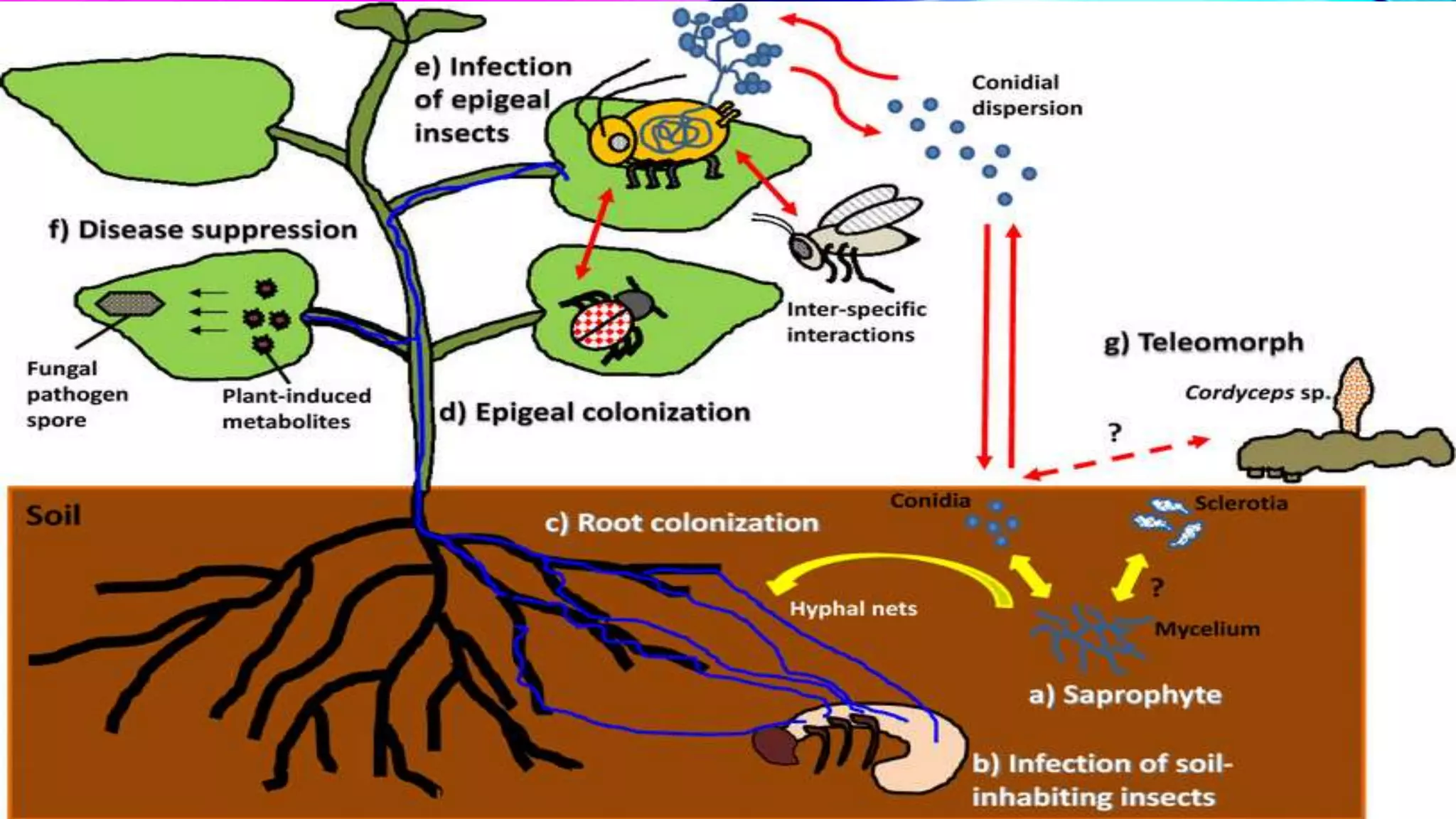
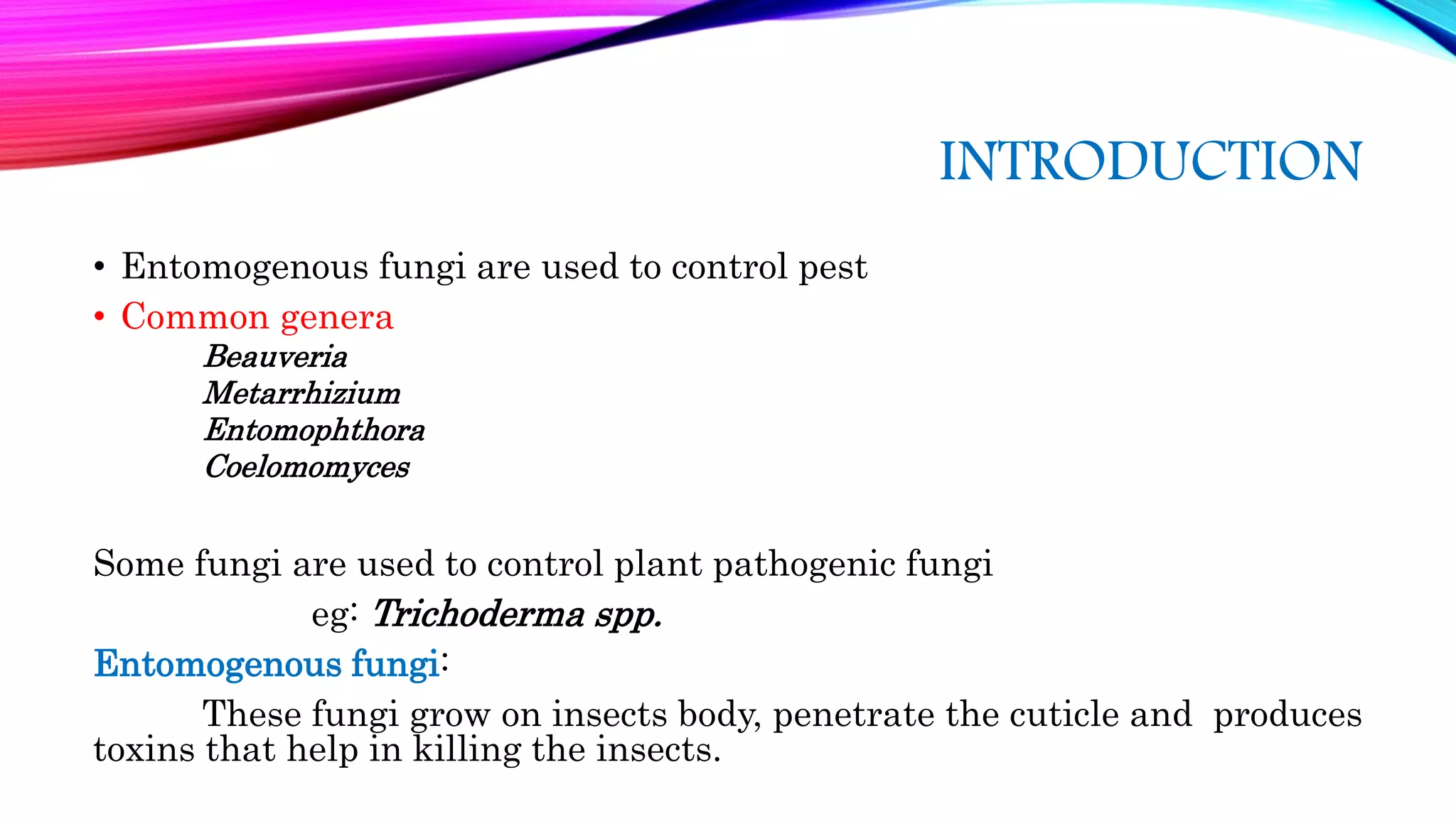
• Entomogenous fungi are used to control pest
• Common genera
Beauveria
Metarrhizium
Entomophthora
Coelomomyces
Some fungi are used to control plant pathogenic fungi
eg: Trichoderma spp.
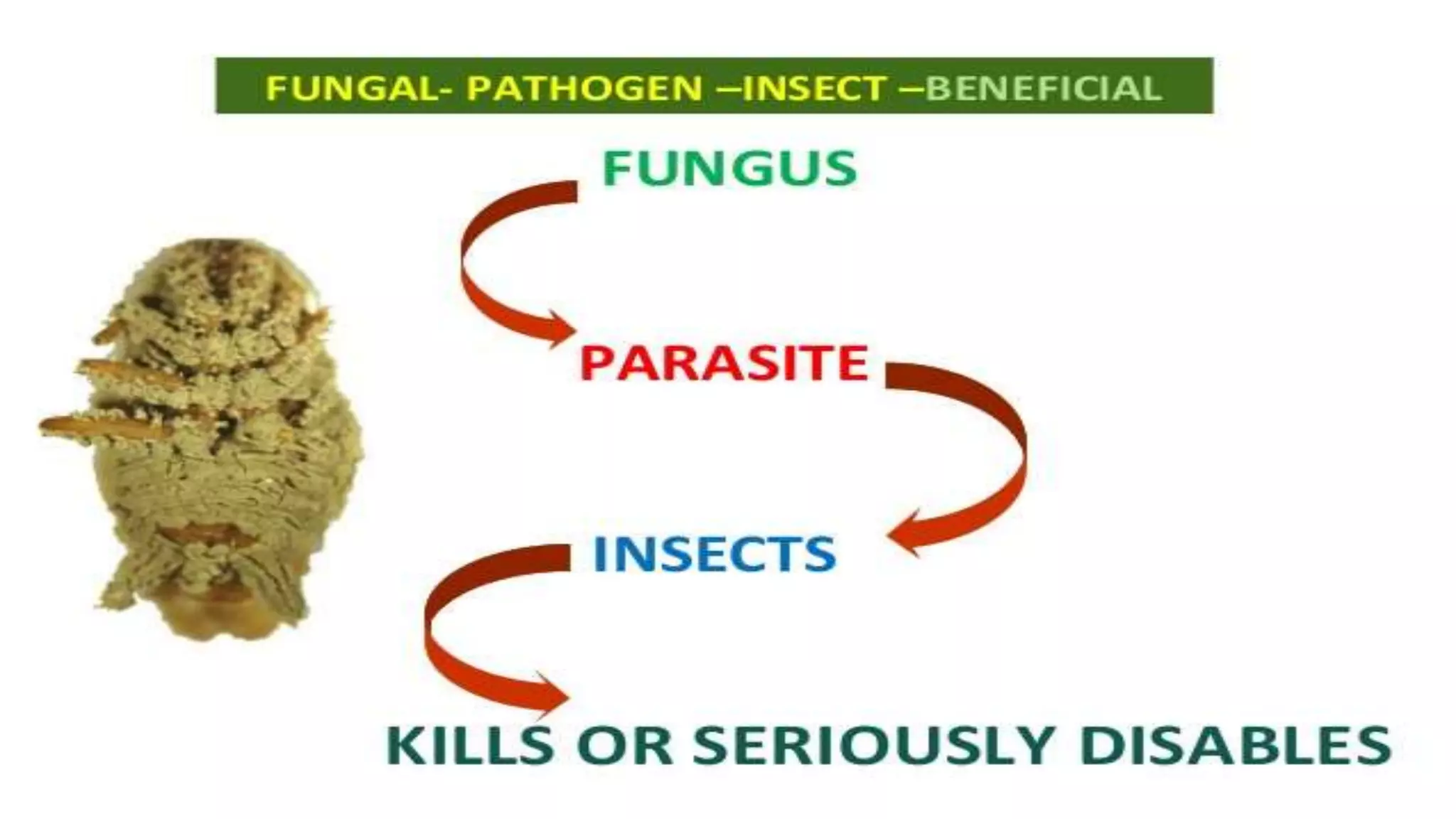
Entomogenous fungi:
These fungi grow on insects body, penetrate the cuticle and produces
toxins that help in killing the insects.
• 1.Trichoderma harzianum & T.hamatum
used to control soil borne pathogens Botrytis cinereal, Sclerotium
rolfsii, Rhizoctonia solani
Classes
Phycomycetes Ascomycetes Basidiomycetes Deuteromycetes
Coelomomycetes
Entomophthora
Massospora
Cordyceps Septobsidium Beauveria
Metarrhizium
Aspergillus
Spicara
Hiirssutella
Isara
Paecilomyces
• The more potent fungi that can be used belong to the class Fungi
imperfecti (Beauveria metarrhizium)
• They are internal parasites of insects and reproduces by conidia
• Different tissues and organs are not attacked simultaneously
• Some fungi confine themselves to blood, others can penetrate tissues like
muscles, trachea, gut fat body etc..
MODE OF ACTION
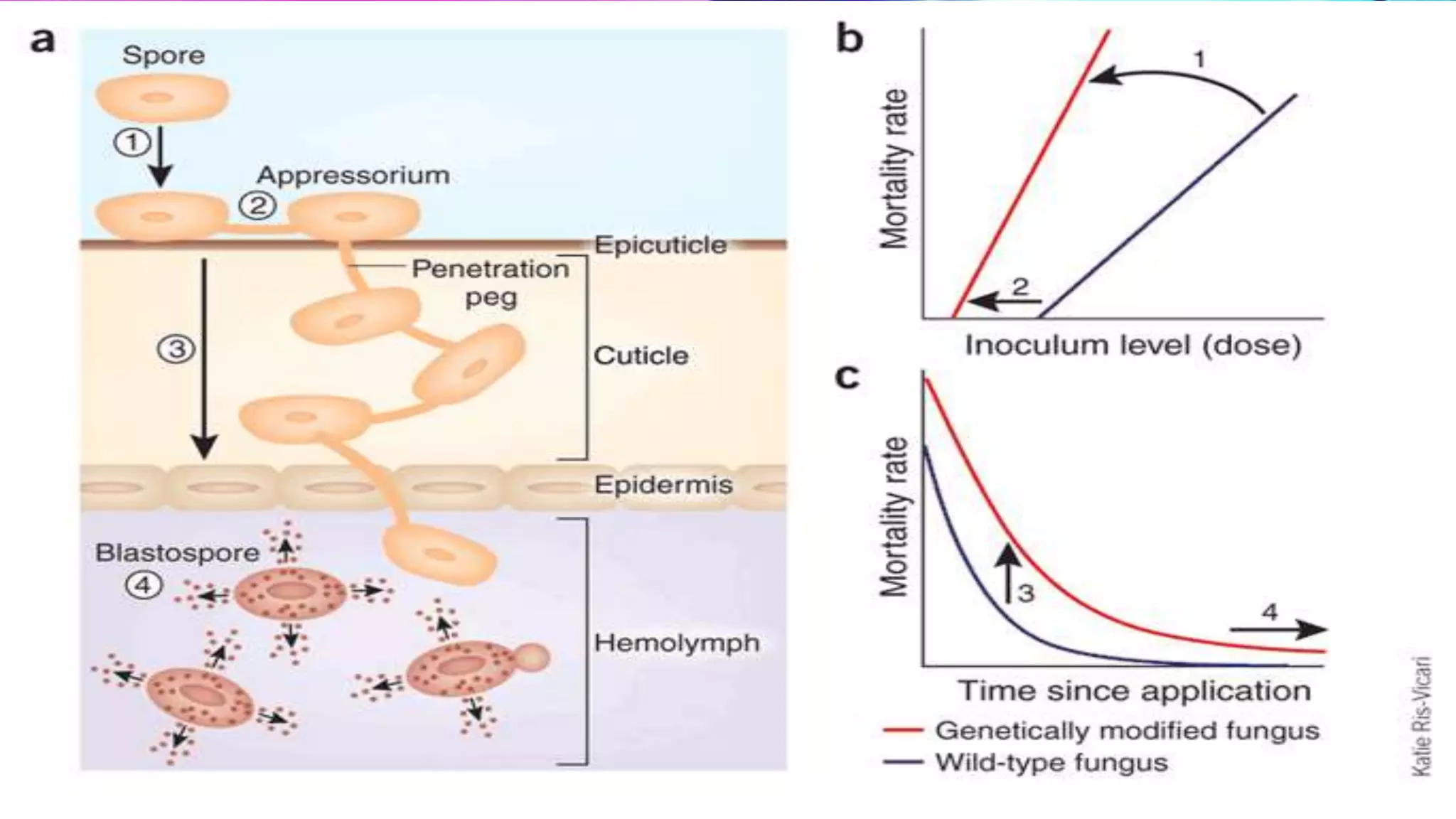
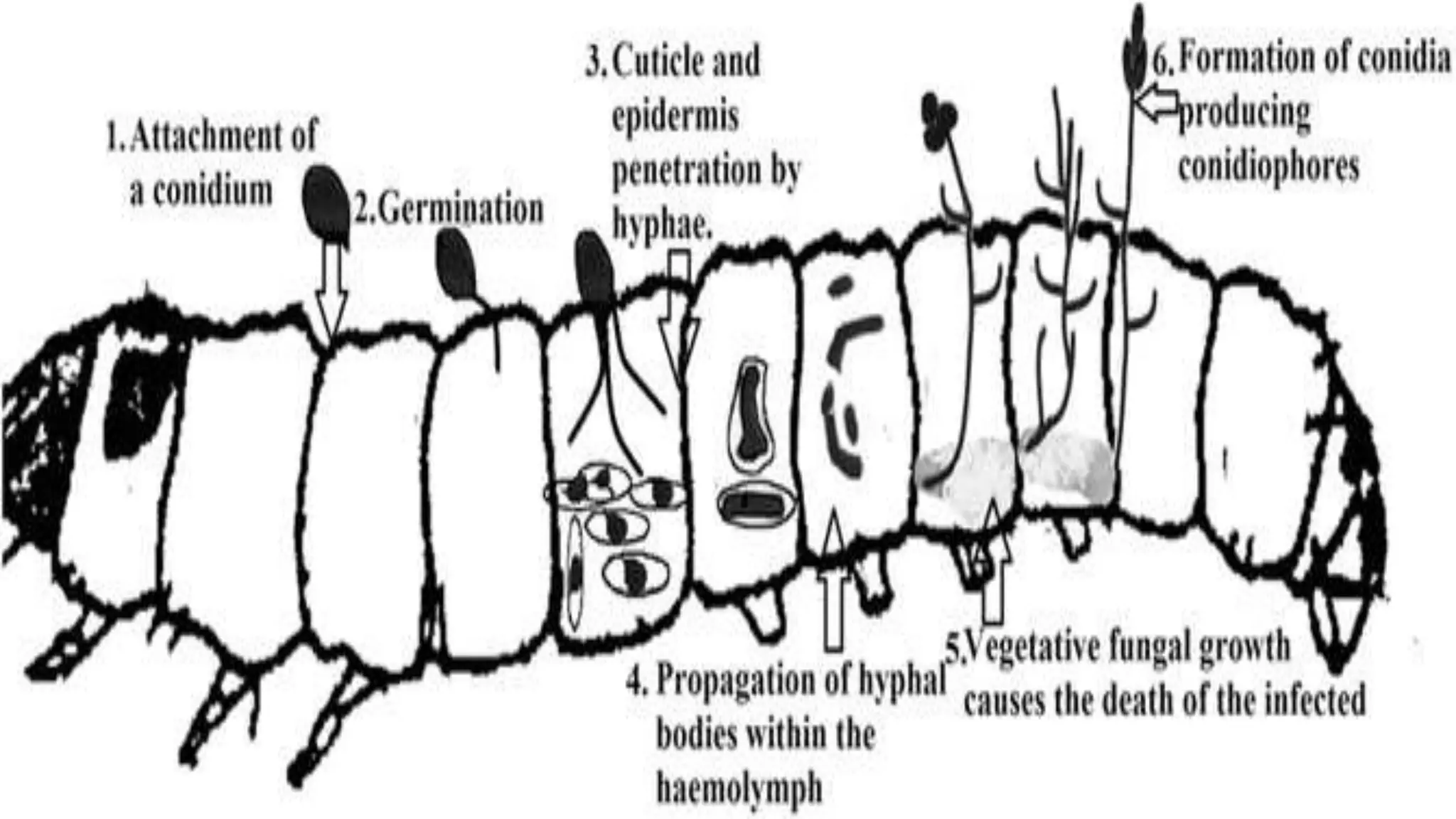
• Most common portal entry is through the integument through invasion via
respiratory or alimentary tract.
• The infective unit is a spore, conidium
• Conidium germinates into a short germ tube which gives out small swellings,
appressoria
• This attaches to the cuticle and sends an infection peg
• Hyphae penetrate the layers and enter to various organs
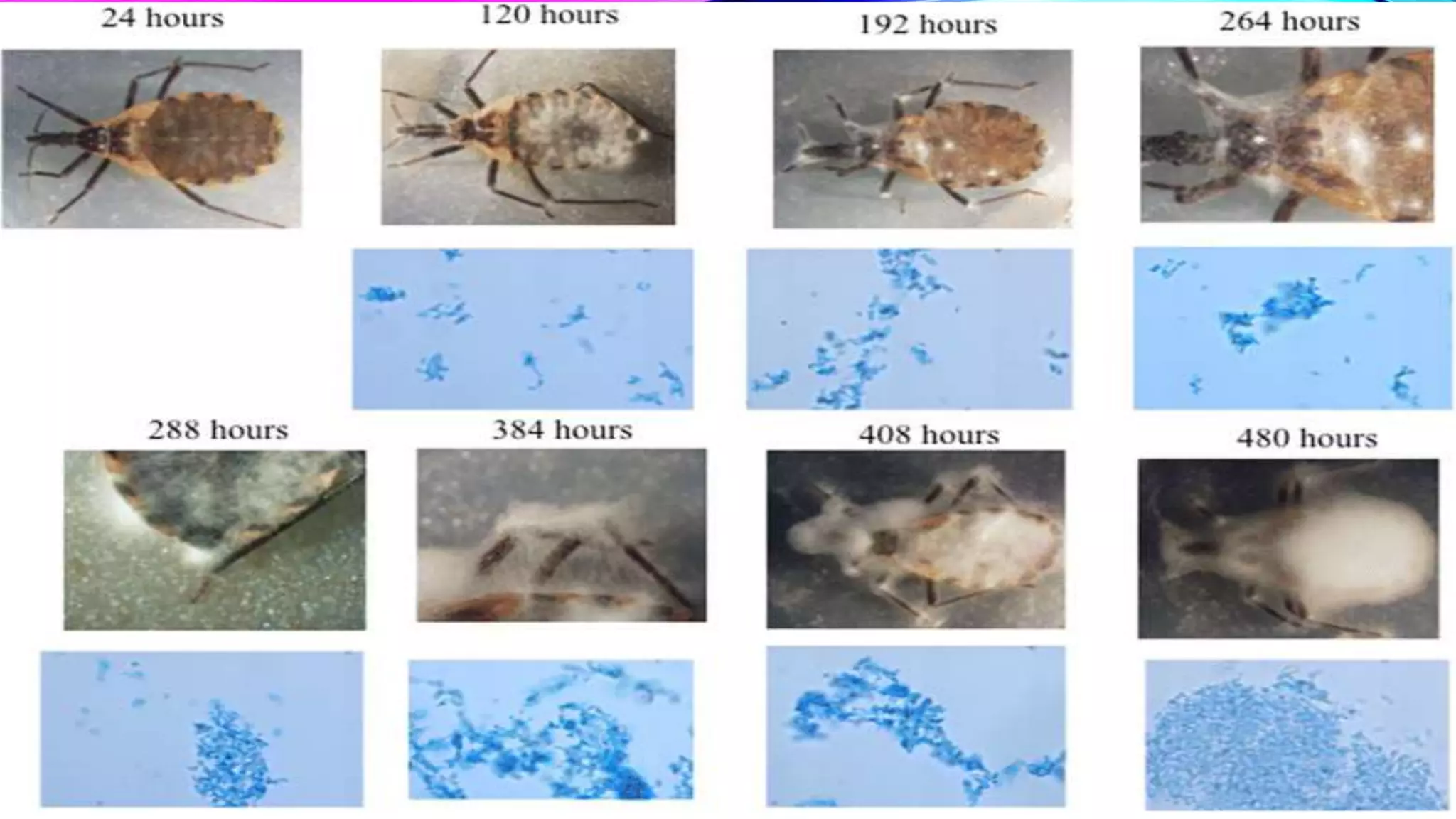
SYMPTOMS
• o Loss of appetite
• o Partial paralysis
• o Discoloured patches on integument
• o Body hardens
• o Death occurs within a week or even within 24 hours.
HOST RANGE
• Lepidoptera (larvae)
• Homoptera (aphids, cicadas, scale insects)
• Hymenoptera (bees)
• Coleoptera (beetles)
• Diptera
Fungal Target Target pests Commercial
name/status
Aschersonia aleyrodis White flies/scale insects Experimental
Beauveria bassiana Colorado potato beetle,
White flies, Aphids,
grasshoppers,
Locusts,Cotton boll worms
Boverin® (Russia)
Myocotrol® WP (USA)
Myocotrol® GH-ES (USA)
Botanigard® (USA)
Beauveria brogniarti Cockchafer Experimental
Culicinomyces clavisporus Mosquito larva Experimental
Hirsutella sphaerospora Mealy bug Experimental
Laegenidium giganteum Mosquito larvae EPA Registered
Metarhizium anisopliae Cockroaches ,
Termites,Sugarcanepyrilla,
Rhinoceros beetle
Biopath®
Bioblast®
Bio Green® (Australia
Verticillium lecanii Whiteflies , Aphids Vertalec®, Mycotal®
Fungi Target pest
Paecilomyces fumosoroseus Lepidoptera ,Thysanoptera
Pondora delphacis BPH,GLh of rice
Hirsutella thompsoni Phytophagous mites (Eriophyid mites)
Nomouraea lecanii H.armigera,Achae Janata,S.litura
ENTOMOPATHOGENIC NEMATODES
eg:Steinernema feltiae --- for soil dwelling and boring insects ---
commercial product – Biosafe and Ecomask
S.Scapterisci---- Late nymph and adult stage crickets --- Nematic
nematodes parasitize their host by directly penetrating the cuticle
through natural opening. Within 48 hrs breakdown the insect body.
PROTOZOAN INSECTICIDE
• Effective against grasshopper, mosquitoes, ball weevils
• Nosema locustae --- to control grasshopper, commercial product – NOLO
bait
• Vairimorpha necatrix ---- lepidopteran pest control
ACTINOMYCETES
• Large group of gram positive bacteria that grow as hyphae like fungi
• Mortality is due to secretion of bioactive materials which stimulate GABA
system or disruption of nicotinic acetylcholine receptors
ADVANTAGES
• Nontoxic and Nonpathogenic to organisms not closely related to the target pest.
• Specific to a single group or species of insects
• No residual toxicity
• Most microbial insecticides can be used in conjunction with synthetic chemical
insecticides
• Can also applied at harvest stage
• These are ecofriendly, and biodegradable
• Cost effective
• The pathogenic microorganisms can become established in a pest population
DISADVANTAGES
• No immediate action
• Only effective to a specific group of insects
• If the other species may present they may continue to cause damage
• Get deactivated due to heat or UV exposure
• Time required for high production
REFERENCES
• Elements of Economic entomology – 8th edition
B.Vasantharaj David &
V V Ramamurthy,
Brillion publication
• Entomology and Pest management
Larry P Pedigo
• Elements of Entomology
DR. Rajendra singh and
DR G C Sachan
Microbial control - insect- pest control

Microbial control - insect- pest control

  • 2.
    INTRODUCTION • Pest iscompetitor of humanity – broadest sense • Major pest control method is chemical, but the xenobiotics adverse effect on non- target organisms, and also it leas to new bio type pest resistant against pesticide. • IPM (integrated pest management or integrated pest control) : is broad based approach practices for economic control of pest.
  • 3.
    INTEGRATED PEST MANAGEMENT (IPM) IPMaims to suppress pest population below the economic injury level (EIL). UN’s food & agriculture organization IPM as “the careful consideration of all available pest control techniques & subsequent integration of appropriate measure that discourage the developmental pest populations & keep pesticide & other interventions to levels that are economically justified & reduce or minimize risks to human health & environment”.
  • 4.
    PEST CONTROL • Anyfactors that is capable of making life hard for pest that will kill, repel or interfere with its feeding, mating, reproduction or dispersal can be taken as a method of pest control in its broadest application. • Natural control 1.Climatic factors 2.Topographic factors 3.Natural enemies • Applied or artificial control
  • 5.
    MICROBIAL CONTROL • Microbialinsecticides: Single cell organisms, such as bacteria, fungi, Protozoa and viruses have been mass produced & formulated for use in a manner similar to insecticides. Product containing these organisms are regulated by the environmental protection agency (EPA) & use is governed by the Federal insecticide, fungicide & Rodenticide Act (FIFRA).
  • 6.
    BIOLOGICAL CONTROL THROUGH INSECTDISEASES • There are two aspects to the economic problems caused by insects or pests 1. loss of productions that results from damage to crops and to the health of humans and domestic animals 2.cost of attempts to prevents or control such production losses Employment of microorganisms capable causing diseases in another means of fighting crop pests.
  • 8.
    CHARACTERS OF MICROBIAL PESTICIDES •Should be virulent & cause disease to pest at recommended concentration • Should not be sensitive to moderate environmental variations • Should rapidly establish disease in pest • Specific to pest population so as not to cause harm in non –target population.
  • 9.
  • 10.
    BACTERIAL PESTICIDE 1.Bacillus thuringiensis(Bt) Control lepidopteran pest 2.Serratia marcescens Bizio non-sporing type and has been found to be useful against lepidopteran pest 3.Coccobacillus acridiorum Herelle against Grasshopper pest in part of Africa
  • 11.
    Bt Strain ProductTarget Insect Bacillus thuringiensis var.aizawai Certan Wax moth larvae Bacillus thuriengiensis var.israelensis Vectobac.AS Skeetal Teknar Mosquito and blackfly larvae Bacillus thuringiensis var.kurstaki Dipel Bactospeine Thuricide Javelin Lepidopteran larvae Bacillus thuringiensis var.san dieo M-One Colorado potato beetle larvae
  • 12.
    1 B.popilliae &B.lentimorbus # Used to control coleoptera pest # Commercial products of these species are DOOM and Milky spores 2 Agrobacterium radiobacter # Used to control crown gall disease caused by A.tumefaciens # A.radiobacter produces antimetabolite Agrocin which is toxic to A.tumefaciens
  • 13.
  • 14.
    HISTORY OF Bt •Discovered in Japan in1901 by Ishiwata • Officially described by Berliner in1915,isolated from meditrranean flour moth in province of Thuringia in1911 • US production of a subspecies thuringiensis in late 1950’s • Discovery of highly active subspecies kurstaki HD-1 by Dulmage 1960’s • Commercial production 1970’s • Discovery of mosquito,black fly active subspecies israelensis by Goldberg and Margalit 1980s • Discovery of beetle-active subspecies morrisoni by Krieg 1980
  • 15.
    Bacillus thuringiensis Berlin •Gram-positive , aerobic • Parasporal body (Known as the crystal) that is proteinaceous and posseses insecticidal properties • The parasporal body comprises of crystals and tightly packed with proteins called protocins or endotoxins
  • 17.
    VARIOUS STRAINS OFB.thuringiensis Strain/ Subsp Protein size Target insects Cry # Shape Berliner 130-140 kDa Lepidoptera Cry1 Bipyramidal Kurstaki KTP,HD1 130-140 kDa Lepidoptera Cry 1 Bipyramidal Entomocidus 6.01 130-140 kDa Lepidoptera Cry1 Bipyramidal Aizawai 7.29 130-140 kDa Lepidoptera Cry 1 Bipyramidal Aizawai IC1 135 kDa Lepidoptera,Diptera Cry2 Cuboidal Kurstaki HD-1 71 kDa Lepidoptera,Diptera Cry2` cuboidal Tenebrionis (sd) 66-73 kDa Coleoptera Cry3 Flat/irregular Morrisoni PG14 125-145 kDa Diptera Cry4 Bipyramidal Israelensis 68 kDa Diptera cry 4 Bipyramidal
  • 18.
    MODE OF ACTION •Three stages 1.Stage 1 Ingestion 2.Stage 2 Dissolution of protein crystals 3.Stage 3 Activation of protein Binding to specific receptors of intestinal peritrophic membrane Vacuolation of the cytoplasm cell disruption
  • 22.
    Entomogenous virus Inclusion Viruses(IV) Non-Inclusion Viruses (NIV) Polyhedroses Viruses (PV) Granulosis Viruses (GV) Nuclear Cytoplasmic Polyhedrosis viruses Polyhedrosis viruses (NPV) (CPV)
  • 24.
    • 3 aresafe • Nuclear Polyhedrosis Virus (NPV) • Cytoplasmic polyhedrosis virus (CPV) • Granulosis virus (GV) NPVs and GVs are widely used Many highly specific entomopathogenic viruses are known, which generally infect the insect in larval stage and act through ingestion.
  • 25.
    Their action isnot immediate, so the infected insects are still able to feed for some time, causing further damage. The most commonly used virus is the granulosis virus, active on Cydia pomonella or the codling moth. More than 400 insect species, mostly in the Lepidoptera and Hymenoptera have been reported as host to Baculoviruses. Introduction of NPV in European spruce sawfly population, reduced the sawfly population and saved ‘Spruce forest’ Most studied viruses are of ‘Baculoviridae family’
  • 26.
    BACULOVIRUSES • Rod shapedDNA viruses • Include NPV and GV • Pathogenic for Lepidoptera (83%),Hymenoptera (10%) and Diptera (4%) • Infection is by ingestion of food
  • 28.
    MODE OF ACTION •Infection occurs when susceptible host eats polyhedral or granules which are dissolved in the basic digestive gut juices. • The virions are released when the protein matrices dissolve. • The virus enter the nuclei of midgut cells and infect tissues and organs in the insect.
  • 30.
    GRANULOSIS VIRUS • Developeither in the nucleus/cytoplasm/tracheal matrix/epithelial cells of host • Virion are occluded singly in small inclusion bodies called Capsules • Rod shaped virion ds DNA • Oval occlusion bodies about 200 × 400 nm • They enter through ingestion • Fat body major organ invaded • Diseased larvae is less active, flaccid, fragile ,wilted prone to rupture in later stages, death in 6-20 days.
  • 31.
    • Granulosis virus3 major genetic types 1.Type 1 --- infects midgut cell and fat body cells 2.Type 2 --- parallels NPV infection 3.Type 3 --- infects only midgut tissues.
  • 32.
    POLYHEDROSIS VIRUS • Theyare known to infect 500 species of insects and are best known from the Lepidoptera • The virus particles of NPVs can be enveloped singly or in groups and are occluded in protein bodies, polyhedral • In India a number of companies, agricultural universities produce NPVs of H.armigera, S.litura and supply commercially to farmers to control pests.
  • 34.
    INSECT VIRUSES • Borrelinavirus– NPV • Smithiavirus -- CPV • Bergoldiavirus --- GV • Moratovirus ------ NPV
  • 35.
    Virus agent Targetpests Status Heliothis NPV Cotton bollworm/bud worm EPA Registered Douglas-fir tussock moth NPV Douglass-Fir tussock moth EPA Registered Gypsy moth NPV Gypsy moth Gypcheck/EPA registered Pine sawfly NPV Pine sawfly EPA Registered Choristoneura occidentalis NPV Western spruce budworm Experimental Galleria mellonella NPV Wax moth Experimental Spodoptera frugiperda NPV Spodoptera frugiperda Experimental Spodoptera exigua NVP Spodptera exigua Spod-X® EPA registered
  • 39.
    INTRODUCTION • Entomogenous fungiare used to control pest • Common genera Beauveria Metarrhizium Entomophthora Coelomomyces Some fungi are used to control plant pathogenic fungi eg: Trichoderma spp. Entomogenous fungi: These fungi grow on insects body, penetrate the cuticle and produces toxins that help in killing the insects.
  • 40.
    • 1.Trichoderma harzianum& T.hamatum used to control soil borne pathogens Botrytis cinereal, Sclerotium rolfsii, Rhizoctonia solani
  • 42.
    Classes Phycomycetes Ascomycetes BasidiomycetesDeuteromycetes Coelomomycetes Entomophthora Massospora Cordyceps Septobsidium Beauveria Metarrhizium Aspergillus Spicara Hiirssutella Isara Paecilomyces
  • 43.
    • The morepotent fungi that can be used belong to the class Fungi imperfecti (Beauveria metarrhizium) • They are internal parasites of insects and reproduces by conidia • Different tissues and organs are not attacked simultaneously • Some fungi confine themselves to blood, others can penetrate tissues like muscles, trachea, gut fat body etc..
  • 44.
    MODE OF ACTION •Most common portal entry is through the integument through invasion via respiratory or alimentary tract. • The infective unit is a spore, conidium • Conidium germinates into a short germ tube which gives out small swellings, appressoria • This attaches to the cuticle and sends an infection peg • Hyphae penetrate the layers and enter to various organs
  • 46.
    SYMPTOMS • o Lossof appetite • o Partial paralysis • o Discoloured patches on integument • o Body hardens • o Death occurs within a week or even within 24 hours.
  • 48.
    HOST RANGE • Lepidoptera(larvae) • Homoptera (aphids, cicadas, scale insects) • Hymenoptera (bees) • Coleoptera (beetles) • Diptera
  • 50.
    Fungal Target Targetpests Commercial name/status Aschersonia aleyrodis White flies/scale insects Experimental Beauveria bassiana Colorado potato beetle, White flies, Aphids, grasshoppers, Locusts,Cotton boll worms Boverin® (Russia) Myocotrol® WP (USA) Myocotrol® GH-ES (USA) Botanigard® (USA) Beauveria brogniarti Cockchafer Experimental Culicinomyces clavisporus Mosquito larva Experimental Hirsutella sphaerospora Mealy bug Experimental Laegenidium giganteum Mosquito larvae EPA Registered Metarhizium anisopliae Cockroaches , Termites,Sugarcanepyrilla, Rhinoceros beetle Biopath® Bioblast® Bio Green® (Australia Verticillium lecanii Whiteflies , Aphids Vertalec®, Mycotal®
  • 51.
    Fungi Target pest Paecilomycesfumosoroseus Lepidoptera ,Thysanoptera Pondora delphacis BPH,GLh of rice Hirsutella thompsoni Phytophagous mites (Eriophyid mites) Nomouraea lecanii H.armigera,Achae Janata,S.litura
  • 53.
    ENTOMOPATHOGENIC NEMATODES eg:Steinernema feltiae--- for soil dwelling and boring insects --- commercial product – Biosafe and Ecomask S.Scapterisci---- Late nymph and adult stage crickets --- Nematic nematodes parasitize their host by directly penetrating the cuticle through natural opening. Within 48 hrs breakdown the insect body.
  • 54.
    PROTOZOAN INSECTICIDE • Effectiveagainst grasshopper, mosquitoes, ball weevils • Nosema locustae --- to control grasshopper, commercial product – NOLO bait • Vairimorpha necatrix ---- lepidopteran pest control
  • 55.
    ACTINOMYCETES • Large groupof gram positive bacteria that grow as hyphae like fungi • Mortality is due to secretion of bioactive materials which stimulate GABA system or disruption of nicotinic acetylcholine receptors
  • 56.
    ADVANTAGES • Nontoxic andNonpathogenic to organisms not closely related to the target pest. • Specific to a single group or species of insects • No residual toxicity • Most microbial insecticides can be used in conjunction with synthetic chemical insecticides • Can also applied at harvest stage • These are ecofriendly, and biodegradable • Cost effective • The pathogenic microorganisms can become established in a pest population
  • 57.
    DISADVANTAGES • No immediateaction • Only effective to a specific group of insects • If the other species may present they may continue to cause damage • Get deactivated due to heat or UV exposure • Time required for high production
  • 58.
    REFERENCES • Elements ofEconomic entomology – 8th edition B.Vasantharaj David & V V Ramamurthy, Brillion publication • Entomology and Pest management Larry P Pedigo • Elements of Entomology DR. Rajendra singh and DR G C Sachan