CLINICAL PRACTICE
CommunityAcquired
Pneumonia
NEJM 2014;370:543-51.
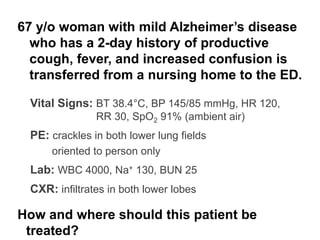
67 y/o woman with mild Alzheimer’s disease
who has a 2-day history of productive
cough, fever, and increased confusion is
transferred from a nursing home to the ED.
Vital Signs: BT 38.4°C, BP 145/85 mmHg, HR 120,
RR 30, SpO2 91% (ambient air)

PE: crackles in both lower lung fields
oriented to person only

Lab: WBC 4000, Na+ 130, BUN 25
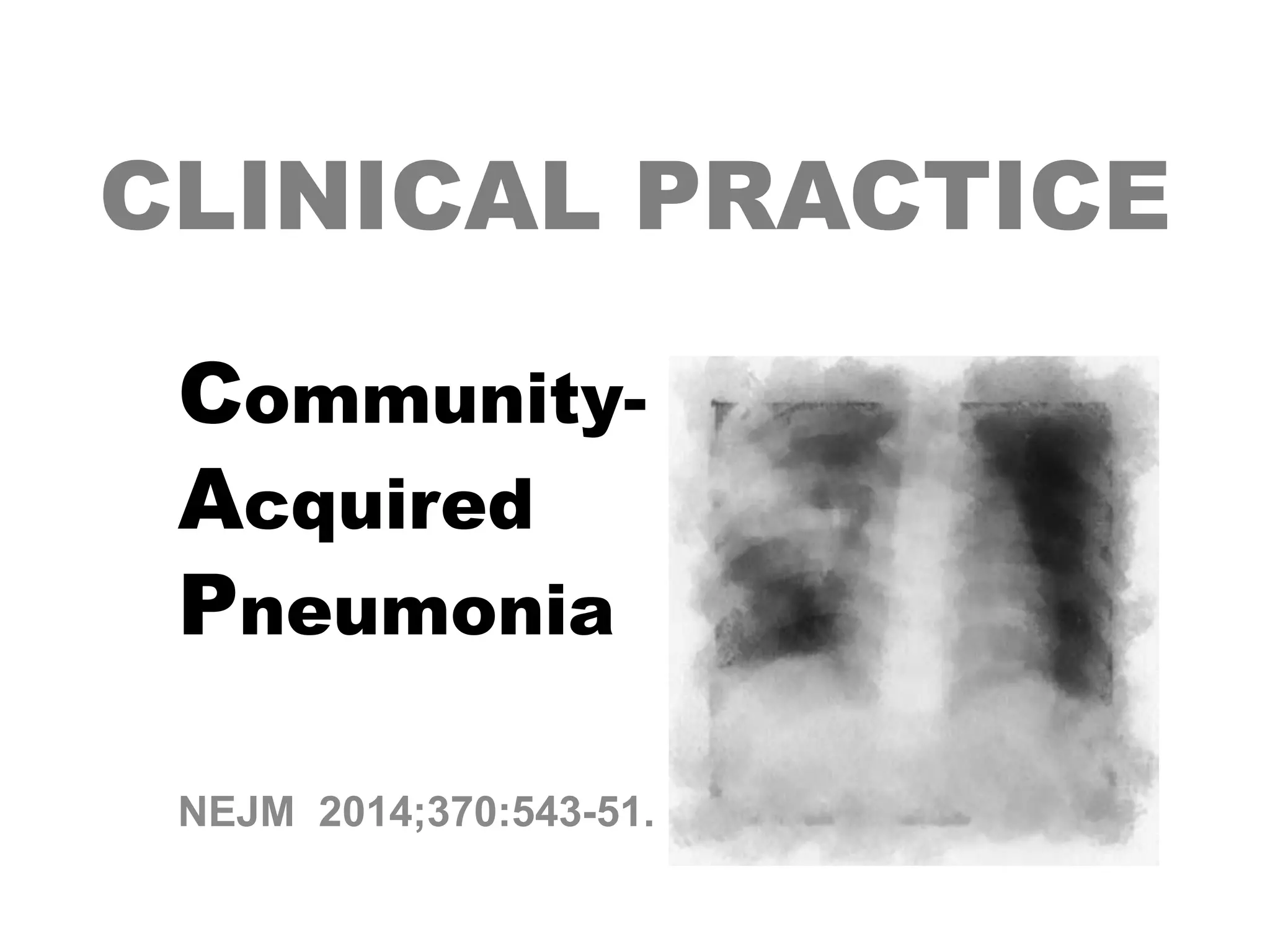
CXR: infiltrates in both lower lobes

How and where should this patient be
treated?
The WHO estimates that lower respiratory
tract infection is the most common infectious
cause of death in the world (the 3rd most
common cause overall), with almost 3.5
million deaths yearly.
Together, pneumonia and influenza constitute
the 9th leading cause of death in the
US, resulting in 50,000 estimated deaths in
2010.
This article focuses on management strategies
for community-acquired pneumonia
(CAP), with particular emphasis on
interventions to reduce mortality and costs.
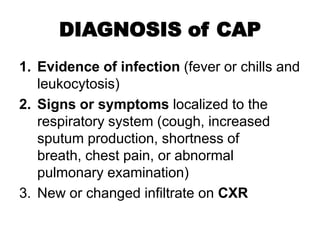
DIAGNOSIS of CAP
1. Evidence of infection (fever or chills and
leukocytosis)
2. Signs or symptoms localized to the
respiratory system (cough, increased
sputum production, shortness of
breath, chest pain, or abnormal
pulmonary examination)
3. New or changed infiltrate on CXR
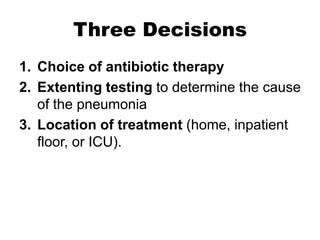
Three Decisions
1. Choice of antibiotic therapy
2. Extenting testing to determine the cause
of the pneumonia
3. Location of treatment (home, inpatient
floor, or ICU).
Choice of Antibiotic Therapy
The key to appropriate therapy is adequate
coverage of Streptococcus pneumoniae
and the atypical bacterial pathogens
(mycoplasma, chlamydophila, and
legionella).
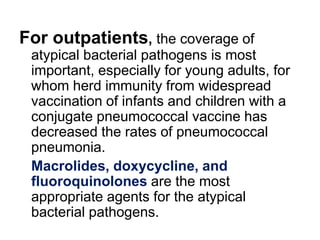
For outpatients, the coverage of
atypical bacterial pathogens is most
important, especially for young adults, for
whom herd immunity from widespread
vaccination of infants and children with a
conjugate pneumococcal vaccine has
decreased the rates of pneumococcal
pneumonia.
Macrolides, doxycycline, and
fluoroquinolones are the most
appropriate agents for the atypical
bacterial pathogens.
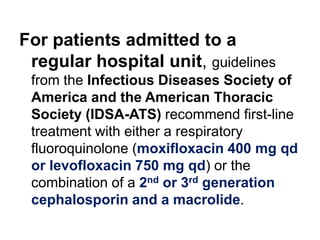
For patients admitted to a
regular hospital unit, guidelines
from the Infectious Diseases Society of
America and the American Thoracic
Society (IDSA-ATS) recommend first-line
treatment with either a respiratory
fluoroquinolone (moxifloxacin 400 mg qd
or levofloxacin 750 mg qd) or the
combination of a 2nd or 3rd generation
cephalosporin and a macrolide.
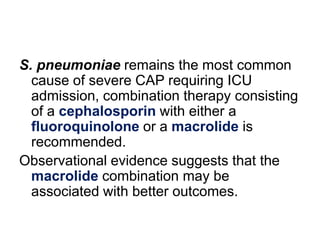
S. pneumoniae remains the most common
cause of severe CAP requiring ICU
admission, combination therapy consisting
of a cephalosporin with either a
fluoroquinolone or a macrolide is
recommended.
Observational evidence suggests that the
macrolide combination may be
associated with better outcomes.
Timing of Initiation of Therapy
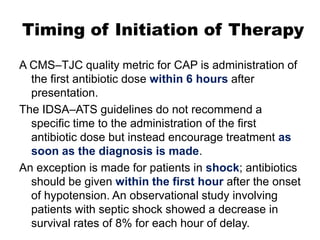
A CMS–TJC quality metric for CAP is administration of
the first antibiotic dose within 6 hours after
presentation.
The IDSA–ATS guidelines do not recommend a
specific time to the administration of the first
antibiotic dose but instead encourage treatment as
soon as the diagnosis is made.
An exception is made for patients in shock; antibiotics
should be given within the first hour after the onset
of hypotension. An observational study involving
patients with septic shock showed a decrease in
survival rates of 8% for each hour of delay.
Duration of Antibiotic Treatment
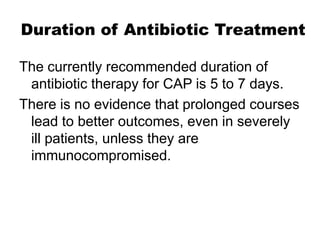
The currently recommended duration of
antibiotic therapy for CAP is 5 to 7 days.
There is no evidence that prolonged courses
lead to better outcomes, even in severely
ill patients, unless they are
immunocompromised.
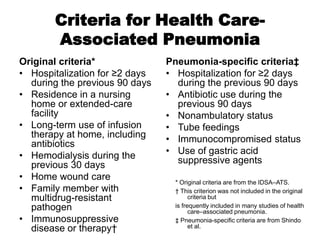
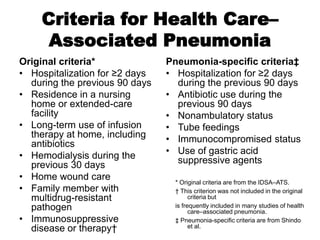
Criteria for Health CareAssociated Pneumonia
Original criteria*
• Hospitalization for ≥2 days
during the previous 90 days
• Residence in a nursing
home or extended-care
facility
• Long-term use of infusion
therapy at home, including
antibiotics
• Hemodialysis during the
previous 30 days
• Home wound care
• Family member with
multidrug-resistant
pathogen
• Immunosuppressive
disease or therapy†

Pneumonia-specific criteria‡
• Hospitalization for ≥2 days
during the previous 90 days
• Antibiotic use during the
previous 90 days
• Nonambulatory status
• Tube feedings
• Immunocompromised status
• Use of gastric acid
suppressive agents
* Original criteria are from the IDSA–ATS.
† This criterion was not included in the original
criteria but
is frequently included in many studies of health
care–associated pneumonia.
‡ Pneumonia-specific criteria are from Shindo
et al.
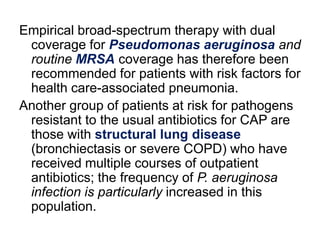
Empirical broad-spectrum therapy with dual
coverage for Pseudomonas aeruginosa and
routine MRSA coverage has therefore been
recommended for patients with risk factors for
health care-associated pneumonia.
Another group of patients at risk for pathogens
resistant to the usual antibiotics for CAP are
those with structural lung disease
(bronchiectasis or severe COPD) who have
received multiple courses of outpatient
antibiotics; the frequency of P. aeruginosa
infection is particularly increased in this
population.
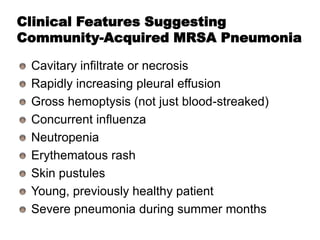
Clinical Features Suggesting
Community-Acquired MRSA Pneumonia
Cavitary infiltrate or necrosis
Rapidly increasing pleural effusion
Gross hemoptysis (not just blood-streaked)
Concurrent influenza
Neutropenia
Erythematous rash
Skin pustules
Young, previously healthy patient
Severe pneumonia during summer months
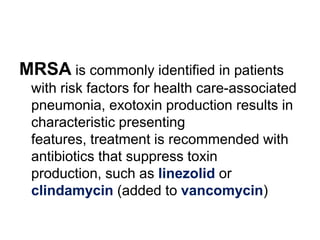
MRSA is commonly identified in patients
with risk factors for health care-associated
pneumonia, exotoxin production results in
characteristic presenting
features, treatment is recommended with
antibiotics that suppress toxin
production, such as linezolid or
clindamycin (added to vancomycin)
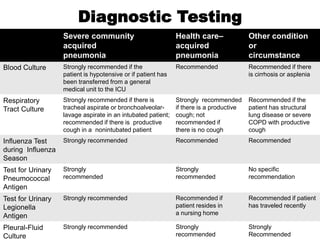
Diagnostic Testing
Severe community
acquired
pneumonia

Health care–
acquired
pneumonia

Other condition
or
circumstance

Blood Culture

Strongly recommended if the
patient is hypotensive or if patient has
been transferred from a general
medical unit to the ICU

Recommended

Recommended if there
is cirrhosis or asplenia

Respiratory
Tract Culture

Strongly recommended if there is
tracheal aspirate or bronchoalveolarlavage aspirate in an intubated patient;
recommended if there is productive
cough in a nonintubated patient

Strongly recommended
if there is a productive
cough; not
recommended if
there is no cough

Recommended if the
patient has structural
lung disease or severe
COPD with productive
cough

Influenza Test
during Influenza
Season

Strongly recommended

Recommended

Recommended

Test for Urinary
Pneumococcal
Antigen

Strongly
recommended

Strongly
recommended

No specific
recommendation

Test for Urinary
Legionella
Antigen

Strongly recommended

Recommended if
patient resides in
a nursing home

Recommended if patient
has traveled recently

Pleural-Fluid
Culture

Strongly recommended

Strongly
recommended

Strongly
Recommended
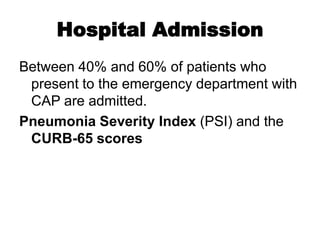
Hospital Admission
Between 40% and 60% of patients who
present to the emergency department with
CAP are admitted.
Pneumonia Severity Index (PSI) and the
CURB-65 scores
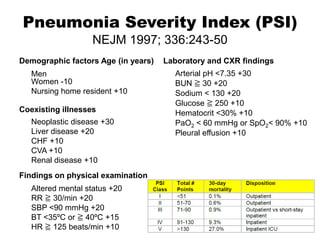
Pneumonia Severity Index (PSI)
NEJM 1997; 336:243-50
Demographic factors Age (in years)
Men
Women -10
Nursing home resident +10
Coexisting illnesses
Neoplastic disease +30
Liver disease +20
CHF +10
CVA +10
Renal disease +10
Findings on physical examination
Altered mental status +20
RR ≧ 30/min +20
SBP <90 mmHg +20
BT <35ºC or ≧ 40ºC +15
HR ≧ 125 beats/min +10

Laboratory and CXR findings
Arterial pH <7.35 +30
BUN ≧ 30 +20
Sodium < 130 +20
Glucose ≧ 250 +10
Hematocrit <30% +10
PaO2 < 60 mmHg or SpO2< 90% +10
Pleural effusion +10
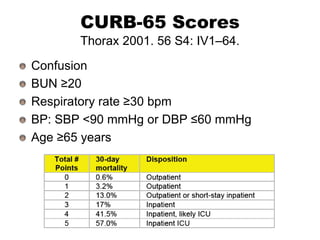
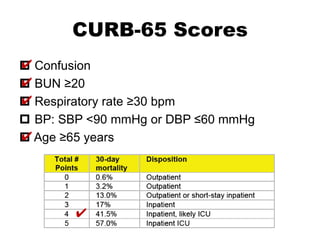
CURB-65 Scores
Thorax 2001. 56 S4: IV1–64.
Confusion
BUN ≥20
Respiratory rate ≥30 bpm
BP: SBP <90 mmHg or DBP ≤60 mmHg
Age ≥65 years
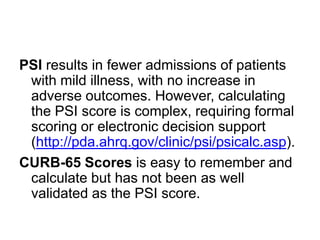
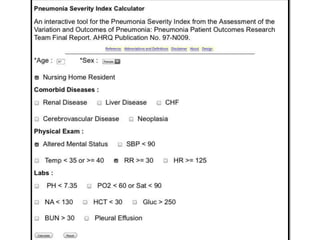
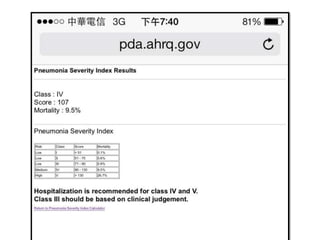
PSI results in fewer admissions of patients
with mild illness, with no increase in
adverse outcomes. However, calculating
the PSI score is complex, requiring formal
scoring or electronic decision support
(http://pda.ahrq.gov/clinic/psi/psicalc.asp).
CURB-65 Scores is easy to remember and
calculate but has not been as well
validated as the PSI score.
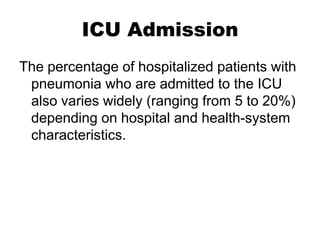
ICU Admission
The percentage of hospitalized patients with
pneumonia who are admitted to the ICU
also varies widely (ranging from 5 to 20%)
depending on hospital and health-system
characteristics.
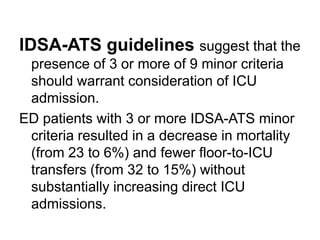
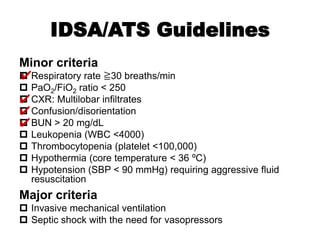
IDSA-ATS guidelines suggest that the
presence of 3 or more of 9 minor criteria
should warrant consideration of ICU
admission.
ED patients with 3 or more IDSA-ATS minor
criteria resulted in a decrease in mortality
(from 23 to 6%) and fewer floor-to-ICU
transfers (from 32 to 15%) without
substantially increasing direct ICU
admissions.
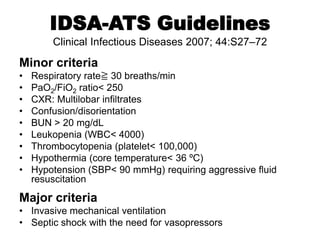
IDSA-ATS Guidelines
Clinical Infectious Diseases 2007; 44:S27–72

Minor criteria
•
•
•
•
•
•
•
•
•

Respiratory rate≧ 30 breaths/min
PaO2/FiO2 ratio< 250
CXR: Multilobar infiltrates
Confusion/disorientation
BUN > 20 mg/dL
Leukopenia (WBC< 4000)
Thrombocytopenia (platelet< 100,000)
Hypothermia (core temperature< 36 ºC)
Hypotension (SBP< 90 mmHg) requiring aggressive fluid
resuscitation

Major criteria
• Invasive mechanical ventilation
• Septic shock with the need for vasopressors
67 y/o woman with mild Alzheimer’s disease
who has a 2-day history of productive
cough, fever, and increased confusion is
transferred from a nursing home to the ED.
Vital Signs: BT 38.4°C, BP 145/85 mmHg, HR 120,
RR 30, SpO2 91% (ambient air)

PE: crackles in both lower lung fields
oriented to person only

Lab: WBC 4000, Na+ 130, BUN 25
CXR: infiltrates in both lower lobes

How and where should this patient be
treated?
CURB-65 Scores
✔
 Confusion
✔
 BUN ≥20
✔
 Respiratory rate ≥30 bpm
 BP: SBP <90 mmHg or DBP ≤60 mmHg
✔
 Age ≥65 years

✔
IDSA/ATS Guidelines
Minor criteria
 Respiratory rate ≧30 breaths/min
✔
 PaO2/FiO2 ratio < 250

✔CXR: Multilobar infiltrates

✔Confusion/disorientation

✔BUN > 20 mg/dL
 Leukopenia (WBC <4000)
 Thrombocytopenia (platelet <100,000)
 Hypothermia (core temperature < 36 ºC)
 Hypotension (SBP < 90 mmHg) requiring aggressive fluid
resuscitation

Major criteria
 Invasive mechanical ventilation
 Septic shock with the need for vasopressors
Criteria for Health Care–
Associated Pneumonia
Original criteria*
• Hospitalization for ≥2 days
during the previous 90 days
• Residence in a nursing
home or extended-care
facility
• Long-term use of infusion
therapy at home, including
antibiotics
• Hemodialysis during the
previous 30 days
• Home wound care
• Family member with
multidrug-resistant
pathogen
• Immunosuppressive
disease or therapy†

Pneumonia-specific criteria‡
• Hospitalization for ≥2 days
during the previous 90 days
• Antibiotic use during the
previous 90 days
• Nonambulatory status
• Tube feedings
• Immunocompromised status
• Use of gastric acid
suppressive agents
* Original criteria are from the IDSA–ATS.
† This criterion was not included in the original
criteria but
is frequently included in many studies of health
care–associated pneumonia.
‡ Pneumonia-specific criteria are from Shindo
et al.
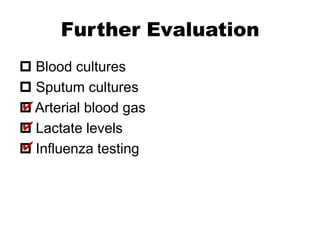
Further Evaluation
 Blood cultures
 Sputum cultures
✔
 Arterial blood gas
✔
 Lactate levels
✔
 Influenza testing
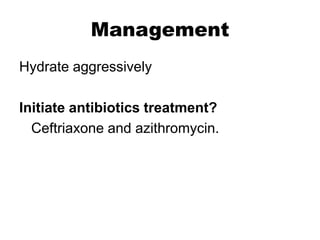
Management
Hydrate aggressively
Initiate antibiotics treatment?
Ceftriaxone and azithromycin.
Question

Community- Acquired Pneumonia

  • 1.
  • 2.
    67 y/o womanwith mild Alzheimer’s disease who has a 2-day history of productive cough, fever, and increased confusion is transferred from a nursing home to the ED. Vital Signs: BT 38.4°C, BP 145/85 mmHg, HR 120, RR 30, SpO2 91% (ambient air) PE: crackles in both lower lung fields oriented to person only Lab: WBC 4000, Na+ 130, BUN 25 CXR: infiltrates in both lower lobes How and where should this patient be treated?
  • 3.
    The WHO estimatesthat lower respiratory tract infection is the most common infectious cause of death in the world (the 3rd most common cause overall), with almost 3.5 million deaths yearly. Together, pneumonia and influenza constitute the 9th leading cause of death in the US, resulting in 50,000 estimated deaths in 2010. This article focuses on management strategies for community-acquired pneumonia (CAP), with particular emphasis on interventions to reduce mortality and costs.
  • 4.
    DIAGNOSIS of CAP 1.Evidence of infection (fever or chills and leukocytosis) 2. Signs or symptoms localized to the respiratory system (cough, increased sputum production, shortness of breath, chest pain, or abnormal pulmonary examination) 3. New or changed infiltrate on CXR
  • 5.
    Three Decisions 1. Choiceof antibiotic therapy 2. Extenting testing to determine the cause of the pneumonia 3. Location of treatment (home, inpatient floor, or ICU).
  • 6.
    Choice of AntibioticTherapy The key to appropriate therapy is adequate coverage of Streptococcus pneumoniae and the atypical bacterial pathogens (mycoplasma, chlamydophila, and legionella).
  • 7.
    For outpatients, thecoverage of atypical bacterial pathogens is most important, especially for young adults, for whom herd immunity from widespread vaccination of infants and children with a conjugate pneumococcal vaccine has decreased the rates of pneumococcal pneumonia. Macrolides, doxycycline, and fluoroquinolones are the most appropriate agents for the atypical bacterial pathogens.
  • 8.
    For patients admittedto a regular hospital unit, guidelines from the Infectious Diseases Society of America and the American Thoracic Society (IDSA-ATS) recommend first-line treatment with either a respiratory fluoroquinolone (moxifloxacin 400 mg qd or levofloxacin 750 mg qd) or the combination of a 2nd or 3rd generation cephalosporin and a macrolide.
  • 9.
    S. pneumoniae remainsthe most common cause of severe CAP requiring ICU admission, combination therapy consisting of a cephalosporin with either a fluoroquinolone or a macrolide is recommended. Observational evidence suggests that the macrolide combination may be associated with better outcomes.
  • 10.
    Timing of Initiationof Therapy A CMS–TJC quality metric for CAP is administration of the first antibiotic dose within 6 hours after presentation. The IDSA–ATS guidelines do not recommend a specific time to the administration of the first antibiotic dose but instead encourage treatment as soon as the diagnosis is made. An exception is made for patients in shock; antibiotics should be given within the first hour after the onset of hypotension. An observational study involving patients with septic shock showed a decrease in survival rates of 8% for each hour of delay.
  • 11.
    Duration of AntibioticTreatment The currently recommended duration of antibiotic therapy for CAP is 5 to 7 days. There is no evidence that prolonged courses lead to better outcomes, even in severely ill patients, unless they are immunocompromised.
  • 12.
    Criteria for HealthCareAssociated Pneumonia Original criteria* • Hospitalization for ≥2 days during the previous 90 days • Residence in a nursing home or extended-care facility • Long-term use of infusion therapy at home, including antibiotics • Hemodialysis during the previous 30 days • Home wound care • Family member with multidrug-resistant pathogen • Immunosuppressive disease or therapy† Pneumonia-specific criteria‡ • Hospitalization for ≥2 days during the previous 90 days • Antibiotic use during the previous 90 days • Nonambulatory status • Tube feedings • Immunocompromised status • Use of gastric acid suppressive agents * Original criteria are from the IDSA–ATS. † This criterion was not included in the original criteria but is frequently included in many studies of health care–associated pneumonia. ‡ Pneumonia-specific criteria are from Shindo et al.
  • 13.
    Empirical broad-spectrum therapywith dual coverage for Pseudomonas aeruginosa and routine MRSA coverage has therefore been recommended for patients with risk factors for health care-associated pneumonia. Another group of patients at risk for pathogens resistant to the usual antibiotics for CAP are those with structural lung disease (bronchiectasis or severe COPD) who have received multiple courses of outpatient antibiotics; the frequency of P. aeruginosa infection is particularly increased in this population.
  • 14.
    Clinical Features Suggesting Community-AcquiredMRSA Pneumonia Cavitary infiltrate or necrosis Rapidly increasing pleural effusion Gross hemoptysis (not just blood-streaked) Concurrent influenza Neutropenia Erythematous rash Skin pustules Young, previously healthy patient Severe pneumonia during summer months
  • 15.
    MRSA is commonlyidentified in patients with risk factors for health care-associated pneumonia, exotoxin production results in characteristic presenting features, treatment is recommended with antibiotics that suppress toxin production, such as linezolid or clindamycin (added to vancomycin)
  • 16.
    Diagnostic Testing Severe community acquired pneumonia Healthcare– acquired pneumonia Other condition or circumstance Blood Culture Strongly recommended if the patient is hypotensive or if patient has been transferred from a general medical unit to the ICU Recommended Recommended if there is cirrhosis or asplenia Respiratory Tract Culture Strongly recommended if there is tracheal aspirate or bronchoalveolarlavage aspirate in an intubated patient; recommended if there is productive cough in a nonintubated patient Strongly recommended if there is a productive cough; not recommended if there is no cough Recommended if the patient has structural lung disease or severe COPD with productive cough Influenza Test during Influenza Season Strongly recommended Recommended Recommended Test for Urinary Pneumococcal Antigen Strongly recommended Strongly recommended No specific recommendation Test for Urinary Legionella Antigen Strongly recommended Recommended if patient resides in a nursing home Recommended if patient has traveled recently Pleural-Fluid Culture Strongly recommended Strongly recommended Strongly Recommended
  • 17.
    Hospital Admission Between 40%and 60% of patients who present to the emergency department with CAP are admitted. Pneumonia Severity Index (PSI) and the CURB-65 scores
  • 18.
    Pneumonia Severity Index(PSI) NEJM 1997; 336:243-50 Demographic factors Age (in years) Men Women -10 Nursing home resident +10 Coexisting illnesses Neoplastic disease +30 Liver disease +20 CHF +10 CVA +10 Renal disease +10 Findings on physical examination Altered mental status +20 RR ≧ 30/min +20 SBP <90 mmHg +20 BT <35ºC or ≧ 40ºC +15 HR ≧ 125 beats/min +10 Laboratory and CXR findings Arterial pH <7.35 +30 BUN ≧ 30 +20 Sodium < 130 +20 Glucose ≧ 250 +10 Hematocrit <30% +10 PaO2 < 60 mmHg or SpO2< 90% +10 Pleural effusion +10
  • 19.
    CURB-65 Scores Thorax 2001.56 S4: IV1–64. Confusion BUN ≥20 Respiratory rate ≥30 bpm BP: SBP <90 mmHg or DBP ≤60 mmHg Age ≥65 years
  • 20.
    PSI results infewer admissions of patients with mild illness, with no increase in adverse outcomes. However, calculating the PSI score is complex, requiring formal scoring or electronic decision support (http://pda.ahrq.gov/clinic/psi/psicalc.asp). CURB-65 Scores is easy to remember and calculate but has not been as well validated as the PSI score.
  • 21.
    ICU Admission The percentageof hospitalized patients with pneumonia who are admitted to the ICU also varies widely (ranging from 5 to 20%) depending on hospital and health-system characteristics.
  • 22.
    IDSA-ATS guidelines suggestthat the presence of 3 or more of 9 minor criteria should warrant consideration of ICU admission. ED patients with 3 or more IDSA-ATS minor criteria resulted in a decrease in mortality (from 23 to 6%) and fewer floor-to-ICU transfers (from 32 to 15%) without substantially increasing direct ICU admissions.
  • 23.
    IDSA-ATS Guidelines Clinical InfectiousDiseases 2007; 44:S27–72 Minor criteria • • • • • • • • • Respiratory rate≧ 30 breaths/min PaO2/FiO2 ratio< 250 CXR: Multilobar infiltrates Confusion/disorientation BUN > 20 mg/dL Leukopenia (WBC< 4000) Thrombocytopenia (platelet< 100,000) Hypothermia (core temperature< 36 ºC) Hypotension (SBP< 90 mmHg) requiring aggressive fluid resuscitation Major criteria • Invasive mechanical ventilation • Septic shock with the need for vasopressors
  • 24.
    67 y/o womanwith mild Alzheimer’s disease who has a 2-day history of productive cough, fever, and increased confusion is transferred from a nursing home to the ED. Vital Signs: BT 38.4°C, BP 145/85 mmHg, HR 120, RR 30, SpO2 91% (ambient air) PE: crackles in both lower lung fields oriented to person only Lab: WBC 4000, Na+ 130, BUN 25 CXR: infiltrates in both lower lobes How and where should this patient be treated?
  • 25.
    CURB-65 Scores ✔  Confusion ✔ BUN ≥20 ✔  Respiratory rate ≥30 bpm  BP: SBP <90 mmHg or DBP ≤60 mmHg ✔  Age ≥65 years ✔
  • 26.
    IDSA/ATS Guidelines Minor criteria Respiratory rate ≧30 breaths/min ✔  PaO2/FiO2 ratio < 250  ✔CXR: Multilobar infiltrates  ✔Confusion/disorientation  ✔BUN > 20 mg/dL  Leukopenia (WBC <4000)  Thrombocytopenia (platelet <100,000)  Hypothermia (core temperature < 36 ºC)  Hypotension (SBP < 90 mmHg) requiring aggressive fluid resuscitation Major criteria  Invasive mechanical ventilation  Septic shock with the need for vasopressors
  • 29.
    Criteria for HealthCare– Associated Pneumonia Original criteria* • Hospitalization for ≥2 days during the previous 90 days • Residence in a nursing home or extended-care facility • Long-term use of infusion therapy at home, including antibiotics • Hemodialysis during the previous 30 days • Home wound care • Family member with multidrug-resistant pathogen • Immunosuppressive disease or therapy† Pneumonia-specific criteria‡ • Hospitalization for ≥2 days during the previous 90 days • Antibiotic use during the previous 90 days • Nonambulatory status • Tube feedings • Immunocompromised status • Use of gastric acid suppressive agents * Original criteria are from the IDSA–ATS. † This criterion was not included in the original criteria but is frequently included in many studies of health care–associated pneumonia. ‡ Pneumonia-specific criteria are from Shindo et al.
  • 30.
    Further Evaluation  Bloodcultures  Sputum cultures ✔  Arterial blood gas ✔  Lactate levels ✔  Influenza testing
  • 31.
    Management Hydrate aggressively Initiate antibioticstreatment? Ceftriaxone and azithromycin.
  • 32.