How to Prepare a Presentation
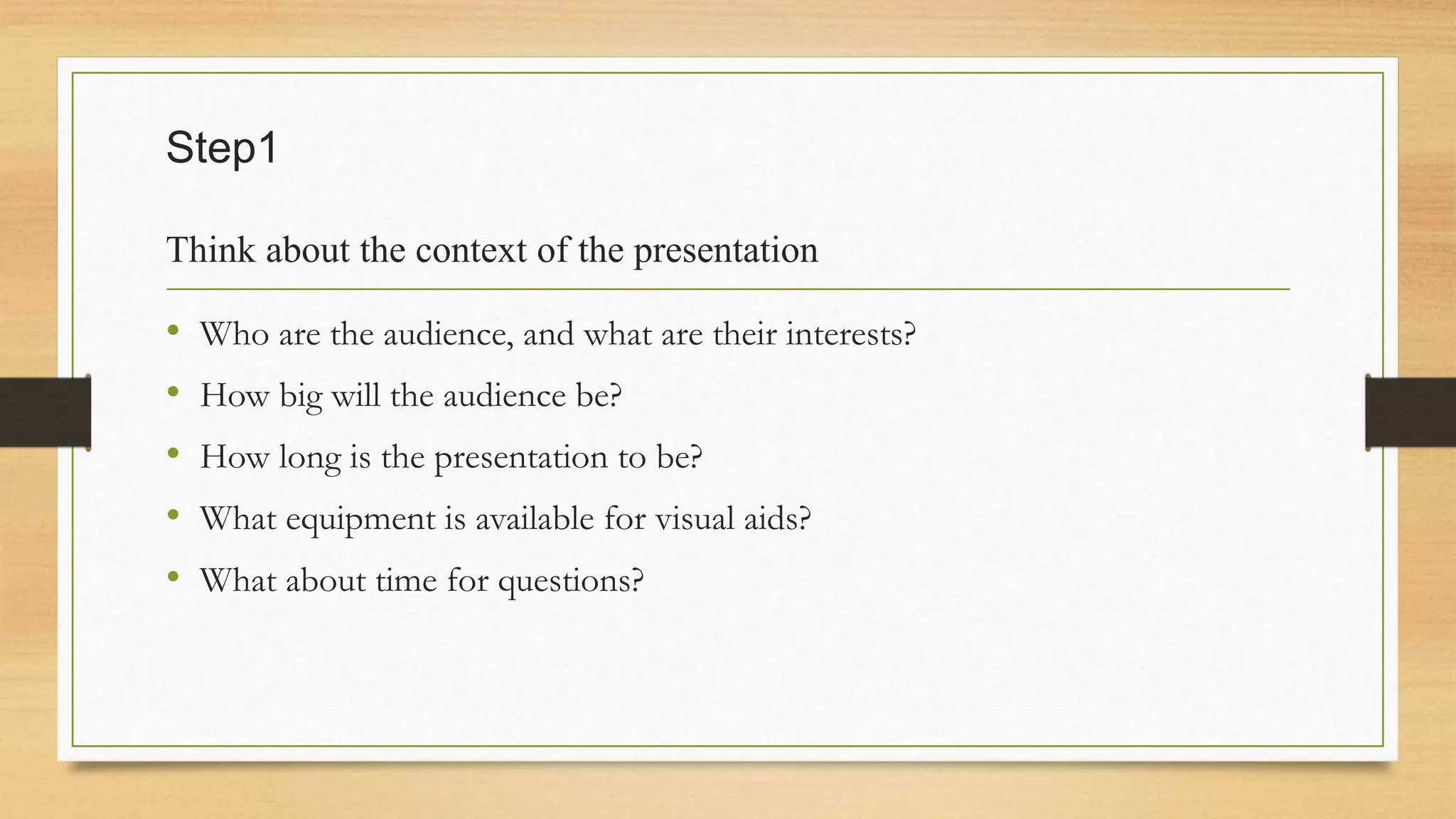
Step1
Think about the context of the presentation
• Who are the audience, and what are their interests?
• How big will the audience be?
• How long is the presentation to be?
• What equipment is available for visual aids?
• What about time for questions?
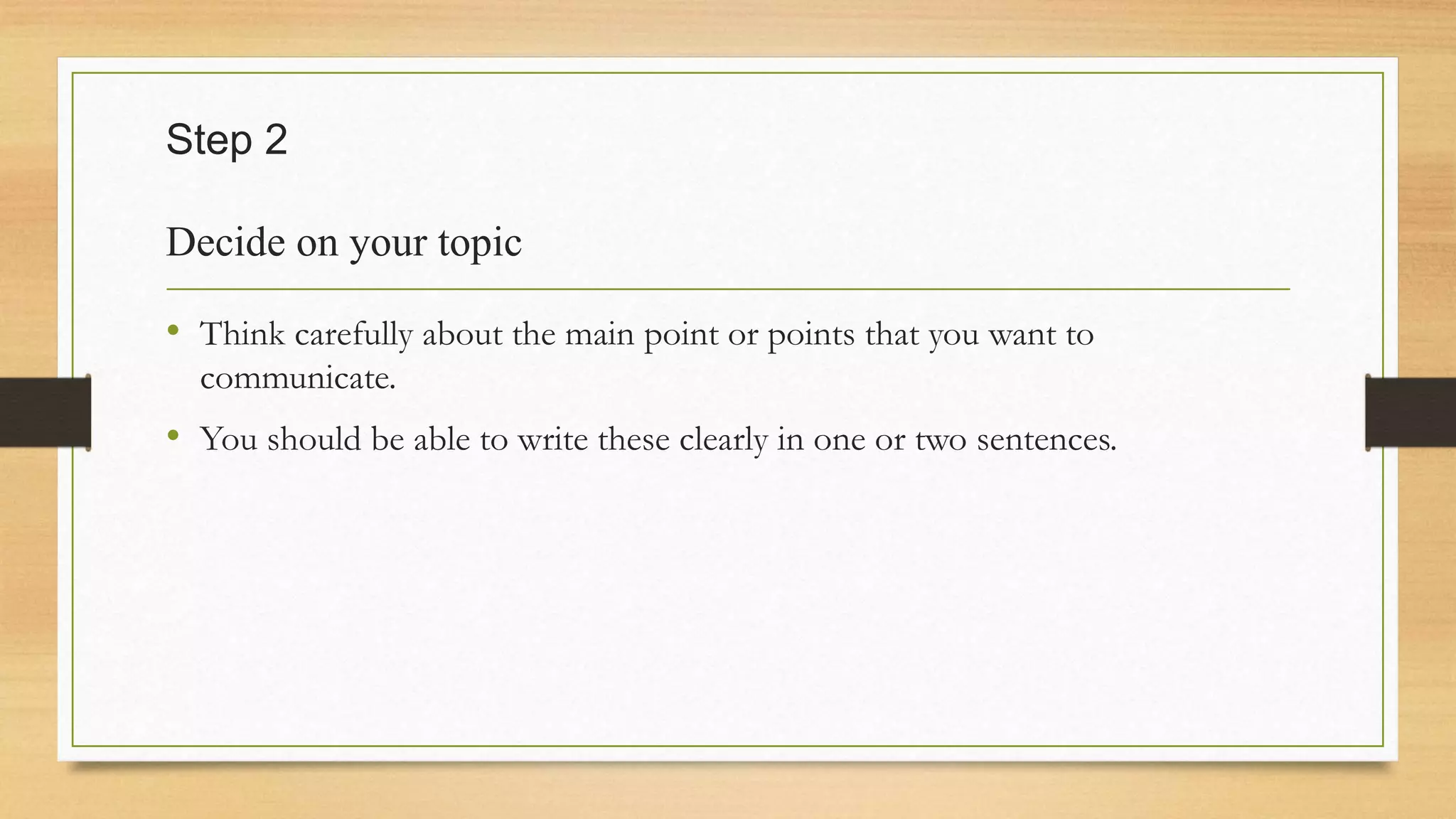
Step 2
Decide on your topic
• Think carefully about the main point or points that you want to
communicate.
• You should be able to write these clearly in one or two sentences.
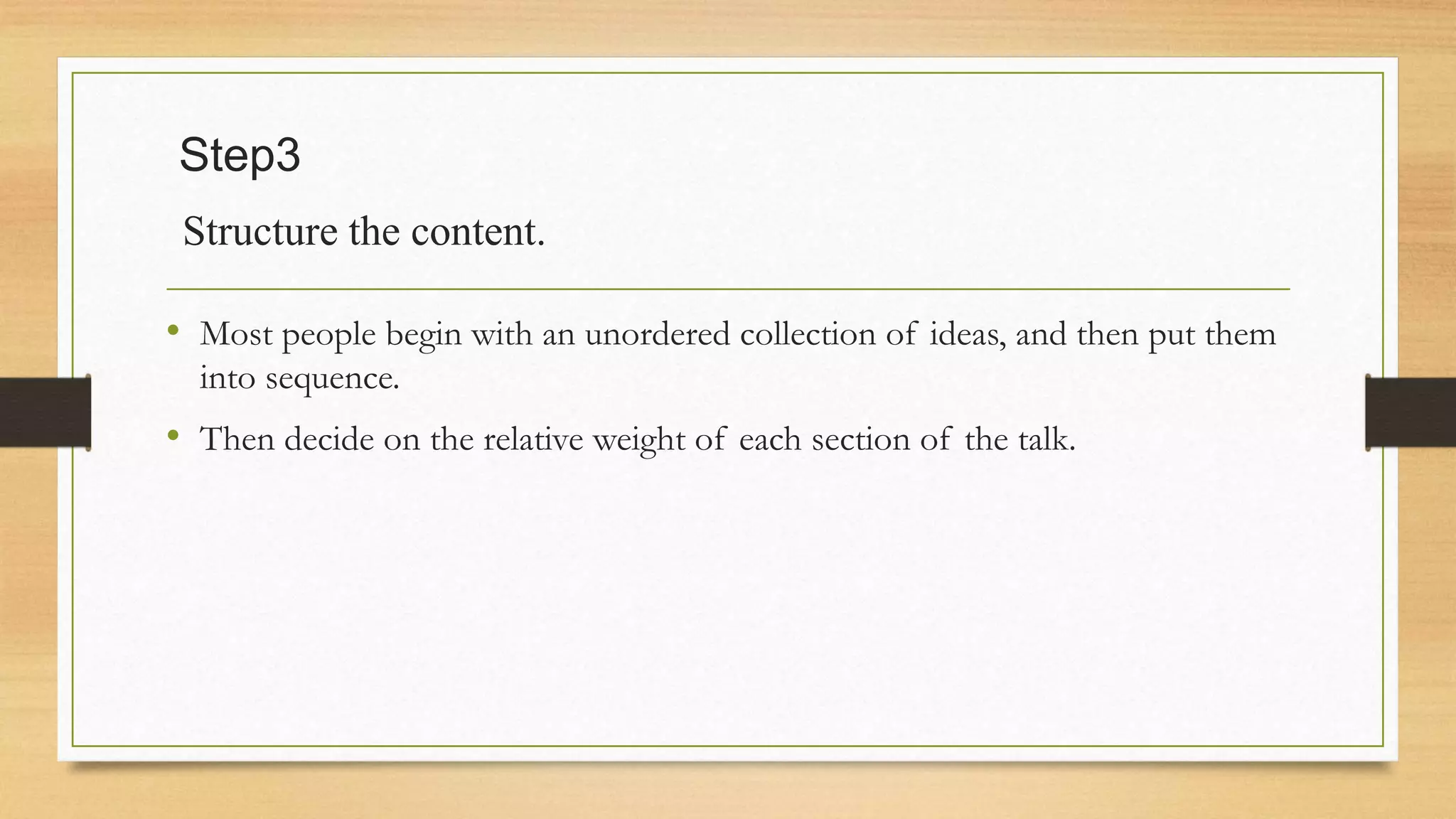
Step3
Structure the content.
• Most people begin with an unordered collection of ideas, and then put them
into sequence.
• Then decide on the relative weight of each section of the talk.
Step 4
Think of ways of catching the listeners’ interest:
• examples, anecdotes, impressive statistics, interesting quotations.
Step 5
Visual aids
• It is useful to ‘rough-draft’ visual aids at this stage, because they can help you
make the sequence of points more clear and logical.
• Think about whether some information should be put into handouts.
Step 6
• Check overall length, and the relative weight of sections.
• A little too short is better than even a little too long.
Step 7
Finish preparation of visual aids.
Prepare handouts, if you want them. Make copies.
Step 8
• Plan the exact words you will use for the opening, the transition points, and
the conclusion.
• Practise them again and again.
• If you are anxious, write on cards the introductory and concluding sentences.
Make more notes if you need them.
Step 9
• REHEARSE your presentation, as often as necessary.
Step 10
• Think about the questions the audience may want to ask you.
• Plan how you will answer them.
That’s all, thank you!
• Check the 10 steps when you prepare your presentations.
• I hope it might help.

How to prepare your presentation

  • 1.
    How to Preparea Presentation
  • 2.
    Step1 Think about thecontext of the presentation • Who are the audience, and what are their interests? • How big will the audience be? • How long is the presentation to be? • What equipment is available for visual aids? • What about time for questions?
  • 3.
    Step 2 Decide onyour topic • Think carefully about the main point or points that you want to communicate. • You should be able to write these clearly in one or two sentences.
  • 4.
    Step3 Structure the content. •Most people begin with an unordered collection of ideas, and then put them into sequence. • Then decide on the relative weight of each section of the talk.
  • 5.
    Step 4 Think ofways of catching the listeners’ interest: • examples, anecdotes, impressive statistics, interesting quotations.
  • 6.
    Step 5 Visual aids •It is useful to ‘rough-draft’ visual aids at this stage, because they can help you make the sequence of points more clear and logical. • Think about whether some information should be put into handouts.
  • 7.
    Step 6 • Checkoverall length, and the relative weight of sections. • A little too short is better than even a little too long.
  • 8.
    Step 7 Finish preparationof visual aids. Prepare handouts, if you want them. Make copies.
  • 9.
    Step 8 • Planthe exact words you will use for the opening, the transition points, and the conclusion. • Practise them again and again. • If you are anxious, write on cards the introductory and concluding sentences. Make more notes if you need them.
  • 10.
    Step 9 • REHEARSEyour presentation, as often as necessary.
  • 11.
    Step 10 • Thinkabout the questions the audience may want to ask you. • Plan how you will answer them.
  • 12.
    That’s all, thankyou! • Check the 10 steps when you prepare your presentations. • I hope it might help.