NECK FLEXION
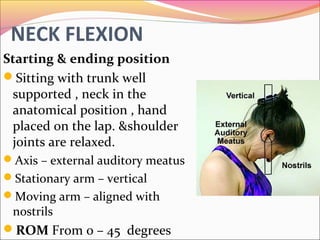
Starting & ending position
Sitting with trunk well
supported , neck in the
anatomical position , hand
placed on the lap. &shoulder
joints are relaxed.
Axis – external auditory meatus
Stationary arm – vertical
Moving arm – aligned with
nostrils
ROM From 0 – 45 degrees
NECK FLEXION
Precaution
Prevent trunk flexion.
Prevent neck rotation and lateral flexion.
Factors limiting ROM
Tension of the extensor muscles of neck (posterior
muscles of neck) .
Tension of the ligaments
Longitudinal ligament.
Interspinal & supraspinal ligaments.
 Bony blockage: contact of lower lips of vertebral
bodies with surface of subjacent vertebrae anteriorly.
NECK Extension
Starting & ending position
Just as for flexion
Axis – external auditor meatus
Stationary arm – vertical
Moving arm – aligned with
nostrils
ROM From 45 – 0 for
extension
From o- 45 for hyper
extension
NECK Extension
Precaution
Just as for flexion
Factors limiting ROM
Tension of flexors muscles of neck ( ventral neck
muscles)
Approximation of spinous process.
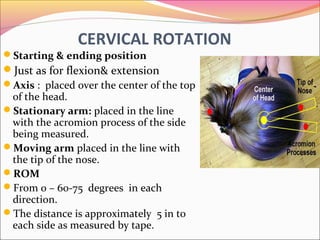
Starting & ending position
Just as for flexion& extension
Axis : placed over the center of the top
of the head.
Stationary arm: placed in the line
with the acromion process of the side
being measured.
Moving arm placed in the line with
the tip of the nose.
ROM
From 0 – 60-75 degrees in each
direction.
The distance is approximately 5 in to
each side as measured by tape.
CERVICAL ROTATION
CERVICAL ROTATION
precaution
Prevent trunk rotation
Prevent scapular elevation.
Tape measurement
 Place measuring tape on the mid-line of the chin and
the acromion process, measure the difference between
the starting and ending position
The difference in the measurement is the amount of
range of motion.
CERVICAL lateral flexion ( side
flexion)
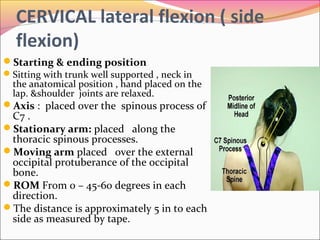
Starting & ending position
Sitting with trunk well supported , neck in
the anatomical position , hand placed on the
lap. &shoulder joints are relaxed.
Axis : placed over the spinous process of
C7 .
Stationary arm: placed along the
thoracic spinous processes.
Moving arm placed over the external
occipital protuberance of the occipital
bone.
ROM From 0 – 45-60 degrees in each
direction.
The distance is approximately 5 in to each
side as measured by tape.
CERVICAL lateral flexion ( side
flexion)
Precaution
Prevent trunk lateral flexion to the test side.
Tape measurement
Between mastoid process of the temporal bone and
the acromion process of the scapula..
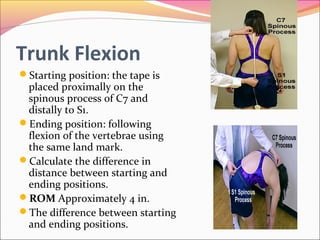
Trunk Flexion
Starting position: the tape is
placed proximally on the
spinous process of C7 and
distally to S1.
Ending position: following
flexion of the vertebrae using
the same land mark.
Calculate the difference in
distance between starting and
ending positions.
ROM Approximately 4 in.
The difference between starting
and ending positions.
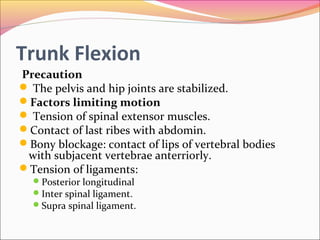
Trunk Flexion
Precaution
 The pelvis and hip joints are stabilized.
Factors limiting motion
 Tension of spinal extensor muscles.
Contact of last ribes with abdomin.
Bony blockage: contact of lips of vertebral bodies
with subjacent vertebrae anterriorly.
Tension of ligaments:
Posterior longitudinal
Inter spinal ligament.
Supra spinal ligament.
Trunk HyperextensionThe tape alignment is just the same as
for trunk flexion
ROM 2 inches
Precautions
Prevent hip extension.
Prevent trunk rotation.
Factors Limiting ROM
Tension of anterior abdominal
muscles ( muscles of trunk flexion)
Contact of spinous processes.
Tension of longitudinal ligament of
spine.
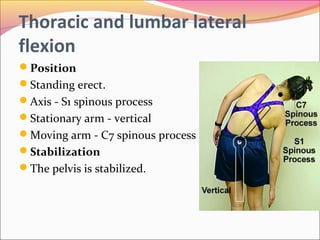
Thoracic and lumbar lateral
flexion
Position
Standing erect.
Axis - S1 spinous process
Stationary arm - vertical
Moving arm - C7 spinous process
Stabilization
The pelvis is stabilized.
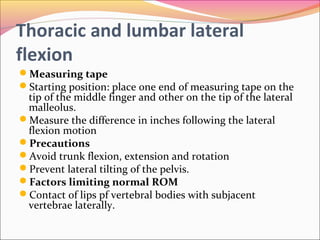
Thoracic and lumbar lateral
flexion
Measuring tape
Starting position: place one end of measuring tape on the
tip of the middle finger and other on the tip of the lateral
malleolus.
Measure the difference in inches following the lateral
flexion motion
Precautions
Avoid trunk flexion, extension and rotation
Prevent lateral tilting of the pelvis.
Factors limiting normal ROM
Contact of lips pf vertebral bodies with subjacent
vertebrae laterally.
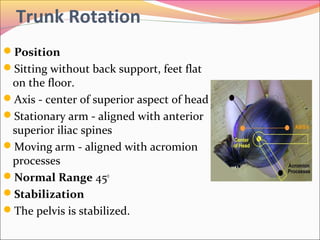
Trunk Rotation
Position
Sitting without back support, feet flat
on the floor.
Axis - center of superior aspect of head
Stationary arm - aligned with anterior
superior iliac spines
Moving arm - aligned with acromion
processes
Normal Range 45o
Stabilization
The pelvis is stabilized.
Trunk Rotation
Precautions
Prevent pelvis rotation.
Avoid trunk flexion, extension and lateral flexion.
Factors limiting normal RON
Tension of oblique abdominal muscle of opposite side
being tested.
In thoracic area: tension of costovertebral ligament.
In lumbar area: interlocking of articular facets.

Neck & trunk rom measurement

  • 2.
    NECK FLEXION Starting &ending position Sitting with trunk well supported , neck in the anatomical position , hand placed on the lap. &shoulder joints are relaxed. Axis – external auditory meatus Stationary arm – vertical Moving arm – aligned with nostrils ROM From 0 – 45 degrees
  • 3.
    NECK FLEXION Precaution Prevent trunkflexion. Prevent neck rotation and lateral flexion. Factors limiting ROM Tension of the extensor muscles of neck (posterior muscles of neck) . Tension of the ligaments Longitudinal ligament. Interspinal & supraspinal ligaments.  Bony blockage: contact of lower lips of vertebral bodies with surface of subjacent vertebrae anteriorly.
  • 4.
    NECK Extension Starting &ending position Just as for flexion Axis – external auditor meatus Stationary arm – vertical Moving arm – aligned with nostrils ROM From 45 – 0 for extension From o- 45 for hyper extension
  • 5.
    NECK Extension Precaution Just asfor flexion Factors limiting ROM Tension of flexors muscles of neck ( ventral neck muscles) Approximation of spinous process.
  • 6.
    Starting & endingposition Just as for flexion& extension Axis : placed over the center of the top of the head. Stationary arm: placed in the line with the acromion process of the side being measured. Moving arm placed in the line with the tip of the nose. ROM From 0 – 60-75 degrees in each direction. The distance is approximately 5 in to each side as measured by tape. CERVICAL ROTATION
  • 7.
    CERVICAL ROTATION precaution Prevent trunkrotation Prevent scapular elevation. Tape measurement  Place measuring tape on the mid-line of the chin and the acromion process, measure the difference between the starting and ending position The difference in the measurement is the amount of range of motion.
  • 8.
    CERVICAL lateral flexion( side flexion) Starting & ending position Sitting with trunk well supported , neck in the anatomical position , hand placed on the lap. &shoulder joints are relaxed. Axis : placed over the spinous process of C7 . Stationary arm: placed along the thoracic spinous processes. Moving arm placed over the external occipital protuberance of the occipital bone. ROM From 0 – 45-60 degrees in each direction. The distance is approximately 5 in to each side as measured by tape.
  • 9.
    CERVICAL lateral flexion( side flexion) Precaution Prevent trunk lateral flexion to the test side. Tape measurement Between mastoid process of the temporal bone and the acromion process of the scapula..
  • 10.
    Trunk Flexion Starting position:the tape is placed proximally on the spinous process of C7 and distally to S1. Ending position: following flexion of the vertebrae using the same land mark. Calculate the difference in distance between starting and ending positions. ROM Approximately 4 in. The difference between starting and ending positions.
  • 11.
    Trunk Flexion Precaution  Thepelvis and hip joints are stabilized. Factors limiting motion  Tension of spinal extensor muscles. Contact of last ribes with abdomin. Bony blockage: contact of lips of vertebral bodies with subjacent vertebrae anterriorly. Tension of ligaments: Posterior longitudinal Inter spinal ligament. Supra spinal ligament.
  • 12.
    Trunk HyperextensionThe tapealignment is just the same as for trunk flexion ROM 2 inches Precautions Prevent hip extension. Prevent trunk rotation. Factors Limiting ROM Tension of anterior abdominal muscles ( muscles of trunk flexion) Contact of spinous processes. Tension of longitudinal ligament of spine.
  • 13.
    Thoracic and lumbarlateral flexion Position Standing erect. Axis - S1 spinous process Stationary arm - vertical Moving arm - C7 spinous process Stabilization The pelvis is stabilized.
  • 14.
    Thoracic and lumbarlateral flexion Measuring tape Starting position: place one end of measuring tape on the tip of the middle finger and other on the tip of the lateral malleolus. Measure the difference in inches following the lateral flexion motion Precautions Avoid trunk flexion, extension and rotation Prevent lateral tilting of the pelvis. Factors limiting normal ROM Contact of lips pf vertebral bodies with subjacent vertebrae laterally.
  • 15.
    Trunk Rotation Position Sitting withoutback support, feet flat on the floor. Axis - center of superior aspect of head Stationary arm - aligned with anterior superior iliac spines Moving arm - aligned with acromion processes Normal Range 45o Stabilization The pelvis is stabilized.
  • 16.
    Trunk Rotation Precautions Prevent pelvisrotation. Avoid trunk flexion, extension and lateral flexion. Factors limiting normal RON Tension of oblique abdominal muscle of opposite side being tested. In thoracic area: tension of costovertebral ligament. In lumbar area: interlocking of articular facets.