This document discusses economic concepts related to equilibrium, including:
- Equilibrium price is where quantity demanded equals quantity supplied
- Equilibrium quantity is the quantity where demand and supply are equal at a given price
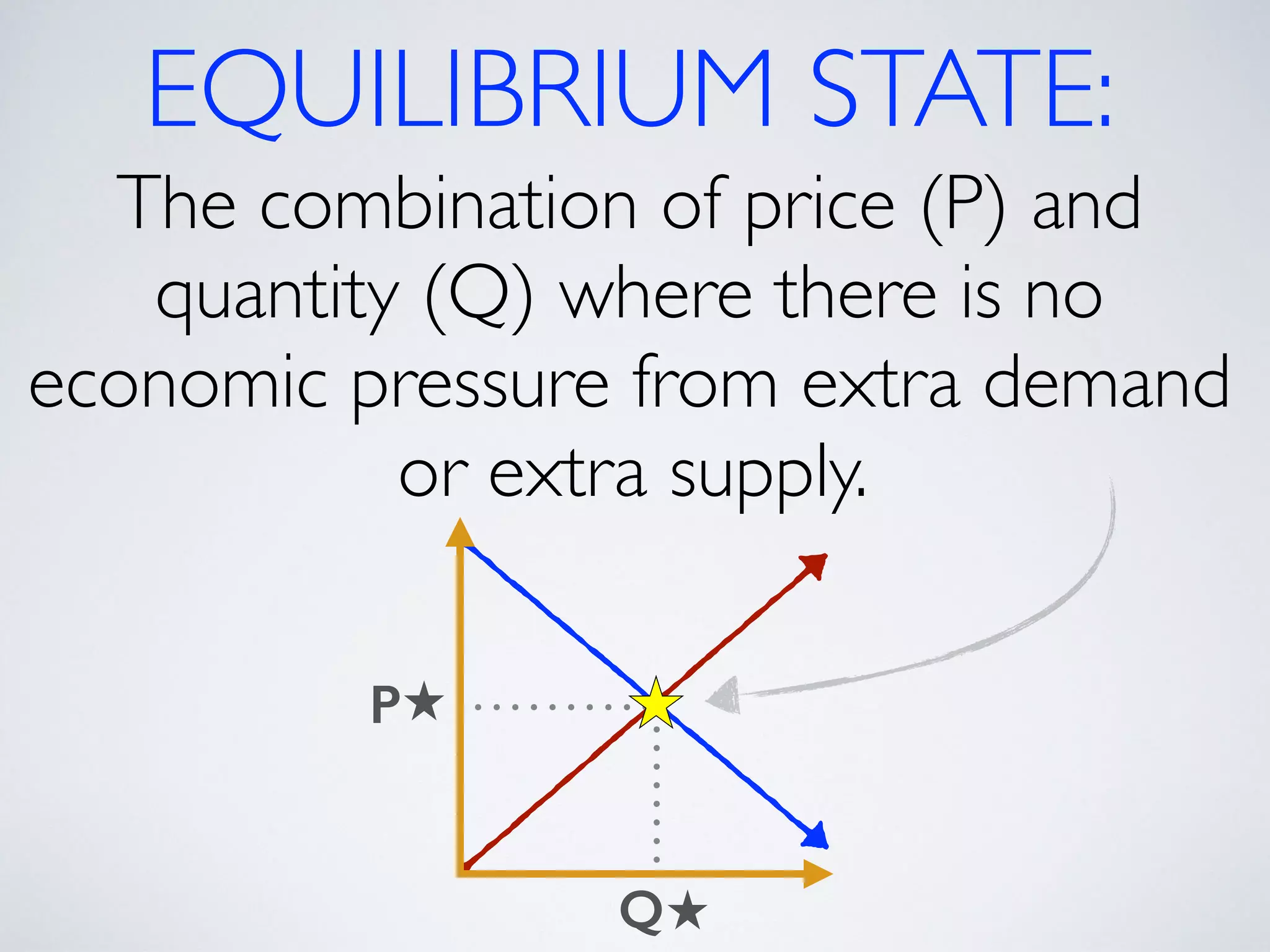
- Equilibrium state is when there are no economic pressures from excess demand or supply
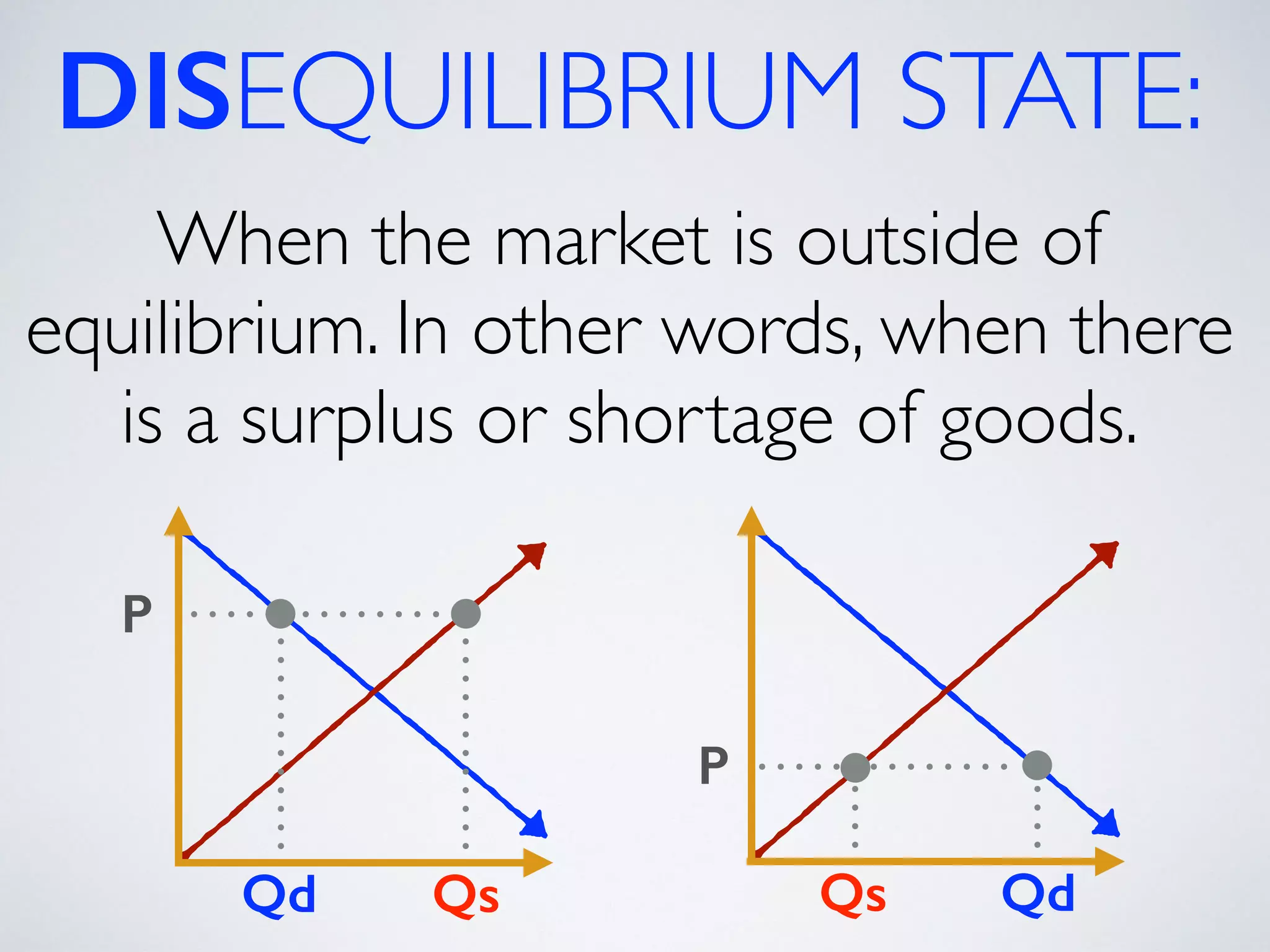
- Disequilibrium state is when there is a surplus or shortage in the market
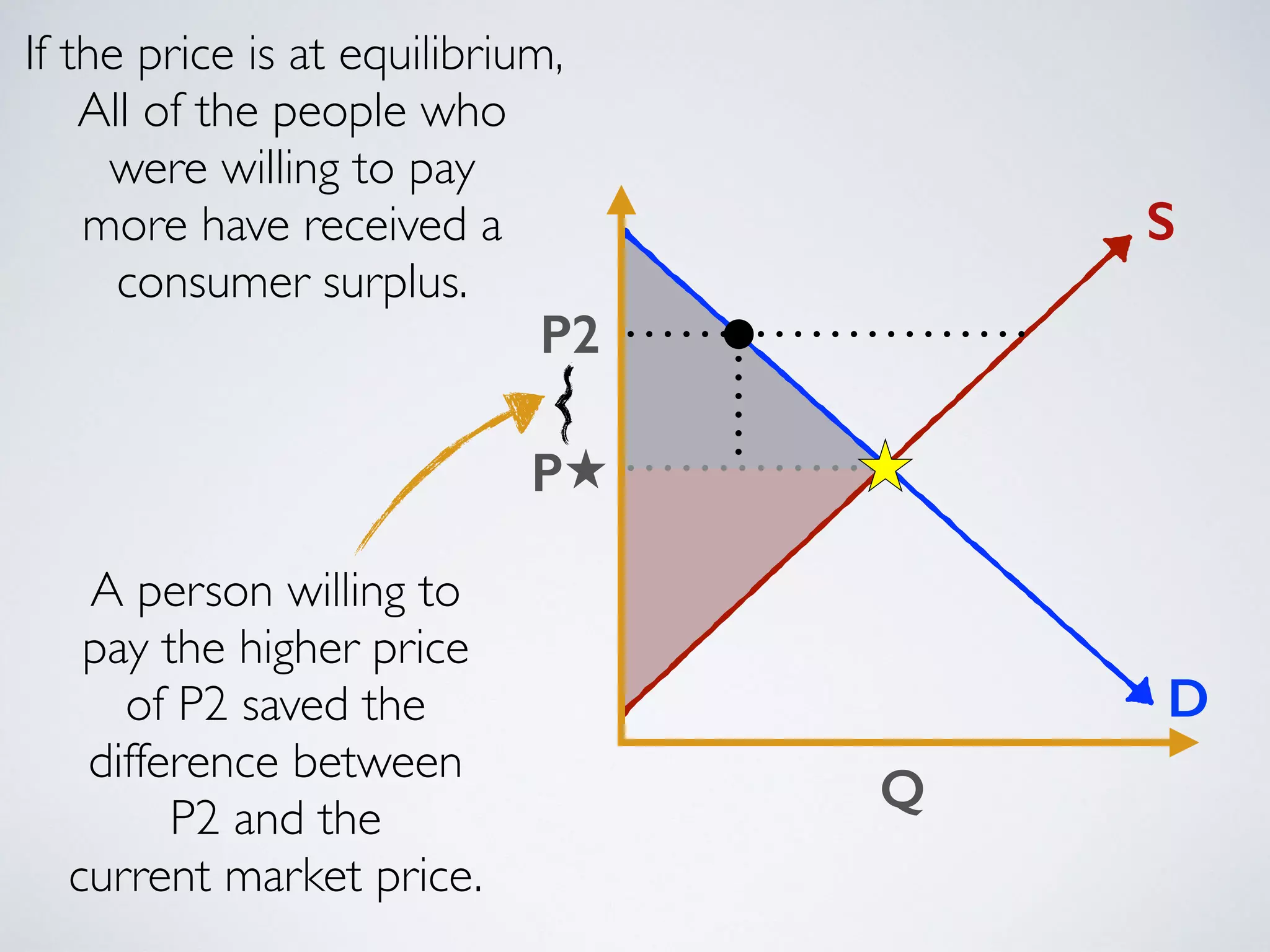
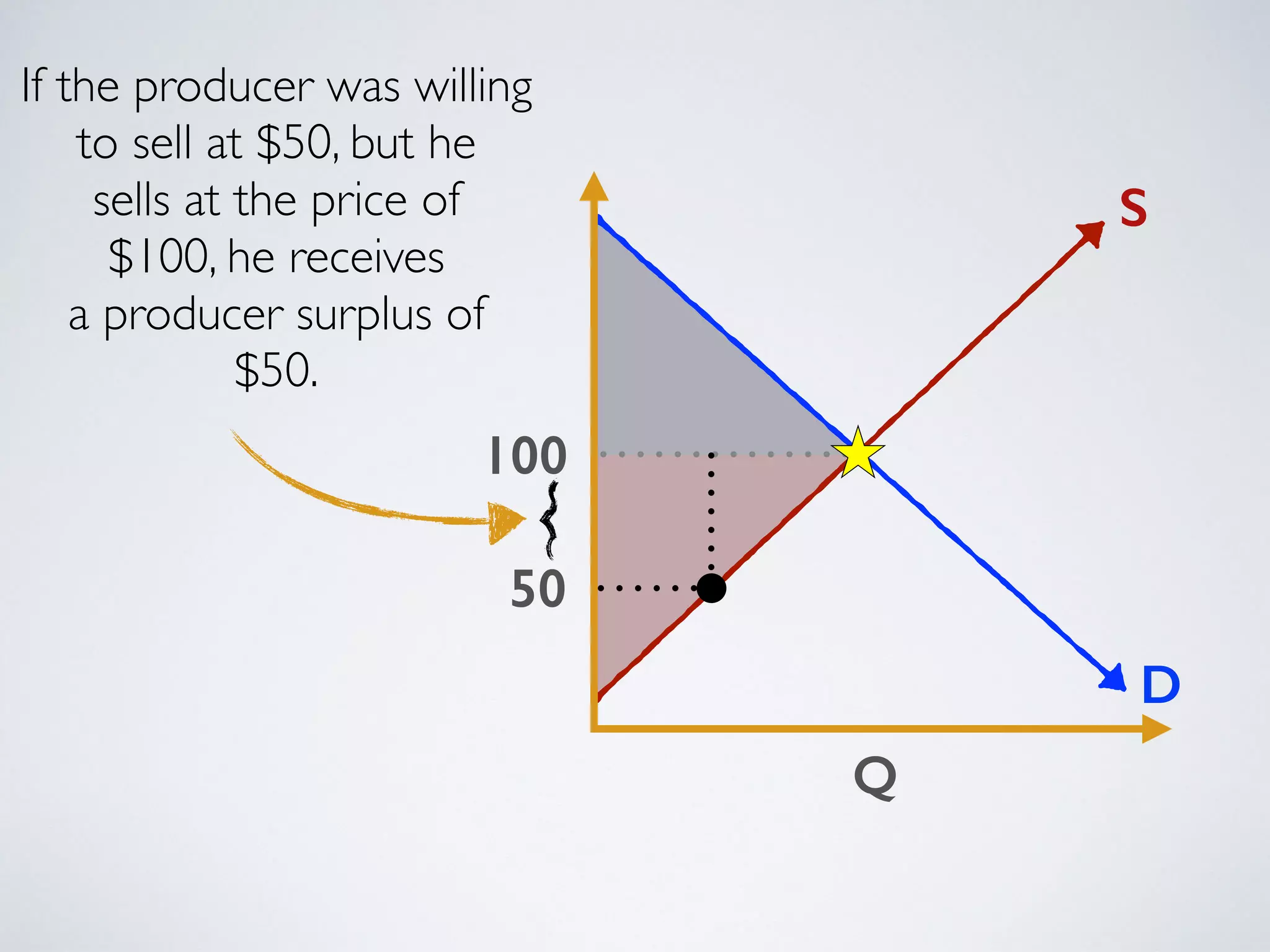
It also defines consumer surplus as the benefit consumers receive from purchasing below the maximum price they would be willing to pay, and producer surplus as the benefit sellers receive from selling above the minimum price they would be willing to accept.
WARM UP:
1.Write your name on the small piece of paper
on your desk.
!
2. When I say “GO” - find 4 different partners:
sign your names on each other’s paper next to
one of the keywords: “opportunity cost,”
“incentive,” and “demand.”
!
* You are not allowed to trade signatures with
someone sitting next to you!
3.
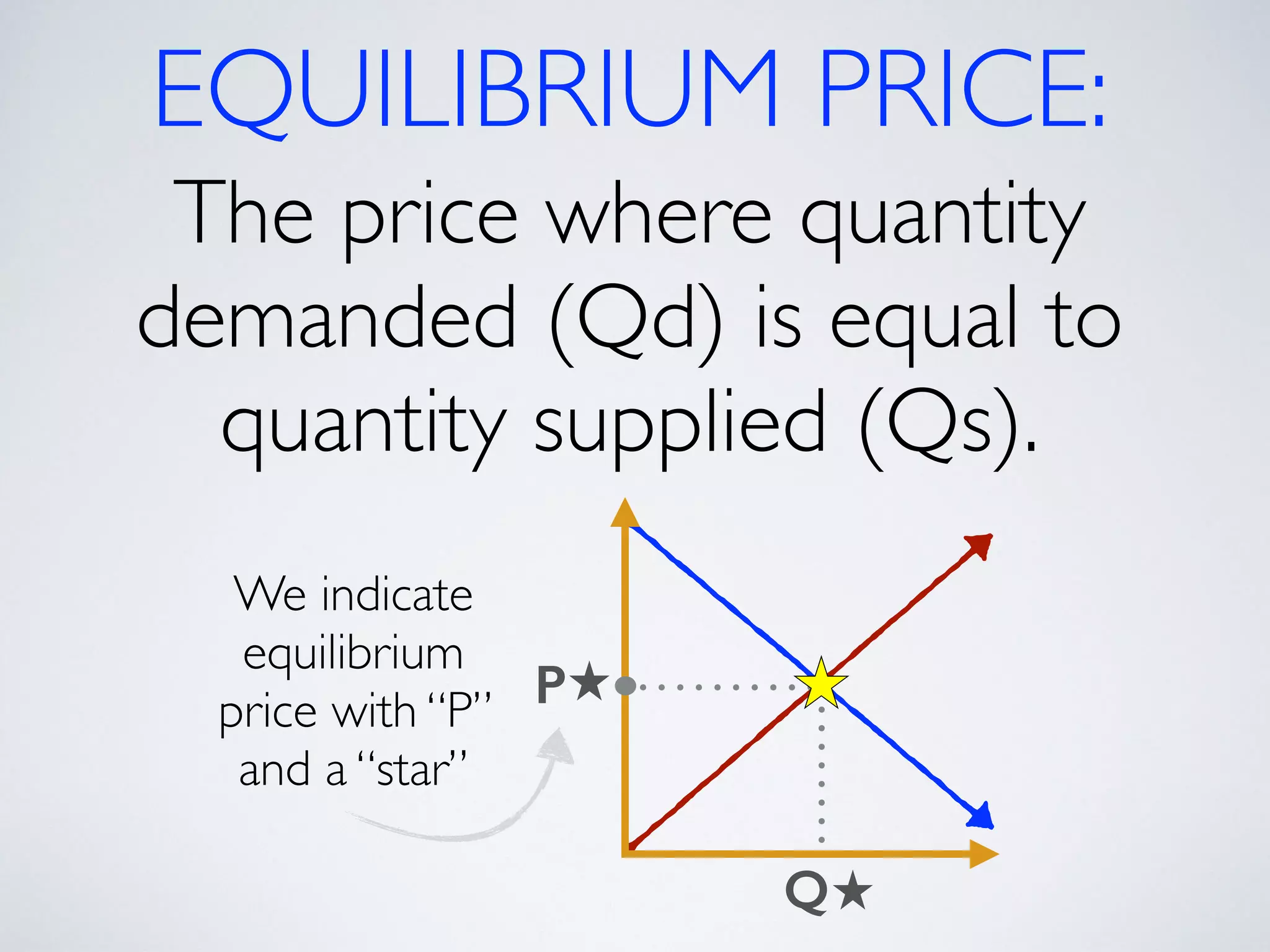
EQUILIBRIUM PRICE:
Theprice where quantity
demanded (Qd) is equal to
quantity supplied (Qs).
Q
P
We indicate
equilibrium
price with “P”
and a “star”
4.
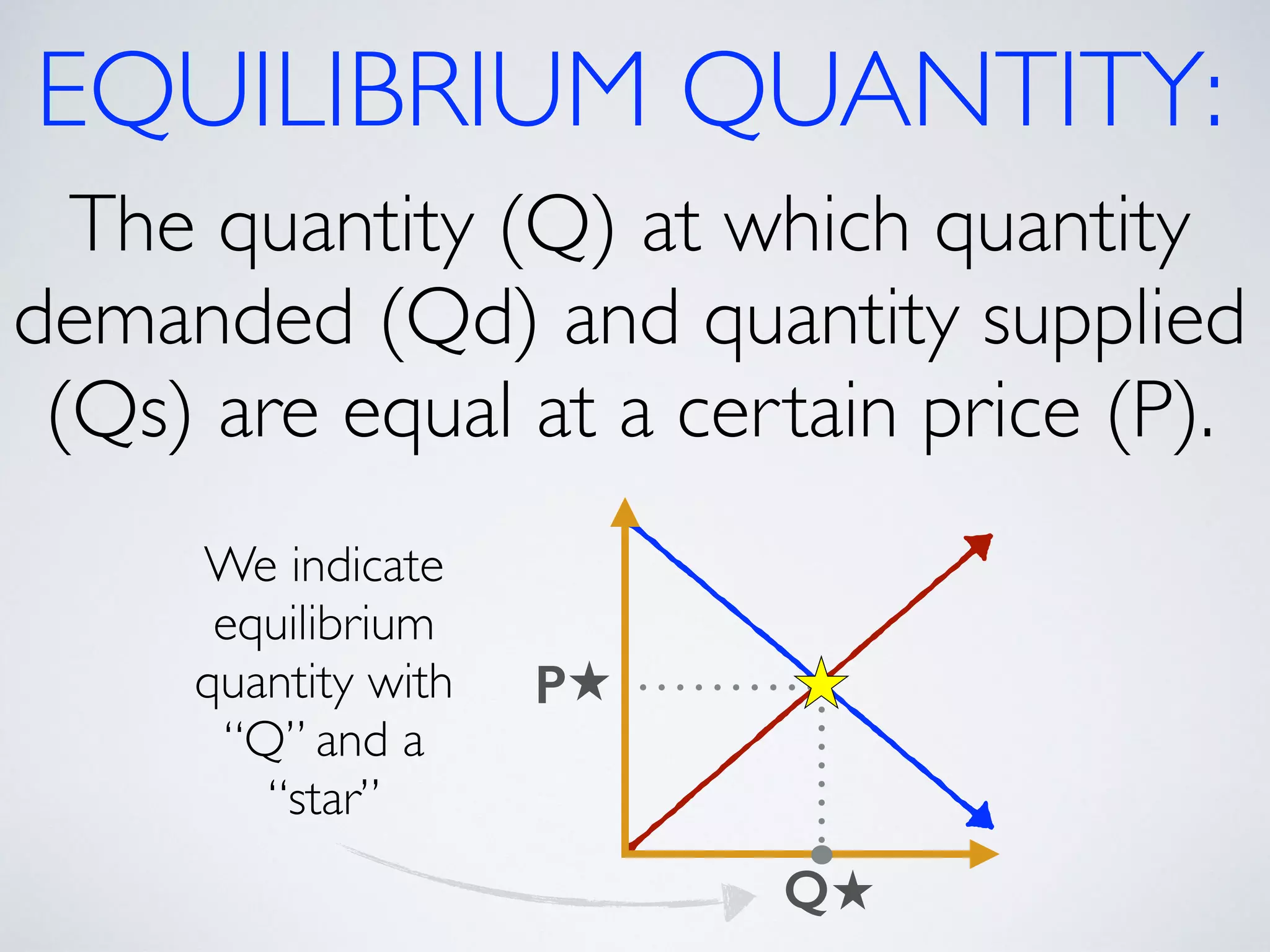
EQUILIBRIUM QUANTITY:
Thequantity (Q) at which quantity
demanded (Qd) and quantity supplied
(Qs) are equal at a certain price (P).
Q
P
We indicate
equilibrium
quantity with
“Q” and a
“star”
5.
EQUILIBRIUM STATE:
Thecombination of price (P) and
quantity (Q) where there is no
economic pressure from extra demand
or extra supply.
Q
P
6.
DISEQUILIBRIUM STATE:
Whenthe market is outside of
equilibrium. In other words, when there
is a surplus or shortage of goods.
Qs
P
P
Qd Qs
Qd
7.
Qs
P
Qd
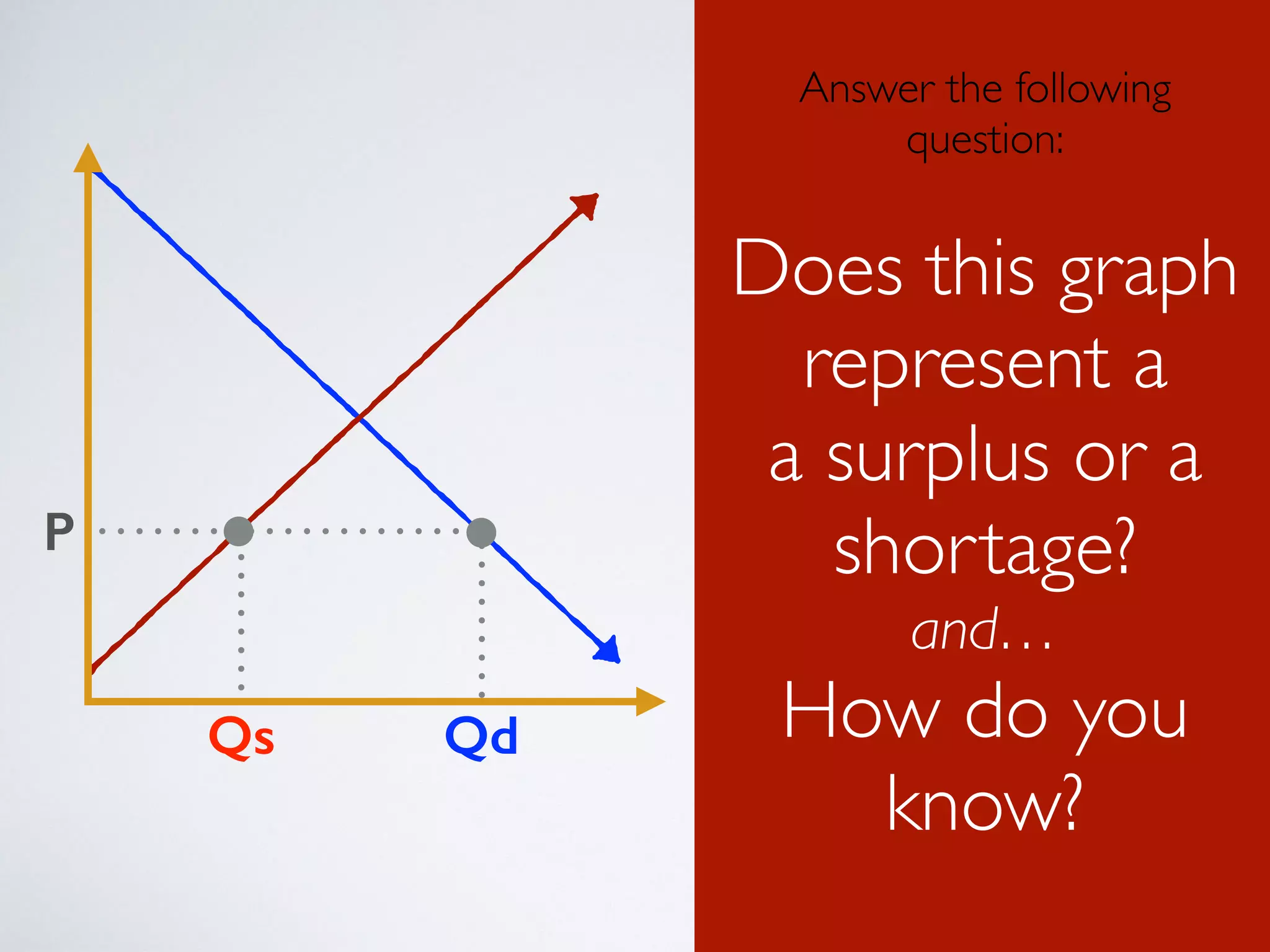
Answer the following
(Don’t answer question:
out loud!)
Does this graph
represent a
a surplus or a
shortage?
Does this graph
represent a
a surplus or a
shortage?
and…
and…
How do you
know?
How do you
know?
8.
Qs
P
Qd
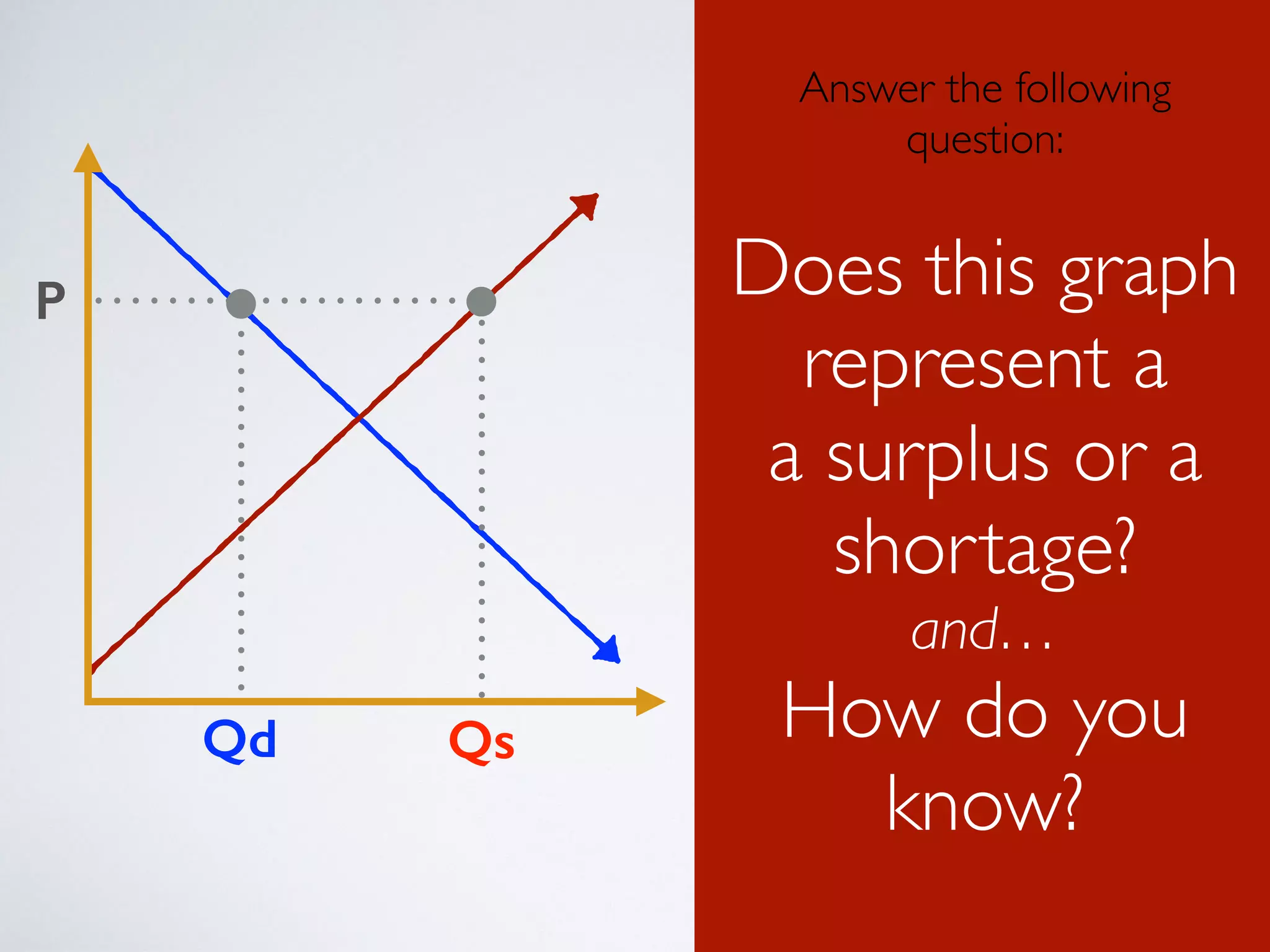
Answer the following
(Don’t answer question:
out loud!)
Does this graph
represent a
a surplus or a
shortage?
and…
How do you
know?
9.
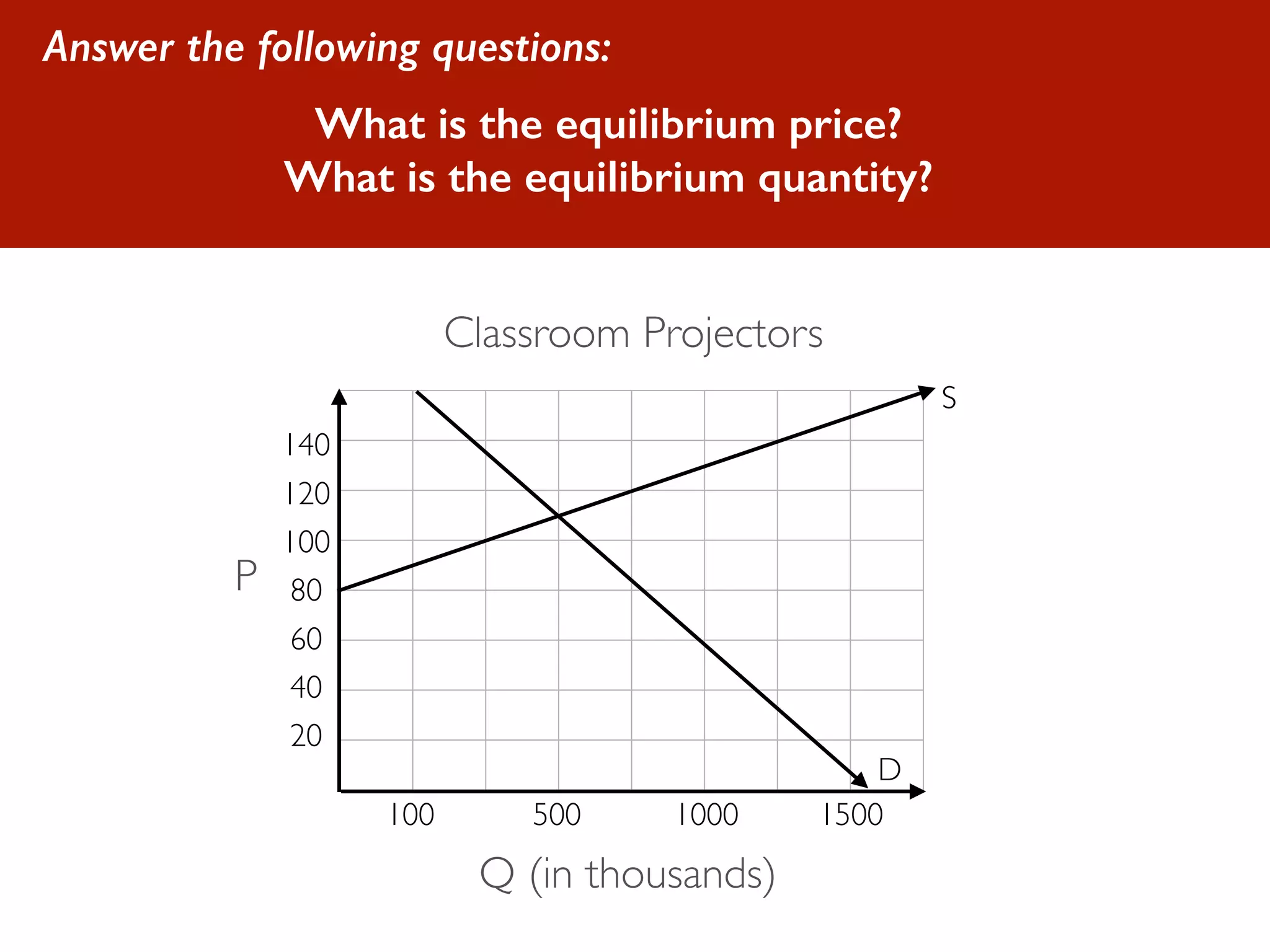
Answer the followingquestions:
Classroom Projectors
140
120
100
80
60
40
20
100 500 1000 1500
S
D
Q (in thousands)
P
What is the equilibrium price?
What is the equilibrium quantity?
10.
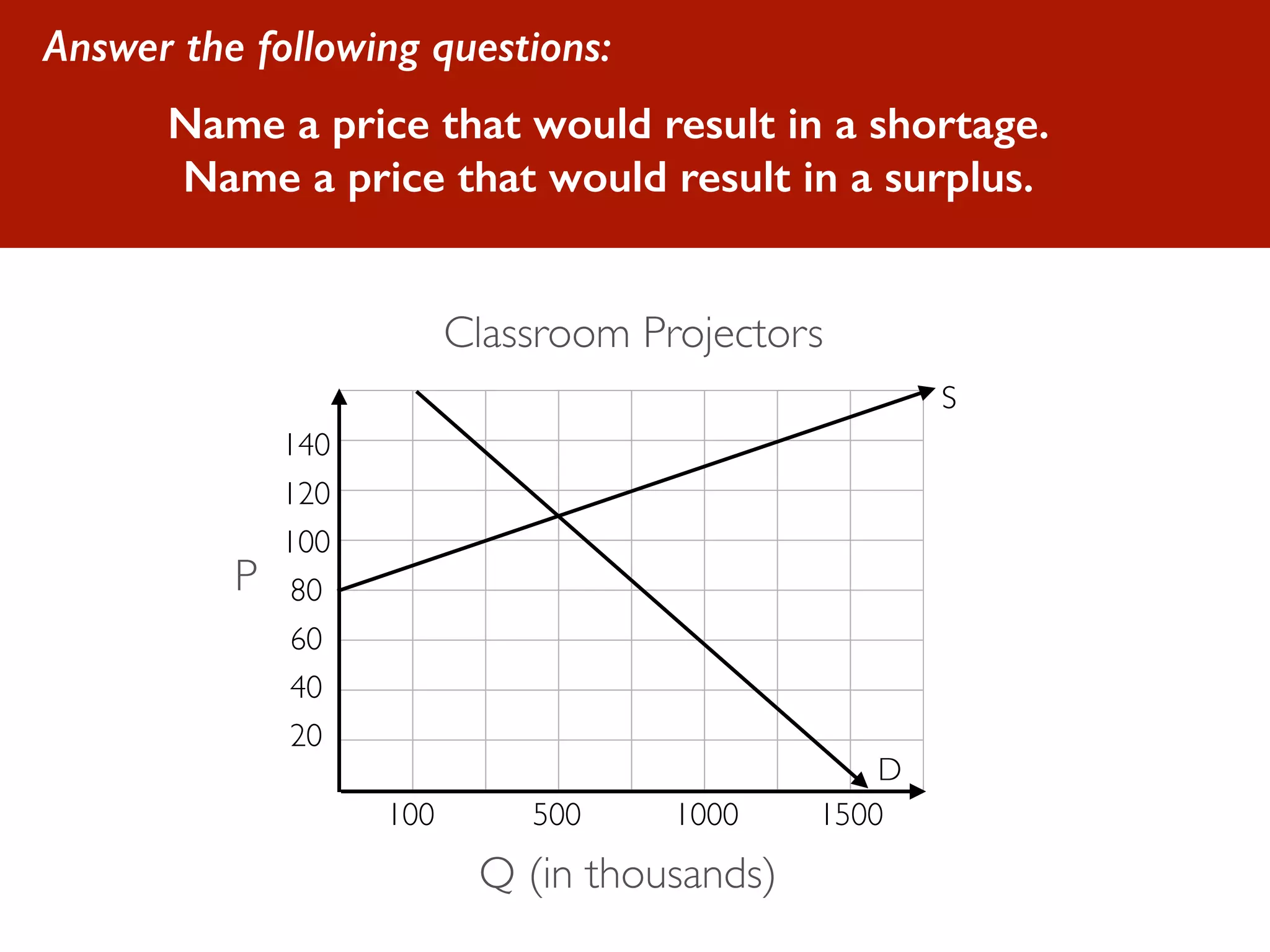
Answer the followingquestions:
Name a price that would result in a shortage.
Name a price that would result in a surplus.
Classroom Projectors
140
120
100
80
60
40
20
100 500 1000 1500
S
D
Q (in thousands)
P
11.
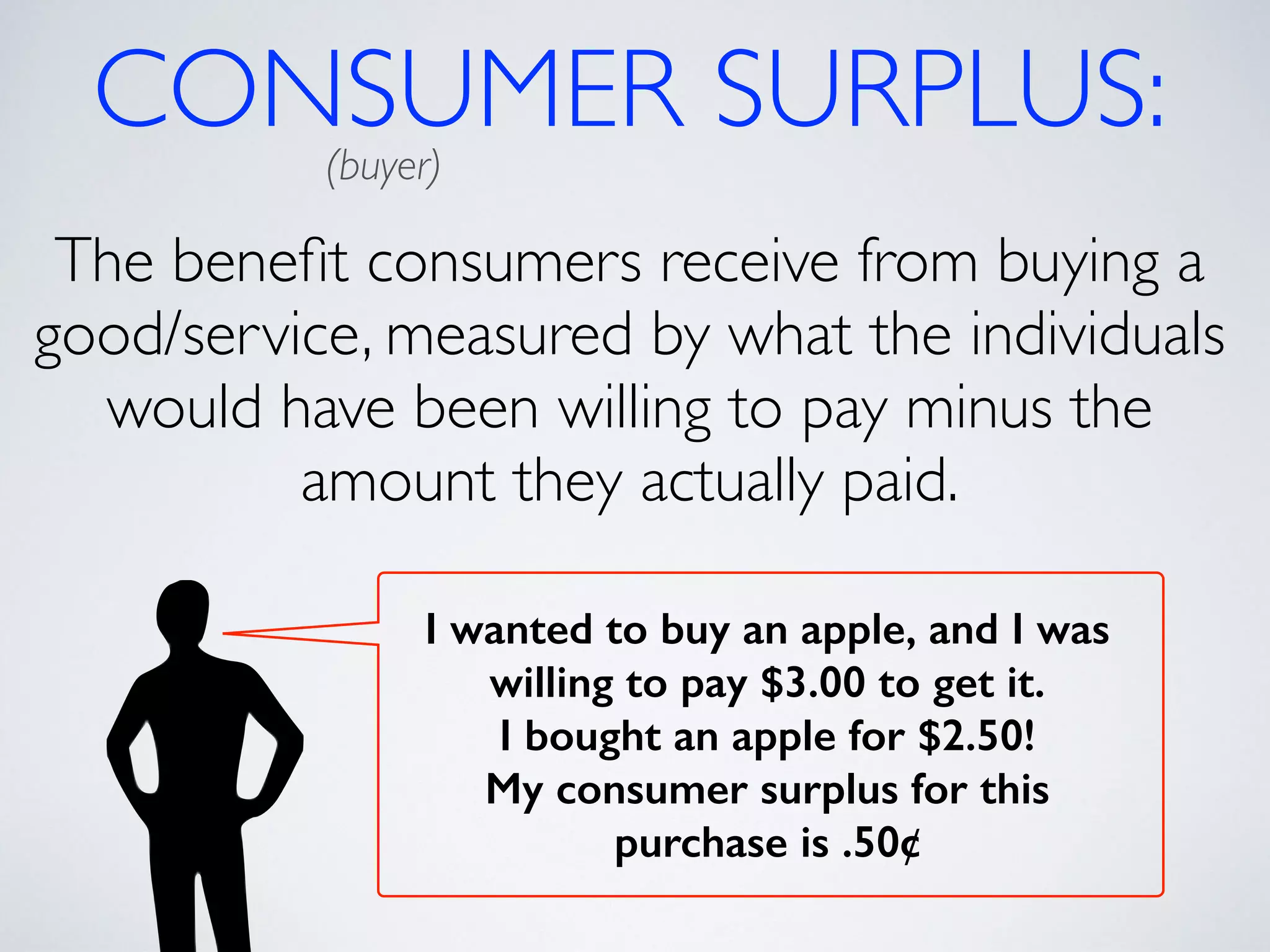
CONSUMER SURPLUS: (buyer)
The benefit consumers receive from buying a
good/service, measured by what the individuals
would have been willing to pay minus the
amount they actually paid.
I wanted to buy an apple, and I was
willing to pay $3.00 to get it.
I bought an apple for $2.50!
My consumer surplus for this
purchase is .50¢
12.
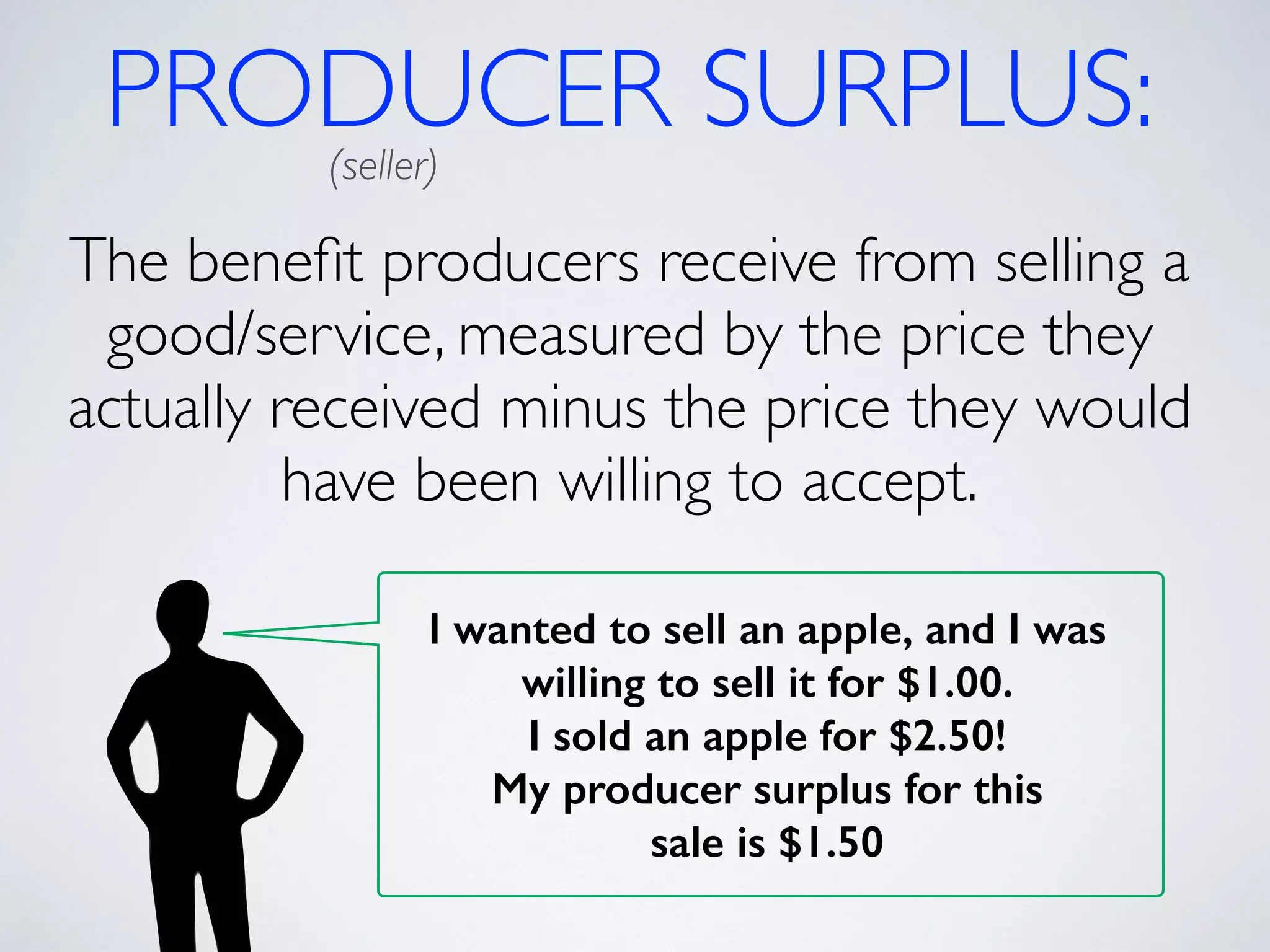
PRODUCER SURPLUS: (seller)
The benefit producers receive from selling a
good/service, measured by the price they
actually received minus the price they would
have been willing to accept.
I wanted to sell an apple, and I was
willing to sell it for $1.00.
I sold an apple for $2.50!
My producer surplus for this
sale is $1.50
13.
CONSUMER &
PRODUCER
SURPLUS:
It doesn’t represent
actual money we have
saved or made, because
the buyer has still spent
money and the seller
has not made any
additional money.
Instead, it’s a theoretical
benefit we receive.
We’re all happy
because we have more
money than we might
have had if the
transaction went differently
14.
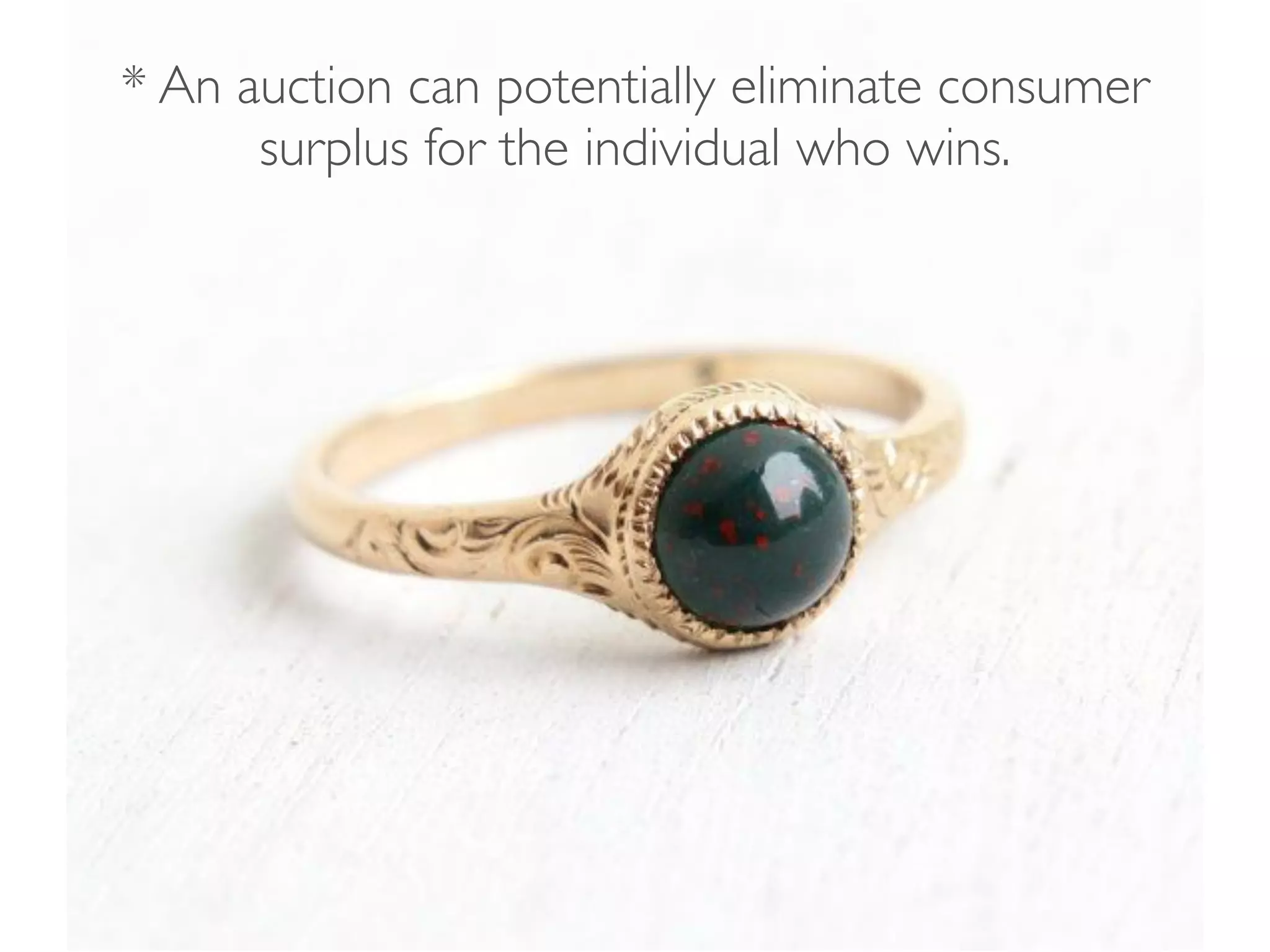
* An auctioncan potentially eliminate consumer
surplus for the individual who wins.
15.
P
Q
S
D
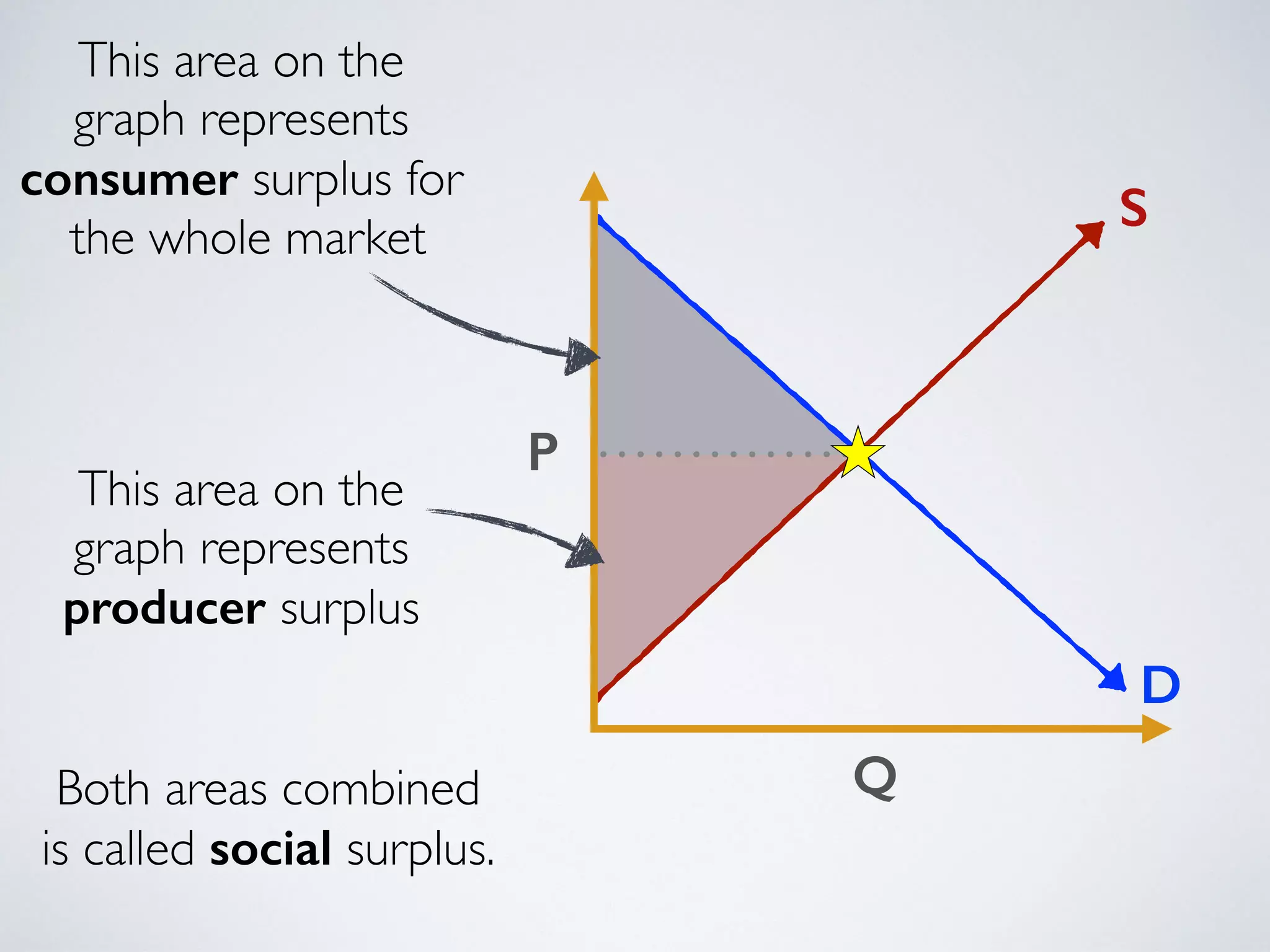
This area on the
graph represents
consumer surplus for
the whole market
This area on the
graph represents
producer surplus
Both areas combined
is called social surplus.
16.
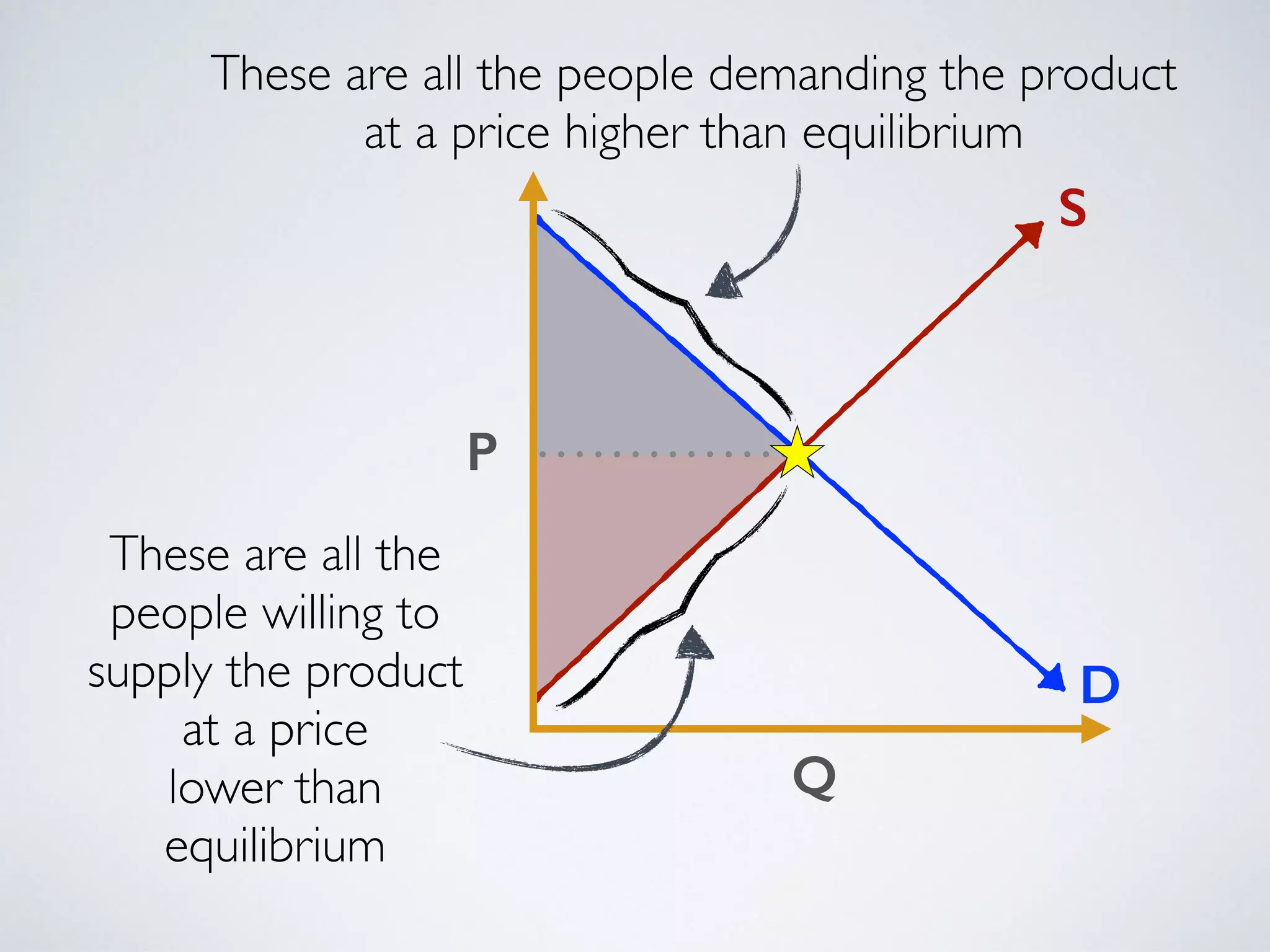
These are allthe people demanding the product
P
Q
S
D
at a price higher than equilibrium
These are all the
people willing to
supply the product
at a price
lower than
equilibrium
17.
Q
S
D
P2
P
!
If the price is at equilibrium,
All of the people who
were willing to pay
more have received a
consumer surplus.
A person willing to
pay the higher price
of P2 saved the
difference between
P2 and the
current market price.
!
18.
Q
S
D
If the producer was willing
to sell at $50, but he
sells at the price of
100
50
$100, he receives
a producer surplus of
$50.
19.
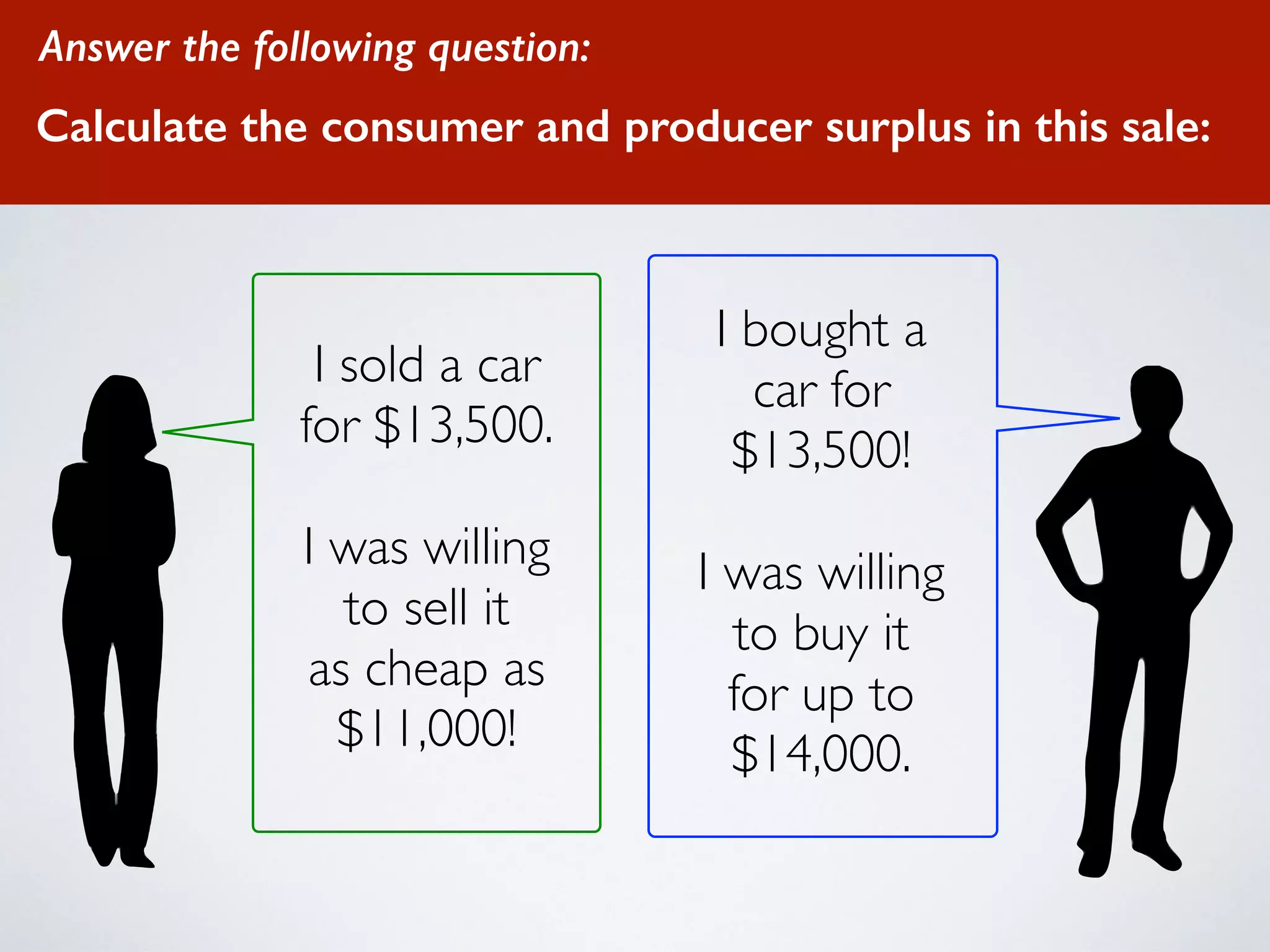
Answer the followingquestion:
Calculate the consumer and producer surplus in this sale:
I sold a car
for $13,500.
!
I was willing
to sell it
as cheap as
$11,000!
I bought a
car for
$13,500!
!
I was willing
to buy it
for up to
$14,000.


![Lesson 8--equilibrium[1]](https://cdn.slidesharecdn.com/ss_thumbnails/lesson-8-equilibrium1-130409201835-phpapp01-thumbnail.jpg?width=640&height=640&fit=bounds)


