LAW OF VARIABLE PROPORTIONS
Statement of law
Law of Variable Proportions states that as we
increase quantity of only one input keeping
other inputs fixed, total product (TP) initially
increases at an increasing rate, then at a
decreasing rate and finally at a negative rate.
LVP is also known as ‘ Law of Returns’ or ‘
Returns to Variable factor ‘.
Assumptions of Law of Variable
Proportions
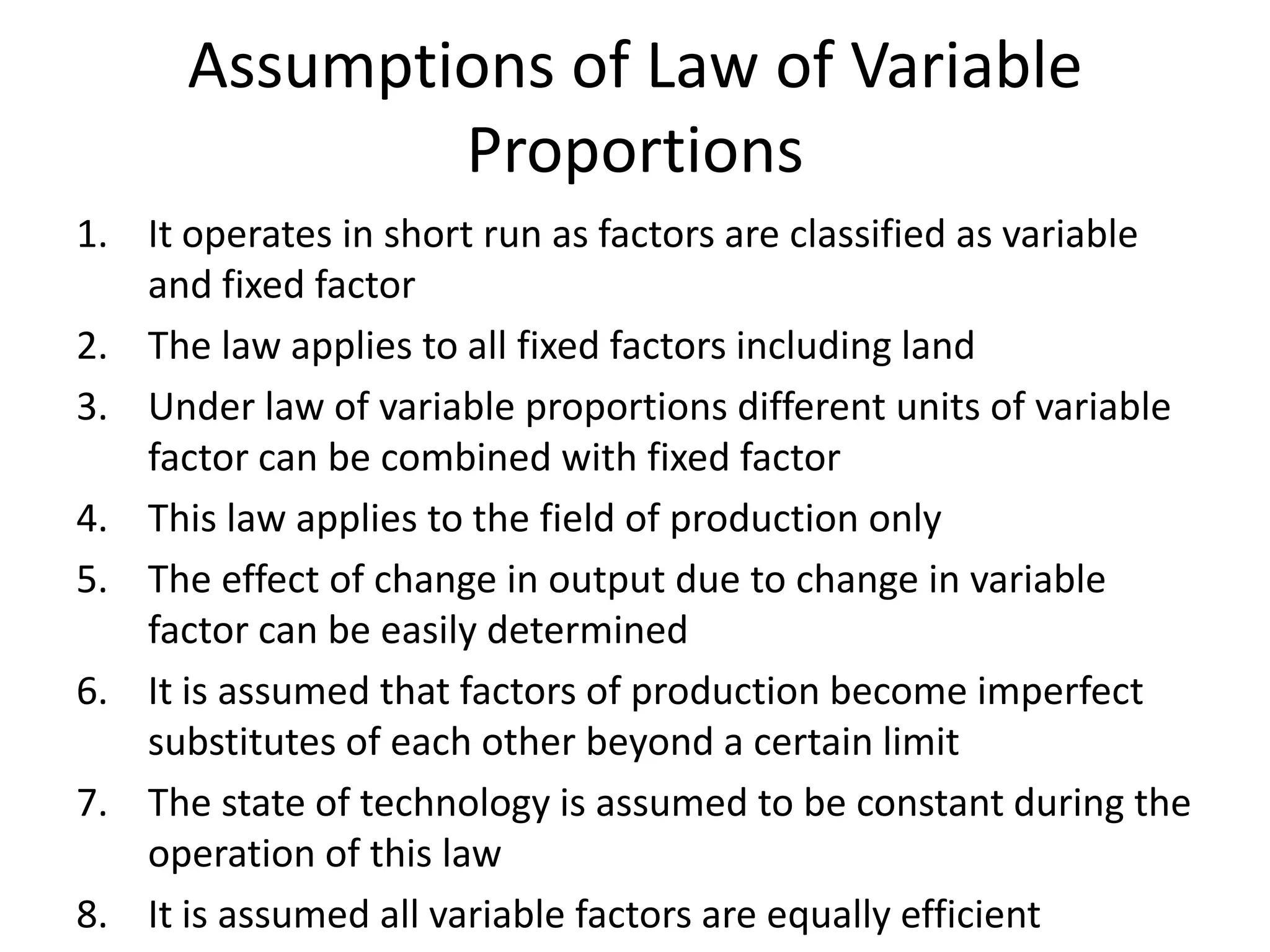
1. It operates in short run as factors are classified as variable
and fixed factor
2. The law applies to all fixed factors including land
3. Under law of variable proportions different units of variable
factor can be combined with fixed factor
4. This law applies to the field of production only
5. The effect of change in output due to change in variable
factor can be easily determined
6. It is assumed that factors of production become imperfect
substitutes of each other beyond a certain limit
7. The state of technology is assumed to be constant during the
operation of this law
8. It is assumed all variable factors are equally efficient
Schedule of law of variable
proportions
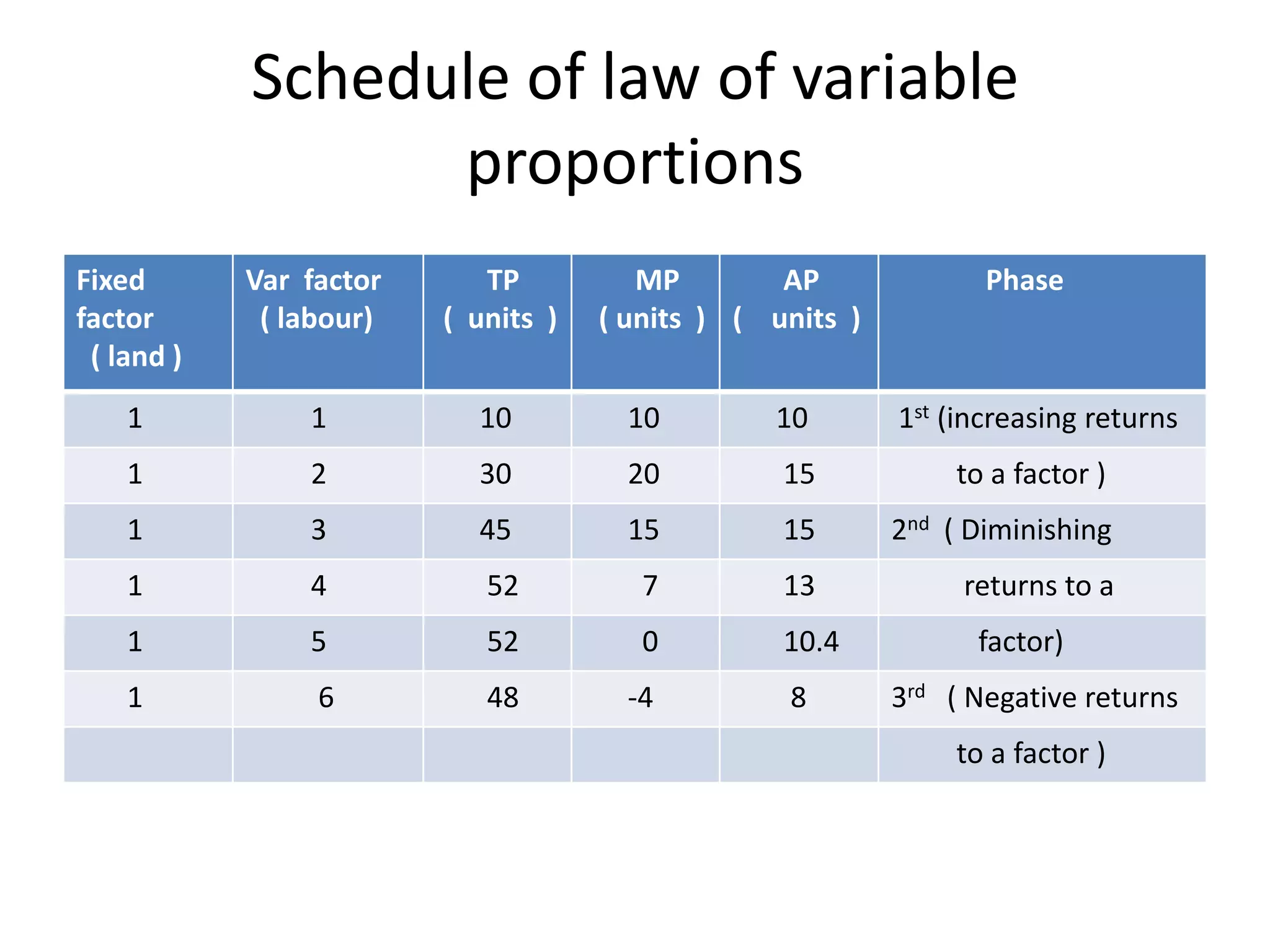
Fixed
factor
( land )

Var factor
( labour)

TP
( units )

MP
AP
( units ) ( units )

1

1

10

10

10

1st (increasing returns

1

2

30

20

15

to a factor )

1

3

45

15

15

2nd ( Diminishing

1

4

52

7

13

returns to a

1

5

52

0

10.4

1

6

48

-4

8

Phase

factor)
3rd ( Negative returns
to a factor )
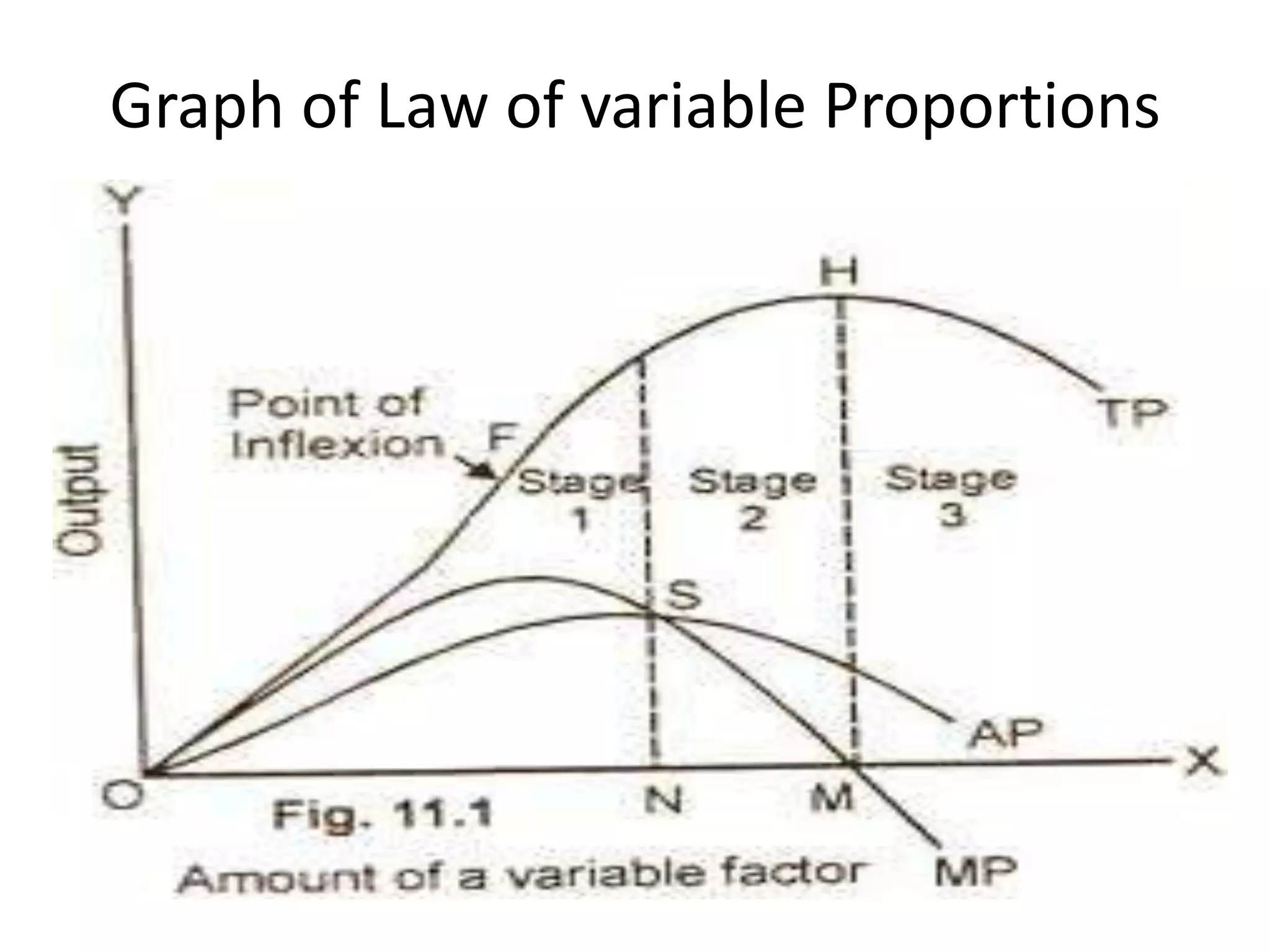
Graph of Law of variable Proportions
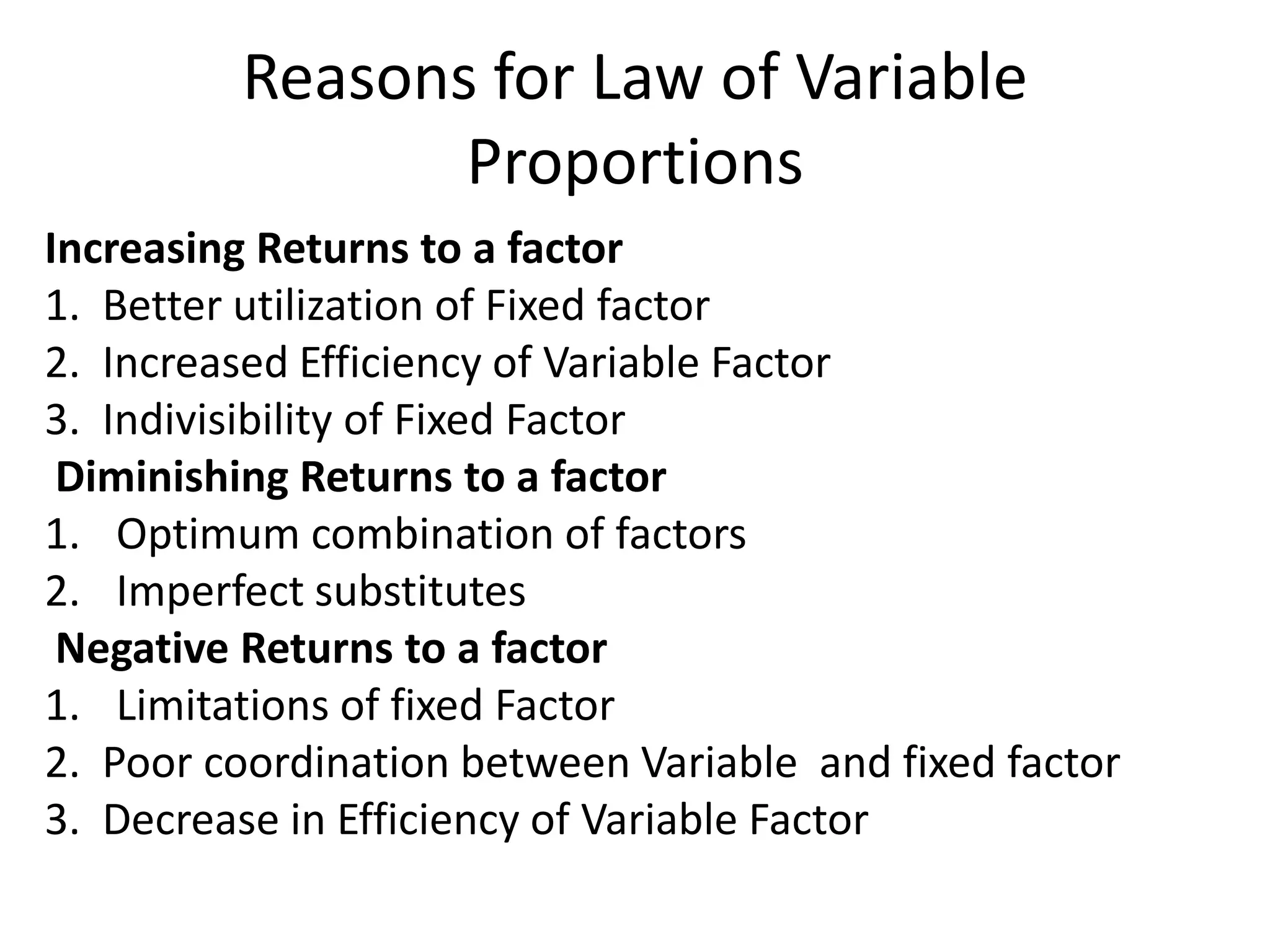
Reasons for Law of Variable
Proportions
Increasing Returns to a factor
1. Better utilization of Fixed factor
2. Increased Efficiency of Variable Factor
3. Indivisibility of Fixed Factor
Diminishing Returns to a factor
1. Optimum combination of factors
2. Imperfect substitutes
Negative Returns to a factor
1. Limitations of fixed Factor
2. Poor coordination between Variable and fixed factor
3. Decrease in Efficiency of Variable Factor

law of variable proportions

  • 1.
    LAW OF VARIABLEPROPORTIONS Statement of law Law of Variable Proportions states that as we increase quantity of only one input keeping other inputs fixed, total product (TP) initially increases at an increasing rate, then at a decreasing rate and finally at a negative rate. LVP is also known as ‘ Law of Returns’ or ‘ Returns to Variable factor ‘.
  • 2.
    Assumptions of Lawof Variable Proportions 1. It operates in short run as factors are classified as variable and fixed factor 2. The law applies to all fixed factors including land 3. Under law of variable proportions different units of variable factor can be combined with fixed factor 4. This law applies to the field of production only 5. The effect of change in output due to change in variable factor can be easily determined 6. It is assumed that factors of production become imperfect substitutes of each other beyond a certain limit 7. The state of technology is assumed to be constant during the operation of this law 8. It is assumed all variable factors are equally efficient
  • 3.
    Schedule of lawof variable proportions Fixed factor ( land ) Var factor ( labour) TP ( units ) MP AP ( units ) ( units ) 1 1 10 10 10 1st (increasing returns 1 2 30 20 15 to a factor ) 1 3 45 15 15 2nd ( Diminishing 1 4 52 7 13 returns to a 1 5 52 0 10.4 1 6 48 -4 8 Phase factor) 3rd ( Negative returns to a factor )
  • 4.
    Graph of Lawof variable Proportions
  • 5.
    Reasons for Lawof Variable Proportions Increasing Returns to a factor 1. Better utilization of Fixed factor 2. Increased Efficiency of Variable Factor 3. Indivisibility of Fixed Factor Diminishing Returns to a factor 1. Optimum combination of factors 2. Imperfect substitutes Negative Returns to a factor 1. Limitations of fixed Factor 2. Poor coordination between Variable and fixed factor 3. Decrease in Efficiency of Variable Factor