SYSTEMIC LUPUS ERYTHEMATOUS
Dr.Sarjana Tiwari
S.M.S medical
college
jaipur
CASE:
 30 year/Female
 fever for 3 months
 multiple joint pains (bilateral knees, wrist and
fingers) and swelling for 2 months
 rash over face and body for 1 month
History of present illness
 Fever, mild, intermittent
 Joint pain, associated with mild swelling and limitation
of movement.
 Rash erythematous, non-itchy, photosensitive
 No h/o morning stiffness of joints, altered sensorium,
any prolonged drug intake or drug allergy, tick
infestation in house
PAST HISTORY :
PERSONAL HISTORY
FAMILY HISTORY insignificant
OCCUPATIONAL HISTORY
PHYSICAL EXAMINATION:
 Febrile (100.5 F)
 HR : 76/min, regular
 BP : 130/80 mmHg
 RR : 18/min
 Pallor:++
 Icterus/cyanosis/clubbing/edema -
 No lymphadenopathy
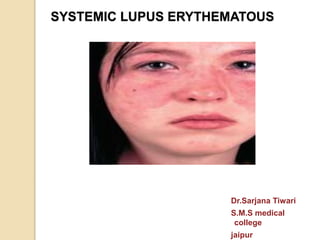
 Erythematous rash on face extending over the cheeks and
bridge of the nose , sparing the nasolabial folds. Rash over
body, erythematous.
 Musculoskeletal- mild swelling and limitation of
movements at bilateral proximal inter-phalangeal
and bilateral wrist joints.
 CVS : NAD
 CNS: NAD
 RESP SYSTEM: NAD
Probable diagnosis
SLE Rheumatoid
arthritis
Dermatomyositis
infective
Hematological
malignancies
INVESTIGATIONS:
 HEMOGRAM
 Hb- 8 g/dl
 WBC- 3.6 ×10⁹/L
 DLC- N 72%, L 26%, M 2%
 Platelets – 113 x 109/L
 Peripheral Smear : no atypical cells
 ESR – 118 mm
Renal & Liver Function Tests
 Blood urea – 23mg/dl
 Serum Creatinine – 1.5 mg/dl
 Serum Bilirubin - 0.6 mg/dl
 Total Protein/ Albumin - 6.5 / 2.8 mg/dl
 SGOT / SGPT - 23/26
Urine Examination
Protein – 2+
WBC- 10-15 / hpf
RBC – 8-10 / hpf
Casts – granular cast present
24 hr urinary protein - 1.0 gm / day
others
 Chest X ray – WNL
 X ray Involved joints - WNL
Revisiting earlier possibilities
SLE Rheumatoid
arthritis
 always
symmetrical joint
invovement
erosive arthritis
Characteristically
has morning
stiffness
 Renal
involvement
uncommon
Dermatomyositis
 involvement of
naso-labial folds
 myopathy not
arthropathy is
common
 no renal or
hematological
involvement
Infective
History long
No history of
tick infestation
No leucocytosis
or neutrophilia
Malignancy
 no
lymphadenopathy
 No organomegaly
 Peripheral smear
normal
 Rheumatoid factor - Negative
 ANA- Positive
 dsDNA – Positive
Final Diagnosis
 Characteristic Malar rash
 Joint symptoms
 Anemia
 Deranged renal functions
 Positive ANA/ ds DNA tests
SYSTEMIC LUPUS
ERYTHEMATOSIS
SYSTEMIC LUPUS ERYTHEMATOSUS
 an autoimmune disease involving multiple organs in
which injury is caused mainly by deposition of
immune complexes and binding of antibodies to
various cells and tissues
 Acute or insidious in onset.
EPIDEMIOLOGY:
• Female : Male – 9 : 1
• Common in 2nd – 3rd decade
• Higher prevalence in blacks and Hispanics
ETIOLOGY
Genetic factors:
 Higher rate of concordance (25%) in monozygotic twins
compared with dizygotic twins(3%)
 HLA DR2 and DR3 increases risk to 2-5 times
 Inherited deficiencies of complement (C2,C4,C1q), can be
associated.
 Non MHC genes –TNFα,MBP, IL-6,HSP 70,STAT4,TLR7
ROLE OF HORMONES IN HUMAN SLE
SUSCEPTIBILITY TO SLE DEVELOPMENT:
• Use of exogenous estrogens increases risk in women
• Certain genes on X chromosome such as TREX-1 plays a role in
gender predisposition
HORMONES,SLE ACTIVITY AND PROGNOSIS
• Disease activity tends to reduce after menopause
• Cyclical fluctuation of disease activity in women during the
menstrual cycle.
ENVIRONMENTAL FACTORS
Exposure to UV lights:
stimulates keratinocytes to produce more IL-1,IL-3,IL-6 and TNFα stimulating B
cells to make more antibody.
decreases T cell DNA methylation, which may lead to overexpression of
LFA(lymphocyte function associated antigen-1).These T cells may then become
autoreactive, resulting in autoantibody formation.
• Silica dust, cigraette smoke,certain drugs may also increase the risk.
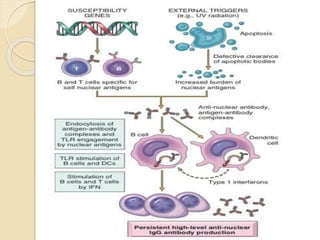
IMMUNOLOGICAL FACTORS:
 primarily a disease of immune dysregulation, secondary to a loss of self tolerance.
 The mediators of SLE are autoantibodies and immune complexes they form with the
antigens
 Defective phagocytosis and clearing of immune complexes, leads to their
persistence
 the increased autoantibody production and persistence is not downregulated
appropriately by anti-idiotypic antibodies, by CD 4+regulatory Tcells or by CD 8+
suppressor T cells.
 Some immune complexes particularly those containing DNA or RNA activate the
innate immune system viaTLR9 or TLR7 respectively.
 Dendritic cells are activated and release type 1 interferons and TNFα, T cells release
IFN-gamma, IL 6, IL 10, while NK Cells and T Cells fail to release adequate
quantities of TGF- beta, thus favouring continued autoantibody formation.
CLINICAL MANIFESTATIONS
Constitutional symptoms
non-specific symptoms
- Fatigue
- Fever
- Weight Loss
The large, friable vegetations are denoted by
arrows in infective endocarditis
INFECTIVE ENDOCARDITIS
NON BACTERIAL
ENDOCARDITIS
Nearly complete row of thrombotic
vegetations along the line of closure of
the mitral valve leaflets
 CLASSIFICATION CRITERIA
EVALUATION FOR SUSPECTED SLE
 The diagnosis of SLE must be based on proper constellation
of clinical findings and laboratory evidence.
INITIAL TESTS:
 Full blood count with Differentials:
 May reveal leukopenia, mild anemia and thrombocytopenia
 ESR and CRP
 Levels are elevated
 However the level of ESR elevation may show a discrepency
relative to normal CRP level in SLE flares
 Clotting tests
 A prolongation of the partial thrombomboplastin time would
suggest the presence of lupus anticoagulant and should
prompt checking of antiphospholipid antibodies.
 Blood culture / Urine culture
 To screen for infection
 Urinalysis with microscopy
 May reveal proteinuria, hematuria and/or cellular casts
 Serum urea and creatinine
 Elevated level may be seen in renal dysfunction
 Complement levels
 C3 and C4 levels are often depressed in active SLE as a result of
consumption by immune complex induced inflammation.
 ANAASSAY
 The ANA assay is an ideal screening test because of its sensitivity
(95%) and simplicity.
 Technique to detect ANA:
 The indirect immunofluorescence test is most widely used assay for
detection of ANA
 Titre>1:40 is considered positive
STAINING PATTERNS:
OTHER AUTOANTIBODIES:
Antibodies prevelance
Anti-ds DNA 70%
Anti-Sm antigen 30%
Anti-Ro/SSA 30%
Anti-La/SSB 20%
Anti-U1RNP 25%
Antiribosomal P protein 10%
 Anti –ds DNA and Anti-Sm antigen is highly specific for SLE
LE TEST
 Lupus erythematosus (LE) cell test was once performed to diagnose
SLE but has now been replaced by ANA test.
 LE cell is any phagocytic leukocyte (neutrophil or macrophage) that
has engulfed the denatured nucleus of an injured cell.
 A lupus erythematosus (LE) cell test is considered positive when
approximately 2%-30% of the cells seen on the slide in the neutrophil
count are LE cells.
LE CELL:
IMAGING
 Diagnostic imaging may be valuable, but is not routinely obtained
unless indicated by the presence of symptoms, clinical findings, or
laboratory abnormalities. Examples include:
 Plain radiographs of swollen joints. Unlike affected joints in RA,
erosions are observed infrequently in SLE
 Renal ultrasonography to assess kidney size and to rule out urinary
tract obstruction when there is evidence of renal impairment
 Chest radiography (eg, for suspected pleural effusion, interstitial
lung disease, cardiomegaly).
 Echocardiography
 suspected pericardial involvement, to assess for a source of emboli, or
noninvasive estimation of pulmonary artery pressure; and for evaluation of
suspected valvular lesions, such as verrucae, etc
 Computed tomography (CT)
 Evaluating abdominal pain, suspected pancreatitis, interstitial lung disease,
etc
 Magnetic resonance imaging (MRI)
 Evaluating focal neurologic deficits or cognitive dysfunction
BIOPSY:
• RENAL BIOPSY:
 The 2012 American College of Rheumatology (ACR) guidelines for lupus
nephritis recommend renal biopsy for all cases of active , previously
untreated lupus nephritis, unless contraindicated.
 Renal biopsy is used to:
 confirm the presence of lupus nephritis;
 to aid in classification of systemic lupus erythematous (SLE) nephritis
based on the International Society of Nephrology/Renal Pathology Society
(ISN/RPS) classification
 to guide therapeutic decisions.
INDICATIONS OF RENAL BIOPSY
 Increasing serum creatinine in the absence of strong evidence for another
etiology (eg, sepsis, hypovolemia, medication)
 Proteinuria > 1.0 g per 24 hours, as confirmed by 24-hour urine
specimens or spot protein/spot creatinine ratios
 Proteinuria ≥ 0.5 g per 24 hours, along with either
 (1) hematuria ( ≥5 RBCs/hpf ) or
 (2) cellular casts, as confirmed by a minimum of 2 tests within a short
period and in the absence of alternative causes
NORMAL GLOMERULUS
MESENGIAL PROLIFERATIVE
GN
. Light micrograph of a normal glomerulus.
There are only 1 or 2 cells per capillary tuft, the
capillary lumens are open, the thickness of the
glomerular capillary wall (long arrow) is similar
to that of the tubular basement membranes
(short arrow), and the mesangial cells and
mesangial matrix are located in the central or
stalk regions of the tuft (arrows).
Light micrograph of a mesangial
glomerulonephritis showing segmental areas of
increased mesangial matrix and cellularity
(arrows).
Light micrograph showing a membranoproliferative pattern in lupus nephritis,
characterized by areas of cellular proliferation (long arrows) and by thickening of the
glomerular capillary wall (due to immune deposits) that may be prominent enough to
form a "wire-loop" (short arrows). Although proliferative changes can be focal
(affecting less than 50 percent of glomeruli), disease of this severity is usually diffuse
MEMBRANOPROLIFERATIVE
GN
 Kidney biopsy from a
patient with diffuse
proliferative lupus
nephritis showing, on
immunofluorescence
microscopy, massive,
lumpy deposits of IgG
Light micrograph of membranous lupus nephritis. The changes are
similar to those in any form of membranous nephropathy with diffuse
thickening of the glomerular capillary wall being the major abnormality
(short arrows). Focal areas of mesangial expansion and hypercellularity
(long arrows) are the only findings suggestive of an underlying disease
such as lupus, although they can also be seen in idiopathic membranous
nephropathy.
MEMBRANOUS LUPUS NEPHRITIS
Electron micrograph of a normal glomerular
capillary loop showing the fenestrated
endothelial cell (Endo), the glomerular
basement membrane (GBM), and the
epithelial cells with its interdigitating foot
processes (arrow). The GBM is thin, and no
electron-dense deposits are present. Two
normal platelets are seen in the capillary
lumen.
Electron micrograph of membranous lupus
nephritis. The subepithelial immune deposits
(D) are characteristic of any form of
membranous nephropathy, but the
intraendothelial tubuloreticular inclusions
(arrow) strongly suggest underlying lupus.
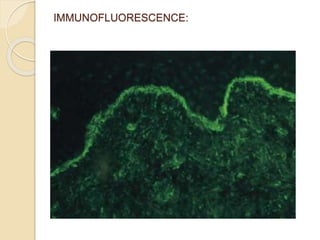
Skin biopsies:
 Histologically the
involved areas shows:
 vacuolar degeneration
of the basal layer of
epidermis
 In the dermis there is
edema and perivascular
inflammation.
IMMUNOFLUORESCENCE:
POOR PROGNOSTIC INDICATORS
 Male sex
 Black racial background
 Young age at onset of nephritis
 Hypertension
 Nephrotic syndrome
 Elevated creatinine level(>3 mg/dl) at presentation
 Renal biopsy findings showing diffuse lupus nephritis
Goals of therapy
– Stop and reverse ongoing organ inflammation
– Prevent or limit irreversible end-organ damage
the average 10 year survival rates >90%, with newer
immunosuppressive therapies
Treatement;
 Non pharmocological treatement:
 Sun protection: avoid sun exposure and use sunscreens.
 Pharmocological treatement:
 Hydroxychloroquine/chloroquine
 Prednisolone
 Immunosuppresive drugs like
azathioprine,methotrexate,cyclophosphamide
 Belimumab:B – lymphocyte stimulator specific inhibitor
Diffrential diagnosis:
CONDITION DIFFERENTIATING
SIGNS/SYMPTOMS
DIFFERENTIATING
TESTS
Rheumatoid
arthritis
• May be difficult to differentiate
clinically
• Patients with SLE frequently
presents with pattern similar to
arthritis, although it tends to be
less symmetrical
• In RA Joint x-rays
demonstrate
symmetrical, erosive
arthritis.
• Serologic abnormalities
such as anti-cyclic
citrullinated peptides
(CCP) suggests RA,
Systemic sclerosis
• Raynaud's phenomenon is
present in almost all patients
• Patients with SLE often have
Raynaud's phenomenon as well,
but these tend not to ulcerate
compared with patients with
systemic sclerosis.
• systemic sclerosis have
characteristic sclerodactyly and
calcinosis, not present in SLE.
• Auto-antibodies: positive
anti-centromere
antibodies (limited
cutaneous systemic
sclerosis) or anti-
topoisomerase 1 (Scl-
70) antibodies (diffuse
cutaneous systemic
sclerosis).
Sjögren’s syndrome
• patients with Sjögren’s
syndrome should have
objective signs of
keratoconjunctivitis sicca
and xerostomia
• salivary gland biopsy is
essential for diagnosis of
sjogren’s syndrome.The
key histologic feature is
a focal collection or
collections of tightly
aggregated
lymphocytes, which are
typically periductal.
• anti-SSA, anti-SSB are
present in 70-95% of
patients
Mixed connective tissue
disorders
• MCTD is characterised
by a combination of
manifestations similar to
those in SLE, systemic
sclerosis, and myositis.
Difficult to differentiate
clinically.
Auto-antibodies: positive
anti-RNP antibodies are
specific to MCTD.
Patients with MCTD tend to
lack other antibodies such
as anti-Sm, anti-Ro, anti-
La, and anti-dsDNA.
Dermatomyositis (DM)
and polymyositis (PM)
DM and PM demonstrate more
symetrical proximal muscle
weakness
Patients with DM may have
characteristic skin findings
including Gottron’s papules, a
heliotrope eruption and
poikiloderma (including the shawl
and V signs).
The specific anti-Jo-1
antibody can help
differentiate the
diagnosis with SLE.
malignancies • Leukemia or myelodysplastic
syndromes may present with
hematologic and constitutional
symptoms similar to those
observed in SLE.
• Patients with lymphoma also
typically have additional findings
such as splenomegaly,
lymphadenopathy, or increased
lactate dehydrogenase (LDH)
levels.
monoclonal expansion
of B and T cells (as
assessed by
immunophenotyping),
monocytosis, or
macrocytosis can
distinguish these
malignancies from SLE.
Behçet’s disease • Oral aphthae are present
in almost all patients with
Behçet’s disease, and
may be observed in
patients with SLE.
• Other overlapping
features include
inflammatory eye
disease, neurologic
disease, vascular
disease, and arthritis
• Behcet’s commonly
occurs in males
patients with Behçet’s are
ANA-negative. Also,
vascular involvement of any
size (small, medium, large)
is more commonly a feature
of Behçet’s disease rather
than SLE.
Drug induced lupus • The clinical symptoms
are mild and reversable
after discontinue
medication.
• CNS and kidney are
unusually involved.
The antihistone antibodies
differentiate the diagnosis
with SLE.
THANK YOU

SLE Presentation

  • 1.
    SYSTEMIC LUPUS ERYTHEMATOUS Dr.SarjanaTiwari S.M.S medical college jaipur
  • 2.
    CASE:  30 year/Female fever for 3 months  multiple joint pains (bilateral knees, wrist and fingers) and swelling for 2 months  rash over face and body for 1 month
  • 3.
    History of presentillness  Fever, mild, intermittent  Joint pain, associated with mild swelling and limitation of movement.  Rash erythematous, non-itchy, photosensitive  No h/o morning stiffness of joints, altered sensorium, any prolonged drug intake or drug allergy, tick infestation in house
  • 4.
    PAST HISTORY : PERSONALHISTORY FAMILY HISTORY insignificant OCCUPATIONAL HISTORY
  • 5.
    PHYSICAL EXAMINATION:  Febrile(100.5 F)  HR : 76/min, regular  BP : 130/80 mmHg  RR : 18/min  Pallor:++  Icterus/cyanosis/clubbing/edema -  No lymphadenopathy  Erythematous rash on face extending over the cheeks and bridge of the nose , sparing the nasolabial folds. Rash over body, erythematous.
  • 6.
     Musculoskeletal- mildswelling and limitation of movements at bilateral proximal inter-phalangeal and bilateral wrist joints.  CVS : NAD  CNS: NAD  RESP SYSTEM: NAD
  • 7.
  • 8.
    INVESTIGATIONS:  HEMOGRAM  Hb-8 g/dl  WBC- 3.6 ×10⁹/L  DLC- N 72%, L 26%, M 2%  Platelets – 113 x 109/L  Peripheral Smear : no atypical cells  ESR – 118 mm
  • 9.
    Renal & LiverFunction Tests  Blood urea – 23mg/dl  Serum Creatinine – 1.5 mg/dl  Serum Bilirubin - 0.6 mg/dl  Total Protein/ Albumin - 6.5 / 2.8 mg/dl  SGOT / SGPT - 23/26
  • 10.
    Urine Examination Protein –2+ WBC- 10-15 / hpf RBC – 8-10 / hpf Casts – granular cast present 24 hr urinary protein - 1.0 gm / day
  • 11.
    others  Chest Xray – WNL  X ray Involved joints - WNL
  • 12.
    Revisiting earlier possibilities SLERheumatoid arthritis  always symmetrical joint invovement erosive arthritis Characteristically has morning stiffness  Renal involvement uncommon Dermatomyositis  involvement of naso-labial folds  myopathy not arthropathy is common  no renal or hematological involvement Infective History long No history of tick infestation No leucocytosis or neutrophilia Malignancy  no lymphadenopathy  No organomegaly  Peripheral smear normal
  • 13.
     Rheumatoid factor- Negative  ANA- Positive  dsDNA – Positive
  • 14.
    Final Diagnosis  CharacteristicMalar rash  Joint symptoms  Anemia  Deranged renal functions  Positive ANA/ ds DNA tests SYSTEMIC LUPUS ERYTHEMATOSIS
  • 15.
    SYSTEMIC LUPUS ERYTHEMATOSUS an autoimmune disease involving multiple organs in which injury is caused mainly by deposition of immune complexes and binding of antibodies to various cells and tissues  Acute or insidious in onset.
  • 16.
    EPIDEMIOLOGY: • Female :Male – 9 : 1 • Common in 2nd – 3rd decade • Higher prevalence in blacks and Hispanics
  • 17.
    ETIOLOGY Genetic factors:  Higherrate of concordance (25%) in monozygotic twins compared with dizygotic twins(3%)  HLA DR2 and DR3 increases risk to 2-5 times  Inherited deficiencies of complement (C2,C4,C1q), can be associated.  Non MHC genes –TNFα,MBP, IL-6,HSP 70,STAT4,TLR7
  • 18.
    ROLE OF HORMONESIN HUMAN SLE SUSCEPTIBILITY TO SLE DEVELOPMENT: • Use of exogenous estrogens increases risk in women • Certain genes on X chromosome such as TREX-1 plays a role in gender predisposition HORMONES,SLE ACTIVITY AND PROGNOSIS • Disease activity tends to reduce after menopause • Cyclical fluctuation of disease activity in women during the menstrual cycle.
  • 19.
    ENVIRONMENTAL FACTORS Exposure toUV lights: stimulates keratinocytes to produce more IL-1,IL-3,IL-6 and TNFα stimulating B cells to make more antibody. decreases T cell DNA methylation, which may lead to overexpression of LFA(lymphocyte function associated antigen-1).These T cells may then become autoreactive, resulting in autoantibody formation. • Silica dust, cigraette smoke,certain drugs may also increase the risk.
  • 20.
    IMMUNOLOGICAL FACTORS:  primarilya disease of immune dysregulation, secondary to a loss of self tolerance.  The mediators of SLE are autoantibodies and immune complexes they form with the antigens  Defective phagocytosis and clearing of immune complexes, leads to their persistence  the increased autoantibody production and persistence is not downregulated appropriately by anti-idiotypic antibodies, by CD 4+regulatory Tcells or by CD 8+ suppressor T cells.  Some immune complexes particularly those containing DNA or RNA activate the innate immune system viaTLR9 or TLR7 respectively.  Dendritic cells are activated and release type 1 interferons and TNFα, T cells release IFN-gamma, IL 6, IL 10, while NK Cells and T Cells fail to release adequate quantities of TGF- beta, thus favouring continued autoantibody formation.
  • 22.
  • 24.
  • 26.
    The large, friablevegetations are denoted by arrows in infective endocarditis INFECTIVE ENDOCARDITIS NON BACTERIAL ENDOCARDITIS Nearly complete row of thrombotic vegetations along the line of closure of the mitral valve leaflets
  • 27.
  • 30.
    EVALUATION FOR SUSPECTEDSLE  The diagnosis of SLE must be based on proper constellation of clinical findings and laboratory evidence.
  • 31.
    INITIAL TESTS:  Fullblood count with Differentials:  May reveal leukopenia, mild anemia and thrombocytopenia  ESR and CRP  Levels are elevated  However the level of ESR elevation may show a discrepency relative to normal CRP level in SLE flares  Clotting tests  A prolongation of the partial thrombomboplastin time would suggest the presence of lupus anticoagulant and should prompt checking of antiphospholipid antibodies.
  • 32.
     Blood culture/ Urine culture  To screen for infection  Urinalysis with microscopy  May reveal proteinuria, hematuria and/or cellular casts  Serum urea and creatinine  Elevated level may be seen in renal dysfunction  Complement levels  C3 and C4 levels are often depressed in active SLE as a result of consumption by immune complex induced inflammation.
  • 33.
     ANAASSAY  TheANA assay is an ideal screening test because of its sensitivity (95%) and simplicity.  Technique to detect ANA:  The indirect immunofluorescence test is most widely used assay for detection of ANA  Titre>1:40 is considered positive
  • 34.
  • 35.
    OTHER AUTOANTIBODIES: Antibodies prevelance Anti-dsDNA 70% Anti-Sm antigen 30% Anti-Ro/SSA 30% Anti-La/SSB 20% Anti-U1RNP 25% Antiribosomal P protein 10%  Anti –ds DNA and Anti-Sm antigen is highly specific for SLE
  • 36.
    LE TEST  Lupuserythematosus (LE) cell test was once performed to diagnose SLE but has now been replaced by ANA test.  LE cell is any phagocytic leukocyte (neutrophil or macrophage) that has engulfed the denatured nucleus of an injured cell.  A lupus erythematosus (LE) cell test is considered positive when approximately 2%-30% of the cells seen on the slide in the neutrophil count are LE cells.
  • 37.
  • 38.
    IMAGING  Diagnostic imagingmay be valuable, but is not routinely obtained unless indicated by the presence of symptoms, clinical findings, or laboratory abnormalities. Examples include:  Plain radiographs of swollen joints. Unlike affected joints in RA, erosions are observed infrequently in SLE  Renal ultrasonography to assess kidney size and to rule out urinary tract obstruction when there is evidence of renal impairment  Chest radiography (eg, for suspected pleural effusion, interstitial lung disease, cardiomegaly).
  • 39.
     Echocardiography  suspectedpericardial involvement, to assess for a source of emboli, or noninvasive estimation of pulmonary artery pressure; and for evaluation of suspected valvular lesions, such as verrucae, etc  Computed tomography (CT)  Evaluating abdominal pain, suspected pancreatitis, interstitial lung disease, etc  Magnetic resonance imaging (MRI)  Evaluating focal neurologic deficits or cognitive dysfunction
  • 40.
    BIOPSY: • RENAL BIOPSY: The 2012 American College of Rheumatology (ACR) guidelines for lupus nephritis recommend renal biopsy for all cases of active , previously untreated lupus nephritis, unless contraindicated.  Renal biopsy is used to:  confirm the presence of lupus nephritis;  to aid in classification of systemic lupus erythematous (SLE) nephritis based on the International Society of Nephrology/Renal Pathology Society (ISN/RPS) classification  to guide therapeutic decisions.
  • 41.
    INDICATIONS OF RENALBIOPSY  Increasing serum creatinine in the absence of strong evidence for another etiology (eg, sepsis, hypovolemia, medication)  Proteinuria > 1.0 g per 24 hours, as confirmed by 24-hour urine specimens or spot protein/spot creatinine ratios  Proteinuria ≥ 0.5 g per 24 hours, along with either  (1) hematuria ( ≥5 RBCs/hpf ) or  (2) cellular casts, as confirmed by a minimum of 2 tests within a short period and in the absence of alternative causes
  • 43.
    NORMAL GLOMERULUS MESENGIAL PROLIFERATIVE GN .Light micrograph of a normal glomerulus. There are only 1 or 2 cells per capillary tuft, the capillary lumens are open, the thickness of the glomerular capillary wall (long arrow) is similar to that of the tubular basement membranes (short arrow), and the mesangial cells and mesangial matrix are located in the central or stalk regions of the tuft (arrows). Light micrograph of a mesangial glomerulonephritis showing segmental areas of increased mesangial matrix and cellularity (arrows).
  • 44.
    Light micrograph showinga membranoproliferative pattern in lupus nephritis, characterized by areas of cellular proliferation (long arrows) and by thickening of the glomerular capillary wall (due to immune deposits) that may be prominent enough to form a "wire-loop" (short arrows). Although proliferative changes can be focal (affecting less than 50 percent of glomeruli), disease of this severity is usually diffuse MEMBRANOPROLIFERATIVE GN
  • 45.
     Kidney biopsyfrom a patient with diffuse proliferative lupus nephritis showing, on immunofluorescence microscopy, massive, lumpy deposits of IgG
  • 46.
    Light micrograph ofmembranous lupus nephritis. The changes are similar to those in any form of membranous nephropathy with diffuse thickening of the glomerular capillary wall being the major abnormality (short arrows). Focal areas of mesangial expansion and hypercellularity (long arrows) are the only findings suggestive of an underlying disease such as lupus, although they can also be seen in idiopathic membranous nephropathy. MEMBRANOUS LUPUS NEPHRITIS
  • 47.
    Electron micrograph ofa normal glomerular capillary loop showing the fenestrated endothelial cell (Endo), the glomerular basement membrane (GBM), and the epithelial cells with its interdigitating foot processes (arrow). The GBM is thin, and no electron-dense deposits are present. Two normal platelets are seen in the capillary lumen. Electron micrograph of membranous lupus nephritis. The subepithelial immune deposits (D) are characteristic of any form of membranous nephropathy, but the intraendothelial tubuloreticular inclusions (arrow) strongly suggest underlying lupus.
  • 48.
    Skin biopsies:  Histologicallythe involved areas shows:  vacuolar degeneration of the basal layer of epidermis  In the dermis there is edema and perivascular inflammation.
  • 49.
  • 50.
    POOR PROGNOSTIC INDICATORS Male sex  Black racial background  Young age at onset of nephritis  Hypertension  Nephrotic syndrome  Elevated creatinine level(>3 mg/dl) at presentation  Renal biopsy findings showing diffuse lupus nephritis
  • 51.
    Goals of therapy –Stop and reverse ongoing organ inflammation – Prevent or limit irreversible end-organ damage the average 10 year survival rates >90%, with newer immunosuppressive therapies
  • 52.
    Treatement;  Non pharmocologicaltreatement:  Sun protection: avoid sun exposure and use sunscreens.  Pharmocological treatement:  Hydroxychloroquine/chloroquine  Prednisolone  Immunosuppresive drugs like azathioprine,methotrexate,cyclophosphamide  Belimumab:B – lymphocyte stimulator specific inhibitor
  • 53.
  • 54.
    CONDITION DIFFERENTIATING SIGNS/SYMPTOMS DIFFERENTIATING TESTS Rheumatoid arthritis • Maybe difficult to differentiate clinically • Patients with SLE frequently presents with pattern similar to arthritis, although it tends to be less symmetrical • In RA Joint x-rays demonstrate symmetrical, erosive arthritis. • Serologic abnormalities such as anti-cyclic citrullinated peptides (CCP) suggests RA, Systemic sclerosis • Raynaud's phenomenon is present in almost all patients • Patients with SLE often have Raynaud's phenomenon as well, but these tend not to ulcerate compared with patients with systemic sclerosis. • systemic sclerosis have characteristic sclerodactyly and calcinosis, not present in SLE. • Auto-antibodies: positive anti-centromere antibodies (limited cutaneous systemic sclerosis) or anti- topoisomerase 1 (Scl- 70) antibodies (diffuse cutaneous systemic sclerosis).
  • 55.
    Sjögren’s syndrome • patientswith Sjögren’s syndrome should have objective signs of keratoconjunctivitis sicca and xerostomia • salivary gland biopsy is essential for diagnosis of sjogren’s syndrome.The key histologic feature is a focal collection or collections of tightly aggregated lymphocytes, which are typically periductal. • anti-SSA, anti-SSB are present in 70-95% of patients Mixed connective tissue disorders • MCTD is characterised by a combination of manifestations similar to those in SLE, systemic sclerosis, and myositis. Difficult to differentiate clinically. Auto-antibodies: positive anti-RNP antibodies are specific to MCTD. Patients with MCTD tend to lack other antibodies such as anti-Sm, anti-Ro, anti- La, and anti-dsDNA.
  • 56.
    Dermatomyositis (DM) and polymyositis(PM) DM and PM demonstrate more symetrical proximal muscle weakness Patients with DM may have characteristic skin findings including Gottron’s papules, a heliotrope eruption and poikiloderma (including the shawl and V signs). The specific anti-Jo-1 antibody can help differentiate the diagnosis with SLE. malignancies • Leukemia or myelodysplastic syndromes may present with hematologic and constitutional symptoms similar to those observed in SLE. • Patients with lymphoma also typically have additional findings such as splenomegaly, lymphadenopathy, or increased lactate dehydrogenase (LDH) levels. monoclonal expansion of B and T cells (as assessed by immunophenotyping), monocytosis, or macrocytosis can distinguish these malignancies from SLE.
  • 57.
    Behçet’s disease •Oral aphthae are present in almost all patients with Behçet’s disease, and may be observed in patients with SLE. • Other overlapping features include inflammatory eye disease, neurologic disease, vascular disease, and arthritis • Behcet’s commonly occurs in males patients with Behçet’s are ANA-negative. Also, vascular involvement of any size (small, medium, large) is more commonly a feature of Behçet’s disease rather than SLE. Drug induced lupus • The clinical symptoms are mild and reversable after discontinue medication. • CNS and kidney are unusually involved. The antihistone antibodies differentiate the diagnosis with SLE.
  • 58.

Editor's Notes

  • #51 deposition of immonoglobulins and complements along dermoepidermal junction