Suppervised by :-Dr. MUAYAD AL-QASI
 1- Mohammed Abdulbast
 2- Ahmed Salahadeen
 3-Wafaa Shakir
 4-Haneen Hameed
 5- Sumaya khalid
To know the pathophysiology of joint pain .
To list common causes of joint pain
To provide a systematic approach to the investigation
and differential diagnosis of patients presenting with
joint pain.
To describe diagnosis and treatment of the important
joint problems
To describe referral criteria for common joint problems
Joint pain can have multiple causes, a reflection of the
diverse joint diseases, which arise from inflammation,
cartilage degeneration, crystal deposition, infection, and
trauma.
 The initial aim is to localize the source of the joint
symptoms and to determine the type of pathophysiologic
process responsible for their presence.
 The differential diagnoses are generated in large part from
the history and physical examination.
 Laboratory test results serve primarily to confirm clinical
impressions and can be misleading if used indiscriminately.
There may be:
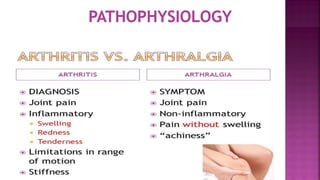
 Arthralgia–only pain in the joints
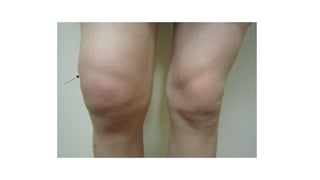
 Inflammation (arthritis) - redness, warmth, and swelling
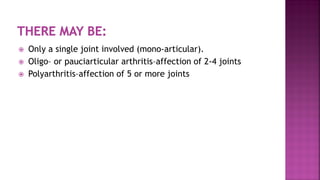
 Only a single joint involved (mono-articular).
 Oligo– or pauciarticular arthritis–affection of 2-4 joints
 Polyarthritis–affection of 5 or more joints
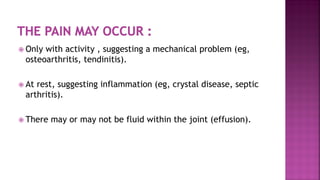
 Only with activity , suggesting a mechanical problem (eg,
osteoarthritis, tendinitis).
 At rest, suggesting inflammation (eg, crystal disease, septic
arthritis).
 There may or may not be fluid within the joint (effusion).
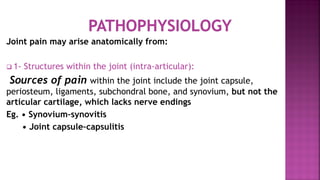
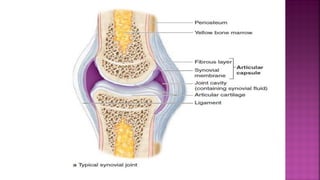
Joint pain may arise anatomically from:
 1- Structures within the joint (intra-articular):
Sources of pain within the joint include the joint capsule,
periosteum, ligaments, subchondral bone, and synovium, but not the
articular cartilage, which lacks nerve endings
Eg. • Synovium–synovitis
• Joint capsule–capsulitis
 2-Structures adjacent or a round to the joint (per-articular)
o Bursa–bursitis
o Tendon sheath–tenosynovitis
o Tendon–tendonitis
o Insertion of tendon, ligament–enthesitis
o Extra-articular disorders (eg, polymyalgia rheumatica,
fibromyalgia).
 3-Referred Pain from more distant site (eg. Bone)
basic pathophysiologic types of
joint disease.
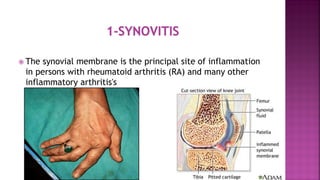
 The synovial membrane is the principal site of inflammation
in persons with rheumatoid arthritis (RA) and many other
inflammatory arthritis's
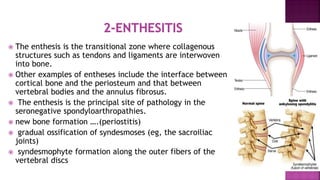
 The enthesis is the transitional zone where collagenous
structures such as tendons and ligaments are interwoven
into bone.
 Other examples of entheses include the interface between
cortical bone and the periosteum and that between
vertebral bodies and the annulus fibrosus.
 The enthesis is the principal site of pathology in the
seronegative spondyloarthropathies.
 new bone formation ….(periostitis)
 gradual ossification of syndesmoses (eg, the sacroiliac
joints)
 syndesmophyte formation along the outer fibers of the
vertebral discs
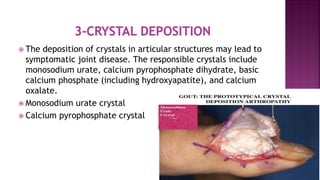
 The deposition of crystals in articular structures may lead to
symptomatic joint disease. The responsible crystals include
monosodium urate, calcium pyrophosphate dihydrate, basic
calcium phosphate (including hydroxyapatite), and calcium
oxalate.
 Monosodium urate crystal
 Calcium pyrophosphate crystal
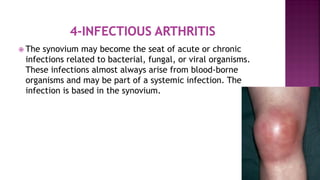
 The synovium may become the seat of acute or chronic
infections related to bacterial, fungal, or viral organisms.
These infections almost always arise from blood-borne
organisms and may be part of a systemic infection. The
infection is based in the synovium.
 Degeneration of the articular cartilage is the principal pathologic
feature of osteoarthritis. It occurs in response to both local and
host factors. Local factors include the following:
 Previous joint trauma (eg, meniscal tears)
 Congenital or developmental joint alterations (eg, congenital
hip dysplasia and slipped capital femoral epiphysis)
 Alterations of the subchondral bone (eg, osteopetrosis,
avascular necrosis, and Paget disease)
 Alterations of supporting structures (eg, hypermobility)
 Cartilage derangements (eg, ochronosis and crystal deposition)
 Host factors include the following:
 Genetic traits
 Obesity
 Occupation
 Inflammatory arthritis is characterized by inflammation affecting
joint structures, such as the synovium, synovial cavity, and
enthuses.
 No inflammatory arthritis is joint disease resulting primarily from
alterations in the structure or mechanics of the joint.
 Arthralgia is characterized by joint tenderness, but abnormalities
of the joint cannot be identified.
 Such patients may have a syndrome of altered pain sensation (eg,
fibromyalgia) or an early rheumatic syndrome whose clinical signs
are not yet apparent or are too subtle for detection (eg, arthralgia
of systemic lupus erythematosus [SLE]).
 Mono-articular Pain
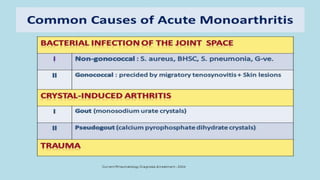
 Trauma ( overuse – fractures – hemarthrosis).
 Internal derangement or intra-articular trauma (Meniscus injury –
ligament tear)
 Infectious or Septic arthritis (eg, bacterial, fungal, viral,
mycobacterial, spirochetal, parasitic).
 Reactive arthritis (Aseptic inflammatory arthritis).
 Crystal-induced disease (gout or pseudogout)
 Periarticular syndromes (eg, bursitis, epicondylitis, fasciitis,
tendinitis, tenosynovitis)
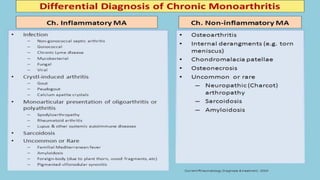
 Mono-articular Pain
 Uncommon Causes :
 Avascular necrosis (H/O corticosteriod use or sickle cell anaemia)
 Neuropathy (Charcot ‘s Joint).
 Osteoarthritis
 Osteomyelitis
 Lyme disease.
 Paget’s disease (Osteitis deformans)
 Tumor
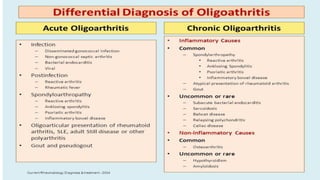
 Poly-articular Joint Pain
Acute polyarticular arthritis is most often due to the following:
 Infection (usually viral)
 Flare of a rheumatic disease
Chronic polyarticular arthritis in adults is most often due to the
following:
 RA (inflammatory)
 Osteoarthritis (noninflammatory)
Chronic polyarticular arthritis in children is most often due to the
following:
 Juvenile idiopathic arthritis
APPROACH
I - History
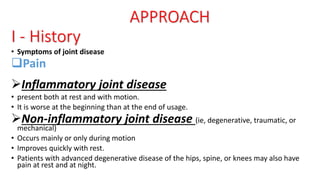
• Symptoms of joint disease
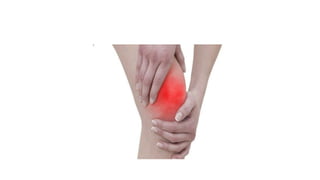
Pain
Inflammatory joint disease
• present both at rest and with motion.
• It is worse at the beginning than at the end of usage.
Non-inflammatory joint disease (ie, degenerative, traumatic, or
mechanical)
• Occurs mainly or only during motion
• Improves quickly with rest.
• Patients with advanced degenerative disease of the hips, spine, or knees may also have
pain at rest and at night.
Symptoms of joint disease
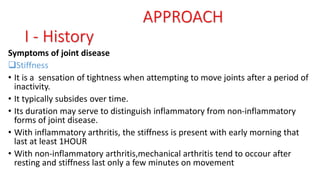
Stiffness
• It is a sensation of tightness when attempting to move joints after a period of
inactivity.
• It typically subsides over time.
• Its duration may serve to distinguish inflammatory from non-inflammatory
forms of joint disease.
• With inflammatory arthritis, the stiffness is present with early morning that
last at least 1HOUR
• With non-inflammatory arthritis,mechanical arthritis tend to occour after
resting and stiffness last only a few minutes on movement
APPROACH
I - History
Symptoms of joint disease
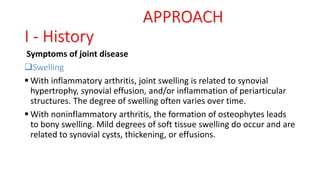
Swelling
 With inflammatory arthritis, joint swelling is related to synovial
hypertrophy, synovial effusion, and/or inflammation of periarticular
structures. The degree of swelling often varies over time.
 With noninflammatory arthritis, the formation of osteophytes leads
to bony swelling. Mild degrees of soft tissue swelling do occur and are
related to synovial cysts, thickening, or effusions.
APPROACH
I - History
Symptoms of joint disease
Limitation of motion
 Loss of joint motion may be due to structural damage, inflammation, or contracture
of surrounding soft tissues.
• Patients may report restrictions on their activities of daily living, cutting toenails,
climbing stairs, or combing hair.
Weakness
• Muscle strength is often diminished around an arthritic joint as a result of disuse
atrophy.
• Weakness with pain suggests a musculoskeletal cause (eg, arthritis, tendonitis) rather
than a pure myopathic or neurogenic cause.
• Manifestations include decreased grip strength, difficulty rising from a chair or
climbing stairs
APPROACH
I - History
Symptoms of joint disease
Fatigue
• Is usually synonymous with exhaustion and depletion of energy in patients with
arthritis.
• With inflammatory polyarthritis, the fatigue is usually noted in the afternoon or
early evening.
• With psychogenic disorders, the fatigue is often noted upon arising in the
morning and is related to anxiety, muscle tension, and poor sleep.
APPROACH
I - History
Historical features important to the differential
diagnosis include the following:
• Onset, duration, and temporal pattern of arthritis
• Number of involved joints
• Symmetry of joint involvement
• Distribution of affected joints
• Distinctive types of musculoskeletal involvement
• Extra-articular manifestations
The onset of symptoms can be abrupt or insidious.
With an abrupt onset - develop over minutes - hours. This may occur in:
• Trauma
• Crystalline
• synovitis
With an insidious pattern- develop over weeks-months.
• It is typical of most forms of arthritis, including rheumatoid arthritis (RA) and
osteoarthritis.
Duration of symptoms is considered either
• acute or chronic.Acute is less than 6 weeks in duration
• chronic is 6 or more weeks in duration.
I – History
Temporal pattern of arthritis
The temporal patterns of joint involvement are migratory, additive or
simultaneous, and intermittent.
• With a migratory pattern, inflammation persists for only a few days in each
joint .
• With an additive or simultaneous pattern, inflammation persists in involved
joints as new ones become affected.
• With an intermittent pattern, episodic involvement occurs, with intervening
periods free of joint symptoms .
I – History
Temporal pattern of arthritis
I - History
• Number of involved joints
• Monoarthritis is the involvement of one joint.
• Oligoarthritis is the involvement of 2-4 joints.
• Polyarthritis is the involvement of 5 or more joints.
Symmetry of joint involvement
• Symmetric arthritis is characterized by involvement of the same joints on each
side of the body. This symmetry is typical of RA and SLE.
• Asymmetric arthritis is characteristic of psoriatic arthritis, reactive arthritis
(Reiter syndrome), and Lyme arthritis.
 Distribution of affected joints
• The distal interphalangeal joints of the fingers are usually involved in psoriatic
arthritis, gout, or osteoarthritis but are usually spared in RA.
• Joints of the lumbar spine are typically involved in ankylosing spondylitis but are
spared in RA.
Distinctive types of musculoskeletal involvement
• Spondyloarthropathy involves entheses, leading to heel pain (inflammation at the
insertions of the Achilles tendon and/or plantar fascia), tendonitis, and back pain
(sacroiliitis and vertebral disc insertions).
• Gout commonly involves tendon sheaths and bursae, resulting in superficial
inflammation.
I - History
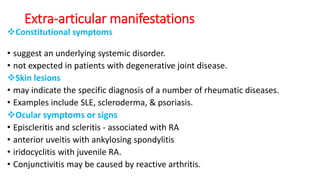
Extra-articular manifestations
Constitutional symptoms
• suggest an underlying systemic disorder.
• not expected in patients with degenerative joint disease.
Skin lesions
• may indicate the specific diagnosis of a number of rheumatic diseases.
• Examples include SLE, scleroderma, & psoriasis.
Ocular symptoms or signs
• Episcleritis and scleritis - associated with RA
• anterior uveitis with ankylosing spondylitis
• iridocyclitis with juvenile RA.
• Conjunctivitis may be caused by reactive arthritis.
Approach
II – Physical Examination
The musculoskeletal examination helps distinguish
joint inflammation (eg, RA) from joint damage (eg,
degenerative joint disease).
It can also help reveal the site of musculoskeletal
involvement (eg, synovitis, enthesitis, tenosynovitis,
bursitis) and the distribution of joint involvement.
II – Physical Examination
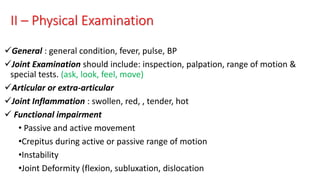
General : general condition, fever, pulse, BP
Joint Examination should include: inspection, palpation, range of motion &
special tests. (ask, look, feel, move)
Articular or extra-articular
Joint Inflammation : swollen, red, , tender, hot
 Functional impairment
• Passive and active movement
•Crepitus during active or passive range of motion
•Instability
•Joint Deformity (flexion, subluxation, dislocation
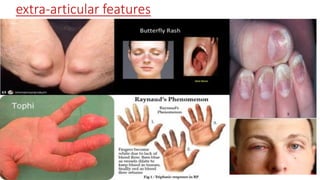
articular features-extra
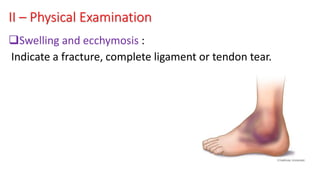
Swelling and ecchymosis :
Indicate a fracture, complete ligament or tendon tear.
II – Physical Examination
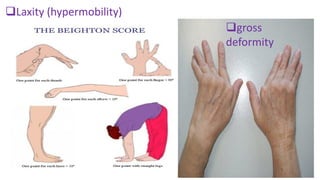
Laxity (hypermobility)
gross
deformity
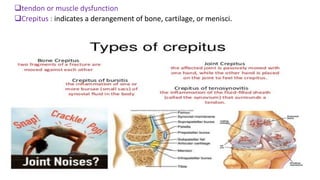
tendon or muscle dysfunction
Crepitus : indicates a derangement of bone, cartilage, or menisci.
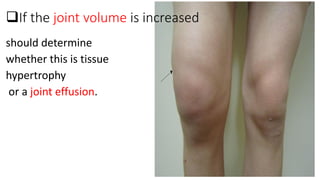
should determine
whether this is tissue
hypertrophy
or a joint effusion.
If the joint volume is increased
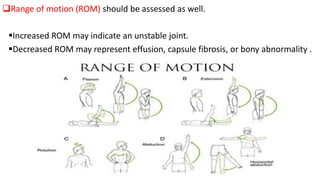
Range of motion (ROM) should be assessed as well.
Increased ROM may indicate an unstable joint.
Decreased ROM may represent effusion, capsule fibrosis, or bony abnormality .
(signs that should prompt an urgent work-up) on physical
examination include
 warmth, erythema, and swelling of the joint,* this signify
the need to consider such diagnoses as infection, rheumatic
process, and crystal-induced arthropathy.
Other joints (including spine)
Extra-articular features : e.g. nails pitting, tenosynovitis,
ears nodules conjunctivitis, &mouth ulcers
"Red flags"
Blood tests
1.Haematology
(FBC)
•Neutrophilia
•Neutropenia
•lymphopenia
•Hb and platelet
•BM toxicity
III- Investigations
Laboratory Studies
2.Biochemistry
Uric acid
•Serum levels of uric acid are usually raised in gout but a normal level does
not exclude it
•elevated serum uric acid does not confirm the diagnosis
erythrocyte sedimentation rate (ESR)
C-reactive protein (CRP)
• useful marker of infection and inflammation, and are more specific than (ESR).
An exception is in autoimmune connective tissue diseases, such as SLE and
systemic sclerosis, where CRP may be normal but the ESR raised in active
disease. Accordingly, an elevated CRP in a patient with lupus or systemic
sclerosis suggests an intercurrent illness, such as sepsis, rather than active
disease.
3. Immunology
Rheumatoid factor (RF)
• Positive RF occurs in a wide variety of diseases and some normal adults particularly
with increasing age. Although the poor specificity about 70% of patients with RA
test positive.
• High RF titres are associated with more severe disease
Antinuclear antibodies
• ANAs are not associated with disease severity or activity.
• Indication: suspected of having SLE or other autoimmune connective tissue diseases
• ANA has high sensitivity for SLE (100%) but low specificity (10–40%).
• A negative ANA virtually excludes SLE but a positive result does not confirm it.
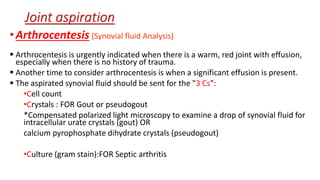
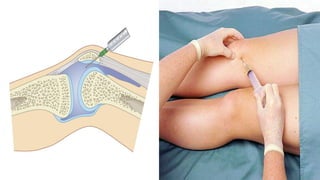
•Arthrocentesis (Synovial fluid Analysis)
 Arthrocentesis is urgently indicated when there is a warm, red joint with effusion,
especially when there is no history of trauma.
 Another time to consider arthrocentesis is when a significant effusion is present.
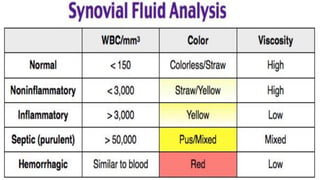
 The aspirated synovial fluid should be sent for the "3 Cs":
•Cell count
•Crystals : FOR Gout or pseudogout
*Compensated polarized light microscopy to examine a drop of synovial fluid for
intracellular urate crystals (gout) OR
calcium pyrophosphate dihydrate crystals (pseudogout)
•Culture (gram stain):FOR Septic arthritis
Joint aspiration
Key indicators
•Bony tenderness
•Inability to bear weight
•Gross deformity
•Skeletal immaturity
•Age
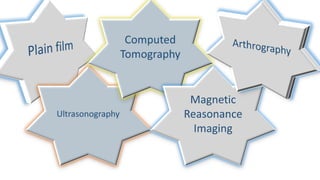
Plain films
• Plain radiography is the least expensive imaging
modality and is most useful for clarifying the nature
of joint abnormalities already noted during the
physical examination.
• The appearance of joints on plain radiographs is
often distinctive for various forms of arthritis though
these characteristic changes may not be apparent
early in the disease course.
• Plain radiographs are also useful for monitoring the
progression of chronic arthritides (eg:osteoarthritis
and rheumatoid arthritis [RA]).
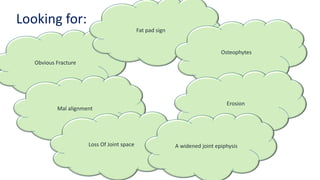
Looking for:
Obvious Fracture
Mal alignment
Fat pad sign
Loss Of Joint space
Osteophytes
Erosion
A widened joint epiphysis
Ultrasonography
• Musculoskeletal ultrasonography uses ultrasonic waves
to image soft tissues, including tendons, bursae,
ligaments, and components of the joint.
• It is performed by a specifically trained rheumatologist
or radiologist and involves an examination with multiple
views and positionings of the joint.
• It is safe and does not involve any exposure to
radiation.
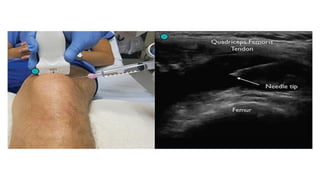
• Joint aspirations and injections are greatly facilitated if
performed with ultrasound guidance, because this
ensures correct positioning of the needle.
Computed tomography
• Computed tomography (CT) obtains cross-sectional images of skeletal
structures.
• In a patient with a painful joint, CT is most useful for the following
applications:
• Assessing trauma of the spine and pelvis
• Evaluating arthritis in axial joints (eg, sacroiliac, atlantoaxial, and
sternoclavicular)
• Evaluating pain in complex joints in which overlying structures obscure
plain radiography views (eg, ankle, wrist, and temporomandibular joints)
• Evaluating degenerative disc disease of the spine and possible disc
herniations
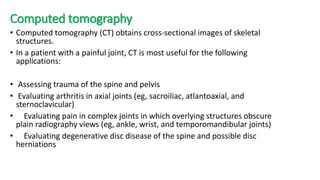
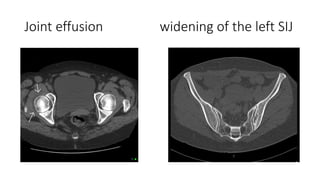
Joint effusion widening of the left SIJ
Magnetic resonance imaging
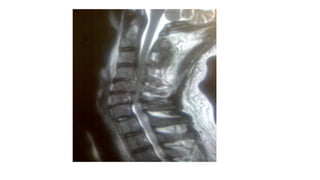
•Magnetic resonance imaging (MRI) is the
best modality for assessing soft tissue
and spinal cord elements.
•It is of greatest use for assessing rotator
cuff tears, spinal stenosis, ligamentous or
meniscal abnormalities of the knee and
wrist joints, osteonecrosis (ie, avascular
necrosis of bone), stress fractures,
osteomyelitis, and subchondral bone
injury in osteoarthritis or meniscal tears.
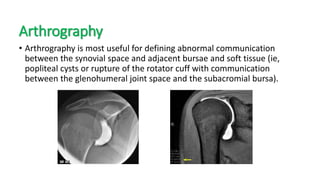
Arthrography
• Arthrography is most useful for defining abnormal communication
between the synovial space and adjacent bursae and soft tissue (ie,
popliteal cysts or rupture of the rotator cuff with communication
between the glenohumeral joint space and the subacromial bursa).
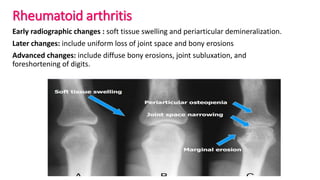
Rheumatoid arthritis
Early radiographic changes : soft tissue swelling and periarticular demineralization.
Later changes: include uniform loss of joint space and bony erosions
Advanced changes: include diffuse bony erosions, joint subluxation, and
foreshortening of digits.
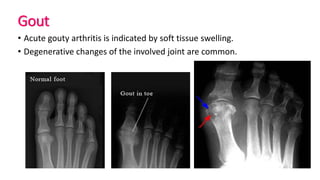
Gout
• Acute gouty arthritis is indicated by soft tissue swelling.
• Degenerative changes of the involved joint are common.
Infectious arthritis
• X-rays may be normal in the very early stage of the disease
• Joint effusion may be seen
• Juxta-articular osteoporosis due to hyperaemia
• Narrowing of the joint space due cartilage destruction in the acute phase
• Destruction of the subchondral bone on both sides of a joint
• If left untreated, reactive juxta-articular sclerosis and, in severe cases,
ankylosis will develop with gas formation on special bacterial infection .
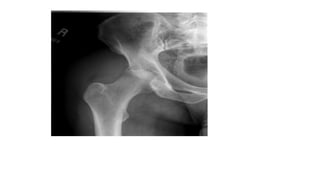
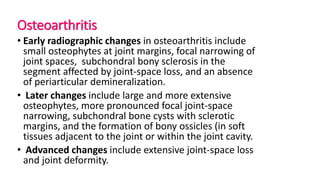
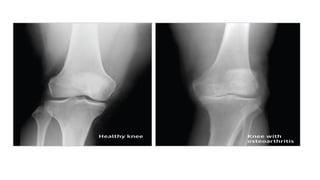
Osteoarthritis
• Early radiographic changes in osteoarthritis include
small osteophytes at joint margins, focal narrowing of
joint spaces, subchondral bony sclerosis in the
segment affected by joint-space loss, and an absence
of periarticular demineralization.
• Later changes include large and more extensive
osteophytes, more pronounced focal joint-space
narrowing, subchondral bone cysts with sclerotic
margins, and the formation of bony ossicles (in soft
tissues adjacent to the joint or within the joint cavity.
• Advanced changes include extensive joint-space loss
and joint deformity.
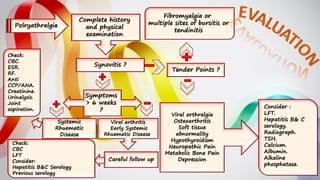
Polryathralgia
Complete history
and physical
examination
Synovitis ?
Tender Points ?
Fibromyalgia or
multiple sites of bursitis or
tendinitis
Viral arthralgia
Osteoarthritis
Soft tissue
abnormality
Hypothyroidism
Neuropathic Pain
Metabolic Bone Pain
Depression
Consider :
LFT.
Hepatitis B& C
serology.
Radiograph.
TSH.
Calcium.
Albumin.
Alkaline
phosphatase.
Symptoms
> 6 weeks
?
Viral arthritis
Early Systemic
Rhuematic Disease
Systemic
Rhuematic
Disease
Check:
CBC.
ESR.
RF.
Anti
CCP/ANA.
Creatinine.
Urinalysis.
Joint
aspiration.
Careful follow up
Check:
CBC
LFT
Consider:
Hepatitis B&C Serology
Previous serology
IV-Management
Non-pharmacological Therapies
Acute Joint Pain
I- Physical Modalities.
• to limit swelling and pain associated with trauma or arthritis usually consists of the
components of the mnemonic PRICE:
• Protection with a brace or wrap,
• Rest to avoid activities that cause pain or an increase in swelling,
• Icing 15 minutes several times per day,
• Compression with an elastic wrap,
• Elevation of the joint above the level of the heart.
• These are all potential modalities and all are not always used
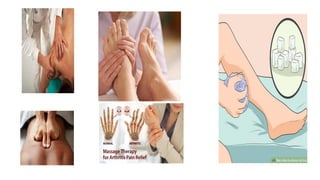
• Massage therapy may also help relieve muscle spasm and facilitate stretching.
Nonpharmacological Therapies
Acute Joint Pain
•
II - Education and Behavior Changes.
• May be necessary to return to activity without harming the affected joint.
• The patient may engage in other activities to maintain strength and endurance and
at the same time protect the joint.
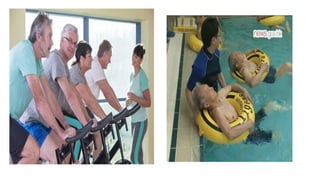
• Swimming and stationary cycling are commonly recommended allow for joint pain (
lower extremity exercise without weight bearing).
• III- Office Interventions
• Several interventions may greatly reduce pain and protect the affected joint. Taping,
splinting, and casting, if appropriate, will help to immobilize the joint or minimize
pain with activity.
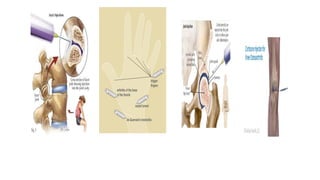
• Intra-articular injections: effective to reduce pain and inflammation.
• Corticosteroids should never be injected into tendons, cartilage, or ligaments.
Chronic Joint Pain
I- Physical Modalities
• Improper or excessive exercise can hasten joint damage and increase
osteoarthritis symptoms.
• walking program showed functional improvement and a decrease
In arthritis pain .
• Swimming pool therapy will help limit stress on weight-bearing joints.
• Physical therapists can teach safe exercises to maintain strength, range of
motion, and help prevent functional decline.
IV-Management
Non-pharmacological Therapies
Chronic Joint Pain
II- Office Interventions
• Intra-articular steroid injections: provide short-term pain relief lasting several
weeks
• The clinical benefit is improved when effusion is present and aspiration of
synovial fluid at the time of injection is successful .
III- Education and Behavior Changes
• Education on what to expect from the disease has been shown to improve
outcomes in chronic disease states, including arthritis .
• Behavior changes, such as positioning, work pacing, and diet leading to
weight loss, may improve symptoms.
IV-Management
Non-pharmacological Therapies
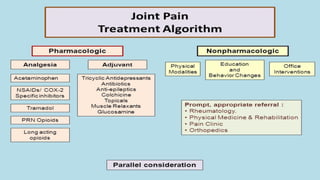
Analgesics:
• Acetaminophen (paracetamol)
• NSAIDs and COX-2 Inhibitors.
• Opioids.
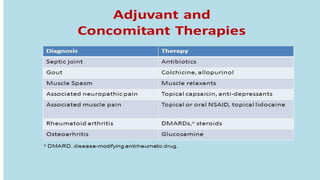
Adjuvants & Concomitant Therapies
• Muscle relaxants in combination with NSAIDs are commonly used in the
treatment of muscle spasm and injury. Their primary side effect is
sedation.
• Topical medications are very useful for the treatment of acute
pain.Acetaminophen (paracetamol):in doses up to 4 g per day is widely
recommended as a cost-effective initial therapy for osteoarthritis
IV-Management
pharmacological Therapies
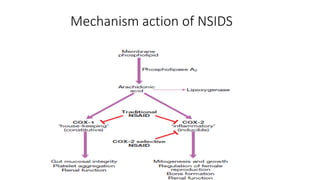
Mechanism action of NSIDS
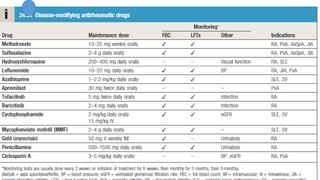
:indicationSlow-Acting antirheumatica drugs
1-persistent synovitis more than 6 wk.
2-sever extra-articular disease [ vasculitise ,scleritise renal
involvment].
3-steroid-sparing effect [polymyalgia rheumatica resistant to low-dose
Corticosteroid].
4- Inflammatory myositis.
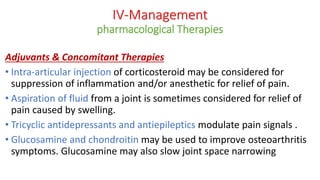
Adjuvants & Concomitant Therapies
• Intra-articular injection of corticosteroid may be considered for
suppression of inflammation and/or anesthetic for relief of pain.
• Aspiration of fluid from a joint is sometimes considered for relief of
pain caused by swelling.
• Tricyclic antidepressants and antiepileptics modulate pain signals .
• Glucosamine and chondroitin may be used to improve osteoarthritis
symptoms. Glucosamine may also slow joint space narrowing
IV-Management
pharmacological Therapies
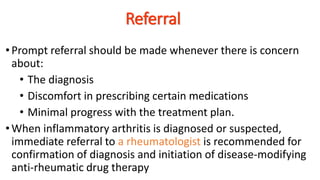
Referral
•Prompt referral should be made whenever there is concern
about:
• The diagnosis
• Discomfort in prescribing certain medications
• Minimal progress with the treatment plan.
•When inflammatory arthritis is diagnosed or suspected,
immediate referral to a rheumatologist is recommended for
confirmation of diagnosis and initiation of disease-modifying
anti-rheumatic drug therapy
•Physical medicine and rehabilitation specialists are
specifically trained to help maximize physical function and
quality of life if this is an issue.
•Significant disability should prompt referral to an orthopedic
specialist for evaluation of possible joint replacement or
debridement.
• Pain clinics may provide assistance with medication
management.
Referral
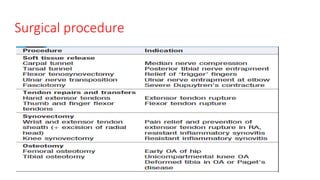
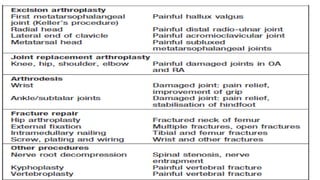
Surgical procedure
Seminar approach to joint pain

Seminar approach to joint pain

  • 1.
    Suppervised by :-Dr.MUAYAD AL-QASI
  • 2.
     1- MohammedAbdulbast  2- Ahmed Salahadeen  3-Wafaa Shakir  4-Haneen Hameed  5- Sumaya khalid
  • 3.
    To know thepathophysiology of joint pain . To list common causes of joint pain To provide a systematic approach to the investigation and differential diagnosis of patients presenting with joint pain. To describe diagnosis and treatment of the important joint problems To describe referral criteria for common joint problems
  • 4.
    Joint pain canhave multiple causes, a reflection of the diverse joint diseases, which arise from inflammation, cartilage degeneration, crystal deposition, infection, and trauma.  The initial aim is to localize the source of the joint symptoms and to determine the type of pathophysiologic process responsible for their presence.  The differential diagnoses are generated in large part from the history and physical examination.  Laboratory test results serve primarily to confirm clinical impressions and can be misleading if used indiscriminately.
  • 5.
    There may be: Arthralgia–only pain in the joints  Inflammation (arthritis) - redness, warmth, and swelling
  • 6.
     Only asingle joint involved (mono-articular).  Oligo– or pauciarticular arthritis–affection of 2-4 joints  Polyarthritis–affection of 5 or more joints
  • 7.
     Only withactivity , suggesting a mechanical problem (eg, osteoarthritis, tendinitis).  At rest, suggesting inflammation (eg, crystal disease, septic arthritis).  There may or may not be fluid within the joint (effusion).
  • 8.
    Joint pain mayarise anatomically from:  1- Structures within the joint (intra-articular): Sources of pain within the joint include the joint capsule, periosteum, ligaments, subchondral bone, and synovium, but not the articular cartilage, which lacks nerve endings Eg. • Synovium–synovitis • Joint capsule–capsulitis
  • 10.
     2-Structures adjacentor a round to the joint (per-articular) o Bursa–bursitis o Tendon sheath–tenosynovitis o Tendon–tendonitis o Insertion of tendon, ligament–enthesitis o Extra-articular disorders (eg, polymyalgia rheumatica, fibromyalgia).  3-Referred Pain from more distant site (eg. Bone)
  • 11.
  • 12.
     The synovialmembrane is the principal site of inflammation in persons with rheumatoid arthritis (RA) and many other inflammatory arthritis's
  • 13.
     The enthesisis the transitional zone where collagenous structures such as tendons and ligaments are interwoven into bone.  Other examples of entheses include the interface between cortical bone and the periosteum and that between vertebral bodies and the annulus fibrosus.  The enthesis is the principal site of pathology in the seronegative spondyloarthropathies.  new bone formation ….(periostitis)  gradual ossification of syndesmoses (eg, the sacroiliac joints)  syndesmophyte formation along the outer fibers of the vertebral discs
  • 14.
     The depositionof crystals in articular structures may lead to symptomatic joint disease. The responsible crystals include monosodium urate, calcium pyrophosphate dihydrate, basic calcium phosphate (including hydroxyapatite), and calcium oxalate.  Monosodium urate crystal  Calcium pyrophosphate crystal
  • 15.
     The synoviummay become the seat of acute or chronic infections related to bacterial, fungal, or viral organisms. These infections almost always arise from blood-borne organisms and may be part of a systemic infection. The infection is based in the synovium.
  • 16.
     Degeneration ofthe articular cartilage is the principal pathologic feature of osteoarthritis. It occurs in response to both local and host factors. Local factors include the following:  Previous joint trauma (eg, meniscal tears)  Congenital or developmental joint alterations (eg, congenital hip dysplasia and slipped capital femoral epiphysis)  Alterations of the subchondral bone (eg, osteopetrosis, avascular necrosis, and Paget disease)  Alterations of supporting structures (eg, hypermobility)  Cartilage derangements (eg, ochronosis and crystal deposition)
  • 17.
     Host factorsinclude the following:  Genetic traits  Obesity  Occupation
  • 18.
     Inflammatory arthritisis characterized by inflammation affecting joint structures, such as the synovium, synovial cavity, and enthuses.  No inflammatory arthritis is joint disease resulting primarily from alterations in the structure or mechanics of the joint.  Arthralgia is characterized by joint tenderness, but abnormalities of the joint cannot be identified.  Such patients may have a syndrome of altered pain sensation (eg, fibromyalgia) or an early rheumatic syndrome whose clinical signs are not yet apparent or are too subtle for detection (eg, arthralgia of systemic lupus erythematosus [SLE]).
  • 19.
     Mono-articular Pain Trauma ( overuse – fractures – hemarthrosis).  Internal derangement or intra-articular trauma (Meniscus injury – ligament tear)  Infectious or Septic arthritis (eg, bacterial, fungal, viral, mycobacterial, spirochetal, parasitic).  Reactive arthritis (Aseptic inflammatory arthritis).  Crystal-induced disease (gout or pseudogout)  Periarticular syndromes (eg, bursitis, epicondylitis, fasciitis, tendinitis, tenosynovitis)
  • 20.
     Mono-articular Pain Uncommon Causes :  Avascular necrosis (H/O corticosteriod use or sickle cell anaemia)  Neuropathy (Charcot ‘s Joint).  Osteoarthritis  Osteomyelitis  Lyme disease.  Paget’s disease (Osteitis deformans)  Tumor
  • 21.
     Poly-articular JointPain Acute polyarticular arthritis is most often due to the following:  Infection (usually viral)  Flare of a rheumatic disease Chronic polyarticular arthritis in adults is most often due to the following:  RA (inflammatory)  Osteoarthritis (noninflammatory) Chronic polyarticular arthritis in children is most often due to the following:  Juvenile idiopathic arthritis
  • 22.
    APPROACH I - History •Symptoms of joint disease Pain Inflammatory joint disease • present both at rest and with motion. • It is worse at the beginning than at the end of usage. Non-inflammatory joint disease (ie, degenerative, traumatic, or mechanical) • Occurs mainly or only during motion • Improves quickly with rest. • Patients with advanced degenerative disease of the hips, spine, or knees may also have pain at rest and at night.
  • 24.
    Symptoms of jointdisease Stiffness • It is a sensation of tightness when attempting to move joints after a period of inactivity. • It typically subsides over time. • Its duration may serve to distinguish inflammatory from non-inflammatory forms of joint disease. • With inflammatory arthritis, the stiffness is present with early morning that last at least 1HOUR • With non-inflammatory arthritis,mechanical arthritis tend to occour after resting and stiffness last only a few minutes on movement APPROACH I - History
  • 25.
    Symptoms of jointdisease Swelling  With inflammatory arthritis, joint swelling is related to synovial hypertrophy, synovial effusion, and/or inflammation of periarticular structures. The degree of swelling often varies over time.  With noninflammatory arthritis, the formation of osteophytes leads to bony swelling. Mild degrees of soft tissue swelling do occur and are related to synovial cysts, thickening, or effusions. APPROACH I - History
  • 27.
    Symptoms of jointdisease Limitation of motion  Loss of joint motion may be due to structural damage, inflammation, or contracture of surrounding soft tissues. • Patients may report restrictions on their activities of daily living, cutting toenails, climbing stairs, or combing hair. Weakness • Muscle strength is often diminished around an arthritic joint as a result of disuse atrophy. • Weakness with pain suggests a musculoskeletal cause (eg, arthritis, tendonitis) rather than a pure myopathic or neurogenic cause. • Manifestations include decreased grip strength, difficulty rising from a chair or climbing stairs APPROACH I - History
  • 28.
    Symptoms of jointdisease Fatigue • Is usually synonymous with exhaustion and depletion of energy in patients with arthritis. • With inflammatory polyarthritis, the fatigue is usually noted in the afternoon or early evening. • With psychogenic disorders, the fatigue is often noted upon arising in the morning and is related to anxiety, muscle tension, and poor sleep. APPROACH I - History
  • 29.
    Historical features importantto the differential diagnosis include the following: • Onset, duration, and temporal pattern of arthritis • Number of involved joints • Symmetry of joint involvement • Distribution of affected joints • Distinctive types of musculoskeletal involvement • Extra-articular manifestations
  • 30.
    The onset ofsymptoms can be abrupt or insidious. With an abrupt onset - develop over minutes - hours. This may occur in: • Trauma • Crystalline • synovitis With an insidious pattern- develop over weeks-months. • It is typical of most forms of arthritis, including rheumatoid arthritis (RA) and osteoarthritis. Duration of symptoms is considered either • acute or chronic.Acute is less than 6 weeks in duration • chronic is 6 or more weeks in duration. I – History Temporal pattern of arthritis
  • 31.
    The temporal patternsof joint involvement are migratory, additive or simultaneous, and intermittent. • With a migratory pattern, inflammation persists for only a few days in each joint . • With an additive or simultaneous pattern, inflammation persists in involved joints as new ones become affected. • With an intermittent pattern, episodic involvement occurs, with intervening periods free of joint symptoms . I – History Temporal pattern of arthritis
  • 32.
    I - History •Number of involved joints • Monoarthritis is the involvement of one joint. • Oligoarthritis is the involvement of 2-4 joints. • Polyarthritis is the involvement of 5 or more joints. Symmetry of joint involvement • Symmetric arthritis is characterized by involvement of the same joints on each side of the body. This symmetry is typical of RA and SLE. • Asymmetric arthritis is characteristic of psoriatic arthritis, reactive arthritis (Reiter syndrome), and Lyme arthritis.
  • 33.
     Distribution ofaffected joints • The distal interphalangeal joints of the fingers are usually involved in psoriatic arthritis, gout, or osteoarthritis but are usually spared in RA. • Joints of the lumbar spine are typically involved in ankylosing spondylitis but are spared in RA. Distinctive types of musculoskeletal involvement • Spondyloarthropathy involves entheses, leading to heel pain (inflammation at the insertions of the Achilles tendon and/or plantar fascia), tendonitis, and back pain (sacroiliitis and vertebral disc insertions). • Gout commonly involves tendon sheaths and bursae, resulting in superficial inflammation. I - History
  • 34.
    Extra-articular manifestations Constitutional symptoms •suggest an underlying systemic disorder. • not expected in patients with degenerative joint disease. Skin lesions • may indicate the specific diagnosis of a number of rheumatic diseases. • Examples include SLE, scleroderma, & psoriasis. Ocular symptoms or signs • Episcleritis and scleritis - associated with RA • anterior uveitis with ankylosing spondylitis • iridocyclitis with juvenile RA. • Conjunctivitis may be caused by reactive arthritis.
  • 38.
    Approach II – PhysicalExamination The musculoskeletal examination helps distinguish joint inflammation (eg, RA) from joint damage (eg, degenerative joint disease). It can also help reveal the site of musculoskeletal involvement (eg, synovitis, enthesitis, tenosynovitis, bursitis) and the distribution of joint involvement.
  • 39.
    II – PhysicalExamination General : general condition, fever, pulse, BP Joint Examination should include: inspection, palpation, range of motion & special tests. (ask, look, feel, move) Articular or extra-articular Joint Inflammation : swollen, red, , tender, hot  Functional impairment • Passive and active movement •Crepitus during active or passive range of motion •Instability •Joint Deformity (flexion, subluxation, dislocation
  • 40.
  • 41.
    Swelling and ecchymosis: Indicate a fracture, complete ligament or tendon tear. II – Physical Examination
  • 42.
  • 43.
    tendon or muscledysfunction Crepitus : indicates a derangement of bone, cartilage, or menisci.
  • 44.
    should determine whether thisis tissue hypertrophy or a joint effusion. If the joint volume is increased
  • 45.
    Range of motion(ROM) should be assessed as well. Increased ROM may indicate an unstable joint. Decreased ROM may represent effusion, capsule fibrosis, or bony abnormality .
  • 46.
    (signs that shouldprompt an urgent work-up) on physical examination include  warmth, erythema, and swelling of the joint,* this signify the need to consider such diagnoses as infection, rheumatic process, and crystal-induced arthropathy. Other joints (including spine) Extra-articular features : e.g. nails pitting, tenosynovitis, ears nodules conjunctivitis, &mouth ulcers "Red flags"
  • 47.
    Blood tests 1.Haematology (FBC) •Neutrophilia •Neutropenia •lymphopenia •Hb andplatelet •BM toxicity III- Investigations Laboratory Studies
  • 48.
    2.Biochemistry Uric acid •Serum levelsof uric acid are usually raised in gout but a normal level does not exclude it •elevated serum uric acid does not confirm the diagnosis erythrocyte sedimentation rate (ESR) C-reactive protein (CRP) • useful marker of infection and inflammation, and are more specific than (ESR). An exception is in autoimmune connective tissue diseases, such as SLE and systemic sclerosis, where CRP may be normal but the ESR raised in active disease. Accordingly, an elevated CRP in a patient with lupus or systemic sclerosis suggests an intercurrent illness, such as sepsis, rather than active disease.
  • 49.
    3. Immunology Rheumatoid factor(RF) • Positive RF occurs in a wide variety of diseases and some normal adults particularly with increasing age. Although the poor specificity about 70% of patients with RA test positive. • High RF titres are associated with more severe disease Antinuclear antibodies • ANAs are not associated with disease severity or activity. • Indication: suspected of having SLE or other autoimmune connective tissue diseases • ANA has high sensitivity for SLE (100%) but low specificity (10–40%). • A negative ANA virtually excludes SLE but a positive result does not confirm it.
  • 50.
    •Arthrocentesis (Synovial fluidAnalysis)  Arthrocentesis is urgently indicated when there is a warm, red joint with effusion, especially when there is no history of trauma.  Another time to consider arthrocentesis is when a significant effusion is present.  The aspirated synovial fluid should be sent for the "3 Cs": •Cell count •Crystals : FOR Gout or pseudogout *Compensated polarized light microscopy to examine a drop of synovial fluid for intracellular urate crystals (gout) OR calcium pyrophosphate dihydrate crystals (pseudogout) •Culture (gram stain):FOR Septic arthritis Joint aspiration
  • 54.
    Key indicators •Bony tenderness •Inabilityto bear weight •Gross deformity •Skeletal immaturity •Age
  • 56.
    Plain films • Plainradiography is the least expensive imaging modality and is most useful for clarifying the nature of joint abnormalities already noted during the physical examination. • The appearance of joints on plain radiographs is often distinctive for various forms of arthritis though these characteristic changes may not be apparent early in the disease course. • Plain radiographs are also useful for monitoring the progression of chronic arthritides (eg:osteoarthritis and rheumatoid arthritis [RA]).
  • 57.
    Looking for: Obvious Fracture Malalignment Fat pad sign Loss Of Joint space Osteophytes Erosion A widened joint epiphysis
  • 58.
    Ultrasonography • Musculoskeletal ultrasonographyuses ultrasonic waves to image soft tissues, including tendons, bursae, ligaments, and components of the joint. • It is performed by a specifically trained rheumatologist or radiologist and involves an examination with multiple views and positionings of the joint. • It is safe and does not involve any exposure to radiation. • Joint aspirations and injections are greatly facilitated if performed with ultrasound guidance, because this ensures correct positioning of the needle.
  • 60.
    Computed tomography • Computedtomography (CT) obtains cross-sectional images of skeletal structures. • In a patient with a painful joint, CT is most useful for the following applications: • Assessing trauma of the spine and pelvis • Evaluating arthritis in axial joints (eg, sacroiliac, atlantoaxial, and sternoclavicular) • Evaluating pain in complex joints in which overlying structures obscure plain radiography views (eg, ankle, wrist, and temporomandibular joints) • Evaluating degenerative disc disease of the spine and possible disc herniations
  • 61.
    Joint effusion wideningof the left SIJ
  • 62.
    Magnetic resonance imaging •Magneticresonance imaging (MRI) is the best modality for assessing soft tissue and spinal cord elements. •It is of greatest use for assessing rotator cuff tears, spinal stenosis, ligamentous or meniscal abnormalities of the knee and wrist joints, osteonecrosis (ie, avascular necrosis of bone), stress fractures, osteomyelitis, and subchondral bone injury in osteoarthritis or meniscal tears.
  • 64.
    Arthrography • Arthrography ismost useful for defining abnormal communication between the synovial space and adjacent bursae and soft tissue (ie, popliteal cysts or rupture of the rotator cuff with communication between the glenohumeral joint space and the subacromial bursa).
  • 65.
    Rheumatoid arthritis Early radiographicchanges : soft tissue swelling and periarticular demineralization. Later changes: include uniform loss of joint space and bony erosions Advanced changes: include diffuse bony erosions, joint subluxation, and foreshortening of digits.
  • 66.
    Gout • Acute goutyarthritis is indicated by soft tissue swelling. • Degenerative changes of the involved joint are common.
  • 67.
    Infectious arthritis • X-raysmay be normal in the very early stage of the disease • Joint effusion may be seen • Juxta-articular osteoporosis due to hyperaemia • Narrowing of the joint space due cartilage destruction in the acute phase • Destruction of the subchondral bone on both sides of a joint • If left untreated, reactive juxta-articular sclerosis and, in severe cases, ankylosis will develop with gas formation on special bacterial infection .
  • 69.
    Osteoarthritis • Early radiographicchanges in osteoarthritis include small osteophytes at joint margins, focal narrowing of joint spaces, subchondral bony sclerosis in the segment affected by joint-space loss, and an absence of periarticular demineralization. • Later changes include large and more extensive osteophytes, more pronounced focal joint-space narrowing, subchondral bone cysts with sclerotic margins, and the formation of bony ossicles (in soft tissues adjacent to the joint or within the joint cavity. • Advanced changes include extensive joint-space loss and joint deformity.
  • 72.
    Polryathralgia Complete history and physical examination Synovitis? Tender Points ? Fibromyalgia or multiple sites of bursitis or tendinitis Viral arthralgia Osteoarthritis Soft tissue abnormality Hypothyroidism Neuropathic Pain Metabolic Bone Pain Depression Consider : LFT. Hepatitis B& C serology. Radiograph. TSH. Calcium. Albumin. Alkaline phosphatase. Symptoms > 6 weeks ? Viral arthritis Early Systemic Rhuematic Disease Systemic Rhuematic Disease Check: CBC. ESR. RF. Anti CCP/ANA. Creatinine. Urinalysis. Joint aspiration. Careful follow up Check: CBC LFT Consider: Hepatitis B&C Serology Previous serology
  • 73.
    IV-Management Non-pharmacological Therapies Acute JointPain I- Physical Modalities. • to limit swelling and pain associated with trauma or arthritis usually consists of the components of the mnemonic PRICE: • Protection with a brace or wrap, • Rest to avoid activities that cause pain or an increase in swelling, • Icing 15 minutes several times per day, • Compression with an elastic wrap, • Elevation of the joint above the level of the heart. • These are all potential modalities and all are not always used • Massage therapy may also help relieve muscle spasm and facilitate stretching.
  • 75.
    Nonpharmacological Therapies Acute JointPain • II - Education and Behavior Changes. • May be necessary to return to activity without harming the affected joint. • The patient may engage in other activities to maintain strength and endurance and at the same time protect the joint. • Swimming and stationary cycling are commonly recommended allow for joint pain ( lower extremity exercise without weight bearing). • III- Office Interventions • Several interventions may greatly reduce pain and protect the affected joint. Taping, splinting, and casting, if appropriate, will help to immobilize the joint or minimize pain with activity. • Intra-articular injections: effective to reduce pain and inflammation. • Corticosteroids should never be injected into tendons, cartilage, or ligaments.
  • 77.
    Chronic Joint Pain I-Physical Modalities • Improper or excessive exercise can hasten joint damage and increase osteoarthritis symptoms. • walking program showed functional improvement and a decrease In arthritis pain . • Swimming pool therapy will help limit stress on weight-bearing joints. • Physical therapists can teach safe exercises to maintain strength, range of motion, and help prevent functional decline. IV-Management Non-pharmacological Therapies
  • 78.
    Chronic Joint Pain II-Office Interventions • Intra-articular steroid injections: provide short-term pain relief lasting several weeks • The clinical benefit is improved when effusion is present and aspiration of synovial fluid at the time of injection is successful . III- Education and Behavior Changes • Education on what to expect from the disease has been shown to improve outcomes in chronic disease states, including arthritis . • Behavior changes, such as positioning, work pacing, and diet leading to weight loss, may improve symptoms. IV-Management Non-pharmacological Therapies
  • 80.
    Analgesics: • Acetaminophen (paracetamol) •NSAIDs and COX-2 Inhibitors. • Opioids. Adjuvants & Concomitant Therapies • Muscle relaxants in combination with NSAIDs are commonly used in the treatment of muscle spasm and injury. Their primary side effect is sedation. • Topical medications are very useful for the treatment of acute pain.Acetaminophen (paracetamol):in doses up to 4 g per day is widely recommended as a cost-effective initial therapy for osteoarthritis IV-Management pharmacological Therapies
  • 81.
  • 86.
    :indicationSlow-Acting antirheumatica drugs 1-persistentsynovitis more than 6 wk. 2-sever extra-articular disease [ vasculitise ,scleritise renal involvment]. 3-steroid-sparing effect [polymyalgia rheumatica resistant to low-dose Corticosteroid]. 4- Inflammatory myositis.
  • 88.
    Adjuvants & ConcomitantTherapies • Intra-articular injection of corticosteroid may be considered for suppression of inflammation and/or anesthetic for relief of pain. • Aspiration of fluid from a joint is sometimes considered for relief of pain caused by swelling. • Tricyclic antidepressants and antiepileptics modulate pain signals . • Glucosamine and chondroitin may be used to improve osteoarthritis symptoms. Glucosamine may also slow joint space narrowing IV-Management pharmacological Therapies
  • 89.
    Referral •Prompt referral shouldbe made whenever there is concern about: • The diagnosis • Discomfort in prescribing certain medications • Minimal progress with the treatment plan. •When inflammatory arthritis is diagnosed or suspected, immediate referral to a rheumatologist is recommended for confirmation of diagnosis and initiation of disease-modifying anti-rheumatic drug therapy
  • 90.
    •Physical medicine andrehabilitation specialists are specifically trained to help maximize physical function and quality of life if this is an issue. •Significant disability should prompt referral to an orthopedic specialist for evaluation of possible joint replacement or debridement. • Pain clinics may provide assistance with medication management. Referral
  • 92.