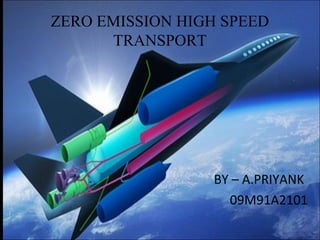
ZERO EMISSION HIGH SPEED
TRANSPORT
BY – A.PRIYANK
09M91A2101
INTRODUCTION
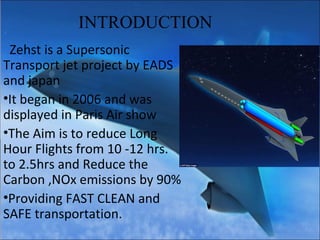
• Zehst is a Supersonic Transport
jet project by EADS and
French-japan
• It began in 2006 and was
displayed in Paris Air
show2007
• The Aim is to reduce Long
Hour Flights from 10 -12 hrs.
to 2.5hrs and Reduce the
Carbon ,NOx emissions by 90%
• Providing FAST CLEAN and
SAFE transportation.
Characteristics
• It is projected to fly at Mach
4, 32 km above the
ground, carrying 50 to 100
passengers.
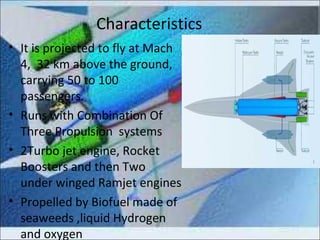
• Runs with Combination Of
Three Propulsion systems
• 2Turbo jet engine, 3Rocket
engine boosters and then Two
under winged Ramjet engines
• Propelled by Biofuel made of
seaweeds ,liquid Hydrogen
and oxygen
Operations
• Stage one turbojet engines running
on biofuel used for a conventional
runway take-off and climb at speeds
of Mach 0.8.
• Stage two Ignition and operation of
two Hydrogen/liquid oxygen-
powered cryogenic rocket engines
enable the aircraft to continued
steep climb accelerating up to a
speed of Mach 2.5
• In the final phase two air breathing,
hydrogen fueled ramjets would take
the aircraft to an optimum Mach
number 4 and an altitude of around
32 km.
ADVANTAGES
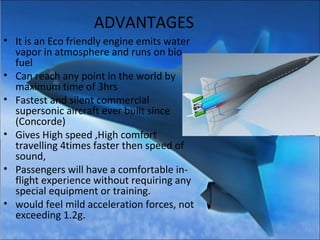
• It is an Eco friendly engine emits water
vapor in atmosphere and runs on bio
fuel
• Can reach any point in the world by
maximum time of 3hrs
• Fastest and silent commercial
supersonic aircraft ever built since
(Concorde)
• Gives High speed ,High comfort
travelling 4times faster then speed of
sound,
• Passengers will have a comfortable in-
flight experience without requiring any
special equipment or training.
• would feel mild acceleration forces, not
exceeding 1.2g.
Disadvantages
• High Cost
• Storage of Propellant requires large
space
• Heavy weight
Technical Challenges
• Finding lightweight smart materials
capable of resisting for high stress
levels and temperatures on the
exterior skin of aircraft during a large
number of consecutive flight cycles
• Examining ways to reduce sonic
booms
• Managing the engine transition
between the three propulsion modes
• altering airflow velocities, Closing
and opening of alternate air entry
points
FUTURE SCOPE
• Paves a way to more
emerging technologies in
more fuel-
efficient, comfortable and
high speed aircrafts
• Leads to more reduction of
Green house gas emissions
• Revolutionizing future Air
transportation and Navigation
systems
• Making more Hypersonic
sub- orbital vehicles
THANK YOU

Zero Emission High Speed Transport

  • 1.
    ZERO EMISSION HIGHSPEED TRANSPORT BY – A.PRIYANK 09M91A2101
  • 2.
    INTRODUCTION • Zehst isa Supersonic Transport jet project by EADS and French-japan • It began in 2006 and was displayed in Paris Air show2007 • The Aim is to reduce Long Hour Flights from 10 -12 hrs. to 2.5hrs and Reduce the Carbon ,NOx emissions by 90% • Providing FAST CLEAN and SAFE transportation.
  • 3.
    Characteristics • It isprojected to fly at Mach 4, 32 km above the ground, carrying 50 to 100 passengers. • Runs with Combination Of Three Propulsion systems • 2Turbo jet engine, 3Rocket engine boosters and then Two under winged Ramjet engines • Propelled by Biofuel made of seaweeds ,liquid Hydrogen and oxygen
  • 4.
    Operations • Stage oneturbojet engines running on biofuel used for a conventional runway take-off and climb at speeds of Mach 0.8. • Stage two Ignition and operation of two Hydrogen/liquid oxygen- powered cryogenic rocket engines enable the aircraft to continued steep climb accelerating up to a speed of Mach 2.5 • In the final phase two air breathing, hydrogen fueled ramjets would take the aircraft to an optimum Mach number 4 and an altitude of around 32 km.
  • 5.
    ADVANTAGES • It isan Eco friendly engine emits water vapor in atmosphere and runs on bio fuel • Can reach any point in the world by maximum time of 3hrs • Fastest and silent commercial supersonic aircraft ever built since (Concorde) • Gives High speed ,High comfort travelling 4times faster then speed of sound, • Passengers will have a comfortable in- flight experience without requiring any special equipment or training. • would feel mild acceleration forces, not exceeding 1.2g.
  • 6.
    Disadvantages • High Cost •Storage of Propellant requires large space • Heavy weight
  • 7.
    Technical Challenges • Findinglightweight smart materials capable of resisting for high stress levels and temperatures on the exterior skin of aircraft during a large number of consecutive flight cycles • Examining ways to reduce sonic booms • Managing the engine transition between the three propulsion modes • altering airflow velocities, Closing and opening of alternate air entry points
  • 8.
    FUTURE SCOPE • Pavesa way to more emerging technologies in more fuel- efficient, comfortable and high speed aircrafts • Leads to more reduction of Green house gas emissions • Revolutionizing future Air transportation and Navigation systems • Making more Hypersonic sub- orbital vehicles
  • 9.