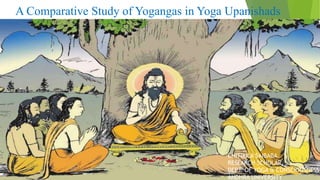
A Comparative Study of Yogangas in Yoga Upanishads
CHITIKILA SAIBABA
RESEARCH SCHOLAR
DEPT. OF YOGA & CONSCIOUSNESS
ANDHRA UNIVERSITY
Introduction
 The word ‘Yoga’ derived from ‘Yuj’ (to yoke or join) in the Rigveda and later Panini
derived it from ‘Yuj Samadhau’ (to concentrate).
 It means union of Jivatma with Paramatma or individual Consciousness with Universal
Consciousness.
 The aim of Yoga is Self-realization, through the practice of Yoga can overcome all kinds of
sufferings leading to 'the state of liberation' (Moksha) or ‘freedom’ (Kaivalya).
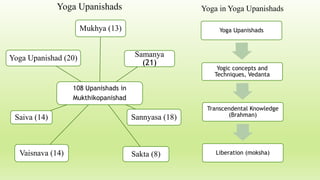
Yoga Upanishads
108 Upanishads in
Mukthikopanishad
Mukhya (13)
Samanya
(21)
Sannyasa (18)
Sakta (8)
Vaisnava (14)
Saiva (14)
Yoga Upanishad (20)
Yoga in Yoga Upanishads
Yoga Upanishads
Yogic concepts and
Techniques, Vedanta
Transcendental Knowledge
(Brahman)
Liberation (moksha)
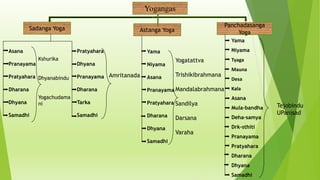
Yogangas
Astanga Yoga
Panchadasanga
Yoga
Sadanga Yoga
Asana
Pranayama
Pratyahara
Dharana
Dhyana
Samadhi
Kshurika
Dhyanabindu
Yogachudama
ni
Pratyahara
Dhyana
Pranayama
Dharana
Tarka
Samadhi
Amritanada
Yama
Niyama
Asana
Pranayama
Pratyahara
Dharana
Dhyana
Samadhi
Yogatattva
Trishikibrahmana
Mandalabrahmana
Sandilya
Darsana
Varaha
Yama
Niyama
Tyaga
Mauna
Desa
Kala
Asana
Mula-bandha
Deha-samya
Drk-sthiti
Pranayama
Pratyahara
Dharana
Dhyana
Samadhi
Tejobindu
UPanisad
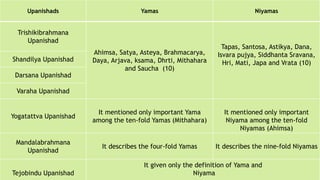
Upanishads Yamas Niyamas
Trishikibrahmana
Upanishad
Ahimsa, Satya, Asteya, Brahmacarya,
Daya, Arjava, ksama, Dhrti, Mithahara
and Saucha (10)
Tapas, Santosa, Astikya, Dana,
Isvara pujya, Siddhanta Sravana,
Hri, Mati, Japa and Vrata (10)
Shandilya Upanishad
Darsana Upanishad
Varaha Upanishad
Yogatattva Upanishad
It mentioned only important Yama
among the ten-fold Yamas (Mithahara)
It mentioned only important
Niyama among the ten-fold
Niyamas (Ahimsa)
Mandalabrahmana
Upanishad
It describes the four-fold Yamas It describes the nine-fold Niyamas
Tejobindu Upanishad
It given only the definition of Yama and
Niyama
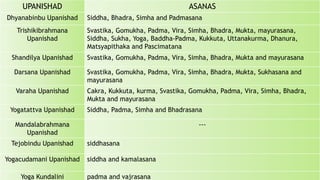
UPANISHAD ASANAS
Dhyanabinbu Upanishad Siddha, Bhadra, Simha and Padmasana
Trishikibrahmana
Upanishad
Svastika, Gomukha, Padma, Vira, Simha, Bhadra, Mukta, mayurasana,
Siddha, Sukha, Yoga, Baddha-Padma, Kukkuta, Uttanakurma, Dhanura,
Matsyapithaka and Pascimatana
Shandilya Upanishad Svastika, Gomukha, Padma, Vira, Simha, Bhadra, Mukta and mayurasana
Darsana Upanishad Svastika, Gomukha, Padma, Vira, Simha, Bhadra, Mukta, Sukhasana and
mayurasana
Varaha Upanishad Cakra, Kukkuta, kurma, Svastika, Gomukha, Padma, Vira, Simha, Bhadra,
Mukta and mayurasana
Yogatattva Upanishad Siddha, Padma, Simha and Bhadrasana
Mandalabrahmana
Upanishad
---
Tejobindu Upanishad siddhasana
Yogacudamani Upanishad siddha and kamalasana
Yoga Kundalini padma and vajrasana
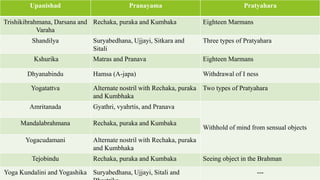
Upanishad Pranayama Pratyahara
Trishikibrahmana, Darsana and
Varaha
Rechaka, puraka and Kumbaka Eighteen Marmans
Shandilya Suryabedhana, Ujjayi, Sitkara and
Sitali
Three types of Pratyahara
Kshurika Matras and Pranava Eighteen Marmans
Dhyanabindu Hamsa (A-japa) Withdrawal of I ness
Yogatattva Alternate nostril with Rechaka, puraka
and Kumbhaka
Two types of Pratyahara
Amritanada Gyathri, vyahrtis, and Pranava
Withhold of mind from sensual objects
Mandalabrahmana Rechaka, puraka and Kumbaka
Yogacudamani Alternate nostril with Rechaka, puraka
and Kumbhaka
Tejobindu Rechaka, puraka and Kumbaka Seeing object in the Brahman
Yoga Kundalini and Yogashika Suryabedhana, Ujjayi, Sitali and ---
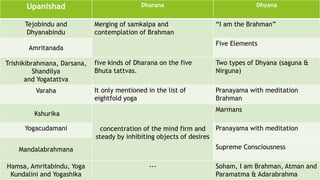
Upanishad Dharana Dhyana
Tejobindu and
Dhyanabindu
Merging of samkalpa and
contemplation of Brahman
“I am the Brahman”
Amritanada
Five Elements
Trishikibrahmana, Darsana,
Shandilya
and Yogatattva
five kinds of Dharana on the five
Bhuta tattvas.
Two types of Dhyana (saguna &
Nirguna)
Varaha It only mentioned in the list of
eightfold yoga
Pranayama with meditation
Brahman
Kshurika
concentration of the mind firm and
steady by inhibiting objects of desires
Marmans
Yogacudamani Pranayama with meditation
Mandalabrahmana Supreme Consciousness
Hamsa, Amritabindu, Yoga
Kundalini and Yogashika
--- Soham, I am Brahman, Atman and
Paramatma & Adarabrahma
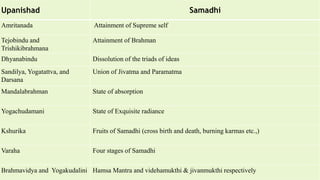
Upanishad Samadhi
Amritanada Attainment of Supreme self
Tejobindu and
Trishikibrahmana
Attainment of Brahman
Dhyanabindu Dissolution of the triads of ideas
Sandilya, Yogatattva, and
Darsana
Union of Jivatma and Paramatma
Mandalabrahman State of absorption
Yogachudamani State of Exquisite radiance
Kshurika Fruits of Samadhi (cross birth and death, burning karmas etc.,)
Varaha Four stages of Samadhi
Brahmavidya and Yogakudalini Hamsa Mantra and videhamukthi & jivanmukthi respectively
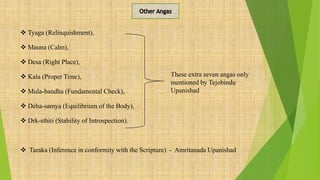
 Tyaga (Relinquishment),
 Mauna (Calm),
 Desa (Right Place),
 Kala (Proper Time),
 Mula-bandha (Fundamental Check),
 Deha-samya (Equilibrium of the Body),
 Drk-sthiti (Stability of Introspection).
 Taraka (Inference in conformity with the Scripture) - Amritanada Upanishad
These extra seven angas only
mentioned by Tejobindu
Upanishad
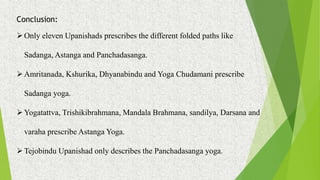
Conclusion:
Only eleven Upanishads prescribes the different folded paths like
Sadanga, Astanga and Panchadasanga.
Amritanada, Kshurika, Dhyanabindu and Yoga Chudamani prescribe
Sadanga yoga.
Yogatattva, Trishikibrahmana, Mandala Brahmana, sandilya, Darsana and
varaha prescribe Astanga Yoga.
Tejobindu Upanishad only describes the Panchadasanga yoga.