Creating a Music
Magazine
Music Magazines

   How many do you know of? Make a list
Popular Music Magazines


   Focus on the front covers!
Clash Magazine
   Popular music and
    fashion magazine
   Alternates between
    modern bands e.g.
    Coldplay, Oasis; and
    hip-hop artists e.g. Jay-Z
   Clash incorporates
    fashion and film articles
    alongside music
   (google images)
Classic FM Magazine
   Classical magazine,
    focused on popular
    performers in the
    classical music industry –
    e.g. Myleen Klass,
    Lesley Garrett,
    Pavarotti, etc; as well as
    different composers of
    classical music, past and
    present.
   Owned by the radio
    station Classic FM
BBC Music Magazine
   Similar to classic FM, but a
    little more upmarket.
    Subsidy of BBC and feeds off
    BBC Radio 3.
   Focuses less on popular
    composers and has articles
    on lots of different styles of
    classical music
   Includes comprehensive
    reviews of new CDs in the
    genre
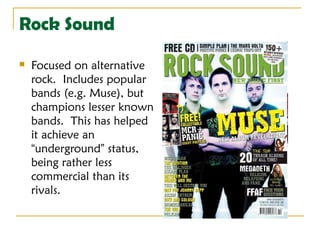
Rock Sound
   Focused on alternative
    rock. Includes popular
    bands (e.g. Muse), but
    champions lesser known
    bands. This has helped
    it achieve an
    “underground” status,
    being rather less
    commercial than its
    rivals.
Kerrang
   Long-standing rock
    magazine. Their focus
    has recently shifted a
    little from Nu Metal
    bands like Linkin’ Park,
    Lostprophets, etc; to
    emo and punk rock,
    e.g. My Chemical
    Romance.
Mixmag
   Mixmag is a dance music
    magazine, reviewing dance
    music with club nights.
   The magazine also includes
    some fashion. The editor said
    that “Mixmag is now a
    magazine for the entire world
    of dance music, whether you
    like hard boshing music that's
    quite druggy, or chill out music,
    or you're someone like me
    who likes to keep in touch with
    the music but has grown out of
    clubbing. This idea that dance
    music is a kind of minority
    interest, a bit like ska, is
    wrong.”
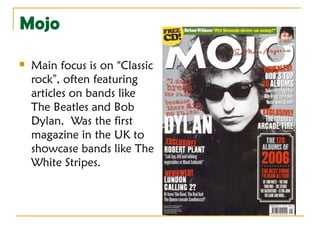
Mojo

   Main focus is on “Classic
    rock”, often featuring
    articles on bands like
    The Beatles and Bob
    Dylan. Was the first
    magazine in the UK to
    showcase bands like The
    White Stripes.
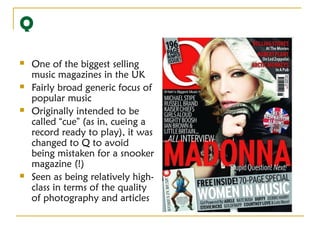
Q
   One of the biggest selling
    music magazines in the UK
   Fairly broad generic focus of
    popular music
   Originally intended to be
    called “cue” (as in, cueing a
    record ready to play), it was
    changed to Q to avoid
    being mistaken for a snooker
    magazine (!)
   Seen as being relatively high-
    class in terms of the quality
    of photography and articles
The Word
   Published by the owners
    of mixmag
   Focus mainly on classic
    rock, featuring artists
    like Bruce Springsteen,
    David Bowie, Iggy Pop,
    Kate Bush, etc
   Voted ‘Music Magazine
    of the Year’ in 2007 and
    2008
Classic Rock
   Firmly focuses on key
    bands from the 1960s –
    early 1990s, although
    does feature some
    contemporary artists
    who fit into the genre
NME (New Musical Express)
   Weekly music magazine (all
    others are monthly)
   Has been around since the
    1950s
   Mostly focuses on indie
    music, although has been
    criticised in recent years for
    not being specialised
    enough, giving too much
    attention to popular bands.
   Has been redesigned many
    times
   Has become less popular in
    the last 7 or 8 years, losing
    nearly 50% of its readership
Terms
 Some terms you could use to describe the photography in your magazine
 to help you explain what you are trying to achieve:

 Candid/Naturalistic: Photographs that are not obviously posed

 Posed: Photographs that have been posed for

 Live: Photographs that involve the band/artist performing

 Studio: Photographs taken in a photography studio

 High key: Photographs which are very bright overall

 Low key: Photographs which are dark overall
                                                                    16
Terms

 Colourful: Photographs which contain a lot of colour

 Monochromatic: Photographs which contain only one colour or are black
 and white

 Busy: Photographs that are busy contain lots of visual information

 Passive: Photographs which contain limited visual information


                                                                      17
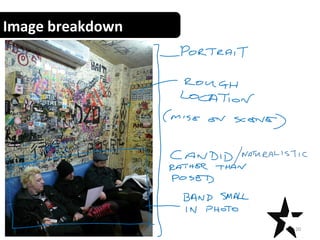
Mise en scene

 Look closely at the mise en scene to help you plan your own photographs.


 Make notes on the location, costume, model and composition


 Think about how you plan to use the photograph in your final piece. Does
 it need to be portrait or landscape format?


                                                                      18
Image breakdown


                  AS Media Studies 2009   19
Image breakdown


                  20
Image Breakdown


                  21
Image Breakdown

 Text


                  22
Image Breakdown – Over to you

Breakdown the
elements of the
photo as I have
done previously


                                23
Image Breakdown


                  24
Contact Sheet
 A contact sheets contains small versions of all the photographs you have taken
 for your project.

 From these images you pick the ones that you are going to use. You can use this
 as a way to explain why you have or have not used a particular image.


                                                                              25
What kind of media institution might distribute your
               media product and why?

                       What is a media institution?

Media Institution: any of the organisations responsible for the production,
  marketing, distribution or regulation of media texts.

Institutions are business structures that produce media texts and regulate
    and structure media activities. They are collectives within which
    individuals are encouraged to work towards a common goal and to
    develop working practices based on assumptions about their aims and
    ethos of the institutions. Institutions assume the shared values of all
    employees and have a status and power relationship with other
    institutions and the wider public.

Identify and list some of the Institutions you are aware of. Decide whether
          they are a producer, distributor or regulator of media texts.
Example Media Institution
British Broadcasting Corporation (BBC)
[production, marketing, distribution and (self) regulator]


British Sky Broadcasting (BSB)
[production, marketing, distribution and (self) regulator]


Cable News Network (CNN)
[production and (self) regulator]


British Board of Film Classification (BBFC)
[regulator]
NME


     The Word, Mixmag


 Classic Rock           Kerrang!
Metal Hammer              Mojo
MAGAZINE INDUSTRY


In the UK, the magazine industry
operates as an OLIGOPOLY. An
oligopoly is where several companies
have grown larger and larger whilst
competing, to the point where they
all have equal power and they all
dominate the market. In the UK the
companies that dominate the
magazine market are:
HEARST
IPC MEDIA
BAUER (incorporating EMAP)
CONDE NAST
Pitch

 Pitch
 Blues is a new magazine aimed at the mostly male 35 – 60 market. Readers are likely to
 be affluent white males with a settled family life.

 It will cover all aspects of blues music from its roots right up to the present day. It will mix
 interviews of musicians and famous fans alongside pieces on the history of blues. It will
 also review new and re-release albums and cover other blues events and news.

 It will be simple in style with pictures and text given breathing space and a greater
 emphasis on text backed up with limited but excellent photography.

 The example double page spread will be an interview with John Lee Hooker, discussing his
 new album and tour. The interview will be supported with side bars giving a brief history
 and discography to fill new readers in on his past.


                                                                                               30

Year 12

  • 1.
  • 3.
    Music Magazines  How many do you know of? Make a list
  • 4.
    Popular Music Magazines Focus on the front covers!
  • 5.
    Clash Magazine  Popular music and fashion magazine  Alternates between modern bands e.g. Coldplay, Oasis; and hip-hop artists e.g. Jay-Z  Clash incorporates fashion and film articles alongside music  (google images)
  • 6.
    Classic FM Magazine  Classical magazine, focused on popular performers in the classical music industry – e.g. Myleen Klass, Lesley Garrett, Pavarotti, etc; as well as different composers of classical music, past and present.  Owned by the radio station Classic FM
  • 7.
    BBC Music Magazine  Similar to classic FM, but a little more upmarket. Subsidy of BBC and feeds off BBC Radio 3.  Focuses less on popular composers and has articles on lots of different styles of classical music  Includes comprehensive reviews of new CDs in the genre
  • 8.
    Rock Sound  Focused on alternative rock. Includes popular bands (e.g. Muse), but champions lesser known bands. This has helped it achieve an “underground” status, being rather less commercial than its rivals.
  • 9.
    Kerrang  Long-standing rock magazine. Their focus has recently shifted a little from Nu Metal bands like Linkin’ Park, Lostprophets, etc; to emo and punk rock, e.g. My Chemical Romance.
  • 10.
    Mixmag  Mixmag is a dance music magazine, reviewing dance music with club nights.  The magazine also includes some fashion. The editor said that “Mixmag is now a magazine for the entire world of dance music, whether you like hard boshing music that's quite druggy, or chill out music, or you're someone like me who likes to keep in touch with the music but has grown out of clubbing. This idea that dance music is a kind of minority interest, a bit like ska, is wrong.”
  • 11.
    Mojo  Main focus is on “Classic rock”, often featuring articles on bands like The Beatles and Bob Dylan. Was the first magazine in the UK to showcase bands like The White Stripes.
  • 12.
    Q  One of the biggest selling music magazines in the UK  Fairly broad generic focus of popular music  Originally intended to be called “cue” (as in, cueing a record ready to play), it was changed to Q to avoid being mistaken for a snooker magazine (!)  Seen as being relatively high- class in terms of the quality of photography and articles
  • 13.
    The Word  Published by the owners of mixmag  Focus mainly on classic rock, featuring artists like Bruce Springsteen, David Bowie, Iggy Pop, Kate Bush, etc  Voted ‘Music Magazine of the Year’ in 2007 and 2008
  • 14.
    Classic Rock  Firmly focuses on key bands from the 1960s – early 1990s, although does feature some contemporary artists who fit into the genre
  • 15.
    NME (New MusicalExpress)  Weekly music magazine (all others are monthly)  Has been around since the 1950s  Mostly focuses on indie music, although has been criticised in recent years for not being specialised enough, giving too much attention to popular bands.  Has been redesigned many times  Has become less popular in the last 7 or 8 years, losing nearly 50% of its readership
  • 16.
    Terms Some termsyou could use to describe the photography in your magazine to help you explain what you are trying to achieve: Candid/Naturalistic: Photographs that are not obviously posed Posed: Photographs that have been posed for Live: Photographs that involve the band/artist performing Studio: Photographs taken in a photography studio High key: Photographs which are very bright overall Low key: Photographs which are dark overall 16
  • 17.
    Terms Colourful: Photographswhich contain a lot of colour Monochromatic: Photographs which contain only one colour or are black and white Busy: Photographs that are busy contain lots of visual information Passive: Photographs which contain limited visual information 17
  • 18.
    Mise en scene Look closely at the mise en scene to help you plan your own photographs. Make notes on the location, costume, model and composition Think about how you plan to use the photograph in your final piece. Does it need to be portrait or landscape format? 18
  • 19.
    Image breakdown AS Media Studies 2009 19
  • 20.
  • 21.
  • 22.
  • 23.
    Image Breakdown –Over to you Breakdown the elements of the photo as I have done previously 23
  • 24.
  • 25.
    Contact Sheet Acontact sheets contains small versions of all the photographs you have taken for your project. From these images you pick the ones that you are going to use. You can use this as a way to explain why you have or have not used a particular image. 25
  • 26.
    What kind ofmedia institution might distribute your media product and why? What is a media institution? Media Institution: any of the organisations responsible for the production, marketing, distribution or regulation of media texts. Institutions are business structures that produce media texts and regulate and structure media activities. They are collectives within which individuals are encouraged to work towards a common goal and to develop working practices based on assumptions about their aims and ethos of the institutions. Institutions assume the shared values of all employees and have a status and power relationship with other institutions and the wider public. Identify and list some of the Institutions you are aware of. Decide whether they are a producer, distributor or regulator of media texts.
  • 27.
    Example Media Institution BritishBroadcasting Corporation (BBC) [production, marketing, distribution and (self) regulator] British Sky Broadcasting (BSB) [production, marketing, distribution and (self) regulator] Cable News Network (CNN) [production and (self) regulator] British Board of Film Classification (BBFC) [regulator]
  • 28.
    NME The Word, Mixmag Classic Rock Kerrang! Metal Hammer Mojo
  • 29.
    MAGAZINE INDUSTRY In theUK, the magazine industry operates as an OLIGOPOLY. An oligopoly is where several companies have grown larger and larger whilst competing, to the point where they all have equal power and they all dominate the market. In the UK the companies that dominate the magazine market are: HEARST IPC MEDIA BAUER (incorporating EMAP) CONDE NAST
  • 30.
    Pitch Pitch Bluesis a new magazine aimed at the mostly male 35 – 60 market. Readers are likely to be affluent white males with a settled family life. It will cover all aspects of blues music from its roots right up to the present day. It will mix interviews of musicians and famous fans alongside pieces on the history of blues. It will also review new and re-release albums and cover other blues events and news. It will be simple in style with pictures and text given breathing space and a greater emphasis on text backed up with limited but excellent photography. The example double page spread will be an interview with John Lee Hooker, discussing his new album and tour. The interview will be supported with side bars giving a brief history and discography to fill new readers in on his past. 30