Xeroradiography
K. MANOJ KUMAR
M.V.Sc
Overview
• Introduction
• History
• Components
• Principle
• Procedure
• Advantages and disadvantages
Introduction
• Various methods have been introduced for
obtaining radiographs among which
xeroradiography is a method of imaging which uses
the Xeroradiographic copying process to record
images produced by diagnostic X-rays.
• It is a method of X ray imaging in which a visible
electrostatic pattern is produced on the surface of a
photoconductor
• The imaging method was discovered by an
American physicist, Chestor Carlson in 1937.
• Pogorzelska–Stronczak became the first to
use xeroradiography ,to produce dental
images
History:
Components of Xeroradiography
• Xerographic plate
• Corotron
• Cassette
• Toner
• Special paper
The Xeroradiographic Plate
The Xeroradiographic Plate:
• The plate is made up of a 9 1/2 to 14 inch sheet of
aluminium, a thin layer of vitreous or amorphous
selenium photoconductor, an interface layer, and an
over cutting on the thin selenium layer
a. The Aluminium Substrate:
• The substrate for the selenium photoconductor
should present a clean and smooth surface.
• Surface defects affect the Xeroradiographic plate’s
sensitivity by giving rise to changes in the
electrostatic charge in the photoconductor.
b. The Interface Layer:
• This is a thin layer of aluminium oxide between the
selenium photoconductor and aluminium substrate
• The oxide is produced by heat treating the
aluminium substrate.
• As a non conductor, the interface layer prevents
charge exchange between the substrate and the
photoconductor surface.
c. Selenium Coating:
• The layer of vitreous selenium is approximately 130
microns in thickness
• with all photoconductors, when appropriate
electrical potential is generated between its surface
ground, a positive charge will accumulate along its
surface
• Because of its ease of use, fabrication and
durability, inherent property of electrical
conduction when exposed to x-rays and ability to
insulate well when shielded from all sources of
light, make selenium a Xeroradiographic material of
choice.
d. Cellulose Acetate Protective Coating
 The protective coating is a 0.1micron meter
cellulose acetate overcoat.
 The coat bonds intimately with selenium
photoconductor.
 It helps to prevent degradation of electrostatic
lateral image through the prevention of lateral
conduction of electrostatic charges.
 Also it impacts positively on the shelf life of the
Xeroradiographic plate.
PRINCIPLE:
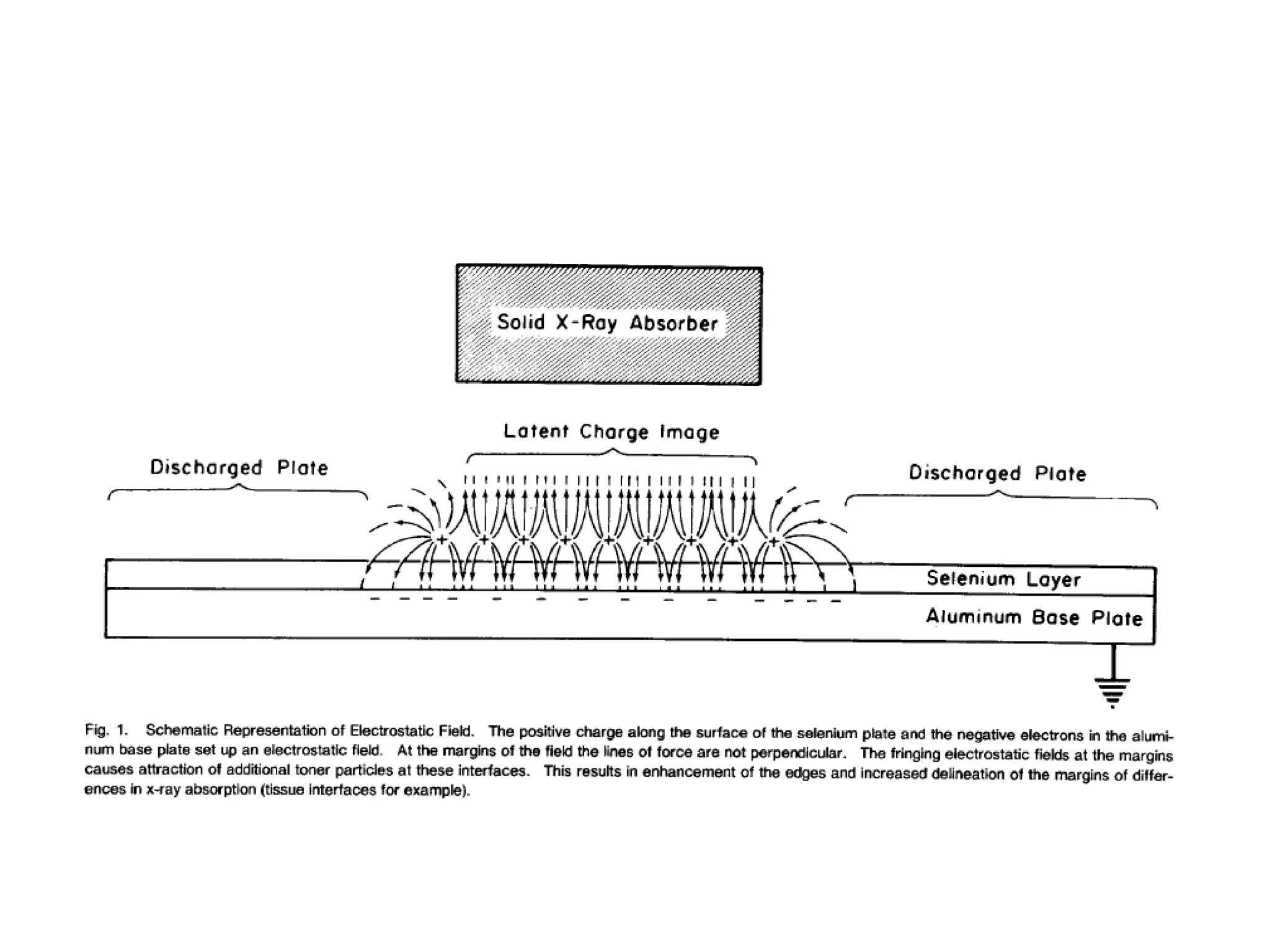
The XR plate is charged to a high positive potential by corotron
It is then placed in a cassette and used in a manner similar to that with
conventional film in its cassette
When x rays strike the selenium, photoconduction occurs and this
produces a charge image of the part examined.
The image is made visible by bringing into proximity to the plate
charged developer or toner particles
The resultant powder image is subsequently transferred to paper and
fused providing an opaque XR for interpretation and storage
PROCEDURE:
• The first step in xeroradiographic process is to
sensitise the selenium layer by applying a uniform
electrostatic charge to its surface in the dark.
• It is done by making the plate to move at a uniform
rate under the stationary charging device which
may be a scorotron or corotron and produces a
charge on the surface of photoconductor
• Thus the layer of selenium on one side become
charged with a uniformly distributed positive
charge (600—1200V) which is retained as long as it
remain in the dark due to great resistance of the
layer
• The charged plate is then enclosed in a cassette
which is light tight and is rigid enough to provide
mechanical protection to the delicate plate. The
plate cassette combination is used just as one
would use an X ray film in its cassette
• When the charged selenium plate is exposed to X
rays, electron hole pairs are formed.
• As X ray photons impinges on this amorphous coat
of selenium, charges diffuse out, in proportion to
energy content of X ray. This occurs as a result of
photoconduction
• The resultant imprint is made visible (developed) by
exposing the surface of the selenium plate to the
fine charged powder particles called toner which
usually is a pigmented thermoplastic material of
dark blue colour
• The exposed xerographic plate placed on the top of
a dark box into which an aerosol of charged toner
particles is sprayed through a nozzle, the process
being called triboelectrification or contact
electrification.
• The powder picture on the surface of the
xeroradiographic plate is then transferred to a
special paper and fixed there to form a permanent
image.
• The paper is slightly coated with a slightly
deformable layer of plastic such as low molecular
weight polyethylene material.
• When it is pushed against the powder image under
relatively high mechanical pressure, the toner
particles become slightly embedded in plastic
• The paper is then peeled off the plate, and the
loosely held powder image is made into a
permanent bonded image by heating the paper to a
temperature of about 47.50 F.
• The heat softens the plastic coating on the paper
and allows toner particles to sink into and and
become bonded to plastic
• The toner particles do not melt or flow. After fixing,
also called fusing, the imaging portion of the
xeroradiographic process is completed. The
completed image is delivered from the processor
ready for viewing
• On a xeroradiographic image, the areas which
receive little X-ray exposure appear light blue. If a
charged plate is inadvertently exposed to room light
and then developed, the paper will almost devoid
of toner
• After transfer of toner to the paper, some of it
remains on the plate surface. All of the toner must
be removed before the plate can be reused. This is
done by exposing the plate to a light source that
reduces the bond holding residual tone to the plate.
• A preclean corotron then exposes the plate to
an alternating current which serves to
neutralize the electrostatic forces holding the
toner to the plate.
• The residual toner is then brushed off from
plate using a clean brush. The plate then can
be reused. It is not charged during storage
Types:
• A positive XR refers to image that is blue and
white with blue representing dense areas
• A negative XR refers to image that is blue and
white but that has been reversed so that
represents the dense areas
Xeroradiography Vs Radiography
• Elimination of accidental film exposure, High
resolution, Simultaneous evaluation of
multiple tissues, Ease of reviewing, Economic
benefit, Reduced exposure to radiation
hazards
• It differs from halide film technique in that it
involves neither wet chemical processing nor
the use of dark room.
Applications:
• The xeroradiography has found application in soft
tissue imaging : in radiographic examination of the
mammary glands, muscles, tendons and ligaments
• The main advantage of xeroradiography include
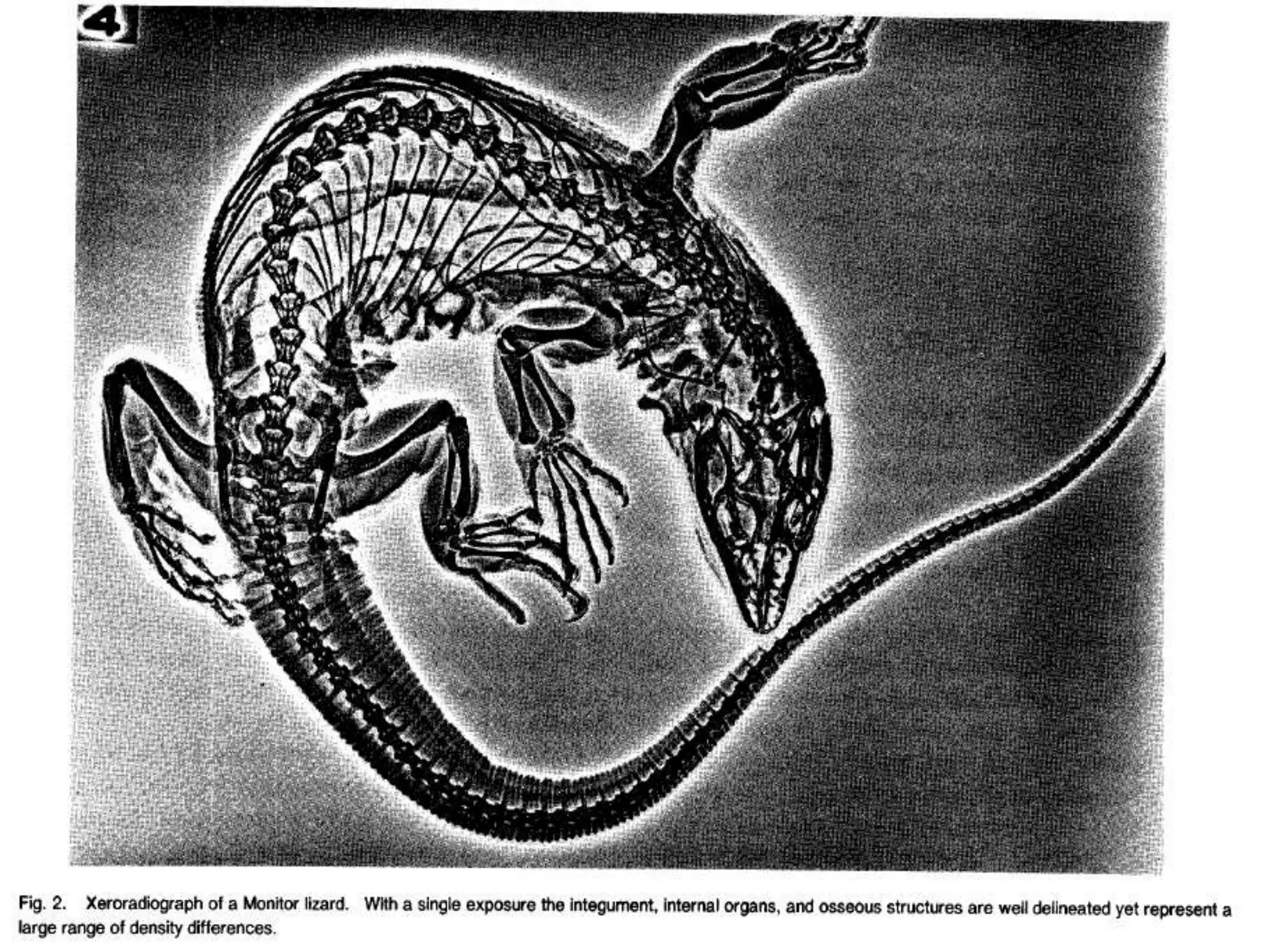
enhanced visualisation of the borders between
images of different densities ( edge effect), low
contrast which enables differentiation between fat,
muscle and bones and wide exposure latitude
Femoral artery angiography
Achilles tendon
Disadvantages
• The technique cannot be used for very thick parts
as very high exposure is required
• Technical difficulties, Fragile selenium coat,
Transient image retention, Slower speed,
• Technical limitations: low density of selenium plate
which recquires increased doses of X rays
administered make the technique not to be
considered as a total substitute for halide
radiograph
Thank you

Xeroradiography

  • 1.
  • 2.
    Overview • Introduction • History •Components • Principle • Procedure • Advantages and disadvantages
  • 3.
    Introduction • Various methodshave been introduced for obtaining radiographs among which xeroradiography is a method of imaging which uses the Xeroradiographic copying process to record images produced by diagnostic X-rays. • It is a method of X ray imaging in which a visible electrostatic pattern is produced on the surface of a photoconductor
  • 4.
    • The imagingmethod was discovered by an American physicist, Chestor Carlson in 1937. • Pogorzelska–Stronczak became the first to use xeroradiography ,to produce dental images History:
  • 5.
    Components of Xeroradiography •Xerographic plate • Corotron • Cassette • Toner • Special paper
  • 6.
  • 7.
    The Xeroradiographic Plate: •The plate is made up of a 9 1/2 to 14 inch sheet of aluminium, a thin layer of vitreous or amorphous selenium photoconductor, an interface layer, and an over cutting on the thin selenium layer a. The Aluminium Substrate: • The substrate for the selenium photoconductor should present a clean and smooth surface. • Surface defects affect the Xeroradiographic plate’s sensitivity by giving rise to changes in the electrostatic charge in the photoconductor.
  • 8.
    b. The InterfaceLayer: • This is a thin layer of aluminium oxide between the selenium photoconductor and aluminium substrate • The oxide is produced by heat treating the aluminium substrate. • As a non conductor, the interface layer prevents charge exchange between the substrate and the photoconductor surface.
  • 9.
    c. Selenium Coating: •The layer of vitreous selenium is approximately 130 microns in thickness • with all photoconductors, when appropriate electrical potential is generated between its surface ground, a positive charge will accumulate along its surface • Because of its ease of use, fabrication and durability, inherent property of electrical conduction when exposed to x-rays and ability to insulate well when shielded from all sources of light, make selenium a Xeroradiographic material of choice.
  • 10.
    d. Cellulose AcetateProtective Coating  The protective coating is a 0.1micron meter cellulose acetate overcoat.  The coat bonds intimately with selenium photoconductor.  It helps to prevent degradation of electrostatic lateral image through the prevention of lateral conduction of electrostatic charges.  Also it impacts positively on the shelf life of the Xeroradiographic plate.
  • 11.
    PRINCIPLE: The XR plateis charged to a high positive potential by corotron It is then placed in a cassette and used in a manner similar to that with conventional film in its cassette When x rays strike the selenium, photoconduction occurs and this produces a charge image of the part examined. The image is made visible by bringing into proximity to the plate charged developer or toner particles The resultant powder image is subsequently transferred to paper and fused providing an opaque XR for interpretation and storage
  • 12.
    PROCEDURE: • The firststep in xeroradiographic process is to sensitise the selenium layer by applying a uniform electrostatic charge to its surface in the dark. • It is done by making the plate to move at a uniform rate under the stationary charging device which may be a scorotron or corotron and produces a charge on the surface of photoconductor
  • 13.
    • Thus thelayer of selenium on one side become charged with a uniformly distributed positive charge (600—1200V) which is retained as long as it remain in the dark due to great resistance of the layer • The charged plate is then enclosed in a cassette which is light tight and is rigid enough to provide mechanical protection to the delicate plate. The plate cassette combination is used just as one would use an X ray film in its cassette
  • 15.
    • When thecharged selenium plate is exposed to X rays, electron hole pairs are formed. • As X ray photons impinges on this amorphous coat of selenium, charges diffuse out, in proportion to energy content of X ray. This occurs as a result of photoconduction
  • 16.
    • The resultantimprint is made visible (developed) by exposing the surface of the selenium plate to the fine charged powder particles called toner which usually is a pigmented thermoplastic material of dark blue colour • The exposed xerographic plate placed on the top of a dark box into which an aerosol of charged toner particles is sprayed through a nozzle, the process being called triboelectrification or contact electrification.
  • 17.
    • The powderpicture on the surface of the xeroradiographic plate is then transferred to a special paper and fixed there to form a permanent image. • The paper is slightly coated with a slightly deformable layer of plastic such as low molecular weight polyethylene material. • When it is pushed against the powder image under relatively high mechanical pressure, the toner particles become slightly embedded in plastic
  • 18.
    • The paperis then peeled off the plate, and the loosely held powder image is made into a permanent bonded image by heating the paper to a temperature of about 47.50 F. • The heat softens the plastic coating on the paper and allows toner particles to sink into and and become bonded to plastic • The toner particles do not melt or flow. After fixing, also called fusing, the imaging portion of the xeroradiographic process is completed. The completed image is delivered from the processor ready for viewing
  • 19.
    • On axeroradiographic image, the areas which receive little X-ray exposure appear light blue. If a charged plate is inadvertently exposed to room light and then developed, the paper will almost devoid of toner • After transfer of toner to the paper, some of it remains on the plate surface. All of the toner must be removed before the plate can be reused. This is done by exposing the plate to a light source that reduces the bond holding residual tone to the plate.
  • 20.
    • A precleancorotron then exposes the plate to an alternating current which serves to neutralize the electrostatic forces holding the toner to the plate. • The residual toner is then brushed off from plate using a clean brush. The plate then can be reused. It is not charged during storage
  • 21.
    Types: • A positiveXR refers to image that is blue and white with blue representing dense areas • A negative XR refers to image that is blue and white but that has been reversed so that represents the dense areas
  • 22.
    Xeroradiography Vs Radiography •Elimination of accidental film exposure, High resolution, Simultaneous evaluation of multiple tissues, Ease of reviewing, Economic benefit, Reduced exposure to radiation hazards • It differs from halide film technique in that it involves neither wet chemical processing nor the use of dark room.
  • 23.
    Applications: • The xeroradiographyhas found application in soft tissue imaging : in radiographic examination of the mammary glands, muscles, tendons and ligaments • The main advantage of xeroradiography include enhanced visualisation of the borders between images of different densities ( edge effect), low contrast which enables differentiation between fat, muscle and bones and wide exposure latitude
  • 24.
  • 27.
  • 32.
    Disadvantages • The techniquecannot be used for very thick parts as very high exposure is required • Technical difficulties, Fragile selenium coat, Transient image retention, Slower speed, • Technical limitations: low density of selenium plate which recquires increased doses of X rays administered make the technique not to be considered as a total substitute for halide radiograph
  • 33.