WTO &
GATT
.
GATT
 General Agreement on Tariffs and Trade (GATT)
was a multilateral agreement regulating
international trade.
 GATT was signed by 123 nations in Geneva on
October 30, 1947 and took effect on January 1,
1948.
 Lasted until the signature by 123 nations in
Marrakesh on April 14, 1994 of the Uruguay Round
Agreements, which established the World Trade
Organization (WTO) on January 1, 1995.
GATT contained two things;
• An international agreement, i.e. a document
setting out the rules for conducting
international trade
• An international organization created later to
support the agreement
 This continued to exist half a century.
 GATT no longer exists.
 It has now been replaced by WTO
Relationship between GATT and WTO
GATT dealt with trade in goods. It has been
incorporated into new WTO agreements.
Now there’s
 GATT
 General Agreement on Trade in Services (GATTS)
 Trade Related Aspects of Intellectual Property
Rights (TRIPS)
WTO brings these three together within a single
organisation. So WTO is not a simple extension of
GATT, it is much more
 GATT no longer exists but GATT agreements
lives on.
 Old one was GATT 1947 and the new one is
GATT 1994
 GATT’s key principles have been adopted by
agreements in services and intellectual
property and this includes non-discrimination
and transparency
WTO
 The World Trade Organization (WTO) is
an organization which regulates international trade.
 Commenced on 1 January 1995
 Under the Marrakesh Agreement,
 Signed by 123 nations on 15 April 1994,
 Replacing the General Agreement on Tariffs and
Trade (GATT), which commenced in 1948.
 WTO deals with regulation of trade between
participating countries by providing a framework for
negotiating trade agreements and a dispute resolution
process
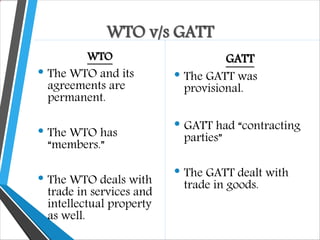
WTO v/s GATT
WTO
• The WTO and its
agreements are
permanent.
• The WTO has
“members.”
• The WTO deals with
trade in services and
intellectual property
as well.
GATT
• The GATT was
provisional.
• GATT had “contracting
parties”
• The GATT dealt with
trade in goods.
.
•As an international
organisation, the
WTO has a sound
legal basis because
all members have
ratified the WTO
Agreements, and
the agreements
themselves
describe how the
WTO is to function.
•Its contracting
parties never
ratified the General
Agreement, and it
contained no
provisions for the
creation of an
organisation.
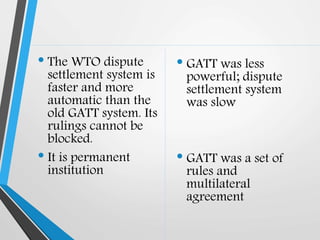
• The WTO dispute
settlement system is
faster and more
automatic than the
old GATT system. Its
rulings cannot be
blocked.
• It is permanent
institution
• GATT was less
powerful; dispute
settlement system
was slow
• GATT was a set of
rules and
multilateral
agreement
.
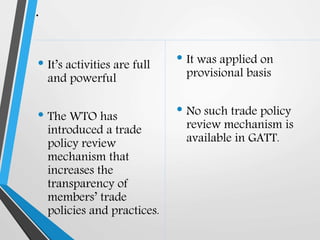
• It’s activities are full
and powerful
• The WTO has
introduced a trade
policy review
mechanism that
increases the
transparency of
members’ trade
policies and practices.
• It was applied on
provisional basis
• No such trade policy
review mechanism is
available in GATT.

WTO & GATT

  • 1.
  • 2.
    GATT  General Agreementon Tariffs and Trade (GATT) was a multilateral agreement regulating international trade.  GATT was signed by 123 nations in Geneva on October 30, 1947 and took effect on January 1, 1948.  Lasted until the signature by 123 nations in Marrakesh on April 14, 1994 of the Uruguay Round Agreements, which established the World Trade Organization (WTO) on January 1, 1995.
  • 3.
    GATT contained twothings; • An international agreement, i.e. a document setting out the rules for conducting international trade • An international organization created later to support the agreement  This continued to exist half a century.  GATT no longer exists.  It has now been replaced by WTO
  • 4.
    Relationship between GATTand WTO GATT dealt with trade in goods. It has been incorporated into new WTO agreements. Now there’s  GATT  General Agreement on Trade in Services (GATTS)  Trade Related Aspects of Intellectual Property Rights (TRIPS) WTO brings these three together within a single organisation. So WTO is not a simple extension of GATT, it is much more
  • 5.
     GATT nolonger exists but GATT agreements lives on.  Old one was GATT 1947 and the new one is GATT 1994  GATT’s key principles have been adopted by agreements in services and intellectual property and this includes non-discrimination and transparency
  • 6.
    WTO  The WorldTrade Organization (WTO) is an organization which regulates international trade.  Commenced on 1 January 1995  Under the Marrakesh Agreement,  Signed by 123 nations on 15 April 1994,  Replacing the General Agreement on Tariffs and Trade (GATT), which commenced in 1948.  WTO deals with regulation of trade between participating countries by providing a framework for negotiating trade agreements and a dispute resolution process
  • 7.
    WTO v/s GATT WTO •The WTO and its agreements are permanent. • The WTO has “members.” • The WTO deals with trade in services and intellectual property as well. GATT • The GATT was provisional. • GATT had “contracting parties” • The GATT dealt with trade in goods.
  • 8.
    . •As an international organisation,the WTO has a sound legal basis because all members have ratified the WTO Agreements, and the agreements themselves describe how the WTO is to function. •Its contracting parties never ratified the General Agreement, and it contained no provisions for the creation of an organisation.
  • 9.
    • The WTOdispute settlement system is faster and more automatic than the old GATT system. Its rulings cannot be blocked. • It is permanent institution • GATT was less powerful; dispute settlement system was slow • GATT was a set of rules and multilateral agreement
  • 10.
    . • It’s activitiesare full and powerful • The WTO has introduced a trade policy review mechanism that increases the transparency of members’ trade policies and practices. • It was applied on provisional basis • No such trade policy review mechanism is available in GATT.