WOUNDS
Dr Joel Arudchelvam
consultant vascular and transplant surgeon
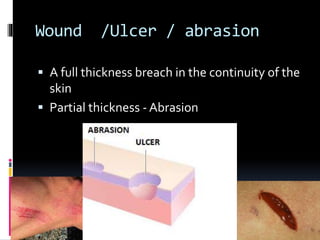
Wound /Ulcer / abrasion
 A full thickness breach in the continuity of the
skin
 Partial thickness - Abrasion
Skin Anatomy
Wound healing
 4 stages
 Haematoma formation
 Inflammation/ debridment
 Proliferation
 Remodelling / maturation
Stages of Wound Healing
Inflammatory Stage
 Characterized by redness, heat,
pain and swelling
 approximately 4 to 5 days
 Within 24 hours of the initial
injury, neutrophils, monocytes and
macrophages migrate to wound
 control bacterial growth and
remove dead tissue
Proliferative Phase
Granulation
•Fibroblasts - collagen
•new capillaries
Contraction
•Wound edges pull together to reduce defect
Epithelialization
•Crosses moist surface
Remodeling
 Reorganization of collagen (type III to type I)
 increase in tensile strength
 Tensile strength reaches only about 80% of
pre-injury strength
Phases overlap
“Overlapping terms”
Wound healing
 Primary intention
 Secondary intention
 Tertiary intention
 Delayed closure
Primary Intention
Primary intention
Healing of a clean linear wound /surgical
incision with sligth damage of tissues
Healing by second intention
extensive loss of tissue that is filled with granulation
tissue and replaced by scar.
Classification of Wounds
 1) Clean Wound:
 Operative incisional wounds t.
 2) Clean/ContaminatedWound:
 When respiratory, gastrointestinal, genital, and/or
urinary tract have been entered.
 3) ContaminatedWound:
 open, traumatic wounds or surgical wounds involving a
major break in sterile technique that show evidence of
inflammation.
 4) Infected Wound:
 old, traumatic wounds containing dead tissue and
wounds with evidence of a clinical infection (e.g.,
purulent drainage).
Complications of wound
healing
 Deficient scar formation
 wound dehiscence
 Excessive scar formation
 Hypertrophic scar
 keloid
 Exuberant granulation (proud flesh)
Non healing ulcer / chronic
ulcers
 Ulcers not showing signs of healing by 6
weeks are called chronic ulcers.
Causes for non-healing ulcers.
1. Local causes
-Repeated trauma
-Presence of foreign body / slough
-ongoing infection / osteomyelitis
2. Regional causes
-Venous
-Arterial
-Neuropathic
3. Systemic causes
-Diseases- diabetes mellitus, renal failure, etc.
- Drugs- immunosuppressive drugs, cytotoxic
-Nutritional deficiencies- hypo-albuminaemia, anaemia, vitamin and mineral
DifferentiatingArterial,Venous and Neuropathic Ulcers
Differentiating Arterial, Venous and Neuropathic Ulcers
Treatment for chronic ulcers
 Local
 Regional
 Systemic
Treatment for chronic ulcers
 Local
 Wound toilet
o Process of removal of slough, dead tissue,
foreign bodies and draining pus.
o Following a wound toilet the wound base is
made suitable for future granulation and
epithelialisation.
Treatment for chronic ulcers
 Regional causes
 Arterial- revascularization
 Venous - Strapping
 (i.e. multilayer compression
 cotton wool
 crape bandage
 Cohesive - Coban
 Adhesive - elasto-plaster.
 Neuropathic- off loading
Treatment for chronic ulcers
 Systemic causes
 Correct anaemia, vitamin deficiency and other
nutritional deficiencies.
 Optimization of underlying comorbidities.
 Role of antibiotics in wound - indicated only in
patients with evidence of local or systemic
infection.
Wound dressings
 The material which is applied to the surface
of the wound to cover it is called a dressing.
 1ry – dressing which touches the wound
 2ry – dressing used to cover the primary dressing
Ideal wound dressing
Dressings are applied to wounds for the following
reasons;
 To provide a protective cover
 To maintain moisture
 To reduce pain
 To absorb exudates
In addition an ideal dressing have the following features;
 does not induce pain or itching
 easy to change
 Allows gaseous exchange
 Cheap
 Freely available
Types of Wound Dressings
 Gauze dressings
 Tulle
 Hydrocolloid dressings
 Hydrogel dressings
 Alginate dressings
 Foam dressings
 Transparent film dressings
 Etc.
Gauze
 Cheap
 Freely available
 Dry
 Painful on removing
 Damages epithelium
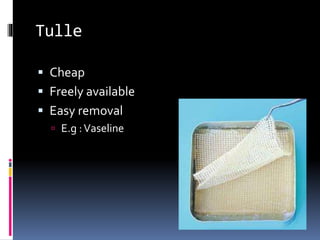
Tulle
 Cheap
 Freely available
 Easy removal
 E.g :Vaseline
Hydrocolloid
Dressings
Hydrocolloid Dressings
 Made up of pectin based material
 Absorb exudate
 Occlusive – should not be used on infected
wounds
 Come in various shapes and sizes
Hydrogel Dressings
Hydrogel Dressings
 Made up of primarily water in a polymer to
maintain moist wound base
 used in dry wounds
 Should not be used in exudating wounds
Alginate Dressings
Alginate Dressings
 Made up of seaweed
 Absorb moderate amounts of drainage
 becomes a gel when it comes into contact with
wound fluid through Calcium/Sodium ion
exchange
Foam Dressings
Foam Dressings
 Made up of polyurethane foam
 Absorbs moderate to large amounts of fluid
 Available in various sizes and shapes
 Some types my macerate peri wound skin if it
allows drainage laterally
Silver Dressings
 Antimicrobial to reduce bio burden of wound
through slow release of silver ion into the
wound
 e.g.Acticoat, Biatin Ag,Atruman Ag
Vacuum assisted closure VAC
 Macrostrain - visible stretch that occurs when negative
pressure contracts the foam.
 Draws wound edges together
 Provides direct and complete wound bed contact
 Evenly distributes negative pressure
 Removes exudate and infectious materials
 Microstrain - micro deformation at the cellular level
 Reduces edema
 Promotes granulation tissue formation by facilitating cell
migration and proliferation
Vacuum assisted closure VAC
 Indications for use
 Large wounds
 Cavities
 Large amount of exudate
Summary
Wound type Dressing
Dry Hydrocolloid, Hydrogel
Exudating wound Hydrocolloid, foam
Slough Hydrocolloid, hydrogels
Dead space / cavity Alginate, foam
When to change dressings
 When there is an indication to change
 Soaking
 Pain
 Need to inspect
 Discuss with doctor before changing
Avoid in chronic wounds
 Iodine (Betadine)
 Hydrogen peroxide
 Other toxic agents
Avoid
• Do not tie gauze bandage
tightly around limbs,
digits – causes ischaemia
• Use – plaster , crepe
instead
ThankYou

Wounds

  • 1.
    WOUNDS Dr Joel Arudchelvam consultantvascular and transplant surgeon
  • 2.
    Wound /Ulcer /abrasion  A full thickness breach in the continuity of the skin  Partial thickness - Abrasion
  • 3.
  • 4.
    Wound healing  4stages  Haematoma formation  Inflammation/ debridment  Proliferation  Remodelling / maturation
  • 5.
    Stages of WoundHealing Inflammatory Stage  Characterized by redness, heat, pain and swelling  approximately 4 to 5 days  Within 24 hours of the initial injury, neutrophils, monocytes and macrophages migrate to wound  control bacterial growth and remove dead tissue
  • 6.
    Proliferative Phase Granulation •Fibroblasts -collagen •new capillaries Contraction •Wound edges pull together to reduce defect Epithelialization •Crosses moist surface
  • 7.
    Remodeling  Reorganization ofcollagen (type III to type I)  increase in tensile strength  Tensile strength reaches only about 80% of pre-injury strength
  • 8.
  • 9.
  • 10.
    Wound healing  Primaryintention  Secondary intention  Tertiary intention  Delayed closure
  • 11.
    Primary Intention Primary intention Healingof a clean linear wound /surgical incision with sligth damage of tissues
  • 12.
    Healing by secondintention extensive loss of tissue that is filled with granulation tissue and replaced by scar.
  • 13.
    Classification of Wounds 1) Clean Wound:  Operative incisional wounds t.  2) Clean/ContaminatedWound:  When respiratory, gastrointestinal, genital, and/or urinary tract have been entered.  3) ContaminatedWound:  open, traumatic wounds or surgical wounds involving a major break in sterile technique that show evidence of inflammation.  4) Infected Wound:  old, traumatic wounds containing dead tissue and wounds with evidence of a clinical infection (e.g., purulent drainage).
  • 14.
    Complications of wound healing Deficient scar formation  wound dehiscence  Excessive scar formation  Hypertrophic scar  keloid  Exuberant granulation (proud flesh)
  • 15.
    Non healing ulcer/ chronic ulcers  Ulcers not showing signs of healing by 6 weeks are called chronic ulcers.
  • 16.
    Causes for non-healingulcers. 1. Local causes -Repeated trauma -Presence of foreign body / slough -ongoing infection / osteomyelitis 2. Regional causes -Venous -Arterial -Neuropathic 3. Systemic causes -Diseases- diabetes mellitus, renal failure, etc. - Drugs- immunosuppressive drugs, cytotoxic -Nutritional deficiencies- hypo-albuminaemia, anaemia, vitamin and mineral
  • 17.
  • 18.
    Differentiating Arterial, Venousand Neuropathic Ulcers
  • 19.
    Treatment for chroniculcers  Local  Regional  Systemic
  • 20.
    Treatment for chroniculcers  Local  Wound toilet o Process of removal of slough, dead tissue, foreign bodies and draining pus. o Following a wound toilet the wound base is made suitable for future granulation and epithelialisation.
  • 21.
    Treatment for chroniculcers  Regional causes  Arterial- revascularization  Venous - Strapping  (i.e. multilayer compression  cotton wool  crape bandage  Cohesive - Coban  Adhesive - elasto-plaster.  Neuropathic- off loading
  • 22.
    Treatment for chroniculcers  Systemic causes  Correct anaemia, vitamin deficiency and other nutritional deficiencies.  Optimization of underlying comorbidities.  Role of antibiotics in wound - indicated only in patients with evidence of local or systemic infection.
  • 23.
    Wound dressings  Thematerial which is applied to the surface of the wound to cover it is called a dressing.  1ry – dressing which touches the wound  2ry – dressing used to cover the primary dressing
  • 24.
    Ideal wound dressing Dressingsare applied to wounds for the following reasons;  To provide a protective cover  To maintain moisture  To reduce pain  To absorb exudates In addition an ideal dressing have the following features;  does not induce pain or itching  easy to change  Allows gaseous exchange  Cheap  Freely available
  • 25.
    Types of WoundDressings  Gauze dressings  Tulle  Hydrocolloid dressings  Hydrogel dressings  Alginate dressings  Foam dressings  Transparent film dressings  Etc.
  • 26.
    Gauze  Cheap  Freelyavailable  Dry  Painful on removing  Damages epithelium
  • 27.
    Tulle  Cheap  Freelyavailable  Easy removal  E.g :Vaseline
  • 28.
  • 29.
    Hydrocolloid Dressings  Madeup of pectin based material  Absorb exudate  Occlusive – should not be used on infected wounds  Come in various shapes and sizes
  • 30.
  • 31.
    Hydrogel Dressings  Madeup of primarily water in a polymer to maintain moist wound base  used in dry wounds  Should not be used in exudating wounds
  • 32.
  • 33.
    Alginate Dressings  Madeup of seaweed  Absorb moderate amounts of drainage  becomes a gel when it comes into contact with wound fluid through Calcium/Sodium ion exchange
  • 34.
  • 35.
    Foam Dressings  Madeup of polyurethane foam  Absorbs moderate to large amounts of fluid  Available in various sizes and shapes  Some types my macerate peri wound skin if it allows drainage laterally
  • 36.
    Silver Dressings  Antimicrobialto reduce bio burden of wound through slow release of silver ion into the wound  e.g.Acticoat, Biatin Ag,Atruman Ag
  • 37.
  • 38.
  • 39.
    Vacuum assisted closureVAC  Macrostrain - visible stretch that occurs when negative pressure contracts the foam.  Draws wound edges together  Provides direct and complete wound bed contact  Evenly distributes negative pressure  Removes exudate and infectious materials  Microstrain - micro deformation at the cellular level  Reduces edema  Promotes granulation tissue formation by facilitating cell migration and proliferation
  • 40.
    Vacuum assisted closureVAC  Indications for use  Large wounds  Cavities  Large amount of exudate
  • 41.
    Summary Wound type Dressing DryHydrocolloid, Hydrogel Exudating wound Hydrocolloid, foam Slough Hydrocolloid, hydrogels Dead space / cavity Alginate, foam
  • 42.
    When to changedressings  When there is an indication to change  Soaking  Pain  Need to inspect  Discuss with doctor before changing
  • 43.
    Avoid in chronicwounds  Iodine (Betadine)  Hydrogen peroxide  Other toxic agents
  • 44.
    Avoid • Do nottie gauze bandage tightly around limbs, digits – causes ischaemia • Use – plaster , crepe instead
  • 45.