DISCUSS KELOID AND
HYPERTROPHIC SCAR
PRESENTER:
EZEAKU, CHIZOWA OKWUCHUKWU
1
OUTLINE
• INTRODUCTION
• RISK FACTORS
• AETIOPATHOGENESIS
• CLINICAL FEATURES
• DIFFERENTIAL DIAGNOSIS
• MANAGEMENT
• PREVENTION
• COMPLICATION
• PROGNOSIS
• LOCAL EXPERIENCE
• CURRENT TREND
• CONCLUSION
• REFERENCE
2
INTRODUCTUON
• Keloid is defined as an abnormal scar that grows beyond the
boundaries of the original site of skin injury.
• Alibert in 1806 called it “cheloide” which is derived from
Greek word “chele” or “crab’s claw.”
• Hypertrophic scar is defined as a widened or unsightly scar
that does not extend beyond the original boundaries of the
wound.
• They are inflammatory disorders of the reticular dermis due
to aberrant wound healing process.
3
4
Adapted from SRB Manual of surgery
Scar classification
• Immature Scar
• Mature Scar
• Linear hypertrophic Scar
• Widespread hypertrophic scar
• Minor keloid
• Major keloid
5
Epidemiology
• Only humans are affected.
• Occur in 5-15% of wounds.
• All ethnic background can form hypertrophic scar and keloid-
which has greater frequency in pigmented races (16%).
• Young F>M ; other age groups , equal.
• More in the 10- 30 years, less at extreme of age.
• No racial or familial preponderance for hypertrophic scar.
6
RISK FACTORS
• Trauma
– trivial
– physical:(ear lobe piercing, surgery)
– pathological: (chicken pox, acne, folliculitis, insect bites,
Herpes zooster infection, burns)
• Dark pigmented skin
• Genetics predisposition: HLA-(B14, B21, Bw16, Bw35, DR5,
DQw3), Xsome 2q23, 7p11 & 10q23.31
• Blood group A
7
Risk factors
• Syndromes associated with keloids:
– Rubinstein-Taybi syndrome
– Goeminne syndrome
– Noonan syndrome
– Ehler-Danlos syndrome
– Leigh necrotising encephalopathy
– Dubowitz syndrome
– Ullrich congenital muscular dystrophy
– Conjuctivocorneal dystrophy
8
Risk factors
• Essentially due to prolonged inflammation
– Local factors:
• Infection,
• Rewounding,
• Ischemia,
• Ionized radiation,
• Local mechanical force/ tension
• Foreign body
• Hematoma
9
Local mechanical force
10
Adapted from Dr Achebe U lecture note
Risk factors
• Systemic factors:
– Hypertension
– Diabetes
– Mineral deficiencies
– Pregnancy and puberty
• Skin conditions
– Scleroderma
– Atopic dermatitis
11
Phases of wound healing
• There are 3 phases of wound healing and can take months to
complete
• Inflammatory Phase: Platelet degranulation---release &
activation of numerous cytokines--chemotactic agents for
inflammatory cells, epithelial cells & fibroblasts
• Proliferative Phase: Stage of granulation tissue formation
• Remodeling Phase : Conversion of Collagen III → Collagen I
Adapted from Prof Ismaila Adigun Lawal
lecture note
13
AETIOPATHOGENESIS(Hypertrophic scar)
14
• Scar remains in the remodeling phase more than normal scar.
• There is increased deposition of collagen.
• Commonly occurs in situations when wound is sutured under
tension or healing has been delayed
AETIOPATHOGENESIS(keloid)
• Imbalance in anabolic and catabolic phases of wound healing.
• Abnormal keratinocyte-fibroblast signaling .
• Increased level of fibronectin and adiponectin.
• Role of melanocyte stimulating hormone.
• Genetics – DeHaNp63, p53 underexpression.
• Allergic immunoglobin E mediated response.
• Role of TGF-b, PDGF, IGF 1, IL-6 in the invasive activity of
keloid.
• Spontaneous keloids.
15
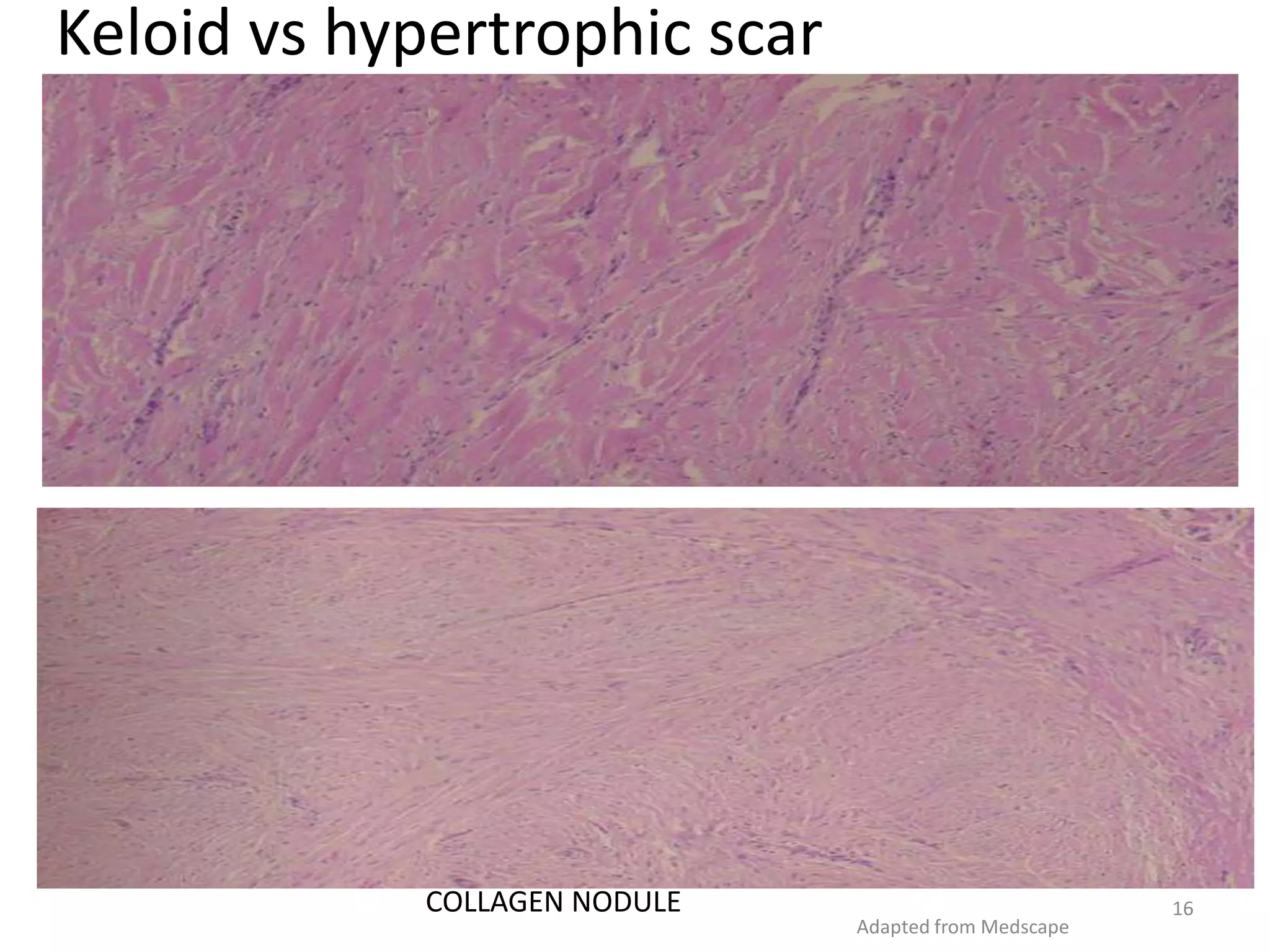
Keloid vs hypertrophic scar
16
COLLAGEN NODULE
Adapted from Medscape
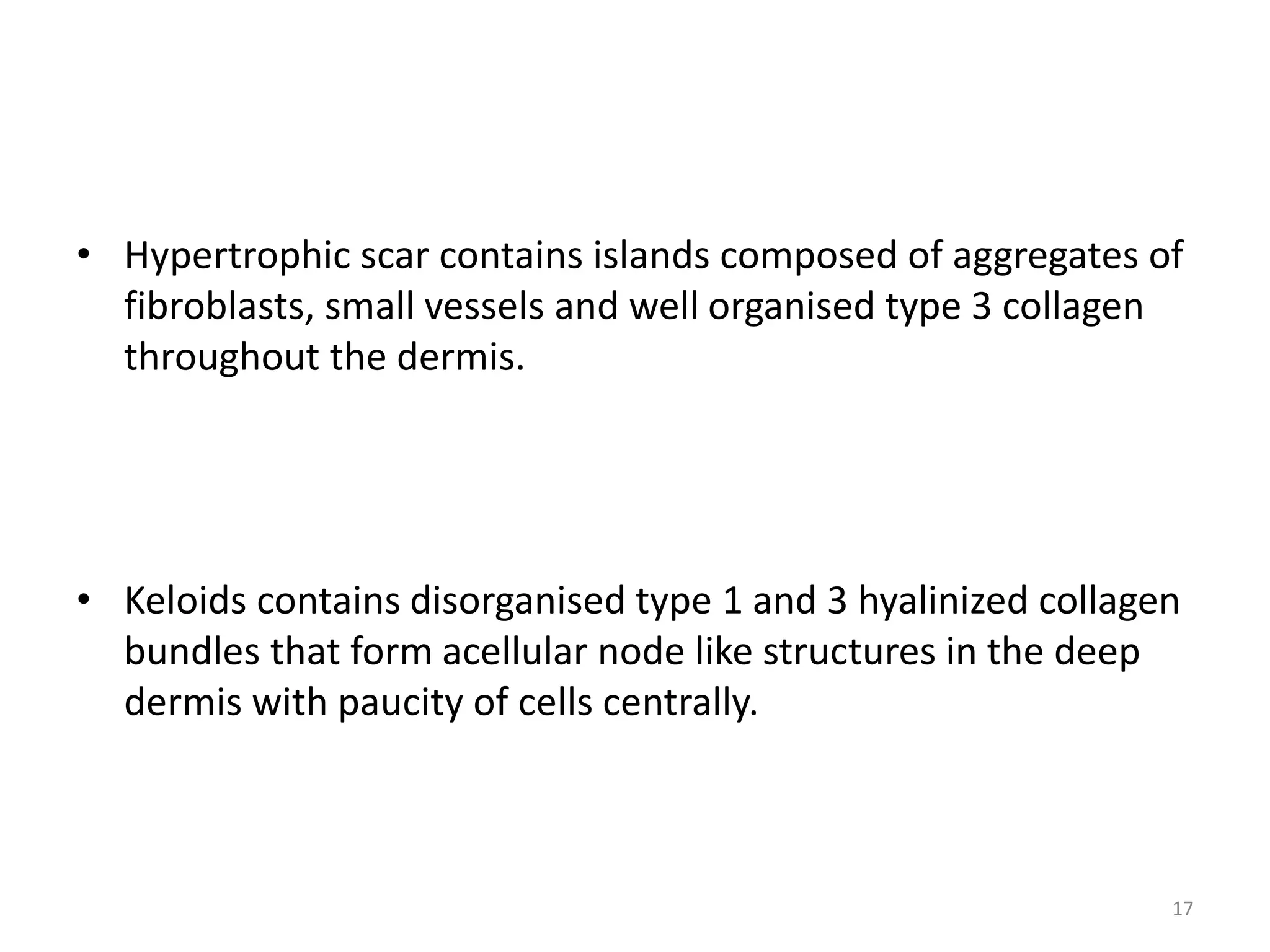
• Hypertrophic scar contains islands composed of aggregates of
fibroblasts, small vessels and well organised type 3 collagen
throughout the dermis.
• Keloids contains disorganised type 1 and 3 hyalinized collagen
bundles that form acellular node like structures in the deep
dermis with paucity of cells centrally.
17
Keloid(Histology)
18
Adapted from Medscape
Typical histopathological findings
• Presence of keloid hyalinized collagen
• Tongue-like advancing edge underneath normal-
appearing epidermis and papillary dermis
• Horizontal cellular fibrosis bands in the upper
reticular dermis
• Prominent fascia-like fibrous bands
• Collagen bundles are thicker and more abundant in
keloids; and there is the presence of large, broad &
closely arranged collagen fibres composed of
numerous fibrils
19
Keloid(Histology)
20
Adapted from Medscape
CLINICAL FEATURES
21
Adapted from SRB manual of surgery
CLINICAL FEATURES
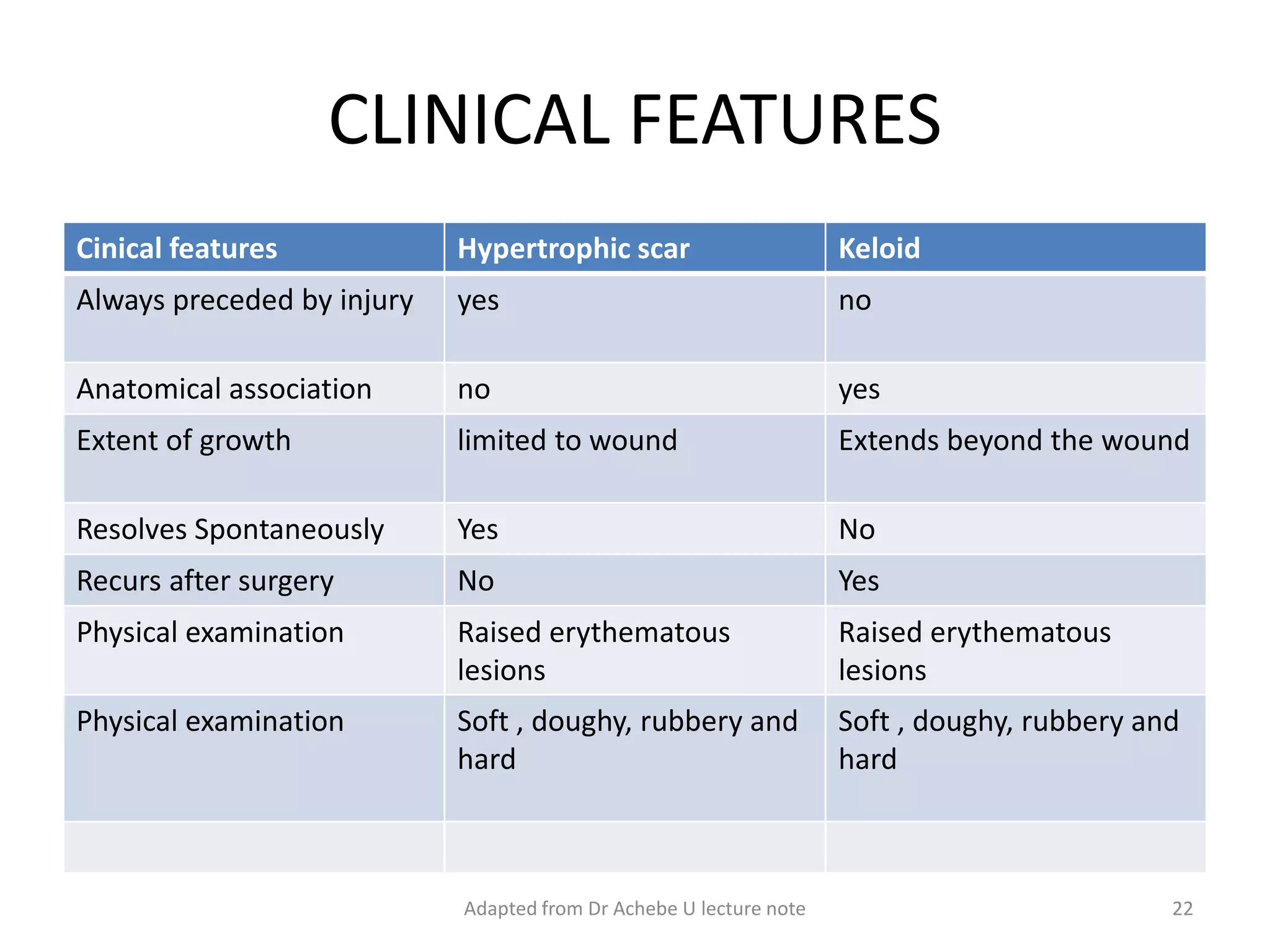
Cinical features Hypertrophic scar Keloid
Always preceded by injury yes no
Anatomical association no yes
Extent of growth limited to wound Extends beyond the wound
Resolves Spontaneously Yes No
Recurs after surgery No Yes
Physical examination Raised erythematous
lesions
Raised erythematous
lesions
Physical examination Soft , doughy, rubbery and
hard
Soft , doughy, rubbery and
hard
22
Adapted from Dr Achebe U lecture note
Hypertrophic scar
23
Adapted from Dr Achebe U lecture note
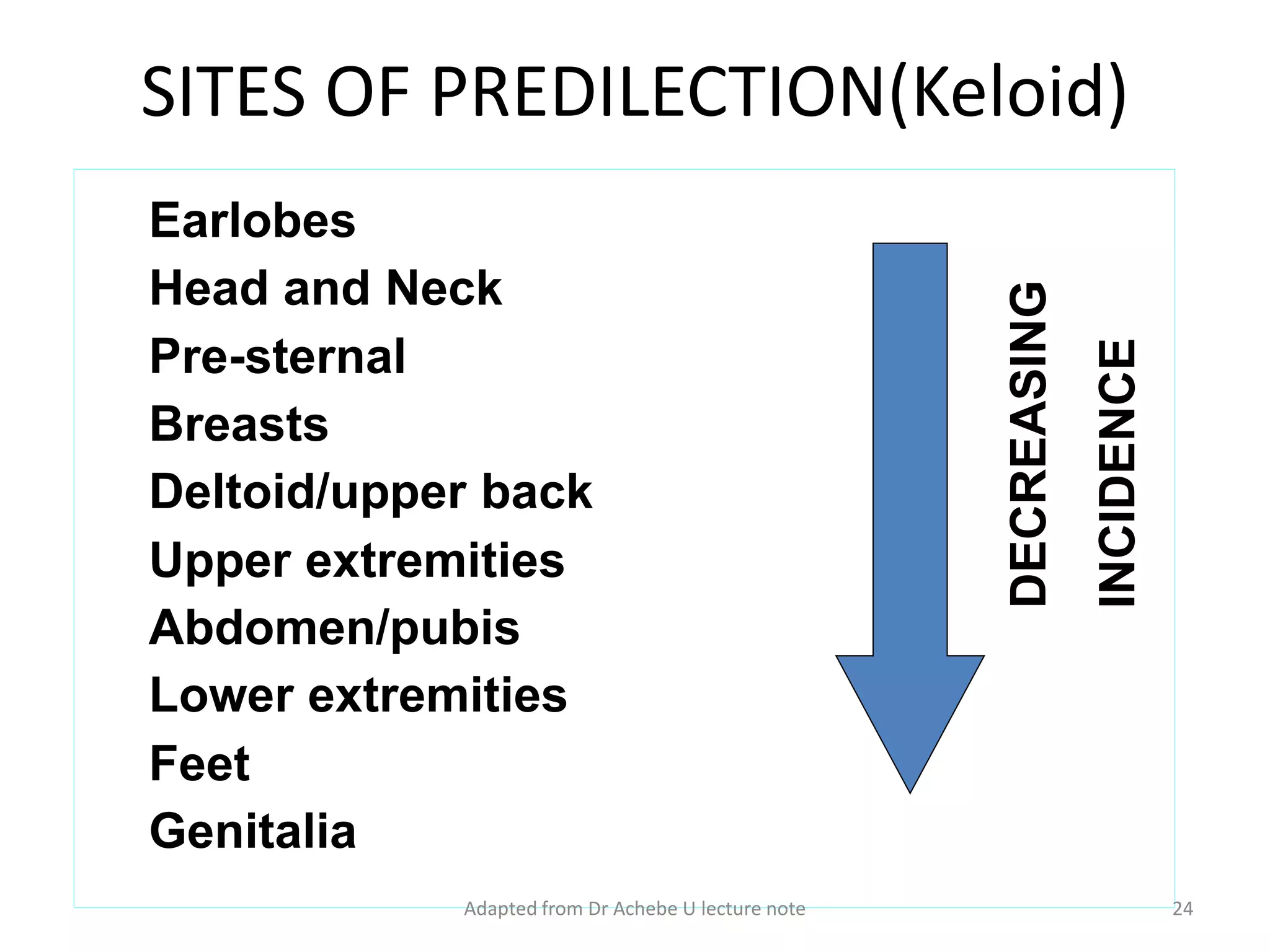
Earlobes
Head and Neck
Pre-sternal
Breasts
Deltoid/upper back
Upper extremities
Abdomen/pubis
Lower extremities
Feet
Genitalia
SITES OF PREDILECTION(Keloid)
DECREASING
INCIDENCE
24
Adapted from Dr Achebe U lecture note
KELOID DIATHESIS
25
Adapted from Dr Achebe U lecture note
HEAD AND NECK KELOIDS
26
Adapted from Dr Achebe U lecture note
EAR LOBE KELOIDS
27
Adapted from Dr Achebe U lecture note
TRUNCAL KELOIDS
28
Adapted from Dr Achebe U lecture note
ABDOMINAL/PUBIC KELOIDS
29
Adapted from Dr Achebe U lecture note
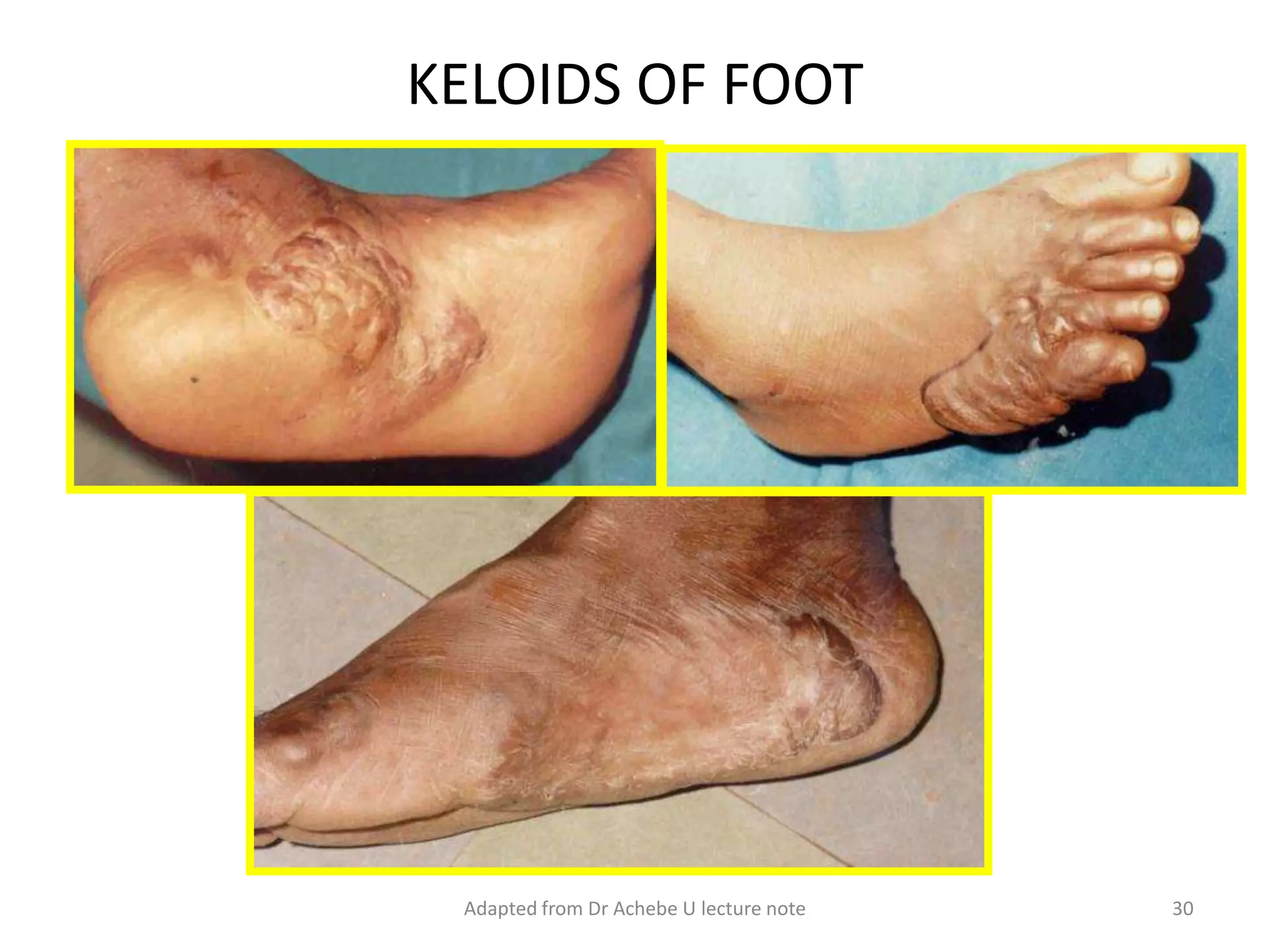
KELOIDS OF FOOT
30
Adapted from Dr Achebe U lecture note
DIFFERENTIAL DIAGNOSIS
• Dermatofibrosarcoma protuberance
• Neurofibromatosis
• Lobomycosis
• Nodular scleroderma
31
Differential diagnosis
32
Diagnosis
• Diagnosis is usually based on the clinical findings.
• Biopsy may confirm the diagnosis in equivocal cases.
33
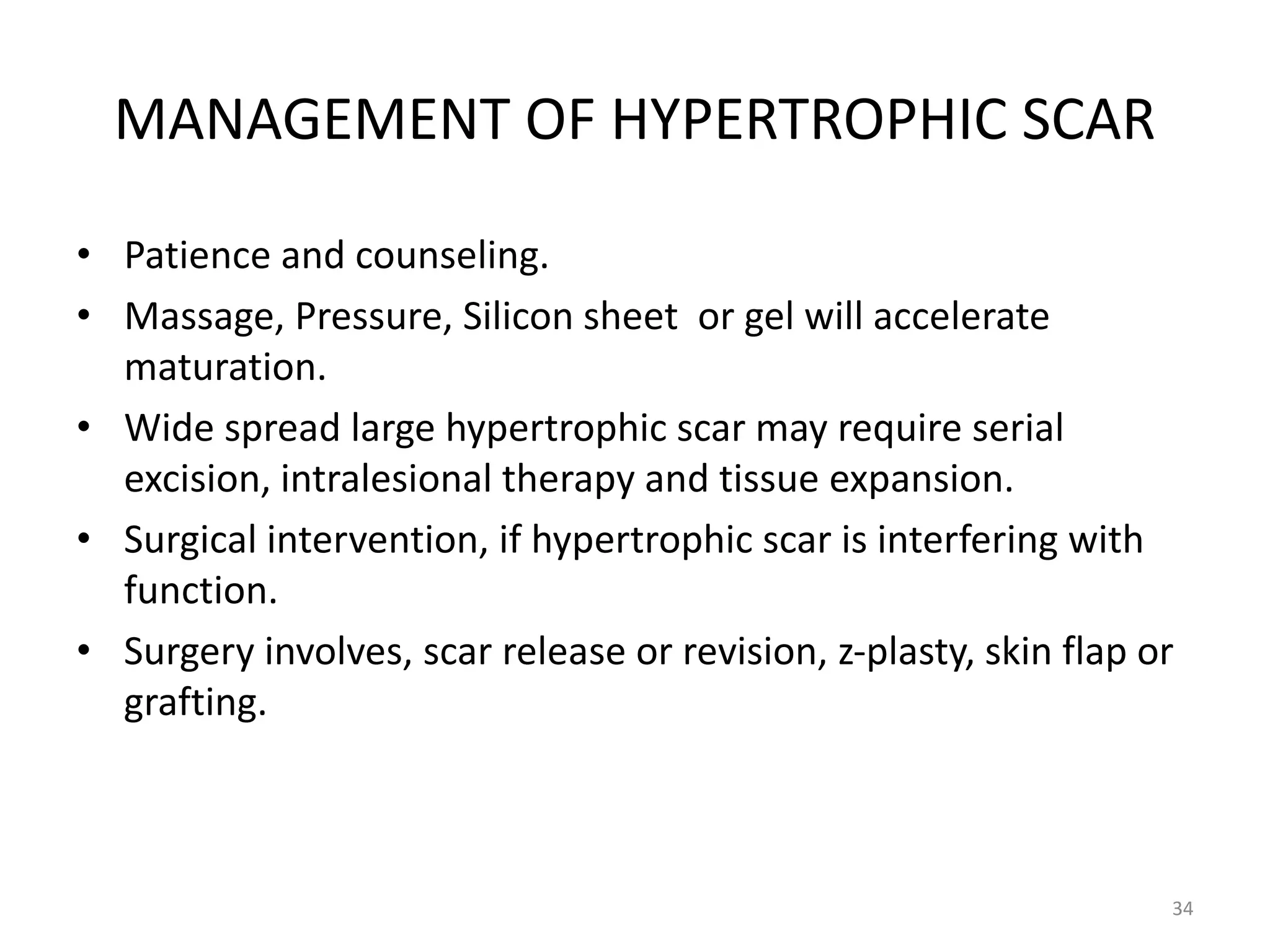
MANAGEMENT OF HYPERTROPHIC SCAR
• Patience and counseling.
• Massage, Pressure, Silicon sheet or gel will accelerate
maturation.
• Wide spread large hypertrophic scar may require serial
excision, intralesional therapy and tissue expansion.
• Surgical intervention, if hypertrophic scar is interfering with
function.
• Surgery involves, scar release or revision, z-plasty, skin flap or
grafting.
34
35
Adapted from Dr Achebe U lecture note
36
Adapted from Dr Achebe U lecture note
Prevention of Keloids
• First rule in keloid therapy.
• Avoid nonessential surgery in keloid formers.
• Close all surgical wounds with minimal tension.
• Incisions should not cross joint space.
• Avoid making midchest incisions.
• Incisions follow skin crease where possible.
• Control of inflammatory acne.
• Prophylactic pressure garment.
37
MANAGEMENT OF KELOID
• No single modality is best.
• Depends on age, location, size & response to previous
treatment.
• Combination therapy is advocated.
• Mainstay is triple keloidal therapy .
• Marginal excision, steroid injection and silicone gel sheeting.
• Steroid injection, pressure dressing & silicone gel.
• Excision, postop radiation & steroid injection.
• Regular followup,
– FBC+ DIFF, SEUCR, RBS, BP monitoring following high dose steroids
38
EXCISION & STEROID
BEFORE
AFTER
39
Adapted from Dr Achebe U lecture note
Other treatment modalities
• Intralesional injection of:
– IFN therapy
– 5-fluorouracil, doxorubicin, bleomycin, verapamil
– Retinoic acid, botulinum toxin, methotrexate
• Imiquimod 5% cream
• Intralesional cryotherapy
• Tamoxifen, tacrolimus, Hydrogel scaffold
• Pulsed dye laser therapy
• OTC treatments eg onion extract
• Combination of hydrocortisone, silicon and Vit E
40
Promising therapies
• Antiangiogenic factors eg bevacizumab
• Photodynamic therapies
• TGF-b inhibitors
• TNF inhibitors eg etanercept
• rhEGF & rhIL-10
41
COMPLICATIONS (DRUGS)
• Corticosteroids- atrophy, telangiectasia, pigmentary
alteration, ‘cushingoid syndrome’
• Interferon –Flu-like syndrome
• Bleomycin- hyperpigmentation
• Retinoic acid-photosensitivity, contact dermatitis
• Verapamil –rashes, headache
42
COMPLICATIONS(KELOIDS)
• Infection
• Abscess
• Cosmetic blemish/ disfigurement
• Psychological trauma
• Loss of function
• Reoccurrence
43
Complication
44
Adapted from Dr Achebe U lecture note
PROGNOSIS
• The bane of keloid is reoccurrence.
• Hypertrophic scars usually regress with time or with
treatment.
• However, both may result in significant disfigurement and loss
of function.
45
LOCAL EXPERIENCE (1yr)
• 64 new cases
• M: F= 1:2
• Ear lobe (65%), upper arm(25%), others (10%)
• Marginal excision + intralesional kenalog+ silicon gel
46
FUTURE TRENDS
• Use of vesmeter
• Stem cell therapy
• Electrochemotherapy
• Fat grafting / lipofilling
• Role of decapentaplegic homolog(Smad)3, high mobility group
boxprotein-1, and calcimycin.
47
CONCLUSION
• Both hypertrophic scars and keloids are aberrant proliferative
scars.
• Hypertrophic scars usually regress , with better treatment
outcome.
• At present , no single best therapy for keloid management,
and the large number of treatment options reflects this.
• Combination therapy is thus advocated.
48
References
• Rei Ogawa: Keloid and Hypertrophic Scars Are the Result of
Chronic Inflammation in the Reticular Dermis. Int J Mol Sci.
2017 Mar; 18(3): 606.
• Ahmad S.E, Etal:Keloid Scarring: Understanding the Genetic
Basis, Advances, and Prospects. Arch Plast Surg. 2012 May;
39(3): 184–189.
• Townsend M Etal :Wound healing. Sabiston textbook of
Surgery, 20 edition,2017:pg 141-144.
• Keloid and hypertrophic scar. A lecture note delivered by Dr
Uche Achebe.
• Sriram Bhat M: Keloids. Wounds and wound healing. SRB
manual of surgery, 4th edition, 2013: pg12- 13
• emedicine.medscape.com/article/Keloids and hypertrophic
scar
49

Discuss keloid and hypertrophic scars

  • 1.
    DISCUSS KELOID AND HYPERTROPHICSCAR PRESENTER: EZEAKU, CHIZOWA OKWUCHUKWU 1
  • 2.
    OUTLINE • INTRODUCTION • RISKFACTORS • AETIOPATHOGENESIS • CLINICAL FEATURES • DIFFERENTIAL DIAGNOSIS • MANAGEMENT • PREVENTION • COMPLICATION • PROGNOSIS • LOCAL EXPERIENCE • CURRENT TREND • CONCLUSION • REFERENCE 2
  • 3.
    INTRODUCTUON • Keloid isdefined as an abnormal scar that grows beyond the boundaries of the original site of skin injury. • Alibert in 1806 called it “cheloide” which is derived from Greek word “chele” or “crab’s claw.” • Hypertrophic scar is defined as a widened or unsightly scar that does not extend beyond the original boundaries of the wound. • They are inflammatory disorders of the reticular dermis due to aberrant wound healing process. 3
  • 4.
    4 Adapted from SRBManual of surgery
  • 5.
    Scar classification • ImmatureScar • Mature Scar • Linear hypertrophic Scar • Widespread hypertrophic scar • Minor keloid • Major keloid 5
  • 6.
    Epidemiology • Only humansare affected. • Occur in 5-15% of wounds. • All ethnic background can form hypertrophic scar and keloid- which has greater frequency in pigmented races (16%). • Young F>M ; other age groups , equal. • More in the 10- 30 years, less at extreme of age. • No racial or familial preponderance for hypertrophic scar. 6
  • 7.
    RISK FACTORS • Trauma –trivial – physical:(ear lobe piercing, surgery) – pathological: (chicken pox, acne, folliculitis, insect bites, Herpes zooster infection, burns) • Dark pigmented skin • Genetics predisposition: HLA-(B14, B21, Bw16, Bw35, DR5, DQw3), Xsome 2q23, 7p11 & 10q23.31 • Blood group A 7
  • 8.
    Risk factors • Syndromesassociated with keloids: – Rubinstein-Taybi syndrome – Goeminne syndrome – Noonan syndrome – Ehler-Danlos syndrome – Leigh necrotising encephalopathy – Dubowitz syndrome – Ullrich congenital muscular dystrophy – Conjuctivocorneal dystrophy 8
  • 9.
    Risk factors • Essentiallydue to prolonged inflammation – Local factors: • Infection, • Rewounding, • Ischemia, • Ionized radiation, • Local mechanical force/ tension • Foreign body • Hematoma 9
  • 10.
    Local mechanical force 10 Adaptedfrom Dr Achebe U lecture note
  • 11.
    Risk factors • Systemicfactors: – Hypertension – Diabetes – Mineral deficiencies – Pregnancy and puberty • Skin conditions – Scleroderma – Atopic dermatitis 11
  • 12.
    Phases of woundhealing • There are 3 phases of wound healing and can take months to complete • Inflammatory Phase: Platelet degranulation---release & activation of numerous cytokines--chemotactic agents for inflammatory cells, epithelial cells & fibroblasts • Proliferative Phase: Stage of granulation tissue formation • Remodeling Phase : Conversion of Collagen III → Collagen I
  • 13.
    Adapted from ProfIsmaila Adigun Lawal lecture note 13
  • 14.
    AETIOPATHOGENESIS(Hypertrophic scar) 14 • Scarremains in the remodeling phase more than normal scar. • There is increased deposition of collagen. • Commonly occurs in situations when wound is sutured under tension or healing has been delayed
  • 15.
    AETIOPATHOGENESIS(keloid) • Imbalance inanabolic and catabolic phases of wound healing. • Abnormal keratinocyte-fibroblast signaling . • Increased level of fibronectin and adiponectin. • Role of melanocyte stimulating hormone. • Genetics – DeHaNp63, p53 underexpression. • Allergic immunoglobin E mediated response. • Role of TGF-b, PDGF, IGF 1, IL-6 in the invasive activity of keloid. • Spontaneous keloids. 15
  • 16.
    Keloid vs hypertrophicscar 16 COLLAGEN NODULE Adapted from Medscape
  • 17.
    • Hypertrophic scarcontains islands composed of aggregates of fibroblasts, small vessels and well organised type 3 collagen throughout the dermis. • Keloids contains disorganised type 1 and 3 hyalinized collagen bundles that form acellular node like structures in the deep dermis with paucity of cells centrally. 17
  • 18.
  • 19.
    Typical histopathological findings •Presence of keloid hyalinized collagen • Tongue-like advancing edge underneath normal- appearing epidermis and papillary dermis • Horizontal cellular fibrosis bands in the upper reticular dermis • Prominent fascia-like fibrous bands • Collagen bundles are thicker and more abundant in keloids; and there is the presence of large, broad & closely arranged collagen fibres composed of numerous fibrils 19
  • 20.
  • 21.
    CLINICAL FEATURES 21 Adapted fromSRB manual of surgery
  • 22.
    CLINICAL FEATURES Cinical featuresHypertrophic scar Keloid Always preceded by injury yes no Anatomical association no yes Extent of growth limited to wound Extends beyond the wound Resolves Spontaneously Yes No Recurs after surgery No Yes Physical examination Raised erythematous lesions Raised erythematous lesions Physical examination Soft , doughy, rubbery and hard Soft , doughy, rubbery and hard 22 Adapted from Dr Achebe U lecture note
  • 23.
    Hypertrophic scar 23 Adapted fromDr Achebe U lecture note
  • 24.
    Earlobes Head and Neck Pre-sternal Breasts Deltoid/upperback Upper extremities Abdomen/pubis Lower extremities Feet Genitalia SITES OF PREDILECTION(Keloid) DECREASING INCIDENCE 24 Adapted from Dr Achebe U lecture note
  • 25.
    KELOID DIATHESIS 25 Adapted fromDr Achebe U lecture note
  • 26.
    HEAD AND NECKKELOIDS 26 Adapted from Dr Achebe U lecture note
  • 27.
    EAR LOBE KELOIDS 27 Adaptedfrom Dr Achebe U lecture note
  • 28.
    TRUNCAL KELOIDS 28 Adapted fromDr Achebe U lecture note
  • 29.
  • 30.
    KELOIDS OF FOOT 30 Adaptedfrom Dr Achebe U lecture note
  • 31.
    DIFFERENTIAL DIAGNOSIS • Dermatofibrosarcomaprotuberance • Neurofibromatosis • Lobomycosis • Nodular scleroderma 31
  • 32.
  • 33.
    Diagnosis • Diagnosis isusually based on the clinical findings. • Biopsy may confirm the diagnosis in equivocal cases. 33
  • 34.
    MANAGEMENT OF HYPERTROPHICSCAR • Patience and counseling. • Massage, Pressure, Silicon sheet or gel will accelerate maturation. • Wide spread large hypertrophic scar may require serial excision, intralesional therapy and tissue expansion. • Surgical intervention, if hypertrophic scar is interfering with function. • Surgery involves, scar release or revision, z-plasty, skin flap or grafting. 34
  • 35.
    35 Adapted from DrAchebe U lecture note
  • 36.
    36 Adapted from DrAchebe U lecture note
  • 37.
    Prevention of Keloids •First rule in keloid therapy. • Avoid nonessential surgery in keloid formers. • Close all surgical wounds with minimal tension. • Incisions should not cross joint space. • Avoid making midchest incisions. • Incisions follow skin crease where possible. • Control of inflammatory acne. • Prophylactic pressure garment. 37
  • 38.
    MANAGEMENT OF KELOID •No single modality is best. • Depends on age, location, size & response to previous treatment. • Combination therapy is advocated. • Mainstay is triple keloidal therapy . • Marginal excision, steroid injection and silicone gel sheeting. • Steroid injection, pressure dressing & silicone gel. • Excision, postop radiation & steroid injection. • Regular followup, – FBC+ DIFF, SEUCR, RBS, BP monitoring following high dose steroids 38
  • 39.
    EXCISION & STEROID BEFORE AFTER 39 Adaptedfrom Dr Achebe U lecture note
  • 40.
    Other treatment modalities •Intralesional injection of: – IFN therapy – 5-fluorouracil, doxorubicin, bleomycin, verapamil – Retinoic acid, botulinum toxin, methotrexate • Imiquimod 5% cream • Intralesional cryotherapy • Tamoxifen, tacrolimus, Hydrogel scaffold • Pulsed dye laser therapy • OTC treatments eg onion extract • Combination of hydrocortisone, silicon and Vit E 40
  • 41.
    Promising therapies • Antiangiogenicfactors eg bevacizumab • Photodynamic therapies • TGF-b inhibitors • TNF inhibitors eg etanercept • rhEGF & rhIL-10 41
  • 42.
    COMPLICATIONS (DRUGS) • Corticosteroids-atrophy, telangiectasia, pigmentary alteration, ‘cushingoid syndrome’ • Interferon –Flu-like syndrome • Bleomycin- hyperpigmentation • Retinoic acid-photosensitivity, contact dermatitis • Verapamil –rashes, headache 42
  • 43.
    COMPLICATIONS(KELOIDS) • Infection • Abscess •Cosmetic blemish/ disfigurement • Psychological trauma • Loss of function • Reoccurrence 43
  • 44.
    Complication 44 Adapted from DrAchebe U lecture note
  • 45.
    PROGNOSIS • The baneof keloid is reoccurrence. • Hypertrophic scars usually regress with time or with treatment. • However, both may result in significant disfigurement and loss of function. 45
  • 46.
    LOCAL EXPERIENCE (1yr) •64 new cases • M: F= 1:2 • Ear lobe (65%), upper arm(25%), others (10%) • Marginal excision + intralesional kenalog+ silicon gel 46
  • 47.
    FUTURE TRENDS • Useof vesmeter • Stem cell therapy • Electrochemotherapy • Fat grafting / lipofilling • Role of decapentaplegic homolog(Smad)3, high mobility group boxprotein-1, and calcimycin. 47
  • 48.
    CONCLUSION • Both hypertrophicscars and keloids are aberrant proliferative scars. • Hypertrophic scars usually regress , with better treatment outcome. • At present , no single best therapy for keloid management, and the large number of treatment options reflects this. • Combination therapy is thus advocated. 48
  • 49.
    References • Rei Ogawa:Keloid and Hypertrophic Scars Are the Result of Chronic Inflammation in the Reticular Dermis. Int J Mol Sci. 2017 Mar; 18(3): 606. • Ahmad S.E, Etal:Keloid Scarring: Understanding the Genetic Basis, Advances, and Prospects. Arch Plast Surg. 2012 May; 39(3): 184–189. • Townsend M Etal :Wound healing. Sabiston textbook of Surgery, 20 edition,2017:pg 141-144. • Keloid and hypertrophic scar. A lecture note delivered by Dr Uche Achebe. • Sriram Bhat M: Keloids. Wounds and wound healing. SRB manual of surgery, 4th edition, 2013: pg12- 13 • emedicine.medscape.com/article/Keloids and hypertrophic scar 49