Prof. U. Murali.
Types of Wounds
& Management
LEARNING OBJECTIVES
• Define wound & list the types of wounds.
• Classify wounds and outline their salient features.
• Describe the management of wounds with respect to wound
debridement & wound closure.
• Outline the wound assessment & preparation methods.
• Discuss about - Crush syndrome & De-gloving injury.
• Mention the mode of tetanus prophylaxis against immunized
& non-immunized patents.
Types Of Wounds
Prof. U.Murali.
DEFINITION – WOUND
• A wound is a break in the
integrity of the skin (or) tissues
often, which may be associated
with disruption of the structure
and function.
• Wound is simply a disruption of
any tissues — soft tissue (or)
bone (or) internal organs.
CLASSIFICATION – BASED ON
• 1. Involvement of tissues
• 2. Neatness of wound – Rank & Wakefield
• 3. Type of wound
• 4. Thickness of the wound
• 5. Time elapsed
• 6. Type of Surgical wounds – Berard
1. TISSUES INVOLVED
• Simple wounds
– Only skin / tissue is involved
• Combined/Complex wounds
– Involving mixed tissues
(vessels/nerves/tendons/bones)
2. NEATNESS OF WOUND – RANK & WAKEFIELD
• Tidy wounds
– Surgical incisions & Sharp objects
– Clean / no tissue loss
– Primary suturing
• Untidy wounds
– Crushing, Tearing, Avulsion &
Devitalised injury
– # of bone + / - Infection – common
– Suturing after excision & cleaning
3. TYPE OF WOUND
• Open wounds
• Closed wounds
• Complex wounds
3 – A OPEN WOUND
• Abrasion
– It is superficial and is due to shearing of
skin where the surface is rubbed off.
• Incised
– It is a clean-cut wound with linear edge.
• Lacerated
– It has ragged edges with devitalisation of
some part of tissues.
• Penetrating / Punctured
– It is usually due to a pointed object where
depth > than the width.
3 – B CLOSED WOUND
• Bruising / Contusion
– It is due to blow (or) blunt force to the skin
and tissues underneath with skin
discoloration and without breaking of skin.
• Haematoma
– It is a localized collection of blood after
blunt trauma.
• Closed Blunt Injury
-- It may be due to fall or blunt injury wherein
no obvious external injury is seen but
deeper injury can occur. Like in blunt
abdominal injury causing bowel / liver /
spleen / renal injuries.
3 – C COMPLEX WOUND
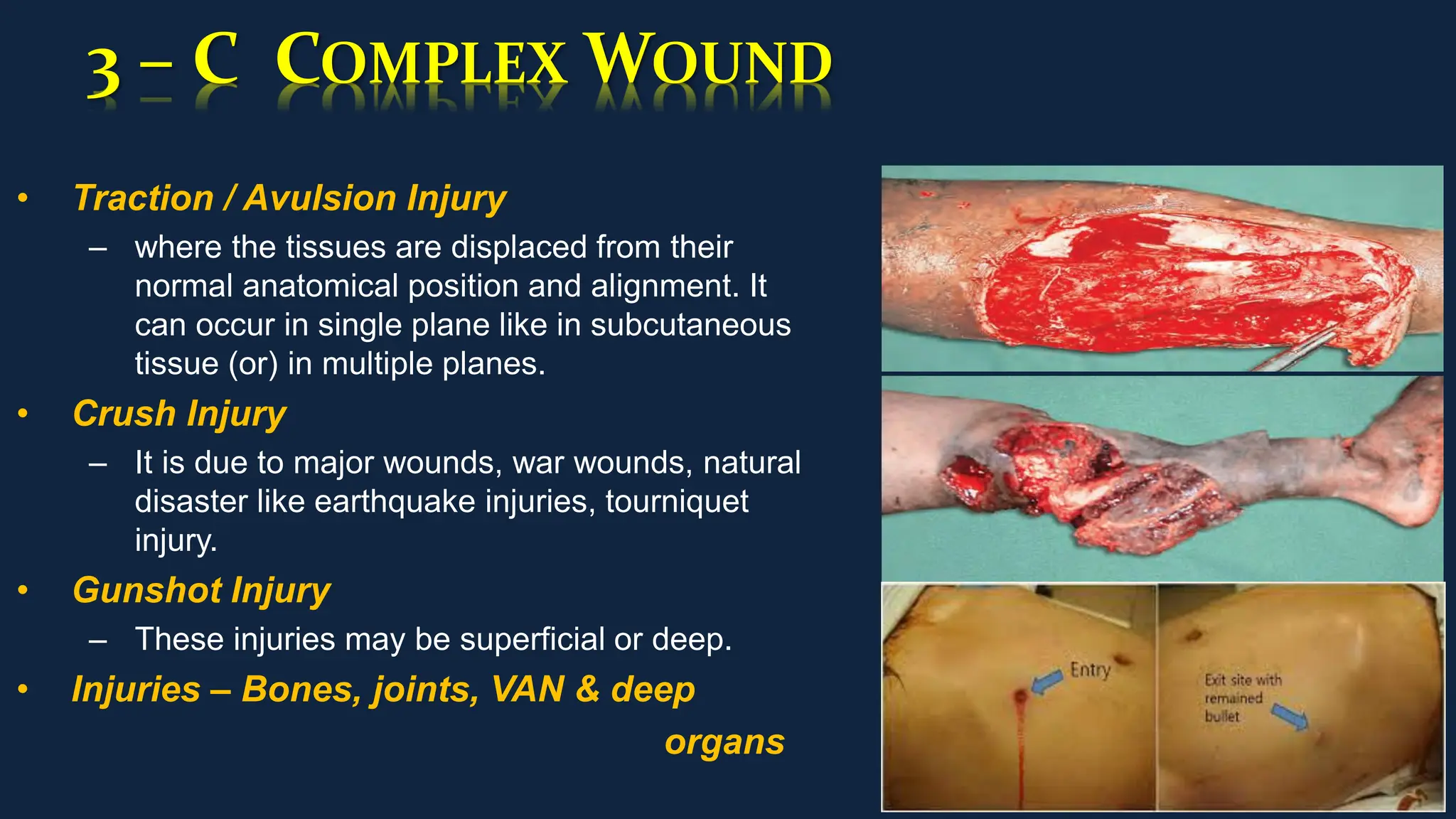
• Traction / Avulsion Injury
– where the tissues are displaced from their
normal anatomical position and alignment. It
can occur in single plane like in subcutaneous
tissue (or) in multiple planes.
• Crush Injury
– It is due to major wounds, war wounds, natural
disaster like earthquake injuries, tourniquet
injury.
• Gunshot Injury
– These injuries may be superficial or deep.
• Injuries – Bones, joints, VAN & deep
organs
4. THICKNESS OF WOUND
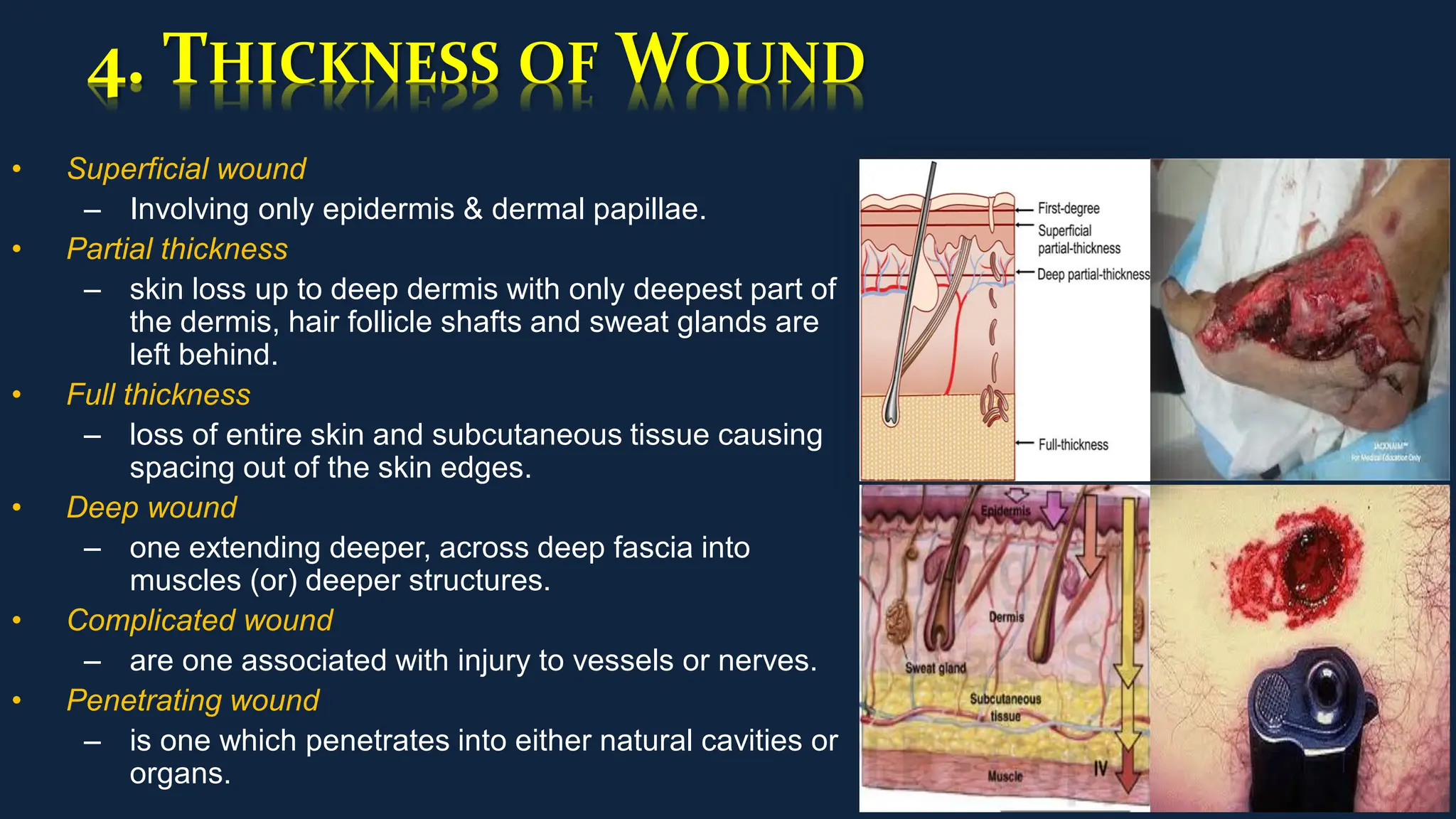
• Superficial wound
– Involving only epidermis & dermal papillae.
• Partial thickness
– skin loss up to deep dermis with only deepest part of
the dermis, hair follicle shafts and sweat glands are
left behind.
• Full thickness
– loss of entire skin and subcutaneous tissue causing
spacing out of the skin edges.
• Deep wound
– one extending deeper, across deep fascia into
muscles (or) deeper structures.
• Complicated wound
– are one associated with injury to vessels or nerves.
• Penetrating wound
– is one which penetrates into either natural cavities or
organs.
5. TIME ELAPSED
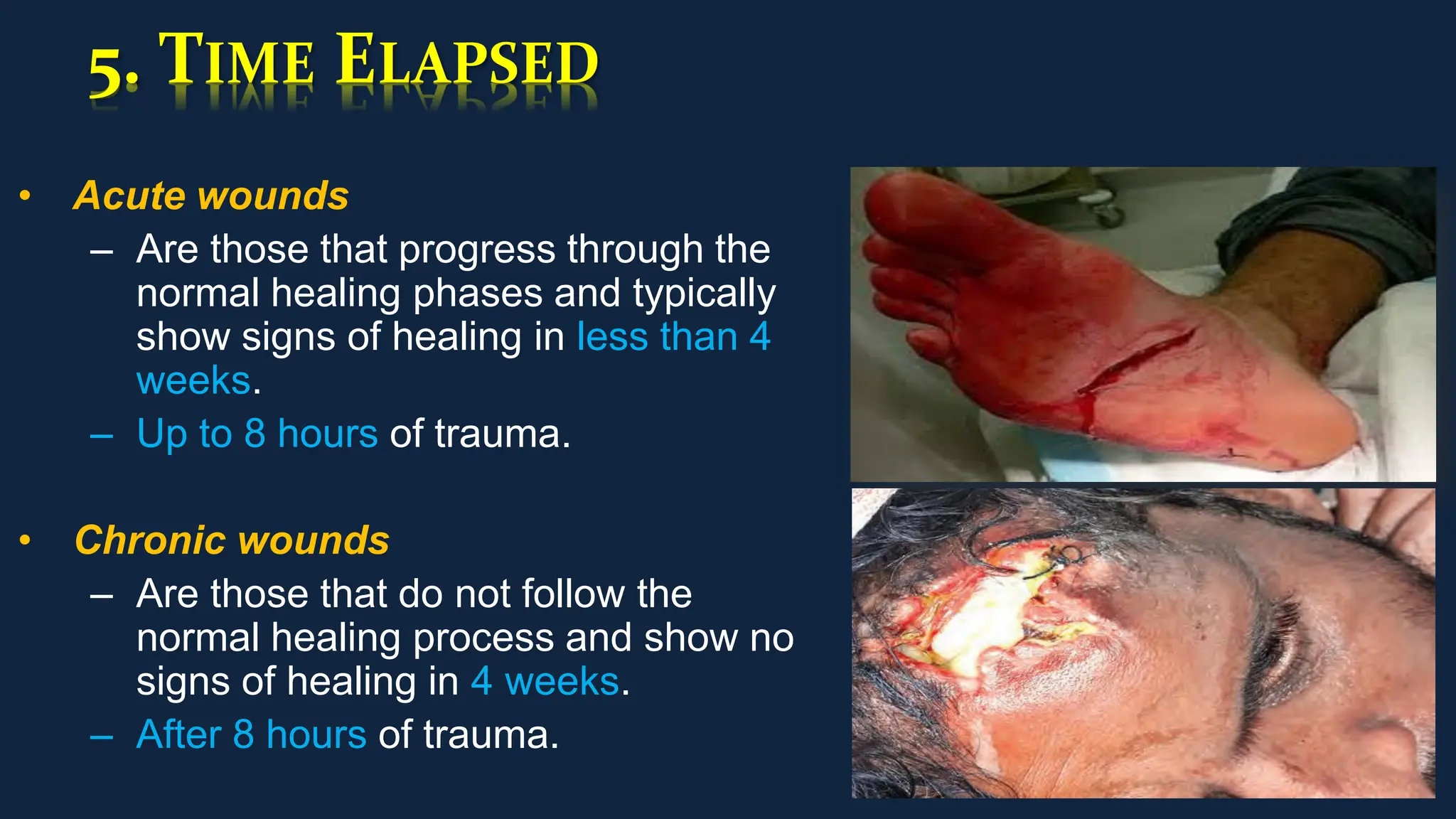
• Acute wounds
– Are those that progress through the
normal healing phases and typically
show signs of healing in less than 4
weeks.
– Up to 8 hours of trauma.
• Chronic wounds
– Are those that do not follow the
normal healing process and show no
signs of healing in 4 weeks.
– After 8 hours of trauma.
6. TYPE OF SURGICAL WOUND - BERARD
• Class 1 - Clean wound
– It is a non-traumatic, uninfected operative
wound. Elective & primarily closed.
– E.g.: Excision / Thyroid & Hernia surgeries
– Infection rate is < 2%
• Class 2 - Clean contaminated wound
– Gastrointestinal, respiratory or genito-urinary
tracts entered without significant spillage or
wounds which are mechanically drained.
– E.g.: appendicectomy, gallbladder, biliary,
pancreatic surgeries
– Infection rate is < 10%
6. TYPE OF SURGICAL WOUND
• Class 3 - Contaminated wound
– Acute abdominal conditions.
– Spillage from hollow organs.
– Break in sterile technique.
– Chronic open wounds.
– Infection rate is 15 - 30%
• Class 4 - Dirty Infected wound
– Abscess drainage.
– Pyocele.
– Faecal peritonitis.
– Empyema gallbladder.
– Infection rate is 40 - 70%
Wound Management
Prof. U.Murali.
WOUND MANAGEMENT
• Wound Assessment
• Proper Management
WOUND ASSESSMENT
• Detailed history
– Mode of injury – Timing
– Severity of pain / bleeding
– Look out for other organ
injury
• Examination
– Follow ATLS principles
– Site, size, type and extent
– Swelling, deformities &
viability
– Contamination – level –
Any FB
– Functions – Motor &
Sensory
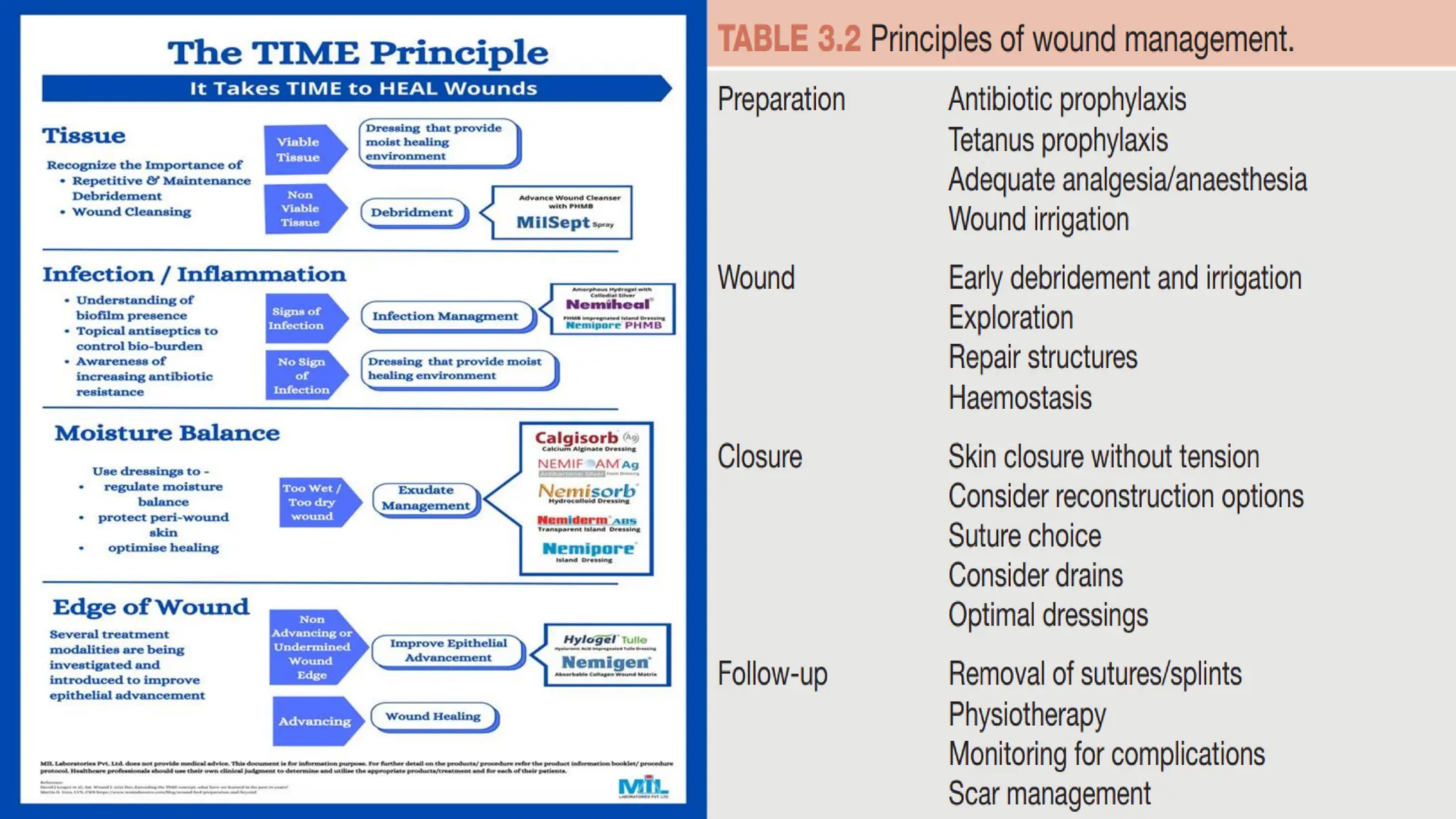
WOUND PREPARATION
• Antibiotic prophylaxis
– It is needed for clean–contaminated,
contaminated and dirty wounds. It may also be
used in clean wounds when there is a high risk of
infection.
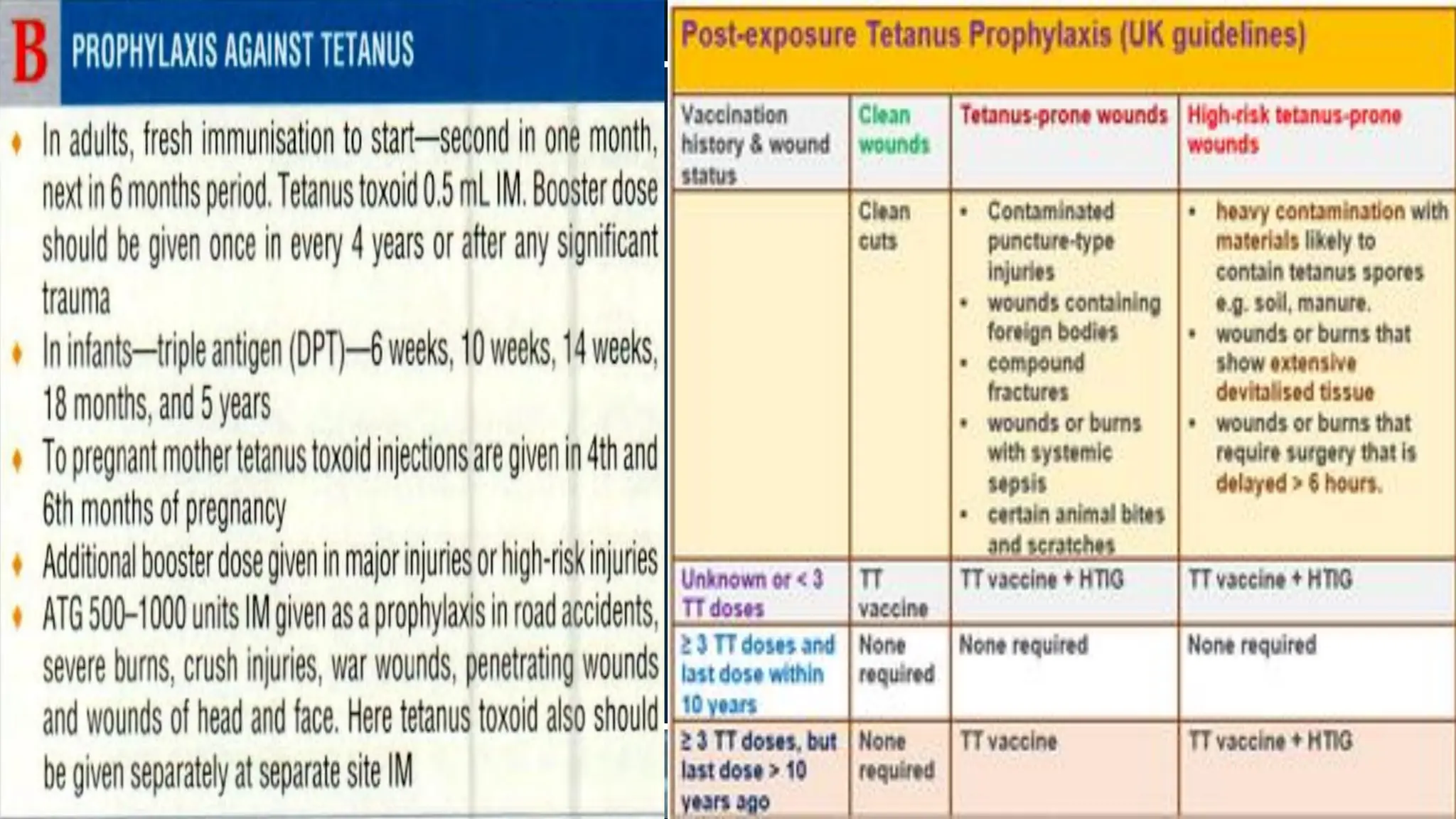
• Tetanic prophylaxis
– Should be given based on the type of wound &
immunization status.
• Analgesia / Anesthesia
– Ensure that the patient has adequate analgesia or
a local anesthetic block.
• Wound irrigation
– Is washing the wound thoroughly using warm normal
saline. It allows better visualization of the wound.
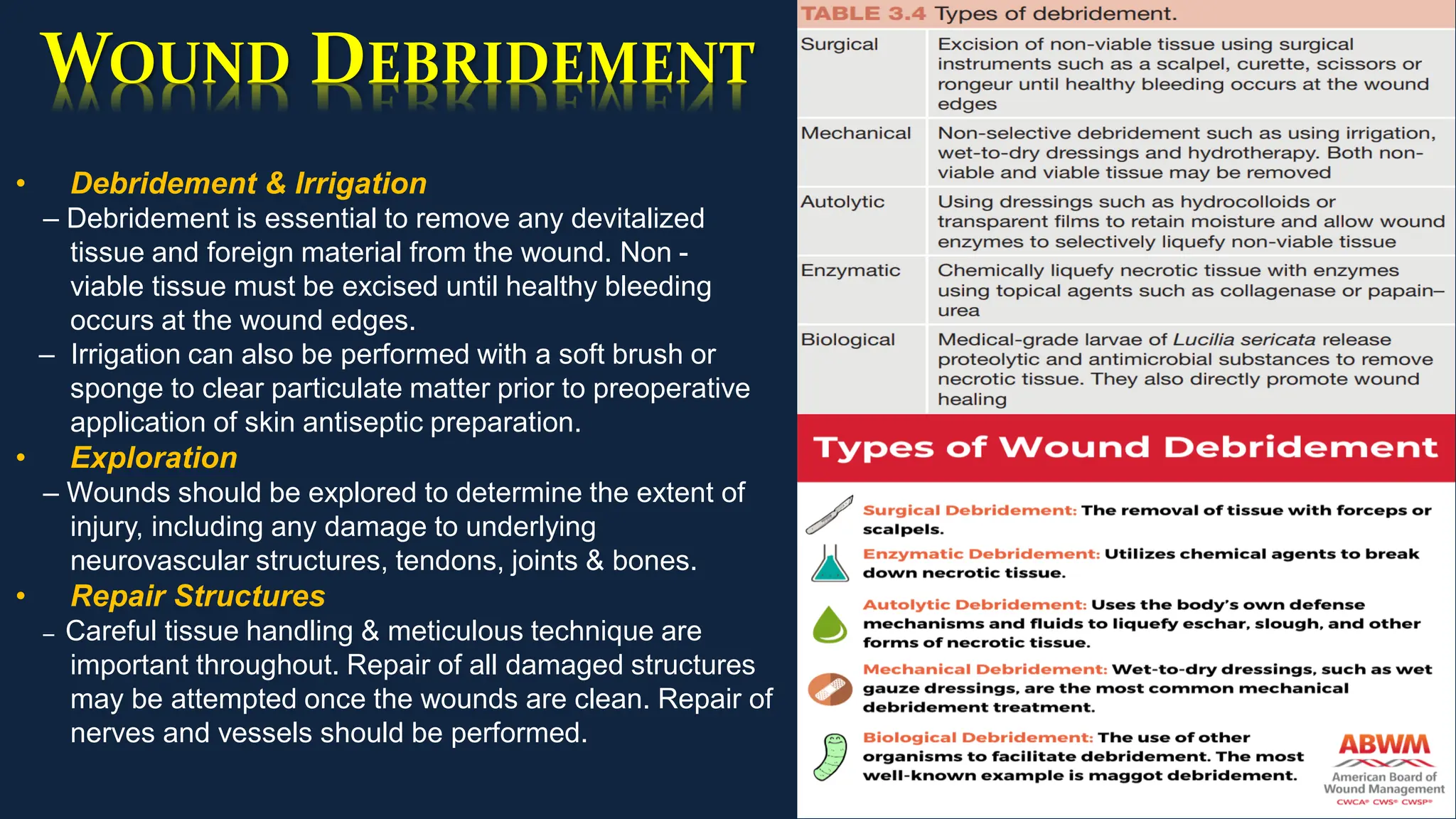
WOUND DEBRIDEMENT
• Debridement & Irrigation
– Debridement is essential to remove any devitalized
tissue and foreign material from the wound. Non -
viable tissue must be excised until healthy bleeding
occurs at the wound edges.
– Irrigation can also be performed with a soft brush or
sponge to clear particulate matter prior to preoperative
application of skin antiseptic preparation.
• Exploration
– Wounds should be explored to determine the extent of
injury, including any damage to underlying
neurovascular structures, tendons, joints & bones.
• Repair Structures
– Careful tissue handling & meticulous technique are
important throughout. Repair of all damaged structures
may be attempted once the wounds are clean. Repair of
nerves and vessels should be performed.
WOUND CLOSURE
• Skin Closure
– Skin closure should always be without tension. Direct
closure is not always possible and other
reconstruction methods should be considered.
• Reconstruction
– The reconstructive ladder and its variants have been
used as a framework to consider the simplest means
to achieve wound closure for the desired goal – Skin
Graft / Flap.
• Optimal Dressings
– Much care should be given to the wound by dressing
after the wound closure. Dressing is done daily (or)
twice daily (or) once in 2-3 days depending on the
type of wound and type of dressing used.
WOUND CLOSURE – METHODS – 1
• Primary suturing – Suturing within
6 hrs. Done in clean incised
wounds.
• Delayed primary suturing –
Suturing within 48 hrs to 10 days.
Done in lacerated wounds.
• Secondary suturing – Suturing in
10 – 14 days (or) later. Done in
infected wounds.
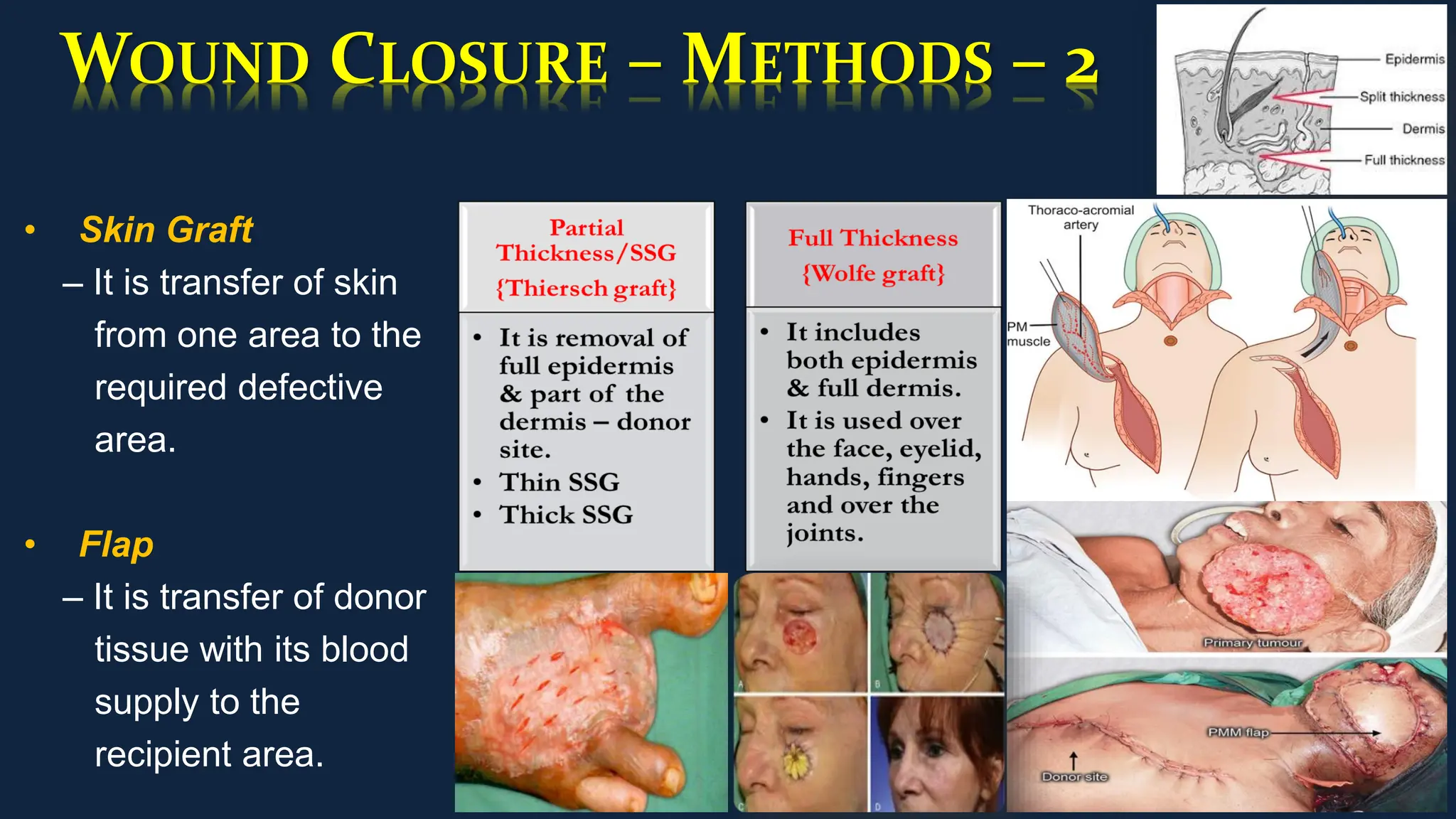
WOUND CLOSURE – METHODS – 2
• Skin Graft
– It is transfer of skin
from one area to the
required defective
area.
• Flap
– It is transfer of donor
tissue with its blood
supply to the
recipient area.
WOUND CLOSURE – METHODS – 3
• Negative Pressure Wound Therapy [NPWT]
– It is a useful adjunct to definitive wound
closure.
– Negative pressure helps draw the wound
edges together, remove exudate, reduce
oedema and promote granulation tissue
formation.
• Vacuum Assisted Closure [VAC]
– It is by creation of negative pressure (25-200
mmHg), continuous (or) intermittent over the
wound surface.
– It reduces fluid in the interstitial space, reduces
edema, increases the cell proliferation
& promotes formation of healthy GT.
WOUND MANAGEMENT - INITIAL
• Wound Inspection
• Follow ATLS principles
• Bleeding – present – to be controlled
• To facilitate exam – Anesthesia – L /R /G
• Antibiotics, Fluid & electrolyte balance &
TT injection
• Deeper communicating injuries – looked
for
• Wound assessment & preparation
• Vascular (or) nerve injuries – dealt
accordingly
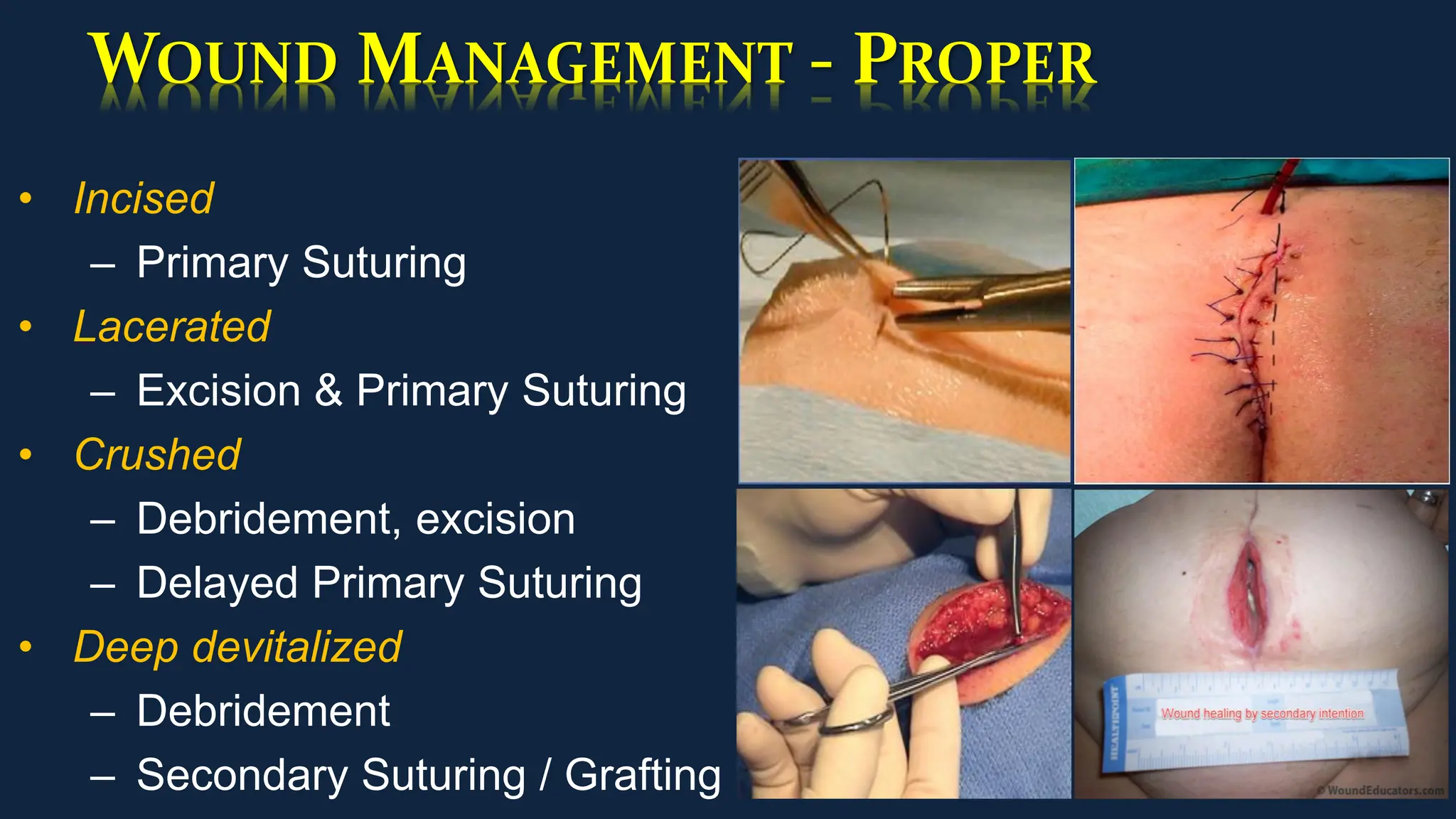
WOUND MANAGEMENT - PROPER
• Incised
– Primary Suturing
• Lacerated
– Excision & Primary Suturing
• Crushed
– Debridement, excision
– Delayed Primary Suturing
• Deep devitalized
– Debridement
– Secondary Suturing / Grafting
CRUSH SYNDROME
• It is due to crushing of
muscles causing
extravasation of blood &
release of myoglobin into
the circulation leading to
ATN & ARF.
CRUSH SYNDROME
Causes
• Earthquakes
• Mining & Industrial
accidents
• Battlefield incidents
• Air crash
• Tourniquet
Pathogenesis
• Tension ↑ muscle
compt.
• ↓
• ↑ ischaemic damage
• ↓
• Urine – discoloured
& Scanty
• ↓
• Uraemia [restless,
apathy]
Effects
• Renal failure
• Toxaemia
• Septicaemia
• Disability with tissue
loss
• Gas gangrene
C S – TREATMENT
• Volume load – saline 1-1.5 l – ideal
• Mannitol – to improve urine output
• Alkalinization of urine
• Relieve Tension – parallel deep incisions.
• Hemodialysis – last stage
Other measures:
• Catheterization.
• Oxygen therapy.
• Antibiotics.
• Blood transfusion.
• Correction of severe hyperkalaemia.
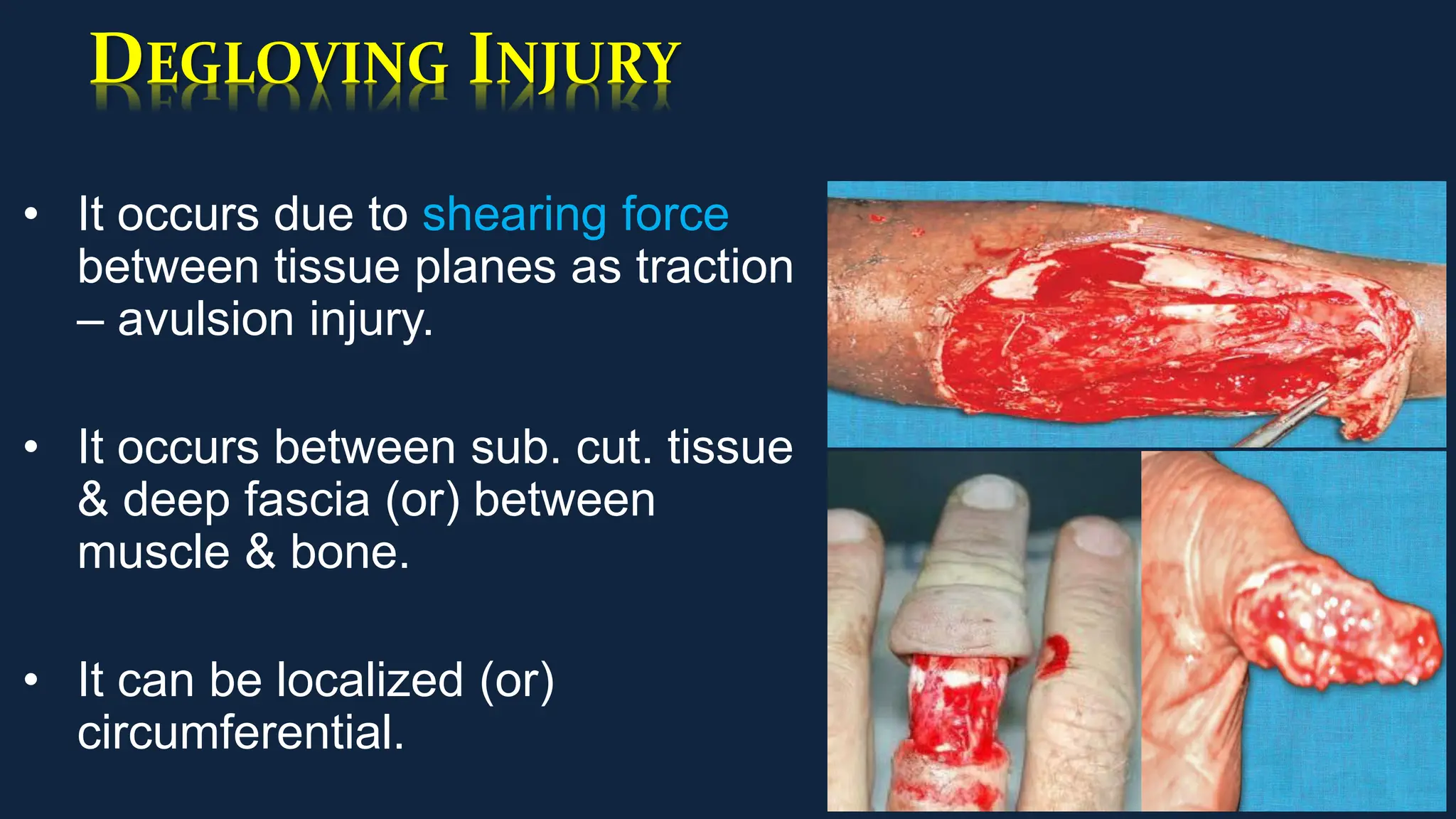
DEGLOVING INJURY
• It occurs due to shearing force
between tissue planes as traction
– avulsion injury.
• It occurs between sub. cut. tissue
& deep fascia (or) between
muscle & bone.
• It can be localized (or)
circumferential.
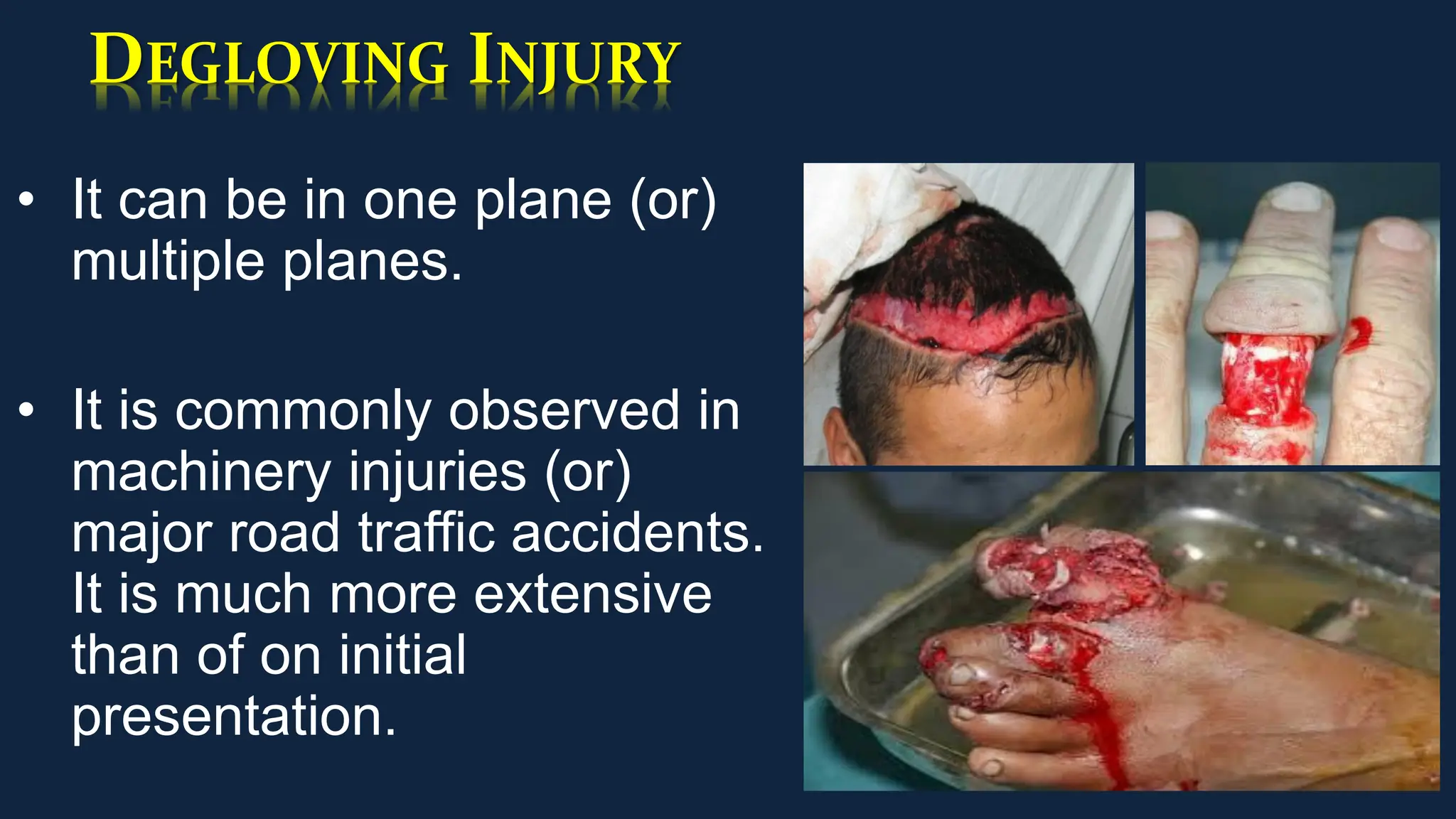
DEGLOVING INJURY
• It can be in one plane (or)
multiple planes.
• It is commonly observed in
machinery injuries (or)
major road traffic accidents.
It is much more extensive
than of on initial
presentation.
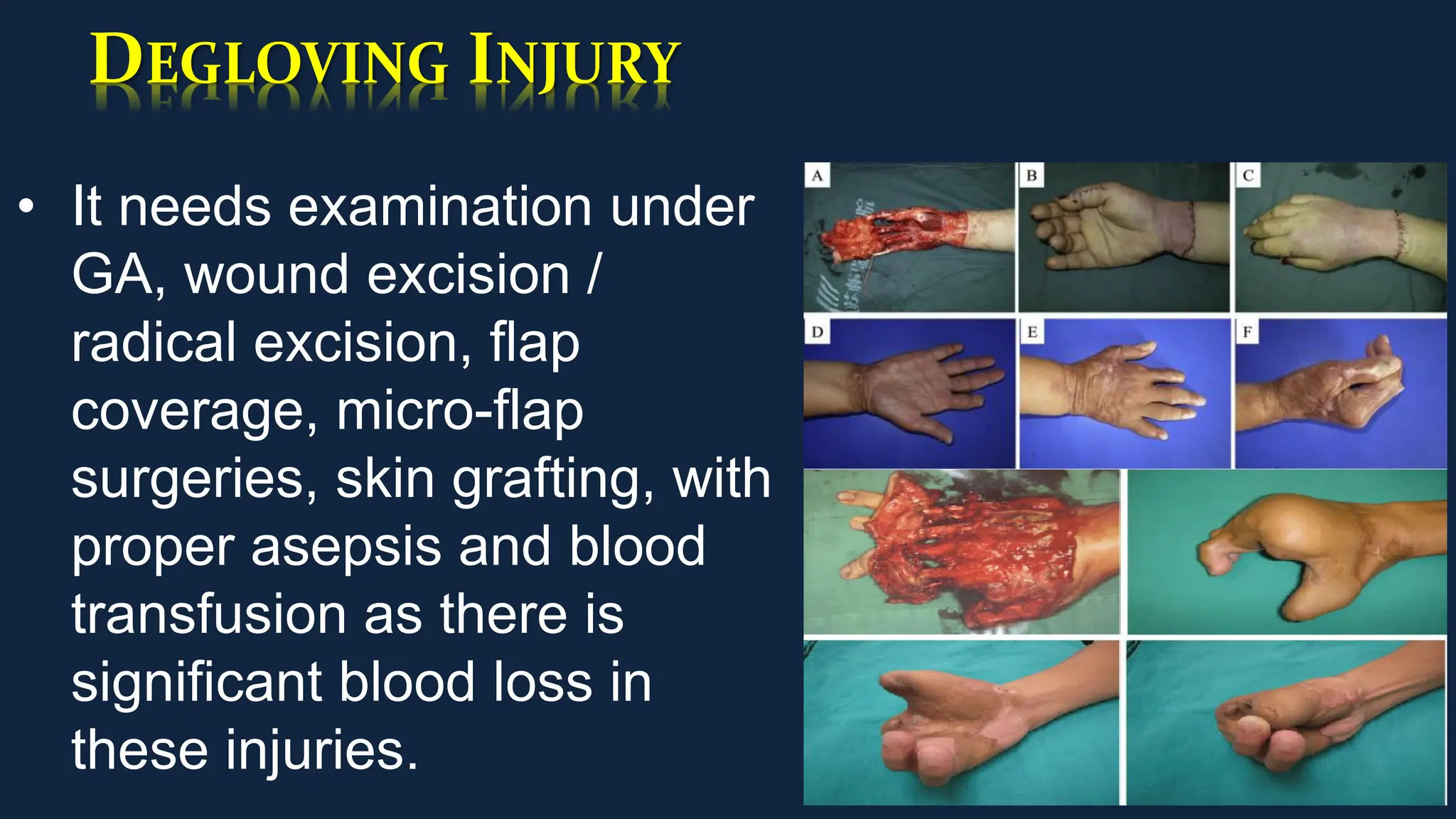
DEGLOVING INJURY
• It needs examination under
GA, wound excision /
radical excision, flap
coverage, micro-flap
surgeries, skin grafting, with
proper asepsis and blood
transfusion as there is
significant blood loss in
these injuries.
TO SUMMARIZE
• Classification of wounds with their salient features.
• Types of surgical wounds.
• Wound assessment & preparation methods.
• Various types of wound debridement & closure methods.
• Crush syndrome & Degloving injury.
• Post-exposure treatment of tetanus prone wounds.
REFERENCES
QUESTION TIME
• Define wound & list the types of wounds.
• Classify wounds. Explain any one with their salient features.
• Enumerate the types of wound debridement methods.
• How do you prepare a wound & assess it?
• Outline the causes of crush syndrome and its effects.
• Explain the principles of wound management.
WHICH IS A CLEAN SURGERY AMONG THE
FOLLOWING?
• A. Hernia surgery.
• B. Gastric surgery.
• C. Cholecystectomy.
• D. Rectal surgery.
ALL THE FOLLOWING ARE PRINCIPLES OF
NEGATIVE PRESSURE WOUND THERAPY [NPWT]
EXCEPT –
• A. Stabilization of wound environment.
• B. Clearance of infection.
• C. Drawing the edges together.
• D. Decreased oedema.
FOLLOWING ACTIVE IMMUNIZATION WITH TETANUS
TOXOID, WHEN SHOULD A TETANUS TOXOID
BOOSTER BE GIVEN? –
• A. Every year.
• B. Every 2 years.
• C. Every 5 years.
• D. Every 10 years.
WHICH ONE OF THE FOLLOWING STATEMENTS IS
FALSE? –
• A. In case of severe uncontrollable bleeding, a soft clamp must be applied
immediately across the vessel in the wound.
• B. Wounds should be classified as tidy & untidy before deciding upon
intervention.
• C. Repair of all damaged structures can be attempted under certain situations.
• D. A large hematoma should be actively treated.
DEGLOVING INJURY IS –
• A. Separation of skin only.
• B. Separation of skin + subcutaneous tissue.
• C. Separation of tendon exposing the bone.
• D. Separation of facia exposing tendons.
Thank you
Wound Types & Management

Wound Types & Management

  • 1.
    Prof. U. Murali. Typesof Wounds & Management
  • 2.
    LEARNING OBJECTIVES • Definewound & list the types of wounds. • Classify wounds and outline their salient features. • Describe the management of wounds with respect to wound debridement & wound closure. • Outline the wound assessment & preparation methods. • Discuss about - Crush syndrome & De-gloving injury. • Mention the mode of tetanus prophylaxis against immunized & non-immunized patents.
  • 3.
  • 4.
    DEFINITION – WOUND •A wound is a break in the integrity of the skin (or) tissues often, which may be associated with disruption of the structure and function. • Wound is simply a disruption of any tissues — soft tissue (or) bone (or) internal organs.
  • 5.
    CLASSIFICATION – BASEDON • 1. Involvement of tissues • 2. Neatness of wound – Rank & Wakefield • 3. Type of wound • 4. Thickness of the wound • 5. Time elapsed • 6. Type of Surgical wounds – Berard
  • 6.
    1. TISSUES INVOLVED •Simple wounds – Only skin / tissue is involved • Combined/Complex wounds – Involving mixed tissues (vessels/nerves/tendons/bones)
  • 7.
    2. NEATNESS OFWOUND – RANK & WAKEFIELD • Tidy wounds – Surgical incisions & Sharp objects – Clean / no tissue loss – Primary suturing • Untidy wounds – Crushing, Tearing, Avulsion & Devitalised injury – # of bone + / - Infection – common – Suturing after excision & cleaning
  • 8.
    3. TYPE OFWOUND • Open wounds • Closed wounds • Complex wounds
  • 9.
    3 – AOPEN WOUND • Abrasion – It is superficial and is due to shearing of skin where the surface is rubbed off. • Incised – It is a clean-cut wound with linear edge. • Lacerated – It has ragged edges with devitalisation of some part of tissues. • Penetrating / Punctured – It is usually due to a pointed object where depth > than the width.
  • 10.
    3 – BCLOSED WOUND • Bruising / Contusion – It is due to blow (or) blunt force to the skin and tissues underneath with skin discoloration and without breaking of skin. • Haematoma – It is a localized collection of blood after blunt trauma. • Closed Blunt Injury -- It may be due to fall or blunt injury wherein no obvious external injury is seen but deeper injury can occur. Like in blunt abdominal injury causing bowel / liver / spleen / renal injuries.
  • 11.
    3 – CCOMPLEX WOUND • Traction / Avulsion Injury – where the tissues are displaced from their normal anatomical position and alignment. It can occur in single plane like in subcutaneous tissue (or) in multiple planes. • Crush Injury – It is due to major wounds, war wounds, natural disaster like earthquake injuries, tourniquet injury. • Gunshot Injury – These injuries may be superficial or deep. • Injuries – Bones, joints, VAN & deep organs
  • 12.
    4. THICKNESS OFWOUND • Superficial wound – Involving only epidermis & dermal papillae. • Partial thickness – skin loss up to deep dermis with only deepest part of the dermis, hair follicle shafts and sweat glands are left behind. • Full thickness – loss of entire skin and subcutaneous tissue causing spacing out of the skin edges. • Deep wound – one extending deeper, across deep fascia into muscles (or) deeper structures. • Complicated wound – are one associated with injury to vessels or nerves. • Penetrating wound – is one which penetrates into either natural cavities or organs.
  • 13.
    5. TIME ELAPSED •Acute wounds – Are those that progress through the normal healing phases and typically show signs of healing in less than 4 weeks. – Up to 8 hours of trauma. • Chronic wounds – Are those that do not follow the normal healing process and show no signs of healing in 4 weeks. – After 8 hours of trauma.
  • 14.
    6. TYPE OFSURGICAL WOUND - BERARD • Class 1 - Clean wound – It is a non-traumatic, uninfected operative wound. Elective & primarily closed. – E.g.: Excision / Thyroid & Hernia surgeries – Infection rate is < 2% • Class 2 - Clean contaminated wound – Gastrointestinal, respiratory or genito-urinary tracts entered without significant spillage or wounds which are mechanically drained. – E.g.: appendicectomy, gallbladder, biliary, pancreatic surgeries – Infection rate is < 10%
  • 15.
    6. TYPE OFSURGICAL WOUND • Class 3 - Contaminated wound – Acute abdominal conditions. – Spillage from hollow organs. – Break in sterile technique. – Chronic open wounds. – Infection rate is 15 - 30% • Class 4 - Dirty Infected wound – Abscess drainage. – Pyocele. – Faecal peritonitis. – Empyema gallbladder. – Infection rate is 40 - 70%
  • 17.
  • 18.
    WOUND MANAGEMENT • WoundAssessment • Proper Management
  • 19.
    WOUND ASSESSMENT • Detailedhistory – Mode of injury – Timing – Severity of pain / bleeding – Look out for other organ injury • Examination – Follow ATLS principles – Site, size, type and extent – Swelling, deformities & viability – Contamination – level – Any FB – Functions – Motor & Sensory
  • 22.
    WOUND PREPARATION • Antibioticprophylaxis – It is needed for clean–contaminated, contaminated and dirty wounds. It may also be used in clean wounds when there is a high risk of infection. • Tetanic prophylaxis – Should be given based on the type of wound & immunization status. • Analgesia / Anesthesia – Ensure that the patient has adequate analgesia or a local anesthetic block. • Wound irrigation – Is washing the wound thoroughly using warm normal saline. It allows better visualization of the wound.
  • 24.
    WOUND DEBRIDEMENT • Debridement& Irrigation – Debridement is essential to remove any devitalized tissue and foreign material from the wound. Non - viable tissue must be excised until healthy bleeding occurs at the wound edges. – Irrigation can also be performed with a soft brush or sponge to clear particulate matter prior to preoperative application of skin antiseptic preparation. • Exploration – Wounds should be explored to determine the extent of injury, including any damage to underlying neurovascular structures, tendons, joints & bones. • Repair Structures – Careful tissue handling & meticulous technique are important throughout. Repair of all damaged structures may be attempted once the wounds are clean. Repair of nerves and vessels should be performed.
  • 25.
    WOUND CLOSURE • SkinClosure – Skin closure should always be without tension. Direct closure is not always possible and other reconstruction methods should be considered. • Reconstruction – The reconstructive ladder and its variants have been used as a framework to consider the simplest means to achieve wound closure for the desired goal – Skin Graft / Flap. • Optimal Dressings – Much care should be given to the wound by dressing after the wound closure. Dressing is done daily (or) twice daily (or) once in 2-3 days depending on the type of wound and type of dressing used.
  • 26.
    WOUND CLOSURE –METHODS – 1 • Primary suturing – Suturing within 6 hrs. Done in clean incised wounds. • Delayed primary suturing – Suturing within 48 hrs to 10 days. Done in lacerated wounds. • Secondary suturing – Suturing in 10 – 14 days (or) later. Done in infected wounds.
  • 27.
    WOUND CLOSURE –METHODS – 2 • Skin Graft – It is transfer of skin from one area to the required defective area. • Flap – It is transfer of donor tissue with its blood supply to the recipient area.
  • 28.
    WOUND CLOSURE –METHODS – 3 • Negative Pressure Wound Therapy [NPWT] – It is a useful adjunct to definitive wound closure. – Negative pressure helps draw the wound edges together, remove exudate, reduce oedema and promote granulation tissue formation. • Vacuum Assisted Closure [VAC] – It is by creation of negative pressure (25-200 mmHg), continuous (or) intermittent over the wound surface. – It reduces fluid in the interstitial space, reduces edema, increases the cell proliferation & promotes formation of healthy GT.
  • 29.
    WOUND MANAGEMENT -INITIAL • Wound Inspection • Follow ATLS principles • Bleeding – present – to be controlled • To facilitate exam – Anesthesia – L /R /G • Antibiotics, Fluid & electrolyte balance & TT injection • Deeper communicating injuries – looked for • Wound assessment & preparation • Vascular (or) nerve injuries – dealt accordingly
  • 30.
    WOUND MANAGEMENT -PROPER • Incised – Primary Suturing • Lacerated – Excision & Primary Suturing • Crushed – Debridement, excision – Delayed Primary Suturing • Deep devitalized – Debridement – Secondary Suturing / Grafting
  • 31.
    CRUSH SYNDROME • Itis due to crushing of muscles causing extravasation of blood & release of myoglobin into the circulation leading to ATN & ARF.
  • 32.
    CRUSH SYNDROME Causes • Earthquakes •Mining & Industrial accidents • Battlefield incidents • Air crash • Tourniquet Pathogenesis • Tension ↑ muscle compt. • ↓ • ↑ ischaemic damage • ↓ • Urine – discoloured & Scanty • ↓ • Uraemia [restless, apathy] Effects • Renal failure • Toxaemia • Septicaemia • Disability with tissue loss • Gas gangrene
  • 33.
    C S –TREATMENT • Volume load – saline 1-1.5 l – ideal • Mannitol – to improve urine output • Alkalinization of urine • Relieve Tension – parallel deep incisions. • Hemodialysis – last stage Other measures: • Catheterization. • Oxygen therapy. • Antibiotics. • Blood transfusion. • Correction of severe hyperkalaemia.
  • 34.
    DEGLOVING INJURY • Itoccurs due to shearing force between tissue planes as traction – avulsion injury. • It occurs between sub. cut. tissue & deep fascia (or) between muscle & bone. • It can be localized (or) circumferential.
  • 35.
    DEGLOVING INJURY • Itcan be in one plane (or) multiple planes. • It is commonly observed in machinery injuries (or) major road traffic accidents. It is much more extensive than of on initial presentation.
  • 36.
    DEGLOVING INJURY • Itneeds examination under GA, wound excision / radical excision, flap coverage, micro-flap surgeries, skin grafting, with proper asepsis and blood transfusion as there is significant blood loss in these injuries.
  • 37.
    TO SUMMARIZE • Classificationof wounds with their salient features. • Types of surgical wounds. • Wound assessment & preparation methods. • Various types of wound debridement & closure methods. • Crush syndrome & Degloving injury. • Post-exposure treatment of tetanus prone wounds.
  • 38.
  • 39.
    QUESTION TIME • Definewound & list the types of wounds. • Classify wounds. Explain any one with their salient features. • Enumerate the types of wound debridement methods. • How do you prepare a wound & assess it? • Outline the causes of crush syndrome and its effects. • Explain the principles of wound management.
  • 40.
    WHICH IS ACLEAN SURGERY AMONG THE FOLLOWING? • A. Hernia surgery. • B. Gastric surgery. • C. Cholecystectomy. • D. Rectal surgery.
  • 41.
    ALL THE FOLLOWINGARE PRINCIPLES OF NEGATIVE PRESSURE WOUND THERAPY [NPWT] EXCEPT – • A. Stabilization of wound environment. • B. Clearance of infection. • C. Drawing the edges together. • D. Decreased oedema.
  • 42.
    FOLLOWING ACTIVE IMMUNIZATIONWITH TETANUS TOXOID, WHEN SHOULD A TETANUS TOXOID BOOSTER BE GIVEN? – • A. Every year. • B. Every 2 years. • C. Every 5 years. • D. Every 10 years.
  • 43.
    WHICH ONE OFTHE FOLLOWING STATEMENTS IS FALSE? – • A. In case of severe uncontrollable bleeding, a soft clamp must be applied immediately across the vessel in the wound. • B. Wounds should be classified as tidy & untidy before deciding upon intervention. • C. Repair of all damaged structures can be attempted under certain situations. • D. A large hematoma should be actively treated.
  • 44.
    DEGLOVING INJURY IS– • A. Separation of skin only. • B. Separation of skin + subcutaneous tissue. • C. Separation of tendon exposing the bone. • D. Separation of facia exposing tendons.
  • 45.