TOPIC
BY,
Mr. Abhishek Verma
WOUND
Wounds are injuries to the skin or other
body tissues, typically caused by physical
trauma. They can range from minor cuts and
abrasions to more severe injuries that involve
damage to underlying structures such as
muscles, tendons, and bones.
Classification of Wounds
• Wounds can be classified based on various
criteria, including their cause, depth and other
characteristics. Here is a detailed classification
of wounds
Cont…
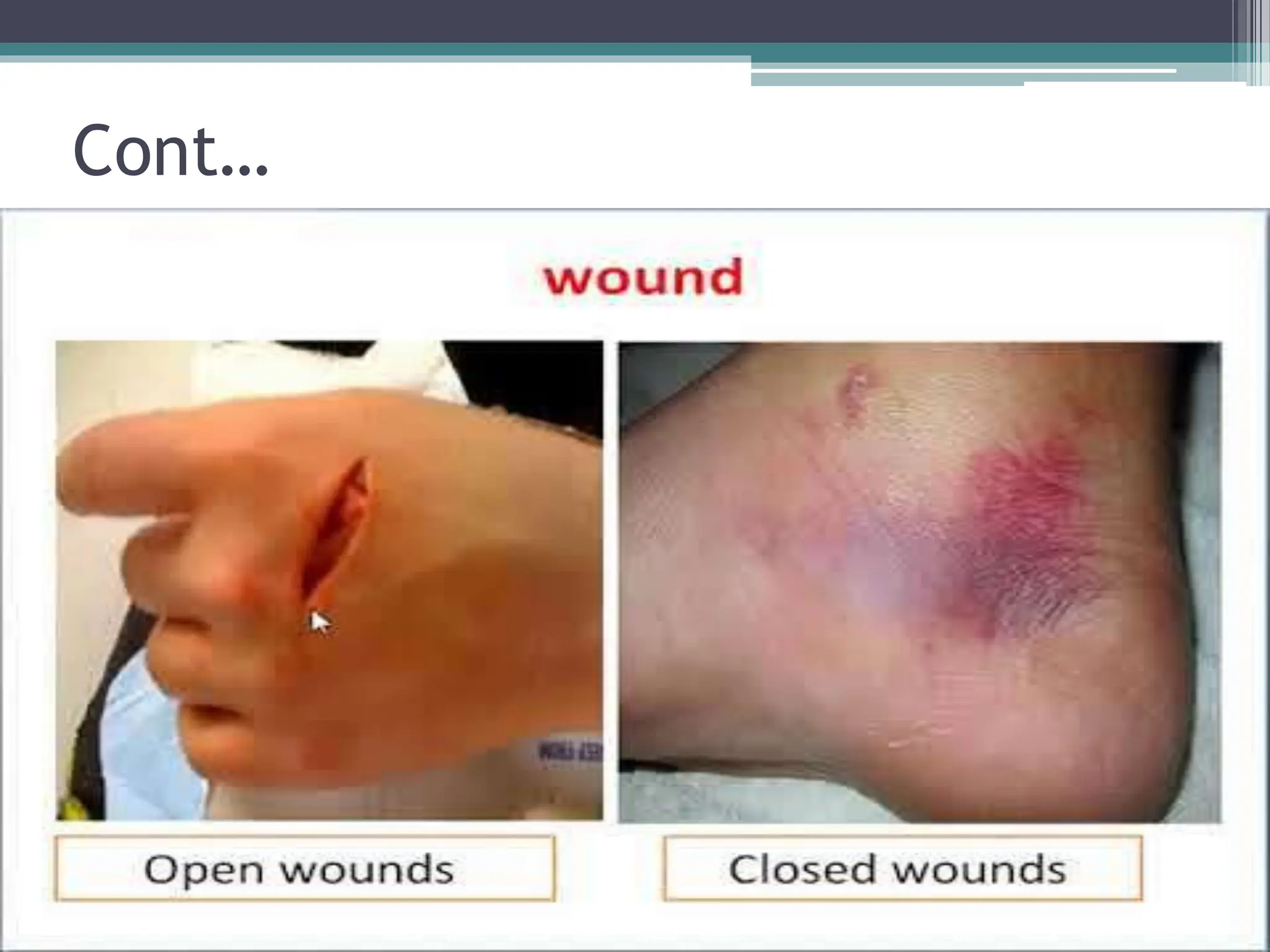
Open Wounds
• Incision: A clean, straight cut typically caused
by a sharp object.
Cont…
• Laceration: A jagged or irregular tear in the
skin, often caused by blunt trauma.
Cont…
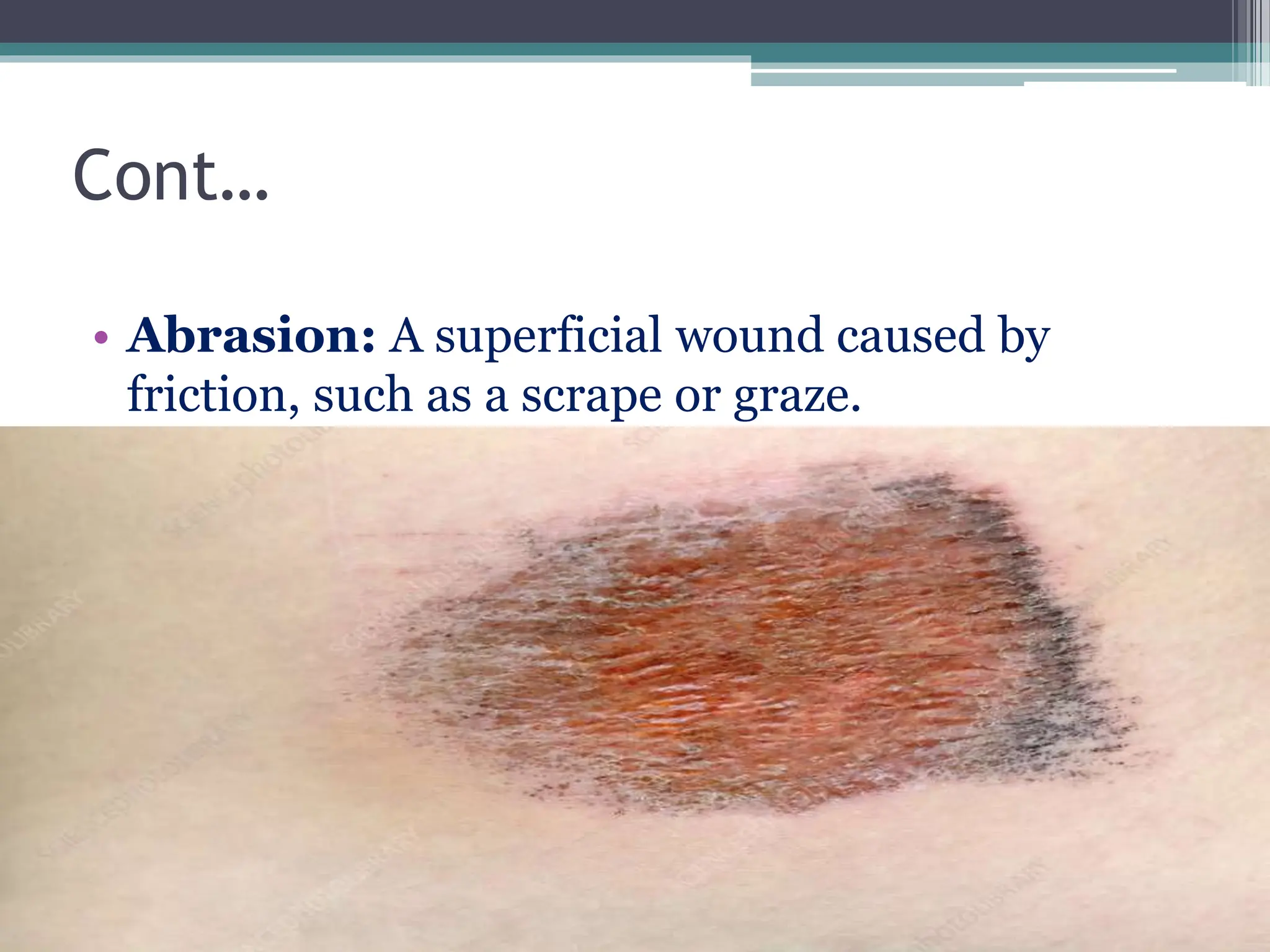
• Abrasion: A superficial wound caused by
friction, such as a scrape or graze.
Cont…
• Puncture: A small, deep wound caused by a
pointed object, like a nail or needle.
Cont…
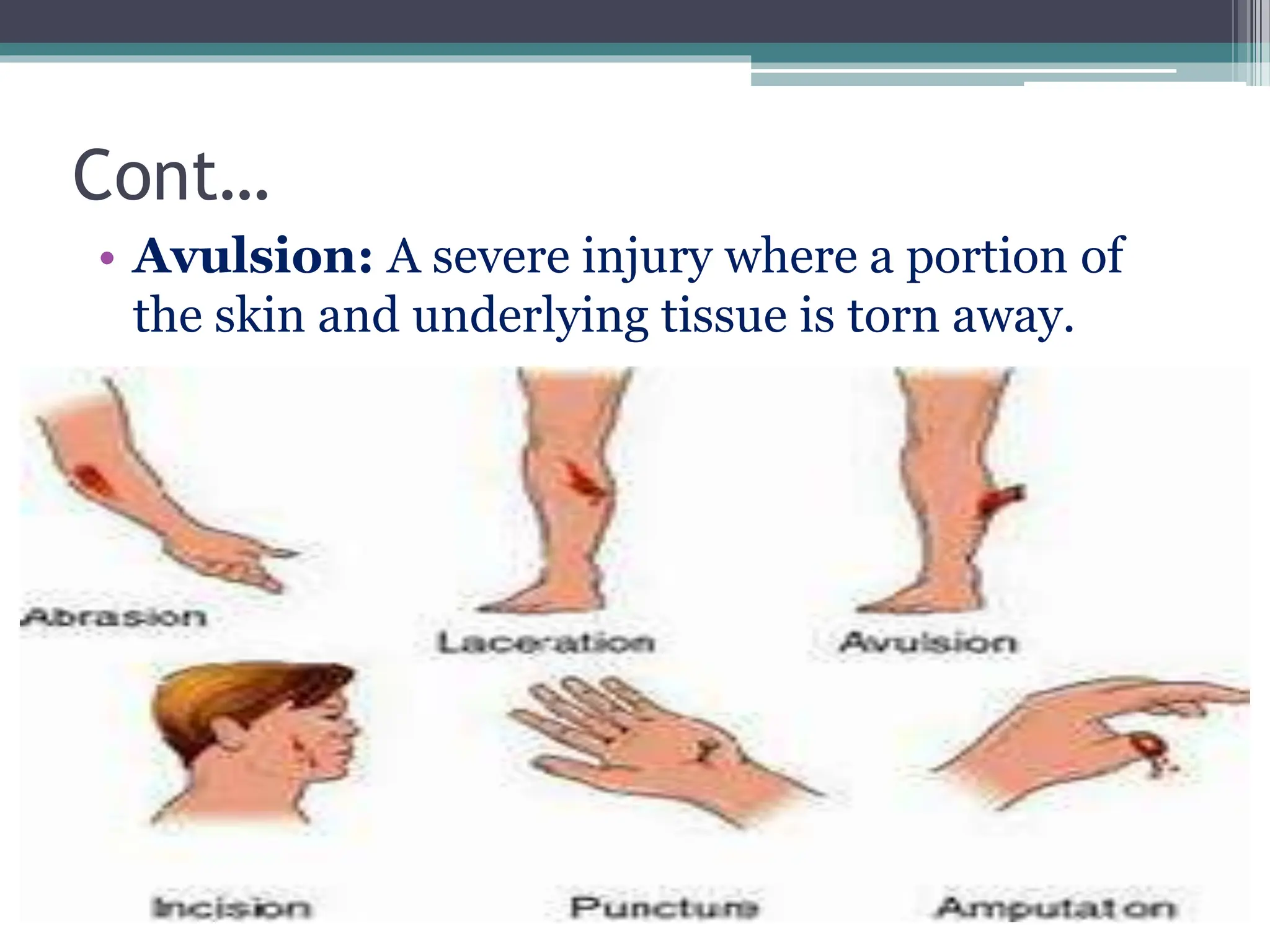
• Avulsion: A severe injury where a portion of
the skin and underlying tissue is torn away.
Closed Wounds
• Contusion: Bruising or tissue damage without
a break in the skin, caused by blunt force.
Based on Depth
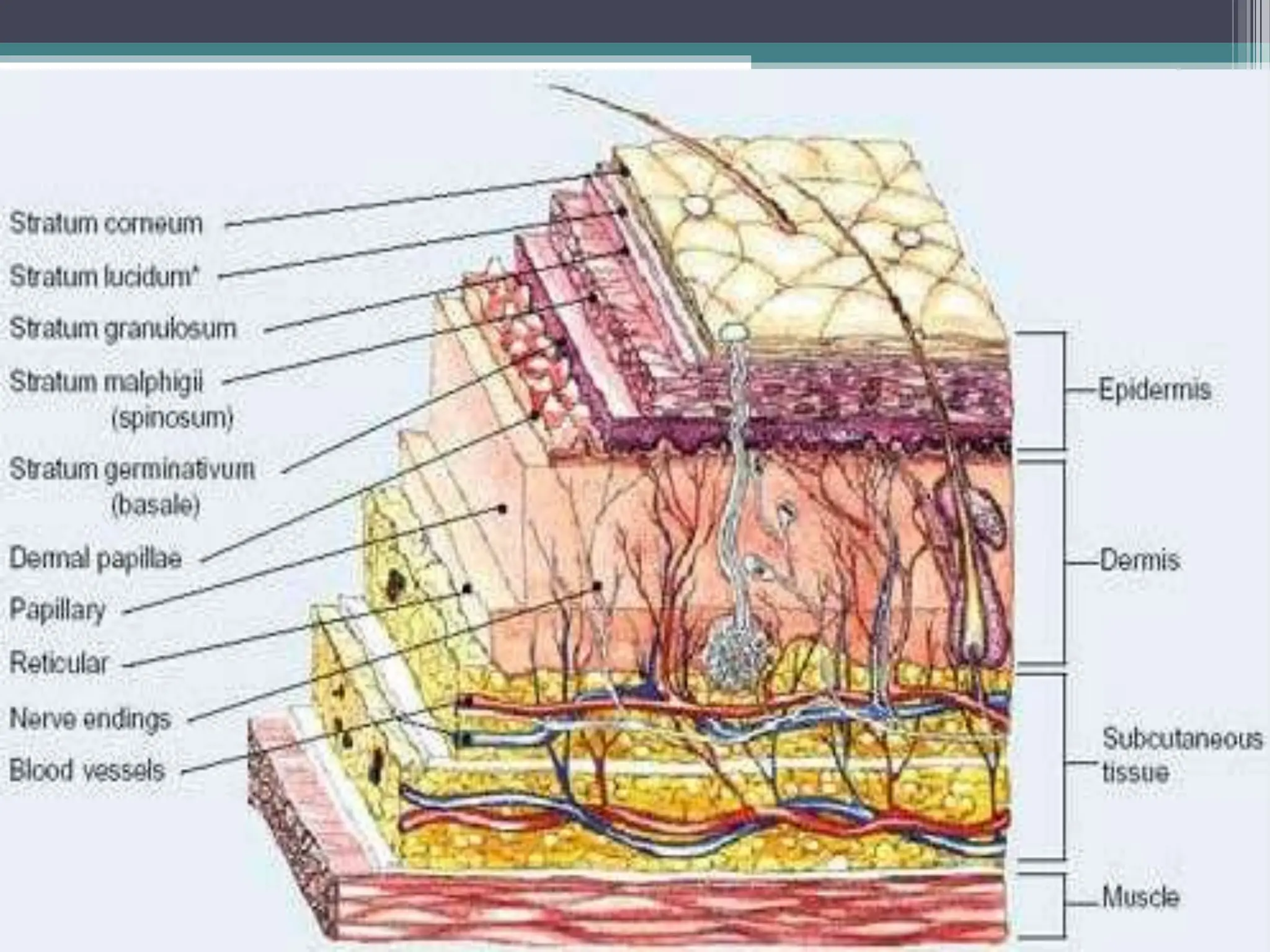
• Superficial Wounds: Only involve the outer
layer of the skin (epidermis).
Cont…
• Partial Thickness Wounds: Extend into the
dermis, the second layer of skin.
• Full Thickness Wounds: Extend through the
entire thickness of the skin and may involve
underlying tissues.
Based on Degree of Contamination
• Clean Wounds: Caused by a sterile object with
minimal risk of infection.
Cont…
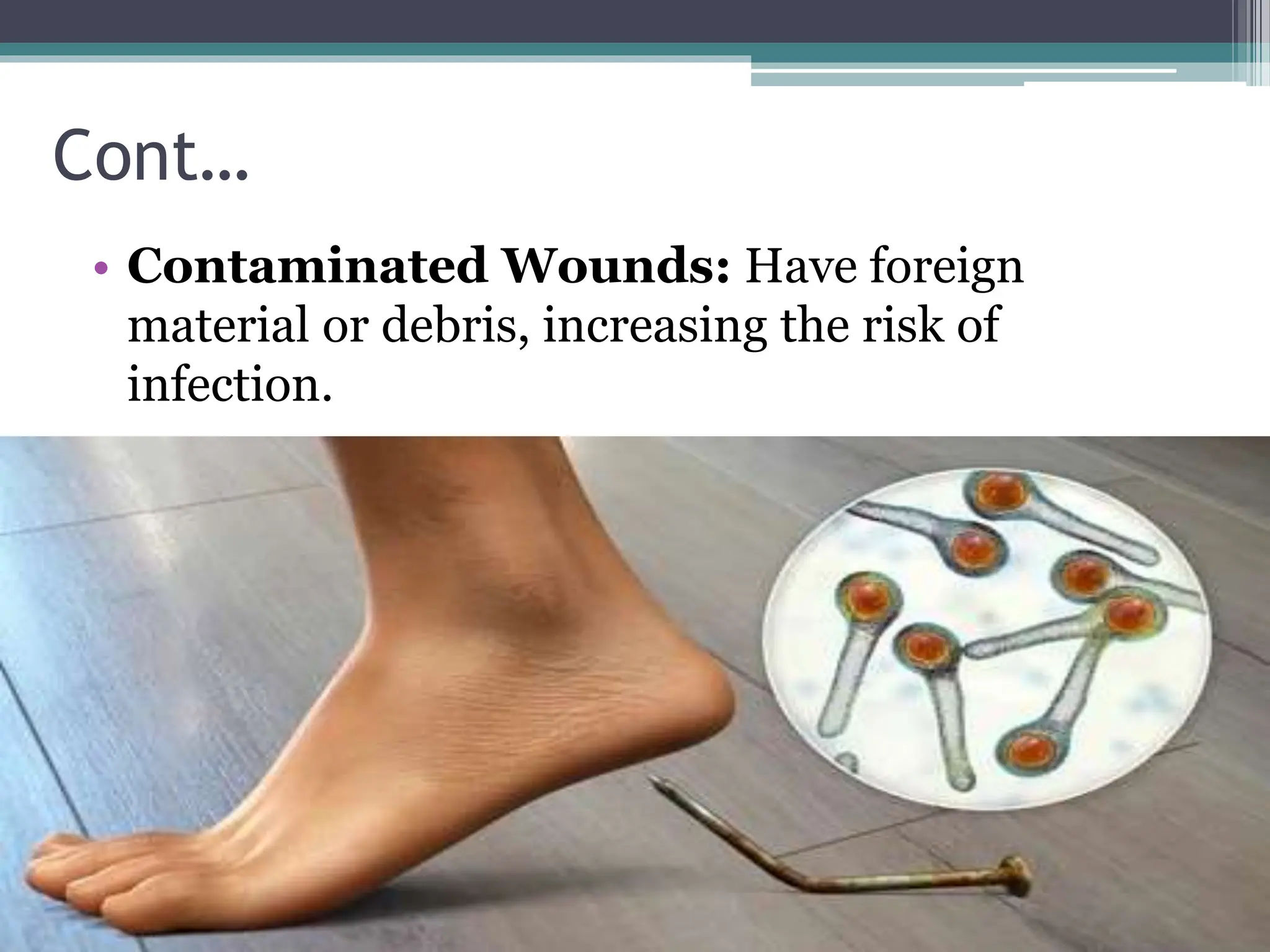
• Contaminated Wounds: Have foreign
material or debris, increasing the risk of
infection.
Cont…
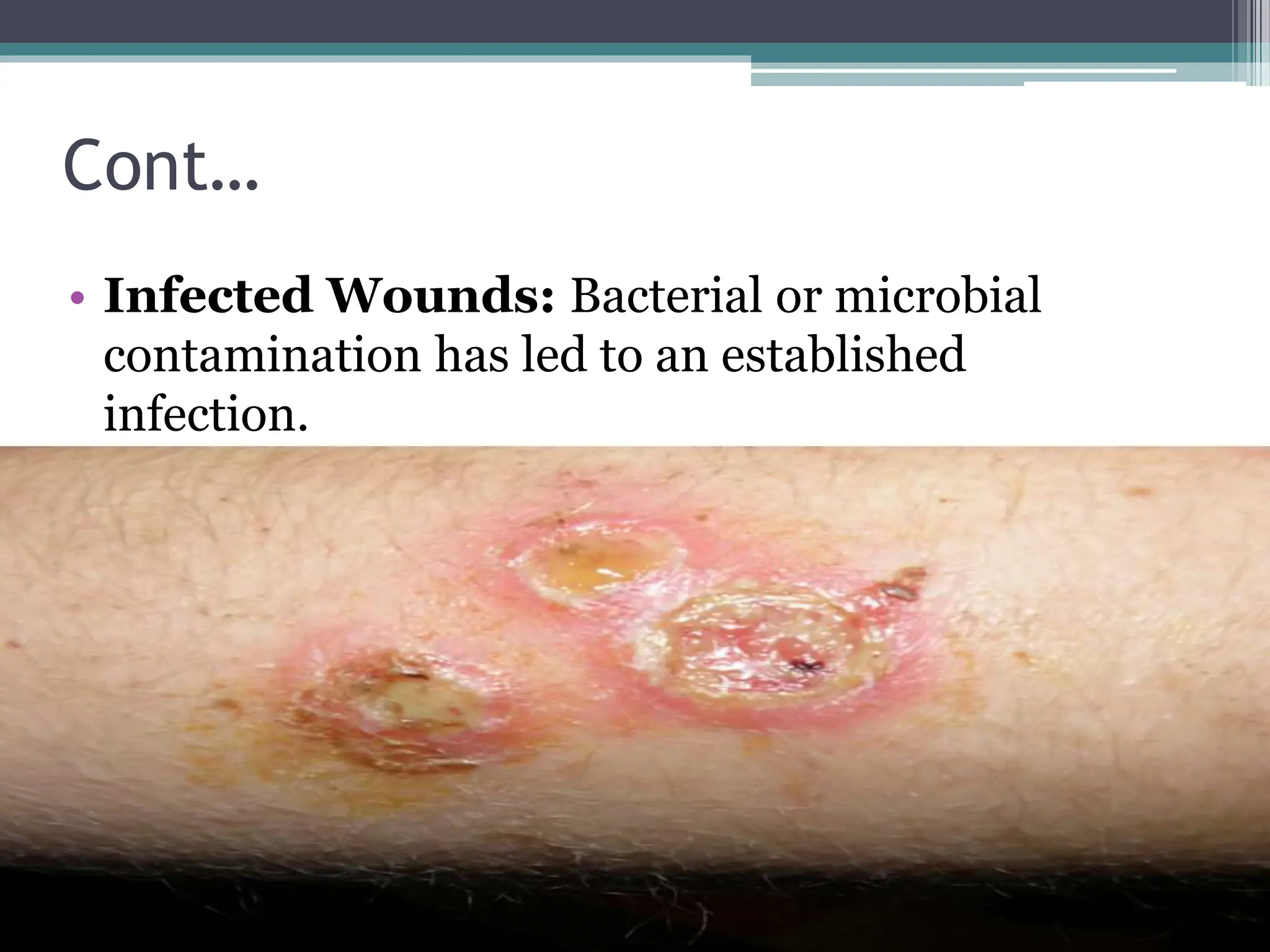
• Infected Wounds: Bacterial or microbial
contamination has led to an established
infection.
Based on Time of Onset
• Acute Wounds: Recent injuries.
• Chronic Wounds: Fail to follow the normal
healing process and persist for an extended
period.
Wound Healing
• Wound healing refers to a living organism's
replacement of destroyed or damaged tissue by
newly produced tissue.
• Series of events that restore integrity to a
damaged tissue
Cont…
• In undamaged skin, the epidermis (surface,
epithelial layer) and dermis (deeper, connective
layer) form a protective barrier against the
external environment. When the barrier is
broken, a regulated sequence of biochemical
events is set into motion to repair the
damage.
Phases of Wound Healing
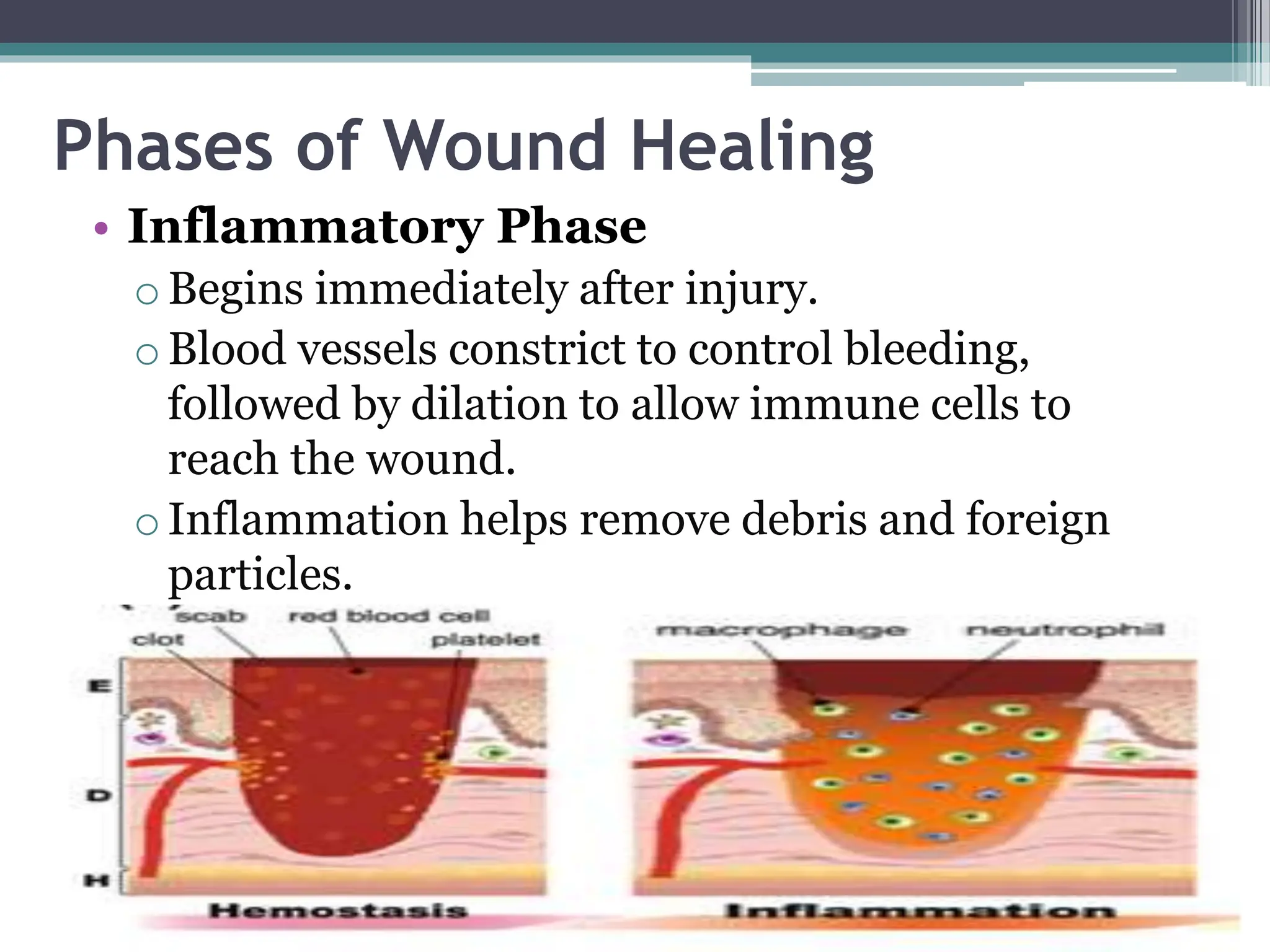
• Inflammatory Phase
oBegins immediately after injury.
oBlood vessels constrict to control bleeding,
followed by dilation to allow immune cells to
reach the wound.
oInflammation helps remove debris and foreign
particles.
Cont…
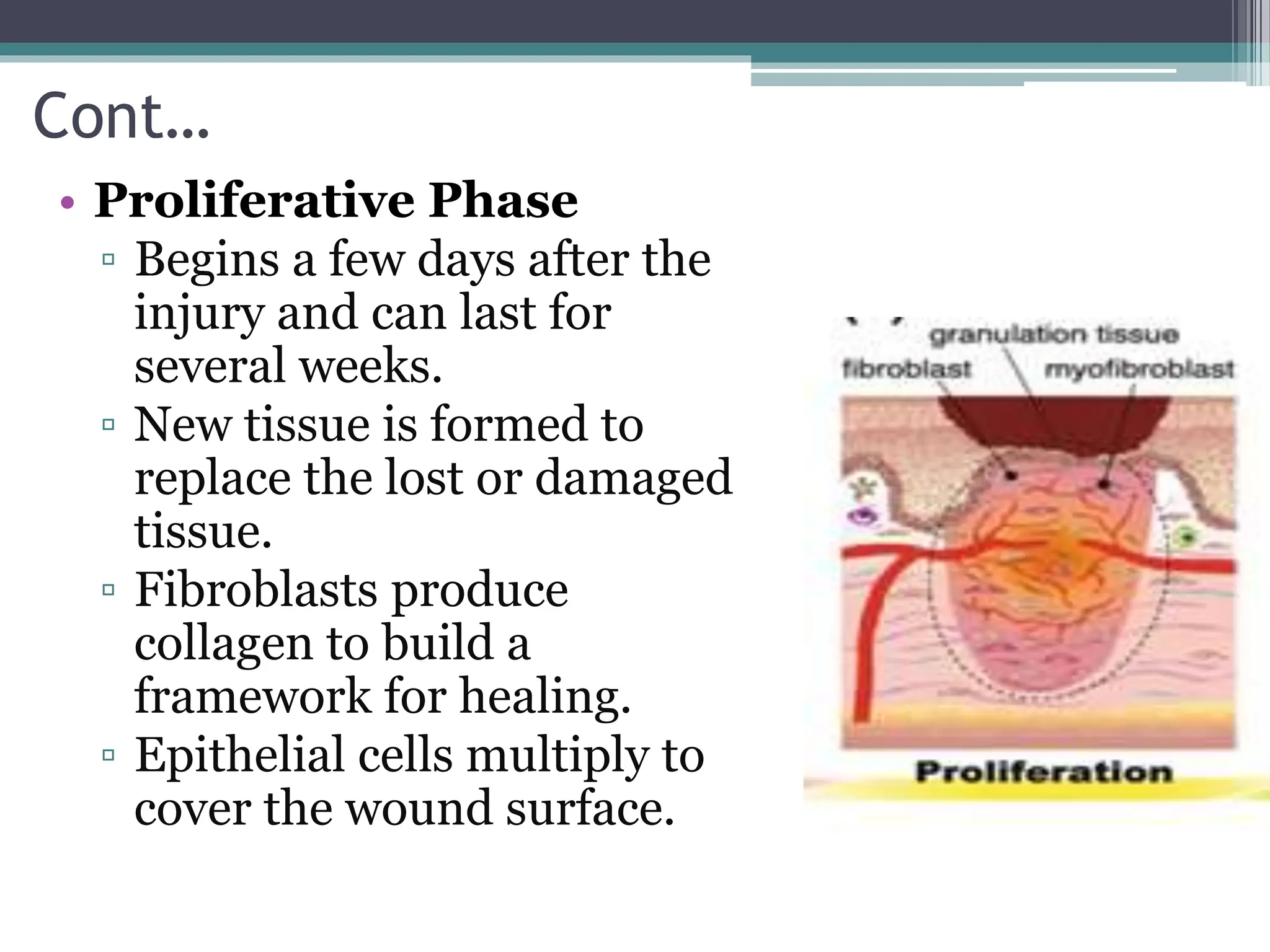
• Proliferative Phase
▫ Begins a few days after the
injury and can last for
several weeks.
▫ New tissue is formed to
replace the lost or damaged
tissue.
▫ Fibroblasts produce
collagen to build a
framework for healing.
▫ Epithelial cells multiply to
cover the wound surface.
Con…
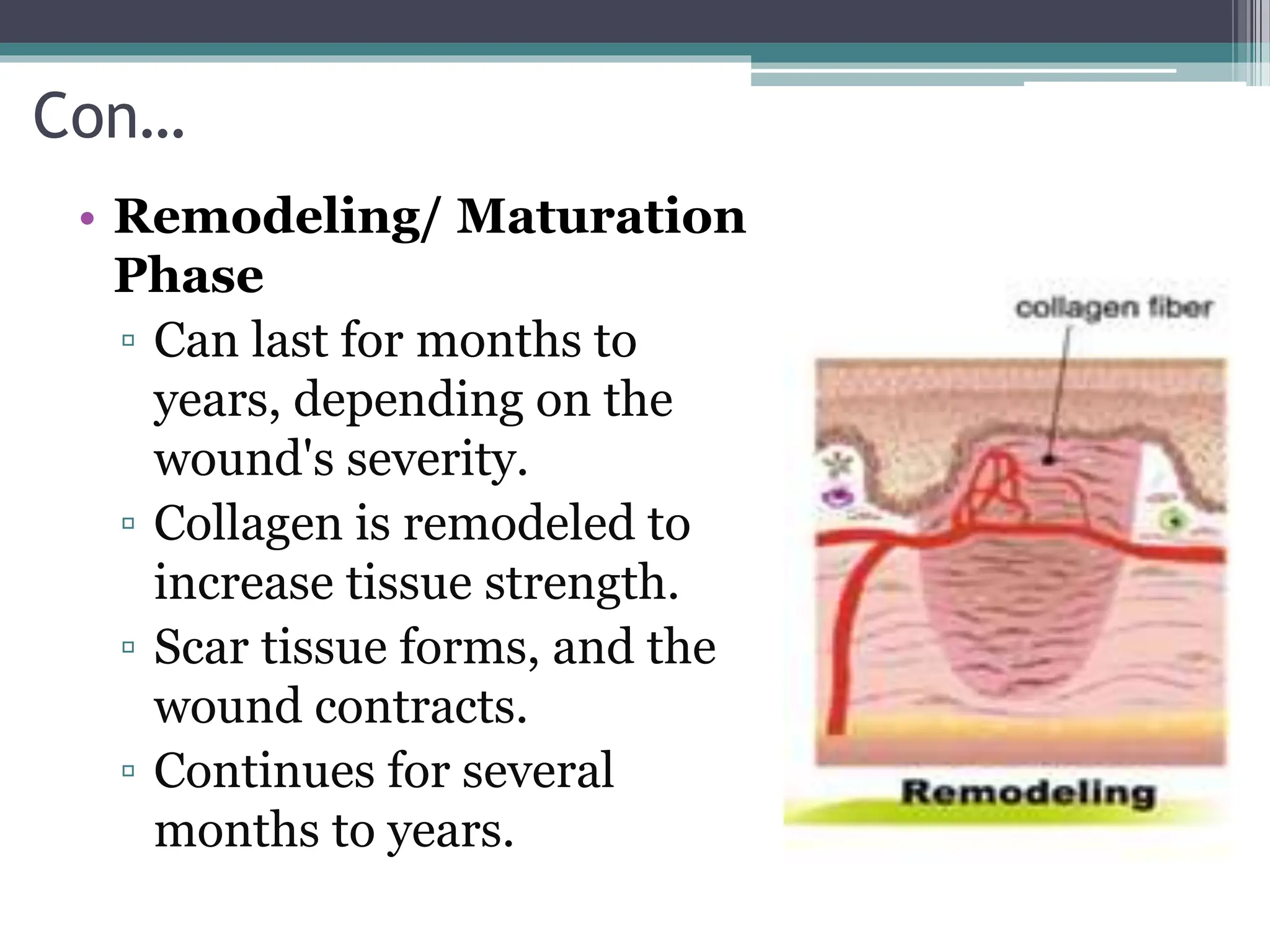
• Remodeling/ Maturation
Phase
▫ Can last for months to
years, depending on the
wound's severity.
▫ Collagen is remodeled to
increase tissue strength.
▫ Scar tissue forms, and the
wound contracts.
▫ Continues for several
months to years.
Factors Affecting Wound Healing
• Nutrition: Adequate intake of vitamins
(especially vitamin C), minerals, and protein
is crucial.
• Blood Supply: Good circulation is necessary
for delivering oxygen and nutrients to the wound
site.
• Infection: Infections delay healing; proper
wound care is essential to prevent infection.
Cont…
• Age: Wound healing is generally slower in the
elderly.
• Chronic Diseases: Conditions like diabetes
and autoimmune disorders can impair healing.
• Other
▫ Immune System Function
▫ Medications
▫ Smoking
▫ Obesity
▫ Wound Type and Location
▫ Stress
Complications
• Infection: Can lead to increased pain, swelling,
redness, and discharge.
• Excessive Scar Formation: Keloids or
hypertrophic scars may develop.
• Dehiscence: Wound edges separate before
healing is complete.
• Hemorrhage: Excessive bleeding from the
wound.
Wounds, types of wounds, wound healing process, complications of wound,

Wounds, types of wounds, wound healing process, complications of wound,

  • 1.
  • 4.
    WOUND Wounds are injuriesto the skin or other body tissues, typically caused by physical trauma. They can range from minor cuts and abrasions to more severe injuries that involve damage to underlying structures such as muscles, tendons, and bones.
  • 5.
    Classification of Wounds •Wounds can be classified based on various criteria, including their cause, depth and other characteristics. Here is a detailed classification of wounds
  • 6.
  • 7.
    Open Wounds • Incision:A clean, straight cut typically caused by a sharp object.
  • 8.
    Cont… • Laceration: Ajagged or irregular tear in the skin, often caused by blunt trauma.
  • 9.
    Cont… • Abrasion: Asuperficial wound caused by friction, such as a scrape or graze.
  • 10.
    Cont… • Puncture: Asmall, deep wound caused by a pointed object, like a nail or needle.
  • 11.
    Cont… • Avulsion: Asevere injury where a portion of the skin and underlying tissue is torn away.
  • 12.
    Closed Wounds • Contusion:Bruising or tissue damage without a break in the skin, caused by blunt force.
  • 13.
    Based on Depth •Superficial Wounds: Only involve the outer layer of the skin (epidermis).
  • 14.
    Cont… • Partial ThicknessWounds: Extend into the dermis, the second layer of skin. • Full Thickness Wounds: Extend through the entire thickness of the skin and may involve underlying tissues.
  • 15.
    Based on Degreeof Contamination • Clean Wounds: Caused by a sterile object with minimal risk of infection.
  • 16.
    Cont… • Contaminated Wounds:Have foreign material or debris, increasing the risk of infection.
  • 17.
    Cont… • Infected Wounds:Bacterial or microbial contamination has led to an established infection.
  • 18.
    Based on Timeof Onset • Acute Wounds: Recent injuries. • Chronic Wounds: Fail to follow the normal healing process and persist for an extended period.
  • 19.
    Wound Healing • Woundhealing refers to a living organism's replacement of destroyed or damaged tissue by newly produced tissue. • Series of events that restore integrity to a damaged tissue
  • 20.
    Cont… • In undamagedskin, the epidermis (surface, epithelial layer) and dermis (deeper, connective layer) form a protective barrier against the external environment. When the barrier is broken, a regulated sequence of biochemical events is set into motion to repair the damage.
  • 21.
    Phases of WoundHealing • Inflammatory Phase oBegins immediately after injury. oBlood vessels constrict to control bleeding, followed by dilation to allow immune cells to reach the wound. oInflammation helps remove debris and foreign particles.
  • 22.
    Cont… • Proliferative Phase ▫Begins a few days after the injury and can last for several weeks. ▫ New tissue is formed to replace the lost or damaged tissue. ▫ Fibroblasts produce collagen to build a framework for healing. ▫ Epithelial cells multiply to cover the wound surface.
  • 23.
    Con… • Remodeling/ Maturation Phase ▫Can last for months to years, depending on the wound's severity. ▫ Collagen is remodeled to increase tissue strength. ▫ Scar tissue forms, and the wound contracts. ▫ Continues for several months to years.
  • 24.
    Factors Affecting WoundHealing • Nutrition: Adequate intake of vitamins (especially vitamin C), minerals, and protein is crucial. • Blood Supply: Good circulation is necessary for delivering oxygen and nutrients to the wound site. • Infection: Infections delay healing; proper wound care is essential to prevent infection.
  • 25.
    Cont… • Age: Woundhealing is generally slower in the elderly. • Chronic Diseases: Conditions like diabetes and autoimmune disorders can impair healing. • Other ▫ Immune System Function ▫ Medications ▫ Smoking ▫ Obesity ▫ Wound Type and Location ▫ Stress
  • 26.
    Complications • Infection: Canlead to increased pain, swelling, redness, and discharge. • Excessive Scar Formation: Keloids or hypertrophic scars may develop. • Dehiscence: Wound edges separate before healing is complete. • Hemorrhage: Excessive bleeding from the wound.