PRESENTOR-Dr MOHAMMED
NAYEEMUDDIN
MODERATOR-Dr SACHIN SHAH
 Wound is defined as an interruption in the
continuity of the body surfaces like burns ,
laceration and crushing injuries.
 Inflammation which occurs at the site of wound
causes angiogenesis thus increasing the local
blood supply.
 Factors influencing wound healing are pressure ,
trauma vascular insufficiency , diabetes ,
infection and prolonged immobilisation are some
of them.
 Negative pressure wound therapy with reticulated open
cell foam (NPWT-ROCF) also called as vacuum assisted
closure (VAC).
 VAC has evolved as a beneficial adjunctive treatment
modality for soft tissue management after high energy
trauma.
 DEBRIDEMENT – is defined as a process of removing dead
necrotic tissue and foreign materials from and around a
wound to expose healing tissue.
 SURGICAL DEBRIDEMENT : is defined as a process in which
scalpel , scissors or other surgical instruments are used to
cut out the necrotic tissue from the wound. It is also
known as sharp debridement.
 Soft tissue trauma with or without underlying fractures is
the best indication of VAC.
 Pressure skin grafts and to improve skin graft incorporation
and also can be applied on donor site to epithelize it.
 VAC can be applied on exposed bones , tendons and
orthopaedic implants.
 Post traumatic ulcers
 Diabetic foot with large wounds.
 Wound after fasciotomy.
 Infected wounds after debridement.
 Post operative infection.
 Chronic osteomyelitis
 Surgical incisions that cannot close without tension.
 Closed surgical incision with continued drainage especially
if the wound have serous drain on post op day 4.
 Necrotizing fasciitis.
 As a result of continuous research on the
effect of subatmospheric pressure on open
wounds . kinetic concepts Inc (KCI, San
antonio ,TX) developed the KCI vacuum
assisted closure (VAC) system.
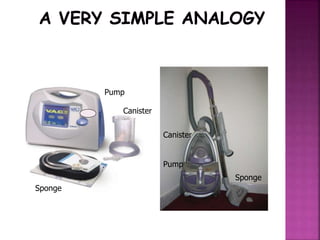
Pump
Canister
Sponge
Pump
Canister
Sponge
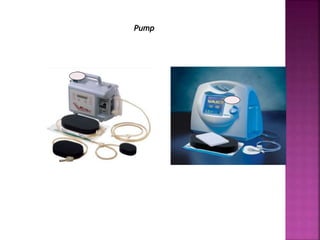
Pump
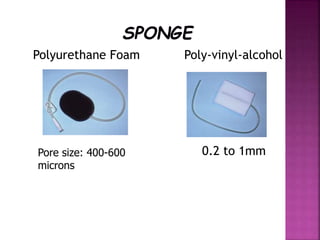
Polyurethane Foam Poly-vinyl-alcohol
0.2 to 1mmPore size: 400-600
microns
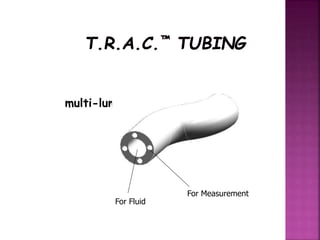
multi-lumen
For Fluid
For Measurement
 Moisten the interface between sponge and
wound.
 Apply cuticle to the wound then NPWT.
 Topical lidocaine on the wound surface.
 Standard : -125 mmHg.
 Range : - 125 to – 200 mmHg
 Neonates : - 50 mmHg.
 Children < 2 years : -50 to -75 mmHg
 Children > 2 years : -75 to -125 mmHg
 Adults : -125mmHg
 Do not apply on nondebrided dirty wounds.
 May cause bleeding if any cut vessel is in the
vicinity of the wound on where NPWT is to be
applied.
 Pain may occur while removing the adhesive
tape.
 Retained sponge may lead to infection.
 Dehydration in children occurs due to suction
of fluids from the wound.
 Maceration of skin can occur if the foam
overlaps the healthy skin.
 Hematoma in surrounding tissue may occur.
 In immune compressed individuals wound
dehiscence can occur.
 Leakage may occur in cases of power loss
resulting in maceration and may cause
infection and wound complications.
 Poor sealing leading to loosening of drainage
system.
 Necrotic tissue with eschar.
 Exposed nerves and organs.
 Undernourished patient.
 Severe pain.
 Malignant wound.
 Nonenteric and unexplored fistulas
 It is a controversial topic as antibiotic is lost
when fluid.
 But in authors institute it is followed as the 5
minutes interval of VAC exerts a beneficial
effect.
 Apply VAC on primary closure.
 Used in high risk surgical closure of wound.
 High energy tibial plateau fracture.
 Calcaneal fractures.
 Pilons fractures.
 Acetabular fracture.
 Amputed limbs in diabetes.
 Previously irradiated tissue.
 Morbidity obese patient.
 Incisions in hip and knee replacement
surgeries.
 After traumatic wound or surgical incision , the
tensile forces cause gapping of the wound.
 If wound is kept without coverage becomes
impossible.
 NPWT exerts a contracting effect on the wound
that pulls the edges together and the wound
become slowly smaller and smaller with each
NPWT and it is then possible to do primarily
close the wound.
 Vacuum assisted closure system appears as a
thermal insulation and prevention a loss of heat.
 This is a special important onces in burns ,
physiological unstable and polytraumatized
patients.
 Daniel – schlatterer has described instill
irrigation technique is a gravity dependent
filtration of the irrigant into the wound bed for
approximately 30 seconds.
 This is followed by a short time period of no
suction.
 This incubation phase is referred to us the dwell
or hold time period.
 The solution reaches the wound bed after
traversing the pressure foam dressing.
 This movement of irrigant is supported by the
work of Labler and Trantz.
 Further studies are required to give definite
recommendations.
 Modern papineau technique : involves
aggressive excisional debridement of
infected or necrotic bone with open bone
grafting with cancellous bone accompained
by VAC.
THANK YOU

Negative pressure wound therapy(vac)

  • 1.
  • 2.
     Wound isdefined as an interruption in the continuity of the body surfaces like burns , laceration and crushing injuries.  Inflammation which occurs at the site of wound causes angiogenesis thus increasing the local blood supply.  Factors influencing wound healing are pressure , trauma vascular insufficiency , diabetes , infection and prolonged immobilisation are some of them.
  • 3.
     Negative pressurewound therapy with reticulated open cell foam (NPWT-ROCF) also called as vacuum assisted closure (VAC).  VAC has evolved as a beneficial adjunctive treatment modality for soft tissue management after high energy trauma.  DEBRIDEMENT – is defined as a process of removing dead necrotic tissue and foreign materials from and around a wound to expose healing tissue.  SURGICAL DEBRIDEMENT : is defined as a process in which scalpel , scissors or other surgical instruments are used to cut out the necrotic tissue from the wound. It is also known as sharp debridement.
  • 4.
     Soft tissuetrauma with or without underlying fractures is the best indication of VAC.  Pressure skin grafts and to improve skin graft incorporation and also can be applied on donor site to epithelize it.  VAC can be applied on exposed bones , tendons and orthopaedic implants.  Post traumatic ulcers  Diabetic foot with large wounds.  Wound after fasciotomy.  Infected wounds after debridement.  Post operative infection.  Chronic osteomyelitis  Surgical incisions that cannot close without tension.  Closed surgical incision with continued drainage especially if the wound have serous drain on post op day 4.  Necrotizing fasciitis.
  • 5.
     As aresult of continuous research on the effect of subatmospheric pressure on open wounds . kinetic concepts Inc (KCI, San antonio ,TX) developed the KCI vacuum assisted closure (VAC) system.
  • 6.
  • 7.
  • 8.
    Polyurethane Foam Poly-vinyl-alcohol 0.2to 1mmPore size: 400-600 microns
  • 9.
  • 10.
     Moisten theinterface between sponge and wound.  Apply cuticle to the wound then NPWT.  Topical lidocaine on the wound surface.
  • 11.
     Standard :-125 mmHg.  Range : - 125 to – 200 mmHg  Neonates : - 50 mmHg.  Children < 2 years : -50 to -75 mmHg  Children > 2 years : -75 to -125 mmHg  Adults : -125mmHg
  • 12.
     Do notapply on nondebrided dirty wounds.  May cause bleeding if any cut vessel is in the vicinity of the wound on where NPWT is to be applied.  Pain may occur while removing the adhesive tape.  Retained sponge may lead to infection.  Dehydration in children occurs due to suction of fluids from the wound.  Maceration of skin can occur if the foam overlaps the healthy skin.  Hematoma in surrounding tissue may occur.  In immune compressed individuals wound dehiscence can occur.
  • 13.
     Leakage mayoccur in cases of power loss resulting in maceration and may cause infection and wound complications.  Poor sealing leading to loosening of drainage system.
  • 14.
     Necrotic tissuewith eschar.  Exposed nerves and organs.  Undernourished patient.  Severe pain.  Malignant wound.  Nonenteric and unexplored fistulas
  • 15.
     It isa controversial topic as antibiotic is lost when fluid.  But in authors institute it is followed as the 5 minutes interval of VAC exerts a beneficial effect.
  • 16.
     Apply VACon primary closure.  Used in high risk surgical closure of wound.  High energy tibial plateau fracture.  Calcaneal fractures.  Pilons fractures.  Acetabular fracture.  Amputed limbs in diabetes.  Previously irradiated tissue.  Morbidity obese patient.  Incisions in hip and knee replacement surgeries.
  • 17.
     After traumaticwound or surgical incision , the tensile forces cause gapping of the wound.  If wound is kept without coverage becomes impossible.  NPWT exerts a contracting effect on the wound that pulls the edges together and the wound become slowly smaller and smaller with each NPWT and it is then possible to do primarily close the wound.  Vacuum assisted closure system appears as a thermal insulation and prevention a loss of heat.  This is a special important onces in burns , physiological unstable and polytraumatized patients.
  • 18.
     Daniel –schlatterer has described instill irrigation technique is a gravity dependent filtration of the irrigant into the wound bed for approximately 30 seconds.  This is followed by a short time period of no suction.  This incubation phase is referred to us the dwell or hold time period.  The solution reaches the wound bed after traversing the pressure foam dressing.  This movement of irrigant is supported by the work of Labler and Trantz.  Further studies are required to give definite recommendations.
  • 19.
     Modern papineautechnique : involves aggressive excisional debridement of infected or necrotic bone with open bone grafting with cancellous bone accompained by VAC.
  • 20.