MADATSST
&
MUKUND INGLE
PRESENT
Mr. Mukund B. Ingle
 96.5% is present in the from sea water.
 2.5% is present as fresh water.
 70% of fresh water is present in the form ice and
glaciers.
 India receives 4% of world’s precipitation.
 1,897 sp. Km per annum is renewable water resource
in India.
 By 2025, large parts of India will face acute water
shortage.
 Natural Cause: Due to some climatic reasons, there is less or no rainfall.
 Excessive use ofWater: People use and waste water excessively
 Urbanization:Growing up of cities in last century has increased the
demand of water too much.
 Industrialization:The huge demand of water from industries has divided
the use of water
 Agriculture: As population increased, the demand of food grew and
burdened the water resource.
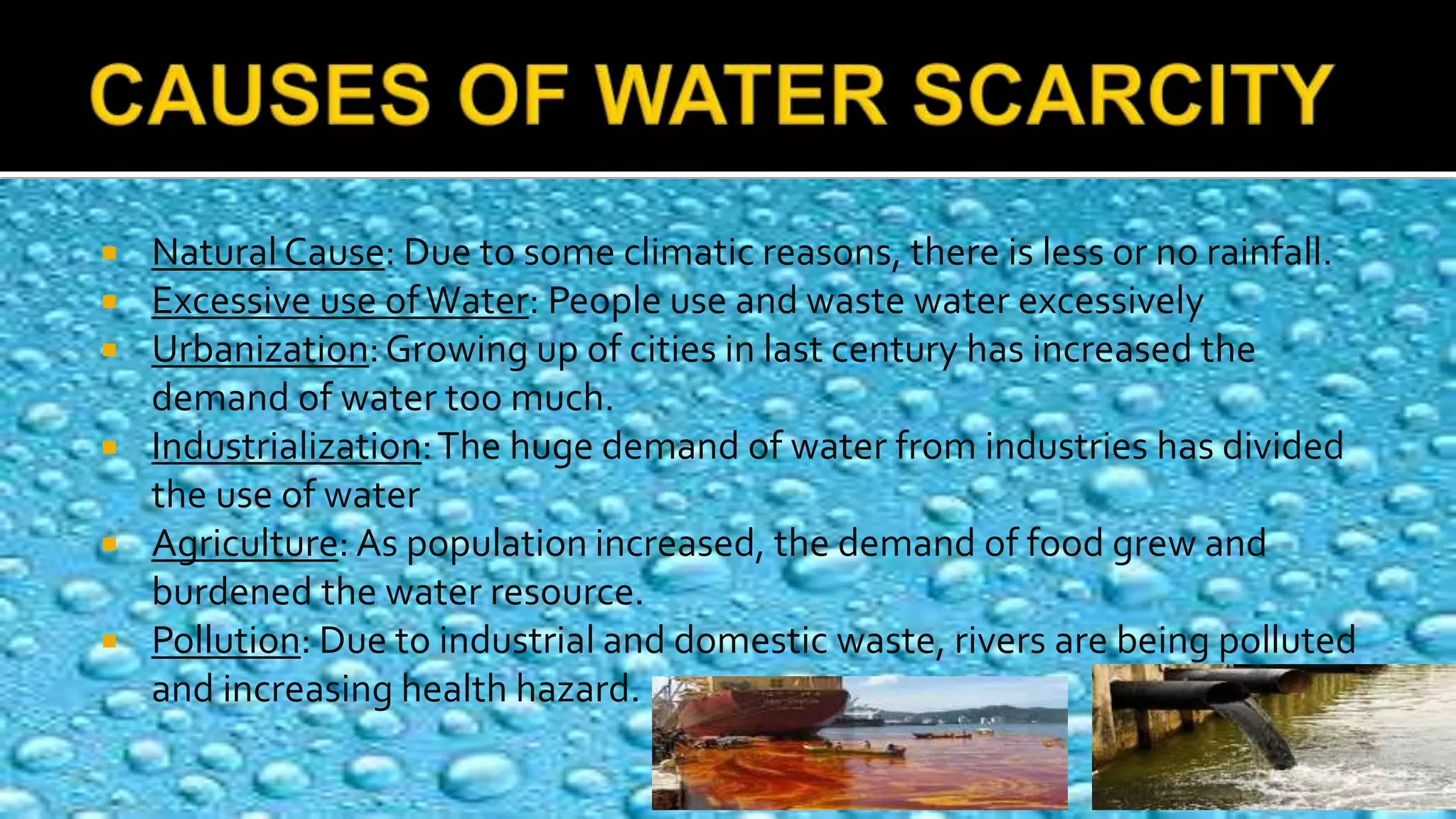
 Pollution: Due to industrial and domestic waste, rivers are being polluted
and increasing health hazard.
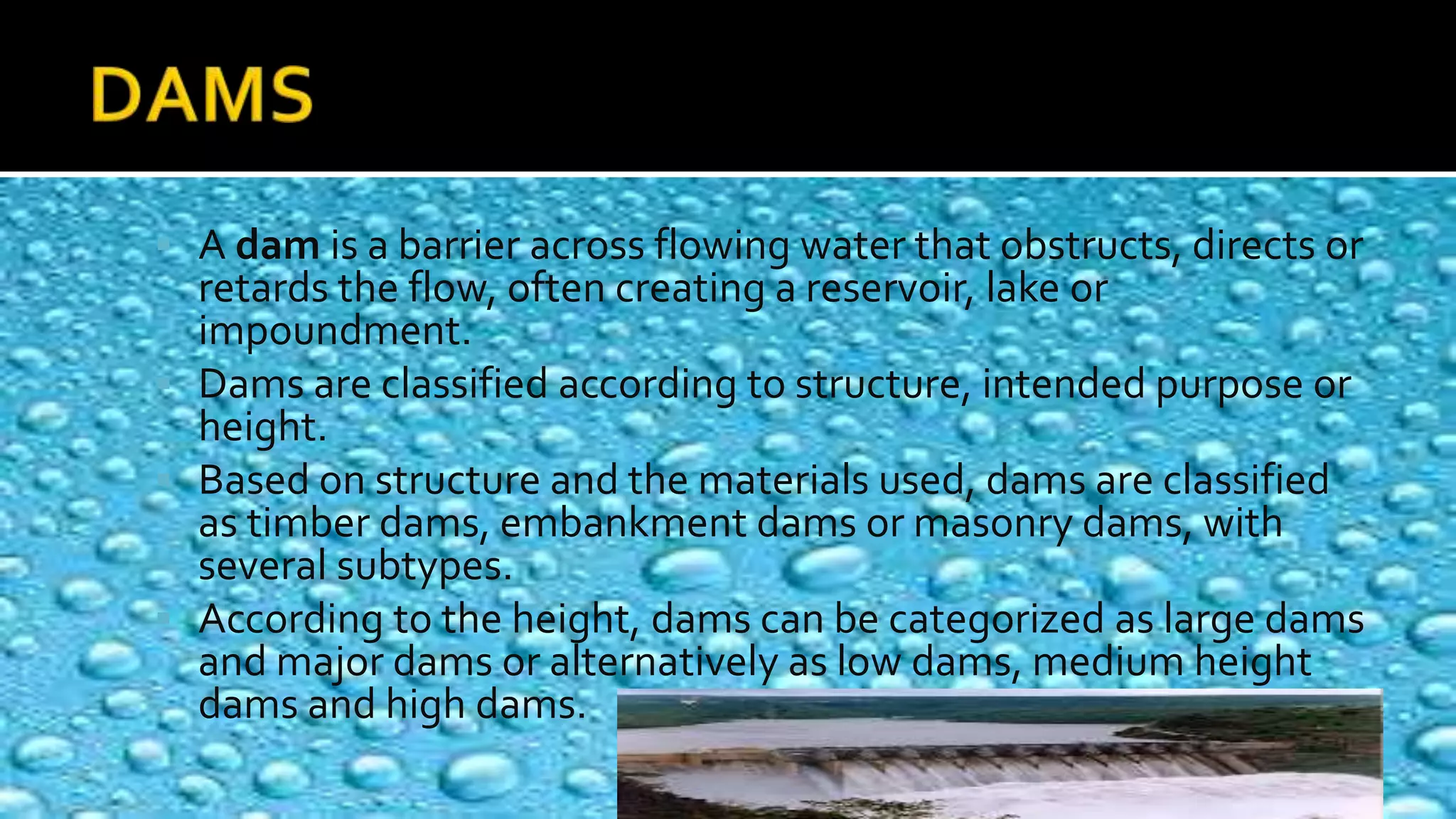
 A dam is a barrier across flowing water that obstructs, directs or
retards the flow, often creating a reservoir, lake or
impoundment.
 Dams are classified according to structure, intended purpose or
height.
 Based on structure and the materials used, dams are classified
as timber dams, embankment dams or masonry dams, with
several subtypes.
 According to the height, dams can be categorized as large dams
and major dams or alternatively as low dams, medium height
dams and high dams.
 Built with more advance technologies and
materials.
 Fulfill more than one or two purposes.
 They are comparatively big and large in size.
 Serve as water storage
 Provide water for agriculture
 Help for fish-breeding
 Work as water transportation
 Water reservoir can be used as tourist spot as they attract birds.
 Hydro-Electricity.
 Multi-purpose projects, launched after Independence with their
integrated water resources management approach, were thought of
as the vehicle that would lead the nation to development and
progress, overcoming the handicap of its colonial past.
 So Jawaharlal Nehru proudly proclaimed the dams as the ‘temples of
modern India’.
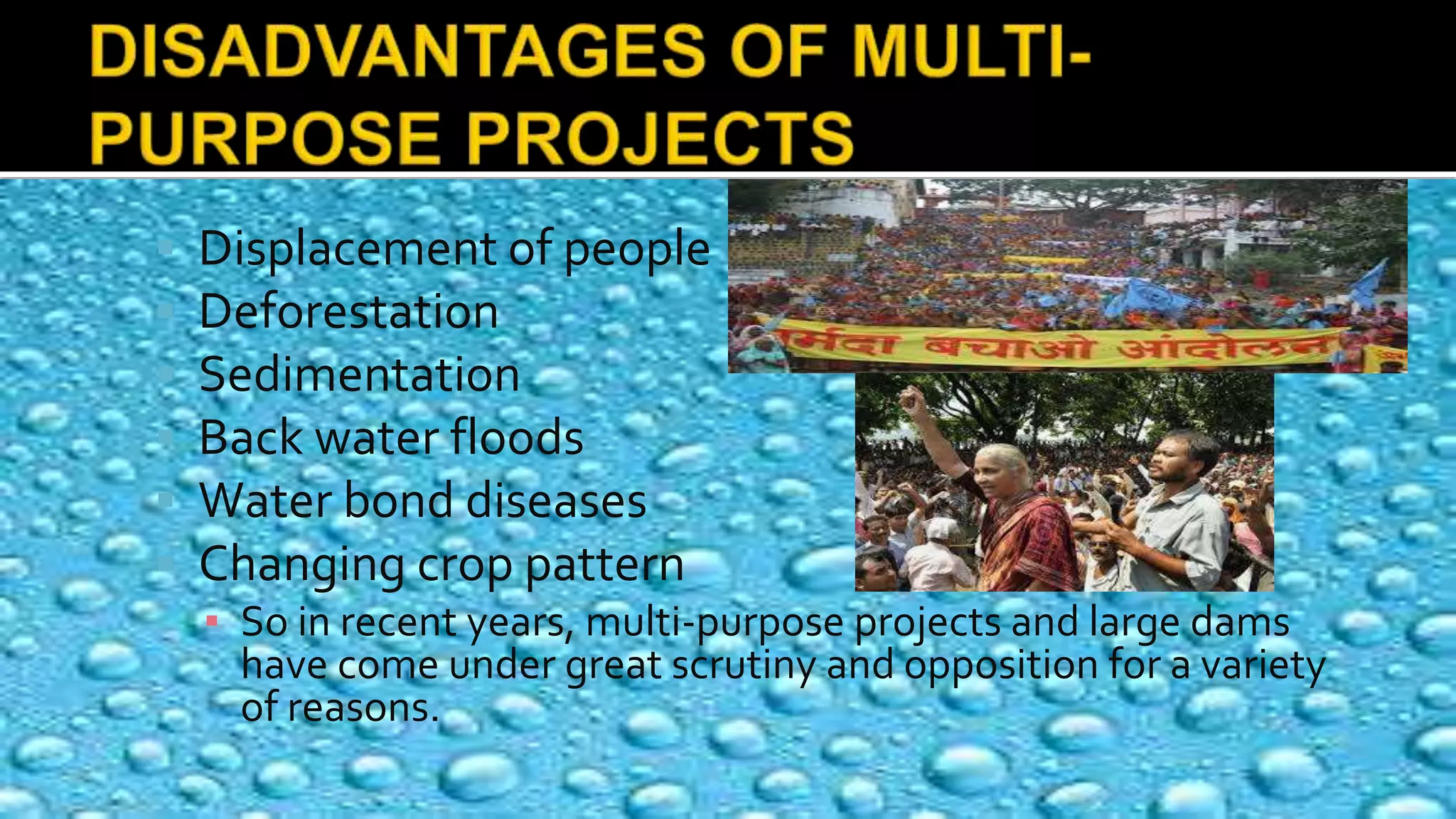
 Displacement of people
 Deforestation
 Sedimentation
 Back water floods
 Water bond diseases
 Changing crop pattern
▪ So in recent years, multi-purpose projects and large dams
have come under great scrutiny and opposition for a variety
of reasons.
 It means that storing or releasing rain water
direct to underground water.
 Ancient Examples:
 ‘Guls’ or ‘Kuls’ (Hilly Areas)
 Rooftop Rainwater Harvesting (Rajasthan)
 Inundation Channels ( Flood Plains Areas)
 ‘Khadins’ and Johads’ (Jaisalmer and some parts of
Rajasthan)
 Tanka System:
 Semi arid regions of Rajasthan – Bikaner, Phalodi and Barmer
 Size – 6.1 meters deep, 4.27 meters long and 2.44 meters wide.
 Built inside the house or country yard, well connected to rain water
falling on the roof through pipes.
 First water is not collected due to cleaning purpose.Water stored in
these tankas is called ‘Palar pani’ means pure water.
 Many houses constructed underground rooms adjoining the ‘tanka’ to
beat the summer heat as it would keep the room cool.
 Tamil Nadu is the state that made rain water harvesting system
compulsory to all houses.
 Bamboo Drip Irrigation System:
 In Meghalaya, more than 200 years old system.
 Carried through bamboo pipes and given to plants
 Water is carried from high to low altitude from
perennial springs.
 The flow of water into the pipes is controlled by
manipulating pipe position.
 If pipes pass the road, they are taken high from the
roads.
Water resource ppt

Water resource ppt

  • 1.
  • 2.
  • 3.
     96.5% ispresent in the from sea water.  2.5% is present as fresh water.  70% of fresh water is present in the form ice and glaciers.  India receives 4% of world’s precipitation.  1,897 sp. Km per annum is renewable water resource in India.  By 2025, large parts of India will face acute water shortage.
  • 4.
     Natural Cause:Due to some climatic reasons, there is less or no rainfall.  Excessive use ofWater: People use and waste water excessively  Urbanization:Growing up of cities in last century has increased the demand of water too much.  Industrialization:The huge demand of water from industries has divided the use of water  Agriculture: As population increased, the demand of food grew and burdened the water resource.  Pollution: Due to industrial and domestic waste, rivers are being polluted and increasing health hazard.
  • 5.
     A damis a barrier across flowing water that obstructs, directs or retards the flow, often creating a reservoir, lake or impoundment.  Dams are classified according to structure, intended purpose or height.  Based on structure and the materials used, dams are classified as timber dams, embankment dams or masonry dams, with several subtypes.  According to the height, dams can be categorized as large dams and major dams or alternatively as low dams, medium height dams and high dams.
  • 6.
     Built withmore advance technologies and materials.  Fulfill more than one or two purposes.  They are comparatively big and large in size.
  • 7.
     Serve aswater storage  Provide water for agriculture  Help for fish-breeding  Work as water transportation  Water reservoir can be used as tourist spot as they attract birds.  Hydro-Electricity.  Multi-purpose projects, launched after Independence with their integrated water resources management approach, were thought of as the vehicle that would lead the nation to development and progress, overcoming the handicap of its colonial past.  So Jawaharlal Nehru proudly proclaimed the dams as the ‘temples of modern India’.
  • 8.
     Displacement ofpeople  Deforestation  Sedimentation  Back water floods  Water bond diseases  Changing crop pattern ▪ So in recent years, multi-purpose projects and large dams have come under great scrutiny and opposition for a variety of reasons.
  • 9.
     It meansthat storing or releasing rain water direct to underground water.  Ancient Examples:  ‘Guls’ or ‘Kuls’ (Hilly Areas)  Rooftop Rainwater Harvesting (Rajasthan)  Inundation Channels ( Flood Plains Areas)  ‘Khadins’ and Johads’ (Jaisalmer and some parts of Rajasthan)
  • 10.
     Tanka System: Semi arid regions of Rajasthan – Bikaner, Phalodi and Barmer  Size – 6.1 meters deep, 4.27 meters long and 2.44 meters wide.  Built inside the house or country yard, well connected to rain water falling on the roof through pipes.  First water is not collected due to cleaning purpose.Water stored in these tankas is called ‘Palar pani’ means pure water.  Many houses constructed underground rooms adjoining the ‘tanka’ to beat the summer heat as it would keep the room cool.  Tamil Nadu is the state that made rain water harvesting system compulsory to all houses.
  • 11.
     Bamboo DripIrrigation System:  In Meghalaya, more than 200 years old system.  Carried through bamboo pipes and given to plants  Water is carried from high to low altitude from perennial springs.  The flow of water into the pipes is controlled by manipulating pipe position.  If pipes pass the road, they are taken high from the roads.