Victorian Era Society and Social
Class Structure
Presented by Avni Dave
• Name : Dave Avni J
• Roll no : 03
• Enrollment no : 2069108420190011
• Class : M.A. Sem 2
• Year : 2018-19
• Submitted to : Smt. S. B. Gardi Department of
English, Maharaja Krishnakumarsinhji
Bhavnagar University.
What is Victorian Era ?
• In the history of the United Kingdom, the
Victorian era was the period of Queen
Victoria’s reign from 20 June 1837 until her
death on 22 January 1901.
• The era followed by Georgian period and
preceded Edwardian period.
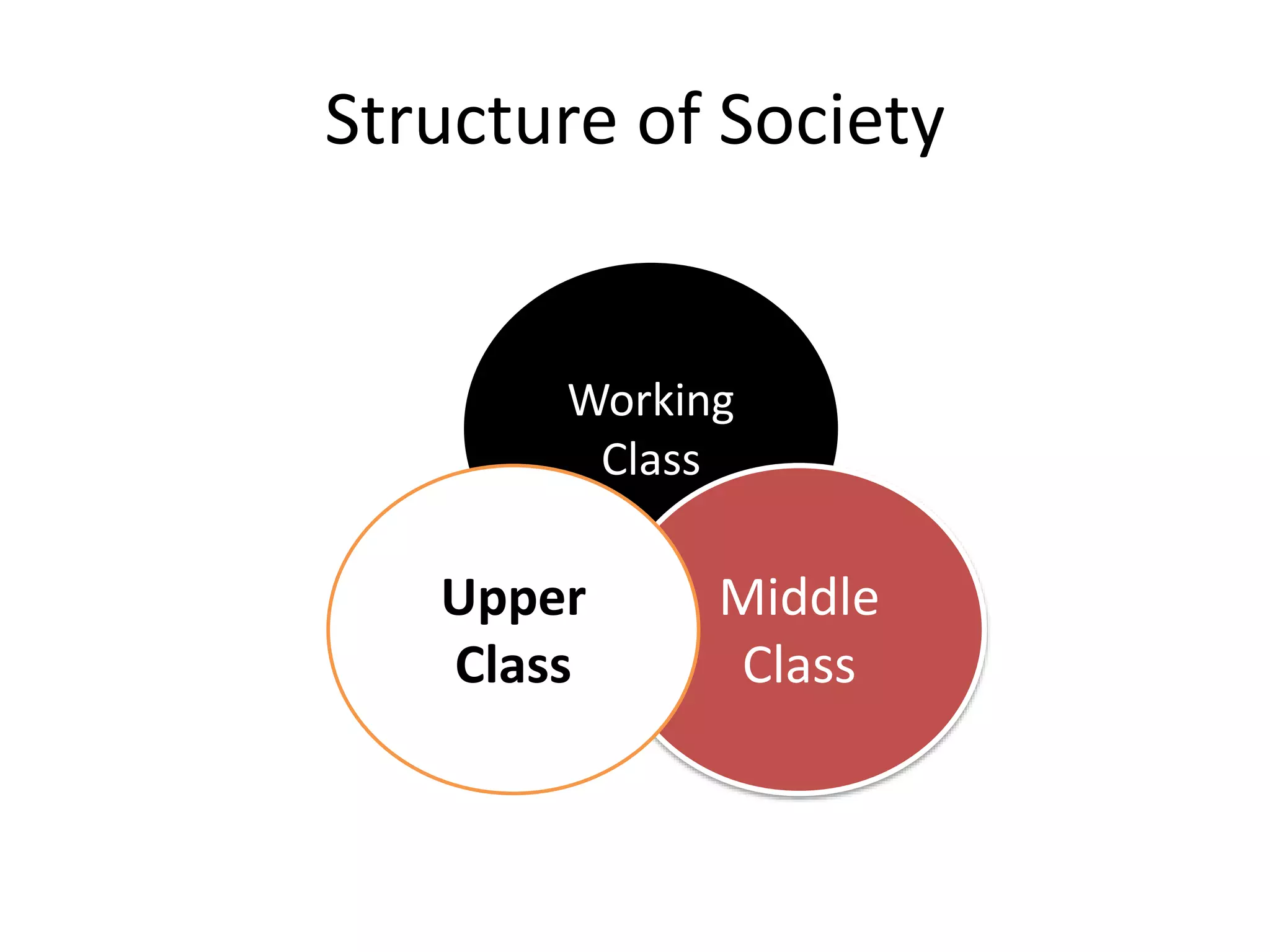
Structure of Society
Working
Class
Middle
Class
Upper
Class
Upper Class
• The Upper Class was in a powerful position giving
them authority, better living conditions, and
other facilities.
• The peerage is a legal system of British nobility
ranks, titles, and honours where the holder of the
title has the right to sit in the House of Lords.
• The hereditary aristocratic families by the early
19th century had taken a keen interest in the
industrial sector.
Life of Upper Class
• Royal Class
• There were a number of aristocrats who
managed large industries like mining or
shipping, etc.
• In term of education also those belonging to
the rich families got the best tutors to provide
education.
• The fact that they represented the royal class
gave these people an advantage at everything.
Middle Class
• The middle class was the next in social ranking.
• The Victorian period was very prosperous for the
middle class and they also owned and managed
vast business empires.
• The Industrial Revolution opened the doors for
more job opportunities and earn a decent living.
• This, is turn, had a positive impact on the
education of children.
Working Class
• The lowest among the social hierarchy were
the working class.
• This class remained aloof to the political
progress of the country and was affected to
the other two classes.
• The working class was the worst affected class
in the victoeian time.
• Lack of money resulted in a negligible food
supply.
Victorian Women Condition
• Industrial Revolution attributed to the chage in
the status of women.
• According to the traditional family pattern,
there was a strong presence of male dominance
in the society. Women were to obey what men
told them to do.
• The revolution gave women an opportunity to
work and earn money, thus changing the old
beliefs
• Working women not only shared the burden of
earning money but it also gave them a sense of
security.
• The family was a patriarchal unit;
• The man represented the authority;
• The women had the key role regarded the education of
children and the managing of the house.
• The category of “fallen women”, adulteresses or
unmarried mothers or prostitutes, was condemned and
emarginated. Sexuality was generally repressed
and prudery in its most extreme manifestations led to
the denunciation of nudity in art and the rejection of
words with sexual connotation from everyday
vocabulary.
Child labor
• Child labor was rampant throughout the
Victorian period.
• A major reason attributing to it was the fact
that the families did not earn much and the
food prices had increased for certain duration.
• The number of family members living together
was burdensome. Thus, parents were forced
to send their children to work and bring some
more money.
Victorian values
• The Victorians were great moralizers. They promoted a
code of values based on personal duty, hard
work, respectability and charity.
• Respectability was a mixture of morality, hypocrisy and
conformity to social standards. It meant,
• The possession of good manners
• The ownership of a comfortable house with servants
and a carriage
• Regular attendance at church
• Charitable activity
Conclusion
Worksites
• http://www.parafrasando.it/TESINE/The-
victorian-age.html
• http://www.josbd.com/the-social-condition-
of-the-victorian-period/
• http://victorian-era.org/victorian-era-
society.html
• https://valmcbeath.com/victorian-era-
womens-rights/#.XJoHWZgzbIU

Sem 2 ppt 2 victorian era society_and_social_class_structure

  • 1.
    Victorian Era Societyand Social Class Structure Presented by Avni Dave
  • 2.
    • Name :Dave Avni J • Roll no : 03 • Enrollment no : 2069108420190011 • Class : M.A. Sem 2 • Year : 2018-19 • Submitted to : Smt. S. B. Gardi Department of English, Maharaja Krishnakumarsinhji Bhavnagar University.
  • 3.
    What is VictorianEra ? • In the history of the United Kingdom, the Victorian era was the period of Queen Victoria’s reign from 20 June 1837 until her death on 22 January 1901. • The era followed by Georgian period and preceded Edwardian period.
  • 4.
  • 5.
    Upper Class • TheUpper Class was in a powerful position giving them authority, better living conditions, and other facilities. • The peerage is a legal system of British nobility ranks, titles, and honours where the holder of the title has the right to sit in the House of Lords. • The hereditary aristocratic families by the early 19th century had taken a keen interest in the industrial sector.
  • 6.
    Life of UpperClass • Royal Class • There were a number of aristocrats who managed large industries like mining or shipping, etc. • In term of education also those belonging to the rich families got the best tutors to provide education. • The fact that they represented the royal class gave these people an advantage at everything.
  • 7.
    Middle Class • Themiddle class was the next in social ranking. • The Victorian period was very prosperous for the middle class and they also owned and managed vast business empires. • The Industrial Revolution opened the doors for more job opportunities and earn a decent living. • This, is turn, had a positive impact on the education of children.
  • 8.
    Working Class • Thelowest among the social hierarchy were the working class. • This class remained aloof to the political progress of the country and was affected to the other two classes. • The working class was the worst affected class in the victoeian time. • Lack of money resulted in a negligible food supply.
  • 9.
    Victorian Women Condition •Industrial Revolution attributed to the chage in the status of women. • According to the traditional family pattern, there was a strong presence of male dominance in the society. Women were to obey what men told them to do. • The revolution gave women an opportunity to work and earn money, thus changing the old beliefs • Working women not only shared the burden of earning money but it also gave them a sense of security.
  • 10.
    • The familywas a patriarchal unit; • The man represented the authority; • The women had the key role regarded the education of children and the managing of the house. • The category of “fallen women”, adulteresses or unmarried mothers or prostitutes, was condemned and emarginated. Sexuality was generally repressed and prudery in its most extreme manifestations led to the denunciation of nudity in art and the rejection of words with sexual connotation from everyday vocabulary.
  • 11.
    Child labor • Childlabor was rampant throughout the Victorian period. • A major reason attributing to it was the fact that the families did not earn much and the food prices had increased for certain duration. • The number of family members living together was burdensome. Thus, parents were forced to send their children to work and bring some more money.
  • 12.
    Victorian values • TheVictorians were great moralizers. They promoted a code of values based on personal duty, hard work, respectability and charity. • Respectability was a mixture of morality, hypocrisy and conformity to social standards. It meant, • The possession of good manners • The ownership of a comfortable house with servants and a carriage • Regular attendance at church • Charitable activity
  • 13.
  • 14.
    Worksites • http://www.parafrasando.it/TESINE/The- victorian-age.html • http://www.josbd.com/the-social-condition- of-the-victorian-period/ •http://victorian-era.org/victorian-era- society.html • https://valmcbeath.com/victorian-era- womens-rights/#.XJoHWZgzbIU