WISDOM TEETH :
FACT OR MYTH ??
DR. ALI WAQAR
RESIDENT FCPS – II ORTHODONTICS
UCMD UOL LAHORE
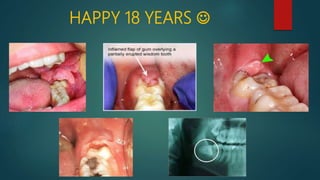
HAPPY 18 YEARS 
INTRODUCTION
ļ‚— The third molar has been the most
widely discussed tooth in the dental
literature, and the debatable question
ā€œā€¦.. to extract or not to extractā€ seems
set to run into the next century. - Faiez
N. Hattab, JOMS, 57: 389-391 (1999)
DEFINITION
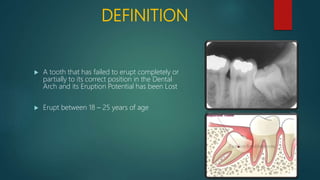
 A tooth that has failed to erupt completely or
partially to its correct position in the Dental
Arch and its Eruption Potential has been Lost
 Erupt between 18 – 25 years of age
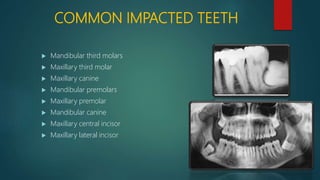
COMMON IMPACTED TEETH
 Mandibular third molars
 Maxillary third molar
 Maxillary canine
 Mandibular premolars
 Maxillary premolar
 Mandibular canine
 Maxillary central incisor
 Maxillary lateral incisor
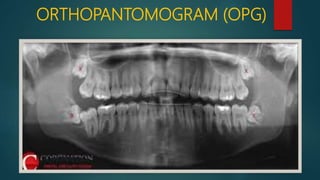
ORTHOPANTOMOGRAM (OPG)
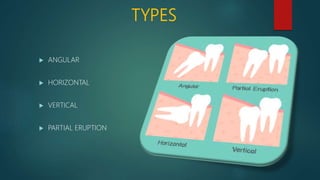
TYPES
 ANGULAR
 HORIZONTAL
 VERTICAL
 PARTIAL ERUPTION
CLASSIFICATION
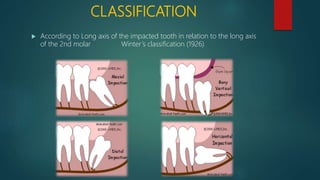
 According to Long axis of the impacted tooth in relation to the long axis
of the 2nd molar Winter’s classification (1926)
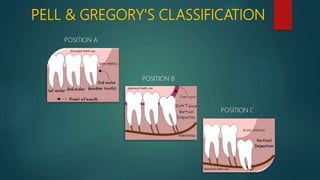
PELL & GREGORY'S CLASSIFICATION
POSITION A
POSITION B
POSITION C
THEORIES OF IMPACTION
ORTHODONTIC THEORY
 Jaws develop in downward and forward direction.
 Growth of the jaw and movement of teeth occurs in
forward direction
 Any thing that interfere with such moment will
cause an impaction (small jaw-decreased space)
 Dense bone decreases the movement of the teeth in
forward direction.
PHYLOGENIC THEORY
 Nature tries to eliminate the disused organs i.e.,
use makes the organ develop better, disuse
causes slow regression of organ.
 More-functional masticatory force – better the
development of the jaw
 Due to changing nutritional habits of our
civilization, use of large powerful jaws have
been practically eliminated. Thus, over
centuries the mandible and maxilla decreased in
size leaving insufficient room for third molars.
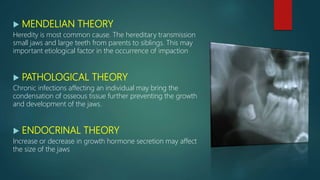
 MENDELIAN THEORY
Heredity is most common cause. The hereditary transmission
small jaws and large teeth from parents to siblings. This may
important etiological factor in the occurrence of impaction
 PATHOLOGICAL THEORY
Chronic infections affecting an individual may bring the
condensation of osseous tissue further preventing the growth
and development of the jaws.
 ENDOCRINAL THEORY
Increase or decrease in growth hormone secretion may affect
the size of the jaws
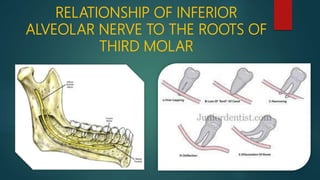
RELATIONSHIP OF INFERIOR
ALVEOLAR NERVE TO THE ROOTS OF
THIRD MOLAR
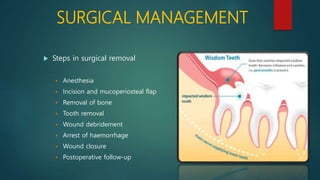
SURGICAL MANAGEMENT
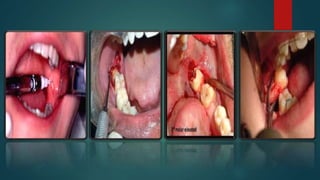
 Steps in surgical removal
ļ‚§ Anesthesia
ļ‚§ Incision and mucoperiosteal flap
ļ‚§ Removal of bone
ļ‚§ Tooth removal
ļ‚§ Wound debridement
ļ‚§ Arrest of haemorrhage
ļ‚§ Wound closure
ļ‚§ Postoperative follow-up
COMPLICATIONS
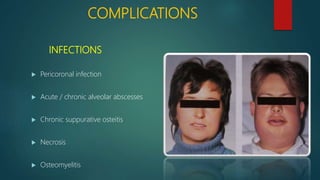
INFECTIONS
 Pericoronal infection
 Acute / chronic alveolar abscesses
 Chronic suppurative osteitis
 Necrosis
 Osteomyelitis
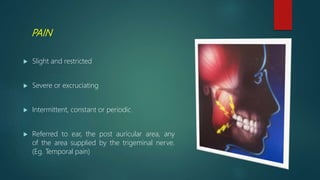
PAIN
 Slight and restricted
 Severe or excruciating
 Intermittent, constant or periodic
 Referred to ear, the post auricular area, any
of the area supplied by the trigeminal nerve.
(Eg. Temporal pain)
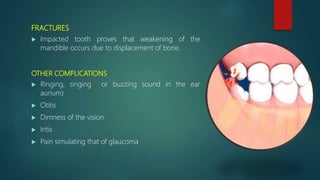
FRACTURES
 Impacted tooth proves that weakening of the
mandible occurs due to displacement of bone.
OTHER COMPLICATIONS
 Ringing, singing or buzzing sound in the ear
aurium)
 Otitis
 Dimness of the vision
 Iritis
 Pain simulating that of glaucoma
Wisdom teeth

Wisdom teeth

  • 1.
    WISDOM TEETH : FACTOR MYTH ?? DR. ALI WAQAR RESIDENT FCPS – II ORTHODONTICS UCMD UOL LAHORE
  • 2.
  • 3.
    INTRODUCTION ļ‚— The thirdmolar has been the most widely discussed tooth in the dental literature, and the debatable question ā€œā€¦.. to extract or not to extractā€ seems set to run into the next century. - Faiez N. Hattab, JOMS, 57: 389-391 (1999)
  • 4.
    DEFINITION  A tooththat has failed to erupt completely or partially to its correct position in the Dental Arch and its Eruption Potential has been Lost  Erupt between 18 – 25 years of age
  • 5.
    COMMON IMPACTED TEETH Mandibular third molars  Maxillary third molar  Maxillary canine  Mandibular premolars  Maxillary premolar  Mandibular canine  Maxillary central incisor  Maxillary lateral incisor
  • 6.
  • 7.
    TYPES  ANGULAR  HORIZONTAL VERTICAL  PARTIAL ERUPTION
  • 9.
    CLASSIFICATION  According toLong axis of the impacted tooth in relation to the long axis of the 2nd molar Winter’s classification (1926)
  • 10.
    PELL & GREGORY'SCLASSIFICATION POSITION A POSITION B POSITION C
  • 11.
    THEORIES OF IMPACTION ORTHODONTICTHEORY  Jaws develop in downward and forward direction.  Growth of the jaw and movement of teeth occurs in forward direction  Any thing that interfere with such moment will cause an impaction (small jaw-decreased space)  Dense bone decreases the movement of the teeth in forward direction.
  • 12.
    PHYLOGENIC THEORY  Naturetries to eliminate the disused organs i.e., use makes the organ develop better, disuse causes slow regression of organ.  More-functional masticatory force – better the development of the jaw  Due to changing nutritional habits of our civilization, use of large powerful jaws have been practically eliminated. Thus, over centuries the mandible and maxilla decreased in size leaving insufficient room for third molars.
  • 13.
     MENDELIAN THEORY Heredityis most common cause. The hereditary transmission small jaws and large teeth from parents to siblings. This may important etiological factor in the occurrence of impaction  PATHOLOGICAL THEORY Chronic infections affecting an individual may bring the condensation of osseous tissue further preventing the growth and development of the jaws.  ENDOCRINAL THEORY Increase or decrease in growth hormone secretion may affect the size of the jaws
  • 14.
    RELATIONSHIP OF INFERIOR ALVEOLARNERVE TO THE ROOTS OF THIRD MOLAR
  • 15.
    SURGICAL MANAGEMENT  Stepsin surgical removal ļ‚§ Anesthesia ļ‚§ Incision and mucoperiosteal flap ļ‚§ Removal of bone ļ‚§ Tooth removal ļ‚§ Wound debridement ļ‚§ Arrest of haemorrhage ļ‚§ Wound closure ļ‚§ Postoperative follow-up
  • 17.
    COMPLICATIONS INFECTIONS  Pericoronal infection Acute / chronic alveolar abscesses  Chronic suppurative osteitis  Necrosis  Osteomyelitis
  • 18.
    PAIN  Slight andrestricted  Severe or excruciating  Intermittent, constant or periodic  Referred to ear, the post auricular area, any of the area supplied by the trigeminal nerve. (Eg. Temporal pain)
  • 19.
    FRACTURES  Impacted toothproves that weakening of the mandible occurs due to displacement of bone. OTHER COMPLICATIONS  Ringing, singing or buzzing sound in the ear aurium)  Otitis  Dimness of the vision  Iritis  Pain simulating that of glaucoma