PERIODONTAL DISEASE

Sarang Suresh
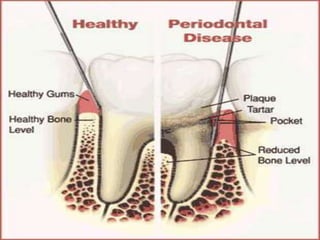
Introduction
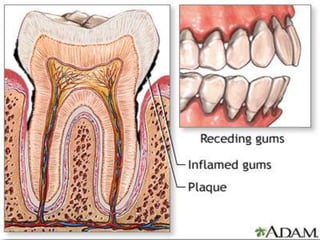
 A chronic bacterial infection that affects the gums

and bone supporting the teeth

 Periodontal diseases range from simple gum

inflammation to serious disease that results in major
damage to the soft tissue and bone that support the
teeth.
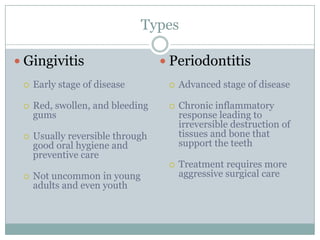
Types
 Gingivitis

 Periodontitis



Early stage of disease



Advanced stage of disease



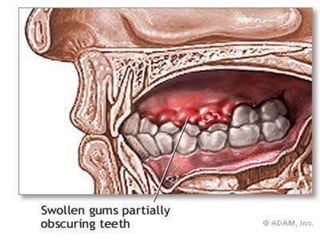
Red, swollen, and bleeding
gums





Usually reversible through
good oral hygiene and
preventive care

Chronic inflammatory
response leading to
irreversible destruction of
tissues and bone that
support the teeth



Treatment requires more
aggressive surgical care



Not uncommon in young
adults and even youth
What Causes Periodontal Disease
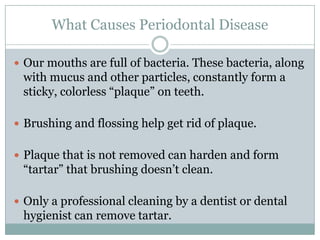
 Our mouths are full of bacteria. These bacteria, along

with mucus and other particles, constantly form a
sticky, colorless “plaque” on teeth.
 Brushing and flossing help get rid of plaque.
 Plaque that is not removed can harden and form

“tartar” that brushing doesn’t clean.
 Only a professional cleaning by a dentist or dental

hygienist can remove tartar.
Risk Factors
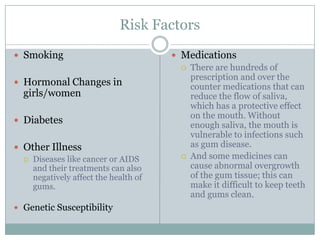
 Smoking

 Hormonal Changes in

girls/women

 Diabetes
 Other Illness
 Diseases like cancer or AIDS
and their treatments can also
negatively affect the health of
gums.
 Genetic Susceptibility

 Medications
 There are hundreds of
prescription and over the
counter medications that can
reduce the flow of saliva,
which has a protective effect
on the mouth. Without
enough saliva, the mouth is
vulnerable to infections such
as gum disease.
 And some medicines can
cause abnormal overgrowth
of the gum tissue; this can
make it difficult to keep teeth
and gums clean.
Symptoms of Periodontal Disease
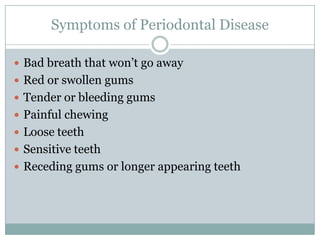
 Bad breath that won’t go away
 Red or swollen gums
 Tender or bleeding gums
 Painful chewing
 Loose teeth
 Sensitive teeth
 Receding gums or longer appearing teeth
Treatment of Periodontal Disease
 Deep Cleaning (Scalling and Root Planning)
 Medications
 Surgical Treatement
Deep Cleaning (Scalling and Root Planning)
 The dentist, periodontist, or dental hygienist removes the

plaque through a deep-cleaning method called scaling
and root planing.
 Scaling means scraping off the tartar from above and
below the gum line.
 Root planing gets rid of rough spots on the tooth root
where the germs gather, and helps remove bacteria that
contribute to the disease.
 In some cases a laser may be used to remove plaque and
tartar. This procedure can result in less bleeding,
swelling, and discomfort compared to traditional deep
cleaning methods.
Medications
 Prescription antimicrobial mouthrinse
 A prescription mouthrinse containing an antimicrobial called
chlorhexidine
 To control bacteria when treating gingivitis and after gum
surgery
 It’s used like a regular mouthwash.
 Antiseptic chip
 A tiny piece of gelatin filled with the medicine chlorhexidine
 To control bacteria and reduce the size of periodontal pockets
 After root planing, it’s placed in the pockets where the
medicine is slowly released over time.
Medications Cont’d
 Antibiotic gel
 A gel that contains the antibiotic doxycycline
 To control bacteria and reduce the size of periodontal pockets
 The periodontist puts it in the pockets after scaling and root
planing. The antibiotic is released slowly over a period of about
seven days.
 Antibiotic microspheres
 Tiny, round particles that contain the antibiotic minocycline
 To control bacteria and reduce the size of periodontal pockets
 The periodontist puts the microspheres into the pockets after
scaling and root planing. The particles release minocycline
slowly over time.
Medications Cont’d
 Enzyme suppressant
 A low dose of the medication doxycycline that keeps
destructive enzymes in check
 To hold back the body’s enzyme response — If not controlled,
certain enzymes can break down gum tissue
 This medication is in tablet form. It is used in combination
with scaling and root planing.
 Oral antibiotics
 Antibiotic tablets or capsules
 For the short term treatment of an acute or locally persistent
periodontal infection
 These come as tablets or capsules and are taken by mouth.
Surgical Treatment
 Flap Surgery
 A dentist or periodontist may perform flap surgery to remove
tartar deposits in deep pockets or to reduce the periodontal
pocket and make it easier for the patient, dentist, and hygienist
to keep the area clean.



This common surgery involves lifting back the gums and
removing the tartar. The gums are then sutured back
in place so that the tissue fits around the tooth again.
Surgical Treatment Cont’d
 Bone and Tissue Graft
 In this, Dentist regenerate any bone or gum tissue lost to
periodontitis.
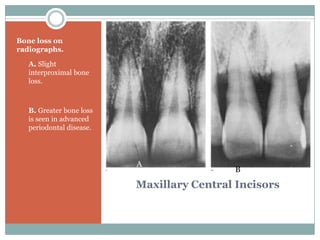
Bone loss on
radiographs.
A. A. Slight

interproximal bone
loss.

B. B. Greater bone loss

is seen in advanced
periodontal disease.

A

B

Maxillary Central Incisors
Prevent Periodontal Disease
 Practice Good Dental Hygiene
 Consistent good dental hygiene can help prevent

gingivitis and periodontitis.


Brush twice daily with a fluoride toothpaste (be sure to replace toothbrushes
every 1 - 3 months).



Clean between the teeth with floss or an interdental cleaner.



Eat a well-balanced diet and limit between meal snacks.



Have regular visits with a dentist for teeth cleaning and oral examinations.



If you smoke, you should quit. Smoking is a major risk factor for gum
disease.
Summary
 Periodontitis is a disease involving pathology of one

or more of the four components of the periodontium

 Periodontal disease is an umbrella term for several

clinically similar types of diseases
THANKS

Periodontal Disease

  • 1.
  • 2.
    Introduction  A chronicbacterial infection that affects the gums and bone supporting the teeth  Periodontal diseases range from simple gum inflammation to serious disease that results in major damage to the soft tissue and bone that support the teeth.
  • 4.
    Types  Gingivitis  Periodontitis  Earlystage of disease  Advanced stage of disease  Red, swollen, and bleeding gums   Usually reversible through good oral hygiene and preventive care Chronic inflammatory response leading to irreversible destruction of tissues and bone that support the teeth  Treatment requires more aggressive surgical care  Not uncommon in young adults and even youth
  • 5.
    What Causes PeriodontalDisease  Our mouths are full of bacteria. These bacteria, along with mucus and other particles, constantly form a sticky, colorless “plaque” on teeth.  Brushing and flossing help get rid of plaque.  Plaque that is not removed can harden and form “tartar” that brushing doesn’t clean.  Only a professional cleaning by a dentist or dental hygienist can remove tartar.
  • 6.
    Risk Factors  Smoking Hormonal Changes in girls/women  Diabetes  Other Illness  Diseases like cancer or AIDS and their treatments can also negatively affect the health of gums.  Genetic Susceptibility  Medications  There are hundreds of prescription and over the counter medications that can reduce the flow of saliva, which has a protective effect on the mouth. Without enough saliva, the mouth is vulnerable to infections such as gum disease.  And some medicines can cause abnormal overgrowth of the gum tissue; this can make it difficult to keep teeth and gums clean.
  • 7.
    Symptoms of PeriodontalDisease  Bad breath that won’t go away  Red or swollen gums  Tender or bleeding gums  Painful chewing  Loose teeth  Sensitive teeth  Receding gums or longer appearing teeth
  • 10.
    Treatment of PeriodontalDisease  Deep Cleaning (Scalling and Root Planning)  Medications  Surgical Treatement
  • 11.
    Deep Cleaning (Scallingand Root Planning)  The dentist, periodontist, or dental hygienist removes the plaque through a deep-cleaning method called scaling and root planing.  Scaling means scraping off the tartar from above and below the gum line.  Root planing gets rid of rough spots on the tooth root where the germs gather, and helps remove bacteria that contribute to the disease.  In some cases a laser may be used to remove plaque and tartar. This procedure can result in less bleeding, swelling, and discomfort compared to traditional deep cleaning methods.
  • 12.
    Medications  Prescription antimicrobialmouthrinse  A prescription mouthrinse containing an antimicrobial called chlorhexidine  To control bacteria when treating gingivitis and after gum surgery  It’s used like a regular mouthwash.  Antiseptic chip  A tiny piece of gelatin filled with the medicine chlorhexidine  To control bacteria and reduce the size of periodontal pockets  After root planing, it’s placed in the pockets where the medicine is slowly released over time.
  • 13.
    Medications Cont’d  Antibioticgel  A gel that contains the antibiotic doxycycline  To control bacteria and reduce the size of periodontal pockets  The periodontist puts it in the pockets after scaling and root planing. The antibiotic is released slowly over a period of about seven days.  Antibiotic microspheres  Tiny, round particles that contain the antibiotic minocycline  To control bacteria and reduce the size of periodontal pockets  The periodontist puts the microspheres into the pockets after scaling and root planing. The particles release minocycline slowly over time.
  • 14.
    Medications Cont’d  Enzymesuppressant  A low dose of the medication doxycycline that keeps destructive enzymes in check  To hold back the body’s enzyme response — If not controlled, certain enzymes can break down gum tissue  This medication is in tablet form. It is used in combination with scaling and root planing.  Oral antibiotics  Antibiotic tablets or capsules  For the short term treatment of an acute or locally persistent periodontal infection  These come as tablets or capsules and are taken by mouth.
  • 15.
    Surgical Treatment  FlapSurgery  A dentist or periodontist may perform flap surgery to remove tartar deposits in deep pockets or to reduce the periodontal pocket and make it easier for the patient, dentist, and hygienist to keep the area clean.  This common surgery involves lifting back the gums and removing the tartar. The gums are then sutured back in place so that the tissue fits around the tooth again.
  • 16.
    Surgical Treatment Cont’d Bone and Tissue Graft  In this, Dentist regenerate any bone or gum tissue lost to periodontitis.
  • 17.
    Bone loss on radiographs. A.A. Slight interproximal bone loss. B. B. Greater bone loss is seen in advanced periodontal disease. A B Maxillary Central Incisors
  • 18.
    Prevent Periodontal Disease Practice Good Dental Hygiene  Consistent good dental hygiene can help prevent gingivitis and periodontitis.  Brush twice daily with a fluoride toothpaste (be sure to replace toothbrushes every 1 - 3 months).  Clean between the teeth with floss or an interdental cleaner.  Eat a well-balanced diet and limit between meal snacks.  Have regular visits with a dentist for teeth cleaning and oral examinations.  If you smoke, you should quit. Smoking is a major risk factor for gum disease.
  • 19.
    Summary  Periodontitis isa disease involving pathology of one or more of the four components of the periodontium  Periodontal disease is an umbrella term for several clinically similar types of diseases
  • 20.