THIRD MOLAR IMPACTIONS
DEPARTMENT OF ORAL & MAXILLOFACIAL SURGERY
Presented by: Dr. Arushi Agarwal
(2nd
year PG (MDS)
CONTENTS
 INTRODUCTION
 TERMINOLOGIES
 HYPOTHESIS
 THEORIES
 ETIOLOGY
 INDICATIONS
 CONTRAINDICATIONS
 ORDER OF FREQUENCY OF IMPACTION
 SURGICAL ANATOMY
 CLASSIFICATION
 PRE-OP ASSESSMENT
 DIFFICULTY INDICES
INTRODUCTION
 Surgical removal of impacted third molar is the most frequently performed minor oral
surgical procedure, since third molars are present in 90% of the population with 33%
having at least one impacted third molar.
 The incidence of impacted teeth ranges from 5.6% to 18.8% among different populations.
The impacted third molar teeth have a prevalence range of 16.67–68.6% and are the most
frequently observed impacted teeth.
 Mandibular third molars are the most frequently extracted teeth, accounting for 18% of
dental extractions.
 Third molars typically develop around the age of 8 to 15years and erupt between the ages
of 17 to 22.
 As a result of this delayed eruption, mandibular third molars are often impacted, with 17%
to 69% presenting with some degree of impaction.
 Systematic and meticulous classification of the position of the impacted molar teeth before
surgical planning and determination of the position of the teeth positively affect the
success.
According to ASOS (1971) and Archer (1975)
An impacted tooth is one, which is completely or partially unerupted and is positioned
against another tooth, bone or soft tissue so that its further eruption is unlikely.
According to Peterson (1972)
An impacted tooth is one that fails to erupt in the dental arch within the expected time.
The tooth becomes impacted as its eruption is prevented by adjacent teeth, dense overlying
bone or excessive soft tissue.
According to WHO (2007)
An impacted tooth is any tooth that is prevented from reaching its normal position in the
mouth by tissue, bone or another tooth.
According to PETERSON
A tooth is considered impacted when it has failed to fully erupt into the oral cavity within its
expected developmental time period and can no longer reasonably be expected to do so.
TERMINOLOGIES
Malposed Tooth
A tooth erupted or unerupted and is in an abnormal position in maxilla or mandible.
Unerupted Tooth
A tooth that is in the process of eruption and is likely to erupt based on its clinical and radiological findings.
Embedded Tooth
This term is interchangeably used with the impacted teeth but the difference is that the erupting forces are
absent in embedded and present in impacted teeth
Primary Failure Of Eruption was described for the first time by Proffit and Vig in the year 1981 to describe a
condition in which malfunction of the eruption mechanism causes non ankylosed teeth to fail to erupt.
HYPOTHESIS
 Tooth germ of mandibular third molar is visible radiographically by age 9yrs
 Cusp mineralization is completed approx. by 11yrs age
 Tooth is located within anterior border of ramus with its occlusal surface facing almost
anteriorly
 Crown formation is complete by 14yrs age roots is 50% formed by 16yrs age
 Body of mandible grown in length at expanse of resorption of anterior border of ramus
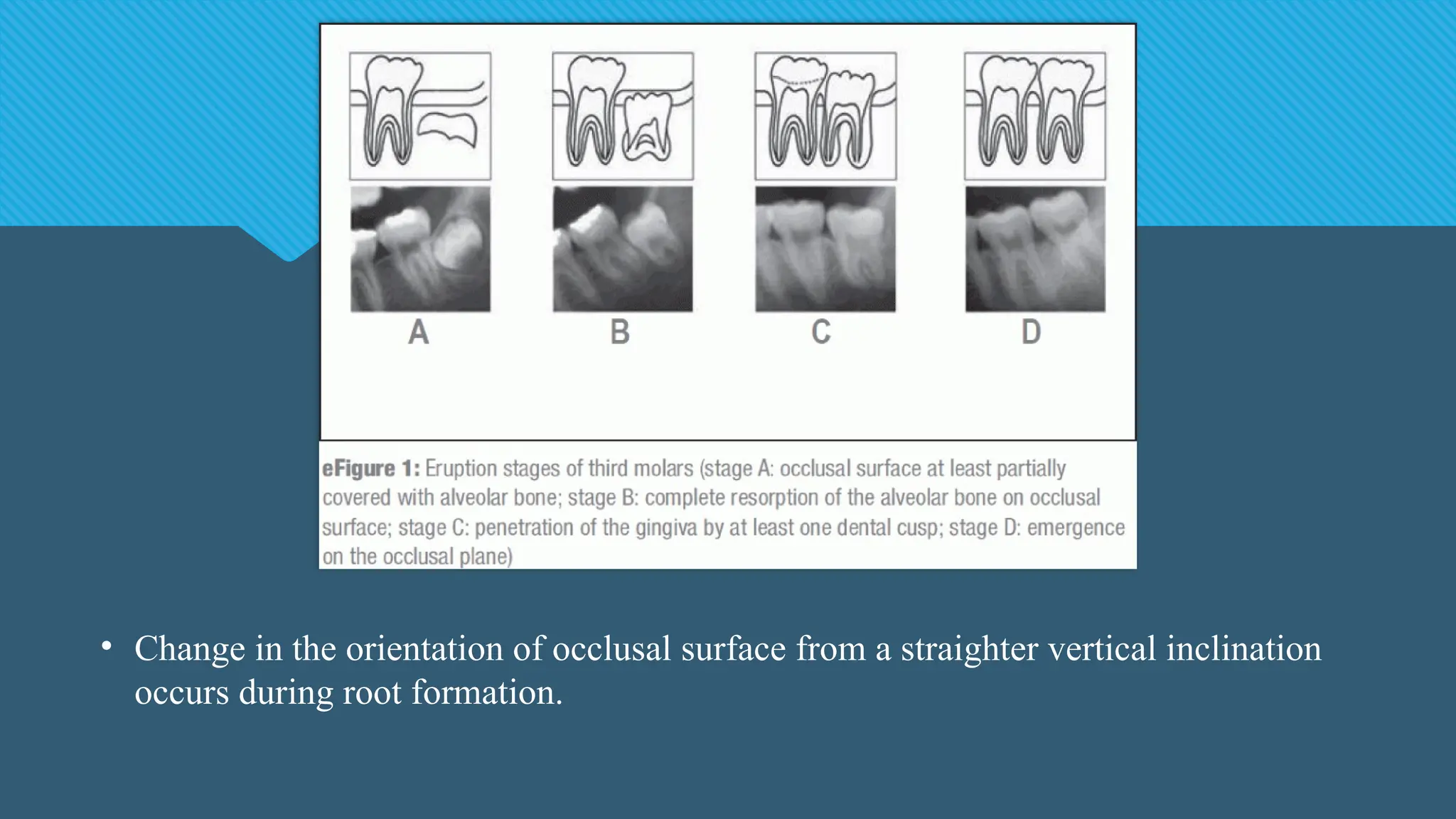
 As the process occurs position of third molar relative to adjacent tooth changes assuming a
position at the root level of second molar, the angulation of crown becomes horizontal
• Change in the orientation of occlusal surface from a straighter vertical inclination
occurs during root formation.
 Most third molars d not complete the eruption sequence and become impacted
 Approx. half remain as mesioangular impactions.
 The Belfast study group found that underdevelopment of mesial root results in
mesioangular impaction.
 Overdevelopment of the same results in overrotation of third molar into distoangular
impaction.
 Overdevelopment of distal root with a mesial curve is responsible for severe mesioangular
or horizontal impaction.
 Secondly, failure of third molar to rotate into a vertical position and erupt involves relation
of bony arch to the sum of mesiodistal widths of teeth in the arch.
 Thirdly, impaction could be a result of retarded maturation.
THEORIES
 By Durbeck 1945
1. Orthodontic theory : Jaws develop in downward and forward direction. Growth of the
jaw and movement of teeth occurs in forward direction, so any thing that interfere with
such moment will cause an impaction (small jaw-decreased space). A dense bone
decreases the movement of the teeth in forward direction.
2. Phylogenic theory: Nature tries to eliminate the disused organs i.e., use makes the organ
develop better, disuse causes slow regression of organ. [More-functional masticatory force
– better the development of the jaw] Due to changing nutritional habits of our civilization,
use of large powerful jaws have been practically eliminated . Thus, over centuries the
mandible and maxilla decreased in size leaving insufficient room for third molars.
3. Mendelian theory: Heredity is most common cause. The hereditary transmission of small
jaws and large teeth from parents to siblings. This may be important etiological factor in
the occurrence of impaction.
 Pathological theory: Chronic infections affecting an individual may bring the
condensation of osseous tissue further preventing the growth and development of the
jaws.
 Endocrinal theory: Increase or decrease in growth hormone secretion may affect the size
of the jaws
ETIOLOGY
In 1930 Berger listed causes:
LOCAL CAUSES OF IMPACTION:
 Irregularity in position and pressure of adjacent tooth.
 Density of overlying or surrounding bone.
 Continued inflammation, resulting in increased density of mucous membrane.
 Unduly long retention of primary teeth.
 Premature loss of primary teeth.
 Dilacerated roots may be because of trauma.
 Ectopic position of tooth buds.
SYSTEMIC CAUSES
 Prenatal
Hereditary, Miscegenation
 Post natal
Rickets, anaemia, Congenital syphilis, Tuberculosis, malnutrition
 Endocranial disorders of Thyroid, Parathyroid, Pituitary glands like hypothyroidism
causing lack of osteoclastic activity not providing resorption of bone overlying the
developing tooth.
 Rare conditions
Cleiodocranial dysostosis, Hurler syndrome, Gardner’s Syndrome, Osteopetrosis, Piere Robin
syndrome, Oxycephaly, Progeria, Cleft palate, Down’s Syndrome.
INDICATIONS
INDICATIONS FOR REMOVAL
Given by National institute of health (USA)
BAOMS 1994
1. Recurrent Pericoronitis (58.5%)
 Recurrent pericoronitis is the commonest indication seen in 16 – 30 yrs of age.
 Peak incidence 20-25 yrs.
 Pericoronitis commonly affects impacted third molars.
 Infection develops in the remnants of the follicle b/w crown of impacted tooth & surrounding bone and gingiva.
 Infection may remain localized or can spread to various spaces.
 Causative organisms are : Streptococcus, staphylococcus, peptostreptococcus, fusobacterium and bacteroids.
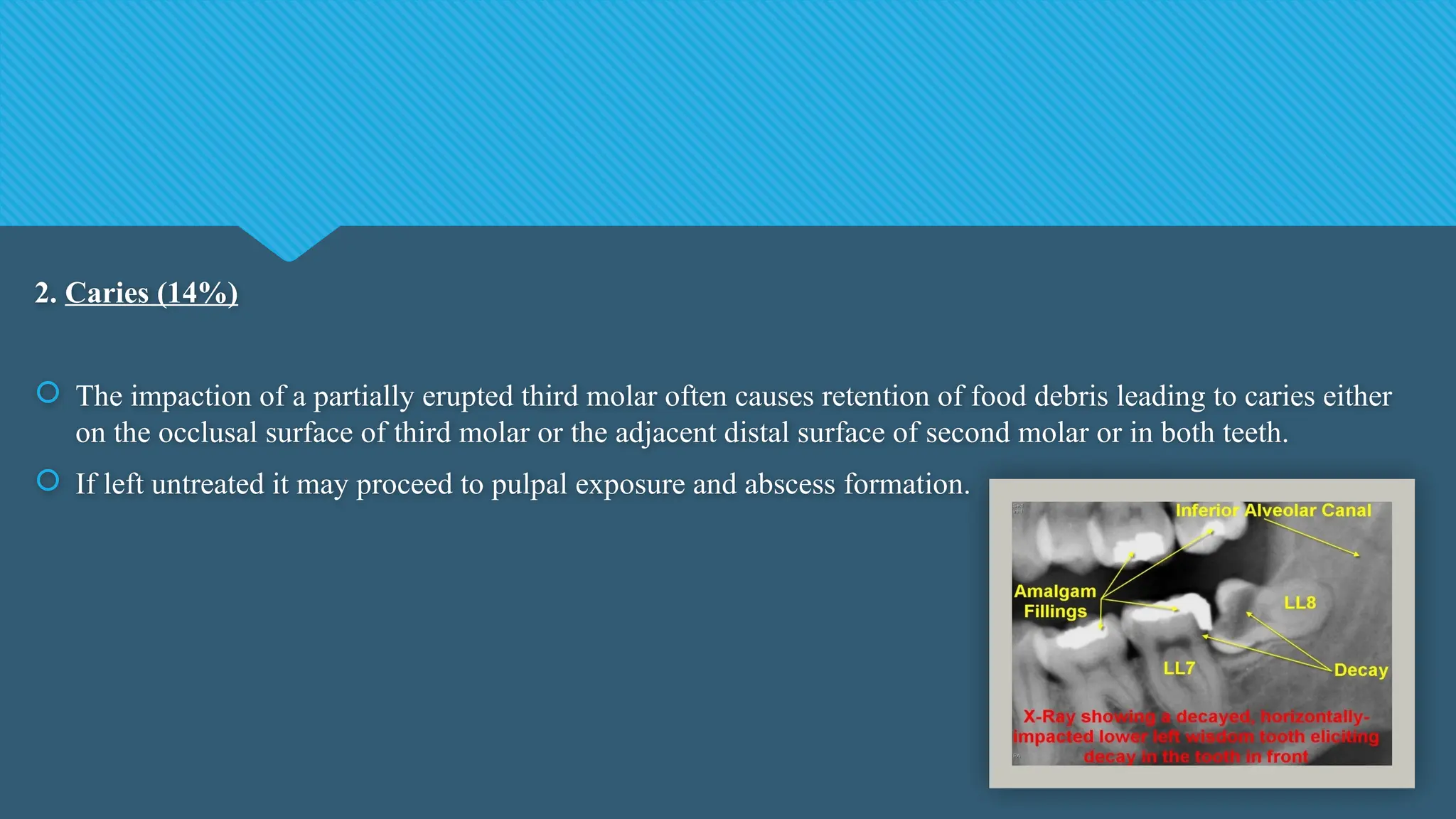
2. Caries (14%)
 The impaction of a partially erupted third molar often causes retention of food debris leading to caries either
on the occlusal surface of third molar or the adjacent distal surface of second molar or in both teeth.
 If left untreated it may proceed to pulpal exposure and abscess formation.
3. Periodontal Disease (3.02%)
Impacted tooth is associated with high incidence of pocketing distal to 2nd
molar which can lead to
inflammation and considerable bone loss leading to loosening of 2nd
molar .
4. Obscure facial pain (2.5%)
 Completely embedded or partially erupted mandibular third molars can be a cause for an obscure facial pain.
 In the absence of detectable pathology it is wise to adopt a conservative approach, although in practice the
surgeon can often only guarantee that such a tooth is not the cause of pain by eliminating it.
 Pain may be because of pressure on IAN, pericoronitis, caries.
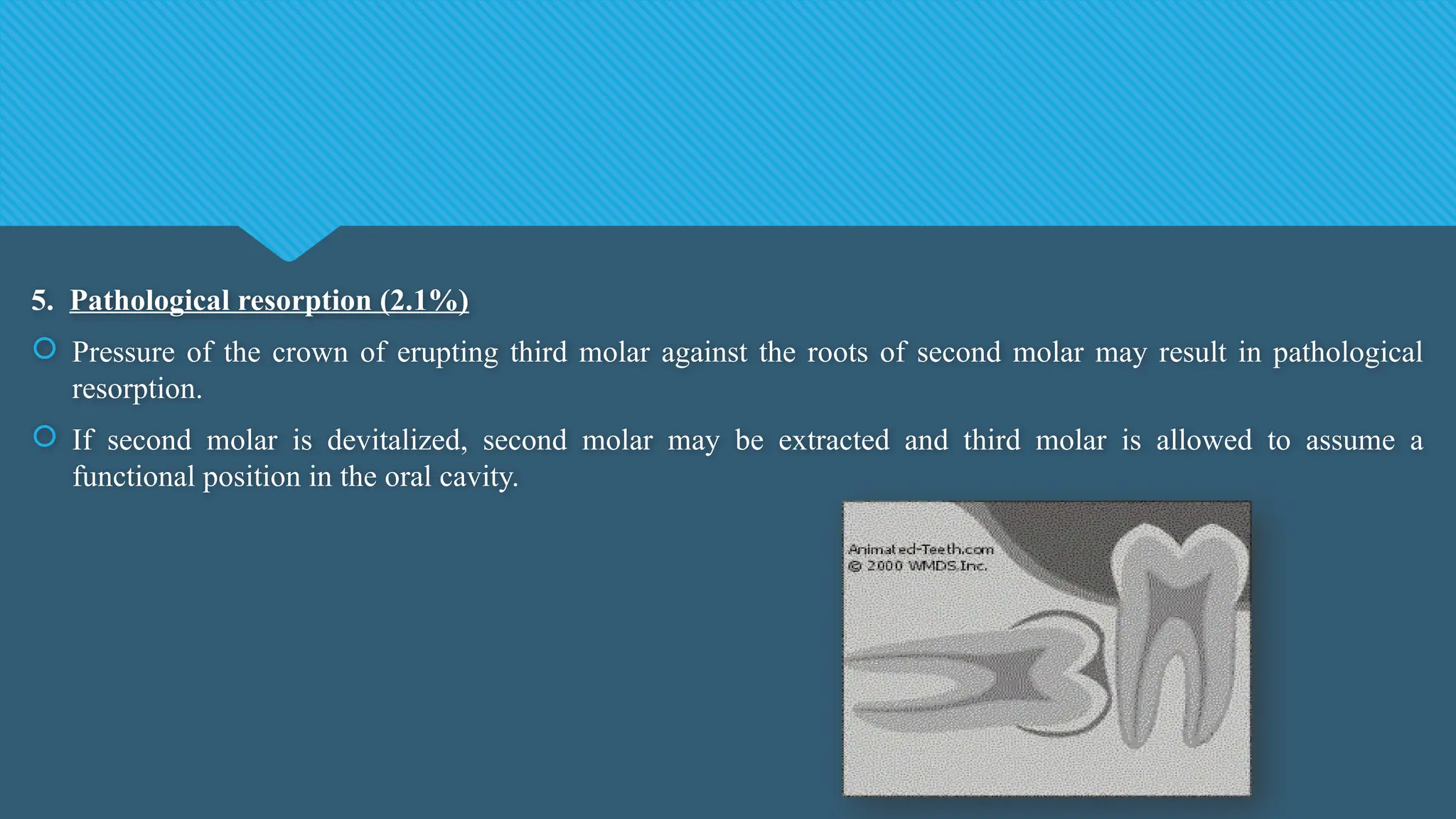
5. Pathological resorption (2.1%)
 Pressure of the crown of erupting third molar against the roots of second molar may result in pathological
resorption.
 If second molar is devitalized, second molar may be extracted and third molar is allowed to assume a
functional position in the oral cavity.
6. Prosthetic considerations (1.6%)
 An undiagnosed impacted tooth may be present in the mandible, which is diagnosed before giving full
denture to the patient.
 Sometimes it is sound judgement to leave a deeply embedded tooth in situ unless symptoms supervene.
 As resorption of the mandible progresses some retained teeth become more superficial and may either
interfere with the fit of a full lower denture or cause pain due to caries or a gingival inflammation.
 These teeth should be removed as soon as gingival inflammation has been effectively treated.
7. Orthodontic reasons (1.1%)
 Orthodontists are divided in their opinions concerning the value of prophylactic removal of mandibular third
molar germs in children in whom there is marked disproportion between tooth size and jaw size.
 The enucleation of tooth germs is quick, simple and atraumatic, if performed before the calcified cusps have
united.
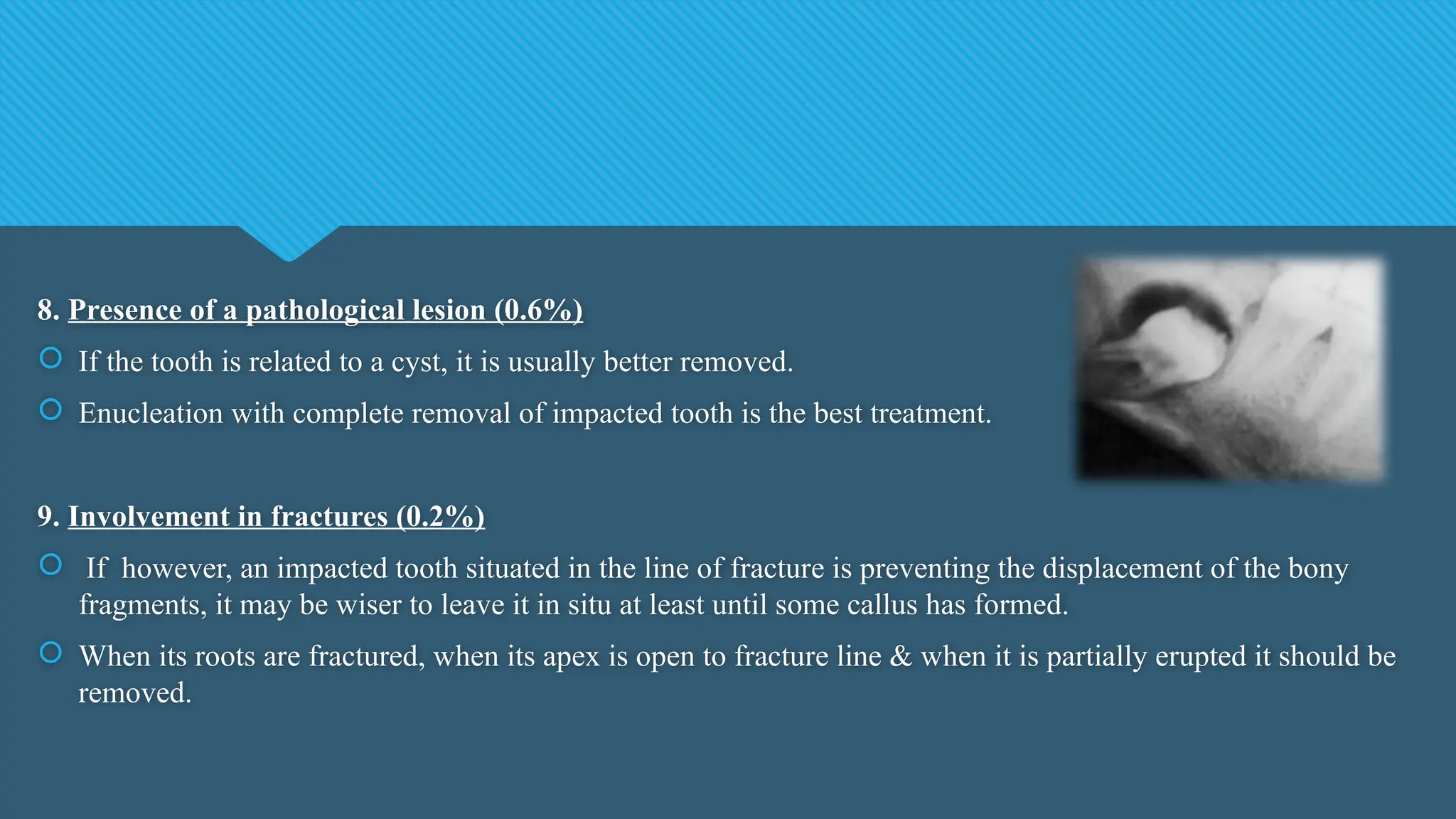
8. Presence of a pathological lesion (0.6%)
 If the tooth is related to a cyst, it is usually better removed.
 Enucleation with complete removal of impacted tooth is the best treatment.
9. Involvement in fractures (0.2%)
 If however, an impacted tooth situated in the line of fracture is preventing the displacement of the bony
fragments, it may be wiser to leave it in situ at least until some callus has formed.
 When its roots are fractured, when its apex is open to fracture line & when it is partially erupted it should be
removed.
Scientific prophylaxis
 If the tooth is related to a malignant lesion which is to receive therapeutic irradiation, its removal is usually
indicated, whilst if the tooth is situated in a bone which has been irradiated it is usually best left alone, unless
symptoms supervene because of the risk of osteoradionecrosis complicating the extraction.
In case after radiotherapy (65-70 Gy) the removal is necessary then the procedure is planned after 4-8 weeks
of therapy with complete preoperative antibiotic coverage (2gm penicillin + 500 mg metronidazole ) 1 hour
before surgery and 500 mg of both the drugs four times a day for 1 week. The procedure should be as
atraumatic as possible using, low or nor epinephrine local anesthetic.
20 dives of HBO pretreatment followed by surgery and then 10 post operative dives with complete antibiotic
coverage gives good results.
 Prior to orthognathic surgeries especially mandibular advancement, the area where impacted tooth
is placed is the weak area and that is the area where cuts of BSSO are placed and plating is done,
its wise to remove such a tooth at proper time so that good amount of bone is formed before
carrying out the procedure.
Controversies regarding prophylactic removal of
Mandibular third molar
 Extensive evidence in literature supports that prophylactically removing impacted mandibular third molar
reduces the risk of mandibular angle fracture which was hypothesized because of decreased cross sectional
area of bone at the angle because of retained third molar.
 A study by Zhu et al in 2005 showed that patients with unerupted mandibular third molar present has a low
incidence of condylar fracture than the patients with no unerupted third molar, as the forces which were to
act on angle region were transmitted to condyle in the absence of third molar. Because of more cross section
of bone in angle region as a result of absence of third molars angle becomes more resistant to fracture.
CONTRAINDICATIONS
Absolute :
 Patient who has received radiations and time of being irradiated is less than 4-8 weeks then
patient should not be taken up for surgery because of the risk of osteoradionecrosis.
 Tooth in a malignant growth
 Tooth associated with vascular lesions: There is a high risk of catastrophic bleeding while
extracting the tooth associated with vascular lesions like hemangiomas, aneurysms,
arteriovenous malformations, etc
 Tooth with an acute infection: If a tooth associated with acute infective pathology is extracted,
there is a risk of extension of infection into deeper tissue planes due to loss of natural barriers
during surgery. Also, there are chances of ingress of microorganisms into blood stream resulting
in bacteremia. This may cause pyrexia and bacterial endocarditis in susceptible patients.
Relative :
 The most frequent is poor systemic condition of the patient like uncontrolled diabetes and
hypertension.
 If it is placed in close proximity to the vital structure like IAN.
 An asymptomatic impacted third molar with poor surgical access should not be removed.
 Age: deeply embedded, asymptomatic impacted mandibular third molars should be left
untouched in older patients.
 If second molar has to be extracted (due to caries, bone loss or any other reason), third
molar move into a functional position or can be used as bridge abutment.
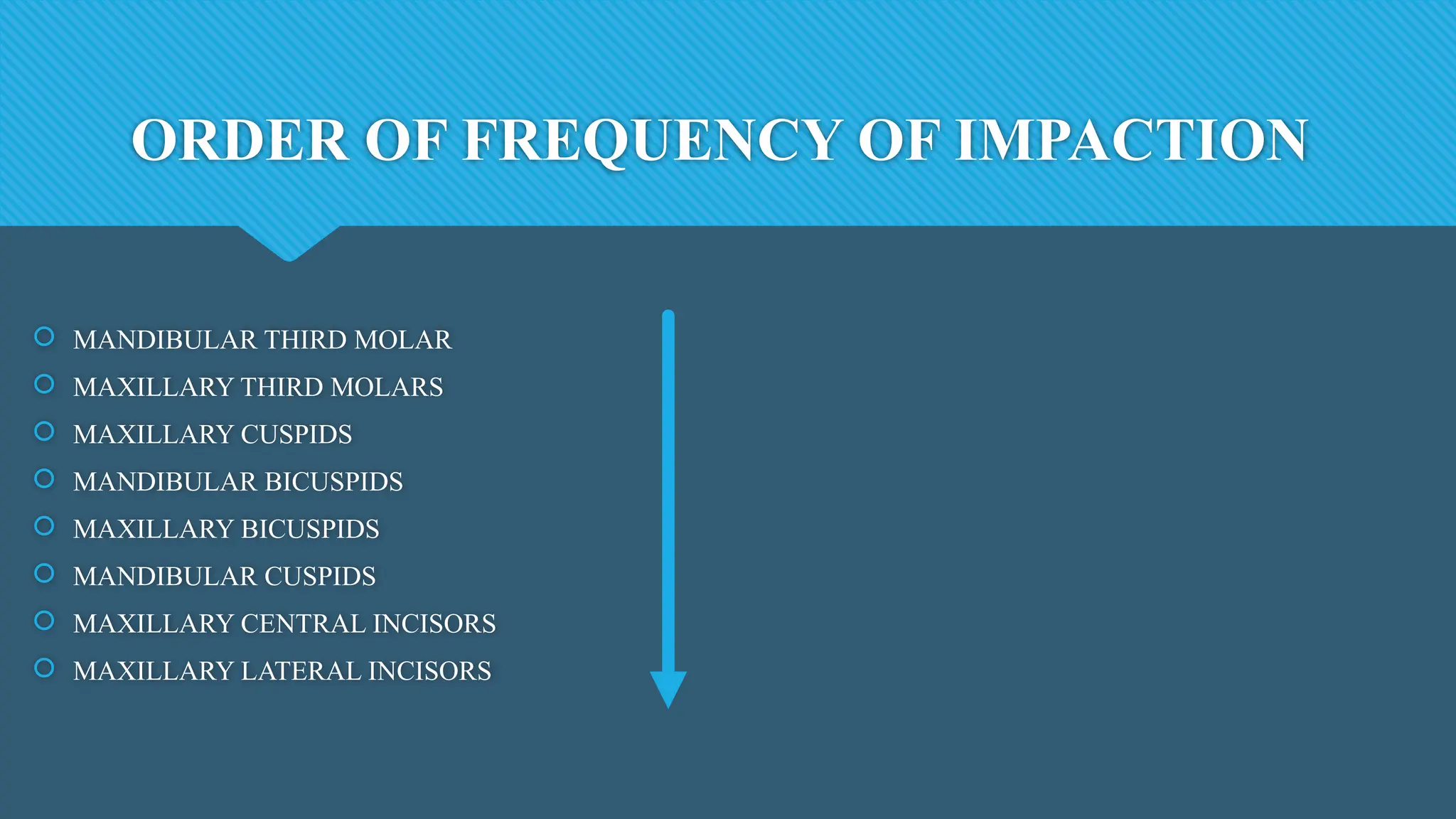
ORDER OF FREQUENCY OF IMPACTION
 MANDIBULAR THIRD MOLAR
 MAXILLARY THIRD MOLARS
 MAXILLARY CUSPIDS
 MANDIBULAR BICUSPIDS
 MAXILLARY BICUSPIDS
 MANDIBULAR CUSPIDS
 MAXILLARY CENTRAL INCISORS
 MAXILLARY LATERAL INCISORS
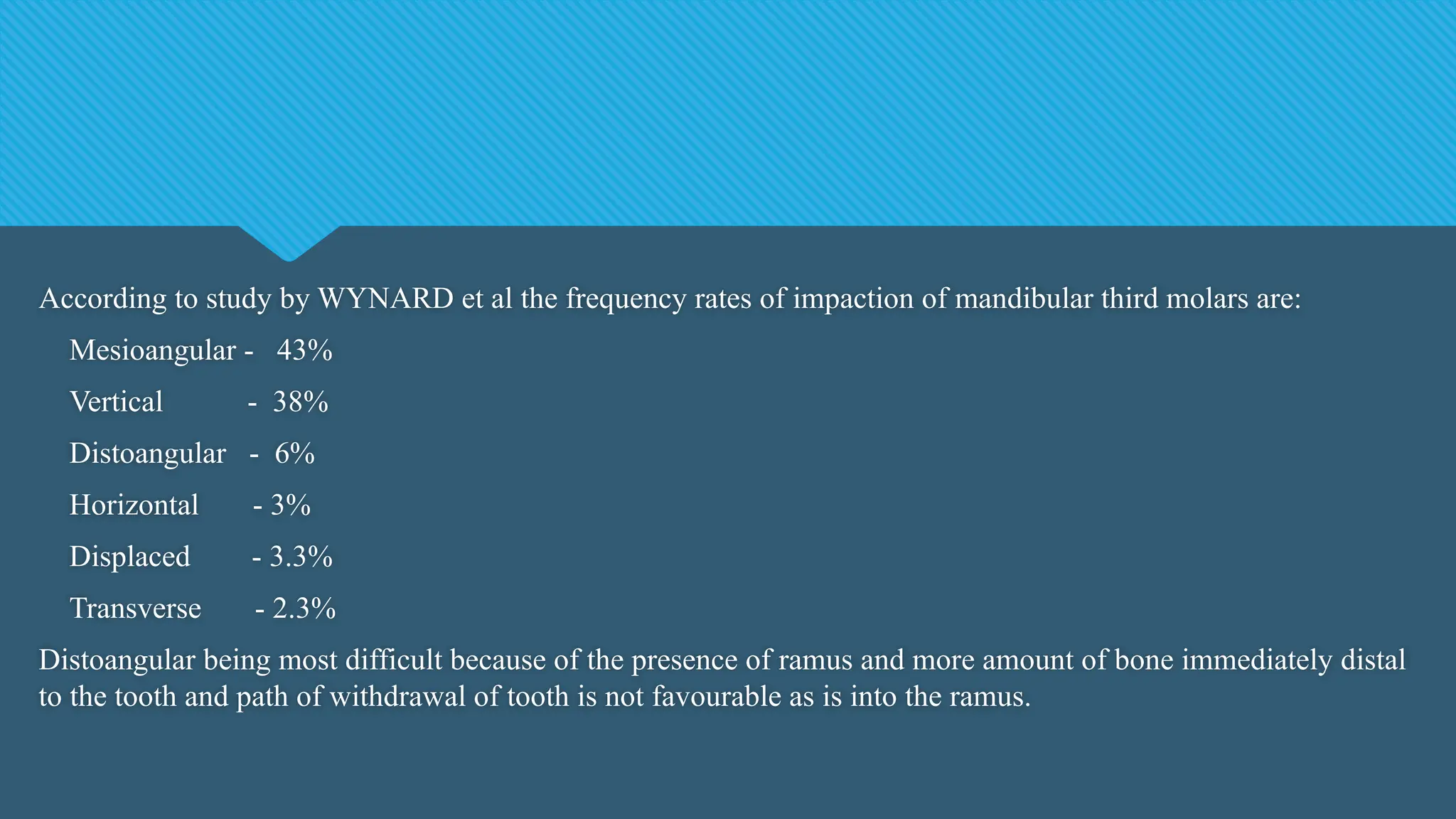
According to study by WYNARD et al the frequency rates of impaction of mandibular third molars are:
Mesioangular - 43%
Vertical - 38%
Distoangular - 6%
Horizontal - 3%
Displaced - 3.3%
Transverse - 2.3%
Distoangular being most difficult because of the presence of ramus and more amount of bone immediately distal
to the tooth and path of withdrawal of tooth is not favourable as is into the ramus.
SURGICALANATOMY
 The mandible comprises of a body which is horseshoe shaped and has the ramus on either side, which are
flat and broad rami. Each ramus has two processes at the superior end—the coronoid process, which is
more anterior, and condylar process, which is continuous with the posterior border.
 The mandibular third molar tooth is usually present at the distal end of the mandibular body, which adjoins a
thin ramus. The body-ramus junction is a weak area that can fracture if excessive force is employed during the
elevation of the third molar.
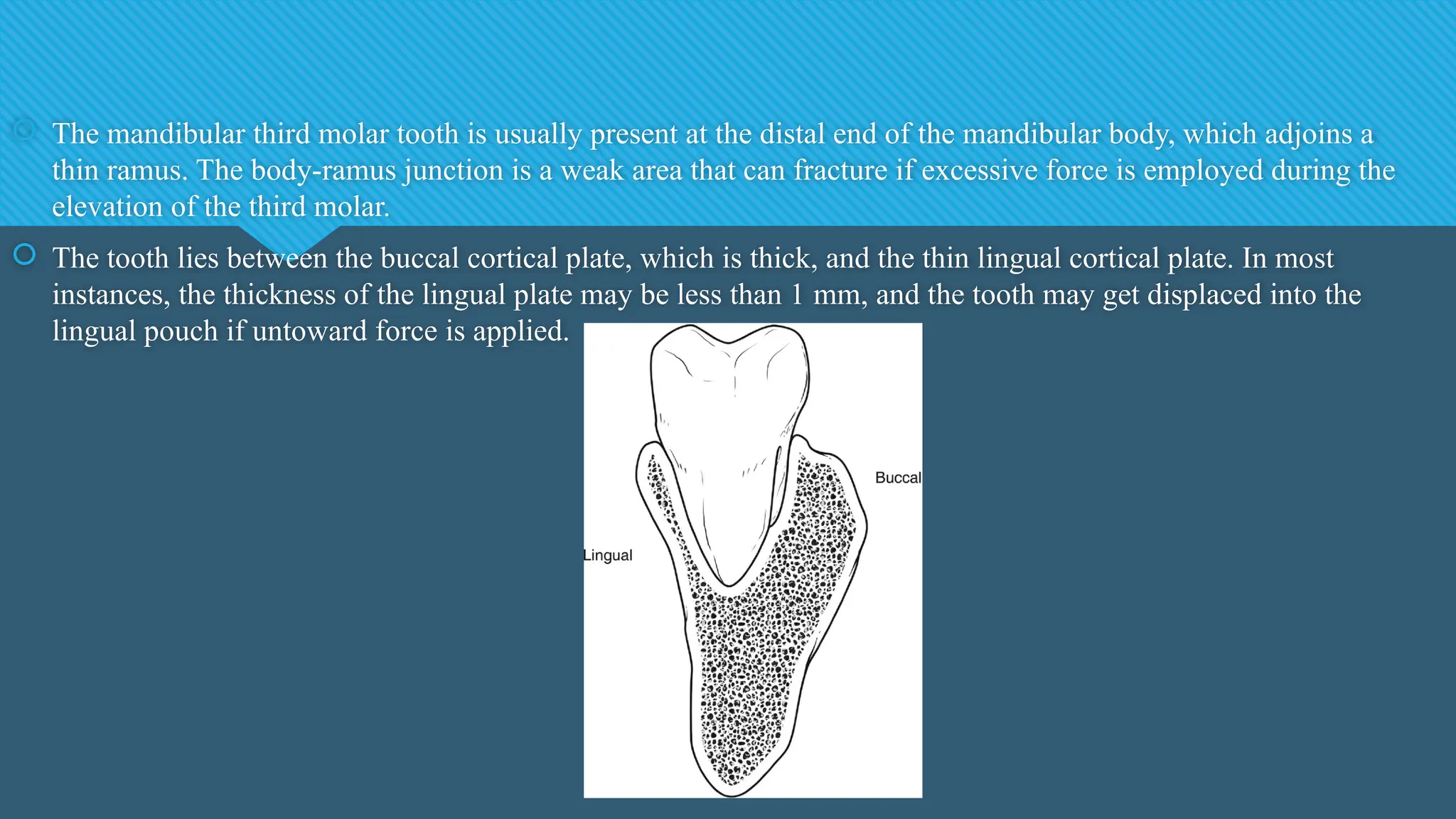
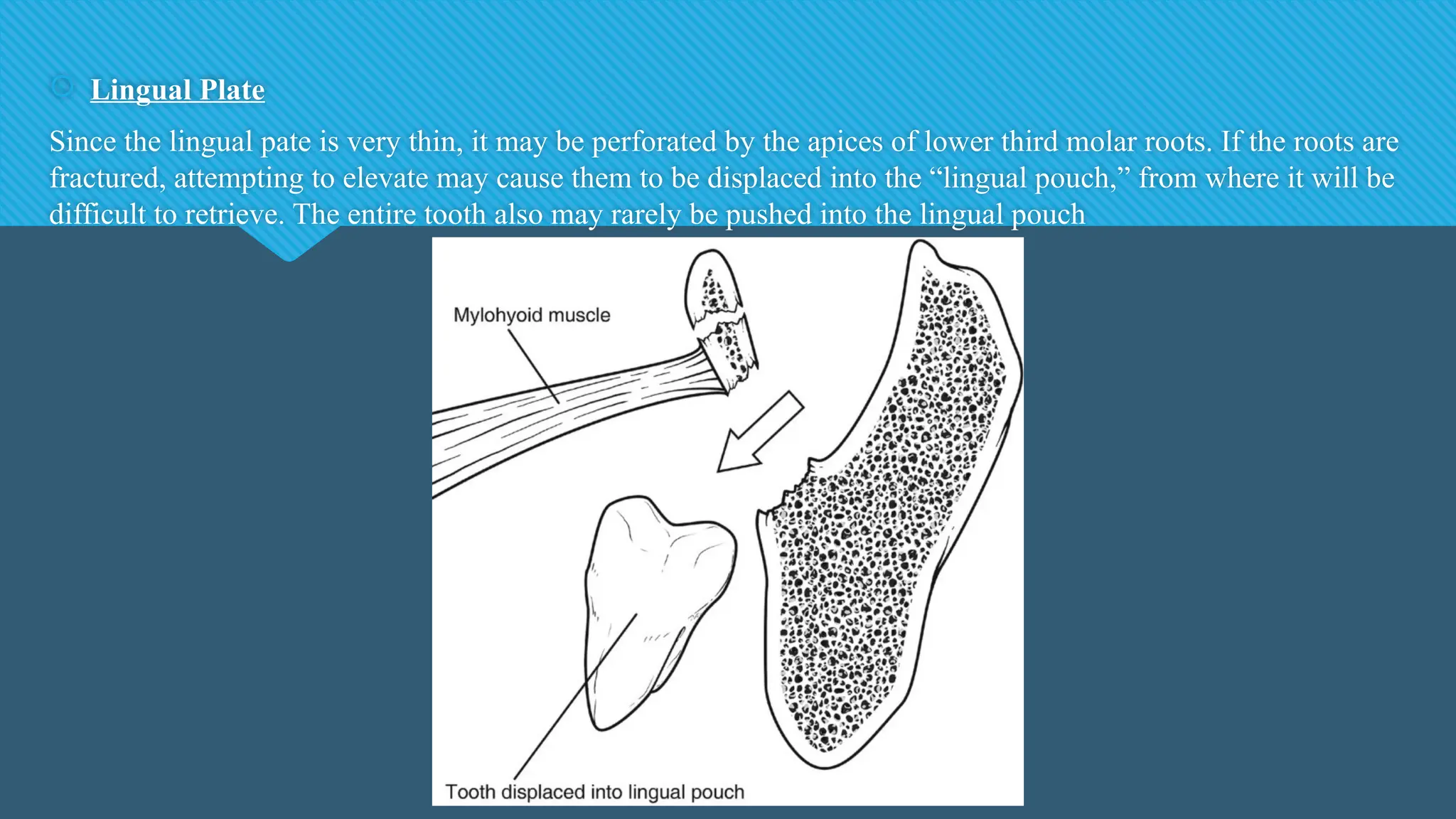
 The tooth lies between the buccal cortical plate, which is thick, and the thin lingual cortical plate. In most
instances, the thickness of the lingual plate may be less than 1 mm, and the tooth may get displaced into the
lingual pouch if untoward force is applied.
 NEUROVASCULAR BUNDLE
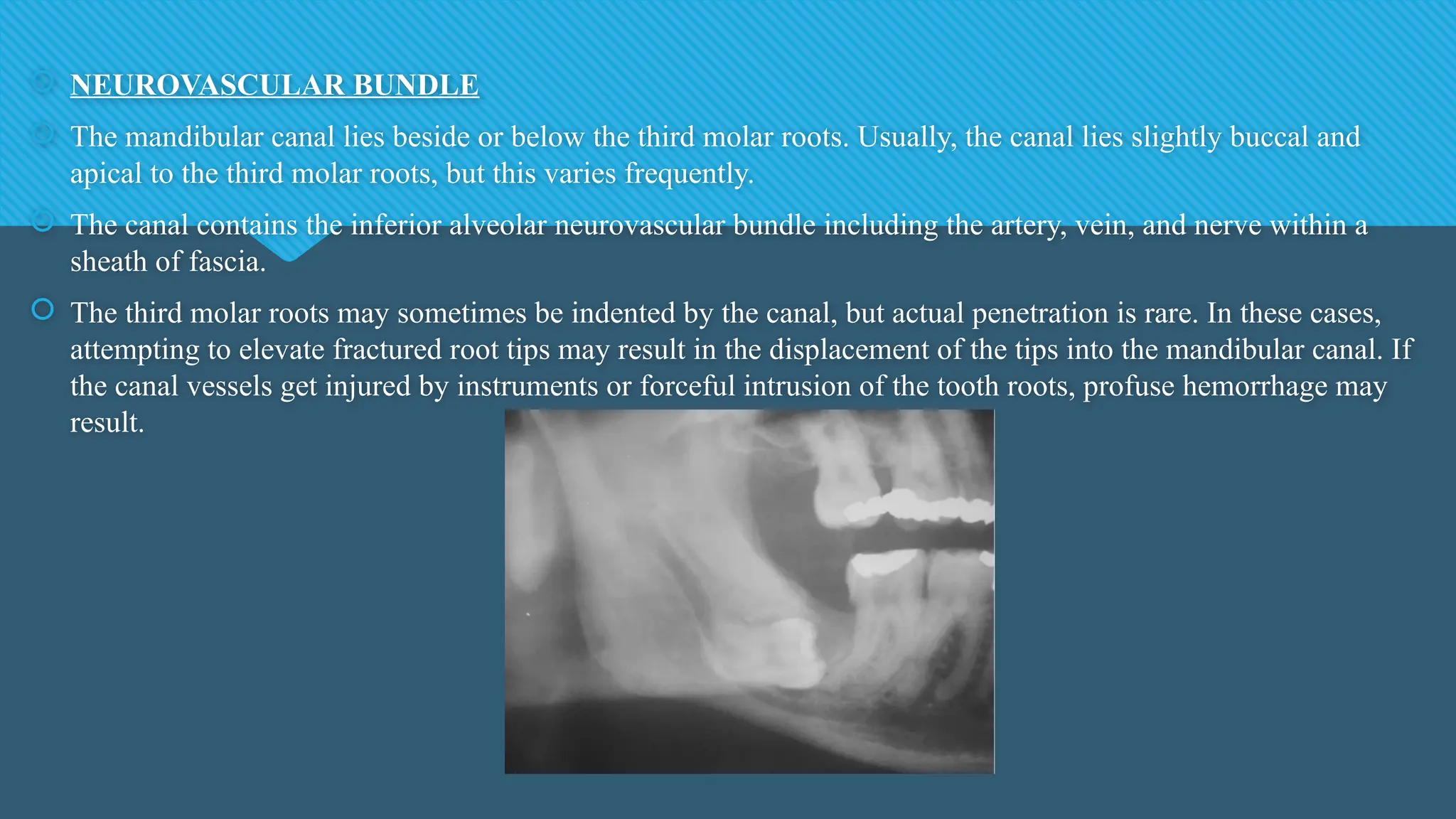
 The mandibular canal lies beside or below the third molar roots. Usually, the canal lies slightly buccal and
apical to the third molar roots, but this varies frequently.
 The canal contains the inferior alveolar neurovascular bundle including the artery, vein, and nerve within a
sheath of fascia.
 The third molar roots may sometimes be indented by the canal, but actual penetration is rare. In these cases,
attempting to elevate fractured root tips may result in the displacement of the tips into the mandibular canal. If
the canal vessels get injured by instruments or forceful intrusion of the tooth roots, profuse hemorrhage may
result.
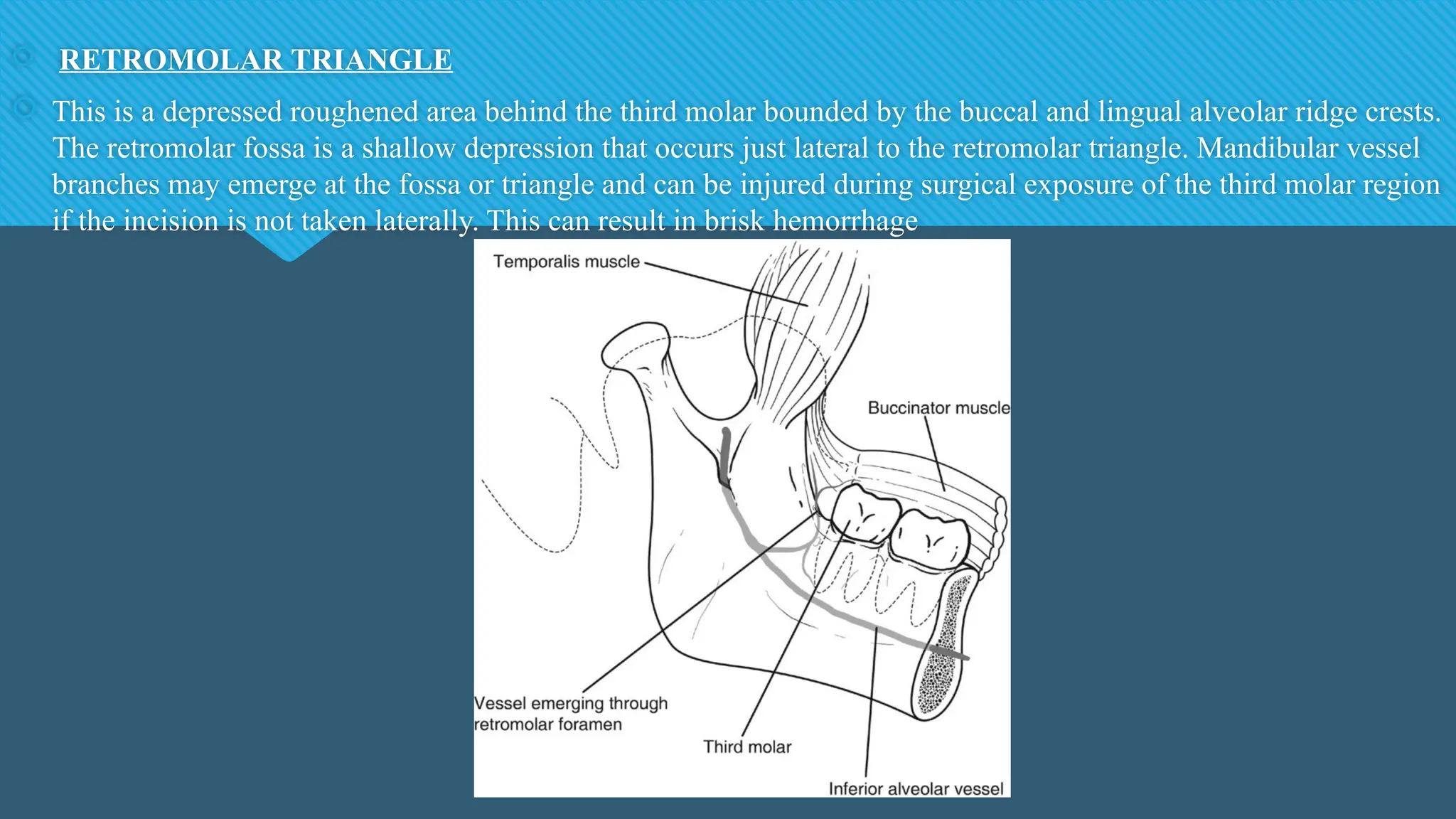
 RETROMOLAR TRIANGLE
 This is a depressed roughened area behind the third molar bounded by the buccal and lingual alveolar ridge crests.
The retromolar fossa is a shallow depression that occurs just lateral to the retromolar triangle. Mandibular vessel
branches may emerge at the fossa or triangle and can be injured during surgical exposure of the third molar region
if the incision is not taken laterally. This can result in brisk hemorrhage
 Facial Artery and Vein
The facial artery and anterior facial vein are related to the mandibular body, anterior to the masseter muscle,
where they cross the inferior border of the mandible. They lie below the second and third molar teeth and may
be injured when a buccal incision is placed at an inferior level. To avoid this, it is best to start the incision at the
sulcus depth and move upward toward the tooth.
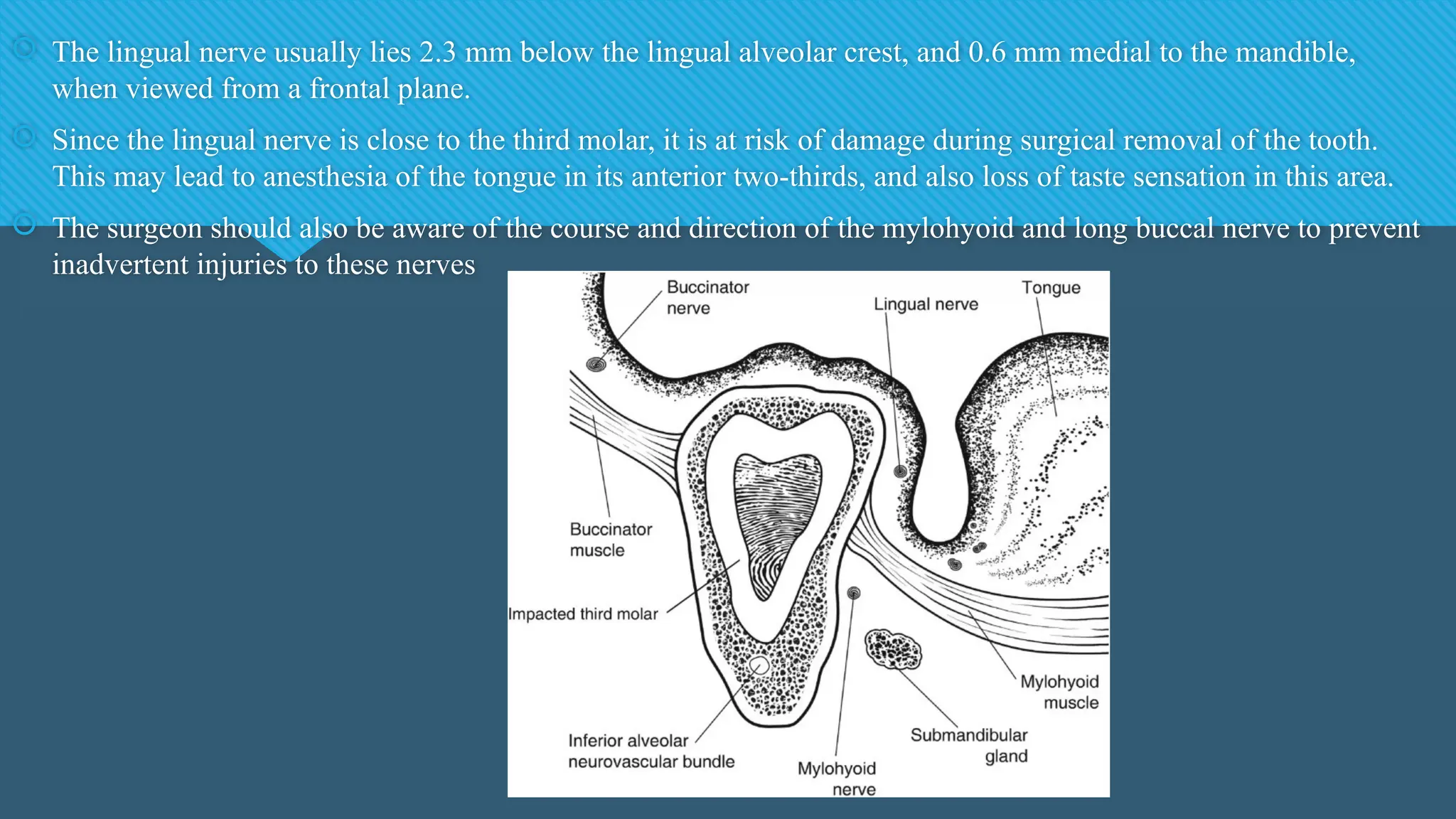
 Lingual Nerve
The lingual nerve often runs below and behind the third molar, and contacts the periosteum over the lingual
cortex at a sublingual level. Cardinal anatomic studies have shown the close relation of the lingual nerve to the
lower third molar region
 The lingual nerve usually lies 2.3 mm below the lingual alveolar crest, and 0.6 mm medial to the mandible,
when viewed from a frontal plane.
 Since the lingual nerve is close to the third molar, it is at risk of damage during surgical removal of the tooth.
This may lead to anesthesia of the tongue in its anterior two-thirds, and also loss of taste sensation in this area.
 The surgeon should also be aware of the course and direction of the mylohyoid and long buccal nerve to prevent
inadvertent injuries to these nerves
 Lingual Plate
Since the lingual pate is very thin, it may be perforated by the apices of lower third molar roots. If the roots are
fractured, attempting to elevate may cause them to be displaced into the “lingual pouch,” from where it will be
difficult to retrieve. The entire tooth also may rarely be pushed into the lingual pouch
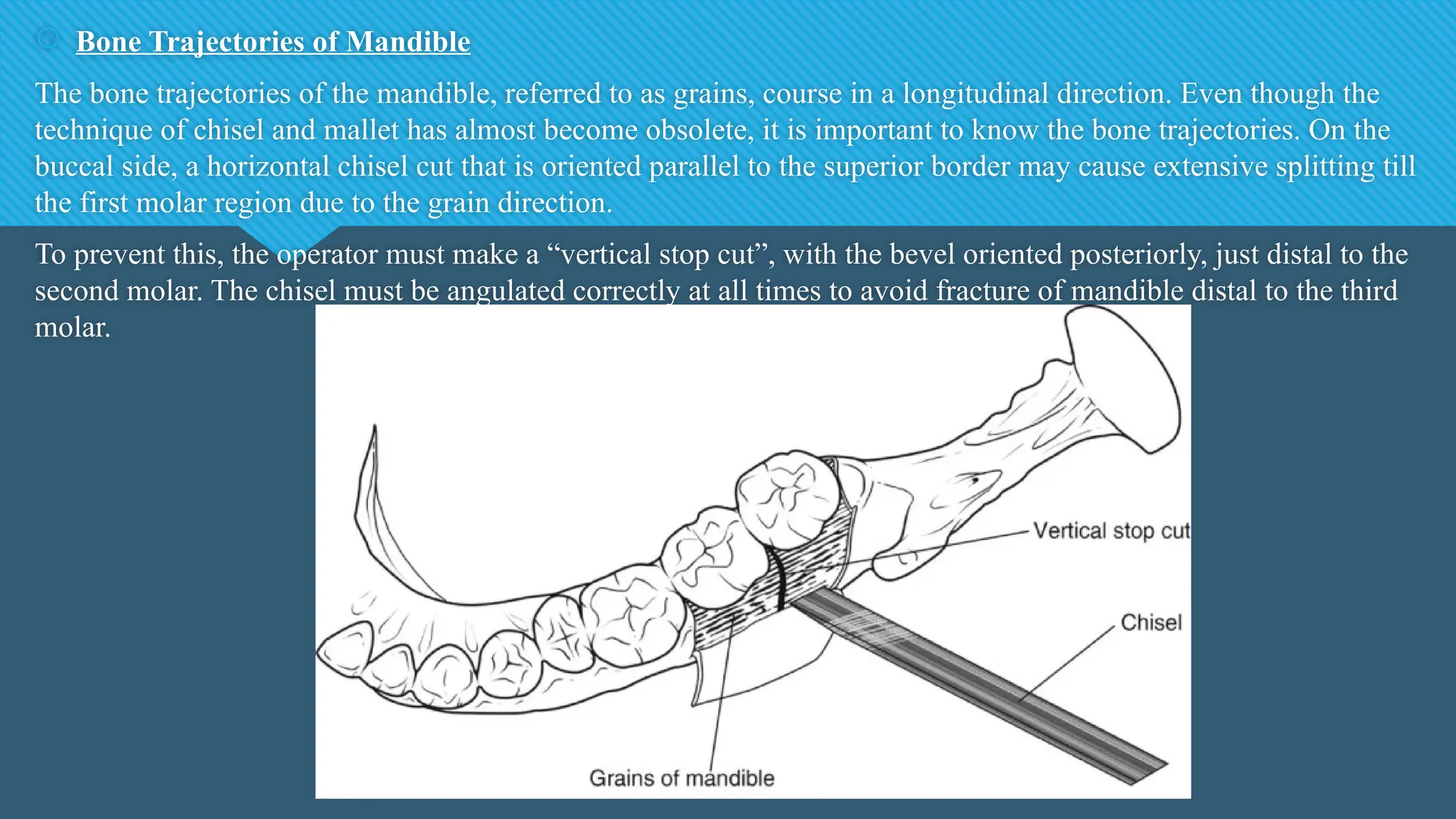
 Bone Trajectories of Mandible
The bone trajectories of the mandible, referred to as grains, course in a longitudinal direction. Even though the
technique of chisel and mallet has almost become obsolete, it is important to know the bone trajectories. On the
buccal side, a horizontal chisel cut that is oriented parallel to the superior border may cause extensive splitting till
the first molar region due to the grain direction.
To prevent this, the operator must make a “vertical stop cut”, with the bevel oriented posteriorly, just distal to the
second molar. The chisel must be angulated correctly at all times to avoid fracture of mandible distal to the third
molar.
CLASSIFICATION
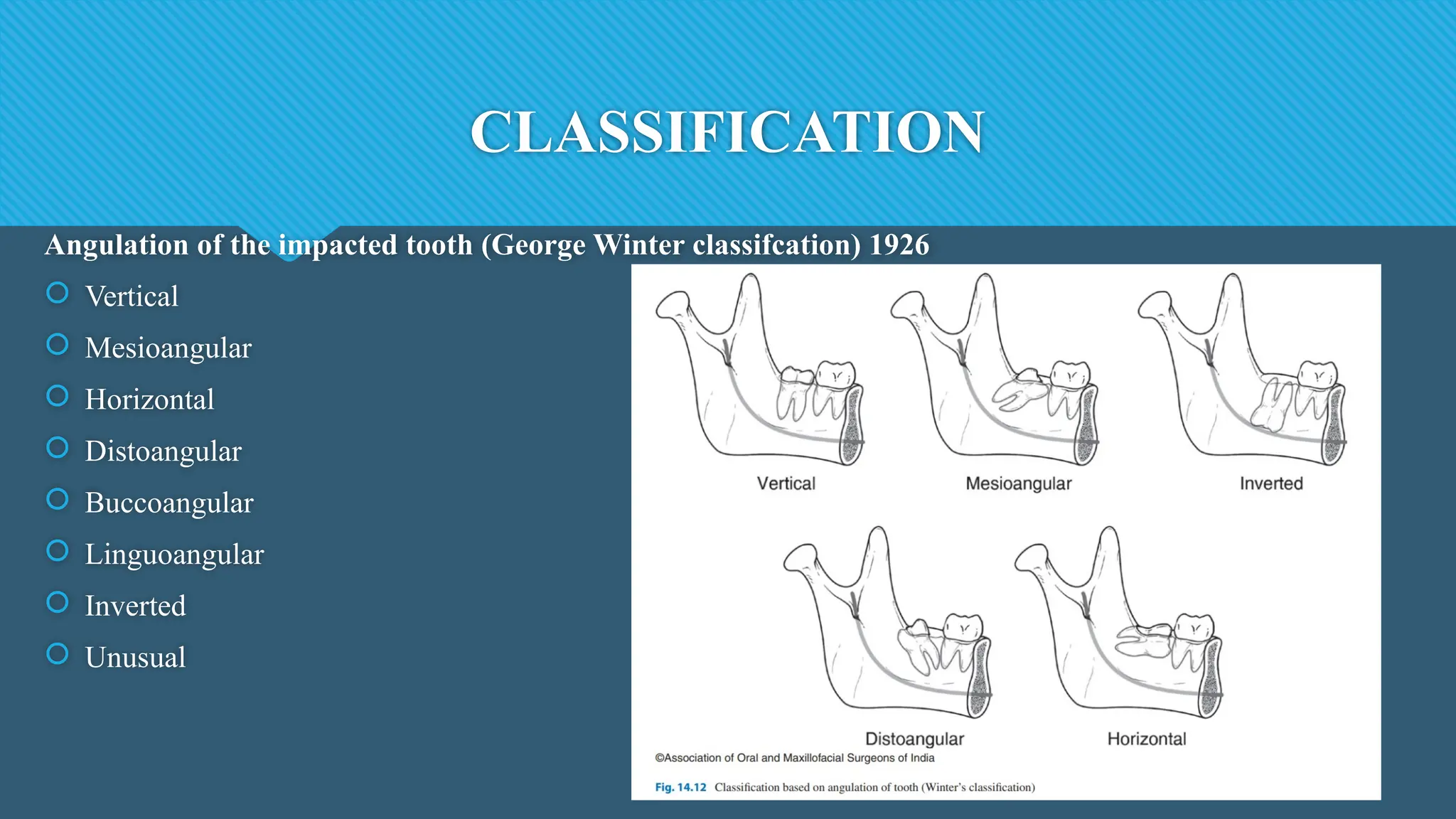
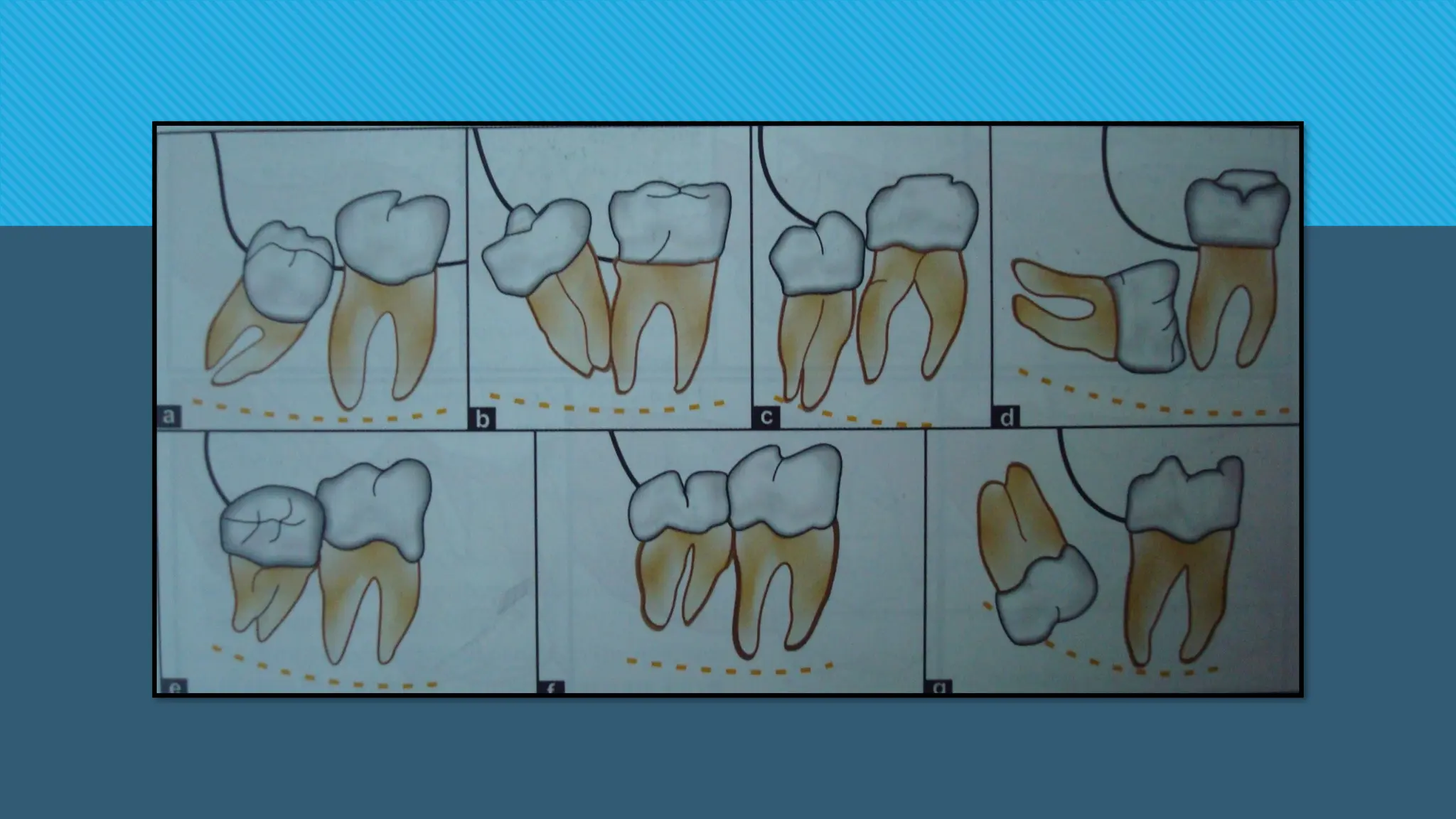
Angulation of the impacted tooth (George Winter classifcation) 1926
 Vertical
 Mesioangular
 Horizontal
 Distoangular
 Buccoangular
 Linguoangular
 Inverted
 Unusual
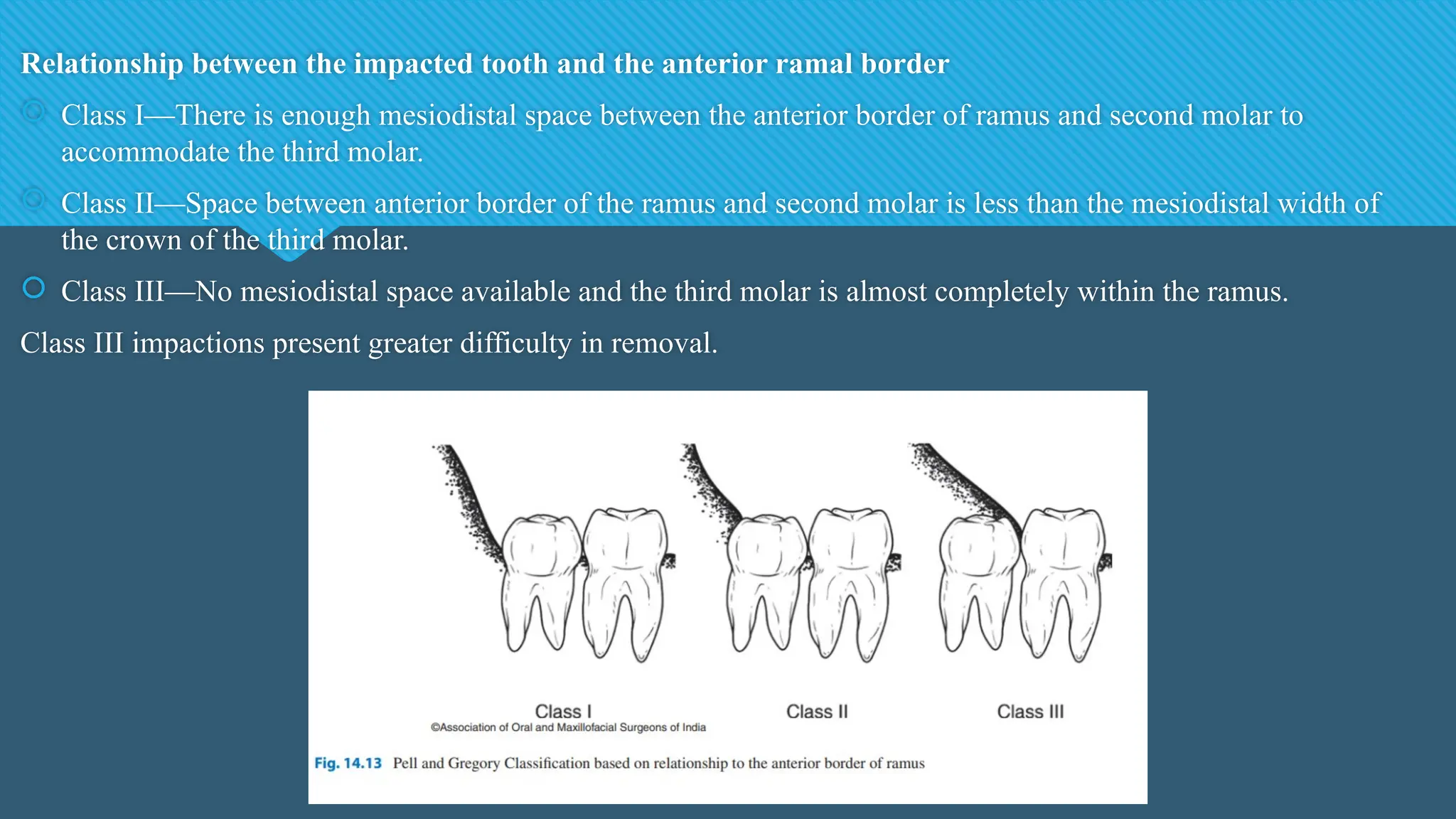
Relationship between the impacted tooth and the anterior ramal border
 Class I—There is enough mesiodistal space between the anterior border of ramus and second molar to
accommodate the third molar.
 Class II—Space between anterior border of the ramus and second molar is less than the mesiodistal width of
the crown of the third molar.
 Class III—No mesiodistal space available and the third molar is almost completely within the ramus.
Class III impactions present greater difficulty in removal.
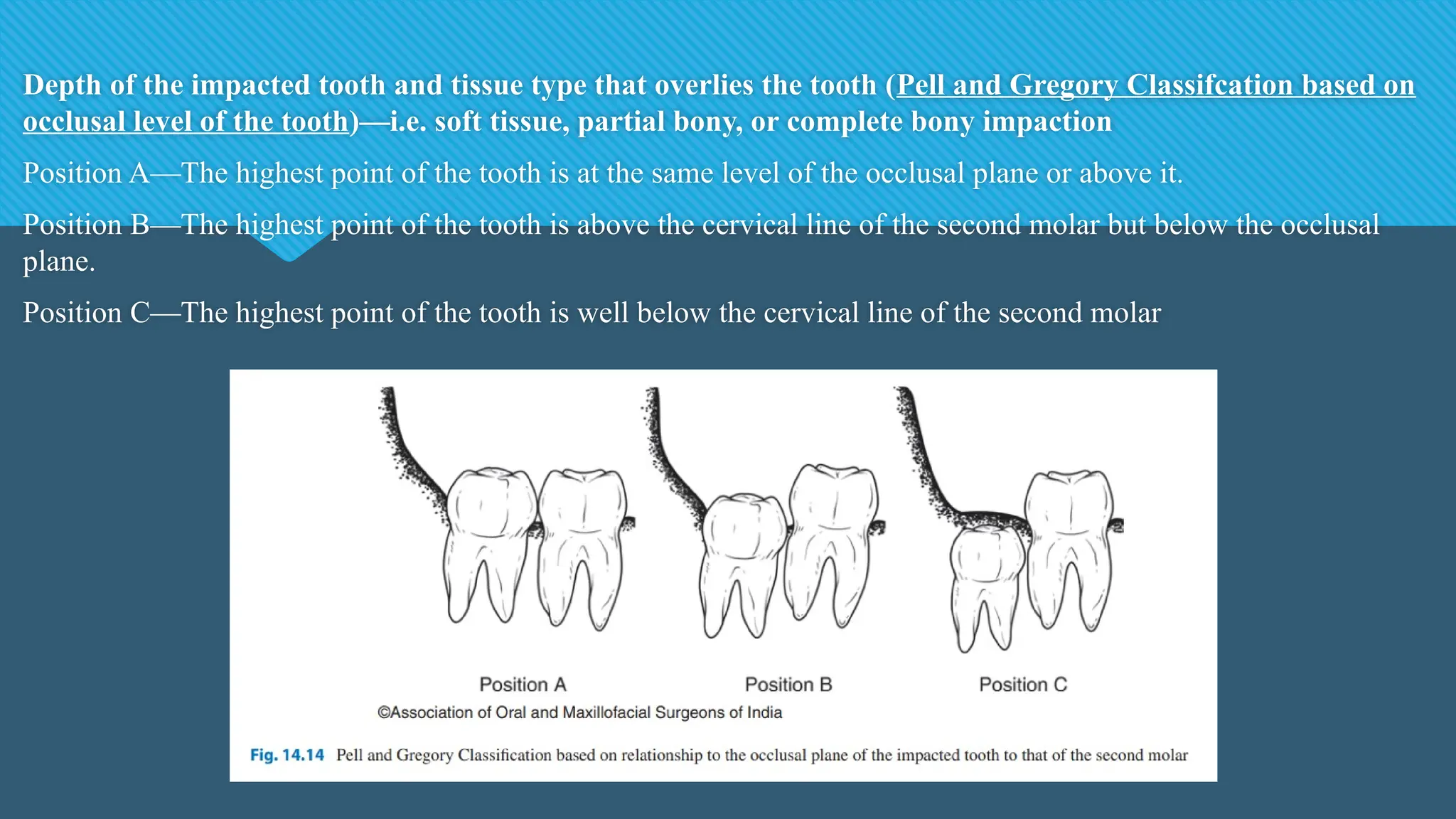
Depth of the impacted tooth and tissue type that overlies the tooth (Pell and Gregory Classifcation based on
occlusal level of the tooth)—i.e. soft tissue, partial bony, or complete bony impaction
Position A—The highest point of the tooth is at the same level of the occlusal plane or above it.
Position B—The highest point of the tooth is above the cervical line of the second molar but below the occlusal
plane.
Position C—The highest point of the tooth is well below the cervical line of the second molar
KILLEY AND KAY CLASSIFICATION (1975)
A. Angulation and Position
1. Vertical
2. Mesioangular
3. Distoangular
4. Horizontal
5. Transverse displacement
6. Aberrant position
B. State of eruption
7. Erupted
8. Partially erupted
9. Unerupted
C. Number of Roots
10. Fused rots
11. Two roots
12. Multiple roots
PRESURGICALASSESSMENT
 Estimating possible difficulty in the removal of third molars is a constant challenge for surgeons.
 There is a highly significant correlation between the level of difficulty for surgical removal of
lower third molars and postoperative inflammatory complication.
Weight
 Surgical difficulty in overweight patients is attributed to the herniation of the cheek intraorally
making retraction difficult
Depth of impaction
 The results of Tong Lim et al showed that the depth of impaction of the maxillary wisdom tooth serves as a
factor for greater possibility of an oroantral perforation.; a deeper impaction requires a larger amount of bone
removal to deliver the third molar and, hence, is more likely to cause damage to the sinus lining during the
operative procedure.
Pathological processes
 Complications are inevitable when the tooth is associated with a pathological process and must be removed.
In these cases, bone resorption reduces the degree of difficulty; unless the pathology is an associated
odontoma or cementoblastoma etc
Orientation of the impaction
 Deviation from the vertical alignment of the tooth increases surgical difficulty.
Root morphology and number of roots
 Teeth with complete and divergent roots also prove more difficult to remove. Such teeth are often treated
with sectioning before any mobility is attained because the fragmentation reduces the retention areas and
facilitates removal with greater preservation of the adjacent bone and anatomical structures.
Proximity of the alveolar nerve
 The relation between the mandibular canal and tooth roots should be considered during extractions.
However, radiographic images do not provide the necessary reliability. The hypothesis is that when the white
line of the mandibular canal is absent or indistinct where the canal intersects the tooth root, or divergence of
the canal or darkening of the root at that location the mandibular canal is possibly entrapped.
Proximity between the second and third molars
 The space between the distal surface of the second molar and mesial surface of the third molar and the
periodontal ligament space was significantly associated with surgical difficulty. Contact of the root of the
second molar and the crown of the impacted third molar require sectioning and special surgical technique
Fully developed roots
It increase the risk for postoperative nerve impairment. This was expected
because fully developed roots are likely to have closer contact to the IAN
bundle. This is another argument for early removal of wisdom teeth.
Angulation of the third molar
 According to Chang, the greater the angulation of the third molar, the more difficult it is
to remove and to maintain oral hygiene.
Periodontal pocket
 There are occasions when removal of third molars can either create or exacerbate
periodontal problems on the distal aspect of the lower second molar.[9] The most
important predictor of the final bone level behind the second molar was the bone level on
the distal aspect of the second molar on completion of removal of the third molar
Nerve involvement
 Case studies have shown that the inferior alveolar nerve may be involved after third molar
removal in anywhere from 0.5% to 5% of lower third molar removals. In many cases this
can be predicted preoperatively from panoramic radiographs and, more recently, from cone
beam computed tomography scanning, showing the relationship of the inferior alveolar
nerve to the roots of the lower third molars.
 Estimates of the incidence of lingual nerve involvement from case series show an incidence
of between 0.2% and 2% of lower third molar removals.
Narrowing of the IAN canal increases the risk for postoperative IAN impairment
The absence of cancellous bone between the nerve and the tooth, in other words, direct
contact between the 2 structures, is another independent factor.
Temporomandibular joint problems
 Removal of third molars can cause or exacerbate pre-existing temporomandibular joint disorders (TMD),
particularly internal derangements of the tmj.
Age
 The increase in age is associated with complete root formation, which may be related to the higher rate of
complications among patients over 25 years of age compared with younger patients.
 Bone density of the tooth has been described as important indicator for the prediction of surgical difficulty.
Studies indicate that as one becomes older, third molars become more difficult to remove, may take longer to
remove, and may result in an increased risk for complications associated with removal.
Clinical Examination This includes taking the patient’s history, clinical examination extraorally and intraorally.
 History taking
Complaints of the patient—Impacted teeth are usually asymptomatic and patients are aware of their existence
only when told by the dental practitioner. Symptoms, if any, are usually due to acute or chronic pericoronitis, or
due to acute pulpitis secondary to dental caries.
 Extraoral examination The clinician must examine the face and neck for redness and swelling related to
infection. The lower lip is tested for anesthesia or paresthesia. The regional lymph nodes must be assessed
by palpation for any tenderness or enlargement.
 Intraoral examination—The following points are noted:
(a) Mouth opening—The ability of the patient to open the mouth is analyzed, and any trismus,
fbrosis, or hypermobility of the joint is noted. The size of the mouth
(microsomia/macrosomia) is also checked. Third molar access may be restricted if the
mandible is retrognathic, while a prognathic mandible offers good access.
(b) General examination of oral cavity- oral mucosa, teeth, and oral hygiene.
(c) Examination of the third molar area for signs of pericoronitis and state of eruption of the
tooth.
(d) Condition of the impacted tooth- presence of caries, dental fllings, and internal resorption
(which may resemble caries). The angle of the tooth and locking beneath second molar must
be noted and confrmed with appropriate radiographs.
(e) Condition of first and second molars—presence of caries, fllings, or crowns; root canal
treatment may put the second molar at risk of fracture and the patient must be warned of this.
Distal periodontal pocketing, root resorption, and absence of the second molar must also be
noted
(f) Space present between the second molar distal surface and the ascending ramus: A small
distance makes access difficult, and a large distance makes the tooth more accessible. For
maxillary teeth, the distance between the second molar and tuberosity must be considered.
(g) Adjacent bone may develop infection, which can spread along the mesial surface of the
tooth and affect the second molar, which would then require extraction.
Infection/osteomyelitis can spread to the ramus in the case of distoangular impacted third
molars, through recurrent submasseteric abscesses in this region.
(h) Systemic skeletal diseases may cause pathological complications which should be noted
Presence of cysts and tumors—The impacted tooth may be associated with
eruption cysts or large odontogenic cysts can occur in relation to impacted
tooth. By and large, they cause displacement of the tooth. Benign and malignant
tumors such as ameloblastoma may also be found involving the tooth.
Odontomes may also be present in relation to the third molar.
RADIOGRAPHIC ASSESSMENT
 Most of the local factors causing difficulty may be diagnosed by the careful interpretation
of a preoperative radiograph.
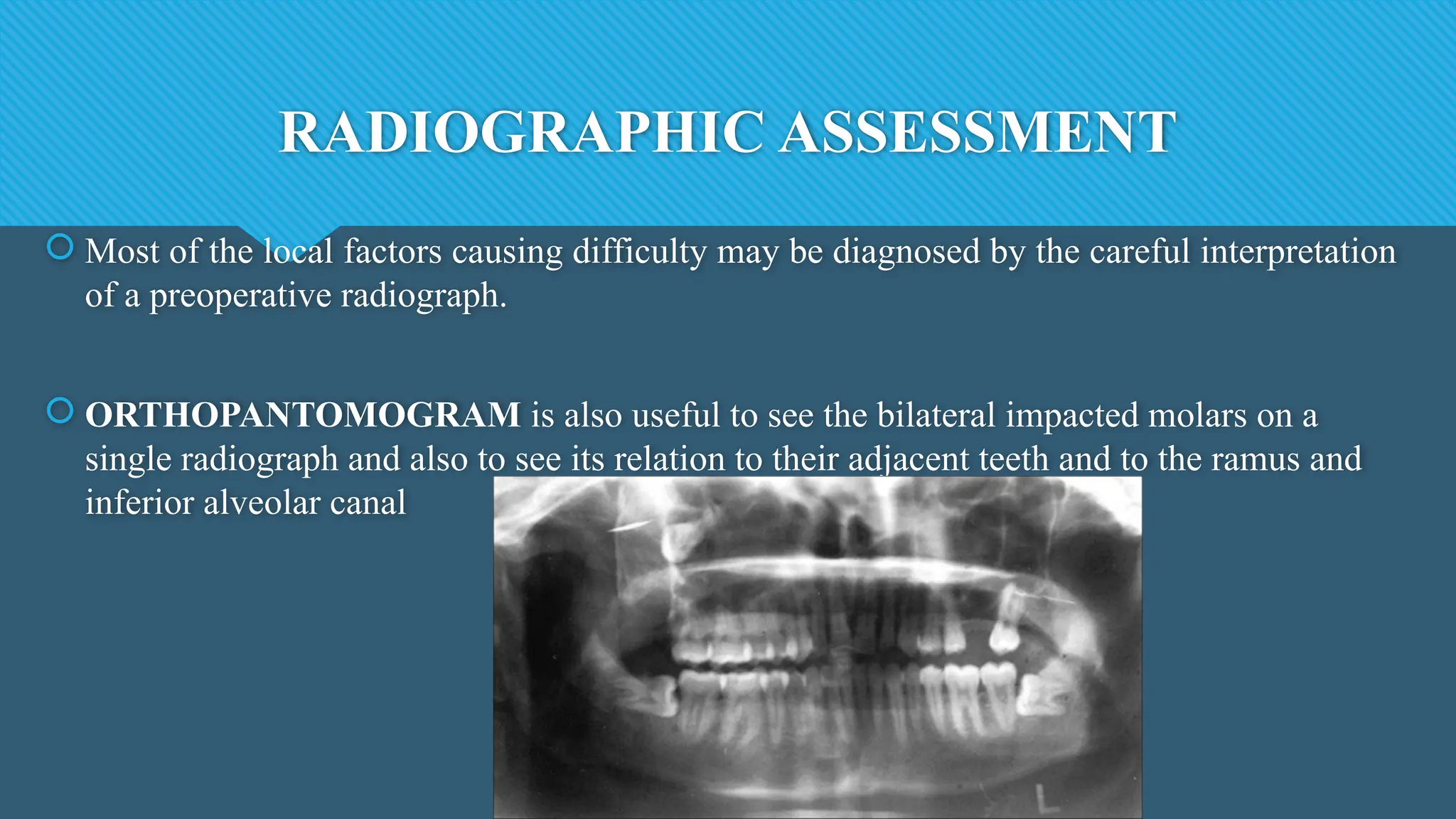
 ORTHOPANTOMOGRAM is also useful to see the bilateral impacted molars on a
single radiograph and also to see its relation to their adjacent teeth and to the ramus and
inferior alveolar canal
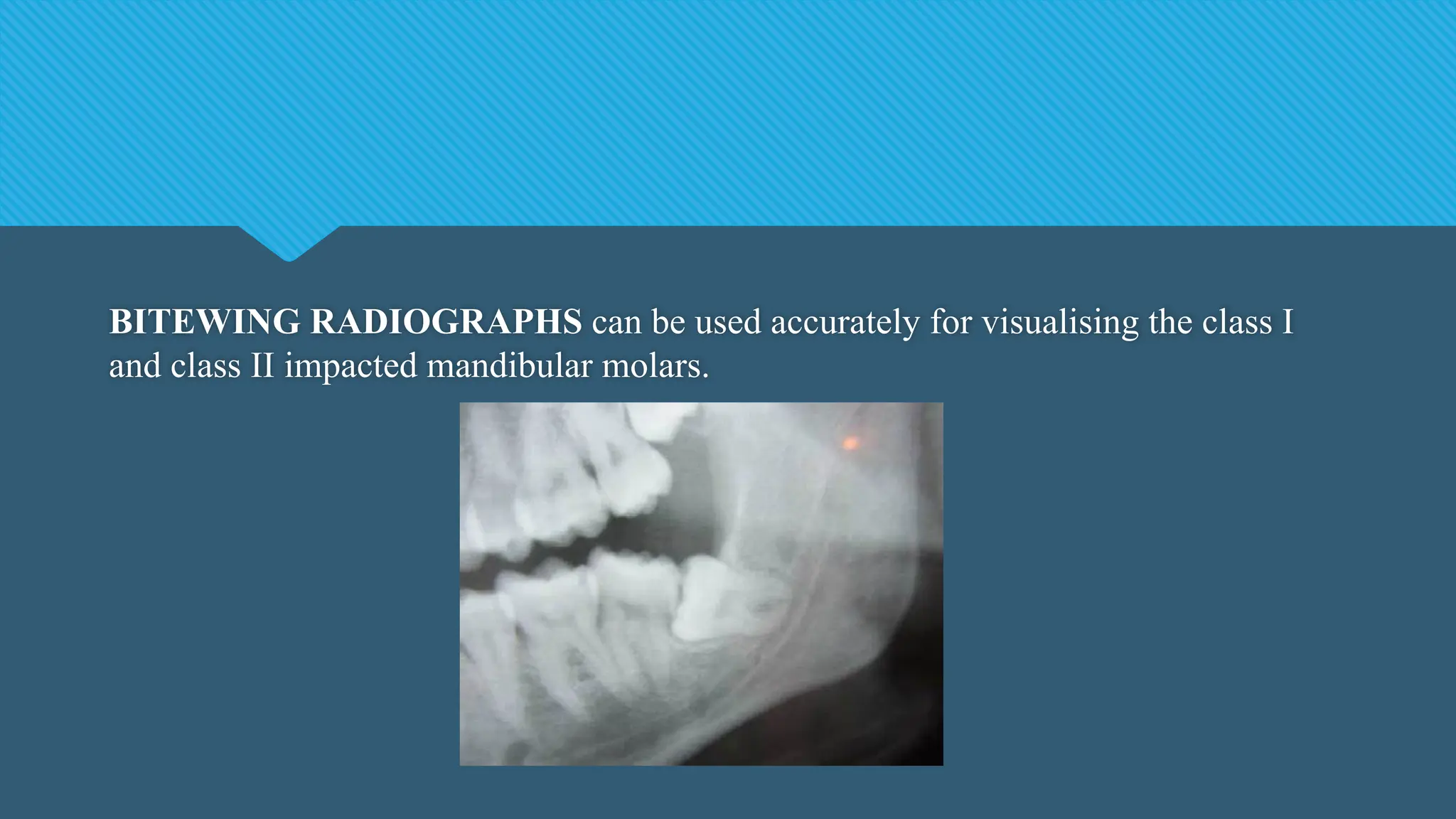
BITEWING RADIOGRAPHS can be used accurately for visualising the class I
and class II impacted mandibular molars.
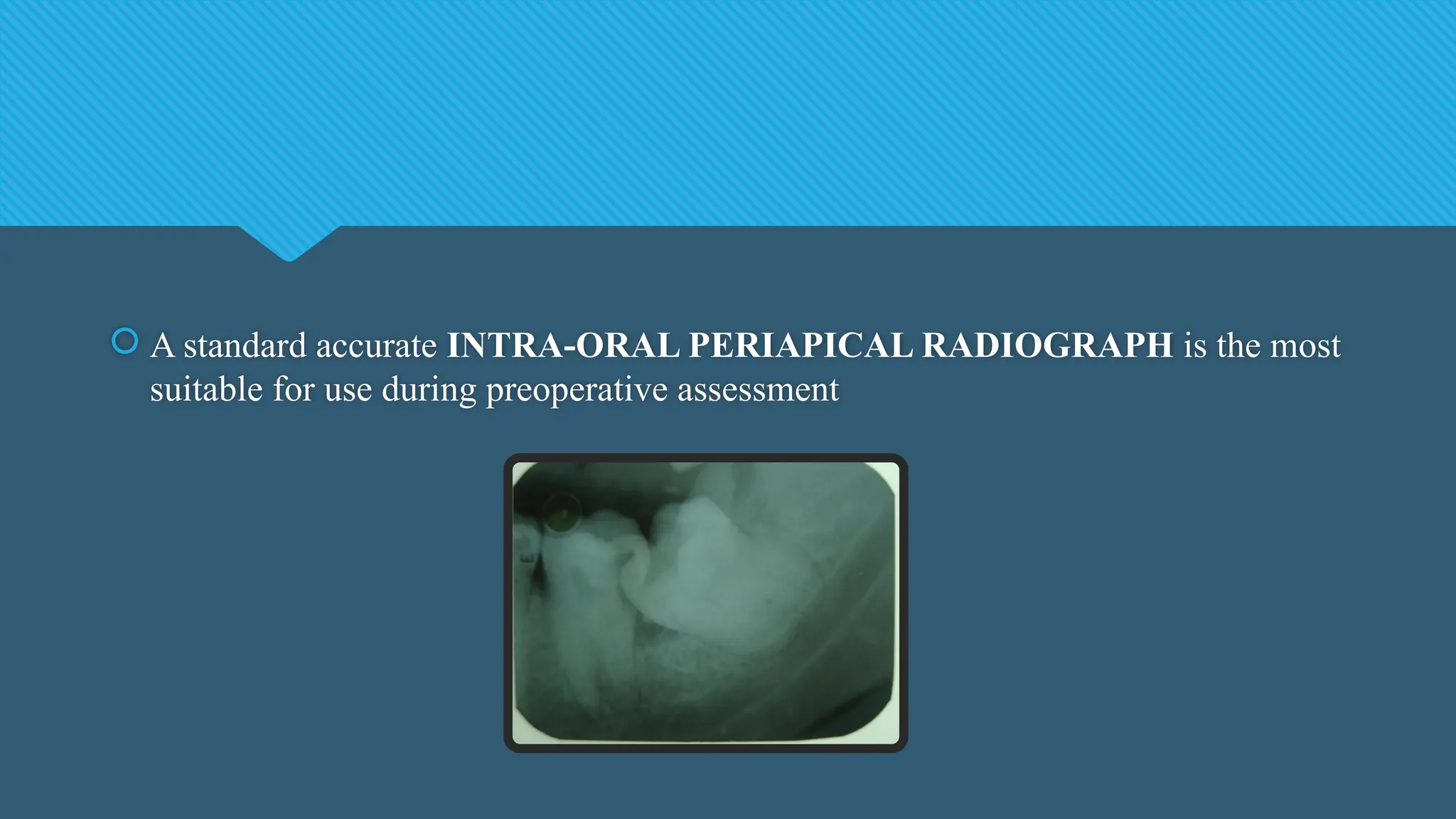
 A standard accurate INTRA-ORAL PERIAPICAL RADIOGRAPH is the most
suitable for use during preoperative assessment
The radiological prediction of inferior alveolar nerve injury during third molar surgery.
Pre-operative assessment must be carried out radiologically in an attempt to identify the
proximity of the impacted tooth to the inferior alveolar canal.
Rood’s in his review of literature (1990) revealed seven radiological signs suggested as
indicative of a close relationship between the mandibular third molar tooth and the
inferior alveolar canal. Four of these signs are seen on the root of the tooth and the other
three are changes in the appearance of the inferior alveolar canal.
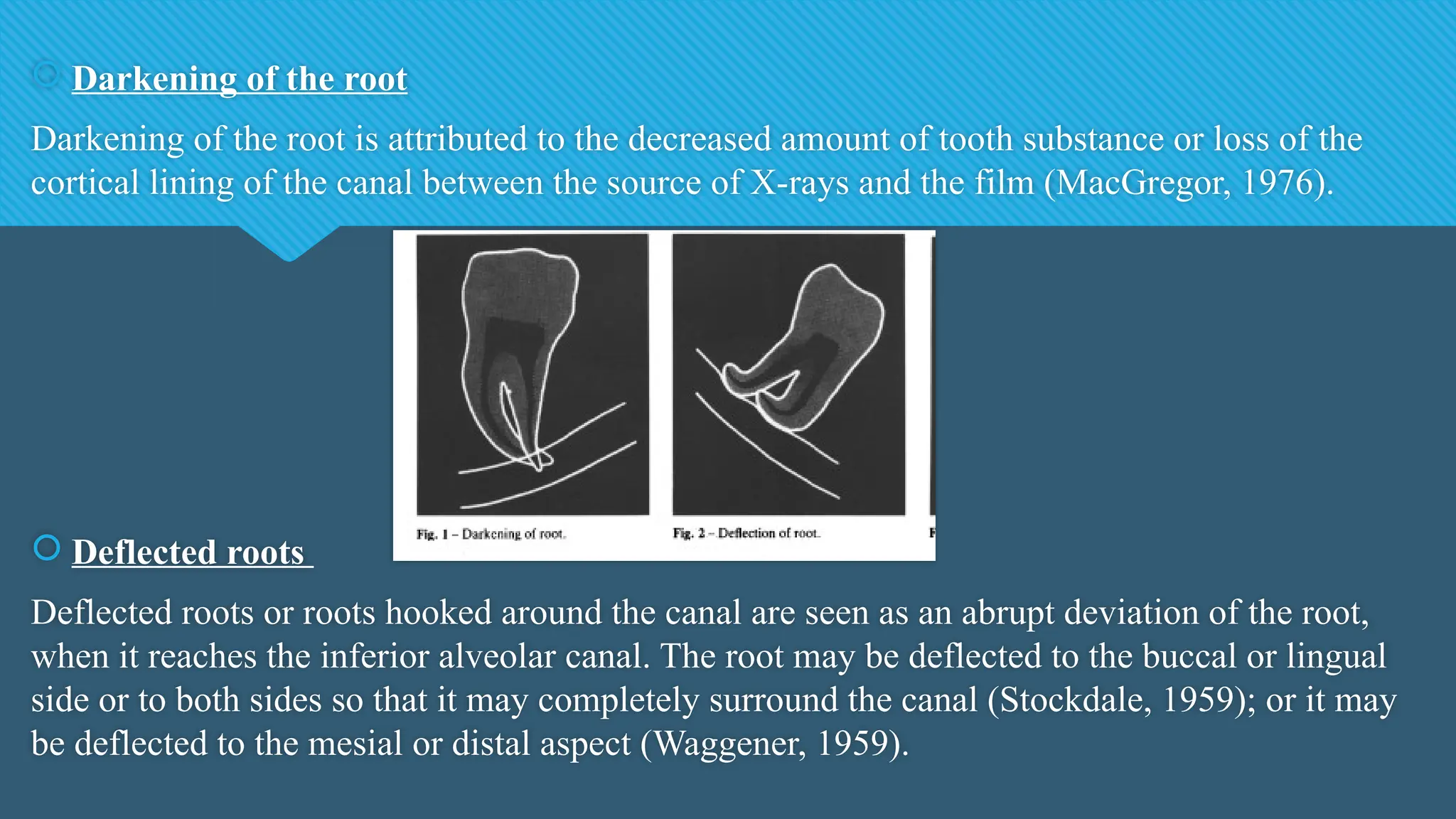
 Darkening of the root
Darkening of the root is attributed to the decreased amount of tooth substance or loss of the
cortical lining of the canal between the source of X-rays and the film (MacGregor, 1976).
 Deflected roots
Deflected roots or roots hooked around the canal are seen as an abrupt deviation of the root,
when it reaches the inferior alveolar canal. The root may be deflected to the buccal or lingual
side or to both sides so that it may completely surround the canal (Stockdale, 1959); or it may
be deflected to the mesial or distal aspect (Waggener, 1959).
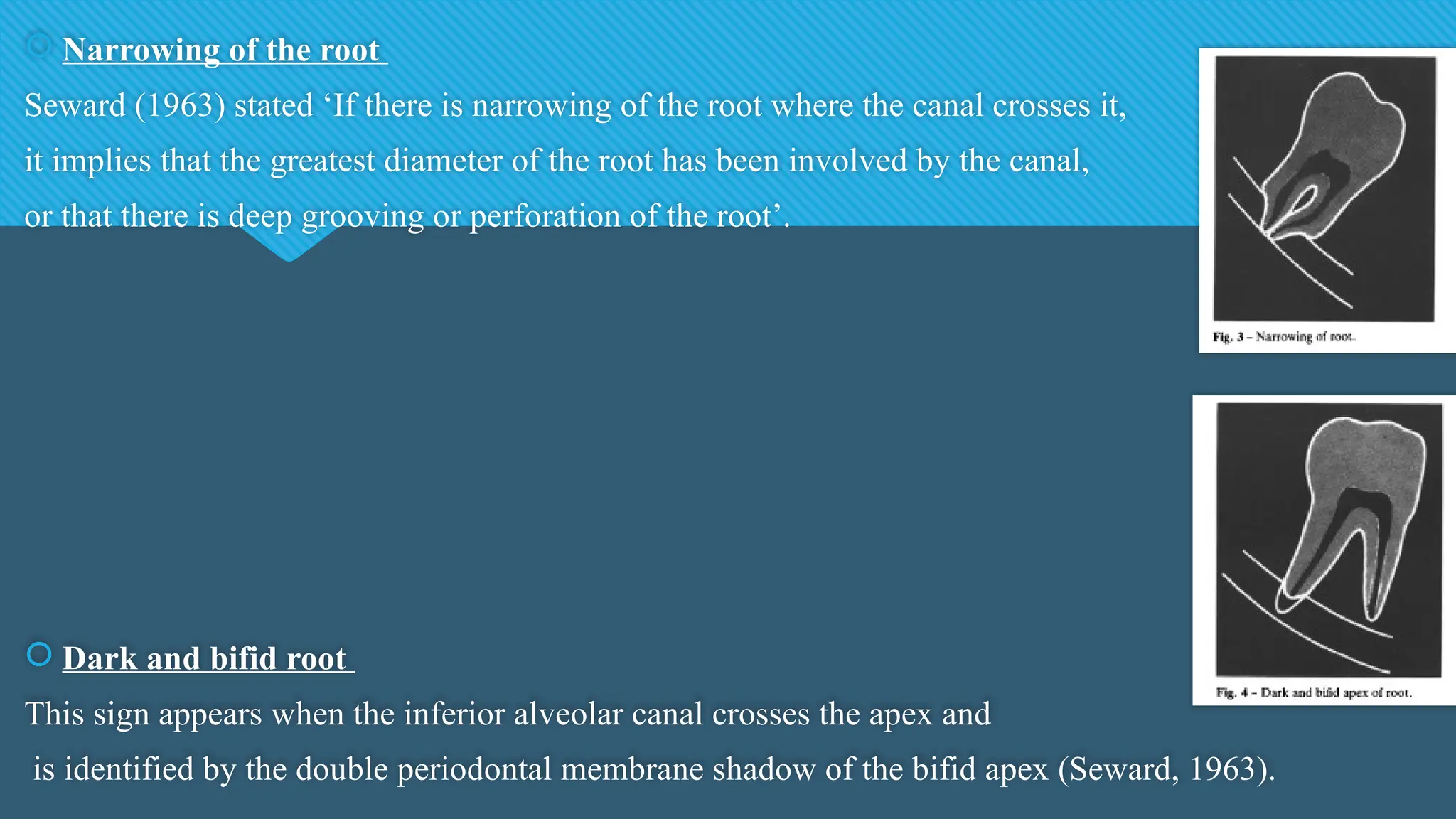
 Narrowing of the root
Seward (1963) stated ‘If there is narrowing of the root where the canal crosses it,
it implies that the greatest diameter of the root has been involved by the canal,
or that there is deep grooving or perforation of the root’.
 Dark and bifid root
This sign appears when the inferior alveolar canal crosses the apex and
is identified by the double periodontal membrane shadow of the bifid apex (Seward, 1963).
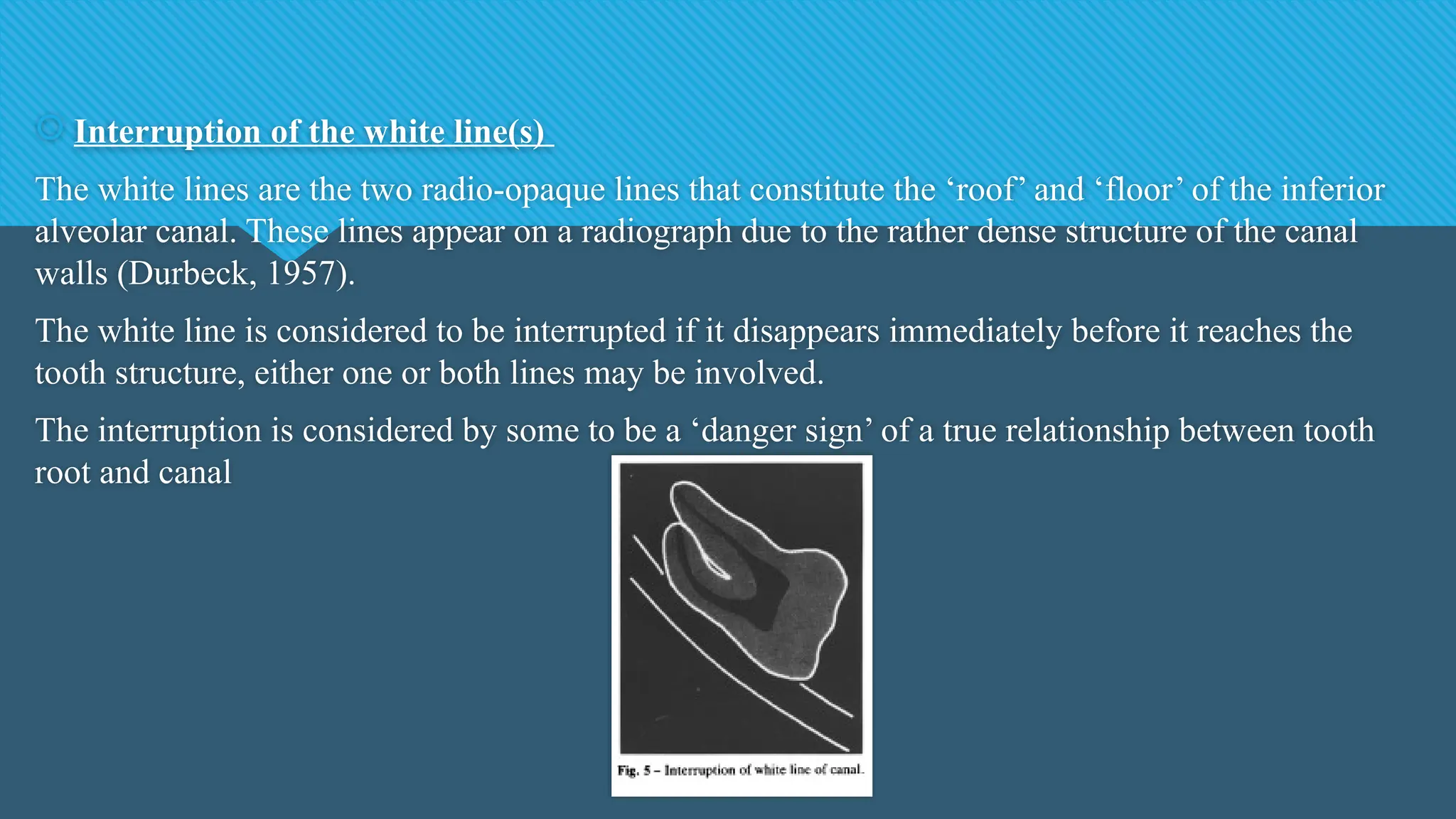
 Interruption of the white line(s)
The white lines are the two radio-opaque lines that constitute the ‘roof’ and ‘floor’ of the inferior
alveolar canal. These lines appear on a radiograph due to the rather dense structure of the canal
walls (Durbeck, 1957).
The white line is considered to be interrupted if it disappears immediately before it reaches the
tooth structure, either one or both lines may be involved.
The interruption is considered by some to be a ‘danger sign’ of a true relationship between tooth
root and canal
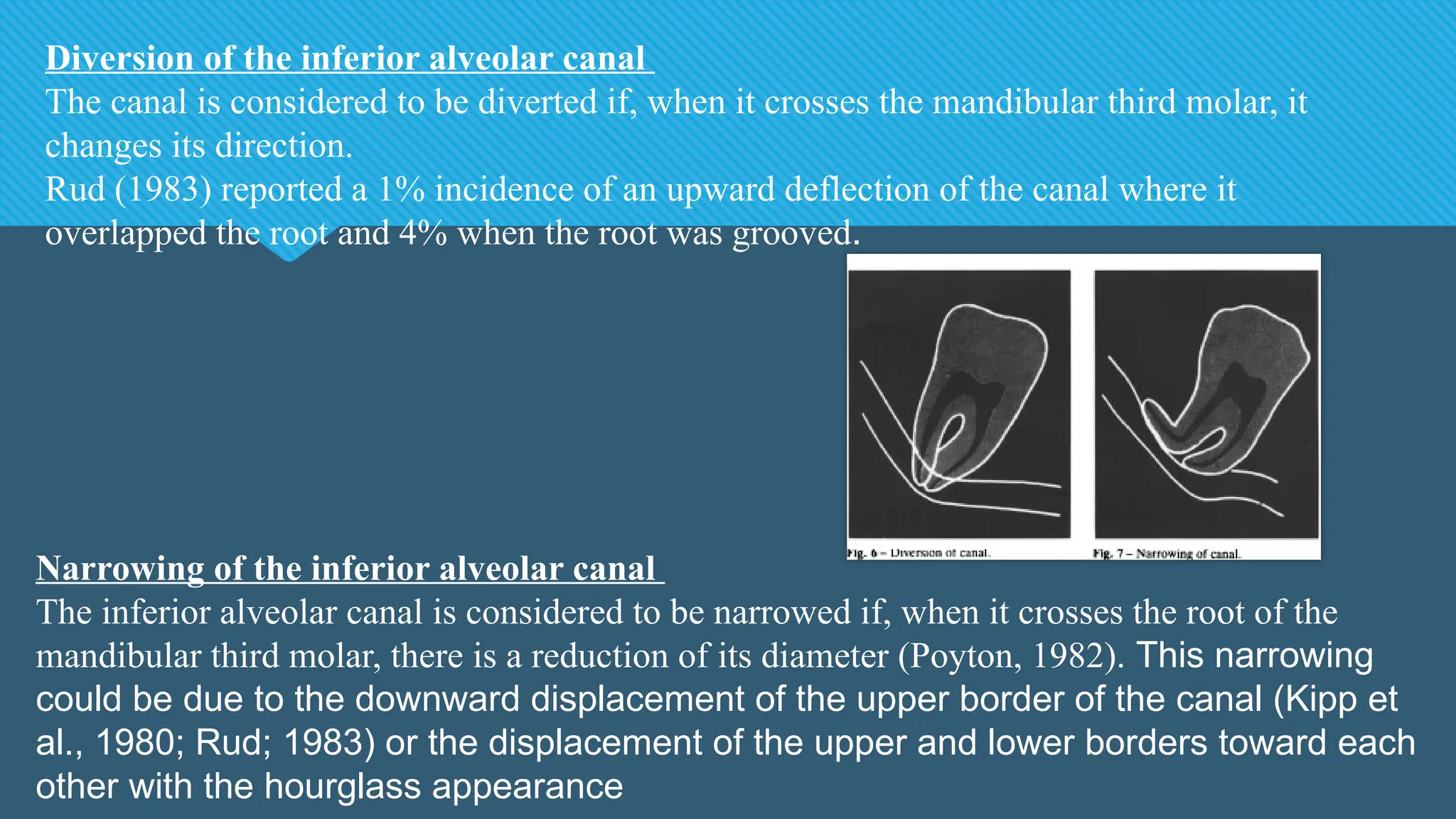
Diversion of the inferior alveolar canal
The canal is considered to be diverted if, when it crosses the mandibular third molar, it
changes its direction.
Rud (1983) reported a 1% incidence of an upward deflection of the canal where it
overlapped the root and 4% when the root was grooved.
Narrowing of the inferior alveolar canal
The inferior alveolar canal is considered to be narrowed if, when it crosses the root of the
mandibular third molar, there is a reduction of its diameter (Poyton, 1982). This narrowing
could be due to the downward displacement of the upper border of the canal (Kipp et
al., 1980; Rud; 1983) or the displacement of the upper and lower borders toward each
other with the hourglass appearance
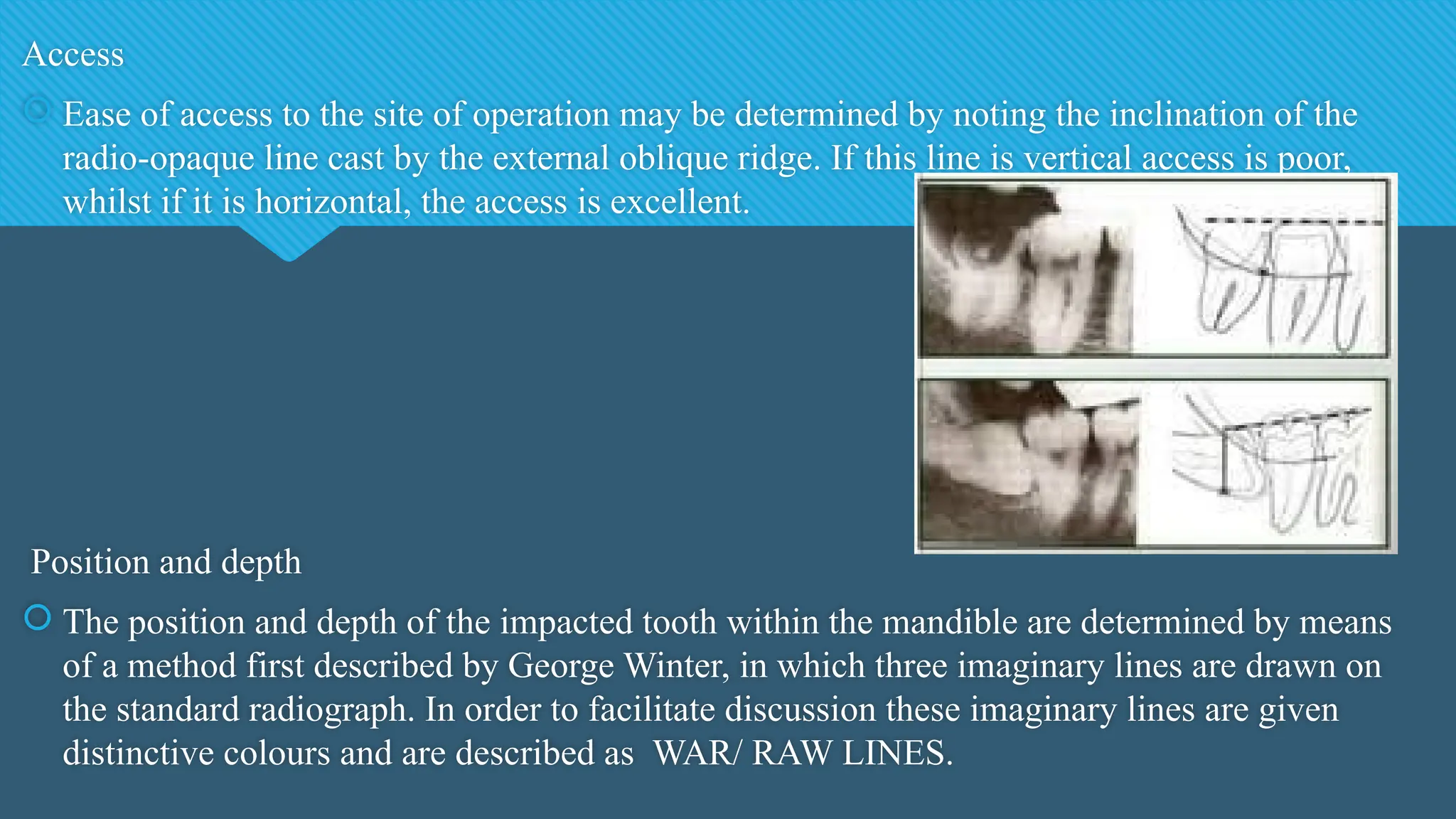
Access
 Ease of access to the site of operation may be determined by noting the inclination of the
radio-opaque line cast by the external oblique ridge. If this line is vertical access is poor,
whilst if it is horizontal, the access is excellent.
Position and depth
 The position and depth of the impacted tooth within the mandible are determined by means
of a method first described by George Winter, in which three imaginary lines are drawn on
the standard radiograph. In order to facilitate discussion these imaginary lines are given
distinctive colours and are described as WAR/ RAW LINES.
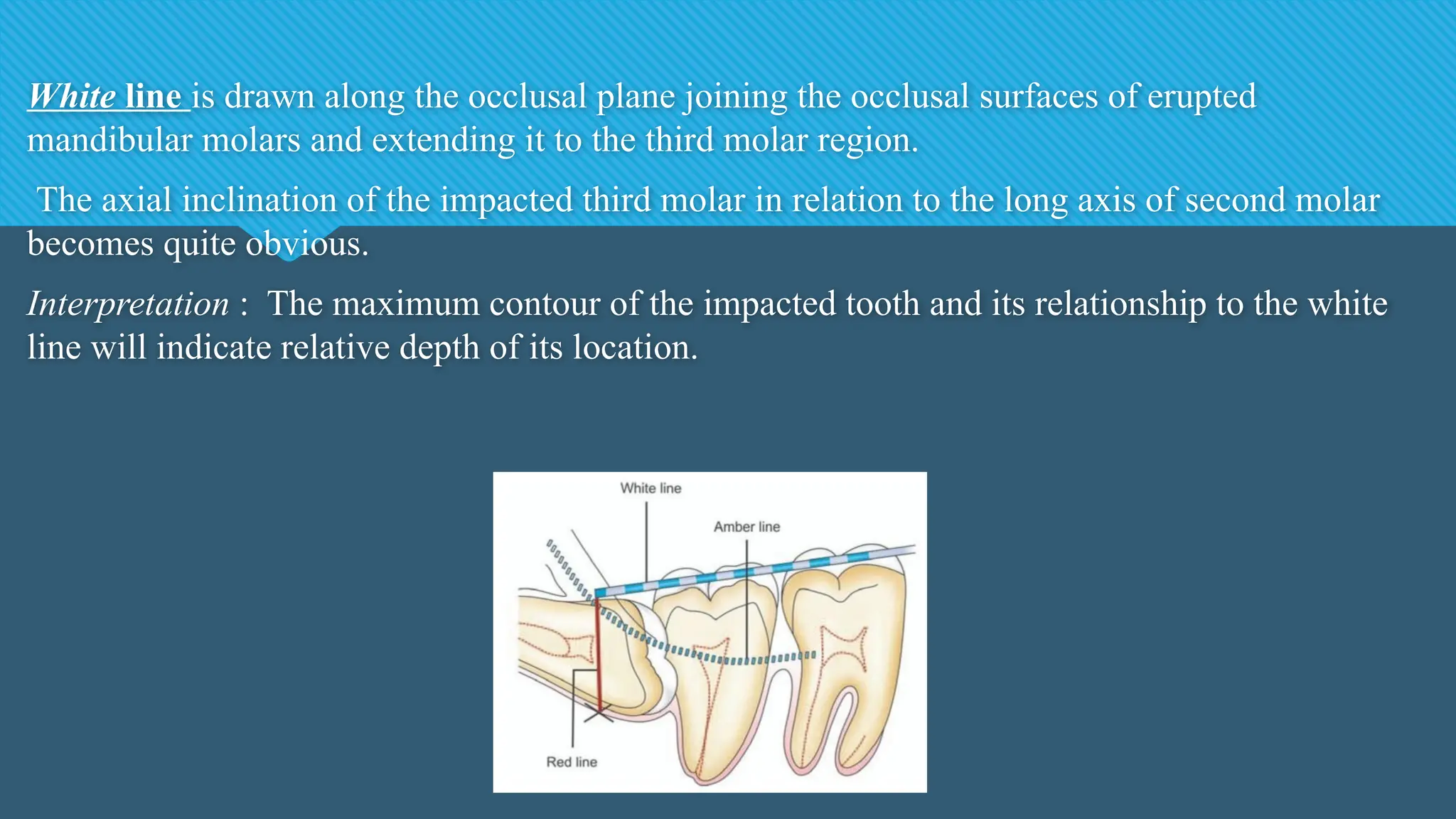
White line is drawn along the occlusal plane joining the occlusal surfaces of erupted
mandibular molars and extending it to the third molar region.
The axial inclination of the impacted third molar in relation to the long axis of second molar
becomes quite obvious.
Interpretation : The maximum contour of the impacted tooth and its relationship to the white
line will indicate relative depth of its location.
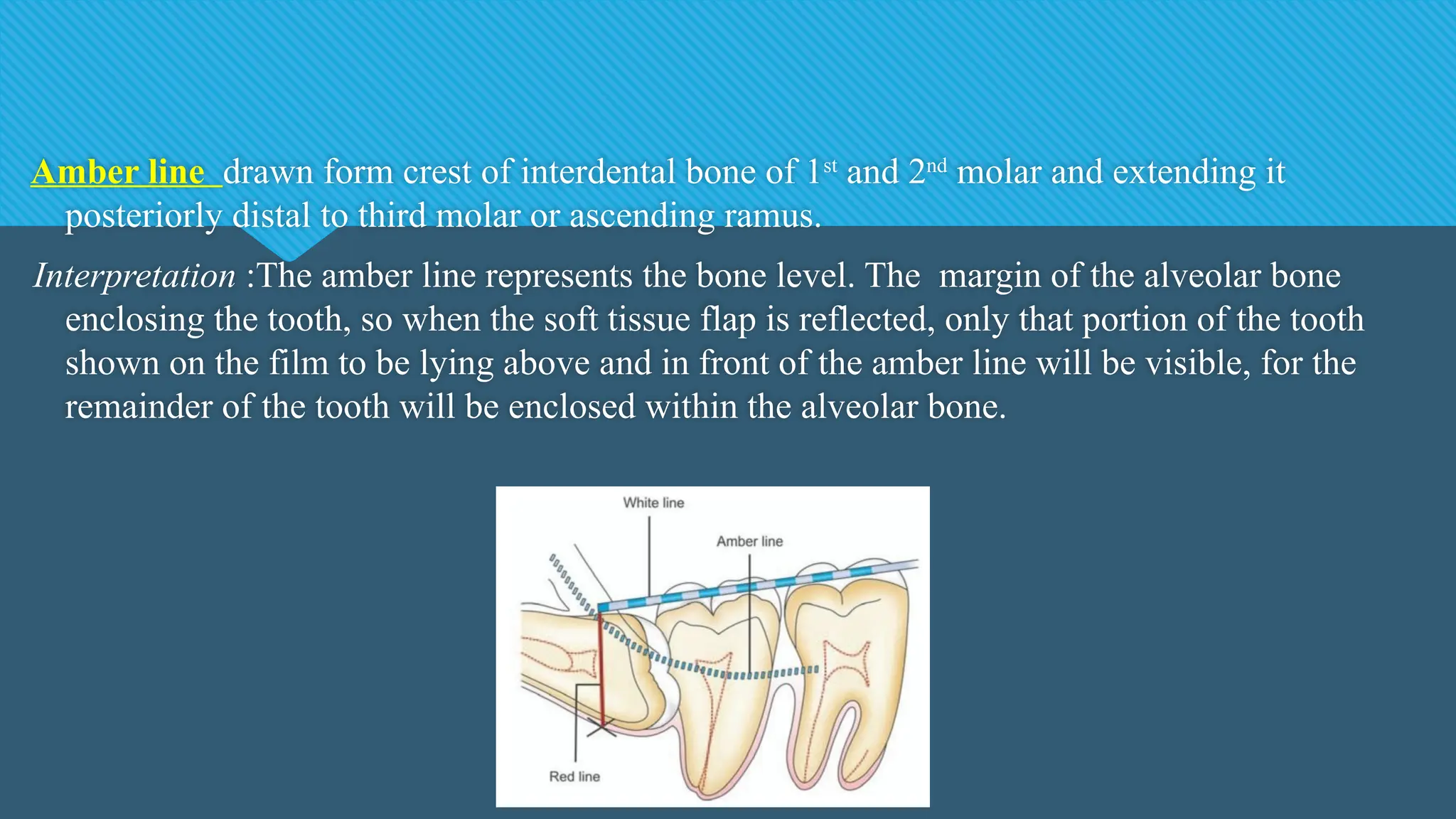
Amber line drawn form crest of interdental bone of 1st
and 2nd
molar and extending it
posteriorly distal to third molar or ascending ramus.
Interpretation :The amber line represents the bone level. The margin of the alveolar bone
enclosing the tooth, so when the soft tissue flap is reflected, only that portion of the tooth
shown on the film to be lying above and in front of the amber line will be visible, for the
remainder of the tooth will be enclosed within the alveolar bone.
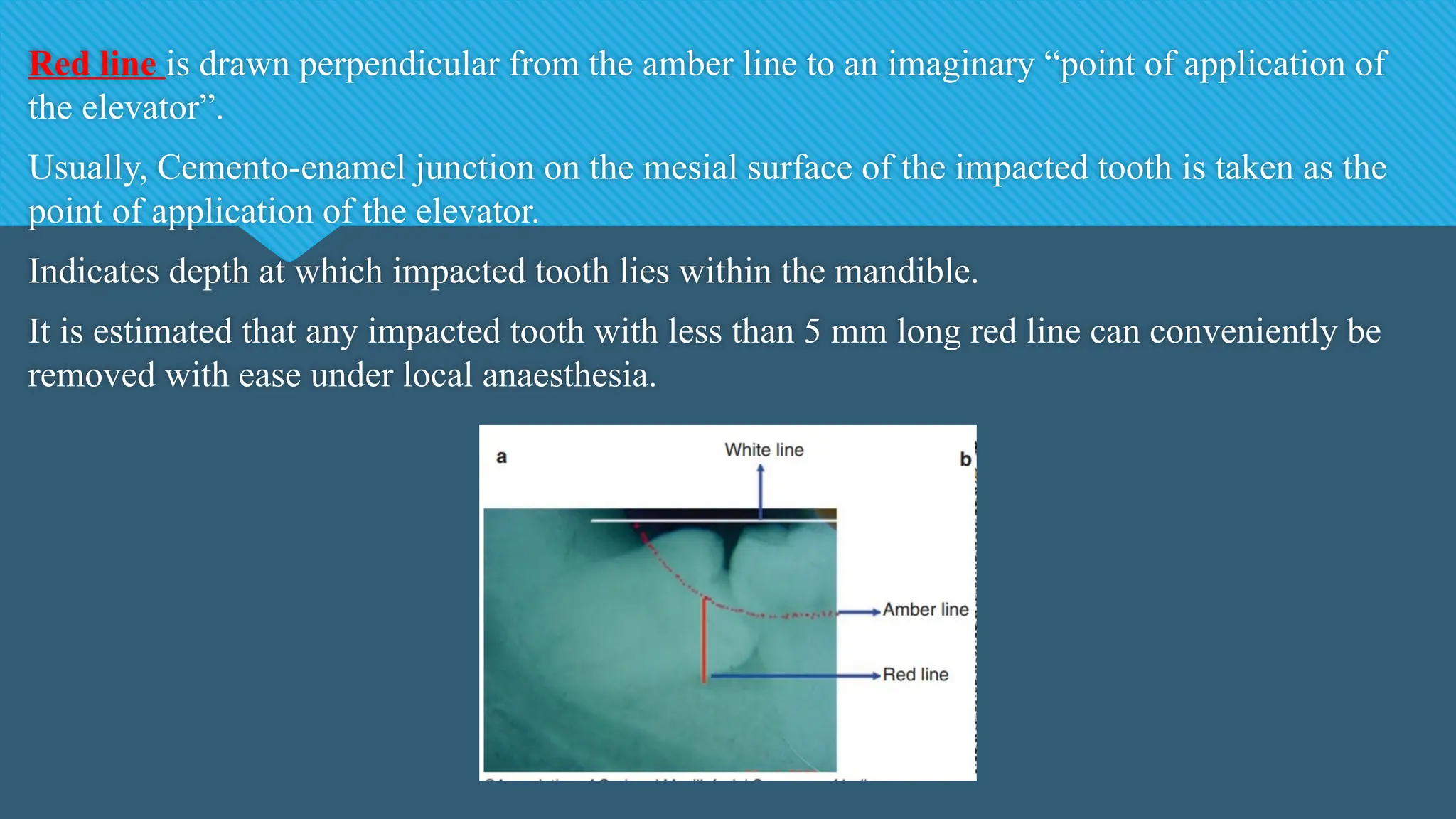
Red line is drawn perpendicular from the amber line to an imaginary “point of application of
the elevator”.
Usually, Cemento-enamel junction on the mesial surface of the impacted tooth is taken as the
point of application of the elevator.
Indicates depth at which impacted tooth lies within the mandible.
It is estimated that any impacted tooth with less than 5 mm long red line can conveniently be
removed with ease under local anaesthesia.
IsidoroCortell-Ballester et al. have used computer-assisted system in the
classification of lower third molars which allowed objective classification of the third
molars within the Winter subclasses, as follows
 Third molars with a negative angle (<0 ) were considered to be inverted.
ᵒ
 Third molars with an angle between 0 and 30 were considered to be horizontal.
ᵒ ᵒ
 Third molars with an angle between 31 and 60 were considered to be
ᵒ ᵒ
mesioangular
 Third molars with an angle between 61 and 90 were considered to be vertical.
ᵒ ᵒ
 Third molars with an angle 90 were considered distoangular
ᵒ
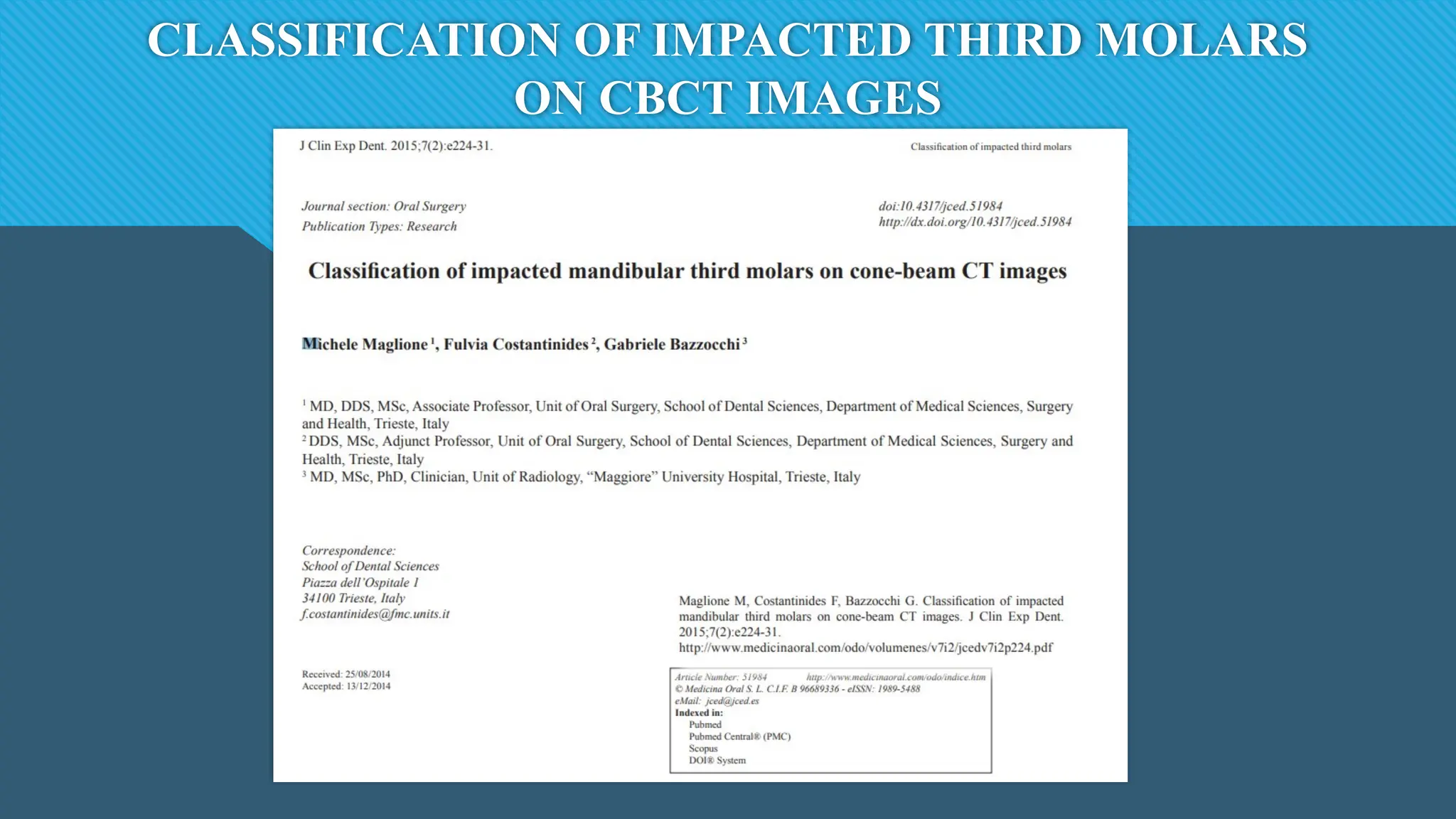
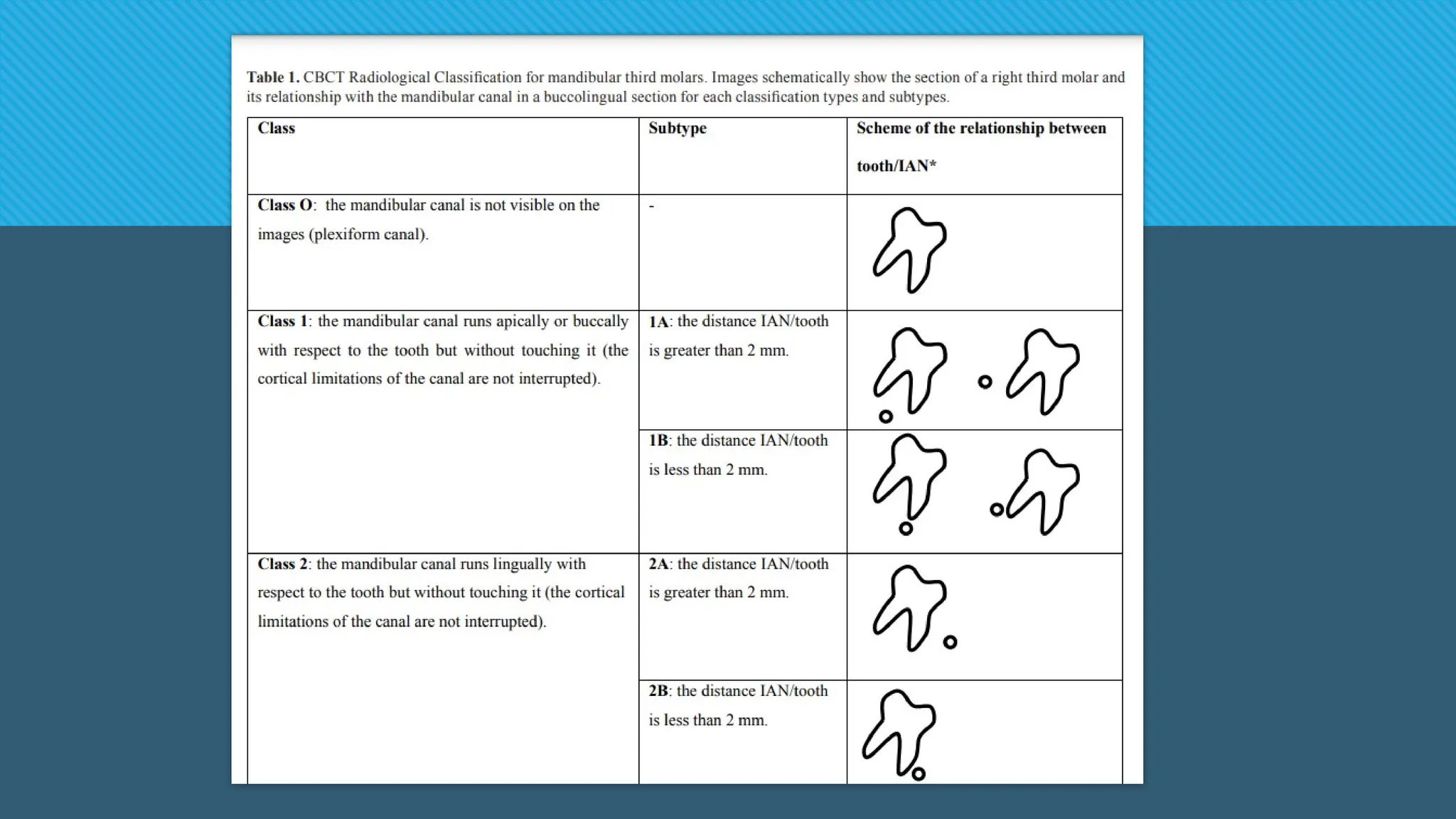
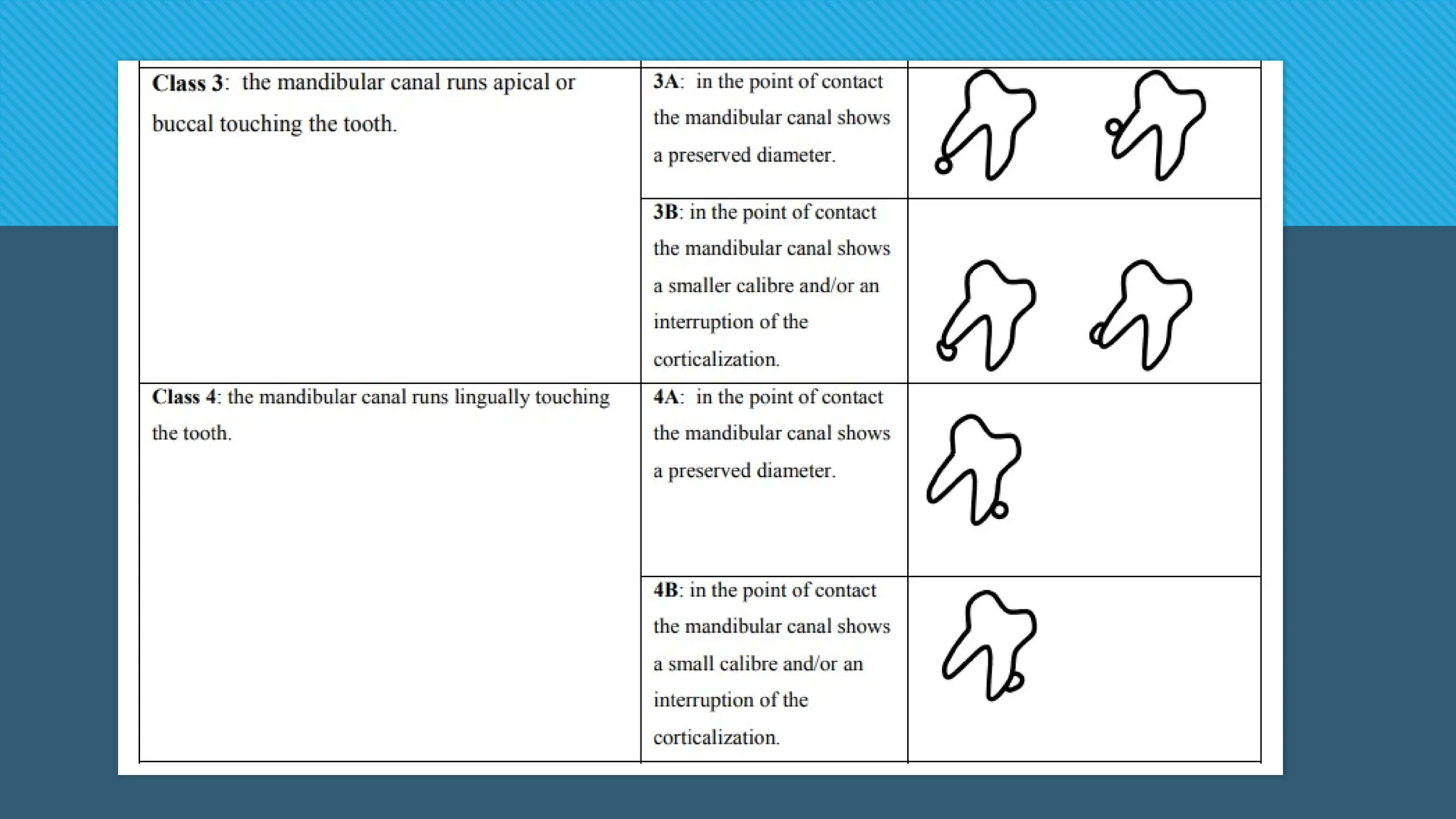
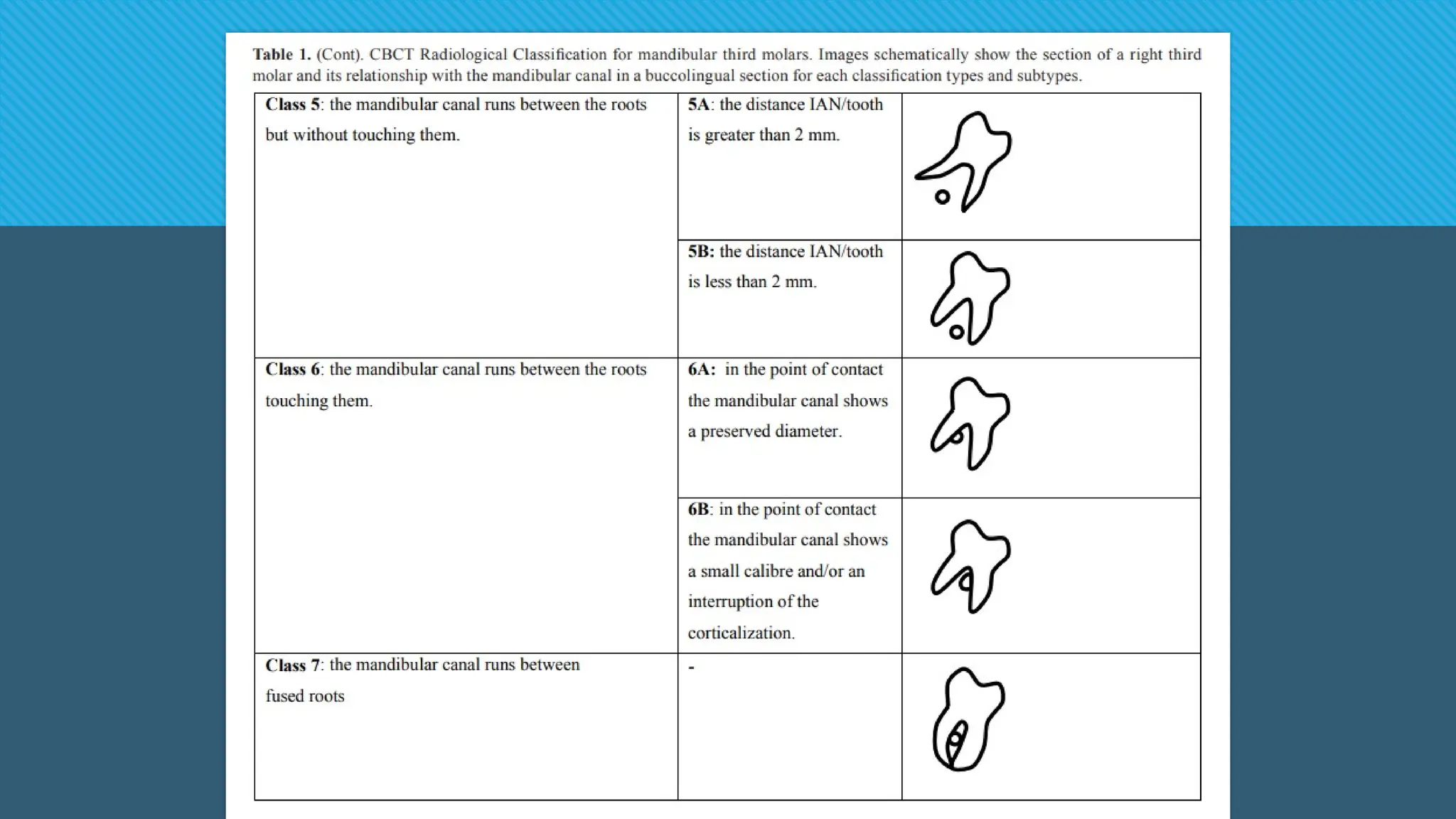
CLASSIFICATION OF IMPACTED THIRD MOLARS
ON CBCT IMAGES
DIFFICULTY INDICES
 There are a number of previous studies to evaluate surgical difficulty in the
extraction of impacted mandibular third molars. Prominent among the proposed
models are the Winter’s , Pell and Gregory’s, Pederson’s and the WHARFE
classification/scoring systems.
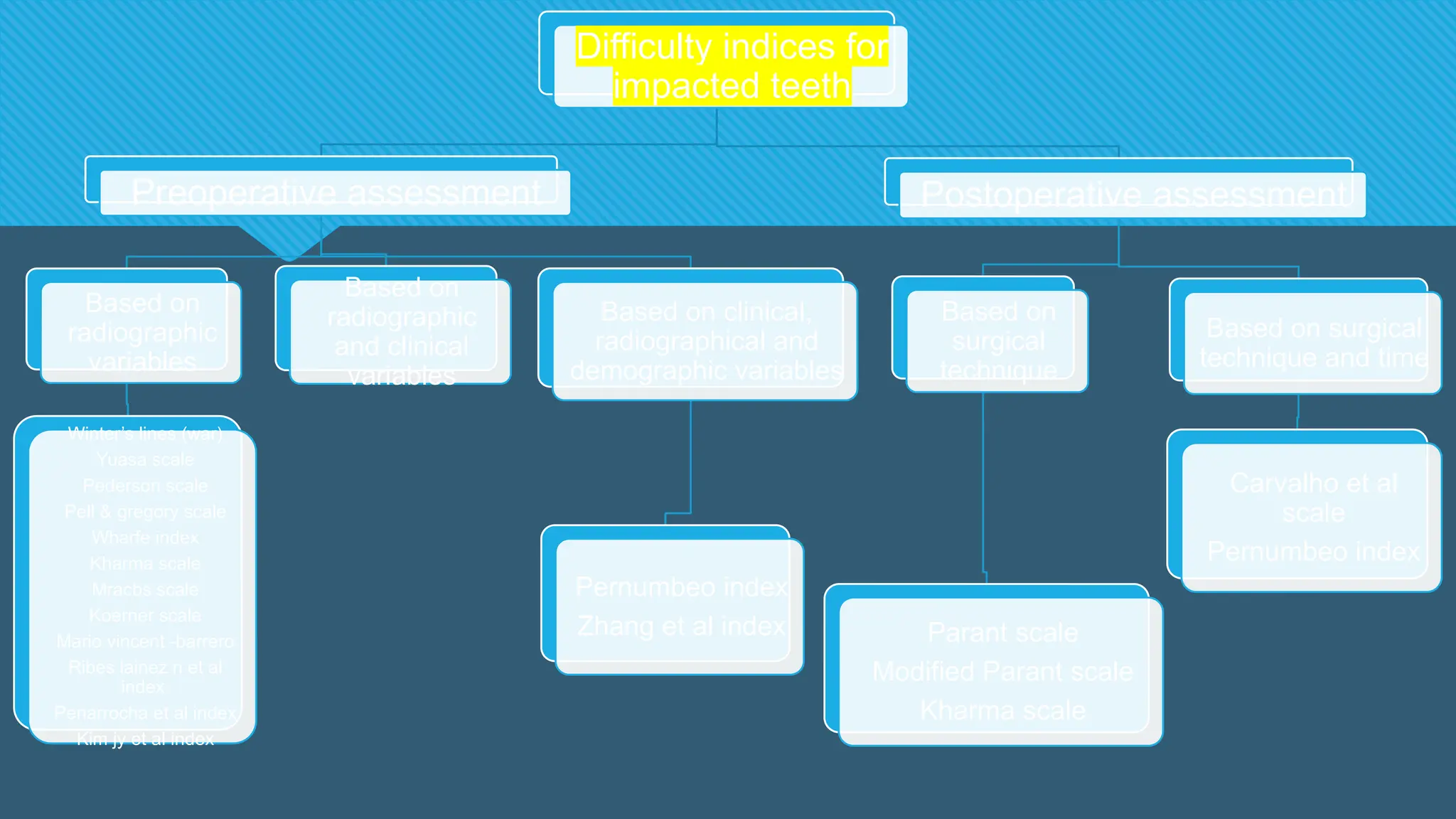
Difficulty indices for
impacted teeth
Preoperative assessment
Based on
radiographic
variables
Winter’s lines (war)
Yuasa scale
Pederson scale
Pell & gregory scale
Wharfe index
Kharma scale
Mracbs scale
Koerner scale
Mario vincent -barrero
Ribes lainez n et al
index
Penarrocha et al index
Kim jy et al index
Based on
radiographic
and clinical
variables
Based on clinical,
radiographical and
demographic variables
Pernumbeo index
Zhang et al index
Postoperative assessment
Based on
surgical
technique
Parant scale
Modified Parant scale
Kharma scale
Based on surgical
technique and time
Carvalho et al
scale
Pernumbeo index
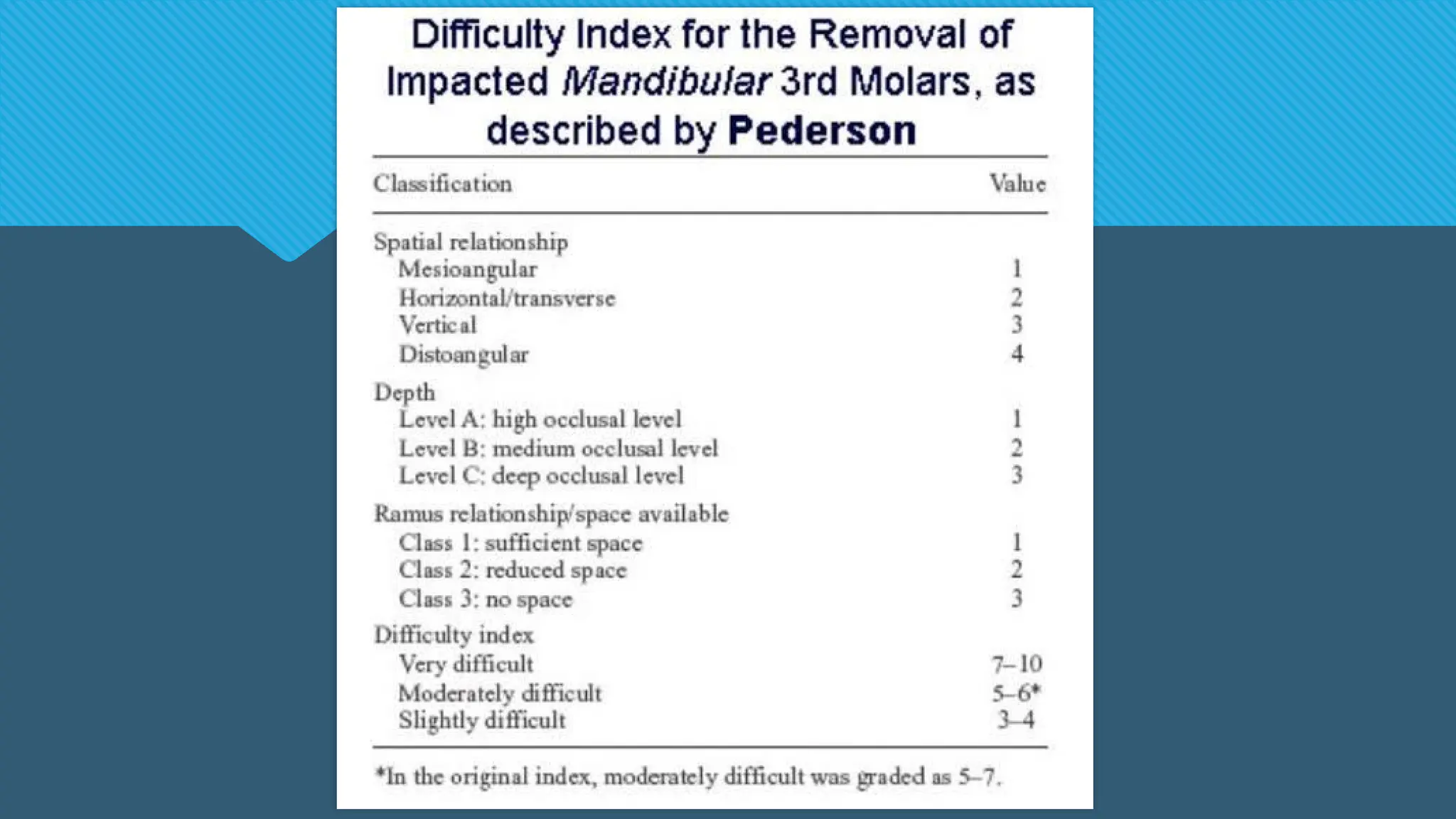
PEDERSON’S INDEX
 Pederson proposed a modification of the Pell–Gregory scale. The total scores by
which difficulty is judged are based mainly on local anatomy and radiographs.
 It does not take various relevant factors into account, such as bone density,
flexibility of the cheek, buccal opening and inverted tooth
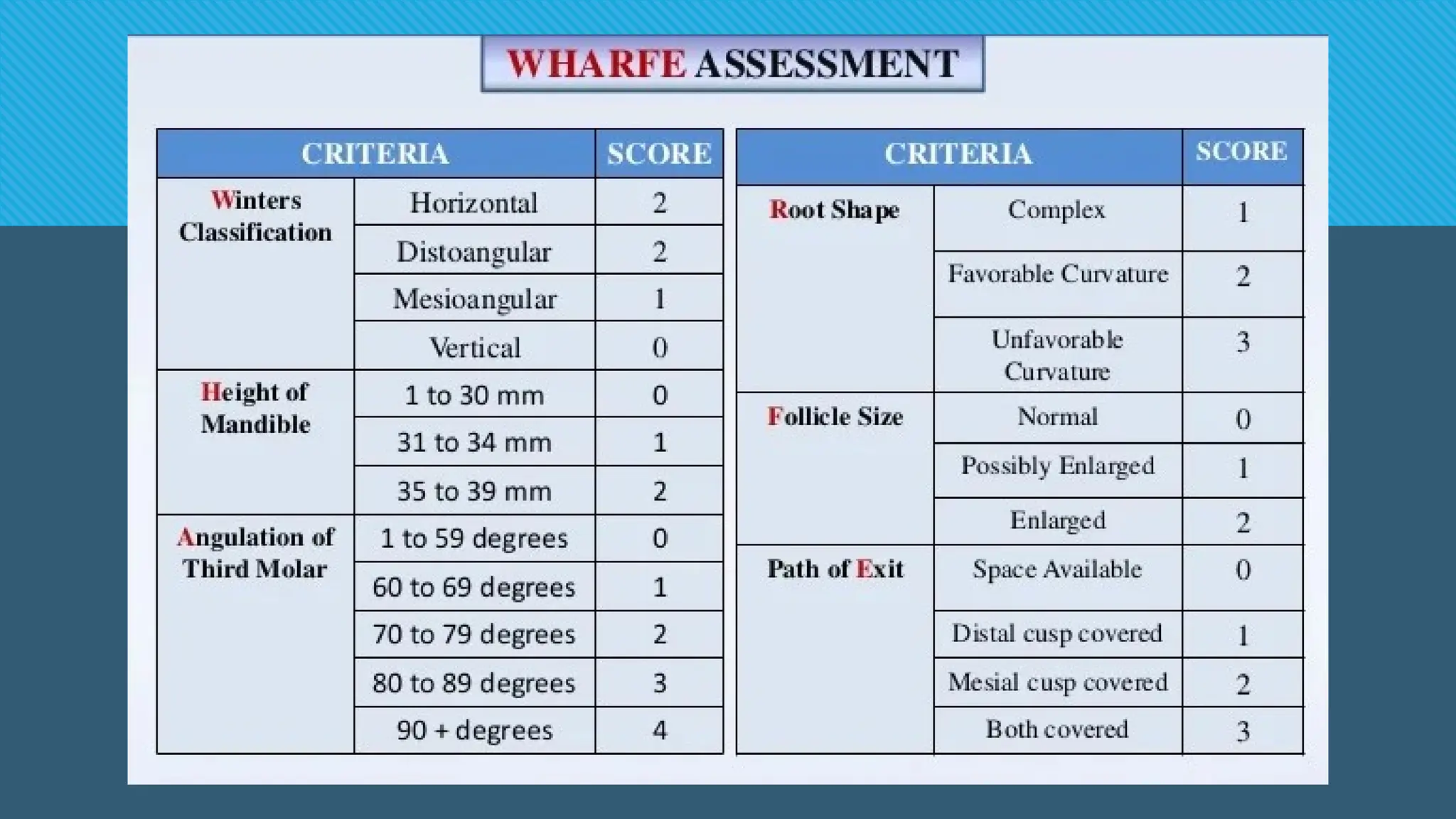
WHARFE’S ASSESSMENT
 Winter’s classification was expanded by Macgregor, to WHARFE which includes
the Winter’s lines along with other factors and has recently been used in several
studies.
 Increase in radiographic scoring of difficulty according to the WHARFE
classification system was associated with increased operating time
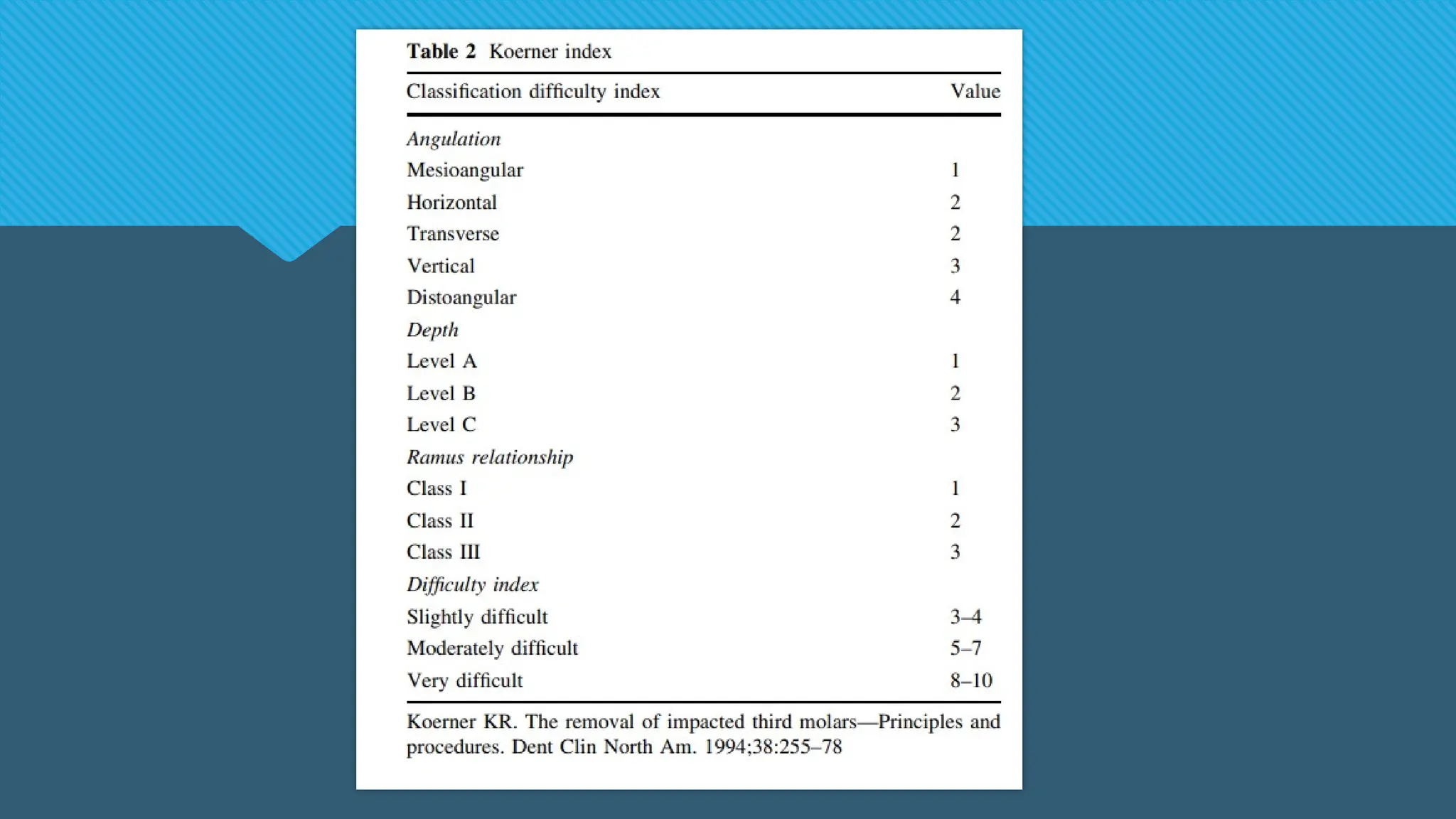
KOERNER INDEX
 Koerner et al. proposed a difficulty index scale for removal of these teeth on the
basis of local anatomy and radiographs, which were helpful in predicting the
difficulty that would be encountered intra-operatively, as well as the
postoperative complications.
 It covers indications for surgery and how indications and surgical difficulty
correspond with the age of the patient
PELL–GREGORY CLASSIFICATION
 The classification of such molars is based on their spatial relationships to the ascending
ramus of the mandible and to the occlusal plane.
 Garcia et al. studied using Pell–Gregory index class C to indicate ‘‘difficult,’’ specificity
was 88%
 But this classification is not a reliable predictor of surgical difficulty in the extraction of
vertical impacted lower third molars, suggesting that this classification is of little value
in clinical practice.
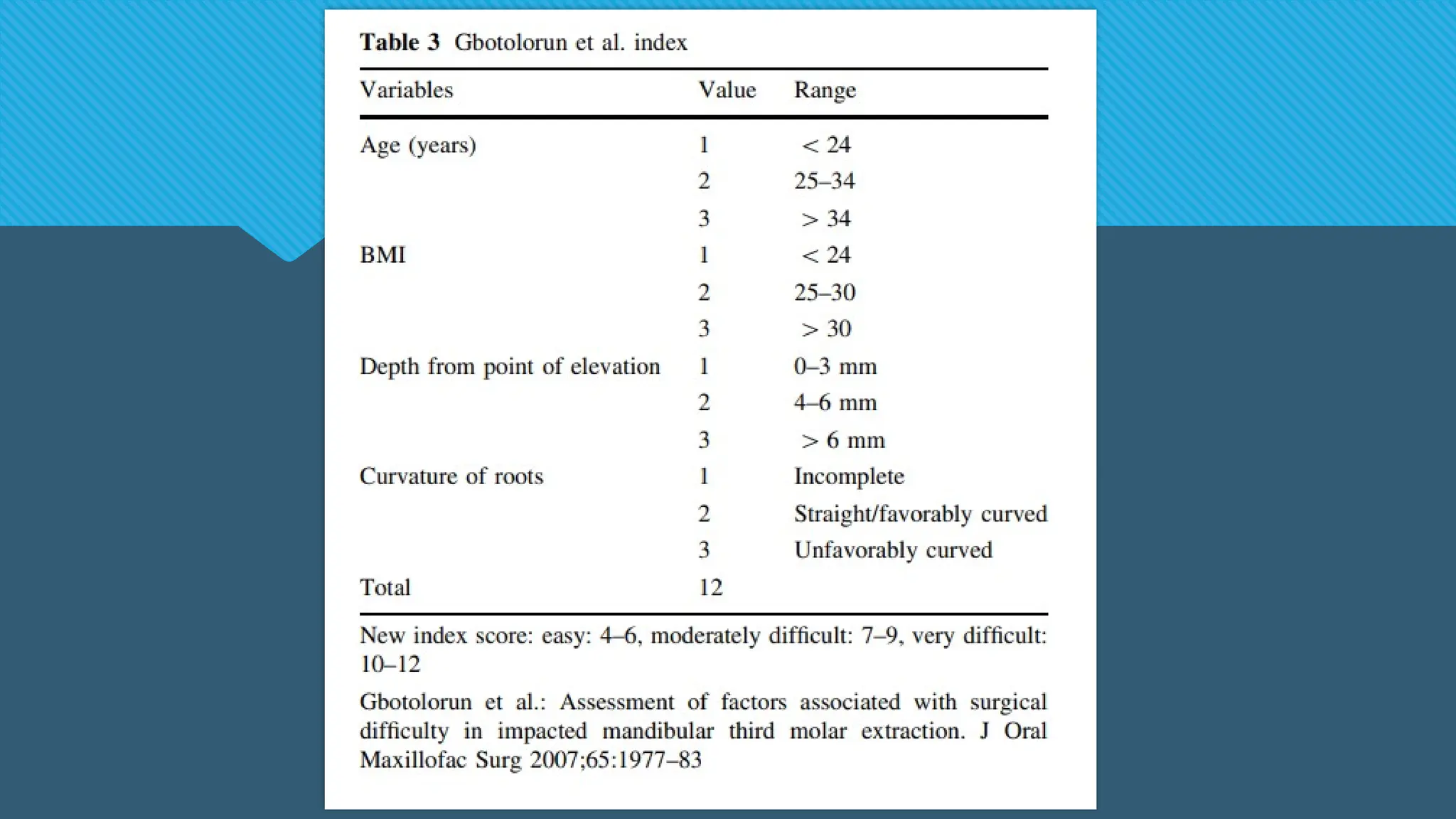
GBOTOLORUN INDEX
 Gbotolorun et al. proposed a preoperative index which uses four variables (both
clinical and radiologic).
 The major difference of this index and the Pederson index is the incorporation of
the clinical variables (namely age and BMI).
 It was also associated with the curvature of roots of the impacted tooth and the
depth from point of elevation
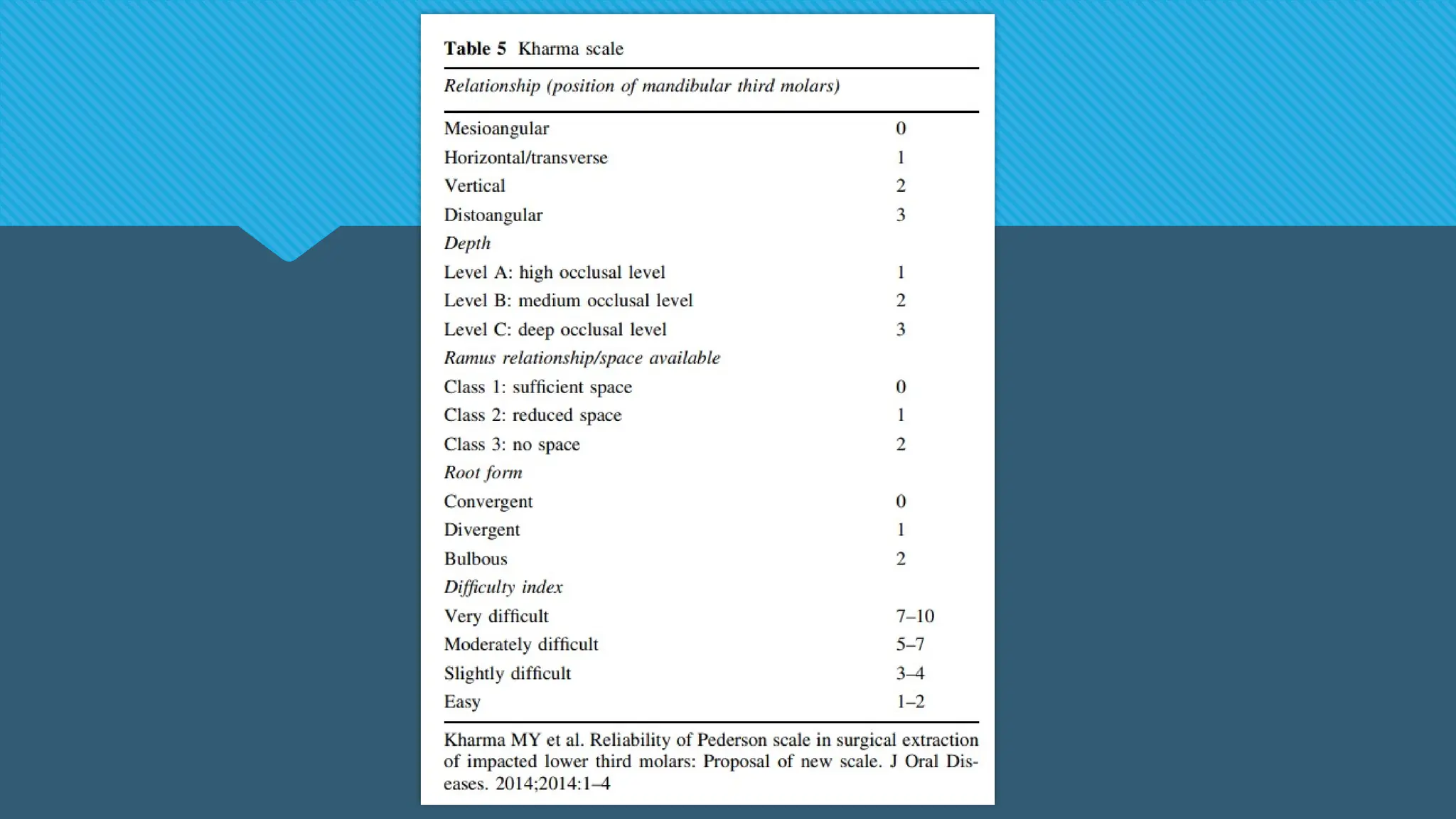
KHARMA SCALE
 Kharma scale proposed a new index based on four factors: tooth angulation, the depth of
the third molar in the mandible, the relationship with the ramus/space available and root
form and postoperative difficulty indicated by Parant scale which has shown a significant
correlation.
PART-B
CONTENTS
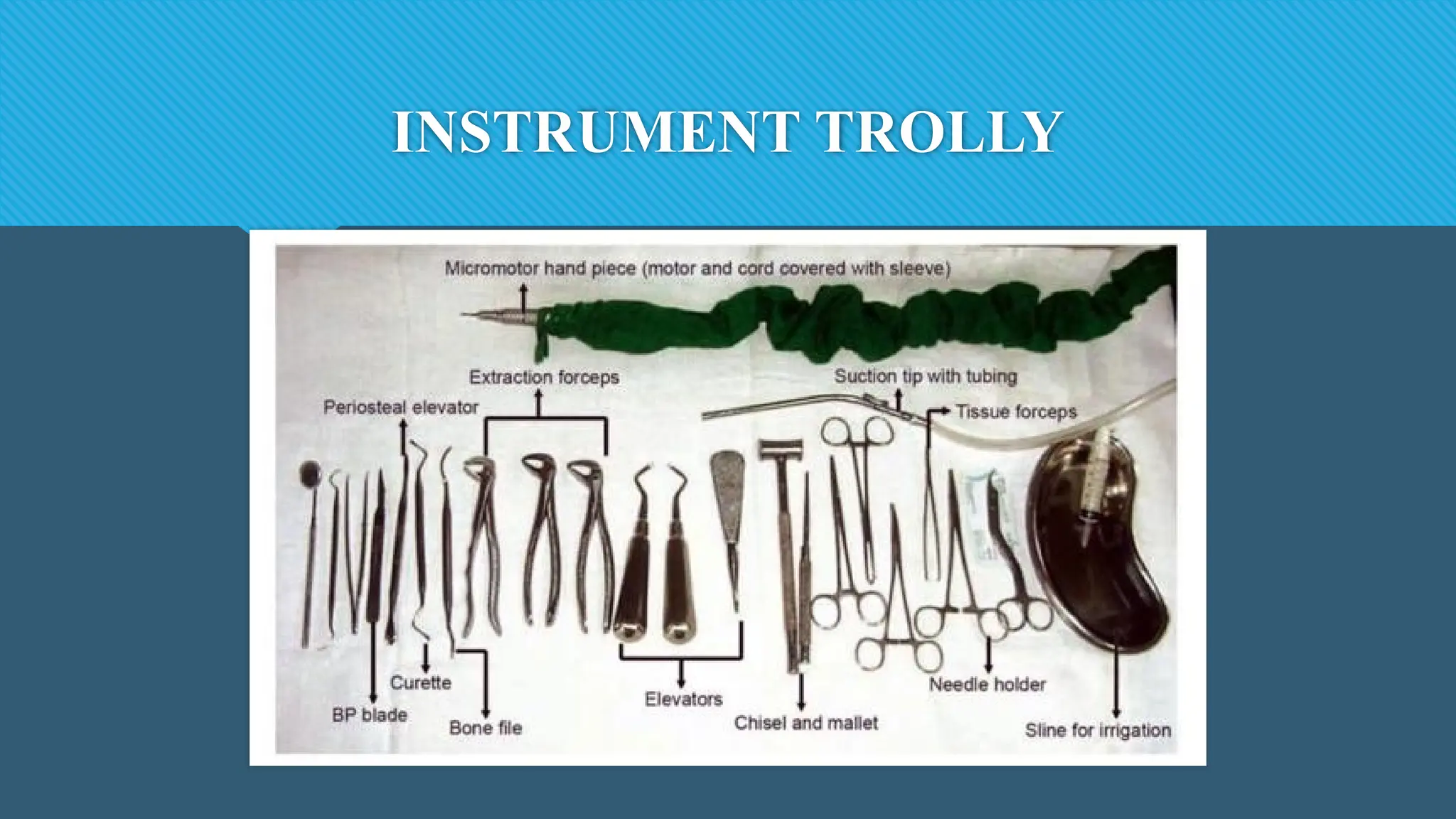
 ARMAMENTARIUM
 SURGICAL PROCEDURE
 INCISION AND FLAP DESIGN
 BONE REMOVAL
 SECTIONING
 CLOSURE
 MEDICATION
 POSTOPERATIVE COMPLICATIONS AND MANAGEMENT
INSTRUMENT TROLLY
 Steps for surgical removal of impacted teeth:-
Consent
Asepsis and isolation
Local anesthesia/LA + sedation/ GA
Incision--Adequate exposure
Removal of bone to expose the tooth
Sectioning of tooth with bur or chisel (optional)
Elevation
Delivery of tooth out of socket
Debridement and smoothening of bone/ Wound toilet
Hemostasis
Closure
Postop instructions
Follow up
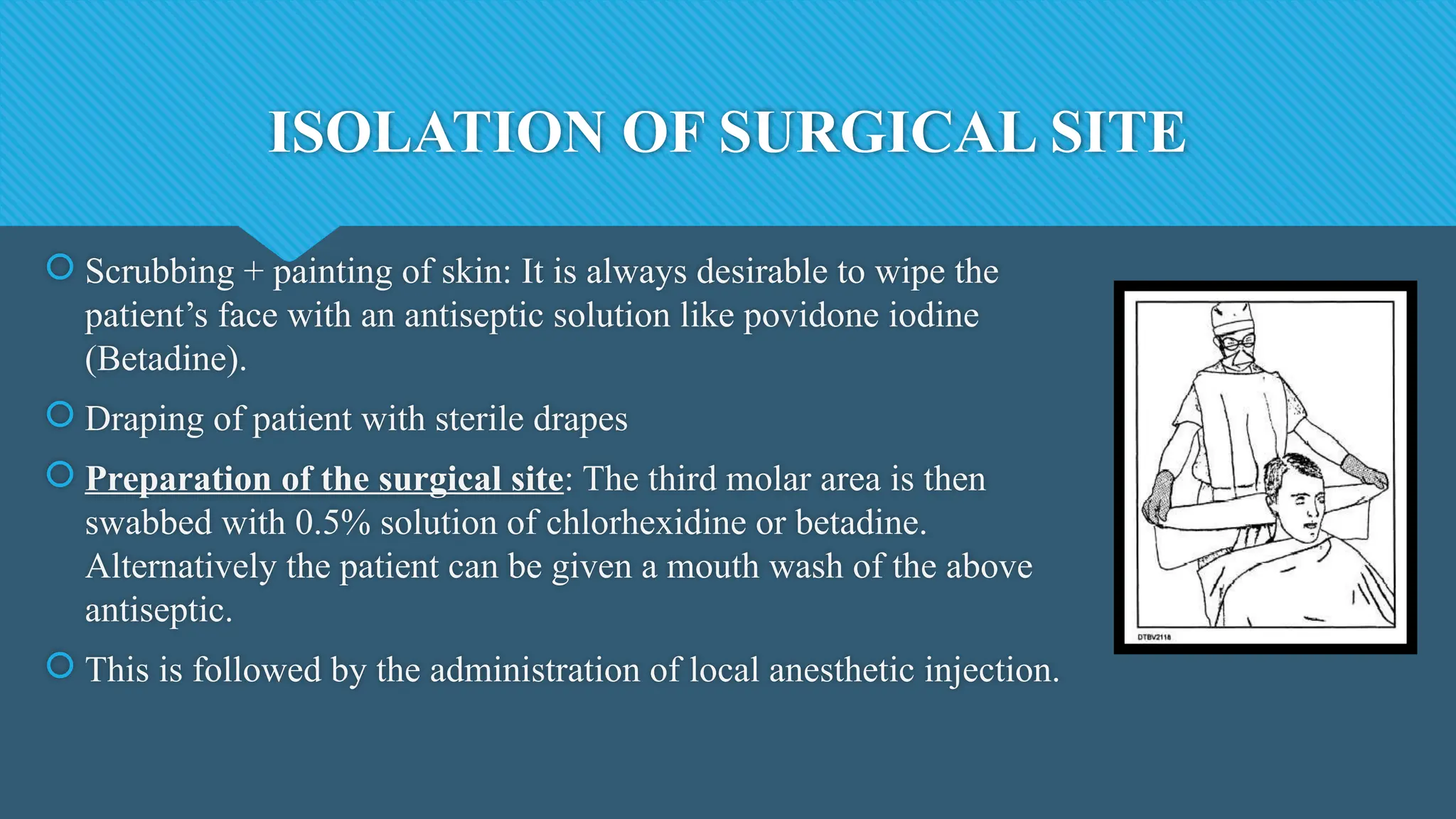
ISOLATION OF SURGICAL SITE
 Scrubbing + painting of skin: It is always desirable to wipe the
patient’s face with an antiseptic solution like povidone iodine
(Betadine).
 Draping of patient with sterile drapes
 Preparation of the surgical site: The third molar area is then
swabbed with 0.5% solution of chlorhexidine or betadine.
Alternatively the patient can be given a mouth wash of the above
antiseptic.
 This is followed by the administration of local anesthetic injection.
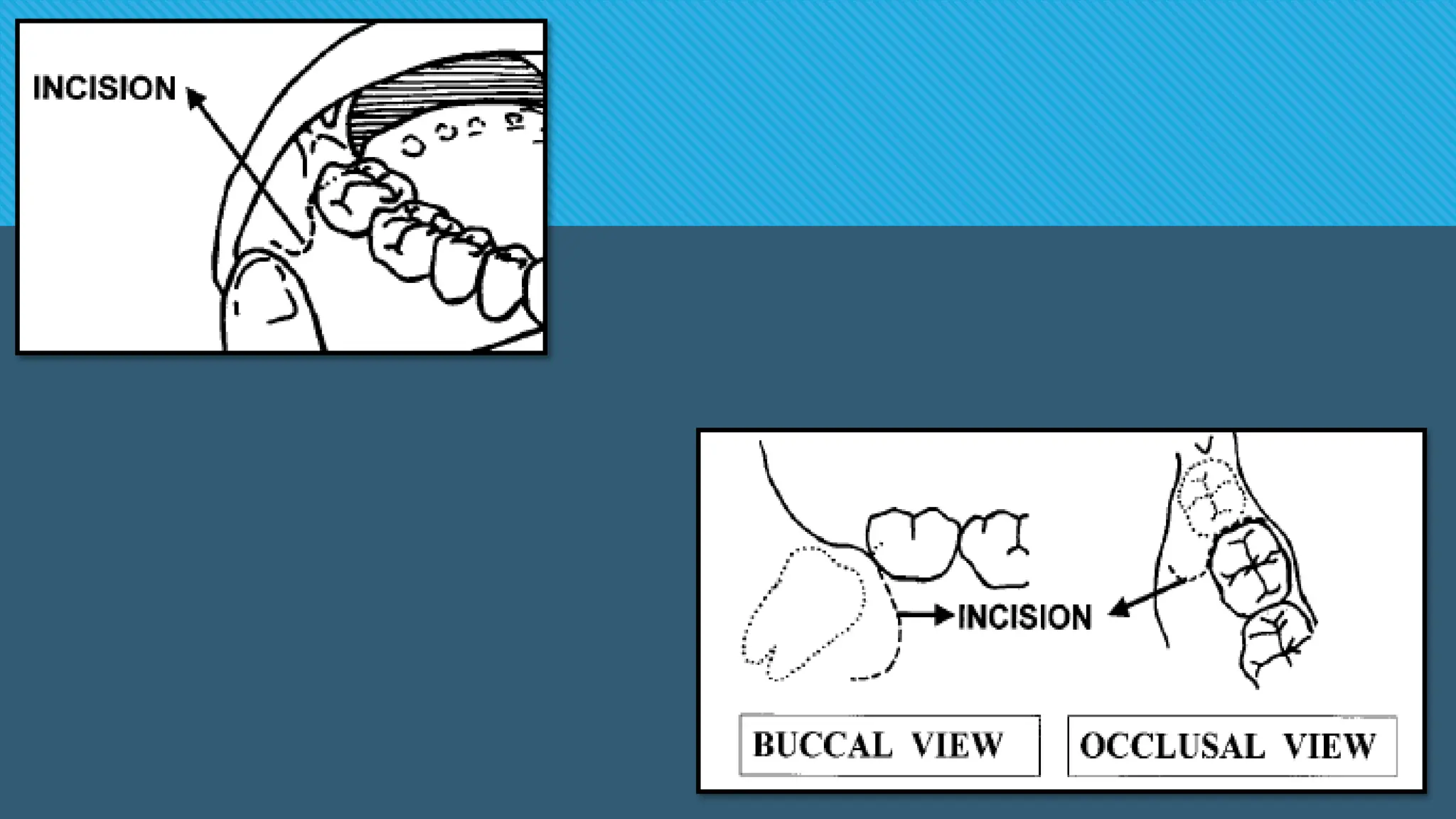
INCISION AND FLAP DESIGN
 The method of gaining access through incision dates back to year 1849, when John Tomes
first described the technique to remove impacted third molar
 The first step in removing the impacted tooth is to reflect a mucoperiosteal flap.
 The flap should be of adequate size to permit access, allow adequate visibility and to ensure
unhindered healing without periodontal pocket formation distal to second molar.
 A flap is a section of soft tissue outlined by a surgical incision. It carries its own
blood supply, permits surgical access, and when replaced and sutured is expected
to heal by primary intention. A full-thickness mucoperiosteal flap includes the
surface mucosa, submucosa and the periosteum
 There are different types of flaps to perform third molar surgery. The most commonly used are:
1. Envelope flap
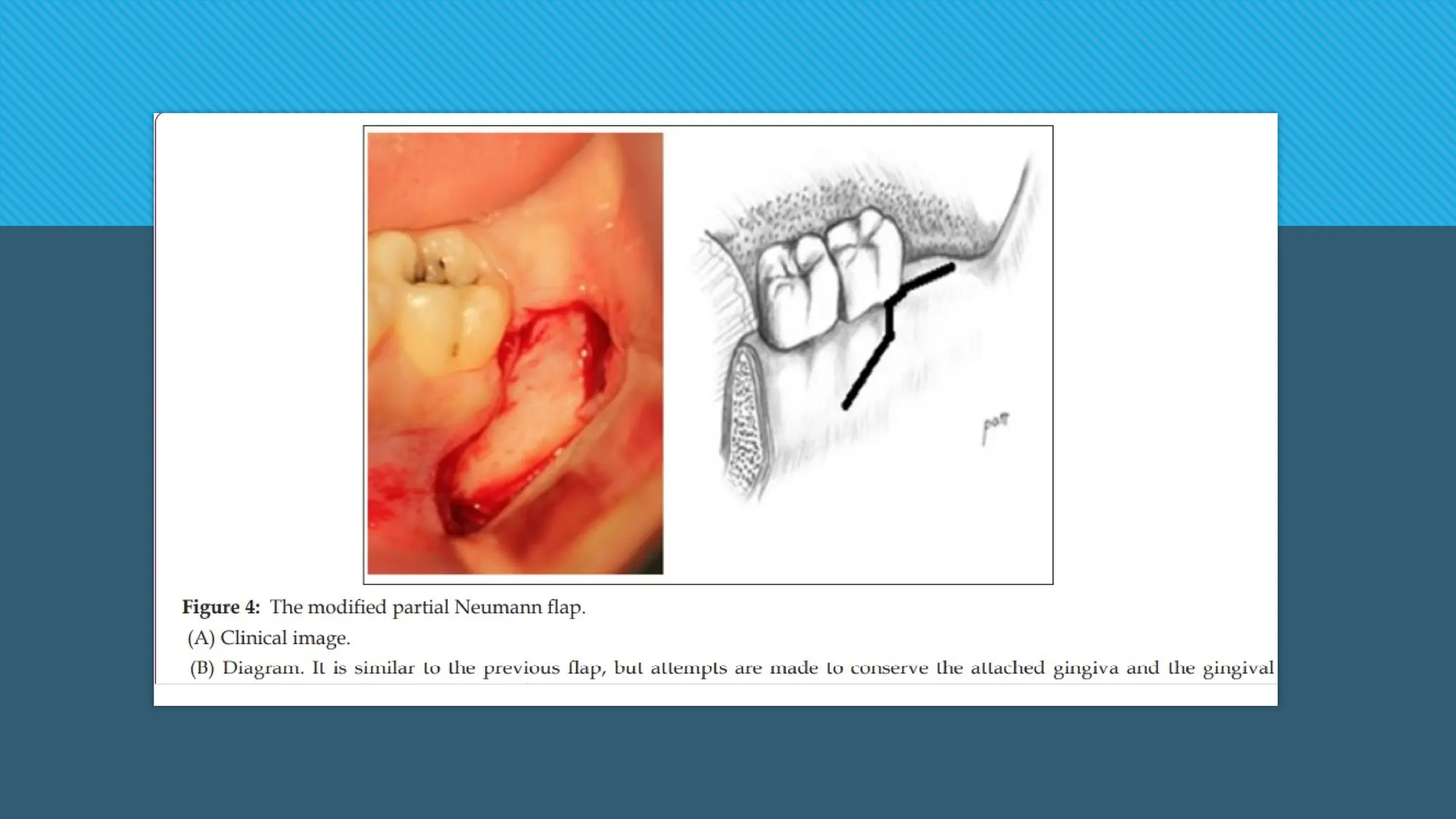
2. Partial Newmann flap (triangular flat, with three corners or vertical incision);
3. Modified partial Newmann flap (modified triangular, bayonet, modified Szmyd or L-shaped
incision)
4. Ward’s incision
5. Modified Ward’s incision
6. Lingual flap
7. Comma shaped incision
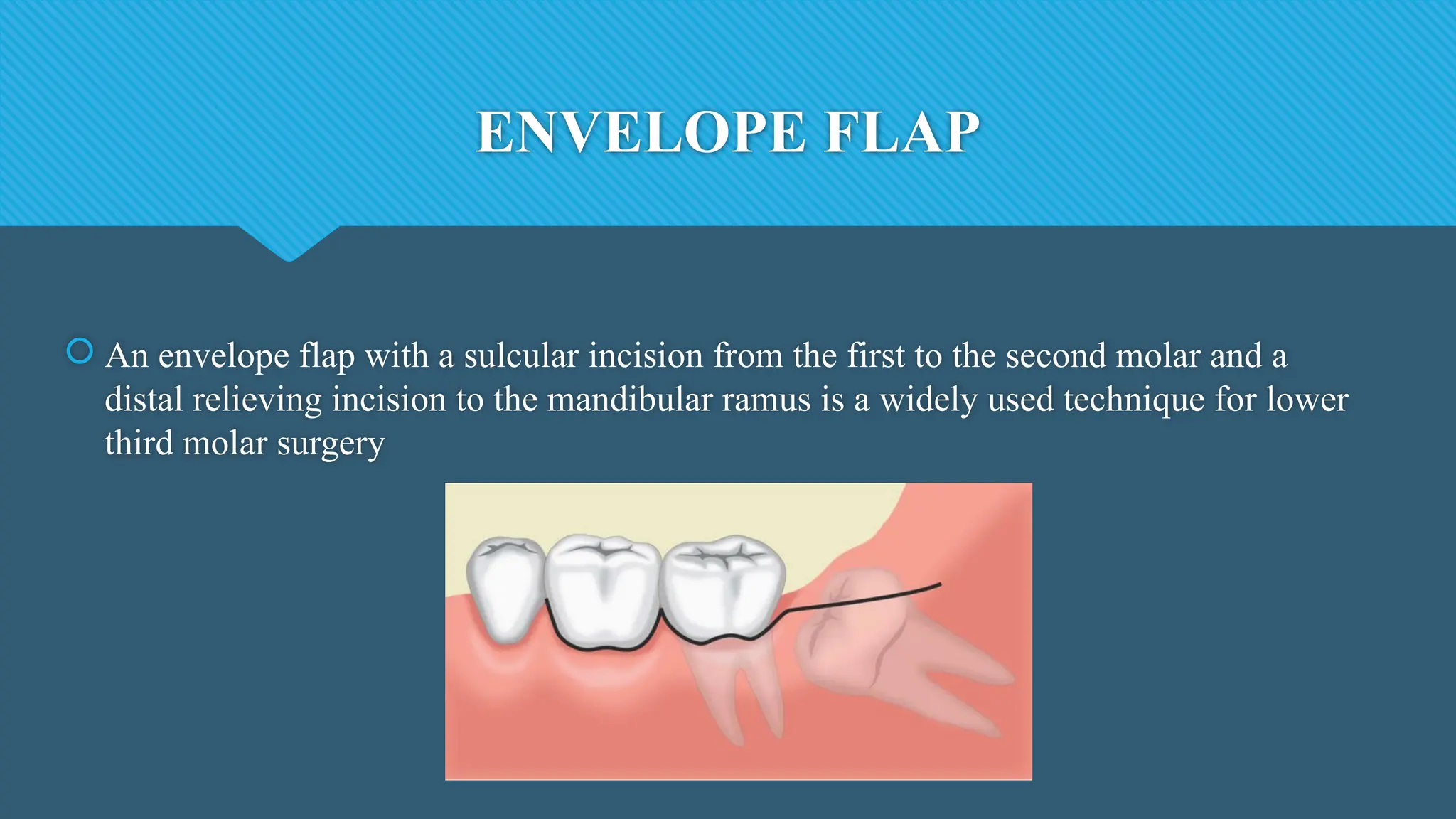
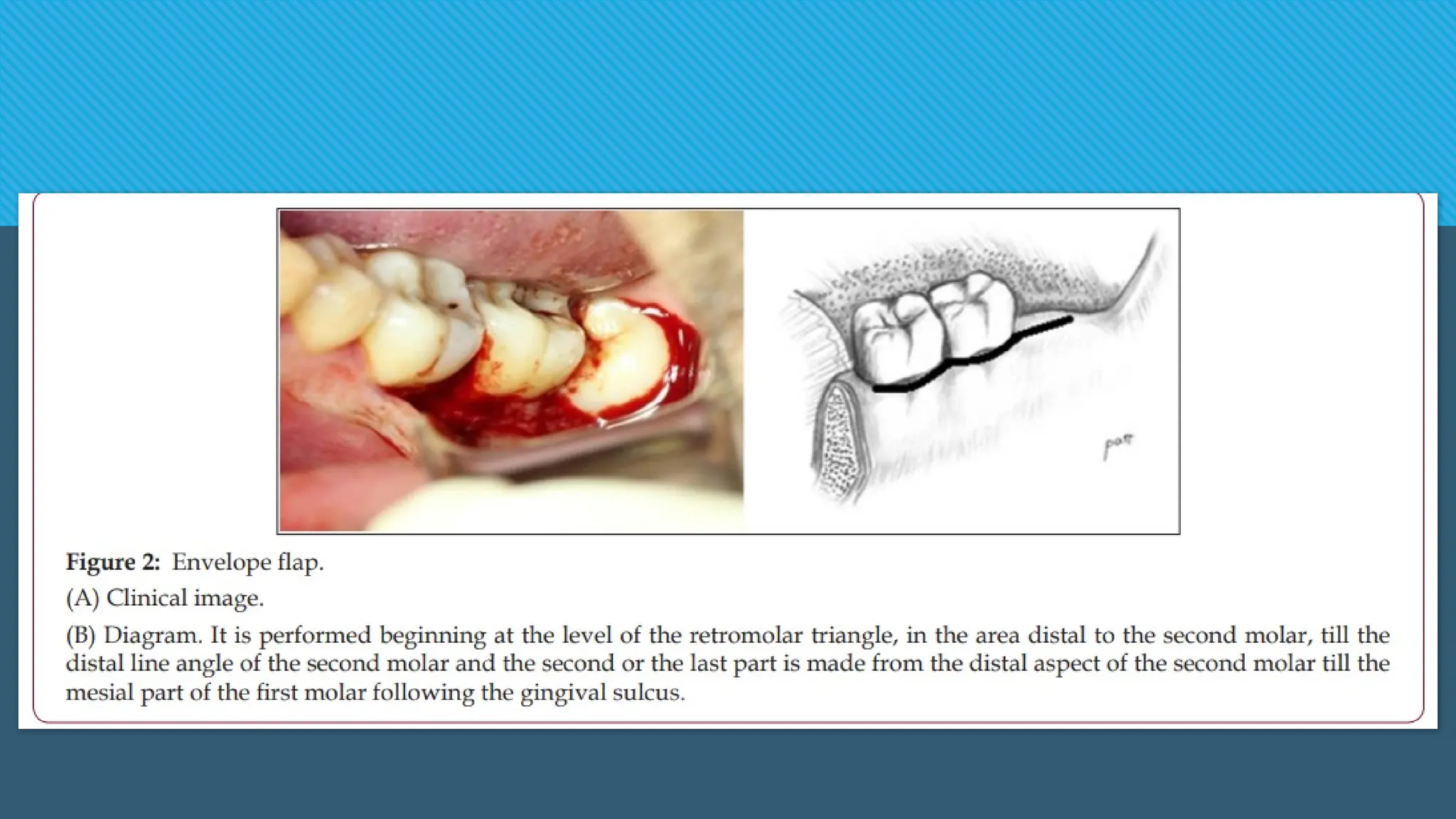
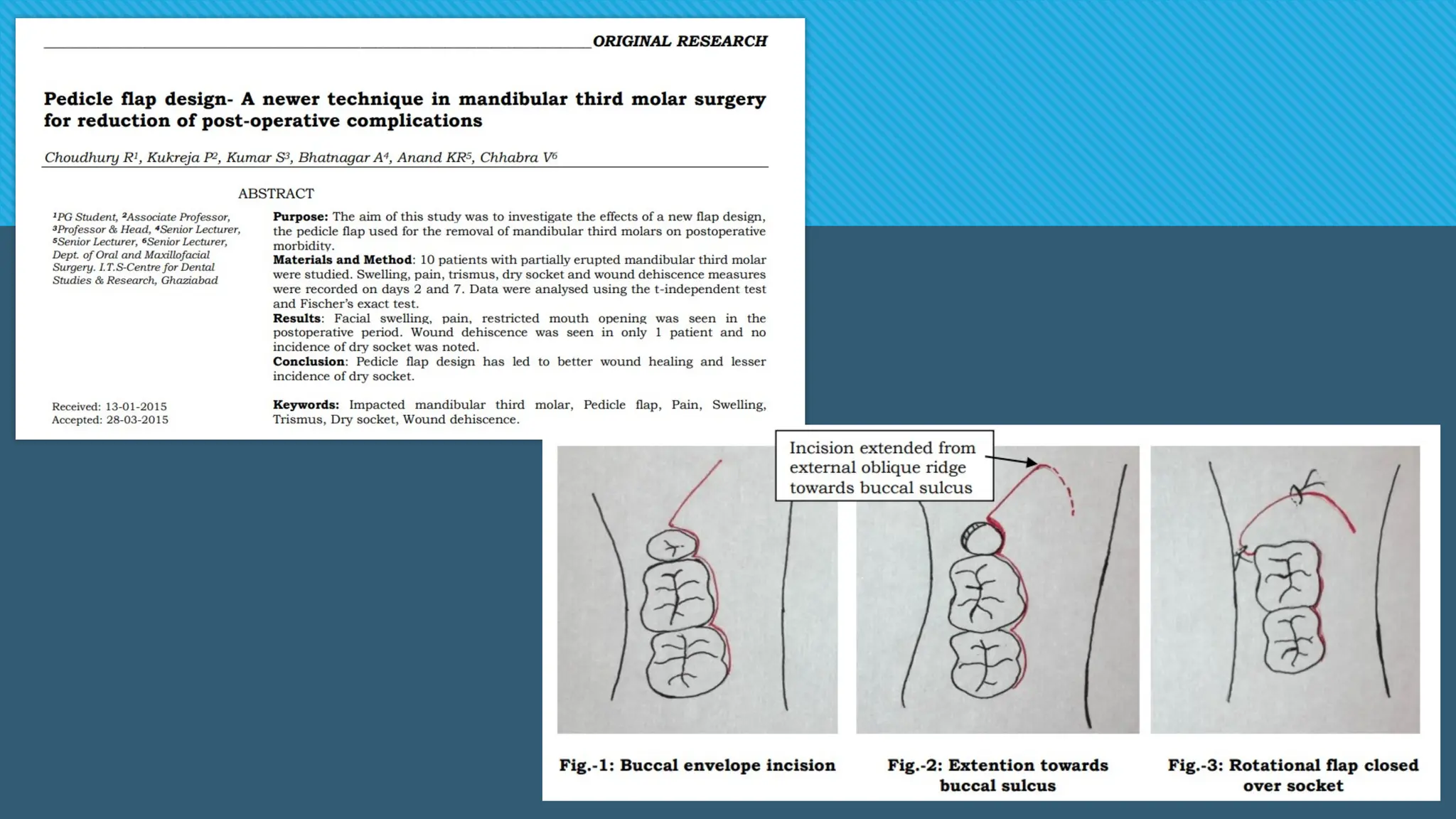
ENVELOPE FLAP
 An envelope flap with a sulcular incision from the first to the second molar and a
distal relieving incision to the mandibular ramus is a widely used technique for lower
third molar surgery
 The envelope flap is closed with two or three single button sutures distal to the second
molar, with special attention to an exact repositioning in the area of the gingival margin. In
addition, the flap is adapted with interdental sutures between the first and the second
molars.
 Advantages
1. Good exposure during surgery
2. Mesial cut could be extended if cystic surgery or endosurgery is required
3. The envelope flap provides adequate soft tissues, covering for any bone defects
4. The envelope flap has a wider base, assuring vascularity up to the wound margins
 Limitations
1. Inducing loss of the alveolar bone distal to the second molar probably due to wound
dehiscence
2. Sulcular incision may lead to periodontal damage
3. The envelope flap leads to a total loss of the attached gingiva in this area after the
operation, thus causing pocket formation and loss of attachment in the area of the second
molar
4. Dehiscence to the second molar
5. Hypersensitivity in the area of the distally exposed root surface of the second molar
6. Alveolar osteitis and soft tissue abscess are severe complications
PARTIAL NEWMANN FLAP/TRIANGULAR FLAP
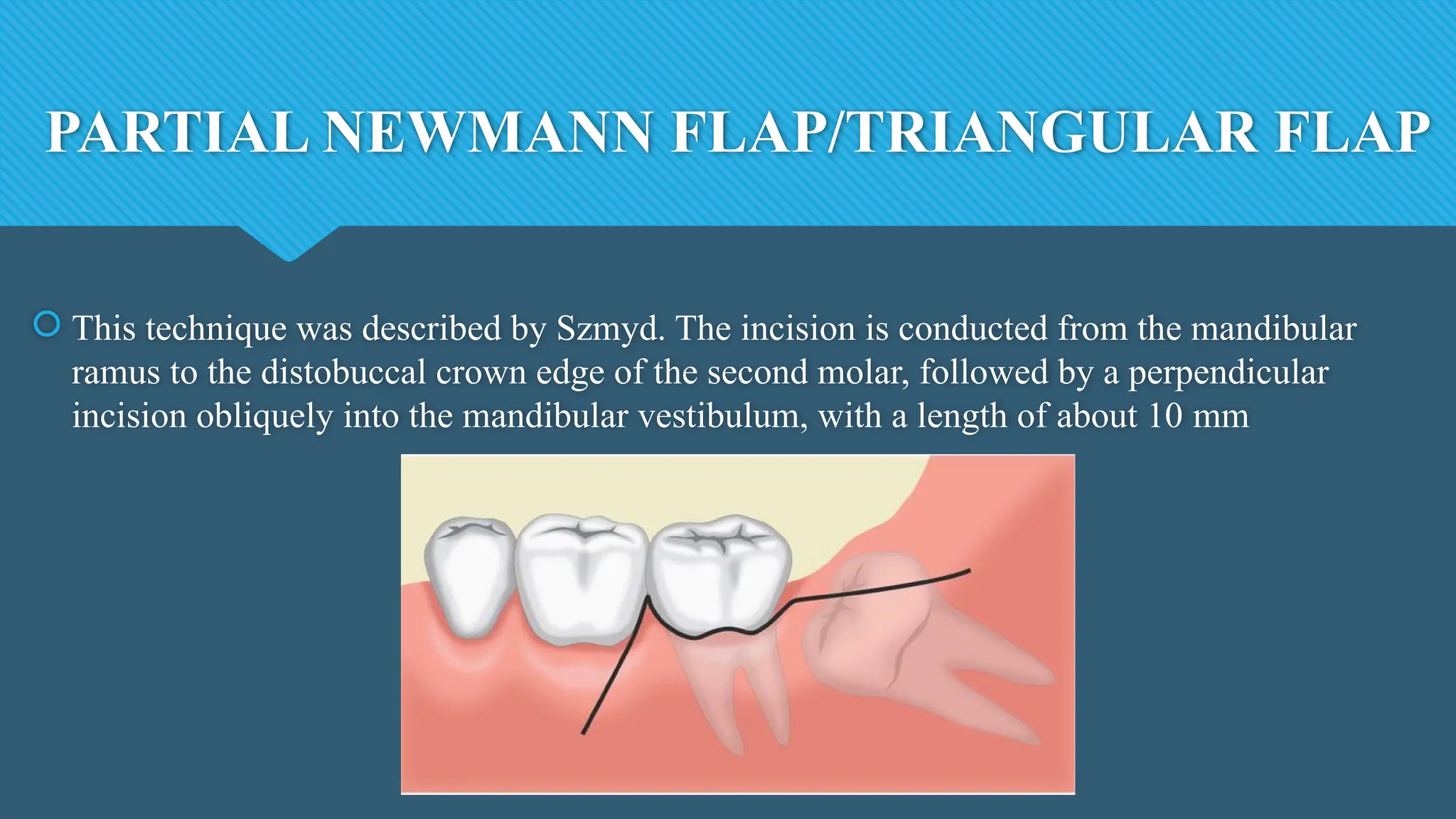
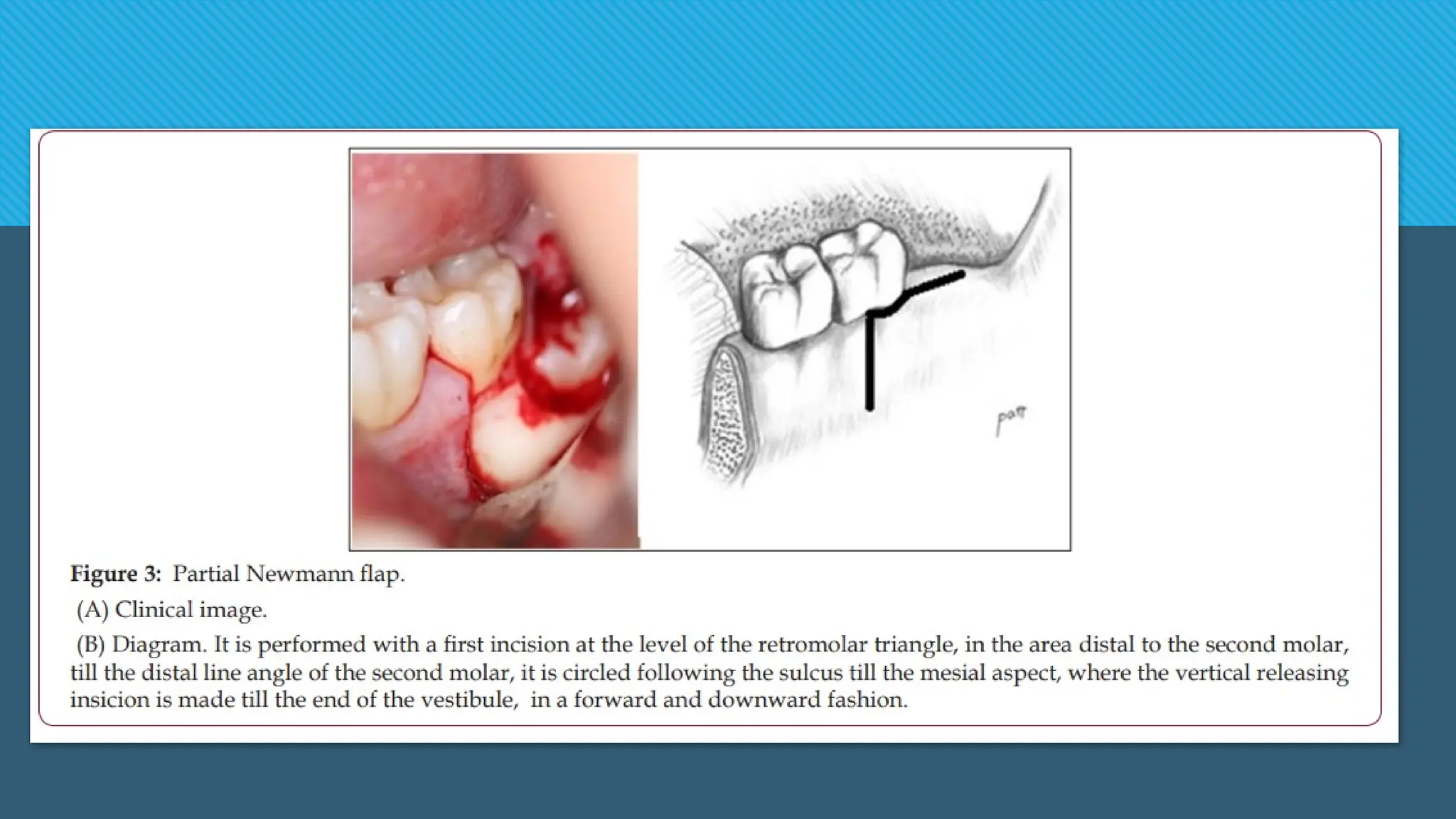
 This technique was described by Szmyd. The incision is conducted from the mandibular
ramus to the distobuccal crown edge of the second molar, followed by a perpendicular
incision obliquely into the mandibular vestibulum, with a length of about 10 mm
 For suturing, the same suturing technique is used distally (envelop), whereas the
perpendicular incision is only adapted with a single coronally placed suture. The main aim is
exact repositioning of the gingival margin in the area of the second molar. The loose
adaption in the apical portion allows easy relief of a hematoma.
 Advantages
1. Reduces the incidence of wound dehiscence
2. A suitable choice for compromised cases of nicotine exposure
3. This flap can be easily moved to the lingual, ensuring a wound closure that is almost
tension-free
 Limitations
1. Swelling and trismus
2. Pain
3. No significant difference in postoperative complications between the lingually based
triangular flap and the traditional buccally based triangular flap after surgery of the
third molar
MODIFIED PARTIAL NEWMANN
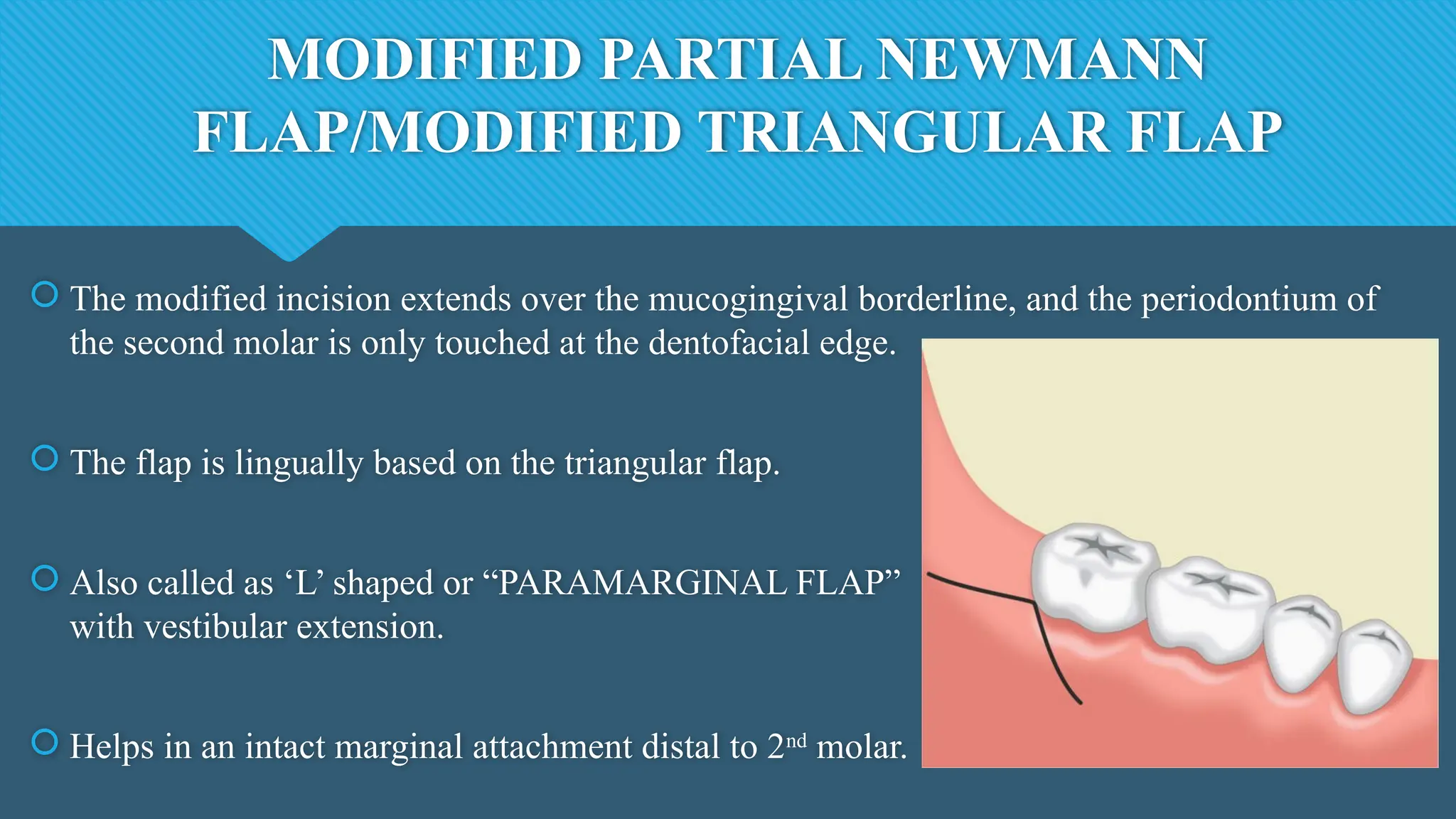
FLAP/MODIFIED TRIANGULAR FLAP
 The modified incision extends over the mucogingival borderline, and the periodontium of
the second molar is only touched at the dentofacial edge.
 The flap is lingually based on the triangular flap.
 Also called as ‘L’ shaped or “PARAMARGINAL FLAP” or flap
with vestibular extension.
 Helps in an intact marginal attachment distal to 2nd
molar.
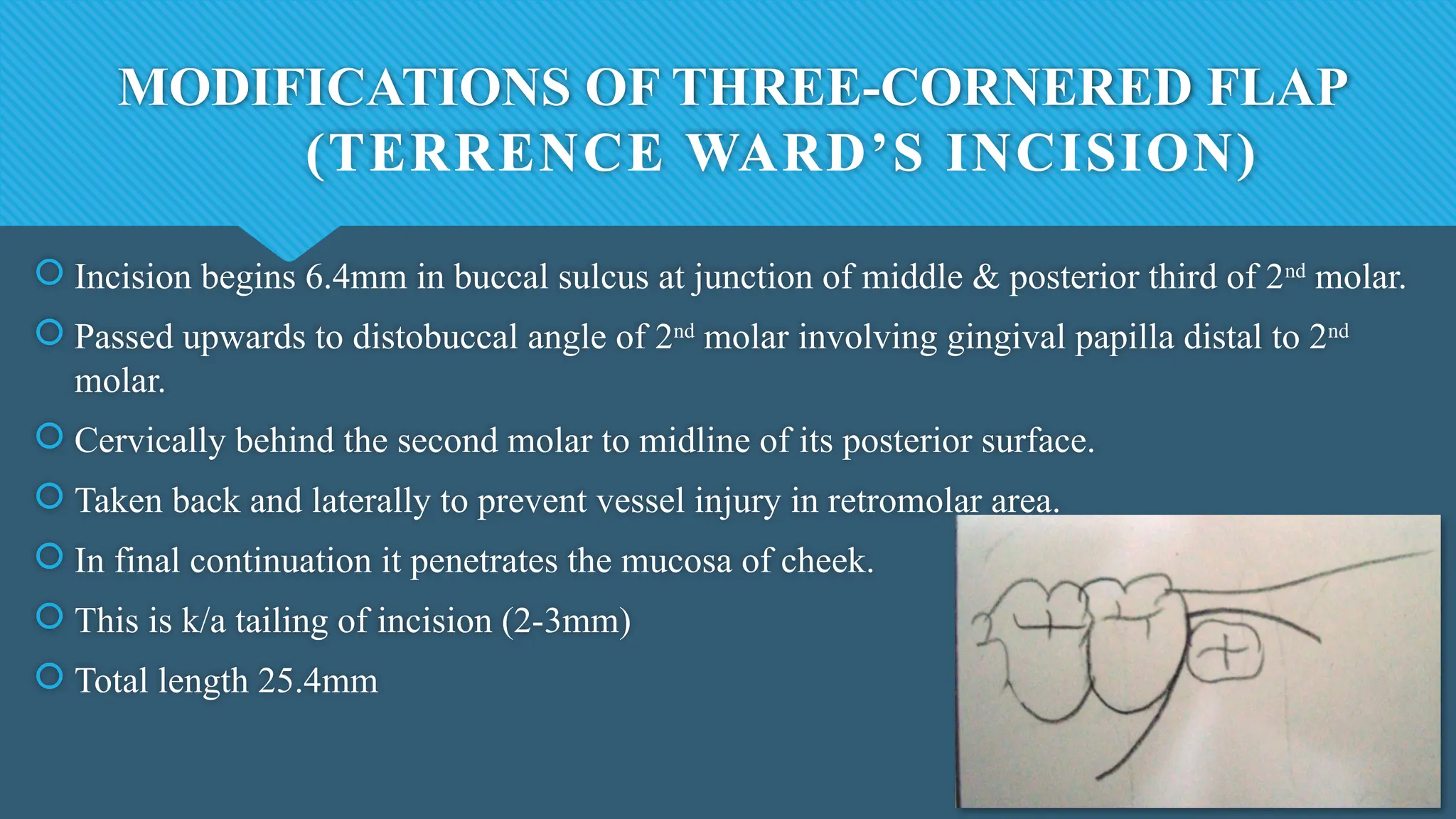
MODIFICATIONS OF THREE-CORNERED FLAP
(TERRENCE WARD’S INCISION)
 Incision begins 6.4mm in buccal sulcus at junction of middle & posterior third of 2nd
molar.
 Passed upwards to distobuccal angle of 2nd
molar involving gingival papilla distal to 2nd
molar.
 Cervically behind the second molar to midline of its posterior surface.
 Taken back and laterally to prevent vessel injury in retromolar area.
 In final continuation it penetrates the mucosa of cheek.
 This is k/a tailing of incision (2-3mm)
 Total length 25.4mm
 This incision allows adequate closure preventing distal surface of second molar from pocket
formation and bone loss
 Uses of tailing
1. Tailing provides laxity to the flap preventing the flap from tearing off while retraction.
2. Few fibers of buccinator in tailing helps in easy retraction of flap.
 Importance of tailing
1. If we go too deep then there are chances of incising buccinator muscle causing hemorrhage
2. If we go too high there are chances of exposure of buccal fat pad.
3. Chances of damage to parotid duct while going upwards.
MINOR MODIFICATION IN TERRENCE
WARD’S INCISION
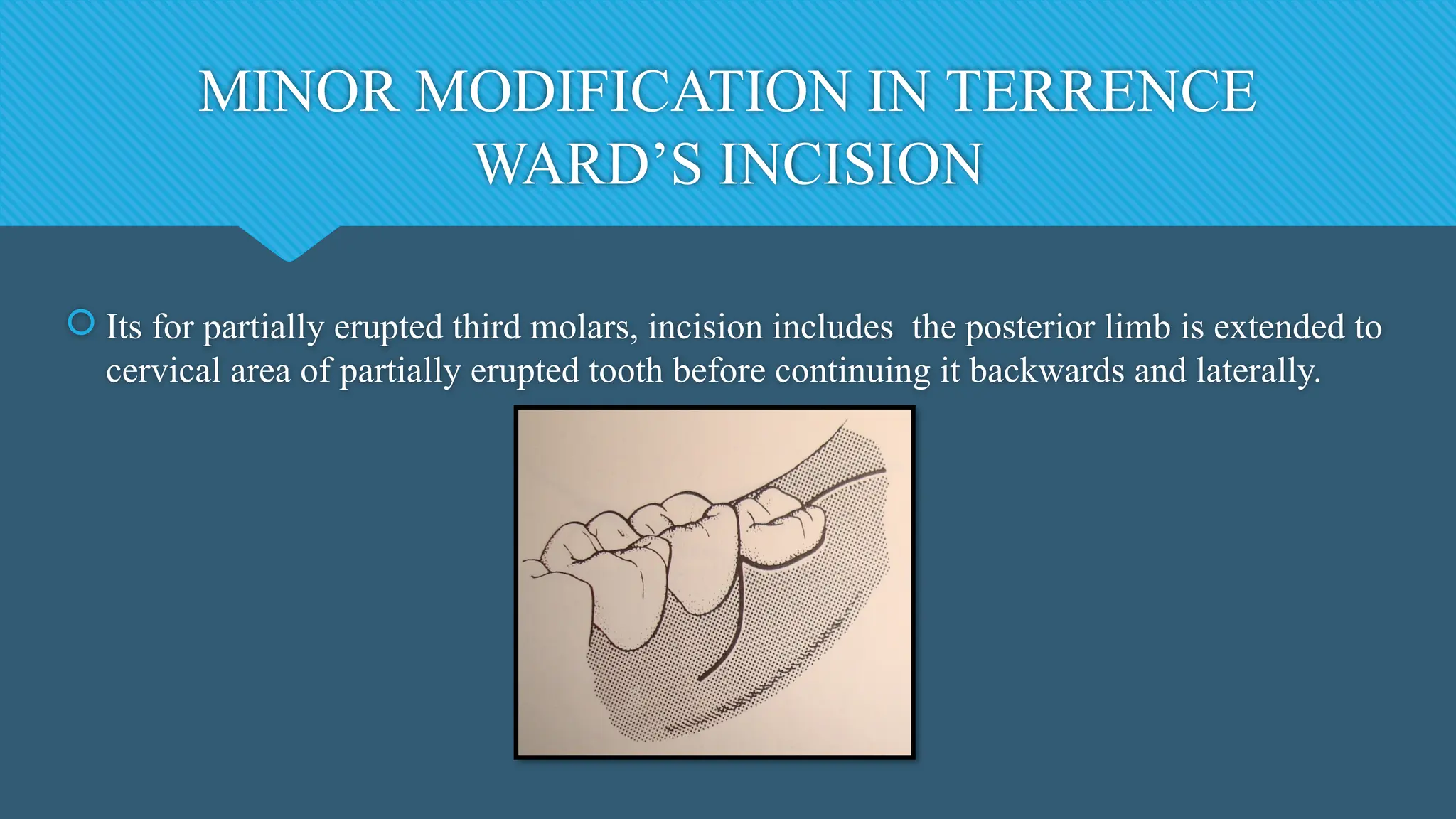
 Its for partially erupted third molars, incision includes the posterior limb is extended to
cervical area of partially erupted tooth before continuing it backwards and laterally.
MODIFIED WARD’S INCISION
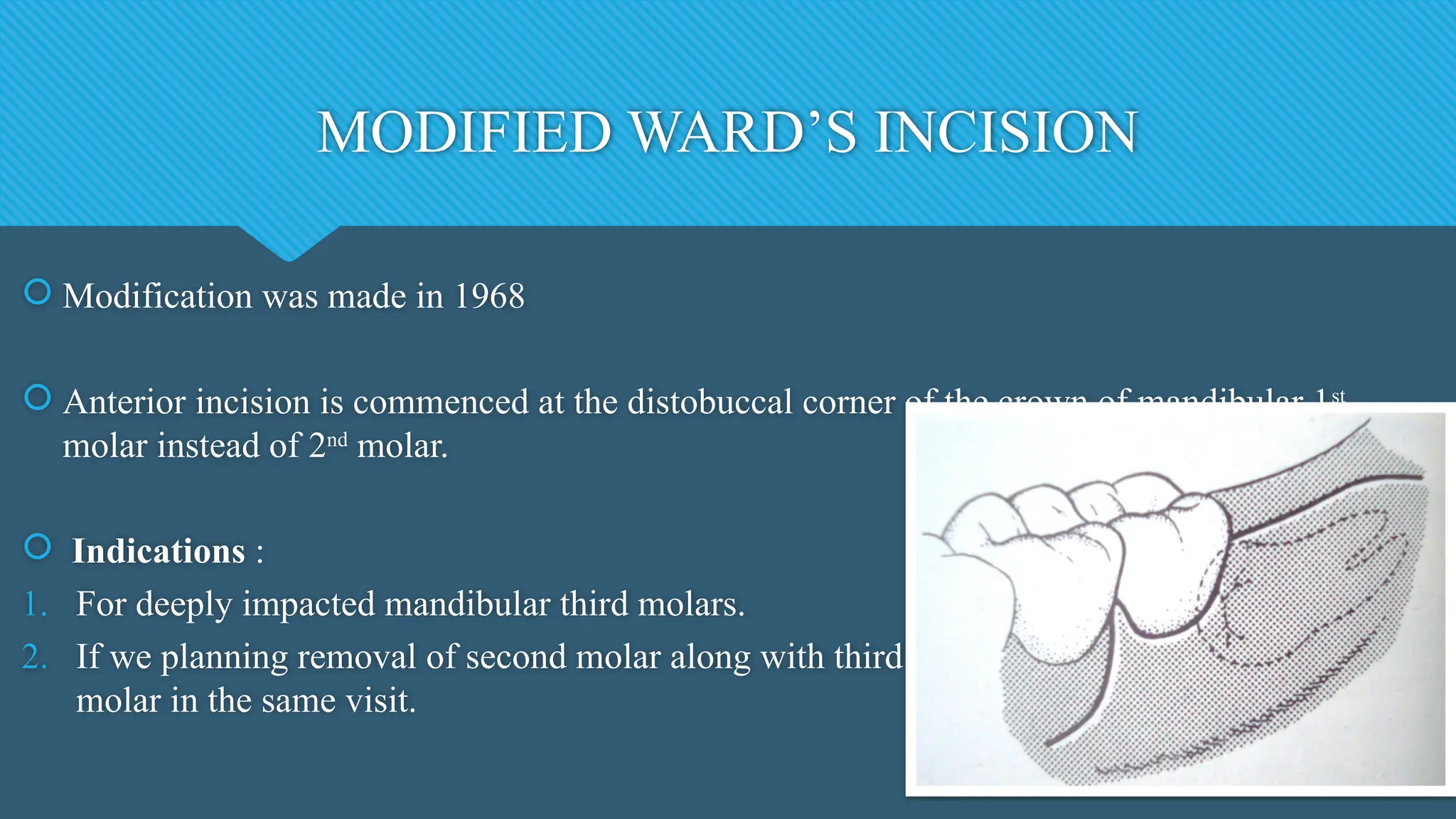
 Modification was made in 1968
 Anterior incision is commenced at the distobuccal corner of the crown of mandibular 1st
molar instead of 2nd
molar.
 Indications :
1. For deeply impacted mandibular third molars.
2. If we planning removal of second molar along with third
molar in the same visit.
LINGUAL FLAP
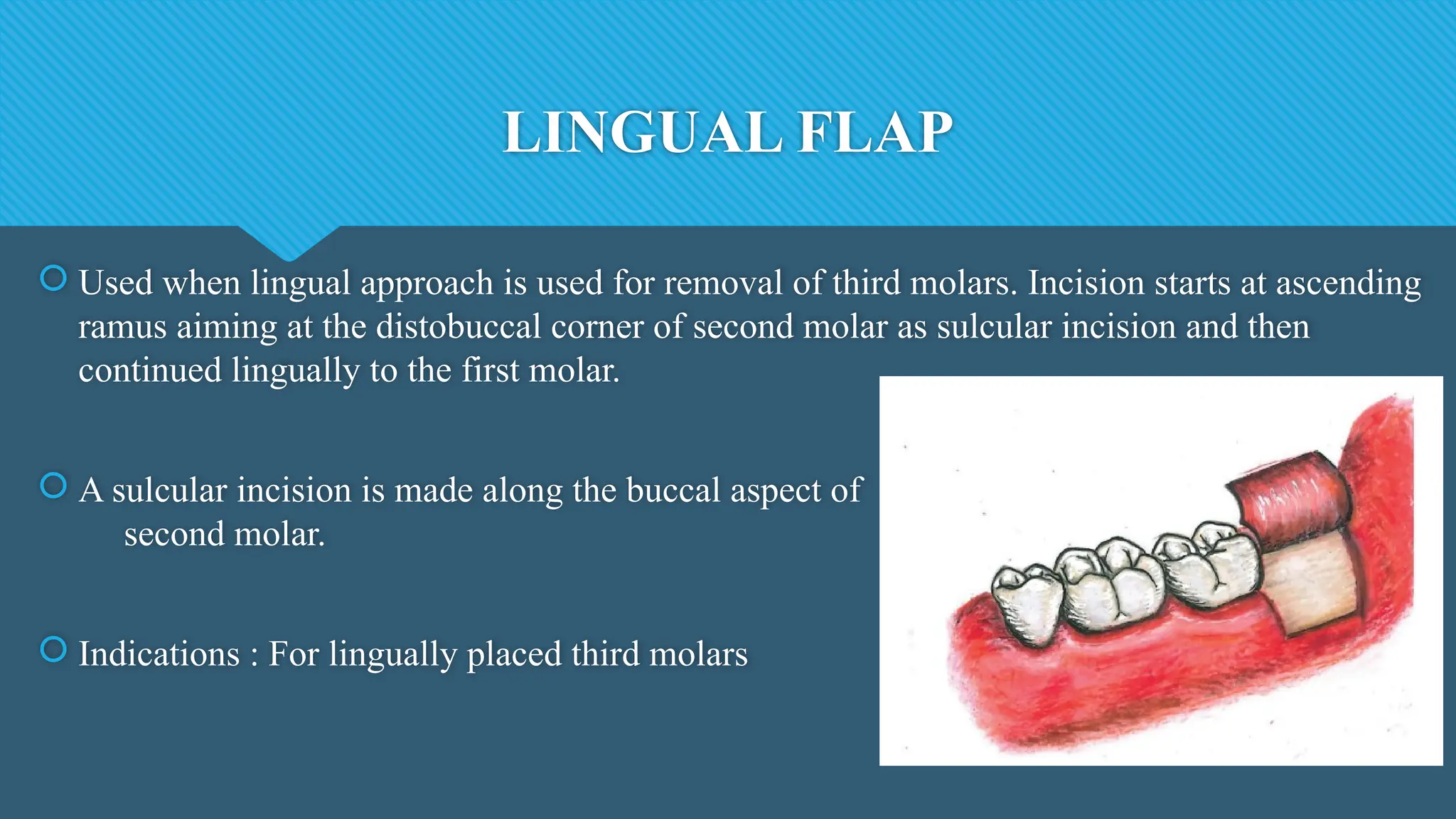
 Used when lingual approach is used for removal of third molars. Incision starts at ascending
ramus aiming at the distobuccal corner of second molar as sulcular incision and then
continued lingually to the first molar.
 A sulcular incision is made along the buccal aspect of
second molar.
 Indications : For lingually placed third molars
COMMA SHAPED INCISION
 Starting from a point at the depth of stretched vestibular reflection posterior to the distal
aspect of the preceding second molar, the incision is made in an anterior direction.
 The incision is made to a point below the second molar, from where it is smoothly curved up
to meet the gingival crest at the distobuccal line angle of the second molar.
 The incision is continued as a crevicular incision around the distal aspect of the 2nd
molar.
 Allows reflection of a distolingually based flap adequately exposing the entire 3rd
molar area
for completely impacted tooth
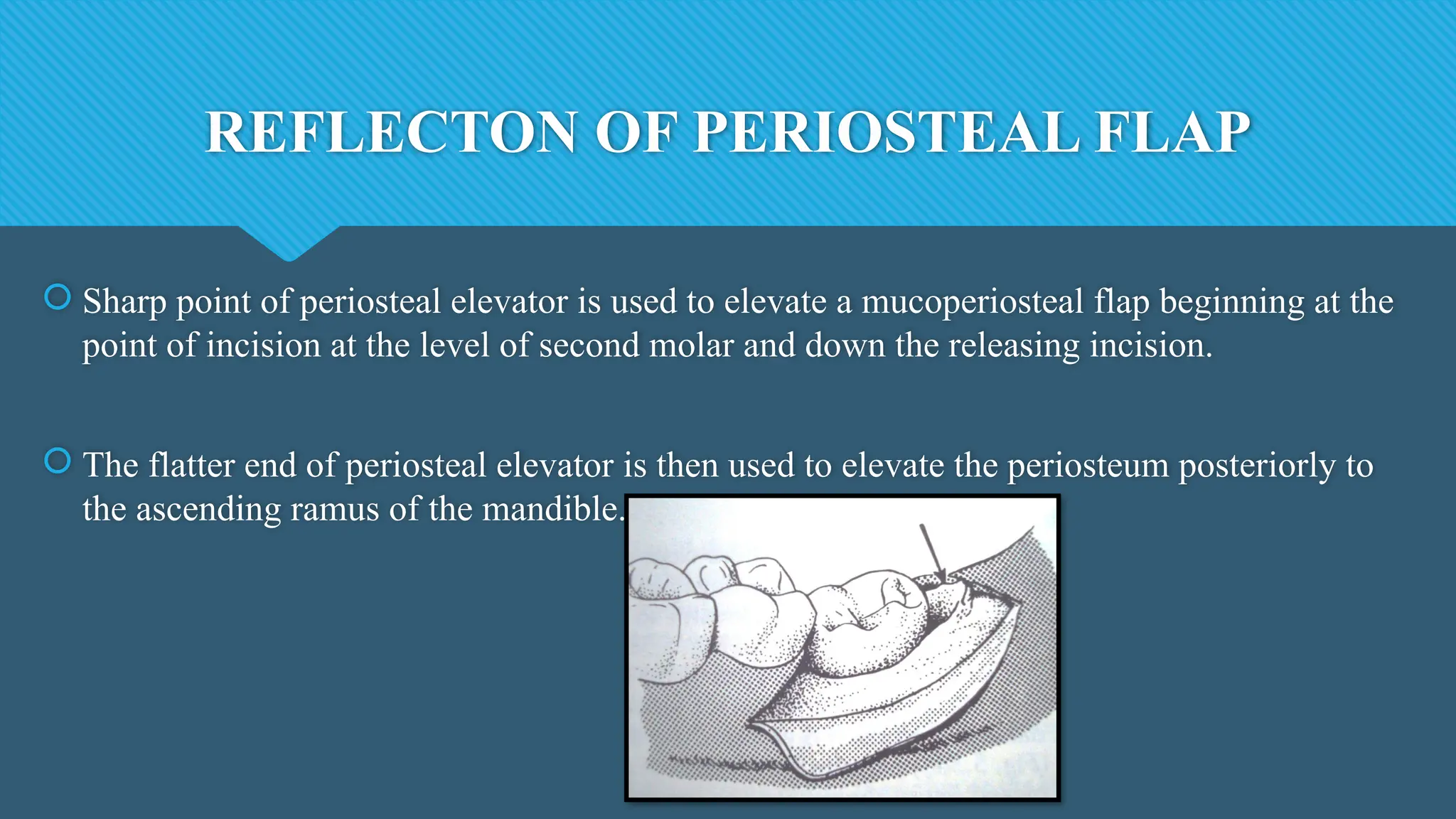
REFLECTON OF PERIOSTEAL FLAP
 Sharp point of periosteal elevator is used to elevate a mucoperiosteal flap beginning at the
point of incision at the level of second molar and down the releasing incision.
 The flatter end of periosteal elevator is then used to elevate the periosteum posteriorly to
the ascending ramus of the mandible.
BONE REMOVAL
 AIM:
1. Expose the height of contour of crown by removing the bone overlying it.
2. To remove the bone obstructing the pathway for removal of the tooth.
3. To create a fulcrum for engagement of an elevator
 TECHNIQUES OF BONE REMOVAL
1. With help of rotary instrument (1)postage stamp method (2)Moore Gillbe’s Collar
technique/guttering/channeling
2. Erbium (Er):Yag laser
3. Peizoelectric method
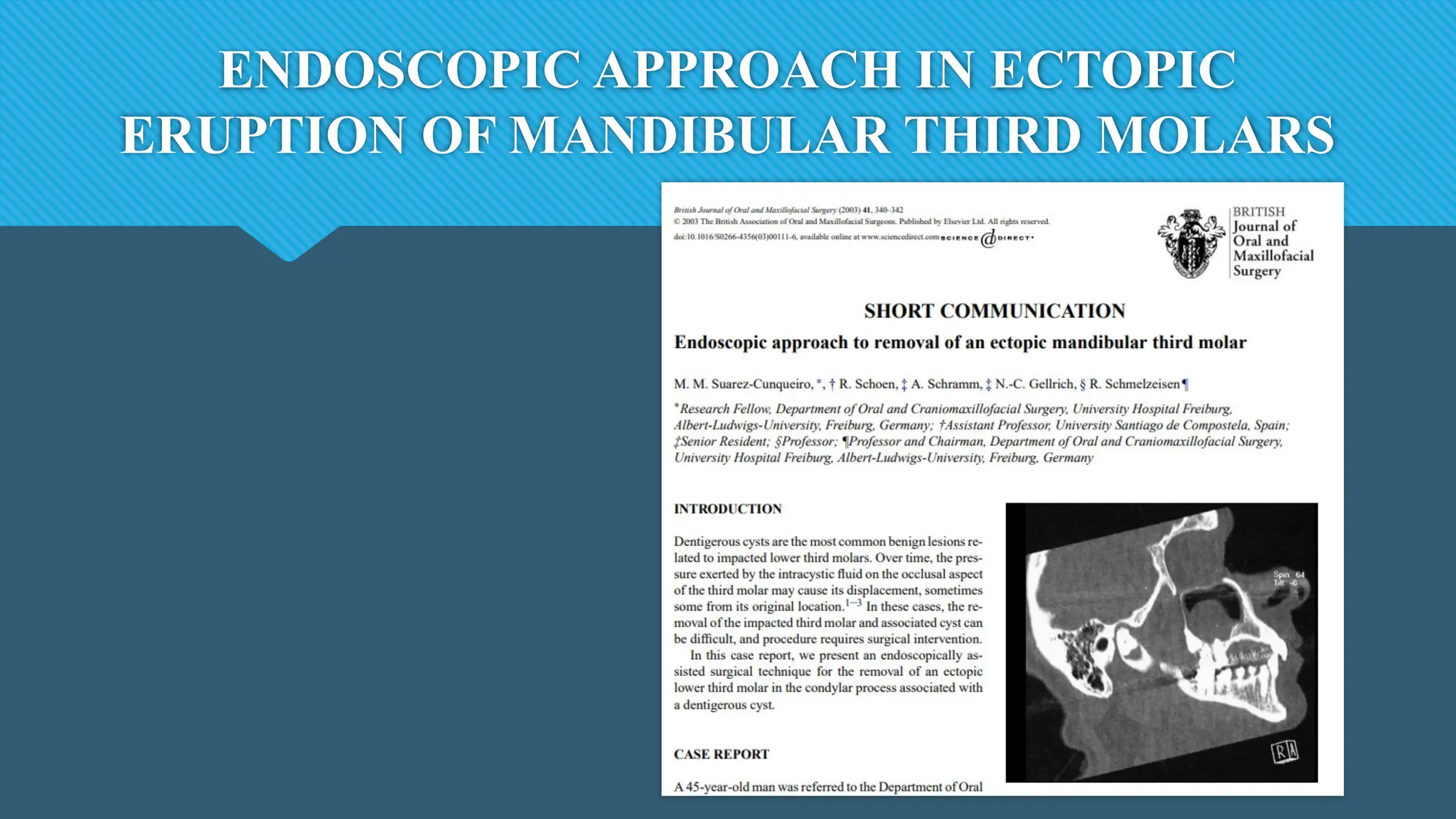
4. Endoscopic approach in ectopic mandibular third molar eruption
 Other methods include:
1. Lingual guttering technique
2. Lateral trephination
3. Buccal lid approach
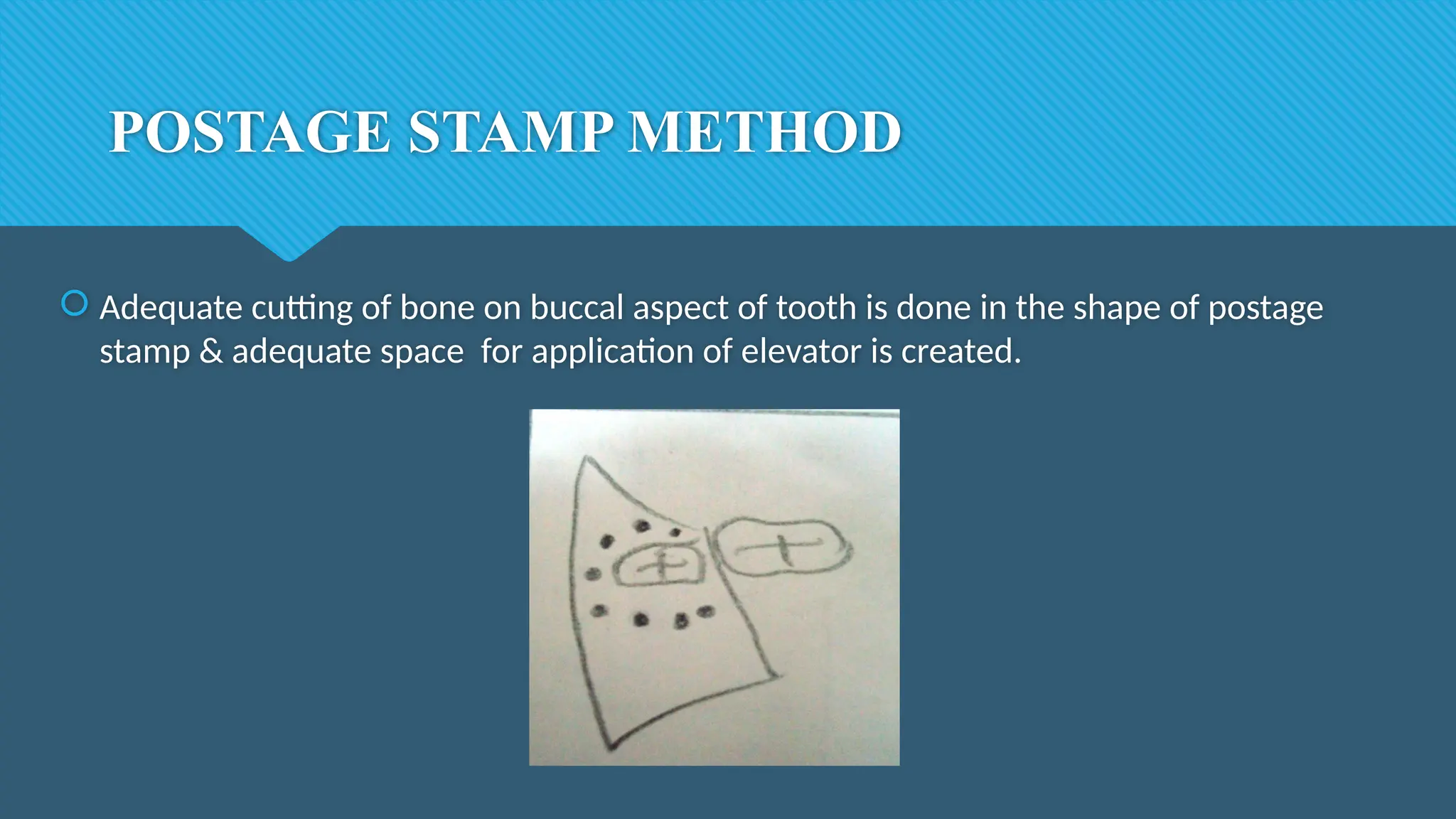
POSTAGE STAMP METHOD
 Adequate cutting of bone on buccal aspect of tooth is done in the shape of postage
stamp & adequate space for application of elevator is created.
MOORE GILLBE’S COLLAR TECHNIQUE
 No. 7 or 8 round bur or No. 3 rose head bur can be used in the range of 5000-10,000 rpm.
 Use of bur should always be done with copious saline irrigation to prevent thermal injury.
 Bone should be removed from
The occlusal surface of the tooth.
A channel is formed in the bone lateral and posterior to the impacted third molar to the
cervical level of the crown contour.
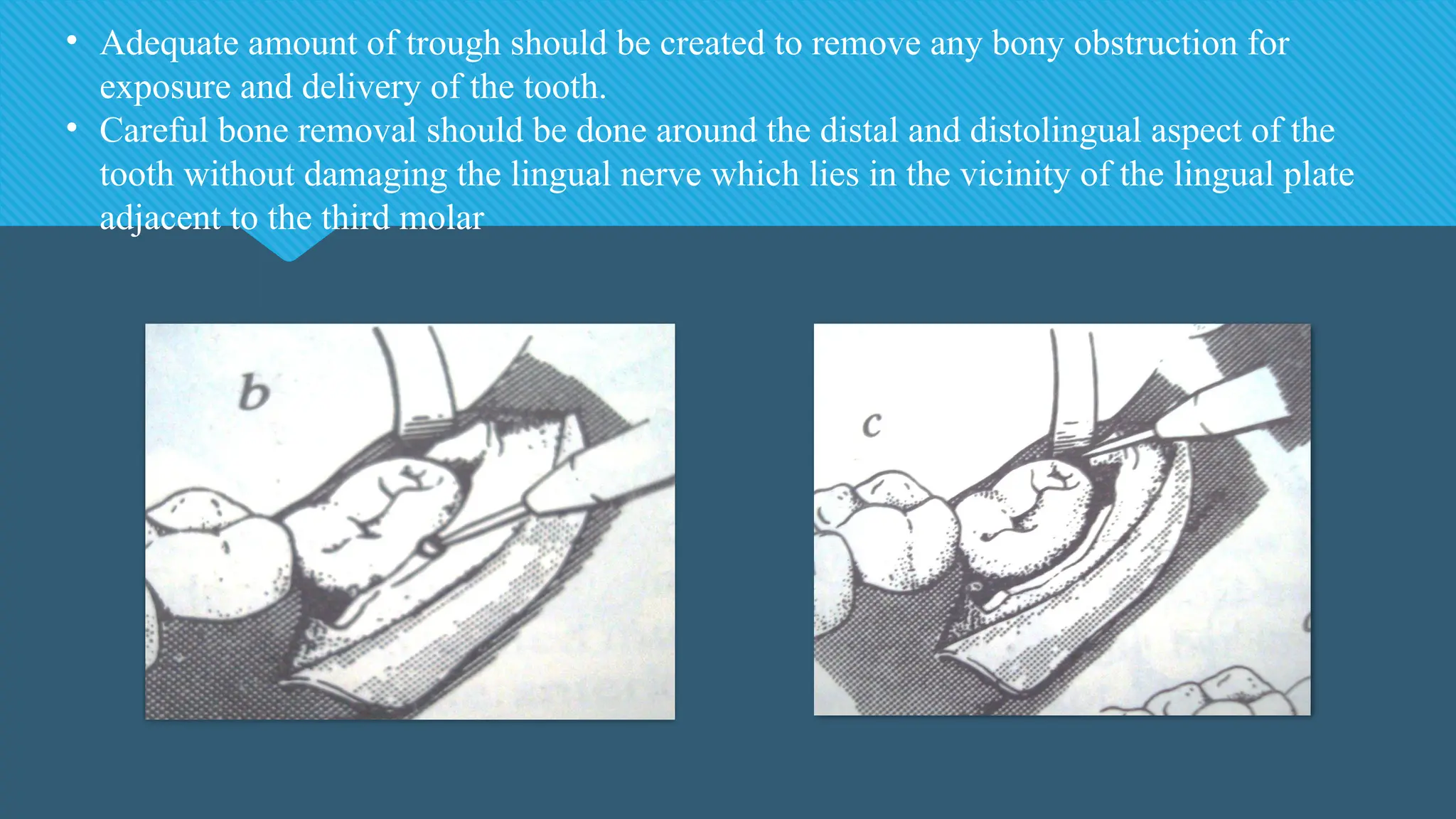
• Adequate amount of trough should be created to remove any bony obstruction for
exposure and delivery of the tooth.
• Careful bone removal should be done around the distal and distolingual aspect of the
tooth without damaging the lingual nerve which lies in the vicinity of the lingual plate
adjacent to the third molar
CHISELAND MALLET TECHNIQUE
 First step is placement of vertical stop cut with a 3mm/5mm chisel vertically at the distal
aspect of second molar with the bevel facing posteriorly.
 Then 2nd
vertical cut is placed at the point where entire buccal aspect of third molar is ending
(approx 4mm) posterior to that.
 Next is placement of the chisel at the base of vertical stop at an angle of 45 with bevel
̊
facing occlusally and oblique cut is made linking both the vertical cuts.
 This results in removal of buccal plate distal to the second molar.
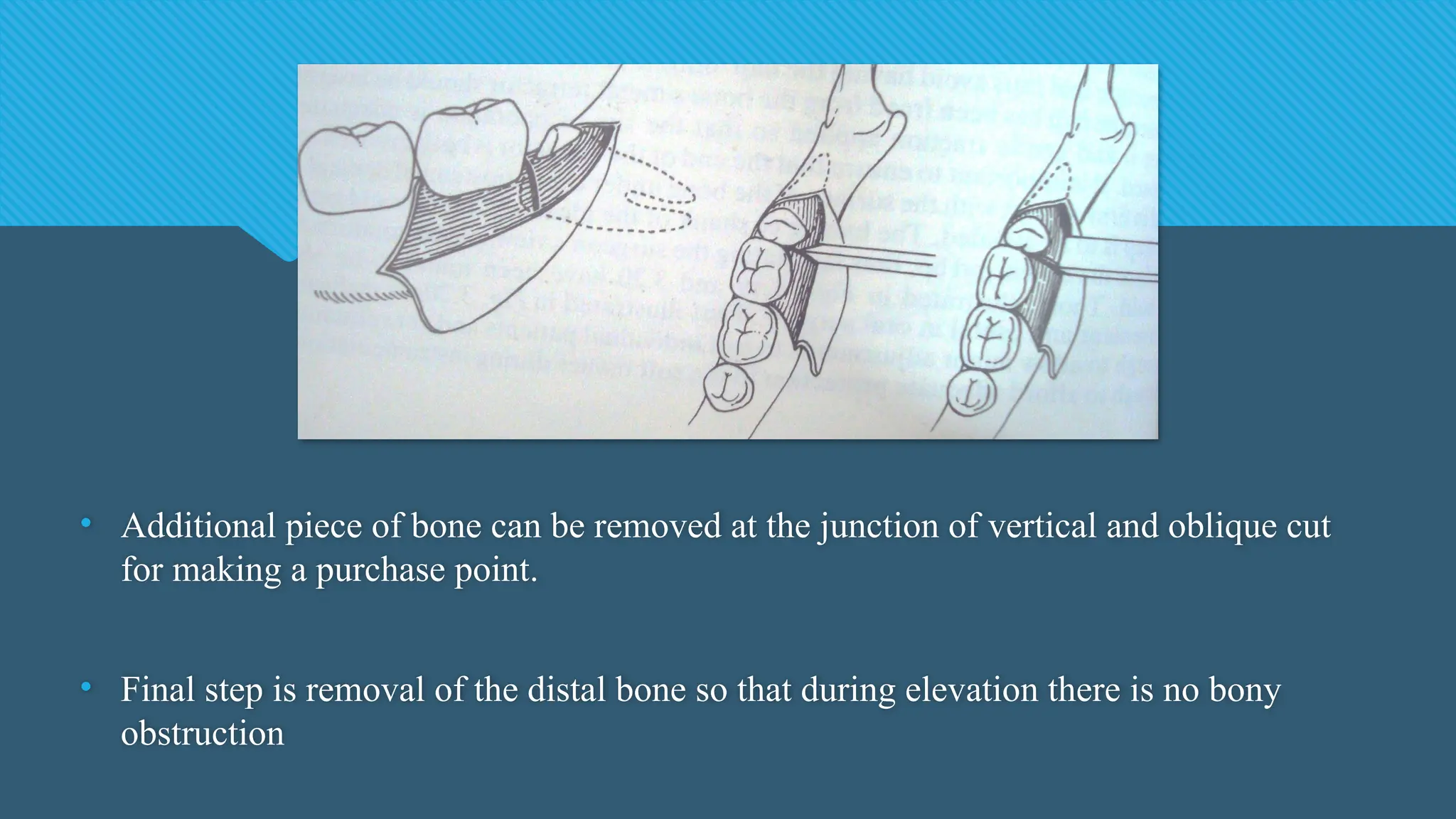
• Additional piece of bone can be removed at the junction of vertical and oblique cut
for making a purchase point.
• Final step is removal of the distal bone so that during elevation there is no bony
obstruction
LINGUAL SPLIT BONE TECHNIQUE
First developed
by Sir William
Kelsey Fry
(1933) but
originally
described by
Terrence Wards
in 1956.
Indicated for
mandibular
third molars
especially,
which are
placed lingually
Mandible
should be
supported
during the
entire
technique.
A slight increase
in the incidence
of transient
lingual anesthesia
during postop
period
complicates the
use of this
technique.
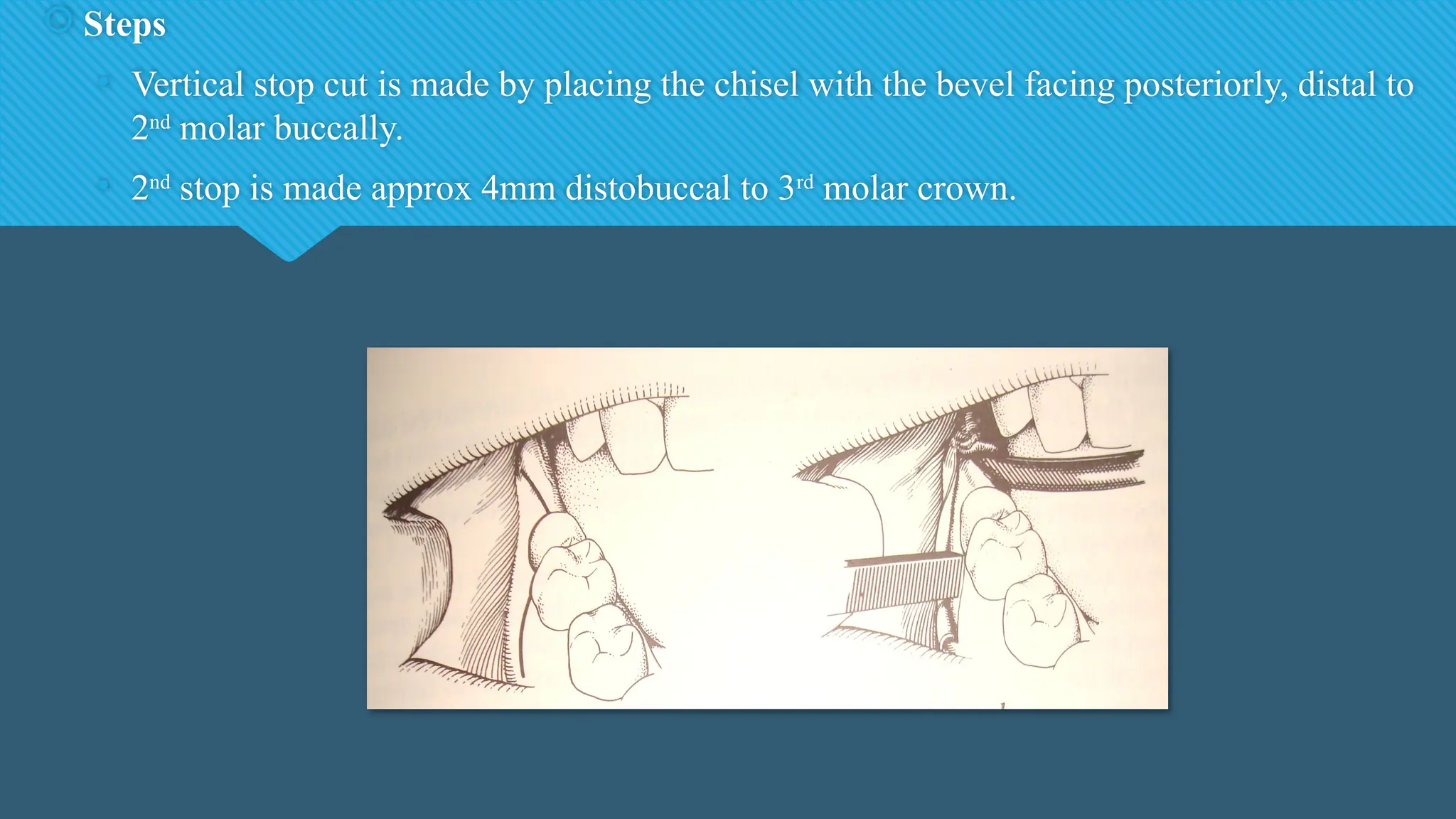
 Steps
• Vertical stop cut is made by placing the chisel with the bevel facing posteriorly, distal to
2nd
molar buccally.
• 2nd
stop is made approx 4mm distobuccal to 3rd
molar crown.
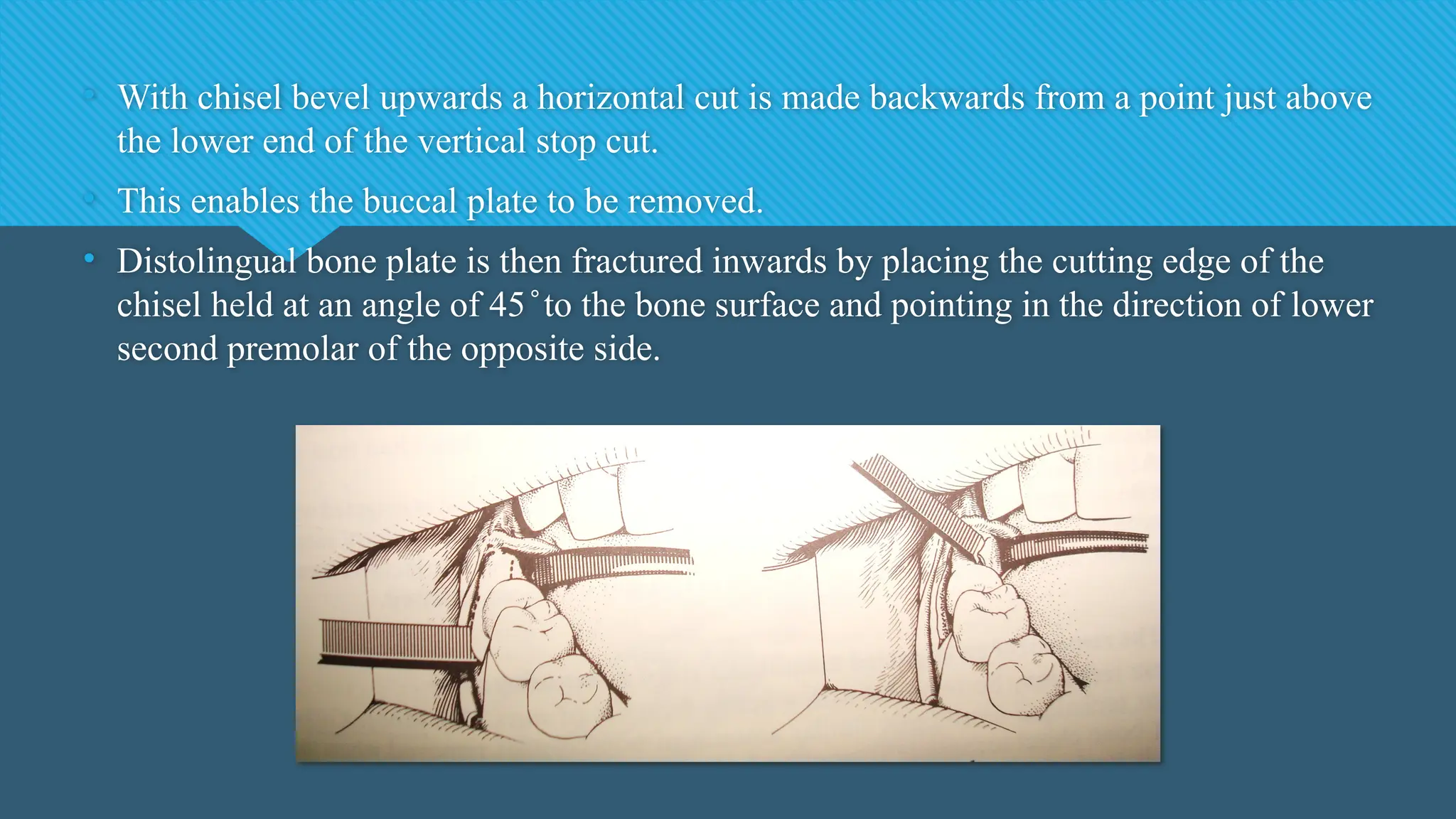
• With chisel bevel upwards a horizontal cut is made backwards from a point just above
the lower end of the vertical stop cut.
• This enables the buccal plate to be removed.
• Distolingual bone plate is then fractured inwards by placing the cutting edge of the
chisel held at an angle of 45 to the bone surface and pointing in the direction of lower
̊
second premolar of the opposite side.
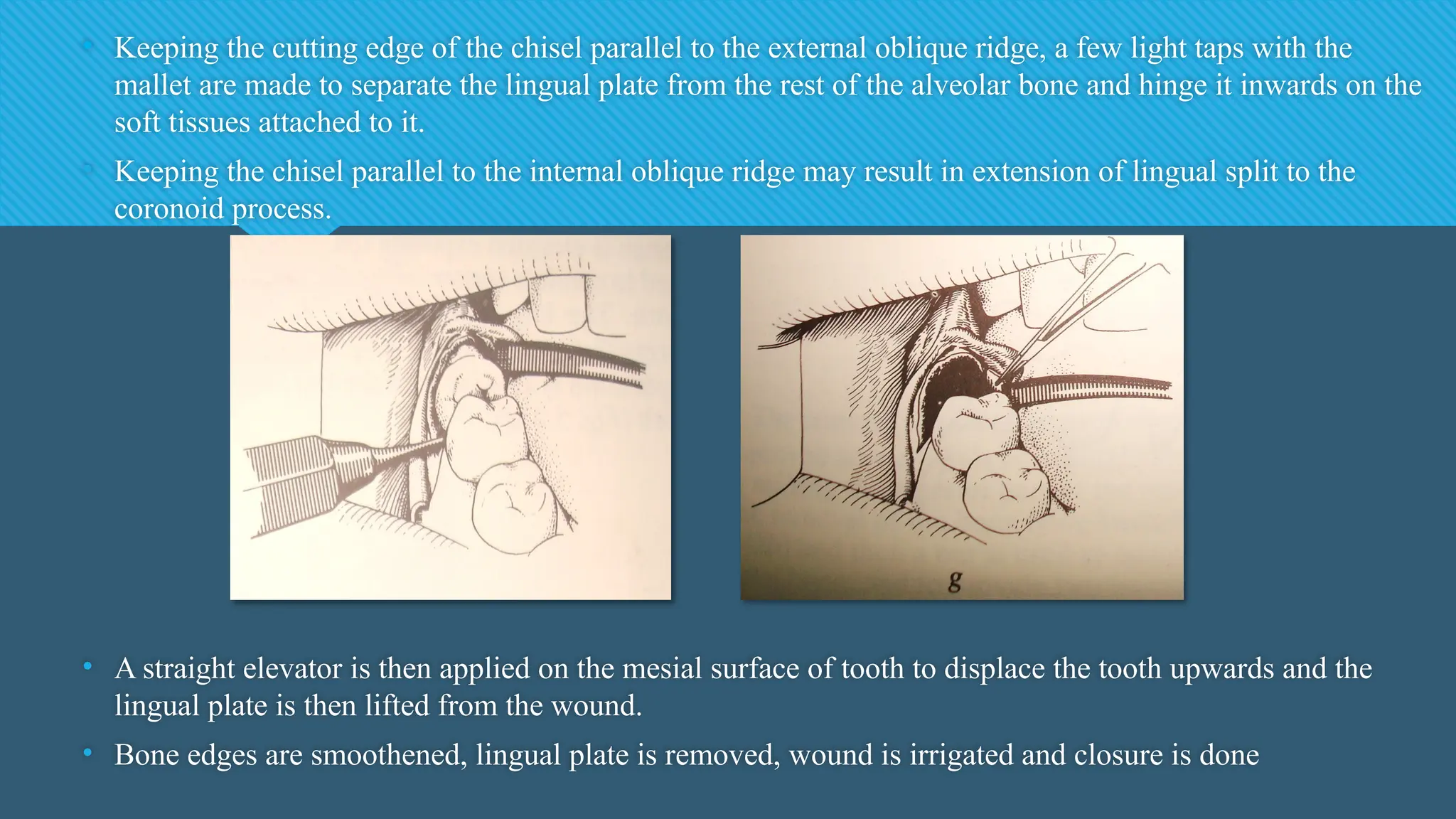
• Keeping the cutting edge of the chisel parallel to the external oblique ridge, a few light taps with the
mallet are made to separate the lingual plate from the rest of the alveolar bone and hinge it inwards on the
soft tissues attached to it.
• Keeping the chisel parallel to the internal oblique ridge may result in extension of lingual split to the
coronoid process.
• A straight elevator is then applied on the mesial surface of tooth to displace the tooth upwards and the
lingual plate is then lifted from the wound.
• Bone edges are smoothened, lingual plate is removed, wound is irrigated and closure is done
MODIFICATIONS IN LINGUAL SPLIT
TECHNIQUE
 Lewis (1980) modified the lingual split bone technique by incorporating following
features:
1. Minimal periosteal reflection
2. Preserving fractured lingual plate
3. Less buccal bone removal
4. Leading to less lingual nerve damage, decreased periodontal pocket formation and better
wound healing chances
 Hochwald, Kamanishi & Davis (1983) modified it by splitting distolingual bone in
segments to allow better tactile control of chisel to prevent its penetration into soft tissues.
COMPARING BONE CUTTING BY ROTARY
AS WELLAS CHISEL MALLET
Rotary instrument
ADVANTAGES:
 Easy method not technique sensitive.
 Well tolerated by patient under LA
 Less probability of fracture of mandible.
DISADVANTAGES
 Delayed healing because of more heat generation causing
trauma to bone & periosteum.
 more post operative sequlae involving pain., edema, and
trismus
 high incidence of postoperative complications
 More time consuming
Chisel & Mallet
ADVANTAGES:
 Healing is quick as compared to rotary
 Less post operative sequalae and less chances
of post operative complications like dry socket
DISADVANTAGES
 Technique sensitive
 More chances of fracture of mandible
 More unfavorable forces delivered to TMJ
 Not accepted well by patient under LA
LINGUAL GUTTERING TECHNIQUE
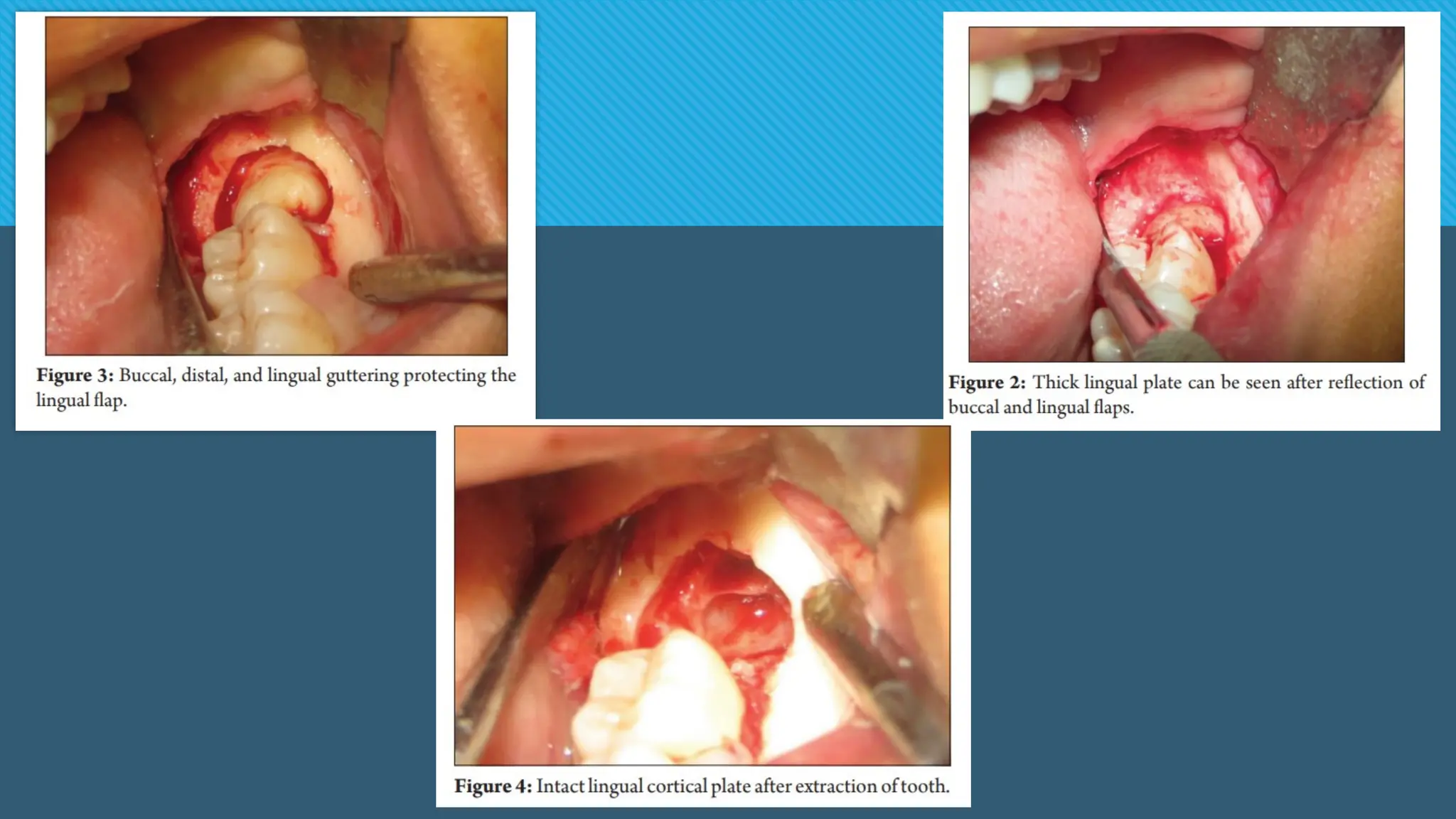
 Indicated in patients with significantly thick lingual cortical plate.
 Lingual guttering technique can be used safely after elevating the lingual flap and using
suitable lingual retractor.
 Furthermore, the chances of lingual nerve injury are significantly reduced with this
technique.
LATERAL TREPHINATION
(BOWDLER HENRY)
 This procedure can be employed to remove any partially formed unerupted third molar.
 Has been employed to remove such teeth from patients from 10 to 16 years of age.
 Good technique for preservation of pre-operative periodontal status of 2nd
molar.
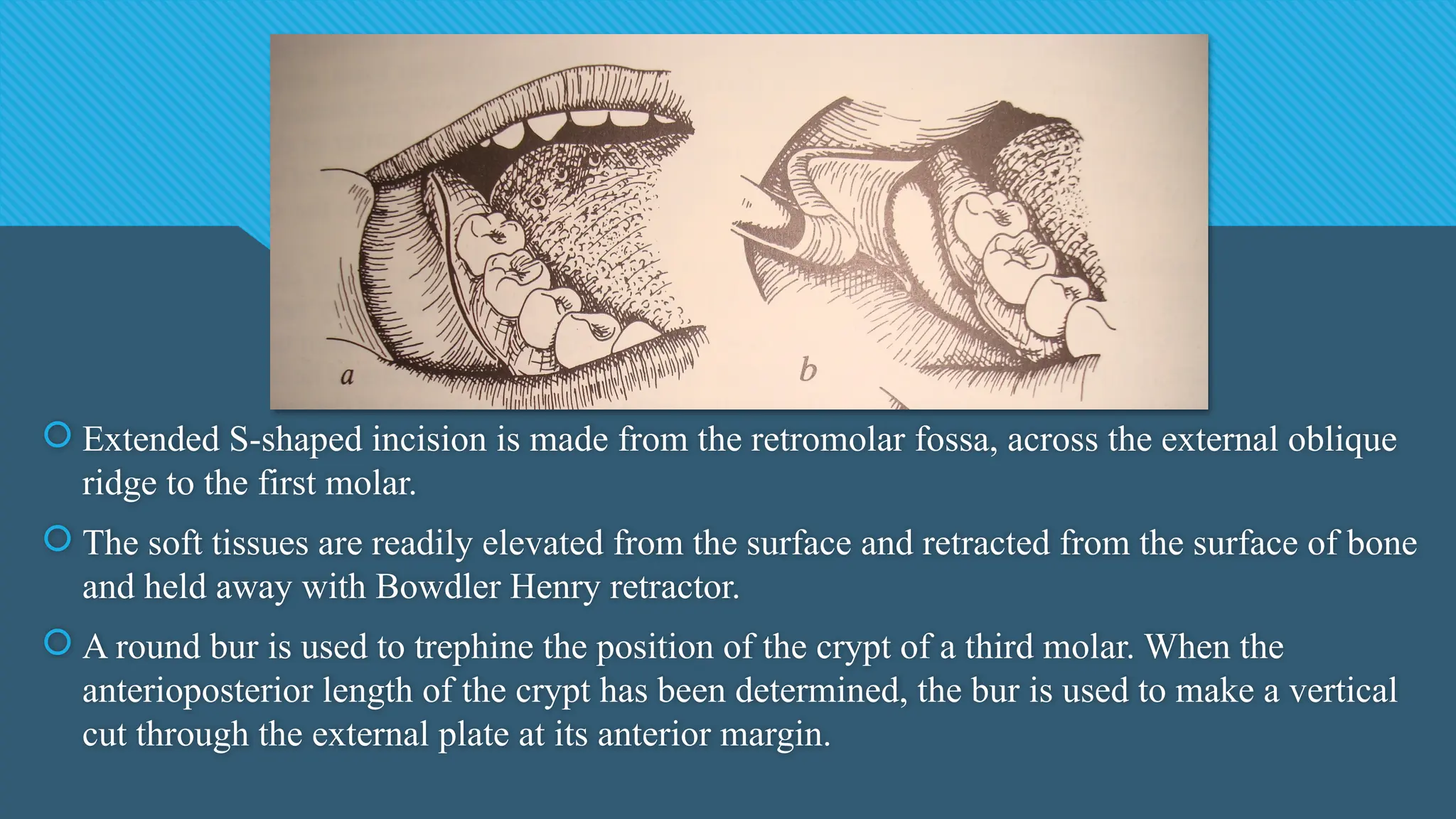
 Extended S-shaped incision is made from the retromolar fossa, across the external oblique
ridge to the first molar.
 The soft tissues are readily elevated from the surface and retracted from the surface of bone
and held away with Bowdler Henry retractor.
 A round bur is used to trephine the position of the crypt of a third molar. When the
anterioposterior length of the crypt has been determined, the bur is used to make a vertical
cut through the external plate at its anterior margin.
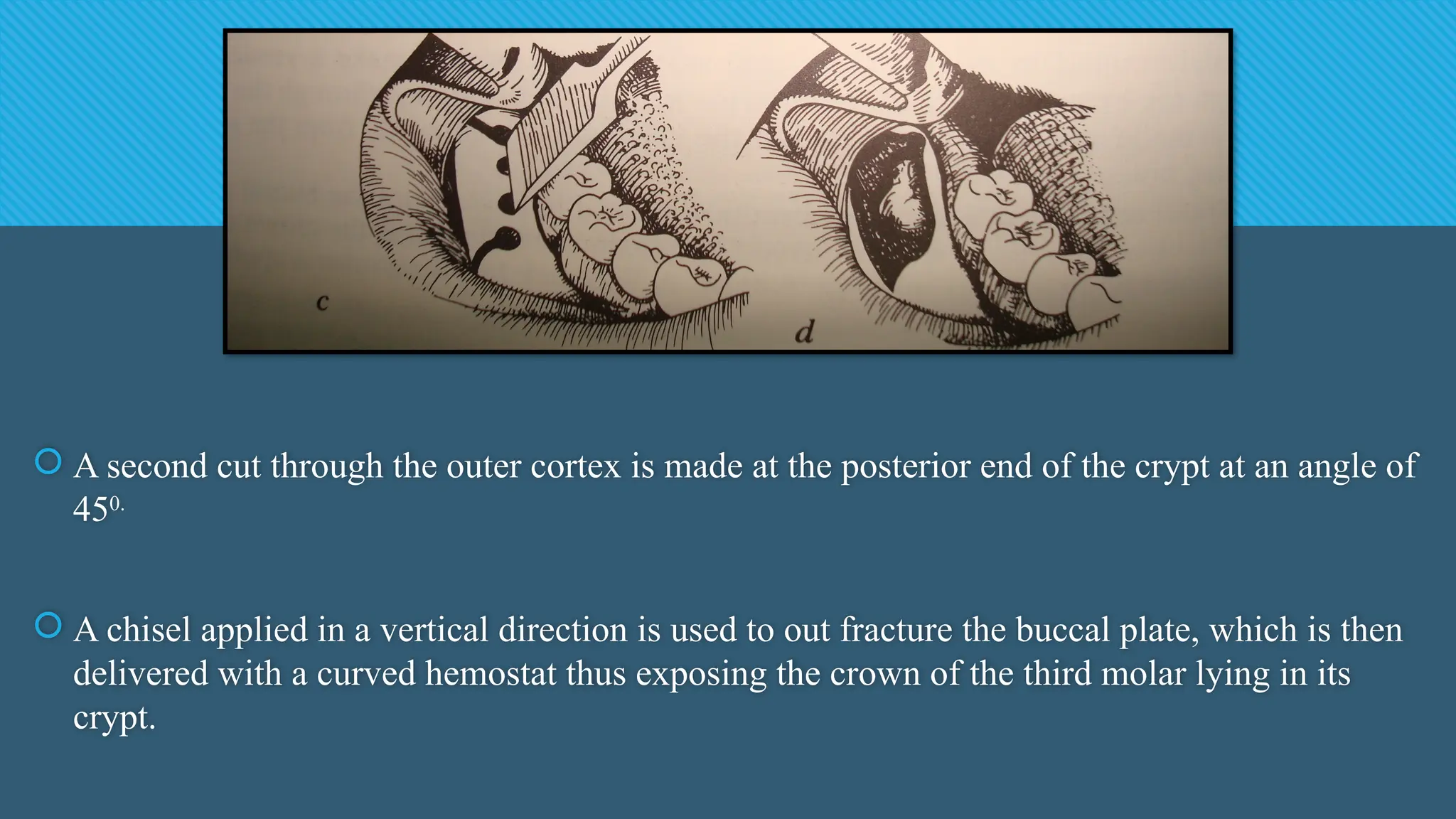
 A second cut through the outer cortex is made at the posterior end of the crypt at an angle of
450.
 A chisel applied in a vertical direction is used to out fracture the buccal plate, which is then
delivered with a curved hemostat thus exposing the crown of the third molar lying in its
crypt.
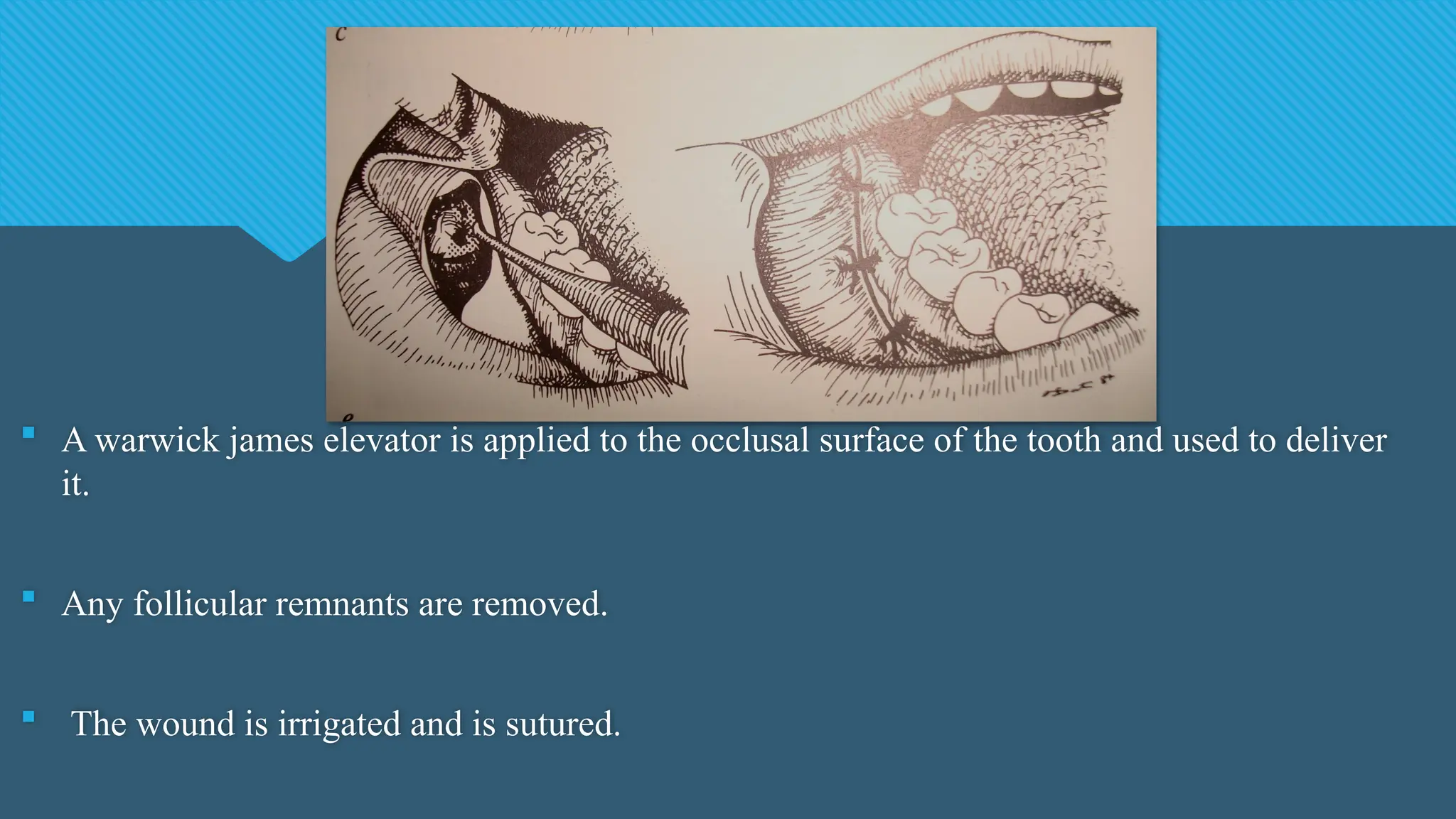
 A warwick james elevator is applied to the occlusal surface of the tooth and used to deliver
it.
 Any follicular remnants are removed.
 The wound is irrigated and is sutured.
BUCCAL LID APPROACH
 An additional alternative technique that can be utilized for the extraction of deeply impacted
molars is conducted via the removal of the lateral cortical plate as described by Alling.
 Also known as: bone lid, buccal mandibular osteotomy, buccal window and buccal
corticotomy.
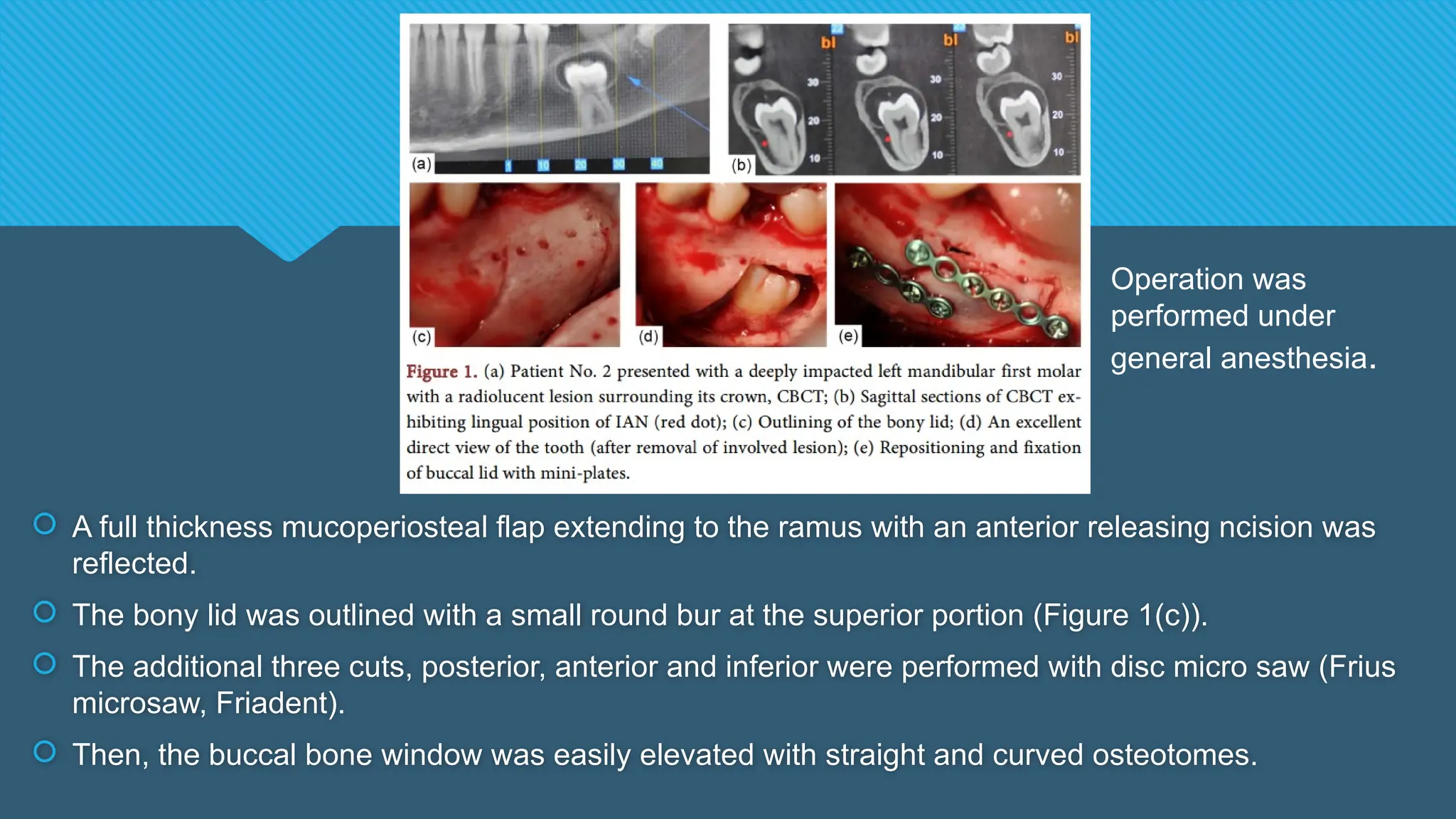
 A full thickness mucoperiosteal flap extending to the ramus with an anterior releasing ncision was
reflected.
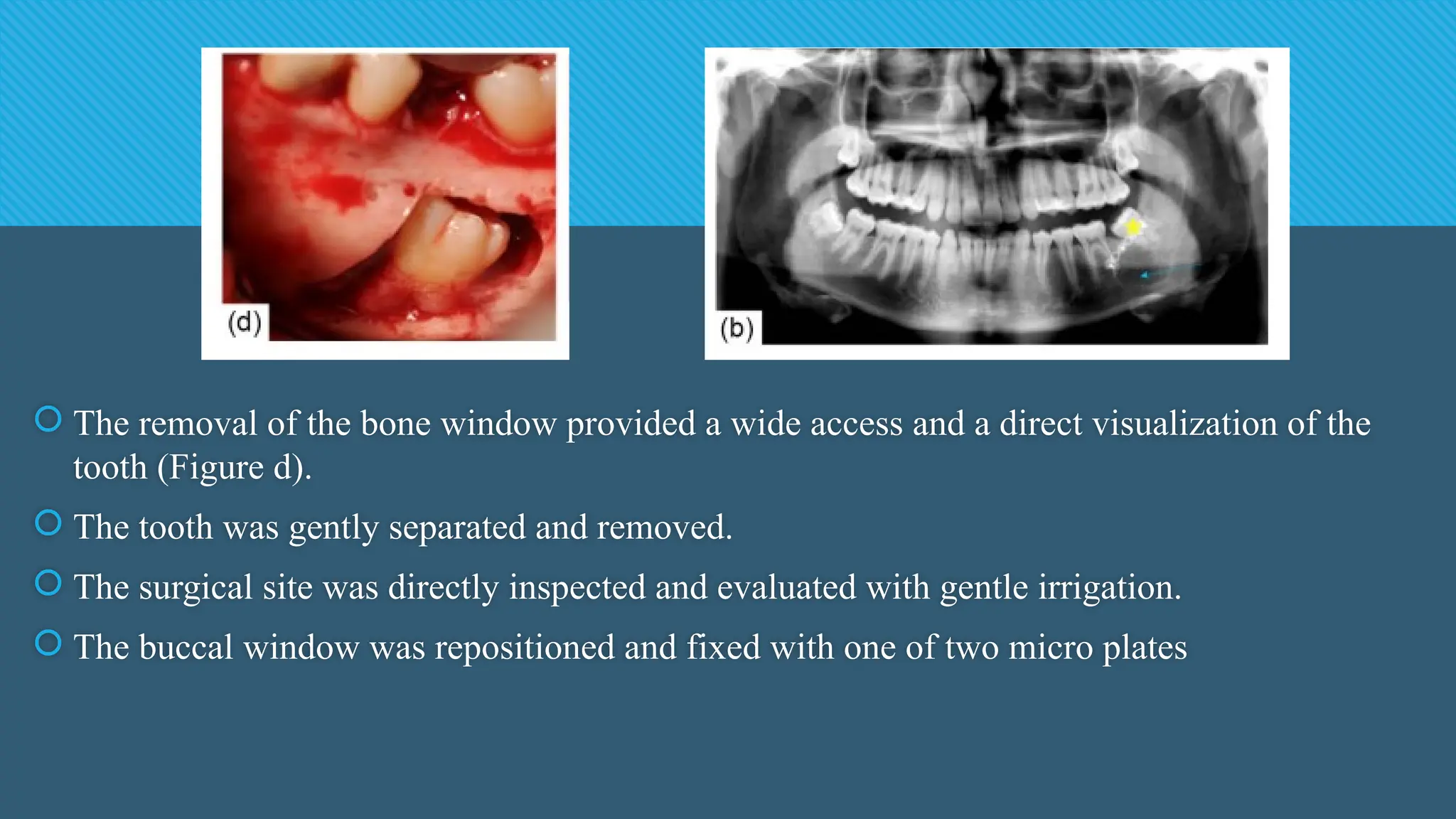
 The bony lid was outlined with a small round bur at the superior portion (Figure 1(c)).
 The additional three cuts, posterior, anterior and inferior were performed with disc micro saw (Frius
microsaw, Friadent).
 Then, the buccal bone window was easily elevated with straight and curved osteotomes.
Operation was
performed under
general anesthesia.
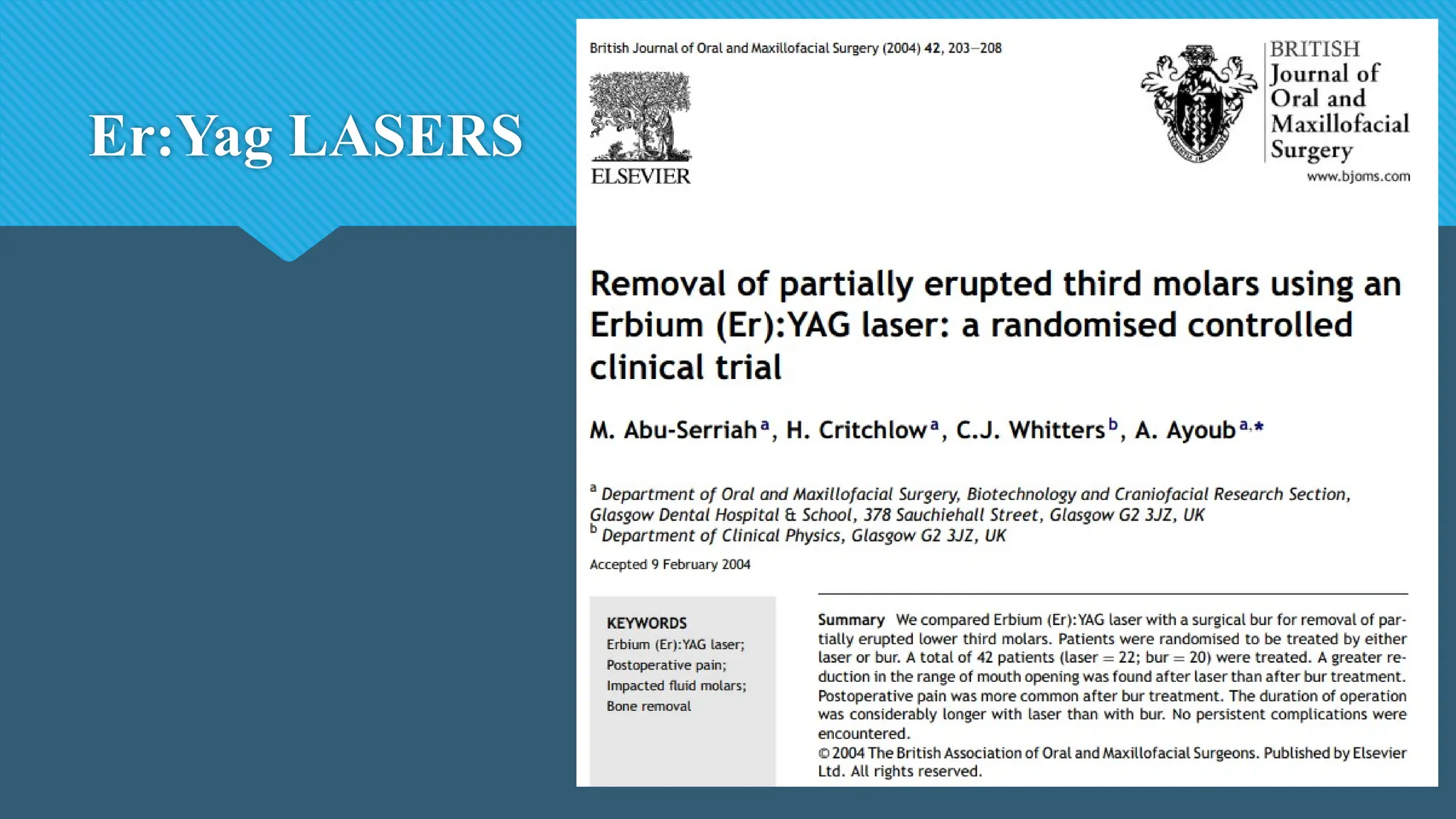
 The removal of the bone window provided a wide access and a direct visualization of the
tooth (Figure d).
 The tooth was gently separated and removed.
 The surgical site was directly inspected and evaluated with gentle irrigation.
 The buccal window was repositioned and fixed with one of two micro plates
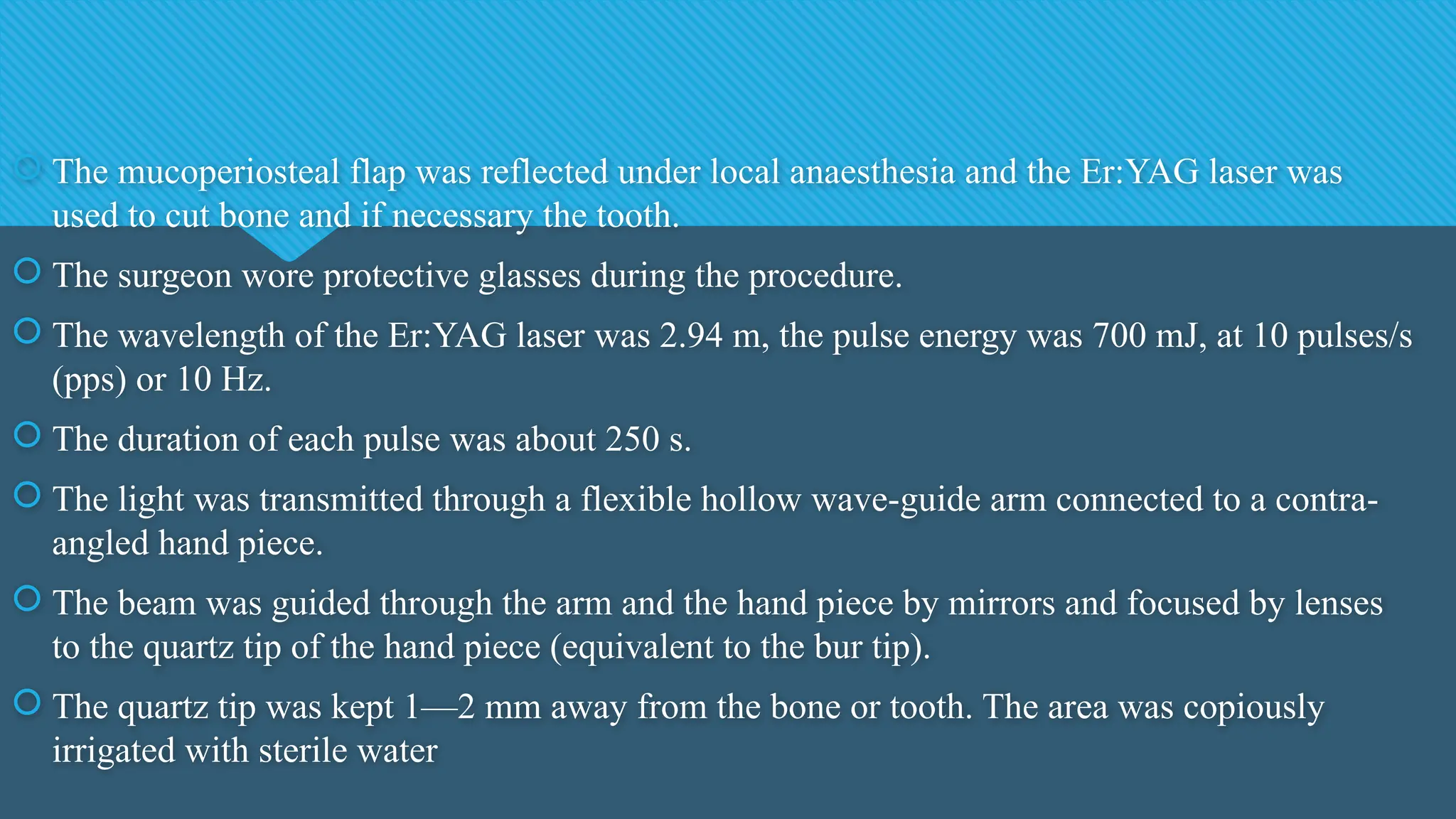
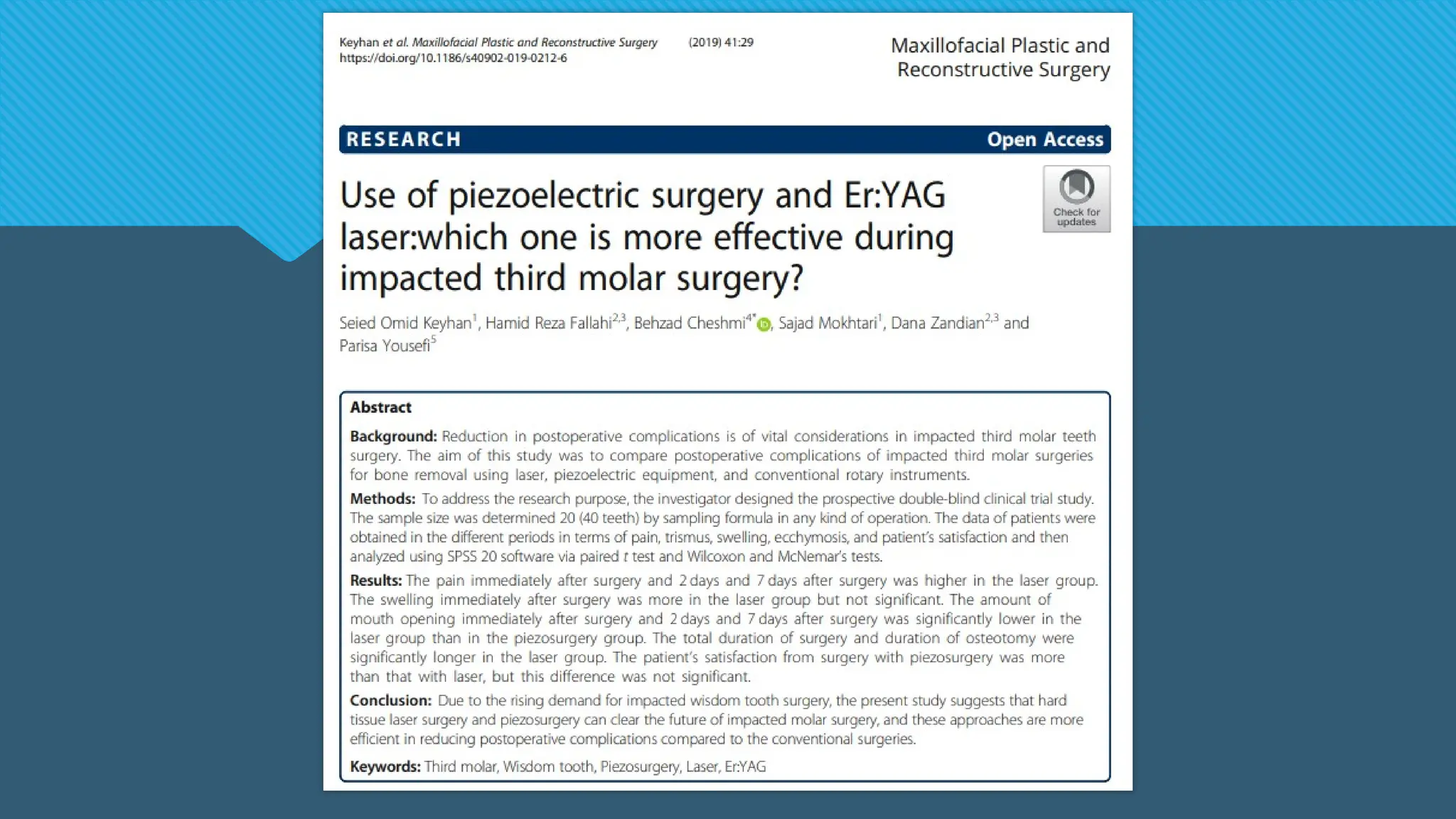
Er:Yag LASERS
 The mucoperiosteal flap was reflected under local anaesthesia and the Er:YAG laser was
used to cut bone and if necessary the tooth.
 The surgeon wore protective glasses during the procedure.
 The wavelength of the Er:YAG laser was 2.94 m, the pulse energy was 700 mJ, at 10 pulses/s
(pps) or 10 Hz.
 The duration of each pulse was about 250 s.
 The light was transmitted through a flexible hollow wave-guide arm connected to a contra-
angled hand piece.
 The beam was guided through the arm and the hand piece by mirrors and focused by lenses
to the quartz tip of the hand piece (equivalent to the bur tip).
 The quartz tip was kept 1—2 mm away from the bone or tooth. The area was copiously
irrigated with sterile water
ENDOSCOPIC APPROACH IN ECTOPIC
ERUPTION OF MANDIBULAR THIRD MOLARS
TOOTH SECTIONING
INDICATIONS
 Tooth impaction
 Unfavorable root morphology
 To prevent injury to IAN
 To avoid removal of large amount of bone
ADVANTAGES OF TOOTH SECTIONING
 Reduces the amount of bone removal
 Reduces the risk of jaw fracture
 Less post-operative trismus as less unfavorable forces to TMJ are delivered because of forced elevation.
 Avoidance of damage to IAN.
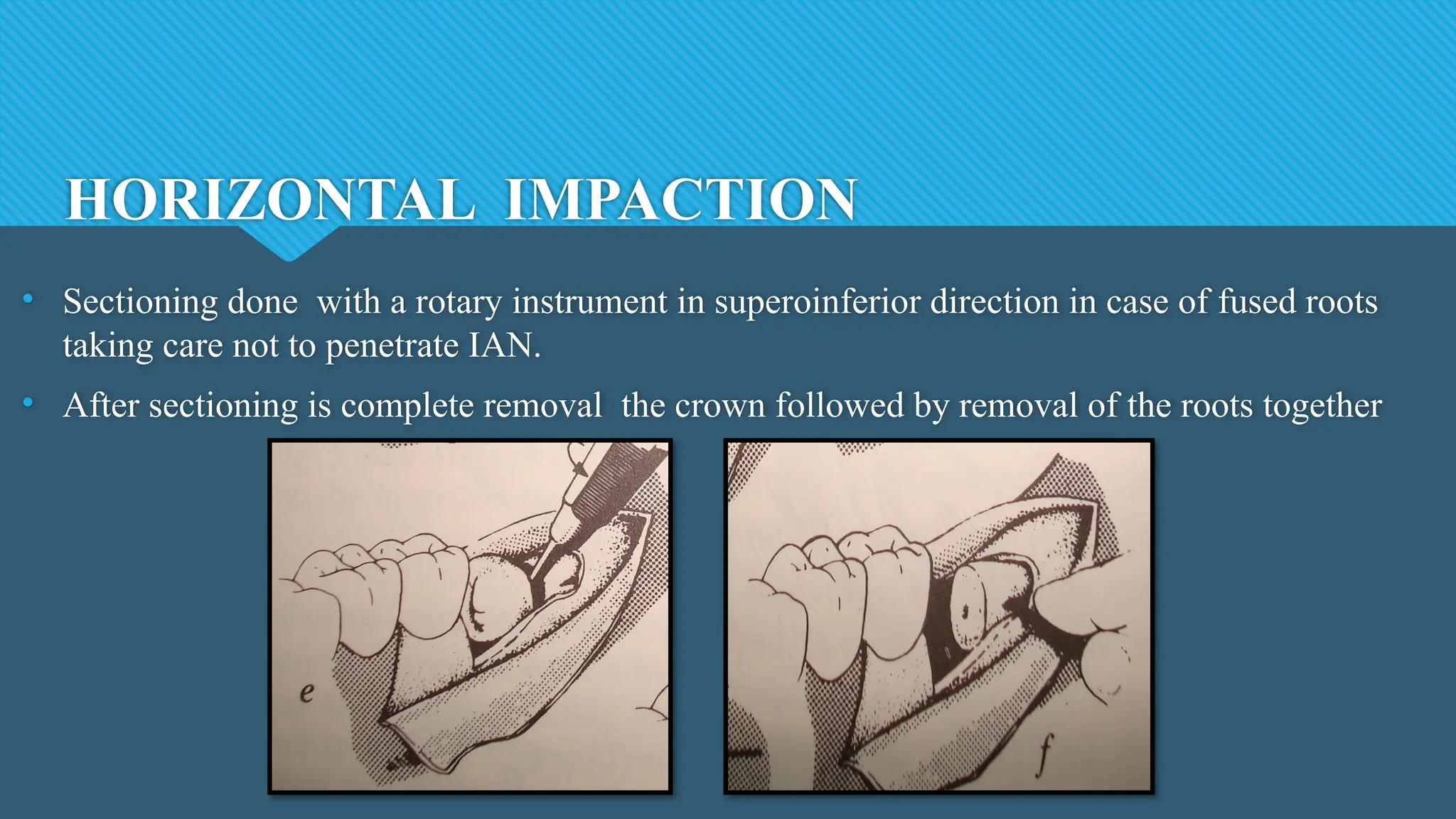
HORIZONTAL IMPACTION
• Sectioning done with a rotary instrument in superoinferior direction in case of fused roots
taking care not to penetrate IAN.
• After sectioning is complete removal the crown followed by removal of the roots together
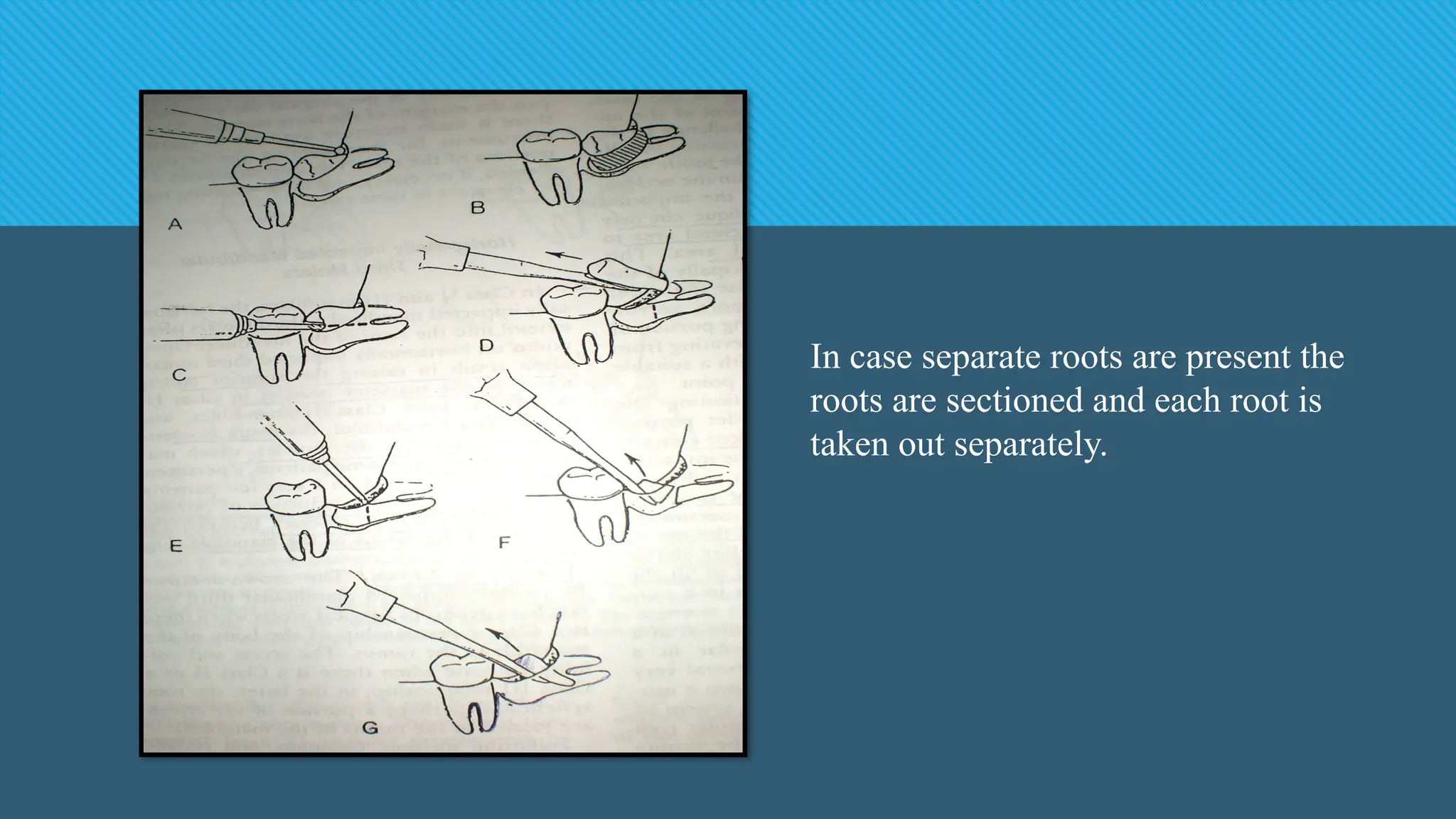
In case separate roots are present the
roots are sectioned and each root is
taken out separately.
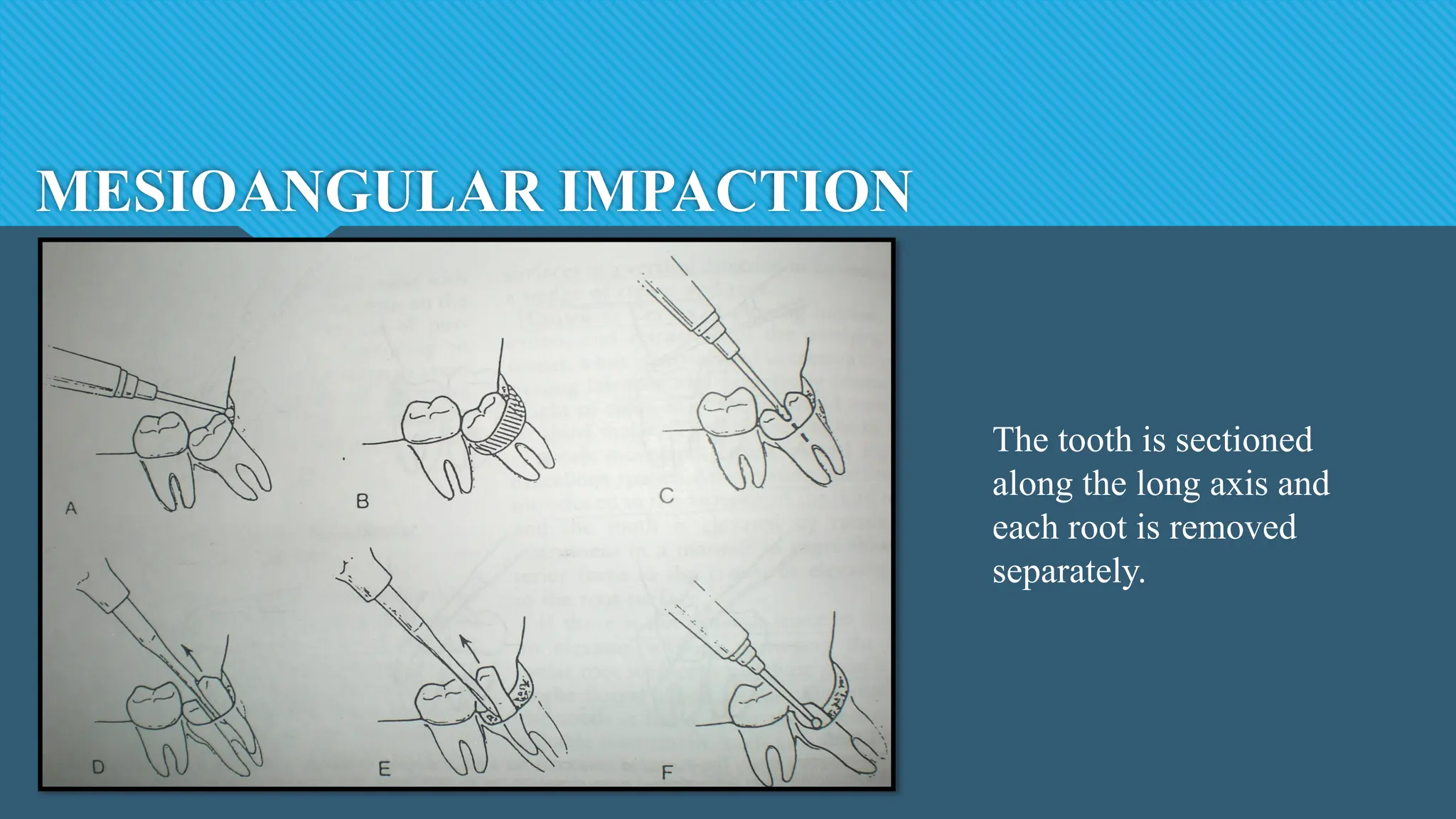
MESIOANGULAR IMPACTION
The tooth is sectioned
along the long axis and
each root is removed
separately.
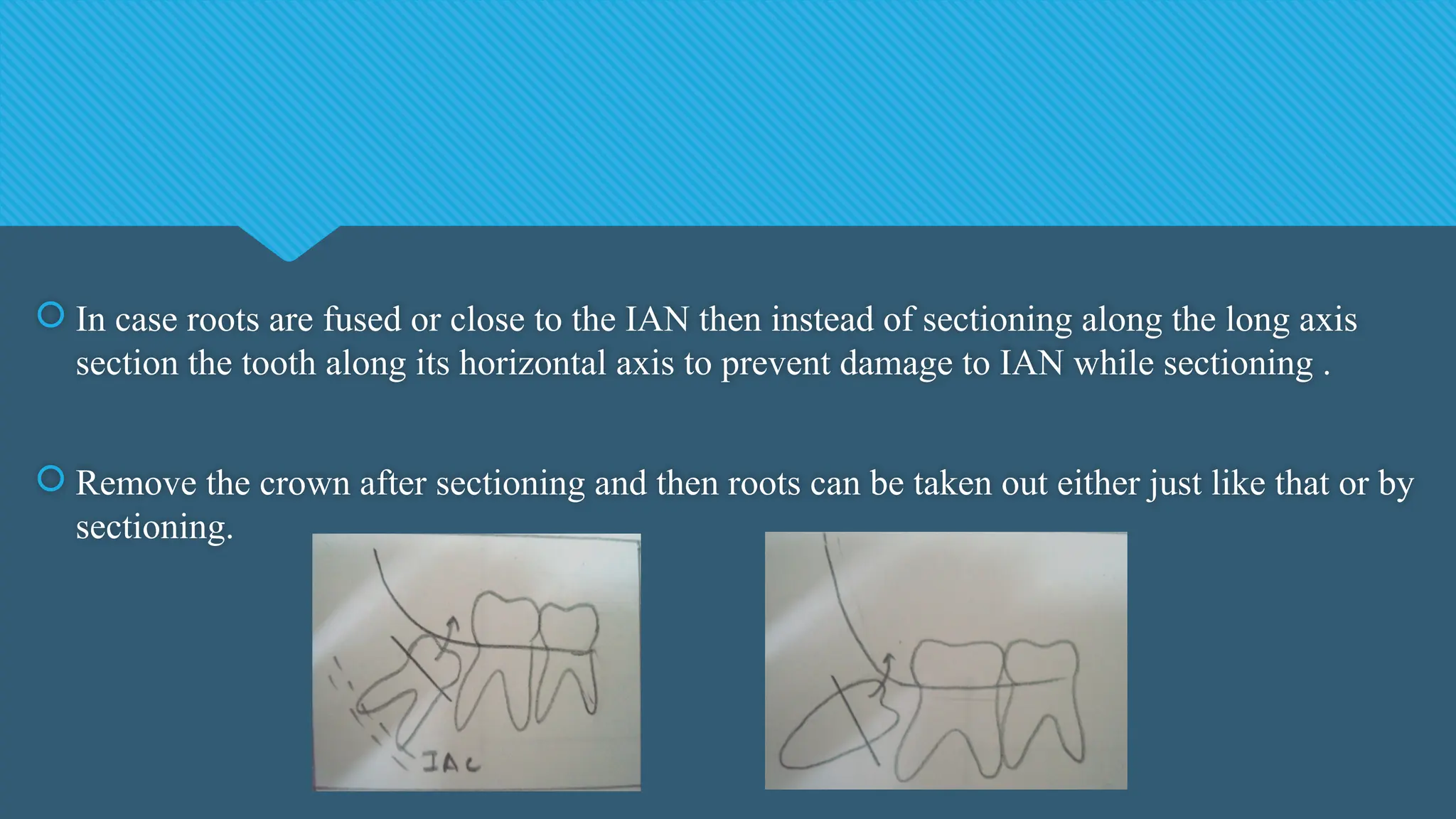
 In case roots are fused or close to the IAN then instead of sectioning along the long axis
section the tooth along its horizontal axis to prevent damage to IAN while sectioning .
 Remove the crown after sectioning and then roots can be taken out either just like that or by
sectioning.
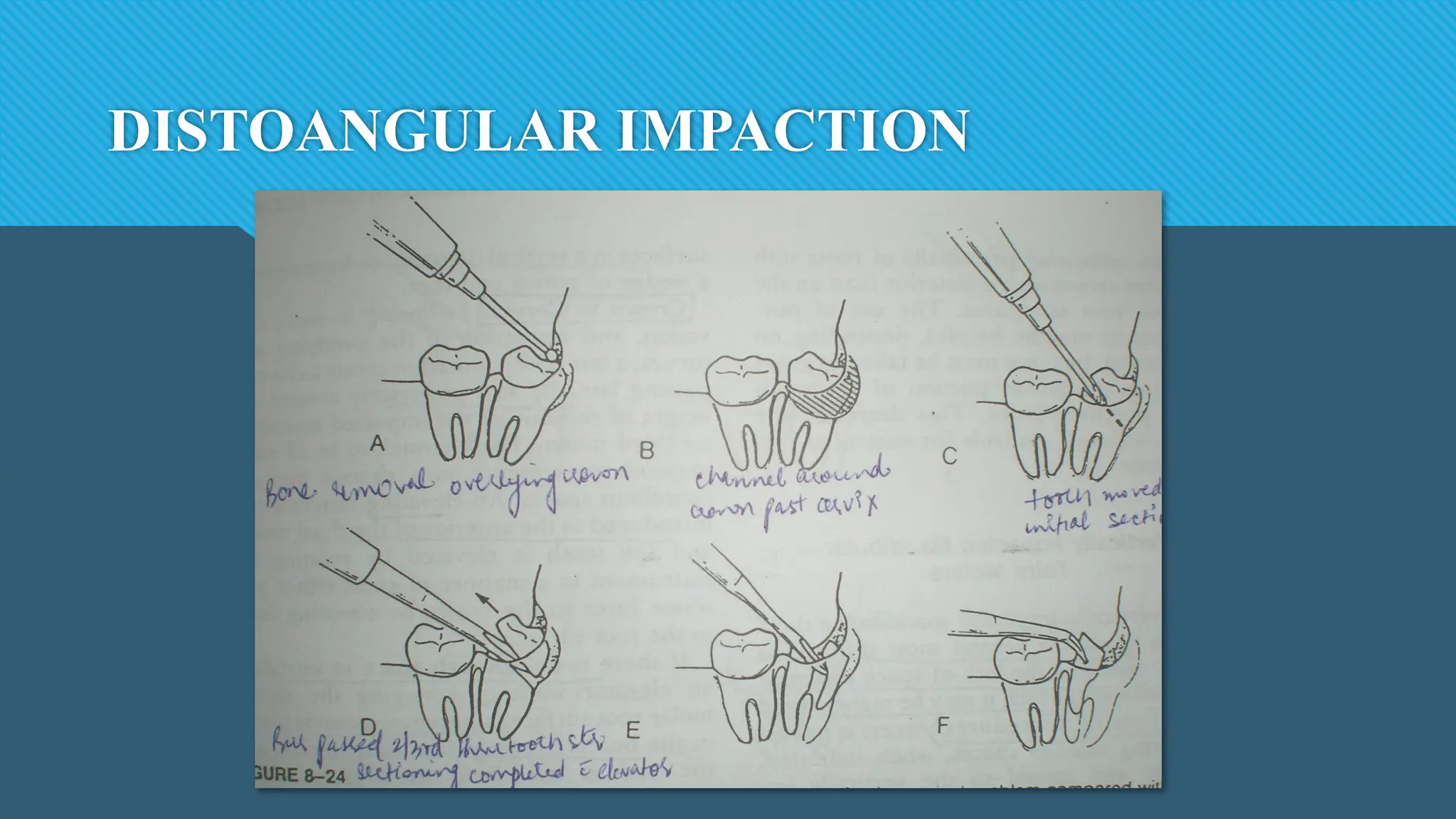
DISTOANGULAR IMPACTION
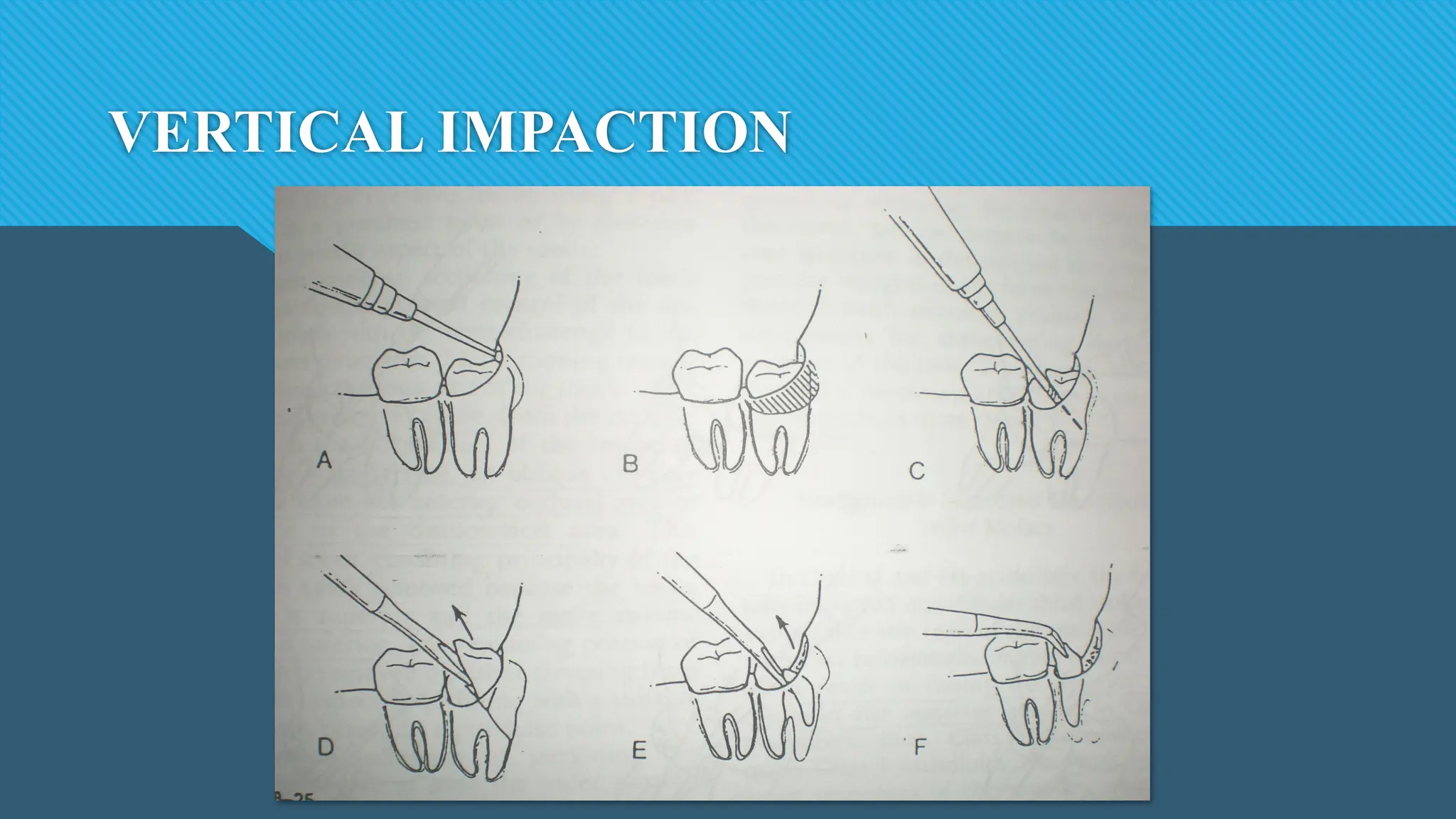
VERTICAL IMPACTION
CORONECTOMY
 Coronectomy is the removal of crown of the tooth, leaving the roots “in situ” when applied
to third molars or any unerupted posterior tooth in the mandible, It is a measure adopted to
avoid damage to inferior alveolar nerve.
 The crown of the tooth is completely transacted with the help of a bur at an angle
of 45° and the roots are reduced 3mm below the crest of buccal and lingual
cortical plates.
 The exposed vital roots need not to be treated endodontically as bone formation
occurs around these roots and osteocementum usually extends to cover the roots.
 If after coronectomy the roots migrate towards the alveolar crest or infection of
roots occur then a second surgery is always possible for the removal of these
roots.
 Contraindications
Horizontally impacted teeth, teeth with active infection, mobile teeth, non vital
teeth, teeth with periapical pathology , patients having pre-existing inferior
alveolar nerve and lingual nerve disturbance and patients with compromised
immune system.
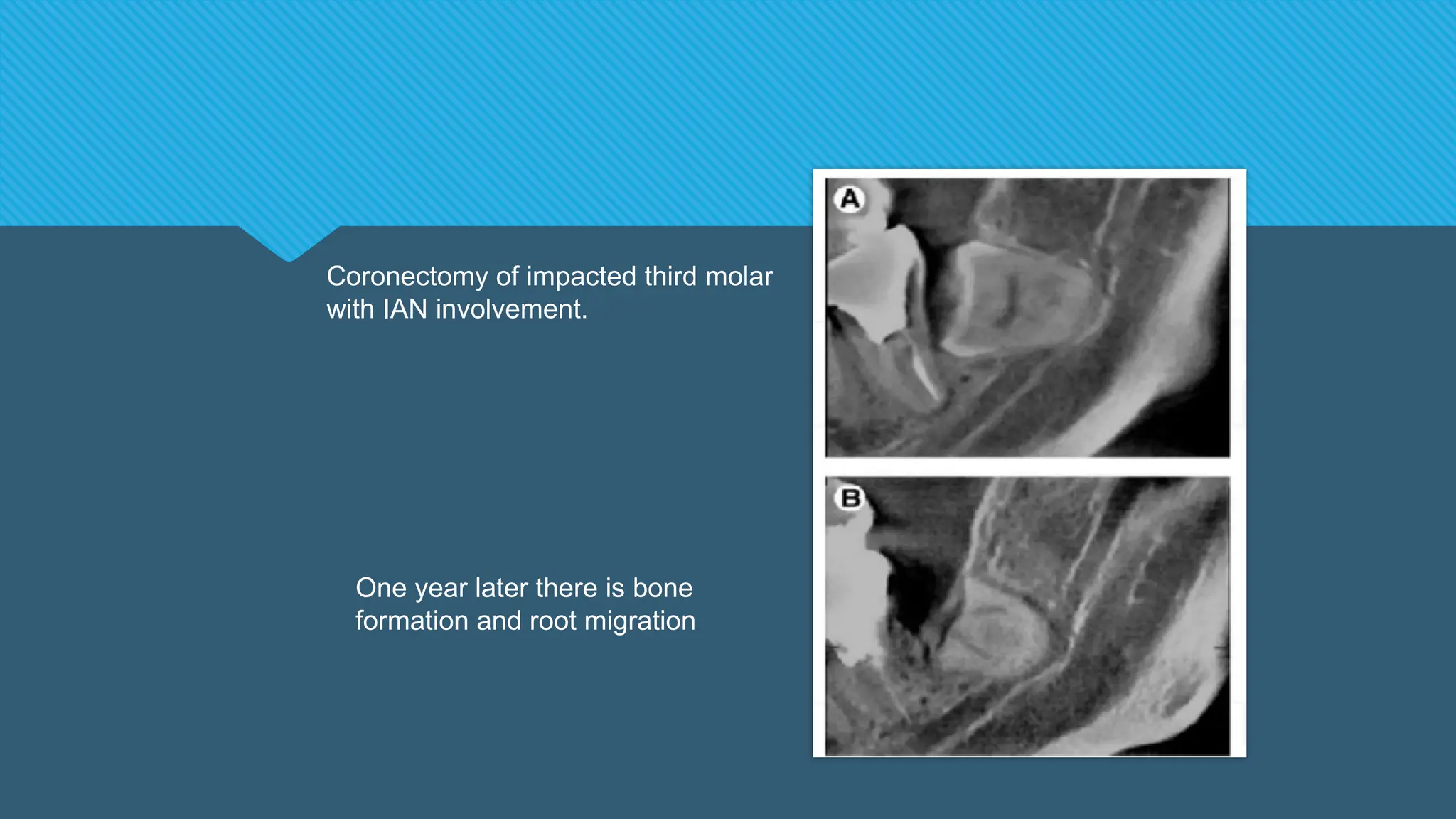
Coronectomy of impacted third molar
with IAN involvement.
One year later there is bone
formation and root migration
WOUND TOILET
 After the tooth has been removed, the socket contains blood contaminated by a variety of
organisms, bone chips, slurry from the burs.
 The socket may also contain granulation tissue and follicular remnants. The walls of the
socket may have been damaged by cutting and inevitably overheated if a bur has been
used. Outside the socket the tissue comprising the flap have also been damaged and debris
may have collected at the point of reflection.
 The first step is to remove the obvious bits of redundant tissue from the main cavity. The
more adherent granulation tissue may be scraped away.
 The bone may now be smoothened with bur or trimmed with roungers. Special care is taken
both with curettes and burs when the inferior dental nerve and vessel are thought to be near.
 Any bone that is detached from its blood supply should be removed.
 Flap is now inspected and if any tags have developed they may be removed. The reflection
is carefully inspected for debris.
 Both socket and flaps should be copiously irrigated with saline.
CLOSURE
 Redundant tissue distal to the 2nd
molar should be carefully excised if present to avoid post operative
pseudopocket formation.
 Excessive tissue should be trimmed from the margins before suturing.
 Primary closure should be accomplished using 3-0 silk.
 The pilot suture should be as close as possible to the distal surface of the 2nd
molar.
 Rest of the incision is closed by 2-3 sutures.
 Vertical releasing incision is not closed as it acts as an outlet for inflammatory products.
 Following surgical extraction any flap access can be closed primarily or left partially or
fully open to heal secondarily. The purported benefit of the latter is to allow spontaneous
drainage of exudate and blood so reduce pain, swelling and risk of infection.
 A meta-analysis by Bailey et al (2020) found moderate evidence of reduced pain at 24
hours, reduced swelling at one week and no difference in alveolar osteitis, infection or
bleeding with secondary healing as compared to primary.
 Another meta-analysis by Ma et al (2019) found secondary healing was associated with
significantly less pain, swelling and trismus in both early and late phases. Bleeding and
infection were not studied. Partial closure with a buccal advancement flap over the socket
whilst leaving relieving incisions open is a suggested compromise to minimise food
accumulation and allow drainage .
MEDICATION
 When antibiotics are used a single intravenous (IV) dose of amoxicillin is effective55 and
should be administered within 120 minutes of surgery. A comparison of perioperative IV
with postoperative oral regimes in third molar removal found no difference in SSI.
 World Health Organisation (WHO) guidelines (2017) state prolonged (over 24 hours)
prophylactic antibiotic courses give no additional benefit beyond a single pre-operative dose
except for certain specific procedures (none in Oral and Maxillofacial Surgery).
 Overall, current best evidence suggest that antibiotics do reduce SSIs but not enough to
outweigh concerns over adverse effects and antimicrobial resistance and justify routine use.
There may be some justification for use of a single pre-operative dose in
immunocompromised patients however there is no clear evidence for this.
 Recommendations – Routine use of prophylactic antibiotics in patients undergoing third
molar surgery is not supported
 Herrera-Briones et al (2012) found that steroids of any form reduced the degree of
postoperative trismus and inflammation, that administration parentally was superior to oral,
and preoperative superior to post-operative
 Dexamethasone has been used submucosally to administer steroid local to the surgical site.
 Overall some degree of effectiveness has been demonstrated for most regimens but
differences in study methodology make comparison difficult. Furthermore, very few studies
have reported on harms.
 Recommendations – Use of steroids has generally been associated with lower pain, and
often swelling and trismus. Optimum drug, route or timing is unclear and may be guided by
patient acceptability, cost and duration of action
COMPLICATIONS AND MANAGEMENT
 Operative Complications
 Postoperative Complications
OPERATIVE COMPLICATIONS
At the time of incision
 Due to increase in depth and length of incision vessels of retromolar triangle can be
damaged causing hemorrhage.
Packing the socket with an absorbable material and suturing the flap will control it.
A firm pressure for 5-10 minutes should be applied.
 Slippage of blade into the vestibule during incision may lead to damage to facial artery.
 Upwards extension of incision may lead to exposure of buccal fat pad.
While bone cutting
 Adjacent tooth can be damaged by use of bur while bone cutting.
 Bur may slip into mucosa causing damage.
 Injudicious cutting near the lingual plate can cause lingual nerve damage
 Unnecessary excess bone removal can cause weakening of the mandible.
 While using chisel and mallet if vertical stops are not given the then buccal cortex may be
split more than the required split.
Control over the rotary instrument and proper use of chisel and mallet while bone
cutting can avoid these complications.
Copious irrigation during bone cutting can prevent bone necrosis.
INJURY TO NERVE
Incidence is 0.5-1% permanent & 5-7 % temporary.
If tooth is close to canal chances can be more than 30 %.
Acc. to Osborn et al 1985 chances of damage to nerve are 6.5% more in patients
>24 yrs of age because of complete root formation and proximity of roots to canal.
Most of the sensory impairment resolve due to shielding from the insertion of the
retractor and those persisting were due to direct damage from the chisel or bur.
Nerve injury may result from compression, stretching or complete section of the
nerve, caused by movement of bone fragments or iatrogenic damage due to
instrumentation .
Most patients will regain normal sensation within a few weeks or months and less
than 1% (range 0–2.2%) have a persistent sensory disturbance.
IAN injury
 Diameter of IAN is 4.7 mm ( Shane 1986)
 In the mandibular canal vein lies superior to nerve and artery lies lingual to vein (Pogrel
et al).
 Risk of IAN damage ranges from 1.4 – 12%
 Incidence of IAN injury ranges from 0.4-8.4%
 According to Carmichael & Gowan in 1992 chances of IAN damage are more in
horizontal followed by mesioangular impactions.
 Acc. to Michael (2005) maximum risk is associated with mesioangular impactions
(3.3%)
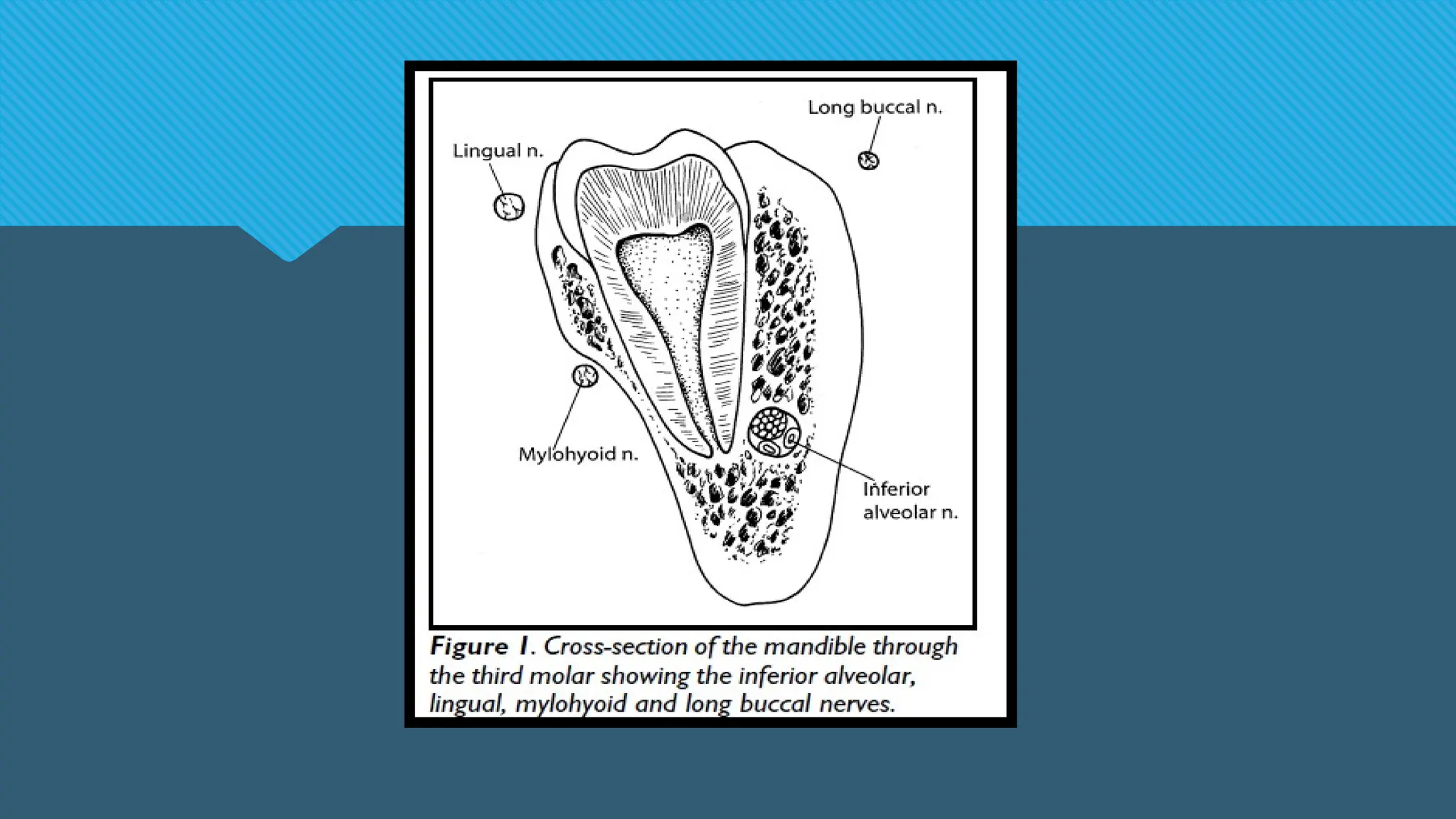
 Mandibular canal is located buccally to the roots of third molars in (61%) , lingually to the
roots of (33%) teeth, and between the roots in (3%) teeth. (Tammisalo T et al1992).
 According to Rajchel et al. the Mandibular canal (MC), when proximal to the third molar
region, is usually a single large structure, 2.0 to 2.4 mm in diameter and courses approximately
2.0 mm from the inner lingual cortex, 1.6 to 2.0 mm from the medial aspect of the buccal plate.
 Kim et al. classified the buccolingual location of the MC into 3 types:
1. type 1 (70%), where the canal follows the lingual cortical plate at the mandibular
ramus and body;
2. type 2 (15%), where the canal follows the middle of the ramus.
3. type 3 (15%), where the canal follows the middle or the lingual one third of the
mandible from the ramus to the body.
 The possible causes of nerve damage are injudicious use of instruments, abbarrant tooth
position & technique of bone crushing even if it is at a distant from tooth root.
 Other factors are, direct visualization of the IAN during surgery.
 The use of rotatory instruments in general was not significantly associated with nerve
damage, but so did the osteotomy and the sectioning of the tooth in the depth of the socket.
 Seven radiological signs mentioned by Rood and Shehab as indicative of a close
relationship of the impacted mandibular third molar to the IAN canal, only three are found
to be significantly related to IAN injury, these being diversion of the canal, darkening of
the root and interruption of the white line.
INJURY TO LINGUAL NERVE
 Position of lingual nerve:
According to Kisselbech & Chamberlain 1984 it is lying lingual & inferior to crest of lingual
plate of mandible.
 2mm below crest and 0.5 mm medial to crest (83% cases) in 17 % cases it is at or above
the level of crest.
 Horizontally the nerve contacted the lingual plate of the third molar in 62% of cases .
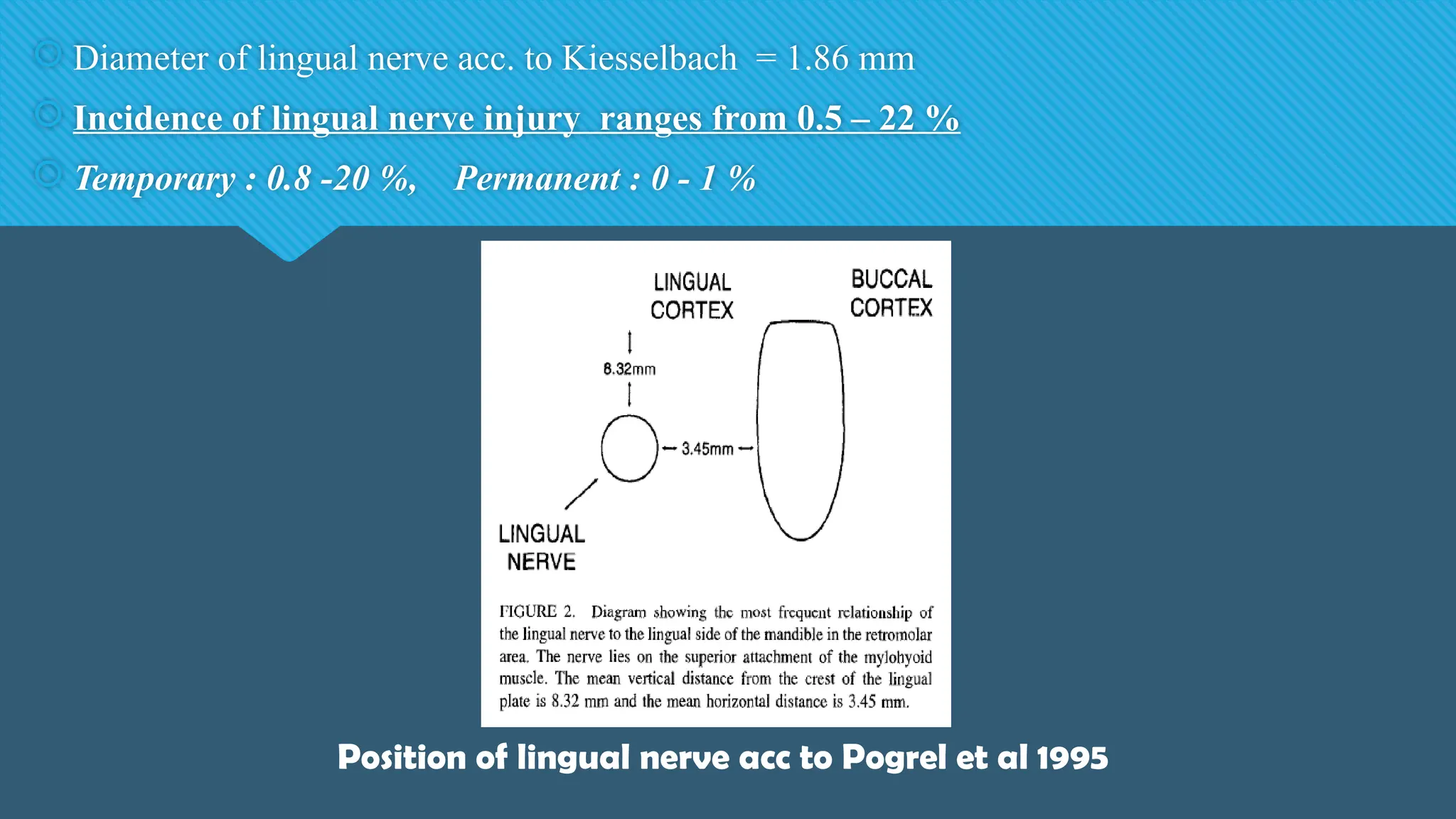
 Diameter of lingual nerve acc. to Kiesselbach = 1.86 mm
 Incidence of lingual nerve injury ranges from 0.5 – 22 %
 Temporary : 0.8 -20 %, Permanent : 0 - 1 %
Position of lingual nerve acc to Pogrel et al 1995
 Peterson et al: Mesioangular impactions have highest chances of L.N damage (30.6%). The second
most cited type of impaction resulting in lingual paresthesia was the distoangular impaction.
 More chances of damage with lingual split technique ( 2% according to Rood)
 Studies have shown that the raising and retraction of a lingual mucoperiosteal flap is associated
with an increased frequency of lingual nerve damage.
 Renton and McGurk reported that factors reflecting the surgical skill (i.e. lingual plate perforation)
and the difficulty of the extraction were the strongest predictors of temporary and permanent
lingual nerve.
 Avoiding lingual flap retraction keeps the lingual nerve injury rate under 0.2%.
 Although Walters recommended exposing the lingual nerve by means of a wide retraction
of the lingual flap, this practice was not been used because exposure of the lingual nerve
during surgery led to a more than 8-fold increase in the risk of damaging the nerve.
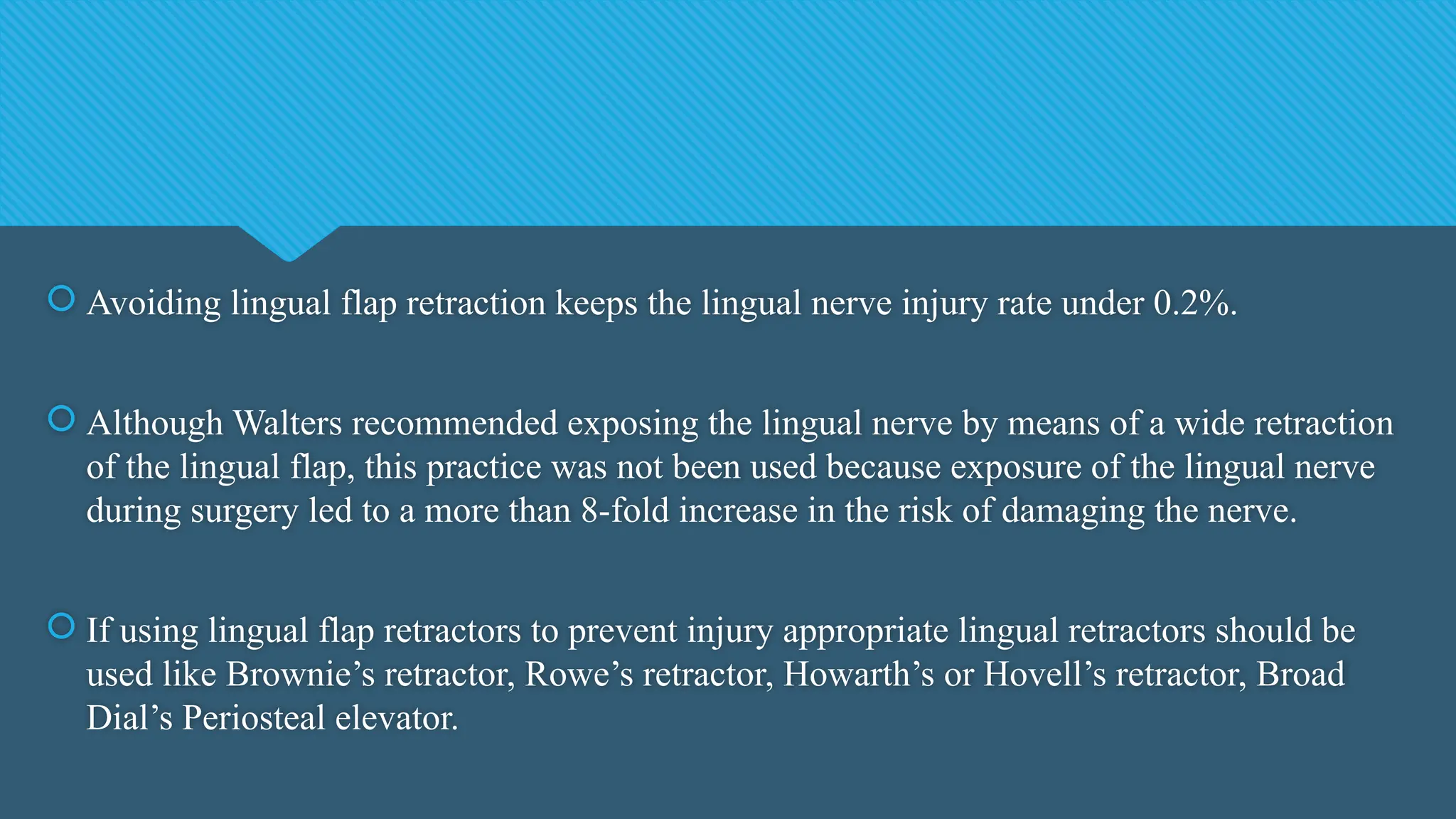
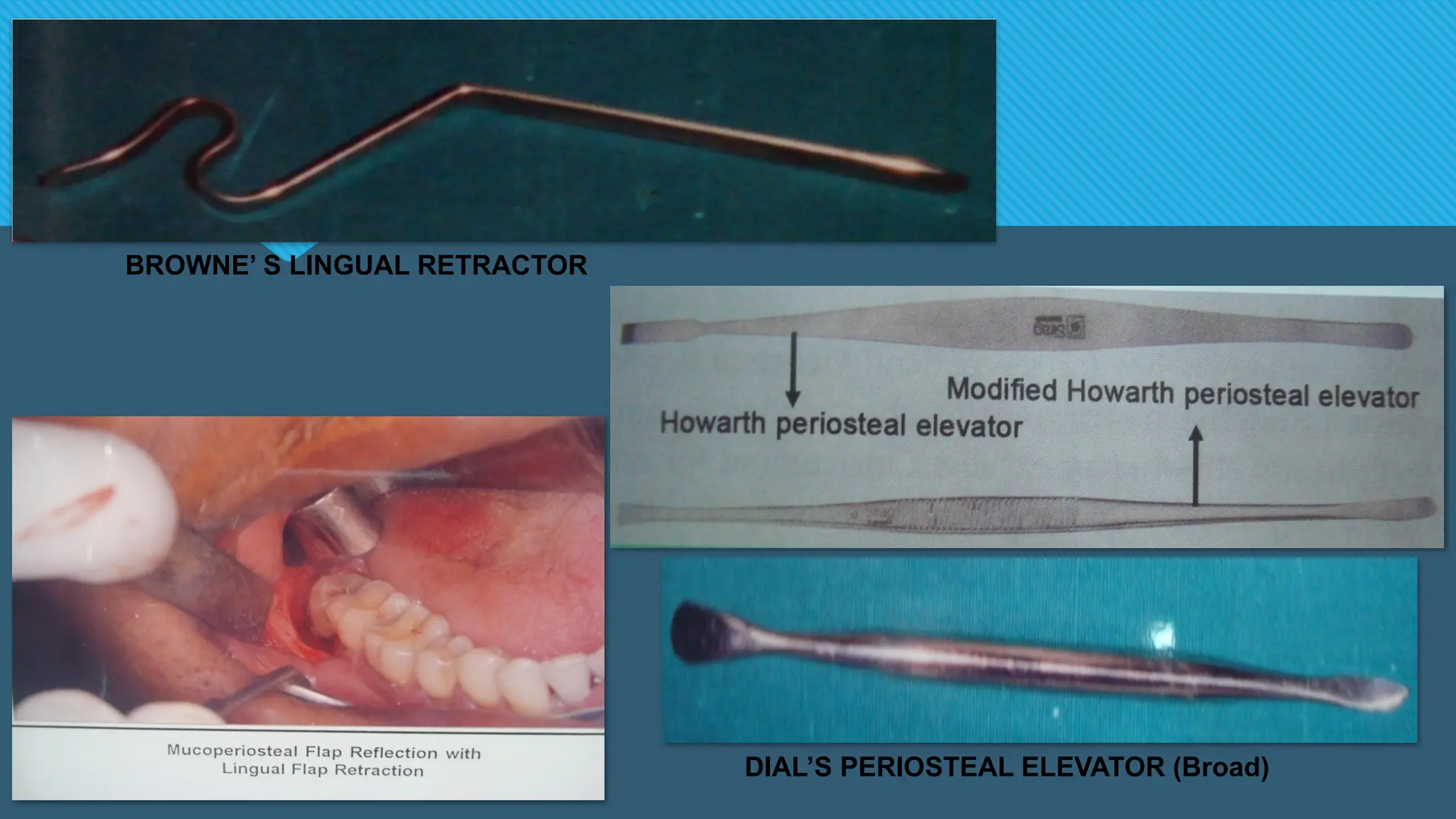
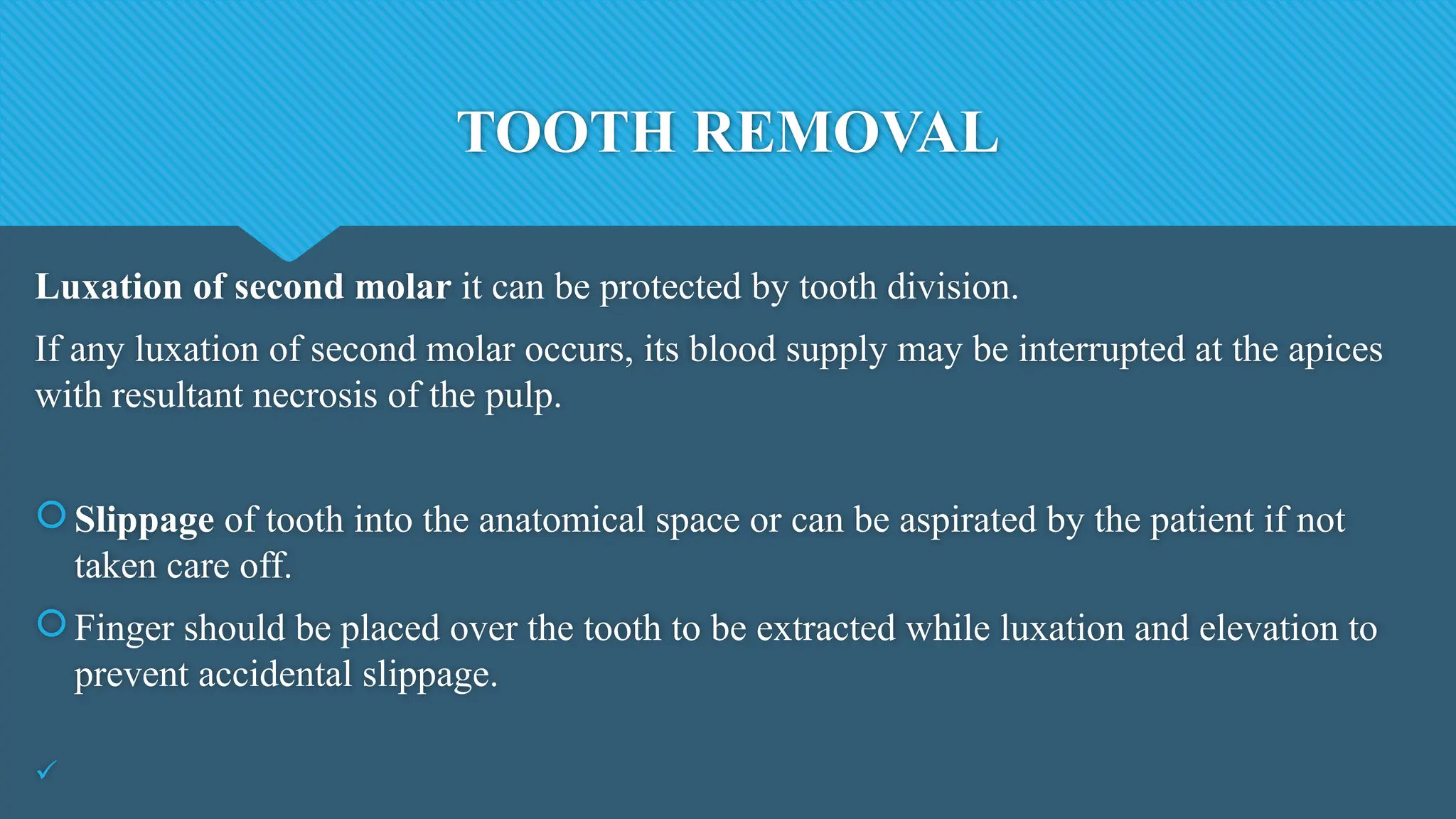
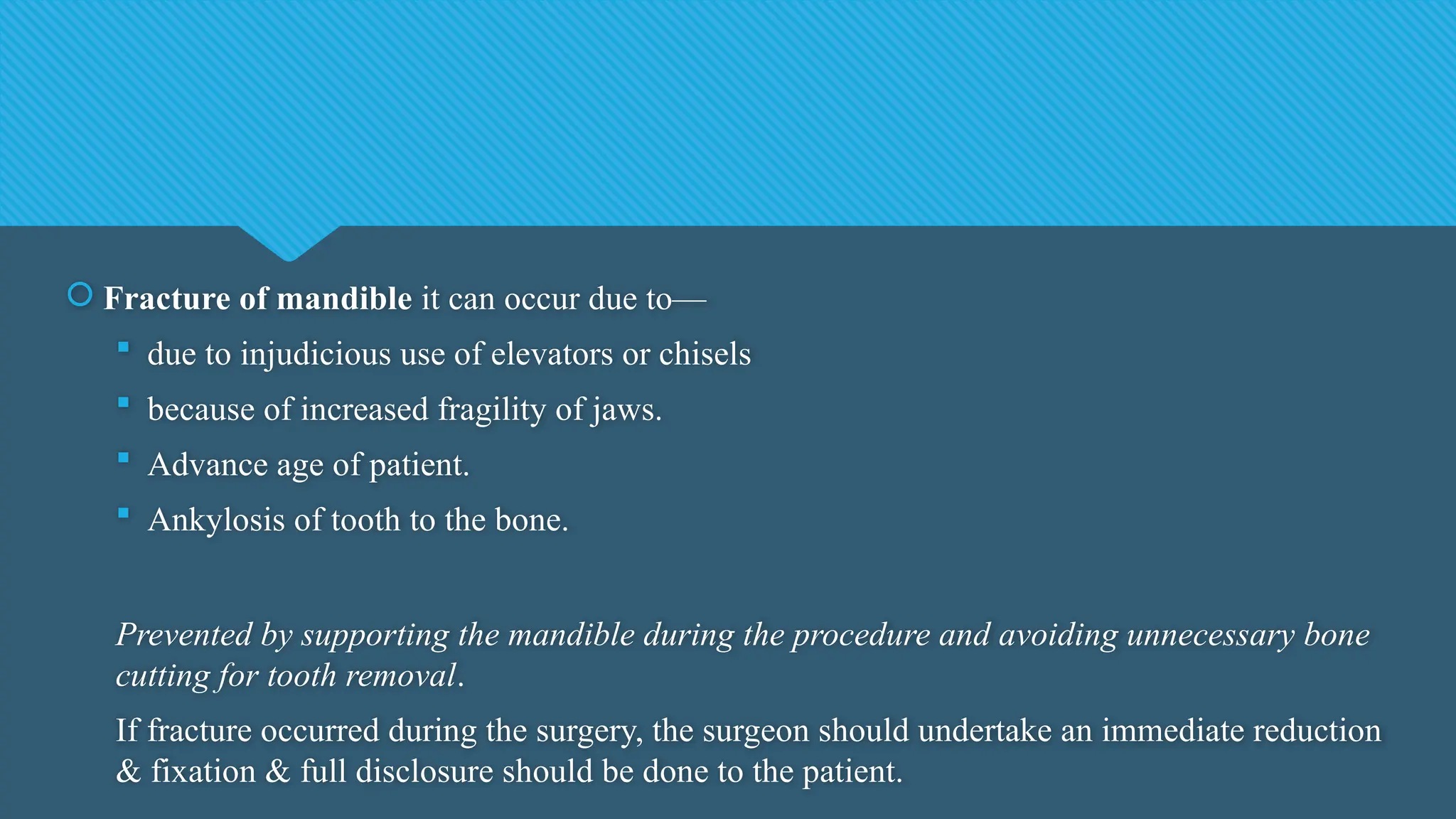
 If using lingual flap retractors to prevent injury appropriate lingual retractors should be
used like Brownie’s retractor, Rowe’s retractor, Howarth’s or Hovell’s retractor, Broad
Dial’s Periosteal elevator.
BROWNE’ S LINGUAL RETRACTOR
DIAL’S PERIOSTEAL ELEVATOR (Broad)
TOOTH REMOVAL
Luxation of second molar it can be protected by tooth division.
If any luxation of second molar occurs, its blood supply may be interrupted at the apices
with resultant necrosis of the pulp.
Slippage of tooth into the anatomical space or can be aspirated by the patient if not
taken care off.
Finger should be placed over the tooth to be extracted while luxation and elevation to
prevent accidental slippage.

 Fracture of mandible it can occur due to—
 due to injudicious use of elevators or chisels
 because of increased fragility of jaws.
 Advance age of patient.
 Ankylosis of tooth to the bone.
Prevented by supporting the mandible during the procedure and avoiding unnecessary bone
cutting for tooth removal.
If fracture occurred during the surgery, the surgeon should undertake an immediate reduction
& fixation & full disclosure should be done to the patient.
 Fracture of root: occasionally small pieces 3 to 5 mm in length could be left in the socket without
any complication when teeth are vital but if infection is present it is better to remove all the root.
 Bleeding immediately after extraction
 May occur because of damage to inferior alveolar artery.
 If inferior alveolar artery is cut, a prompt hemorrhage usually ensues.
It is controlled by:
 Cleaning the socket, under direct vision and suction, pack oxidised cellulose or microfibrillar collagen
hemostatic material into the site.
 Or crush the contiguous bone into the bleeding site or severe the neurovascular bundle with a sharp
curette and use elecrocautery.
 Bone wax can be applied in the extraction socket to control bleeding.
POSTOPERATIVE COMPLICATIONS
These include:
Secondary hemorrhage It occurs usually 3 to 5 days after surgery and is due to infection or
can be due to mechanical disruption of the clot or erosion of vessel in the granulation tissue.
Commonly occurs in non compliant patients.
Management includes careful examination of socket for any foreign body, thorough irrigation
of the socket, suturing of the wound and a pressure pack is given
Pain and swelling Postoperative pain can be relieved by the use of analgesics.
Analgesics should be started immediately after the surgery, before the effect of LA
wears off.
Postoperative swelling is due to surgical edema, hematoma or may be because of
infection. Swelling will reach its maximum in 24 to 48 hrs.
To prevent this, ice packs should be applied on the face for first 24 hours at regular
intervals. If it is because of infection, antibiotics should be prescribed.
Trismus
Slight trismus is expected after the surgical removal of third molars, its peak is at 2nd
day
and should resolve by 7th
post operative day.
More marked restriction occurs with:
-Hematoma formation
-Excesiive bone removal
-Stripping of temporalis tendon
-Presence of infection
Management is done by asking the patient to do jaw opening exercises from the next day of
surgery. Hot fermentation is also found to be helpful in protracted trismus.
Infection (0.8 - 4.2%)
There is a swelling due to cutting of bone and due to tissue manipulation. If it does not show
any remission or appears after 3 to 5 days the cause is infection.
It may be because of flap necrosis or because of debris collection beneath the flap
Management : For this an antibiotic cover according to culture sensitivity of organism is
given for 7 days.
REFERENCES
 Miloro M. Peterson's principles of oral and maxillofacial surgery. Ghali GE, Larsen PE, Waite
PD, editors. Hamilton: BC Decker; 2004 Jun 30.
 Archer WH. Oral and maxillofacial surgery. WB Saunders. 1975:1045-87.
 Al-Zoubi H, Alharbi AA, Ferguson DJ, Zafar MS. Frequency of impacted teeth and categorization
of impacted canines: A retrospective radiographic study using orthopantomograms. Eur J Dent.
2017 Jan-Mar;11(1):117-121
THANK YOU

THIRD MOLAR IMPACTIONS and its management

  • 1.
    THIRD MOLAR IMPACTIONS DEPARTMENTOF ORAL & MAXILLOFACIAL SURGERY Presented by: Dr. Arushi Agarwal (2nd year PG (MDS)
  • 2.
    CONTENTS  INTRODUCTION  TERMINOLOGIES HYPOTHESIS  THEORIES  ETIOLOGY  INDICATIONS  CONTRAINDICATIONS  ORDER OF FREQUENCY OF IMPACTION  SURGICAL ANATOMY  CLASSIFICATION  PRE-OP ASSESSMENT  DIFFICULTY INDICES
  • 3.
    INTRODUCTION  Surgical removalof impacted third molar is the most frequently performed minor oral surgical procedure, since third molars are present in 90% of the population with 33% having at least one impacted third molar.  The incidence of impacted teeth ranges from 5.6% to 18.8% among different populations. The impacted third molar teeth have a prevalence range of 16.67–68.6% and are the most frequently observed impacted teeth.
  • 4.
     Mandibular thirdmolars are the most frequently extracted teeth, accounting for 18% of dental extractions.  Third molars typically develop around the age of 8 to 15years and erupt between the ages of 17 to 22.  As a result of this delayed eruption, mandibular third molars are often impacted, with 17% to 69% presenting with some degree of impaction.  Systematic and meticulous classification of the position of the impacted molar teeth before surgical planning and determination of the position of the teeth positively affect the success.
  • 5.
    According to ASOS(1971) and Archer (1975) An impacted tooth is one, which is completely or partially unerupted and is positioned against another tooth, bone or soft tissue so that its further eruption is unlikely. According to Peterson (1972) An impacted tooth is one that fails to erupt in the dental arch within the expected time. The tooth becomes impacted as its eruption is prevented by adjacent teeth, dense overlying bone or excessive soft tissue.
  • 6.
    According to WHO(2007) An impacted tooth is any tooth that is prevented from reaching its normal position in the mouth by tissue, bone or another tooth. According to PETERSON A tooth is considered impacted when it has failed to fully erupt into the oral cavity within its expected developmental time period and can no longer reasonably be expected to do so.
  • 7.
    TERMINOLOGIES Malposed Tooth A tootherupted or unerupted and is in an abnormal position in maxilla or mandible. Unerupted Tooth A tooth that is in the process of eruption and is likely to erupt based on its clinical and radiological findings. Embedded Tooth This term is interchangeably used with the impacted teeth but the difference is that the erupting forces are absent in embedded and present in impacted teeth Primary Failure Of Eruption was described for the first time by Proffit and Vig in the year 1981 to describe a condition in which malfunction of the eruption mechanism causes non ankylosed teeth to fail to erupt.
  • 8.
    HYPOTHESIS  Tooth germof mandibular third molar is visible radiographically by age 9yrs  Cusp mineralization is completed approx. by 11yrs age  Tooth is located within anterior border of ramus with its occlusal surface facing almost anteriorly  Crown formation is complete by 14yrs age roots is 50% formed by 16yrs age  Body of mandible grown in length at expanse of resorption of anterior border of ramus  As the process occurs position of third molar relative to adjacent tooth changes assuming a position at the root level of second molar, the angulation of crown becomes horizontal
  • 9.
    • Change inthe orientation of occlusal surface from a straighter vertical inclination occurs during root formation.
  • 10.
     Most thirdmolars d not complete the eruption sequence and become impacted  Approx. half remain as mesioangular impactions.  The Belfast study group found that underdevelopment of mesial root results in mesioangular impaction.  Overdevelopment of the same results in overrotation of third molar into distoangular impaction.  Overdevelopment of distal root with a mesial curve is responsible for severe mesioangular or horizontal impaction.
  • 11.
     Secondly, failureof third molar to rotate into a vertical position and erupt involves relation of bony arch to the sum of mesiodistal widths of teeth in the arch.  Thirdly, impaction could be a result of retarded maturation.
  • 12.
    THEORIES  By Durbeck1945 1. Orthodontic theory : Jaws develop in downward and forward direction. Growth of the jaw and movement of teeth occurs in forward direction, so any thing that interfere with such moment will cause an impaction (small jaw-decreased space). A dense bone decreases the movement of the teeth in forward direction.
  • 13.
    2. Phylogenic theory:Nature tries to eliminate the disused organs i.e., use makes the organ develop better, disuse causes slow regression of organ. [More-functional masticatory force – better the development of the jaw] Due to changing nutritional habits of our civilization, use of large powerful jaws have been practically eliminated . Thus, over centuries the mandible and maxilla decreased in size leaving insufficient room for third molars.
  • 14.
    3. Mendelian theory:Heredity is most common cause. The hereditary transmission of small jaws and large teeth from parents to siblings. This may be important etiological factor in the occurrence of impaction.
  • 15.
     Pathological theory:Chronic infections affecting an individual may bring the condensation of osseous tissue further preventing the growth and development of the jaws.  Endocrinal theory: Increase or decrease in growth hormone secretion may affect the size of the jaws
  • 16.
    ETIOLOGY In 1930 Bergerlisted causes: LOCAL CAUSES OF IMPACTION:  Irregularity in position and pressure of adjacent tooth.  Density of overlying or surrounding bone.  Continued inflammation, resulting in increased density of mucous membrane.  Unduly long retention of primary teeth.  Premature loss of primary teeth.  Dilacerated roots may be because of trauma.  Ectopic position of tooth buds.
  • 17.
    SYSTEMIC CAUSES  Prenatal Hereditary,Miscegenation  Post natal Rickets, anaemia, Congenital syphilis, Tuberculosis, malnutrition
  • 18.
     Endocranial disordersof Thyroid, Parathyroid, Pituitary glands like hypothyroidism causing lack of osteoclastic activity not providing resorption of bone overlying the developing tooth.  Rare conditions Cleiodocranial dysostosis, Hurler syndrome, Gardner’s Syndrome, Osteopetrosis, Piere Robin syndrome, Oxycephaly, Progeria, Cleft palate, Down’s Syndrome.
  • 19.
    INDICATIONS INDICATIONS FOR REMOVAL Givenby National institute of health (USA) BAOMS 1994 1. Recurrent Pericoronitis (58.5%)  Recurrent pericoronitis is the commonest indication seen in 16 – 30 yrs of age.  Peak incidence 20-25 yrs.  Pericoronitis commonly affects impacted third molars.  Infection develops in the remnants of the follicle b/w crown of impacted tooth & surrounding bone and gingiva.  Infection may remain localized or can spread to various spaces.  Causative organisms are : Streptococcus, staphylococcus, peptostreptococcus, fusobacterium and bacteroids.
  • 20.
    2. Caries (14%) The impaction of a partially erupted third molar often causes retention of food debris leading to caries either on the occlusal surface of third molar or the adjacent distal surface of second molar or in both teeth.  If left untreated it may proceed to pulpal exposure and abscess formation.
  • 21.
    3. Periodontal Disease(3.02%) Impacted tooth is associated with high incidence of pocketing distal to 2nd molar which can lead to inflammation and considerable bone loss leading to loosening of 2nd molar . 4. Obscure facial pain (2.5%)  Completely embedded or partially erupted mandibular third molars can be a cause for an obscure facial pain.  In the absence of detectable pathology it is wise to adopt a conservative approach, although in practice the surgeon can often only guarantee that such a tooth is not the cause of pain by eliminating it.  Pain may be because of pressure on IAN, pericoronitis, caries.
  • 22.
    5. Pathological resorption(2.1%)  Pressure of the crown of erupting third molar against the roots of second molar may result in pathological resorption.  If second molar is devitalized, second molar may be extracted and third molar is allowed to assume a functional position in the oral cavity.
  • 23.
    6. Prosthetic considerations(1.6%)  An undiagnosed impacted tooth may be present in the mandible, which is diagnosed before giving full denture to the patient.  Sometimes it is sound judgement to leave a deeply embedded tooth in situ unless symptoms supervene.  As resorption of the mandible progresses some retained teeth become more superficial and may either interfere with the fit of a full lower denture or cause pain due to caries or a gingival inflammation.  These teeth should be removed as soon as gingival inflammation has been effectively treated.
  • 24.
    7. Orthodontic reasons(1.1%)  Orthodontists are divided in their opinions concerning the value of prophylactic removal of mandibular third molar germs in children in whom there is marked disproportion between tooth size and jaw size.  The enucleation of tooth germs is quick, simple and atraumatic, if performed before the calcified cusps have united.
  • 25.
    8. Presence ofa pathological lesion (0.6%)  If the tooth is related to a cyst, it is usually better removed.  Enucleation with complete removal of impacted tooth is the best treatment. 9. Involvement in fractures (0.2%)  If however, an impacted tooth situated in the line of fracture is preventing the displacement of the bony fragments, it may be wiser to leave it in situ at least until some callus has formed.  When its roots are fractured, when its apex is open to fracture line & when it is partially erupted it should be removed.
  • 26.
    Scientific prophylaxis  Ifthe tooth is related to a malignant lesion which is to receive therapeutic irradiation, its removal is usually indicated, whilst if the tooth is situated in a bone which has been irradiated it is usually best left alone, unless symptoms supervene because of the risk of osteoradionecrosis complicating the extraction. In case after radiotherapy (65-70 Gy) the removal is necessary then the procedure is planned after 4-8 weeks of therapy with complete preoperative antibiotic coverage (2gm penicillin + 500 mg metronidazole ) 1 hour before surgery and 500 mg of both the drugs four times a day for 1 week. The procedure should be as atraumatic as possible using, low or nor epinephrine local anesthetic. 20 dives of HBO pretreatment followed by surgery and then 10 post operative dives with complete antibiotic coverage gives good results.
  • 27.
     Prior toorthognathic surgeries especially mandibular advancement, the area where impacted tooth is placed is the weak area and that is the area where cuts of BSSO are placed and plating is done, its wise to remove such a tooth at proper time so that good amount of bone is formed before carrying out the procedure.
  • 28.
    Controversies regarding prophylacticremoval of Mandibular third molar  Extensive evidence in literature supports that prophylactically removing impacted mandibular third molar reduces the risk of mandibular angle fracture which was hypothesized because of decreased cross sectional area of bone at the angle because of retained third molar.  A study by Zhu et al in 2005 showed that patients with unerupted mandibular third molar present has a low incidence of condylar fracture than the patients with no unerupted third molar, as the forces which were to act on angle region were transmitted to condyle in the absence of third molar. Because of more cross section of bone in angle region as a result of absence of third molars angle becomes more resistant to fracture.
  • 29.
    CONTRAINDICATIONS Absolute :  Patientwho has received radiations and time of being irradiated is less than 4-8 weeks then patient should not be taken up for surgery because of the risk of osteoradionecrosis.  Tooth in a malignant growth  Tooth associated with vascular lesions: There is a high risk of catastrophic bleeding while extracting the tooth associated with vascular lesions like hemangiomas, aneurysms, arteriovenous malformations, etc  Tooth with an acute infection: If a tooth associated with acute infective pathology is extracted, there is a risk of extension of infection into deeper tissue planes due to loss of natural barriers during surgery. Also, there are chances of ingress of microorganisms into blood stream resulting in bacteremia. This may cause pyrexia and bacterial endocarditis in susceptible patients.
  • 30.
    Relative :  Themost frequent is poor systemic condition of the patient like uncontrolled diabetes and hypertension.  If it is placed in close proximity to the vital structure like IAN.  An asymptomatic impacted third molar with poor surgical access should not be removed.  Age: deeply embedded, asymptomatic impacted mandibular third molars should be left untouched in older patients.  If second molar has to be extracted (due to caries, bone loss or any other reason), third molar move into a functional position or can be used as bridge abutment.
  • 31.
    ORDER OF FREQUENCYOF IMPACTION  MANDIBULAR THIRD MOLAR  MAXILLARY THIRD MOLARS  MAXILLARY CUSPIDS  MANDIBULAR BICUSPIDS  MAXILLARY BICUSPIDS  MANDIBULAR CUSPIDS  MAXILLARY CENTRAL INCISORS  MAXILLARY LATERAL INCISORS
  • 32.
    According to studyby WYNARD et al the frequency rates of impaction of mandibular third molars are: Mesioangular - 43% Vertical - 38% Distoangular - 6% Horizontal - 3% Displaced - 3.3% Transverse - 2.3% Distoangular being most difficult because of the presence of ramus and more amount of bone immediately distal to the tooth and path of withdrawal of tooth is not favourable as is into the ramus.
  • 33.
    SURGICALANATOMY  The mandiblecomprises of a body which is horseshoe shaped and has the ramus on either side, which are flat and broad rami. Each ramus has two processes at the superior end—the coronoid process, which is more anterior, and condylar process, which is continuous with the posterior border.
  • 34.
     The mandibularthird molar tooth is usually present at the distal end of the mandibular body, which adjoins a thin ramus. The body-ramus junction is a weak area that can fracture if excessive force is employed during the elevation of the third molar.  The tooth lies between the buccal cortical plate, which is thick, and the thin lingual cortical plate. In most instances, the thickness of the lingual plate may be less than 1 mm, and the tooth may get displaced into the lingual pouch if untoward force is applied.
  • 35.
     NEUROVASCULAR BUNDLE The mandibular canal lies beside or below the third molar roots. Usually, the canal lies slightly buccal and apical to the third molar roots, but this varies frequently.  The canal contains the inferior alveolar neurovascular bundle including the artery, vein, and nerve within a sheath of fascia.  The third molar roots may sometimes be indented by the canal, but actual penetration is rare. In these cases, attempting to elevate fractured root tips may result in the displacement of the tips into the mandibular canal. If the canal vessels get injured by instruments or forceful intrusion of the tooth roots, profuse hemorrhage may result.
  • 36.
     RETROMOLAR TRIANGLE This is a depressed roughened area behind the third molar bounded by the buccal and lingual alveolar ridge crests. The retromolar fossa is a shallow depression that occurs just lateral to the retromolar triangle. Mandibular vessel branches may emerge at the fossa or triangle and can be injured during surgical exposure of the third molar region if the incision is not taken laterally. This can result in brisk hemorrhage
  • 37.
     Facial Arteryand Vein The facial artery and anterior facial vein are related to the mandibular body, anterior to the masseter muscle, where they cross the inferior border of the mandible. They lie below the second and third molar teeth and may be injured when a buccal incision is placed at an inferior level. To avoid this, it is best to start the incision at the sulcus depth and move upward toward the tooth.  Lingual Nerve The lingual nerve often runs below and behind the third molar, and contacts the periosteum over the lingual cortex at a sublingual level. Cardinal anatomic studies have shown the close relation of the lingual nerve to the lower third molar region
  • 38.
     The lingualnerve usually lies 2.3 mm below the lingual alveolar crest, and 0.6 mm medial to the mandible, when viewed from a frontal plane.  Since the lingual nerve is close to the third molar, it is at risk of damage during surgical removal of the tooth. This may lead to anesthesia of the tongue in its anterior two-thirds, and also loss of taste sensation in this area.  The surgeon should also be aware of the course and direction of the mylohyoid and long buccal nerve to prevent inadvertent injuries to these nerves
  • 39.
     Lingual Plate Sincethe lingual pate is very thin, it may be perforated by the apices of lower third molar roots. If the roots are fractured, attempting to elevate may cause them to be displaced into the “lingual pouch,” from where it will be difficult to retrieve. The entire tooth also may rarely be pushed into the lingual pouch
  • 40.
     Bone Trajectoriesof Mandible The bone trajectories of the mandible, referred to as grains, course in a longitudinal direction. Even though the technique of chisel and mallet has almost become obsolete, it is important to know the bone trajectories. On the buccal side, a horizontal chisel cut that is oriented parallel to the superior border may cause extensive splitting till the first molar region due to the grain direction. To prevent this, the operator must make a “vertical stop cut”, with the bevel oriented posteriorly, just distal to the second molar. The chisel must be angulated correctly at all times to avoid fracture of mandible distal to the third molar.
  • 41.
    CLASSIFICATION Angulation of theimpacted tooth (George Winter classifcation) 1926  Vertical  Mesioangular  Horizontal  Distoangular  Buccoangular  Linguoangular  Inverted  Unusual
  • 43.
    Relationship between theimpacted tooth and the anterior ramal border  Class I—There is enough mesiodistal space between the anterior border of ramus and second molar to accommodate the third molar.  Class II—Space between anterior border of the ramus and second molar is less than the mesiodistal width of the crown of the third molar.  Class III—No mesiodistal space available and the third molar is almost completely within the ramus. Class III impactions present greater difficulty in removal.
  • 44.
    Depth of theimpacted tooth and tissue type that overlies the tooth (Pell and Gregory Classifcation based on occlusal level of the tooth)—i.e. soft tissue, partial bony, or complete bony impaction Position A—The highest point of the tooth is at the same level of the occlusal plane or above it. Position B—The highest point of the tooth is above the cervical line of the second molar but below the occlusal plane. Position C—The highest point of the tooth is well below the cervical line of the second molar
  • 45.
    KILLEY AND KAYCLASSIFICATION (1975) A. Angulation and Position 1. Vertical 2. Mesioangular 3. Distoangular 4. Horizontal 5. Transverse displacement 6. Aberrant position B. State of eruption 7. Erupted 8. Partially erupted 9. Unerupted C. Number of Roots 10. Fused rots 11. Two roots 12. Multiple roots
  • 46.
    PRESURGICALASSESSMENT  Estimating possibledifficulty in the removal of third molars is a constant challenge for surgeons.  There is a highly significant correlation between the level of difficulty for surgical removal of lower third molars and postoperative inflammatory complication. Weight  Surgical difficulty in overweight patients is attributed to the herniation of the cheek intraorally making retraction difficult
  • 47.
    Depth of impaction The results of Tong Lim et al showed that the depth of impaction of the maxillary wisdom tooth serves as a factor for greater possibility of an oroantral perforation.; a deeper impaction requires a larger amount of bone removal to deliver the third molar and, hence, is more likely to cause damage to the sinus lining during the operative procedure. Pathological processes  Complications are inevitable when the tooth is associated with a pathological process and must be removed. In these cases, bone resorption reduces the degree of difficulty; unless the pathology is an associated odontoma or cementoblastoma etc
  • 48.
    Orientation of theimpaction  Deviation from the vertical alignment of the tooth increases surgical difficulty. Root morphology and number of roots  Teeth with complete and divergent roots also prove more difficult to remove. Such teeth are often treated with sectioning before any mobility is attained because the fragmentation reduces the retention areas and facilitates removal with greater preservation of the adjacent bone and anatomical structures.
  • 49.
    Proximity of thealveolar nerve  The relation between the mandibular canal and tooth roots should be considered during extractions. However, radiographic images do not provide the necessary reliability. The hypothesis is that when the white line of the mandibular canal is absent or indistinct where the canal intersects the tooth root, or divergence of the canal or darkening of the root at that location the mandibular canal is possibly entrapped. Proximity between the second and third molars  The space between the distal surface of the second molar and mesial surface of the third molar and the periodontal ligament space was significantly associated with surgical difficulty. Contact of the root of the second molar and the crown of the impacted third molar require sectioning and special surgical technique
  • 50.
    Fully developed roots Itincrease the risk for postoperative nerve impairment. This was expected because fully developed roots are likely to have closer contact to the IAN bundle. This is another argument for early removal of wisdom teeth.
  • 51.
    Angulation of thethird molar  According to Chang, the greater the angulation of the third molar, the more difficult it is to remove and to maintain oral hygiene. Periodontal pocket  There are occasions when removal of third molars can either create or exacerbate periodontal problems on the distal aspect of the lower second molar.[9] The most important predictor of the final bone level behind the second molar was the bone level on the distal aspect of the second molar on completion of removal of the third molar
  • 52.
    Nerve involvement  Casestudies have shown that the inferior alveolar nerve may be involved after third molar removal in anywhere from 0.5% to 5% of lower third molar removals. In many cases this can be predicted preoperatively from panoramic radiographs and, more recently, from cone beam computed tomography scanning, showing the relationship of the inferior alveolar nerve to the roots of the lower third molars.  Estimates of the incidence of lingual nerve involvement from case series show an incidence of between 0.2% and 2% of lower third molar removals. Narrowing of the IAN canal increases the risk for postoperative IAN impairment The absence of cancellous bone between the nerve and the tooth, in other words, direct contact between the 2 structures, is another independent factor.
  • 53.
    Temporomandibular joint problems Removal of third molars can cause or exacerbate pre-existing temporomandibular joint disorders (TMD), particularly internal derangements of the tmj. Age  The increase in age is associated with complete root formation, which may be related to the higher rate of complications among patients over 25 years of age compared with younger patients.  Bone density of the tooth has been described as important indicator for the prediction of surgical difficulty. Studies indicate that as one becomes older, third molars become more difficult to remove, may take longer to remove, and may result in an increased risk for complications associated with removal.
  • 54.
    Clinical Examination Thisincludes taking the patient’s history, clinical examination extraorally and intraorally.  History taking Complaints of the patient—Impacted teeth are usually asymptomatic and patients are aware of their existence only when told by the dental practitioner. Symptoms, if any, are usually due to acute or chronic pericoronitis, or due to acute pulpitis secondary to dental caries.  Extraoral examination The clinician must examine the face and neck for redness and swelling related to infection. The lower lip is tested for anesthesia or paresthesia. The regional lymph nodes must be assessed by palpation for any tenderness or enlargement.
  • 55.
     Intraoral examination—Thefollowing points are noted: (a) Mouth opening—The ability of the patient to open the mouth is analyzed, and any trismus, fbrosis, or hypermobility of the joint is noted. The size of the mouth (microsomia/macrosomia) is also checked. Third molar access may be restricted if the mandible is retrognathic, while a prognathic mandible offers good access. (b) General examination of oral cavity- oral mucosa, teeth, and oral hygiene.
  • 56.
    (c) Examination ofthe third molar area for signs of pericoronitis and state of eruption of the tooth. (d) Condition of the impacted tooth- presence of caries, dental fllings, and internal resorption (which may resemble caries). The angle of the tooth and locking beneath second molar must be noted and confrmed with appropriate radiographs. (e) Condition of first and second molars—presence of caries, fllings, or crowns; root canal treatment may put the second molar at risk of fracture and the patient must be warned of this. Distal periodontal pocketing, root resorption, and absence of the second molar must also be noted
  • 57.
    (f) Space presentbetween the second molar distal surface and the ascending ramus: A small distance makes access difficult, and a large distance makes the tooth more accessible. For maxillary teeth, the distance between the second molar and tuberosity must be considered. (g) Adjacent bone may develop infection, which can spread along the mesial surface of the tooth and affect the second molar, which would then require extraction. Infection/osteomyelitis can spread to the ramus in the case of distoangular impacted third molars, through recurrent submasseteric abscesses in this region. (h) Systemic skeletal diseases may cause pathological complications which should be noted
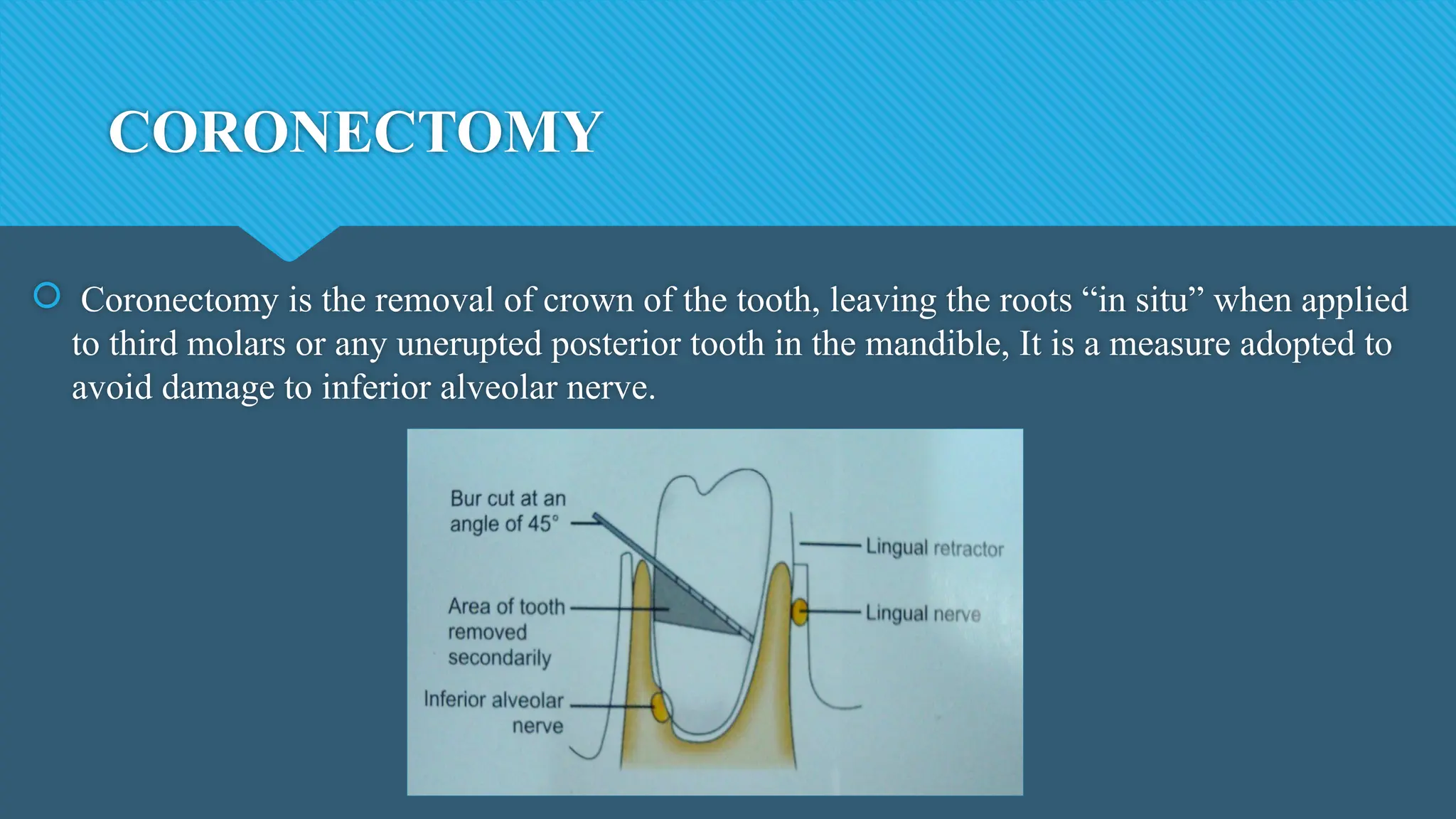
  • 58.
    Presence of cystsand tumors—The impacted tooth may be associated with eruption cysts or large odontogenic cysts can occur in relation to impacted tooth. By and large, they cause displacement of the tooth. Benign and malignant tumors such as ameloblastoma may also be found involving the tooth. Odontomes may also be present in relation to the third molar.
  • 59.
    RADIOGRAPHIC ASSESSMENT  Mostof the local factors causing difficulty may be diagnosed by the careful interpretation of a preoperative radiograph.  ORTHOPANTOMOGRAM is also useful to see the bilateral impacted molars on a single radiograph and also to see its relation to their adjacent teeth and to the ramus and inferior alveolar canal
  • 60.
    BITEWING RADIOGRAPHS canbe used accurately for visualising the class I and class II impacted mandibular molars.
  • 61.
     A standardaccurate INTRA-ORAL PERIAPICAL RADIOGRAPH is the most suitable for use during preoperative assessment
  • 62.
    The radiological predictionof inferior alveolar nerve injury during third molar surgery. Pre-operative assessment must be carried out radiologically in an attempt to identify the proximity of the impacted tooth to the inferior alveolar canal. Rood’s in his review of literature (1990) revealed seven radiological signs suggested as indicative of a close relationship between the mandibular third molar tooth and the inferior alveolar canal. Four of these signs are seen on the root of the tooth and the other three are changes in the appearance of the inferior alveolar canal.
  • 63.
     Darkening ofthe root Darkening of the root is attributed to the decreased amount of tooth substance or loss of the cortical lining of the canal between the source of X-rays and the film (MacGregor, 1976).  Deflected roots Deflected roots or roots hooked around the canal are seen as an abrupt deviation of the root, when it reaches the inferior alveolar canal. The root may be deflected to the buccal or lingual side or to both sides so that it may completely surround the canal (Stockdale, 1959); or it may be deflected to the mesial or distal aspect (Waggener, 1959).
  • 64.
     Narrowing ofthe root Seward (1963) stated ‘If there is narrowing of the root where the canal crosses it, it implies that the greatest diameter of the root has been involved by the canal, or that there is deep grooving or perforation of the root’.  Dark and bifid root This sign appears when the inferior alveolar canal crosses the apex and is identified by the double periodontal membrane shadow of the bifid apex (Seward, 1963).
  • 65.
     Interruption ofthe white line(s) The white lines are the two radio-opaque lines that constitute the ‘roof’ and ‘floor’ of the inferior alveolar canal. These lines appear on a radiograph due to the rather dense structure of the canal walls (Durbeck, 1957). The white line is considered to be interrupted if it disappears immediately before it reaches the tooth structure, either one or both lines may be involved. The interruption is considered by some to be a ‘danger sign’ of a true relationship between tooth root and canal
  • 66.
    Diversion of theinferior alveolar canal The canal is considered to be diverted if, when it crosses the mandibular third molar, it changes its direction. Rud (1983) reported a 1% incidence of an upward deflection of the canal where it overlapped the root and 4% when the root was grooved. Narrowing of the inferior alveolar canal The inferior alveolar canal is considered to be narrowed if, when it crosses the root of the mandibular third molar, there is a reduction of its diameter (Poyton, 1982). This narrowing could be due to the downward displacement of the upper border of the canal (Kipp et al., 1980; Rud; 1983) or the displacement of the upper and lower borders toward each other with the hourglass appearance
  • 67.
    Access  Ease ofaccess to the site of operation may be determined by noting the inclination of the radio-opaque line cast by the external oblique ridge. If this line is vertical access is poor, whilst if it is horizontal, the access is excellent. Position and depth  The position and depth of the impacted tooth within the mandible are determined by means of a method first described by George Winter, in which three imaginary lines are drawn on the standard radiograph. In order to facilitate discussion these imaginary lines are given distinctive colours and are described as WAR/ RAW LINES.
  • 68.
    White line isdrawn along the occlusal plane joining the occlusal surfaces of erupted mandibular molars and extending it to the third molar region. The axial inclination of the impacted third molar in relation to the long axis of second molar becomes quite obvious. Interpretation : The maximum contour of the impacted tooth and its relationship to the white line will indicate relative depth of its location.
  • 69.
    Amber line drawnform crest of interdental bone of 1st and 2nd molar and extending it posteriorly distal to third molar or ascending ramus. Interpretation :The amber line represents the bone level. The margin of the alveolar bone enclosing the tooth, so when the soft tissue flap is reflected, only that portion of the tooth shown on the film to be lying above and in front of the amber line will be visible, for the remainder of the tooth will be enclosed within the alveolar bone.
  • 70.
    Red line isdrawn perpendicular from the amber line to an imaginary “point of application of the elevator”. Usually, Cemento-enamel junction on the mesial surface of the impacted tooth is taken as the point of application of the elevator. Indicates depth at which impacted tooth lies within the mandible. It is estimated that any impacted tooth with less than 5 mm long red line can conveniently be removed with ease under local anaesthesia.
  • 71.
    IsidoroCortell-Ballester et al.have used computer-assisted system in the classification of lower third molars which allowed objective classification of the third molars within the Winter subclasses, as follows  Third molars with a negative angle (<0 ) were considered to be inverted. ᵒ  Third molars with an angle between 0 and 30 were considered to be horizontal. ᵒ ᵒ  Third molars with an angle between 31 and 60 were considered to be ᵒ ᵒ mesioangular  Third molars with an angle between 61 and 90 were considered to be vertical. ᵒ ᵒ  Third molars with an angle 90 were considered distoangular ᵒ
  • 72.
    CLASSIFICATION OF IMPACTEDTHIRD MOLARS ON CBCT IMAGES
  • 76.
    DIFFICULTY INDICES  Thereare a number of previous studies to evaluate surgical difficulty in the extraction of impacted mandibular third molars. Prominent among the proposed models are the Winter’s , Pell and Gregory’s, Pederson’s and the WHARFE classification/scoring systems.
  • 77.
    Difficulty indices for impactedteeth Preoperative assessment Based on radiographic variables Winter’s lines (war) Yuasa scale Pederson scale Pell & gregory scale Wharfe index Kharma scale Mracbs scale Koerner scale Mario vincent -barrero Ribes lainez n et al index Penarrocha et al index Kim jy et al index Based on radiographic and clinical variables Based on clinical, radiographical and demographic variables Pernumbeo index Zhang et al index Postoperative assessment Based on surgical technique Parant scale Modified Parant scale Kharma scale Based on surgical technique and time Carvalho et al scale Pernumbeo index
  • 78.
    PEDERSON’S INDEX  Pedersonproposed a modification of the Pell–Gregory scale. The total scores by which difficulty is judged are based mainly on local anatomy and radiographs.  It does not take various relevant factors into account, such as bone density, flexibility of the cheek, buccal opening and inverted tooth
  • 80.
    WHARFE’S ASSESSMENT  Winter’sclassification was expanded by Macgregor, to WHARFE which includes the Winter’s lines along with other factors and has recently been used in several studies.  Increase in radiographic scoring of difficulty according to the WHARFE classification system was associated with increased operating time
  • 82.
    KOERNER INDEX  Koerneret al. proposed a difficulty index scale for removal of these teeth on the basis of local anatomy and radiographs, which were helpful in predicting the difficulty that would be encountered intra-operatively, as well as the postoperative complications.  It covers indications for surgery and how indications and surgical difficulty correspond with the age of the patient
  • 84.
    PELL–GREGORY CLASSIFICATION  Theclassification of such molars is based on their spatial relationships to the ascending ramus of the mandible and to the occlusal plane.  Garcia et al. studied using Pell–Gregory index class C to indicate ‘‘difficult,’’ specificity was 88%  But this classification is not a reliable predictor of surgical difficulty in the extraction of vertical impacted lower third molars, suggesting that this classification is of little value in clinical practice.
  • 85.
    GBOTOLORUN INDEX  Gbotolorunet al. proposed a preoperative index which uses four variables (both clinical and radiologic).  The major difference of this index and the Pederson index is the incorporation of the clinical variables (namely age and BMI).  It was also associated with the curvature of roots of the impacted tooth and the depth from point of elevation
  • 87.
    KHARMA SCALE  Kharmascale proposed a new index based on four factors: tooth angulation, the depth of the third molar in the mandible, the relationship with the ramus/space available and root form and postoperative difficulty indicated by Parant scale which has shown a significant correlation.
  • 89.
  • 90.
    CONTENTS  ARMAMENTARIUM  SURGICALPROCEDURE  INCISION AND FLAP DESIGN  BONE REMOVAL  SECTIONING  CLOSURE  MEDICATION  POSTOPERATIVE COMPLICATIONS AND MANAGEMENT
  • 91.
  • 92.
     Steps forsurgical removal of impacted teeth:- Consent Asepsis and isolation Local anesthesia/LA + sedation/ GA Incision--Adequate exposure Removal of bone to expose the tooth Sectioning of tooth with bur or chisel (optional) Elevation Delivery of tooth out of socket Debridement and smoothening of bone/ Wound toilet Hemostasis Closure Postop instructions Follow up
  • 93.
    ISOLATION OF SURGICALSITE  Scrubbing + painting of skin: It is always desirable to wipe the patient’s face with an antiseptic solution like povidone iodine (Betadine).  Draping of patient with sterile drapes  Preparation of the surgical site: The third molar area is then swabbed with 0.5% solution of chlorhexidine or betadine. Alternatively the patient can be given a mouth wash of the above antiseptic.  This is followed by the administration of local anesthetic injection.
  • 94.
    INCISION AND FLAPDESIGN  The method of gaining access through incision dates back to year 1849, when John Tomes first described the technique to remove impacted third molar  The first step in removing the impacted tooth is to reflect a mucoperiosteal flap.  The flap should be of adequate size to permit access, allow adequate visibility and to ensure unhindered healing without periodontal pocket formation distal to second molar.
  • 95.
     A flapis a section of soft tissue outlined by a surgical incision. It carries its own blood supply, permits surgical access, and when replaced and sutured is expected to heal by primary intention. A full-thickness mucoperiosteal flap includes the surface mucosa, submucosa and the periosteum
  • 96.
     There aredifferent types of flaps to perform third molar surgery. The most commonly used are: 1. Envelope flap 2. Partial Newmann flap (triangular flat, with three corners or vertical incision); 3. Modified partial Newmann flap (modified triangular, bayonet, modified Szmyd or L-shaped incision) 4. Ward’s incision 5. Modified Ward’s incision 6. Lingual flap 7. Comma shaped incision
  • 97.
    ENVELOPE FLAP  Anenvelope flap with a sulcular incision from the first to the second molar and a distal relieving incision to the mandibular ramus is a widely used technique for lower third molar surgery
  • 99.
     The envelopeflap is closed with two or three single button sutures distal to the second molar, with special attention to an exact repositioning in the area of the gingival margin. In addition, the flap is adapted with interdental sutures between the first and the second molars.  Advantages 1. Good exposure during surgery 2. Mesial cut could be extended if cystic surgery or endosurgery is required 3. The envelope flap provides adequate soft tissues, covering for any bone defects 4. The envelope flap has a wider base, assuring vascularity up to the wound margins
  • 100.
     Limitations 1. Inducingloss of the alveolar bone distal to the second molar probably due to wound dehiscence 2. Sulcular incision may lead to periodontal damage 3. The envelope flap leads to a total loss of the attached gingiva in this area after the operation, thus causing pocket formation and loss of attachment in the area of the second molar 4. Dehiscence to the second molar 5. Hypersensitivity in the area of the distally exposed root surface of the second molar 6. Alveolar osteitis and soft tissue abscess are severe complications
  • 101.
    PARTIAL NEWMANN FLAP/TRIANGULARFLAP  This technique was described by Szmyd. The incision is conducted from the mandibular ramus to the distobuccal crown edge of the second molar, followed by a perpendicular incision obliquely into the mandibular vestibulum, with a length of about 10 mm
  • 103.
     For suturing,the same suturing technique is used distally (envelop), whereas the perpendicular incision is only adapted with a single coronally placed suture. The main aim is exact repositioning of the gingival margin in the area of the second molar. The loose adaption in the apical portion allows easy relief of a hematoma.  Advantages 1. Reduces the incidence of wound dehiscence 2. A suitable choice for compromised cases of nicotine exposure 3. This flap can be easily moved to the lingual, ensuring a wound closure that is almost tension-free
  • 104.
     Limitations 1. Swellingand trismus 2. Pain 3. No significant difference in postoperative complications between the lingually based triangular flap and the traditional buccally based triangular flap after surgery of the third molar
  • 105.
    MODIFIED PARTIAL NEWMANN FLAP/MODIFIEDTRIANGULAR FLAP  The modified incision extends over the mucogingival borderline, and the periodontium of the second molar is only touched at the dentofacial edge.  The flap is lingually based on the triangular flap.  Also called as ‘L’ shaped or “PARAMARGINAL FLAP” or flap with vestibular extension.  Helps in an intact marginal attachment distal to 2nd molar.
  • 107.
    MODIFICATIONS OF THREE-CORNEREDFLAP (TERRENCE WARD’S INCISION)  Incision begins 6.4mm in buccal sulcus at junction of middle & posterior third of 2nd molar.  Passed upwards to distobuccal angle of 2nd molar involving gingival papilla distal to 2nd molar.  Cervically behind the second molar to midline of its posterior surface.  Taken back and laterally to prevent vessel injury in retromolar area.  In final continuation it penetrates the mucosa of cheek.  This is k/a tailing of incision (2-3mm)  Total length 25.4mm
  • 108.
     This incisionallows adequate closure preventing distal surface of second molar from pocket formation and bone loss  Uses of tailing 1. Tailing provides laxity to the flap preventing the flap from tearing off while retraction. 2. Few fibers of buccinator in tailing helps in easy retraction of flap.  Importance of tailing 1. If we go too deep then there are chances of incising buccinator muscle causing hemorrhage 2. If we go too high there are chances of exposure of buccal fat pad. 3. Chances of damage to parotid duct while going upwards.
  • 109.
    MINOR MODIFICATION INTERRENCE WARD’S INCISION  Its for partially erupted third molars, incision includes the posterior limb is extended to cervical area of partially erupted tooth before continuing it backwards and laterally.
  • 110.
    MODIFIED WARD’S INCISION Modification was made in 1968  Anterior incision is commenced at the distobuccal corner of the crown of mandibular 1st molar instead of 2nd molar.  Indications : 1. For deeply impacted mandibular third molars. 2. If we planning removal of second molar along with third molar in the same visit.
  • 111.
    LINGUAL FLAP  Usedwhen lingual approach is used for removal of third molars. Incision starts at ascending ramus aiming at the distobuccal corner of second molar as sulcular incision and then continued lingually to the first molar.  A sulcular incision is made along the buccal aspect of second molar.  Indications : For lingually placed third molars
  • 112.
    COMMA SHAPED INCISION Starting from a point at the depth of stretched vestibular reflection posterior to the distal aspect of the preceding second molar, the incision is made in an anterior direction.  The incision is made to a point below the second molar, from where it is smoothly curved up to meet the gingival crest at the distobuccal line angle of the second molar.  The incision is continued as a crevicular incision around the distal aspect of the 2nd molar.  Allows reflection of a distolingually based flap adequately exposing the entire 3rd molar area for completely impacted tooth
  • 115.
    REFLECTON OF PERIOSTEALFLAP  Sharp point of periosteal elevator is used to elevate a mucoperiosteal flap beginning at the point of incision at the level of second molar and down the releasing incision.  The flatter end of periosteal elevator is then used to elevate the periosteum posteriorly to the ascending ramus of the mandible.
  • 116.
    BONE REMOVAL  AIM: 1.Expose the height of contour of crown by removing the bone overlying it. 2. To remove the bone obstructing the pathway for removal of the tooth. 3. To create a fulcrum for engagement of an elevator  TECHNIQUES OF BONE REMOVAL 1. With help of rotary instrument (1)postage stamp method (2)Moore Gillbe’s Collar technique/guttering/channeling 2. Erbium (Er):Yag laser 3. Peizoelectric method 4. Endoscopic approach in ectopic mandibular third molar eruption
  • 117.
     Other methodsinclude: 1. Lingual guttering technique 2. Lateral trephination 3. Buccal lid approach
  • 118.
    POSTAGE STAMP METHOD Adequate cutting of bone on buccal aspect of tooth is done in the shape of postage stamp & adequate space for application of elevator is created.
  • 119.
    MOORE GILLBE’S COLLARTECHNIQUE  No. 7 or 8 round bur or No. 3 rose head bur can be used in the range of 5000-10,000 rpm.  Use of bur should always be done with copious saline irrigation to prevent thermal injury.  Bone should be removed from The occlusal surface of the tooth. A channel is formed in the bone lateral and posterior to the impacted third molar to the cervical level of the crown contour.
  • 120.
    • Adequate amountof trough should be created to remove any bony obstruction for exposure and delivery of the tooth. • Careful bone removal should be done around the distal and distolingual aspect of the tooth without damaging the lingual nerve which lies in the vicinity of the lingual plate adjacent to the third molar
  • 121.
    CHISELAND MALLET TECHNIQUE First step is placement of vertical stop cut with a 3mm/5mm chisel vertically at the distal aspect of second molar with the bevel facing posteriorly.  Then 2nd vertical cut is placed at the point where entire buccal aspect of third molar is ending (approx 4mm) posterior to that.  Next is placement of the chisel at the base of vertical stop at an angle of 45 with bevel ̊ facing occlusally and oblique cut is made linking both the vertical cuts.  This results in removal of buccal plate distal to the second molar.
  • 122.
    • Additional pieceof bone can be removed at the junction of vertical and oblique cut for making a purchase point. • Final step is removal of the distal bone so that during elevation there is no bony obstruction
  • 123.
    LINGUAL SPLIT BONETECHNIQUE First developed by Sir William Kelsey Fry (1933) but originally described by Terrence Wards in 1956. Indicated for mandibular third molars especially, which are placed lingually Mandible should be supported during the entire technique. A slight increase in the incidence of transient lingual anesthesia during postop period complicates the use of this technique.
  • 124.
     Steps • Verticalstop cut is made by placing the chisel with the bevel facing posteriorly, distal to 2nd molar buccally. • 2nd stop is made approx 4mm distobuccal to 3rd molar crown.
  • 125.
    • With chiselbevel upwards a horizontal cut is made backwards from a point just above the lower end of the vertical stop cut. • This enables the buccal plate to be removed. • Distolingual bone plate is then fractured inwards by placing the cutting edge of the chisel held at an angle of 45 to the bone surface and pointing in the direction of lower ̊ second premolar of the opposite side.
  • 126.
    • Keeping thecutting edge of the chisel parallel to the external oblique ridge, a few light taps with the mallet are made to separate the lingual plate from the rest of the alveolar bone and hinge it inwards on the soft tissues attached to it. • Keeping the chisel parallel to the internal oblique ridge may result in extension of lingual split to the coronoid process. • A straight elevator is then applied on the mesial surface of tooth to displace the tooth upwards and the lingual plate is then lifted from the wound. • Bone edges are smoothened, lingual plate is removed, wound is irrigated and closure is done
  • 127.
    MODIFICATIONS IN LINGUALSPLIT TECHNIQUE  Lewis (1980) modified the lingual split bone technique by incorporating following features: 1. Minimal periosteal reflection 2. Preserving fractured lingual plate 3. Less buccal bone removal 4. Leading to less lingual nerve damage, decreased periodontal pocket formation and better wound healing chances  Hochwald, Kamanishi & Davis (1983) modified it by splitting distolingual bone in segments to allow better tactile control of chisel to prevent its penetration into soft tissues.
  • 128.
    COMPARING BONE CUTTINGBY ROTARY AS WELLAS CHISEL MALLET Rotary instrument ADVANTAGES:  Easy method not technique sensitive.  Well tolerated by patient under LA  Less probability of fracture of mandible. DISADVANTAGES  Delayed healing because of more heat generation causing trauma to bone & periosteum.  more post operative sequlae involving pain., edema, and trismus  high incidence of postoperative complications  More time consuming Chisel & Mallet ADVANTAGES:  Healing is quick as compared to rotary  Less post operative sequalae and less chances of post operative complications like dry socket DISADVANTAGES  Technique sensitive  More chances of fracture of mandible  More unfavorable forces delivered to TMJ  Not accepted well by patient under LA
  • 129.
    LINGUAL GUTTERING TECHNIQUE Indicated in patients with significantly thick lingual cortical plate.  Lingual guttering technique can be used safely after elevating the lingual flap and using suitable lingual retractor.  Furthermore, the chances of lingual nerve injury are significantly reduced with this technique.
  • 131.
    LATERAL TREPHINATION (BOWDLER HENRY) This procedure can be employed to remove any partially formed unerupted third molar.  Has been employed to remove such teeth from patients from 10 to 16 years of age.  Good technique for preservation of pre-operative periodontal status of 2nd molar.
  • 132.
     Extended S-shapedincision is made from the retromolar fossa, across the external oblique ridge to the first molar.  The soft tissues are readily elevated from the surface and retracted from the surface of bone and held away with Bowdler Henry retractor.  A round bur is used to trephine the position of the crypt of a third molar. When the anterioposterior length of the crypt has been determined, the bur is used to make a vertical cut through the external plate at its anterior margin.
  • 133.
     A secondcut through the outer cortex is made at the posterior end of the crypt at an angle of 450.  A chisel applied in a vertical direction is used to out fracture the buccal plate, which is then delivered with a curved hemostat thus exposing the crown of the third molar lying in its crypt.
  • 134.
     A warwickjames elevator is applied to the occlusal surface of the tooth and used to deliver it.  Any follicular remnants are removed.  The wound is irrigated and is sutured.
  • 135.
    BUCCAL LID APPROACH An additional alternative technique that can be utilized for the extraction of deeply impacted molars is conducted via the removal of the lateral cortical plate as described by Alling.  Also known as: bone lid, buccal mandibular osteotomy, buccal window and buccal corticotomy.
  • 136.
     A fullthickness mucoperiosteal flap extending to the ramus with an anterior releasing ncision was reflected.  The bony lid was outlined with a small round bur at the superior portion (Figure 1(c)).  The additional three cuts, posterior, anterior and inferior were performed with disc micro saw (Frius microsaw, Friadent).  Then, the buccal bone window was easily elevated with straight and curved osteotomes. Operation was performed under general anesthesia.
  • 137.
     The removalof the bone window provided a wide access and a direct visualization of the tooth (Figure d).  The tooth was gently separated and removed.  The surgical site was directly inspected and evaluated with gentle irrigation.  The buccal window was repositioned and fixed with one of two micro plates
  • 138.
  • 139.
     The mucoperiostealflap was reflected under local anaesthesia and the Er:YAG laser was used to cut bone and if necessary the tooth.  The surgeon wore protective glasses during the procedure.  The wavelength of the Er:YAG laser was 2.94 m, the pulse energy was 700 mJ, at 10 pulses/s (pps) or 10 Hz.  The duration of each pulse was about 250 s.  The light was transmitted through a flexible hollow wave-guide arm connected to a contra- angled hand piece.  The beam was guided through the arm and the hand piece by mirrors and focused by lenses to the quartz tip of the hand piece (equivalent to the bur tip).  The quartz tip was kept 1—2 mm away from the bone or tooth. The area was copiously irrigated with sterile water
  • 141.
    ENDOSCOPIC APPROACH INECTOPIC ERUPTION OF MANDIBULAR THIRD MOLARS
  • 142.
    TOOTH SECTIONING INDICATIONS  Toothimpaction  Unfavorable root morphology  To prevent injury to IAN  To avoid removal of large amount of bone ADVANTAGES OF TOOTH SECTIONING  Reduces the amount of bone removal  Reduces the risk of jaw fracture  Less post-operative trismus as less unfavorable forces to TMJ are delivered because of forced elevation.  Avoidance of damage to IAN.
  • 143.
    HORIZONTAL IMPACTION • Sectioningdone with a rotary instrument in superoinferior direction in case of fused roots taking care not to penetrate IAN. • After sectioning is complete removal the crown followed by removal of the roots together
  • 144.
    In case separateroots are present the roots are sectioned and each root is taken out separately.
  • 145.
    MESIOANGULAR IMPACTION The toothis sectioned along the long axis and each root is removed separately.
  • 146.
     In caseroots are fused or close to the IAN then instead of sectioning along the long axis section the tooth along its horizontal axis to prevent damage to IAN while sectioning .  Remove the crown after sectioning and then roots can be taken out either just like that or by sectioning.
  • 147.
  • 148.
  • 149.
    CORONECTOMY  Coronectomy isthe removal of crown of the tooth, leaving the roots “in situ” when applied to third molars or any unerupted posterior tooth in the mandible, It is a measure adopted to avoid damage to inferior alveolar nerve.
  • 150.
     The crownof the tooth is completely transacted with the help of a bur at an angle of 45° and the roots are reduced 3mm below the crest of buccal and lingual cortical plates.  The exposed vital roots need not to be treated endodontically as bone formation occurs around these roots and osteocementum usually extends to cover the roots.  If after coronectomy the roots migrate towards the alveolar crest or infection of roots occur then a second surgery is always possible for the removal of these roots.
  • 151.
     Contraindications Horizontally impactedteeth, teeth with active infection, mobile teeth, non vital teeth, teeth with periapical pathology , patients having pre-existing inferior alveolar nerve and lingual nerve disturbance and patients with compromised immune system.
  • 152.
    Coronectomy of impactedthird molar with IAN involvement. One year later there is bone formation and root migration
  • 153.
    WOUND TOILET  Afterthe tooth has been removed, the socket contains blood contaminated by a variety of organisms, bone chips, slurry from the burs.  The socket may also contain granulation tissue and follicular remnants. The walls of the socket may have been damaged by cutting and inevitably overheated if a bur has been used. Outside the socket the tissue comprising the flap have also been damaged and debris may have collected at the point of reflection.  The first step is to remove the obvious bits of redundant tissue from the main cavity. The more adherent granulation tissue may be scraped away.
  • 154.
     The bonemay now be smoothened with bur or trimmed with roungers. Special care is taken both with curettes and burs when the inferior dental nerve and vessel are thought to be near.  Any bone that is detached from its blood supply should be removed.  Flap is now inspected and if any tags have developed they may be removed. The reflection is carefully inspected for debris.  Both socket and flaps should be copiously irrigated with saline.
  • 155.
    CLOSURE  Redundant tissuedistal to the 2nd molar should be carefully excised if present to avoid post operative pseudopocket formation.  Excessive tissue should be trimmed from the margins before suturing.  Primary closure should be accomplished using 3-0 silk.  The pilot suture should be as close as possible to the distal surface of the 2nd molar.  Rest of the incision is closed by 2-3 sutures.  Vertical releasing incision is not closed as it acts as an outlet for inflammatory products.
  • 156.
     Following surgicalextraction any flap access can be closed primarily or left partially or fully open to heal secondarily. The purported benefit of the latter is to allow spontaneous drainage of exudate and blood so reduce pain, swelling and risk of infection.  A meta-analysis by Bailey et al (2020) found moderate evidence of reduced pain at 24 hours, reduced swelling at one week and no difference in alveolar osteitis, infection or bleeding with secondary healing as compared to primary.  Another meta-analysis by Ma et al (2019) found secondary healing was associated with significantly less pain, swelling and trismus in both early and late phases. Bleeding and infection were not studied. Partial closure with a buccal advancement flap over the socket whilst leaving relieving incisions open is a suggested compromise to minimise food accumulation and allow drainage .
  • 158.
    MEDICATION  When antibioticsare used a single intravenous (IV) dose of amoxicillin is effective55 and should be administered within 120 minutes of surgery. A comparison of perioperative IV with postoperative oral regimes in third molar removal found no difference in SSI.  World Health Organisation (WHO) guidelines (2017) state prolonged (over 24 hours) prophylactic antibiotic courses give no additional benefit beyond a single pre-operative dose except for certain specific procedures (none in Oral and Maxillofacial Surgery).  Overall, current best evidence suggest that antibiotics do reduce SSIs but not enough to outweigh concerns over adverse effects and antimicrobial resistance and justify routine use. There may be some justification for use of a single pre-operative dose in immunocompromised patients however there is no clear evidence for this.  Recommendations – Routine use of prophylactic antibiotics in patients undergoing third molar surgery is not supported
  • 159.
     Herrera-Briones etal (2012) found that steroids of any form reduced the degree of postoperative trismus and inflammation, that administration parentally was superior to oral, and preoperative superior to post-operative  Dexamethasone has been used submucosally to administer steroid local to the surgical site.  Overall some degree of effectiveness has been demonstrated for most regimens but differences in study methodology make comparison difficult. Furthermore, very few studies have reported on harms.  Recommendations – Use of steroids has generally been associated with lower pain, and often swelling and trismus. Optimum drug, route or timing is unclear and may be guided by patient acceptability, cost and duration of action
  • 160.
    COMPLICATIONS AND MANAGEMENT Operative Complications  Postoperative Complications
  • 161.
    OPERATIVE COMPLICATIONS At thetime of incision  Due to increase in depth and length of incision vessels of retromolar triangle can be damaged causing hemorrhage. Packing the socket with an absorbable material and suturing the flap will control it. A firm pressure for 5-10 minutes should be applied.  Slippage of blade into the vestibule during incision may lead to damage to facial artery.  Upwards extension of incision may lead to exposure of buccal fat pad.
  • 162.
    While bone cutting Adjacent tooth can be damaged by use of bur while bone cutting.  Bur may slip into mucosa causing damage.  Injudicious cutting near the lingual plate can cause lingual nerve damage  Unnecessary excess bone removal can cause weakening of the mandible.  While using chisel and mallet if vertical stops are not given the then buccal cortex may be split more than the required split. Control over the rotary instrument and proper use of chisel and mallet while bone cutting can avoid these complications. Copious irrigation during bone cutting can prevent bone necrosis.
  • 163.
    INJURY TO NERVE Incidenceis 0.5-1% permanent & 5-7 % temporary. If tooth is close to canal chances can be more than 30 %. Acc. to Osborn et al 1985 chances of damage to nerve are 6.5% more in patients >24 yrs of age because of complete root formation and proximity of roots to canal. Most of the sensory impairment resolve due to shielding from the insertion of the retractor and those persisting were due to direct damage from the chisel or bur. Nerve injury may result from compression, stretching or complete section of the nerve, caused by movement of bone fragments or iatrogenic damage due to instrumentation . Most patients will regain normal sensation within a few weeks or months and less than 1% (range 0–2.2%) have a persistent sensory disturbance.
  • 165.
    IAN injury  Diameterof IAN is 4.7 mm ( Shane 1986)  In the mandibular canal vein lies superior to nerve and artery lies lingual to vein (Pogrel et al).  Risk of IAN damage ranges from 1.4 – 12%  Incidence of IAN injury ranges from 0.4-8.4%  According to Carmichael & Gowan in 1992 chances of IAN damage are more in horizontal followed by mesioangular impactions.  Acc. to Michael (2005) maximum risk is associated with mesioangular impactions (3.3%)
  • 166.
     Mandibular canalis located buccally to the roots of third molars in (61%) , lingually to the roots of (33%) teeth, and between the roots in (3%) teeth. (Tammisalo T et al1992).  According to Rajchel et al. the Mandibular canal (MC), when proximal to the third molar region, is usually a single large structure, 2.0 to 2.4 mm in diameter and courses approximately 2.0 mm from the inner lingual cortex, 1.6 to 2.0 mm from the medial aspect of the buccal plate.  Kim et al. classified the buccolingual location of the MC into 3 types: 1. type 1 (70%), where the canal follows the lingual cortical plate at the mandibular ramus and body; 2. type 2 (15%), where the canal follows the middle of the ramus. 3. type 3 (15%), where the canal follows the middle or the lingual one third of the mandible from the ramus to the body.
  • 167.
     The possiblecauses of nerve damage are injudicious use of instruments, abbarrant tooth position & technique of bone crushing even if it is at a distant from tooth root.  Other factors are, direct visualization of the IAN during surgery.  The use of rotatory instruments in general was not significantly associated with nerve damage, but so did the osteotomy and the sectioning of the tooth in the depth of the socket.  Seven radiological signs mentioned by Rood and Shehab as indicative of a close relationship of the impacted mandibular third molar to the IAN canal, only three are found to be significantly related to IAN injury, these being diversion of the canal, darkening of the root and interruption of the white line.
  • 168.
    INJURY TO LINGUALNERVE  Position of lingual nerve: According to Kisselbech & Chamberlain 1984 it is lying lingual & inferior to crest of lingual plate of mandible.  2mm below crest and 0.5 mm medial to crest (83% cases) in 17 % cases it is at or above the level of crest.  Horizontally the nerve contacted the lingual plate of the third molar in 62% of cases .
  • 169.
     Diameter oflingual nerve acc. to Kiesselbach = 1.86 mm  Incidence of lingual nerve injury ranges from 0.5 – 22 %  Temporary : 0.8 -20 %, Permanent : 0 - 1 % Position of lingual nerve acc to Pogrel et al 1995
  • 170.
     Peterson etal: Mesioangular impactions have highest chances of L.N damage (30.6%). The second most cited type of impaction resulting in lingual paresthesia was the distoangular impaction.  More chances of damage with lingual split technique ( 2% according to Rood)  Studies have shown that the raising and retraction of a lingual mucoperiosteal flap is associated with an increased frequency of lingual nerve damage.  Renton and McGurk reported that factors reflecting the surgical skill (i.e. lingual plate perforation) and the difficulty of the extraction were the strongest predictors of temporary and permanent lingual nerve.
  • 171.
     Avoiding lingualflap retraction keeps the lingual nerve injury rate under 0.2%.  Although Walters recommended exposing the lingual nerve by means of a wide retraction of the lingual flap, this practice was not been used because exposure of the lingual nerve during surgery led to a more than 8-fold increase in the risk of damaging the nerve.  If using lingual flap retractors to prevent injury appropriate lingual retractors should be used like Brownie’s retractor, Rowe’s retractor, Howarth’s or Hovell’s retractor, Broad Dial’s Periosteal elevator.
  • 172.
    BROWNE’ S LINGUALRETRACTOR DIAL’S PERIOSTEAL ELEVATOR (Broad)
  • 173.
    TOOTH REMOVAL Luxation ofsecond molar it can be protected by tooth division. If any luxation of second molar occurs, its blood supply may be interrupted at the apices with resultant necrosis of the pulp. Slippage of tooth into the anatomical space or can be aspirated by the patient if not taken care off. Finger should be placed over the tooth to be extracted while luxation and elevation to prevent accidental slippage. 
  • 174.
     Fracture ofmandible it can occur due to—  due to injudicious use of elevators or chisels  because of increased fragility of jaws.  Advance age of patient.  Ankylosis of tooth to the bone. Prevented by supporting the mandible during the procedure and avoiding unnecessary bone cutting for tooth removal. If fracture occurred during the surgery, the surgeon should undertake an immediate reduction & fixation & full disclosure should be done to the patient.
  • 175.
     Fracture ofroot: occasionally small pieces 3 to 5 mm in length could be left in the socket without any complication when teeth are vital but if infection is present it is better to remove all the root.  Bleeding immediately after extraction  May occur because of damage to inferior alveolar artery.  If inferior alveolar artery is cut, a prompt hemorrhage usually ensues. It is controlled by:  Cleaning the socket, under direct vision and suction, pack oxidised cellulose or microfibrillar collagen hemostatic material into the site.  Or crush the contiguous bone into the bleeding site or severe the neurovascular bundle with a sharp curette and use elecrocautery.  Bone wax can be applied in the extraction socket to control bleeding.
  • 176.
    POSTOPERATIVE COMPLICATIONS These include: Secondaryhemorrhage It occurs usually 3 to 5 days after surgery and is due to infection or can be due to mechanical disruption of the clot or erosion of vessel in the granulation tissue. Commonly occurs in non compliant patients. Management includes careful examination of socket for any foreign body, thorough irrigation of the socket, suturing of the wound and a pressure pack is given
  • 177.
    Pain and swellingPostoperative pain can be relieved by the use of analgesics. Analgesics should be started immediately after the surgery, before the effect of LA wears off. Postoperative swelling is due to surgical edema, hematoma or may be because of infection. Swelling will reach its maximum in 24 to 48 hrs. To prevent this, ice packs should be applied on the face for first 24 hours at regular intervals. If it is because of infection, antibiotics should be prescribed.
  • 178.
    Trismus Slight trismus isexpected after the surgical removal of third molars, its peak is at 2nd day and should resolve by 7th post operative day. More marked restriction occurs with: -Hematoma formation -Excesiive bone removal -Stripping of temporalis tendon -Presence of infection Management is done by asking the patient to do jaw opening exercises from the next day of surgery. Hot fermentation is also found to be helpful in protracted trismus.
  • 179.
    Infection (0.8 -4.2%) There is a swelling due to cutting of bone and due to tissue manipulation. If it does not show any remission or appears after 3 to 5 days the cause is infection. It may be because of flap necrosis or because of debris collection beneath the flap Management : For this an antibiotic cover according to culture sensitivity of organism is given for 7 days.
  • 180.
    REFERENCES  Miloro M.Peterson's principles of oral and maxillofacial surgery. Ghali GE, Larsen PE, Waite PD, editors. Hamilton: BC Decker; 2004 Jun 30.  Archer WH. Oral and maxillofacial surgery. WB Saunders. 1975:1045-87.  Al-Zoubi H, Alharbi AA, Ferguson DJ, Zafar MS. Frequency of impacted teeth and categorization of impacted canines: A retrospective radiographic study using orthopantomograms. Eur J Dent. 2017 Jan-Mar;11(1):117-121
  • 181.