www.jacobs.com | worldwide
Wilshire Grand Redevelopment Project
Project Highlights
December 15, 2016
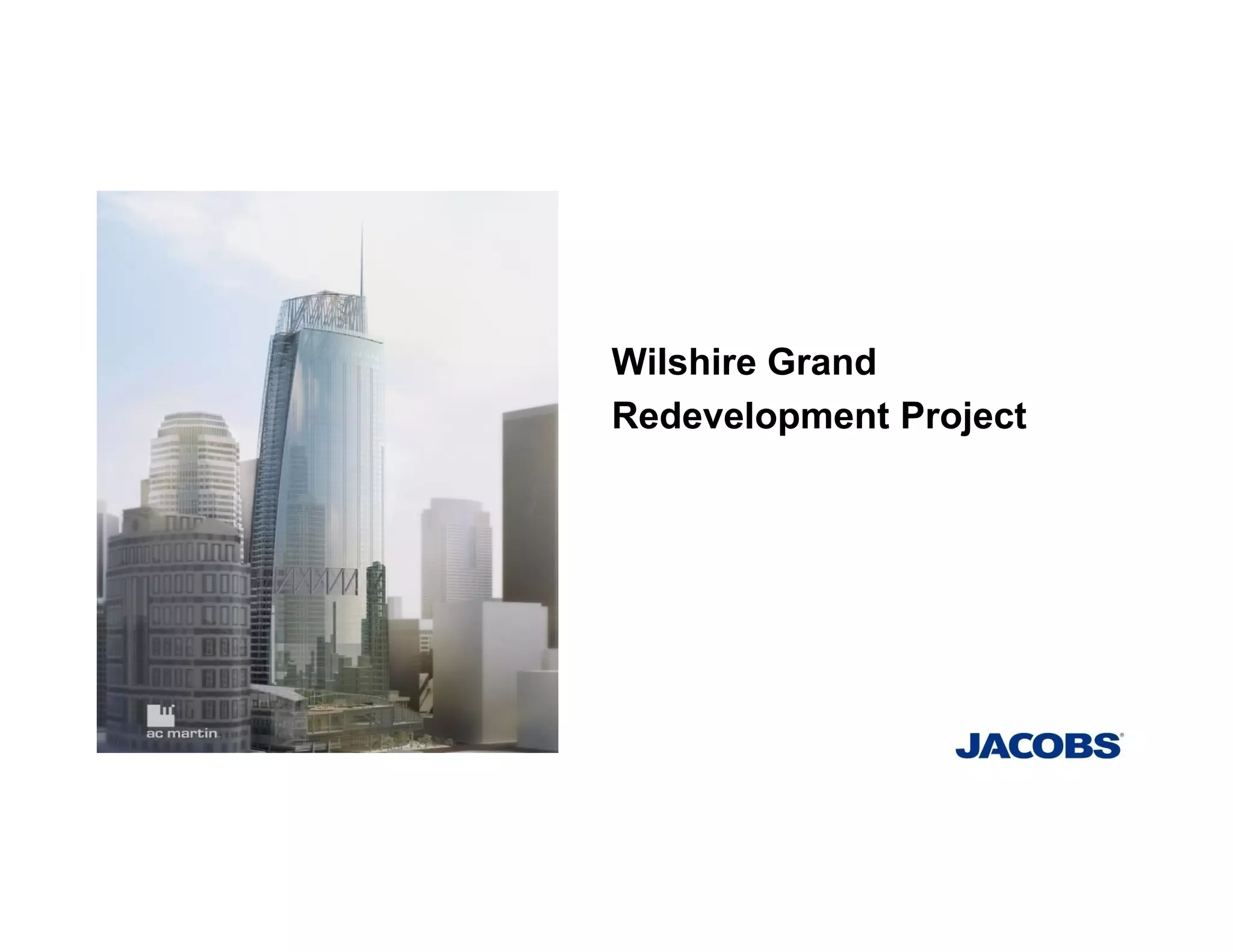
Wilshire Grand
Redevelopment Project
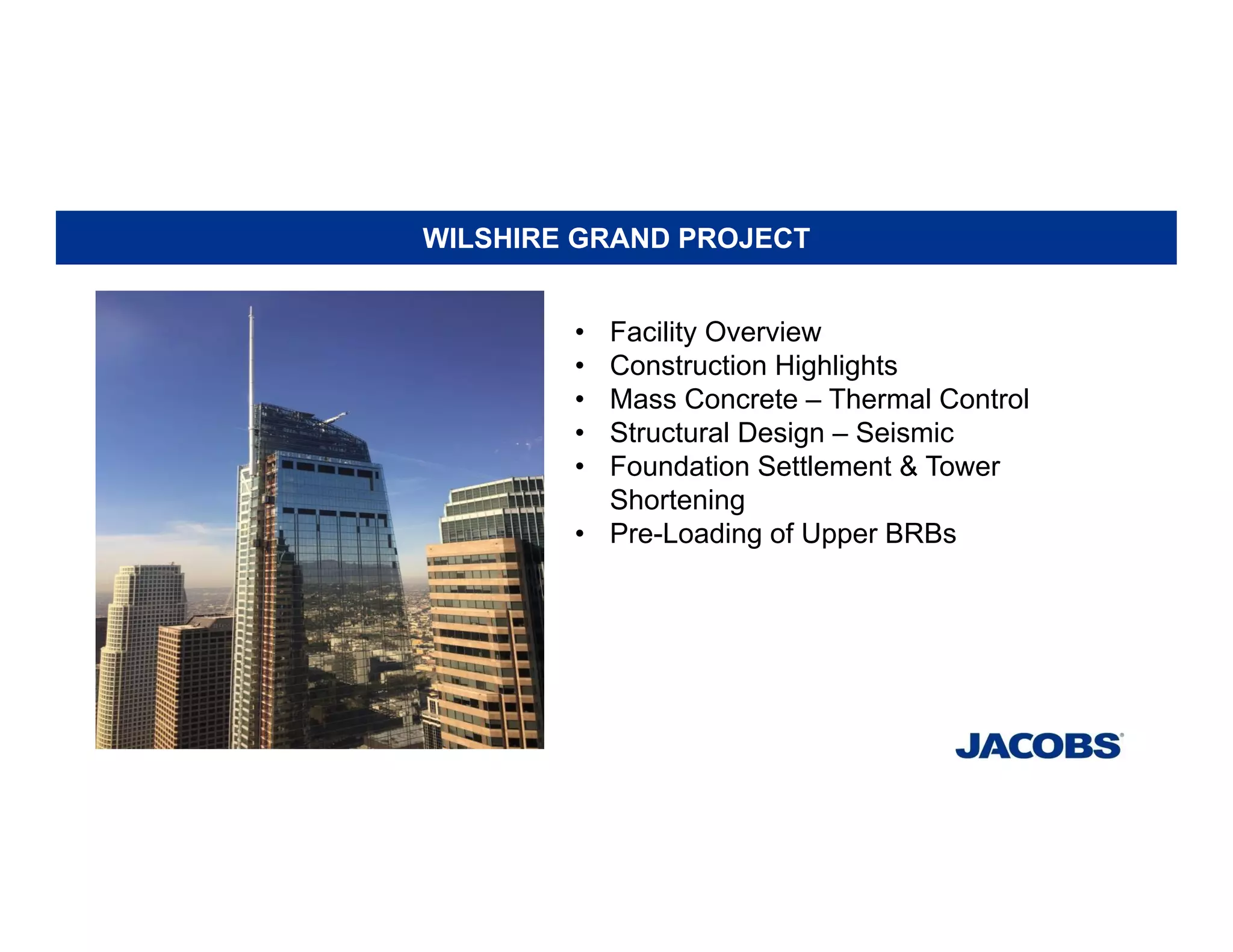
WILSHIRE GRAND PROJECT
• Facility Overview
• Construction Highlights
• Mass Concrete – Thermal Control
• Structural Design – Seismic
• Foundation Settlement & Tower
Shortening
• Pre-Loading of Upper BRBs
Facility Overview
4
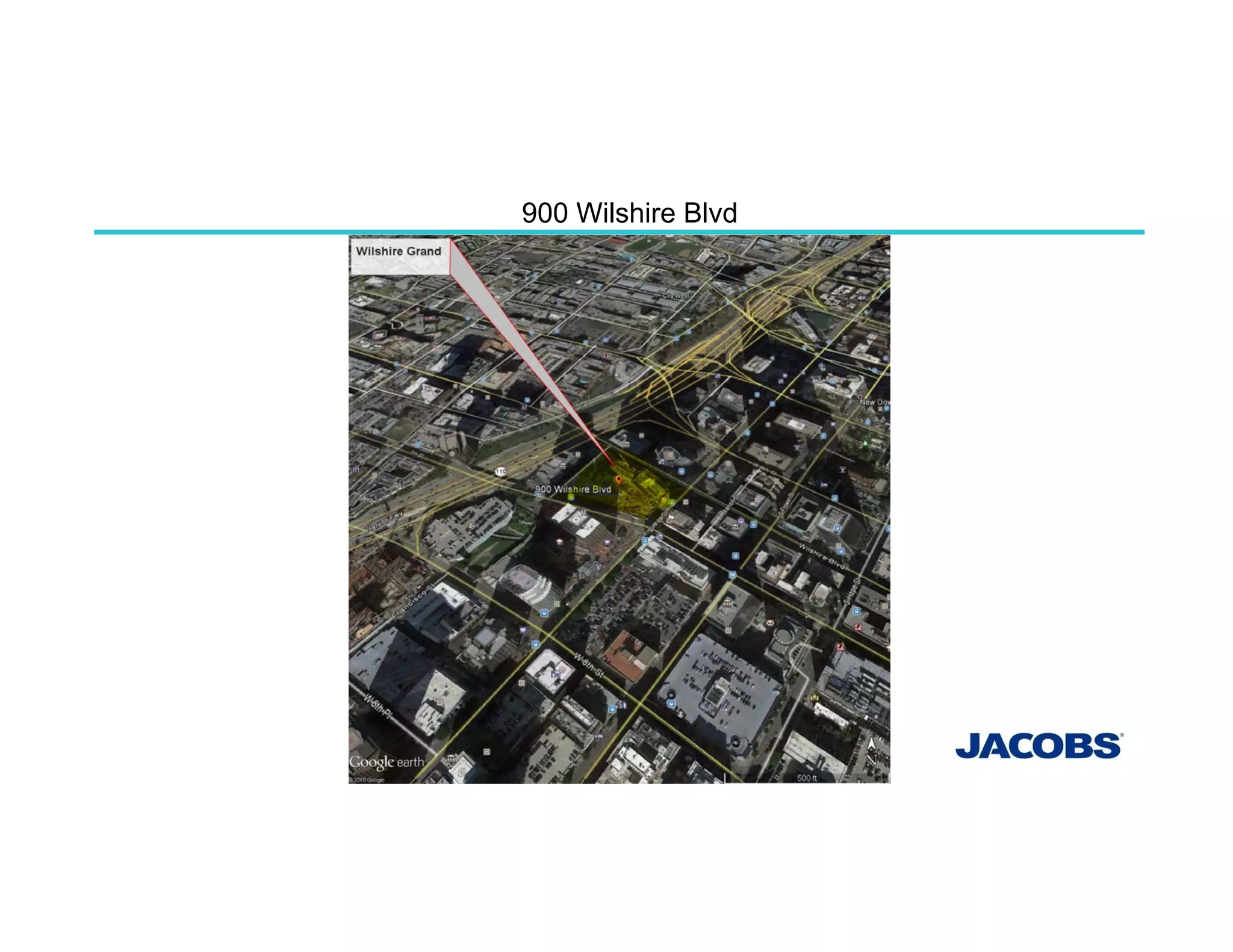
PROJECT LOCATION 900 Wilshire Blvd
Size: 2,100,000 SF
73-stories
892 key hotel
16 stories of offices – 365,000 SF
7 levels of podium (amenities)
5 levels below grade parking
Completion: 2nd Quarter 2017
Owner: Hanjin International Corp/Korean Air Lines
Architect: A.C. Martin Partners
Structural
Engineers: Brandow & Johnston
Thornton Tomasetti
Project Manager: Martin Project Mgmt
General Contractor: Turner
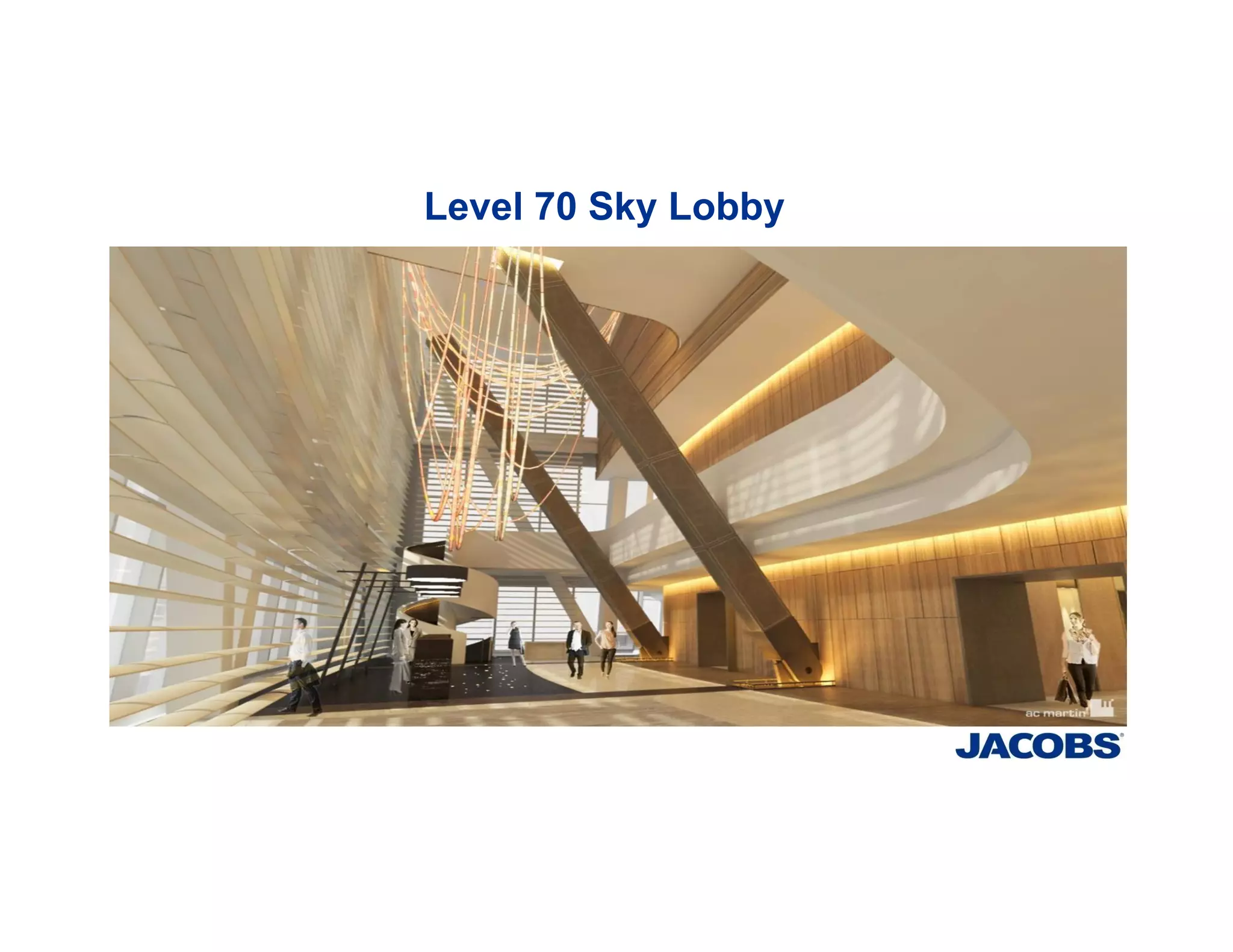
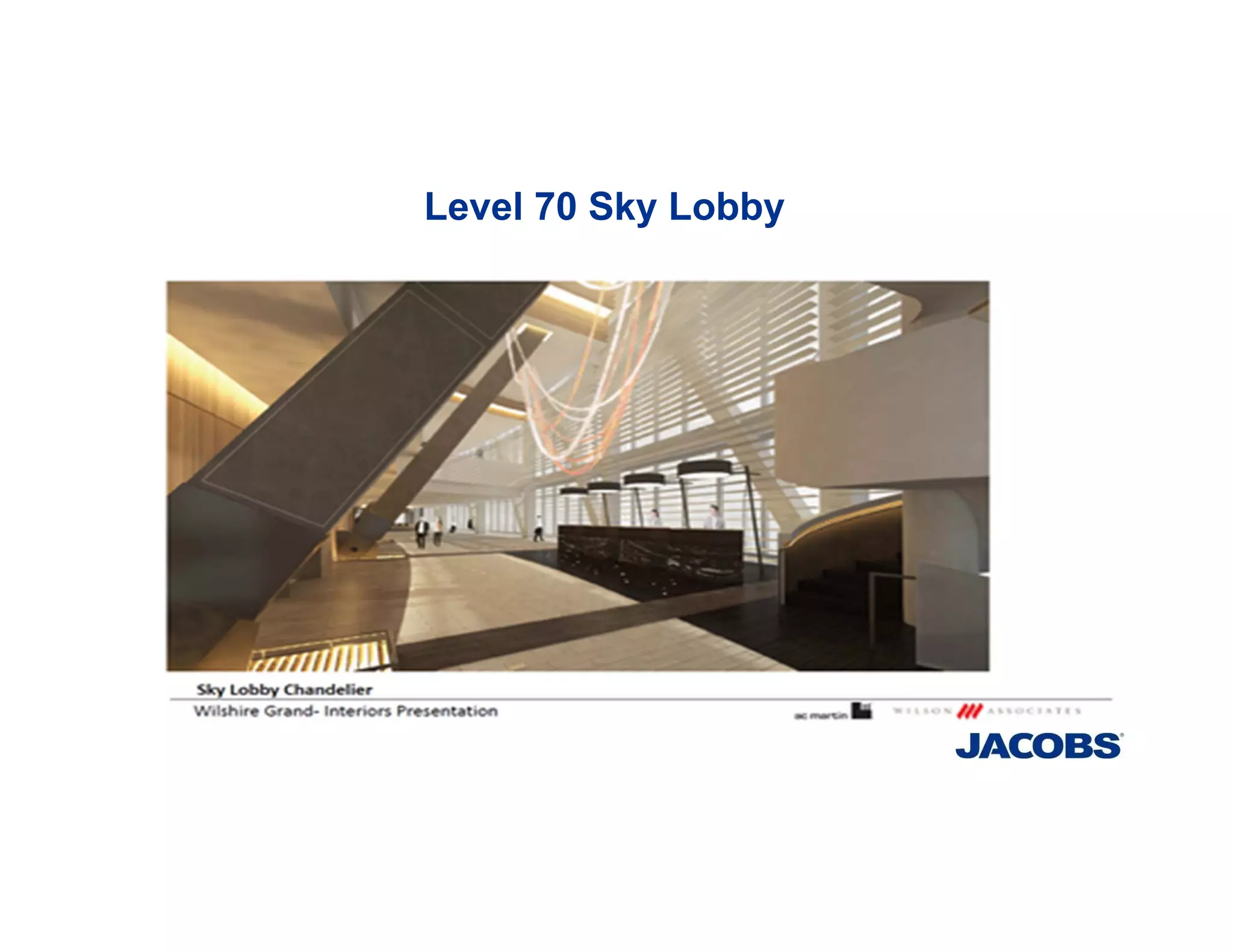
Level 70 Sky Lobby
Level 70 Sky Lobby
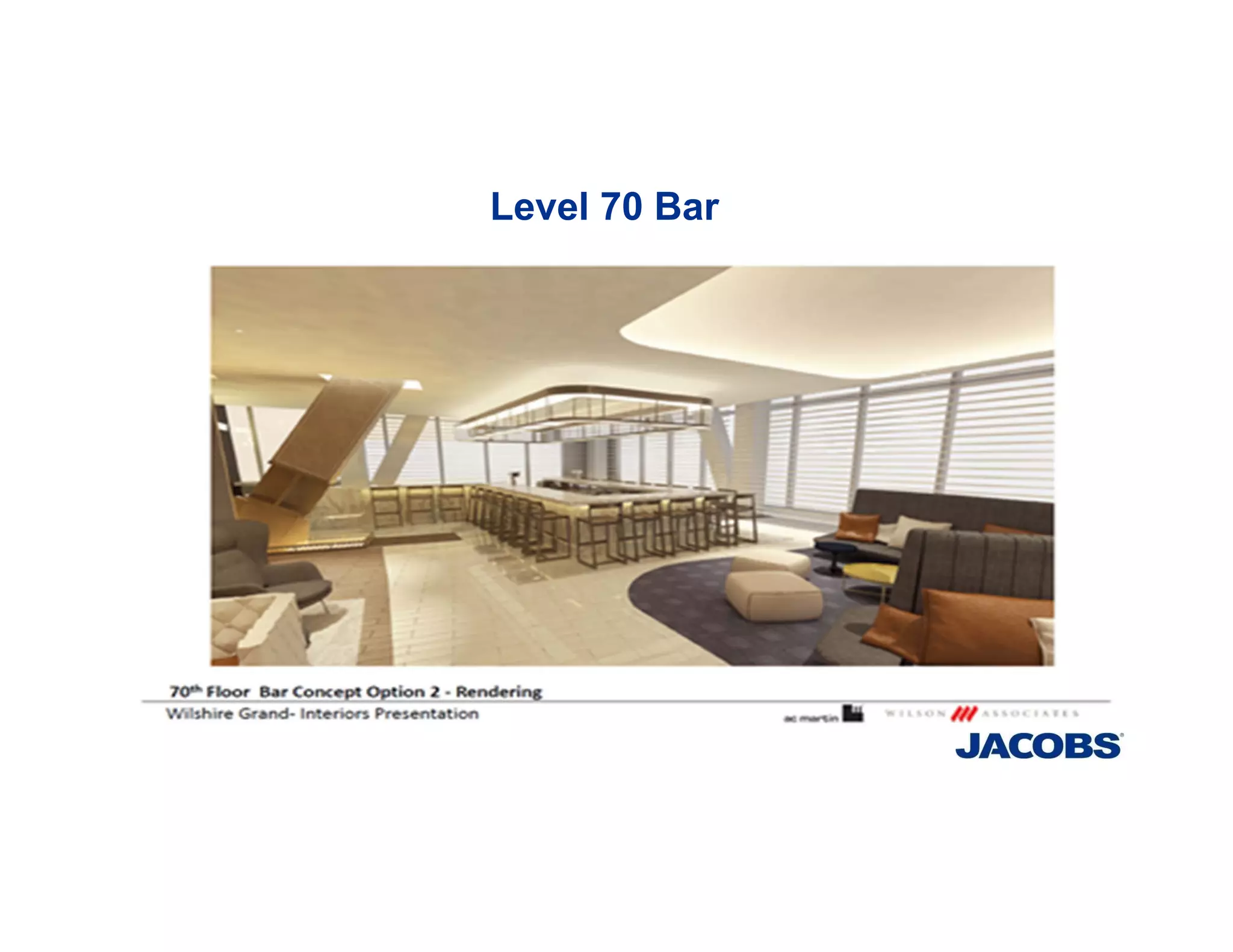
Level 70 Bar
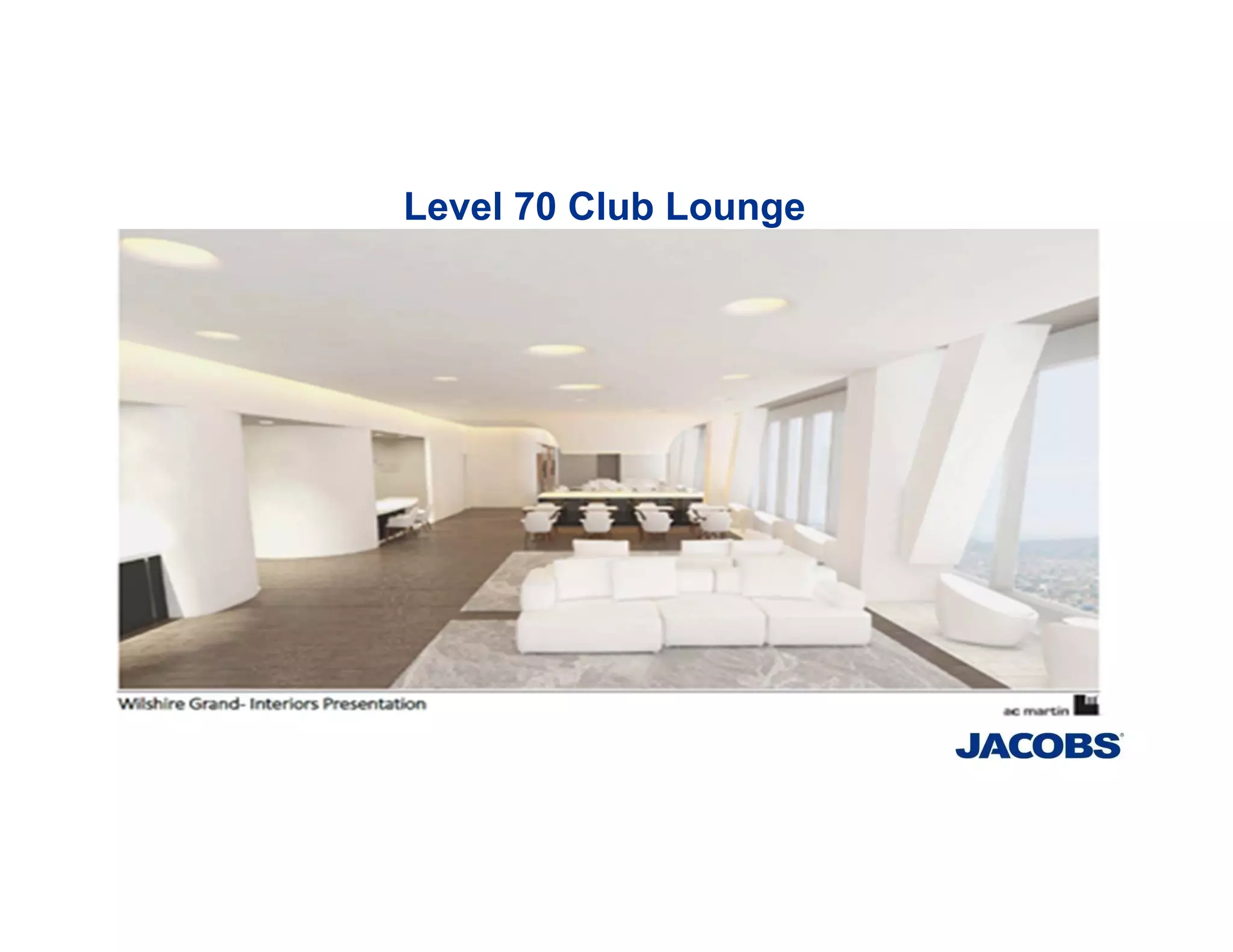
Level 70 Club Lounge
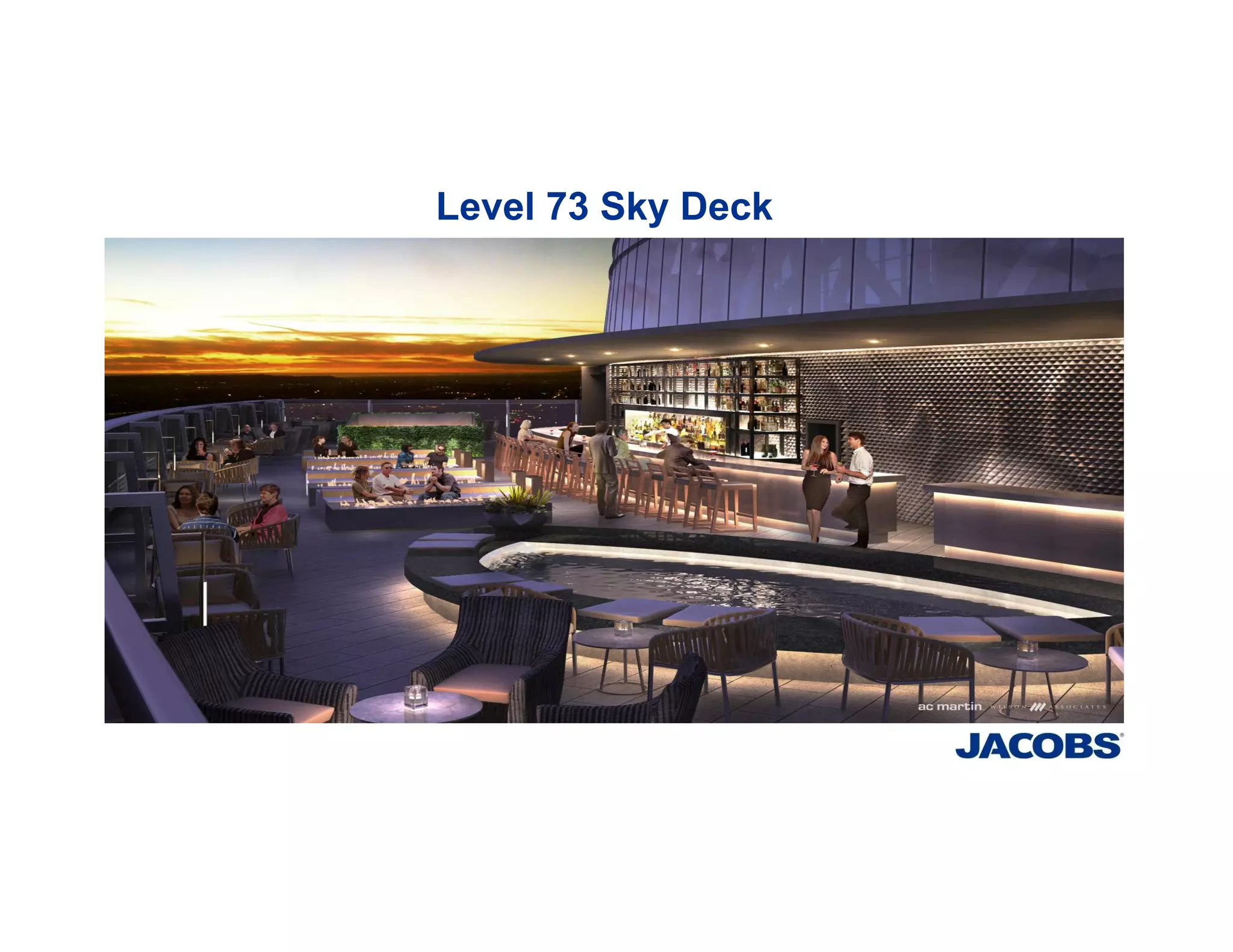
Level 73 Sky Deck
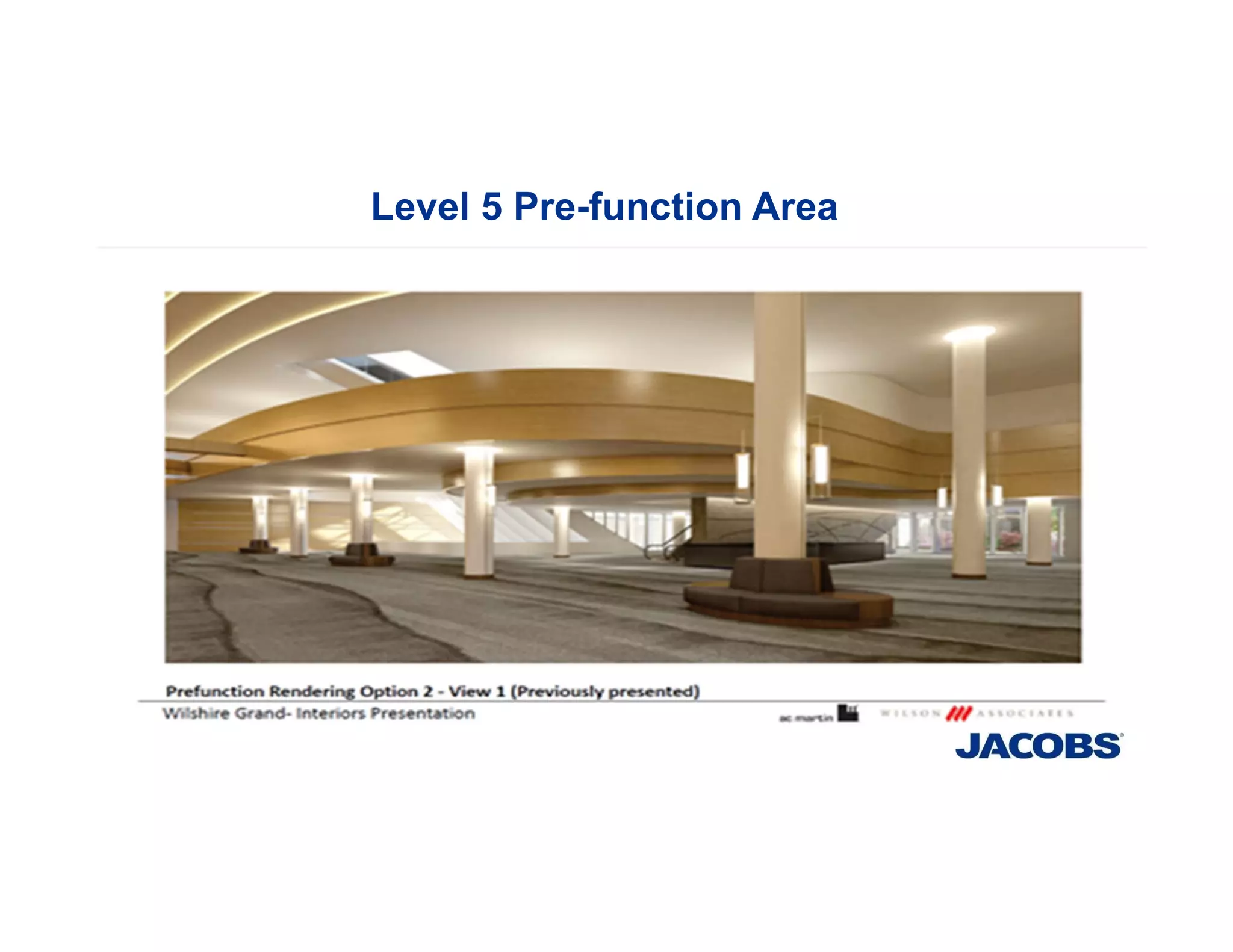
Level 5 Pre-function Area
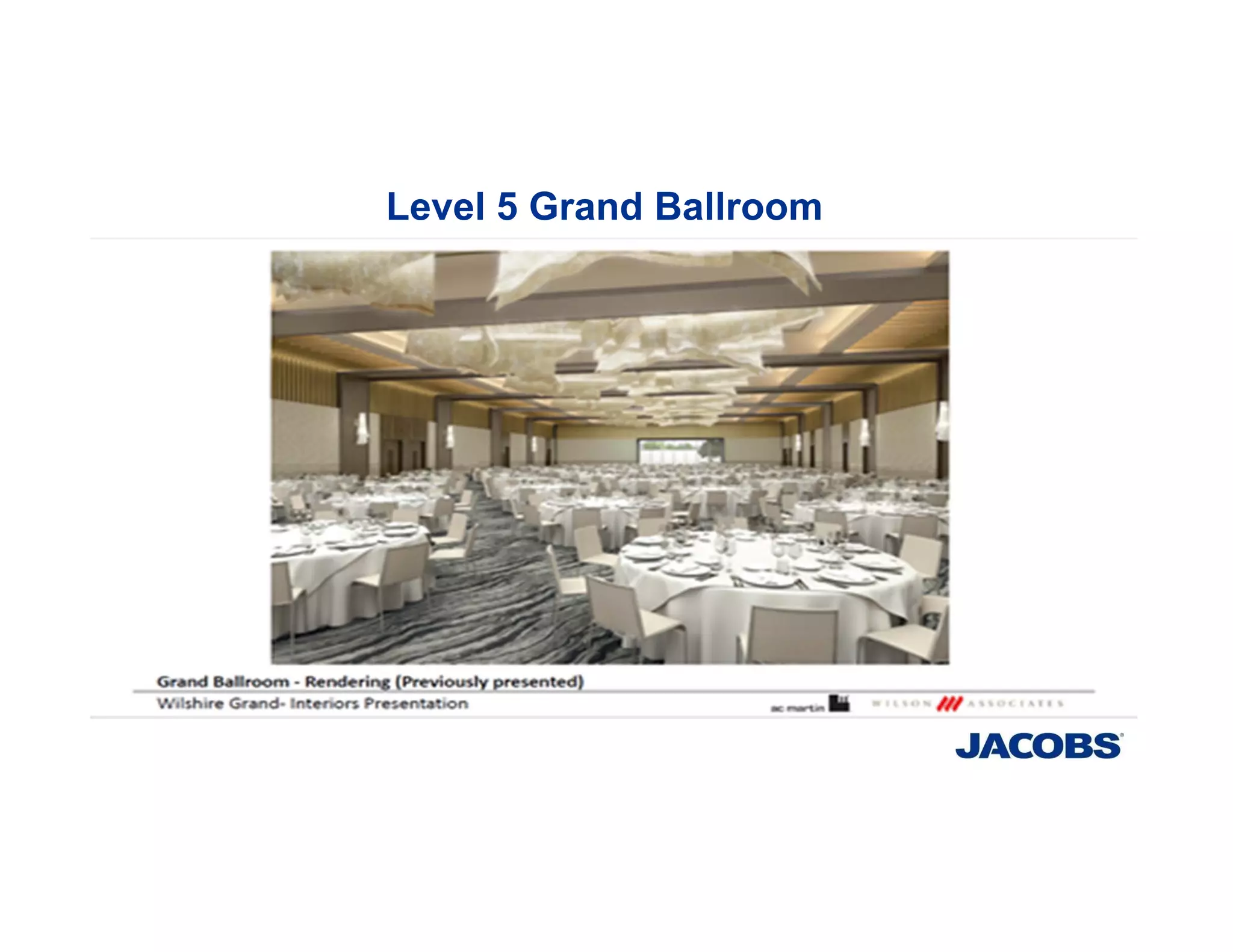
Level 5 Grand Ballroom
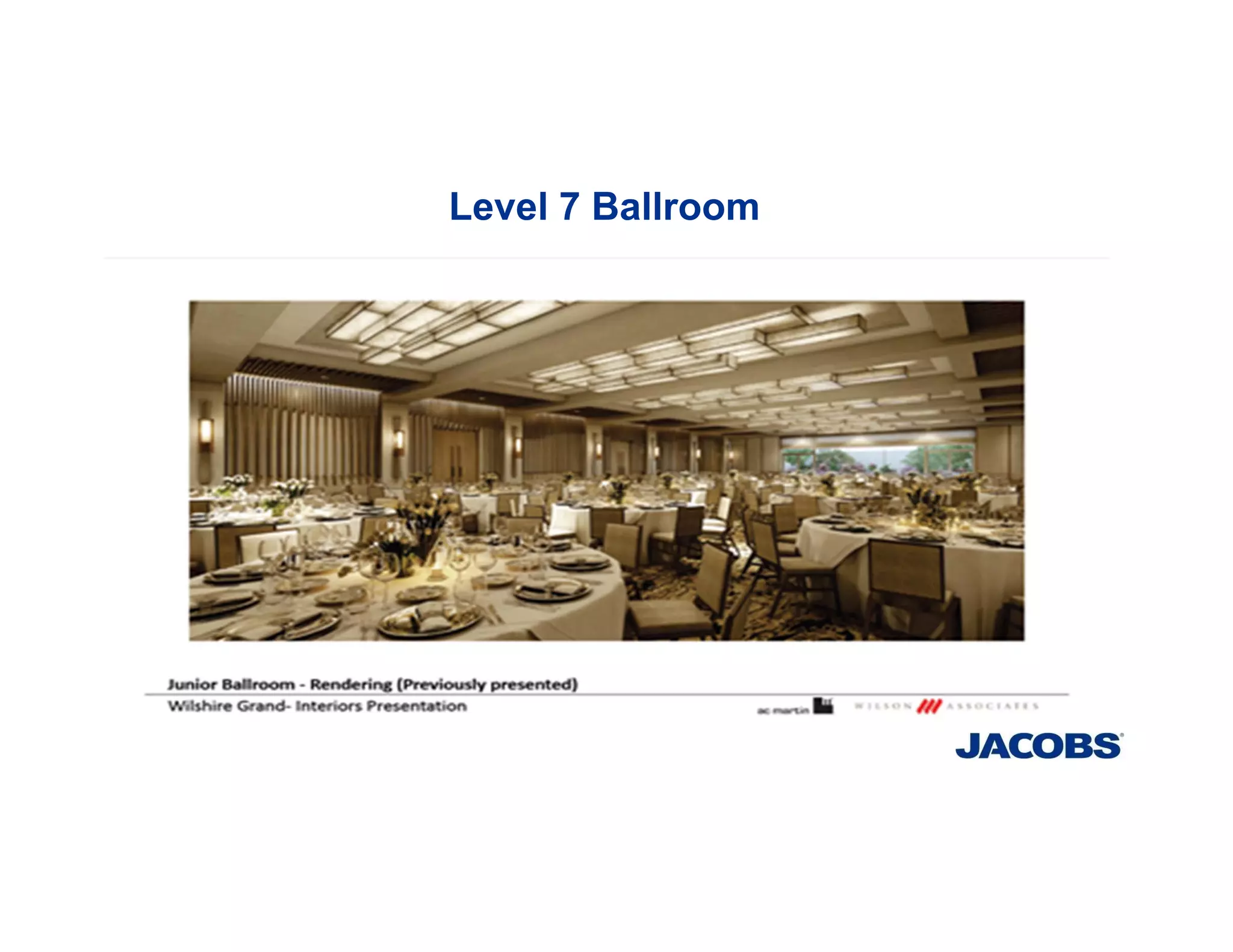
Level 7 Ballroom
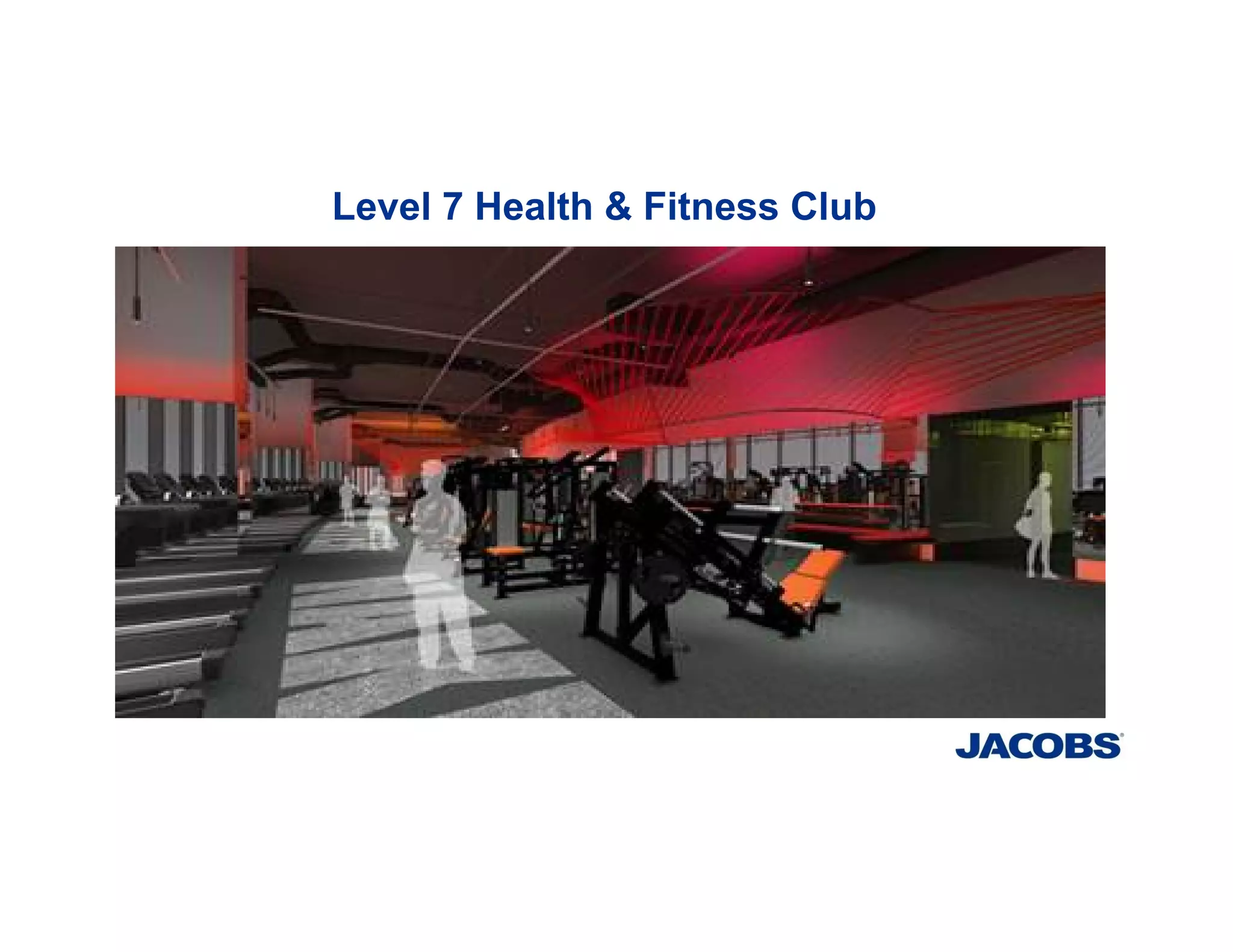
Level 7 Health & Fitness Club
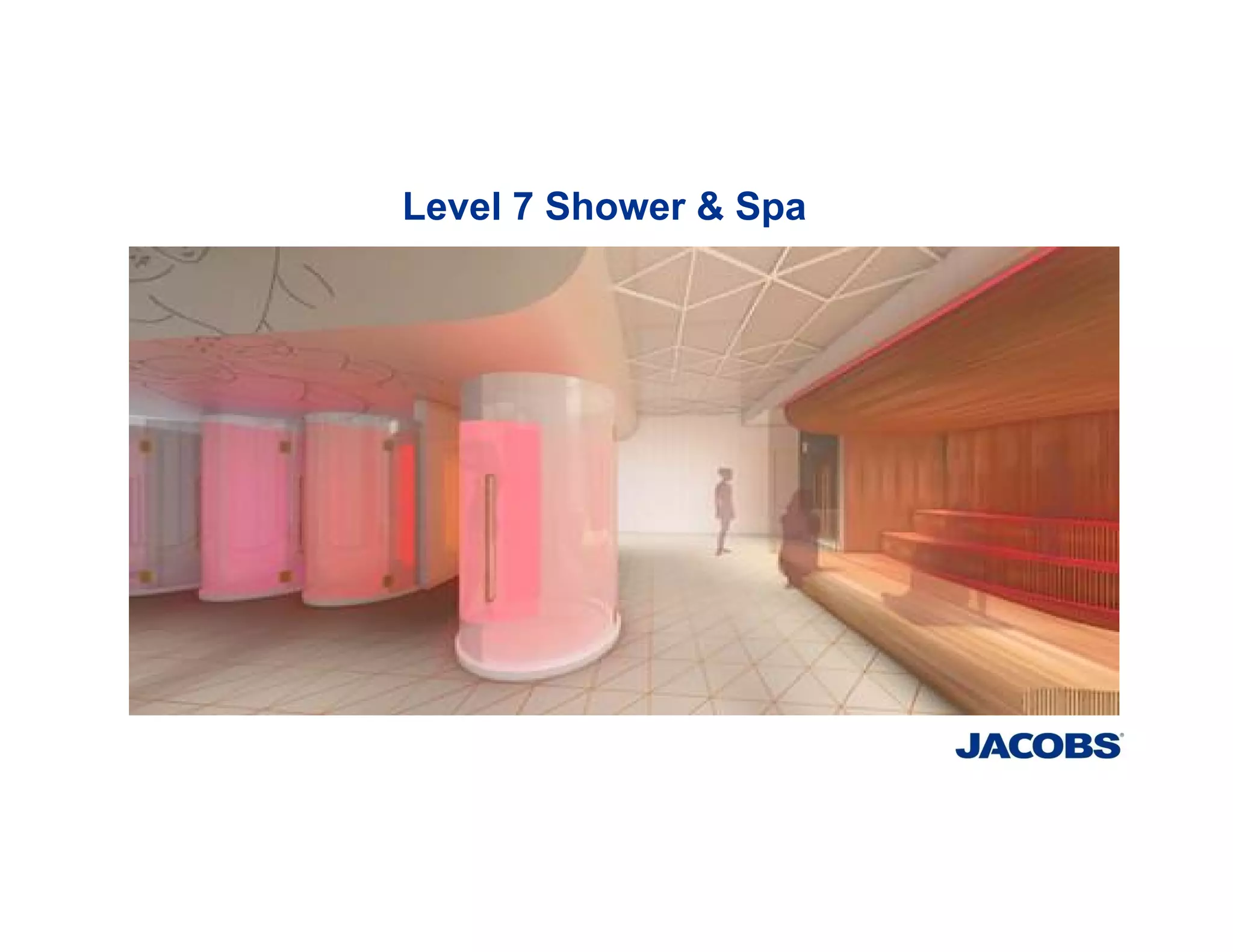
Level 7 Shower & Spa
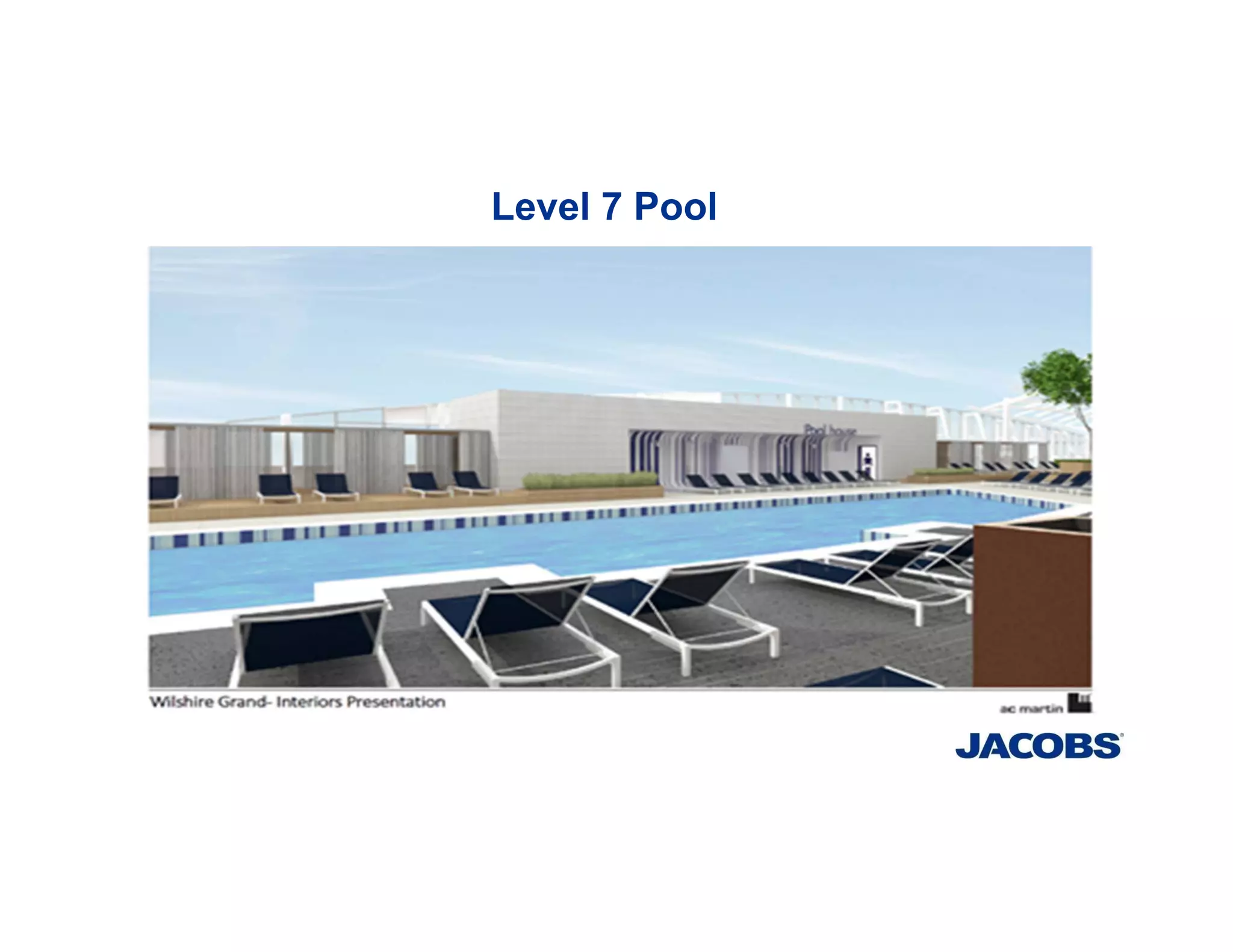
Level 7 Pool
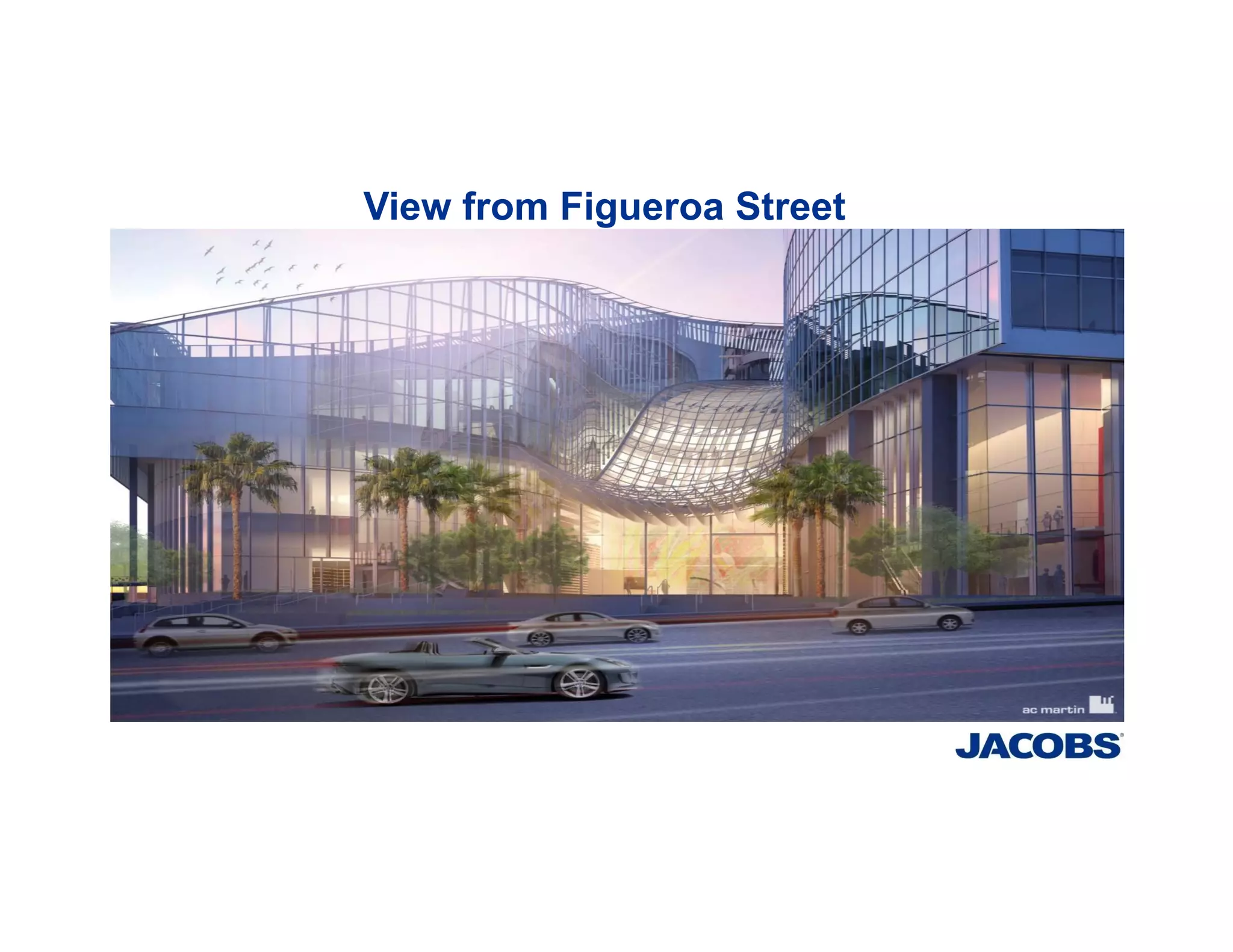
View from Figueroa Street
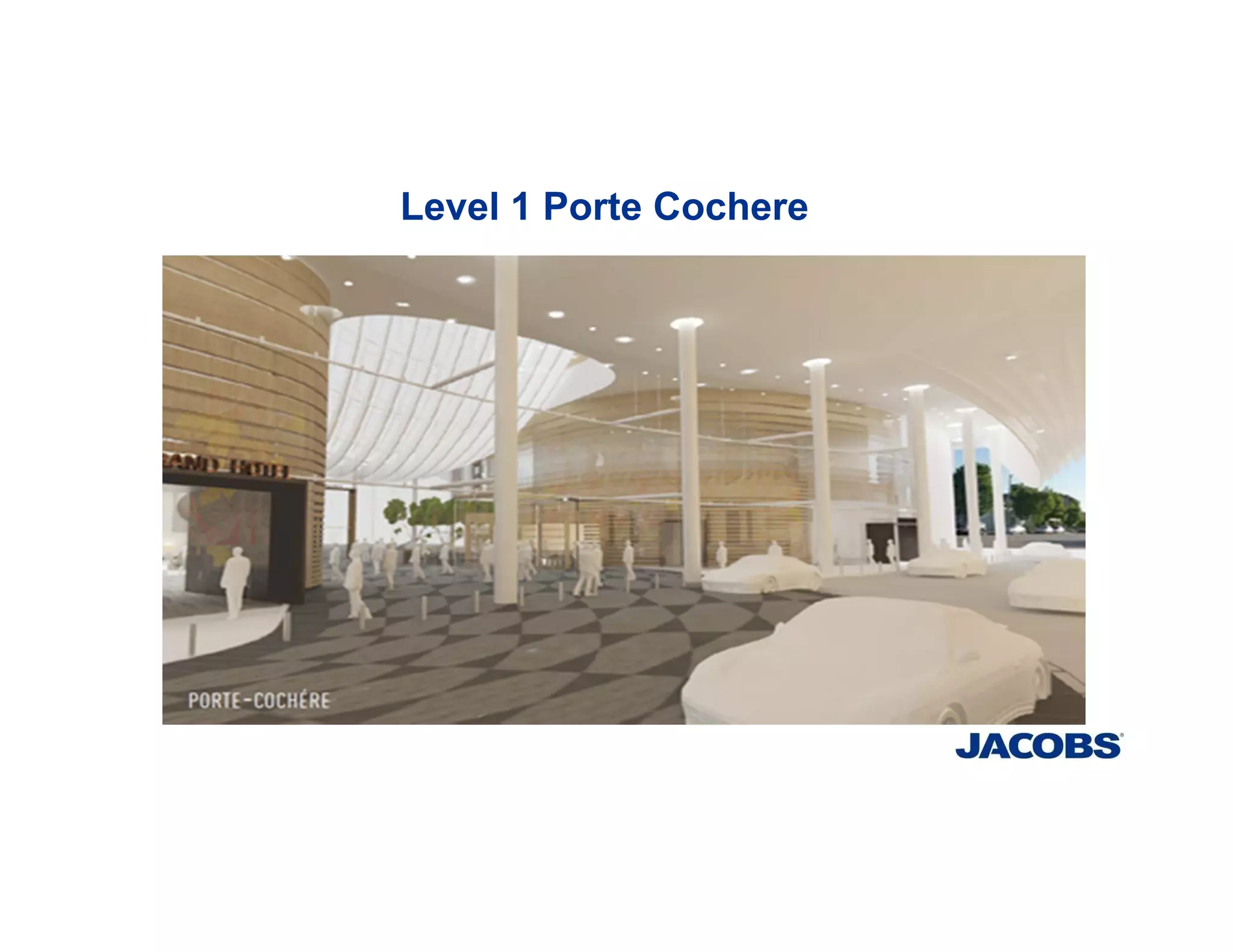
Level 1 Porte Cochere
Construction Highlights
20
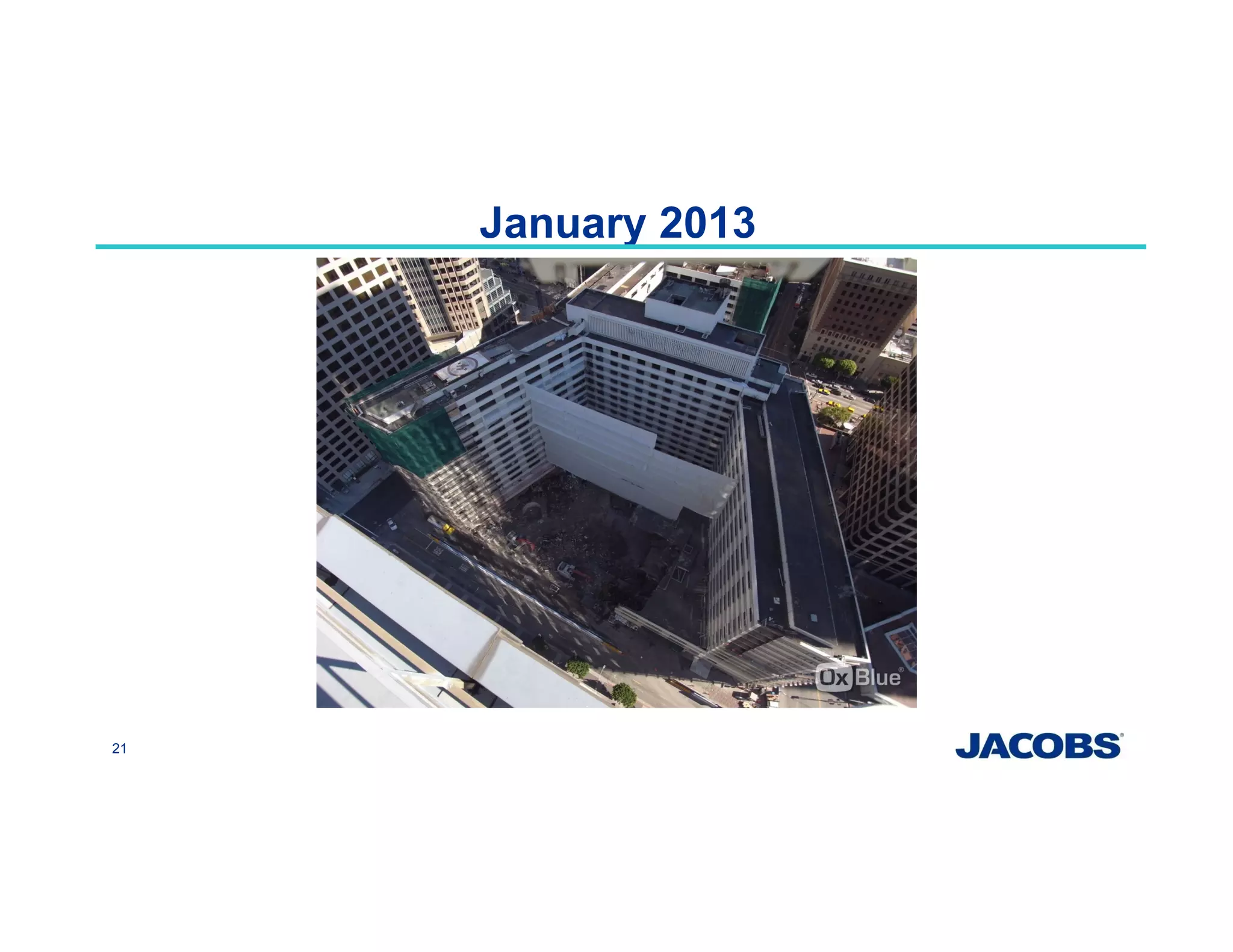
January 2013
21
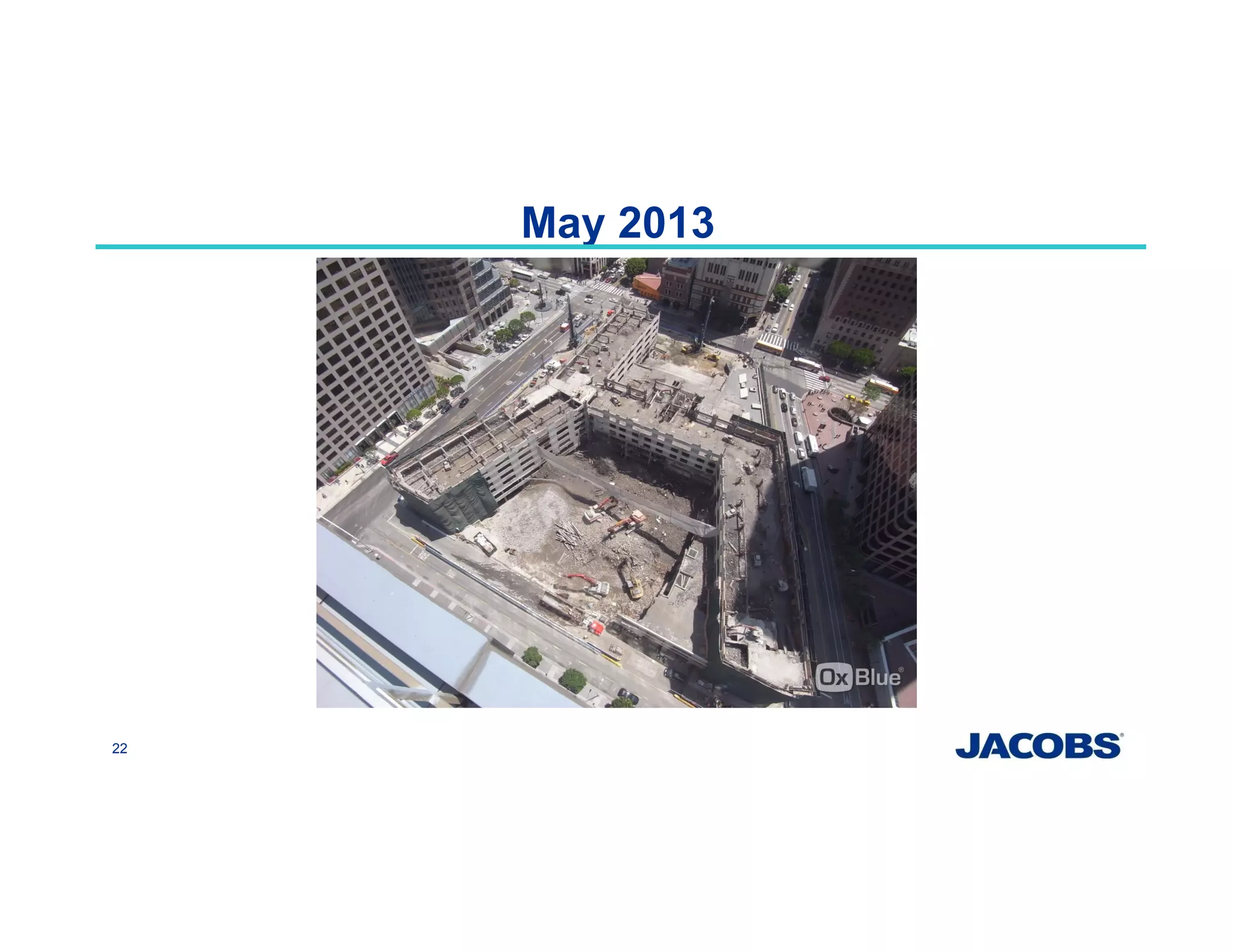
May 2013
22
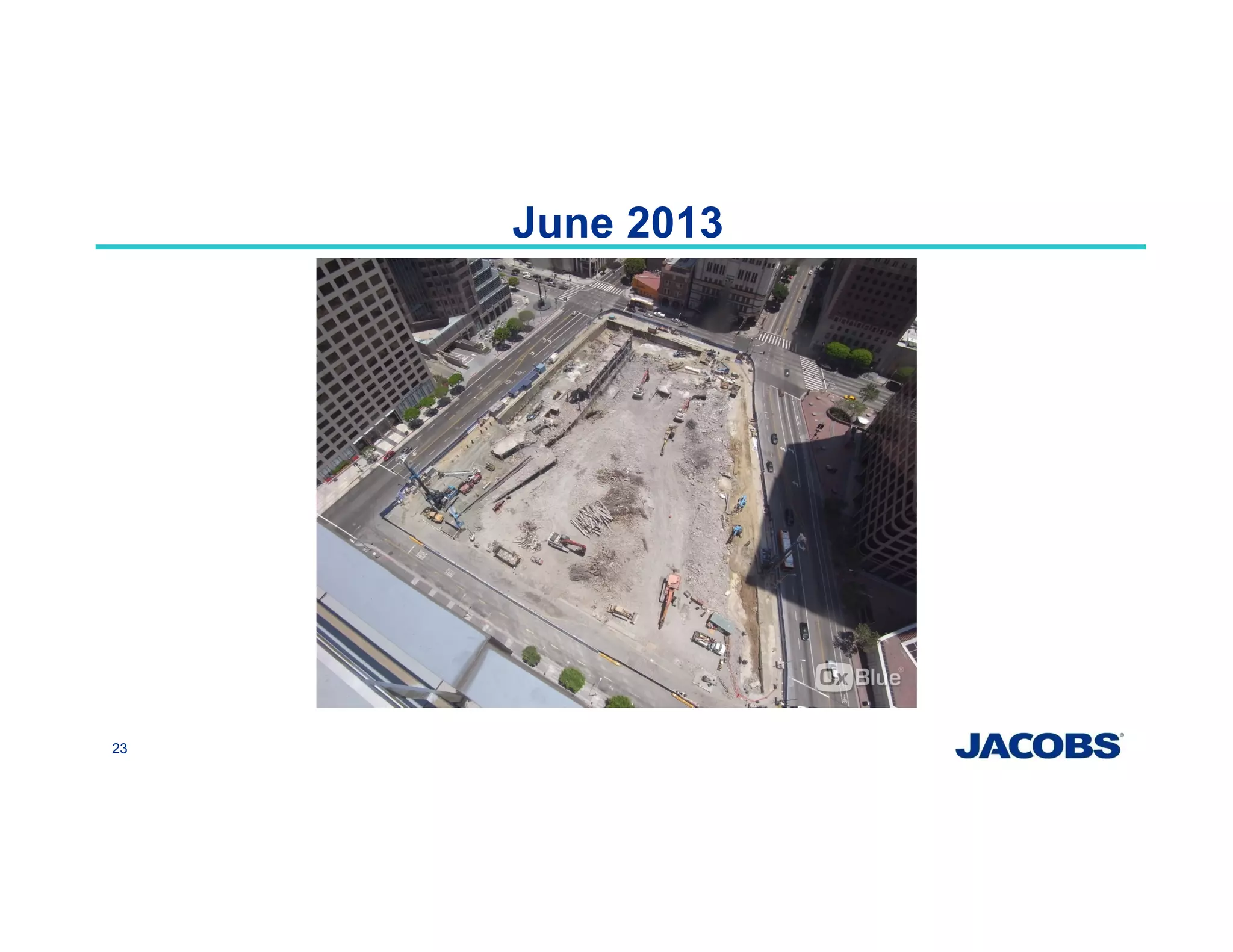
June 2013
23
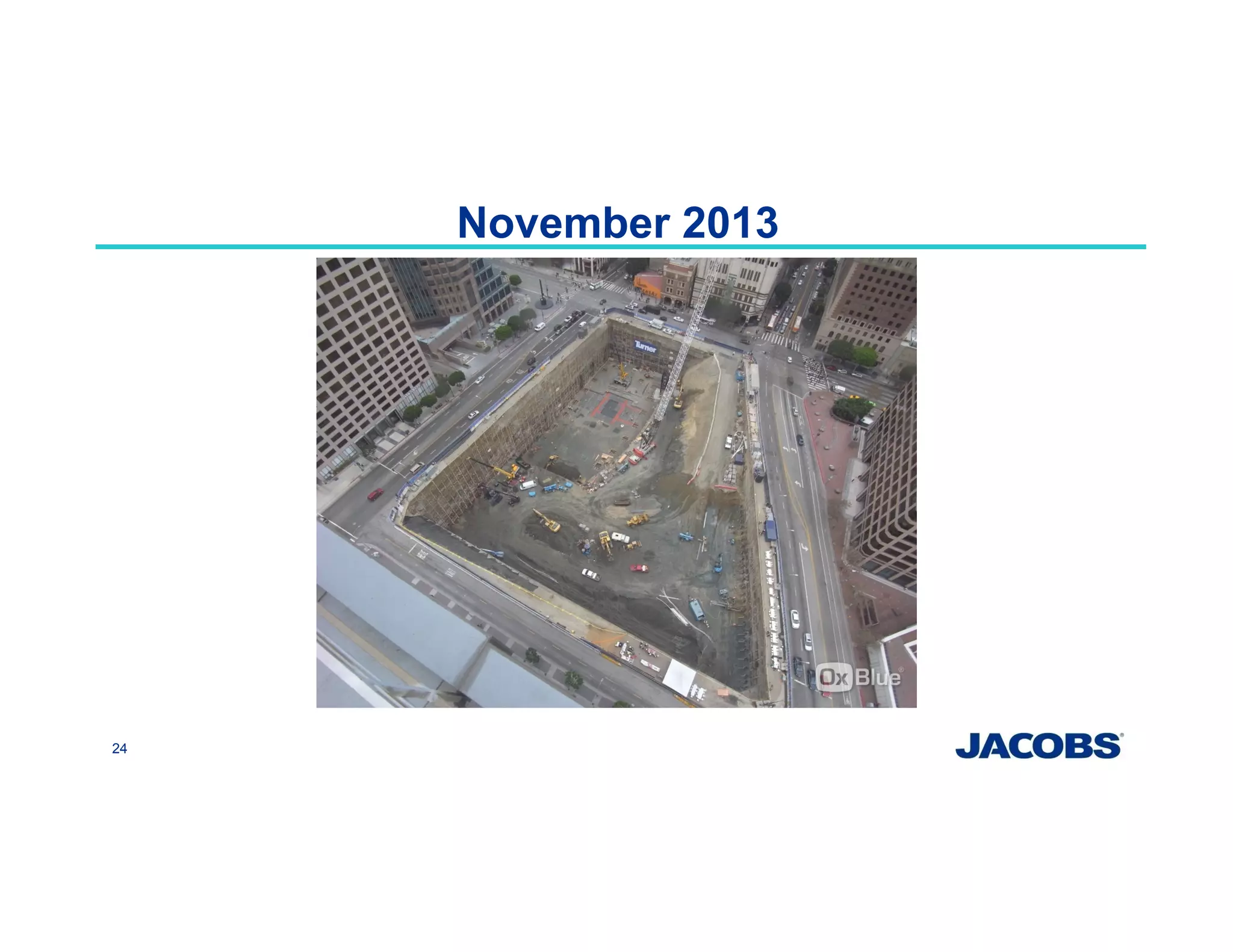
November 2013
24
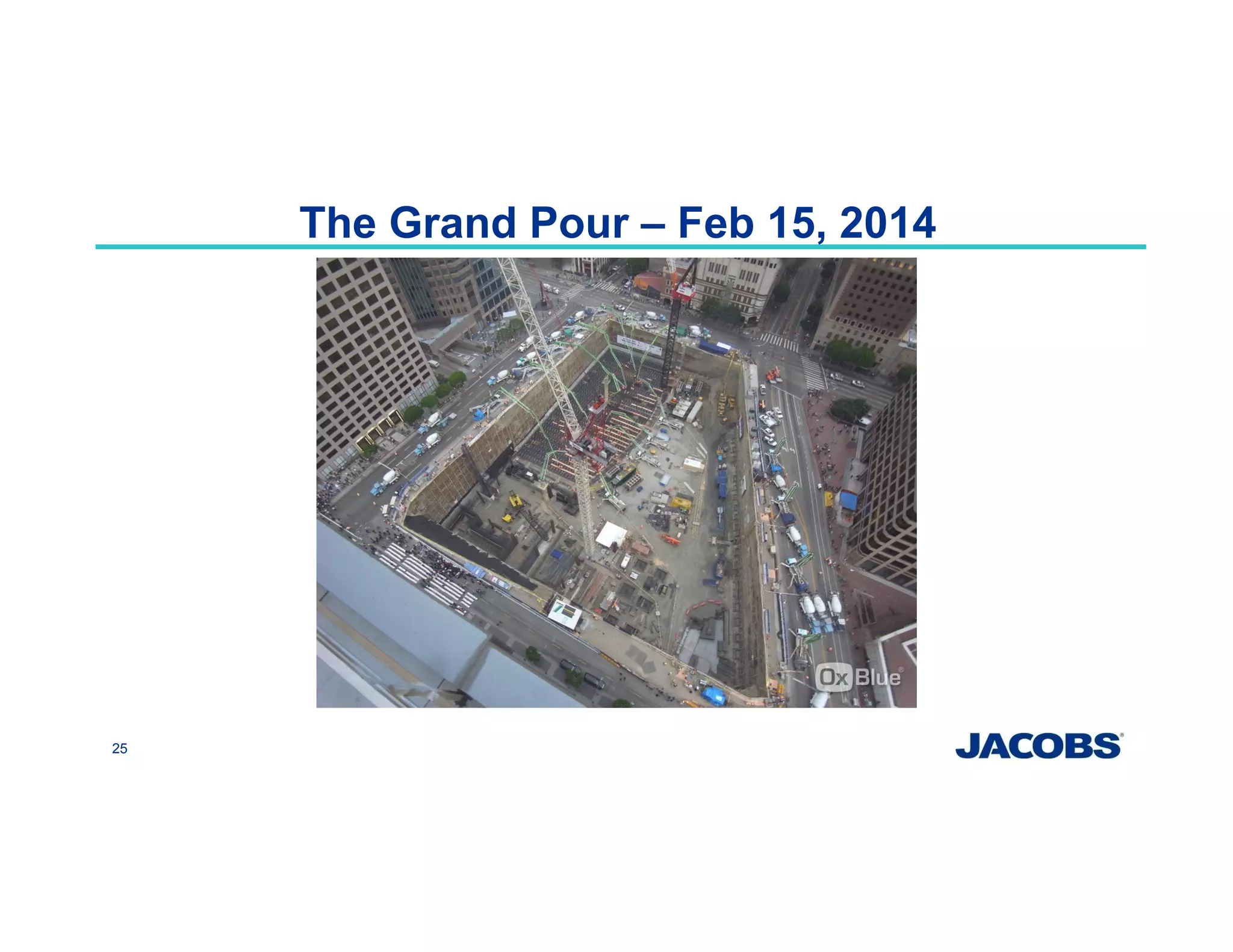
The Grand Pour – Feb 15, 2014
25
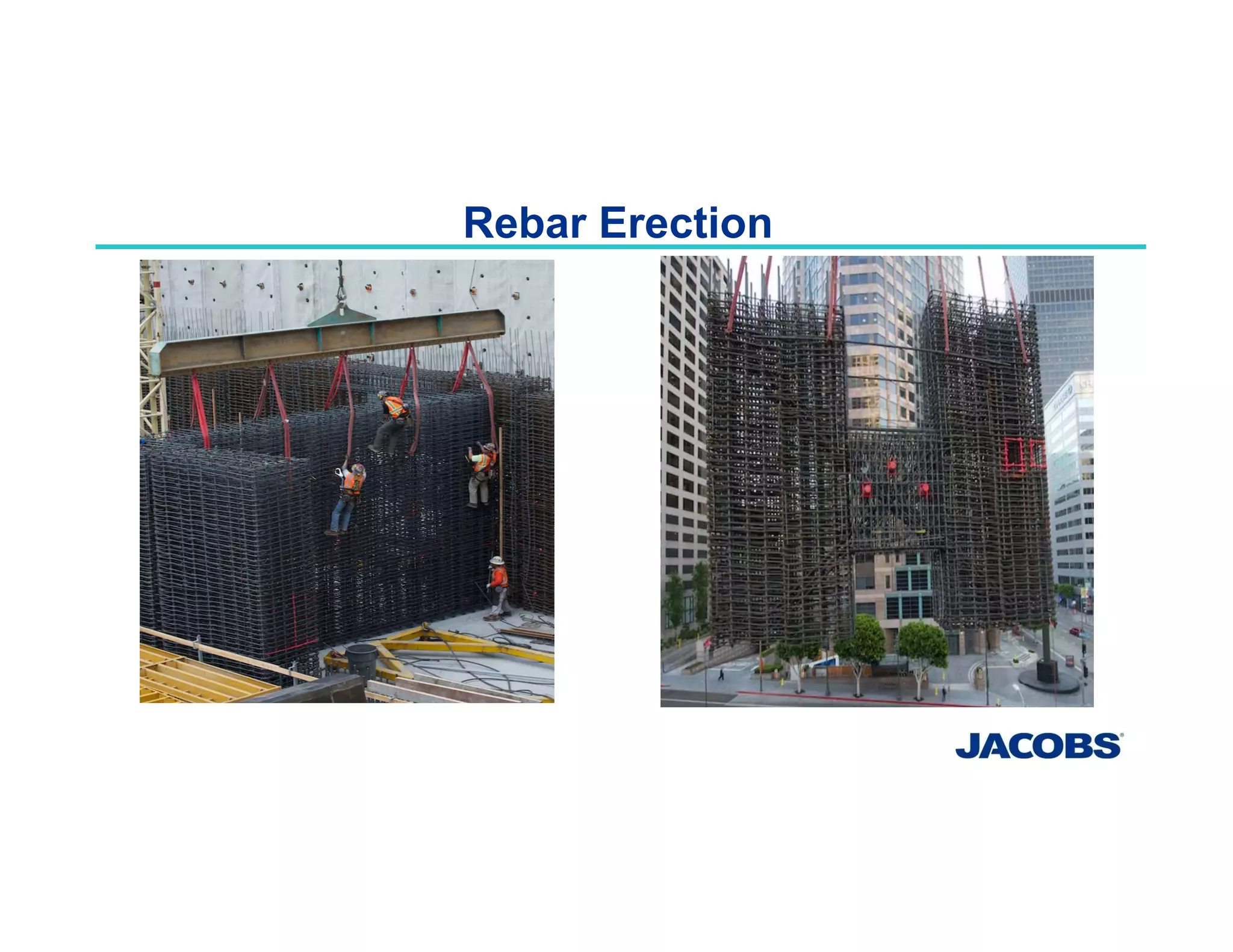
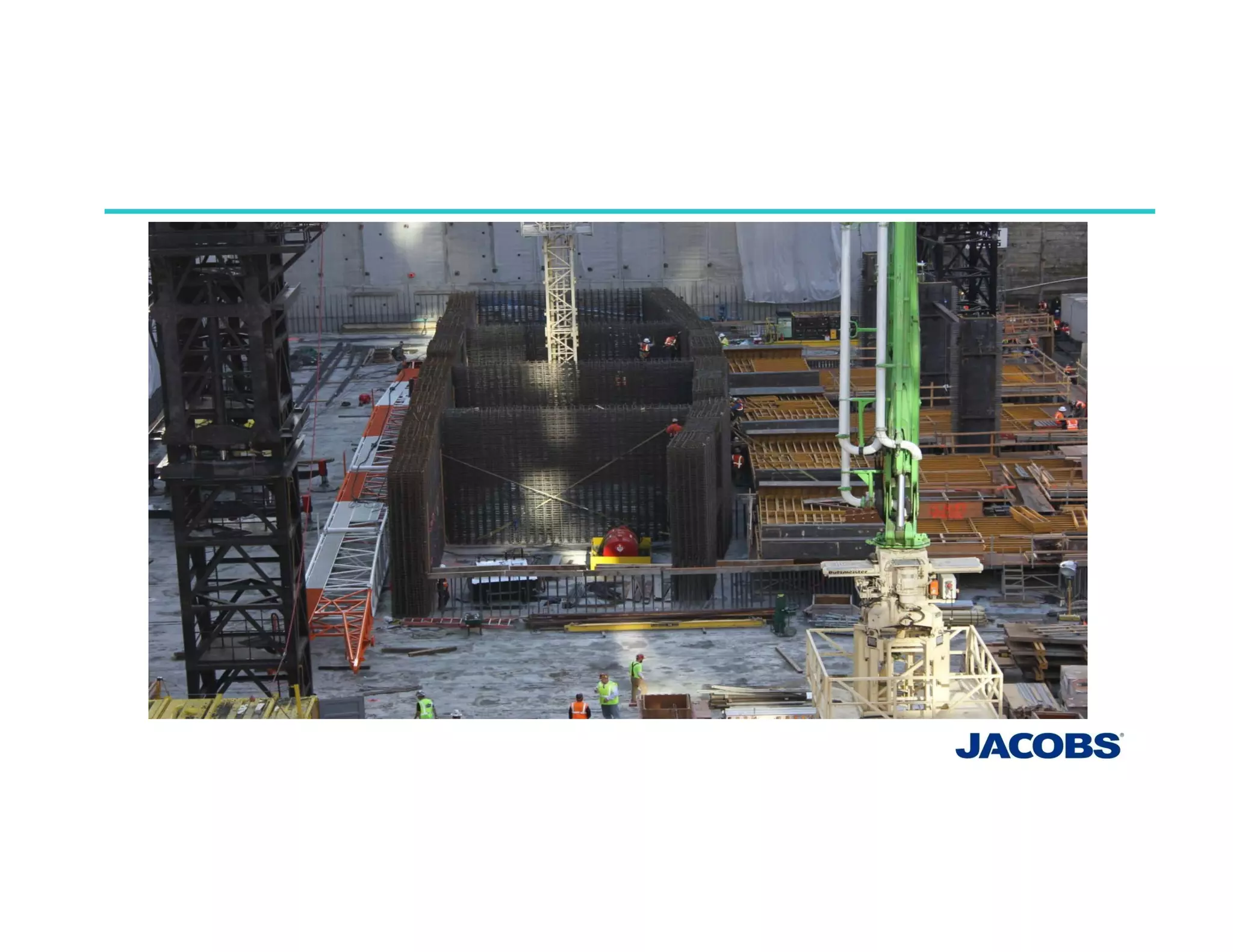
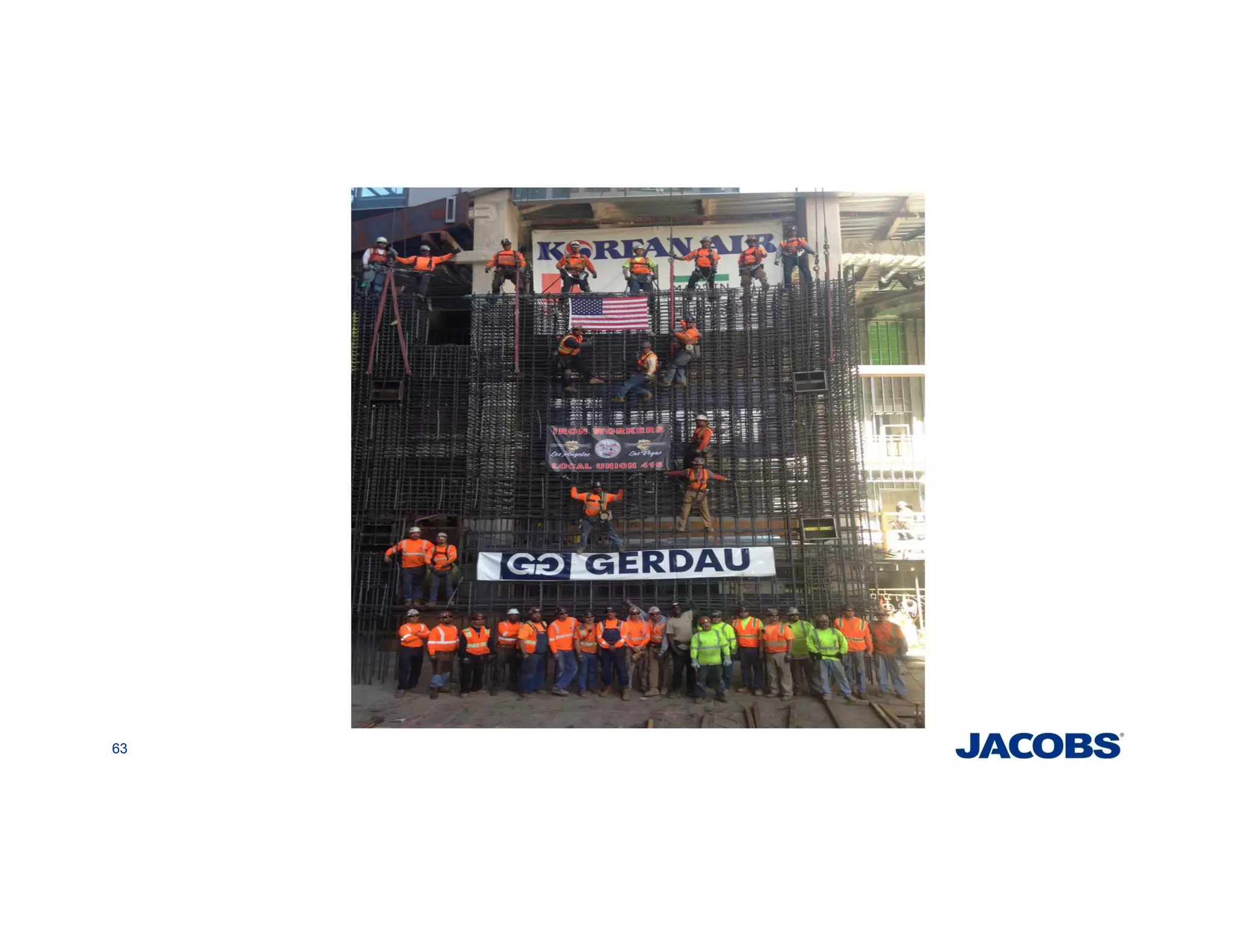
Rebar Erection
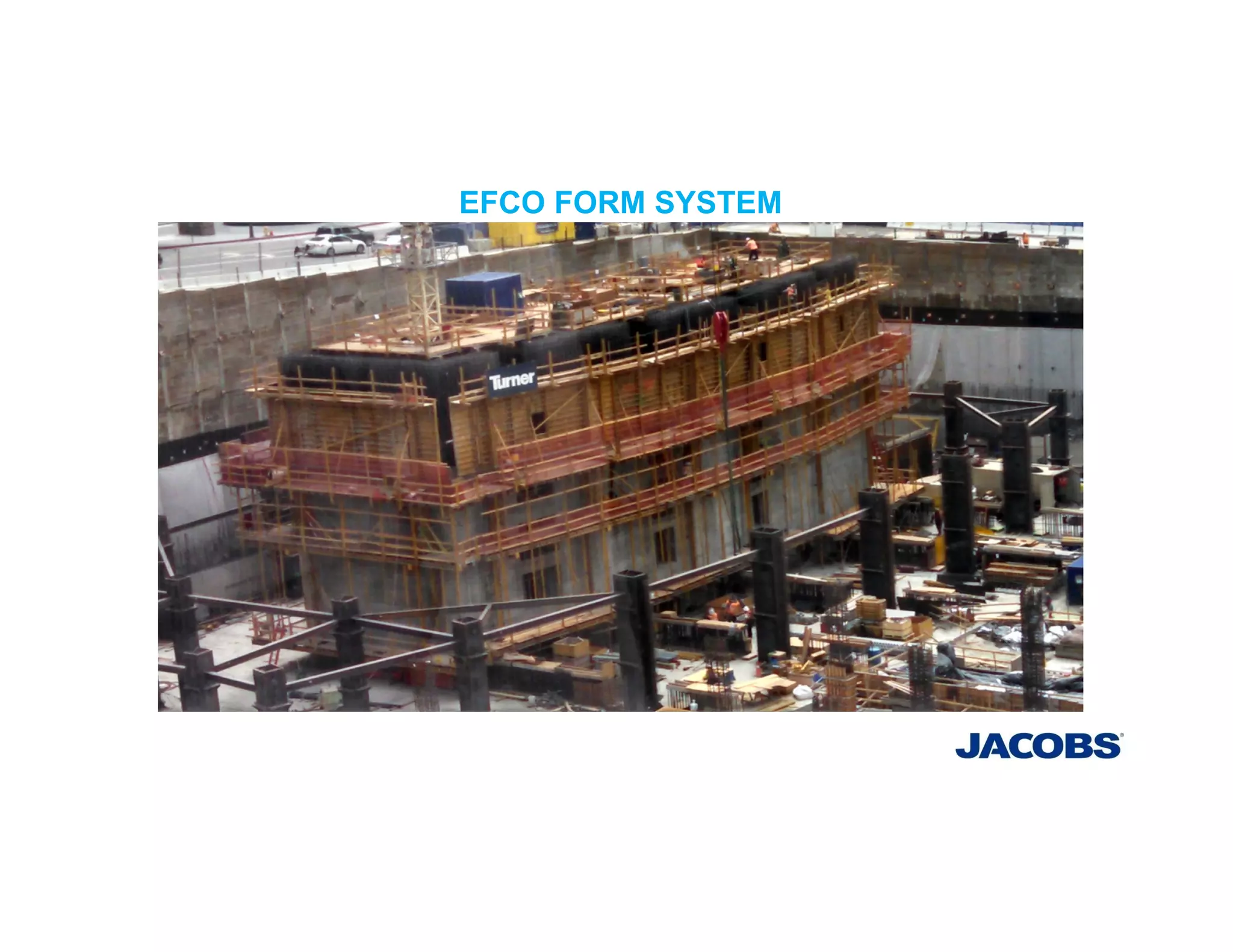
EFCO FORM SYSTEM
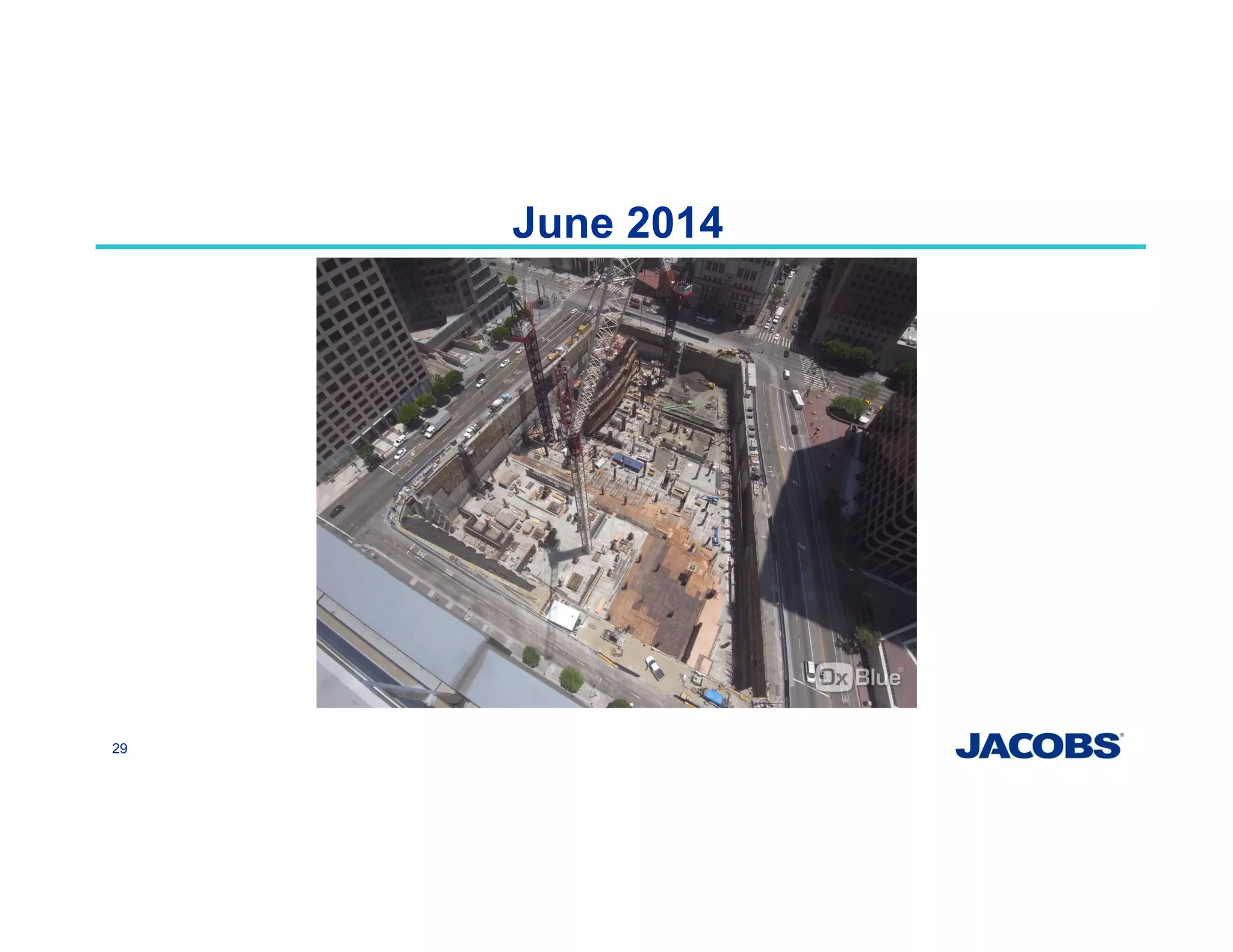
June 2014
29
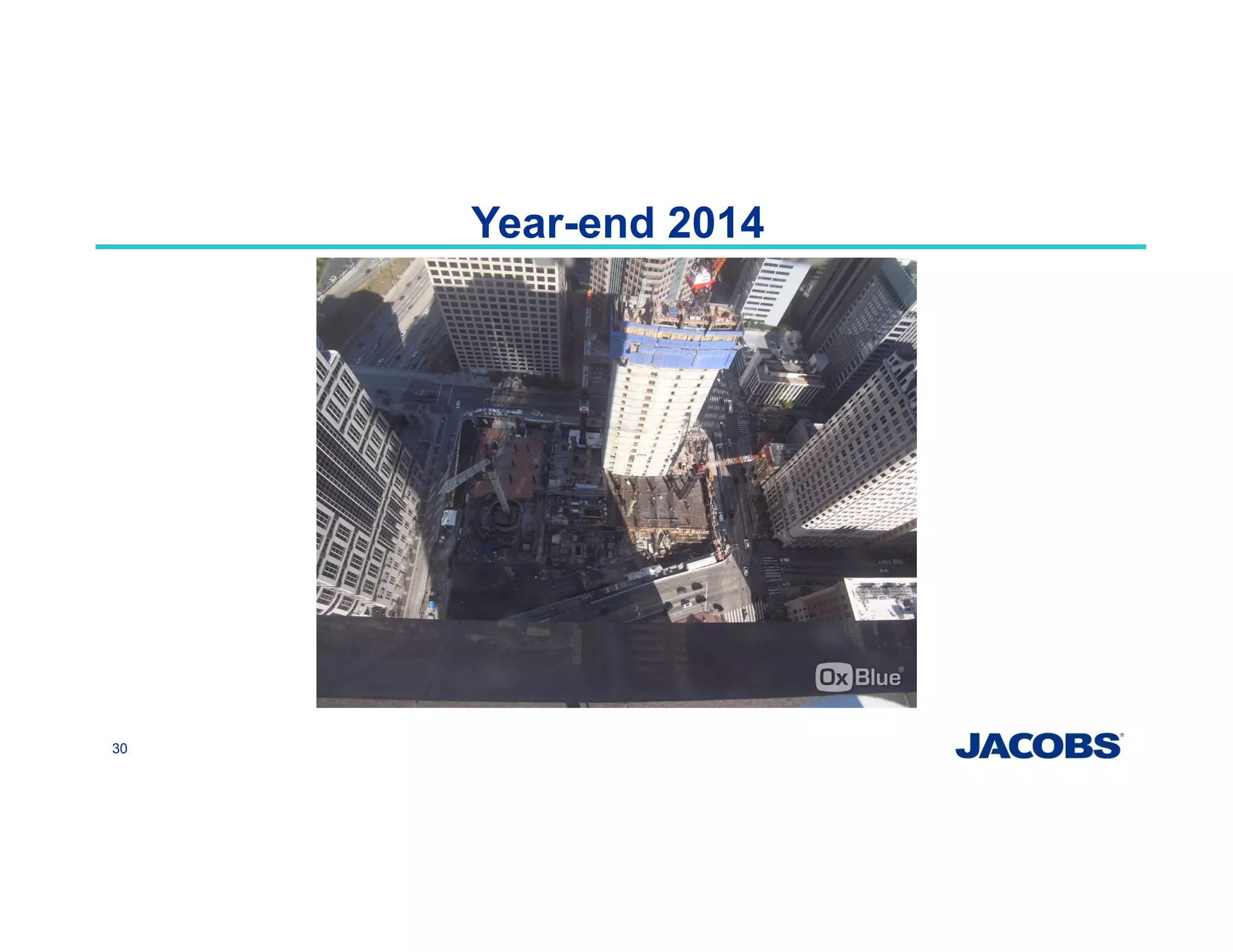
Year-end 2014
30
Mid-year 2015
31
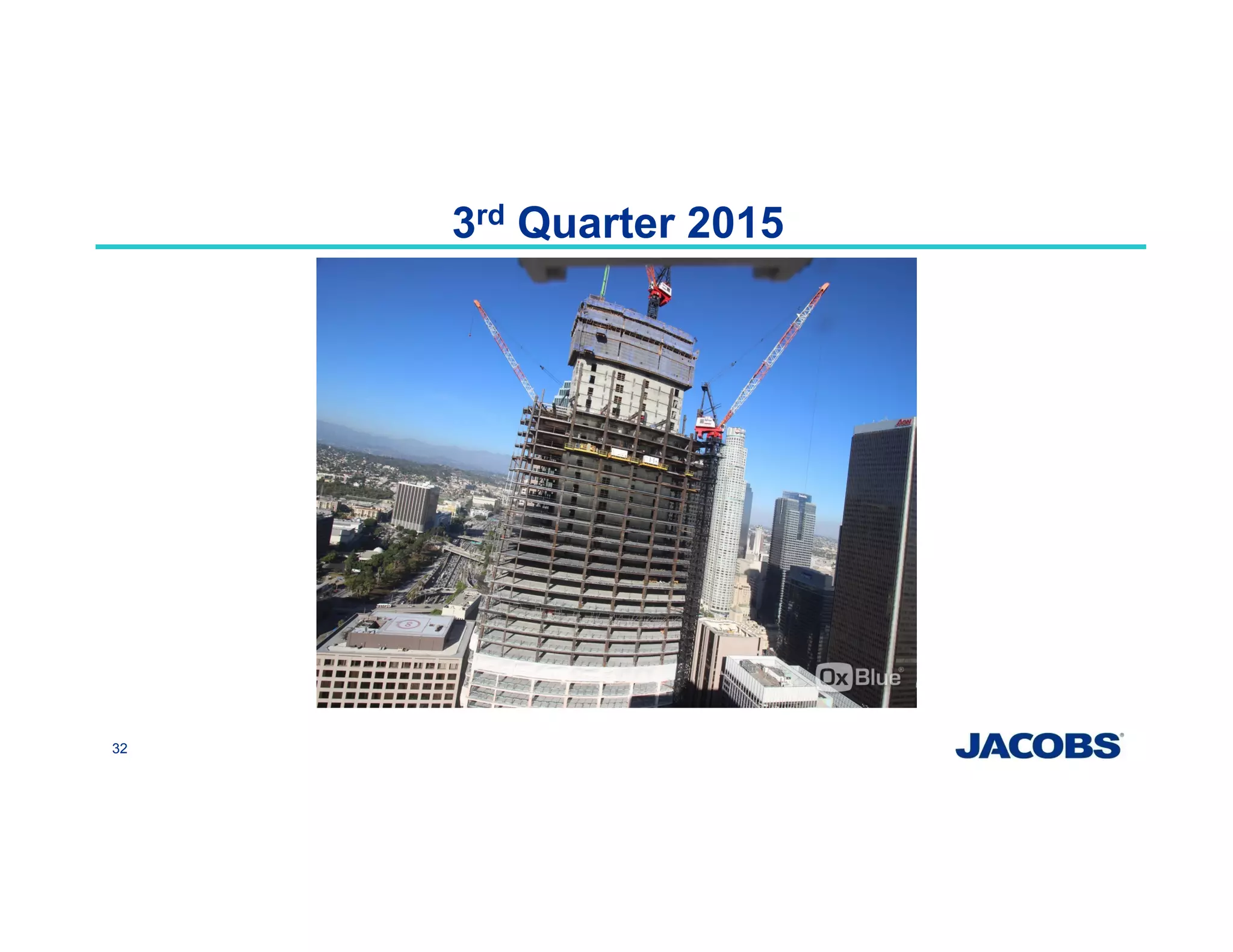
3rd Quarter 2015
32
Year-end 2015
33
Summer 2016
34
Current – Dec 2016
35
Mass Concrete - Thermal Control
36
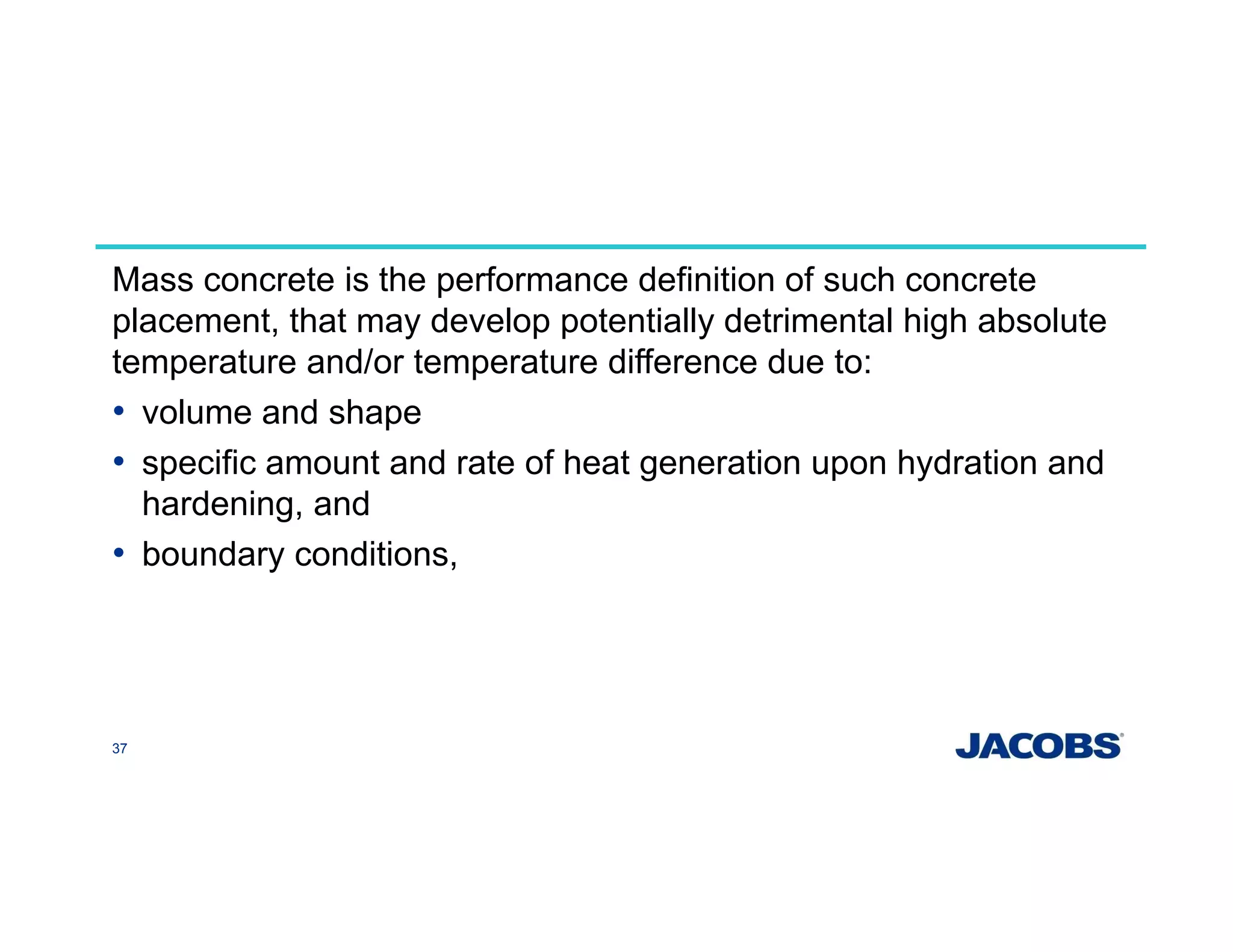
Mass concrete is the performance definition of such concrete
placement, that may develop potentially detrimental high absolute
temperature and/or temperature difference due to:
• volume and shape
• specific amount and rate of heat generation upon hydration and
hardening, and
• boundary conditions,
37
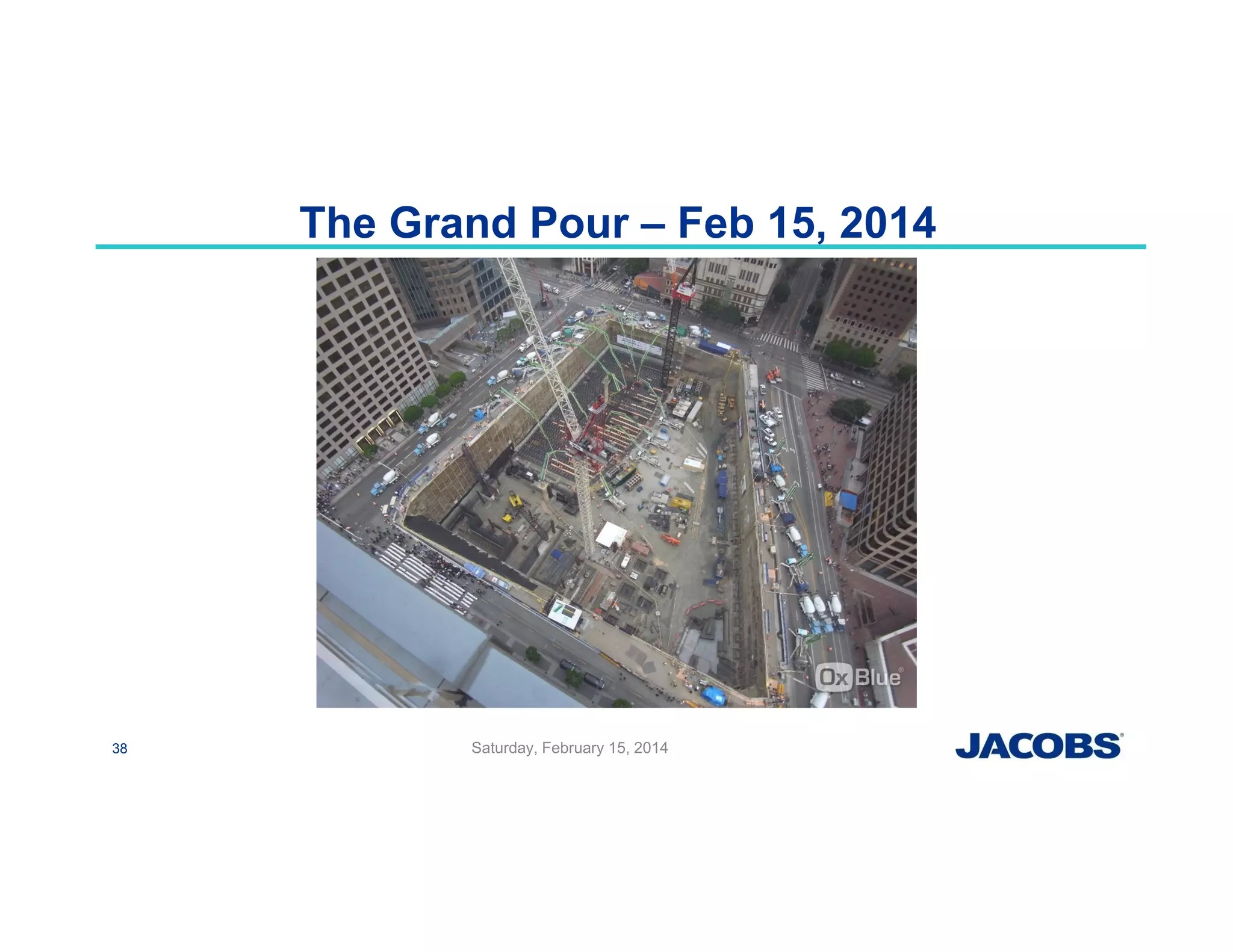
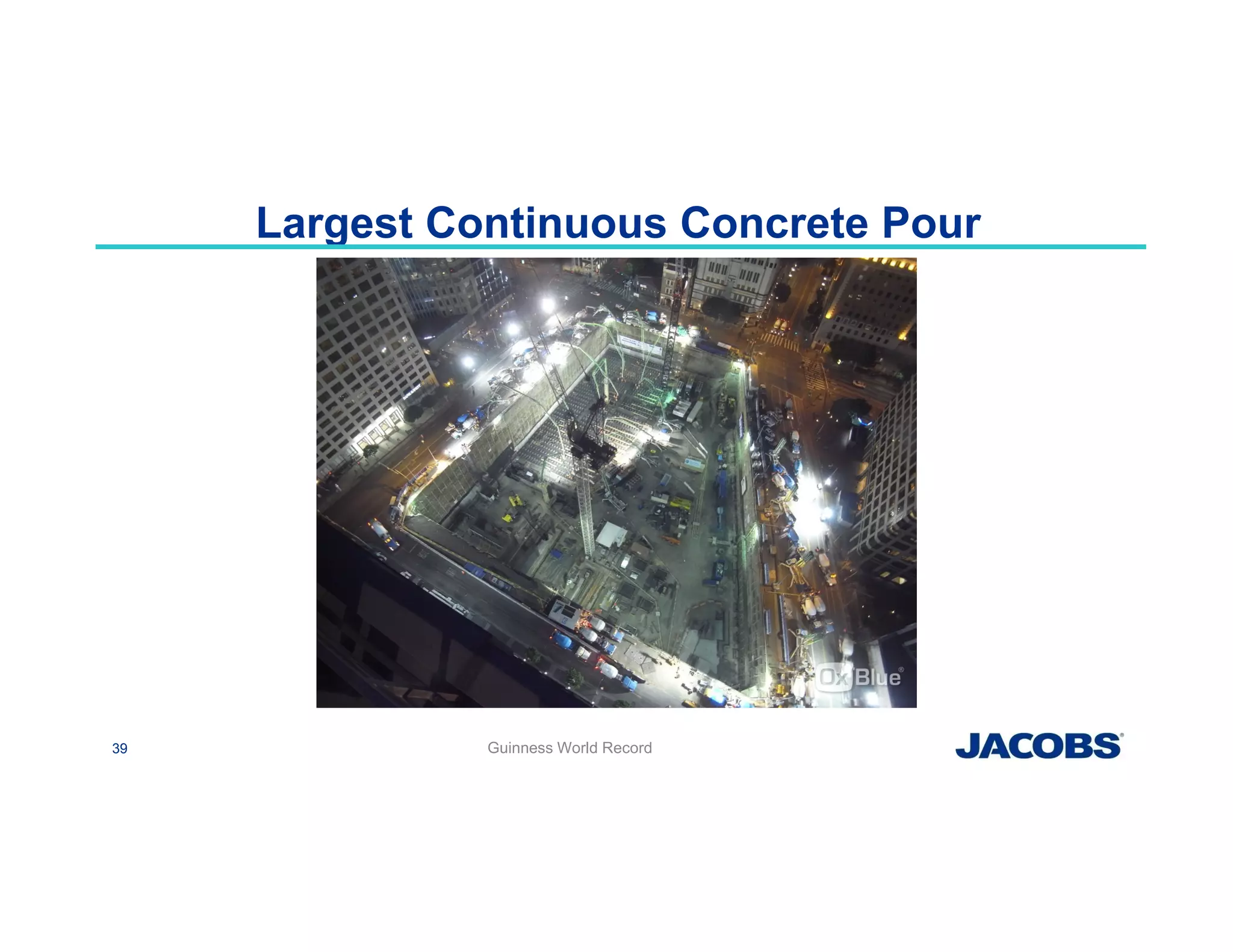
The Grand Pour – Feb 15, 2014
38 Saturday, February 15, 2014
Largest Continuous Concrete Pour
39 Guinness World Record
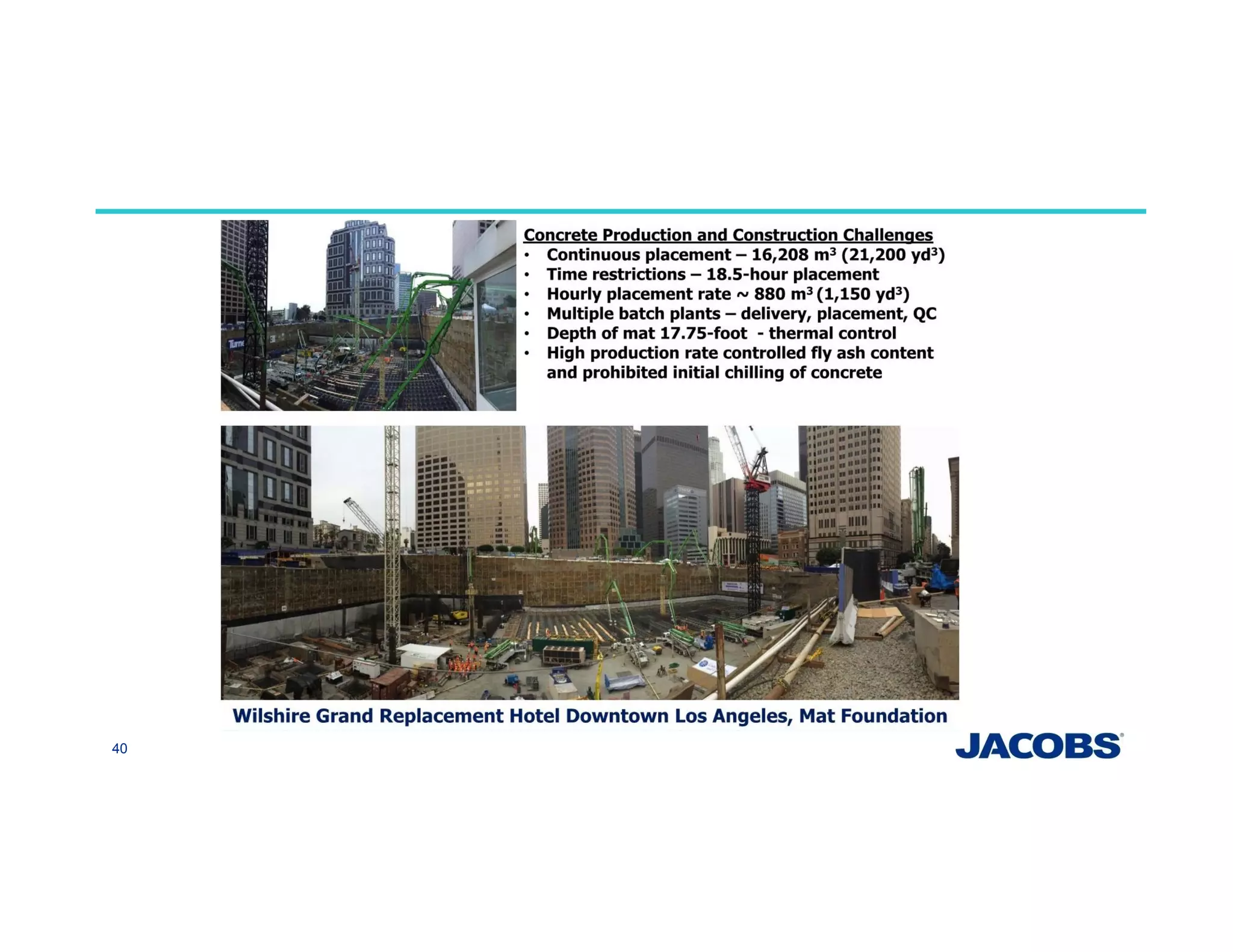
40
Thermal Control Measures
• Cooling Pipe System with Recirculating Chilled Water
• Thermal Blanket Insulation
• Curing Procedure
• QC Temperature Monitoring
41
• Maximum temperature is limited through proper thermal control
measures in order to prevent delayed ettringite formation (DEF).
• Maximum temperature difference is limited through proper thermal
control measures in order to prevent cracking due to thermal stresses.
42
Structural Design
43
SLDE Service Level Design EQ
– Frequent occurrence (43-yr return period EQ)
– Performance Objective: Designed to stay linear in ‘elastic limit’
– Lateral system rebounds to zero deformation w/ limited arch & struct
damage, remains serviceable
– Moderate EQ (475-yr return period) damage reparable
MCE Maximum Considered EQ Event ‘Major Event’
– Extreme / Severe (2475-yr return period EQ)
– Performance Objective: Designed to prevent collapse, mitigate loss of life
– Lateral system utilizes ductility, performs numerous cycles ‘plastic yield’
demand
PERFORMANCE CRITERIA
PERFORMANCE BASE DESIGN
Designed for known local seismicity
– Design consideration: 29 major faults deemed active distance from 0.2 mi. to 46 mi.
from site
– Nearest quake considered is from Upper Elysian Park Thrust Fault (0.2 mi)
– Largest quake considered is from San Andreas Fault (46 mi.)
Wind Design – 1700-yr cycle, 160 mph, 3-sec gusts
– Wind Tunnel Studies and Computer Simulation
– Rigid enough for comfort service-level wind loads
– No ‘Tuned Mass Damper’ required, adequate lateral stiffness for comfort
PERFORMANCE BASE DESIGN
Peer Review Approach Favorable over CBC Prescriptive
Design
– Peer Review Panel members
– Establish Performance Objectives with SEOR
– PRP Provided Comprehensive Code Compliance Check
– Requires full ‘redundant back-up’ system in addition to ‘Core Wall Design’
– Typically results in Conventional Tube Steel Frame with ‘deep girders’ + ‘closer
columns’
Benefits Early Collaboration of PRP w/ SEOR = Early
Delivery
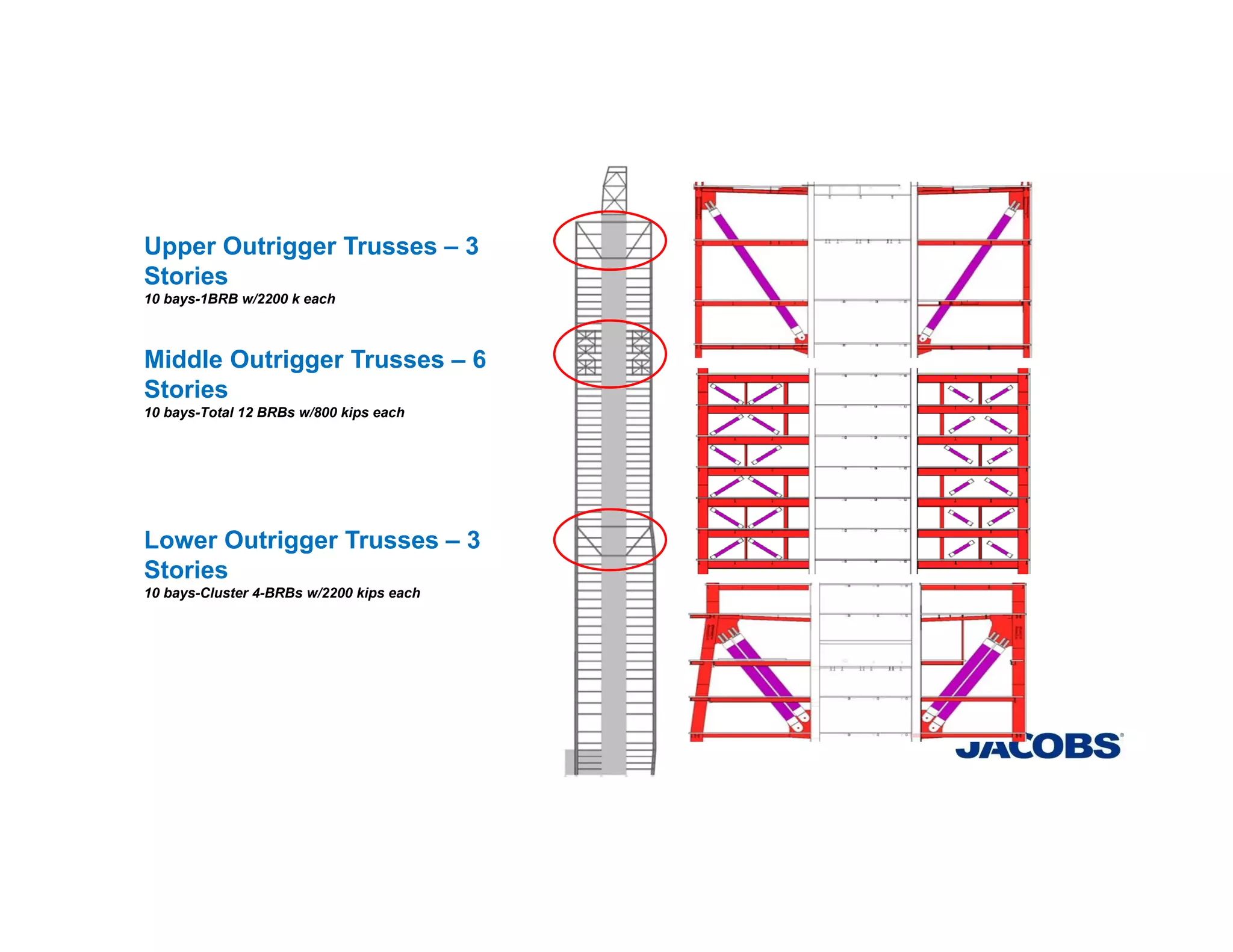
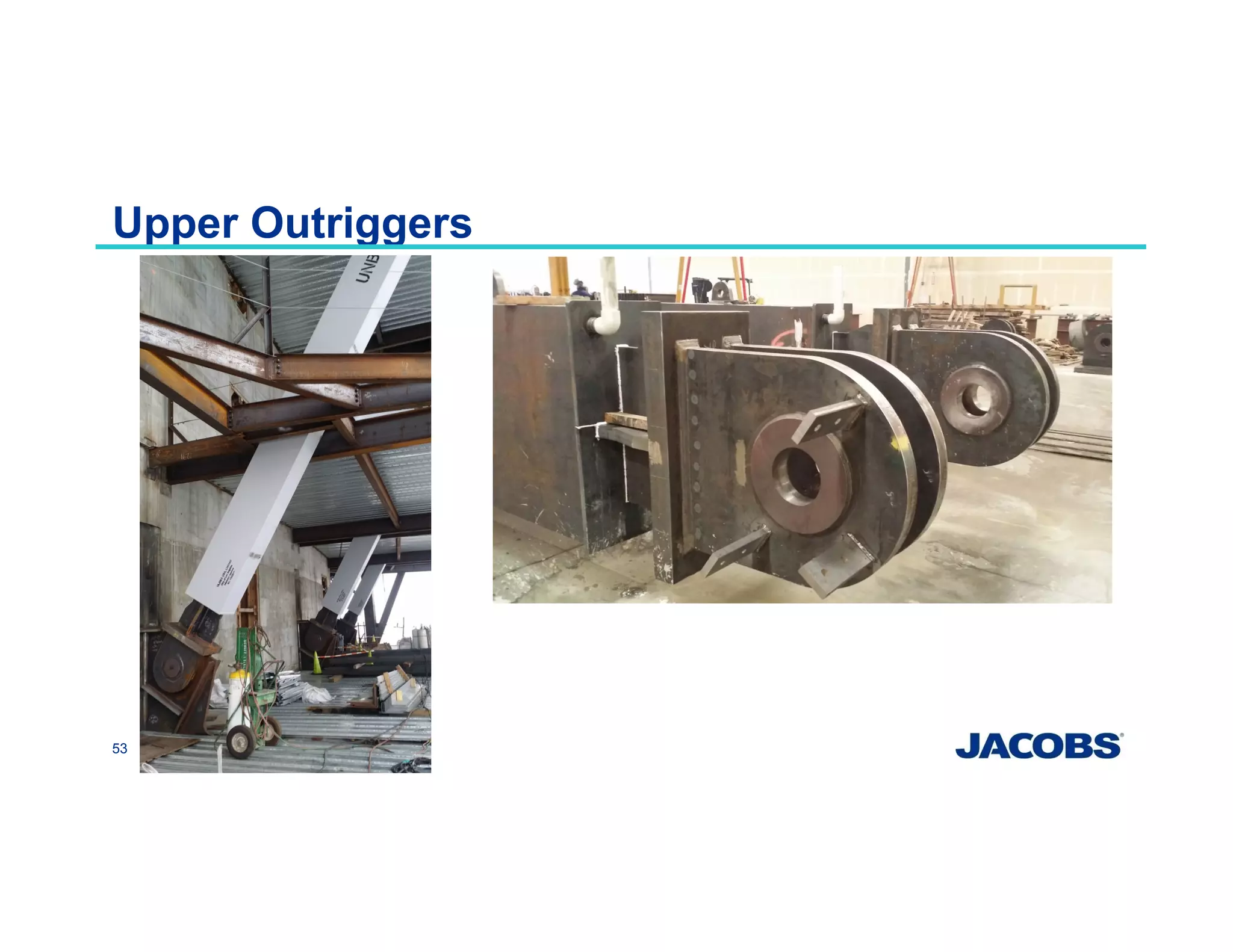
Upper Outrigger Trusses – 3
Stories
10 bays-1BRB w/2200 k each
Middle Outrigger Trusses – 6
Stories
10 bays-Total 12 BRBs w/800 kips each
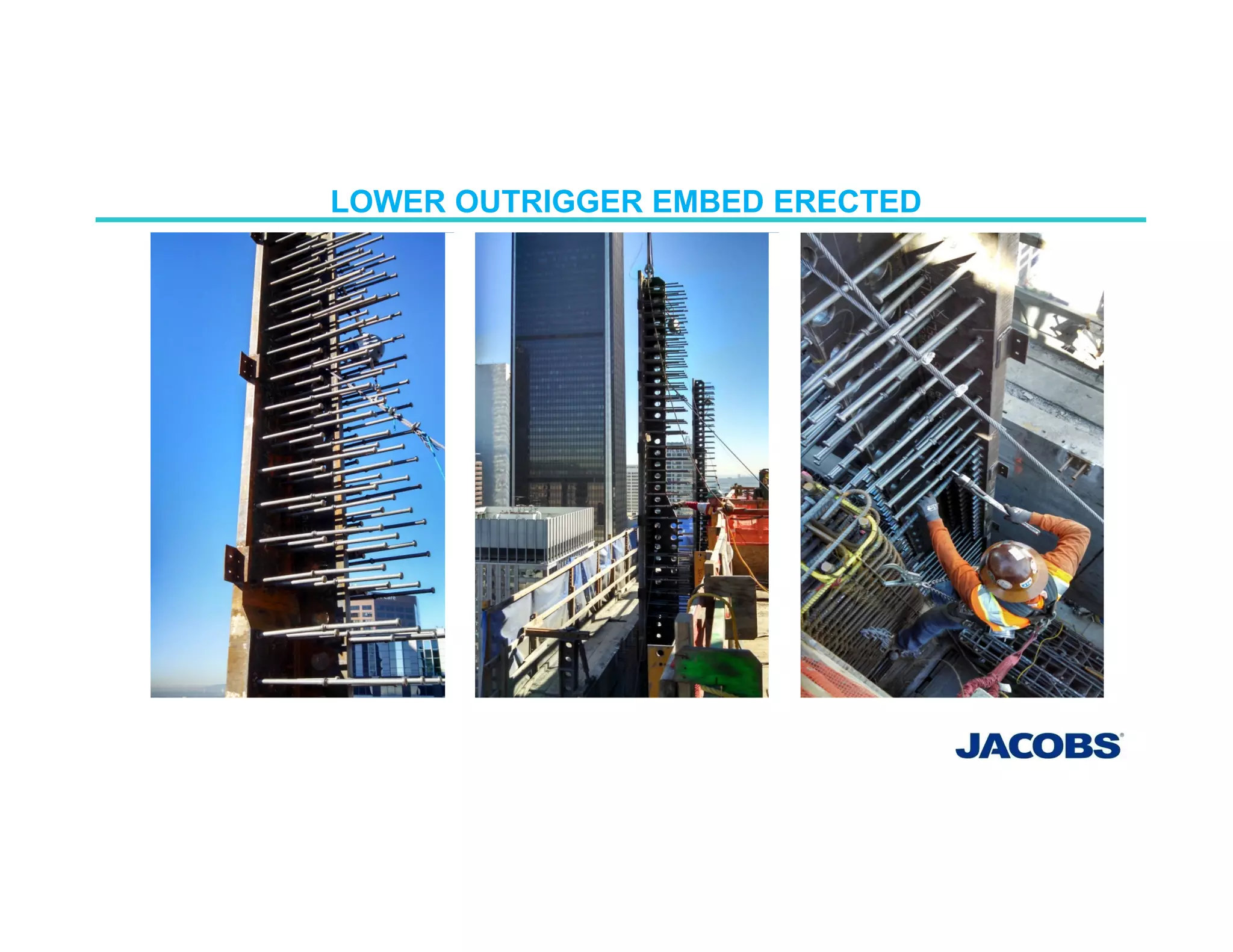
Lower Outrigger Trusses – 3
Stories
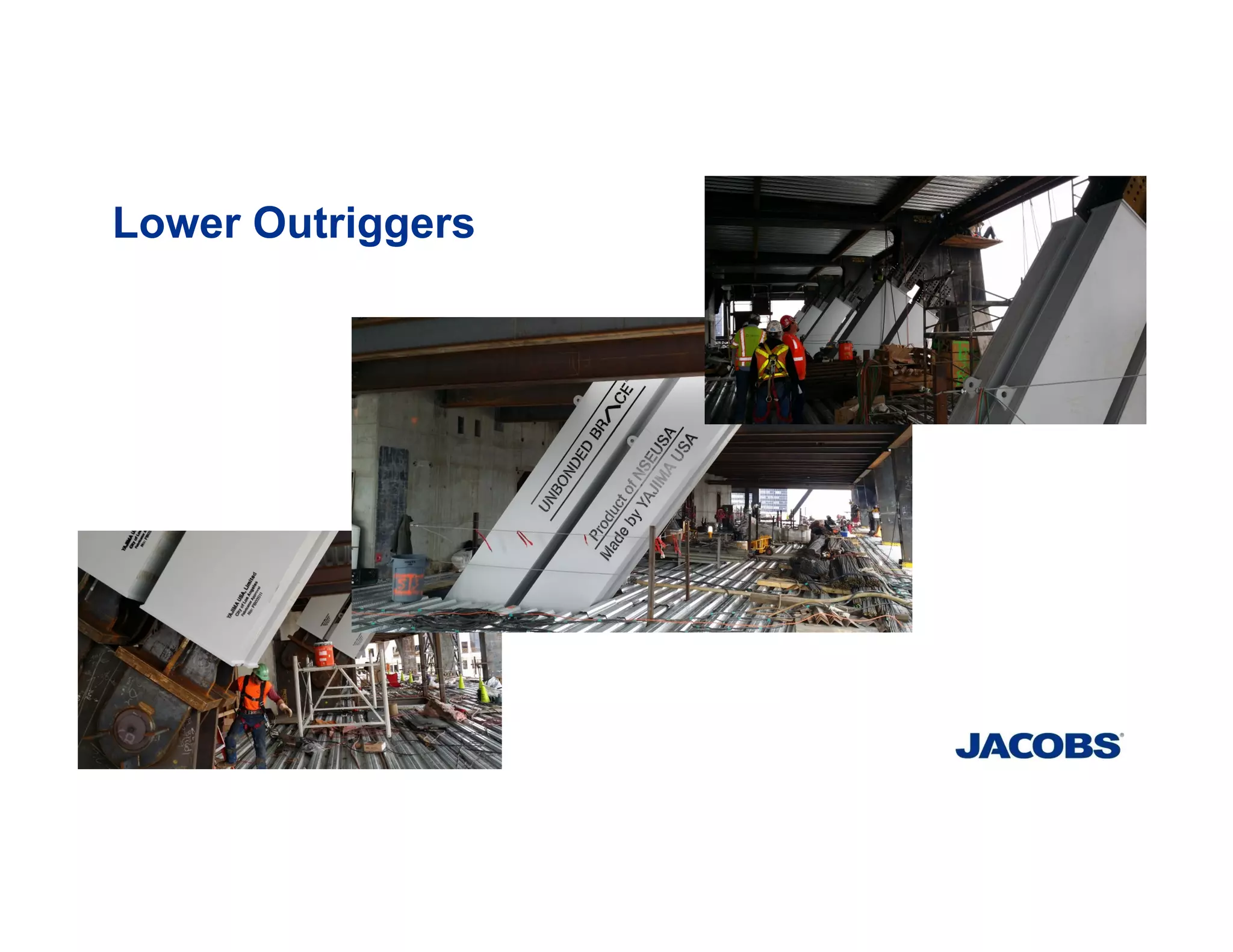
10 bays-Cluster 4-BRBs w/2200 kips each
Structure:
• Concrete Core w/4 Vertical Cells
• Steel Floor Frame w/ Composite Metal Deck
Structural Statistics:
• Steel: 19,000 tons (17.2 million kg)
• Concrete: 160,000 cu yds = 16,000 trucks (122K cu m)
• Rebar: 70 million lbs = 35,000 tons (31.7 million kg)
METRICS – STRUCTURAL OVERVIEW
LA Live (NYA)
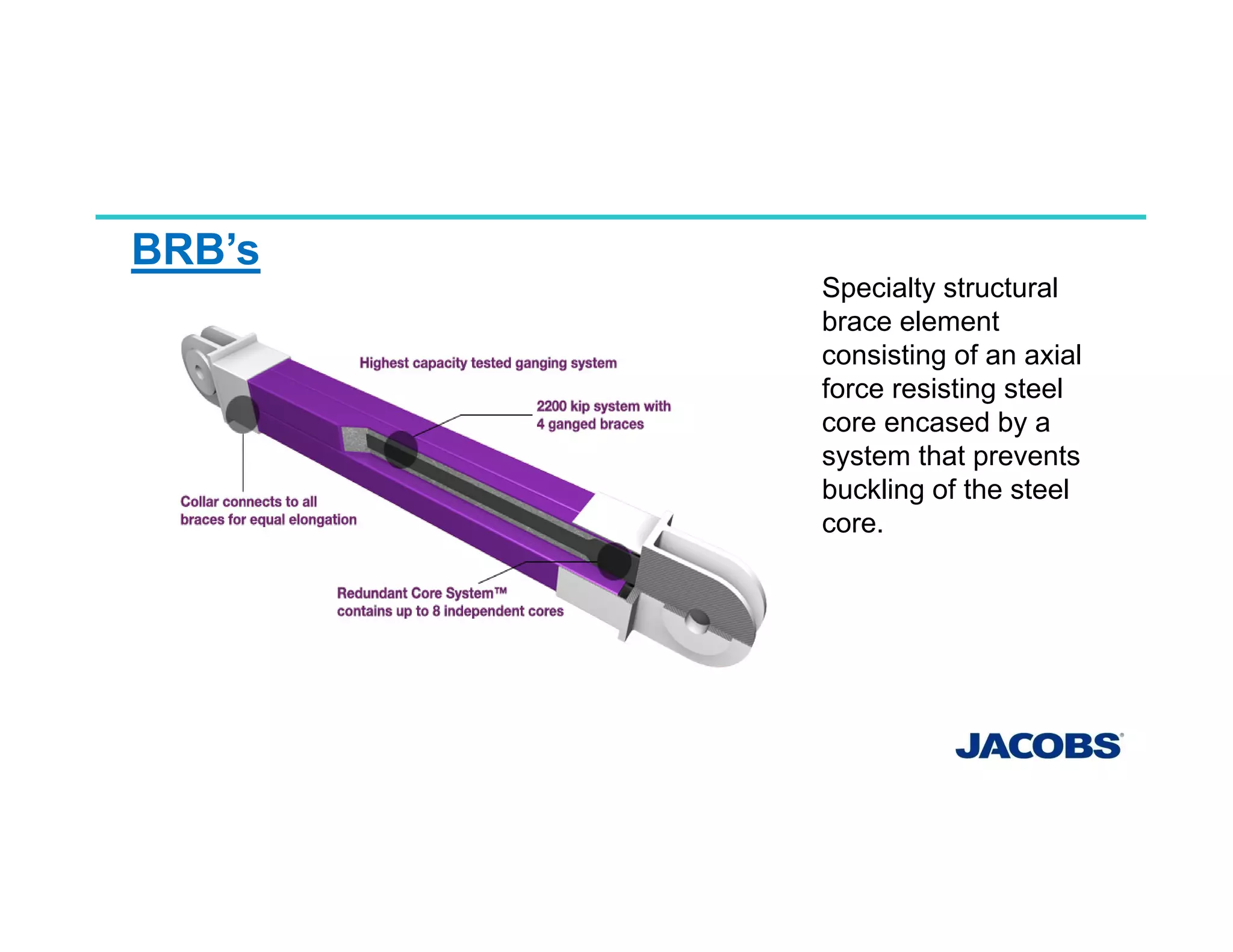
BRB’s
Specialty structural
brace element
consisting of an axial
force resisting steel
core encased by a
system that prevents
buckling of the steel
core.
50
51
Lower Outriggers
52
Upper Outriggers
53
LOWER OUTRIGGER EMBED ERECTED
Foundation Settlement &Tower
Shortening
55
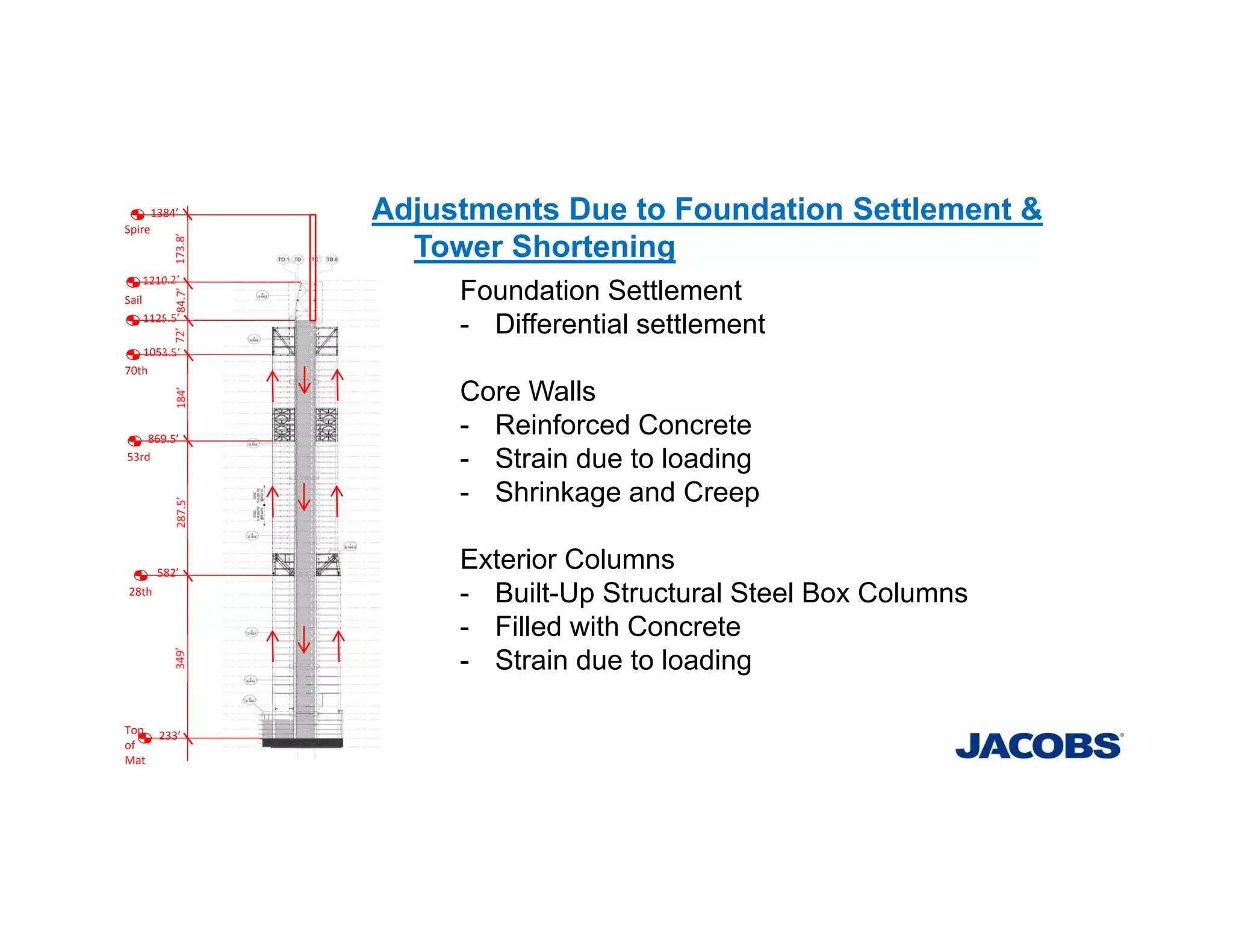
Adjustments Due to Foundation Settlement &
Tower Shortening
233’
582’
869.5’
1053.5’
1125.5’
1210.2’
1384’
Spire
Sail
70th
53rd
28th
Top 
of
Mat
Foundation Settlement
- Differential settlement
Core Walls
- Reinforced Concrete
- Strain due to loading
- Shrinkage and Creep
Exterior Columns
- Built-Up Structural Steel Box Columns
- Filled with Concrete
- Strain due to loading
Tower Axial Shortening
Design accounted for axial displacements due to:
• sequential loading phases during construction
• and long term effects (shrinkage and creep)
Prevent undue stresses different from design values
Perform periodic on‐site measurements 
57
58
Pre-Loading Upper BRBs
59
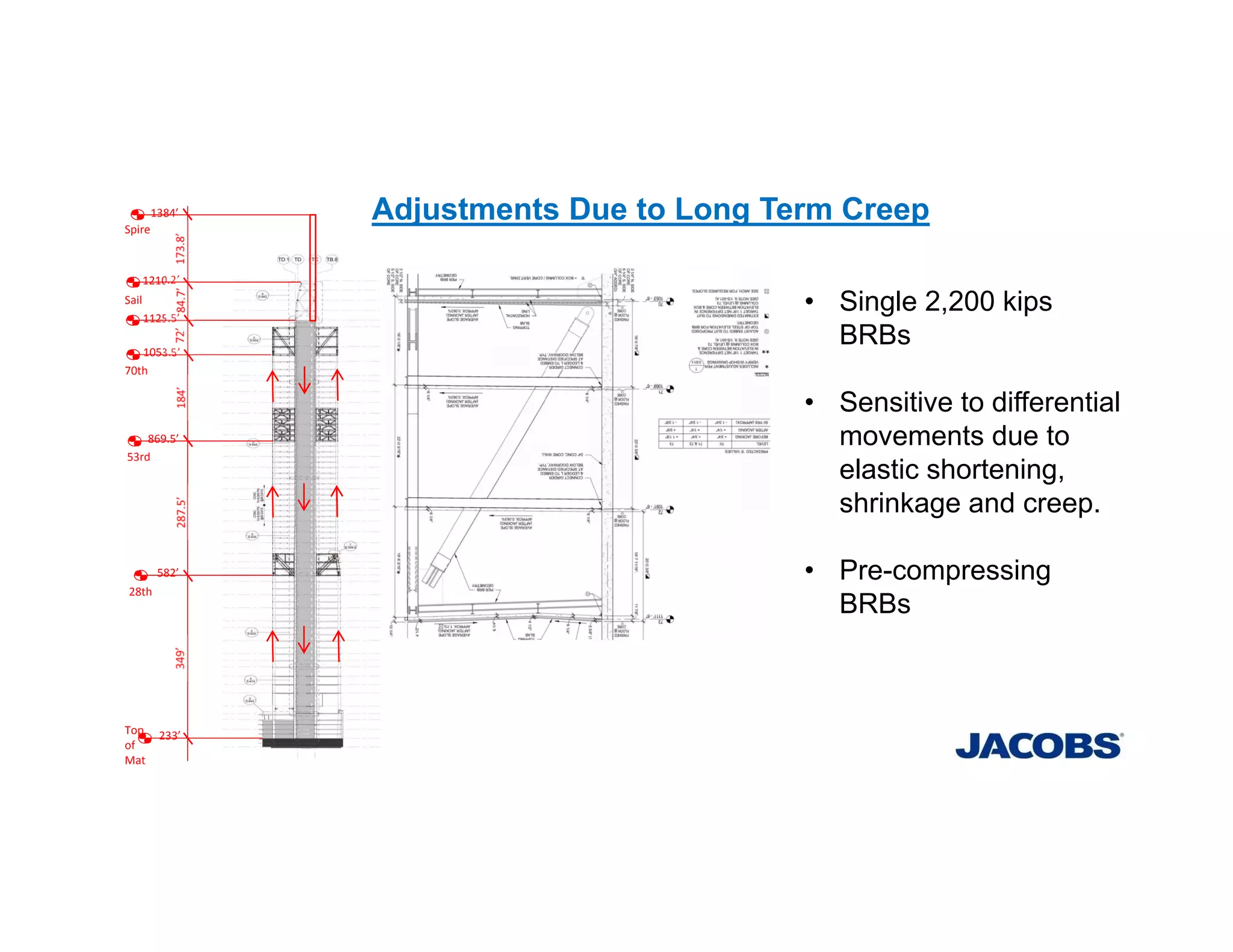
Adjustments Due to Long Term Creep
233’
582’
869.5’
1053.5’
1125.5’
1210.2’
1384’
Spire
Sail
70th
53rd
28th
Top 
of
Mat
• Single 2,200 kips
BRBs
• Sensitive to differential
movements due to
elastic shortening,
shrinkage and creep.
• Pre-compressing
BRBs
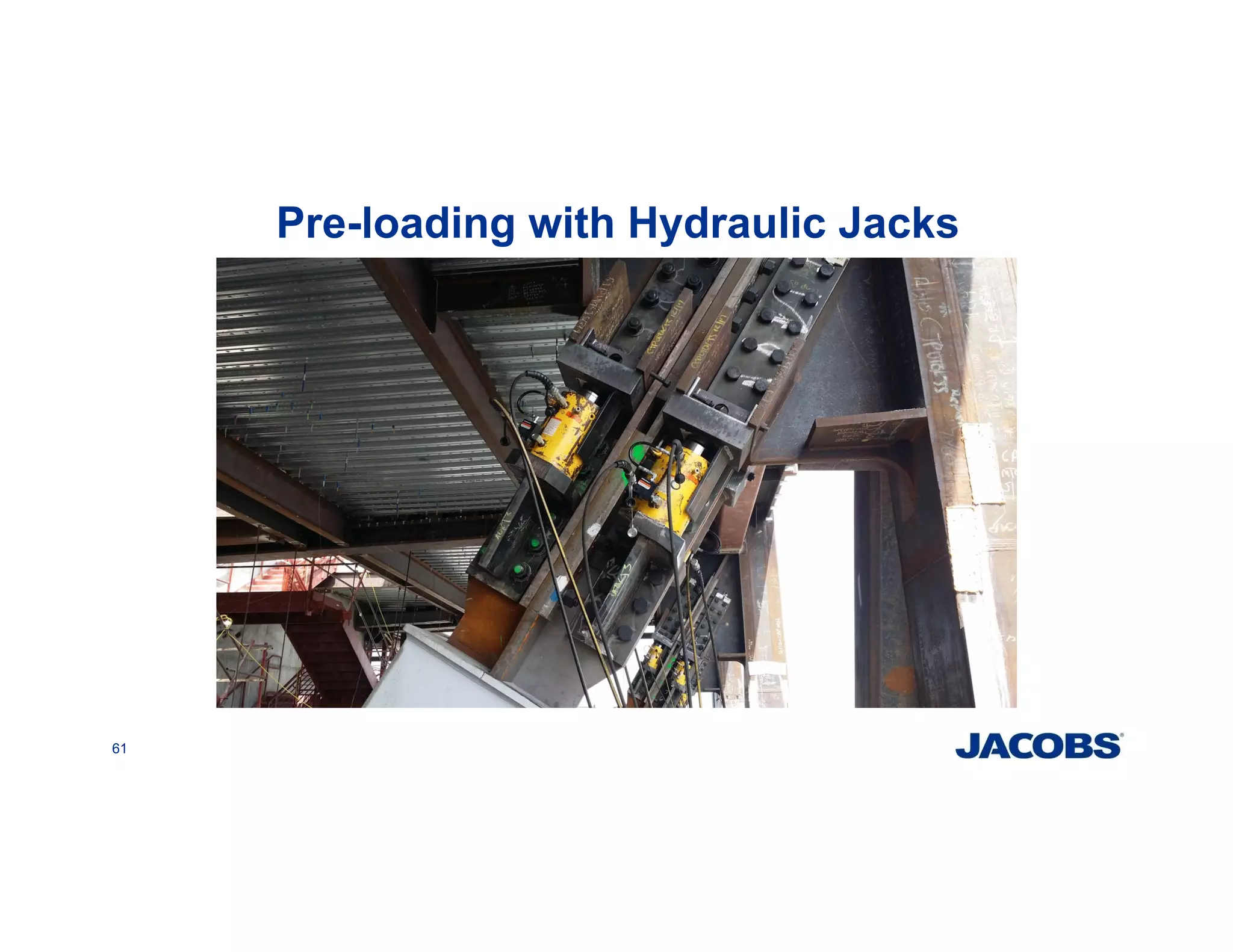
Pre-loading with Hydraulic Jacks
61
 Protect the building from permanent deformation in the 50-yr wind
event
 At 50-yr wind event, the BRB strains are approximately 50% of
yield strain
 Pre-compressing the BRB eliminates permanent deformation after
50 years of creep and shrinkage
62
63
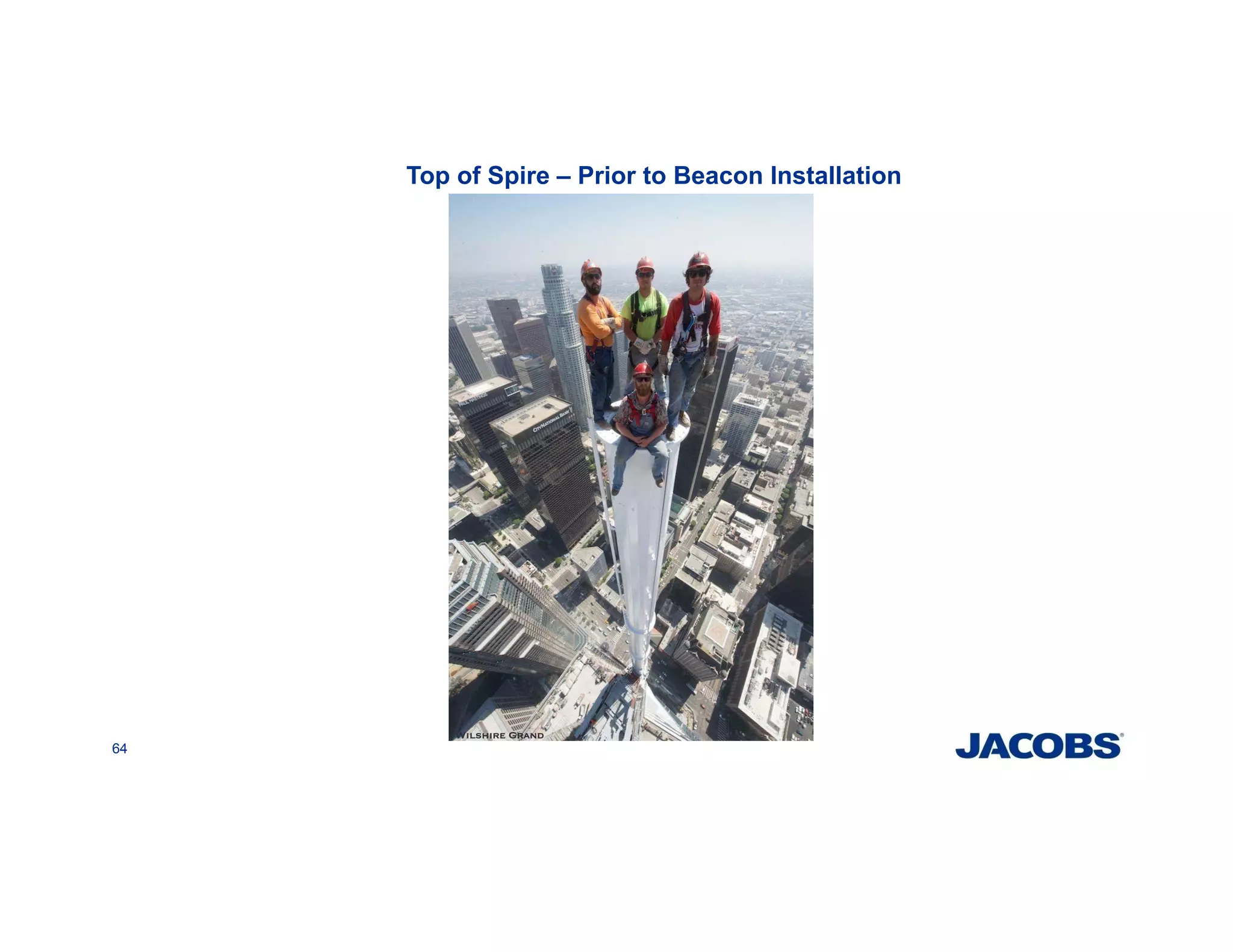
Top of Spire – Prior to Beacon Installation
64
www.jacobs.com | worldwideJanuary 9, 2017
© Copyright Jacobs
Thank you
Q&A

Wilshire Grand Redevelopment Project

  • 1.
    www.jacobs.com | worldwide WilshireGrand Redevelopment Project Project Highlights December 15, 2016
  • 2.
  • 3.
    WILSHIRE GRAND PROJECT •Facility Overview • Construction Highlights • Mass Concrete – Thermal Control • Structural Design – Seismic • Foundation Settlement & Tower Shortening • Pre-Loading of Upper BRBs
  • 4.
  • 5.
    PROJECT LOCATION 900Wilshire Blvd
  • 6.
    Size: 2,100,000 SF 73-stories 892key hotel 16 stories of offices – 365,000 SF 7 levels of podium (amenities) 5 levels below grade parking Completion: 2nd Quarter 2017 Owner: Hanjin International Corp/Korean Air Lines Architect: A.C. Martin Partners Structural Engineers: Brandow & Johnston Thornton Tomasetti Project Manager: Martin Project Mgmt General Contractor: Turner
  • 7.
  • 8.
  • 9.
  • 10.
  • 11.
  • 12.
  • 13.
    Level 5 GrandBallroom
  • 14.
  • 15.
    Level 7 Health& Fitness Club
  • 16.
  • 17.
  • 18.
  • 19.
  • 20.
  • 21.
  • 22.
  • 23.
  • 24.
  • 25.
    The Grand Pour– Feb 15, 2014 25
  • 26.
  • 28.
  • 29.
  • 30.
  • 31.
  • 32.
  • 33.
  • 34.
  • 35.
  • 36.
    Mass Concrete -Thermal Control 36
  • 37.
    Mass concrete isthe performance definition of such concrete placement, that may develop potentially detrimental high absolute temperature and/or temperature difference due to: • volume and shape • specific amount and rate of heat generation upon hydration and hardening, and • boundary conditions, 37
  • 38.
    The Grand Pour– Feb 15, 2014 38 Saturday, February 15, 2014
  • 39.
    Largest Continuous ConcretePour 39 Guinness World Record
  • 40.
  • 41.
    Thermal Control Measures •Cooling Pipe System with Recirculating Chilled Water • Thermal Blanket Insulation • Curing Procedure • QC Temperature Monitoring 41
  • 42.
    • Maximum temperatureis limited through proper thermal control measures in order to prevent delayed ettringite formation (DEF). • Maximum temperature difference is limited through proper thermal control measures in order to prevent cracking due to thermal stresses. 42
  • 43.
  • 44.
    SLDE Service LevelDesign EQ – Frequent occurrence (43-yr return period EQ) – Performance Objective: Designed to stay linear in ‘elastic limit’ – Lateral system rebounds to zero deformation w/ limited arch & struct damage, remains serviceable – Moderate EQ (475-yr return period) damage reparable MCE Maximum Considered EQ Event ‘Major Event’ – Extreme / Severe (2475-yr return period EQ) – Performance Objective: Designed to prevent collapse, mitigate loss of life – Lateral system utilizes ductility, performs numerous cycles ‘plastic yield’ demand PERFORMANCE CRITERIA
  • 45.
    PERFORMANCE BASE DESIGN Designedfor known local seismicity – Design consideration: 29 major faults deemed active distance from 0.2 mi. to 46 mi. from site – Nearest quake considered is from Upper Elysian Park Thrust Fault (0.2 mi) – Largest quake considered is from San Andreas Fault (46 mi.) Wind Design – 1700-yr cycle, 160 mph, 3-sec gusts – Wind Tunnel Studies and Computer Simulation – Rigid enough for comfort service-level wind loads – No ‘Tuned Mass Damper’ required, adequate lateral stiffness for comfort
  • 46.
    PERFORMANCE BASE DESIGN PeerReview Approach Favorable over CBC Prescriptive Design – Peer Review Panel members – Establish Performance Objectives with SEOR – PRP Provided Comprehensive Code Compliance Check – Requires full ‘redundant back-up’ system in addition to ‘Core Wall Design’ – Typically results in Conventional Tube Steel Frame with ‘deep girders’ + ‘closer columns’ Benefits Early Collaboration of PRP w/ SEOR = Early Delivery
  • 47.
    Upper Outrigger Trusses– 3 Stories 10 bays-1BRB w/2200 k each Middle Outrigger Trusses – 6 Stories 10 bays-Total 12 BRBs w/800 kips each Lower Outrigger Trusses – 3 Stories 10 bays-Cluster 4-BRBs w/2200 kips each
  • 48.
    Structure: • Concrete Corew/4 Vertical Cells • Steel Floor Frame w/ Composite Metal Deck Structural Statistics: • Steel: 19,000 tons (17.2 million kg) • Concrete: 160,000 cu yds = 16,000 trucks (122K cu m) • Rebar: 70 million lbs = 35,000 tons (31.7 million kg) METRICS – STRUCTURAL OVERVIEW
  • 49.
    LA Live (NYA) BRB’s Specialtystructural brace element consisting of an axial force resisting steel core encased by a system that prevents buckling of the steel core.
  • 50.
  • 51.
  • 52.
  • 53.
  • 54.
  • 55.
  • 56.
    Adjustments Due toFoundation Settlement & Tower Shortening 233’ 582’ 869.5’ 1053.5’ 1125.5’ 1210.2’ 1384’ Spire Sail 70th 53rd 28th Top  of Mat Foundation Settlement - Differential settlement Core Walls - Reinforced Concrete - Strain due to loading - Shrinkage and Creep Exterior Columns - Built-Up Structural Steel Box Columns - Filled with Concrete - Strain due to loading
  • 57.
    Tower Axial Shortening Design accounted for axial displacements due to: •sequential loading phases during construction • and long term effects (shrinkage and creep) Prevent undue stresses different from design values Perform periodic on‐site measurements  57
  • 58.
  • 59.
  • 60.
    Adjustments Due toLong Term Creep 233’ 582’ 869.5’ 1053.5’ 1125.5’ 1210.2’ 1384’ Spire Sail 70th 53rd 28th Top  of Mat • Single 2,200 kips BRBs • Sensitive to differential movements due to elastic shortening, shrinkage and creep. • Pre-compressing BRBs
  • 61.
  • 62.
     Protect thebuilding from permanent deformation in the 50-yr wind event  At 50-yr wind event, the BRB strains are approximately 50% of yield strain  Pre-compressing the BRB eliminates permanent deformation after 50 years of creep and shrinkage 62
  • 63.
  • 64.
    Top of Spire– Prior to Beacon Installation 64
  • 65.
    www.jacobs.com | worldwideJanuary9, 2017 © Copyright Jacobs Thank you
  • 66.